
Business
Earnings call transcript: Ventia lifts margin in H1 2026 as stock rises




What could be a mitigating factor, however, is the record haul from forex-inflow programs. India has so far received $72.8 billion in dollar inflows through the special swap facility, giving the central bank an additional buffer to manage pressure on the currency.
 ET Bureau
Forces In Play: Oil prices and the prospect of higher sugar imports could also weigh, while $72.8 b in swap inflows will offer comfort to the central bank
The rupee, aided by central bank interventions, is expected to trade between 95.50 and 96.00 levels, while the 10-year bond yield is expected to trade with a negative bias, around 6.85% levels.
“The minutes of the Monetary Policy Committee were more hawkish compared to the statements, so the market will take some time to adjust. The floor is 6.87% to 6.88% for the 10-year yield, and it will move upwards if there are more crude shocks. Additionally, global bonds, especially US rates, are also trading with a negative bias whose impact is felt domestically,” said Gopal Tripathi, head of treasury, Jana Small Finance Bank.
The August MPC minutes struck a more hawkish tone, with members flagging that a broadening of inflation pressures could warrant a rate hike or policy recalibration.

Read more: FPIs invest Rs 23,544 crore in Indian equities in Aug on earnings revival, rupee stability
Separately, US Treasury yields initially fell sharply after the Treasury announced it would double its buybacks of longer-dated debt. After the buyback announcement on Thursday, the 10-year yield fell about 6 bps to 4.66%, while the 30-year dropped nearly 10 bps to 5.18%. But the rally quickly faded, by Friday, the US 10-year was back near 4.70% and the 30-year near 5.24%The 10 year India yield has decreased 28 bps to 6.85% this fiscal year.
Oil Pressure
For the rupee, oil prices remain a key pressure point even as the RBI continues to intervene. The intervention is expected to persist given the sizable inflows of $72.85 billion generated through the special swap facility, with $717 billion in foreign exchange reserves, traders said.
“Domestic markets’ price action is likely to be more influenced by energy prices and US rate movements, with USDINR’s attempts to break above 96.0 attracting strong counter presence of the RBI,” said Radhika Rao, senior economist, DBS Bank.

Factbox-From Australia to Europe, countries move to curb children’s social media access

Klarna Vs. Sezzle: Buy Now, Pay Later At A Materially Low Multiple
Business
Close the Loop Ltd 2026 Q4 – Results – Earnings Call Presentation (OTCMKTS:CTLLF) 2026-08-24


Seeking Alpha’s transcripts team is responsible for the development of all of our transcript-related projects. We currently publish thousands of quarterly earnings calls per quarter on our site and are continuing to grow and expand our coverage. The purpose of this profile is to allow us to share with our readers new transcript-related developments. Thanks, SA Transcripts Team

Among the mainboard offerings, Symbiotec Pharmalab will be the largest, looking to raise around ₹1,757 crore. Lumino Industries and Skyways Air Services will follow, seeking to raise around ₹700 crore and ₹583 crore, respectively. Annu Projects and Hy-Tech Engineers will raise around ₹175 crore and ₹136 crore, respectively. Priority Jewels’ IPO will open on August 28 and close on September 1. Details of the issue have yet to be announced.
ET BureauTwo mainboard IPOs that opened for subscription last week – Augmont Enterprises and Tempsens Instruments India – will close this week. Five companies will also make their stock-market debuts, including Lalithaa Jewellery Mart, Horizon Industrial Parks, Sunshine Pictures, Shankesh Jewellers and Gaja Alternative Asset Management.
The SME segment will see four IPOs open for subscription this week. Kwick Forensic Solutions, Sumax Engineering, ABH Healthcare and Madhur Knit Crafts will collectively raise around ₹183 crore. Two SME companies, Dhanwel Hybrid Seeds and Mopshop Distribution, are also scheduled to list on the exchanges this week.
Read more: Sebi turns down Adani-linked FPIs’ settlement applications
The IPO pipeline has remained strong through August. So far this month, 20 mainboard IPOs have hit the market, raising around ₹20,850 crore, while 18 SME IPOs have collectively raised more than ₹941 crore. So far in 2026, 59 companies have raised around ₹72,000 crore through IPOs, underscoring the continued strength of primary-market activity.
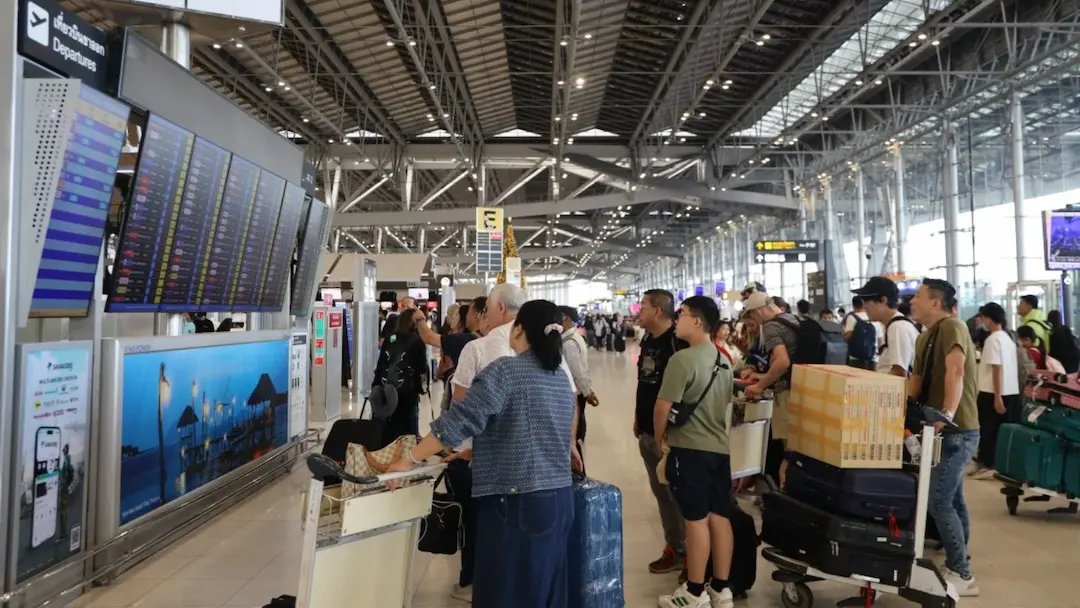
- Southeast Asia’s aviation capacity rose 0.8% year-on-year in August to 51 million seats, but this modest headline masks significant divergence. Indonesia and Vietnam drove growth, with Vietnam Airlines expanding 8.2%, while Malaysia, Thailand, and the Philippines all lost capacity, suggesting structural rather than seasonal shifts across the region’s economies.
- A notable trend is the retreat of low-cost carriers, with AirAsia and Thai AirAsia cutting capacity sharply while mainline airlines gained share, raising affordability concerns. Airport data mirrors this split: Hanoi, Jakarta, and Singapore grew, while Bangkok, Manila, and Kuala Lumpur contracted, indicating the region’s aviation market is reorganizing rather than uniformly expanding.
At first glance, the headline number out of Southeast Asia’s aviation market this August looks reassuring.
Total scheduled seat capacity edged up to 51 million, a modest 0.8% gain over the same month last year. In an industry still shadowed by fuel volatility and geopolitical friction, “growth” of any size tends to be read as good news.
But sit with the underlying figures for more than a moment, and a more interesting, and less comfortable, picture emerges.
This is not a region firing on all cylinders. It is a region bifurcating, with a handful of national carriers and a couple of standout markets doing the heavy lifting while much of the rest tread water or slide backward.
A market of winners and laggards, not a rising tide
Break the 0.8% headline figure down by country, and the “growth” story becomes a story about two economies: Indonesia and Vietnam. Indonesia holds its position as the region’s largest market, with capacity climbing past 11 million seats.
Vietnam is the standout performer, its seat count rising by roughly 10% year on year, the fastest expansion among the top five markets, driven in large part by Vietnam Airlines, which posted an 8.2% increase and comfortably retained its title as the region’s busiest carrier.
Contrast that with Malaysia, Thailand and the Philippines, all three of which lost seats compared with last August. It is tempting to write this off as noise. Airline capacity fluctuates seasonally, and route-by-route decisions rarely tell a coherent macro story on their own.
But three of the region’s five largest economies contracting in the same month that two others expand sharply suggests something structural rather than incidental: diverging cost bases, diverging currency pressure, and diverging exposure to the knock on effects of turmoil further afield, notably the Middle East, where regional jet fuel costs and the broader cost of living appear to be denting appetite for travel and route economics alike.
The budget airline retreat deserves more attention than it’s getting
Perhaps the most consequential trend buried in this month’s numbers is the quiet retrenchment of the region’s low-cost carriers. Mainline airlines now control 56% of Southeast Asian capacity, having grown nearly 6% year on year, while low-cost carriers contracted by almost 5%, ceding market share that had taken the better part of two decades to build. AirAsia, long the poster child of Southeast Asian budget aviation, cut capacity by 17%. Thai AirAsia cut deeper still, down 23%. Between the two, well over 900,000 seats simply vanished from the schedule compared with a year ago.
This matters beyond the balance sheets of two airlines. Southeast Asia’s aviation boom of the past fifteen years was substantially a budget carrier story: cheap, high-frequency point-to-point flying that stitched together an archipelago of emerging middle-class economies and made intra-regional travel a routine affair rather than a luxury.
A meaningful and sustained retreat by the LCC sector, even as one bright exception, Indonesia’s Citilink, up a startling 73%, proves the model can still work under the right ownership and cost structure, raises a genuine question about affordability.
If budget capacity keeps shrinking while mainline carriers pick up the slack, average fares in the region are likely to drift upward, with consequences for tourism-dependent economies from the Mekong Delta to the Philippine archipelago that have built growth strategies around low-cost connectivity.
Airports are not immune to the split, either
The airport data tells a parallel story of unevenness. Singapore Changi remains comfortably the region’s busiest hub, growing a healthy 3.5%, and Jakarta and Ho Chi Minh City are close behind with solid gains.
Hanoi is the standout, up over 12%, further evidence that Vietnam’s aviation sector is currently the region’s clearest growth engine. But Bangkok Don Mueang, Manila and Kuala Lumpur all shrank, echoing the national level contractions in Thailand, the Philippines and Malaysia.
Airport capacity, in other words, is simply following the money, and right now the money is concentrating in Jakarta, Hanoi, Ho Chi Minh City and Singapore rather than spreading evenly across the region’s traditional hub cities.
What this means going forward
None of this amounts to a crisis. A 0.8% expansion, however uneven its distribution, is still expansion, and international long-haul demand to Europe and North America, up 10.8% and 9% respectively, suggests confidence in Southeast Asia as an origin and destination market remains intact where it counts most for revenue.
But the aggregate numbers are masking a market that is quietly reorganizing itself: budget carriers ceding ground to full-service airlines, growth concentrating in Vietnam and Indonesia while Thailand, Malaysia and the Philippines stall, and cost pressure from outside the region, particularly the Middle East, beginning to show up in route-level decisions.
Anyone reading only the top-line seat count this month is reading half the story. The more consequential shifts are happening beneath it.
.

Samsung shares slide as record $80 bln shareholder return plan underwhelms

Built Living will receive a $120 million boost from the federal government, after the Wesfarmers and Built JV was created earlier this year to establish a precast concrete manufacturing plant in WA.

Alibaba shares plunge as Burry exits stake, shifts to JD.com

Yes. Corporate subscriptions are available for teams and organisations, with discounted rates as user numbers increase. Pricing starts from $1,625 + GST per user.
Get in touch
to discuss the right option for your organisation.
Business News subscriptions are used by executives, investors, consultants and professionals who need to stay informed and make better decisions about the WA market. When you subscribe you’ll get
- Unlimited access to WA’s most trusted business journalism
- Data & Insights — detailed profiles of WA companies, people, projects and deals
- MyBN — a personalised feed based on the companies, people and sectors you follow
- Special publications and industry reports
- Daily and weekly email newsletters
Data & Insights is a research tool built specifically for the WA market. It draws on more than 30 years of Business News reporting, updated regularly to reflect what’s happening now. Use it to:
- Look up detailed profiles of WA companies, including financials, directors and ownership
- Find decision-makers and track their career movements
- Research live and completed projects across WA industries
- Monitor deals, appointments and market activity
- Access industry rankings and league tables
Data & Insights is updated daily by our dedicated research team, which uses the latest announcements, ASX filings and editorial coverage to keep our person, company, list and project records up to date.
Business News welcome all opportunities to make our dataset accurate, complete and current, so if you have an update request, please email the team at
general@businessnews.com.au, and we’d be happy to assist.
MyBN
is part of every subscription. It’s your personalised view of Business News. You can follow the companies, people, sectors and projects that matter to you, and get a news feed and alerts tailored to your interests. You can save articles to read later and retain only what you need.
Only subscribers have full access to all content on the Business News website.
If staying informed about the WA economy is part of your job, and/or you’re looking for networking opportunities in WA, Business News is built for you.
Business News subscribers are:
- Executives and directors tracking competitors, clients and market movements
- Investors and advisers researching companies, deals and industry trends
- Consultants and professionals staying across sectors relevant to their clients
- Business owners looking for leads, context and market intelligence
Most Business News publications cover national or global markets. Business News is focused entirely on Western Australia, which means the journalism, the data and the intelligence are all built around WA companies, people and projects — not adapted from a national feed. Data & Insights, included with every subscription, combines more than 30 years of WA-specific editorial research with live business data. There’s no comparable product for the WA market.
The Morning Digest Email provides a comprehensive wrap of the major headlines, relevant to WA business, and includes with a snapshot of the overnight news covering oil, gold and ASX-listed companies.
The Afternoon Wrap Email focuses on the news covered by our team of journalists during the course of the working day, including exclusive stories and analysis, all of which relates to WA business and the local economy.
The BN Weekender Email contains a wrap of the Business News from the week that was, highlighting the top stories in each area of WA business.
Sign up for free.
We’re happy to help.
Get in touch
and our team will come back to you.
10 longest driving test waiting times in the UK as 7 areas in Scotland listed
Hawkish MPC, West Asia conflict cloud rupee, bond yield outlook

Stablecoin neobank Fasset lands $1 billion valuation as SBI backs its payments push

Weekend Open Thread – Corporette.com

Weekend Open Thread: Brooks Brothers

London Mayor Sadiq Khan handed a peerage by Keir Starmer alongside 15 other Labour figures… just days before the PM leaves No10

Master Your Money: The Ultimate 20s To Retirement Financial Plan Explained In Under 2 Minutes!

“PREPARE! Bitcoin’s About to ENTER It’s MOST EXPLOSIVE ERA Ever” – Jordi Visser

Unlock Financial Success: Stoic Principles You Need to Know #Stoicism#FinancialSuccess#WealthMindset
-

 Fashion2 days ago
Weekend Open Thread: Madewell – Corporette.com
-

 Crypto World2 days ago
anatomy of crypto’s biggest liquidation event since 2021
-

 Business6 days ago
SMA Solar Technology AG (SMTGY) Q2 2026 Earnings Call Transcript
-

 Tech6 days ago
Qwen3.8-27B runs frontier-class coding agents and reasoning locally, no cloud API required
-

 Business2 days ago
Musk’s Tesla, SpaceX Confirm $16.8 Billion ‘Terafab’ Chip Plant as World’s Largest Building in Texas
-

 Crypto World6 days ago
OCC Greenlights Trump Family Crypto Firm for Trust Charter
-

 Politics2 days ago
6 months on, Irish renters crushed by effects of government housing bill
-
 NewsBeat2 days ago
The ‘Lucky Dip Gang’ causing carnage for clicks: After five thugs were killed speeding in the wrong direction on a motorway, GUY ADAMS investigates a sick new trend… and why police aren’t even allowed to pursue them
-

 Crypto World6 days ago
NAVI Prime launches institutional lending framework on Sui
-

 News Videos4 days ago
Don’t Leave Your Financial Future To Chance | August 19, 2026
-

 Tech5 days ago
GLM-5.3 hits the API at $1.4/$4.4 per million tokens
-
 Crypto World6 days ago
Dow’s 3-Year Winning Run Isn’t a Crash Signal, Still 49% Odds of Double-Digit Gains
-

 Tech7 days ago
Straight Up the Cliff, Yunnan’s New Fuyao Ladder Turns a Three-Hour Climb Into a 50-Second Ride for Students
-
Tech6 days ago
5 Of The Most Reliable Car Brands To Consider If You’re Buying A Used SUV
-

 Business6 days ago
Stock Market Today: Tech Futures Slide As Treasury Yields Jump; Nvidia, Micron, Sandisk Sell Off
-
Business6 days ago
Fabrinet (FN) Q4 2026 Earnings Call Transcript
-

 Tech6 days ago
Keychron K8 Ultra 8K review: a great value keyboard with comfort issues
-

 Business3 days ago
Five Below: Kids Discount Retailer Reaps Rich Rewards
-
 Tech6 days ago
Nvidia discloses $21B stake in SpaceX
-
 NewsBeat6 days ago
Trump explodes at CNN reporter after question about young blonde aide who wrote him besotted letters
You must be logged in to post a comment Login