
Politics
The House Opinion Article | We can’t have assisted dying in a care crisis




4 min read
It is welcome news that Andy Burnham has made it clear that assisted suicide should not be introduced while the situation with social and palliative care in this country is so dire.
Hospice and palliative care face a severe funding problem. A National Audit Office report published at the end of last year found that nearly two-thirds of England’s independent hospices ran a financial deficit in 2023/24, with expenditures exceeding income by £78m. The hospice care provider, Marie Curie, revealed this year that around 170,000 people die annually in England with unaddressed symptoms, and unmet palliative care needs are expected to rise by 23 per cent in the next 25 years unless drastic measures are taken to fix the deficiencies.
Such a context is not one in which assisted suicide should be legalised. Individuals with unmet palliative care needs would not be given genuine choice at the end of their lives. Sufficient treatment would often not be an option, but a hastened death would be. Indeed, as health secretary, Wes Streeting warned that funding for palliative and end-of-life care would have to be reduced so funding could be diverted to set up assisted suicide services.
Lauren Edwards, the MP sponsoring the latest iteration of the assisted suicide bill, responded to the Prime Minister’s statement by making the claim that you don’t have to choose between fixing palliative care or having assisted suicide – it would be possible to have both. This has become a common refrain from supporters, but there cannot be a genuine choice if funding for care is so inadequate that some terminally ill people may feel forced into a premature death because their basic needs are not being met. The argument just doesn’t hold water.
Not only would there likely be less funding to fix palliative care if assisted suicide were to be introduced, which would bring its own costs, but the reforms needed to solve the deeply entrenched funding problems in the care sector are not a quick fix; they will take time.
The assisted suicide legislation includes an implementation period of a maximum of four years that would begin immediately after receiving Royal Assent and becoming law. This would mean that, after four years, assisted suicide would automatically be introduced regardless of the state of palliative care services at that time. I have every hope that the PM achieves his goal of fixing the funding issues in the care sector, but setting a hard limit of only a few years – less than the lifespan of one parliament – to fully address this monumental problem would be an irresponsible hostage to fortune.
Experts also agree that it is simply not feasible to attempt to do both at the same time. Professor Katherine Sleeman, Chair in Palliative Care at King’s College, London, has said that introducing assisted suicide when care services are so fragmented presents a “huge risk” that people may decide to end their lives “simply because of lack of high-quality care”. Professor Mumtaz Patel, President of the Royal College of Physicians, said something similar to the House of Lords Select Committee that considered the last assisted suicide bill: that people would certainly choose to end their lives “because of the lack of provision around good palliative care”. That, surely, is not what anyone wants.
Fixing palliative care is of enduring national importance, and it is welcome that the PM, along with both supporters and opponents of the assisted suicide legislation, recognises it as such. MPs must unite to implement the reforms needed to address these funding issues.
And yet, it seems irrefutable to me that care services cannot be fixed concurrently with the legalisation of assisted suicide, and that assisted suicide could not be introduced safely. Care services remain in a poor state. The obvious solution, as the PM has recognised, is to defer any talk of assisted suicide until we have fixed the issues with palliative care. Anything else would be irresponsible.
Mary Glindon is Labour MP for Newcastle upon Tyne East and Wallsend


My skin’s a little dry, dull and pale. The rings under my eyes stay shadowy no matter how much sleep I get, and my hair could stand to be thicker.
This, TikTok assures me, is “ferritin face” – a series of visual signs that suggest my iron stores are low.
In my case, that’s been proven true through blood tests. These tests are the only reliable way to work out whether you’re iron deficient: you should see your GP if you suspect low iron.
So, does the social media trend have any merits?
Here’s what Dr Kathryn Basford from Asda Online Doctor had to say.
How common is low ferritin?
Low ferritin levels refer to depleted long-term supplies of iron. Dr Basford said it’s very common in the UK, especially among teens, kids, older people and women.
People who menstruate are at particular risk, because of the blood they lose during their periods or while pregnant.
“Women with heavy periods are likely to lose even more iron and may benefit from iron supplements, but most people can get enough iron from the foods they eat,” the GP expained.
“Iron deficiencies can be under-recognised causes of fatigue, especially in women, and larger studies, alongside increasing public interest in testing has raised awareness of this.”
What are the signs of low ferritin?
Some symptoms of low iron, like paler-than-usual skin and (more rarely) ulcers in the corners of your mouth, really do form something of a “ferritin face”.
But Dr Basford said there are loads of other possible signs of low iron we should pay attention to, like:
- tiredness
- shortness of breath
- heart palpitations
- headaches
- hair loss
- nail changes
- feeling itchy
- tinnitus
Again, however, you’ll need to see a doctor to know if you’re anaemic.
“Speak to your GP if you think you have low iron levels, and they will ask you about your lifestyle and medical history. They will likely perform a blood test to diagnose low ferritin,” the doctor stated.
“If it is unclear what is causing low iron, a doctor may issue further tests to uncover the reason for your symptoms, like a faecal immunochemical test that looks for blood in a small sample of your poo.”
Can other conditions cause symptoms like ‘ferritin face’?
That’s another reason to see your doctor if you have what you think are signs of iron deficiency. Dr Basford said that “conditions that cause fatigue, weakness, or dizziness can sometimes mimic low iron”.
“The most common are alternative forms of anaemia, or conditions like hypothyroidism and chronic kidney disease, as these impair red blood cell production,” she stated.
These might not appear on your face, but they can be confused with other symptoms of low iron.
Meanwhile, sleep apnoea can lead to fatigue, and far more rarely, some heart and lung conditions can create symptoms like palpitations and/or difficulty breathing.
What should I do if I’m diagnosed with iron deficiency anaemia?
It depends on what’s causing it, Dr Basford shared. If the issue lies mainly in your diet, your GP might recommend eating more:
- red meat
- pulses (like beans and chickpeas)
- nuts
- dried fruits
- leafy greens (especially alongside vitamin C-rich foods)
They might also instruct you to “drink less tea and coffee, and eat less dairy and foods with high levels of phytic acid, like wholegrain cereals, as these can make it harder for your body to absorb iron”.
Your doctor could put you on iron supplements, too. Whether you’re taking them after being told to by your GP, or just bought some over-the-counter, the doctor said: “Make sure not to take more than the recommended daily dose, as this can cause constipation, nausea, vomiting and stomach pain”.
Rebecca Smith is the MP for South West Devon.
For too long, our national debate has assumed that decline is inevitable. As something to be managed, rather than reversed. We block housing instead of building more homes. We ration energy instead of producing more power. We restrict infrastructure instead of unleashing more growth. And increasingly, we are rationing water on an island famed for its rainfall.
Britain cannot build a prosperous future on a politics of scarcity, which tells the public to consume less, build less, and expect less. This mindset assumes that Britain’s best days are behind us and that the Government’s role is simply to manage decline as fairly as possible.
Central to our plans for renewal of both our party and our nation, the Conservatives must reject this managed decline and instead champion abundance. And, from the food we grow to the data centres we want to attract, securing an abundant supply of water now and for generations to come must be central to this vision.
However, water infrastructure currently takes decades to deliver. If we do not act swiftly, Britain risks sleepwalking into chronic shortages that will damage growth, push up food prices, constrain housebuilding, and undermine national resilience.
As I have seen first-hand with farmers and the Westcountry River Trust in my constituency, water storage, such as ponds, could provide much-needed relief when water is in short supply and play a vital role in irrigating crops during heatwaves. Too often, however, farmers are forced to navigate a regulatory headache to create ponds, on top of facing the financial pressures from droughts, heatwaves, and Labour’s war on rural communities.
The Environment Agency has already tried to block thousands of homes around Cambridge because of water shortages. Meanwhile, water-intensive businesses in my constituency and across England are being told additional supply cannot be guaranteed. Data centres, essential for the future of artificial intelligence, are increasingly constrained by water stress.
At the same time, climate change is making rainfall less predictable. We face wetter winters, drier summers, and more severe droughts. Despite these realities, Britain has not built a major reservoir since 1991. This statistic alone should shame us all.
Rather than respond to rising water demand and greater weather uncertainty by expanding supply and prioritising resilience, Britain instead has constructed a labyrinth of regulators, obstacles, and rules that make almost any meaningful infrastructure project painfully slow, prohibitively expensive, or outright impossible. This makes managing scarcity appear to be the only viable option.
The problem is not a lack of rainfall, expertise, or private capital. It is a regulatory culture built around pessimism, risk aversion, and the assumption that growth itself is the problem. That mindset is embedded most clearly in the EU-derived Habitats Regulations, which increasingly operate as barriers to resilience rather than tools for sensible environmental stewardship.
Wanting abundance is not anti-environment. In fact, scarcity is often what destroys nature. The current framework is failing both the economy and our natural world. Conservatives should be honest about this.
The system we have is littered with perverse incentives that have distorted investment decisions, by encouraging box-ticking compliance over genuine environmental improvement. This bureaucratic rigidity has resulted in water scarcity, leading to bottlenecks for homes, infrastructure, and economic growth. This is decline dressed up as environmentalism.
Conservative environmentalism should be about stewardship, resilience, and abundance. Just as we should strive to supply our economy with the water it requires, we should be striving for biodiversity in abundance, not conserving dwindling quality and quantity of habitats and species.
We must, therefore, replace these EU-era rules and pursue a more flexible, outcomes-based regulatory system that looks at entire landscapes, rather than try to address what is going on in isolated individual sites.
The current system also plans water supply around politically aspirational assumptions and a belief that “there is no longer a strong link between non-household water demand and economic activity.” The rapid growth of sectors such as artificial intelligence, hydrogen production, carbon capture, and gigafactories strongly suggests the opposite may now be true.
And yet, the Environment Agency continues to require water companies to plan future supply on the assumption that the target will be achieved, despite growing evidence to the contrary. This reckless approach creates the illusion of water resilience without actually delivering it.
Successive governments have pursued ambitious demand reduction targets while avoiding the trade-offs required to achieve them. Unable to easily increase supply, such as by building reservoirs, those responsible with delivery reductions in consumption have limited powers to influence demand.
Again, with a clear pressure to act, governments have pursued piecemeal policies that tinker at the edges, like water efficiency standards and product labelling. While striving for water abundance should not encourage unnecessary waste of resources, equally it should not be an excuse for managing scarcity through ever tighter restrictions on demand because it is easier than increasing supply.
A country that cannot provide enough water for new homes, new industries, and future generations is a country that has accepted decline. Conservatives should reject that future because, ultimately, the choice is not between prosperity and sustainability. It is between managing scarcity and creating the conditions for both to flourish.

Netflix has made a very timely announcement about the future of the hit gangster series The Gentlemen.
On Monday afternoon, with just over a week to go until the long-awaited second season of Guy Ritchie’s Emmy-winning show returns, Netflix dropped a two-minute trailer featuring Theo James and Kaya Scodelario back in action.
“Ambition can’t be tamed,” they teased. “The Gentlemen season two, starring Theo James and Kaya Scodelario, premieres next Thursday.”
Responding to recent speculation about a third run, they added: “As for Season 3? Consider it official.”
Check out the trailer for yourself below:
Guy enthused: “The ambition of The Gentlemen has accelerated, the world has expanded and the consequences carry weight.
“A third season felt inevitable, and I’m looking forward to pushing the boundaries of it further.”
In the lead-up to its return, The Gentlemen has been majorly back in the news over the last few days, over conflicting reports in the entertainment press suggesting that Meghan Markle had begun talks about appearing in a potential third season.
Following the news that the Duke and Duchess of Sussex were moving back to the UK next month, it was suggested that the former Suits star could make a return to the acting world in The Gentlemen’s third outing, after reportedly meeting director Guy Ritchie at a social event.
While initially it was claimed that Meghan had entered “advanced talks” about a role in a future storyline, it was later suggested that these had fallen through due to the discourse sparked by the media reporting – although others who claim to have knowledge of the story have claimed that the whole thing was a total “fabrication”, anyway.
The Gentlemen’s first season – a spin-off of the Guy Ritchie film of the same name – premiered on Netflix in 2024, and was a hit with both viewers and critics.
Returning for season two are Vinnie Jones, Daniel Ings and Ray Winstone, while Love Island host Maya Jama is also joining the cast this time around.
The Gentlemen returns on Thursday 3 September.


GBR/Alamy
4 min read
Running railways is a complex job – we can’t afford to lose valuable experience
As countries across the world encourage greater competition and modernise their railways, Britain is heading in the opposite direction. While Labour’s rail nationalisation plans has its advantages, it risks atrophying the very leadership skills, entrepreneurship and innovation that has been built over the last three decades.
While a MP and Chair of the Transport Committee, I saw our rail industry achieve world-class standing. Though challenges remain and better integration of operations and infrastructure is needed, Britain developed something remarkable: deep experience managing complex, operationally demanding railways at genuine scale, combining commercial discipline with the technical and managerial expertise required to run world-class networks. In fact, many countries have looked to the UK model for their own systems.
The Government’s Railways Bill changes that. It will exclude commercial operators from large parts of our rail system. While dedicated frontline staff will transfer their expertise into Great British Rail (GBR), the “secret sauce” of proven commercial leadership will not. That capability should become part of Britain’s export strategy – actively sponsoring British transport expertise abroad and positioning operators as strategic assets.
Handled strategically, the UK could compete far more assertively abroad, unlocking wider opportunities. Exporting transport expertise to India deepens one of Britain’s most significant bilateral relationships. Embedding British operators in Gulf infrastructure builds long-term influence in a region where presence and credibility compound over time. Working alongside European neighbours on competitive networks strengthens exactly the kind of delivery-focused partnership that underpins the Government’s approach to the EU.
Britain’s private operators are credible in these markets. They have spent decades solving the problems many expanding rail systems now face: integrating new rolling stock, managing high-frequency services on constrained infrastructure and modernising networks without shutting them down.
Today, Britain’s railways manage nearly two billion passenger journeys annually. More than £20 billion of private investment has entered the network since privatisation, while more than three-quarters of passenger rolling stock has been introduced during that period, helping create one of Europe’s youngest fleets.
Private operators have driven innovations and efficiencies in the UK.
Commercial leadership of fleet management, network operations, safety systems, workforce development and high-volume passenger delivery is what international transport markets are increasingly competing to secure.
From national programmes like India to the modernisation of major networks such as the MBTA Commuter Rail contract, there is significant investment in expansion and modernisation, creating demand for operational expertise that Britain has perfected.
In Europe, countries like Spain and Germany continue opening markets to greater competition and private participation. These countries are not just looking for infrastructure; they are actively seeking commercially disciplined management teams that can deliver improvements in modernisation and reliability.
It would be an extraordinary paradox of rail reform to secure greater national control while pushing some of Britain’s most valuable transport expertise overseas. I hope that GBR can still retain and benefit from that private sector skill and innovation, while strengthening jobs, exports and Britain’s long-term industrial influence abroad.
The Government can make this happen through trade missions. The 2022 rail mission to Australia and New Zealand proves the concept; rail must remain a priority. The Government’s roadshow for the UK-India Free Trade Agreement provides an ideal platform for British operators. Moreover, Labour’s ambition for a closer relationship with the European Union opens a further avenue. Liberalisation of rail markets across the continent is generating demand for commercially experienced operators.
Incorporating rail operators into those missions, alongside a dedicated strand within the Government’s sector support programme and UK Export Finance backing for British-led overseas concession bids, would channel capabilities that the world has actively sought from Britain. Our new trade Minister, Lord Anas Sarwar, should seize this opportunity.
For 200 years, Britain has inspired and shaped railways. Today, the expertise developed by private operators should now be treated as an export we can proudly champion.
Iain Stewart is a former Conservative MP for Milton Keynes South, minister and chair of the Transport Committee


Arsenal began their Premier League title defence with the kind of clarity and control that has become their trademark under Mikel Arteta, easing past newly‑promoted Coventry City 3-0 at the Emirates. Goals from Kai Havertz, Bukayo Saka and Martin Ødegaard delivered a comfortable victory. The performance itself was sharp, connected, and relentlessly dominant. That was the real statement for the rest of the league challengers.
Coventry’s return to the top flight after 25 years brought noise, anticipation and a sense of occasion, but the gulf in speed, precision and familiarity with Premier League tempo was obvious from the opening minutes. Arsenal, fresh from dismantling Man City in the Community Shield, simply picked up where they left off.
Tzolis sets the early tone for Arsenal
Christos Tzolis, electric in Cardiff last weekend, was again central to everything arsenal produced. the Greece international’s energy, aggression and directness shaped the opening exchanges. With three early efforts, two over the bar and one deflected. Saka, drifting inside from the right, also forced a corner after Tzolis popped up on the opposite flank.
Declan Rice, operating with authority in midfield, sent a 25‑yard effort over as Arsenal tightened their grip. Coventry couldn’t get near them. Opta later confirmed the visitors failed to make a single tackle or register a touch in the Arsenal box during the entire first half. The first time any Premier League side has done so since records began in 2007.
The breakthrough arrived on 15 minutes and again Tzolis was at the heart of it. Again pressing high, he robbed Milan van Ewijk deep in Coventry territory. Riccardo Calafiori, stepping forward from left‑back, delivered a low cross into the area. Havertz, sharp and composed, swept in a clean finish to give Arsenal the lead.
It was a goal built on structure and aggression: the press, the regain, the immediate verticality. Arsenal looked fully in rhythm, and Coventry looked overwhelmed.
Saka doubles the advantage
The second goal came eight minutes later. Rice and Ødegaard combined neatly in midfield before Tzolis, now back on the left, whipped in a cross. Coventry goalkeeper Carl Rushworth attempted to intervene but only succeeded in diverting the ball straight into Saka’s path. The winger, perfectly positioned, tucked home from close range.
It was another example of arsenal’s wide combinations functioning smoothly. Ben White, Saka and Ødegaard knitted patterns down the right; Tzolis and Calafiori stretched Coventry down the left. The champions were in complete control.
Coventry’s first half was summed up by their inability to disrupt arsenal’s rhythm. Loum Tchaouna’s overhead kick onto the roof of the net was their only moment of note before the interval. otherwise, they were pinned back, chasing shadows, and struggling to adjust to the intensity of premier league football.
Frank Lampard, overseeing his first top‑flight game as Coventry manager, watched his side scramble repeatedly as Arsenal worked the ball into dangerous areas. White saw a shot blocked, Rice curled one just wide from a short corner, and the champions moved the ball with a calmness that suggested they were already weeks into the season.
Four minutes into the second half, arsenal sealed the result. White, Saka and Ødegaard combined down the right channel, slicing through Coventry’s defensive shape. Ødegaard’s finish was miscued, but the strike deceived Rushworth and bounced into the net for 3-0.
It was a fitting moment for the captain, who had dictated the tempo throughout. Even when Arsenal eased off slightly, the patterns remained crisp and the control absolute.
Arsenal’s midfield machine
Declan Rice and Myles Lewis‑Skelly operated with authority, recycling possession and stepping forward when space opened. Lewis‑Skelly forced Rushworth into a fine save with a curling effort on 53 minutes, while Tzolis continued to threaten, stinging the goalkeeper’s palms with a drive from the edge of the box midway through the half.
Havertz almost added a fourth late on, denied only by Rushworth’s full‑stretch save after neat footwork inside the box.
Overall this was a controlled, confident opening‑night performance from the champions. The patterns were familiar, the tempo was high, and the new pieces, particularly Tzolis have slotted in seamlessly. Coventry struggled, but Arsenal’s authority was unmistakable.
The champions are up to speed. and on this evidence, they will take some stopping.
Featured Image courtesy of The Guardian
By Faz Ali
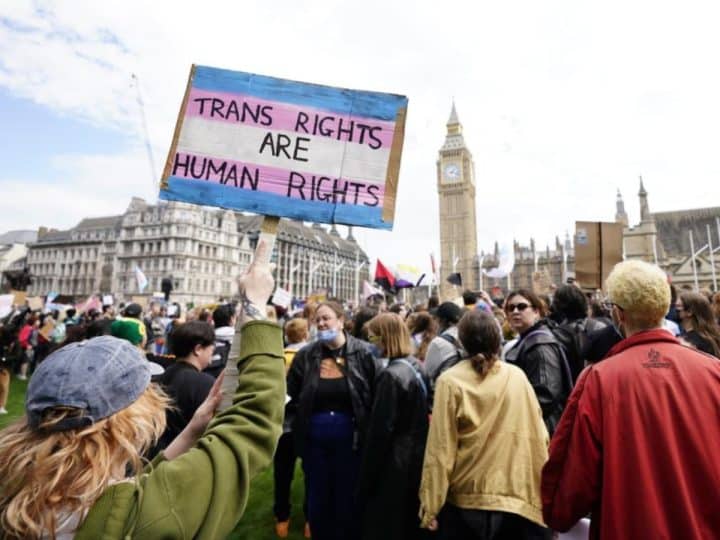

Several major trade unions have reportedly pledged that they’ll resist the EHRC’s transphobic code of practice, which came into force on 5 August. While the new guidance is desperately unclear, many organisations have quickly adopted trans-hostile policies, even where there is no legal requirement to do so.
The news, first published in the Times, follows the announcement that four of the eleven Labour-affiliated unions will boycott the upcoming Labour Women’s Conference in September 2026. Unison, Aslef, Usdaw, and the Musicians’ Union cited the party’s decision to ban trans women from attending the event.
The EHRC code encourages service providers to require that anybody they perceive as trans should use ‘single-sex’ spaces aligned with their sex assigned at birth, or a mixed-sex space. Not all workplaces count as service providers, but this hasn’t prevented some from abandoning trans-inclusive policies regardless.
Unison: ‘We are taking the fight to every workplace’
As such, Unison general secretary Andrea Egan said in a video posted to Twitter/X that, on the EHRC code:
Over 600 members have written to us and provided examples of how the updated EHRC guidance is unworkable. We’ve also heard many employers have withdrawn their trans equality policies in response to this guidance and that is unacceptable.
I’ll be working with our network and equality team to ensure that we are taking the fight to every workplace to make them trans inclusive.
Unison represents some 1.3 million members. It also happens to be Labour’s second-largest union donor, to the tune of almost £26m to the party since 2010.
A spokesperson for Unison also stated that:
The union has an agreed policy recognising that trans women are women, trans men are men and non-binary identities are valid.
As a responsible organisation, Unison is complying with the judgment of the Supreme Court and the recent ruling of the certification officer.
The impact on trans, non-binary and gender diverse members is devastating. The union will be campaigning for a change in the law to reflect its policy.
NUS: EHRC code is ‘ideologically motivated’
In a similar move, the National Union of Students (NUS) has criticised the apparent bias behind the EHRC code. Avery Greatorex, NUS vice-president for liberation and equality, said:
We are wholeheartedly against this new guidance, and believe that it is not the result of unbiased legal advice, as it should be, but is ideologically motivated by the so-called ‘gender-critical movement’.
We thus encourage activists to resist trans-exclusionary policies.
Critics, including genocide watchdog the Lemkin Institute and even EHRC insiders, have made similar claims regarding the commission’s anti-trans ideology. Likewise, the guidance is already facing a legal challenge from two anonymous claimants, alleging that it fundamentally misunderstands the law.
As such, the NUS has issued a booklet containing advice for members on how to remain trans-inclusive in the wake of the guidance. It includes a letter template for students to send to their vice chancellors, which urges them:
to co-design all policies regarding the new Code of Practice with trans staff and students. Together, I am sure you can create policies that both follow the law and mitigate its trans-exclusionary consequences. I look forward to hearing how you plan to do this.
BMA: Code ‘will not work’ with NHS reality
Meanwhile, the British Medical Association (BMA) council has hit out at the sheer impracticality of implementing the EHRC’s guidance. Whilst that would be valid in itself, it’s particularly true given that the NHS is already dangerously overstretched. Deputy chairman Emma Runswick told the Times that:
Doctors want to be able to provide care to patients of all gender identities … Our concern is that the new code will not work with the reality of NHS services, many of which are already ill-equipped to provide safe and dignified care for trans patients.
Earlier this year, the BMA also criticised the government’s actions towards trans patients with regard to the Cass Review. The BMA’s own review of that report found that it established no evidential basis for the ensuing puberty blocker ban. As such, the government over-reached in reaction to the (already distinctly transphobic) report.
Other unions which have already criticised the EHRC code include the University and College Union, Unite, GMB, Equity and the Public and Commercial Services union.
The ideologically-captured government and its anti-equality equalities watchdog clearly believe that they have free reign to ride roughshod over trans people and their allies. Fortunately, the UK’s trade movement is here to show them that they’re willing to fight for principles of inclusion and fairness for all.
Featured image via the Canary
By Grace


New research has exposed widespread apparent violations in published secondary-school menus. This comes as parents say stronger standards need backing with proper monitoring and enforcement.
Three in four publicly accessible secondary-school menus which campaign group Bite Back analysed didn’t comply with current 2014 School Food Standards. Meanwhile, new polling has found that 72% of parents support government measures to implement checks that ensure compliance with the incoming updated standards.
The findings come in a new study from Bite Back. It’s a youth-led movement campaigning to change the way unhealthy foods are made, marketed and sold, especially to children.
The charity examined a representative sample of 500 state-funded secondary schools across England and found downloadable menus for almost 400. Of the nearly 400 menus analysed, over three quarters (76%) contained an identifiable violation of the current standards.
The government is planning to roll out improved School Food Standards in the coming months to accompany the expansion of Free School Meals to all children on Universal Credit. But parents are calling for stronger accountability.
Public First carried out separate polling of over a thousand parents across England, on behalf of the School Food Review. It found strong support for greater enforcement of these new standards.
72% supported government measures to check whether food served in their child’s school meets the updated standards. Parents were more confident the reforms would actually improve their children’s school food if they had external monitoring and enforcement.
D’Arcy Williams, chief executive of Bite Back, said:
At a time when the health of 1 in 3 English children is at risk, parents are sending the government a clear message: stronger school food standards must come with teeth.
Schools need the support to deliver, but the companies making money from feeding children must also be held accountable.
Ministers now have an opportunity to ensure the new rules are transparent, independently monitored and properly enforced, so every child gets the food they need to learn and thrive.
Williams added:
These findings are very alarming and expose a system that is fundamentally failing our children. It is shocking to find crisps and chocolate being pushed at breakfast time or processed meats like sausage rolls and bacon baps being served far more frequently than the rules allow.
Young people have been telling us for years that their school food is ‘beige, bland and boring’ and now we have more evidence that they are being surrounded by unhealthy food throughout the school day.
Schools should be a sanctuary for health and learning, yet the current postcode lottery of food quality is undermining that mission.
Menus repeatedly breach guidelines
The menu analysis found repeated violation examples of unhealthy options offered during breakfast and break times. These included crisps and branded confectionery.
Many menus also advertised processed meat such as sausage rolls and bacon baps, or starchy foods cooked in oil such as hash browns and chips. All more frequently than the current standards permit.
These findings also align with additional insights from the same polling where 1 in 5 children are getting junk snacks like biscuits, crisps, chocolate and sweets almost every day.
Of the menus with no violation, almost none included their break menu options. And these usually account for most other menu violations. This suggests that the true scale of the problem may be greater than the publicly available documents reveal.
The research follows an investigation by the BMJ into the commercial environment surrounding school food.
At the UK’s biggest school food industry event, the BMJ found that 52 of 137 exhibiting companies, more than a third, supplied products high in fat, salt or sugar. These included hot dogs, pizzas, muffins and soft drinks.
The main trade association for school caterers reportedly organised the event. It takes sponsorship from companies supplying products including pizzas, cakes, waffles and ice cream.
Carrera (19), a Bite Back campaigner, said:
Young students have been saying for years that what appears on school menus often doesn’t give us the fuel we need to concentrate, learn and get through the school day.
If you’re not in a canteen every day, you might not realise that. We are surrounded by unhealthy products every day, even in the spaces that are supposed to be helping us grow and thrive.
The new standards are a real opportunity-but the government needs to make sure they are actually followed.
Stephanie Slater, the founder and chief executive of the charity School Food Matters, said:
With these incoming improved standards, we have a once in a generation opportunity to raise the quality of school food for every child.
But the data and the public demand is clear: standards without a robust compliance framework will miss this opportunity.
Parents want to know their children are actually receiving the nutritious meals they need to thrive at school. And that can only happen through a combination of collaborative efforts from school leaders, Food Standards Agency, and Ofsted.
Support for universal Free School Meals
Parents also expressed overwhelming support for the government to go further on expanding access to Free School Meals. 80% supported extending provision to every primary-school child. And a similar number (78%) supported extending it to all children across primary and secondary schools.
The research also found:
- There were 224 schools (57%) providing meat products such as burgers, nuggets, sausages and goujons more often than the twice a week permitted by the standards.
- Hash browns, which as a fried starchy food should be a menu option only twice a week, were being offered more often than that at 144 schools (37%).
- There were 123 schools (31%) using chocolate in solid form, such as chocolate chips or chocolate coating, as an ingredient in dessert or bakes, despite it being banned.
Bite Back said the findings show the government has an opportunity and a clear public mandate to ensure more children receive nutritious and delicious school food. And it can also make sure the companies providing it actually meet the School Food Standards everywhere, for every child.
The government’s proposed School Food Standards would increase the availability of nutritious options such as fruit, vegetables, wholegrains and pulses. And they would further restrict high-sugar foods, drinks and other unhealthy options.
Bite Back is calling for the final standards to cover the whole school day and require complete and accessible menus to be published online. And it wants a properly resourced compliance system of independent monitoring and enforcement to support the standards.
Featured image (illustrative) via the Canary
By The Canary
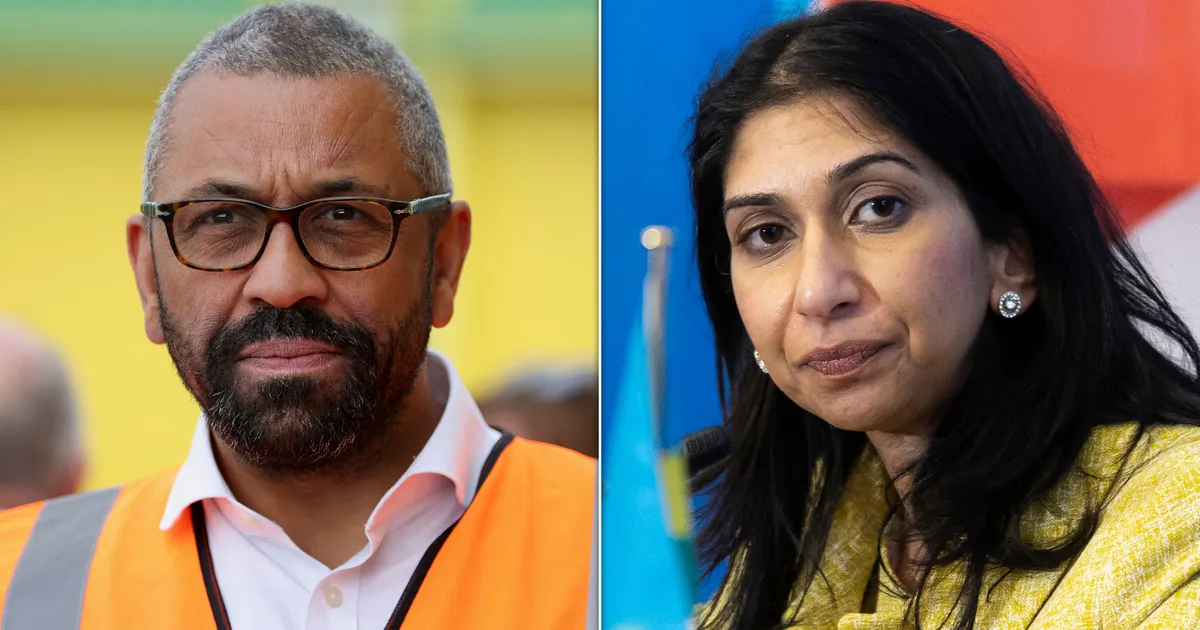
Suella Braverman was hit with a timely reminder of her legacy on X by her former colleague James Cleverly in a spat about asylum seekers.
Previously a home secretary under Rishi Sunak and Liz Truss, Braverman crossed the floor to join Nigel Farage’s party back in January.
However, in her new role as Reform’s education spokesperson, she seems to have forgotten exactly what she did in government.
The argument began when Reform leader Nigel Farage shared footage from within Cleverly’s constituency of Braintree showing groups of asylum seekers sitting on the street.
His caption read: “Just another day in James Cleverly’s constituency. Unless we get a Reform government, every town in Britain will look like this.”
Cleverly replied: “Wait until Nigel finds out that these people are in Braintree because Suella Braverman and Rob Jenrick opened an asylum accommodation centre in my constituency.
“Where are Rob and Suella now?”
Robert Jenrick, former Tory immigration minister under Braverman, is now Reform’s Treasury spokesperson.
Braverman hit back at Cleverly: “You were home secretary after me. If you were so opposed to Wethersfield, you could have shut it down. Why didn’t you do that?”
That post was hit with a community note from other X users stating that Cleverly recused himself from all decisions on that asylum accommodation centre as “per the ministerial code as the local MP”.
Cleverly also replied: “Have you never read the Ministerial Code?
“Are you not aware that ministers have to recuse themselves from decisions that would directly benefit themselves or their constituencies? Also I spent most of my time as Home Secretary clearing up the mess you left.”
The MP for Fareham and Waterlooville hit back by deflecting: “You should be apologising to the country for being one of those Tories who objected to leaving the ECHR- which is why the last Tory government failed to stop the boats.
“You should be apologising to the country for refusing the ban the IRGC – the source of extremism and terrorism in the UK.
“You should be apologising to the country for opening talks with Mauritius on Chagos. The country is still clearing up the mess you left.”
Their furious exchange comes amid a trying time for Reform UK.
Leader Farage triggered a by-election in his constituency of Clacton amid heightened scrutiny over a £5 million donation from a crypto billionaire which he failed to declare to parliament.
He was re-elected earlier this month, meaning the parliamentary sleaze probe into the gift has resumed.
Reform also surprisingly suspended prominent party member Tim Montgomerie last week after his frequent criticism of Reform’s home affairs spokesperson Zia Yusuf and of Farage.
The right-wing party has also lost its dominant lead in the polls since Andy Burnham replaced Keir Starmer in No.10.
Listen to Commons People, the podcast that makes politics easy. Every week, Kevin Schofield and Kate Nicholson unpack the week’s biggest stories to keep you informed. Join us for straightforward analysis of what’s going on at Westminster.

For the past few days, the entertainment world has been abuzz with conflicting reports about Meghan Markle making an acting comeback in the unlikeliest of places.
Word on the street has been that the Duchess of Sussex had been eyed for a role in Guy Ritchie’s The Gentlemen.
First, she was in, then she was out, then she was never “in” in the first place – with the whole thing being made even more complicated by the fact that none of the parties involved had actually spoken out to confirm or deny the bizarre story.
So, for those who’ve not been following, or just need a recap, here’s a quick reminder of everything that’s been said so far – and, notably, who’s been saying it. Just keep in mind, none of this has actually been confirmed to true (so far!)…
Thursday 20 August: Prince Harry and Meghan Markle are reported to be moving back to the UK
It’s now been over six years since Prince Harry shocked the world by announcing that he and his wife Meghan would be stepping down from their roles as senior royals, and eventually moving overseas.
The rest has been well-documented, but after a Netflix documentary, a tell-all book and numerous revealing interviews, it’s fair to say that relations between the Sussexes and the rest of the Royal Family haven’t always looked the rosiest.
So, it came as another bolt from the blue last week when People magazine reported that the couple were planning to move back to the UK alongside their two children, seven-year-old Archie and five-year-old Lilibet.

People’s report claimed that two would “establish a private, non-royal home base in Britain” while keeping their production company Archewell overseas, and maintaining properties in the USA (Montecito, California, to be more specific) and Portugal.
It was also suggested that the wheels were already in motion, with Harry and Meghan having already enrolled their children in a school, where they’d begin classes when term begins in just over a week’s time.
Friday 21 August: Prince Harry and Meghan Markle’s move is reported to be based on the fact that the Duchess of Sussex has been ‘offered a role in an upcoming project based in the UK’
This is when things began veering into “hold onto your hats, folks” territory.
While the motivations behind the Sussexes’ move were not disclosed, Australia’s news.com.au was the first to allege that the couple’s decision was based on the fact that Meghan had been “offered a role in an upcoming project based in the UK”, according to their undisclosed “entertainment sources”.
BBC News even picked up on the story, after which the showbiz outlet Variety claimed to have had it “confirmed”.
The journalist who broke the story, Bronte Coy, later told BBC Radio 4’s Today programme that the role was “significant”, and that the Duchess of Sussex was “very excited about it”.
Meghan last acted in Suits, the TV show where she made her name internationally, before stepping down from the series in 2018 ahead of her marriage to Prince Harry.

USA Network/Netflix/Kobal/Shutterstock
Since then, she has had a number of on-screen roles, though not in an acting capacity, perhaps most notably her ill-fated Netflix lifestyle series With Love, Meghan and a guest judging stint on the Australian version of MasterChef.
Later this year, she’ll also make a cameo appearance as herself in the comedy Close Personal Friends, starring Oscar winner Brie Larson, Emily In Paris’ Lily Collins and Crazy Rich Asians’ Henry Golding.
Friday 21 August: Meghan Markle is reported to be ‘in talks’ for a role in The Gentlemen
Once whisperings about a return to the acting world for Meghan and a mysterious role she’d been offered, Deadline alleged within hours that she was being “eyed” for a role in a future season of Guy Ritchie’s hit gangster series The Gentlemen.
They cited unnamed “sources” who’d told them she was in the “early stages” to play a role in a potential third season, with a specific part having supposedly not yet “been identified”.
The Gentlemen is a spin-off of Guy’s film of the same name, and proved to be a huge hit with both critics and viewers when it premiered on Netflix in 2024, with a second run due to debut next week.

In the next run of episodes, series regulars Theo James and Kaya Scodelario will be joined by some new additions, most notably Love Island host Maya Jama.
Crucially, Deadline pointed out that the rumoured talks between Meghan and The Gentlemen were “hypothetical” because the show hasn’t even been commissioned for a third season yet.
They also alleged that reps for both the Sussexes and Netflix had “declined to comment”.
Meanwhile, The Hollywood Reporter had its own version of the story that same morning, suggesting these early talks were actually in the “advanced discussions” stage, and that Meghan’s role was “being written” after she and Guy met “through mutual acquaintances”.
Saturday 22 August: Veteran journalist Tina Brown claims Meghan Markle’s ‘offer’ to appear in The Gentlemen has been ‘withdrawn’
Naturally, news of Meghan potentially appearing in a show like The Gentlemen raised eyebrows, with former Tatler and Vanity Fair editor Tina Brown – who penned the explosive royal book The Palace Papers in 2022 – claiming the following morning that the talks had abruptly ended.
“I learned this morning that the casting of Meghan Markle in season three of Guy Ritchie’s Netflix series The Gentlemen has been withdrawn,” she wrote on Substack. “The backlash in the UK was so intense, it became untenable to go forward. This does not bode well for Meghan’s acting comeback in the UK.”
She also teased “more to come”, but has not posted since Saturday morning.
Crucially, it’s worth remembering that Meghan’s “casting” in season three hadn’t even been established to be “withdrawn”, with the initial report claiming she’d only entered preliminary talks with show bosses, rather than receiving any kind of formal offer.
Sunday 23 August: A journalist supposedly in the know contests the whole story
A day later, Complex quoted a journalist supposedly in the know, who’d posted on X that Meghan’s casting in The Gentlemen wasn’t “off” because “it was never on”.
He wrote that he knew Guy Ritchie, and that the original story was a “total fabrication” and “ridiculous”.

So, what exactly have Meghan Markle, Netflix and Guy Ritchie said about the rumours?
Well, that’s the exactly it – none of them have commented publicly, although HuffPost UK has contacted reps for the Duchess of Sussex, Netflix and Guy Ritchie for comment.
The second season of The Gentlemen, meanwhile, will begin streaming on Thursday 3 September…


Germany’s ‘Alternative für Deutschland‘ (AfD) is classified as an extremist right-wing organisation even by German security services. And the party is determined to be its true racist, eugenicist self. AfD has announced that if it takes power in the approaching Saxony-Anhalt regional elections, it will segregate refugee children into a separate education system. So far, so unsurprisingly evil. But the party also wants to take Germany back to its nazi roots by segregating disabled children as well.
And for good measure, AfD plans to reduce education on the nazi era and politics.
AfD: “the inclusion experiment has failed”
The racist party’s manifesto announced that it finished with integrated education: the “inclusion experiment has failed and and must be ended”. AfD claims that it wants to pull disabled children out of mainstream education for their benefit. It says that it will segregate refugee children to send a “message that their stay in Germany is only temporary” – while it works to shut down the arrival of refugees Germany’s own policies help to create. And even in the refugee schools, Islamic education will be excluded because “Islam is not part of Germany” – making clear just who the AfD’s scapegoat is.
But let’s be clear: this is all about preventing impressionable young people being exposed to, and learning to empathise with, children who are different from them. Nazi ‘othering’ – and the murderous ‘useless eater’ mentality that goes with it – depend on indoctrinating the young to hate those who are not like them.
Keeping German children from being able to empathise and identify with fellow human beings the state – or a political party wanting to control the state – rejects and scapegoats. In the country that gave birth to Nazism and the slaughter of Jews, disabled people, LGBTQ people and people of ‘impure’ or ‘subhuman’ ethnicity, what could possibly go wrong?
Saxony’s education minister Conrad Clemens told Bild that:
The idea of putting foreigners and students with disabilities in separate classes leads to a dangerous division in the classroom. Such ideas are unacceptable for our education system.
Polling projects a strong performance for AfD in the 6 September 2026 Saxony-Anhalt elections.
Featured image via the Canary
By Skwawkbox

HBO’s Sci-Fi Detective Series Just Revived a Major Part of DC Comics Lore

Dad asks if son can sit in stranger’s plane seat and she’s livid when she realises age

(VIDEO) Luka Doncic Debuts Slimmer Physique at Lakers’ Slovenia Minicamp Ahead of New NBA Season as Fans React





-

 Fashion3 days ago
Weekend Open Thread: Madewell – Corporette.com
-

 Business6 days ago
SMA Solar Technology AG (SMTGY) Q2 2026 Earnings Call Transcript
-

 Crypto World2 days ago
anatomy of crypto’s biggest liquidation event since 2021
-

 Business2 days ago
Musk’s Tesla, SpaceX Confirm $16.8 Billion ‘Terafab’ Chip Plant as World’s Largest Building in Texas
-

 Tech6 days ago
Qwen3.8-27B runs frontier-class coding agents and reasoning locally, no cloud API required
-

 Crypto World7 days ago
OCC Greenlights Trump Family Crypto Firm for Trust Charter
-

 Politics2 days ago
6 months on, Irish renters crushed by effects of government housing bill
-
 NewsBeat2 days ago
The ‘Lucky Dip Gang’ causing carnage for clicks: After five thugs were killed speeding in the wrong direction on a motorway, GUY ADAMS investigates a sick new trend… and why police aren’t even allowed to pursue them
-

 Crypto World7 days ago
NAVI Prime launches institutional lending framework on Sui
-

 News Videos4 days ago
Don’t Leave Your Financial Future To Chance | August 19, 2026
-

 Tech5 days ago
GLM-5.3 hits the API at $1.4/$4.4 per million tokens
-
Tech7 days ago
5 Of The Most Reliable Car Brands To Consider If You’re Buying A Used SUV
-

 Crypto World7 days ago
Dow’s 3-Year Winning Run Isn’t a Crash Signal, Still 49% Odds of Double-Digit Gains
-

 Business6 days ago
Stock Market Today: Tech Futures Slide As Treasury Yields Jump; Nvidia, Micron, Sandisk Sell Off
-

 Tech6 days ago
Keychron K8 Ultra 8K review: a great value keyboard with comfort issues
-
 NewsBeat7 days ago
Trump explodes at CNN reporter after question about young blonde aide who wrote him besotted letters
-
 Tech7 days ago
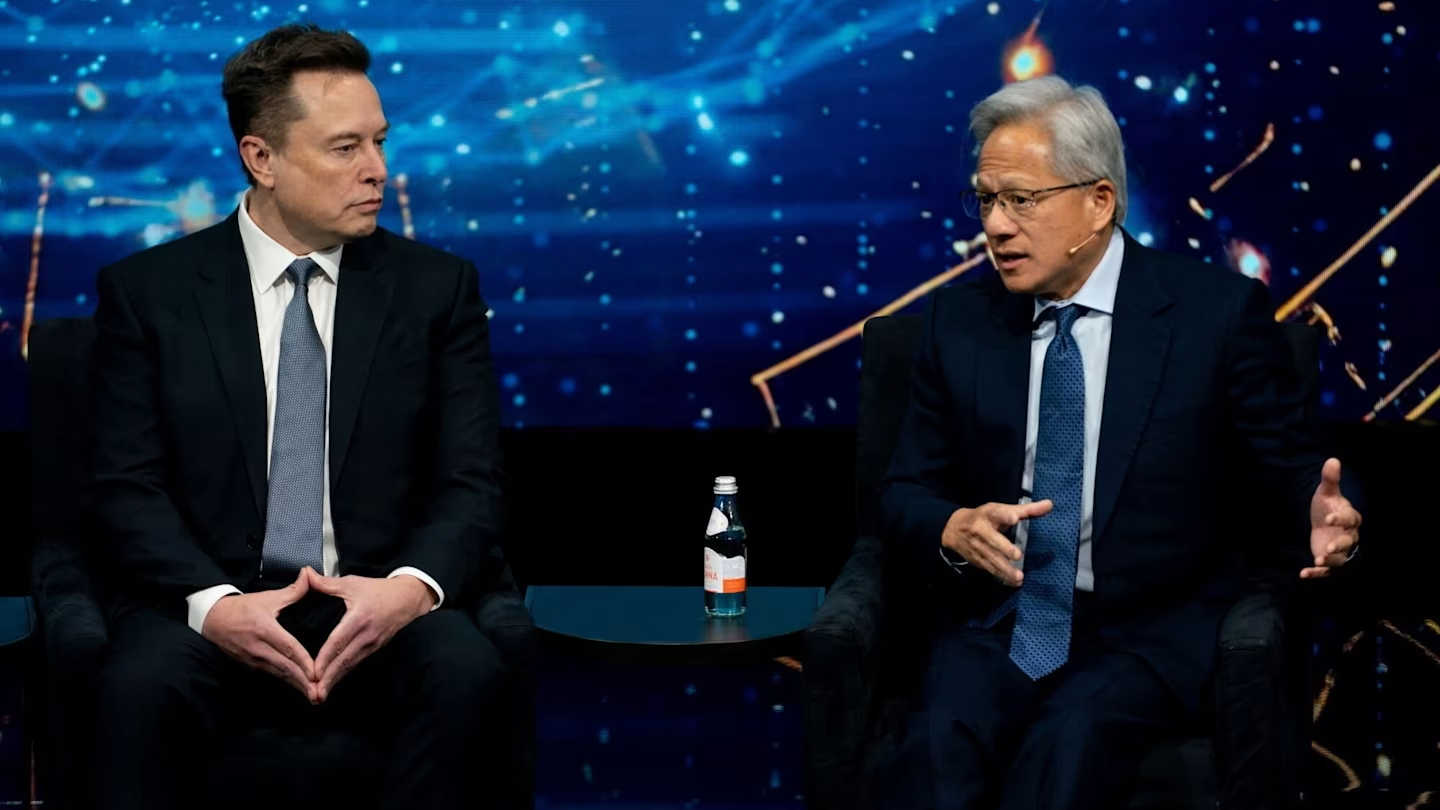
Nvidia discloses $21B stake in SpaceX
-
Business7 days ago
Fabrinet (FN) Q4 2026 Earnings Call Transcript
-

 Business4 days ago
Five Below: Kids Discount Retailer Reaps Rich Rewards
-

 Business5 days ago
Marvell Shares Jump 7% as Google Chip Deal Confirms Custom AI Silicon Partnership, Analysts
You must be logged in to post a comment Login