
Crypto World
Gemini strikes Apex deal to widen prediction markets reach



The planned tie-up would make Gemini the exclusive CFTC-regulated venue for crypto event contracts offered through Apex’s futures commission merchant.

Crypto World
Coinbase debuts tokenized stocks on Base network, joining race to bring equities on blockchain


The crypto exchange is starting with tokenized versions of Apple, Nvidia, Meta and Alphabet, issued under its new Abu Dhabi framework.

In times when the cryptocurrency market is finally picking up the slack, the Bitcoin treasury company and asset manager Strive has returned with another purchase.
As announced by the firm’s CEO, Matt Cole, Strive has acquired an additional 1,110 BTC for $81.5 million at an average price of $73,409 per unit. These purchases were completed in tranches.
It bought 147 BTC between August 3 and 7 at an average price of just over $64,800. Then bought another 79 BTC a week later at an average price of $63,231. The rest were accumulated in the past few weeks as BTC’s price appreciated to almost $80,000 last Friday.
Strive acquired an additional 1,110 $BTC for $81.5M at an average cost of $73,409 per bitcoin, bringing total holdings to ₿21,356.$ASST $SATA pic.twitter.com/bPcbHzl3dH
— Matt Cole (@ColeMacro) August 24, 2026
This is the firm’s second BTC purchase in the past few months. It held 15,009 BTC on May 12 before it ramped up its efforts and now holds 21,356 units.
Unlike Strive, Strategy, which is the world’s largest corporate holder of the cryptocurrency, has remained on the sidelines for almost two months, making no BTC purchases. Saylor’s company has focused on rebuilding its USD reserve, which is above $6.5 billion after the latest initiatives.
The post Strive Splashes Out $83M on 1,110 BTC as Bitcoin Holdings Top 21,000 appeared first on CryptoPotato.

Cheng Xin | Getty Images News | Getty Images
Bitcoin and crypto stocks extended their rally to start the week after the flagship cryptocurrency broke out of its trading range as investor concern over inflation and the fiscal deficit grew.
The price of bitcoin was higher by 2% on Monday, trading just under $80,000 at levels not seen since May. Ether rose 2% to about $2,500, trading at its highest level since January.
Crypto treasury stocks followed the blue-chip crypto assets higher. Strategy and Strive climbed 2% and 4%, respectively, while ETH treasury names Bitmine and Sharplink gained 3% and 2%, respectively.
Investors are wondering if the rally could mark a turning point for bitcoin, whose price has been stuck in a prolonged slump since October, ahead of a seasonally bullish period for the coin.

BTC in 2026
BTIG’s Jonathan Krinsky pointed out in a Monday note that bitcoin did something similar in January 2023, also surging about 20% in three days and breaking above its downtrend. Then, however, the rally faded and bitcoin pulled back to its 200-day moving average, where it found support.
The move came after a macro shift last week that led to a massive short squeeze in bitcoin and a more than 20% gain over three days — the largest such rally since 2023. After the Treasury said it would double its purchases of longer-dated government bonds, yields briefly pushed lower, helping revive demand for risk assets like bitcoin and scarce assets like gold.
Demand from institutions also returned, with spot bitcoin ETFs posting $1.92 billion in inflows last week—their largest weekly inflow since October, when bitcoin reached its cycle peak. Meanwhile, more than $4 billion in bearish crypto positions were liquidated as prices rose.
Bridgewater Associates founder Ray Dalio warned that major economies could face a debt crisis within the next several years and recommended investors hold “a bit” of bitcoin, reinforcing the crypto asset’s move.
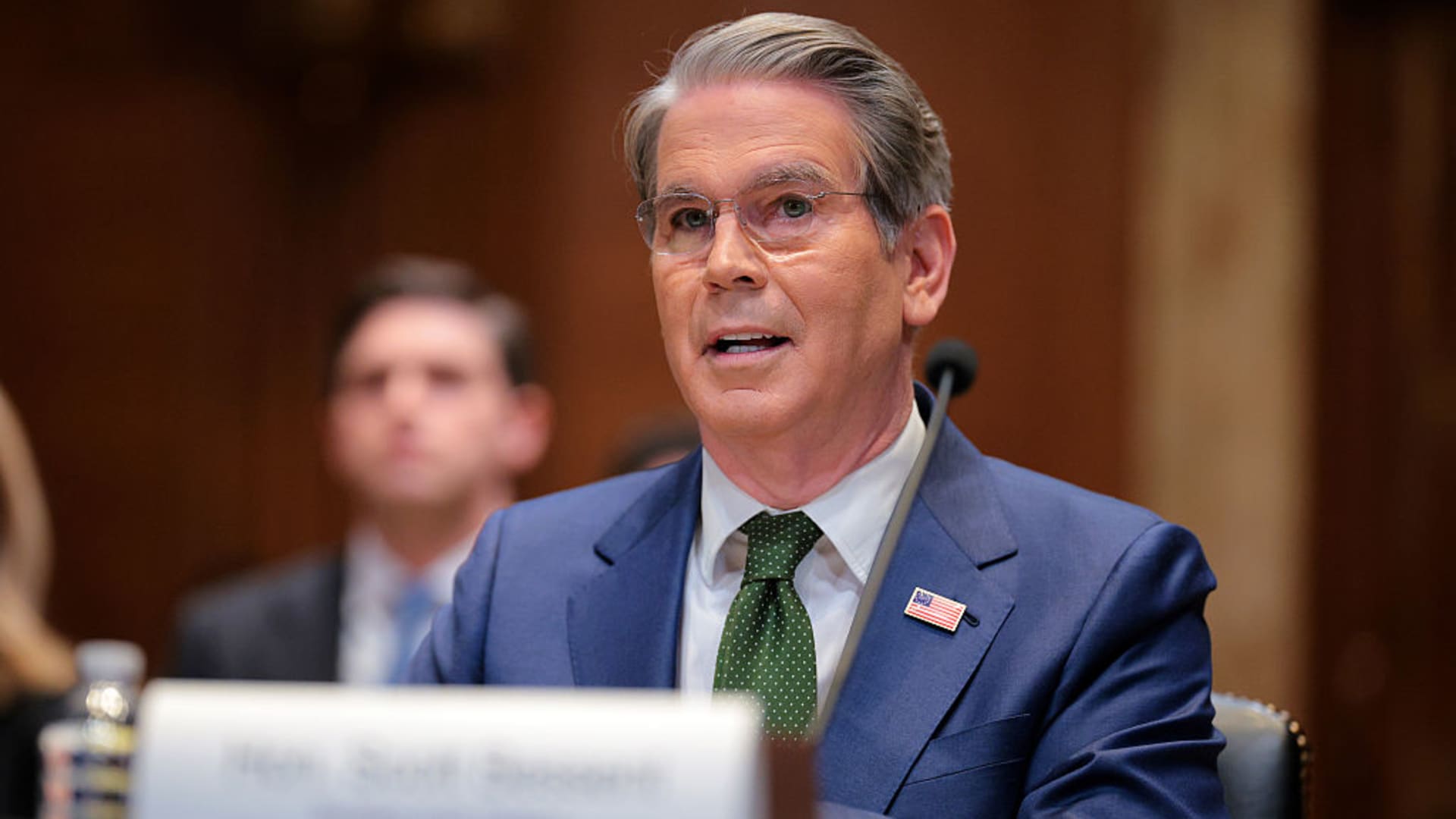
U.S. Treasury Secretary Scott Bessent arrives to testify during a Senate Committee on Appropriations, Subcommittee on Financial Services and General Government hearing in the Dirksen Senate Office Building on April 22, 2026 in Washington, DC.
Chip Somodevilla | Getty Images
Treasury Secretary Scott Bessent is seeking to cap rising yields using a variety of tools at his department’s disposal. However, traders on prediction market platforms think they won’t lead yields to fall dramatically.
Speculators on Kalshi think there’s a 56% chance that the 10-year Treasury note yield will end 2026 above or at 4.75%, though they also place just 27% odds that it finishes the year above 5%. As of midday trading Monday, the 10-year yield was trading at about 4.70%.
Traders on Kalshi are asked across a series of contracts about where they think the 10-year Treasury note yield will trade on Dec. 31. The contracts are resolved using data from the U.S. Treasury.
Volume on the contracts are low, though, at just over $16,500 traded.
On Polymarket, speculators place two-in-three odds that the 10-year Treasury note yield will cross 4.8% at some point in 2026, a level that it hasn’t breached even amid a recent bonds sell-off. The contracts on Polymarket are also resolved using official data from the U.S. Treasury.
Last week, global bonds experienced a sell-off as markets assessed the risk of potentially higher inflation while the U.S.-Iran conflict remains unresolved. U.S. national debt also crossed $40 trillion last week, putting further pressure on domestic yields.
In response to the sell-off, the Treasury Department announced it would double buybacks of U.S. debt to stabilize the bond market. Yields initially fell on the news, then rose again in the days after the announcement.
On Monday, CNBC reported that the Treasury may consider using its $1 trillion General Account to help fund its increased buybacks, according to senior officials.
Yields, again, declined after the report. But prediction market traders are betting that, once more, yields’ fall will be temporary and they’ll resume marching higher.
Disclosure: CNBC and Kalshi have a commercial relationship that includes customer acquisition and a minority investment.
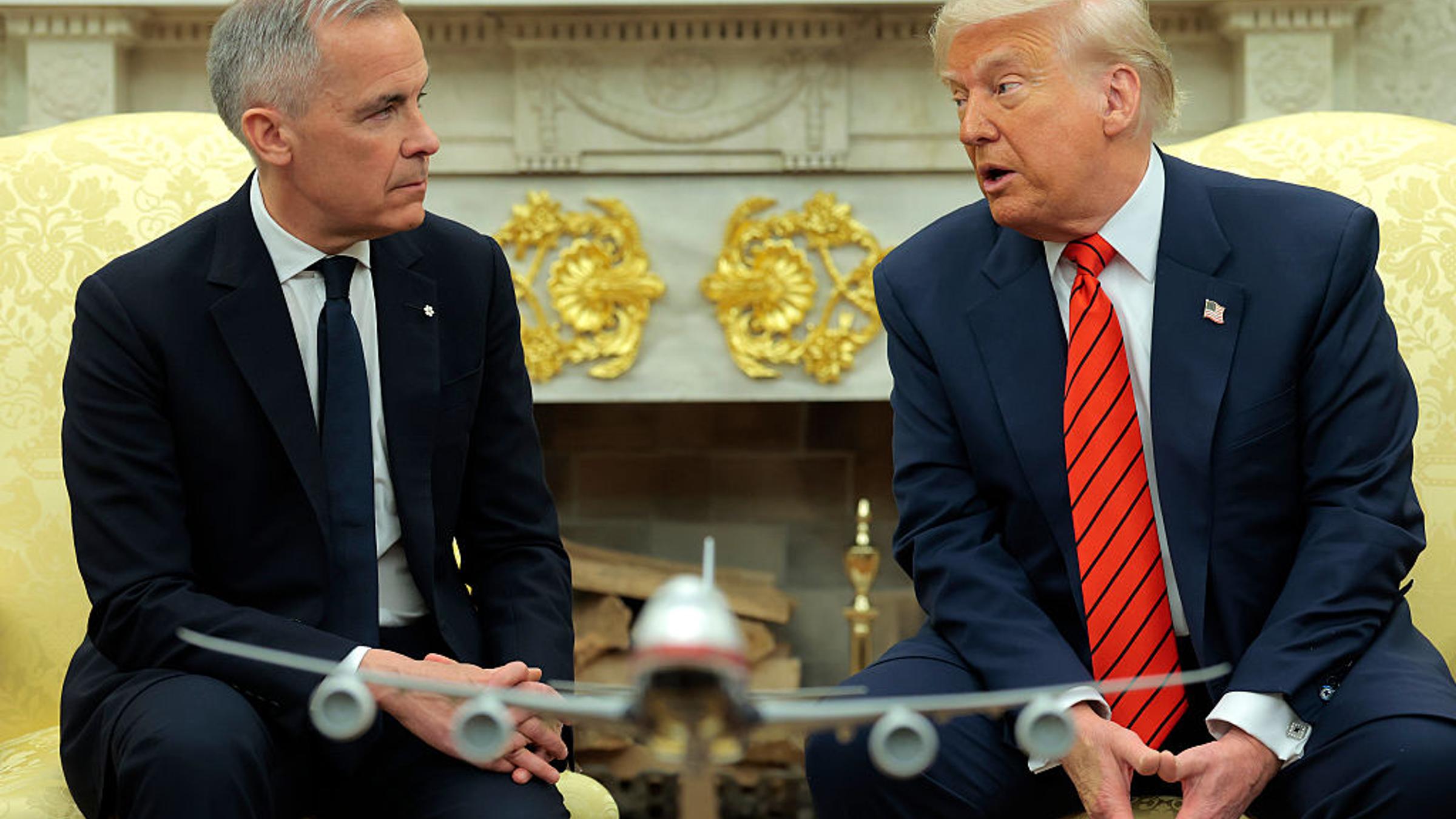
“Last spring, I warned that America is trying to break us so that they can own us. And promised: “That will never, ever happen.” We are keeping that promise. Canada is becoming stronger and less dependent on America.”
Both sides have since blamed the other for making unreasonable demands late in the negotiating process.
“While we believed, earlier this week, that we were moving toward a mutually beneficial agreement, in recent days, the U.S. proposed new terms that were uneconomic, unfair, and undermined the net benefits to Canada, calling into question the reliability of any deal,” Carney said on Saturday. “In short, they asked too much and offered too little.”
U.S. Trade Representative Jamieson Greer, meanwhile, framed the breakdown in negotiations as leaving the U.S. with little choice but to retaliate against Canada.
“We’ve said enough, and so we’ve taken countermeasures. Our interest is in protecting American workers and protecting American supply chains,” he told “Fox & Friends” on Saturday.

The Crypto Council for Innovation (CCI) and Blockchain Association (BA) filed a lawsuit against Illinois officials regarding the state’s 0.2% tax on cryptocurrency, expected to be enforced starting in January 2027.
In a lawsuit filed Friday in the Circuit Court of the Seventh Judicial Circuit for Sangamon County, lawyers for the two crypto advocacy groups challenged Illinois’ digital asset tax on the grounds it violated the US Constitution, the state’s constitution, federal and state due process laws and the federal Internet Tax Freedom Act. Illinois Governor JB Pritzker signed the measure into law as a “privilege tax” in June as part of the state’s fiscal year 2027 budget, requiring crypto users to be taxed as applied to transaction volume rather than income.
On the due process claim, CCI and BA argued that the tax was “unconstitutionally vague” by placing the burden on residents and brokers “under the threat of serious civil and criminal penalties” to determine what and how such assets were taxed. Notably, the crypto organizations’ arguments under the US Constitution were based on alleged violations of the Commerce Clause covering interstate commerce, claiming that the state tax “creat[ed] the specter of duplicative taxation.”
“States have an important role to play in fostering innovation, but that authority has constitutional limits,” said Summer Mersinger, CEO of the Blockchain Association and a former commissioner at the US Commodity Futures Trading Commission. “Illinois cannot impose a novel tax regime that discriminates against digital commerce, creates uncertainty for consumers and businesses, and threatens to fragment a rapidly growing national market.”

Source: Blockchain Association
The CCI and BA lawsuit followed a similar one filed by the Digital Chamber in July in which that organization argued that the Illinois tax “discriminates against people who transact in digital assets.“ The suits represented the influence of digital asset groups in opposition to laws passed by US state officials during an election year when crypto policy, laws and regulation could influence voters.
Related: Nigeria sets crypto tax collection rules for digital asset platforms
Illinois also targeting prediction markets
Opposition to the crypto tax came amid prediction market platform Kalshi’s lawsuit against Illinois officials over a law that went into effect on July 1. According to the company, the legislation “expressly bans sports event contracts” in violation of federal law by requiring state licensing.
Separately, Pritzker signed an executive order banning state employees from betting on the platforms in April in an effort to ”prevent insider trading amid the rapid growth of online prediction markets and event-based gambling contracts.”
Magazine: Crypto industry ties were a liability in Illinois primary


Two U.S. crypto trade groups have sued three Illinois officials to stop a 0.2% digital asset tax from taking effect on Jan. 1, 2027.
Summary
- The Blockchain Association and Crypto Council for Innovation want the court to block the tax before its 2027 start.
- The complaint alleges violations of the U.S. Constitution, the Illinois Constitution, and the federal Internet Tax Freedom Act.
- Brokers could face registration, collection, reporting, and recordkeeping duties backed by civil and criminal penalties.
- The Digital Chamber filed a separate lawsuit against the same tax in July.
Illinois crypto tax faces six legal claims
The 39-page complaint, filed by the Blockchain Association and Crypto Council for Innovation in Sangamon County Circuit Court, seeks declaratory and injunctive relief against the Digital Asset Tax Act.
Filed against Illinois Department of Revenue Director David Harris, Attorney General Kwame Raoul, and Sangamon County State’s Attorney John Milhiser, the case challenges the officials responsible for implementing, collecting, and enforcing the tax.
According to the filing, Illinois would impose the levy on the full value of a customer’s digital assets whenever a covered broker exchanges, transfers, or stores them. The groups said a customer could owe the tax even without selling an asset, transferring ownership, or earning a profit.
The complaint sets out six counts under federal and state law. CCI and the Blockchain Association allege that the measure violates the federal Internet Tax Freedom Act, the Commerce Clause, and due process protections under the U.S. Constitution.
At the state level, the groups claim the tax violates Illinois’ Uniformity Clause, unlawfully delegates tax policy to an administrative agency, and fails to meet a state constitutional rule requiring bills to be read by title on three separate days in each legislative chamber.
Calling the measure “unconstitutionally vague,” the plaintiffs said brokers and Illinois customers cannot determine with enough certainty which activities fall under the law or who must collect and remit the tax. The groups argued that the uncertainty carries serious consequences because statutory violations could expose a broker to a Class 3 felony.
The filing also claims that some association members are already spending money on outside legal and tax advice and changing their systems to calculate, collect, and record the levy. According to the plaintiffs, withholding court review would leave affected firms with a choice between limiting service to Illinois customers and risking criminal liability.
Groups say interstate transactions could be taxed twice
Under its Commerce Clause claim, the complaint argues that Illinois has not fairly limited the tax to economic activity within the state. The law allows officials to treat a transaction as occurring in Illinois by relying on details such as a customer’s address, account records, or IP address.
The groups said another state could use its own location test for the same transaction, raising the possibility that two jurisdictions would tax one transfer. A customer with an Illinois address who completes an online transaction while visiting another state could therefore create competing tax claims if both states adopted similar rules, according to the filing.
Illinois also lacks a credit for comparable tax paid to another state, the complaint said. On that basis, the plaintiffs allege that the measure could place interstate digital asset activity at a disadvantage compared with transactions conducted entirely within one state.
Summer Mersinger, CEO of the Blockchain Association and a former Commodity Futures Trading Commission member, said states can support new industries but must remain within constitutional limits.
“Illinois cannot impose a novel tax regime that discriminates against digital commerce, creates uncertainty for consumers and businesses, and threatens to fragment a rapidly growing national market.”
The Internet Tax Freedom Act claim focuses on the tax treatment of online commerce. According to the complaint, the federal law prevents states from imposing discriminatory taxes on electronic transactions when equivalent offline activity receives more favorable treatment.
Illinois does not impose the same levy on the exchange, transfer, or storage of cash, stocks, bonds, or precious metals, the plaintiffs said. The filing gives the example of an Illinois resident who can store gold in a safe deposit box without paying the new tax but would face the 0.2% charge when using a service to hold Bitcoin.
Brokers and Illinois customers could both owe duties
As crypto.news reported in June, Governor JB Pritzker signed the tax into law as part of Illinois’ $55.9 billion fiscal 2027 budget. State budget documents estimated that the levy could generate about $60 million annually.
The law places a 0.2% “privilege tax” on the value of digital assets tied to covered business activity received by an Illinois customer. Covered services include exchanging, transferring, and storing digital assets through a broker.
According to tax advisory firm BDO USA, certain out-of-state brokers can fall under the law when they receive at least $100,000 from Illinois customers during a 12-month period. Location tests can draw on billing details, customer records, mailing addresses, and IP information.
Covered brokers must register with the Illinois Department of Revenue, collect the tax from customers as a separate charge, keep transaction records, and submit monthly filings. When a broker does not collect the levy, the statute directs the customer to assess the amount and pay the department by the 20th day of the following month.
The latest complaint says different sections of the law create uncertainty over which firms must follow each requirement. While one part places collection duties on brokers with an Illinois place of business, another appears to require the broker completing a sale to collect the levy without applying the same revenue threshold, according to the plaintiffs.
CCI and the Blockchain Association also challenged how lawmakers passed the measure. Their filing said Senate Bill 3019 began in January as a two-page proposal concerning loans for agricultural property before lawmakers replaced its contents on the final day of the legislative session.
Two amendments expanded the legislation into a 1,624-page package covering subjects ranging from vehicle weight rules to sports wagering. The complaint said the digital asset provisions took up fewer than 20 pages and contained no legislative findings explaining the tax.
According to the groups, House and Senate committees gave the public about an hour or less of notice before hearings, while both chambers passed the rewritten bill within 24 hours. Pritzker signed it on June 16 as Public Act 104-468.
A second lawsuit targets the same 0.2% levy
The case is the second industry challenge filed against the Illinois tax. In July, the Digital Chamber filed its own lawsuit in the same state court, arguing that Illinois had taxed digital asset services differently from economically similar transactions involving traditional assets.
The Digital Chamber asked the court to declare the law void and unenforceable. Its complaint also alleged violations of federal and state constitutional protections and challenged the state’s decision to base tax treatment on the technology used to record or move an asset.
Public objections began before the budget became law. The Crypto Council for Innovation asked Pritzker to remove the digital asset provisions through a line-item veto, while the Digital Chamber and Illinois Blockchain Association said lawmakers gave affected businesses no meaningful notice.
Strategy co-founder Michael Saylor later called the law a “Big Mistake.” Miles Jennings, general counsel and head of policy at a16z Crypto, said in June that no comparable state financial transaction tax applied to stocks, bonds, or derivatives.
Illinois has also faced a separate court fight over prediction markets. Kalshi challenged a state law that treats sports event contracts as wagers and requires operators to obtain state licenses.
In its federal complaint, Kalshi argued that the Commodity Exchange Act gives the CFTC exclusive authority over contracts listed by federally regulated markets. The company said complying with the Illinois licensing system would create additional expenses, while blocking state residents could require new geofencing systems.
Pritzker had earlier signed Executive Order 2026-04 restricting state employee trading on prediction platforms when nonpublic information obtained through official duties could be used to make a profit or avoid a loss.

Ethereum (ETH) could reach $20,000 in the next few years, according to Credible Crypto.
The premise for his thesis lies in ETH’s trading range of five years, weak relative performance vis-à-vis Bitcoin (BTC), as well as a potential rotation into higher-risk assets.
Analyst Sees ETH Breaking 5-Year Range
As explained by the analyst in Sunday’s episode of the No Bs Crypto podcast, ETH has been trading in a range of around $1,500 to $5,000 for about five years now, the token having touched both ends several times in the process, forming what he considers a large higher timeframe range.
Additionally, while Bitcoin is trading above the 2021 high, Ethereum is lagging behind, and according to Credible Crypto, the ETH/BTC ratio has reached such levels that it can allow ETH to catch up with BTC.
His basic target is $10,000. He argued that doubling Ethereum’s previous range high near $5,000 would produce that level, while a larger range expansion could push ETH toward $8,000 and $9,000 even before we consider other factors.
The $20,000 target will rely heavily on Bitcoin’s price. If the BTC price stands at about $80,000, where it is currently close to, with ETH/BTC recovering back to its earlier high of 0.156, then Credible says Ethereum will hit above $12,000.
“Now, if we take a more optimistic scenario with Bitcoin at $100K, that gives us over $15,000 Ethereum,” Credible told his host Kyren. “And if we take the most realistic scenario, in my opinion, the Bitcoin highs at $126K will be broken and we’ll actually trade above those levels. Now we’re pushing $20K Ethereum and above.”
The crypto trader also pointed to ETH’s higher risk compared to Bitcoin, with that, in his view, creating room for the former to deliver a larger return during a bull cycle. But his technical case rests on Ethereum defending a higher-timeframe low near $1,388.
He believes a break below that level would invalidate the bullish structure. However, he considers a move below $1,500 increasingly unlikely and estimates there’s maybe a 90% chance that ETH does not return below $1,900.
Altcoins Could Follow Ethereum Higher
The latest market data gives the bullish case some context, as CoinGecko data shows ETH above $2,400 at the time of writing, up 3.5% in 24 hours and about 30% in seven days. In addition, it has gained more than 32% over 30 days but is still about 50% below its all-time high.
ETH’s recent double-digit one-day pump has also attracted historical comparison, with market watcher Jamie Coutts noting that several similar upticks in the past helped push up ETH prices as much as 60% higher within 180 days.
Other altcoins have also started moving faster, and that segment added $215 billion between August 19 and 22, pushing its total market cap above $1 trillion, with the share of Binance-listed altcoins trading above their 200-day moving average also rising from 15% to 56%.
According to Credible Crypto, some assets with stronger fundamentals could outperform ETH if the cycle continues, potentially delivering even bigger returns if Ethereum goes up tenfold from $2,000 to $20,000, as he predicts.
“I’ve talked about end-of-cycle targets for those altcoins, and those targets are 30, 40, 50x higher than where they trade today,” he said. “There’s no doubt in my mind that those levels will be met.”
The post Bitcoin’s Next Rally Could Send Ethereum Toward $20K: Analyst appeared first on CryptoPotato.

After the market’s sudden revival, spotting a popular altcoin still stuck in the red on a weekly scale has become increasingly difficult. Fortunately for ADA’s investors and supporters, the asset is not among them, posting a solid 28% gain during the period.
We asked three of the most widely used AI-powered chatbots to gauge whether the rally could extend in the following months and whether a move toward $1 is possible before the end of 2026. Here are the answers.
Yes, But…
As of this writing, ADA trades at around $0.22, but ChatGPT noted that the asset has previously surpassed the $1 milestone, so a potential rise before New Year’s Eve wouldn’t be unprecedented. However, OpenAI’s platform warned that such an increase would require an exceptional market-wide rally, sustained growth in Cardano’s users, DeFi activity, and overall ecosystem development.
“The immediate challenge is proving this move is more than a relief rally. ADA would first need to recover and hold above progressively tougher areas around $0.30, $0.50, and its 52-week highs begore $1 becomes a credible target,” ChatGPT added.
Perplexity shared a similar thesis, stating that a rise to $1 is theoretically possible but would depend on “an exceptional confluence of catalysts and a very strong altcoin/bull market.”
It paid special attention to the $0.22-$0.24 range, claiming a decisive break and close above could open the door to a more substantial move north. Most importantly, Perplexity argued that ADA’s potential success would depend on Bitcoin’s strength.
“If BTC pushed to new highs and liquidity rotates aggressively into large-cap alts, ADA can outperform,” it said.
The primary cryptocurrency has been on a tear lately, with its valuation nearing $80,000 after a 25% weekly surge. It remains to be seen whether the rally will continue in the following days and whether it will indeed benefit altcoins like Cardano’s native token.
In addition, Perplexity outlined the potential launch of a spot ADA ETF as another major catalyst that could positively impact the price. Nonetheless, Grayscale recently pulled its filing for such a product, casting doubt on whether a financial vehicle of this type will see the light of day this year.
Not in 2026?
Google’s Gemini was more pessimistic, predicting that an ascent of ADA to $1 is more likely next year than in the remaining months of 2026. It claimed that most of the capital remains concentrated in top-tier cryptocurrencies like BTC and ETH and expects greater interest in other assets next year, when an altseason becomes more plausible.
“Crypto capital moves like a waterfall: money enters at the top in Bitcoin, and only after Bitcoin tops out and stabilizes do investors move profits down into riskier altcoins like Cardano. Because this multi-step profit rotation takes significant time to build, 2027 provides a much more realistic timeline for that capital to cascade into coins like ADA,” the chatbot concluded.
The post Cardano (ADA) Jumps Past $0.20: 3 AIs Debate Whether a Rally to $1 Is Possible in 2026 appeared first on CryptoPotato.
AI chip leader Nvidia (NVDA) is bucking up its capabilities in artificial intelligence software with a major licensing deal with AI startup Poolside and a possible investment in AI service provider Perplexity. Nvidia stock fell Monday. Late last week, news broke that Nvidia had signed a $6 billion licensing deal with Poolside to build a powerful open-weight AI model to…
Copyright ©2026 Investor’s Business Daily, LLC. All rights reserved. 87990cbe856818d5eddac44c7b1cdeb8

Trump’s Border Czar Brands Himself With Jaw-Dropping Moniker As He Denies Racial Profiling

49ers owner arrested in Ohio for trying to pay prostitute $140, cops say

Friends 3D-Printed a Working Railway Pump Cart and Took It to Open Sauce

Weekend Open Thread – Corporette.com

Weekend Open Thread: Brooks Brothers

London Mayor Sadiq Khan handed a peerage by Keir Starmer alongside 15 other Labour figures… just days before the PM leaves No10

A Once In A YEAR Bitcoin Price Signal Just Flashed Ethereum & Altcoins Will Have HUGE Volatility

Crypto Trading LIVE: BTC Live Trading Bitcoin Analysis | 19 AUG #crypto #bitcoin #btc

A surprise financial blessing is coming to you soon.#jesusname #openheaven #ebukaobi #gospelmusic
-

 Fashion3 days ago
Weekend Open Thread: Madewell – Corporette.com
-

 Business6 days ago
SMA Solar Technology AG (SMTGY) Q2 2026 Earnings Call Transcript
-

 Crypto World3 days ago
anatomy of crypto’s biggest liquidation event since 2021
-

 Business2 days ago
Musk’s Tesla, SpaceX Confirm $16.8 Billion ‘Terafab’ Chip Plant as World’s Largest Building in Texas
-

 Tech7 days ago
Qwen3.8-27B runs frontier-class coding agents and reasoning locally, no cloud API required
-

 Crypto World7 days ago
OCC Greenlights Trump Family Crypto Firm for Trust Charter
-

 Politics2 days ago
6 months on, Irish renters crushed by effects of government housing bill
-
 NewsBeat2 days ago
The ‘Lucky Dip Gang’ causing carnage for clicks: After five thugs were killed speeding in the wrong direction on a motorway, GUY ADAMS investigates a sick new trend… and why police aren’t even allowed to pursue them
-

 Crypto World7 days ago
NAVI Prime launches institutional lending framework on Sui
-

 Tech5 days ago
GLM-5.3 hits the API at $1.4/$4.4 per million tokens
-

 News Videos5 days ago
Don’t Leave Your Financial Future To Chance | August 19, 2026
-
 Crypto World7 days ago
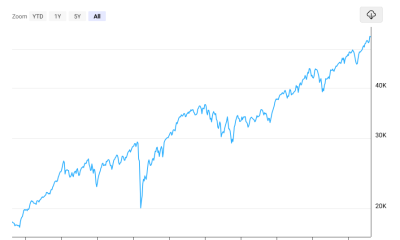
Dow’s 3-Year Winning Run Isn’t a Crash Signal, Still 49% Odds of Double-Digit Gains
-
Tech7 days ago
5 Of The Most Reliable Car Brands To Consider If You’re Buying A Used SUV
-

 Tech6 days ago
Keychron K8 Ultra 8K review: a great value keyboard with comfort issues
-

 Business6 days ago
Stock Market Today: Tech Futures Slide As Treasury Yields Jump; Nvidia, Micron, Sandisk Sell Off
-
 Tech7 days ago
Nvidia discloses $21B stake in SpaceX
-
Business7 days ago
Fabrinet (FN) Q4 2026 Earnings Call Transcript
-

 Business5 days ago
Marvell Shares Jump 7% as Google Chip Deal Confirms Custom AI Silicon Partnership, Analysts
-

 Business4 days ago
Five Below: Kids Discount Retailer Reaps Rich Rewards
-
 NewsBeat7 days ago
Trump explodes at CNN reporter after question about young blonde aide who wrote him besotted letters
You must be logged in to post a comment Login