“AWS Certified AI Practitioner Early Adopter”I am a DevOps Engineer for a major, wholly owned subsidiary of a large-cap Fortune 500. I have been the primary driver of Anthropic-based tooling in our company’s division, and have successfully pushed for the division-wide integration of tools like Claude Code via AWS Bedrock. I am currently spearheading the implementation of AI-infrastructure in our division.I am a true subject-matter expert on the actual buildout, deployment, and maintenance of AI tools and applications. I have increasingly deep knowledge on the science behind generative AI systems as a result of first-hand experience with machine learning algorithms, model training, and model deployment.I contribute to Seeking Alpha as an outlet to share my AI and machine learning insights through an investment-focused lens.Closely associated with LL InsightsPer TipRanks (6/26/25) – 2 Year Timeframe#716 out of 31,463 Financial Bloggers #1,222 out of 41,143 experts
Analyst’s Disclosure: I/we have no stock, option or similar derivative position in any of the companies mentioned, and no plans to initiate any such positions within the next 72 hours. I wrote this article myself, and it expresses my own opinions. I am not receiving compensation for it (other than from Seeking Alpha). I have no business relationship with any company whose stock is mentioned in this article.
Seeking Alpha’s Disclosure: Past performance is no guarantee of future results. No recommendation or advice is being given as to whether any investment is suitable for a particular investor. Any views or opinions expressed above may not reflect those of Seeking Alpha as a whole. Seeking Alpha is not a licensed securities dealer, broker or US investment adviser or investment bank. Our analysts are third party authors that include both professional investors and individual investors who may not be licensed or certified by any institute or regulatory body.
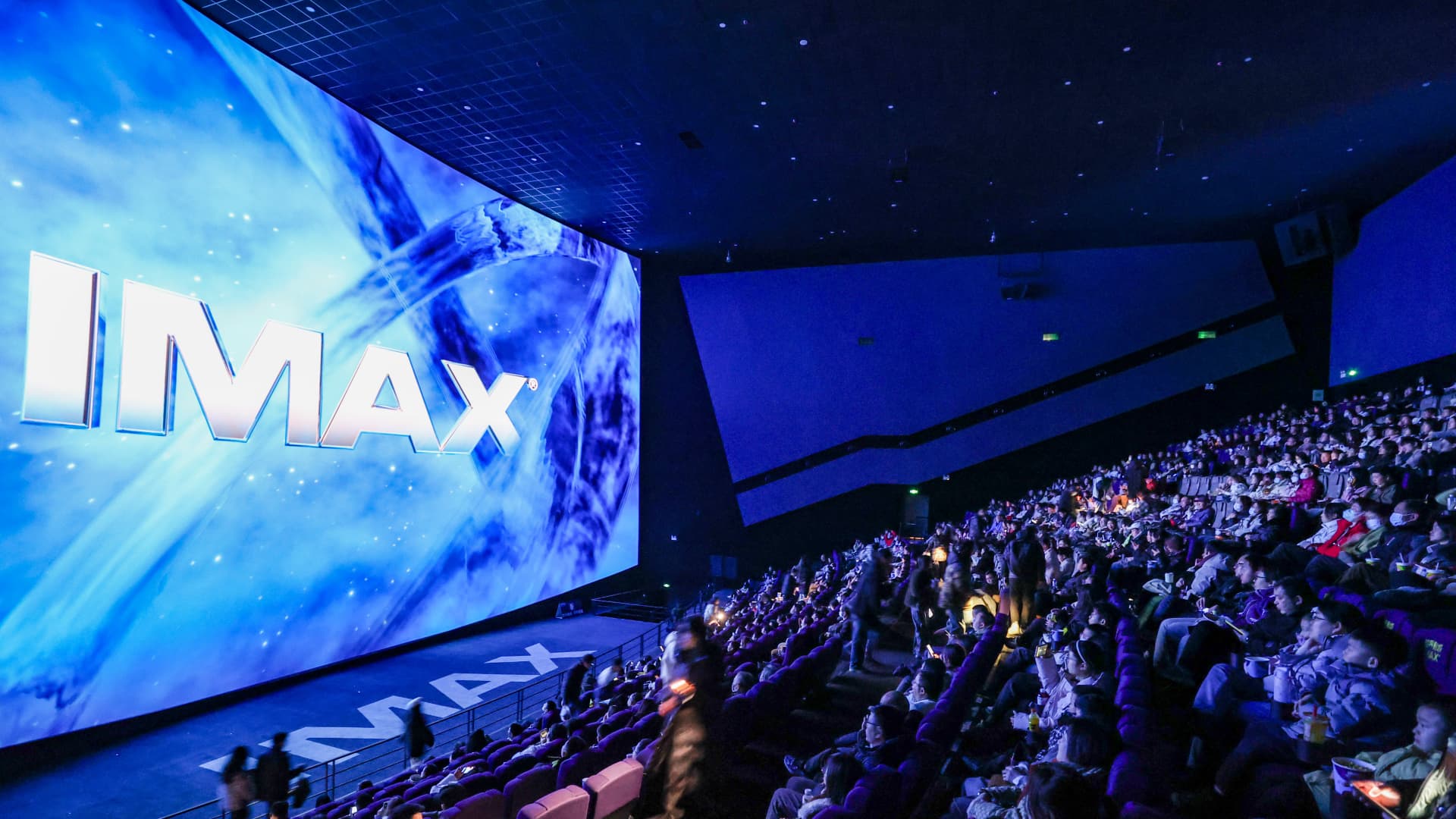
Moviegoers watch the film “Ne Zha 2” at an Imax GT Cinema on in Guiyang, China, Feb. 23, 2025.
China News Service | China News Service | Getty Images
In December, Imax CEO Rich Gelfond opened the door to a sale. Almost nine months later, the company’s stock has hit an all-time high, its box office is breaking records and the stage is set to carry its momentum through the end of 2026.
Advertisement
Yet, no major suitors have appeared.
Imax held preliminary talks with potential buyers earlier this year, but as of May hadn’t fielded any official pitches, CNBC reported at the time. Imax hasn’t hired new bankers and doesn’t have a formalized pitch book, according to a person familiar with the company, who spoke on the condition of anonymity to discuss confidential matters.
But it’s a busy time for dealmaking in the media space. Paramount Skydance is in the midst of a contested merger with Warner Bros. Discovery worth $110 billion, Fox agreed to acquire Roku in a deal worth $22 billion, and Comcast continues its corporate restructuring with the upcoming spinoff of NBCUniversal, which many in the industry say will give both resulting companies more flexibility to do deals.
With a nearly $3 billion market cap, Imax is a relatively inexpensive asset in the entertainment landscape. And it’s been on a hot streak in the wake of the pandemic as moviegoers have traded up for higher-priced premium large format cinema experiences.
Advertisement
The company’s momentum has been further fueled by strong box office sales from films like Universal and Christopher Nolan’s “The Odyssey.” Over the weekend, global Imax ticket sales for the film surpassed $400 million, the first film to exceed the benchmark in the company’s history. This haul represents nearly 30% of total global sales for “The Odyssey” — despite the fact that Imax screens represent less than 1% of movie screens worldwide.
And then there’s the strong pre-sales for the December release of Warner Bros. and Denis Villeneuve’s “Dune: Part Three,” which has already sold out specialized screenings into January.
Wall Street analysts foresee Imax setting a new global box office record in 2026, hot off the heels of the record $1.28 billion the company posted last year. Imax’s 2025 ticket sales were more than 40% higher than 2024 and 13% higher than its previous record, set in 2019.
“The brand value of Imax has never been higher,” Eric Handler, managing director and senior research analyst at Roth, told CNBC. “They have done a really good job of situating themselves right in the center of the eco-structure for Hollywood. So, it’s been a masterful, long-time-coming situation.”
Advertisement
Contributing to the momentum is Imax’s premium ticket prices, which, despite being higher than for other screenings, have not deterred audiences.
So far in 2026, the average adult Imax ticket cost $20.57 in the U.S., according to data from EntTelligence. That’s more than 60% higher than the average standard ticket, at $12.75 each, and nearly 18% higher than rival premium large format offerings, which average around $17.46 apiece.
The company’s slate of “filmed for Imax” content is also accelerating and expected to grow materially through 2028. It’s diversifying beyond the Hollywood landscape with partnerships in China, Japan and South Korea to screen local-language content.
The company is also actively expanding. Around 160 to 175 Imax systems are expected to be installed in 2026, with contracts to build hundreds more already in place, the company told CNBC last year.
Advertisement
The result, then, is less a question of what’s for sale and more a question of who would buy.
The TCL Chinese Theatre during opening weekend for “The Odyssey” in Imax in Hollywood, California, July 18, 2026.
Aaronp/Bauer-Griffin | Gc Images | Getty Images
The most — and least — likely suitors
Handler noted that a potential buyer would need to balance studio relationships and cinema partnerships, as Imax has for years. The company installs its special format screens in existing theaters and negotiates release windows for top-billed films.
Advertisement
Major studios, including Disney, Universal, Paramount and Warner Bros., would have an immediate conflict of interest if they acquired Imax, Wall Street analysts told CNBC.
Imax is “studio agnostic, and so they charge every studio the same,” said Eric Wold, executive director of equity research at Texas Capital Securities. “If some studio were to purchase them, I think the other studios would always feel that they’re kind of second in line for the key release slots in the holidays and summer, and so it may not be received well.”
Even in the scenario where a deal of that nature passed muster with Hollywood and regulators, a single studio would be hard-pressed to fill a 52-week theatrical calendar with only its own films. Premium large format, or PLF, is intended for blockbuster feature films, which moviegoers are willing to pay a higher price to attend. A smaller-budget film with less spectacle might not draw the same crowds for the same price on that kind of screen.
Not to mention, few studios have purchased cinemas even after the Department of Justice rescinded the 1948 Paramount Consent Decrees, which previously disallowed studios from owning movie theater chains. Those restrictions formally sunset in 2022, but so far only Sony has done a major deal for cinemas, acquiring all 35 Alamo Drafthouse locations in 2024.
Advertisement
Beyond movie studios, analysts have highlighted potential suitors in entertainment and tech: for example, Netflix, Apple, Amazon or Sony.
Netflix long vowed to build growth rather than buy it, but more recently it’s gotten a taste for M&A. The company entered into an agreement with Warner Bros. Discovery to buy its studio and streaming businesses before being outbid by Paramount Skydance.
The streamer doesn’t rely on theatrical releases as part of its main programing strategy, therefore its conflict of interest if it were to acquire Imax would be smaller than for traditional Hollywood studios. Additionally, owning Imax would provide any filmmaker that signed on to work with Netflix the opportunity for premium theatrical runs.
Advertisement
Of course, Netflix historically has had limited interest in the traditional theatrical model. While the company does release some films in cinemas, it’s typically done so for short runs or for eligibility for Academy Awards contention.
As for Apple, Amazon and Sony, all three companies have strong technology businesses in addition to theatrical and streaming content, which may align nicely with Imax’s tech-heavy business. While Sony does not have its own streaming platform, it partners with Netflix to distribute new content. Meanwhile, Apple has AppleTV and Amazon has Amazon Prime.
Taking on a cinema tech firm like Imax could offer each company a new avenue for distribution.
There’s also the possibility that Imax could draw interest from a company or investor that wants to buy into Hollywood and the broader entertainment universe. Imax has a global presence and connections to most major studios as well as cinema partners worldwide.
Advertisement
Analysts also noted that a private equity buyer would eliminate any potential conflict concerns and could be most interested to ride the stock’s momentum.
Imax Corp. CEO Richard Gelfond attends the New York premiere of ‘A Beautiful Planet’ at AMC Loews Lincoln Square in New York, April 16, 2016.
Jamie McCarthy | Getty Images
‘Perfectly fine as a standalone company’
Shares of Imax hit an all-time high this week of $54.79. The stock is up almost 80% in the past 12 months.
Advertisement
That surge could be among the reasons it’s still going it alone, according to Alicia Reese, senior vice president of equity research at Wedbush.
“It’s a lot more expensive than it has been for a long time,” Reese said.
When Gelfond first floated the idea of a sale last year, the stock was trading at around $36 per share and had a market cap of about $1.95 billion. The price tag is now a billion dollars higher.
“Maybe those tech companies or potentially [private equity] who had considered it or had been kicking the tires would wait a little while and see what happens to the share price,” Reese said. “There’s a large probability that it’s just going to continue to gain share and gain global growth and remain at these elevated valuation levels for some time, as the growth isn’t likely to reverse.”
Advertisement
Several Wall Street analysts see further stock growth on the horizon, with price targets from some firms as high as $65 a share. On Monday, Drew Crum of B. Riley Securities raised his price target on the stock to $61, up from $52.
“Taken together, we continue to forecast record financials in 2026, with share gains, higher margins, and healthy cash flow generation, as reflected in our above-consensus estimates,” he wrote.
Potential suitors would also naturally be looking at what the future holds for the entertainment business at large. The North American box office is still chasing the pre-pandemic levels of 2019, and despite a blockbuster summer, ticket sales are still lagging.
Wedbush’s Reese noted that Imax is grouped in with the theatrical exhibition space, which is traditionally a slow-growth, dividend-paying business. These types of companies will likely get back to paying those dividends once they can sustain “some very low single-digit growth,” she said.
Advertisement
And because Imax is not actively seeking a sale, simply entertaining offers, its executives can afford to be choosey.
“I think the main point is that Imax is perfectly fine as a standalone company,” Reese said. “And so they’re not desperate in any way, shape or form. So, they’re not going to go for just any bid. They want a bid that’s a nice premium to where the shares are currently trading. And so it’d be hard to come to a deal, I think, right now.”
“It’s a distortion of real pressures. When I’m analysing trends around men…they are wanting to lean into what being a man means. In many cases strength, loyalty, protection. Those are not bad values. Those are being exploited, weaponised, and redirected in order to either sell a product or sell an idea.”
Marianna Spring and Matt Shea speak to Kristina Wilfore, Director at Reset Tech, about their new report into the so-called ‘Male Grievance Industry’, which Kristina says is capitalising on the loneliness, economic anxiety, and identity of men. She argues it’s a growing business on social media which defrauds men by targeting them with content that distorts the real pressures they face.
She also reveals new data about looksmaxxing, the extreme cosmetic social media trend, which shows how just 216 accounts drove 14.6 billion views on this type of content within the last two years.
Advertisement
Thank you to the Top Comment team for its help in making this programme.
The Interview brings you conversations with people shaping our world, from all over the world. The best interviews from the BBC, including episodes with Hunter Biden, son of former US President Joe Biden, head of the World Meteorological Organisation Celeste Saulo, and independent Russian journalist Dmitry Muratov. You can listen on the BBC World Service on Mondays, Wednesdays and Fridays at 0800 GMT. Or you can listen to The Interview as a podcast, out three times a week on BBC Sounds or wherever you get your podcasts.
Presenter: Marianna Spring and Matt Shea
Producer: Cordelia Hemming
Editor: Damon Rose
Get in touch with us on email TheInterview@bbc.co.uk and use the hashtag #TheInterviewBBC on social media.
Advertisement
(Image: Kristina Wilfore. Credit: Photo by Rachel Hofer)
WASHINGTON — President Donald Trump signed an executive order Thursday directing the federal government to rename Lake Ontario “Lake America,” the latest escalation in a deepening trade dispute with Canada that has strained relations between the two longtime allies.
Trump signed the order in the Oval Office, flanked by large display boards depicting maps of the Great Lakes, including one labeled “Making the Great Lakes Even Greater” with “Lake America” printed over the body of water that forms part of the border between New York and Ontario, Canada. The president said the change would take effect immediately.
“‘Lake of America’ was something I’ve been thinking about for a long time,” Trump said, according to multiple outlets present in the Oval Office. He went on to suggest the renaming could extend further. “We have a gulf and we have a lake. Now, all we need is an ocean. So, maybe we’ll have to change the name of the Atlantic, and/or the Pacific. Maybe we’ll change them both.”
The order directs the Interior Department to update federal geographic databases and mapping systems to reflect the new name. According to the text of the order, the designation is justified in part because “the deepest parts of the Lake’s waters” and most of its volume lie within U.S. territory. The order describes Lake Ontario as “a tremendous asset to the United States and part of our Nation’s heritage.”
Advertisement
Asked by a reporter what message he intended to send to Canada with the move, Trump initially said, “No message.” He then pivoted to criticism of the country’s trade practices. “Canada has been ripping us off for a long time on trade, very sadly,” he said. He added that Canada “wants to be treated like a state, but they’re not a state,” and accused Canadian officials of treating the United States “very badly,” calling them “nasty people.”
Trump’s order follows a similar move early in his second term, when he signed an executive order renaming the Gulf of Mexico the “Gulf of America” on his first day back in office. That change drew objections from Mexican officials, who said they would continue using the traditional name, and prompted some digital mapping services to display different names depending on a user’s location.
Legal experts have noted that a U.S. president has authority to determine how federal agencies refer to geographic features for official purposes, but cannot compel other countries or international bodies to adopt the new terminology. Lake Ontario is bordered by both the United States and Canada, and the Canadian government has given no indication it intends to recognize the renaming.
Canadian Prime Minister Mark Carney responded to the order on social media shortly after it was signed, pointing out that the lake’s existing name predates both nations. He wrote that the name Lake Ontario derives from the Wendat word “Ontari’io,” which he said means “the lake is beautiful, the lake is big,” and noted the name is more than 400 years old, predating the Confederation of Canada and the U.S. Declaration of Independence. Carney added pointedly that “America is changing,” listing trade relationships, foreign policy, national monuments and “hydronyms” among the shifts.
Advertisement
The order comes amid a rapid deterioration in U.S.-Canada relations following the breakdown of recent trade talks, which has led both countries to impose new retaliatory tariffs on each other’s goods. Trump has repeatedly threatened in social media posts over the past several days that he would move to rename the lake, following through on those threats Thursday.
The renaming is the latest flashpoint in a broader pattern of geographic and symbolic gestures Trump has used to underscore his positions on trade and sovereignty. His order on the Gulf of Mexico last year set a precedent that some allies and critics alike said signaled a willingness to use federal naming authority as a tool of political messaging.
Reaction to the Lake Ontario order has extended beyond Washington and Ottawa. In a separate but related development, Illinois Gov. J.B. Pritzker mockingly proposed renaming Lake Michigan “Lake Illinois” and joked about annexing Green Bay, a jab widely seen as needling Trump over his geographic rebranding efforts and his broader clashes with Pritzker over federal immigration enforcement and other policy disputes.
The White House did not immediately indicate whether Trump intends to pursue additional geographic renamings, though his own remarks Thursday suggested oceans could be next under consideration. Canadian officials have not announced any formal response beyond Carney’s public comments, and it remains unclear whether the dispute over the lake’s name will factor into ongoing trade negotiations between the two countries.
Shares of Indian IT companies surged sharply on Friday, with heavyweights including LTIMindtree, TCS, HCLTech and Infosys leading market gains.
The sharp rally pushed the Nifty IT index more than 3% higher. LTIMindtree shares jumped around 5%, while HCLTech and TCS gained around 4% each. Coforge, Tech Mahindra, Persistent Systems, Infosys and OFSS rose around 3% each, while Wipro and Mphasis gained 2%.
The surge in IT stocks came after their Wall Street peers rallied following Nvidia’s strong earnings. Nvidia shares jumped 9% after the chipmaker reported second-quarter revenue of $96.2 billion, up 106% from a year earlier and ahead of Wall Street estimates. The company also forecast revenue of about $108 billion for the current quarter, above analyst expectations.
“The results reassured investors on the durability of the global AI boom, sending technology stocks higher,” Reuters quoted Devarsh Vakil, head of prime research at HDFC Securities, as saying.
Advertisement
Investors are now awaiting US Federal Reserve Chair Kevin Warsh’s comments on inflation, due later in the day at the Jackson Hole Symposium.
IT stocks on Dalal Street have seen sharp upswings and downswings recently. Earlier this year, the sector witnessed a sharp sell-off after breakthroughs by AI startups fuelled concerns about potential disruption to the traditional IT services business model. Later, a sharp sell-off in global tech leaders proved to be a blessing in disguise for Indian IT stocks, which remained resilient amid the global tech rout.HSBC said India can serve as an “anti-AI” diversifier as sharp swings in technology-exposed markets encourage foreign investors to broaden their portfolios. HSBC strategists Prerna Garg, Herald van der Linde and Yogesh Aggarwal said in a report that AI-rotation outflows from India have “largely played out”.
While AI jitters continue to keep IT investors on edge, CLSA downgraded several heavyweight stocks and revised their target prices, although it remains bullish on several mid-tier IT vendors. In a recent note, CLSA highlighted that Q1 earnings were a mixed bag for Indian IT companies and their global peers. Basic Excel maths suggests that AI volumes could supersede deflation by FY30, taking US dollar revenue growth from low to mid-single digits, the international brokerage said.
Given the long gestation period and limited potential upside, CLSA downgraded its rating on Tata Consultancy Services (TCS), Infosys and Tech Mahindra to ‘Hold’, while Wipro and Mphasis were downgraded to ‘Underperform’ due to structural concerns.
(Disclaimer: Recommendations, suggestions, views and opinions given by the experts are their own. These do not represent the views of The Economic Times.)
There have been a lot of sanctions programmes against Iran. But this week US Treasury Secretary Scott Bessent announced Operation Economic Outcast, which promises to go further than ever before. It will punish not just Iran but any country helping Iran – including China.
It is the Trump administration’s latest attempt to end the war. Will it work?
We speak to Vali Nasr, professor of international affairs and Middle East studies at Johns Hopkins University, and ask whether in trying to end one war, President Trump risks starting a global trade conflict.
Advertisement
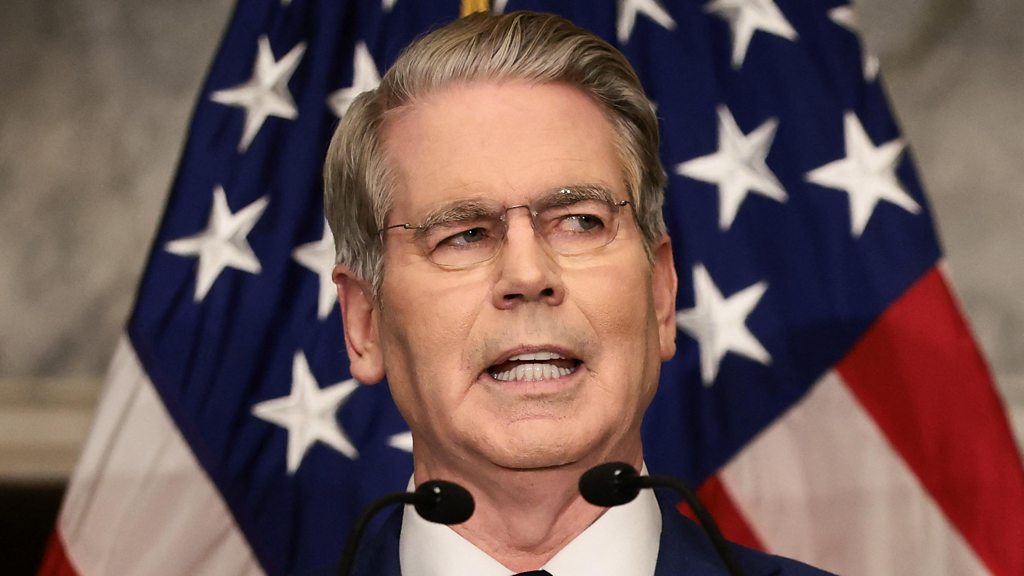
(Photo: US Treasury Secretary Scott Bessent speaks during a press conference to outline further sanctions against Iran, at the Treasury Department in Washington, DC, 24 August, 2026. He has short, mousy-grey hair and is wearing glasses, with the American flag behind him. Credit: Evelyn Hockstein/Reuters)
For Elizabeth Cardner, a mother of two girls in Houston, Texas, Meta’s new limits on how teenagers can use its platforms are a welcome sign that more people are aware of social media’s potential dangers.
But, she tells the BBC, they probably won’t help much in the long-term.
“It will save a few arguments at home, but it doesn’t go far enough,” she says.
This week, Meta announced new restrictions on its platforms – which include Instagram, Facebook and Whatsapp – as part of an $18bn (£13.25bn) settlement with US states in a lawsuit on social media’s effects on children.
Advertisement
The company said it would set a daily two-hour time limit, hide the number of likes that a post receives, remove autoplay on videos, mute push notifications during school hours, and ban extreme make-up filters.
It also announced changes to its age-verification process and parental controls as well as agreeing to appoint an independent auditor to check the measures are implemented and maintained.
Many parents across the US see the restrictions as helpful, but are still sceptical. Those who spoke to the BBC described feeling stuck – where they feel they can’t cut their children off from social media but also can’t protect them from the harms they believe it causes – and they are waiting to see how much of a difference these new rules will make.
Cardner’s 14-year-old, Paige, believes the restrictions will lead to “more real-life scenarios” and less “fake content”, which she says dominates social media. She and her sister both approve of hiding the numbers of likes and restricting filters.
Advertisement
But Paige sees those gains as short-lived, “since AI is evolving”.
“People will find new ways to have fake filters, and correct certain parts of their videos or pictures,” she says. “So I think it’ll help until people use other resources to try and find new ways to do that.”
Cardner says banning her daughters entirely from social media would only result in them being left out by their peers.
“Damned if you do, damned if you don’t,” she says. “I don’t think there’s any winning on it.”
Group which makes radar equipment and submarine parts said it would hand more cash back to shareholders
Henry Saker-Clark Press Association Deputy Business Editor
11:27, 28 Aug 2026
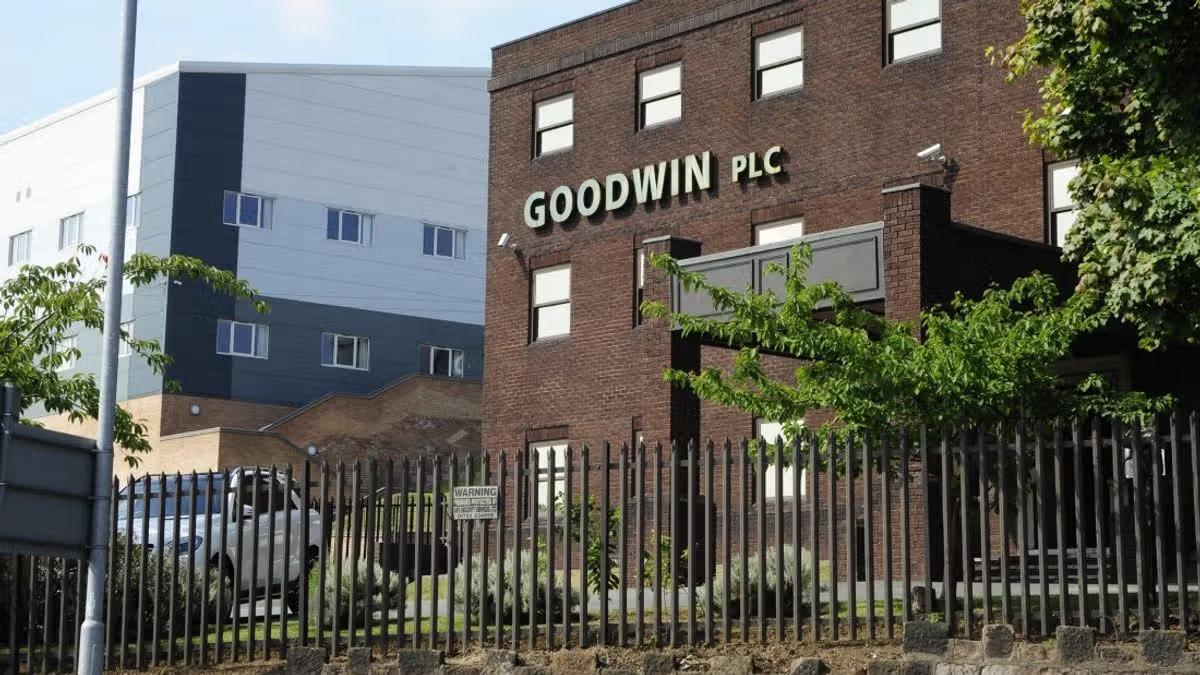
Goodwin plc, in Stoke-on-Trent
Profits have more than doubled at defence supplier Goodwin, buoyed by a surge in military spending across the globe.
Advertisement
The Stoke-on-Trent-based firm, which manufactures radar equipment and submarine components, announced on Friday that it would return more money to shareholders on the back of the strong performance.
The group also signalled that shareholders could stand to benefit further should it press ahead with the potential disposal of elements of its mechanical engineering division.
The company, which comprises several subsidiary businesses, posted trading profits up 118% to £77.5 million for the year to April, compared with the previous year.
The result was underpinned by revenues rising 27% to £280 million over the same period.
Advertisement
Turnover received a significant boost from an improved showing by its mechanical engineering arm, driven by robust demand for products supplied to UK and US naval and submarine programmes.
Founded in 1883, Goodwin is majority-owned and run by the Goodwin family, with its shares listed on the London Stock Exchange.
The group continues to evaluate the potential sale of parts of its mechanical engineering division, which provides components to major defence and nuclear programmes.
The firm described the sale process as “progressing well”, with talks currently under way with a number of prospective buyers.
Advertisement
Goodwin sought to reassure customers, suppliers and employees that business operations would continue uninterrupted throughout the process. “The disposal process is being actively pursued in accordance with the board’s approved plan, which targets completion within the next twelve months, and shareholders will be kept informed of material developments as appropriate,” the company said.
The firm announced plans to raise the group’s annual dividend by 18% to 330p for the year.
The cyclospora outbreak that has sickened thousands of people across the U.S. has brought fresh scrutiny of the integral role Taylor Farms and other massive suppliers play in the country’s food supply.
The company, which the Food and Drug Administration has linked to the parasite’s spread, is one of the world’s largest producers of fresh-cut vegetables and salads, supplying some of the biggest grocery chains and restaurant companies in the U.S. Its products are sold at retailers including Walmart, Kroger, Whole Foods and Target, and its restaurant customers include McDonald’s, Taco Bell and Chipotle. Taylor Farms says 40% of salad kits sold at grocery stores come from the company, giving it a massive role in supplying a convenient and cheap vegetable option for many shoppers.
The company, founded in 1995, has grown through a combination of scale and acquisitions, building an operation that spans much of the food supply chain. Taylor Farms works with hundreds of family farms for its produce and handles processing, packaging and distribution itself.
That reach has made the company an increasingly important link between farms and some of America’s biggest food companies, and heightens the risk of food safety problems spreading. Taylor Farms’ scale has put the company under a brighter spotlight as the FDA investigates the cyclospora outbreak that the agency has linked to iceberg lettuce processed at Taylor Farms’ facility in central Mexico, some of which was served at Taco Bell restaurants.
Advertisement
Taylor Farms declined CNBC’s invitation for an interview but sent comments defending the steps it has taken to respond to the outbreak and keep its produce safe.
“We are confident in our food and food safety systems and will continue to be transparent as more information becomes available,” a spokesperson for Taylor Fresh Foods, the corporate name for Taylor Farms, told CNBC.
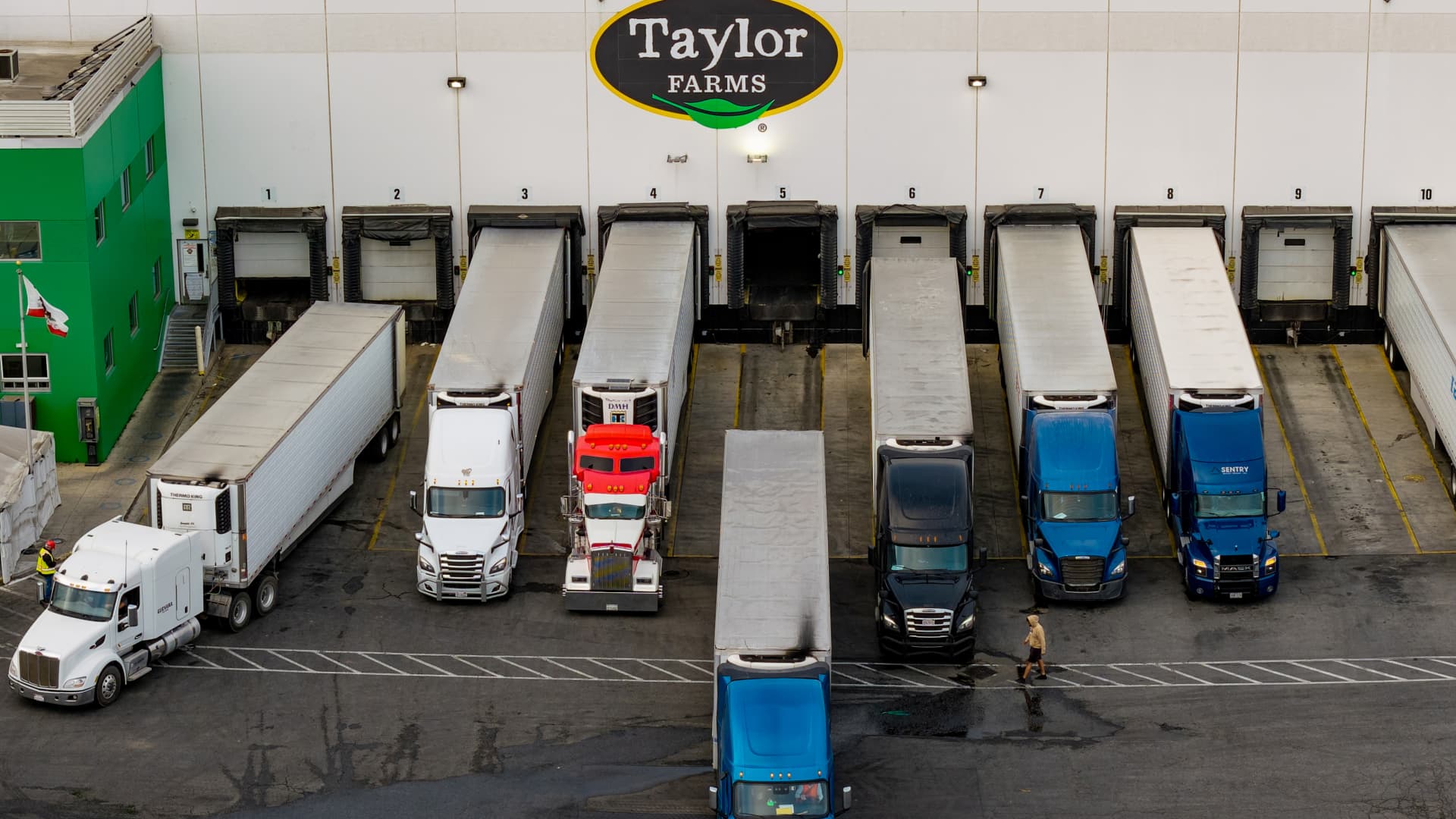
Tractor trailers at a Taylor Farms facility in Salinas, California, Aug. 10, 2026.
Josh Edelson | Bloomberg | Getty Images
Advertisement
Taylor Farms said in an August post on its website that it spends more than $200 million a year on food safety. The company added in a statement to CNBC that safety is its “biggest area of funding by several orders of magnitude.”
Taylor Farms has also voluntarily suspended iceberg lettuce sourcing and production from central Mexico and commissioned independent experts to conduct a review of food safety practices at its facility there. The FDA has not reported a positive product sample for cyclospora, because it can take weeks for symptoms to show and lettuce has a short shelf life, so it is difficult to test the right crop.
The breadth of the outbreak, which has led Walmart to recall bagged salads and Taco Bell to pull lettuce at some restaurants, underscores how integral Taylor Farms has made itself to the U.S. food system, and why broader industry consolidation risks worsening foodborne illness outbreaks.
Why Taylor Farms’ scale is important
Taylor Farms generated roughly $7.3 billion in sales last year, according to PitchBook.
Advertisement
The company handles much of the processing and distribution of the produce it sources, including washing, chopping, packaging, labeling, shipping and refrigeration. Taylor Farms and other suppliers like it have succeeded in part by making themselves indispensable to big restaurants.
Chains rely on their ability to offer a consistent supply on a huge scale, said Stephen Zagor, a restaurant consultant and adjunct associate professor at Columbia Business School.
“They can promise institutions that have multiple locations all over the country that they can supply what they need on a regular basis,” Zagor said. “For a restaurant chain, it’s easier for them to deal with a major multinational company than it is to deal with local farmers.”
That infrastructure provides consistency and reduces the need for labor-intensive preparation at chains. Taylor Farms can dice onions for McDonald’s or shred lettuce for Taco Bell.
Advertisement
A forklift transports crates of produce at a Taylor Farms facility in Salinas, California, Aug. 10, 2026.
Josh Edelson | Bloomberg | Getty Images
The company has also become more important by getting bigger. Taylor Farms has expanded its infrastructure through a string of acquisitions and investments, including its purchasesof Earthbound Farm in 2019 and agricultural robotics company Farmwise in 2025.
The benefit of that consolidation has been reliable supply, standardized products and potentially lower labor costs, said Zagor.
Advertisement
But there is another side.
“The consolidation has camouflaged sources,” Zagor said. “It’s all put in one big pot. And if that pot has now gone bad, that affects the entire downstream logistic food chain.”
Zagor called it a “culinary national nightmare” when a company that distributes food to so many other businesses finds itself at the center of a foodborne illness outbreak.
It’s not the first time Taylor Farms has been tied to an outbreak.
Advertisement
Food safety lawyer Bill Marler compiled a list of outbreaks linked to Taylor Farmsand whether they led to product recalls. Among them is a 2009 salmonella outbreak linked to shredded lettuce, along with a 2024 E. coli outbreak tied to slivered onions served at McDonald’s.
His law firm, Marler Clark,has filed five complaints based on the current cyclospora outbreakso far in Ohio, Michigan and Kentucky, against four separate Taco Bell franchise operators and the restaurant chain itself, along with Taylor entities including four operators and one supplier.
Growth and regulation
A customer reaches for Taylor Farms bagged salads for sale at a grocery store in Hercules, California, July 17, 2026.
David Paul Morris | Bloomberg | Getty Images
Advertisement
Taylor Farms, along with other food service giants such as US Foods and Sysco, has become bigger and more vital in part by buying other companies.
Taylor Farms has completed more than a dozen acquisitions or investments since 2011. While the cyclospora outbreak — the largest in U.S. history — has brought fresh scrutiny of the effects of consolidation, it’s unclear how much skepticism there was of the deals when they happened.
CNBC asked the Justice Department and Federal Trade Commission whether either agency had reviewed or challenged Taylor Farms’ acquisitions and investments. The DOJ did not respond. The FTC said it could not provide additional details without knowing the purchase prices of the transactions, which determines if the agency even had the opportunity to review.
CNBC found no public evidence that the FTC has challenged a Taylor Farms acquisition. Those deals took place under multiple presidential administrations of both parties, and various FTC leaders.
Advertisement
Some experts also highlighted a separate issue in the U.S. food system: the strength of oversight and regulation of food safety as distributors get larger and more influential. As the cyclospora outbreak raged, various news reports highlighted that Taylor Fresh Foods made a $1 million donation to the pro-Trump super PAC MAGA Inc. last year, around the time the Trump administration delayed a rule related to food tracing requirements. The company has also spent millions on anti-regulatory lobbying.
“If what you want is light enforcement of anything that’s going to be expensive and cost you money, it’s very nice to have political power,” said Marion Nestle, professor emerita of nutrition, food studies and public health at New York University. “You can go to Congress and say, we don’t want to do that.”
Taylor Fresh Foods rejected suggestions that its political contributions have resulted in favorable regulatory treatment.
“Taylor Farms categorically rejects any suggestion that the company has attempted or received favorable regulatory treatment as a result of political contributions or any other improper influence,” a spokesperson said. “The allegations are false.”
Advertisement
Nestle worries whether regulators have enough power as a few big companies become increasingly vital parts of the food system.
“Companies want to produce food as cheaply as possible,” said Nestle.





















































You must be logged in to post a comment Login