
Crypto World
Mounjaro Is Now Approved to Lower the Risk of Heart Events

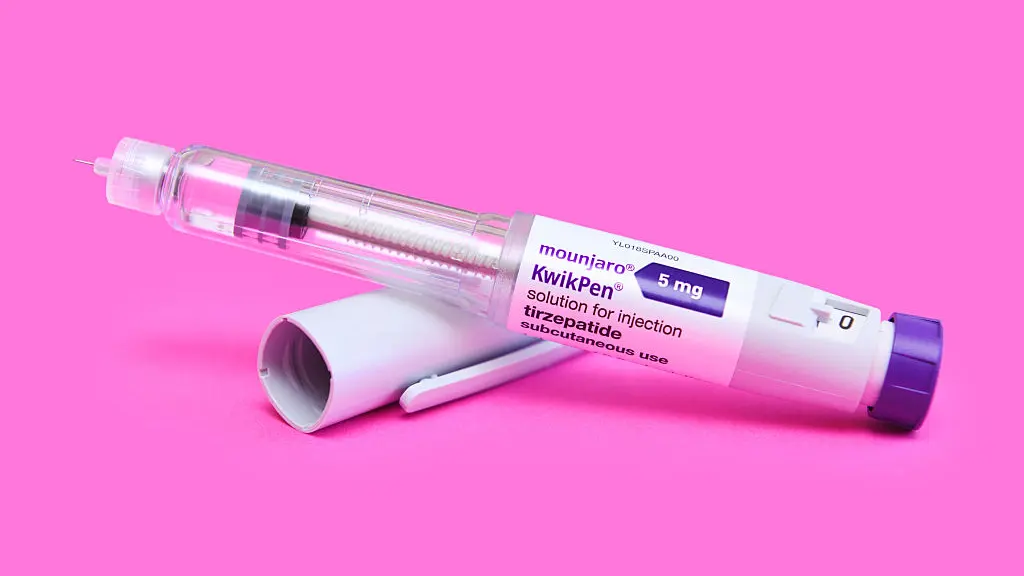
“This study was in patients with Type 2 diabetes, in whom the No. 1 cause of death is cardiovascular disease,” says Dr. Rachel Batterham, senior vice president of medical innovation and external engagement for cardiometabolic health at Lilly. “So reducing that risk is critically important.”
Batterham says Lilly decided to compare Mounjaro’s potential in reducing heart risk to an existing drug, Trulicity, that already reduced heart risk to see if Mounjaro would have any additional benefit. “We set ourselves a very high bar,” she says.
But the study design means that the heart benefit results cannot be directly compared to Mounjaro’s competitor drug, Ozempic, from Novo Nordisk. Ozempic, which is approved to treat diabetes, and Novo Nordisk’s Wegovy, approved to treat overweight and obesity, are both approved to lower the risk of heart disease risk by 20%. Lilly is, however, currently conducting a study tracking people who don’t have Type 2 diabetes who take the weight-loss version of their drug, Zepbound, for heart events. In that study, says Batterham, the researchers will be looking at whether Zepbound can prevent second heart events from occurring in people who have already had one, as well as whether the drug can prevent first heart events from occurring.

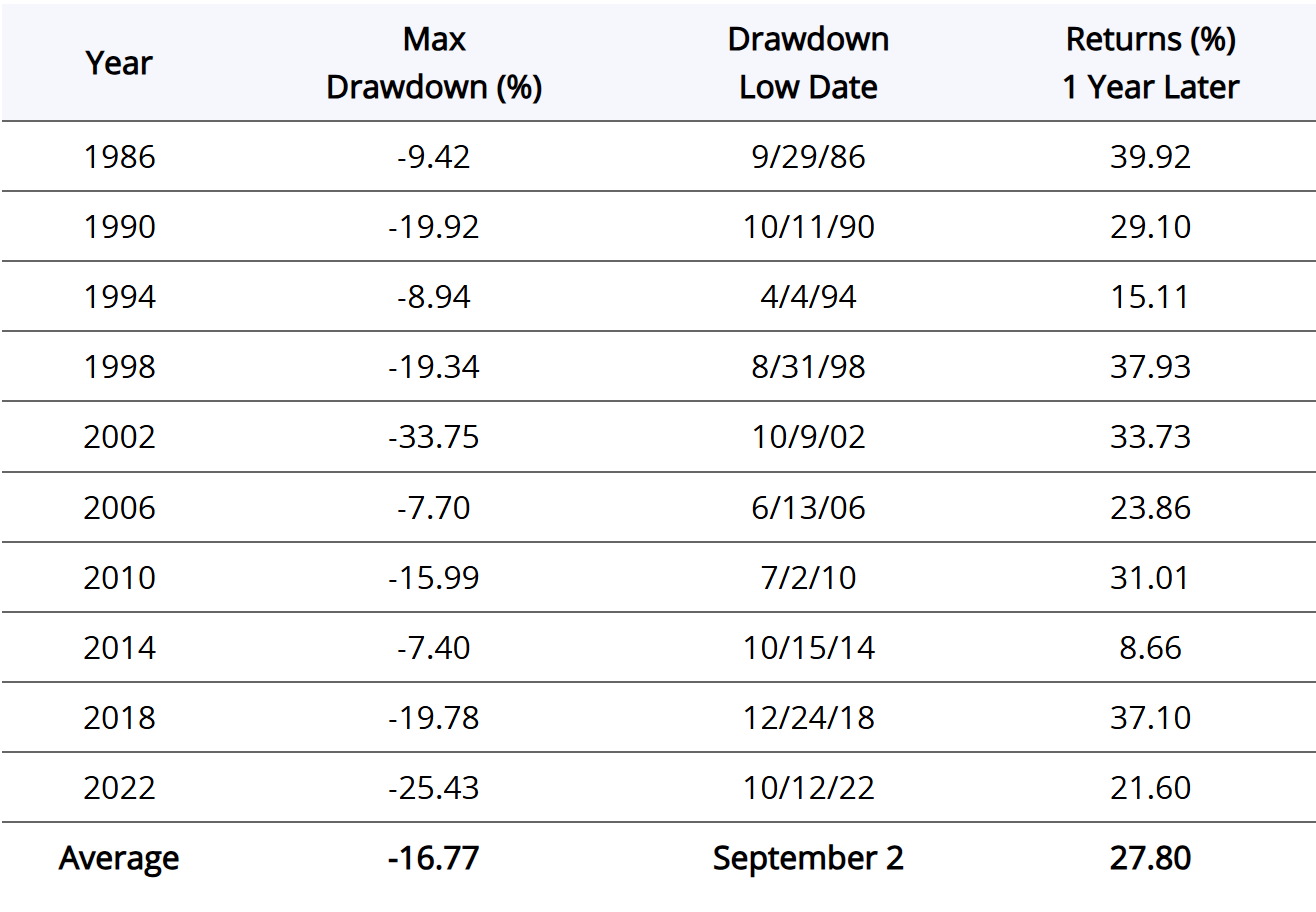
September has a bad reputation on Wall Street, especially during US midterm election years. Across the last 10 midterm cycles, the average stock-market low arrived on September 2.
By the time stocks reached those lows, they had fallen an average 16.77% from their previous high.
Bitcoin is entering the same period near $77,500, while US stocks remain close to record highs and long-term bond yields stay unusually elevated. The question now is whether 2026 follows the old pattern.
Midterm Lows Cluster in Early September
Hartford Funds studied 10 US midterm election years between 1986 and 2022. Every one saw stocks suffer a sizeable drop from their yearly high.

The damage varied enormously. Stocks fell 33.75% in 2002, while the biggest drop in 2014 was just 7.40%. The actual lows also occurred at very different points in the year.
So September 2 is a historical average, not a deadline for the next crash. And so far, 2026 has refused to follow the usual script.

The Fed is Debating a Rate Hike, Not a Cut
The macro setup has flipped since the spring, with Fed Chair Kevin Warsh using his first Jackson Hole speech on Friday to put prices first.
His own figures explain why, as the Fed chair said the PCE price index rose 3.7% over 12 months, while the six-month pace ran hotter at 4.1%. Inflation is not just high, it is accelerating.
Bonds add credence to the outlook, with the 30-year Treasury yield touching 5.28% on August 21 and closing August 26 at 5.17%. As of this writing, it stood at $5.20, with the effective fed funds rate at only 3.63%.

Fed presidents Hammack, Kashkari, and Logan already voted for a hike in July. The minutes showed officials fear repeated supply shocks keep delaying inflation’s return to target.
Kalshi traders now put September Fed hike odds at 53%, against roughly 48% for a hold.
Bitcoin Meets the Calendar at $80,000
Bitcoin just booked its record weekly dollar gain, adding $14,775 as spot ETF buying hit its fastest pace since October 2025. The rally then stalled at Bitcoin’s $80,000 ceiling.
BTC still trades 37% below its $126,080 peak from October 6, 2025. The wider crypto market slipped 0.80% on Friday to about $2.66 trillion.

Precedent argues for caution, because the last time the Fed tightened into a midterm autumn, Bitcoin’s last hiking cycle dragged it down roughly 65% to a $15,500 low in November 2022.
Meanwhile, dealer hedging offers a thin floor, as the SPY, the fund tracking the S&P 500, traded at $770.20 against a gamma flip at $767. Below that line, hedging stops cushioning drops and starts feeding them.
Still, the record cuts both ways because across those same 10 midterm cycles, the S&P 500 gained 27.80% on average in the year after the low.
The question is whether Bitcoin has to find that low first.
The post Bitcoin, Bonds, and Stocks Enter a Dangerous September Pattern appeared first on BeInCrypto.
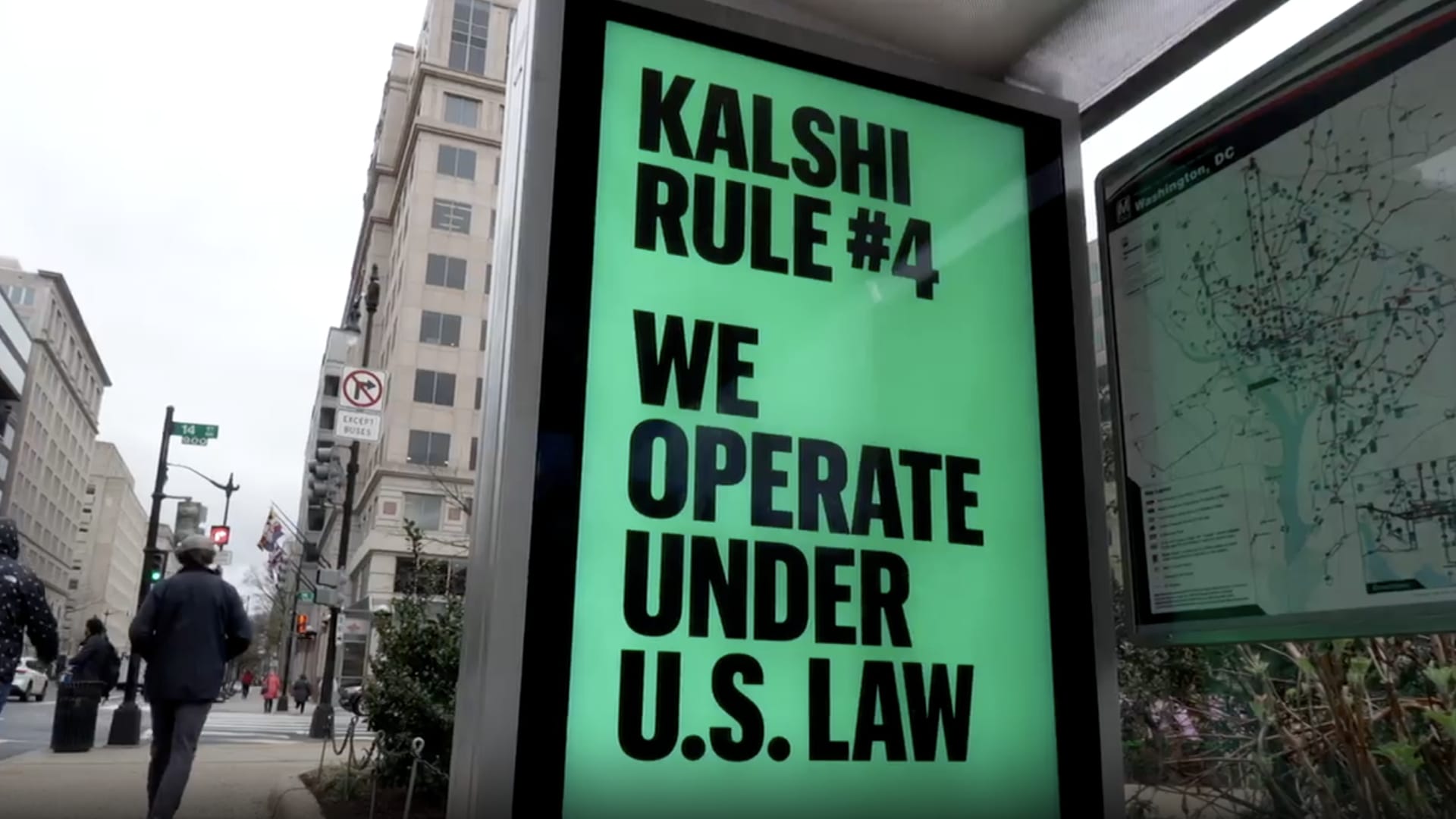
A Kalshi advertisement seen in Washington D.C. on March 27, 2026.
Paul Lester | CNBC
The Ninth Circuit Court of Appeals rejected prediction markets platforms’ requests for injunctive relief against the Nevada Gaming Control Board, concluding that sports-related event contracts are not a derivative regulated by the federal government.
The court rejected appeals by Kalshi and Crypto.com, two prediction market platforms, to stop Nevada from halting their operations which the state claims are gambling offerings outside of the gaming control board’s framework. The court also ruled against Robinhood’s request for injunctive relief. That firm also features event contracts on its trading platform.
Under scrutiny were the platforms’ sports-related event contract offerings, which 44 states argue are nothing more than sports betting. However, the platforms — and their federal regulator, the Commodity Futures Trading Commission — claim all event contracts, no matter the topic, are swaps. Swaps are a type of derivative under the purview of the CFTC, and the agency asserts that it has the exclusive jurisdiction to regulate all event contracts.
The CFTC has even sued nine states to defend what it believes is its sole right to make rules for prediction markets.
But the ninth circuit rejected that argument. “The sports event contracts were not ‘swaps’ because they were sports bets,” the court said in its opinion against Kalshi.
The Nevada Attorney General’s office said the ruling was a major victory.
“Kalshi sought to sidestep Nevada’s gaming laws by claiming its sports wagering products were federally regulated financial instruments beyond the reach of state regulators,” deputy communications director for the office Alcinia Whiters said in a statement. “The Ninth Circuit rejected that argument and made clear what we have maintained from the beginning: sports betting does not become something else simply because a company calls it an ‘event contract’ … Our office is proud to have defended Nevada’s authority.”
“The Ninth Circuit rejected that argument and made clear what we have maintained from the beginning: sports betting does not become something else simply because a company calls it an ‘event contract.’
In a statement to CNBC, a CFTC spokesperson said that the court understood that swaps are exclusively regulated by the commission, but said it was wrong to believe that sports-related event contracts don’t fall under that definition.
“A derivative contract structured as a swap is a swap regardless of the underlying subject matter — the only exceptions in statute are onions and movie box office receipts,” the spokesperson said in a statement. “The Ninth Circuit erred today when it invented a new and atextual exception to the CEA,” referring to the Commodity Exchange Act, the law that details which event contracts the CFTC is allowed to permit and reject.
Legal experts have widely expected that the question of sports-related event contracts, and whether state gaming regulators or the CFTC has the right to regulate them, will eventually reach the Supreme Court.
That now appears very likely, as the ninth circuit’s decision contradicts a ruling from the Third Circuit Court of Appeals in early April. In that case, the third circuit ruled that only the CFTC has the jurisdiction to regulate sports-related event contracts.
The Commodity Futures Trading Commission (CFTC) headquarters in Washington, DC, US, on Thursday, Aug. 20, 2026.
Daniel Heuer | Bloomberg | Getty Images
“This is a classic circuit split,” said Joshua Mitts, a professor at Columbia Law School. Circuit splits are when federal appeals courts rule differently on the same topic. “Ultimately, this is the kind of legal controversy or legal difference of opinion which will make its way to the Supreme Court.”
In a statement, Robinhood said it plans to appeal the decision. “Every eligible customer should have access to these markets, which are federally regulated by the CFTC and offered through our CFTC-registered Futures Commission Merchant,” a spokesperson said.
Kalshi and Crypto.com did not immediately respond to requests for comment.
Meanwhile, shares of two online sportsbooks, DraftKings and Flutter Entertainment — the parent company of FanDuel — rose in response to the ruling. Both stocks have been hit in the last year over concerns of prediction markets disrupting the industry, and the companies have rushed to get their own prediction market exchanges online.
DraftKings jumped 7%, while Flutter was up more than 6%.
Disclosure: CNBC and Kalshi have a commercial relationship that includes customer acquisition and a minority investment.
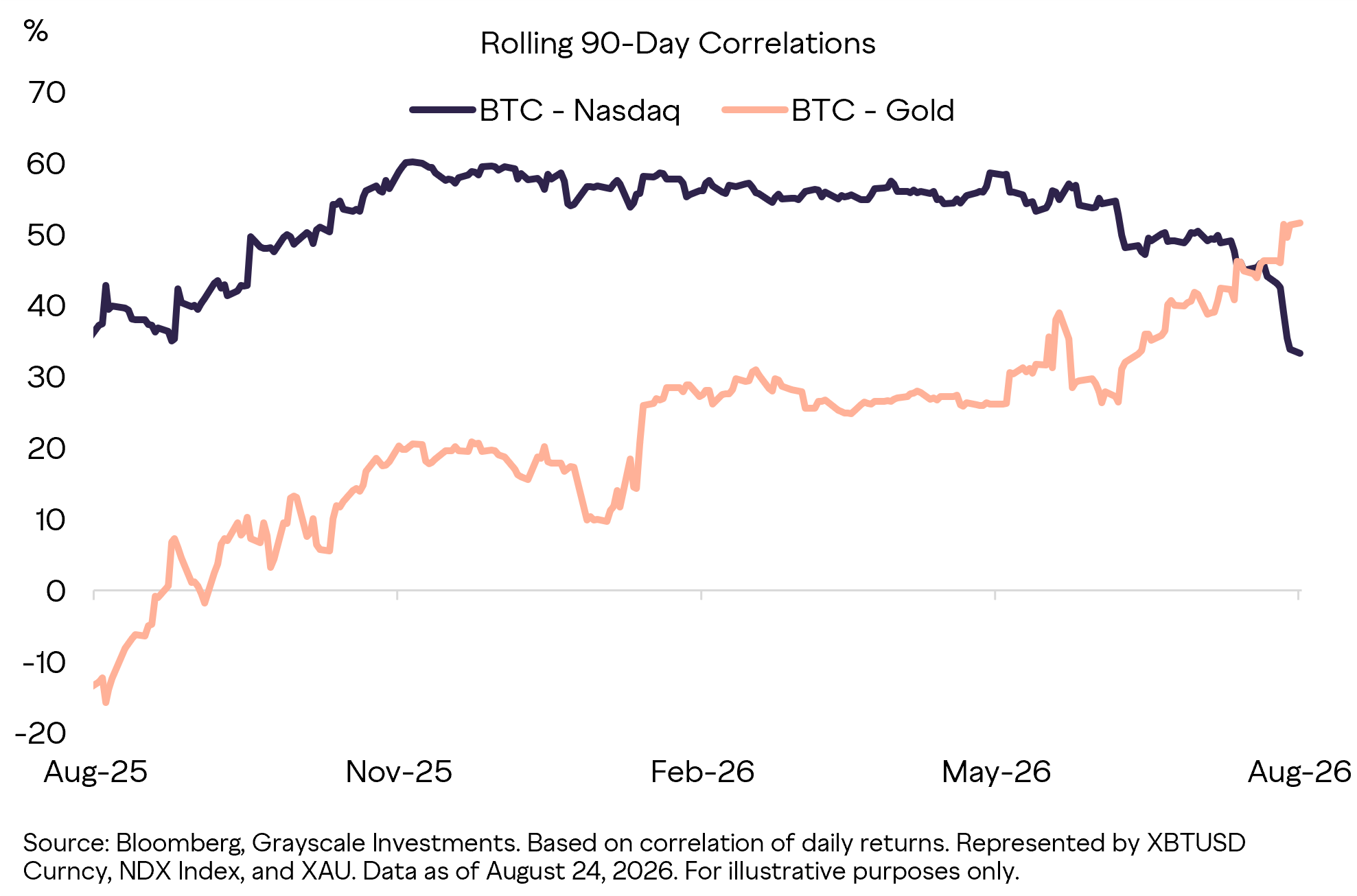
Grayscale’s research arm warned this week that Bitcoin’s correlation with gold has climbed above 50%, a shift the asset manager frames as the return of the debasement trade.
The finding marks a sharp reversal from recent years, when Bitcoin frequently traded in step with growth stocks rather than hard assets.
How Grayscale Measured Bitcoin’s Shift Toward Gold
In a recent note, Grayscale Head of Research Zach Pandl reported that Bitcoin’s 90-day correlation with gold rose from near zero at the start of the year to above 50%. Over the same period, its correlation with the Nasdaq 100 slipped from more than 60% to roughly 33%.
Pandl said the shift may reflect renewed investor focus on Bitcoin’s scarcity, monetary independence, and role as a store of value, according to Grayscale’s ongoing research series. He stopped short of offering any specific price target tied to the finding.
“…As fiscal imbalances grow and investors reassess the long-term purchasing power of fiat currencies, Bitcoin can serve as a scarce, liquid alternative alongside gold. That combination of scarcity and differentiated return drivers can make Bitcoin a compelling addition to a modern diversified portfolio,” Grayscale Head of Research said.
Follow us on X to get the latest news as it happens.

The debasement trade refers to the argument that hard, supply-capped assets tend to appreciate as fiat currencies lose purchasing power over time.
That framing has gained traction as US federal debt has passed $40 trillion, with persistent fiscal deficits renewing attention on scarce alternatives to cash.
Why the Gold Correlation Shift Matters
Gold has already been on an extended bull run this year, reinforcing the narrative that investors are rotating toward traditional hedges against currency weakness.
Bitcoin’s rising correlation with gold, rather than tech stocks, suggests at least part of that flow may now be extending into digital assets as well. Pandl argued that Bitcoin and other scarce digital assets may be entering a more favorable market regime under these conditions.
Grayscale’s broader research this year has repeatedly linked Bitcoin’s price action to the debasement trade, including a January note that described the asset’s disconnect from currency weakness amid regulatory uncertainty.
“…Unchecked government debt growth undermines the credibility of fiat currencies and drives investors to seek out alternative stores of value like physical gold and certain cryptocurrencies—in digital assets we think the so-called “debasement trade” will primarily benefit Bitcoin, Ethereum, and Zcash…,” Pandl noted.
The finding, however, describes a company’s research view rather than a realized market outcome. Correlation measures how assets have moved together in the past, not where prices will head next, and a 90-day rolling window can shift quickly if market conditions change.
Bitcoin’s relationship with both gold and stocks has changed meaningfully within a single calendar year before, and Grayscale itself has highlighted periods when Bitcoin tracked tech stocks far more closely than precious metals.
Subscribe to our YouTube channel to watch leaders and journalists provide expert insights.
The post Bitcoin Price is Moving Like Gold, and Grayscale Says It's No Coincidence appeared first on BeInCrypto.
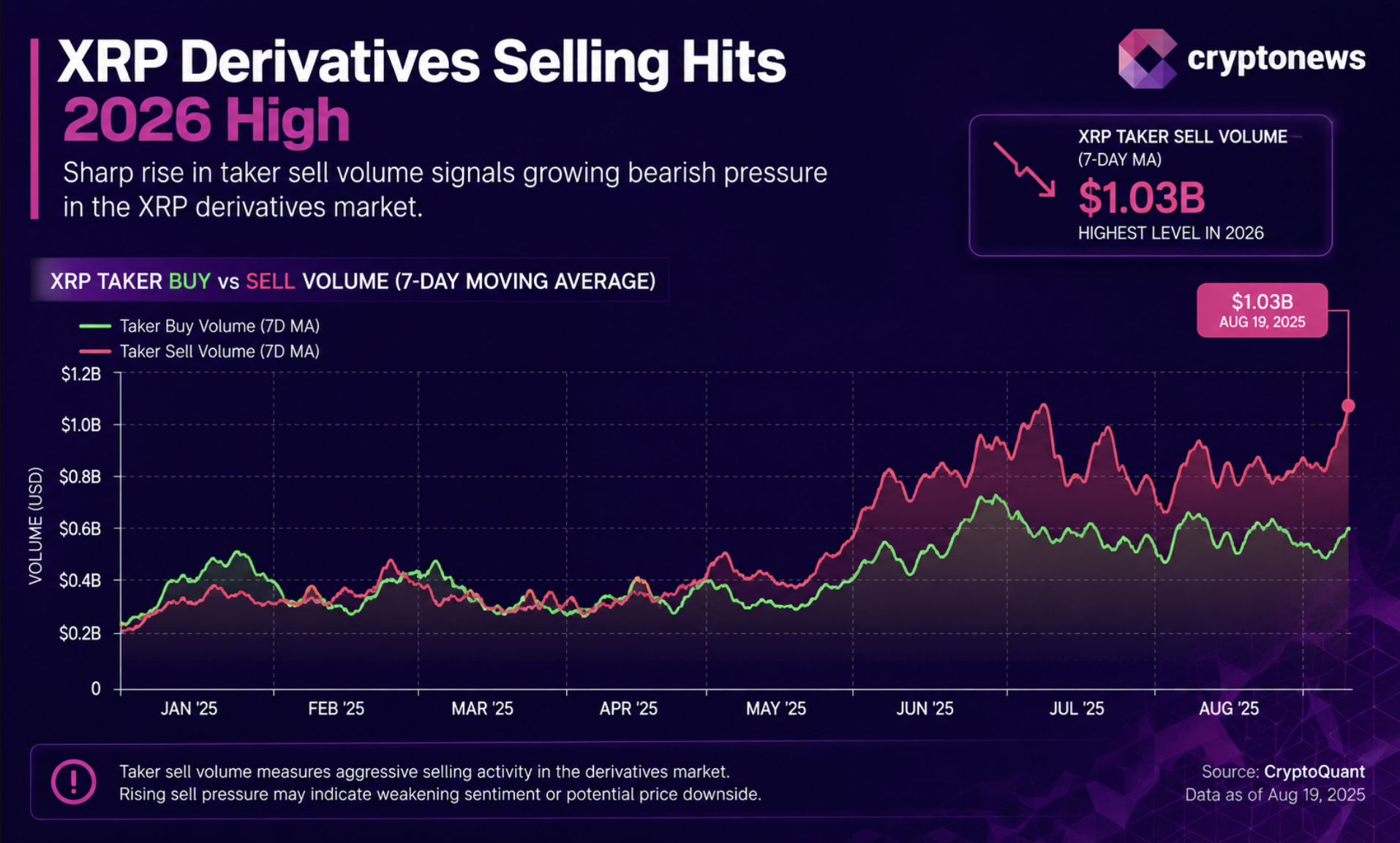
XRP price is having a more complicated prediction than that single red number suggests. Beneath the surface, derivatives desks are running the most aggressive selling program of 2026, and yet leverage keeps piling in.
Binance net taker volume dropped to -$96 million, the strongest aggressive sell push reported this year. Open interest on the same exchange still climbed roughly 14.8%, meaning fresh positions kept entering a market where sellers held the upper hand.
A 90-day taker cumulative volume delta reading also flagged “sell dominance,” reinforcing the bearish tilt already visible in taker flow. This is an unusual setup, falling taker volume paired with rising open interest doesn’t happen when a market is simply losing interest. It happens when new money arrives and picks a side, and right now that side is short.
The question is whether XRP’s two-week rally has enough structural support left to absorb another wave of selling.
Discover: The Best Crypto to Diversify Your Portfolio
XRP Price Prediction: Can Ripple Token Hit $1.50 This Week?
XRP trades at the $1.40 level after a 24-hour swing between $1.40 and $1.46, a range that itself signals the tug-of-war between profit-taking and dip-buying.
Futures open interest sits near $3.46 billion, down about $30.17 million in 24 hours, a modest cooling rather than a full unwind. Roughly $20 million in leveraged longs were reportedly liquidated during the pullback, confirming forced deleveraging rather than pure spot rotation.
Immediate support sits at $1.41, then $1.39, with a firmer floor near $1.37–$1.38. Resistance clusters at $1.46–$1.49, and the real test is the $1.50–$1.55 supply zone that has capped rallies before.

The best scenario will materialize if XRP can hold $1.41 and then reclaim $1.46 that could open a path toward $1.50, with stretch targets near $1.80–$2.00 if that supply zone breaks.
The most likely scenario is a choppy consolidation between $1.39 and $1.49 while derivatives positioning resets. But a break below $1.37 invalidates the rebound structure and exposes $1.34.
Trade XRP on Bybit and Get a Chance to Win Our $1,000 USDT Airdrop
Bitcoin Hyper Targets Early Mover Upside as XRP Tests Key Levels
Getting XRP back to prior highs now requires grinding through a wall of aggressive sellers, not exactly the setup that rewards patience.
Traders who bought the rally are underwater on sentiment, even if not yet on price, and that’s pushing some capital toward earlier-stage plays where the entry point isn’t fighting a $3.46 billion open-interest overhang.
Bitcoin Hyper is one of those plays. It’s building the first Bitcoin Layer 2 with native SVM integration, aiming to process transactions faster than Solana itself while settling back to Bitcoin’s base layer.
The presale has raised $33 million at a token price of just $0.0136853, with staking rewards already live at a high 35% APY only for presale buyers. Its Decentralized Canonical Bridge targets one of Bitcoin’s oldest complaints: no programmability, no smart contracts, no speed.
Research Bitcoin Hyper before the next raise milestone.
Discover: The Best Token Presales
The post XRP Price Prediction: Ripple Faces Strongest Derivatives Selling Pressure appeared first on Cryptonews.
Solana validators have approved a proposal to double the network’s annual disinflation rate, reducing future SOL issuance.
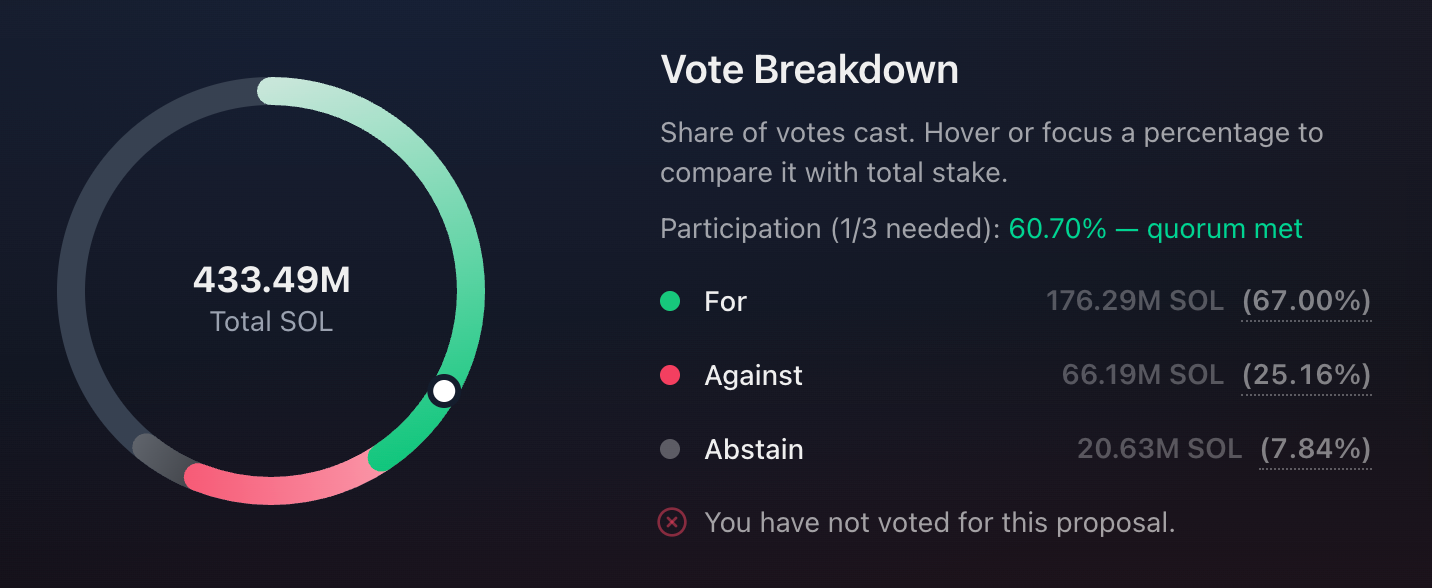
According to finalized voting results, the proposal received 67% support, with 25.16% voting against and 7.84% abstaining. Overall participation reached 60.7% of eligible stake.
The proposal, known as SGP-0002 or Double Disinflation, increases Solana’s annual disinflation rate from 15% to 30%, while leaving the network’s long-term inflation target of 1.5% unchanged.
Under the new schedule, Solana is expected to reach its 1.5% terminal inflation rate in about 2.8 years, compared with roughly 5.7 years under the previous schedule, Solana Compass reported. The change would result in an estimated 18.9 million fewer SOL being issued over the next six years, reducing dilution for SOL holders but also lowering staking rewards for validators and delegators.
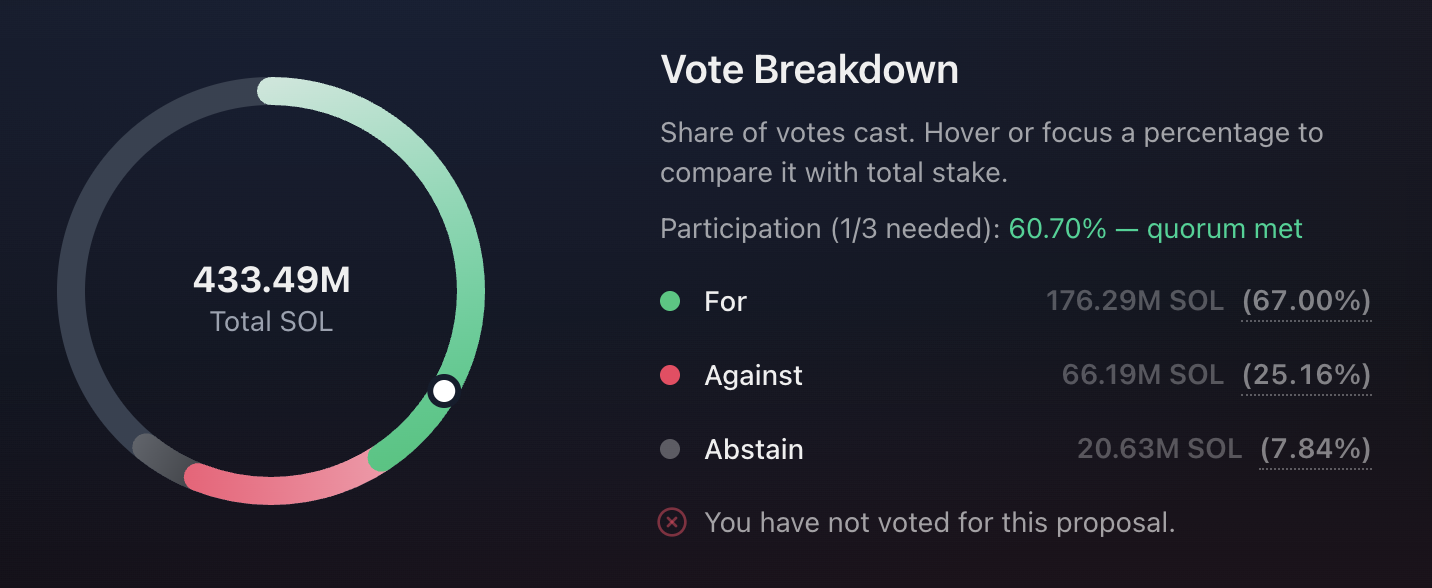
SGP-0002 passed with 67% support and 60.7% participation. Source: Solana Governance
The vote was part of Solana’s first binding governance process, which also approved a proposed Solana Constitution while rejecting a separate proposal on resource and inclusion fees.
Some of the largest participants were divided over SGP-0002. Figment, the largest voter shown in finalized governance data with 17.1 million SOL staked, voted entirely against the measure, while Helius and Jupiter overwhelmingly backed it.
Kraken was among those whose position shifted during the vote. The US-based crypto exchange initially voted against SGP-0002 at 12:33 UTC, temporarily pushing support below the required threshold. By the end of voting, more than 90% of its roughly 8.9 million SOL voting stake backed the proposal.
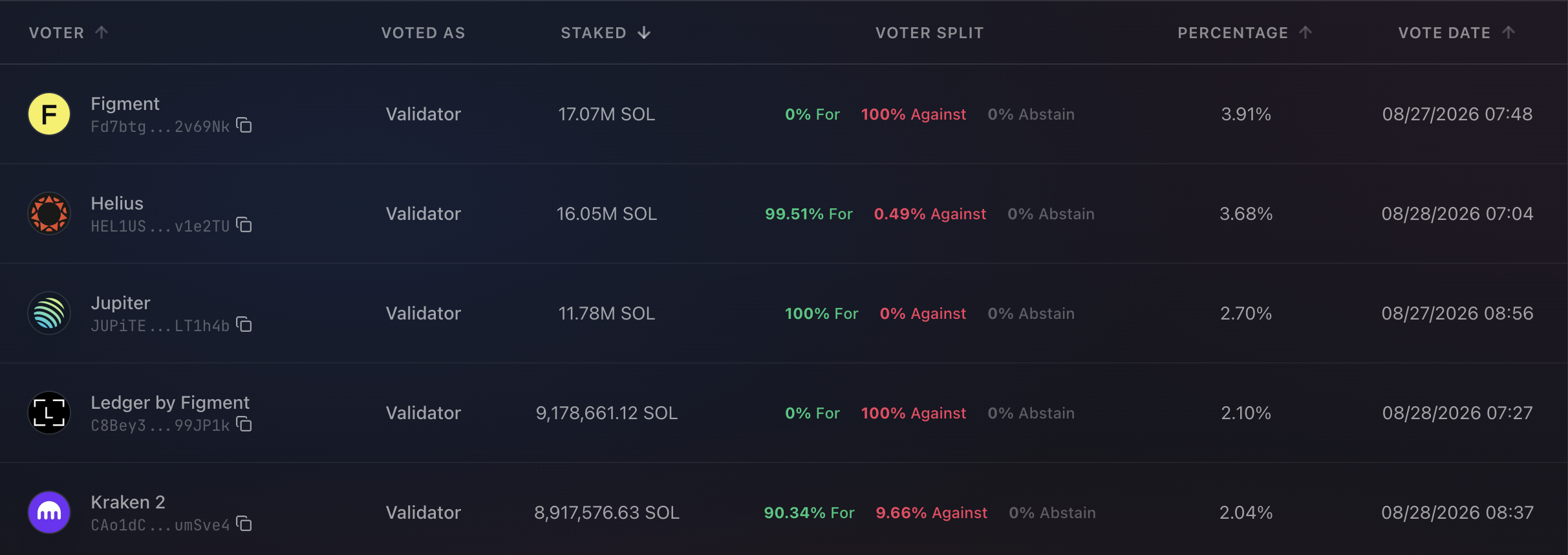
Top voters were split on SGP-0002. Source: Solana Governance
Related: Solana transactions hit record 4.2B as SOL rallies 40%
Solana ETF assets cross $1 billion
The governance vote comes as US-listed Solana investment products continue to attract investor capital despite SOL’s weaker performance earlier this year.
Bitwise’s Solana ETF recently surpassed $1 billion in assets, becoming the first Solana ETF to reach the milestone, according to an X post from Bloomberg ETF analyst Eric Balchunas on Friday.
US Solana ETFs have attracted roughly $1.7 billion in cumulative net inflows, with little sustained outflow since their launch, Balchunas said Friday.
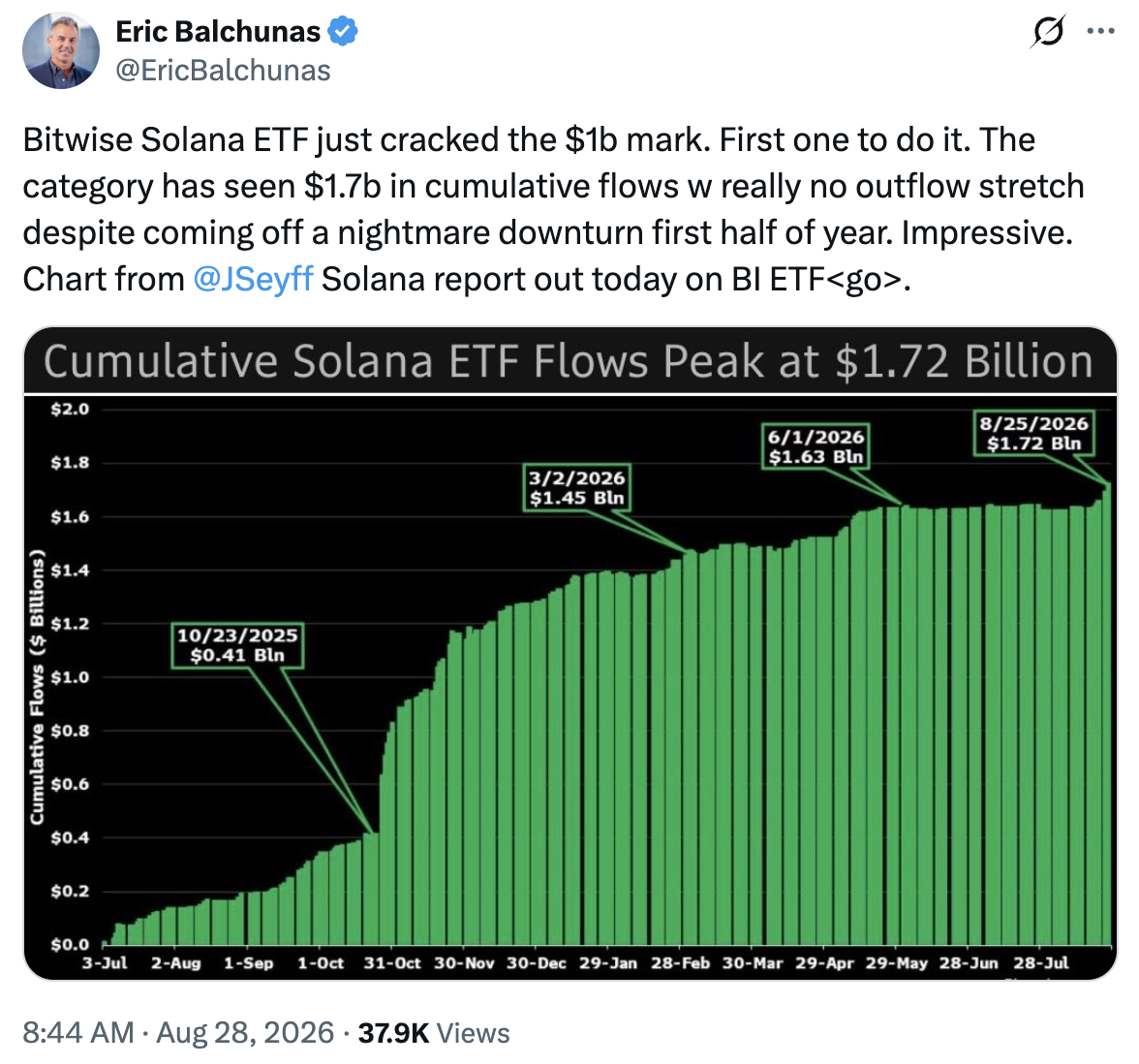
Source: Eric Balchunas
Magazine: Hugging Face hack exposes the open-weight AI cybersecurity paradox
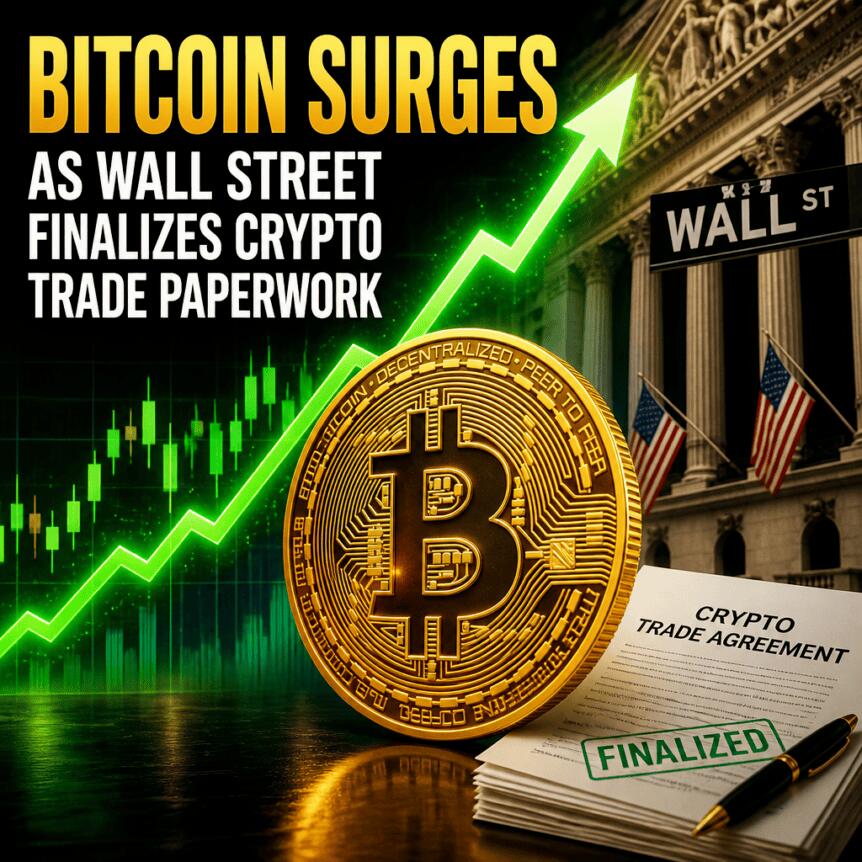
Bitcoin reclaimed levels above $80,000, pulling a wave of momentum through crypto equities and the broader digital-asset “plumbing” that links token demand to traditional finance. The rally has coincided with expectations around US long-dated Treasury bond buybacks and renewed political pressure for clearer US crypto regulation, helping lift miners, exchanges, and stablecoin-linked businesses.
At the same time, the market’s focus is narrowing onto how access to dollar-based capital markets and payment rails translates into real onchain activity and institutional balance sheets. From Circle’s USDC growth thesis to Strategy’s debt-servicing risk framework and Solana’s record throughput, this week’s developments underline a common theme: crypto performance is increasingly tied to traditional liquidity conditions and regulated financial infrastructure.
Key takeaways
- Bitcoin trading above $80,000 lifted crypto stocks, with miners and digital asset treasury firms posting double-digit gains as broader risk appetite improved.
- Bernstein says Circle’s USDC supply growth resumed after a six-month slowdown, pointing to a potential “next leg” driven by tokenized capital markets and payments adoption.
- Regime Intelligence frames Strategy’s main vulnerability as financing access rather than a BTC price collapse, emphasizing the ability to service annual obligations.
- Solana recorded a new high of 4.2 billion onchain transactions in July, supported by a concurrent 40% price move and accelerating real-world asset (RWA) tokenization activity.
Bitcoin’s rebound pulls crypto stocks higher
Bitcoin’s move back above $80,000 helped drive gains across public crypto markets. According to Cointelegraph Markets coverage, the week’s advance lifted miners and digital asset treasury companies, while broader sentiment tracked with expectations around the US Treasury’s plan to double certain long-dated bond buybacks.
Over the past week, Canaan, MARA Holdings, and Strive were cited among the biggest gainers. Coinbase and Robinhood also rallied as the recovery extended. CoinMarketCap data cited in the original reporting showed Bitcoin pushing its weekly advance beyond 23%, while Ether rose nearly 30% to trade above $2,500.
On the policy front, President Trump renewed calls for Congress to pass the CLARITY Act, though the bill remained stalled after lawmakers failed to move it forward before the August recess. The bill’s potential impact—clearer rules for US crypto markets—remains a key variable for long-term institutional participation. Trump also revived the idea of government Bitcoin purchases, but neither scenario is guaranteed.
For investors, the market’s reaction suggests that timing matters: risk-on conditions can quickly reprice shares tied to crypto asset exposure, even before regulatory clarity arrives. What remains important is whether the rally can persist without a further improvement in capital-market liquidity.
Bernstein renews its USDC growth cycle outlook for Circle
Circle has also come under fresh analyst attention, with Bernstein arguing that USDC could enter a renewed growth phase over the next 12 months as stablecoin supply growth picks up again.
In a Monday research note, Bernstein said USDC supply increased by roughly $2 billion in seven days, ending a six-month stretch of stagnant or declining growth. The firm maintained an Outperform rating on Circle and a $140 price target—an outlook that implies around 60% upside based on the assumptions in its coverage. The original report also noted that Circle’s shares had risen about 40% over the past month.
Bernstein’s thesis ties the next stage of USDC growth to several connected catalysts: renewed crypto momentum, improving US regulatory clarity, and broader adoption of tokenized capital markets and payments. The firm also pointed to early signs of demand from AI agents, though the underlying data for that claim was not detailed in the source.
One specific metric cited in the report—USDC’s share of adjusted transaction volume—helps explain the argument’s direction. Bernstein reported that USDC’s share rose from roughly 40% in 2025 to over 60% so far in 2026, overtaking Tether’s USDt on that measure. In a competitive stablecoin market, share of transaction volume can matter as much as raw supply growth because it reflects which asset is being used as the settlement layer in active flows.
The analyst backdrop is complicated by Circle’s own trading history since its June 2025 IPO, when shares were priced at $31. After an early post-IPO surge, the stock fell back toward that level by November 2025 as crypto markets entered a downturn—an episode that underscores how sensitive even “infrastructure” narratives can be to risk cycles.
Strategy’s key risk: capital market access, not a BTC price wipeout
While much of crypto reporting focuses on Bitcoin’s price path, a Regime Intelligence report highlighted a different risk channel for Strategy: the threat is not necessarily that BTC collapses, but that the company loses access to capital markets needed to service its obligations.
According to the original report, Strategy’s vulnerability centers on its ability to meet annual obligations of $1.76 billion without having to sell BTC, which is structurally relevant because Strategy’s balance sheet and financing model depend on continued funding conditions. The company holds 840,447 BTC backing $22 billion in debt and preferred claims, and the report stated there are no margin calls tied directly to Bitcoin’s price.
The stress-test framing is also notable. The cited analysis says Bitcoin would need to fall 96% for Strategy’s holdings to no longer cover its convertible notes, suggesting a wide buffer against a severe but not “catastrophic” drawdown. The report further said Strategy holds cash reserves equal to 2.6 times its annual obligations, and that its BTC holdings were worth $66.7 billion versus a cost basis of $63.36 billion.
Komodo Platform co-founder Kadan Stadelmann told Cointelegraph that even if equities unraveled, Strategy’s BTC holdings would put it in a relatively strong position to weather most scenarios—because the company holds far more Bitcoin than its annual cash obligations.
However, the risk is more about financing than mark-to-market. The report’s logic suggests that if financing conditions worsen—especially alongside a declining Strategy share price and lower mNAV—raising fresh capital could become harder. In that situation, Strategy might have to draw down reserves or sell BTC to maintain its operating structure.
Stadelmann emphasized that Strategy’s weakness lies in the need to issue capital to service its structure, adding that if equity markets collapse, the company could end up parting with Bitcoin as part of its operating needs. The original reporting also noted Strategy has sold BTC four times since May, while CEO Phong Le said the company accumulated 25 times more BTC over the same period and plans to resume purchases.
For readers, the practical takeaway is that “survivability” in institutional Bitcoin plays can be disconnected from short-term BTC volatility. Liquidity access can become the binding constraint even when downside math looks survivable.
Solana hits record throughput as RWA tokenization grows
On the network side, Solana’s activity surged alongside price. The original report said Solana processed a record 4.2 billion onchain transactions in July, preceding a 40% rally that pushed SOL above $100 for the first time since February.
The transaction data was attributed to onchain figures presented by The Kobeissi Letter. In the same coverage, activity was described as rising 13.5% from June and 91% from December—adding roughly 2 billion transactions over that span. Record throughput matters because it can signal that demand isn’t limited to a single category of applications; instead, it suggests broader usage that can translate into ecosystem fees and more robust onchain settlement.
Tokenization is a key part of that broader narrative. The Kobeissi Letter also cited RWA.xyz data indicating that nearly $4 billion worth of real-world assets are tokenized on Solana, up 11.8% over the past month. Across tracked networks, distributed RWAs were reported to have surpassed $38 billion.
The rally in SOL was also linked to macro conditions. The original article connected Solana’s upward move to a US Treasury Department announcement about doubling certain long-dated bond buybacks to at least $4 billion per operation, which was described as helping push yields lower and improve risk appetite. Still, the report cautioned that continued gains depend on ongoing network activity and further RWA adoption, not just a temporary macro tailwind.
Investors watching Solana may want to monitor whether transaction growth sustains after the initial repricing of risk assets, and whether RWA tokenization continues to scale into a deeper base of recurring usage rather than remaining concentrated in early categories.
Going forward, the market will likely keep oscillating between two drivers: traditional liquidity signals (such as Treasury buyback expectations) and crypto-specific infrastructure metrics (stablecoin usage shares, onchain transaction throughput, and institutional financing access). The next question is whether this week’s rebound turns into a durable shift—or fades if capital-market conditions tighten again.

A view of a grain field during the early harvest season in the Rostov region, southern Russia, on July 14, 2026.
Anadolu | Anadolu | Getty Images
Corn and wheat prices have surged to their highest levels in more than three years. But the forces driving recent rallies for these two crops are notably different.
Wheat futures settled 3.1% higher at 784 cents per bushel on Friday after hitting a high of 790.25 cents, the highest since Feb. 14, 2023 when it traded 797.5. Wheat jumped 12.1% this week, its biggest weekly gain since March 2022. Overall, wheat futures were up more than 54.5% year-to-date, amid escalating Russia-Ukraine tensions in the Black Sea.
Corn futures settled 0.6% higher at 536.5 cents per bushel Friday after hitting a high of 541.25 cents, the highest level since July 28, 2023. Corn gained 5.5% for the week and is up 15.6% in August, on pace for its best month since April 2021 when it rose 19.31%. The contract is up 21.8% year-to date on tighter U.S. supply expectations and strong demand, with constrained Ukrainian exports adding pressure to global supplies.
Corn’s recent rally is largely driven by mounting concerns around the supply of the U.S. crop and a weak outlook, while disruptions to Ukrainian exports continue to add pressure to the global supply.
“From the beginning of August to now, the consensus in the market is that there is less supply than we thought at the beginning of the month,” said William Osnato, Barchart director of commodity data research and analysis.
Osnato points to a number of reasons for this. A recent report by the U.S. Department of Agriculture (USDA’s) August World Agricultural Supply and Demand Estimates (WASDE) report lowered corn yield estimates more than traders expected, despite projecting the second-largest harvest on record. The agency cut its yield forecast by 2.3 bushels per acre to 180.7.
In addition, Osnato said the crop’s outlook got further impacted by the disappointing field observations from the Pro Farmer’s Crop Tour. Pro Farmer found extreme July heat had impacted the crop, after excessive rain in June for many areas in the U.S.
“We are a little past the peak point of the growing season, which is late July, early August, but you can still have poor weather impact the crop at this point,” Osnato said. Several portions of the eastern Corn Belt were impacted by excessive rainfall during August, along with the development of corn fungal diseases later in the growing season.
Jim McCormick, co-founder and chief operating officer at AgMarket.Net, told CNBC that concerns about the U.S. crop have become more important because global supplies were already tight.
“We thought the world was going to be bailed out by the U.S. supply. Now the U.S. supply is becoming questionable, and the market’s moving up into a rationing mode,” he said.
While not as important as the U.S. crop itself, Osnato said other factors like the extreme high temperatures and drought in Europe over the whole summer significantly impacted their corn production. A strong export demand from Europe added pressure on the already constrained supply. In its report, the USDA raised exports by 75 million bushels to 3.3 billion, reflecting increased global demand and constrained exports for Ukraine, which is a major global corn exporter. Osnato said the effect, however, is less important for corn than for wheat, adding that some disruption to Ukrainian corn exports had already been priced into the market.
McCormick said Europe’s drought-hit corn crop could also add pressure to wheat, as less available corn may lead the region to use more wheat for animal feed and keep more of its wheat at home rather than export it.
Disruption of wheat supply
Wheat’s rally, unlike corn, is tied to disruption in the global supply.
Grain export disruptions have pushed prices up, after reports that tensions escalated between Russia and Ukraine in the Black Sea region. Russia and Ukraine together account for more than a quarter of global wheat exports. Growing fears around supply disruption in the region have been a strong catalyst to the price increase.
“You’ve had a number of different disruptions in the Black Sea. That’s definitely the main story,” Osnato said, explaining that damage to Russian grain-export infrastructure caused expectations for near-term Russian wheat shipments to fall. Black Sea being the largest point of exports.
Russia is the biggest wheat exporter and a low-cost supplier whose prices often influence the global market. But the crop has not been moving much through the Black Sea. Recent attacks in the Sea of Azov, which is a feeder into the Black Sea and additional military strikes on grain export facilities, oil tankers and vessels in the Black Sea region have made it challenging for shipping firms to even get insurance.
“What moves the market is a change in expectations, and Russia will not be able to ship as much wheat by several millions of tons because the capacity to ship out of the Black Sea has been significantly damaged,” Osnato said.
Weather has added another layer of pressure to wheat supplies. Osnato said a severe heat wave cut European wheat production by roughly 8 million to 10 million tons, while drought also reduced hard red winter wheat output in Texas, Oklahoma and Kansas.
Beyond the fundamental supply concerns driving both these crops, the move to multiyear highs can itself attract more buying.
“When a contract hits new highs and multi-year highs, then you start to get momentum and systematic traders interested. So now you have fundamental and systematic traders looking at the market positively, and so those are all sort of mixing together,” Osnato said.

While the standard place naming process is not perfect, it at least establishes an institutional procedure for review, consultation, evidence gathering, and consideration of competing claims before a geographic name is changed. By contrast, what we are witnessing under Trump 2.0 is a unilateral naming by decree or whim with seemingly no public discussion or real government consideration of impacts and consequences.
It is clear to us that Trump’s renaming of Lake Ontario is symbolic political theater aimed at diverting our attention away from the fallout of his trade war with Canada. Yet symbols matter. Place naming is a world-making practice that shapes the very foundations of our geographical imaginations and how we come to know and engage with the world.
There is a risk in dismissing Trump’s cartography of mass distraction as a frivolous symbolic tactic, since it can have real consequences for what is taught in classrooms, reconciliation efforts with Indigenous peoples, and the badly needed repair of relations between the United States and Canada.
Bitcoin (BTC) is hovering near $80,000 with a $6.36 billion Deribit options expiry due today.
With roughly 81,000 contracts set to expire and max pain at $69,000, the setup could leave the OG cryptocurrency vulnerable to large moves as traders close, roll or hedge positions.
Bitcoin Options Expiration Puts $6.36B at the Center of Friday’s Trading
That expiry carries a 0.85 put/call ratio, meaning there are slightly more call contracts than puts. Calls become more prominent from about $66,000, with sizeable positions around $70,000, $72,000, $74,000 to $75,500, and $78,500 to $80,500.
Max-pain at the $69,000 level is the price at which the combined payout to option holders would theoretically be lowest. It does not mean Bitcoin will fall there, and dealer hedging can sometimes create a temporary pull toward that level as expiry approaches, although it is more a reference point than a firm magnet.
This settlement arrives after Bitcoin added more than $16,000 in less than a week, moving from a break above $65,000 to more than $81,000 before pulling back. CoinGecko data at the time of writing put Bitcoin about $300 below the $80,000 level, with the asset having gained slightly more than 1% in 24 hours, 6% over seven days, and 25% across the last month.
The options event is seen as capable of producing “sharp price swings” in either direction. If BTC holds near $80,000 or climbs, call holders stand to benefit, and dealer hedging could add buy pressure. If the selling takes hold, hedges could move the other way and deepen a decline toward $70,000 or below. But a quieter outcome is also possible if Bitcoin stays between roughly $75,000 and $80,000 while positions are closed or rolled.
Short Covering Leaves Bitcoin Rally Facing Test
Bitcoin’s latest move is also being questioned on the demand side. As CryptoPotato reported earlier, QCP Research said part of BTC’s recent rise came from short covering, with open interest falling as prices climbed. ETF inflows were nearing the 95th percentile of the past year, providing spot demand, but QCP warned that the rally could become fragile if short covering fades without enough new buying.
That leaves Friday’s expiry as a near-term test of an already extended move, although the options data does not predict where Bitcoin will settle.
Meanwhile, if you want to know more about BTC’s latest move alongside what the current RSI reading suggests, take a look at this video.
The post Bitcoin Rally Faces a Massive $6.36B Options Expiry Test Today appeared first on CryptoPotato.
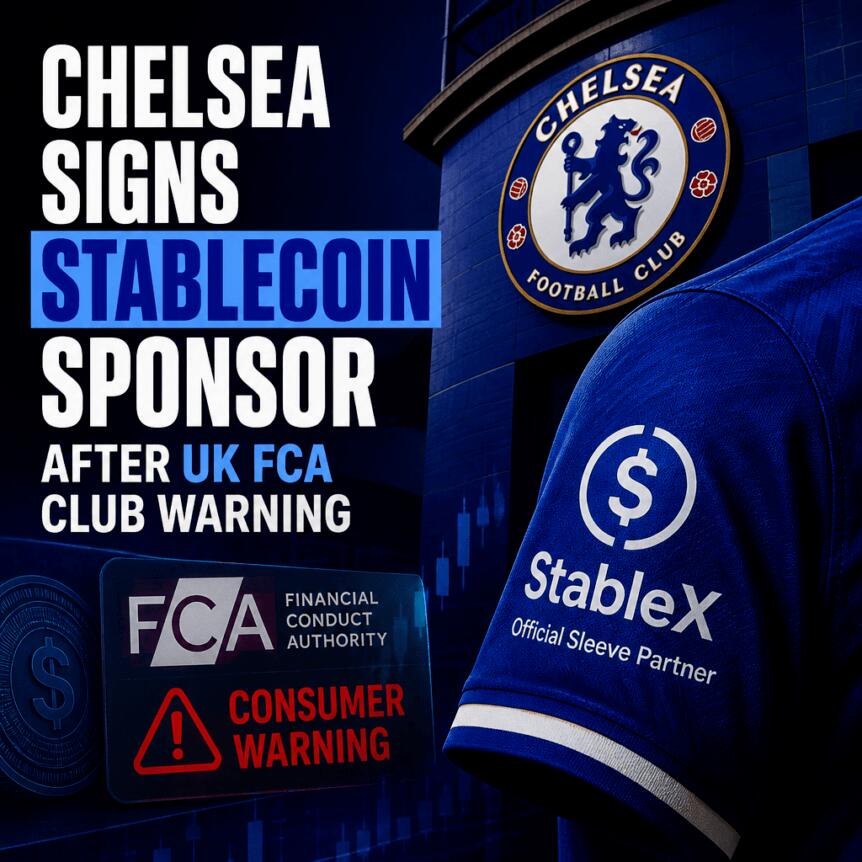
Circle, the issuer of the USDC stablecoin, is stepping into English football sponsorship on a high-profile stage. The company announced that its name and the USDC brand will appear on Chelsea Football Club jerseys for the 2026/2027 season.
The move lands only months after the UK Financial Conduct Authority (FCA) warned Premier League clubs about sponsorship arrangements involving “unauthorized” financial firms—including crypto-related businesses—raising questions about how stablecoin brands fit into the regulator’s broader expectations for marketing and authorization.
Key takeaways
- Circle will sponsor Chelsea FC and place the USDC brand on team jerseys starting with the 2026/2027 season.
- The announcement follows FCA warnings to Premier League clubs about sponsorship deals with unauthorized firms that could breach UK financial services rules.
- Circle UK Trading Limited is listed by the FCA as authorized to provide certain financial services to UK residents.
- USDC is stated to be issued by regulated affiliates, but Circle says it is not issued or regulated under UK law.
Chelsea jerseys to carry USDC branding
In a Friday press release, Circle said its name and USDC would be featured on Chelsea FC players’ jerseys during the 2026/2027 season. The sponsorship effectively brings a stablecoin brand into a mainstream consumer spotlight where millions of fans watch matches and associated media coverage.
For Circle, the rationale is straightforward: football sponsorship offers global reach and brand visibility for a payments-focused token built to maintain a stable value relative to a reference currency. For Chelsea supporters, the change will be more immediate—USDC will become a visible part of the club’s on-field identity.
Why the FCA warning matters
The sponsorship arrives about three months after the FCA said it had sent warning letters to football clubs in the Premier League, potentially including Chelsea. According to the FCA, the letters were tied to “unauthorized” companies using sponsorship deals to target football fans, which the regulator said could violate UK financial services rules.
The FCA framed the issue as a consumer protection concern. In comments accompanying its warning, Lucy Castledine, the FCA’s director of consumer investments, said that clubs’ loyalty-based relationships should not be used to expose fans to “potentially dodgy products.”
While Circle’s sponsorship is not being presented as a direct response to the FCA’s earlier action, the timing makes the regulator’s stance impossible to ignore for market participants. The core question for investors and users is whether stablecoin marketing—especially when tied to major sports audiences—falls cleanly within the FCA’s interpretation of authorized activity, or whether additional scrutiny will follow.
Authorization vs. where the token is “issued”
Circle’s relationship with UK regulatory oversight appears to be split between its corporate authorization and the legal status of the stablecoin itself. Circle UK Trading Limited—the firm described as Circle’s UK arm—has been listed by the FCA as an authorized company able to provide certain financial services to residents since 2018.
At the same time, Circle said USDC is “issued by certain regulated affiliates,” but it is “not issued or regulated under the laws of the United Kingdom.” That distinction matters because FCA warnings were aimed at unauthorized financial firms and marketing practices that could be inconsistent with UK financial services requirements.
The company’s messaging suggests it views its UK operations as compliant in terms of the entities that interact with UK residents, even if the stablecoin’s issuance and regulation occur under other jurisdictions. For readers, the practical implication is that sponsorship does not necessarily settle regulatory questions on its own; what matters is the scope of authorization and the jurisdictional framework covering the token.
Broader policy pressure around stablecoins
The Chelsea deal also sits within a wider UK policy environment still working out how stablecoins should be governed. The UK has said lawmakers are working toward a more comprehensive regulatory framework for digital assets. In parallel, stablecoin usage in the country is described as legal, but regulatory clarity remains a moving target.
That context raises the stakes of visible consumer-facing campaigns. When a stablecoin brand becomes associated with a mainstream sports club, it can accelerate awareness well beyond crypto-native audiences—exactly the kind of attention the FCA typically tries to manage when it fears consumer harm from products presented through trusted institutions.
Regulatory questions are likely to remain open
Circle’s sponsorship may be entirely lawful under its stated authorization structure, but the FCA’s earlier warnings indicate the regulator is focused on how financial firms reach fans through club branding and what authorization claims are presented to the public. Investors, builders, and users should watch for any follow-up guidance, further enforcement signals, or public clarification on how stablecoin marketing is expected to align with UK rules.
Tree Island Steel names Brian Liu as new COO

Bitcoin, Bonds, and Stocks Enter a Dangerous September Pattern

Reds place 3B Ke’Bryan Hayes (groin) on injured list

Weekend Open Thread – Corporette.com

Weekend Open Thread: Brooks Brothers

London Mayor Sadiq Khan handed a peerage by Keir Starmer alongside 15 other Labour figures… just days before the PM leaves No10

“Bitcoin JUST EXPLODED! This Pump Is Only the Beginning” – Raoul Pal & Lyn Alden

Cathie Wood & Raoul Pal: “Bitcoin’s About to ENTER It’s MOST EXPLOSIVE ERA Ever” | Silver 2026

Timothy Ronald Show: Konsultasi Keuangan Subscriber
-

 Crypto World3 days ago
SpaceX stock could rise 75% to $240, JPMorgan says
-

 Crypto World21 hours ago
Bitcoin’s 22% rally now needs real demand to outlast Treasury liquidity boost
-

 Business6 days ago
Musk’s Tesla, SpaceX Confirm $16.8 Billion ‘Terafab’ Chip Plant as World’s Largest Building in Texas
-

 Crypto World7 days ago
anatomy of crypto’s biggest liquidation event since 2021
-

 Crypto World4 days ago
A $30 Billion AI Fund Implodes, Now the SEC Is Investigating Wall Street’s Role
-

 Crypto World2 days ago
Warsh Jackson Hole keynote puts financial innovation first
-

 Politics6 days ago
6 months on, Irish renters crushed by effects of government housing bill
-

 Crypto World3 days ago
Did Trump Just Move SpaceX Stock With One Truth Social Post?
-

 Business20 hours ago
Salesforce Stock Soars 19% as Blowout Earnings and Agentforce AI Growth Silence Software Skeptics
-

 Business5 days ago
Mystery AI Model ‘Ox Alpha’ Draws Developers With Free Access as Chinese Lab Origins Remain Debated
-
 NewsBeat7 days ago
The ‘Lucky Dip Gang’ causing carnage for clicks: After five thugs were killed speeding in the wrong direction on a motorway, GUY ADAMS investigates a sick new trend… and why police aren’t even allowed to pursue them
-
 Crypto World7 days ago
Nvidia Stock Suffers Longest Losing Streak Since 2022: Will Q2 Earnings End It?
-

 Business2 days ago
Walmart takes aim at younger shoppers with new fashion brand
-

 Business4 days ago
Moderna CEO warns China is pouring state money into mRNA technology
-

 Business7 days ago
Will Tesla Stock Be Higher or Lower a Year From Now? Here’s What Wall Street Analysts Are Saying
-

 Business4 days ago
NVIDIA Stock Drops Nearly 2 Percent to $210 on Seventh Losing Day Ahead of Critical AI Earnings
-
 NewsBeat2 days ago
Lindsay Clancy jury braces for closing arguments as judge tells court: ‘You’ve heard all the evidence’ – Live updates
-
 Crypto World5 days ago
$92 Billion Nvidia Earnings Could Make or Break the AI Trade
-

 Tech7 days ago
Unitree’s New Superman Robot Claims to Outjump and Outrun Every Human, Usain Bolt Included
-

 Business3 days ago
Thailand’s Eastern Economic Corridor Capital City (EECiti): Key Developments and Investment Opportunities
You must be logged in to post a comment Login