Dubois will defend her two lightweight world titles against Amelia Moore in Birmingham this weekend having moved to a gym in Los Angeles
Caroline Dubois snubbed the glitz and glamour of Los Angeles in favour of a night in with her guitar.
Advertisement
Dubois, 25, will defend her two lightweight world titles against Amelia Moore in Birmingham this weekend. She recently left trainer Shane McGuigan for a new gym life in California under the watchful eye of Manny Robles. But Dubois has yet to experience the bright lights of the Hollywood capital.
“Everyone has been saying, ‘Caroline, have you gone to the beach? Have you gone to Beverly Hills? Have you seen anything yet?’,” she said. “I have been to the beach one time, but that was to do a beach workout! When I’m in camp, I just like to seriously lock in. I go to the gym, come home, rest, go to the gym again, come home, and sleep.
Watch Moses Itauma vs Filip Hrgovic live on DAZN
This article contains affiliate links, we will receive a commission on any sales we generate from it. Learn more
Moses Itauma will fight to be crowned world heavyweight champion when he faces Filip Hrgovic on Saturday, August 29, at London’s O2 Arena. Fans can order the fight on DAZN PPV for £24.99 or watch it at no extra cost with DAZN Ultimate.
“I have been watching boxing on the TV when I come back and I’ve been reading in my spare time, but I have also rented a guitar to keep me active. I’ve been playing guitar for over a year now but my progression has been so slow! I picked up boxing very quickly but this has been very different. It’s hard not being good at something!
“It’s been hard to learn but I like music a lot so I thought, why not learn more about it? But I am starting to understand it now and I know six or seven songs; I can play Shallow by Lady Gaga and Landslide by Fleetwood Mac.
“And more importantly, I genuinely hate being on my phone; it drives me crazy and I feel like I’m wasting my life. So sometimes I just want to do something that gets me off my phone. Either I like to read, write, or play the guitar, so it’s good for me.”
The longtime couple complemented each other in ivory looks, with George wearing a short-sleeved shirt tucked into trousers, and finishing the monochrome outfit with loafers.
For her part, Amal looked enchanting in a low-cut, floor-grazing slip dress as she carried a small bouquet of flowers, which were given to her as the duo disembarked a boat.
Advertisement
The fashionista accented her bridal-inspired ensemble with chandelier earrings and chunky bangles, and strappy silver heels.
The pair, who share nine-year-old fraternal twins Ella and Alexander, are known to spend time in Italy every summer.
George Clooney and his wife Amal Clooney were spotted enjoying a night out in Lake Como earlier this month
Advertisement
The 65-year-old actor and 48-year-old human rights attorney attended an event at Villa Passalacqua
In late July, wildfires blazing across southern France forced George and his family to flee their home.
The star, his wife, and their kids live in Brignoles, located in the Provence-Alpes-Côte d’Azur region, which was threatened by fires spreading across France, Greece, Italy and Spain.
George revealed that he and his loved ones evacuated their home in a letter to the mayor of Brignoles, Didier Brémond, his representative confirmed to People at the time.
Advertisement
The actor reportedly vowed to support the town, which has a population just under 18,000 people, regardless of the impact of the encroaching fires.
‘Dear Didier, At this point we have no idea whether our beautiful home makes it through this terrible moment,’ the Hollywood vet began.
‘As we evacuate Brignoles we want to emphasize two things, first we hope you and the people of our city are safe and second that Amal and I are committed to making sure that whatever happens to our village, we are part of this community and we’ll be part of making it whole,’ he wrote.
‘We love Brignoles and our friends who live there.’
Advertisement
In May, the Clooneys celebrated George’s birthday in St. Tropez.
The longtime couple complemented each other in ivory looks, with George wearing a short-sleeved shirt tucked into trousers, and finishing the monochrome outfit with loafers
The husband and wife pictured on April 27 at the 51st Chaplin Award Gala
Amal treated her husband to a bash full of surprises – including having his friends show up in disguise.
EXCLUSIVE: Insiders say the SNP Government is looking at making a big reduction to the 20-plus health boards in Scotland.
First Minister John Swinney is seriously considering slashing the number of scandal-hit NHS boards in a bid to save money.
Advertisement
SNP Ministers are discussing a bonfire of health quangos in what would be the biggest health service shake up in decades.
Swinney, who was returned as First Minister in May, will unveil his Government’s legislative plans on Tuesday.
Reshaping the public sector is a priority over the next five years, with Cabinet Secretary Ivan McKee tasked with rooting out inefficiency.
The country has fourteen territorial boards – such as NHS Lothian and Greater Glasgow and Clyde – and seven special boards but it is understood a big reduction is on the table.
Advertisement
Health Secretary Angela Constance and other Ministers are believed to have held talks cutting the number of health bodies.
One Holyrood insider speculated that the fourteen territorial boards could be reduced to a handful.
Health and social care spending came to £22.5bn this year, with £17.5bn routed through the boards.
Advertisement
Critics believe having so many bodies is an inefficient use of public money, with the quangos having their own chief executives and finance directors.
NHS boards have also angered voters over the child infection scandal in Glasgow and the disgraced surgeon Sam Eljamel in Tayside.
The SNP manifesto for Holyrood left the door open for cutting the number of NHS boards.
The Nationalists promised a reduction in the “duplication of corporate activity”, adding:
Advertisement
“This will see service delivery improved while the number of corporate health bodies are substantially consolidated.
McKee said in June: “In our first 100 days, we will lay out our plans for public service renewal and the bill that will follow.”
Scottish Labour had a manifesto commitment to reduce the number of boards from fourteen to three.
Party health spokesperson Jackie Baillie said: “Frontline NHS services are stretched to breaking point and hardworking staff are being asked to do the impossible, but huge sums of money are still being spent on bureaucracy and red tape.
Advertisement
The SNP cannot continue with the broken status quo while our NHS is on life support, but any changes must deliver for patients.
Scottish Labour has long called for an overhaul of Scotland’s Health Boards in order to redirect resources to the frontline and remove barriers to care, but the National Care Service farce shows good ideas often don’t survive contact with the SNP.
“The stakes are too high for either inaction or incompetence from the SNP.
“The SNP must work with communities, staff and experts to develop workable plans that genuinely deliver for patients and make our NHS fit for the future.”
Advertisement
Lib Dem MSP Adam Harley said his party opposed the move:
“This is the wrong move. Many communities, especially those in more rural parts of the country, have already been failed by the SNP’s obsession with centralisation. Cutting the number of health boards will only make things worse by giving local people even less control over decisions that directly affect them.
“The government needs to be focused on fixing the underlying problems with our health service, including workforce pressures and the social care crisis. Sadly, it doesn’t look like that’s on the SNP’s agenda.”
It comes as the SNP Government is facing a £4.7bn funding black hole by 2030.
Advertisement
Scotland’s auditor general Stephen Boyle has claimed the Government needs to “prepare more detailed plans” on how it will “close that gap by the end of the decade”.
The Scottish Fiscal Commission revealed this week that more than £700m will be cut from the Government’s Budget next year.
One of the ways the Government is planning on making savings is cutting up to 20,000 public sector jobs.
A Scottish Government spokesperson said: “As Ministers have set out, Public Service Reform focuses on delivering the things that matter most to people, such as easier access to the NHS and more efficient services that are high quality and sustainable for generations to come.
Advertisement
“The Programme for Government will be announced on Tuesday, 1 September.”
Lisa Harris, co-founder of food consultancy Harris & Hayes, says growing interest in sweetcorn is also partly down to the UK’s “unstoppable” appetite for South Korean food, which is “changing how we eat”.
Pereira has continued to champion corn, recently making a Brazilian lemonade – which uses limes instead of lemons – and pairing it with corn milk.
But Hejazi says its use in drinks and desserts is still “an emerging trend” and hasn’t yet hit the mainstream in the UK.
So, is it translating to real-life demand?
Advertisement
We’re not yet seeing sweetcorn milk stocked in supermarkets and corn lattes at mainstream coffee chains.
But Natalie TJ, who co-runs an Asian-inspired bakery in London, says her cornmilk matcha drink has been one of the most popular drinks this summer – second only to the bakery’s Hong Kong milk tea.
“Many coffee shops in Asia sell corn milk matcha,” she says, adding that customers have probably been seeking out the drink at the cafe as it is not as common as other matcha combinations in the UK.
A reduction in the number of health boards and a more streamlined NHS will have a positive impact, says Record View
An overwhelming case can be made for a cull of the many NHS boards we have in Scotland. A population of about five million does not need over 20 bodies in the health service, many with overlapping remits.
Advertisement
Duplication is rife and the amount of cash spent on chief executives and other senior staff could be diverted elsewhere. If John Swinney decides to consolidate the number of boards and reform the NHS in this way, he will have our support.
But reducing health boards should not be the only objective of overhauling the NHS. Transparency and openness have been lacking and there is a huge need for greater accountability.
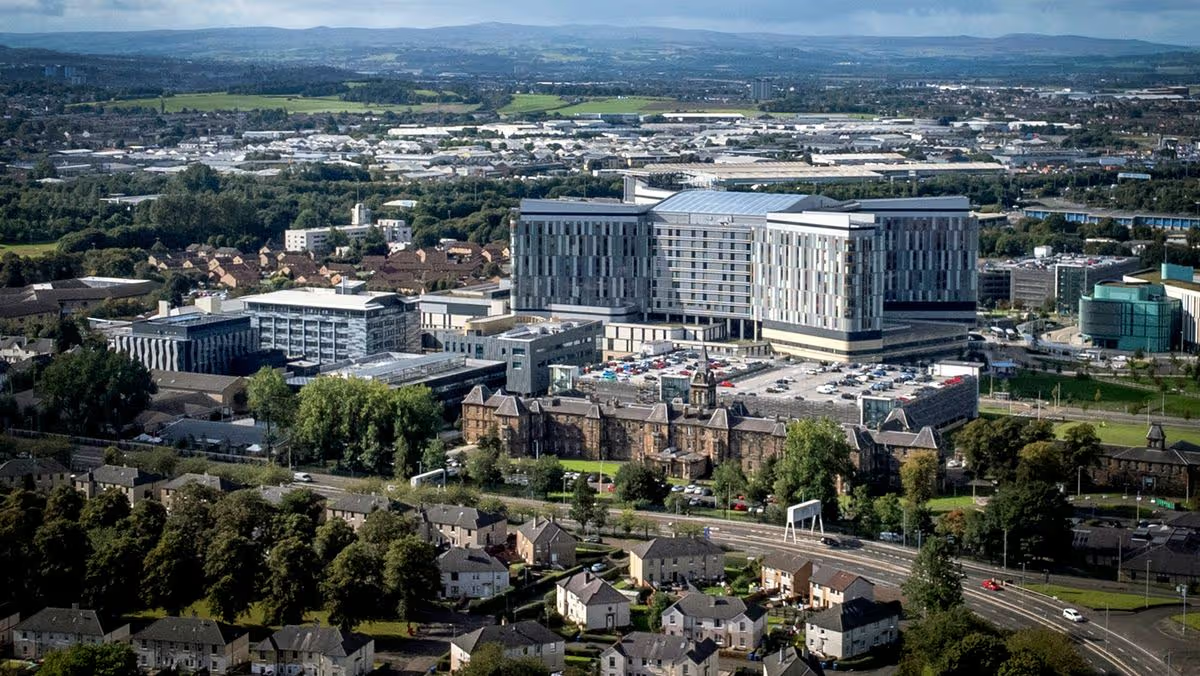
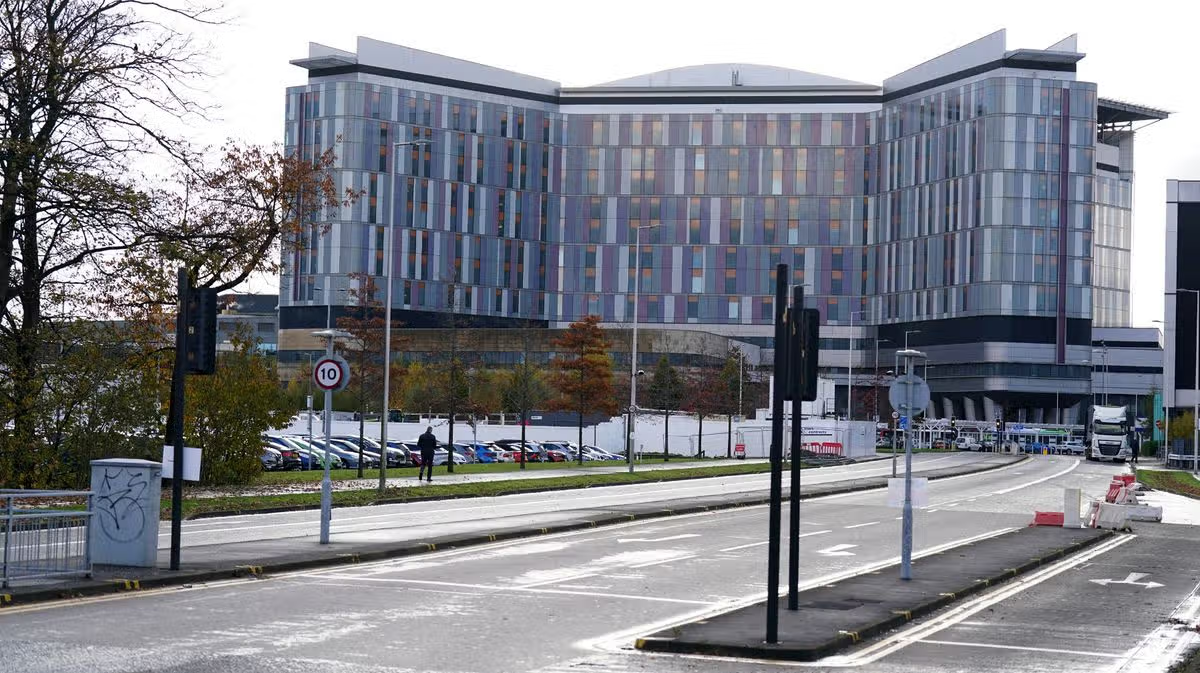
The scandal of child cancer patients dying over water-related infections at the Queen Elizabeth University Hospital in Glasgow is a national disgrace. NHS Greater Glasgow and Clyde refused to accept responsibility until the end of a public inquiry.
During this period, parents were cruelly gaslit and told their concerns were unfounded. At NHS Tayside, patients also feel betrayed over the scandal of the disgraced brain surgeon Sam Eljamel.
Advertisement
How he managed to continue working at Ninewells Hospital in Dundee when he did so much damage to vulnerable patients is breathtaking. Another public inquiry – again costing shedloads of public money – will hopefully get to the bottom of this fiasco.
The Sandie Peggie tribunal case in Fife, and the various scandals in NHS Lothian, further undermined public confidence in these boards. But public service reform should not be confined to the NHS.
We have more than 100 public bodies in Scotland spending ever-increasing amounts of taxpayers’ money. Whether they are quangos or government agencies, these bodies accumulate staff while their outcomes do not improve.
It is also worth asking if Scotland still needs 32 councils. The current structure of local government came about through Tory gerrymandering in the 1990s.
Advertisement
This model was tainted from the off and looks unwieldy decades on. There are two primary reasons for a fundamental shake-up of the public sector more broadly.
One, the government is facing a £4.7 billion black hole by 2030 and every pound has to be well spent. Two, saving money by stripping out waste could free up resources for frontline services.
It could result in more doctors and nurses being hired, or fund a tax cut for working and middle-class Scots. It is ironic that Swinney is preparing to downsize a state largely created by the SNP government.
But he has a mandate to govern for five years and an opportunity to push through bold change. The First Minister should remain focused on the task of bringing the public sector into the 21st century.
Get more Daily Record exclusives by signing up for free to Google’s preferred sources. Click HERE.
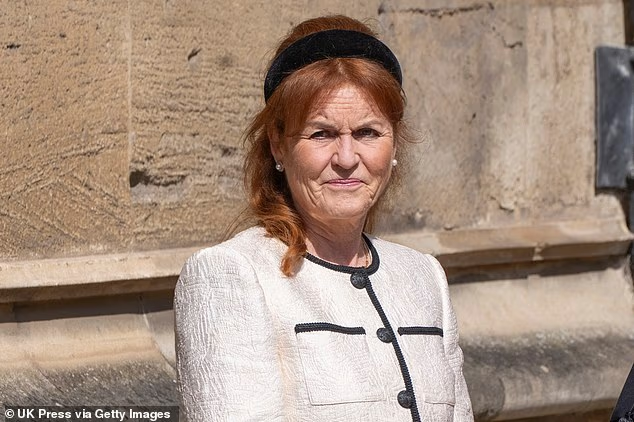
Sarah Ferguson is reportedly moving back to the UK in a matter of days.
The former Duchess of York, 66, has spent seven months living abroad and has been spotted across Europe in Switzerland and Austria.
But now, it is understood that Fergie is returning back to Britain and she will be renting a £10,000-a-month, six-bed house in a gated community in the Home Counties.
A source said: ‘She’s had her eyes on a return for some time but it takes time to find the right new house.
Advertisement
‘She hasn’t had to worry about accommodation for 20 years as she had Royal Lodge with Andrew.
‘Now’s the right time to get back to her life.’
Fergie’s return to British soil is hot on the heels of Prince Harry and Meghan Markle who moved back to the UK with their young family on Wednesday after six years in California.
A source close to the former Duchess told The Sun that with everyone’s attention on the Duke and Duchess of Sussex, Fergie is hoping to ‘slip back under the radar’.
Advertisement
Sarah Ferguson is reportedly returning back to the UK after spending the past seven months travelling across Europe
Andrew and Fergie were both stripped of their royal titles last October by King Charles following intense public scrutiny about the former Duke of York’s friendship with the convicted child sex offender Jeffrey Epstein
Fergie could reportedly be moving into her new home as soon as Monday and removal vans picking up her belongings have been spotted at her ex-husband, Andrew Mountbatten-Windsor’s, home in Sandringham.
Advertisement
Andrew and Fergie were both stripped of their royal titles last October by King Charles following intense public scrutiny about the former Duke of York’s friendship with the convicted child sex offender Jeffrey Epstein.
Fergie was evicted from Royal Lodge along with Andrew, where they lived for 18 years, in February this year.
During her time crisscrossing Europe, Fergie was spotted at a £2,000-a-night spa in Austria and at a Swiss Alpine chalet in Verbier owned by her late former lover Paddy McNally.
Meanwhile, Andrew remains under a police investigation over his links to Epstein.
Advertisement
He was arrested in February accused of misconduct in a public office.
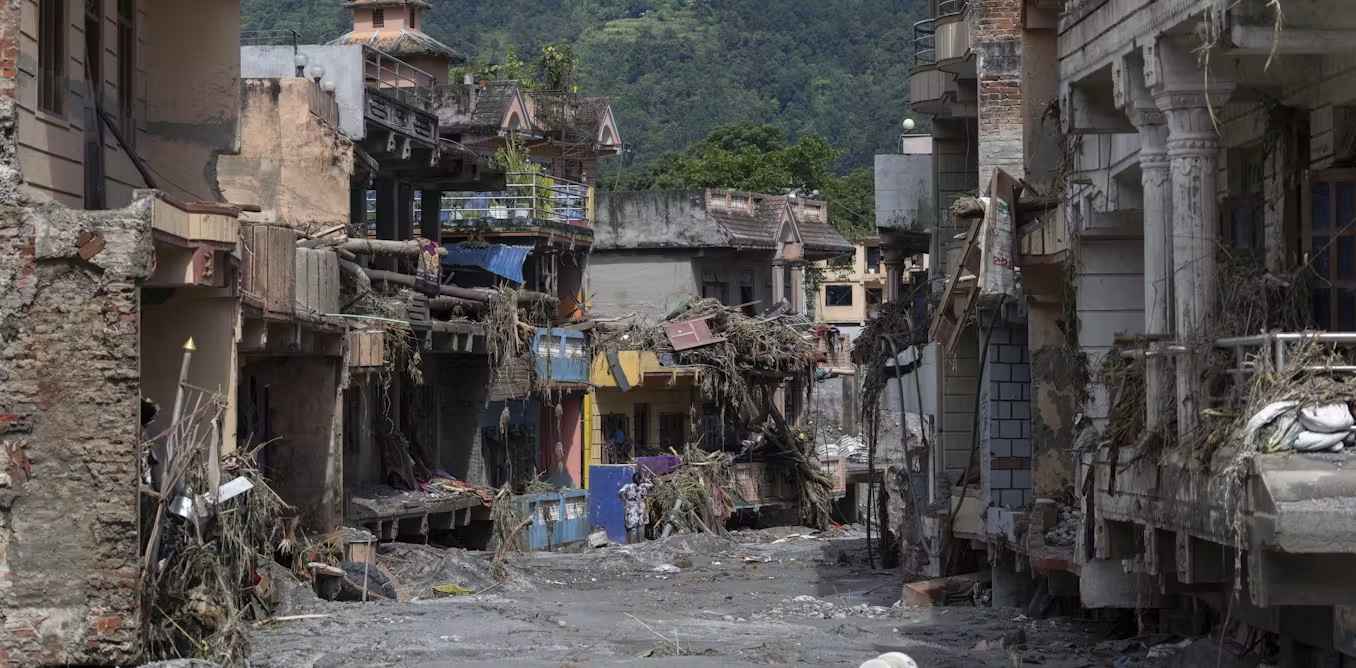
Within the space of a few minutes on August 26, the border crossing between Nepal and China – Rasuwagadhi on the Nepali side and Gyirong on the Chinese – was destroyed by a flash flood caused by a collapsed glacier. Villages, bridges and roads on both sides of the border were washed away.
Hundreds are dead and many more missing, including tourists and pilgrims. The full toll will not be known for days as the worst-hit areas are hard to reach. In the case of Tibet, given the history of China’s draconian control over information, the true toll may never be known.
Already impoverished, Nepal faces grave challenges of rebuilding once the relief effort is over. This is the first real test for the government that took power in March after a successful gen Z revolution swept away the traditional parties.
Prime Minister Balen Shah’s government has tried to avoid becoming dependent on either large neighbour, China or India, or trapped in their rivalry. It has asserted some strategic autonomy by dealing with New Delhi, Beijing and Washington on an even footing.
Advertisement
The fact that Nepal’s neighbour is Tibet, a previously self-governing region that China took over by force between 1950 and 1951 and has administered ever since, makes flooding in this border region harder to prepare for.
The border crossing infrastructure connecting Tibet and Nepal has now been destroyed. pacceka / Shutterstock
A militarised frontier
Despite warm relations with Beijing, and the Nepalese government’s assurances that it follows the “One China” principle and permits no support for Tibetans, China’s tight control over Tibet creates complications.
The region is administered as a militarised frontier. Access runs on permits and clearances, the area is closely watched by armed police and the military and outsiders – foreign journalists, independent researchers, at times even diplomats – are routinely kept out. Tibet is an information black hole.
Beijing’s anxiety extends across the border as Nepal is home to more than 10,000 Tibetan refugees and has long been the main escape route out of Tibet. China pressurises Nepal to police Tibetan activism, seal crossings and fold border management into a security partnership meant to insulate the plateau from the outside world.
Advertisement
The glacial and hydrological data from the Tibetan plateau, the information often needed to anticipate flooding, is also treated as strategically sensitive by China and is closely held. Nepal has no mechanism to receive real-time glacial lake and river data from the Chinese side and its officials have sometimes gone further, accusing Beijing of withholding it.
When a disaster in the Nepal-Tibet border region demands that rescuers cross quickly or that a warning travel downstream from an upstream lake, it runs into a system built for control rather than speed.
Growing evidence suggests the recent glacier collapse happened on the Nepalese side of the border, near the Langtang Lirung peak. But wherever the flood began, no warning reached the people in its path.
Officials in Nepal’s Rasuwa district said they had “no clue” it was coming. Some of this will have been down to the speed of the ice-avalanche flood, which may have left little to warn of. Nepal’s own monitoring stations upstream were swept away before they could send an alert.
Advertisement
But as I have argued in my own research, there is a deeper, more structural point to make here. There is no standing, obligatory system to move warnings through this border region in real time. Much of the data that could carry such a warning sits inside a region that China governs first for state security.
When a lake in Tibet burst in 2016 and flooded the Bhote Koshi river in Nepal, for example, no warning came either. Nepali hydrology officials said afterwards that China had for years failed to share “essential” data on the glacial lakes on its side of the border.
Cooperation between the two countries is not wholly absent, but it is thin and reactive. China and Nepal jointly monitor a single dangerous transboundary glacial lake, Cirenmaco. This is a system built for slowly forming lakes rather than a sudden avalanche in an unwatched valley.
Across this frontier, information moves only as far as security allows. But, as the latest disaster may show, the danger for Nepal is not only external. Nepal’s own reckless development – roads, dams and settlements pushed into fragile valleys – combined with corrupt officialdom and little early warning capacity of its own has raised the toll of every flood.
Advertisement
Borderlands the world over – India’s Himalayan frontiers among them – are often governed first as security zones, and disaster response tends to suffer for it. In 2025, after a terrorist attack in Kashmir, India suspended the Indus Waters Treaty and cut the flow of hydrological data to Pakistan. When monsoon floods struck months later, Islamabad said the suspension had made them worse.
Climate change is turning the Tibetan plateau into a source of cascading danger for everyone downstream, from Nepal to India and Bangladesh. Addressing it means treating the Himalayas as a shared ecological space that is a zone of contact rather than a zone of conflict.
Strengthening cross-border data-sharing and early-warning systems would reduce the lethality of earthquakes, landslides and floods. For the Nepalese government, this is where strategic autonomy will really be tested – not in choosing between Beijing and Delhi, but in insisting that the safety of its people is not hostage to the security anxieties of another state.
Floods, earthquakes and other natural disasters will occur again and again. The question is whether states in the region can improve at cooperating and prioritising people over border security.
Police are searching for a man who is wanted and has links to Cambridgeshire. Lincolnshire Police is appealing for information to find John Price, 26.
Advertisement
Price is wanted on suspicion of involvement in an affray that took place in Grantham on June 16. The 26-year-old has links to Peterborough, Market Deeping and the surrounding areas.
Anyone with information should email Lincolnshire police on wanted@lincs.police.uk or call 101 and quote reference 26000350949.
The government’s Cobra emergency committee met to discuss how to respond. After sign off from Prime Minister Andy Burnham’s de facto deputy Louise Haigh, the alert was sent at 19:00 on 14 August.
It triggered a backlash on social media with some vowing to opt out of further alerts in their phone settings, domestic abuse charities and survivors saying victims with hidden phones were put at risk, and confusion about alerts sent multiple times.
Dowden’s worry is that the wildfire alert was more like a public information campaign than an imminent threat to life across all of England and Wales.
“People need to know that when they receive an alert, it is a genuine imminent emergency,” the Conservative MP says. “If that confidence is lost, people will simply ignore it.”
Advertisement
A Cabinet Office report during trials in 2014 warned of this “cry wolf” effect, while pointing out there was strong support among the public for the alerts.
“Alerts should not be issued just because the government wants to be seen to be doing something,” Dowden adds.
The National Fire Chiefs Council said the alert heightened people’s awareness and public behaviour, while government insiders point out wildfire alerts are commonplace in many European countries.
“By following the guidance that was issued, people were able to take the necessary steps to keep themselves safe and front line services recorded a significant decrease in incidents in the following days,” a government spokesperson said.
Advertisement
But Frazer Rhodes, who worked in government across a decade to help build the technology and devise high thresholds for the alerts, feels a review is now necessary to avoid future ones backfiring.
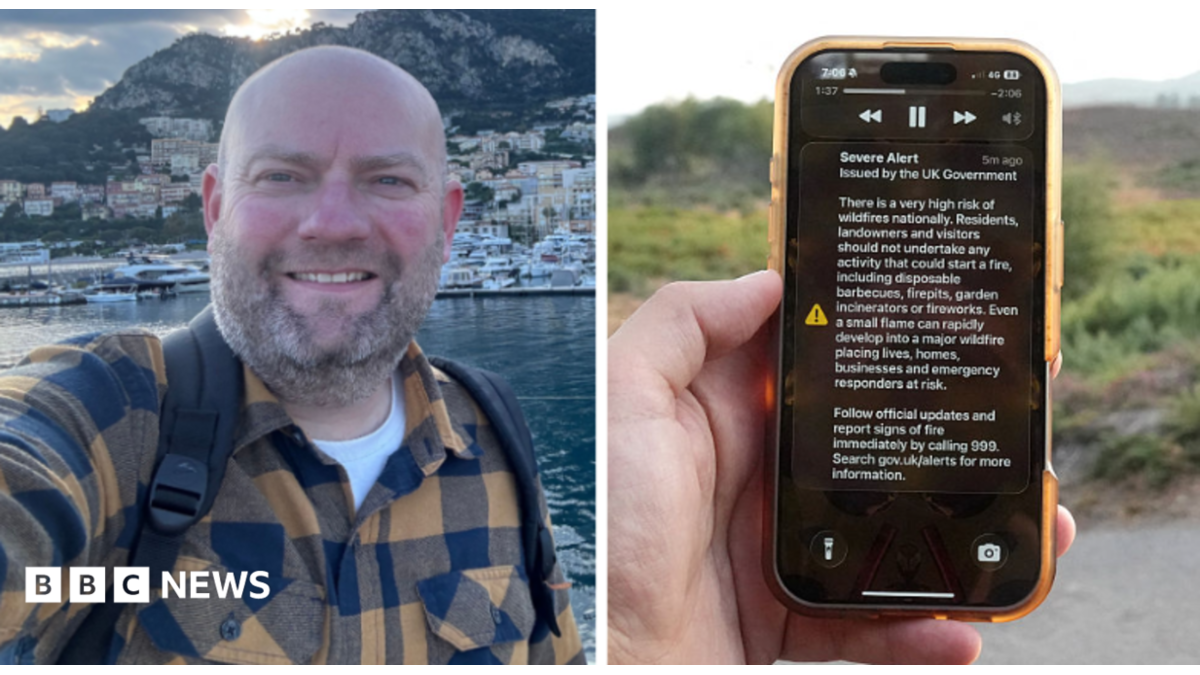
He was in a bar in Halifax, West Yorkshire, with his wife when the sound of pinging phones began echoing around.
“Everybody around was just going, ‘what’s this?’ What’s this?’” he tells us. “Then my wife shouted, ‘he did that’.”
His wife’s joke aside, he said his “immediate thought” was whether it met the threshold for sending one. He explains: “At its heart are three criteria: urgency, severity and certainty. So, in simple terms, how bad, how soon, and how sure?”
Advertisement
Rhodes thinks the wildfire alert arguably met the bar for urgency and severity, but perhaps not for certainty of a threat to life.
“It should be very rare to get an alert,” he points out.
INDIANAPOLIS (AP) — Caitlin Clark and Kelsey Mitchell each scored 34 points as the the Indiana Fever got past the Connecticut Sun 111-91 on Friday.
The pair scored 30 or more for the fourth game this season, extending their WNBA single-season record for a duo.
Clark added 12 assists, marking the fifth time this year she’s had a double-double with at least 30 and 10.
Mitchell notched her 24th straight 20-point game in the Fever’s final game before a three-week break for the FIBA Women’s World Cup. Indiana has won seven of nine as Clark, Aliyah Boston, and coach Stephanie White head to Berlin for the tournament. Boston scored 14 points.
Advertisement
Diamond Miller finished with 19 points and Nell Angloma had 17 to lead Connecticut, who have lost six of their last eight games.
Indiana went on a 10-0 run to end the first quarter and start the second, nearly erasing all of a 28-14 deficit. Clark and Mitchell then combined for the first 12 points in an 18-2 run to close the first half, giving the Fever 58-43 lead.
After Connecticut cut the deficit to 62-52 midway through the third quarter, Indiana answered with a 14-5 run that extended the margin to 76-57. The Sun never recovered.
During the third quarter, Mitchell dished her 911th assist, moving past current Fever assistant coach Briann January her into second on Indiana’s all-time leaders.
Advertisement
The Fever paid tribute to the late Dolly Parton with a dance routine to the song “9 to 5” between the third and fourth quarters.
Up next
Sun: Make the second stop of a three-game road trip Sunday at Dallas.
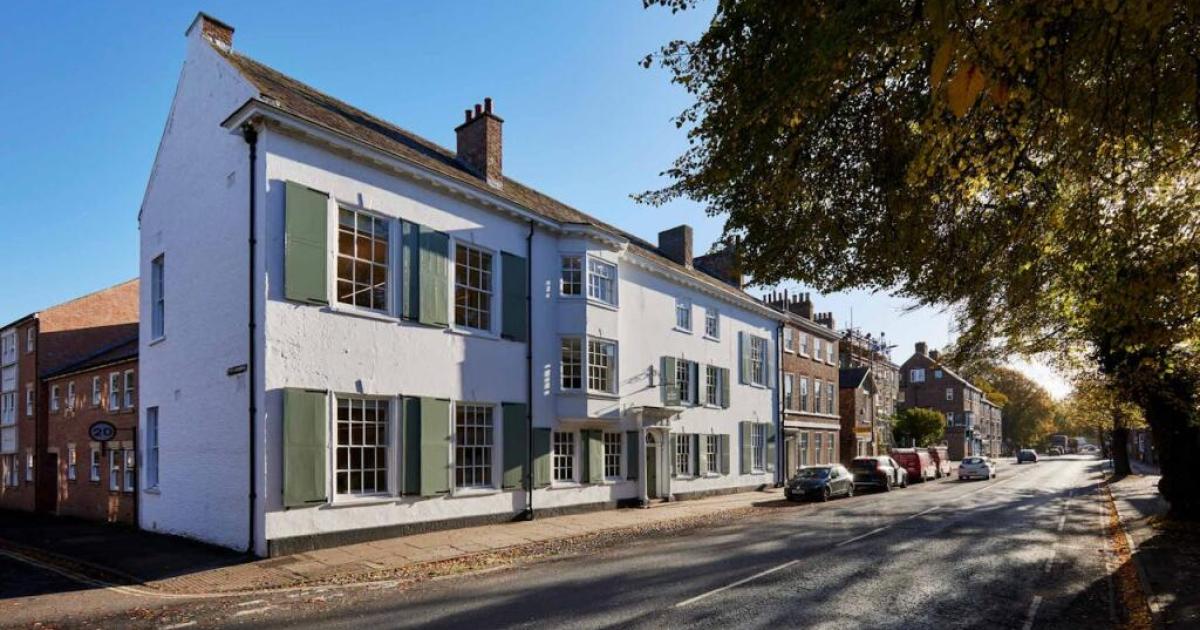
The White House, in Clifton, is set to be home to the Flourish health, fitness and wellness centre.
It is set to open on Monday, September 7, according to a post on the company’s social media pages teasing its arrival.
It comes after the Grade II-listed Georgian building went on the market in December.
The building previously housed the offices of the Places For People housing social enterprise.
Advertisement
RECOMMENDED READING:
Estate agents Savills and Carter Towler marketed the building on the organisation’s behalf, seeking offers in excess of £1.2 million.
The building had previously been refurbished throughout with offices across three floors, along with an attic and basement.
It featured a mixture of open plan work spaces, private offices, meeting rooms and boardrooms as well as an onsite gym, exercise studio and breakout area.
Advertisement
The building also features onsite parking and lies on one of the main roads linking the centre of York with its outer ring road.
Savills surveyor Hannah Coleman said the building was in a prime location when it was put on the market.
The surveyor said: “The White House offers a rare opportunity to purchase a truly distinctive building in York.
“Its combination of historic character and modern specification makes it stand out in the market, and we expect strong interest from purchasers looking for a unique, high-quality workspace.”
Advertisement
The White House was built in the early 18th Century and was owned by textile merchant William Roberts, according to the British History Online website.
The White House, in Clifton (Image: Harry Archer/Carter Towler)
The merchant added a third storey to the house and it went on to be owned by Edmund Beckett.
Beckett, the first Baron Grimethorpe, was an influential 19th Century politician known for his regulation of Big Ben, according Places For People.
Local cleric and magistrate Reverend DR Currer later bought it and added wings to both sides and an extension to the back.
Advertisement
During the Second World War, surrounding homes were destroyed by Luftwaffe bombing but The White House survived.
It went on to serve as a Post Office Telephone Management centre and late an officer for the Inland Revenue, a precursor to the current HM Revenues and Customs (HMRC) tax body.
The White House was listed in 1970 for its Georgian and Victorian features.





















































You must be logged in to post a comment Login