


Connect with us

NewsBeat

The glacier collapse that killed hundreds in Nepal was decades in the making, scientists say

Published

on

The glacier collapse that killed hundreds in Nepal was decades in the making, scientists say

A wall of ice, rock and mud tore through Nepal and Tibet this week, killing hundreds of people. Scientists believe the disaster began when part of a glacier and the mountainside beneath it collapsed. Though it is unclear what set it off, it has raised a bigger question: are the Himalayas becoming a more dangerous place to live?

High on Langtang Lirung, a 7,000m mountain on the Nepal-Tibet border, part of the mountainside gave way and took a section of glacier with it.

The resulting mass of ice, rock and debris crashed into the Lhende Khola river below and grew as it travelled, picking up sediment and water before surging downstream into Nepal’s Rasuwa, Nuwakot and Dhading districts.

A lake formed by the initial landslide has since begun overflowing, triggering fresh panic in communities already devastated by Wednesday’s disaster. The death toll from this week’s Himalayan flash floods has risen to 768 in Nepal and Tibet combined.

Advertisement

The Red Cross says more than 90,000 people had been directly affected and were in urgent need of help, and warned the crisis was “still unfolding” as officials braced for further flooding.

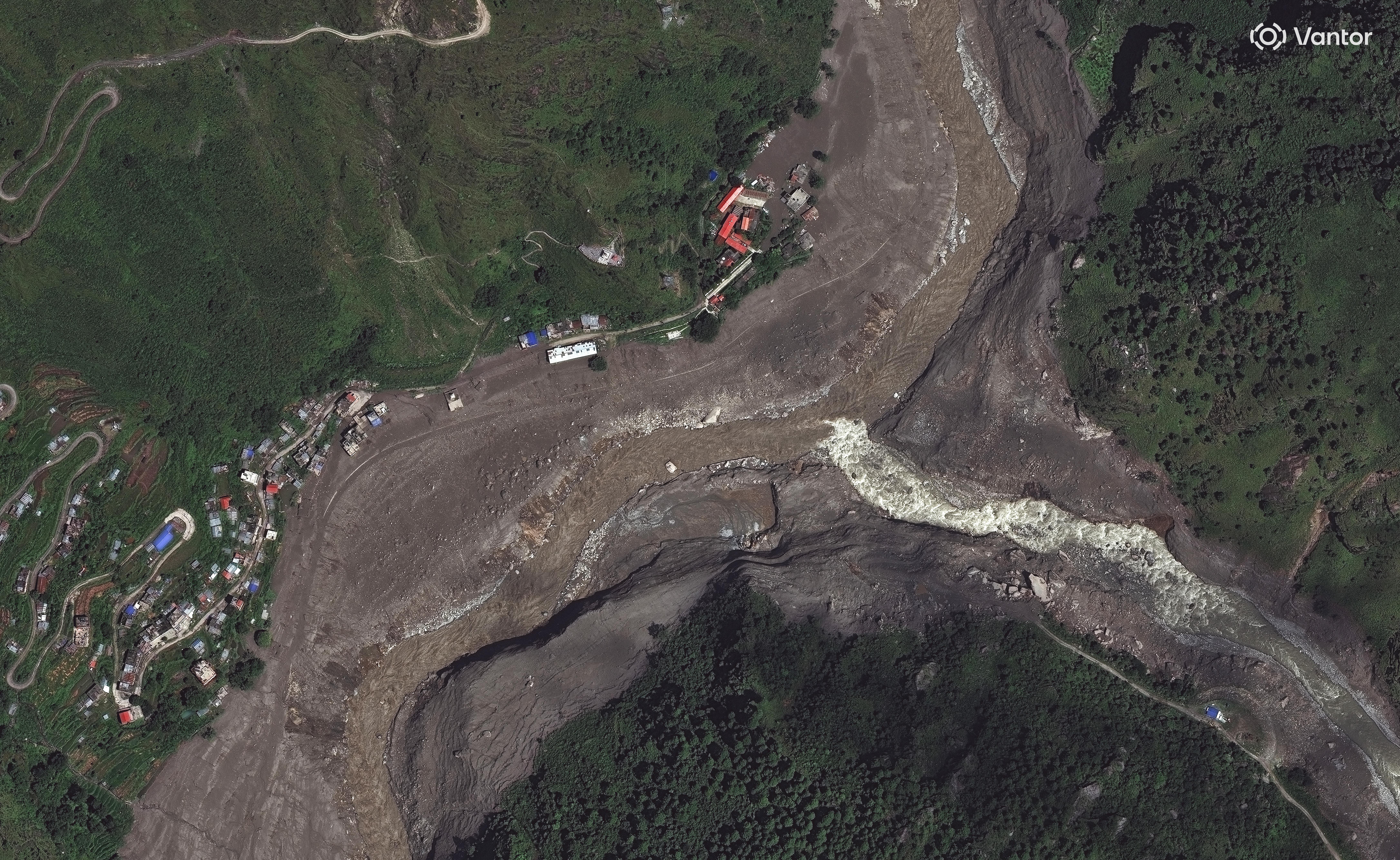
This satellite image provided by Vantor shows destruction at Syapru Besi, Nepal
This satellite image provided by Vantor shows destruction at Syapru Besi, Nepal (Satellite image ©2026 Vantor)

Jeffrey Kargel, a senior scientist at the Planetary Science Institute, calculated that the flow covered its first 22km at an average speed of 193kmph, reaching the valley floor in under seven minutes.

Rivers in the affected valleys are reported to have risen by as much as nine metres in half an hour.

This is not the first time disaster has struck this exact stretch of the Himalayas.

A flood in July last year killed nine people and swept away the same border bridge, after heavy rain sent the Lhende and Bhote Koshi rivers over their banks.

Advertisement

The wider Langtang region was also badly damaged by an avalanche during Nepal’s 2015 earthquake, which destroyed the village of Langtang itself.

The mountains around Langtang are warming at an exceptional rate, and that warming is already reshaping the region in ways scientists say make disasters like this one more likely. Land above 4,000m in the Langtang catchment has warmed at roughly five times the global average since the 1960s, according to research led by Bethan Davies, chair in glaciology at Newcastle University, with that trend sharpening further over the past decade.

Part of the reason, she tells The Independent, is that as snow and ice disappear, they expose darker rock underneath, which absorbs more heat from the sun and warms the mountain even faster.

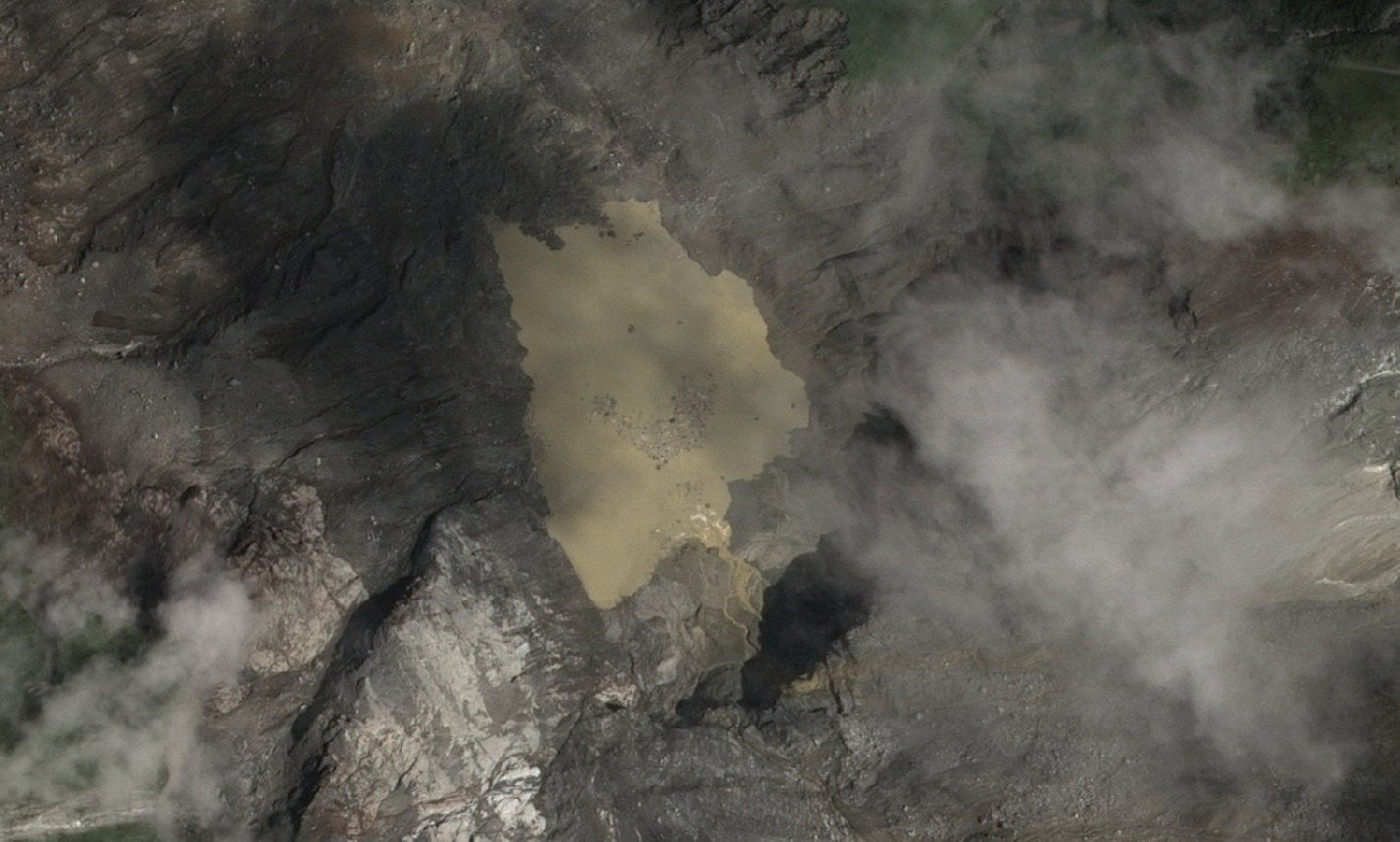
Satellite image shows one of two lakes at the site of the glacial collapse,in the border area between Nepal and Tibet Autonomous Region, China
Satellite image shows one of two lakes at the site of the glacial collapse,in the border area between Nepal and Tibet Autonomous Region, China (Reuters)

Across the wider Himalayan region, the rate of ice loss from glaciers has doubled since 2000, according to Ella Gilbert, a climate scientist at the British Antarctic Survey.

“We know that climate heating is destabilising glaciers in the Himalaya,” she says, “when glacier stability is undermined, sudden failures can occur, leading to horrible incidents like this one.”

Advertisement

Dr Davies points to a related process: the thawing of permafrost, ground that normally stays frozen year-round and helps hold steep mountainsides together.

“Permafrost is like the ‘glue’ that holds rocks together,” she says.

As that ground warms and the glue melts, steep slopes like the one above Langtang Lirung become progressively less stable.

The Intergovernmental Panel on Climate Change has said, with high confidence, that declining glaciers, snow and permafrost are already destabilising mountain regions worldwide, and that events like this week’s collapse are likely to become more frequent as the climate continues to warm.

Advertisement

However, experts are not connecting this disaster to climate change yet.

“We don’t know exactly what happened here,” Dr Gilbert says, “but it’s likely that some combination of these factors was at play, and we know that all of these are enhanced by climate change.”

Asked whether the unusually warm, dry conditions reported in the area this week fitted the pattern typically seen before a major glacier collapse, Dr Gilbert says: “I’ve seen reports that temperatures were unusually warm and snow cover was low, which is consistent with what happens before a major calving or collapse event.”

Why some communities had time to escape and others did not has become a central question of its own. Hannah Cloke, professor of meteorology and climate science at the University of Reading, says the disaster unfolded across three distinct zones, each with different lessons for early warning.

Advertisement
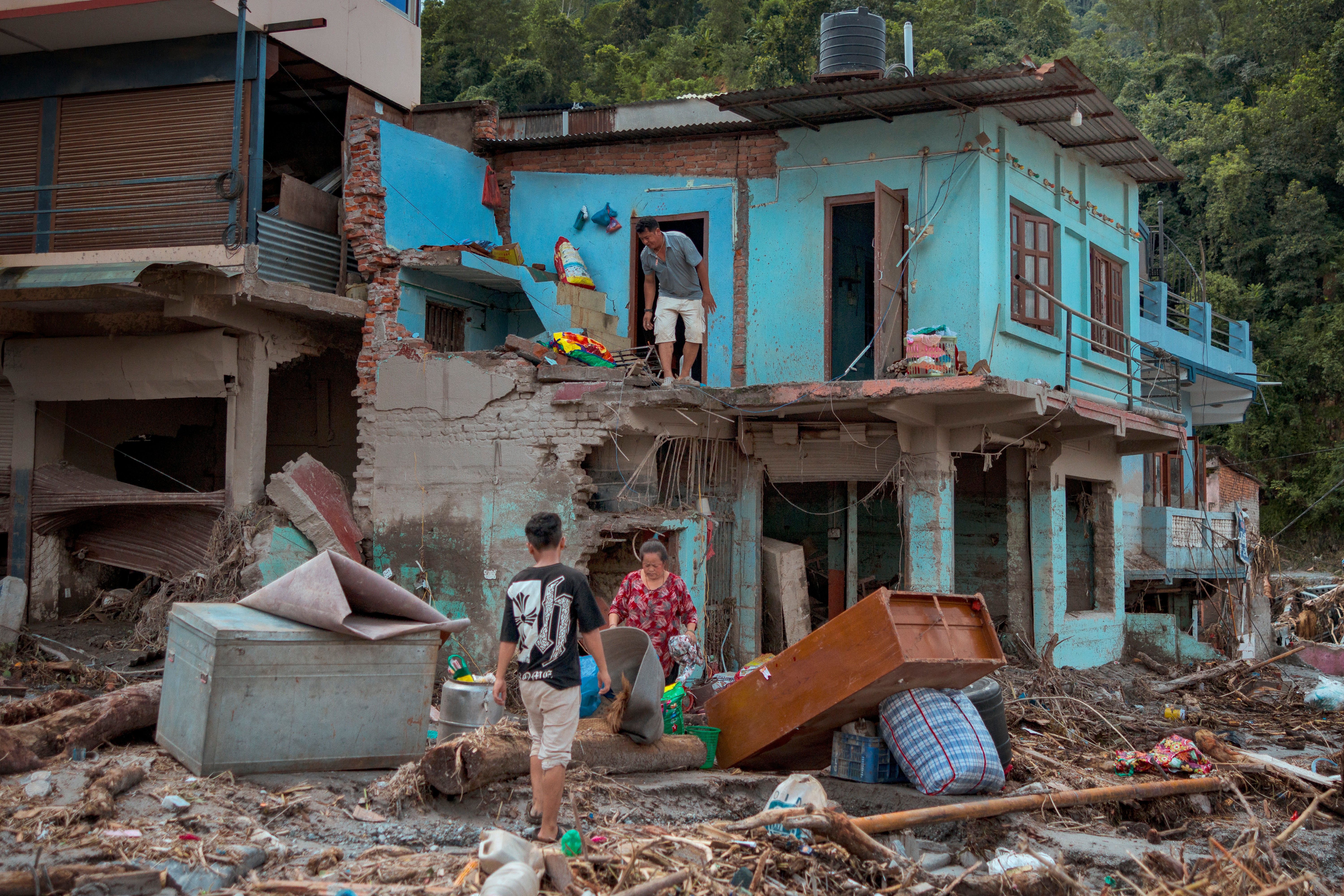
Residents salvage belongings from their destroyed home following flash floods
Residents salvage belongings from their destroyed home following flash floods (Getty)

Closest to the source, floodwaters arrived within minutes, leaving little chance for any warning to matter.

Further downstream, by contrast, Nepal’s forecasting authorities issued warnings several hours before the flood arrived, which officials say helped save many hundreds of lives.

The hardest zone lay in between, she says: a flood that struck under clear skies, with no rain to signal danger.

“For many, a flood is something that follows a storm,” Dr Cloke says. “When a warning describes a threat that does not match people’s mental picture of danger, it can be easy to dismiss.”

The physical unpredictability of the disaster also compounded that problem.

Advertisement

Fatima Pillosu, a hydrometeorologist at the University of Reading, said the debris blocking the river after the initial collapse formed what is known as a barrier lake, a natural dam with no engineered structure and no way to release pressure safely.

“Unlike an engineered dam, this barrier has no spillway and no solid core,” she says.

“The exact moment of failure cannot be predicted, because it depends on the internal structure of the dam.” That is largely why the same lake now threatens a second wave of flooding, days after the first.

A combination of satellite images shows a site at the border of Nepal and Tibet Autonomous Region, China, before and after a barrier lake formed as a result of flash floods and a mudslide
A combination of satellite images shows a site at the border of Nepal and Tibet Autonomous Region, China, before and after a barrier lake formed as a result of flash floods and a mudslide (Reuters)

Jeff Da Costa, a researcher in hydrometeorological hazards at the University of Reading, says the risk was worsened by a known gap in cross-border cooperation. After last year’s flood on the same river, he said, Nepal’s officials reported receiving no advance warning from China and said there was no formal mechanism for sharing that kind of information across the border.

Nepal subsequently committed to strengthening that coordination, though it remains unclear how much had changed by the time this week’s disaster struck.

Advertisement

“This is a transboundary river system, and information about the barrier lake is being shared between China and Nepal,” he says.

“Observations upstream can give people downstream valuable time, but they become useful when they are connected to modelling, warnings and practical decisions on the ground.”

Residents salvage belongings from their destroyed home following flash floods
Residents salvage belongings from their destroyed home following flash floods (Getty)

Beyond what caused the collapse, the disaster has reopened a longer-running argument about climate justice.

Nepal produces less than 0.1 per cent of the greenhouse gas emissions driving global warming, yet it is ranked as one of the most vulnerable countries in the world to climate-related disasters.

“This is the reality: those who have contributed the least are paying the highest price, especially with their lives,” Savio Carvalho, of the campaign group 350.org, says.

Advertisement

He says wealthier countries had a duty to help fund disaster preparedness before a crisis hits, not just respond afterwards, pointing to the well-resourced early warning systems used in the Alps as an example of what Nepal lacks.

“If only Nepal had good technology, like the Swiss or Italians do for the Alps, they could have had better forecasting mechanisms,” he said. He also called for taxes on the windfall profits of fossil fuel companies to help pay for the response.

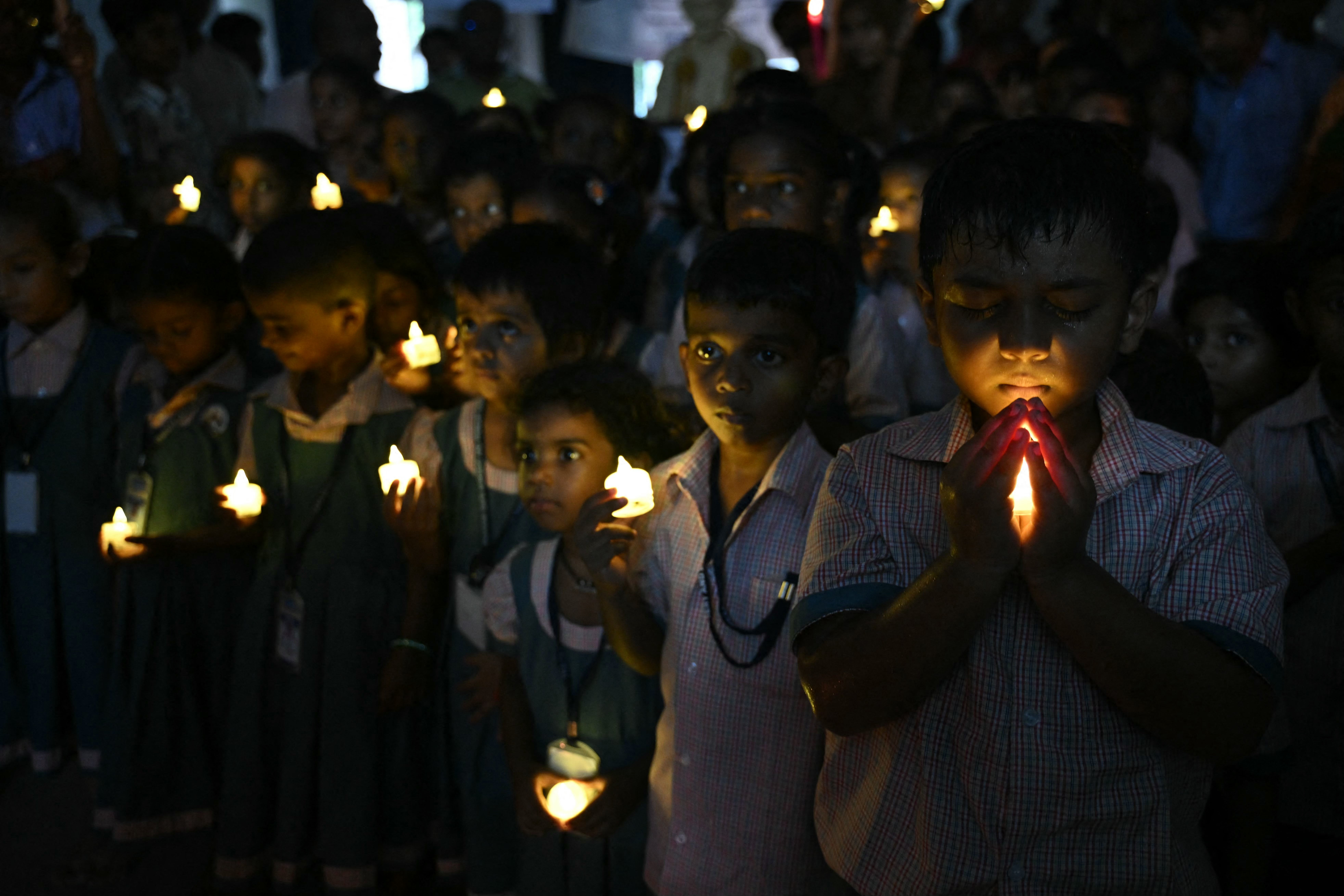
School students hold LED candles as they gather to pay their homage to people who died in Nepal's flash flood, in Chennai
School students hold LED candles as they gather to pay their homage to people who died in Nepal’s flash flood, in Chennai (AFP/Getty)

Carvalho says the economic damage would reach far beyond the disaster zone itself.

Rasuwa sits on a major trekking and pilgrimage route, and tourism supports large numbers of people in Nepal, work that comes with none of the safety net available to workers in wealthier countries.

“Most of these communities, unlike many parts of the global north, have no state protections like unemployment allowances,” he said. The damage extends well beyond tourism too, he added, pointing to destroyed hydropower plants, bridges, power lines and roads.

Advertisement

Existing international funds meant to help countries like Nepal cope with disasters, he said, remain inadequate and hard to access, often taking months or years to arrive, and sometimes coming as loans that leave poorer countries deeper in debt rather than grants.

Sudarshan Neupane, WaterAid Nepal’s country director who grew up in Rasuwa district, says the damage to water and sanitation systems would need urgent attention during the recovery to protect public health and stop disease spreading through communities already reeling from the disaster.

WaterAid has called on the UK government to restore its aid budget to 0.7 per cent of national income to support the response.

“Having grown up in Rasuwa district, one of the hardest hit regions in the recent flash floods in Nepal, it is truly devastating to see so many families facing unimaginable loss, displacement and uncertainty,” he says.

Advertisement

Source link

Continue Reading
Click to comment

You must be logged in to post a comment Login

Leave a Reply

NewsBeat

‘They are smashing it. It’s the ultimate sod you to the BBC’: Inside John Torode’s VERY lucrative new life with wife Lisa Faulkner… as sources tell KATIE HIND how couple got last laugh after he was dumped from MasterChef

Published

on

John Torode and his wife Lisa Faulkner show off a dessert on their YouTube cooking show

As the tough-talking judge on BBC‘s MasterChef, John Torode wasn’t ever one to mince his words.

The Alpha-Aussie made a quivering souffle of the home cooks, amateur chefs and even celebrities who stood before him hoping for a crumb of praise.

So no wonder – after he was unceremoniously sacked after 20 years on the show – fans are both surprised and delighted to discover ‘another’ Torode.

Ever since launching a YouTube show with his wife, Lisa Faulkner, Torode, 61, is revelling in his much softer – almost cuddly – side.

Advertisement

From the comfort of their beautiful kitchen, at the heart of their terraced home in the enviable London enclave of Muswell Hill, Torode and Lisa, 54, laugh, tease and mock each other while whipping up mouthwatering dishes.

And viewers love it.

‘John and Lisa are basically the Richard and Judy of TV chefs and they are proving to be a huge success. Who needs the BBC now?’ says my well-placed source.

Just like Richard, Torode often looks clueless as quick-witted Lisa makes a cheeky comment.

Advertisement

John Torode and his wife Lisa Faulkner show off a dessert on their YouTube cooking show

Torode and Ms Faulkner with his MasterChef colleague Gregg Wallace, who was sacked from the show following allegations of misconduct

Torode and Ms Faulkner with his MasterChef colleague Gregg Wallace, who was sacked from the show following allegations of misconduct

Ms Faulkner met Torode in 2010 while competing on Celebrity MasterChef, which she went on to win

Ms Faulkner met Torode in 2010 while competing on Celebrity MasterChef, which she went on to win

Advertisement

Swapping the clinical MasterChef kitchen for their more homely one has also been a hit, with viewers loving their wooden central island, customised ‘John & Lisa’ chopping board and pale green saucepans from their own J&L cookware range with high street chain ProChef.

Explaining their concept on the first video, Lisa cuddled their schnoodle dog as she enthused: ‘We’re cooking all our recipes from home in our kitchen which is great because we know where everything is, and we really hope you’re going to join us to see our family favourites.’

Since the soft launch of John and Lisa’s Kitchen & Home eight months ago, they have accumulated more than 1.2million views as fans have tuned in to watch them make ‘the perfect pavlova’ or Lisa’s ‘legendary’ roast potatoes (made legendary by crumbling a stock cube into the fat first). Such a figure could earn them thousands, which – along with advertising revenue, side hustles such as their cookware range and a forthcoming book – means Torode will be making more than he did from MasterChef. A source said: ‘There’s more than one way to skin a cat when it comes to earning cash as a telly chef.’

Those familiar with the project say it is the ‘ultimate sod you’ to the BBC. The broadcaster sacked Torode as host of MasterChef in July last year after an allegation was made that he had used the ‘N’ word at a filming wrap party in 2019 while singing along to Gold Digger by rap star Kanye West.

Advertisement

Torode’s dismissal came amid accusations of inappropriate behaviour against co-presenter Gregg Wallace. Last year the 61-year-old was sacked after a report, commissioned by MasterChef’s production company Banijay UK, found 45 out of 83 allegations were upheld.

Despite Torode saying he had ‘no recollection’ of what he was accused of and hoped to have been allowed a say, he was also shown the door. So it’s rather delicious that, after so much upset at losing the job that made him one of the most recognisable faces on British television, Torode is said to be ‘loving life’ back in front of the camera once again.

‘They are the Mr and Mrs of television cookery. They are smashing it,’ a source close to the pair told me. As one YouTube viewer commented on their chemistry: ‘Love it! Lisa’s cheeky innuendos that John never gets, but we get the camera wink eye from Lisa!’

‘The numbers they are pulling in are massive,’ says the source. ‘John doesn’t even recall saying what he was accused of and there was never any evidence of it. The die-hard MasterChef viewers have very much taken his side.’

Advertisement
Since the soft launch of John and Lisa's Kitchen & Home eight months ago, they have accumulated more than 1.2million views

Since the soft launch of John and Lisa’s Kitchen & Home eight months ago, they have accumulated more than 1.2million views

Torode and Wallace had presented MasterChef since 2005 but were both axed by the BBC

Torode and Wallace had presented MasterChef since 2005 but were both axed by the BBC

Indeed, the broadcaster’s new director general, Matt Brittin, may well be questioning whether predecessor Tim Davie didn’t slip up in sacking Torode. Just last week at the Edinburgh International Television Festival, Brittin – who joined the corporation from Google this year – hinted he was looking at opening up the BBC to user-generated content.

Brittin suggested turning an ‘iPlayer 2.0’ into a YouTube-style site hosting appropriate influencer content. It would be built around an algorithm aimed at ‘educating, informing and entertaining the public here and ideally around the world’. 

Advertisement

‘It’s hilarious,’ says a friend of the couple.

‘Should Gregg have been sacked? Yes, absolutely. But with John, it feels like they found a way to get rid of him and start afresh on MasterChef.

‘What he has proved is that he and Lisa are extremely popular and surely the BBC will be jealous of their YouTube concept.’

Proof is in the pudding – or in this case, scone – as more than 102,000 fans have so far watched Torode and Lisa whip up a batch of the teatime treats.

Advertisement

On the back of positive feedback, advertisers are flocking to promote their brands, with HSBC and Monzo banks running campaigns on John and Lisa’s pages. But it looks unlikely that their ITV show, John and Lisa’s Weekend Kitchen will return. ‘Never mind,’ says one pal. ‘They’ve got a second cookery book coming soon.’

Those who know Torode say that Lisa was his ‘rock’ when he was sacked from MasterChef, which was of course where the couple met when the former Spooks actress was a contestant in 2010.

When they met on the show, Lisa was with her husband Chris Coghill while Torode was with his wife Jessica.

After both relationships ended, they began dating and married in 2019 at the stunning Aynhoe Park in Northamptonshire.

Advertisement

Seven years on and Lisa has been every bit the supportive wife. So, who’s going to blame her for enjoying the odd swipe at the BBC? In one video, as John tells viewers how to whip up the perfect poached egg, a smiling Lisa quips: ‘The poached egg masterclass by the MasterChef!’

Ouch! But then revenge, as they say, is a dish best served cold.

PS: Wife Lisa might want to avoid the deep-fat fryer!

Ms Faulkner alongside Kevin McNally, left, and Shane Attwooll in Spooks

Ms Faulkner alongside Kevin McNally, left, and Shane Attwooll in Spooks

As MI5 agent Helen Flynn in Spooks, unsavoury extremists murdered her using the gadget. 

Advertisement

Source link

Continue Reading

NewsBeat

Main draw play gets underway at US Open, with Jessica Pegula playing early

Published

on

Main draw play gets underway at US Open, with Jessica Pegula playing early

NEW YORK (AP) — Main draw play is underway at the U.S. Open, with 19th-seeded Jasmine Paolini among those playing in the opening set of matches at the Billie Jean King National Tennis Center on Sunday.

Third-ranked Jessica Pegula leads off at Arthur Ashe Stadium against Elena-Gabriela Ruse at noon, followed on the men’s side by Daniil Medvedev against Hugo Gaston.

Novak Djokovic begins his quest for a record-extending 25th Grand Slam title on Sunday night against Mariano Navone. Djokovic at 39 is coming off losing his opening match at the hardcourt tuneup Cincinnati Open earlier this month.

Venus Williams faces fellow American wild card Sophia Kenin in the last match of the night at Ashe. She and sister Serena are scheduled to play doubles together.

Advertisement

___

See AP’s full tennis coverage here

Advertisement

Source link

Continue Reading

NewsBeat

Muslim group planning to turn Grade II-listed pub in leafy Norfolk suburb into mosque hits back at critics and claims it ‘only had three regulars’

Published

on

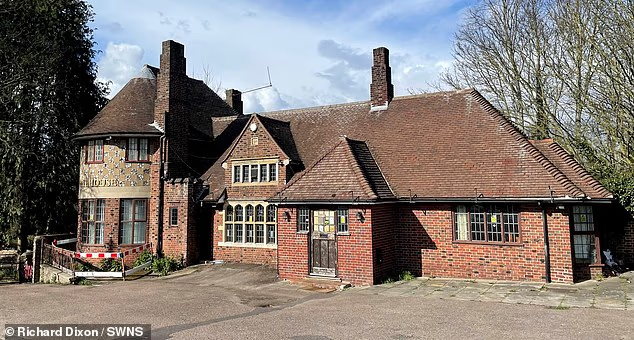
For generations, the 1930s-built red-brick Gatehouse has stood at the western gateway to Norwich, Norfolk

A Muslim group planning to convert a Grade II-listed pub into an ‘Islamic-style’ mosque has claimed it ‘only had three regulars’.

The Norwich Muslim Centre submitted plans to transform the historic 1930s building in Norfolk into a place of worship.

The proposals have sparked concern from some locals who argue there is another mosque operating less than half a mile away on the same road.

But the Muslim association has now hit back at critics – arguing it has ‘come across only three people’ who regularly visited the pub.

Advertisement

Sirajul Islam, a trustee of the Norwich Muslim Centre, said: ‘Since we became involved with this historic building, I have personally knocked on doors throughout the neighbourhood to speak to local residents and understand their views.

‘So far, I have come across only three people who told me that they used to visit the pub on a regular basis when it was open and operating as a pub.

‘This did make me wonder where all those objections and concerns are coming from.

‘We really do appreciate the concerns being raised, and we are fully committed to working with the wider community.’

Advertisement

For generations, the 1930s-built red-brick Gatehouse has stood at the western gateway to Norwich, Norfolk

Plans have been submitted to turn the Grade II-listed Gatehouse in Norwich into a mosque. CGI of the proposed building is seen here

Plans have been submitted to turn the Grade II-listed Gatehouse in Norwich into a mosque. CGI of the proposed building is seen here

Proposals show a large copper-coloured extension decorated with screens and Arabic lettering which would be built onto the rear of the pub

Proposals show a large copper-coloured extension decorated with screens and Arabic lettering which would be built onto the rear of the pub

Advertisement

It comes as leaflets opposing the plan posted around Norwich asked: ‘Should this pub be converted into a mosque?’

A blank objection letter was also included, addressed to City Hall.

The letter did not give the option to support the application, which was submitted last month and it is unknown who the sender is.

The pub, a mixture of Arts and Crafts and Tudor styles, closed three years ago following the death of its landlord.

Advertisement

For generations, the 1930s-built red-brick Gatehouse has stood at the western gateway to Norwich in Norfolk.

Neighbours fear a re-development will swamp surrounding residential streets with cars, while campaigners have warned a piece of Britain’s traditional pub heritage could be lost.

Proposals show a large copper-coloured extension decorated with Islamic-style screens and Arabic lettering which would be built onto the rear of the pub.

The plans to transform the old pub were put to the council in two parts.

Advertisement
Richard Dixon (pictured), a member of the Norwich and District branch of CAMRA, said: 'Norwich has lost many pubs over the years, to either be knocked down or redeveloped'

Richard Dixon (pictured), a member of the Norwich and District branch of CAMRA, said: ‘Norwich has lost many pubs over the years, to either be knocked down or redeveloped’

CGI mock-ups show glass-fronted prayer and function halls overlooking landscaped terraces, gardens and the nearby river

CGI mock-ups show glass-fronted prayer and function halls overlooking landscaped terraces, gardens and the nearby river

One objector said the change would bring more parked vehicles on to neighbouring roads, resulting in a 'detrimental impact on the area'

One objector said the change would bring more parked vehicles on to neighbouring roads, resulting in a ‘detrimental impact on the area’

The change of use and extension application, which is the only one referenced on the leaflet, has received more objections than the other bid to extend the pub.

Advertisement

So far, objections have reached 234, with 136 commenting in support.

But the public comments in support of the application, which are not mentioned on the leaflet, are much higher, with 154 objections and 175 in support.

Richard Dixon, a member of the Norwich and District branch of CAMRA (Campaign For Real Ale), said: ‘Norwich has lost many pubs over the years, to either be knocked down or redeveloped.

‘There are now large areas of the city that have few or even no pubs.’

Advertisement

He added: ‘The changes to the outside would change the character of the listed building.

‘The interior, although it is said retaining existing features, would not be the style of a bar with handpumps and other pub related features – this would detract from the original use of the bar.’

‘No reasonable efforts were made to show the pub cannot be viable.

‘Whilst the changes would nominally make it a community facility, this will not be as a pub.

Advertisement

‘The Gatehouse was well liked and used by the community for socialising, drinking, music and pub games.

‘It should be retained for use as a public house.’

Norwich Muslim Centre said the site is intended for use by the wider community and not as an exclusive mosque.

As part of the scheme, an extension would be built at the back of the pub.

Advertisement

According to the plans, hall space could be used for celebrations and festivals, youth services, and school visits.

There would be space for more than 200 worshippers at the site.

A mission statement submitted with the plans says: ‘Our dream is to create a community hub that not only provides a space for worship but also empowers the next generation with strong Islamic identity, promotes interfaith engagement and tackles misconceptions about Muslims.’

Mr Islam added: ‘We believe our project is a community-focused and sustainable proposal that will give this historic building a positive future while respecting the local area.

Advertisement

‘We are a peace-loving community, and one of our fundamental obligations is to look after and respect our neighbours.

‘We want to approach this project in exactly that spirit and work constructively with everyone in the community.’

The Gatehouse closed in 2023 following the death of its long-serving landlord.

A community campaign had tried unsuccessfully to buy the building and turn it into Norwich’s first community-owned pub.

Advertisement

The Gatehouse was built for Norwich brewers Morgans in 1934, replacing a 19th-century pub which had previously stood on the same site.

The building was granted Grade II-listed status in 2015.

The application awaits a decision from Norwich City Council.

Source link

Advertisement
Continue Reading

NewsBeat

Irishwoman and husband found dead in jacuzzi at Spanish holiday villa ‘both died from cardiac arrest’

Published

on

Belfast Live

Monaghan born Thomasina Tobin and her husband Patrick died near Valencia on Tuesday

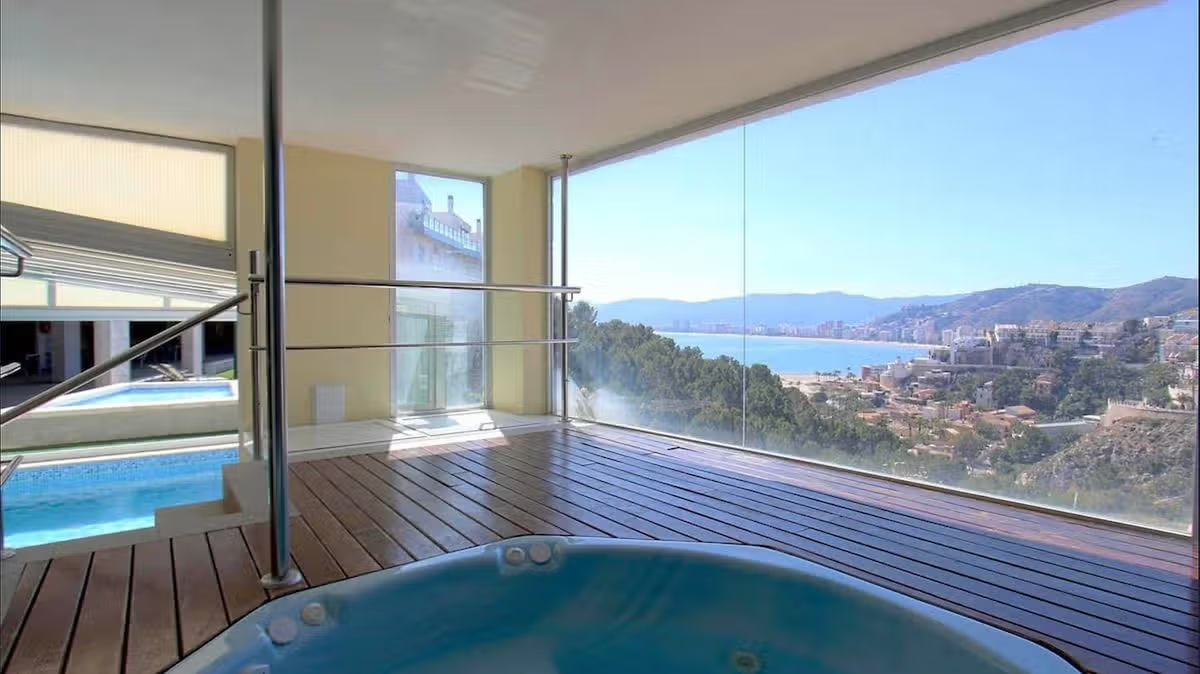
The Irishwoman and her husband found dead in the jacuzzi of their Spanish holiday villa died from cardiac arrest, it has emerged.

Reports say postmortems show Thomasina and Patrick Tobin suffered fatal heart stoppages when they became trapped in the jacuzzi at the villa near Valencia.

One theory is that both cardiac arrests were brought on by physical exhaustion in the struggle to save themselves – while another is that one of them was electrocuted and the other died when they fought to rescue them.

Advertisement

“Preliminary analyses indicate that the victims suffered cardiac arrest brought on by acute stress following physical exhaustion and the desperation of the moment,” the respected Valencia newspaper Las Provincias newspaper said on Sunday morning.

The couple, who were married with two teenage children and were living in London, died in the freak accident at their holiday villa at Cullera, near Valencia, last Tuesday.

Mrs Tobin, née McArdle, was a quantity surveyor who was originally from Castleblayney in Co Monaghan. She was 51. Her husband Patrick, 48, was from New Zealand.

Advertisement

They are believed to have spent up to two weeks at the villa in the upmarket residential estate called Cap Blanc in Cullera when the tragedy happened.

They were both found dead in the jacuzzi by their two teenage children, who then raised the alarm.

Homicide cops initially investigated their deaths as there were marks and scratches on both bodies – but foul play was quickly ruled out.

Advertisement

Instead, police are now investigating the theory that they died in a freak accident while they enjoyed the outdoor jacuzzi in their holiday rental.

It has now emerged that on Saturday, police examined the jacuzzi for the third time – but on this occasion they had an industrial expert on hot tubs with them.

The expert joined the Guardia Civil team at the request of an investigating magistrate – as judges lead such probes in Spain.

The expert was tasked with analysing the power of the suction fittings in the jacuzzi – to see if they trapped one or both of the victims in the hot tub.

Advertisement

Las Provincias said investigators are probing the theory that the tub’s hydro-massage system cause a strong suction effect that suddenly trapped Mr and Mrs Tobin in the water.

It says investigators believe the couple then fought desperately to save themselves.

The paper says: “According to the first investigations, the excessive suction force would have imprisoned the couple inside the bathtub, which triggered a situation of extreme anguish and desperate physical effort to free themselves from the hydraulic grip.

Advertisement

“The autopsy findings almost definitively reinforce the theory of accidental entrapment. “Preliminary analyses indicate that the victims suffered cardiac arrest brought on by acute stress following physical exhaustion and the desperation of the moment.”

It also said the post mortems showed the scratches on their bodies were not as a result of third party violence – but stemmed from them trying to save each other.

The paper also said that another possibility is that one victim may have suffered the cardiac arrest due to electrocution from a suspected fault in the tub and the other died trying to save them.

Mrs Tobin was a member of the highly respected McArdle family from Castleblayney, but had been living and working in London for around 20 years.

Advertisement

Her father is Tommy McArdle, who is a well-known playwright, actor and producer – and who spent many years directing RTÉ’s drama Glenroe.

He is famous for working with his brother John, who is also a writer and actor.

Both brothers also played football for Monaghan.

Mrs Tobin was a graduate of Trinity College Dublin and worked as a Chartered Surveyor.

Advertisement

Major projects she worked on in the UK included the Ritz and Shard building, both in London.

The Department of Foreign Affairs previously confirmed to the Irish Mirror it was aware of the incident and confirmed it was providing consular assistance in the case of one Irish citizen.

Initial reports said both Mr and Mrs Tobin were Irish, but it was later established that he was from New Zealand.

A spokeswoman told the Irish Mirror : “The Department is aware of this case and is providing consular assistance in the case of the Irish citizen concerned.

Advertisement

“As with all consular cases, the Department does not comment on the details of individual cases.”

The couple’s two young children reportedly alerted the homeowner after finding their bodies at their rented villa near Valencia at around 5pm local time on Tuesday.

Relatives from Monaghan flew out to be with the couple’s devastated children on Wednesday morning.

For all the latest news, visit the Belfast Live homepage here and sign up to our daily newsletter here.

Advertisement

Source link

Continue Reading

NewsBeat

Teen ‘stabbed’ in Glasgow after ‘being chased by five men’ down east end street

Published

on

Daily Record

The 17-year-old man was rushed to hospital after the incident but no information is available on his injuries.

A teenager has been rushed to hospital after reportedly being stabbed on a Glasgow street.

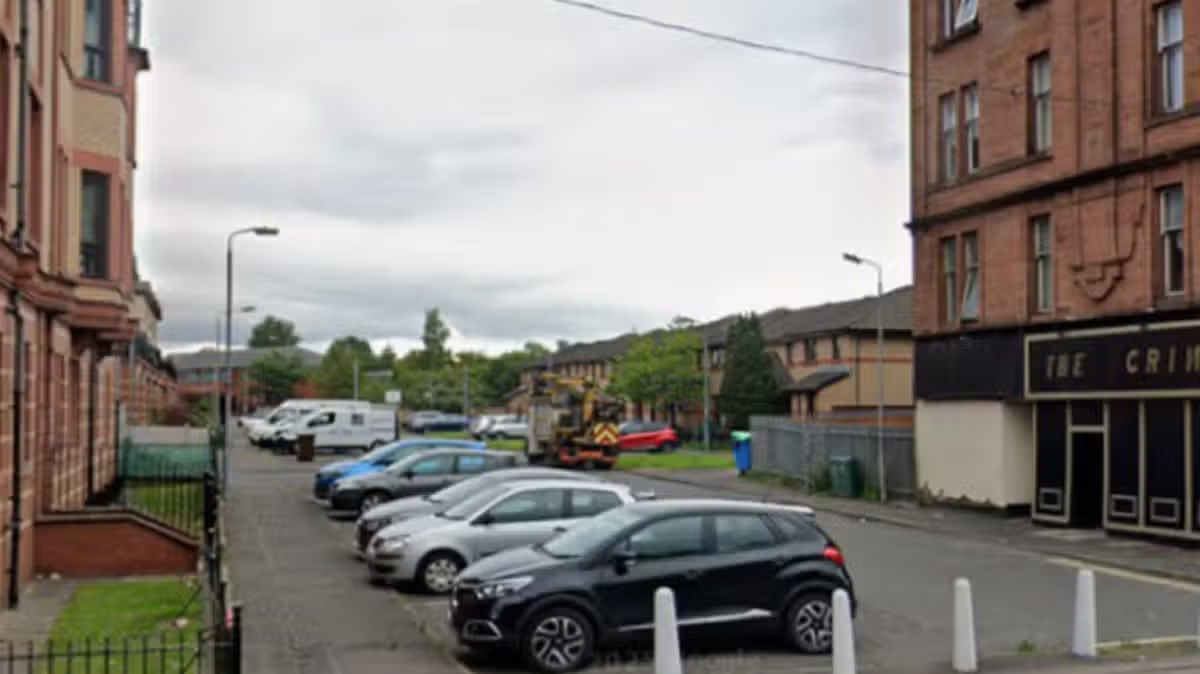
Officers were called to Kerr Street in the Bridgeton area of the city at around 10.25pm on Saturday, August 29.

A 17-year-old was taken to hospital for treatment but no more information is available on his injuries.

Advertisement

A source told Glasgow Live that “two men were chased down London Road by five men” before fleeing into a car park where the teen was stabbed.

A Police Scotland spokesperson said: “Around 10.25pm on Saturday, 29 August, 2026, we were called to a report of a male injured in Kerr Street, Glasgow. The 17-year-old was taken to hospital for treatment.

“Enquiries are ongoing to establish more details and trace those involved. Anyone with information should contact 101, quoting incident number 3739 of August 29.”

Get more Daily Record exclusives by signing up for free to Google’s preferred sources. Click HERE.

Source link

Advertisement
Continue Reading

NewsBeat

Manchester United vs Ipswich – Premier League LIVE: Chances at both ends in chaotic start at Old Trafford

Published

on

Manchester United vs Ipswich - Premier League LIVE: Chances at both ends in chaotic start at Old Trafford

Advertisement

Follow Daily Mail Sport’s live coverage for the latest updates of Manchester United’s Premier League clash with Ipswich at Old Trafford.

Advertisement

Source link

Advertisement
Continue Reading

NewsBeat

Man shot in ‘attempted murder’ on ‘quiet’ Gainford estate

Published

on

Man shot in 'attempted murder' on 'quiet' Gainford estate

Emergency services were called to Balmer Hill in Gainford at 8.10pm on Saturday (August 29) after a car had driven there and gunshots fired at the home.

A 46-year-old man is in hospital in a ‘critical, but stable’ condition with birdshot injuries to his abdomen.

A 20-year-old man and a 16-year-old boy were arrested on suspicion of attempted murder, and both remain in custody.

(Image: NORTHERN ECHO)

The boy has also been arrested on suspicion of theft, failing to stop and driving without a licence, police said.

Advertisement

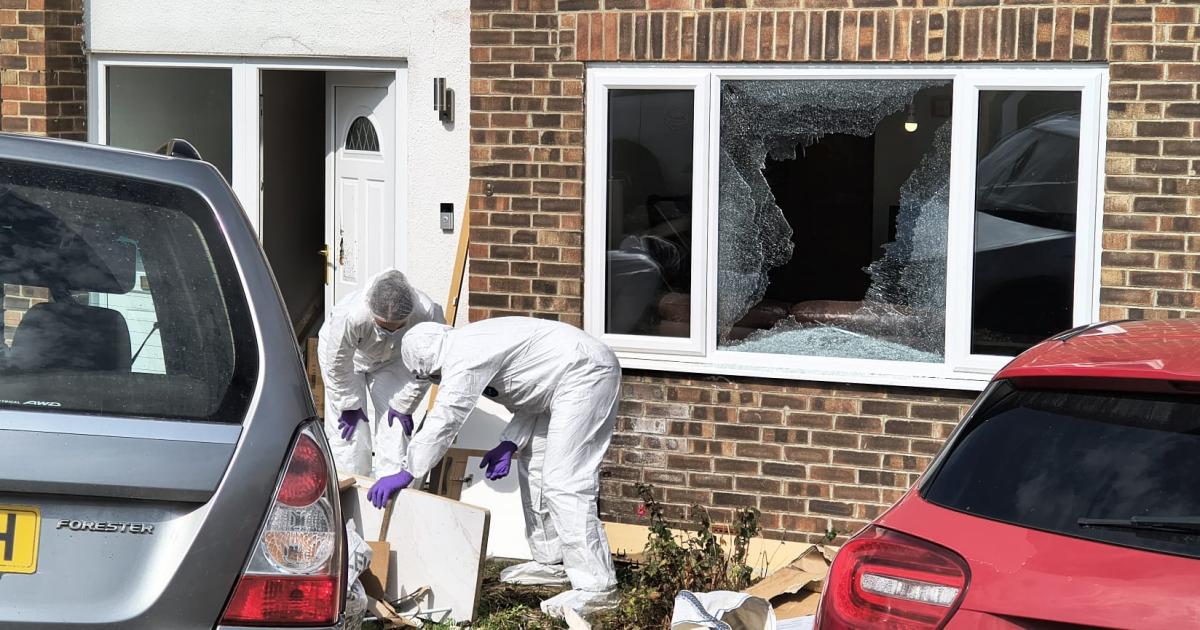
Pictures from the scene show holes the door where shots were fired, with the front window smashed through and shards of glass strewn across the ground on the driveway.

Neighbours described the street as ‘quiet’, with one saying: “Nothing ever happens here.

“A couple of weeks ago some milk was pinched from a doorstep and there was hell on, but it’s a quiet place.

“I feel safer now with the police here.”

Advertisement

(Image: NORTHERN ECHO)

Police officers were seen at the cordon surrounding the house on Sunday (August 30) and CSI teams in white overalls were working inside and outside the home, filling large brown evidence bags.

A spokesperson for Durham Police said: “An investigation has been launched after a man was shot in Gainford last night.

(Image: NORTHERN ECHO)

“Emergency services were called to an address in Balmer Hill just after 8.10pm following reports that suspects had driven to a house and fired at it from their car before making off.

“A 46-year-old man suffered birdshot injuries to his abdomen and was taken to hospital. His condition has been described as critical but stable.

Advertisement

“No one else at the address was injured and officers remain at the scene today.

“A 20-year-old man and a 16-year-old boy have been arrested on suspicion of attempted murder.

“The boy has also been arrested on suspicion of theft, failing to stop and driving without a licence. They both remain in custody.”

A North East Ambulance Service spokesperson added: “We were called to an incident at a private address in Gainford, Darlington at 8.10pm on Saturday, August 29.

Advertisement


“We dispatched one ambulance crew, one duty officer, one clinical team leader and were supported by Great North Air Ambulance Service (GNAAS).

“One person was taken to hospital by road.”

The investigation is ongoing and anyone with information is asked to call 101 quoting incident reference 479 of August 29.

Advertisement

Source link

Continue Reading

NewsBeat

How the US is teaming with Polish forces on drone lessons from Ukraine

Published

on

Jury says The New York Times defamed Alabama player

HOHENFELS, Germany (AP) — On a moonless and rainy night, a group of soldiers emerged from a ramshackle building meant to resemble a church. The alpine terrain loomed over them as they quietly set off for the tree line of the German countryside a short distance away.

The soldiers are members of the Polish special forces and are taking part in an exercise designed only months ago that simulates moving through enemy lines, traversing miles of enemy territory and launching a drone strike on a key enemy location.

Initially designed by the Army’s Green Berets for U.S. special forces, the exercise that began Friday is informed by and simulates many of the challenges that Ukrainian troops have experienced in their conflict with Russia. It is the first time a NATO ally like Poland has undertaken the training, and it comes at a time when tensions between Russian President Vladimir Putin and NATO countries have escalated.

“We’re using lessons learned from Ukraine,” an Army Green Beret officer assigned to the training complex said Thursday. “All of those effects that we’re seeing either Russia or Ukraine having to overcome — we’re doing our best to replicate.”

Advertisement

The Associated Press received rare access to both the training ground and the troops conducting the exercise, which has only been conducted twice before, both times this year, by two different Green Beret teams.

The drill highlights the focus that some parts of the U.S. military have on learning the latest techniques in drone warfare, pioneered by Ukraine during its 4 1/2-year effort to repel Russian forces. It also shows how the U.S., its NATO allies and Ukraine are working together to counter the threat of possible further Russian action in coming years even as the Trump administration has warned of troop drawdowns in Europe.

CIA Director John Ratcliffe went to Moscow this week to warn Russia not to attack NATO countries, The Wall Street Journal reported. Russia has the appetite to conduct sabotage and cyberattacks against NATO countries, but Putin wants to avoid a direct confrontation, according to three Western officials, who spoke Friday on condition of anonymity to discuss sensitive military matters.

How special forces are learning to sneak behind enemy lines to deploy drones

During the exercise in Germany, a senior enlisted soldier familiar with the training scenario at Joint Multinational Readiness Center Hohenfels — about an hour’s drive southeast from Nuremberg — said the plan is to run it several times a year. The officer said he expects most, if not all, of the 32 NATO nations to express interest in sending their troops to try the exercise.

Advertisement

Both spoke on condition of anonymity in line with the U.S. military’s longstanding policy of not publicly identifying individual members of special forces units.

The scenario, which runs for several days, takes place on a large, 1,100-square-mile (3,000-square-kilometer) plot of land nestled in the Bavarian countryside.

Advertisement

Poland’s special forces will be expected to sneak past a U.S. Army airborne infantry unit, whose soldiers will play the enemy. The U.S. airborne infantry unit will parachute into the closed-off training area at the Army’s Hohenfels base and set themselves up into a front line.

Assuming the Polish forces can make their way past the U.S. Army, they must then move north — through about 60 miles (100 kilometers) of German countryside — to another training area in the town of Grafenwoehr, where they are expected to destroy a simulated target.

In between lie German farms and villages, private and government cameras, as well as the city of Amberg with a population of more than 40,000 people, all of which not only pose as obstacles but also create the potential for them to be spotted.

“We have them take off their military attire, go in as civilians so they can blend in — but blend in also means don’t get seen by civilians,” the senior enlisted soldier said.

Advertisement

German civilians in the area largely are not aware of the exercise and serve as a reasonable test of how well special forces can blend into the local population. If they fail, reports of suspicious people to police will make it back to the military, which will use them to pinpoint the team.

“This is supposed to be Russia and you’re going to stand out in Russia,” the enlisted soldier added.

Plus, the U.S. Army also will be looking for the Polish forces with drones of their own.

If they’re spotted, “now you have the entire Russian arsenal coming at you,” the enlisted soldier said.

Advertisement

The U.S. Army can either send a military police unit to hunt for the Polish special forces with dogs or direct more drones to the area. In previous versions of the exercise, the U.S. Army had access to more than a hundred drones, the enlisted soldier said.

Troops are able to be “captured or killed” as part of the training.

Countries seek help from Ukraine on drone warfare

While the exercise taps into drones and NATO teamwork, the message of collaboration and the value of drones has been somewhat mixed lately across the military.

President Donald Trump stirred confusion among NATO allies by going back and forth on drawing down U.S. troop levels in Europe, and the administration has launched a force review on next steps. And last week, the Army’s top officer shuttered a unit that specialized in drone warfare.

Advertisement

But overall, there is growing interest in tapping Ukraine for its expertise on modern warfare and, specifically, drones.

In March, Ukrainian President Volodymyr Zelenskyy said his country was helping five countries in the Middle East and Gulf region counter Iranian drone attacks launched during the war with the United States, while the U.S. and European countries were among those requesting support.

Meanwhile, the number of mysterious drone incursions in Europe have grown, including as recently as this month, when a pair of drones were spotted over a German military base and a drone carrying explosives was found at a key cargo airport in Germany.

___

Advertisement

Associated Press writer Emma Burrows in London contributed to this report.

Source link

Advertisement
Continue Reading

NewsBeat

Police release one of two men arrested over ‘murder’ of girl, seven, and her aunt, 34, in Middlesbrough house fire

Published

on

Valentina Foster, seven, and her aunt Natalie McDonald, 34, died in the fire on Wednesday

Advertisement

A man arrested on suspicion of the murder of a seven-year-old girl and her aunt who died in a house fire has been released without charge.

Cleveland Police said the 31-year-old would face no further action but stressed that detectives were continuing to question a second man in connection with the alleged attack, which led to the deaths of Natalie McDonald, 34, and her niece, Valentina Foster.

On Saturday he was named as Jaden Wright, 23, during an appearance in court in relation to separate offences of grievous bodily harm and intentional strangulation.

Magistrates in Teesside were told Wright, of Middlesbrough, was arrested on suspicion of murder in connection with the house fire, in the Grangetown area, on Wednesday.

Advertisement

He was subsequently charged with the GBH and strangulation offences which relate to another alleged incident in Grange Farm Road the day before, on August 25, the court heard.

Prosecutors said the unnamed complainant in the separate case was living in a tent when she was allegedly attacked by the defendant.

She was taken to hospital where it was found she had injuries including a fractured eye socket.

Magistrates agreed to an application for Wright, of King George’s Terrace, to be remanded into police custody.

Advertisement

Valentina Foster, seven, and her aunt Natalie McDonald, 34, died in the fire on Wednesday

Police officers at the scene of the Grangetown house fire last Wednesday

Police officers at the scene of the Grangetown house fire last Wednesday

Dressed in a grey T-shirt, Wright sat in the glass-fronted dock for the 30-minute hearing next to a single security officer.

Advertisement

He did not enter a plea and spoke only to confirm his name and personal details.

Wright is due to appear again at the same court on Wednesday, September 2.

Four other people were injured in the house blaze, including a 48-year-old woman who remains in a ‘critical but stable’ condition at the Royal Victoria Infirmary in Newcastle and a 27-year-old man, who is undergoing treatment at James Cook University Hospital in Middlesbrough.

Two teenage girls were also treated in hospital for non-life-threatening injuries and were subsequently discharged.

Advertisement

On Friday, police said the property remained unstable and work will be carried out on the building over the coming days to make the site safe, which will also allow emergency services access inside.

They also confirmed the fire was not being linked to a fatal collision on the A66, which killed seven people, including two serving police officers, PC Matthew Blades and PC Tom Clough. 

Officers initially said they could not rule out a link with wider gang violence that broke out in Teesside after the smash, which also killed five young men in a VW Passat who had been driving the wrong way up the carriageway.

Advertisement

Advertisement

Source link

Continue Reading

NewsBeat

Chelsea FC player ratings vs Brighton: Joao Pedro dazzles as Morgan Rogers justifies price tag

Published

on

Chelsea FC player ratings vs Brighton: Joao Pedro dazzles as Morgan Rogers justifies price tag

Pedro Neto 7: 12 of this, half a dozen of the other. Going forward, he was superb, using his natural attacking instinct to be a danger with his delivery and getting at Kadioglu, while his goalscoring knack was on show as he ghosted in to double the home side’s advantage. He was skinned for the visitors’ goal, however, showing that he still has plenty to learn if he is to master this new role.

Source link

Continue Reading

Trending

Copyright © 2025