
Crypto World
Michael Saylor hints at first bitcoin purchase in two months as Bitcoin nears $79,000



Bitcoin rebounds from Friday’s low as Strategy’s valuation expands and bitcoin dominance climbs above 60%.


Real Trump Coins has denied any involvement in the brief launch and promotion of a Solana-based token called “Trump Digital GOLD,” which appeared across its online channels before disappearing. The company said the activity was driven by “third-party bad actors,” adding that it is working with authorities to investigate.
The denial followed a short-lived marketing push from the Real Trump Coins X account on Saturday. That account promoted the token and directed users to RealTrumpCoins.com, where GOLD was also advertised. The posts were later deleted, and the X account now points to a different domain, TrumpCoins.com.
Key takeaways
- Real Trump Coins says it never authorized the “Trump Digital GOLD” token and is investigating the incident with authorities.
- Blockchain analytics highlighted a highly concentrated token allocation, with team-linked wallets reportedly controlling the majority of supply.
- Both the X account activity and the RealTrumpCoins.com promotion created confusion about whether any platform compromise occurred.
- The token’s rapid disappearance after promotion underscores how quickly scam tokens can be distributed and then pulled.
Denial and escalation to authorities
In an X post on Saturday, Real Trump Coins stated: “Trump Coins has not authorized and will not launch, promote, or authorize any digital token.” The statement also said the team is working with authorities to investigate what happened.
The company’s message came after the Real Trump Coins X account promoted GOLD and users were routed to RealTrumpCoins.com. Observers noted that the X posts were subsequently removed and that the account’s linked domain changed, suggesting either a rapid corrective action—or that attackers may have shifted infrastructure to reduce traceability.
Real Trump Coins also clarified through its denial that it will not stand behind any token promotion that appears under its brand. For investors and token buyers, that distinction matters because brand-adjacent campaigns are often used to build short-term credibility for new tokens.
What Lookonchain’s wallet analysis suggests
Separate from the brand dispute, blockchain analytics reported unusually tight control over the token’s initial distribution. According to Lookonchain, the developer and newly created wallets controlled 82.45% of GOLD’s supply.
Lookonchain further reported that 15 wallets associated with the team sold their holdings for about $330,000, estimating profits around $312,000. Such concentration is a common red flag in token launches that operate more like coordinated distribution events than community-driven projects, particularly when promotions are short-lived.
This kind of structure typically enables insiders to move supply quickly—especially when liquidity is limited—while public buyers may only have brief windows to react to the promotion. Even if the brand claims innocence, the on-chain pattern described by Lookonchain indicates that GOLD’s rollout behaved like a pre-planned distribution rather than a distributed issuance.
Why the X account and domain mismatch raised questions
Crypto observers were unsettled by how closely the token promotion appeared to track Real Trump Coins’ online identity. One point of confusion was the apparent linkage between the X account and the brand’s web presence.
At the time the incident was being discussed, the Real Trump Coins X profile bio had been updated to link to TrumpCoins.com, while at least one earlier post still directed customers to RealTrumpCoins.com as recently as Aug. 25. That earlier post remained online at the time of publication.
In addition, some observers noted that Real Trump Coins was still following the Real Trump Coins X account—one of several accounts (53) it reportedly followed. That detail matters because it can imply either long-standing relationships between accounts or overlapping community management, raising further questions about whether the promotional activity could have been compromised or hijacked.
RuneCrypto_, an X user, publicly questioned how both the account and the domain could have been affected, pointing to the inconsistency between the X bio link and the continued RealTrumpCoins.com promotion.
As of the time of reporting, RealTrumpCoins.com still displayed the GOLD promotion, while the X account had shifted its linked destination to TrumpCoins.com. That sequence suggests the web and social layers were not aligned at the same time—either due to attacker behavior, partial cleanup by the legitimate operator, or asynchronous removal after deletion of the token posts.
How quickly these campaigns move—and what to watch next
The Real Trump Coins denial and the subsequent deletion of posts illustrate a pattern seen in many token scams: promotional content spreads quickly, routes users to a branded website to increase trust, and then is removed once attention rises or funds begin moving.
The on-chain reporting from Lookonchain adds another layer for observers: even if a brand operator did not authorize the token, insider-style wallet concentration and rapid selling can make such events damaging to retail participants. Buyers may be exposed before they fully understand what is legitimate and what is unauthorized.
Moving forward, investors and community members should watch for several practical signals: whether Real Trump Coins publicly provides follow-up findings from its investigation, whether the token contract receives any official takedown or blacklisting responses, and how the involved wallets behave after the initial promotion window.


Sony Music Publishing and Warner Chappell Music sued Anthropic on Friday. They say the company used BitTorrent to take songbooks, then fed them to Claude.
While Anthropic has already admitted torrenting books, it has never conceded that music sat inside those files, hence the copyright case.
Anthropic Music Lawsuit Explained
The complaint names two hauls, both from shadow libraries and containing unlicensed copies of published works.
- Roughly 5 million books came from Library Genesis in June 2021.
- Another 2 million came from Pirate Library Mirror in July 2022.
According to the publishers, sheet music and songbooks sat in those collections. Torrenting is not the only route in the filing.
The publishers also say Anthropic scraped lyrics from Musixmatch and LyricFind. Both sites pay for the right to display them.
“…one of the largest and most blatant ongoing thefts of intellectual property in history,” the opening line of the complaint reads.
Follow us on X to get the latest news as it happens
Why Torrenting Is the Dangerous Part
A judge has already drawn this line once. Buying books and scanning them leaned toward fair use. Taking them from pirate sites did not. The same judge described those downloads bluntly.
“…straightforward piracy but at massive scale.”
That is why Anthropic’s destructive book scanning program survived court, while its downloads ended in a settlement.
Torrenting sits on the wrong side of that line, and it carries a second problem. The software uploads while it downloads. Every copy taken is also a copy shared.
Two of the four counts rest on that point, with both naming Dario Amodei and Benjamin Mann as individuals, not as employees. Companies settle. People give depositions.
What It Could Cost
The publishers want up to $150,000 for each song a jury finds was knowingly infringed. The publishers say hundreds of their songs sat in those files. They put the wider training claim in the tens of thousands.
Notably, however, Anthropic has beaten these publishers before. It beat their bid to block Claude’s training in a 2023 case over lyrics. It agreed to run output guardrails instead.
It has not commented on this one.
Everything now turns on discovery. Did the songs reach Claude through a purchase, or through a swarm?
The post Anthropic Downloaded Music From Torrent Sites to Train Claude appeared first on BeInCrypto.
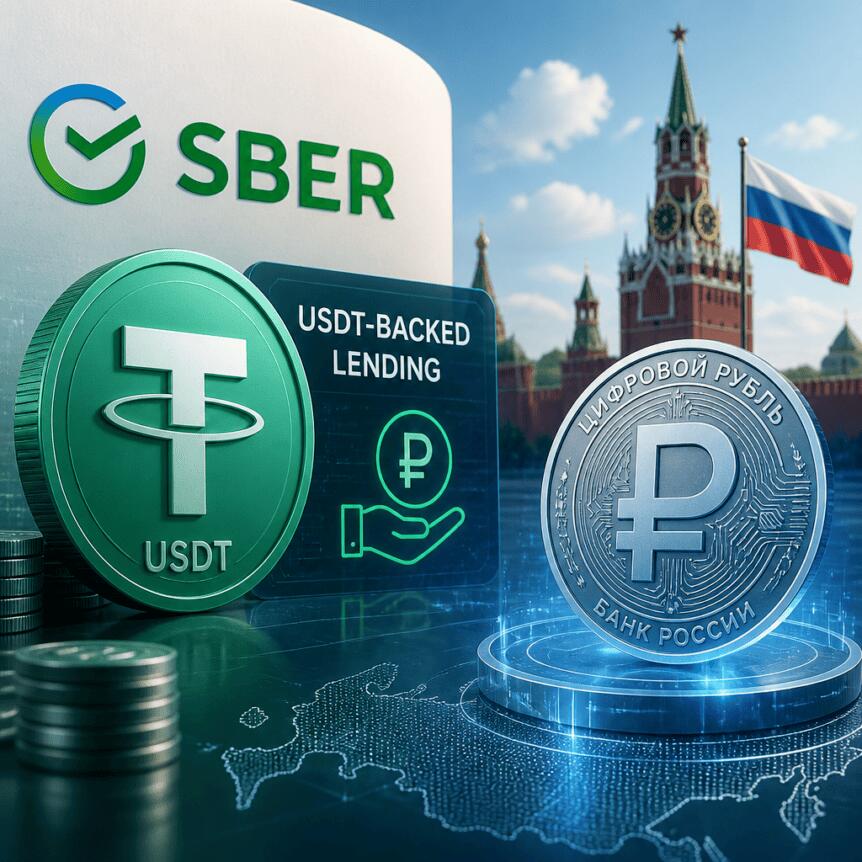
Sber, Russia’s largest bank, is looking to widen the collateral it accepts for its crypto-backed lending products. According to a Friday report by TASS, the bank’s deputy chairman Anatoly Popov said Sber plans to add Tether’s USDt stablecoin and Ether, alongside Bitcoin, once the Bank of Russia clears those assets for public trading.
The move is tied to the rollout of Russia’s newly regulated crypto market. President Vladimir Putin signed a crypto law on Aug. 4, with core provisions scheduled to take effect Sept. 1. Under that framework, the central bank is set to decide which digital assets may be traded on regulated exchanges—an authority that directly affects what can be used as collateral in mainstream financial products.
Key takeaways
- Sber plans to expand crypto-backed lending collateral to include USDT and Ether in addition to Bitcoin.
- The bank said it will add the new collateral assets after the Bank of Russia permits them for public trading.
- Russia’s regulated crypto market begins under a law signed by President Vladimir Putin on Aug. 4, with key provisions starting Sept. 1.
- The central bank has proposed Bitcoin, Ether, and USDT for regulated exchange trading based on criteria including market capitalization and trading history.
- Sber has shown caution toward wider demand for Russia’s digital ruble (CBDC), according to earlier remarks reported by TASS.
Collateral expansion depends on the central bank’s approved asset list
Popov told TASS that Sber intends to adapt its existing crypto lending offerings and “gradually expand” as the country’s new crypto rules come into force. The timing hinges on regulatory clearance: Sber said it will introduce additional collateral after the Bank of Russia allows the relevant assets to be traded publicly.
This is a notable shift in practical terms. While Bitcoin has often been the first digital asset banks explore for custody, settlement, and lending structures, collateral diversification can materially change risk management and client accessibility. A stablecoin and a major smart-contract asset broaden the set of options available to borrowers who want to align collateral with their own exposure or business needs.
Why Russia’s regulated market rules are the trigger
Russia’s new law restructures the digital-asset landscape by giving the Bank of Russia authority to determine which crypto assets may trade on regulated exchanges. As described in earlier coverage cited by Cointelegraph, the central bank’s role is central to creating an official, compliance-oriented market rather than leaving trading primarily to informal or offshore venues.
Cointelegraph previously reported that the Bank of Russia proposed Bitcoin, Ether, and USDT for regulated exchange trading on Aug. 11. The proposal was said to be based on requirements that included market capitalization, trading volume, and at least five years of price history on overseas markets. If regulators follow through on the proposal, it would effectively clear the path for banks like Sber to consider these assets within domestic, regulated finance.
For Sber, that linkage between exchange eligibility and banking collateral is likely to reduce legal and operational uncertainty. Instead of testing collateral on a largely gray basis, the bank can align lending terms with assets that regulators treat as eligible for public trading.
CBDC skepticism highlights Sber’s cautious stance
Sber’s crypto collateral plans arrive alongside a separate, more skeptical view of Russia’s central bank digital currency. TASS previously reported comments from Sber’s chief financial officer Taras Skvortsov suggesting the bank had not seen strong demand for the digital ruble.
Skvortsov said Sber sees “little evidence of broad demand” for the CBDC, and that neither retail nor corporate clients nor financial institutions were pushing for it. In the same reported remarks, he indicated there was no clear interest in the instrument beyond the central bank’s involvement.
While crypto-backed lending and CBDCs are different products with different regulatory aims, the contrast is instructive for readers watching how Russian institutions prioritize digital finance tools. Sber appears willing to expand where it sees a clearer regulatory pathway for market-based assets, while remaining unconvinced that the CBDC will quickly find broad use before or after its wider rollout.
What investors and borrowers should watch next
Sber’s announcement effectively points to a sequence of events: regulators must approve the assets for public exchange trading under the new framework, and then banks can operationalize those assets as collateral. That means the key near-term uncertainty is not whether Sber wants to broaden collateral, but whether and when the Bank of Russia finalizes the eligibility of USDT and Ether for regulated venues.
As the Sept. 1 implementation window approaches, market participants should monitor regulatory updates from the central bank—particularly any steps that confirm which assets become eligible on regulated exchanges. Those decisions will likely determine how quickly Russian financial institutions can move from pilot-style crypto services to more scalable lending structures that incorporate stablecoins and non-Bitcoin assets.
The winds of change continue to impact how investors view the spot XRP ETFs, with the inflows in the past week exceeding $110 million for the first time since early December, 2025.
Naturally, the cumulative total net inflows have reached a new all-time high, while Bitwise’s XRP ETF has extended its lead as the largest of the bunch.
2026 Record Hit
On a rare occasion in the past several months, all five trading days saw double-digit net inflows. Investors kicked off the week by pouring $13.82 million on Monday and another $23.87 million on Tuesday. The most impressive day was Wednesday, when the net inflows hit $28.14 million. This was the single-best daily performance since January 5, when the funds attracted over $46 million.
Another $18.47 million entered the funds on Thursday, and $26.20 million on Friday. This brought the total for the week to $110.49 million – the best five-day performance since the week that ended on December 5.
The cumulative total net inflow reached $1.66 billion on Friday, a new all-time high following last week’s market shift, when investors returned to the XRP ETF scene. Before that, there were multiple examples of days with no actual net flows.

Bitwise’s XRP ETF remains the largest, with the cumulative net inflows skyrocketing to just over $600 million. The first to see the light of day, Canary Capital’s XRPC, follows suit with $483 million, while Franklin’s XRPZ is third with $462.86 million.
XRP Halted at $1.70
The underlying asset exploded between August 19 and 22, surging from the key psychological support at $1.00 to a multi-month high of $1.70. After gaining 70% in less than 72 hours, though, the asset slumped to $1.50 at the start of the business week.
Despite the impressive inflows mentioned above, it couldn’t maintain that level and dipped to and below $1.40 by the end of the week. It currently fights to reclaim that level after a 1.3% increase on a 24-hour scale.
Analysts believe the next move will depend on whether XRP can defend the $1.35-$1.38 support zone, which was tested on Friday after Kevin Warsh’s hawkish speech. If the token is to rebound, the first major obstacle it needs to overcome to continue upward is at $1.60, which is a level that has frequently stopped its breakout attempts in the past six months.
The post Ripple (XRP) ETFs Smash 2026 Inflow Record as Total Flows Hit New ATH appeared first on CryptoPotato.


Finance has spent centuries decoupling wealth from physical transport, but constantly erasing friction creates vectors for increasingly high-tech exploits.
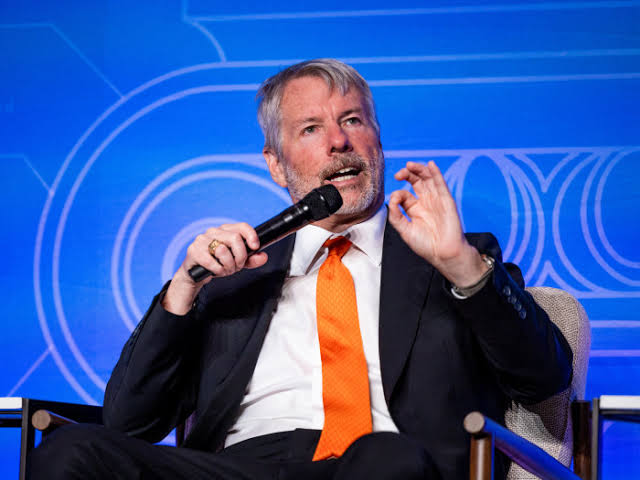
Strategy’s co-founder and former CEO, Michael Saylor, took it to X earlier today to post another cryptic comment, which the community is trying to decipher.
Alongside a chart showing that the company’s over 110 BTC purchases made in the past six years, Saylor said, “We’re ₿ack.” Naturally, most comments below the post speculated that the firm has resumed its bitcoin accumulation spree after a two-month pause.
We’re ₿ack. pic.twitter.com/ciqOaCa908
— Michael Saylor (@saylor) August 30, 2026
Recall that Strategy’s latest announced bitcoin purchase came on June 22, as it was completed in the week between June 15 and 21. It paused its BTC accumulation strategy for the following two months and even announced a couple of sales.
It focused primarily on rebuilding its USD reserve, which climbed above $6.5 billion last week after the latest initiatives. The second came in the form of establishing a new program, called USD Cash, which now consists of $1.59 billion, alongside its regular greenback reserve of $5.1 billion.
In addition, Strategy continued repurchasing its STRC shares. The high-yield variable-rate preferred stock slumped far away from its par price of $100 to $75 a few months ago, but it recovered significantly to over $97 last week.
While some users anticipate a new purchase to be announced on Monday, others warned that Saylor’s latest message refers to something else: his company’s position turning green.
Bitcoin’s price recovered significantly in the past week and a half, surging from under $65,000 to over $78,500 as of press time. Given Strategy’s average accumulation cost of $75,653 per BTC, this means that the firm is now in profit for the first time since May. Its position was deep in the red (on paper) of over $10 billion until several weeks ago.
On the topic of when Strategy will start buying bitcoin again, the current CEO, Phong Le, recently shed some light, indicating that this could occur by the end of the year, without providing more details.
The post ‘We’re Back,’ Says Saylor: Is Strategy About to Buy Bitcoin Again? appeared first on CryptoPotato.


A federal appeals court ruled on Aug. 28 that Kalshi had not shown Nevada’s regulation of its sports-event contracts was likely preempted by federal commodities law.
Summary
- Ninth Circuit judges held Kalshi unlikely to block Nevada regulation of sports-event contracts through preemption.
- The ruling did not invalidate CFTC rulemaking or resolve any future Administrative Procedure Act challenge.
- A conflicting Third Circuit decision increases the possibility that the Supreme Court reviews Kalshi’s cases.
- Nevada’s election-contract challenge returns to district court while sports-contract enforcement may continue during litigation proceedings.
- The CFTC proposed ninety-day reviews for certain event contracts, including products involving gaming activities nationwide.
The unanimous decision allows Nevada gaming authorities to enforce state requirements while litigation continues.
The Ninth Circuit opinion also raised concerns under the major-questions doctrine. However, it did not invalidate the Commodity Futures Trading Commission’s proposed event-contract rules or decide whether a future final rule would survive an Administrative Procedure Act lawsuit.
Kalshi ruling preserves Nevada’s sports-betting authority
Kalshi argued that its sports-event contracts qualified as swaps under the Commodity Exchange Act. Because Kalshi operates a CFTC-regulated designated contract market, it said federal jurisdiction displaced Nevada’s gaming laws.
The Ninth Circuit rejected that argument at the preliminary-injunction stage. It found that the contracts likely fell outside the applicable meaning of “swap” because they functioned as sports bets. The panel consequently rejected Kalshi’s express, conflict and field-preemption arguments.
Circuit Judge Ryan Nelson wrote that “the CFTC is not a national gambling regulator.” The court said Kalshi’s broader interpretation lacked a limiting principle and did not fit the surrounding statutory framework.
As crypto.news reported, the 3-0 ruling affirmed the dissolution of an earlier injunction protecting Kalshi from Nevada enforcement. The panel returned Nevada’s separate election-contract claims to the district court for further review.
Major-questions language does not end CFTC rulemaking
Gaming attorney Daniel Wallach argued that the CFTC’s rulemaking was “DOA” because of the court’s major-questions analysis. In an Aug. 29 post, he predicted APA litigation in a California federal court.
That prediction extends beyond the court’s direct holding. The opinion said Kalshi’s broad interpretation of “swap” “would raise concerns under the major-questions doctrine.” It did not hold that the doctrine categorically prevents the CFTC from regulating prediction markets.
Ripple CTO emeritus David Schwartz disputed Wallach’s reading. “This seems to be incorrect to me,” Schwartz wrote. He argued that Congress could create a federal framework for exchange-traded contracts without displacing conventional state-regulated sportsbooks.
Schwartz’s comments represented his interpretation, not a Ripple corporate position or judicial finding. The ruling addressed whether Kalshi had demonstrated a likelihood of success on its preemption claim.
CFTC proposal remains pending but faces new risks
The CFTC’s June proposal would amend Rule 40.11, which governs event contracts involving gaming, terrorism, assassination, war and activities unlawful under federal or state law.
The proposal would establish a 90-day review process and define how the agency interprets “gaming” and when a contract “involves” an enumerated activity. The CFTC would evaluate covered contracts individually using specified public-interest factors.
The Federal Register notice closed for public comments on July 27. The agency can revise, finalize or withdraw the proposal after reviewing those submissions.
A final rule could face an APA challenge over statutory authority, procedure or agency reasoning. Wallach predicted such a lawsuit, but no matching complaint had been verified when the debate emerged.
Circuit split raises Supreme Court stakes
The Ninth Circuit’s decision conflicts with a Third Circuit ruling favoring Kalshi in its dispute with New Jersey. That disagreement makes Supreme Court review more plausible, although review is not guaranteed.
New Jersey faced a Sept. 3 deadline to seek further review of the Third Circuit decision, according to Reuters. Kalshi could also seek Ninth Circuit rehearing or petition the Supreme Court, but neither action was immediately confirmed.
The jurisdictional dispute extends beyond Nevada. As previously reported in crypto.news coverage of the prediction-market conflict, several states classify sports contracts as gambling products requiring local licenses. Kalshi maintains that federal derivatives regulation preempts those requirements.
For now, Nevada can enforce its gaming laws against Kalshi’s sports contracts. The CFTC proposal remains alive, but the Ninth Circuit opinion provides prospective challengers with another argument against any final rule claiming broad authority over sports-event markets.

Bitcoin’s major rally from under $65,000 to over $81,000 within a week or so changed the broader market sentiment from fear to greed, with analysts initially rushing to call the end of the bear phase.
However, its inability to push through the $81,000 resistance and the two rejections, alongside the Fed’s hawkish stance on Friday, added further doubt, both from a technical and a macro perspective. The good news is that whales have returned in full force.
$3B in BTC
Citing data from Santiment Intelligence, popular analyst Ali Martinez noted that these large market participants have accumulated roughly $3 billion worth of bitcoin in the past week alone. Adding more than 39,150 BTC in just seven days signals that this crucial cohort of investors continues to show interest in the primary cryptocurrency, alongside ETF buyers, who poured over $920 million into the funds in the past week.
In a separate post, Martinez doubled down on the whales’ growing activity, arguing that the recent rally was driven primarily by them. In contrast, retail investors have remained mostly on the sidelines or in the opposite corner, as further on-chain data suggests they have actually been selling.
$3 BILLION IN BITCOIN BOUGHT BY WHALES
Whales accumulated more than 39,154 bitcoin:native over the past week, signaling continued interest by large investors. https://t.co/JbIrOvfw8F pic.twitter.com/vEPbSJiv73
— Ali Charts (@alicharts) August 30, 2026
But More Pain Ahead?
Following the Friday Jackson Hole speech by new Fed Chair Kevin Warsh, in which he displayed a more hawkish stance, analysts are not so adamant that the bear market is completely over.
Rekt Capital warned earlier that BTC’s real test begins after the strong weekly close. He argued that if the latest surge is ultimately a bear-market relief rally, the cryptocurrency could pull back in the following few weeks. It now stands to demonstrate sustained strength at these elevated levels rather than immediately giving back the breakout.
Crypto Haris presented a considerably more bearish scenario, describing the move from $65,000 to $80,000 in days as a potential bull trap. Moreover, the analyst expects BTC to decline to $74,000 at first, before another leg down takes it back to the $67,000 region.
In general, Haris believes the cryptocurrency will first fall back to $62,000 before it eventually pumps to $90,000.
The post Bitcoin Whales Just Bought $3B in BTC: Why Analysts Still Warn of More Pain Ahead? appeared first on CryptoPotato.
Delaware Life Insurance Company relabeled $16.4 billion of its investments this year. The money sits in private loans tied to companies it is connected to. Federal prosecutors and securities regulators are now investigating.
That money came from annuities and life policies sold to ordinary savers. Few of them know what backs the promise.
Prosecutors are Already Asking
The company’s second-quarter filing reveals grand jury subpoenas served in February. Clear Spring Life and Annuity Company also received them.
They came from the US Attorney’s Office in Manhattan. The Securities and Exchange Commission (SEC) opened a parallel investigation.
Both are examining one question. Should loans introduced by an affiliate have been flagged as related-party deals? Nobody has been charged.
Credit raters have already moved, with A.M. Best, Standard & Poor’s and Fitch each grading Delaware Life A-minus. All three attach a negative outlook or watch.
Private Credit Now Backs Retirement Promises
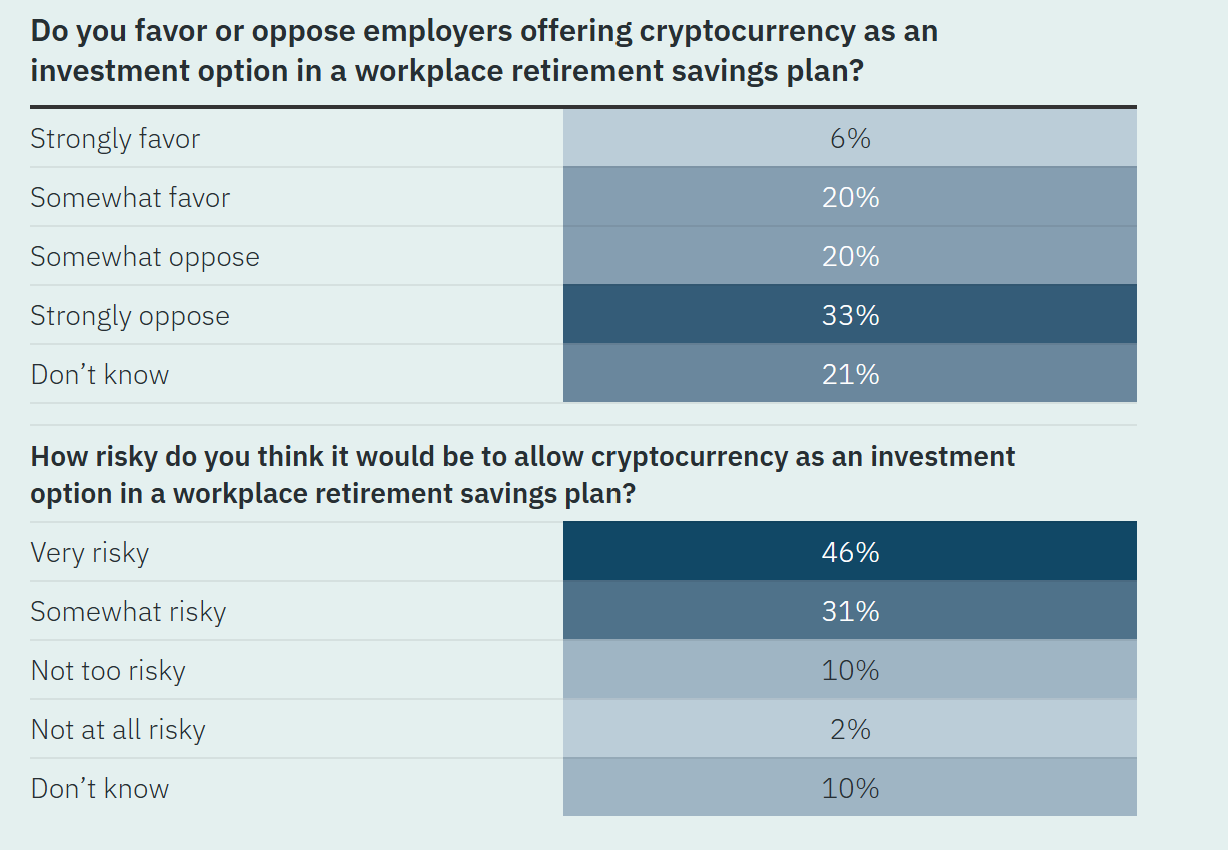
A survey published August 26 found something striking. It said 77% of US adults call crypto risky inside workplace retirement plans. Nearly half called it very risky.

“Americans are telling us that retirement security is becoming harder to achieve as they struggle with the affordability of everyday life. Housing, healthcare, debt and other expenses are competing with the need to save for retirement,” Dan Doonan, NIRS executive director, said in the report.
Their insurance money was already funding loans that have no public market prices. That gap says a lot about how savers judge risk.
Private equity firms drove the shift. The National Association of Insurance Commissioners (NAIC) counted 137 insurers under their ownership at the end of 2024. The count was 90 in 2018. Together, those firms held $704.3 billion.
Italy Already Ran This Experiment
Illiquidity only matters if people ask for their money. They can.
Cashing out an annuity early usually costs about 10%, according to the Bank for International Settlements (BIS). That fee falls each year.
Roughly half of global surrender values can be withdrawn within a week. The loans behind them take months to sell.
Eurovita showed what happened next after the Italian life insurer watched its solvency ratio slide from 230% to nearly 130% during 2022.
Rates rose, bond values fell, and customers cashed out.
Its private equity owner, Cinven, offered 100 million euros. The regulator wanted 400 million.
Italy froze withdrawals in February 2023, and the freeze held until October. Five rival insurers absorbed the policies, and savers lost nothing.
Private credit is not crypto. It has a regulator, an investment-grade label, and decades of actuarial math behind it.
Still, private credit stress signals have reached levels last seen in 2017. The difference is that savers knowingly chose one of these risks.
The post American Insurers Secretly Put $16 Billion of Retirement Money Into Private Loans appeared first on BeInCrypto.
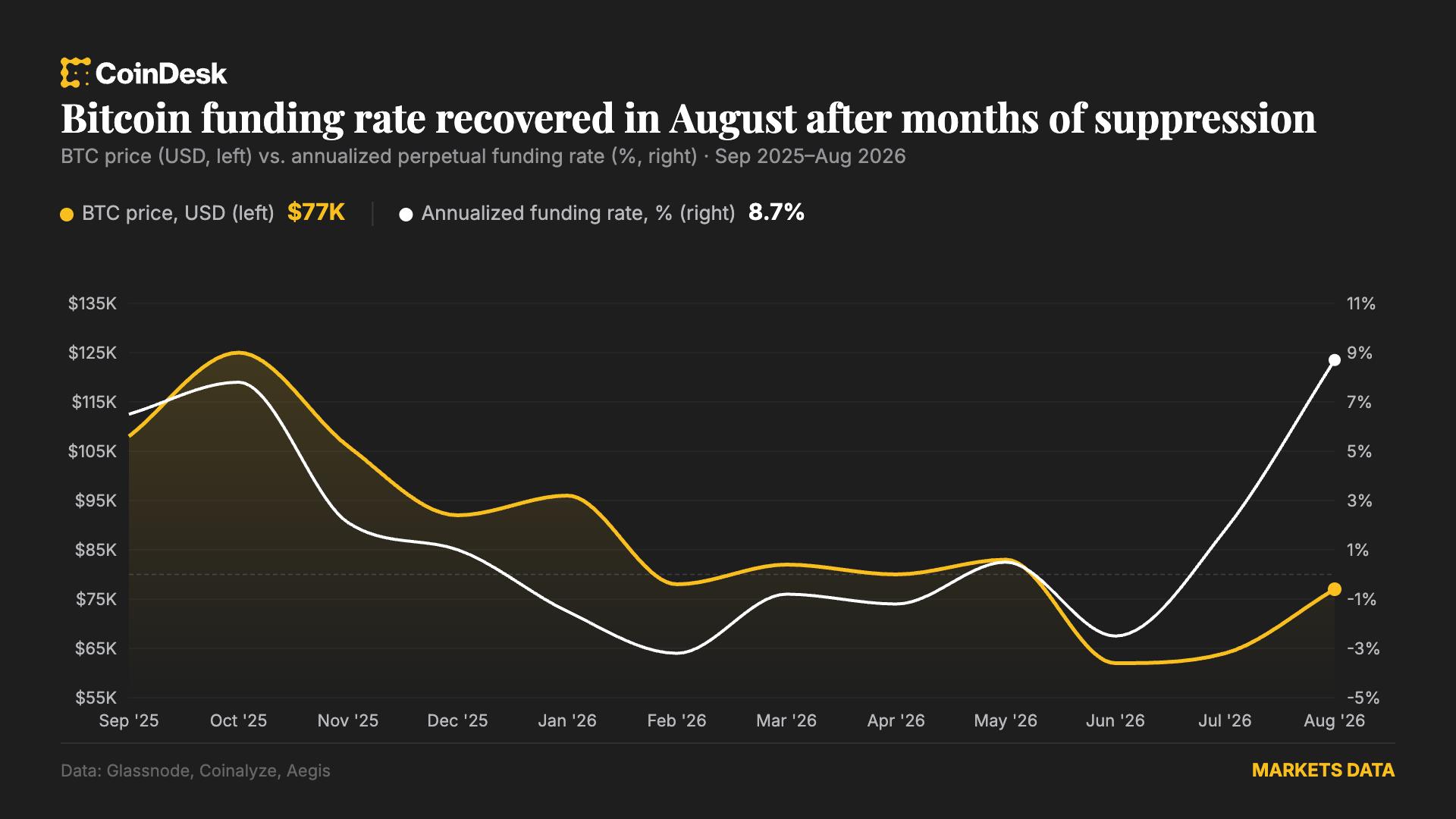
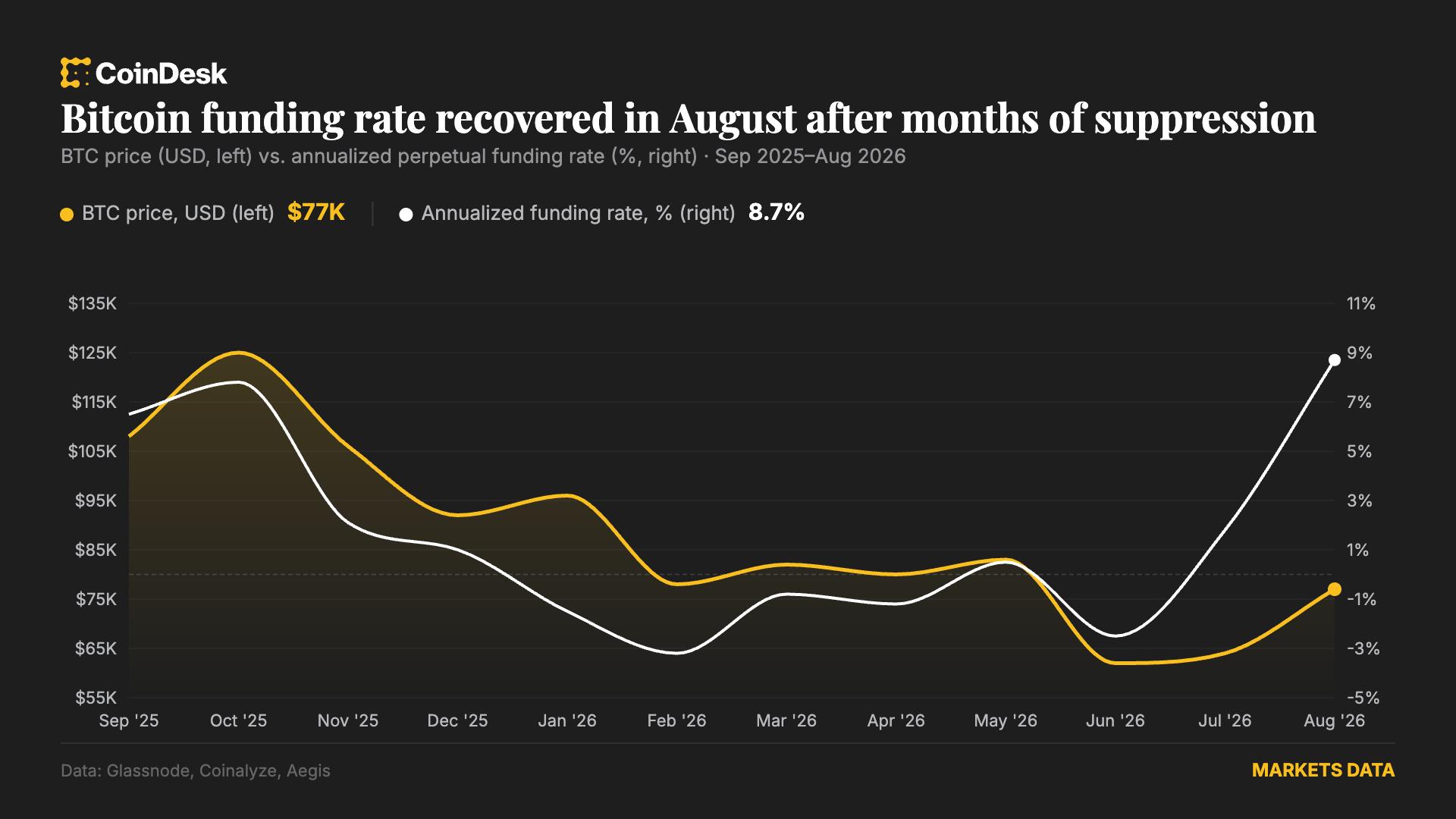
As bitcoin surges back above $80,000, sophisticated trading firms are quietly collecting yield rather than making directional bet.
Fortunes Always Hiding | Iain Dale

2026 Week Zero CFB Game Summaries for Teams in West

Revolut announces roll-out of euro-backed stablecoin

Weekend Open Thread – Corporette.com

Weekend Open Thread: Brooks Brothers

London Mayor Sadiq Khan handed a peerage by Keir Starmer alongside 15 other Labour figures… just days before the PM leaves No10

best finance advisor in tamil #finance #financeadvisor #tamilfinance#financialfreedom

Aug 24 | Live Market Analysis for Gold and Crypto | US Session

Trump Just Secretly Triggered The Next Crypto Bull Run (Michael Saylor sells)
-

 Crypto World5 days ago
SpaceX stock could rise 75% to $240, JPMorgan says
-

 Fashion2 days ago
Weekend Open Thread: Maeve – Corporette.com
-

 Crypto World3 days ago
Bitcoin’s 22% rally now needs real demand to outlast Treasury liquidity boost
-

 Crypto World4 days ago
Warsh Jackson Hole keynote puts financial innovation first
-

 Crypto World6 days ago
A $30 Billion AI Fund Implodes, Now the SEC Is Investigating Wall Street’s Role
-

 Business3 days ago
Salesforce Stock Soars 19% as Blowout Earnings and Agentforce AI Growth Silence Software Skeptics
-

 Crypto World5 days ago
Did Trump Just Move SpaceX Stock With One Truth Social Post?
-

 Crypto World4 days ago
Elon Musk Grok Bot Promise: We Will Make You Whole if AI Loses Your Money
-

 Business4 days ago
Walmart takes aim at younger shoppers with new fashion brand
-
 NewsBeat4 days ago
Lindsay Clancy jury braces for closing arguments as judge tells court: ‘You’ve heard all the evidence’ – Live updates
-

 Business3 days ago
Apple Confirms September 9 Keynote and Reveals Its Full Pre-Order Schedule
-

 Crypto World2 days ago
Bitcoin price tests $82K resistance as Brandt stays long
-

 Crypto World4 days ago
NVIDIA revenue hits $96.2B as AI demand doubles
-

 Business6 days ago
Moderna CEO warns China is pouring state money into mRNA technology
-

 Business5 days ago
Thailand’s Eastern Economic Corridor Capital City (EECiti): Key Developments and Investment Opportunities
-

 Business2 days ago
iPhone 18 Pro Pre-Orders Could Shift to Saturday as Apple Reportedly Avoids September 11 Anniversary
-

 Business6 days ago
NVIDIA Stock Drops Nearly 2 Percent to $210 on Seventh Losing Day Ahead of Critical AI Earnings
-
 Crypto World7 days ago
$92 Billion Nvidia Earnings Could Make or Break the AI Trade
-

 NewsBeat5 days ago
Trump’s trade truce with China faces test with Iran effort
-

 Crypto World4 days ago
Nvidia Q2 Earnings Reveal $96.2 Billion Beat, So Why Is NVDA Falling?
You must be logged in to post a comment Login