Connect with us

NewsBeat

The unlikely rise of the sea shanty band

Published

on

The unlikely rise of the sea shanty band

After TikTok turned sea shanties into an online craze, community groups around the UK found a new audience. Our writer joins the Wreckers to discover why these old working songs are doing more than filling dancefloors

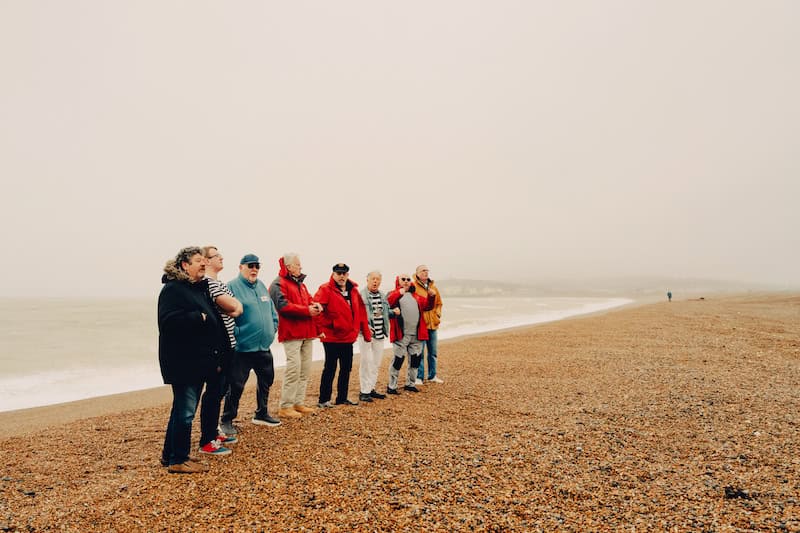
Sitting on the top deck of the RNLI station at Newhaven on England’s south coast, Tony Lewis is surrounded by atmospheric charts, historic photos and models of old lifeboats. He is chatting to me with half an eye on the harbour, watching the boats come and go, cocking an ear to listen whenever the radio crackles.

At one point he gets up to watch the cross-Channel ferry practise a tricky manoeuvre, akin to a three-point turn in a very narrow street, which he talks me through in impressive detail. Suffice to say, he has a lot of love for the sea.

Advertisement

He’s volunteered at the lifeboat station as an operations manager for a number of years, but he never imagined his affection for the ocean would turn him into a singer. Especially as he’d never sung, or had the desire to sing, in public before. Yet that’s exactly what he does every month or so with seven other men, as part of a local sea shanty group called the Wreckers.

Solutions every Saturday
Uplift your inbox with our weekly newsletter. Positive News editors select the week’s top stories of progress, bringing you the essential briefing about what’s going right.
Sign up

Lewis tells me that their Wednesday night rehearsals, in a shed at the bottom of one of their gardens, are the highlight of his week. And he’s not alone. In recent years, hundreds of sea shanty bands have sprung up in coastal towns and cities around the UK, with some groups forming inland, too, from Oxford to West Yorkshire and London.

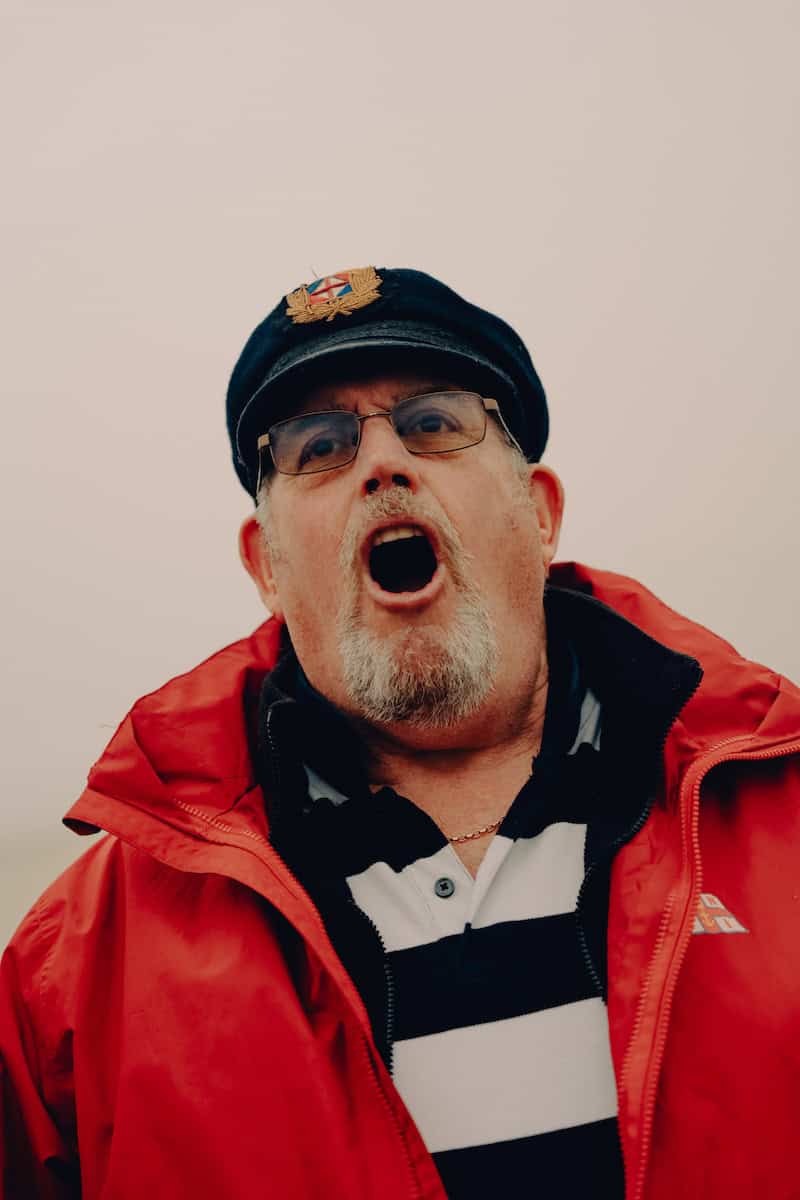
The singers may skew predominantly male and over 40, but the audiences are much broader. When I watch the Wreckers play in the clubhouse of a local yacht club, kitted out in Breton tops and sailors’ hats, there are plenty of kids joining the mat the front to sing along, while teenagers and twentysomethings nod their heads at the back.

Advertisement

Homeward Bound, a Brighton-based shanty band, play regular gigs in craft beer spots, and run popular sea shanty workshops for hen and stag dos. And the organisers of the Falmouth International Sea Shanty Festival, which was founded in 2003 and now attracts more than 65,000 visitors, say their event has never been more popular with young people, who make up large swathes of the audience.

Many shanty bands attribute this to Wellerman, a New Zealand whaling song that went viral in 2021, when it was sung by the Scottish postman Nathan Evans. This kickstarted a shanty TikTok craze that was fuelled by Spotify’s algorithms recommending more and more shanties to listeners who were enjoying the track.

Sea shanties were originally rhythm-centric working songs, sung by sailors on large merchant ships, most notably in the 19th century, to keep their spirits up and their minds on the job in an era long before portable music players, let alone streaming apps on mobile phones, could play us whatever we wanted whenever we wanted to hear it.

Advertisement

“Sailors relied on sea shanties – it was brutal work, often in really horrible weather and sea conditions, far from home,” says Lewis. “You’d have the shanty man on the boat leading the song – he’d choose the best song for the particular job, whether that was hauling ropes, pulling masts or whatever – and the crew would respond by singing the chorus.”

The Orwellermen perform from their extensive repertoir. Image: The Orwellermen

Advertisement

The Wreckers formed in 2023 and Lewis joined a year later, having enjoyed seeing them perform. “I loved their sound though it’s not a pleasant choir,” he warns. “We call it rum-bunctious and it’s such a good laugh, we get the audience clapping, stamping their feet and singing along with the choruses.”

Lewis likes the idea that the Wreckers are keeping the history of the old seafarers alive and maintaining that local relationship to the sea, at a time when few jobs are directly connected to maritime work and coastal communities are often neglected. Last November, lifelong fisherman Martin Yorwarth wrote a protest ska shanty about the plight of small fishing boats driven to ruin by industrial-sized bottom trawlers.

Lewis also thinks that singing together regularly has brought numerous mental health benefits to the group of eight, who range in age from 22 to 82, though are mostly retired, as it did for the sailors of yore.

We get the audience clapping, stamping their feet and singing along with the choruses

“Some of us have got health issues or partners with health issues, or we’ve lost partners, but through shanty we’ve found roots to understand our place in life,” he says. “Singing is definitely good for the spirit, it makes you feel like you’re breathing, and because we rely on each other to come in at the right time, we’re always working together. It’s like a fellowship.”

Advertisement

Some shanty bands are more folk music-inspired and professional, but for Lewis and the Wreckers it’s all about entertainment rather than the quality of the singing or the polish of the performance. “We always start our concerts by reminding people these are working shanties. They weren’t sung by choir boys or renowned singers, they were sung by hard-working sailors.”

Unlike Lewis in Newhaven, Gareth Roberts, founder of the Orwellermen in Ipswich, had a background in community choirs and no direct connection to the sea. Before Covid, he was a member of a barbershop quartet, which folded, and after the pandemic he was looking to get back into singing in a way that might also help his local community.

“I wondered if singing could be a good way to get men out of the house and supporting each other,” he says. Somebody had lent him the Fisherman’s Friends movie, which tells the true story of the Cornish sea shanty group of the same name, who signed a record deal with Universal Music in 2010 and still tour the world playing shanties to packed-out venues.

“Sea shanties seemed to fit the bill as they’re easy to learn and accessible,” says Roberts, even though the only shanty he really knew the lyrics to was Drunken Sailor, a crowd favourite when I watch the Wreckers. But he did some research online, suggested the idea to some friends and was surprised at how receptive they were.

They frst met on a Wednesday night at the Steamboat Tavern on the banks of the River Orwell. The river, along with Wellerman, which everyone was a fan of, lent the band their name, and they have kept to that weekly routine since.

Singing is definitely good for the spirit, it makes you feel like you’re breathing

“I’d always thought singing shanties was something you did with a pint of beer in your hand, sitting around a table with a few mates,” he says. “People always used to come together to sing in pubs, but we’ve lost that tradition. So, we open the sessions to everybody and it’s a very welcoming and non-cliquey group.”

Advertisement

The group of 25 includes four women. Roberts had wanted to appeal to men originally, but saw no reason why women couldn’t join in. He thinks their ability to sing different harmonies adds to the group’s sound. The Orwellermen’s oldest member is 83 but the group includes some teenagers, and young people often frequent their gigs and festival appearances around the country, which Roberts puts down to Wellerman, but also to the video game Assassin’s Creed IV: Black Flag, which features a number of sea shanties.

Roberts’ wife has taken to calling him a “shanty evangelist”, such is his belief in the power of these local music groups to bring all different kinds of people together in a positive way. “Members have said they sleep better, it takes their mind off their day to day, and their confidence builds. We have some singers who’d never have imagined they’d be able to lead a song in front of an audience but now they’re up there doing it and it’s amazing to see.”

The Orwellermen have a huge repertoire of songs. Roberts thinks they’ve sung 180 different songs since forming, including one they wrote themselves about Ipswich and the Suffolk coast for the shanty festival in Falmouth, and a Japanese sea shanty about a samurai fishing, which came from one of their group who has Japanese ancestry.

But he stresses they have no desire to follow Fisherman’s Friends and get rich as musical artists in their own right. Instead, like most shanty bands, they are more than happy to keep meeting regularly, giving local audiences a good time at their gigs, raising money for charity and proving that a song built for hard work at sea can still bring people together on dry land.

Advertisement

Photography by Peter Flude 

Be part of the solution

At Positive News, we’re not chasing clicks or profits for media moguls – we’re here to serve you and have a positive social impact. We can’t do this unless enough people like you choose to support our journalism.

Give once from just £1, or join 1,800+ others who contribute an average of £3 or more per month. Together, we can build a healthier form of media – one that focuses on solutions, progress and possibilities, and empowers people to create positive change.

Advertisement

Support Positive News

Source link

Advertisement
Continue Reading
Click to comment

You must be logged in to post a comment Login

Leave a Reply

NewsBeat

US stars A’ja Wilson and Kelsey Plum to miss the FIBA Women’s World Cup

Published

on

US stars A'ja Wilson and Kelsey Plum to miss the FIBA Women's World Cup

A’ja Wilson and Kelsey Plum will miss the FIBA Women’s World Cup for health reasons and will be replaced by Washington teammates Kiki Iriafen and Sonia Citron, USA Basketball announced Monday.

Wilson, the four-time WNBA MVP, has shouldered quite a workload in the first part of the season for the Las Vegas Aces and needed a break to rest and get ready for the playoffs. She was voted the most outstanding player of the 2024 Paris Olympics and the 2022 World Cup. She will be sorely missed by the United States.

Plum has been dealing with a calf injury for most of the WNBA season and it still hasn’t 100% healed. She was a catalyst in the Paris Games gold-medal contest against France and sparked the Americans to the one-point victory.

Iriafen and Citron were both part of U.S. camps this past winter. Iriafen played on the American team that went to Puerto Rico and won the World Cup qualifier. Citron had to miss that tournament because of an injury, so she’ll be making her national team debut in Germany.

Advertisement

The Americans have won every World Cup since finishing with the bronze medal in 2006. That World Cup saw American star Lisa Leslie pull out at the last minute because of a car accident that her uncle was in. Without her, the U.S. fell to Russia in the semifinals.

Without the two veteran players, the U.S. will rely even more heavily on its youth movement. Caitlin Clark, Angel Reese and Paige Bueckers will make their World Cup. The young stars will be joined by Olympic medalists Breanna Stewart, Napheesa Collier, Chelsea Gray, Jackie Young and Kahleah Copper.

Rhyne Howard and Aliyah Boston will also be making their World Cup debuts to round out the team.

The U.S. opens against China on Friday. The Chinese team has a huge front line with 7-foot-3 Zhang Ziyu, 6-10 Han Xu and 6-7 Li Yueru. The two teams played for the World Cup title in 2022 in Australia.

Advertisement

___

AP WNBA: https://apnews.com/hub/wnba-basketball

Advertisement

Source link

Continue Reading

NewsBeat

Notting Hill Carnival 2026 LIVE: Parade under way as Europe’s biggest street party to peak on final day

Published

on

Notting Hill Carnival 2026 LIVE: Parade under way as Europe's biggest street party to peak on final day

Commander Claire Smart, who is in charge of the policing operation, said organisers have “stepped forward” across the event, including better crowd management, after City Hall gave an extra £4.6 million to double the number of stewards and improve the use of CCTV cameras along the parade’s route.

Source link

Continue Reading

NewsBeat

New video gaming centre could open until 11pm daily if plans approved

Published

on

Cambridgeshire Live

The video gaming centre could replace a betting shop

A new video gaming centre could stay open until 11pm every day if plans are approved. Johnson Falaiye has submitted plans to Peterborough City Council to change the former Ladbrokes in Midgate, Peterborough into a new gaming centre.

Advertisement

If approved, the centre is proposed to be open for 13 hours a day from 10am until 11pm daily. The applicant said: “The proposed business would operate as an indoor leisure use, focused on video gaming and simulation-style gaming.

“The use would not involve betting, gambling, casino activity, prize gaming or adult gaming machines. The premises would be managed and supervised by staff during opening hours.”

The centre could be named Racecraft Sim, and the applicant plans to display the centre’s signage with a “halo illuminated appearance”.

The premises is situated in Peterborough city centre. Mr Falaiye said a new video games centre would “make productive use of an existing commercial unit and would maintain an active frontage on Midgate”.

Advertisement

It would also “avoid vacancy, support economic activity and provide a supervised indoor recreational use in a sustainable city centre location”. The applicant doesn’t feel the plans will cause any “unacceptable harm” to neighbours.

The 11pm closing time is a “principal amenity consideration”. However it’s considered “reasonable in a city centre location”.

The proposals are also not thought to result in harm to public safety or highway safety. The change of use for the building doesn’t require any changes to a public highway.

Do you want more of the latest Cambridgeshire news as it comes in from across the county? Sign up to our dedicated newsletter to make sure you never miss a big story from Cambridge or anywhere else in the county. You can also sign up to our dedicated Traffic and Crime newsletters for the latest updates on the topics you are most interested in.

Advertisement

Source link

Continue Reading

NewsBeat

Our obsession with ‘maxxing’ every aspect of our lives could actually be stressing us out

Published

on

Our obsession with ‘maxxing’ every aspect of our lives could actually be stressing us out

If you want to improve yourself, your health or your lifestyle, you need to do it to the “maxx” – according to social media, at least.

If you want to better your appearance, you need to try “looksmaxxing”. If you want to fix your diet and look after your gut, you should be “fibremaxxing”. And if you want to improve your social skills and be more charming, you really ought to be “personality-maxxing”.

But all of this maxxing might not actually be a good way to motivate yourself into healthier habits. In fact, it may have the opposite effect – and may even cause stress.

The language of “maxxing” has roots in the gaming concept of “min-maxing”, in which players strategically maximise desirable attributes while minimising less useful ones to create the most effective in-game character. The concept then made it’s way to the mainstream, most notably through “looksmaxxing”: making focused, and sometimes extreme, efforts to maximise physical attractiveness.

Advertisement

The suffix has since been adapted in multiple health and wellbeing spaces. If there is an aspect of life that could be improved, it can probably be maxxed.

The “maxxing” trend encapsulates our increasingly intense optimisation culture, in which we systematically seek to improve different aspects of our thinking, feeling and functioning. This pursuit is often aided by commercial products and services that promise to produce the “best version” of ourselves.

But there’s an interesting conundrum that arises from the terminology itself. Maxxing implies there is a maximum – a point at which you have reached the peak, or perhaps even “won.”

But health, wellbeing, social relationships and lifestyle habits aren’t really something we complete. They’re continuing and fluctuating processes. Things happen outside our control, our lives and circumstances change – and we change with them.

Advertisement

This makes maxxing something of a double-edged sword. It can make healthy behaviour engaging, provide a sense of identity and encourage people to connect with others pursuing similar goals.

But if self-improvement turns into constant self-surveillance, self-criticism and the pursuit of an idealised “optimal” self, it may come with psychological costs.

When social media constantly reminds us there’s another metric to optimise, healthy self-improvement risks fuelling self-criticism and anxiety around our bodies, health and self-image. Examples of this have already been seen in “looksmaxing spaces” – online communities in which people can connect and exchange advice on improving appearance.

A constant focusing on ‘maxxing’ ourselves could lead to greater self-criticism.
Kleber Cordeiro/ Shutterstock

Social media use, particularly engaging with content or communities which glorify fit and idealised bodies, has also been associated with greater risk of experiencing muscle dysmorphia (a preoccupation with muscle and physique) and orthorexia (an obsessive preoccupation with healthy eating). Constantly focusing on how to maximise ourselves may inadvertently cause us to become more focused on what is wrong with us.

Advertisement

Moderation-maxxing

So perhaps we need to start moderation-maxxing instead?

This doesn’t mean you should stop caring about health or abandon your goals. Rather, it’s about recognising the mindset motivating your aim for improvement.

If a maxxing trend encourages awareness of healthy behaviour, that can be genuinely useful. But if pursuing one optimal health behaviour begins to compromise your psychological wellbeing or social connections, it’s worth checking in with yourself and exploring the motivations behind your efforts.

For example, positive motivations for trying to improve your personal appearance could be a desire to boost your self-esteem or feel more open to connecting with those around you. But if the reason you’re being drawn to improve your appearance comes from a place of in inedequacy and constant comparison to others, then this motivation may leave you at risk of developing restrictive or harmful behaviours.

Advertisement

This is where ideas such as self-compassion and mindful awareness become particularly important. Self-compassion involves having kindness of yourself, recognising common humanity, reducing self-judgement and practising mindfulness (a focus on living in the present moment).

Rather than ignoring our difficulties or giving up on improvement, self-compassion allows us to recognise imperfection and change as part of being human. It also means speaking to ourselves without excessive judgement and trying not to over-identify with the idealised version of health we see on social media.

And, importantly, accepting ourselves doesn’t mean that we have to stop growing. We can want to improve while still appreciating who we are now – and not constantly feel stressed to maximise every component of our lives.

“Maxxing” is just a new and catchy repackaging of a much older impulse towards health and self-improvement. While it can be a fun trend to engage with, just remember that optimisation is never supposed to become the purpose of life. After all, there’s little point in building a character with all the highest stats if you stop enjoying the game.

Advertisement

Source link

Continue Reading

NewsBeat

Teens experiencing ‘social jet lag’ due to early starts on school days and lie ins on weekends face worse anxiety

Published

on

Teenagers experiencing 'social jet lag' due to early starts on school days and lie ins on weekends may suffer from increased anxiety, a study has suggested (picture posed by model)

Advertisement

It’s a phenomenon anyone with a teenager trying to get their child to school on time on a Monday will be wearily familiar with.

But it may take a lot to sympathise with youngsters when they complain of ‘social jet lag’ – the idea that getting up early for classes after staying up late and lying in at the weekend makes them anxious.

A study suggests the change in schedules dictated by school, work or free-time creates a similar effect to jet-lag and may lead to poorer mental health.

Researchers say teenagers would benefit from regular bedtimes, even at weekends, and secondary schools could ‘reconsider start times’ to better accommodate sleep routines.

Advertisement

The University of Southampton study, published in the journal Sleep Medicine Reviews, explored the relationship between the so-called social jet-lag and anxiety in youngsters aged 12 to 18.

The team analysed 12 studies, involving more than 235,000 youngsters, and a further six in a narrative review.

They found a small link between teenagers experiencing greater levels of social jet-lag and higher levels of anxiety.

Researchers said that although this ‘appears as a potentially small effect, it is unlikely to be due to chance and it is evident across studies’.

Advertisement

Dr Sarah Chellappa, of Southampton University, said: ‘During puberty, the body’s internal clock usually shifts back by a few hours, meaning teenagers naturally don’t start feeling sleepy until later and would ideally wake up later, too.

Teenagers experiencing ‘social jet lag’ due to early starts on school days and lie ins on weekends may suffer from increased anxiety, a study has suggested (picture posed by model)

‘But teenagers also face demands on their time, from early school starts to socialising online, which can rob them of sleep – especially during the week.

Advertisement

‘Many teenagers ‘lie in’ on the weekends to catch up on missed sleep, but this mismatch between weekday and weekend sleep schedules can worsen social jet lag’.

A report published by Children’s Commissioner Dame Rachel de Souza in June found more than a million children in England were referred for, or are awaiting treatment, from mental health services – the equivalent of one in ten.

Data obtained by her office suggested the top reason for referrals was anxiety.

Dr Hannah Ravenhall, lead author of the paper, said: ‘The findings highlight the importance of maintaining regular bedtimes and wake times throughout the week, even at weekends.

Advertisement

‘This starts with acknowledging the biological sleep changes that occur in adolescence, advocating for their sleep needs and reconsidering secondary school start times to support young people’s wellbeing.’

Advertisement

Source link

Advertisement
Continue Reading

NewsBeat

Mass circumcision ceremony leaves 43 boys dead and dozens more mutilated in South Africa

Published

on

Twice a year, the ceremonies ¿ known in the country as 'Ulwaluko' ¿ are carried out with the intention of preparing young men across the nation for manhood

Mass circumcision ceremonies in South Africa have left more than 43 boys dead and dozens more mutilated. 

The rituals – known in the country as ‘Ulwaluko’ – are carried out twice a year at initiation schools with the intention of preparing young men for adulthood. 

When the youngsters arrive, they are taken away from their families and smothered in white clay. 

They then spend three weeks transitioning from boys to men before being returned home. 

Advertisement

As part of the ceremony, the initiates are meant to be circumcised by traditional surgeons who have years of experience.

But many circumcisions are instead carried out by unskilled people working at illegal initiation schools who use old spears, scissors or razor blades to perform horrific surgery.

Ulwaluko can be deadly. In 2024, the combined deaths of both winter and summer rituals was 93 boys with 11 total penis amputations – with some rogue ‘surgeons’ found to perform the operation without anaesthetic.

A report commissioned by the South African government recorded 322 deaths of young boys between 2021 and 2024, as well as thousands of hospitalisations and amputations.

Advertisement

It laid the blame at the door of criminal gangs who have set up unscrupulous illegal initiation schools who use untrained ‘surgeons’ and ‘nurses’ who botch the circumcisions.

Twice a year, the ceremonies – known in the country as ‘Ulwaluko’ – are carried out with the intention of preparing young men across the nation for manhood

Many circumcisions are carried out by unskilled people working at illegal initiation schools who use old spears, scissors or razor blades

Many circumcisions are carried out by unskilled people working at illegal initiation schools who use old spears, scissors or razor blades

Advertisement

The main causes of death are gangrene, sepsis and severe dehydration – though some unwilling boys have been stabbed, drowned or beaten to death. 

There are hundreds of reports a year of illegal schools kidnapping boys as young as 12 to circumcise them, before forcing parents to pay to have their sons returned home. 

The Customary Initiation Act has been passed to make it illegal for unregistered initiation schools to be set up and force all traditional surgeons to be fully trained and qualified by the state.

Police now have the powers to shut down the illegal schools and arrest the principals.

Advertisement

South African police clamping down on unregistered initiation schools have shut down 42 of them, making 40 arrests and rescuing 180 boys. 

But the ceremonies are still hugely important to many across the country. Unless the youths undergo the rite they are not allowed to sit in on tribal meetings or take part in many social activities or consider getting married.

The rituals have been held for centuries in secret in specially built huts away from the villages where nobody except tribal elders, a ‘surgeon’, and the initiates can enter.

Every year tens of thousands of boys undergo the transition to manhood through a sacred ceremony dating back hundreds of years despite the shocking annual death rate.

Advertisement

South Africa’s Minister of Traditional Affairs Velenkosini Hlabisa said after the 43 teenage deaths: ‘These figures are deeply concerning to us and we send our condolences to all the families.

‘They serve as a stark reminder that much more must be done collectively to eliminate preventable deaths, injuries and criminal activities associated with customary initiation.

‘I condemn the continued operation of illegal initiation schools which are responsible for many of the deaths, injuries, kidnappings and abuses that are reported each year.

‘Individuals who establish, facilitate or participate in the illegal initiation schools must also understand they are committing criminal offences and must face the full might of the law.

Advertisement

‘Respect for tradition must go hand in hand with respect for the law and every initiate’s constitutional right to life, dignity and safety as we pledge to work towards zero deaths.

‘Every initiate deserves to return home safely and with their dignity intact and this requires all of us, parents, traditional leaders and communities to all play our full part,’ he said.

Although the boys have a choice as to whether they undertake the initiation there is huge peer pressure and those who refuse are called Inkwenkwe or ‘boy’ – a harsh insult.

Boys under 16 are not allowed by law to enter the initiation schools but boys as young as ten are often operated on in the illegal initiation schools.

Advertisement

Traditional surgeons charge parents to take the boys away for up to three weeks to teach them survival skills and tribal history and how to behave as a man then perform the dreaded ‘snip’.

Teenager Scotty Dawka, 19, went to an initiation school despite having seen a TV programme on penile amputations and told a local reporter: ‘I was of course very scared of going.

‘In my community many boys went through the initiation before me and I wanted to be the same as them. I wanted to be looked up to as a man in my village by the elders,’ he said.

‘It was very painful to go through and I fell ill but I was treated and survived.’

Advertisement

Anne Kumalo’s 16-year-old son was kidnapped when he went to a local store along with 22 other boys and taken to an illegal initiation school 20 miles away in Soweto.

She said: ‘I was charged 1000 Rand (£45) to get him back or warned he would be killed and when police found the school the boys had been badly treated, whipped and beaten.’

Last year Siyamthanda Siymthanda, 13, from Witbank, Mpumalanga Province, died while at initiation school and his family claim he was abducted against his and their will.

Former South African President Nelson Mandela wrote about the spiritual meaning of his own circumcision as a teenager before becoming accepted as a freedom fighter.

Advertisement

Those who have undergone the sacred ritual are sworn to secrecy and considered tribal outcasts and severely beaten or killed if they tell anyone what the process entails.

The worst of the injuries occur from botched circumcisions carried out by tribal ‘nurses’ who may use the same rusty spear for many boys which causes mass infection.

The wounds are tightly wrapped with bandages that cuts off the blood supply to the area and within ten hours the genitals can become gangrenous and need amputating.

Many die of severe dehydration as after surgery they are denied water to stop them urinating on the grounds it will cause further injury to their grievous wounds.

Advertisement

Many superstitious initiates do not seek medical treatment when clearly needed having been told if it ‘falls off’ that it will ‘grow back’ – but then die from sepsis.

The winter initiation season runs from mid-May to mid-July with the official figure of 43 deaths now having been collated and the summer season from November to January.

Source link

Advertisement
Continue Reading

NewsBeat

Princess Diana’s niece Lady Kitty Spencer, 35, shows off her svelte figure in a polka dot bikini as she holidays with rarely-seen billionaire husband Michael Lewis, 67, and their daughter Athena in The Hamptons

Published

on

Princess Diana's niece Lady Kitty Spencer, 35, shows off her svelte figure in a polka dot bikini as she holidays with rarely-seen billionaire husband Michael Lewis, 67, and their daughter Athena in The Hamptons

Lady Kitty Spencer has shared a glimpse of her summer getaway to The Hamptons with her rarely-seen billionaire husband Michael Lewis.

The 35-year-old niece of Princess Diana took to Instagram to share a carousel of enviable pictures from the ‘sweetest summertime’ in the popular holiday spot often frequented by A-listers.

Lady Kitty oozed elegance as she posed in a glamorous floral maxi dress, which she paired with pink heels, during an intimate dinner hosted by fashion designers Carolina Herrera and Wes Gordon, and Sarah Wetenhall, founder of the boutique hotel Hedges Inn.

However, eagle-eyed fans took particular note of the video Lady Kitty shared of her tycoon husband, whom she tied the knot with in 2021.

Advertisement

Lady Kitty – who is 32 years younger than her husband – married South African businessman Michael in the enchanting gardens of Villa Aldobrandini in Frascati, Italy.

Now, in a rare display of their family life, which is often kept private from the public eye, the socialite shared a video of Michael and their three-year-old daughter Athena playing in the sea.

Elsewhere, Lady Kitty posed in a polka dot bikini top, while also showcasing their family time in the sun – including trips to the supermarket, footprints in the sand and Athena feeding farm animals.

Combined with family snapshots, Lady Kitty also shared a photograph with dermatologist Dr Macrene Alexiades at an event for nail varnish brand Essie, alongside footage of America DJ Diplo during a performance in The Hamptons.

Advertisement

Lady Kitty Spencer has shared a rare glimpse of her luxurious Hamptons summer getaway with her billionaire husband Michael Lewis

In a rare display of their family life, which is often kept private from the public eye, the socialite shared a video of Michael and their three-year-old daughter Athena playing in the sea

In a rare display of their family life, which is often kept private from the public eye, the socialite shared a video of Michael and their three-year-old daughter Athena playing in the sea 

During the family's summer in The Hamptons, Lady Kitty shared a photo of her daughter Athena picking flowers

During the family’s summer in The Hamptons, Lady Kitty shared a photo of her daughter Athena picking flowers

Advertisement

Lady Kitty has kept her relationship with Michael largely out of the public eye, rarely sharing photos of him on social media and choosing to step out solo for most red-carpet events.

The pair, who first met through mutual friends in 2018, tied the knot in a glamorous ceremony at a stunning Italian country mansion three years later. They secretly welcomed Athena in 2023 and only announced her arrival on Mother’s Day the following year. 

Sharing a picture on the beach holding her baby, Lady Kitty wrote: ‘It’s the joy of my life to be your mummy, little one. I love you unconditionally. Happy Mother’s Day to those who celebrate today’.

Lady Kitty is a first cousin to Princes William and Harry, which means that Athena is a second cousin to Princes George, Louis, Archie and Princesses Charlotte and Lilibet. 

Advertisement

She has made a name for herself in the fashion world, as a spokesmodel for Dolce & Gabbana, who supplied five dresses for her wedding, and walking in several Fashion Weeks across the globe. 

Michael, who is the chairman of the Foschini Group, which owns British high street chains Whistles and Phase Eight, is believed to be worth £80million. 

The business tycoon owns a £19million property in London and another home in his native South Africa, where his wife and her three siblings grew up after her father, Charles, the 9th Earl Spencer and his first wife, Victoria Lockwood, divorced. 

Lady Kitty getting ready for a red-carpet event while holidaying in the A-listers paradise

Lady Kitty getting ready for a red-carpet event while holidaying in the A-listers paradise

Advertisement
Athena feeding goats on a farm. She was born in 2023, but her parents only announced her arrival on Mother's Day the following year

Athena feeding goats on a farm. She was born in 2023, but her parents only announced her arrival on Mother’s Day the following year

Michael comes from wealth, thanks to his grandfather’s furniture retail business, which was founded in the 1930s.

Stanley Lewis, Michael’s father, bought a stake in the clothing retailer Foschini Group in the 1980s, with Michael later taking his place on the board.

The tycoon has been the board’s chairman since 2015 and presides over a vast retail empire.

Advertisement

Michael, who is five years older than Lady Kitty’s father, wed his first wife in 1985, and they had three children together before divorcing.

He proposed to Lady Kitty shortly before Christmas 2019 and their engagement became public in January 2020. 

During their wedding, Lady Kitty’s father was notably absent, as were her cousins. Instead, she was walked down the aisle by her brother Louis Spencer, Viscount Althorp, and half-brother Samuel Aitken, whose father is businessman Jonathan Aitken, her mother’s ex-husband.

Earl Spencer was also absent from her sister, Lady Amelia’s mountaintop wedding to lifestyle coach Greg Mallet in Stellenbosch, South Africa, in 2023.

Advertisement

At the time, an insider told the Daily Mail that the Earl’s health was unlikely to have accounted for his absence. Rather, it was likely to have been the result of a changing family dynamic.

The couple tied the knot in a glamorous ceremony at Villa Aldobrandini in Frascati, Italy

The couple tied the knot in a glamorous ceremony at Villa Aldobrandini in Frascati, Italy 

‘The four children are all close to their mother Victoria and get on well with their step-siblings [the earl has three other children from two marriages], and their Spencer aunts and have forged their own relationships with one another without needing Charles to bind them together,’ said the insider.

A source had previously told the Daily Mail how Earl Spencer and his eldest daughter have drifted apart over time.

Advertisement

‘Kitty and Charles were very close when she was growing up, but their relationship has cooled and been more distant since his marriage to his third wife Karen in 2011,’ they said. 

‘Charles recently suffered an injury and perhaps that will be the reason for him not travelling, but it is just easier for everyone that he is not there.’

As a global ambassador for Dolce & Gabbana, Kitty’s wedding wardrobe was designed by the Italian fashion house.

At the time, fashion designer Domenico Dolce said: ‘She told us she had thought of us immediately, and we were very happy with that!’

Advertisement

Kitty made her grand entrance in a Victorian-inspired ivory lace gown, incorporating a high neck, bustier-style bodice and puffed shoulders.

During the three-day celebrations, Kitty showcased a total of five D&G haute couture gowns, each exuding glamour and sophistication.

Having delayed their wedding for two years due to the pandemic, the celebrations  were attended by close friends including pop star Pixie Lott and the Marchioness of Bath.

The evening before the main event, she captivated guests wearing a blue tulle dress featuring a corseted bodice, full skirt and floor-length cape embroidered with flowers.

Advertisement

She swept her golden locks into a chignon and accessorised with an exquisite suite of jewels.

Following the nuptials, the bride changed into a silk ballgown, hand-painted with intricate blooms, and later danced the night away in a sparkling beaded cocktail dress.

On the third and final day of festivities, Kitty chose refined elegance, wearing an emerald silk dress embellished with sequins, ribbons and floral embroideries.

Source link

Advertisement
Continue Reading

NewsBeat

Nisha Katona says food festival can change Bolton’s fortunes

Published

on

Nisha Katona says food festival can change Bolton's fortunes

The Mowgli founder said the support shown to traders at the Bolton Food and Drink Festival is making a real difference to the local economy.

Nisha, who returned to the festival for her second appearance, said she was passionate about people making a living through food and sharing it with their communities.

She said: “It brings the communities together, and this is what Bolton Food Festival does, but I think nationally, it’s one of the best food festivals that there is; it’s extraordinary.”

Advertisement

Speaking on the final day of the festival, she praised visitors who had continued to support stallholders despite the weather.

Nisha said the event showed how food traders could have an impact beyond the stalls themselves, particularly through the money brought into the area.

She added: “Despite the weather, whatever the weather, and this is what’s important, people have come out, and they’ve supported those stallholders.

“Those stallholders are there peddling with their hearts behind whatever they’re doing, and it is really important that people come out and they have.”

Advertisement

The chef said the festival’s effect on the local economy was “absolutely extraordinary”.

She said: “Isn’t it an amazing thing that the dial on the Bolton economy can be turned by people peddling cheese and bread and pickles and jams?

“This makes my heart sing; this is food changing the fortunes of a city.

“So it’s been brilliant.”

Advertisement

Nisha was among the celebrity guests appearing at the festival, alongside chefs including James Martin and Marco Pierre White.

She said the event’s 21st year was “extraordinary” and praised the continued support it receives from local people.

Nisha added: “The fact that you’ve got a festival like this, that grows and grows and other festivals are shrinking, it is a real testimony to how wonderful the people of Bolton are to come out and support this.

“And please may they keep doing that, it’s amazing.”

Advertisement

She also said she planned to spend the rest of the day visiting the stalls before feeding 20 people later that evening.

Nisha said: “I’m here all day, I literally am going to go and buy everything.

“I’m going to feed them from these stalls today.”

Advertisement

Source link

Continue Reading

NewsBeat

Call for retired footballers with dementia to receive benefits from SNP Government

Published

on

Daily Record

EXCLUSIVE: Michael Marra, who is trying to succeed Anas Sarwar as Scottish Labour leader, said he would commit a future Labour Government to the policy.

A Scots Labour leadership candidate has said delivering justice for ex-footballers with dementia will be a priority if he wins the contest.

Advertisement

Michael Marra said he will push the SNP Government to help former pros whose brain damage was caused by heading the ball.

A study by Glasgow Uni’s Willie Stewart found ex-footballers are about three-and-a-half times more likely to die of neurodegenerative brain disease.

Defenders are also five times more likely to have dementia than non-footballers, with experts blaming headers.

In the previous term of the Parliament, Marra led a campaign for football-related dementia to be treated as an industrial injury.

Advertisement

It would involve the SNP using its devolved powers to ensure the people affected can claim benefits.

The campaign was backed by Scotland legends like Sir Alex Ferguson, Willie Miller, Alex McLeish, Craig Levein and Gordon Strachan.

Marra, the North East MSP who is going head-to-head with Joe Fagan in the race to succeed Anas Sarwar, said:

Advertisement

“Holyrood needs to back Scotland’s football heroes and recognise the impact these conditions have on their lives and their families.

“People living with conditions they developed as a result of their working lives deserve support from their government and their parliament.

“So I will push for action on this during this Parliament at Holyrood as Scottish Labour leader. If change is blocked by other parties I will commit a future Scottish Labour government to doing it.

“We can’t let these heroes down.”

Advertisement

An increasing number of former footballers have died after receiving a dementia diagnosis.

Celtic legend Billy McNeill and fellow Scotland great Gordon McQueen passed away after a battle with dementia.

Manchester United and Scotland hero Denis Law blamed headers for his dementia before he died last year.

He said: “What else would it be? You were heading the ball, which was quite heavy in those days, but you didn’t think about it. We just thought it was normal.”

Advertisement

Dons legend McLeish backed the campaign in 2023: “The call being made by Michael Marra to recognise brain injuries in football as an industrial injury is one I fully support. This would give players and their families access to the benefits and the support they need.

“It won’t fix the problem, we can’t turn back time, but we can make their lives easier.

“There is an opportunity to do things differently here in Scotland. We can’t run the clock down.”

Source link

Advertisement
Continue Reading

NewsBeat

Chelsea in talks to sign Roma’s Manu Kone, Jack Grealish close to Everton return and Newcastle boss want to keep Jacob Murphy as Forest push for deal: WINDOW WATCH

Published

on

Chelsea in talks to sign Roma's Manu Kone, Jack Grealish close to Everton return and Newcastle boss want to keep Jacob Murphy as Forest push for deal: WINDOW WATCH
  • For yesterday’s developments – including the latest on Liverpool’s move for Crystal Palace’s Ismaila Sarr – click HERE
  • See more Daily Mail on Google – save us as a Preferred Source

The transfer window closes tomorrow and it’s sure to be a busy last few hours as several clubs look to make big signings before 11pm.

Advertisement

Here are today’s latest developments from Simon Jones and the Daily Mail Sport team…


Advertisement

Source link

Advertisement
Continue Reading

Trending

Copyright © 2025