

For years, parents across the country have been calling on Congress to do something about social media’s harmful effects on children. And typically, when something does happen, it follows a familiar pattern.
Tech
Everyday Forms Of Engineering Mentorship



This article is crossposted from IEEE Spectrum’s careers newsletter. Sign up now to get insider tips, expert advice, and practical strategies, written in partnership with tech career development company Parsity and delivered to your inbox for free!
Asking someone to be your mentor is weird.
Walking up to someone and asking, “Will you be my mentor?” has always seemed to me like the adult version of a kid walking up to another kid at a party and asking, “Will you be my friend?”
What you’re really asking is: “Will you commit some amount of unpaid time to guiding my career for an indefinite period?”
Framed that way, of course some people hesitate to say yes.
But formal mentorship isn’t the only way to benefit from the wisdom of those who came before. I’ve never formally asked anyone to mentor me. And yet I’ve had dozens of unofficial mentors.
The Copy-Paste Method
One way to learn from others is by copying what you observe.
Sometimes this means reading books or blogs from engineers you respect and directly applying their ideas to your work.
I’ve also been fortunate to work alongside some extremely talented engineers, and I shamelessly copied the things they did well.
When I meet one of these engineers, I try to figure out what they’re doing differently: How do they approach a problem? What do they read? How do they communicate in meetings? What do they know that I don’t?
Then I steal whatever seems useful and apply it to my own career.
Great artists steal. Engineers should too.
Curiosity Compounds
Still, just observing has its limits. Asking questions can get you even farther.
I’ve asked managers how they approached difficult conversations, and I’ve asked engineers what their process was for solving problems I thought were impossible.
If someone seems unusually knowledgeable: “What are you reading right now?” If I respect someone’s work: “What’s something you think I could do better?”
These aren’t profound questions. They don’t need to be. You get one useful piece of information, apply it, and move on.
And if you don’t work around exceptional engineers, you can still do this. The only real requirement is curiosity. When you encounter something you don’t understand, make it a rule to investigate instead of moving past it.
You don’t need one person willing to guide your career. You need a collection of people who know things you don’t.
Pay attention to them. Ask questions. And shamelessly copy the good parts.
Ask me!
If you have a career question you’re struggling with, like an upcoming decision, a problem at work, an interview, whatever—submit it here: https://docs.google.com/forms/d/e/1FAIpQLSdj_2BZIhrGF__7BCLH33zJ9NMv8C7Vsg9NNusASrYj7-9Idw/viewform. You can include your name or remain anonymous.
I’ll be reading through them and answering some in future articles. Consider it mentorship without the awkward “will you be my mentor?” conversation.
—Brian
IEEE members have a wealth of experience and knowledge to draw from. In the most recent issue of The Institute, several members share their career advice for engineers, from engineers. You can also learn about other IEEE programs and courses.
From Your Site Articles
Related Articles Around the Web
Continue Reading


Adobe for Slack lets Slackbot turn conversations and shared files into images, video and documents using Firefly, Photoshop, Premiere, Acrobat and more than 70 other tools. Article 50 of the EU AI Act now requires synthetic content to be marked in a machine-readable format, and the Commission’s own guidance names Adobe’s C2PA standard as a way to do it.
Adobe has put its creative tools inside Slack. Slackbot routes a prompt to Firefly, Photoshop, Premiere or Acrobat and returns the file, Digital Trends reported.
It reads the channel to work out what you mean. It pulls from conversations, canvases and shared files, and can search a Creative Cloud library by subject, style or mood. More than 70 Adobe tools are connected.
It is not included in either subscription. You need a Business+ or Enterprise+ Slack plan and a separate Adobe one on top. Teams can review and iterate on assets inside channels.
This is the third integration of its kind. Adobe did the same for ChatGPT last month, already has a Claude version, and has promised Gemini.
The European question is about what comes out of it. Since 2 August 2026, Article 50 has required synthetic image, video and audio to be marked in a machine-readable format.
Adobe is better placed for that than almost anyone. It founded the Content Authenticity Initiative and co-authored C2PA, the provenance standard behind Content Credentials.
Brussels has effectively endorsed it. The Commission’s transparency code lists C2PA as an example meeting all four criteria, one analysis notes.
Those criteria include robustness. Marking has to survive format conversion and minor edits and be tamper evident, as far as is technically feasible. It must also be interoperable.
Which is where a chat client gets interesting. Manifests survive conversions handled by C2PA-aware tools, and a naive re-save still strips them.
Nobody has said whether they survive this particular pipeline. Generate in Slack, download, drop into a deck, and the credential may or may not still be attached.
The code anticipates that problem. It encourages pairing C2PA with an invisible watermark, which is what OpenAI adopted alongside Google’s SynthID.
Others are solving it at the other end. YouTube now labels AI-generated video whether or not the creator discloses it, which infers rather than marks at source.
Which is the gap worth naming. Adobe wrote the standard, TNW reported Anthropic marking everything as the same rules took effect, and nobody has tested what a chat client does to either.


security
Miscreants use chained zero days to pwn boxen as third-party SOCs say further attacks ‘almost certain’
SonicWall says attackers are actively exploiting two chained zero-days to take over Secure Mobile Access (SMA) Series 1000 boxes.
Aimed at midsize and large enterprises, SMA1000 gateways secure remote access and VPN connections. Compromising one can therefore provide attackers with a valuable route into corporate networks.
So, get to applying those hotfixes, says SonicWall. There are no workarounds.
The first zero-day, CVE-2026-83548, is a pre-authentication server-side request forgery (SSRF) vulnerability with a maximum CVSS v3 score of 10.0. SonicWall attributed it to an unintended alternative access path.
“A remote unauthenticated attacker could potentially exploit this vulnerability to gain unauthorized access to sensitive functionality and perform unauthorized operations,” the vendor said.
The second, CVE-2026-83549, is a post-authentication OS command injection vulnerability in the SMA1000 Appliance Management Console (AMC), rated 7.8 on CVSS v3. Under certain conditions, an attacker authenticated as an administrator could execute arbitrary commands on the appliance.
The flaws affect the SMA 6210, 7210, and 8200v appliances, for which SonicWall has released hotfixes.
SonicWall advised customers to contact its technical support team for help identifying indicators of compromise.
If an appliance appears to have been compromised, SonicWall recommends reimaging or redeploying it, changing all passwords, and resetting TOTP tokens.
NHS England, which published its own advisory, warned about the growing risk of attacks against internet-facing gateways.
“Firewalls and other edge devices are internet-facing by design and are highly attractive targets to attackers, and there is an increasing number of edge device vulnerabilities disclosed each year that are rapidly exploited by attackers,” it stated.
“The NHS England National CSOC assesses future exploitation of these vulnerabilities as almost certain.”
The disclosures continue a difficult run for SonicWall and its SMA1000 product line stretching back through 2025.
In July, the vendor disclosed an eerily similar pair of vulnerabilities. That pair also comprised a pre-authentication SSRF vulnerability, this time in the SMA1000 Appliance WorkPlace interface, and a post-authentication OS command injection flaw in the AMC. The SSRF received a maximum CVSS v3 score of 10.0, while the command injection bug was rated in the sevens.
CISA later added CVE-2026-15409 to its Known Exploited Vulnerabilities catalog and marked it as known to have been used in ransomware campaigns.
Throughout 2025, SonicWall patched a succession of SMA1000 vulnerabilities, including OS command injection and privilege escalation flaws, while investigating zero-days linked to ransomware attacks. ®

The billionaire tech CEOs are summoned to Congress. The grieving parents of children who have self-harmed bring old photos of their children, some of whom are now deceased, and relive their experiences. Lawmakers confront the tech company leaders with horrific stories of exploitation, eating disorders, drug overdoses, and suicide. The CEOs apologize. They promise to do better and point to their latest parental controls. Congress introduces child-safety bills. And the bills get stalled.
Worried about a child or teen’s mental well-being? Here are some online resources to learn more about symptoms, treatment strategies, and how to help.
- Effective Child Therapy is a resource from the Society of Clinical Child and Adolescent Psychology. The website has information on the emotional concerns, symptoms, and disorders that commonly impact teens (divorce, bullying, body image, anxiety, depression, and more) — and the evidence-based therapies that can help.
- The American Academy of Child and Adolescent Psychiatry has information for parents on how to spot symptoms of mental health issues, and where to seek help.
- The Clay Center for Young Healthy Minds has educational articles on mental health issues, as well as many links for where to turn when searching for particular support groups, programs, and therapies.
- The Crisis Text Line is a text messaging-based service for people enduring “any type of crisis.” And the National Suicide Prevention Lifeline is a phone-based service.
- The Trevor Project is a crisis helpline for LGBTQ+ youth. It can be reached at 1-866-488-7386.
But since Congress has so far failed to regulate social media, parents and state attorneys general are trying a different tactic. They’re suing.
The lawsuits don’t target dangerous content on platforms, though. Instead, they go after the apps themselves: features like infinite scroll, constant notifications, and beauty filters that make it all but impossible for teens to put their phones down.
So far, the strategy is working. Last week, only a few days into a trial over whether Meta deliberately tried to make young users addicted to their apps, the company reached a landmark settlement with nearly every US state (and Washington, DC).
Then Meta did something strange. The company spun their punishment into an advertising campaign. They wrote a full-page “open letter” that presented the company as a leader in protecting teens and young people. They also challenged their competitors — Snap, TikTok, and YouTube — to adopt the rules Meta agreed to in its settlement, even though neither were involved in the lawsuit.
It seems that Meta is trying to turn its agreement into an industry standard. And with Congress still unable to regulate social media, the deal could become the closest thing the United States has to a federal rulebook for social media.
So what did Meta agree to? And why is it so eager to bring its competitors along?
Today, Explained co-host Sean Rameswaram spoke with Lauren Feiner, senior policy reporter at The Verge, about how Meta turned a historic settlement into a potential power move.
Below is an excerpt of their conversation, edited for length and clarity. There’s much more in the full podcast, so listen to Today, Explained wherever you get podcasts, including Apple Podcasts, Pandora, and Spotify.
Lauren, what did Meta just agree to? Because people are saying it’s a big deal.
There’s two parts of what Meta agreed to. First is the money. They agreed to pay about $17.1 billion to the states over 10 years, but $5 billion of that will only kick in if YouTube and TikTok agree to similar terms and their own payment to the states.
Then you have the actual business changes that they agreed to — things including a two-hour usage limit across its apps daily. That does exclude certain things like messaging and longform content. But that’s a pretty big deal. It changed nighttime and school-hours notifications for teens so that those are off by default. And it’s also going to let teens turn off the personalized algorithm in their feed and get a reverse chronological feed that the states might believe is less addictive.
Okay. Let’s break it down a little bit and just start with the money. Which states are getting billions of dollars? All of them? Most of them? DC’s one of them, even though it’s not a state, I heard.
Nearly every state is getting in on this money. It’s 47 states and DC and US territory. So it’s really almost the entire country that’s getting in on the action. One of the states that is not a part of this deal is New Mexico, which as you might remember, recently got its own deal.
And can you give us a sense of how meaningful $17 or $18 billion is to Meta?
As we know, Meta is a $1.4-ish trillion company. This is not a huge sum of money in the grand scheme of things for Meta, especially over the course of 10 years. That said, it’s not completely insignificant, especially at this time when having cash flow is really important to companies like Meta that are involved in the AI race.
But, like, did their stock price go up or down on the news?
It did go up on the news. Shareholders clearly saw this as a net positive of at least there’s some more stability here and this is not something that’s going to take down Meta as a business.
And part of the deal, as you mentioned, is that Meta’s going to hold up some of the settlement until other companies like YouTube, TikTok, Snap, follow its lead here. What is that about? Have we ever seen something quite like that before?
I’ve never really seen anything quite like that before. A settlement, in general, is something that can only be enforced between the parties. And in this case, it’s just Meta and the states who are signing onto this agreement. TikTok and YouTube had nothing to do with this, but they’re being roped in here.
I see that as a little bit of a power move on Meta’s part. Because on the one hand, if they’re the only ones who are having to enforce this usage limit across their apps, a teenager who finally hit their Instagram limit for the day might just go and spend some time on YouTube and TikTok and they might spend much more time there because they can’t get kicked off.
I think it is to Meta’s benefit to rope them in here. And by arranging this settlement like this, now Meta is almost incentivizing the state attorneys general to go even harder after its competitors.
Do you think this gamble on Meta’s part might pay off?
I think there’s a few signals in both directions. There are some pretty strong signals of why YouTube and TikTok might take a deal like this. One is that they could come to a similar calculation that Meta did, that taking a settlement like this, agreeing to some discrete terms of how they should change their apps, is actually for the better for them in the long run.
The alternative, for example, might be legislation that is much more ambiguous or confusing. One example of that is the Kids Online Safety Act, or KOSA, which is a very popular bill in Congress. [KOSA] would impose a duty of care onto social media companies, which means that they would have to take on this responsibility to protect kids in the way that they design their platforms. And that’s a lot more difficult for them to figure out how to comply with or worry about who’s going to enforce that in the future than agreeing to some discrete terms of what exactly they’re going to change to their apps.
On the other hand, they could say, “You know what? We’re really different from Meta. Our businesses are different. You know, the reason people come to TikTok or YouTube might be different from the reasons they come to Instagram and Facebook.”
YouTube in particular, I think would make an argument about being a place that people learn things — they come for the longer-form videos, and it’s more of an entertainment app. I think that’s language we’ve seen from them before. So I think we could see them take an argument like that a little bit further.
I’m glad you brought up Congress because Congress infamously refuses to regulate social media, though they certainly humor the idea every now and then. Does Meta’s settlement become some kind of de facto national policy now that it’s sort of broaching the issue before Congress manages to pass legislation?
I think it’s quite possible that it does. I think we have seen KOSA get fairly far in the last Congress and in this Congress, but it’s also become more complicated. The House and the Senate have different versions of the bill right now. That means that even if it passes in either chamber, they’re still going to have to reconcile the two in their worlds apart.
I think this is very likely going to be the major document that we have that’s changing social media regulation, social media norms, for the foreseeable future.
And remind us what might be dangerous about trusting Meta to self-regulate?
[With] the fact that Meta agreed to these terms, I think we can intuit that they believe this is something they can live with. That this isn’t going to be a death knell for their business. They’re going to be able to weather this storm.
You have to keep that in mind: Who is coming up with these terms? And of course, the state attorneys general played a significant role here, and I think they seem very happy with the settlement, but you have to keep in mind that this is not exactly the same as a court order or a regulation. It’s applying to one company and it’s terms that it felt it could live with.
And if we’re not going to be cynical for a second here, and Meta actually convinces Snap and YouTube and TikTok to go along with them and all four massive titans essentially adopt the same regulations for minors’ usage of their platforms, do we have a better society?
I think it depends on how this is all implemented. We have, first of all, the potential privacy issues with age verification that many people have raised already. And then you have the questions of how easy is all of this to just circumvent and how much do these defaults really do to change teens’ behaviors?
I think it’s certainly possible that these all have really long-lasting effects and that enough kids will not circumvent the protections and they will just take the defaults, and it’ll change just how teens interact with social media in general. But I think we really do have to see how this all plays out and if it lives up to the hopes that a lot of the AGs here really want it to.
And how long do we have to wait? Years? Years?!
Some of the provisions take effect relatively soon, but yeah, there are certain benchmarks within the next year, two years for certain standards that Meta has to reach in implementing these.
Okay. Well, we’ll have you back in years to find out how it went.
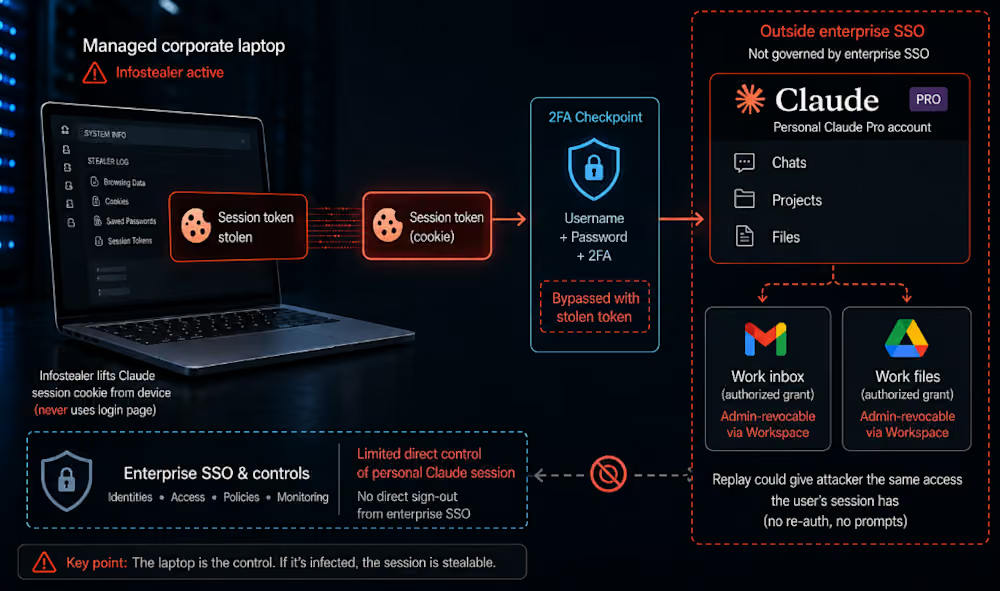
Infostealers replayed stolen Claude session cookies into paid accounts without ever touching the login page two-factor authentication guards.
The accounts Anthropic flagged were card-billed, self-serve accounts, which is the population no corporate identity provider governs, and no admin console can sign out. Session-cookie replay bypasses SSO as thoroughly as it bypasses 2FA. What SSO provides here is revocation and visibility, not prevention. The company disclosed the campaign in notification emails to affected users, named six stealer families, signed the accounts out, stripped the saved payment methods, and refunded the charges it found.
The burned usage is the small loss. What those sessions could reach is the exposure, and none of it sat behind an identity controlled by an enterprise.
Anthropic told affected users that a bad actor was using common infostealer malware to lift Claude login sessions off their computers and then replaying them to burn the accounts’ usage, according to the notification an affected user posted to Reddit and BleepingComputer reported on August 30.
It named Vidar, LummaC2, StealC, RedLine and Acreed on Windows and Atomic Stealer on a small number of Macs, and it described general-purpose malware that copies browser login cookies along with saved passwords. “Your Claude session was likely one of the many things it collected,” the email said.
A session cookie is the proof that a login already happened
The attack chain runs in one direction, from an infected machine through a stolen cookie past a checkpoint that never fires, and into everything the account can reach.

Signing the accounts out worked because a replayed cookie dies with the session it copies.
Two-factor authentication guards the login page. The site then hands the browser a cookie so the user stays signed in, and an attacker who copies that cookie and replays it looks to the server like the person who already passed the check. Help Net Security described the mechanism on August 31 as session theft becoming the new credential theft.
Anthropic spotted the theft in the usage meter. Limits were refilled and drained while the owner was away from Claude, the company wrote.
One Redditor who received the notification traced the infection to a pirated game, per BleepingComputer. That is one machine, and Anthropic has not said what the others ran.
Anthropic’s notification gave no count. The company had not responded by publication to VentureBeat’s questions on how many accounts were affected, whether any Team or Enterprise seats behind SSO were among them, or whether the replayed sessions reached conversation history or connected apps rather than usage alone.
Removing a saved card and refunding charges point to directly billed, self-serve accounts that authenticate through Anthropic’s own login rather than a corporate identity provider. Those include personal subscriptions. Team and self-serve Enterprise organizations can also be card-billed, so the deduction is strong rather than closed.
Bugcrowd CEO Dave Gerry told Axios in early August that his company sent employees nearly a dozen emails saying the OpenClaw agent was not allowed on corporate networks, and employees kept trying to download it anyway. A personal Claude subscription on a managed laptop is the same reflex, and it comes with a card on file. LayerX data in Akamai’s enterprise AI risk report found 47% of enterprise AI conversations run through personal identities, with Claude at 61%.
The pirated game is one vector. In July, attackers hosted a spoofed Claude download page on the claude.ai domain itself through a public Artifact, and a sponsored Bing ad sent employees searching for “Claude Desktop app” straight to it. Huntress documented the campaign, named FakeAgent, after SectopRAT compromised employees at 29 organizations in two days. The artifact collected roughly 7,100 downloads before Anthropic removed it. A separate campaign pushed a fake Claude installer through a spoofed download site earlier in the year, per Malwarebytes. The vector is not piracy. It is enterprise employees searching for the official app on their work machines.
Refunds cover the usage. Nothing covers the connectors
A replayed session inherits everything the legitimate one could reach, and Anthropic has not said whether these did. On a Claude account, that means the conversation history, the files uploaded into projects, and any connectors the owner authorized. Anthropic’s help center states that connectors let Claude retrieve data and take actions inside connected services and that Claude inherits each person’s permissions from the connected service. Read and search operations run without approval. Write actions, including send, reply, forward, share, move, and trash, are approval-gated by default. The exfiltration path is the one that is open. Google Workspace connectors are available to individual Claude accounts, so a personal Pro subscription can hold a live authorization into a Gmail inbox or a Drive folder.
If that inbox is the work inbox, the attacker holding the replayed cookie has a read path into it that the corporate identity provider evaluated once, at the moment the employee clicked allow, and rarely again. On a personal plan, the employee owns that grant. No Claude tenant administrator can sign that account out, and the Workspace or Entra administrator who can pull the underlying grant rarely knows it exists.
Adam Meyers, CrowdStrike’s senior vice president of counter adversary operations, put numbers to the market in an August 6 Axios interview. Criminals have been buying and reselling stolen ChatGPT, Claude and Gemini credentials since ChatGPT took off in late 2022, fed by infostealer malware. CrowdStrike’s 2026 Threat Hunting Report documents one LLMjacking campaign that pushed nearly 200,000 API requests through a compromised cloud account’s AI model access in two minutes.
Meyers drew the line in a July briefing on the report. LLMjacking, in his framing, is stealing the credentials, and cost harvesting is what the buyer does next, manipulating AI resources that belong to the victim “in order to conduct operations and generate massive bills as a byproduct of that,” he said. “So think of this as LLM coin mining.”
One architect refused to build the same exposure into his product
Tom Kleinpeter, co-founder and chief architect at Common Room, described in written answers to VentureBeat why he held his company’s AI agent integrations back through the summer of 2025.
“We rejected local MCP servers early, full stop. That path meant storing a long-lived API key or token on someone’s machine. Steal that credential, and you can impersonate the user, pull their data, or do anything else the token allows, indefinitely, until someone notices and manually revokes it. We weren’t willing to ship that.”
Common Room shipped its first agent integration in October 2025 with Okta’s Auth0 handling authentication, separate read and write scopes, and writes off by default, per Kleinpeter.
An AI coding agent working on Common Room’s own system proposed caching access tokens in plain text in Redis to cut down on repeated authentication calls, he wrote. It worked, and it would have parked live credentials in shared infrastructure had a human reviewer not caught it before it shipped.
Asked what was acceptable in 2024 and a liability now, he named one thing. “Long-lived, broadly scoped API keys. Those made sense when one human operated one trusted system and stayed in the loop. Agents now run across laptops and multiple clients, often with no human watching in real time.”
Okta gave agents governed identities the same week Claude users lost their cookies
Okta made Agent SSO generally available on August 24, registering AI agents as first-class identities in Universal Directory and issuing short-lived, identity-governed tokens in place of stored credentials, according to the company’s announcement. The release names Claude as its example of an agent a security team can now govern natively.
Six days later, Anthropic was signing users out because six stealer families had copied the humans’ Claude cookies. The agents got governed identities. The people using Claude on their own cards did not.
VentureBeat’s July Pulse Research wave on agent security found 63% of 116 enterprises report credential sharing somewhere among their AI agents, and 3% run Okta for AI Agents.
That 3% has a reason, Kayne McGladrey, author of the forthcoming “Cyber Risk is a Myth” and a senior IEEE member, told VentureBeat during a July interview. “It’s only those well-resourced companies that are above the poverty line that have met all the prerequisites,” he said.
The prerequisites he named are the same controls most enterprises still treat as hygiene, not strategic investment.
“If they don’t have their defenses in order, like attack surface management or blast radius containment or basic MFA, that would not be a useful capability or a meaningful spend.”
Anthropic’s position deserves its hearing. The company told users it has no reason to believe the malware is related to Claude, installed through Claude, or tied to anything they did with Claude, and it warned that signing out stops the stolen sessions while leaving the malware in place to steal the next login.
Both hold, and they are the last thing a provider can do, because the infected device belongs to the customer. On a work laptop, the device belongs to the enterprise, and the control that catches Vidar or LummaC2 before it reads a cookie jar is endpoint detection, the control in this story the security team already runs.
The profession’s gap is rarely a missing control anymore, in McGladrey’s framing. “I think we’ve got technical solutions for nearly all of the things that could go wrong, what we don’t have is a way of prioritizing those,” he argued.
The endpoint team owns the machine. The identity team owns an SSO the account never touched, and the AI governance lead wrote a policy the employee routed around the day the card went on file.
Each of those owners is paid to close a different gap. “Engineering is comped on getting product out the door quickly, your internal audit team is comped on checking boxes to meet your compliance goals, and security is comped and sometimes penalized on a lack of incidents,” he argued. “People aren’t doing the wrong thing either. They’re doing what pays their bills on an ongoing basis.”
What security leaders need to do next
Add AI accounts to the infostealer response playbook. When an endpoint alert names a stealer family, treat every AI service session on that machine as compromised, revoke what the enterprise tenant lets you revoke, and have the employee sign out of personal accounts until the machine is clean.
Warn users that the notification itself is now a phishing template. Help Net Security flagged copycat phishing impersonating Anthropic using this campaign as pretext. If the notification lands in a user’s inbox, the next email that looks like it may not be from Anthropic.
Count the personal subscriptions on managed devices. Browser telemetry, CASB logs, and expense reports surface the sessions and the payments.
Stop personal AI accounts from holding OAuth grants into corporate Google Workspace or Microsoft 365. Both platforms let administrators restrict third-party app authorization. Use that gate so a work inbox can only be attached from a tenant the security team can revoke.
Revoke the OAuth grants Claude already holds, not just the Claude session. Signing out of Claude invalidates the stolen session but does not revoke the Google or Microsoft grant Claude was already authorized to use. Check Google’s third-party app authorizations and Microsoft’s enterprise application consents for live grants the sign-out left behind.
Move the heavy users onto the organization-managed tenant. On Team and Enterprise plans, an owner decides whether connectors can be enabled at all.
Put session binding on the renewal agenda. Google shipped Device Bound Session Credentials in Chrome 146 on Windows in April and turned it on by default for Google accounts and Workspace Individual accounts in May, binding each session to a private key in the device’s TPM so a copied cookie cannot be refreshed anywhere else. It covers Chrome on Windows only so far, so the Mac victims in this campaign sit outside it. Ask Anthropic and OpenAI for parity and Google for a coverage date before the next contract signs.
Anthropic sent its notification to individuals. The laptop the cookie came from belongs to whoever manages it, and Vidar and LummaC2 will be back for the next login on the same machine.
Attackers are actively exploiting CVE-2026-9586, an unauthenticated SQL injection vulnerability in the Sangoma Switchvox VoIP platform that can lead to remote code execution.
According to security researchers at Horizon3, most of the internet-exposed Switchvox systems have either already been targeted or will be soon.
Switchvox is an enterprise VoIP management platform used to configure and monitor business phone systems.
CVE-2026-9586 is the most serious of 12 flaws Horizon3 discovered and reported to Sangoma on April 10. The vendor fixed them in Switchvox version 8.4.0.2, released on July 14.
The vulnerability is an unauthenticated SQL injection problem in Sangoma Switchvox’s /pa HTTP endpoint. The researchers explain that the endpoint is exposed and parses an XML message containing specific key-value pairs.
When /pa receives a request to notify another phone system, such as for an incoming or outgoing call event, it extracts the PhoneIP field from the XML message and directly concatenates its value into an unparameterized SQL query.
The researchers demonstrated that this SQL injection can be exploited remotely to execute operating-system commands through a crafted XML request sent using the curl command.
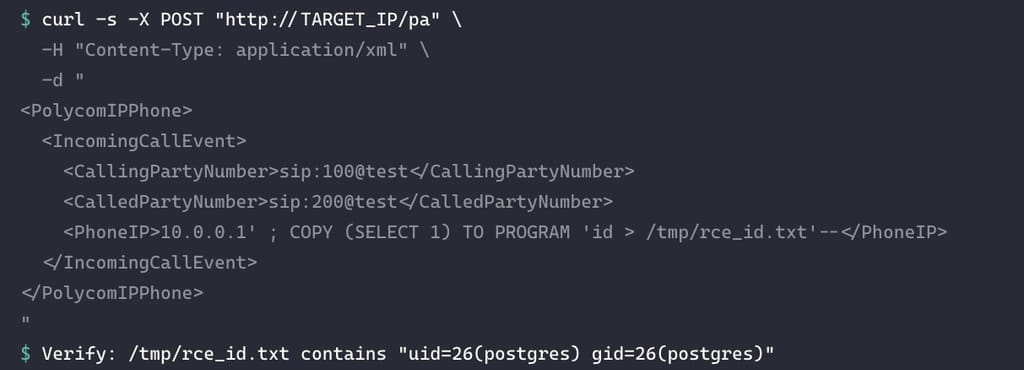
Source: Horizon3
On August 30, Horizon3’s honeypots observed active exploitation on multiple systems in rapid succession from a single source IP address (176.65.148.184), with the attacker attempting to establish a reverse shell.
In these attempts, the attacker executed an initial payload and then collected information about the top processes running on the Swithvox system. The data was then transmitted to a remote server in base64-encoded form.
“Given the quick succession of exploit attempts across multiple honeypots from the same source IP, we believe that it is likely that most internet-exposed Switchvox instances will be or have already been targeted,” Horizon3 warns.
“Currently Shodan shows that there are approximately 4,000 devices on the internet, with most located within the United States.”
Horizon3 says it has not seen active exploitation of the remaining 11 flaws it discovered earlier.
With CVE-2026-9586 being actively exploited, system administrators are recommended to upgrade to Switchvox version 8.4.0.2 or later as soon as possible, and check for signs of having been targeted in the meantime.
Signs of compromise include suspicious statements in /var/log/switchvox/db-quirks.log and network connections to the observed attacker IP, particularly on port 39323.

Overall prevention scores can hide what happens after initial access. Once attackers are using valid credentials, prevention drops sharply.
The Blue Report 2026 measures defenses technique by technique across 338 million simulations run in customer production environments.

As fun as mucking about with simulated environments in a laboratory is, at some point you have to do those field tests to demonstrate that your prototype actually works in the real world, under real conditions. This is what the [Plasma Channel] recently did for their fog harvesting system by setting it up in the Namib desert.
We previously covered the atmospheric water harvesting attempts, using electrostatic precipitation to draw the moisture in the air onto the collectors where it can then be harvested. This is rather different from existing approaches with e.g. fine meshes and hoping that enough water molecules bump into your mesh, so theoretically it should be much more efficient. In the lab it worked well, but reality always has the last word.
The Namib desert is at the top of the world’s most arid regions, competing with the Atacama desert. What it does have going for it is regular fog rolling in that lasts until sunrise, providing a good target for water harvesting. Interestingly, this field test was performed together with the University of Namibia.
Of course, moving the prototype in check-in luggage for the flight to Namibia took some redesigning and testing. Fortunately everything, including the solar panel, arrived intact, allowing trials to commence. This initially took place at the campus of the University of Namibia, joining a number of other atmospheric water harvesting projects that had been previously installed there.
Unfortunately the fog proved to be rather elusive, leading to a few fruitless attempts. It also proved that the salt in the air from the ocean spray, even a few kilometers inland, was highly corrosive, especially to high-voltage electronics. Although the system basically worked, happily harvesting water under the right conditions, it does need some redesign before it’ll be tested next in the Atacama desert.

Some are worried about their employees, while others lament an early closure
More than 50 tenants at the Punggol East Container Park are packing their bags by the end of Oct as the land is returned to the government.
The beloved hangout spot, which houses an eclectic mix of restaurants, bars, sports facilities and even a prawning pond, is operated by social enterprise City Sprouts.
According to Channel News Asia (CNA), tenants were upset by the news, with some worried about their employees and others lamenting an early closure.
The container park will be handed back to the Singapore Land Authority (SLA) upon expiry of its lease on Dec 31, an email from City Sprouts to tenants dated Aug 4 indicated.
“As the site is required to be reinstated and returned to SLA, we will require all tenants to cease operations by Oct 31, 2026 and hand over their respective premises to City Sprouts by this date,” read the email.
City Sprouts said that it was sent an official notice in May to vacate the site and carry out the necessary reinstatement works within the stipulated timeline.
“We were not given specifics by SLA aside from it being part of redevelopment as part of the Singapore Master Plan for the district,” the social enterprise added.
SLA said that the tenancy cannot be extended as the site is required for future residential redevelopment.
“Much more than a place of business”
For City Sprouts, the Punggol site became much more than a commercial space. Over the years, it built relationships with its tenants, farmers, partners, families and the wider community.
“We are heartbroken to leave a place that we have spent so much time and energy building together with everyone who has been part of it. We understand the disappointment and uncertainty this creates for our tenants, and we share that disappointment,” said City Sprouts.
Some businesses have spent years building a loyal customer base at the site.
Kim Kao Mai Thai, for instance, has operated there for nine years, with about 90% of its customers coming from the northeast. Moving elsewhere would mean starting from scratch and rebuilding its customer base.
The sudden closure has also left other tenants worried about their employees and livelihoods.
Smok Hous founder Isrudy Shaik opened his outlet last November, hoping to sign a three-year lease. His biggest concern now is finding a new place while keeping his nine full-time staff.
Tara Na! by Easy Eatz co-founder Nurnisa Jonson has 12 employees, half of whom are foreigners. “How can I find a place within two months? That’s the most stressful days we’ve had,” she said.
City Sprouts has secured a new site at Pasir Ris Park and said farmers and partners from the Punggol community will be given priority to relocate there or to one of its other community greenhouses across Singapore.
Affected F&B operators may also have the option of taking up stalls at City Sprouts’ other locations in the East, after the organisation said it had informed the main operator of the arrangement.
Besides Punggol, City Sprouts operates green spaces in Pasir Ris, Henderson, West Coast and Bedok.
- Read other articles we’ve written on Singaporean businesses here.


Robotaxis are popping up in cities across the United States despite the ongoing controversies surrounding autonomous rideshare services. From interfering with active crime scenes to making dangerous driving decisions, robotaxis continue to raise questions about the safety of autonomous rideshare services. Adding to this concern, there are continued reports of test drivers getting injured while inside Waymo and Zoox autonomous taxis. From 2024 to 2025, at least 24 injuries were reported from sudden, unexpected braking and swerving. This has led to whiplash, sprains, and other injuries, according to data from the Occupational Safety and Health Administration obtained by TechCrunch.
Current Zoox test drivers told TechCrunch that the modified Toyota Highlander SUVs were still braking too hard as of July 2026, causing even more injuries. The hard braking happens at basically any speed when the system incorrectly detects something on the road. One Zoox employee said that sometimes the entire system shuts down, causing extremely abrupt braking even at high speeds.
Waymo test drivers have been injured across San Francisco, Los Angeles, and Phoenix due to the vehicle’s erratic driving behavior. This included a Waymo seemingly backing up out of nowhere, the rapidly moving steering wheel catching the test driver’s hand and bending it until he heard a crack. Another Waymo braked so hard after spotting children in its path that the test driver had to take 175 days off of work. Needing time off for injuries is a trend across the dozens of cases. This comes at a time when a former Tesla employee also came forward about how “dangerous” robotaxi testing has been in Texas, citing a lack of oversight, collisions, and Full Self-Driving software that isn’t ready.
Are Zoox robotaxi rides dangerous?

After hearing about the internal accidents at Zoox, you may be worried about taking a ride in one of their autonomous purpose-built vehicles. Zoox recalled its self-driving cars in 2025 following a National Highway Traffic Safety Administration (NHTSA) investigation into abrupt braking that led to some accidents. Zoox says the software defect addressed by that recall was fixed. The hard braking issue appears to be ongoing during testing, although it’s difficult to know if it’s happening — and how often — during rides with passengers, since Zoox is only reporting employee-related accidents to OSHA.
Zoox claims its autonomous vehicles are safer than human drivers, although no specific data was given. Said Qi Hommes, Zoox’s Vice President, System Design and Mission Assurance: “We calculate the total safety risk. I believe no one else does this — from hardware, software, all the way to operation. We add all the risk up.” (via Axios)
Zoox recalled all of its vehicles in July 2026 after one vehicle got confused by heavy smoke from an emergency fire scene. Zoox is now back on the road, charging for rides in Las Vegas and offering free rides in San Francisco. Testing is ongoing in a handful of cities, including Atlanta, Los Angeles, Seattle, and Washington D.C.
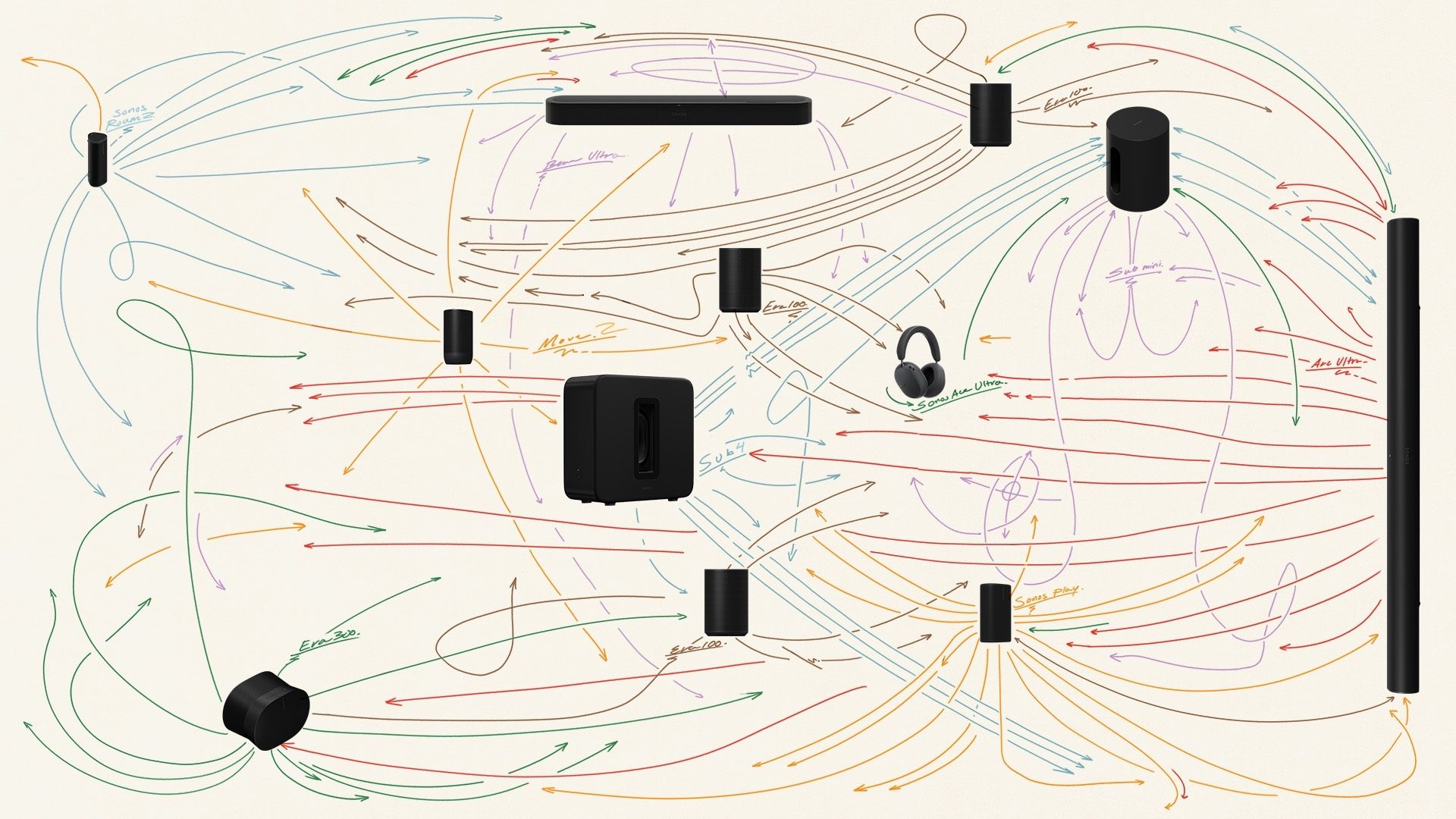
Sonos has introduced Sonos 27, the latest version of its audio operating system, bringing AI-powered controls, new ways to move audio around the home and a redesigned app experience.
The update coincides with the arrival of its latest products in its Ultra series, the Beam Ultra soundbar and Sonos Ace Ultra headphones.
The biggest change with Sonos 27 is its approach to AI. Sonos has opened its system up to multiple AI assistants and agents, with its own Sonos 27 voice assistant designed specifically for music and mood curation, while Sonos 27 MCP allows external AI assistants and agents, including ChatGPT, to connect to a Sonos system.
That means users will be able to ask ChatGPT (or Claude, or Gemini) to play music in their home directly from a phone or computer. With this update, Sonos is also previewing Custom Agents, which will eventually let users create their own agents with a chosen AI model, persona and voice.
The Sonos Fabric system looks to tie all its devices together in ways that weren’t possible previously. One of the first applications is Sonos Positioning Technology, which uses high-frequency sound to determine where a speaker is located and automatically adjust its role within the system.
This new platform also enables a new portable surrounds feature that’s launching for the Move 2 and Sonos Play. Move one of the supported speakers into position and it can automatically become a rear surround, rather than requiring users to manually configure the system.
Sonos is also introducing headphone linking with the new Ace Ultra. The Early Access feature allows audio to move between nearby Sonos speakers and the headphones, making it easier to switch between listening privately and using the wider home setup.
The Sonos 27 app is getting navigation improvements shaped by feedback from the Sonos community, with the app sitting alongside the Sonos 27voice control and Sonos 27web portal as different ways of controlling its audio system.
Alongside the software update, Sonos has announced the Beam Ultra, a compact soundbar with 7.1.2-channel Dolby Atmos, and the Ace Ultra headphones, which are designed for deeper integration with the Sonos ecosystem.
The new app navigation, Sonos 27mcp Early Access and portable surrounds begin rolling out on September 8. Beam Ultra and Ace Ultra are available to pre-order now, with general availability starting September 29.

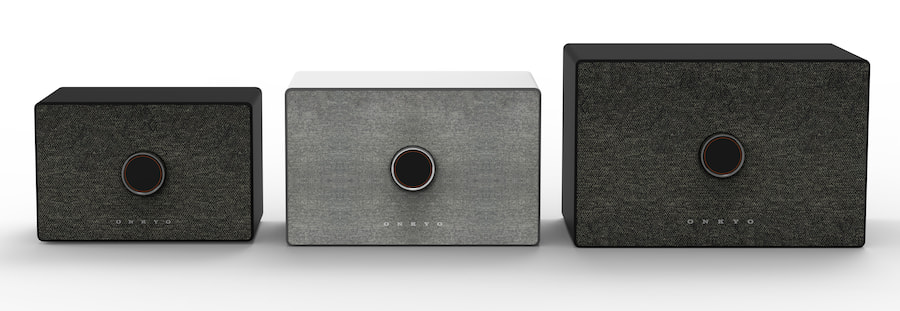
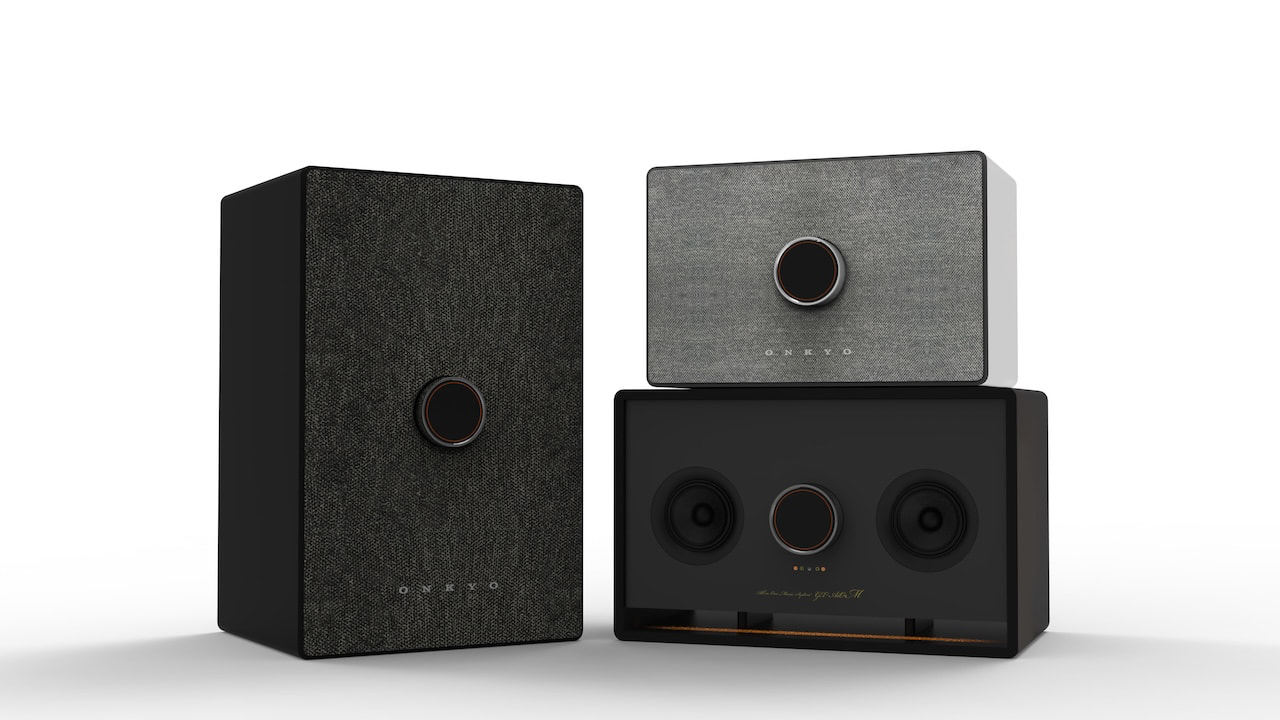
Onkyo is taking its Creator Series off the desktop and into the rest of the house with three new GX-AiO wireless music systems that combine stereo speakers, a dedicated subwoofer and amplification inside a single enclosure.
The Onkyo Creator GX-AiO 50, GX-AiO 100 and GX-AiO 150 (small, medium, and large wireless speakers) start at $399 and offer considerably more flexibility than the average Bluetooth tabletop speaker. HDMI ARC, USB-C, optical digital and a switchable line/phono input allow the GX-AiO to work with televisions, computers, turntables and other sources without requiring an external amplifier or a growing collection of little black boxes.
Onkyo clearly wants these to function as compact stereo systems rather than expensive kitchen speakers that spend their lives streaming playlists from a phone.
Related Reading: Onkyo Marks 80 Years With Muse Streaming Amplifier And Creator Powered Monitors At High End Vienna 2026
Creator Series Moves Beyond the Desktop

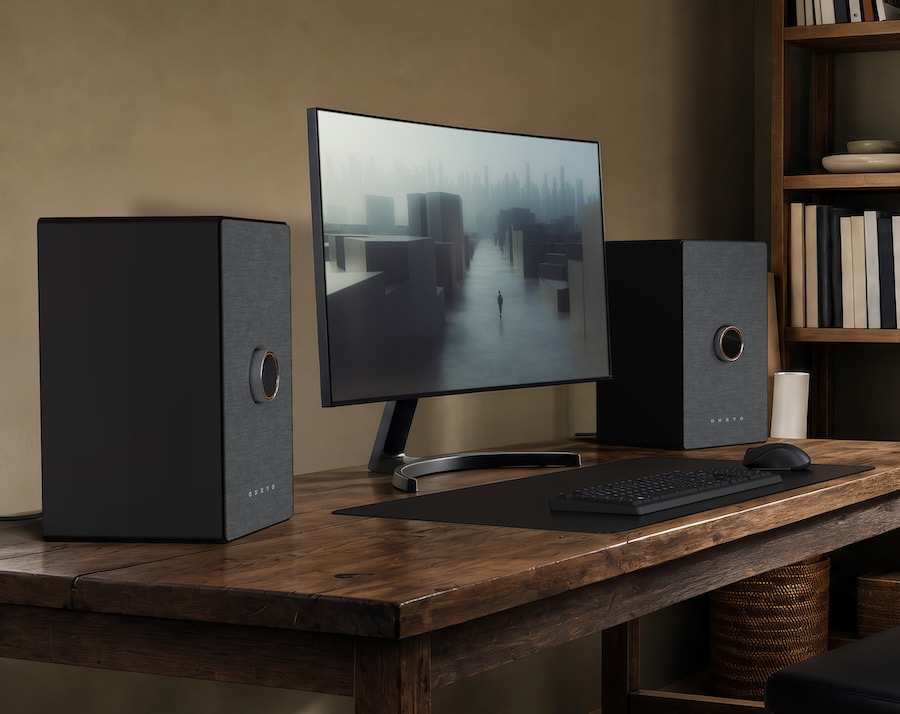
Onkyo introduced the Creator Series with the GX-10DB and GX-30ARC powered speakers, targeting computer users, gamers, content creators and listeners who wanted better sound without giving up half their desk.
The GX-AiO range extends that concept into bedrooms, kitchens, living rooms and other spaces where a conventional pair of speakers might not make sense. Each model uses what Onkyo calls a true 2.1-channel architecture, combining two main drivers with a dedicated, independently amplified subwoofer inside the same cabinet.
That subwoofer is one of the more interesting elements of the design. Instead of asking two compact drivers to handle the entire frequency range, Onkyo gives the lower frequencies their own driver and acoustically optimized enclosure, with the bass-reflex duct incorporated into the illuminated rear slit. Full-digital Class D amplification and DSP handle the signal processing and amplification.
There is, however, a rather significant hole in the launch specifications. Onkyo has not disclosed the individual driver sizes, amplifier output, frequency response, dimensions or weight for the GX-AiO 50, 100 or 150, nor has it explained exactly what changes internally as buyers move from $399 to $499 and then $599.
Those are not insignificant details when three models occupy the same product family, and we will be looking for answers at CEDIA.
HDMI ARC, Phono and USB-C
Connectivity might be the strongest reason to pay attention to the GX-AiO Series. All three models include Bluetooth 5.3, HDMI ARC, USB-C audio and playback, optical digital and a switchable line/phono input, creating enough flexibility for a television, computer, turntable and additional digital source.
The inclusion of a phono input is particularly useful because it eliminates the need for an external phono preamplifier with compatible turntables. HDMI ARC also gives the GX-AiO considerably more television flexibility than many traditional tabletop music systems, without turning the product into a soundbar.
Onkyo specifies support for 32 kHz, 44.1 kHz and 48 kHz sampling rates at 16-bit and 24-bit resolution. The supplied specifications do not indicate support above 24-bit/48 kHz, so anyone expecting 24/96 or 24/192 playback should adjust expectations accordingly.
Also absent from the launch specifications is Wi-Fi. Onkyo does not list AirPlay, Google Cast, Spotify Connect or another integrated network streaming platform, which makes the GX-AiO a very different proposition from the growing number of smart wireless speakers built around an app and streaming ecosystem.
Two Boxes Make a Real Stereo Pair
Onkyo does offer another useful wireless trick. Two GX-AiO systems can be paired using True Wireless Stereo, with one enclosure becoming the dedicated left channel and the other handling the right.
That creates real physical channel separation rather than attempting to manufacture a giant stereo image through DSP from a single cabinet. For listeners who begin with one GX-AiO and eventually want something closer to a conventional stereo system, the upgrade path is already built in.
The math becomes more interesting at the top of the range. Two GX-AiO 150 systems would cost $1,198, which puts the combination against some very capable powered stereo speakers. Convenience is wonderful, but it has never been granted immunity from comparison shopping.
Three Power Modes and Flexible Placement
Each GX-AiO offers Eco, Standard and Max power modes. Eco is intended for lower-volume listening and smaller spaces, Standard covers normal everyday use, and Max provides the greatest available output for larger rooms or gatherings.
All three modes retain the same 30-step volume scale while changing the available output range. The Onkyo Controller app communicates over Bluetooth Low Energy and can be used to select power modes, manage inputs and customize the integrated illumination around the front control ring and bass-duct area.
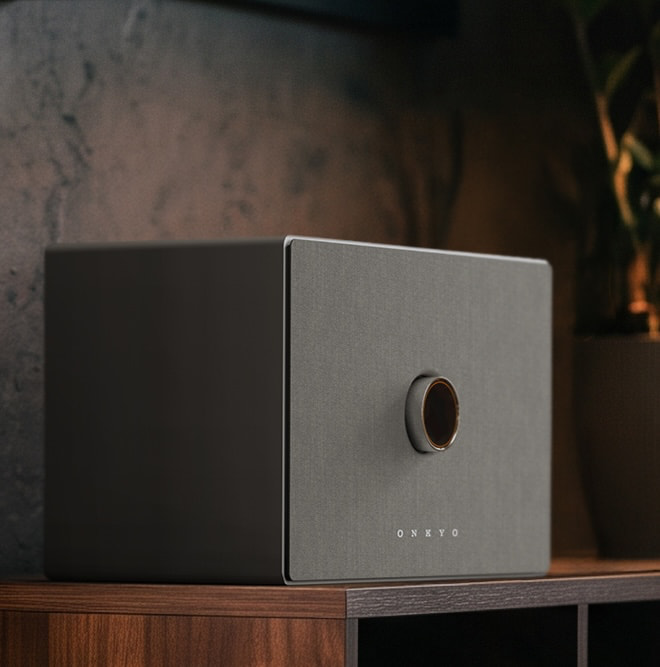
Onkyo also designed the GX-AiO for either vertical or horizontal placement. Magnetic fabric grilles work in both orientations, while black and white smudge-resistant finishes should make the systems relatively easy to integrate without demanding that the entire room be redesigned around them.
Competition
The Klipsch The Three Plus might be the most obvious competitor, and not merely because both brands reside under the same corporate roof. The $399 Klipsch is also a single-cabinet 2.1 system and includes Bluetooth 5.3, USB-C, optical digital and an RCA input with a built-in phono preamp. Its 120-watt amplifier drives two 2.25-inch full-range drivers and a 5.25-inch woofer, although it lacks the Onkyo’s HDMI ARC connection.
The Marshall Woburn III occupies the other end of the GX-AiO pricing range at $599. Marshall combines a 90-watt woofer amplifier with four 15-watt Class D channels and provides Bluetooth, HDMI, RCA and 3.5mm analog inputs. The Onkyo counters with optical digital, USB-C audio and an integrated phono stage, making the GX-AiO potentially more flexible for traditional audio sources.
The JBL Authentics 500 takes a more network-centric approach. Its 270-watt 3.1-channel configuration includes a 6.5-inch subwoofer, Dolby Atmos Music, Wi-Fi, Bluetooth and integrated streaming features. JBL is clearly chasing the smart wireless speaker customer, while Onkyo appears more interested in buyers who still connect televisions, computers and turntables with actual cables. Some of us remain stubborn that way.
The Bottom Line
The Creator GX-AiO Series lands somewhere between a Bluetooth tabletop speaker, powered stereo system and compact TV audio solution, which may be exactly why it makes sense.
HDMI ARC handles the television, the phono input takes care of vinyl, USB-C and optical cover digital sources, and the built-in subwoofer means owners do not immediately need to find room for another box on the floor. The option to add a second GX-AiO and create dedicated wireless left and right channels also gives the platform somewhere to go after the initial purchase.
What remains unanswered is how much performance separates the three models. Onkyo has given us the pricing and shared feature set, but not the individual driver configurations, amplifier output or frequency response that would tell us why somebody should spend $599 instead of $399.
CEDIA seems like a good place to ask.
Price & Availability
The Onkyo Creator GX-AiO 50, GX-AiO 100 and GX-AiO 150 are expected to be available in the United States during Fall 2026 in black and white finishes.
- GX-AiO 50: $399
- GX-AiO 100: $499
- GX-AiO 150: $599
Related Reading:

Crypto World12 seconds ago
US Officials Coordinate With CrowdStrike to Counter Crypto Theft Malware

Entertainment2 minutes ago
You’re Not a True Stephen King Fan Unless You’ve Read These 8 Books

NewsBeat5 minutes ago
Premier League transfer spending spree has made a dog’s dinner of Europe’s old elite | Football





-

 Fashion5 days ago
Weekend Open Thread: Maeve – Corporette.com
-

 Crypto World6 days ago
Bitcoin’s 22% rally now needs real demand to outlast Treasury liquidity boost
-

 Business6 days ago
Apple Confirms September 9 Keynote and Reveals Its Full Pre-Order Schedule
-

 Crypto World7 days ago
Elon Musk Grok Bot Promise: We Will Make You Whole if AI Loses Your Money
-

 Business6 days ago
Salesforce Stock Soars 19% as Blowout Earnings and Agentforce AI Growth Silence Software Skeptics
-

 Business5 days ago
Onto Innovation Stock: AI’s Next Bottleneck Is Yield (NYSE:ONTO)
-

 Crypto World7 days ago
NVIDIA revenue hits $96.2B as AI demand doubles
-

 Crypto World5 days ago
Bitcoin price tests $82K resistance as Brandt stays long
-
 Tech4 days ago
Hugging Face built a $4.5 billion empire on free AI models. Now Nvidia is buying it for $12.9 billion
-

 Business5 days ago
iPhone 18 Pro Pre-Orders Could Shift to Saturday as Apple Reportedly Avoids September 11 Anniversary
-
 Tech7 days ago
Claude Cowork gets its own browser that doesn’t touch your tabs, bookmarks, or saved passwords
-

 Crypto World6 days ago
Truflation calls for Fed rate cut after PCE forecast
-

 News Videos4 days ago
Charlie Munger on Robinhood: No one should believe that Robinhood’s trades are free
-

 Crypto World7 days ago
GENIUS Act missed its deadline as OCC writes rules anyway
-

 Tech5 days ago
PaperCut releases second emergency patch for exploited flaws
-

 Tech6 days ago
The fix for the AI agent that hijacked a company’s DNS: it can propose the change, but it can’t approve it
-
 Entertainment5 days ago
‘Adults’ Creators Break Down Season 2’s Most Shocking Moments and Tease a Potential Season 3
-

 Tech4 days ago
Tamagotchi Ring Takes the 30-Year Digital Pet and Places it on Your Finger
-
 Tech4 days ago
As the influencer economy drives retail sales, Seattle startup raises $22M to play matchmaker
-
 Business7 days ago
AI Assistant Startup Instinct Rockets to $2.5 Billion Valuation in Weeks Amid Investor Feeding Frenzy
You must be logged in to post a comment Login