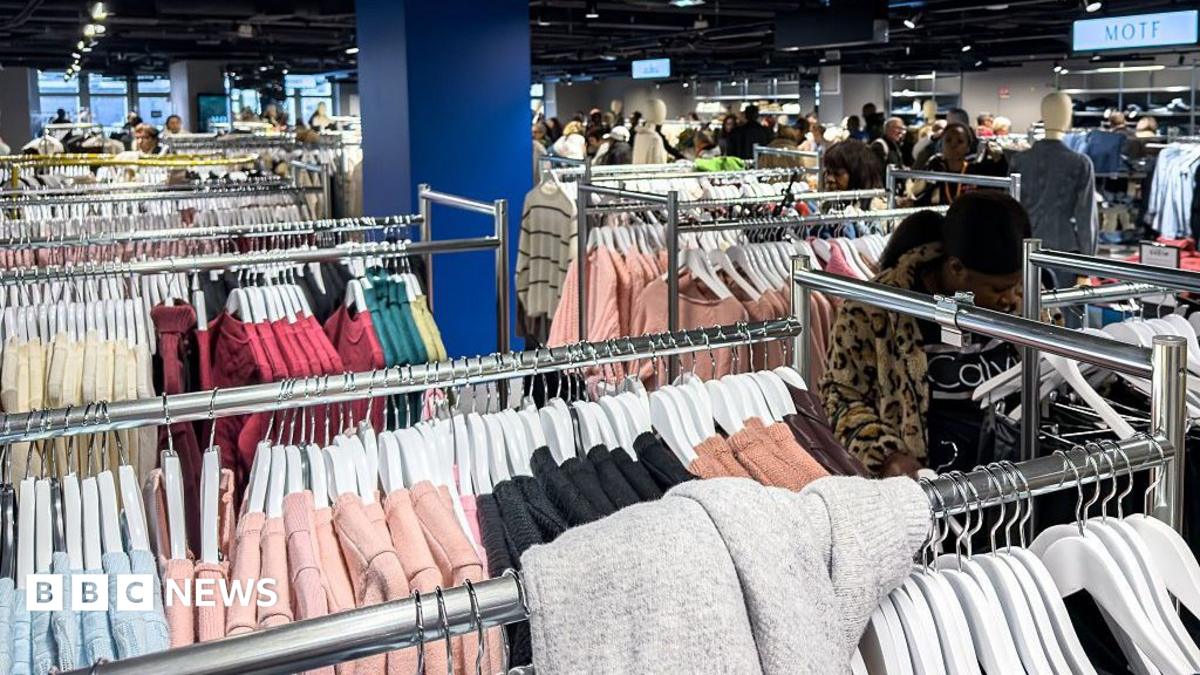
France has started imposing fees on fast fashion items which could reach almost €20 per garment by 2030, as the government tries to curb sales of cheap clothing sold by e-commerce sites.
The levy, which came into force on Tuesday, follows a new law passed in June to regulate so-called “ultra-fast fashion” companies such as Shein, Temu and AliExpress.
The e-commerce giants, known for selling large volumes of cheap apparel, have been criticised by French officials for driving a surge in fast fashion.
China’s commerce ministry has described the French law as discriminatory and a trade barrier, saying it could violate World Trade Organization (WTO) principles.
Advertisement
French minister Mathieu Lefevre said the “harmful effects of ultra-fast fashion” on the environment and economy were “well known”.
In July, Lefevre’s office said the levy would not apply to retailers such as H&M or Zara, prompting some to say that the measure appeared to spare European companies.
Under the legislation, ultra-fast fashion will be determined according to two factors: the volume of clothing placed on the market and the cost of repairing garments relative to their purchase price.
The per-item fee will vary on a set scale according to how each product scores on both these standards.
Advertisement
For 2026, the charges range from a €0.50 (£0.43) levy on underwear to €2 (£1.71) for T-shirts, to €9 (£7.71) for jeans and €12 (£10.28) for a jacket.
The levy could reach up to €19.50 (£16.71/$22.60) per item by 2030, though the cap remains at 50% of the product’s pre-tax price.
Oil prices edged lower on Thursday as investors weighed the uncertainty of renewed military strikes between the U.S. and Iran that risk disrupting supplies from the Middle East.
The latest attacks were the most substantial exchange of fire between the U.S. and Iran since July, with the war now in its seventh month.
Brent and WTI swung between gains of as much as $2 a barrel and losses of $1 a barrel during the previous trading session. The session highs for both benchmarks were the highest since July 24.
Advertisement
Oil prices retreated on tentative signs that the latest flare-up was easing, with no confirmed exchange of fire since around midday on Wednesday, Sydney time, IG analyst Tony Sycamore said in a note.
Live Events
U.S. President Donald Trump said on Wednesday that the renewed U.S. campaign against Iran would not continue for “too long” and that U.S. forces had targeted Iran’s radar and missile systems. “We took out all of the new equipment that they tried to build along the Strait of Hormuz – some defensive, some offensive … It was a very heavy attack last night, and we’re prepared to do another one any time we want,” Trump said.”If that easing holds, and it is a big if, it won’t be long before oil moving out of the Strait via dark-ship transits and ship-to-ship transfers returns to the levels we saw at the end of last week,” Sycamore said.
Four commodity vessels transited the Strait of Hormuz, below the 10-day average of around 13, preliminary shipping data from Kpler showed on Wednesday.
Iran also added more ships to the list of vessels it deems non-compliant and subject to fines, confiscation or detention if they try to sail through the strait.
The U.S. said on Tuesday that 17 million barrels of oil transited the Strait of Hormuz on Monday, calling it the largest volume of crude to pass through the waterway since the U.S.-Israeli war on Iran began.
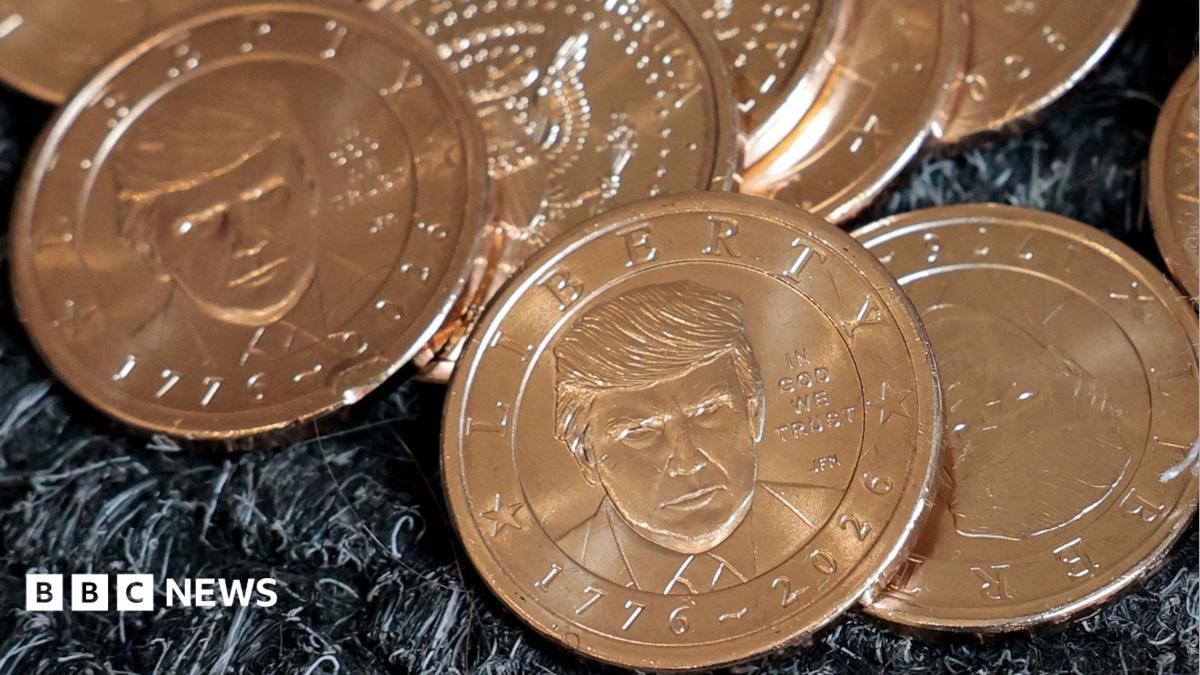
Donald Trump’s portrait has made its way on to a US coin – the first time a living president has appeared on American currency in a century.
The US Mint launched the commemorative $1 coin with a portrait of Trump alongside the words “In God we trust”, to celebrate America’s 250th anniversary.
The special-edition money captures “the spirit, pride, and legacy of a nation approaching its landmark anniversary”, the US Mint said.
The coins – priced at $61 (£45) for a roll of 25 and a bag of 100 for $154.50 – were “not currently in stock” on the US Mint’s website within hours of going on sale. The BBC contacted the US Mint, the Treasury and the White House for details.
Advertisement
The coin has been “created to celebrate this historic national milestone” with a “once-in-a-generation anniversary design destined to become a standout addition to modern collections”, the US Mint said.
Federal law bars the printing of US money with the image of a living person. Trump allies in Congress have introduced legislation that would make an exception, although the proposal is currently stalled.
At the time, Bessent highlighted that another living US president has previously appeared on the country’s currency.
Advertisement
A half-dollar that was issued to commemorate America’s 150th anniversary in 1926 featured then-President Calvin Coolidge.
The Trump administration has also cited the Circulating Collectible Coin Redesign Act of 2020, from Trump’s first term.
While this statute prohibits portraits of living people on the reverse (tails side) of coins, it does not explicitly cover the obverse (heads side), where Trump’s likeness appears on the new $1 coins.
The Thayer Amendment of 1866 bans the portrait of any living person on US notes, although this traditionally does not apply to coins.
Five Below, Inc. (FIVE) Q2 2027 Earnings Call September 2, 2026 4:30 PM EDT
Company Participants
Christiane Pelz – Vice President of Investor Relations Winifred Park – President, CEO & Director Daniel Sullivan – CFO & Treasurer
Advertisement
Conference Call Participants
Randal Konik – Jefferies LLC, Research Division Krisztina Katai – Deutsche Bank AG, Research Division Matthew Boss – JPMorgan Chase & Co, Research Division Robert Ohmes – BofA Securities, Research Division Michael Lasser – UBS Investment Bank, Research Division David Bellinger – Mizuho Securities USA LLC, Research Division Joseph Feldman – Telsey Advisory Group LLC Scot Ciccarelli Charles Grom – Gordon Haskett Research Advisors Jeremy Hamblin – Craig-Hallum Capital Group LLC, Research Division Edward Kelly – Wells Fargo Securities, LLC, Research Division Katharine McShane – Goldman Sachs Group, Inc., Research Division John Heinbockel – Guggenheim Securities, LLC, Research Division Zhihan Ma – Bernstein Institutional Services LLC, Research Division Phillip Blee – William Blair & Company L.L.C., Research Division
Presentation
Advertisement
Operator
Good day, and welcome to the Five Below Second Quarter 2026 Earnings Conference Call. [Operator Instructions] Please note today’s event is being recorded.
I’d now like to turn the conference over to Christiane Pelz, VP, Investor Relations. Please go ahead.
Advertisement
Christiane Pelz Vice President of Investor Relations
Thank you. Good afternoon, everyone, and thanks for joining us today for Five Below’s Second Quarter 2026 Financial Results Conference Call. On today’s call are Winnie Park, Chief Executive Officer; and Dan Sullivan, Chief Financial Officer and Treasurer. After management has made their formal remarks, we will open the call to questions. Certain comments made during this call may constitute forward-looking statements. Such forward-looking statements are subject to risks and uncertainties that could cause actual results to differ materially from such statements, including those described in the press release and our SEC filings.
In this presentation, we will refer to our SG&A expenses, which for us includes depreciation and
Daniel is an avid and active professional investor.
He runs Crude Value Insights, a value-oriented newsletter aimed at analyzing the cash flows and assessing the value of companies in the oil and gas space. His primary focus is on finding businesses that are trading at a significant discount to their intrinsic value by employing a combination of Benjamin Graham’s investment philosophy and a contrarian approach to the market and the securities therein. Learn more.
Analyst’s Disclosure: I/we have no stock, option or similar derivative position in any of the companies mentioned, and no plans to initiate any such positions within the next 72 hours. I wrote this article myself, and it expresses my own opinions. I am not receiving compensation for it (other than from Seeking Alpha). I have no business relationship with any company whose stock is mentioned in this article.
Seeking Alpha’s Disclosure: Past performance is no guarantee of future results. No recommendation or advice is being given as to whether any investment is suitable for a particular investor. Any views or opinions expressed above may not reflect those of Seeking Alpha as a whole. Seeking Alpha is not a licensed securities dealer, broker or US investment adviser or investment bank. Our analysts are third party authors that include both professional investors and individual investors who may not be licensed or certified by any institute or regulatory body.
The U.S. economy’s softer labor market this summer follows stronger employment growth in the spring, according to Vanguard senior economist Adam Schickling.
Companies in the private sector added 38,000 jobs in August, payroll processing firm ADP said in its latest report on Wednesday.
The figure is below economists’ estimates of a gain of 48,000 jobs and down from the prior month’s revised 46,000 payrolls. August’s figure is the lowest since January.
Advertisement
“Pay can tell us a lot about today’s choppy hiring,” said Nela Richardson, ADP’s chief economist. “To understand hiring patterns, you have to look deeply into where pay growth is accelerating, where it’s slowing, and for whom. Once-predictable wage growth has been overtaken by the complexities of demographic change, persistent inflation, and AI’s effects on jobs.”
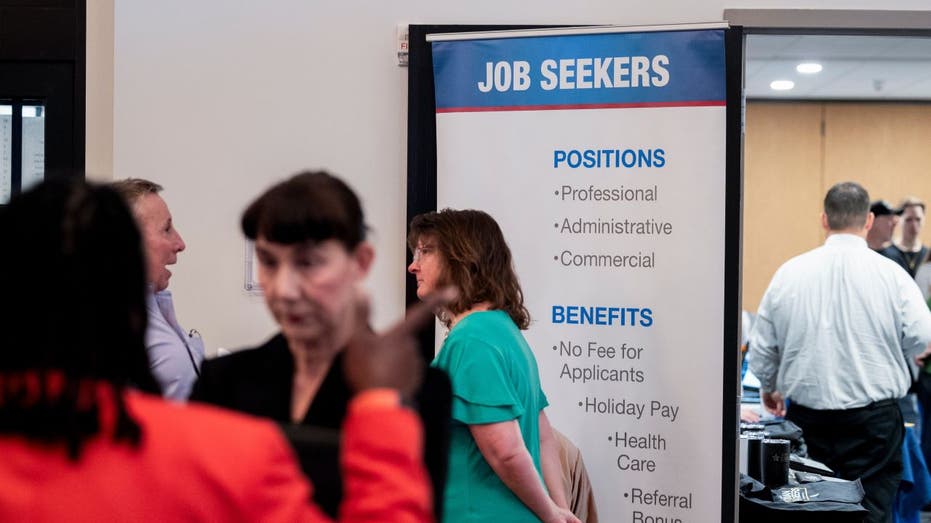
Companies in the private sector added 38,000 jobs in August, ADP said. (Angus Mordant/Bloomberg)
Which industries are hiring the most workers, according to the ADP report?
Education and health services added 45,000 positions, leading job creation in August. Leisure and hospitality added 16,000, and financial activities and other services each gained 6,000.
Large businesses – those with 500 or more employees – gained 34,000 jobs in August. Hiring for businesses with 50 to 499 employees was flat. Establishments with fewer than 50 employees gained 3,000 jobs.
Advertisement
Large businesses – those with 500 or more employees – gained 34,000 jobs in August. (iStock)
People staying in their roles saw their pay climb 4.4% from the prior year, while pay gains for those changing their jobs accelerated to 7.3%.
The ADP data is released before the Labor Department’s nonfarm payrolls report, which is due on Friday morning and can differ notably. The government data is expected to show an increase of 56,000 positions, above the unexpected loss of 23,000 reported in July. The unemployment rate is expected to remain at 4.1%.
NEW YORK — “Dancing with the Stars” unveiled its full season 35 cast on Wednesday, revealing a lineup of 16 celebrities that includes Grammy-nominated musicians, Olympic athletes, television veterans and reality stars, alongside the professional dancers who will guide them through the ballroom this fall.
The full reveal took place live on “Good Morning America,” capping weeks of speculation and a handful of earlier confirmations that had trickled out ahead of Wednesday’s official announcement.
Leading the cast is Taylor Hanson, one-third of the pop-rock band Hanson, who rose to fame alongside his brothers in the early 1990s with the hit single “MMMBop” from their album “Middle of Nowhere.” Hanson will be partnered with pro Britt Stewart.
Advertisement
Also joining the ballroom is Emmy and Golden Globe-nominated actress Julia Stiles, best known for her breakout role in the 1999 teen comedy “10 Things I Hate About You.” Stiles, who has also appeared in “Dexter,” the “Bourne” film franchise, “Hustlers” and “Silver Linings Playbook,” made her feature directorial debut last year with “Wish You Were Here.” She is paired with pro Ezra Sosa.
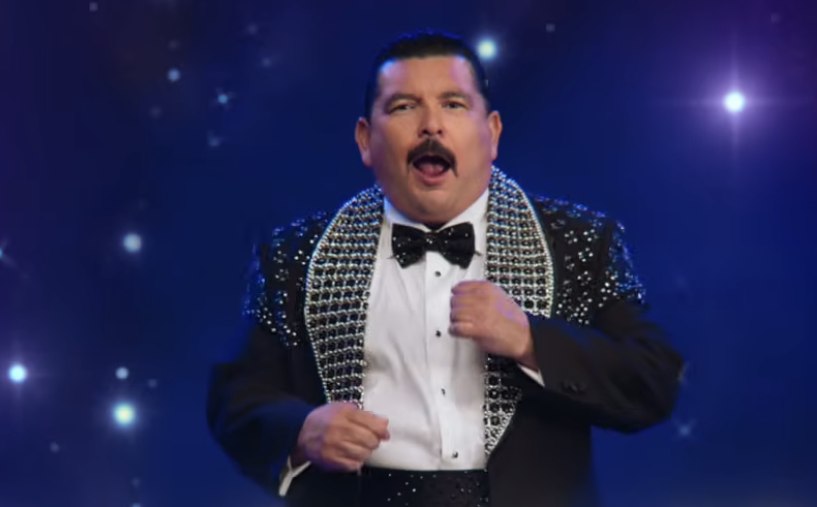
Guillermo Rodriguez, the longtime comedic sidekick to late-night host Jimmy Kimmel, was among the first celebrities confirmed for the season back in June. Rodriguez, who has worked on “Jimmy Kimmel Live!” for more than two decades after being discovered while working as a security guard in the show’s parking lot, will dance with defending champion Witney Carson, who is returning to the competition while pregnant.
Reality television also has a significant presence in this year’s cast. Maura Higgins, who finished as runner-up on the most recent season of “The Traitors” and previously competed on “Love Island,” is paired with pro Mark Ballas. Ciara Miller, known for her role on Bravo’s “Summer House,” will dance with pro Brandon Armstrong. And Conner Leavitt, of “The Secret Lives of Mormon Wives,” will be partnered with rookie pro Adele Zaikman, who recently won the show’s spinoff competition series, “Dancing with the Stars: The Next Pro.”
Rounding out the reality and entertainment contingent is Savannah Bananas baseball star Jackson Olson, who rose to prominence with the exhibition barnstorming team known for blending baseball with dance routines and comedy. Olson is partnered with pro Emma Slater.
Advertisement
The cast also features two performers with extensive professional dance backgrounds. Jenna Dewan, known for her roles in “The Rookie” and the “Step Up” film franchise, began her career as a backup dancer for Janet Jackson and has since hosted “World of Dance” and “Flirty Dancing.” She will compete alongside pro Val Chmerkovskiy. Harry Shum Jr., known for his roles in “Glee” and “Grey’s Anatomy,” previously performed as a backup dancer for artists including Beyoncé, Alicia Keys and Mariah Carey. He is paired with pro Jenna Johnson.
Sports fans will recognize several new additions to the cast as well. “The Bachelorette” alum Tyler Cameron will compete with pro Sharna Burgess, who is returning to the ballroom for the first time since 2011 after a lengthy hiatus from the show. Olympic figure skater Amber Glenn is partnered with pro Pasha Pashkov, while Paralympian Ezra Frech will dance alongside pro Daniella Karagach. Comedian and podcaster Connor Wood rounds out the athletic and comedic mix, paired with pro Rylee Arnold.
Celebrity chef and Food Network host Giada De Laurentiis will also compete this season, partnered with pro Alan Bersten, while “The Fresh Prince of Bel-Air” alum Tatyana Ali is paired with pro Jan Ravnik.
Among the season’s most notable pairings is Sarah Jane Nader, known for appearing on Freeform’s “Love Thy Nader” alongside her sisters, including former “DWTS” competitor Brooks Nader. Sarah Jane Nader will be partnered with Hailey Bills, a former “Dancing” troupe member who has been promoted to full professional status for the new season. Their partnership marks the third same-sex pairing in the show’s history.
Advertisement
Bills’ promotion to pro status is not the only shakeup on the professional dancer side this season. Adele Zaikman also joins the professional roster for the first time after winning “Dancing with the Stars: The Next Pro” earlier this summer, while Mark Ballas returns after previously serving as a judge on that same spinoff series.
Carrie Ann Inaba, Bruno Tonioli and Derek Hough will return as the show’s judging panel for season 35, while Alfonso Ribeiro and Julianne Hough will once again serve as co-hosts. Speaking ahead of Wednesday’s reveal, Ribeiro described what continues to draw audiences back to the long-running competition series each season.
Ribeiro said the “magic” of the show lies in the thoughtful pairings between celebrities and professional dancers, a dynamic he said remains at the heart of the series even as its cast composition shifts year to year.
Julianne Hough, meanwhile, teased a particular theme night she is especially looking forward to this season.
Advertisement
“The fashion is going to be really fun with one specific theme night,” Hough said. “For me at least, I’m very excited.”
Season 35 will kick off with a two-night premiere on Tuesday, Sept. 15, and Wednesday, Sept. 16, airing at 8 p.m. ET on ABC and Disney+, with episodes streaming the following day on Hulu. The premiere will also introduce a new live companion special, “DWTS After Party,” hosted by season 34 winner Robert Irwin, which will air following the Sept. 16 episode. The special will feature check-ins with eliminated contestants and a look back at standout moments from the night, alongside appearances from past “DWTS” competitors.
This season marks another milestone for the franchise as it continues to draw from an increasingly wide range of celebrity backgrounds, from professional athletes and Olympians to musicians, chefs and television personalities, reflecting the show’s long-running strategy of pairing broad name recognition with the physical and emotional demands of live competitive ballroom dancing.
Fans eager to follow the season’s early frontrunners and underdogs will have their first opportunity to see the full cast perform when the two-night premiere begins airing later this month.
With combined experience of covering technology companies on Wall Street and working in Silicon Valley, and serving as an outside adviser to several seed-round startups, Gary Alexander has exposure to many of the themes shaping the industry today. He has been a regular contributor on Seeking Alpha since 2017. He has been quoted in many web publications and his articles are syndicated to company pages in popular trading apps like Robinhood.
Analyst’s Disclosure: I/we have a beneficial long position in the shares of CRM either through stock ownership, options, or other derivatives. I wrote this article myself, and it expresses my own opinions. I am not receiving compensation for it (other than from Seeking Alpha). I have no business relationship with any company whose stock is mentioned in this article.
Seeking Alpha’s Disclosure: Past performance is no guarantee of future results. No recommendation or advice is being given as to whether any investment is suitable for a particular investor. Any views or opinions expressed above may not reflect those of Seeking Alpha as a whole. Seeking Alpha is not a licensed securities dealer, broker or US investment adviser or investment bank. Our analysts are third party authors that include both professional investors and individual investors who may not be licensed or certified by any institute or regulatory body.
Mumbai: The Indian rupee on Wednesday negotiated leaping oil prices and an unprecedented yield spike across the globe to remain above 95 to a dollar for the second day running, with traders attributing the local unit’s standout performance to aggressive dollar sales by the central bank.
The rupee closed at 94.97, versus its previous close of 94.95, and traded in a narrow range of 94.89 and 94.98. Its showing stood in sharp relief to a fresh bout of volatility in equities, where the Nifty slumped below the 24,000 mark at close for the first time in six weeks. State run banks, on behalf of the RBI, were likely selling dollars at weaker levels to contain further depreciation past the 95 per dollar mark, traders said.























































You must be logged in to post a comment Login