Connect with us

Business

Full List Of 16 Celebrities And Their Pro Partners

Published

on

LeBron James

NEW YORK — “Dancing with the Stars” unveiled its full season 35 cast on Wednesday, revealing a lineup of 16 celebrities that includes Grammy-nominated musicians, Olympic athletes, television veterans and reality stars, alongside the professional dancers who will guide them through the ballroom this fall.

The full reveal took place live on “Good Morning America,” capping weeks of speculation and a handful of earlier confirmations that had trickled out ahead of Wednesday’s official announcement.

Leading the cast is Taylor Hanson, one-third of the pop-rock band Hanson, who rose to fame alongside his brothers in the early 1990s with the hit single “MMMBop” from their album “Middle of Nowhere.” Hanson will be partnered with pro Britt Stewart.

Advertisement

Also joining the ballroom is Emmy and Golden Globe-nominated actress Julia Stiles, best known for her breakout role in the 1999 teen comedy “10 Things I Hate About You.” Stiles, who has also appeared in “Dexter,” the “Bourne” film franchise, “Hustlers” and “Silver Linings Playbook,” made her feature directorial debut last year with “Wish You Were Here.” She is paired with pro Ezra Sosa.

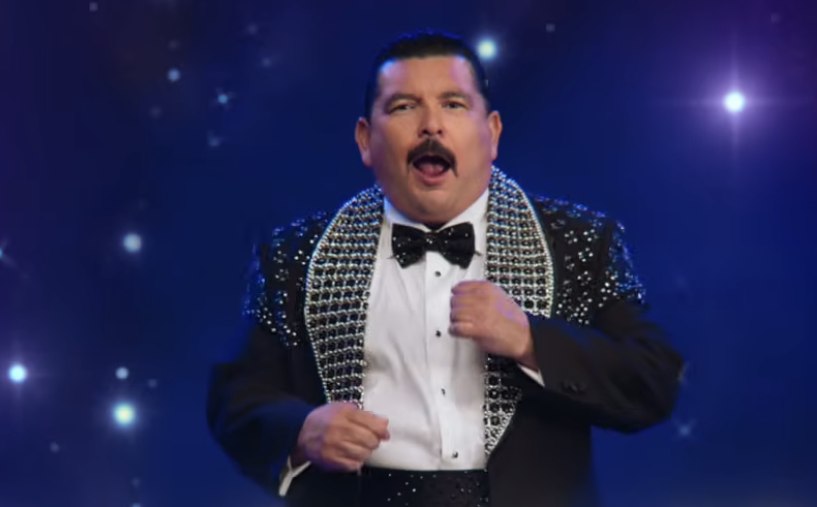
Guillermo Rodriguez, the longtime comedic sidekick to late-night host Jimmy Kimmel, was among the first celebrities confirmed for the season back in June. Rodriguez, who has worked on “Jimmy Kimmel Live!” for more than two decades after being discovered while working as a security guard in the show’s parking lot, will dance with defending champion Witney Carson, who is returning to the competition while pregnant.

Reality television also has a significant presence in this year’s cast. Maura Higgins, who finished as runner-up on the most recent season of “The Traitors” and previously competed on “Love Island,” is paired with pro Mark Ballas. Ciara Miller, known for her role on Bravo’s “Summer House,” will dance with pro Brandon Armstrong. And Conner Leavitt, of “The Secret Lives of Mormon Wives,” will be partnered with rookie pro Adele Zaikman, who recently won the show’s spinoff competition series, “Dancing with the Stars: The Next Pro.”

Rounding out the reality and entertainment contingent is Savannah Bananas baseball star Jackson Olson, who rose to prominence with the exhibition barnstorming team known for blending baseball with dance routines and comedy. Olson is partnered with pro Emma Slater.

Advertisement

The cast also features two performers with extensive professional dance backgrounds. Jenna Dewan, known for her roles in “The Rookie” and the “Step Up” film franchise, began her career as a backup dancer for Janet Jackson and has since hosted “World of Dance” and “Flirty Dancing.” She will compete alongside pro Val Chmerkovskiy. Harry Shum Jr., known for his roles in “Glee” and “Grey’s Anatomy,” previously performed as a backup dancer for artists including Beyoncé, Alicia Keys and Mariah Carey. He is paired with pro Jenna Johnson.

Sports fans will recognize several new additions to the cast as well. “The Bachelorette” alum Tyler Cameron will compete with pro Sharna Burgess, who is returning to the ballroom for the first time since 2011 after a lengthy hiatus from the show. Olympic figure skater Amber Glenn is partnered with pro Pasha Pashkov, while Paralympian Ezra Frech will dance alongside pro Daniella Karagach. Comedian and podcaster Connor Wood rounds out the athletic and comedic mix, paired with pro Rylee Arnold.

Celebrity chef and Food Network host Giada De Laurentiis will also compete this season, partnered with pro Alan Bersten, while “The Fresh Prince of Bel-Air” alum Tatyana Ali is paired with pro Jan Ravnik.

Among the season’s most notable pairings is Sarah Jane Nader, known for appearing on Freeform’s “Love Thy Nader” alongside her sisters, including former “DWTS” competitor Brooks Nader. Sarah Jane Nader will be partnered with Hailey Bills, a former “Dancing” troupe member who has been promoted to full professional status for the new season. Their partnership marks the third same-sex pairing in the show’s history.

Advertisement

Bills’ promotion to pro status is not the only shakeup on the professional dancer side this season. Adele Zaikman also joins the professional roster for the first time after winning “Dancing with the Stars: The Next Pro” earlier this summer, while Mark Ballas returns after previously serving as a judge on that same spinoff series.

Carrie Ann Inaba, Bruno Tonioli and Derek Hough will return as the show’s judging panel for season 35, while Alfonso Ribeiro and Julianne Hough will once again serve as co-hosts. Speaking ahead of Wednesday’s reveal, Ribeiro described what continues to draw audiences back to the long-running competition series each season.

Ribeiro said the “magic” of the show lies in the thoughtful pairings between celebrities and professional dancers, a dynamic he said remains at the heart of the series even as its cast composition shifts year to year.

Julianne Hough, meanwhile, teased a particular theme night she is especially looking forward to this season.

Advertisement

“The fashion is going to be really fun with one specific theme night,” Hough said. “For me at least, I’m very excited.”

Season 35 will kick off with a two-night premiere on Tuesday, Sept. 15, and Wednesday, Sept. 16, airing at 8 p.m. ET on ABC and Disney+, with episodes streaming the following day on Hulu. The premiere will also introduce a new live companion special, “DWTS After Party,” hosted by season 34 winner Robert Irwin, which will air following the Sept. 16 episode. The special will feature check-ins with eliminated contestants and a look back at standout moments from the night, alongside appearances from past “DWTS” competitors.

This season marks another milestone for the franchise as it continues to draw from an increasingly wide range of celebrity backgrounds, from professional athletes and Olympians to musicians, chefs and television personalities, reflecting the show’s long-running strategy of pairing broad name recognition with the physical and emotional demands of live competitive ballroom dancing.

Fans eager to follow the season’s early frontrunners and underdogs will have their first opportunity to see the full cast perform when the two-night premiere begins airing later this month.

Advertisement
Continue Reading
Click to comment

You must be logged in to post a comment Login

Leave a Reply

Business

Ricegrowers Limited (SGLLF) Shareholder/Analyst Call – Slideshow

Published

on

OneWater Marine Inc. (ONEW) Q1 2026 Earnings Call Transcript

Ricegrowers Limited (SGLLF) Shareholder/Analyst Call – Slideshow

Continue Reading

Business

Judge Rules Charlie Kirk Assassination Suspect Tyler Robinson Must Face Death Penalty Trial: 8 Takeaways

Published

on

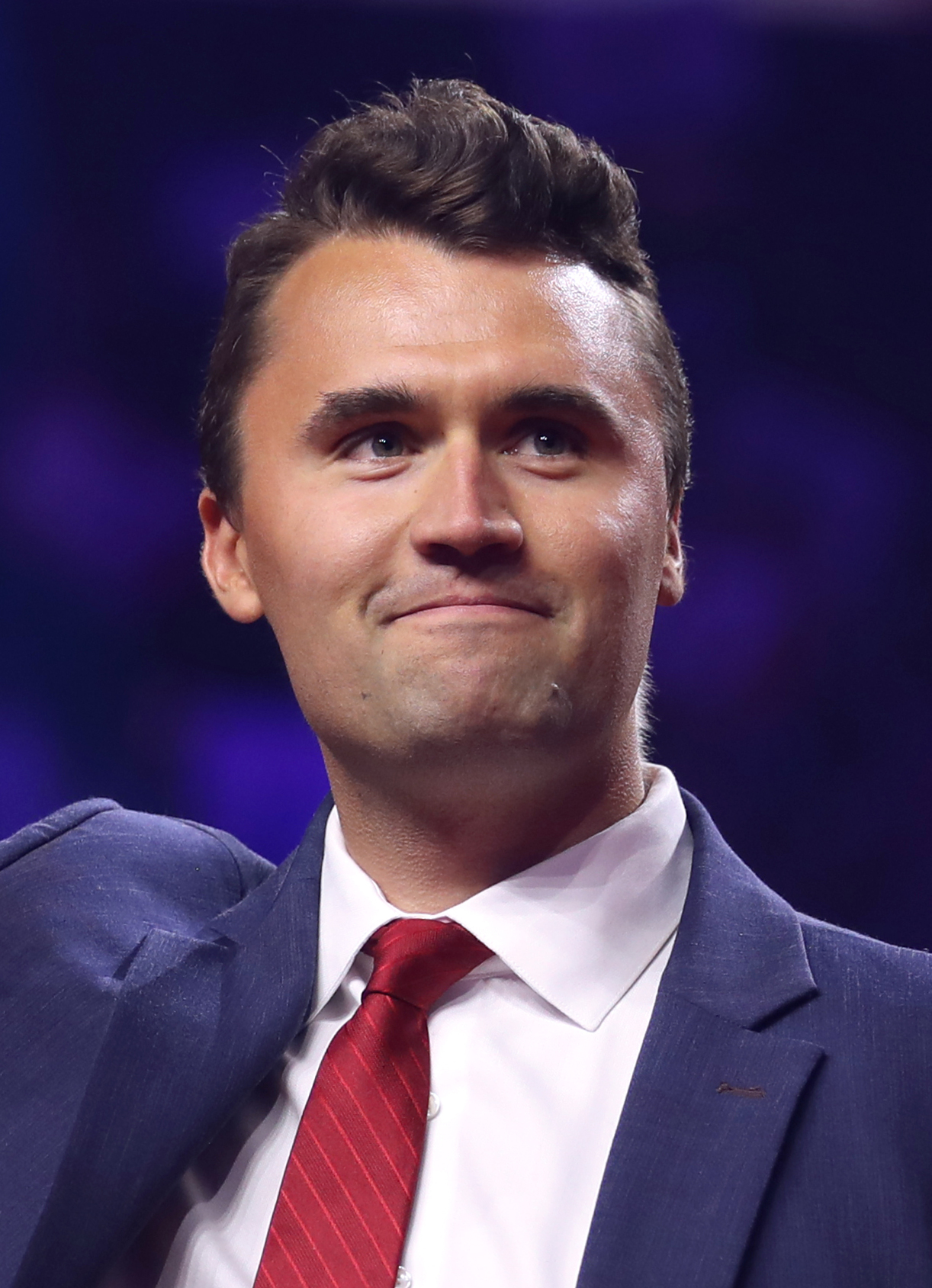
Charlie Kirk

PROVO, Utah — A Utah judge ruled Tuesday that Tyler Robinson must stand trial on all charges in the killing of conservative activist Charlie Kirk, keeping the death penalty on the table after prosecutors said they had assembled “a mountain of evidence” tying the 23-year-old defendant to the September 2025 campus shooting.

Fourth District Judge Tony Graf found probable cause on seven counts, including aggravated murder, after a day of closing arguments that followed a five-day preliminary hearing in July. Robinson, through counsel, entered not guilty pleas at a brief arraignment that followed the ruling. Prosecutors have said they intend to seek a death sentence if he is convicted.

Kirk, 31, the founder of Turning Point USA and a prominent ally of President Donald Trump, was shot once in the neck on Sept. 10, 2025, while speaking to a crowd of about 3,000 people at an open-air event at Utah Valley University in Orem. Investigators say the shot was fired from a rooftop more than 400 feet away. Robinson turned himself in the next day.

Kirk’s widow, Erika Kirk, and his parents, Robert and Kathryn Kirk, sat in the courtroom as Graf delivered the decision. Robinson’s mother also attended. The next hearing is set for Oct. 23, when the court is expected to schedule a trial date.

Advertisement

Here are eight takeaways from the proceedings.

1. The judge sent every count to trial and left capital punishment available.

Graf bound Robinson over on aggravated murder, felony discharge of a firearm causing serious bodily injury, two counts of obstruction of justice, two counts of witness tampering, and a misdemeanor count of committing a violent offense in the presence of a child.

The defense had asked the judge to reject the aggravating factor that makes the murder charge a capital offense: the allegation that firing into a crowded event created a great risk of death to people besides Kirk. Defense attorney Staci Visser argued prosecutors were trying to “shoehorn” the case into Utah’s aggravated-murder statute.

Advertisement

“There is one shot. There is one bullet. There is one victim,” Visser said. “There is zero evidence that there was any action taken towards other people.”

Graf disagreed. He said the positions of people in and around a tent where Kirk was speaking supported a reasonable inference that the shooter would have known others were nearby. Prosecutors said the shot was taken from about 415 feet and that a small movement of the barrel could have struck someone else.

2. Robinson entered not guilty pleas after nearly a year without a formal answer.

Robinson had not entered pleas before Tuesday because Utah uses the preliminary hearing to test whether charges should proceed. After Graf’s ruling, his attorneys waived a formal reading of the charges and entered not guilty pleas on all counts. Robinson showed no visible reaction, according to courtroom observers.

Advertisement

3. Prosecutors built their identity case around campus video.

Deputy Utah County Attorney Ryan McBride told the court the state could prove Robinson was the shooter through four categories of evidence: video, DNA, admissions and circumstantial proof of motive, means and opportunity.

Investigators testified that surveillance footage showed Robinson on campus four times on the day of the shooting. Prosecutors said he scouted vantage points in casual clothes, bought food, later returned in darker clothing that they argued was meant to conceal a rifle, reassembled the weapon on a rooftop and fired from a prone position.

One video, shown during the July hearing, depicted a figure on the roof at the moment of the shot. An investigator identified that person as Robinson. Graf flinched when a shooting video was played earlier in the hearing, according to contemporaneous reporting from the courtroom.

Advertisement

4. DNA testimony linked Robinson to the rifle, but the defense attacked the science.

Authorities said a bolt-action rifle, wrapped in a towel and discarded in a wooded area near campus, was the murder weapon. Forensic witnesses testified that DNA consistent with Robinson’s profile was found on the rifle — including the trigger, grip, stock and scope — as well as on cartridge cases.

An analyst told the court that testing on the rifle was at least “1 trillion times more likely” to support including Robinson as a contributor than excluding him. Defense lawyers called their own forensic witnesses and questioned laboratory methods, mixture interpretation and whether other contributors, including Robinson’s former roommate, complicated the results.

The rifle still contained unfired rounds, prosecutors said. Chad Grunander, another prosecutor, argued that showed Robinson “came prepared to shoot again.”

Advertisement

5. The state relied on a note, text messages and a roommate’s recorded interview.

Prosecutors say Robinson left a note for Lance Twiggs, his former roommate and romantic partner. In court, they described the note as saying he had the opportunity to “take out Charlie Kirk” and took it. McBride also read from a letter attributed to Robinson that included the line, “I went on a mission to take out Charlie Kirk.”

Charging documents and hearing testimony described text messages in which Robinson allegedly wrote that he had “enough of his hatred” and that “some hate can’t be negotiated out.” When Twiggs asked whether he had shot Kirk, Robinson allegedly replied, “I am, I’m sorry.”

The court played a recorded law-enforcement interview with Twiggs. In it, Twiggs said Robinson was “crying a little bit” the day after the shooting and said “he wishes he hadn’t done it.” Twiggs was granted immunity for his statements. Defense lawyers argued some messages could be read as personal rather than as proof of a plan to obstruct justice.

Advertisement

6. Motive remains a central fight and could affect sentencing enhancements.

Prosecutors say Robinson targeted Kirk because he disagreed with him, pointing to Kirk’s public positions on gay marriage and transgender issues and to inscriptions on cartridges, including one prosecutors described as “Hey Facist! CATCH!” McBride put the theory bluntly in closing:

“Tyler James Robinson shot and killed Charlie Kirk because he disagreed with him, and he did it by firing a high-powered rifle into a crowd of over 3,000 people, which created a great risk of death that anyone would know about.”

Defense attorney Richard Novak said there was little direct evidence of what Robinson thought about Kirk. He argued that inferences about political or sexual motive were “inflammatory” and that Kirk had spoken harshly about people outside traditional gender and sexual norms. The judge’s bindover decision does not resolve motive; that question would be tried to a jury, along with any victim-targeting enhancement.

Advertisement

7. The defense did not offer another shooter. It tried to shrink the case.

Robinson’s lawyers have not presented an alternative theory of who killed Kirk. Their strategy at this stage was narrower: raise doubts about forensic reliability, limit what the public and future jurors hear, and knock the case down from capital murder to ordinary murder, which in Utah carries 15 years to life.

They also spent months fighting cameras and pretrial publicity. In June, Graf held prosecutor Christopher Ballard in civil contempt for saying publicly that the state had “ample evidence” of guilt, a remark the judge found risked prejudicing the jury pool. Graf refused to take the death penalty off the table as a sanction and instead said he would consider expanded jury-selection procedures.

8. The Kirk family wants speed. The calendar still points to October.

Advertisement

Prosecutors said they could try the case immediately. “The state would take this case to trial tomorrow if we could,” Grunander said. “It’s been 356 days since Tyler Robinson assassinated Charlie Kirk.”

Kirk family attorney Jeffrey Neiman pressed the court not to slow-walk the next phase. “The United States Constitution guarantees defendants many rights. The right to delay is not among them,” he said. “The defendant is entitled to a fair trial, and he must be given one, but nothing more is owed.”

After the ruling, the family said the decision was “an important step in our family’s pursuit of justice.”

“Every step in this process carries the weight of all that Charlie’s murder has taken from his family, especially his children who will grow up without their father,” the statement said. The family asked for a “transparent and timely process.”

Advertisement

Graf set a pretrial conference for 1 p.m. on Oct. 23. A trial date is expected to be discussed then. Until a jury is seated, the case remains what the preliminary hearing was designed to be: a probable-cause test, not a verdict. Prosecutors say the evidence already shown is enough to convict. The defense says identity, motive and the capital aggravator still have to be proven beyond a reasonable doubt. That fight now moves from a judge’s courtroom in Provo to a full trial.

Continue Reading

Business

Beacon manager handed insider trading sentence

Published

on

Beacon manager handed insider trading sentence

Former Beacon Minerals project manager Alex McCulloch has been handed a 12-month jail term for insider trading but is unlikely to serve time behind bars.

Continue Reading

Business

Oil edges down as investors weigh uncertainty over U.S.-Iran strikes

Published

on

Oil edges down as investors weigh uncertainty over U.S.-Iran strikes
Oil prices edged lower on Thursday as investors weighed the uncertainty of renewed military strikes between the U.S. and Iran that risk disrupting supplies from the Middle East.

Brent crude futures fell 43 cents, or 0.45%, to $95.2 a barrel at 0029 GMT, while U.S. West Texas Intermediate crude futures were down 24 cents, or 0.26%, at $90.77.

The ‌latest attacks ⁠were the ⁠most substantial exchange of fire between the U.S. and Iran since July, with the war now in ​its seventh month.

Brent and WTI swung between gains of as much as $2 a barrel and losses ​of $1 a barrel during the previous trading session. The session highs for both benchmarks were the highest since July 24.

Advertisement

Oil prices retreated on tentative signs that the ​latest flare-up was easing, with no confirmed exchange of ⁠fire since ‌around midday on Wednesday, Sydney time, IG analyst Tony Sycamore said ​in a ​note.


U.S. President Donald Trump said on Wednesday that the renewed U.S. ⁠campaign against Iran would not continue for “too long” and that ​U.S. forces had targeted Iran’s radar and missile systems.
“We took out all of the new equipment that they tried to build along the Strait of Hormuz – some defensive, some offensive … It was a very heavy attack last night, and we’re prepared to do another one any time we want,” Trump said.”If that easing holds, and it is a big if, it won’t be long ‌before oil moving out of the Strait via dark-ship transits and ship-to-ship transfers returns to the levels we saw at the end of ​last week,” ​Sycamore said.

Four commodity vessels ⁠transited the Strait of Hormuz, below the 10-day average of around 13, preliminary shipping data from Kpler showed on Wednesday.

Iran also added more ships to the list of vessels ​it deems non-compliant and subject to fines, confiscation or detention if they try to sail through the strait.

The U.S. said on Tuesday that 17 million barrels of oil transited the Strait of Hormuz on Monday, calling it the largest volume of crude to pass through the waterway since the U.S.-Israeli war on Iran began.

Advertisement
Continue Reading

Business

Australia trade surplus beats forecasts in July despite weaker exports

Published

on


Australia trade surplus beats forecasts in July despite weaker exports

Continue Reading

Business

Trump $1 coin makes him first president on US currency in a century

Published

on

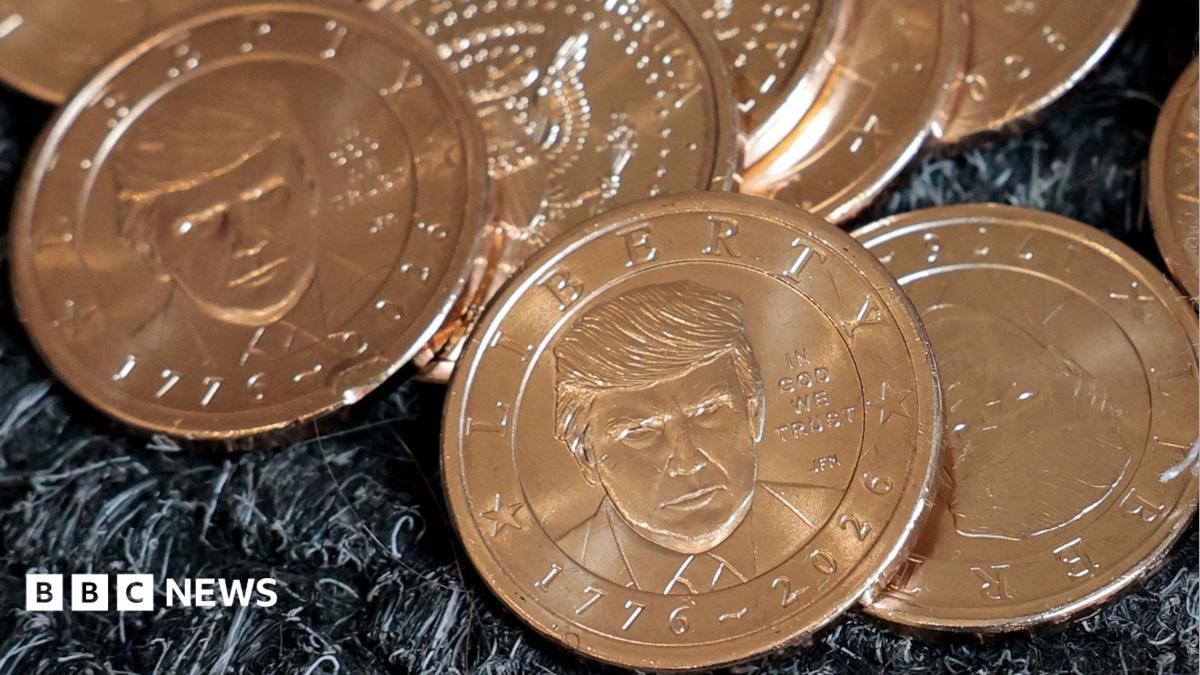
U.S. President Donald Trump's portrait on $1 coins, in honor of the nation's 250th anniversary of independence, on the day the coin is released for sale.

Donald Trump’s portrait has made its way on to a US coin – the first time a living president has appeared on American currency in a century.

The US Mint launched the commemorative $1 coin with a portrait of Trump alongside the words “In God we trust”, to celebrate America’s 250th anniversary.

The special-edition money captures “the spirit, pride, and legacy of a nation approaching its landmark anniversary”, the US Mint said.

The coins – priced at $61 (£45) for a roll of 25 and a bag of 100 for $154.50 – were “not currently in stock” on the US Mint’s website within hours of going on sale. The BBC contacted the US Mint, the Treasury and the White House for details.

Advertisement

The coin has been “created to celebrate this historic national milestone” with a “once-in-a-generation anniversary design destined to become a standout addition to modern collections”, the US Mint said.

Back in May, Treasury Secretary Scott Bessent also said his department was planning to issue a new $250 bill bearing a portrait of the president.

Federal law bars the printing of US money with the image of a living person. Trump allies in Congress have introduced legislation that would make an exception, although the proposal is currently stalled.

At the time, Bessent highlighted that another living US president has previously appeared on the country’s currency.

Advertisement

A half-dollar that was issued to commemorate America’s 150th anniversary in 1926 featured then-President Calvin Coolidge.

The Trump administration has also cited the Circulating Collectible Coin Redesign Act of 2020, from Trump’s first term.

While this statute prohibits portraits of living people on the reverse (tails side) of coins, it does not explicitly cover the obverse (heads side), where Trump’s likeness appears on the new $1 coins.

The Thayer Amendment of 1866 bans the portrait of any living person on US notes, although this traditionally does not apply to coins.

Advertisement
Continue Reading

Business

Five Below, Inc. (FIVE) Q2 2027 Earnings Call Transcript

Published

on

OneWater Marine Inc. (ONEW) Q1 2026 Earnings Call Transcript