

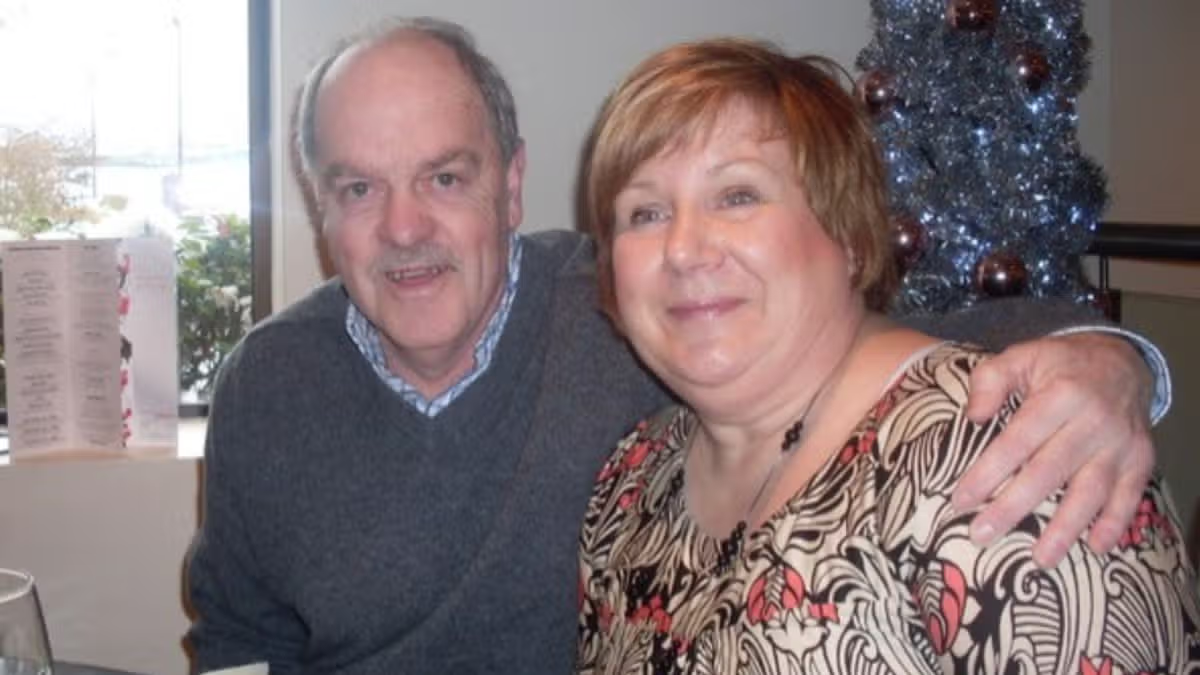
The couple visited their GP many times and were offered several different diagnoses, including anxiety and depression.
It took 13 long years for Emily Wilson’s late husband Jim to receive his final, and correct, diagnosis of dementia with Lewy body.
The family first noticed Jim having difficulty walking back in 2001, then other changes started, such as Jim getting lost on holidays and a difference in his mood. The Newtownabbey couple visited their GP many times and were offered several different diagnoses, including anxiety and depression.
But Emily says all that time she knew something was terribly wrong: “Jim became unusually tactile and when I held his hand I could feel a tremor. He was eventually diagnosed with dementia – but the wrong type. We were told he had Alzheimer’s disease and then eventually we found out it was actually a rarer form of dementia – with Lewy body.”
Emily explains the devastating impact of such a long wait for diagnosis on the family: “Well the first thing to say is that no diagnosis equals no benefits. The financial impact on the family was huge. Jim had just turned 60 so at least he was able to leave work with a small occupational pension, but it wasn’t very much.
“I was still working even though I’d been treated for cancer – and eventually I had to leave work too, before the state pension age – so I could care for Jim. Then he went into care and that has an impact on your finances too as Jim’s pension was used as part of the calculation for his care.”
She added: “Worst of all is the feeling of not knowing what’s going on. It was so stressful. The children are affected too. My youngest daughter can’t remember her Dad before he had dementia. One daughter wanted to drop out of university.
“I wish I could say things have got better since our experience but they haven’t. Families are still being terribly let down – waiting for a diagnosis and then receiving next to no support when they do get one.”
Emily is sharing her story as new research published today by Alzheimer’s Society reveals that families affected by dementia are being forced to put their lives on hold by prolonged waits for a diagnosis.
A survey of over 1,000 carers reveals nearly half of people (45%) waited more than six months for a dementia diagnosis after first seeking help, with devastating consequences for their work, finances and mental wellbeing.
The survey lays bare the toll diagnosis delays can take on families. Nearly half of carers (46%) said the wait had affected their work, while more than a third (35%) said it had made it harder to plan for the future. Three in ten reported sleepless nights or feeling as though life was on hold. Among working-age adults aged 35-44, over half (56%) reported an impact on work.
Alzheimer’s Society’s latest survey found that even after receiving a diagnosis, many carers felt they needed more support. When asked what would have helped most after diagnosis, respondents most commonly identified more follow-up from healthcare professionals, better information about treatment options, help accessing local services and clearer guidance on next steps.
The findings come as Alzheimer’s Society supporters and campaigners deliver an open letter to 10 Downing Street calling on Government to set a bold and ambitious plan for dementia, including faster access to diagnosis, treatment and support.
The charity is calling for a new nationally-recognised standard that would mean within 18 weeks of a GP referral, someone with dementia would receive an accurate diagnosis, together with a care plan and access to treatment (where appropriate). This ambition, or better, has already been met for all other major health conditions.
Ruth Barry, National Influencing Manager for Alzheimer’s Society said: “A dementia diagnosis can bring answers, understanding and access to the support, treatment and care that can make a real difference to people’s lives. However, in Northern Ireland, as in other parts of the UK, too many families spend months, and sometimes years, waiting for answers while their dementia progresses.
“It is like trying to plan a journey without knowing where you are going or when you will arrive. Behind every delayed diagnosis is a family living with uncertainty and trying to prepare for the future without the support they need. People living with dementia should receive an accurate diagnosis and, crucially, a care plan and access to appropriate treatment, within 18 weeks of referral.
“There is no time to waste in addressing this issue. In Northern Ireland we face the highest projected increase in dementia prevalence in the UK. Around 25,000 people live with dementia here, a figure projected to jump to over 37,000 by 2040.
“We know that dementia already costs Northern Ireland £1 billion per year, a figure that is predicted to increase to £2 billion by 2040 without strategic intervention. We know that there are already around 15,000 A&E visits annually from undiagnosed dementia patients in our hospitals.
“These pressures are building and yet Northern Ireland does not have an up-to-date dementia strategy. We urgently need to invest in systems to improve early diagnosis, diagnostic accuracy and waiting times.”
For all the latest news, visit the Belfast Live homepage here and sign up to our daily newsletter.



























































You must be logged in to post a comment Login