Connect with us

Tech

Amazon’s 2026 Holiday Deals Are About to Look Better Than They Are

Published

on

If you’ve been shopping for an Amazon Kindle or smart speaker in the past week, you might’ve noticed some brand-new prices. That’s right: Amazon has hiked prices by $20 to $100 on its popular devices like the Echo, Eero, and Fire Stick.

It’s not alone in this move. We’ve seen similar increases from other tech companies like Apple and Kobo, both of which raised prices this summer. Amazon declined to comment to WIRED as to why it made these price hikes, but one Amazon spokesperson commented to CNET that it was due to rising prices in memory and storage components.

It’s still hard not to feel like companies are raising prices simply because they can—and as a way to make upcoming Prime Day and Black Friday sales look better than they really are. The new prices spread across all of Amazon’s hardware categories, hitting its Kindle e-readers, Echo smart speakers, Eero routers, and Fire TV devices—especially the more affordable and popular products in those categories.

In fact, many devices are already “on sale,” but the sale prices are around what used to be the base price. That means discounts will look good this holiday season, but you’ll just be paying what the item cost a couple of months ago.

Advertisement

Here are all of the price changes on Amazon’s devices, and my rundown on which devices remain a good buy.

New Kindle Prices

Kindle Scribe Colorsoft and Kindle Scribe  side by side two digital tablets with attached stylus

The third-gen Kindle Scribe (left) and Kindle Scribe Colorsoft.

Photograph: Nena Farrell

If you’re looking for a Kindle, all of these models have faced a price increase of at least $30, if not more.

The only category untouched is, interestingly enough, the more powerful of Amazon’s e-reader and digital notebook devices: the Kindle Scribe line. All of the Kindle Scribe models currently available (both the second and third gen and the color version) have remained the same price-wise. You’d think those would have risen too since the price hikes are supposedly due to storage and memory costs, but it’s Amazon’s e-reader-only devices that all increased in price instead.

Advertisement

New Echo Prices

The Echo Studio  and the Echo Dot Max.

The Echo Studio (second gen) and the Echo Dot Max.

Photograph: Nena Farrell

Many Amazon Echo speakers also rose in price, going up by anywhere from $10 to $100. The larger price increases are for the Echo Show devices, which come with a screen.

Source link

Advertisement
Continue Reading
Click to comment

You must be logged in to post a comment Login

Leave a Reply

Tech

The Galaxy S27 Ultra could use an Exynos processor for the first time since 2022

Published

on

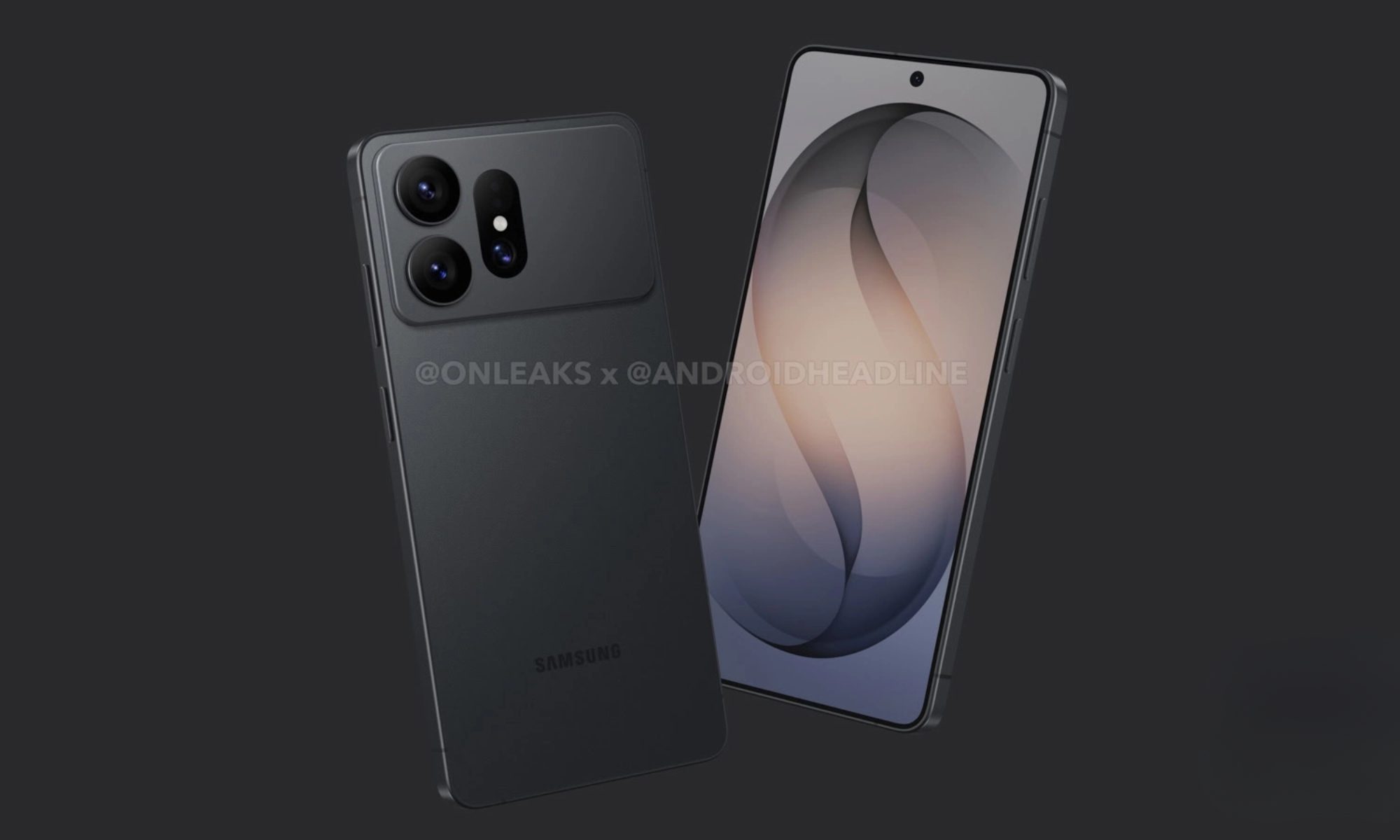
Samsung may be preparing to put its own processor back inside the Galaxy S Ultra after a five-year absence. A report from Korean publication MoneyToday claims the company is developing an Exynos 2700 version of the Galaxy S27 Ultra, which would be the first Ultra model to use Exynos since the Galaxy S22 Ultra launched in 2022.

Recent Galaxy S Ultra models have relied on Qualcomm’s Snapdragon chips, and the Galaxy S27 Ultra had also been expected to stick with Qualcomm.

Samsung may finally trust Exynos with the Ultra again

The report says Samsung has ordered Galaxy S27 Ultra motherboards designed around the Exynos 2700, indicating that development of an Exynos-powered model is underway. Samsung had already been expected to use the Exynos 2700 in several Galaxy S27 models outside the US. The Ultra was the notable exception.

Previous reports may help explain the change. Early estimates have pointed to a 19% multi-core performance advantage over the Snapdragon 8 Elite Gen 6 in Geekbench 6.5, along with a 9.5% lead over the higher-end Pro version.

The Exynos 2700 is also reportedly targeting stronger GPU performance at lower power and lower overall power consumption. Those figures remain early claims rather than independently verified results, but bringing the chip to the Ultra would suggest Samsung is quite confident in the chip. The report cites an insider who has stated, “It is unusual for an Exynos version to be added when the major development process for Snapdragon was nearly complete. This signifies high expectations for the proprietary AP (Application Processor).”

Advertisement

The US could still stick with Snapdragon

Qualcomm is not being pushed out of the Galaxy S27 Ultra. Snapdragon-powered models are reportedly still in development, with the United States expected to receive Qualcomm’s chip while markets such as Korea could get the Exynos 2700.

Samsung could therefore also return to its familiar regional processor split. The Galaxy S22 Ultra shipped with an Exynos 2200 primarily in Europe and the UK, along with some parts of the Middle East, Africa, and some other regions. All that said, the phone is still months away from launch, so it is too soon to treat the report as fact.

Source link

Advertisement
Continue Reading

Tech

The Samsung Galaxy S25 Edge is 50% off right now

Published

on

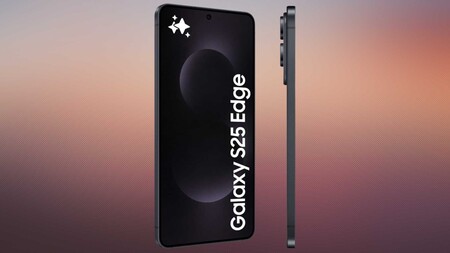
Samsung’s thinnest phone ever just had its price cut in half.

Halving the price on a phone this new is rare for Samsung, and the Galaxy S25 Edge is exactly that, now £599 instead of its usual £1,199, a straight £600 saving on the brand’s super-slim smartphone.

Deal Samsung Galaxy S25 Edge 256GB Titanium JetBlackDeal Samsung Galaxy S25 Edge 256GB Titanium JetBlack

Samsung Galaxy S25 Edge drops to £599 in this huge 50% off deal

At just 5.8mm thick with a 200MP camera and Snapdragon 8 Elite chip, the Samsung Galaxy S25 Edge is down to £599, a £600 saving, 50% off.

Advertisement

View Deal

Landing at £599 puts it further below that range than any previous discount has managed.

Advertisement

Our tech expert Lewis Painter reviewed the Galaxy S25 Edge and called it a joy to use and hold, praising an uncompromising flagship screen and plenty of power packed into that impossibly slim, featherlight frame.

At just 5.8mm thick and 163g, the S25 Edge is built from titanium and glass, with a Gorilla Glass Ceramic 2 front that Samsung has never before fitted to any phone in its entire lineup. That slender body still houses a 6.7 inch AMOLED screen running at 120Hz with a sharp QHD+ resolution, delivering rich colours and deep blacks whether you’re scrolling social feeds or streaming HDR video late at night.

Advertisement

The Whatsapp LogoThe Whatsapp Logo

Get Updates Straight to Your WhatsApp

Advertisement

Join Now

A 200MP main camera sits alongside a 12MP ultrawide lens, and Painter found the digital zoom so convincing that a dedicated telephoto barely feels missed during everyday shooting out and about with friends and family.

Advertisement

Powering all of this is a custom Snapdragon 8 Elite chipset paired with 12GB of RAM, giving the Galaxy S25 Edge enough muscle to fly through apps, games, and Galaxy AI tools without breaking stride.

Samsung rarely lets a flagship this new drop by half, so getting the Galaxy S25 Edge at £599 while that headline design and power remain fully intact is very well worth acting on right now.

SQUIRREL_PLAYLIST_10148964

Advertisement

Advertisement

Source link

Continue Reading

Tech

Google’s AI Mode shows the same products at higher prices than regular Search, study finds

Published

on

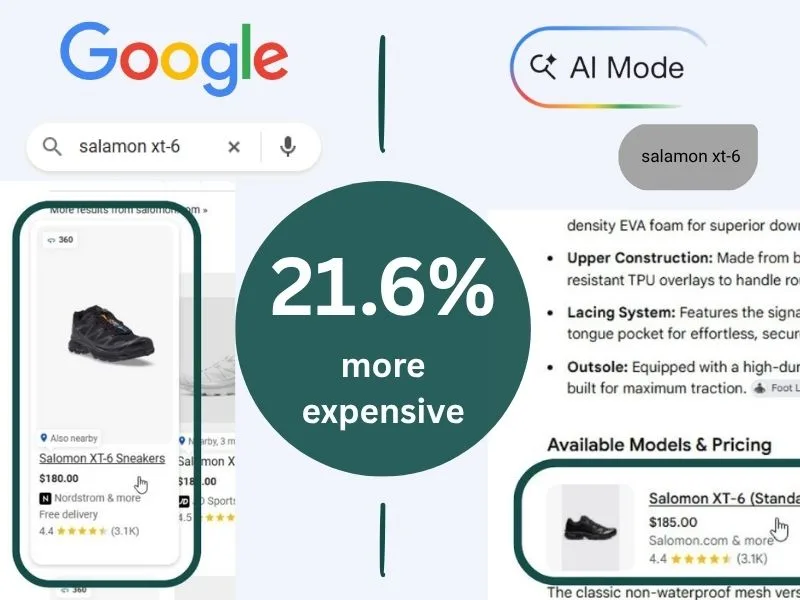
If you’ve been letting Google’s AI Mode handle your shopping research, you might want to double-check those prices. Researchers at Product Rise found that when the same product appeared in both AI Mode and traditional Google Search, the AI-powered experience showed a price that was 21.6% higher on average.

The study compared AI Mode against traditional Google Search

The team ran the same shopping searches through both versions at the same time, across the US and UK. They found that the 21.6% gap is only the headline.

If you look at every product on both sides, not just the matching ones, AI Mode’s typical price sits about 49% higher. That’s a median of $149 compared to $100 in regular search. Prices didn’t match on 38% of the products they tracked, and when they didn’t, AI Mode was the more expensive one about two thirds of the time.

Here’s the other odd part. Only 1.28% of the products in regular search also turned up in AI Mode for the same query. So most of the time, you’re seeing a completely different lineup. The main seller was different nearly half the time too, which suggests AI Mode isn’t just reshuffling the same offers. It’s picking different ones.

What Google says about the findings

Google pushed back when Futurism reached out for comments on this study. The company said it hasn’t verified the study’s accuracy, and that every shopping result on Google Search, AI Mode and the standard results page alike, pulls from the same underlying Shopping Graph data.

“Shoppers can easily click into a product listing to compare prices for that product across retailers and choose the best option for them,” the company said.

Advertisement

That’s technically true, but it puts the work right back on you. I am sure there are many unsuspecting shoppers who assume the price they see first is the best one available, and AI Mode’s entire pitch is saving you the hassle of comparing. If you still have to click through and check every listing yourself, it’s fair to ask why AI Mode is being sold as the smarter way to shop.

Source link

Advertisement
Continue Reading

Tech

NASA’s Canadarm Named 300th IEEE Milestone

Published

on

In the 1960s NASA began developing a system of reusable space shuttles to make its work more efficient and to reduce costs. The shuttles could launch like rockets, maneuver in Earth’s orbit, and land like airplanes. They also could carry large satellites to and from orbit.

Like other types of transportation, machinery eventually breaks down, and parts need to be replaced or fixed. And the cargo being carried to and from Earth has to be moved to its final destination. To complete such tasks, Spar Aerospace (now part of MDA Space) of Brampton, Ont., Canada, and the National Research Council in Ottawa developed a robotic arm, the Shuttle Remote Manipulator System. The project was a joint venture between the U.S. and Canadian governments.

Known as Canadarms, the robotic tools attached to shuttles’ exteriors. They allowed astronauts to handle and transfer tools, satellites, and other payloads. Inspections of the shuttle and repairs could be completed using the robots.

The system was first deployed in 1981 aboard Columbia’s second flight. Canadarm was used for 30 years on five shuttles and on the International Space Station.

Advertisement

The robotic arm was dedicated on 19 June as the 300th IEEE Milestone. The ceremony was held at MDA Space headquarters. The IEEE Toronto Section sponsored the nomination.

“It is appropriate that the 300th Milestone is the Canadarm,” says Michael Geselowitz, senior director of the IEEE History and Heritage group. “The technology spans aerospace, robotics, and computing fields of interest. It involves international cooperation between the United States and Canada, and it shows how IEEE and its members are at the cutting edge of many frontiers of science and technology.”

Seeking to collaborate with other countries on the reusable spacecraft, NASA invited Canada to participate in 1969. It took some time for the country’s officials to determine what technology it could contribute. They learned of a robot that loaded and replaced spent fuel bundles in Canada’s deuterium uranium nuclear reactors, according to the Milestone webpage. That robot, developed by DSMA-Atcon (also now part of MDA Space), inspired what would become the Canadarm.

A proposal was submitted in 1974 to design and build the Shuttle Remote Manipulator System. The robotic arm would unload the contents of the space shuttle’s payload bay. NASA approved the project, and development began in 1975.

Advertisement

Canada had no space agency at the time, so the country’s National Research Council coordinated the organizations that collaborated on the project. Spar Aerospace led the subcontractor team, which included DMSA-Atcon, CAE, and the Canadian subsidiary of RCA Corp. Engineers from the University of Toronto’s Institute for Aerospace Studies contributed to the project.

Building an arm for zero gravity

NASA had strict requirements for the robot: The arm had to be lightweight and small enough to fit on the shuttle, as detailed in an article published by the University of Toronto. It also had to move forward and backward, up and down, left and right, and rotate along three perpendicular axes (known as six degrees of freedom).

To achieve all that, engineer Peter Carlisle Hughes designed the robot with two shoulder joints, one elbow, and three rotating wrists.

“Each joint had six degrees of freedom, and the arm had six links so that it could grab anything from any angle and move it anywhere,” Hughes said in the article. The IEEE life member worked at the Institute for Aerospace Studies.

Advertisement

“This milestone is a reminder of the privilege we all have at MDA Space—as engineers, designers, builders, operators—to build technology that shapes history.” —Holly Johnson, MDA Space vice president

The arm was 50 meters long and weighed 400 kilograms. It was made of materials that could withstand outer space’s harsh environment: titanium, stainless steel, and graphite epoxy. The arm was so lightweight that it couldn’t support itself under Earth’s gravity, so it lay on air bearings on the lab floor at Spar’s Brampton headquarters.

CAE engineers, including IEEE Life Member David A. Weston, designed the display and control panel as well as the hand controllers astronauts would use to monitor and operate the robot.

Because the robotic arm was meant to work in zero gravity, a room that simulated a weightless environment was built to test it. A computer-based simulation facility was constructed in Spar’s headquarters to evaluate its controllability using two simulation models, according to the University of Toronto. RIGID, an early computer simulation model, tested every part of the arm except for its flexible properties. ASAD, which stood for “all singing, all dancing,” examined the arm’s movements, ensuring the joints operated correctly. Both were created by Hughes and Spar engineer Andrew A. Goldenberg, who is now a professor emeritus at the University of Toronto.

Advertisement

The facility was also used to train astronauts on how to use Canadarm.

It took five years for the first Canadarm to be completed. In February 1981, it was presented to NASA at the Kennedy Space Center in Cape Canaveral, Fla., and deployed that November.

Lift off into space

An Astronaut with their foot anchored to an extended robotic arm in low Earth orbit. Astronaut Stephen Robinson is anchored to a foot restraint on the extended Canadarm2 attached to the International Space Station during an extravehicular activity he conducted in 2005.NASA

The Canadarm was attached to the outside of the shuttle. Astronauts were able to monitor the arm’s movements through a live video feed provided by cameras installed on the wrist and elbow joints, according to the Milestone webpage. Using a hand controller and monitors located in the shuttle’s flight deck, astronauts handled and transferred tools, satellites, and other payloads weighing up 266,000 kilograms using minimal electricity.

NASA ordered four more systems. In 2001, Canadarm2 was attached to the International Space Station and used to help build the orbiting laboratory. It is a permanent part of the station, still completing maintenance tasks and moving supplies.

Advertisement

During the course of the 30-year shuttle program, the arms performed successfully and achieved the flight’s mission.

The original Canadarm took its final flight in July 2011 aboard the Atlantis shuttle.

Celebrating IEEE’s 300th Milestone

The IEEE Milestone dedication ceremony was held at MDA Space’s headquarters in Toronto, where the division that developed the Canadarm was located. The event brought together IEEE leaders and many of the engineers who helped develop the robotic system. Jill Gostin, the 2026 IEEE president‑elect, gave the opening remarks at the ceremony. She emphasized that the Milestone was not only celebrating the technology but also “the engineers, builders, programmers, and visionaries who believed technology could expand human possibility and who dared to push the boundaries of what humanity could achieve beyond Earth.”

To commemorate the achievement, Holly Johnson, vice president of MDA Robotics and Space Operations, and IEEE Life Senior Member David Michelson, chair of the IEEE Communications Society’s Communications History Committee, unveiled a bronze plaque that honored the technology. Michelson was the Milestone’s proposer.

Advertisement

“This milestone is a reminder of the privilege we all have at MDA Space—as engineers, designers, builders, operators—to build technology that shapes history,” Johnson said. “That same pioneering spirit that drove our team in those early days of space exploration now propels us into a new era as we work to build the infrastructure for the moon and beyond.”

The plaque, which was placed at MDA Space headquarters, reads:

In 1981 NASA first deployed a Shuttle Remote Manipulator System aboard the Space Shuttle. Developed by Spar Aerospace (now MDA Space) and the National Research Council of Canada, the Canadarm allowed astronauts to safely and reliably manipulate and transfer heavy payloads outside of the Shuttle, and to conduct inspections and repairs. This robotic system played a key role in the Shuttle and International Space Station programs, and revolutionized human spaceflight.

Reviewed by the IEEE History Committee and approved by the IEEE Board of Directors, IEEE Milestones recognize outstanding technical developments around the world that are at least 25 years old. The Milestone program is administered by the IEEE History and Heritage group.

Advertisement

To learn more about historical figures in engineering, IEEE Milestones, and IEEE History Center programs and events, check out The Institute’s IEEE Tech History collection. IEEE Spectrum also covers aspects of tech history.

From Your Site Articles

Related Articles Around the Web

Source link

Advertisement
Continue Reading

Tech

Microsoft will soon enable memory integrity by default on eligible Windows 11 PCs

Published

on

The big picture: Microsoft will soon enable a security feature designed to take advantage of virtualization capabilities available in modern x86 processors. However, the company doesn’t clearly explain that this represents a significant change to how Windows runs, with potentially substantial performance implications for some types of applications.

Microsoft recently confirmed that memory integrity protection will soon be enabled by default on some Windows 11 devices. The change will arrive in October 2026 for eligible Windows PCs and will provide stronger kernel-level protection against malicious software and other threats. However, it could also have a detrimental effect on game performance, which is likely a significant concern for consumers who aren’t part of a security-focused enterprise organization.

Memory integrity protection is built upon Virtualization-based Security (VBS), a technology designed to leverage hardware-level virtualization capabilities in Intel (VT-x) and AMD (AMD-V) CPUs to isolate sensitive data and processes within Windows. VBS protects crucial Windows components from external tampering, Microsoft explains.

However, VBS requires Windows to become a “guest” operating system running under Hyper-V, Microsoft’s native hypervisor. Once enabled, Hyper-V treats the Windows installation as an isolated virtual machine. Microsoft previously warned that VBS could hinder performance, recommending that PC gamers disable the feature (along with Hyper-V’s Type-1 virtualization) to significantly improve frame rates.

Advertisement

VBS and Hyper-V are still based on the same operating principles. However, Microsoft has now decided that security comes first and that VBS-based memory integrity protection should be enabled by default. Quality updates coming to Windows 11 next month will establish a new, stronger security baseline, but organizations will be able to change the default configuration by disabling VBS and memory integrity protection.

Furthermore, memory integrity will not be forced on systems where the option has already been disabled. Microsoft provides a complete guide to virtualization-based protections in modern Windows editions, warning that “some” applications and device drivers might be incompatible with this technology.

Memory integrity should theoretically prevent unauthorized code from running amok in a virtualized Windows environment, allowing only trusted kernel-mode code and drivers to run. Microsoft said the new option will provide greater protection while reducing complexity, establishing a new “foundation” for upcoming changes to the Windows security model.

Advertisement

Source link

Continue Reading

Tech

Palo Alto Networks paid $500M for Thrive-backed Console, sources say

Published

on

Palo Alto Networks paid $500 million in cash and stock to acquire Console, a two-year-old startup that uses AI agents to automate routine IT help desk tasks, according to two people with knowledge of the deal.

The companies officially announced the acquisition on Tuesday but didn’t reveal terms of the deal. Since its founding in 2024, Console has raised $29 million across two rounds: a $6.2 million seed led by Thrive Capital and a $23 million Series A co-led by DST Global and Thrive.

Before the sale, Console was valued at $157 million, according to PitchBook, delivering a rapid return for investors including SV Angel, Abstract Ventures, and notably Palo Alto Networks CEO Nikesh Arora, who participated as an angel investor. Palo Alto Networks declined to comment.

The cybersecurity giant said that it will integrate Console into Cortex, its platform that uses AI to automatically detect and neutralize threats. Console’s agentic functionality will allow security teams to investigate and resolve alerts using natural language, giving Cortex “the arms and legs to deliver autonomous security outcomes across the entire enterprise,” as Arora described in a statement.

Advertisement

Console was founded by Andrei Serban, coming shortly after his previous startup — code-security platform Fuzzbuzz — was acquired by Rippling. The startup, whose customers included Ramp, Flock Safety, and Scale AI, automated tasks like password resets, granted access to apps like Figma and Miro, and performed routine troubleshooting without direct human involvement.

As a startup, Console competed primarily with Serval, another ServiceNow challenger that hit a $1 billion valuation after raising a $75 million Series B round led by Sequoia last December. Serval started as an AI tech support tool and quickly expanded to provide AI assistance for human resources, legal, and finance departments. Console’s acquisition leaves Serval as the category-leader-to-watch among startups automating IT service management, one investor, who is not a backer of Serval, told TechCrunch.

Console is Palo Alto Networks’ seventh acquisition in 2026, according to PitchBook. Other VC-backed companies scooped up by the cybersecurity behemoth this year include Greylock and Lux Capital-backed observability platform Chronosphere, at a valuation of $3.35 billion, and Koi, a cyber startup backed by Battery and Team8, for $400 million.

When you purchase through links in our articles, we may earn a small commission. This doesn’t affect our editorial independence.

Advertisement

Source link

Continue Reading

Tech

4 Common Problems With Bluetooth Speakers

Published

on


Bluetooth speakers offer heaps of convenience in the form of wireless listening and easy portability in comparison to their wired counterparts, but they still aren’t totally free from problems. Sometimes, those problems can be chalked up to a fluke, bad luck, or being a part of a particularly problem-prone product line. But other times, the problem is just reflective of a common pitfall with Bluetooth speakers. 

Your mileage may vary, of course. If you own one of the best Bluetooth speakers on the market, then you might be able to enjoy wireless music without worrying as much about running into trouble. But, in some cases, you might find yourself dealing with connectivity issues, sound quality problems, or quiet audio. The exact nature of the problems you face can differ from one brand or device to another, but there are a few common things you can expect to face at some point along the way.

Generally speaking, most of them can be fixed one way or another. It could be as simple as moving your speaker and playback device closer together, turning it off and on again, or restarting the pairing process. However, sometimes, you might need to find a nearby repair shop so a professional can take a look at your busted speaker, or you could end up

Advertisement

on the market for a new Bluetooth speaker

.

Advertisement

Your speaker and other devices won’t connect properly

If you’ve ever used a Bluetooth speaker, then there’s an issue so common, it almost goes without saying: your speaker might sometimes struggle to connect to your phone, computer, or game console altogether, rendering you totally audio-less. Besides being one of the most well-known problems with Bluetooth speakers, it’s also arguably one of the most inconvenient. After all, what’s the point of a speaker that won’t produce any sound at all? 

Exactly how you fix this issue depends on what’s causing it. Unfortunately, there are all kinds of reasons why you might not be able to connect your device to your Bluetooth speaker. It could be as simple as a glitch or a pairing error, or indicative of a deeper hardware issue. You might be able to fix pairing problems by restarting both the speaker and your device before trying to connect again.

If that doesn’t work, you should try re-pairing your device with the speaker from scratch. Exactly how you do that depends on the device and its operating system. You can generally find the steps for doing so in its Bluetooth settings. If you’ve ruled out any pairing issues, it’s possible your speaker’s Bluetooth functionality is at fault. In that case, it could require repairs or replacement. But first, try pairing a different device with your speaker to see which one is causing the problem.

Advertisement

Interference can cause delays and audio lag

One of the most common problems you can face while using a Bluetooth speaker — even one without any faults at all — is delayed, lagging, or otherwise glitchy audio. This is often caused by interference. Interference happens when your speaker can’t communicate clearly with the device sending it audio, such as your phone or computer, leading to poor-quality audio. There are all sorts of reasons for this, ranging from physical objects obscuring the speaker to a crowded frequency band interfering with the connection.

Nobody wants to deal with interference and delays while using your speaker, especially when using it to watch TV or play video games. Audio delays can cause dialog to go out of sync with on-screen mouth movements while watching a movie, and sound cues can lag behind where you need them to be while gaming. That’s especially problematic if you’re playing anything fast-paced and sound- or music-oriented, like a rhythm game.

If your speaker’s interference isn’t being caused by a physical obstruction like a wall, clutter, or even a passerby, then a crowded frequency band is likely to blame. Bluetooth speakers communicate over the 2.4 gigahertz (GHz) band, but it isn’t alone. Other gadgets and devices around your home, like a microwave or Wi-Fi router, also share that band with your speaker. Too much competing wireless traffic can interfere with the connection carrying your music, which can negatively impact your audio quality. Think of it like being in a crowded room, where you’re struggling to hear the person you’re actually speaking to.

Advertisement

Limited range can hurt audio quality and connection reliability

It’s easy to forget how much proximity matters when it comes to Bluetooth speakers. They’re wireless by nature, meaning your phone or computer isn’t literally tethered to your audio equipment anymore. Despite that, your metaphorical leash isn’t quite as long as you might think it is. The further away your speaker is from the playback device it’s connected to, the worse your Bluetooth connection is. That can have a hugely negative impact on your overall listening experience, as sound quality and connection stability are compromised by longer distances between devices.

Bluetooth offers different connectivity ranges depending on its generation, but generally speaking, modern technology tends to span from around 30 feet to hundreds of feet under ideal conditions. Bluetooth 5.0 connections can transmit data up to around 800 feet, depending on interference and what your speaker’s made of. If you exceed your speaker’s range, or block the signal in some way, then you’re going to face sound dropouts and other strange audio artifacts that can make your speaker sound just plain bad.

Advertisement

Thankfully, the fix is simple. You just need to get a little closer to your speaker. However, if that hasn’t helped, the problem could be with the speaker itself. Low-quality internal batteries that don’t hold charge well can easily leave your speaker sounding thin and your connections unstable.

Advertisement

Quiet, muffled, or muddied audio coming from your speakers

Your speaker sounding a little quiet isn’t exactly a Bluetooth-specific problem, but Bluetooth speakers sometimes have their own reasons for doing so. If the culprit behind your less-than-ideal audio is Bluetooth-specific, then it could be the quality of the connection between your devices. Again, that means you need to look out for things like interference issues and your speaker’s range to make sure you have the best possible conditions for listening to music. But those aren’t the only reasons why your speaker might struggle to transmit high-quality audio.

Your Bluetooth speaker might also struggle to produce loud and clear sound if it has a power issue. If that’s the case, then your speaker isn’t getting as much power as it needs to run to its full capabilities. That might happen if your speaker’s power supply is damaged, it’s running low on charge, or if it runs on a cheap, low-capacity battery. Even the best cheap Bluetooth speakers can still run into this issue, so it’s something that’s worth looking out for.

Another reason why your speaker might sound muffled or quiet is if it’s running on outdated firmware. Firmware is basically software embedded in your speaker that helps control how it operates. It doesn’t need to be updated very often, but it does need occasional maintenance. Your best bet for figuring out how to update your speaker’s firmware is by taking a look at the instruction manual it came with or other manufacturer guidance you can find, like a company website. 

Advertisement


Source link

Continue Reading

Tech

33pc of employers pro remote hiring despite virtual interview concerns

Published

on

Robert Walters research found that one-third of Irish employers would hire a professional without meeting them in real life first.

One of the elements of the pandemic that has never fully disappeared is the appreciation among both professionals and employers for remote working. For many it offers greater work-life balance, opportunities to travel, it cuts down on commuting costs and overall has created a more convenient lifestyle.

For employers, it has reduced overheads, given far greater access to a global talent pool and stands out as a workplace perk for those who have come to regard remote or flexible working as non-negotiable when considering employment. 

Recruitment agency Robert Walters, in the month of August, conducted research to explore how Irish professionals regard remote working and virtual interview processes. The company collected data from 500 white-collar professionals and business leaders based in Ireland.

Advertisement

Practical or convenient?

What it found is ideals and behaviours around remote working and its consequences can be somewhat conflicting. 

This was highlighted in the report which showed that one-third of contributing Irish employers would recruit professionals without having first met them in a real-world scenario, despite just 18pc agreeing that virtual interviews are the most effective way of identifying the best person for a job.

Commenting on the report’s findings, Suzanne Feeney, the country manager at Robert Walters Ireland, explored some of the reasons as to why there is a disconnect in sentiment.  

“Meeting someone in-person, you gain a fuller understanding of how they communicate and fit into different environments,” she said.

Advertisement

“When interactions are moved online, many of these aspects are lost and interactions can feel less natural. Time lags and poor mic or video quality can create ‘digital barriers’ which obscure a jobseeker’s character and personality.”

More than a quarter were shown to prefer face-to-face strategies and 44pc were of the opinion that while video interviews can work in theory, they often have clear limitations, such as the inability to read body language (34pc) and that they give a limited sense of overall culture fit (39pc).

Feeney said: “Before the pandemic, virtual hiring was only used in rare cases, such as for candidates relocating or expats looking to return to Ireland for roles. Today, despite doubts over the overall effectiveness of virtual interviews, four out of 10 employers say they would hire someone they hadn’t met in person.

“Employers are navigating various obstacles, with recruitment strategies shifting under time constraints, tighter budgets and skills shortages in high-demand areas like finance, engineering and technology.”

Advertisement

Shared concerns

It isn’t only employers who are concerned about how they might gauge the success of a virtual interview. 41pc of contributing jobseekers reported difficulty reading body language, as well as building rapport with interviewers (29pc) and experiencing technical issues (18pc).

More than half of employers, however, agreed that it comes with a degree of convenience (52pc) and leads to a faster screening process (27pc).  

The report explained: “Virtual interviews offer convenience, speed and efficiency, but in most cases, they fail to paint a complete picture of a jobseeker’s experience and abilities. The new research highlights the wider issue of leaning too heavily on a single assessment method during hiring.”

Feeney added: “Overdependence on any one stage of recruitment processes can introduce inconsistencies, increase the likelihood of errors and potentially reinforce bias. 

Advertisement

“That is why a more balanced, multi-stage approach that includes CV screening, skills-based tests, work simulations and both in-person and virtual interviews is best for ensuring processes lead to most well-informed and fair hiring outcomes.”

Don’t miss out on the knowledge you need to succeed. Sign up for the Daily Brief, Silicon Republic’s digest of need-to-know sci-tech news.

Source link

Advertisement
Continue Reading

Tech

VMware swings its focus back to low-end server virt, promises vSphere Standard upgrade

Published

on

virtualization

Found the time to focus and ‘corrected’ incentives that saw sales drive users to full private clouds

EXCLUSIVE What’s old is new again as VMware will soon release an updated version of vSphere Standard, the low-end server virtualization bundle that it hasn’t significantly changed for years and has scarcely promoted since its 2023 acquisition by Broadcom.

Advertisement

VMware’s hero product for the last three years has been the Cloud Foundation (VCF) private cloud bundle.

vSphere Standard and another low-end suite called vSphere Enterprise Plus remained on VMware’s list of products, but the website mentioning the products devotes a handful of words to each.

The Register has often heard VMware, and its partners, would not issue subscription renewal quotes for the low-end products or only offer quotes that suggested adopting VCF instead. VCF is more powerful than standalone vSphere but more complex and costly – and also overkill for basic server virtualization.

We’ve also heard that Broadcom sold another smaller bundle – vSphere Foundation – almost exclusively to customers that also acquired VCF but needed something smaller than VCF for some sites.

Advertisement

Speaking to The Register at the VMware Explore conference on Wednesday, Paul Turner, chief product officer for VMware’s Cloud Foundation Division, said that the Broadcom business unit has changed the incentives that saw salespeople steer customers toward VCF.

“We corrected this,” Turner said, adding that VMware has sometimes had “too big a focus on VCF.”

VMware’s last major release of vSphere Standard came in 2022 with version 8. In 2025, VMware delivered version 9 of vSphere along with VCF 9 – but didn’t release a new cut of vSphere Standard.

Turner said that decision was taken because VMware chose to focus on improving the security of VCF.

Advertisement

Ram Velaga, president of Broadcom’s Infrastructure Software Group, told The Register VMware decided to focus on VCF because it wanted to shift the prevailing narrative that public clouds are the natural home for workloads, and instead argue that private clouds are more cost effective and easier to operate.

Bringing a new low-end server virtualization offering to market at that time may have confused customers, he told The Register. “People could get distracted,” he said, suggesting that VMware could have prompted questions about the extent of its commitment to private clouds.

Velaga said vSphere Standard is suited to users who operate around 128 cores. Turner mentioned memory tiering as a possible feature of the product.

As it happened, Turner and Velaga’s remarks came on the same day that Proxmox, the provider of an open-source virtualization and containerization platform, announced it had opened a North American office and started to offer 24×7 support for the first time. The Austria-based company previously only supported its wares during local business hours.

Advertisement

The Register often hears vSphere users mention Proxmox as an ideal replacement for low-end server virtualization.

Turner said the new vSphere Standard will be a better and more resilient offering than Proxmox and pointed to the introduction of 24×7 support as a sign of Proxmox’s maturity being well behind that of VMware and its partners.

He also said that more details about the new vSphere Standard will likely emerge as VMware takes its Explore conference to Germany, in mid-October. Among the facts he said will emerge soon are how VMware will bring vSphere Standard to market, an item of interest as the Broadcom business unit dropped the majority of its channel partners.

Earlier this week, The Register predicted VMware would not make a pitch to its many low-end users at the Explore conference. The imminent release of a vSphere Standard upgrade was not made on stage at the event, but during one-to-one interviews – so perhaps we were technically correct! Turner thinks another of our assertions, that VMware was not interested in lower-end users, was incorrect.

Advertisement

We leave it to readers to make their own judgment about the level of interest in small customers VMware displayed by spending three years focusing on VCF.

Low-end VMware users will likely be relieved and intrigued by news of a vSphere Standard revival. Few VMware users wanted to quit the product, which has a deserved reputation for working brilliantly. Yet many felt the need to acquire VCF, and the cost of that package, meant it was necessary to consider VMware alternatives.

VMware’s competitors saw that thinking as an opportunity: HPE, for example, even made its low-end virtualization bundle free for a year.

Such offers will soon be less potent, because an upgrade is always easier than a migration. ®

Advertisement

Source link

Continue Reading

Tech

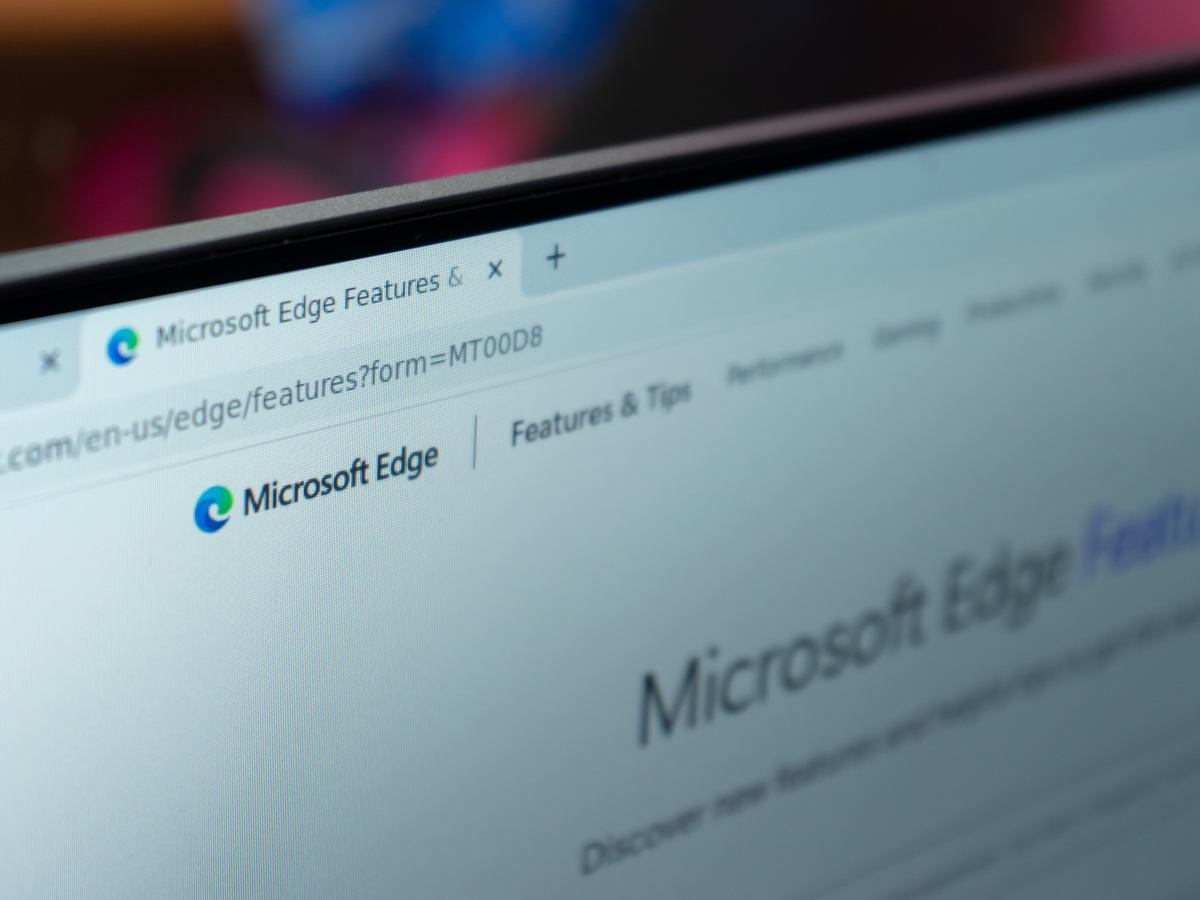
Opera loses DMA ‘gatekeeper’ legal challenge over Microsoft Edge

Published

on

Opera had argued that the European Commission had erred ‘by failing to designate Microsoft as a gatekeeper in relation to its web browser core platform service Edge’.

Norwegian web browser provider Opera has lost a legal challenge at the EU Court of Justice against the European Commission’s 2024 decision that Microsoft and its Edge browser should not be subject to the ‘gatekeeper’ designation and restrictions under the Digital Markets Act (DMA).

Opera had argued that the Commission had erred “by failing to designate Microsoft as a gatekeeper in relation to its web browser core platform service Edge, based on the finding that Edge is not an important gateway for business users to reach end users”.

In its judgement today (2 September), the EU’s General Court, based in Luxembourg, agreed with the Commission’s original decision that Edge does not “constitute an important gateway within the meaning” of the DMA and therefore Microsoft should not be deemed a gatekeeper in this context.

Advertisement

The court ruled that the Commission “did not err in considering that, although Microsoft had met the quantitative thresholds laid down in the DMA, it had put forward sufficiently substantiated arguments to demonstrate that Edge did not constitute an important gateway”.

It said that “the Commission was entitled, in particular, to rely on the low scale of usage of that browser and to compare it with that of other browsers, as those elements are relevant for assessing the actual importance of Edge as a gateway for business users to reach their end users”.

The judgement added: “The General Court also finds that the Commission was entitled to take into account the fact that Edge relies on the browser engine Blink, which reduces Microsoft’s ability to exercise autonomous control over certain key aspects of the service.

“Furthermore, it considers that the Commission was entitled to find that the integration of Edge into the Microsoft ecosystem, including its pre-installation on Windows and the other mechanisms to promote its use from which it benefits, did not contribute sufficiently to making Edge an important gateway.”

Advertisement

The DMA, as the EU court puts it, targets large digital platforms that occupy a central position in the digital economy and can be applied to services that constitute an essential gateway for businesses to reach end users, such as search engines, operating systems, social media platforms or web browsers.

The ‘gatekeeper’ designation imposes specific obligations, in aid of fairness and competitiveness, on qualifying services that meet certain criteria regarding size and market influence.

The Commission has previously applied or considered ‘gatekeeper’ designations through the DMA in various contexts to Big Tech giants such as Apple, over its various digital storefronts; Amazon and Microsoft, over their cloud services; and Google, which was recently fined €890m for DMA breaches.

Opera was founded more than 30 years ago in Oslo – where it maintains its headquarters – and has key hubs in Sweden and Poland.

Advertisement

A 2007 action from Opera against Microsoft eventually led to a €561m EU antitrust fine for the US giant in 2013 over failing ⁠to ​offer users a choice of ​web browser.

Don’t miss out on the knowledge you need to succeed. Sign up for the Daily Brief, Silicon Republic’s digest of need-to-know sci-tech news.

Source link

Advertisement
Continue Reading

Trending

Copyright © 2025