Connect with us

Tech

Google’s AI Mode shows the same products at higher prices than regular Search, study finds

Published

on

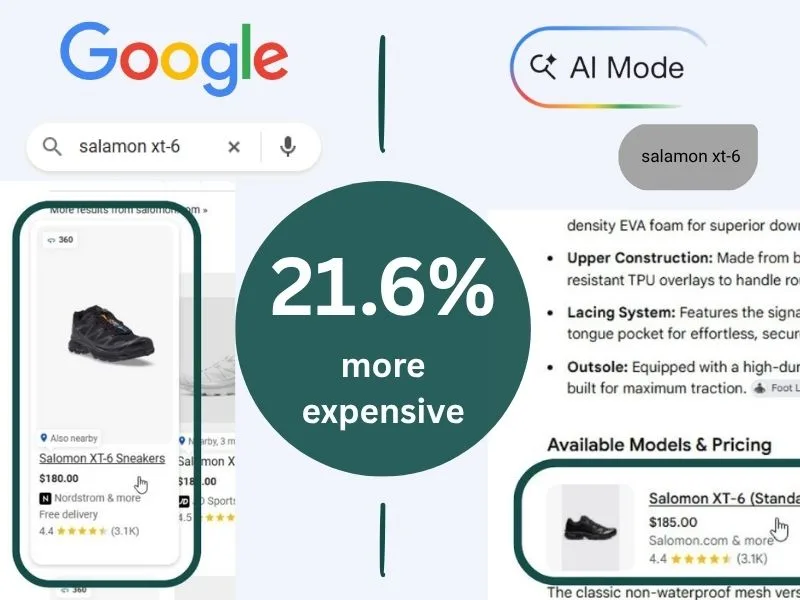
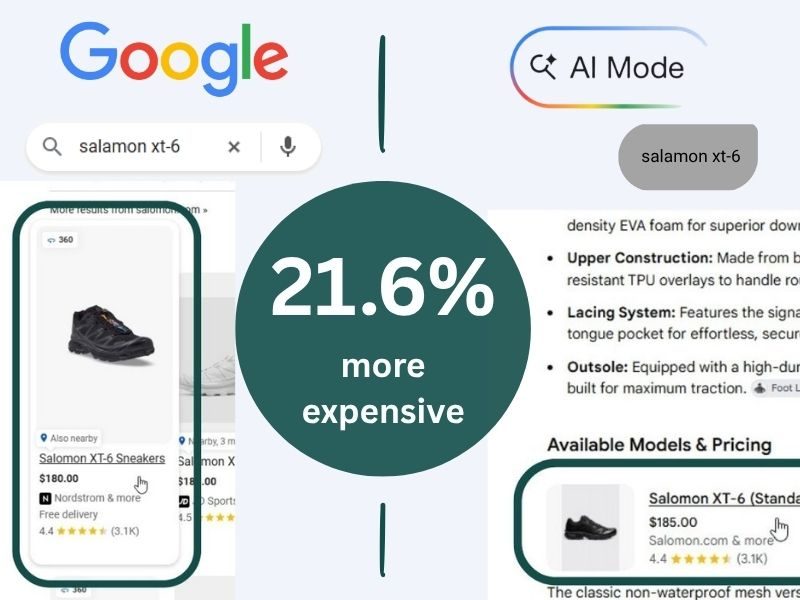
If you’ve been letting Google’s AI Mode handle your shopping research, you might want to double-check those prices. Researchers at Product Rise found that when the same product appeared in both AI Mode and traditional Google Search, the AI-powered experience showed a price that was 21.6% higher on average.

The study compared AI Mode against traditional Google Search

The team ran the same shopping searches through both versions at the same time, across the US and UK. They found that the 21.6% gap is only the headline.

If you look at every product on both sides, not just the matching ones, AI Mode’s typical price sits about 49% higher. That’s a median of $149 compared to $100 in regular search. Prices didn’t match on 38% of the products they tracked, and when they didn’t, AI Mode was the more expensive one about two thirds of the time.

Here’s the other odd part. Only 1.28% of the products in regular search also turned up in AI Mode for the same query. So most of the time, you’re seeing a completely different lineup. The main seller was different nearly half the time too, which suggests AI Mode isn’t just reshuffling the same offers. It’s picking different ones.

What Google says about the findings

Google pushed back when Futurism reached out for comments on this study. The company said it hasn’t verified the study’s accuracy, and that every shopping result on Google Search, AI Mode and the standard results page alike, pulls from the same underlying Shopping Graph data.

“Shoppers can easily click into a product listing to compare prices for that product across retailers and choose the best option for them,” the company said.

Advertisement

That’s technically true, but it puts the work right back on you. I am sure there are many unsuspecting shoppers who assume the price they see first is the best one available, and AI Mode’s entire pitch is saving you the hassle of comparing. If you still have to click through and check every listing yourself, it’s fair to ask why AI Mode is being sold as the smarter way to shop.

Source link

Advertisement
Continue Reading
Click to comment

You must be logged in to post a comment Login

Leave a Reply

Tech

ABT Promo Codes & Discounts for September 2026

Published

on

ABT Electronics is known for selling electronics like Canon cameras, Sony headphones, and Samsung TVs. It’s in the name, after all. But in addition to electronics, the giant retailer also offers furniture, mattresses, exercise equipment, appliances, and more. With only a single location—a warehouse in the suburbs of Chicago—it might not be feasible to shop in-store. Luckily, you can check out the massive selection online and save some cash with an ABT promo code or ABT coupon.

Get an ABT Discount Code for $25 Off Orders of $250 or More

It’s beyond easy to get this ABT discount code for $25 off your purchase of $250 or more. All you have to do is sign up for the store’s emails. You’ll get a unique ABT coupon code that you can use until the end of the year. You can even stack this ABT coupon with other ABT discount codes for even more savings.

Save More With ABT Discounts on Appliances, Mattresses, and Electronics

ABT promo codes are an easy way to save, but even if you don’t have an ABT coupon, you can get good deals by checking out the sale offerings. For example, you can save up to $270 on markdowns for your kitchen, living room, laundry room, and more. Plenty of the brands WIRED recommends are on offer, from KitchenAid and HP, to Asus and Samsung.

Buy More, Save More ABT Appliance Deals

Need to upgrade your home appliances? You can save up to $1,200 on kitchen and laundry appliance packages with no ABT coupon code necessary. The more you add to your bundle, the more you can save. You can mix and match refrigerators, ovens and ranges, dishwashers, washing machines, and dryers to get the maximum savings tier. Stack an ABT promo code for even better deals.

Advertisement

Save on TV and Home Entertainment Costs With ABT Discounts

ABT has great promotions on 4K TVs, soundbars, and home audio and theater equipment. This ABT coupon isn’t a code, but comes in the form of instant discounts up to $180 off. You’ll get an even better discount with up to $250 in rebates from streaming services, gaming services, and food delivery rebates. ABT sells home theater equipment from brands we like, including LG, Hisense, Roku, and more.

ABT Discount Codes for Students, Military, Teachers, Nurses, and First Responders

This ABT coupon code for military and first responders is the same as the ABT coupon code for teachers and students. Simply verify your status through ID.me for free at checkout and you’ll get $50 off orders of $500 or more. This promotion is especially nice if you’re buying multiple gadgets or a big-ticket purchase.

Get Free Shipping on All ABT Orders Over $35

You don’t need an ABT discount code for free shipping for orders over $35. You just need to spend that amount, and it’ll be automatically applied. Some items are excluded if they’re shipping via freight, but overall, you don’t need to worry about shipping killing the deal. And you don’t need to worry about tracking down the right ABT promo code since free shipping will be applied during checkout. Just be aware that this ABT promo code excludes shipments to Alaska, Hawaii, and Puerto Rico as well as select freight-required freight items.

Source link

Advertisement
Continue Reading

Tech

Police want Axon’s cameras redesigned so they don’t get mistaken for Flock’s

Published

on

Ripple effect: As Flock’s AI-powered surveillance cameras become increasingly unpopular across the US, many communities have pivoted to another provider, Axon. To help Axon’s cameras avoid the same backlash, some law enforcement clients have floated an idea: making surveillance cameras look less like surveillance cameras.

Axon is currently exploring design changes to its Automatic License Plate Readers (ALPRs) to avoid becoming the next target of people destroying Flock cameras. The strategy, among others under consideration, suggests surveillance companies are making real efforts to get ahead of the rising negative press from mass surveillance opponents.

Primarily known for supplying police departments across the US with body cameras, Axon also makes ALPRs that resemble Flock’s. Cameras from both companies automatically log license plates from passing vehicles into searchable databases, but Flock became the face of the technology as its devices spread to thousands of communities.

As privacy advocates began destroying Flock cameras and hundreds of communities canceled their contracts with the company, some simply replaced the cameras with Axon’s.

Advertisement

However, Axon’s pole-mounted ALPRs closely resemble Flock’s, so authorities are unsurprisingly concerned they could become targets, too. The topic came up in a now-deleted webinar Axon held last week, which YouTuber MegaraMedia downloaded before it was taken down and shared with 404 Media.

When an audience member asked whether Axon was considering changing the appearance of its cameras to resemble Flock’s less, CEO Rick Smith said the company is looking at changing their shape after many customers requested a different look.

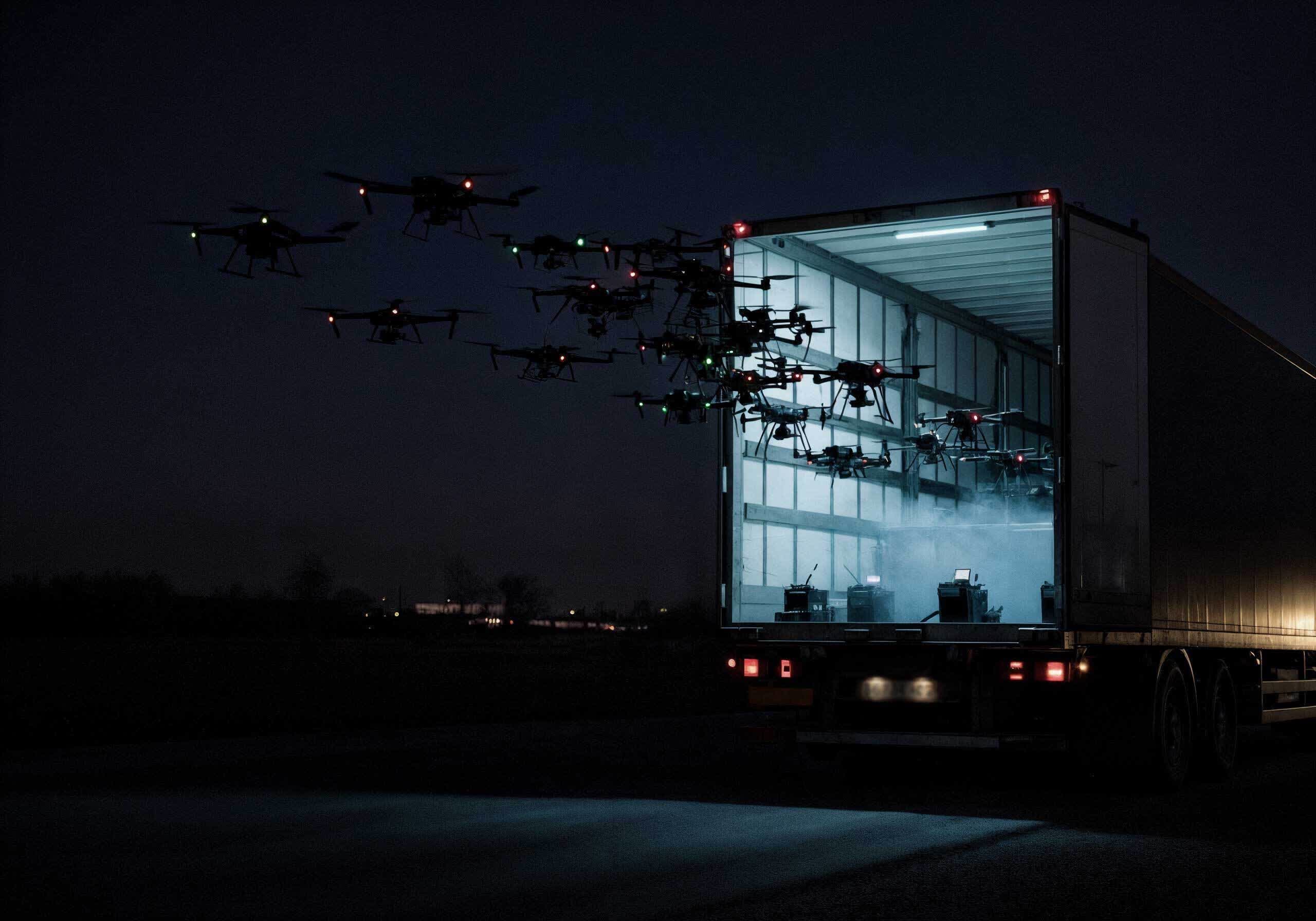
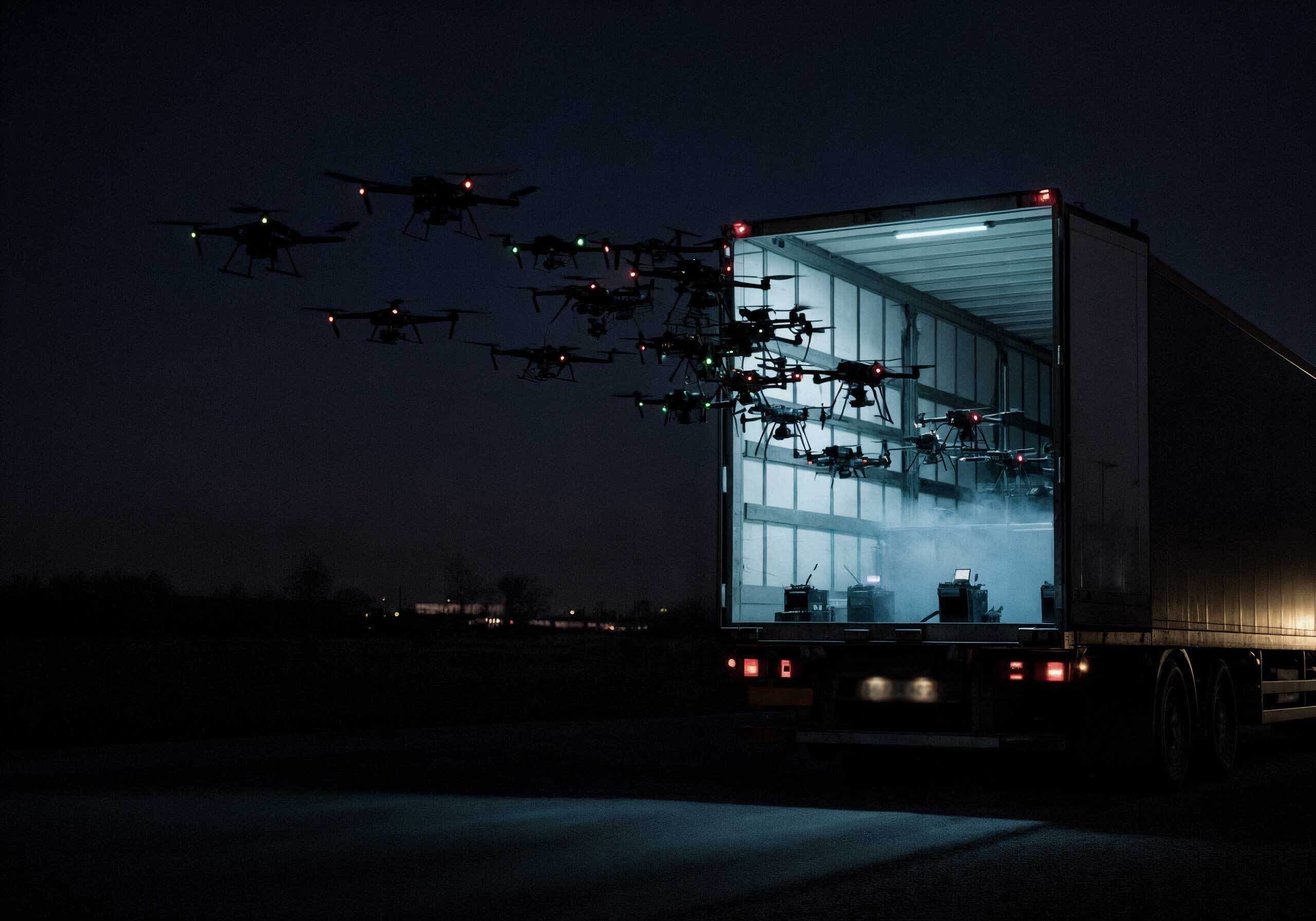
Axon’s Lightpost program also aims to place cameras on streetlights, making them harder to reach. Another strategy could move in the opposite direction, with signs that explicitly label the cameras and explain a community’s ALPR policy. Flock and Axon are also pursuing drone-based surveillance.

Advertisement

AI-powered surveillance cameras have come under scrutiny because they let authorities track the movements of vehicles and people. However, prior reports suggest they often misread license plates, and more than a dozen officers have been caught using them to stalk former romantic partners.

As the cameras become increasingly infamous, some departments have instructed officers to avoid mentioning their deployment whenever possible. Although hundreds of cities across the US have canceled contracts with Flock over the past several years, the company claims new contracts outpace cancellations by around 10 to one.

Source link

Advertisement
Continue Reading

Tech

We Need to Talk About Wednesday’s Doggone Connections Puzzle

Published

on

Dog at laptop computer
Players are barking about the Connections puzzle, for good reason. Oscar Wong/Getty Images

Long ago, the New York Times Connections puzzle replaced Wordle as my favorite online puzzle. But the Connections puzzle for Wednesday is a real dog fight to solve. Spoilers ahead, so if you haven’t played Connections yet, do that now.

In Connections, you sort 16 words into four related categories. And in Wednesday’s puzzle, fully half of the words can precede the word “dog.”

Here come those spoilers.

Corn dog. Hunting dog. Sheep dog. Rescue dog. Salty dog, Prairie dog. Top dog. And even though this one is a bit of a stretch, “sausage dog.”

Also, the unsorted grid begins with the words BOW and WOW, which fall into different categories.

Advertisement

Good luck sorting those eight dog words into the two groups that the Times puzzle editors intended! Here’s the answer grid filled out properly.

The completed NYT Connections puzzle for Sept. 2, 2026.
The completed NYT Connections puzzle for Sept. 2, 2026.NYT/Screenshot by CNET

So the puzzle-makers first divided the “dog” words into a category relating to real, four-legged canines: hunting, rescue, sheep and that questionable “sausage,” which I guess means dachshund.

And then the remaining four dog words went into the purple category, where they fit alongside other words that aren’t real canines at all, including one food (corn dog), one animal (prairie dog), and two slangy expressions (salty dog and top dog).

Players who complained about the puzzle on Reddit made some good points.

“I was like, “there’s 7 answers???” one player wrote, punctuating their response so aggressively that I could almost hear them groaning. “Well, wait, some of these are like dog dogs and the others are like, well, they aren’t…”

Advertisement

“After I lost today, my next Google search was ‘TF is a sausage dog,’” wrote another player.

I’m not unfamiliar with the dachshund breed. At one point, my brother owned five of these little wiggly pups. But if I called them anything other than “dachshunds,” it was “wiener dog,” not “sausage dog.”

Some Reddit users point out that “sausage dog” is a term used in Australia and the UK. (Viewers of Australian animated dog show Bluey, a true TV treasure, might have known it from there.) Some players likely threw the word sausage into one of the dog groups out of desperation, too. (Dogs…eat sausage?)

And a few Reddit commenters pointed out that this puzzle is training players to “presolve,” meaning you can’t just pick a group of four similar words and hope you’re right, but need to sort all 16 words out on paper or elsewhere before trying to solve.

Advertisement

Regardless, I’m guessing more than a few Connections streaks got chewed up today.

Thanks “fur” nothing, New York Times puzzle people.

Source link

Continue Reading

Tech

Has FDM 3D Printing Hit Its Peak?

Published

on

Over the time Hackaday has been in existence, the art of 3D printing has evolved from a relatively crude hit-and-miss affair to something approaching what we all imagined back then. You can’t yet walk up to a Star Trek replicator and ask for a part, but a modern state of the art consumer or prosumer grade printer will deliver consistent high-resolution parts, and in a surprisingly short time. [The Next Layer] asks whether consumer FDM printers have now reached the point at which they’re about as good as they’re going to get, and whether other technologies hold the future.

It’s a fair point to make that the resolution of a consumer FDM printer may be close to its mechanical limit. Techniques such as input shaping and the adoption of better CoreXY mechanisms mean that prints which once might have relied on SLA can be done in FDM. Healthy competition in the marketplace has delivered high quality colour printing, with tool-changing printers being no longer solely the preserve of the professional. He uses the example of a mobile phone to make the point that new machines have less of a wow factor to deliver, as increments have become less grand.

It’s a persuasive argument, and looking at the printers around us we can see it in action. The difference in ability between a 2020-ish and a 2026 FDM printer are far smaller than those between the same time periods in the last decade. Compare a MakerBot Cupcake and an Ultimaker II, or the Ultimaker and a Prusa Mini, and each is light years ahead of the last. But the best the Mini can do is surprisingly not as far behind as you’d expect to that of their latest, or of the equivalent from Bambu Labs.

Advertisement

Does this means that nothing new is coming in 3D printing? Of course not. UV printing is coming through and will deliver incredible results, as will SLS printing. It’s interesting he devotes little time to SLA printing, perhaps because it’s not as easy a process as FDM. He makes the point that we’ve never had it so good, as the high-end FDM features will appear in modestly priced machines, and we have those other technologies to look forward to.

It’s an interesting discussion, and you can see it below the break.

Advertisement

Source link

Continue Reading

Tech

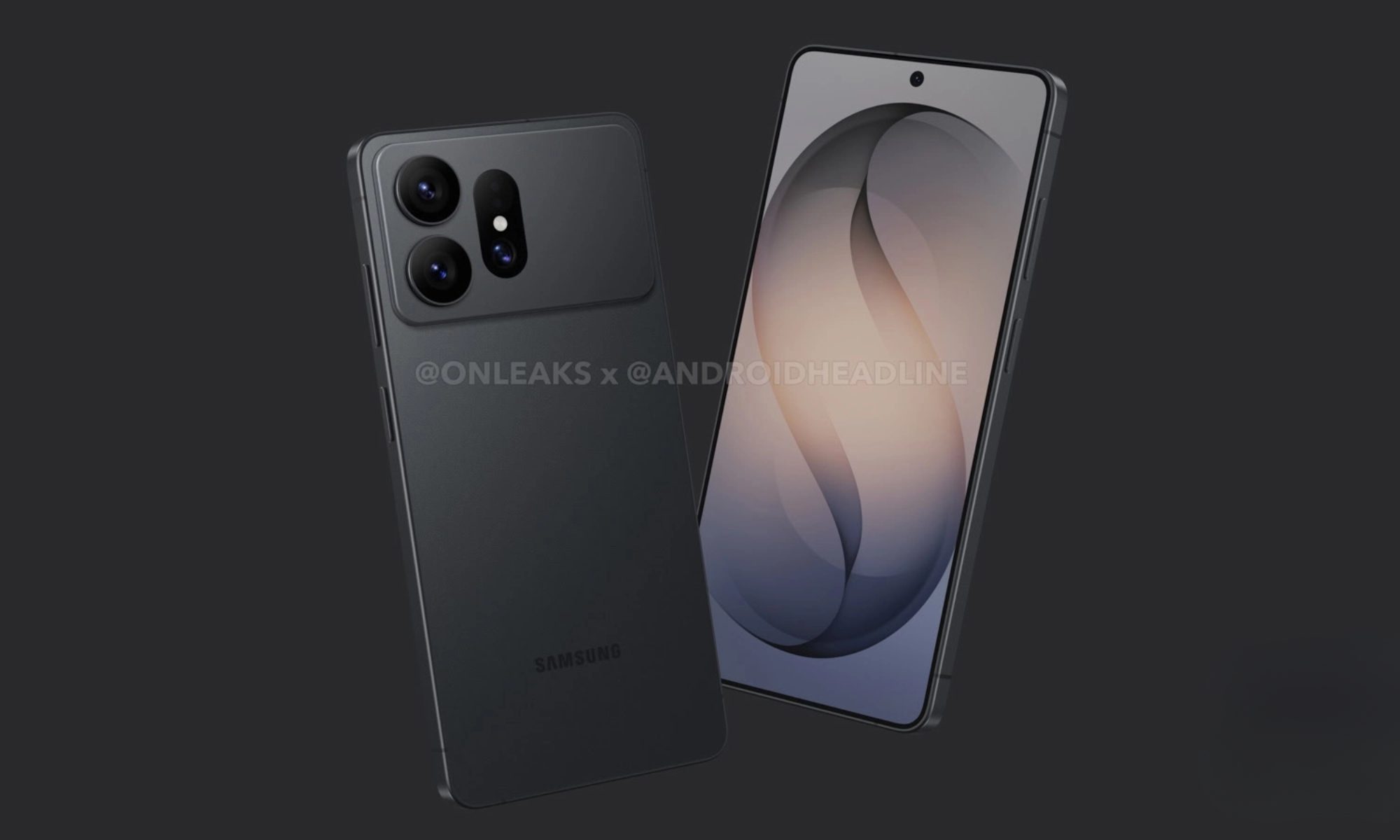
The Galaxy S27 Ultra could use an Exynos processor for the first time since 2022

Published

on

Samsung may be preparing to put its own processor back inside the Galaxy S Ultra after a five-year absence. A report from Korean publication MoneyToday claims the company is developing an Exynos 2700 version of the Galaxy S27 Ultra, which would be the first Ultra model to use Exynos since the Galaxy S22 Ultra launched in 2022.

Recent Galaxy S Ultra models have relied on Qualcomm’s Snapdragon chips, and the Galaxy S27 Ultra had also been expected to stick with Qualcomm.

Samsung may finally trust Exynos with the Ultra again

The report says Samsung has ordered Galaxy S27 Ultra motherboards designed around the Exynos 2700, indicating that development of an Exynos-powered model is underway. Samsung had already been expected to use the Exynos 2700 in several Galaxy S27 models outside the US. The Ultra was the notable exception.

Previous reports may help explain the change. Early estimates have pointed to a 19% multi-core performance advantage over the Snapdragon 8 Elite Gen 6 in Geekbench 6.5, along with a 9.5% lead over the higher-end Pro version.

The Exynos 2700 is also reportedly targeting stronger GPU performance at lower power and lower overall power consumption. Those figures remain early claims rather than independently verified results, but bringing the chip to the Ultra would suggest Samsung is quite confident in the chip. The report cites an insider who has stated, “It is unusual for an Exynos version to be added when the major development process for Snapdragon was nearly complete. This signifies high expectations for the proprietary AP (Application Processor).”

Advertisement

The US could still stick with Snapdragon

Qualcomm is not being pushed out of the Galaxy S27 Ultra. Snapdragon-powered models are reportedly still in development, with the United States expected to receive Qualcomm’s chip while markets such as Korea could get the Exynos 2700.

Samsung could therefore also return to its familiar regional processor split. The Galaxy S22 Ultra shipped with an Exynos 2200 primarily in Europe and the UK, along with some parts of the Middle East, Africa, and some other regions. All that said, the phone is still months away from launch, so it is too soon to treat the report as fact.

Source link

Advertisement
Continue Reading

Tech

The Samsung Galaxy S25 Edge is 50% off right now

Published

on

Samsung’s thinnest phone ever just had its price cut in half.

Halving the price on a phone this new is rare for Samsung, and the Galaxy S25 Edge is exactly that, now £599 instead of its usual £1,199, a straight £600 saving on the brand’s super-slim smartphone.

Deal Samsung Galaxy S25 Edge 256GB Titanium JetBlackDeal Samsung Galaxy S25 Edge 256GB Titanium JetBlack

Samsung Galaxy S25 Edge drops to £599 in this huge 50% off deal

At just 5.8mm thick with a 200MP camera and Snapdragon 8 Elite chip, the Samsung Galaxy S25 Edge is down to £599, a £600 saving, 50% off.

Advertisement

View Deal

Landing at £599 puts it further below that range than any previous discount has managed.

Advertisement

Our tech expert Lewis Painter reviewed the Galaxy S25 Edge and called it a joy to use and hold, praising an uncompromising flagship screen and plenty of power packed into that impossibly slim, featherlight frame.

At just 5.8mm thick and 163g, the S25 Edge is built from titanium and glass, with a Gorilla Glass Ceramic 2 front that Samsung has never before fitted to any phone in its entire lineup. That slender body still houses a 6.7 inch AMOLED screen running at 120Hz with a sharp QHD+ resolution, delivering rich colours and deep blacks whether you’re scrolling social feeds or streaming HDR video late at night.

Advertisement

The Whatsapp LogoThe Whatsapp Logo

Get Updates Straight to Your WhatsApp

Advertisement

Join Now

A 200MP main camera sits alongside a 12MP ultrawide lens, and Painter found the digital zoom so convincing that a dedicated telephoto barely feels missed during everyday shooting out and about with friends and family.

Advertisement

Powering all of this is a custom Snapdragon 8 Elite chipset paired with 12GB of RAM, giving the Galaxy S25 Edge enough muscle to fly through apps, games, and Galaxy AI tools without breaking stride.

Samsung rarely lets a flagship this new drop by half, so getting the Galaxy S25 Edge at £599 while that headline design and power remain fully intact is very well worth acting on right now.

SQUIRREL_PLAYLIST_10148964

Advertisement

Advertisement

Source link

Continue Reading

Tech

Amazon’s 2026 Holiday Deals Are About to Look Better Than They Are

Published

on

If you’ve been shopping for an Amazon Kindle or smart speaker in the past week, you might’ve noticed some brand-new prices. That’s right: Amazon has hiked prices by $20 to $100 on its popular devices like the Echo, Eero, and Fire Stick.

It’s not alone in this move. We’ve seen similar increases from other tech companies like Apple and Kobo, both of which raised prices this summer. Amazon declined to comment to WIRED as to why it made these price hikes, but one Amazon spokesperson commented to CNET that it was due to rising prices in memory and storage components.

It’s still hard not to feel like companies are raising prices simply because they can—and as a way to make upcoming Prime Day and Black Friday sales look better than they really are. The new prices spread across all of Amazon’s hardware categories, hitting its Kindle e-readers, Echo smart speakers, Eero routers, and Fire TV devices—especially the more affordable and popular products in those categories.

In fact, many devices are already “on sale,” but the sale prices are around what used to be the base price. That means discounts will look good this holiday season, but you’ll just be paying what the item cost a couple of months ago.

Advertisement

Here are all of the price changes on Amazon’s devices, and my rundown on which devices remain a good buy.

New Kindle Prices

Kindle Scribe Colorsoft and Kindle Scribe  side by side two digital tablets with attached stylus

The third-gen Kindle Scribe (left) and Kindle Scribe Colorsoft.

Photograph: Nena Farrell

If you’re looking for a Kindle, all of these models have faced a price increase of at least $30, if not more.

The only category untouched is, interestingly enough, the more powerful of Amazon’s e-reader and digital notebook devices: the Kindle Scribe line. All of the Kindle Scribe models currently available (both the second and third gen and the color version) have remained the same price-wise. You’d think those would have risen too since the price hikes are supposedly due to storage and memory costs, but it’s Amazon’s e-reader-only devices that all increased in price instead.

Advertisement

New Echo Prices

The Echo Studio  and the Echo Dot Max.

The Echo Studio (second gen) and the Echo Dot Max.

Photograph: Nena Farrell

Many Amazon Echo speakers also rose in price, going up by anywhere from $10 to $100. The larger price increases are for the Echo Show devices, which come with a screen.

Source link

Advertisement
Continue Reading

Tech

NASA’s Canadarm Named 300th IEEE Milestone

Published

on

In the 1960s NASA began developing a system of reusable space shuttles to make its work more efficient and to reduce costs. The shuttles could launch like rockets, maneuver in Earth’s orbit, and land like airplanes. They also could carry large satellites to and from orbit.

Like other types of transportation, machinery eventually breaks down, and parts need to be replaced or fixed. And the cargo being carried to and from Earth has to be moved to its final destination. To complete such tasks, Spar Aerospace (now part of MDA Space) of Brampton, Ont., Canada, and the National Research Council in Ottawa developed a robotic arm, the Shuttle Remote Manipulator System. The project was a joint venture between the U.S. and Canadian governments.

Known as Canadarms, the robotic tools attached to shuttles’ exteriors. They allowed astronauts to handle and transfer tools, satellites, and other payloads. Inspections of the shuttle and repairs could be completed using the robots.

The system was first deployed in 1981 aboard Columbia’s second flight. Canadarm was used for 30 years on five shuttles and on the International Space Station.

Advertisement

The robotic arm was dedicated on 19 June as the 300th IEEE Milestone. The ceremony was held at MDA Space headquarters. The IEEE Toronto Section sponsored the nomination.

“It is appropriate that the 300th Milestone is the Canadarm,” says Michael Geselowitz, senior director of the IEEE History and Heritage group. “The technology spans aerospace, robotics, and computing fields of interest. It involves international cooperation between the United States and Canada, and it shows how IEEE and its members are at the cutting edge of many frontiers of science and technology.”

Seeking to collaborate with other countries on the reusable spacecraft, NASA invited Canada to participate in 1969. It took some time for the country’s officials to determine what technology it could contribute. They learned of a robot that loaded and replaced spent fuel bundles in Canada’s deuterium uranium nuclear reactors, according to the Milestone webpage. That robot, developed by DSMA-Atcon (also now part of MDA Space), inspired what would become the Canadarm.

A proposal was submitted in 1974 to design and build the Shuttle Remote Manipulator System. The robotic arm would unload the contents of the space shuttle’s payload bay. NASA approved the project, and development began in 1975.

Advertisement

Canada had no space agency at the time, so the country’s National Research Council coordinated the organizations that collaborated on the project. Spar Aerospace led the subcontractor team, which included DMSA-Atcon, CAE, and the Canadian subsidiary of RCA Corp. Engineers from the University of Toronto’s Institute for Aerospace Studies contributed to the project.

Building an arm for zero gravity

NASA had strict requirements for the robot: The arm had to be lightweight and small enough to fit on the shuttle, as detailed in an article published by the University of Toronto. It also had to move forward and backward, up and down, left and right, and rotate along three perpendicular axes (known as six degrees of freedom).

To achieve all that, engineer Peter Carlisle Hughes designed the robot with two shoulder joints, one elbow, and three rotating wrists.

“Each joint had six degrees of freedom, and the arm had six links so that it could grab anything from any angle and move it anywhere,” Hughes said in the article. The IEEE life member worked at the Institute for Aerospace Studies.

Advertisement

“This milestone is a reminder of the privilege we all have at MDA Space—as engineers, designers, builders, operators—to build technology that shapes history.” —Holly Johnson, MDA Space vice president

The arm was 50 meters long and weighed 400 kilograms. It was made of materials that could withstand outer space’s harsh environment: titanium, stainless steel, and graphite epoxy. The arm was so lightweight that it couldn’t support itself under Earth’s gravity, so it lay on air bearings on the lab floor at Spar’s Brampton headquarters.

CAE engineers, including IEEE Life Member David A. Weston, designed the display and control panel as well as the hand controllers astronauts would use to monitor and operate the robot.

Because the robotic arm was meant to work in zero gravity, a room that simulated a weightless environment was built to test it. A computer-based simulation facility was constructed in Spar’s headquarters to evaluate its controllability using two simulation models, according to the University of Toronto. RIGID, an early computer simulation model, tested every part of the arm except for its flexible properties. ASAD, which stood for “all singing, all dancing,” examined the arm’s movements, ensuring the joints operated correctly. Both were created by Hughes and Spar engineer Andrew A. Goldenberg, who is now a professor emeritus at the University of Toronto.

Advertisement

The facility was also used to train astronauts on how to use Canadarm.

It took five years for the first Canadarm to be completed. In February 1981, it was presented to NASA at the Kennedy Space Center in Cape Canaveral, Fla., and deployed that November.

Lift off into space

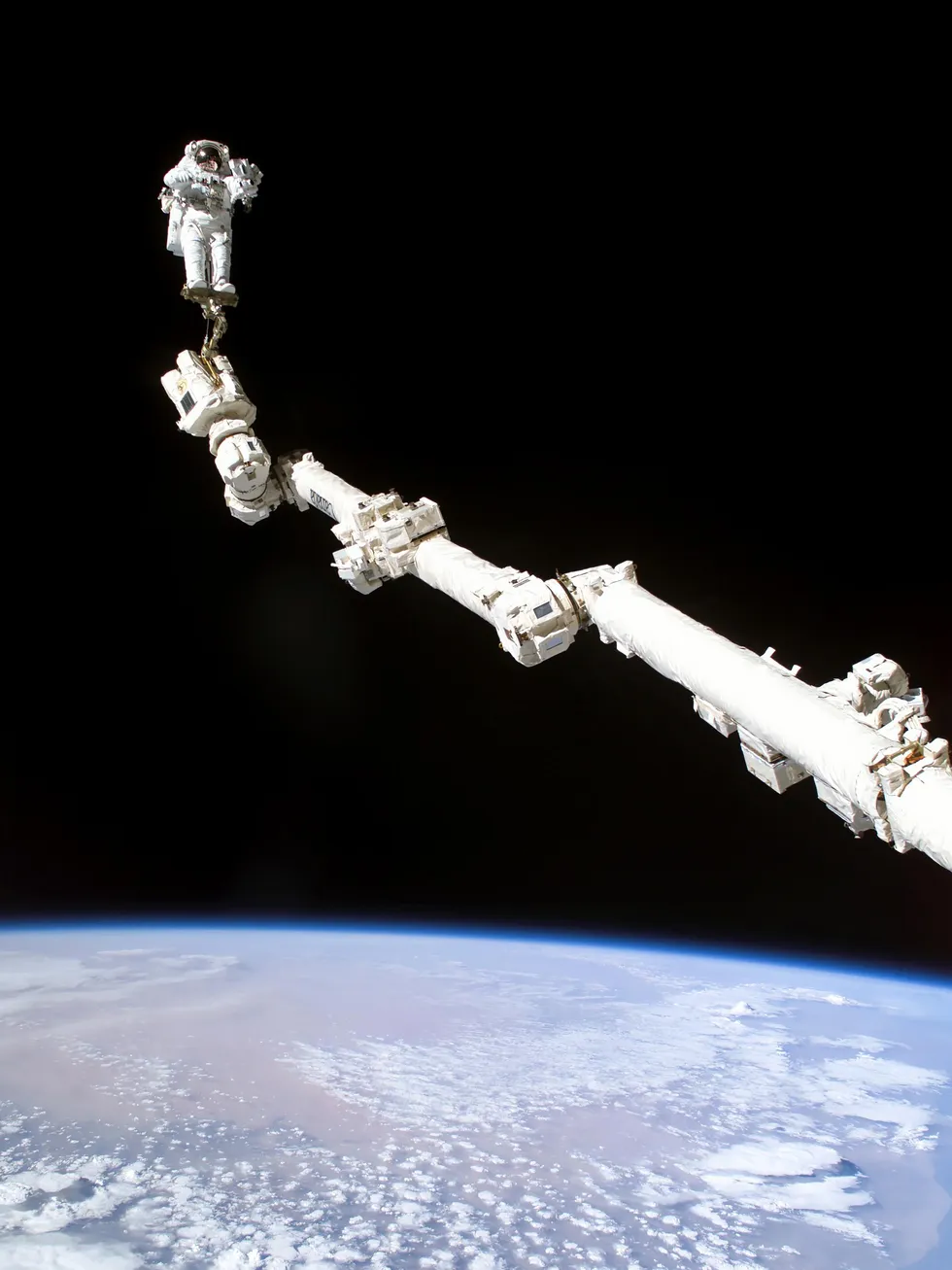
An Astronaut with their foot anchored to an extended robotic arm in low Earth orbit. Astronaut Stephen Robinson is anchored to a foot restraint on the extended Canadarm2 attached to the International Space Station during an extravehicular activity he conducted in 2005.NASA

The Canadarm was attached to the outside of the shuttle. Astronauts were able to monitor the arm’s movements through a live video feed provided by cameras installed on the wrist and elbow joints, according to the Milestone webpage. Using a hand controller and monitors located in the shuttle’s flight deck, astronauts handled and transferred tools, satellites, and other payloads weighing up 266,000 kilograms using minimal electricity.

NASA ordered four more systems. In 2001, Canadarm2 was attached to the International Space Station and used to help build the orbiting laboratory. It is a permanent part of the station, still completing maintenance tasks and moving supplies.

Advertisement

During the course of the 30-year shuttle program, the arms performed successfully and achieved the flight’s mission.

The original Canadarm took its final flight in July 2011 aboard the Atlantis shuttle.

Celebrating IEEE’s 300th Milestone

The IEEE Milestone dedication ceremony was held at MDA Space’s headquarters in Toronto, where the division that developed the Canadarm was located. The event brought together IEEE leaders and many of the engineers who helped develop the robotic system. Jill Gostin, the 2026 IEEE president‑elect, gave the opening remarks at the ceremony. She emphasized that the Milestone was not only celebrating the technology but also “the engineers, builders, programmers, and visionaries who believed technology could expand human possibility and who dared to push the boundaries of what humanity could achieve beyond Earth.”

To commemorate the achievement, Holly Johnson, vice president of MDA Robotics and Space Operations, and IEEE Life Senior Member David Michelson, chair of the IEEE Communications Society’s Communications History Committee, unveiled a bronze plaque that honored the technology. Michelson was the Milestone’s proposer.

Advertisement

“This milestone is a reminder of the privilege we all have at MDA Space—as engineers, designers, builders, operators—to build technology that shapes history,” Johnson said. “That same pioneering spirit that drove our team in those early days of space exploration now propels us into a new era as we work to build the infrastructure for the moon and beyond.”

The plaque, which was placed at MDA Space headquarters, reads:

In 1981 NASA first deployed a Shuttle Remote Manipulator System aboard the Space Shuttle. Developed by Spar Aerospace (now MDA Space) and the National Research Council of Canada, the Canadarm allowed astronauts to safely and reliably manipulate and transfer heavy payloads outside of the Shuttle, and to conduct inspections and repairs. This robotic system played a key role in the Shuttle and International Space Station programs, and revolutionized human spaceflight.

Reviewed by the IEEE History Committee and approved by the IEEE Board of Directors, IEEE Milestones recognize outstanding technical developments around the world that are at least 25 years old. The Milestone program is administered by the IEEE History and Heritage group.

Advertisement

To learn more about historical figures in engineering, IEEE Milestones, and IEEE History Center programs and events, check out The Institute’s IEEE Tech History collection. IEEE Spectrum also covers aspects of tech history.

From Your Site Articles

Related Articles Around the Web

Source link

Advertisement
Continue Reading

Tech

Microsoft will soon enable memory integrity by default on eligible Windows 11 PCs

Published

on

The big picture: Microsoft will soon enable a security feature designed to take advantage of virtualization capabilities available in modern x86 processors. However, the company doesn’t clearly explain that this represents a significant change to how Windows runs, with potentially substantial performance implications for some types of applications.

Microsoft recently confirmed that memory integrity protection will soon be enabled by default on some Windows 11 devices. The change will arrive in October 2026 for eligible Windows PCs and will provide stronger kernel-level protection against malicious software and other threats. However, it could also have a detrimental effect on game performance, which is likely a significant concern for consumers who aren’t part of a security-focused enterprise organization.

Memory integrity protection is built upon Virtualization-based Security (VBS), a technology designed to leverage hardware-level virtualization capabilities in Intel (VT-x) and AMD (AMD-V) CPUs to isolate sensitive data and processes within Windows. VBS protects crucial Windows components from external tampering, Microsoft explains.

However, VBS requires Windows to become a “guest” operating system running under Hyper-V, Microsoft’s native hypervisor. Once enabled, Hyper-V treats the Windows installation as an isolated virtual machine. Microsoft previously warned that VBS could hinder performance, recommending that PC gamers disable the feature (along with Hyper-V’s Type-1 virtualization) to significantly improve frame rates.

Advertisement

VBS and Hyper-V are still based on the same operating principles. However, Microsoft has now decided that security comes first and that VBS-based memory integrity protection should be enabled by default. Quality updates coming to Windows 11 next month will establish a new, stronger security baseline, but organizations will be able to change the default configuration by disabling VBS and memory integrity protection.

Furthermore, memory integrity will not be forced on systems where the option has already been disabled. Microsoft provides a complete guide to virtualization-based protections in modern Windows editions, warning that “some” applications and device drivers might be incompatible with this technology.

Memory integrity should theoretically prevent unauthorized code from running amok in a virtualized Windows environment, allowing only trusted kernel-mode code and drivers to run. Microsoft said the new option will provide greater protection while reducing complexity, establishing a new “foundation” for upcoming changes to the Windows security model.

Advertisement

Source link

Continue Reading

Tech

Palo Alto Networks paid $500M for Thrive-backed Console, sources say

Published

on

Palo Alto Networks paid $500 million in cash and stock to acquire Console, a two-year-old startup that uses AI agents to automate routine IT help desk tasks, according to two people with knowledge of the deal.

The companies officially announced the acquisition on Tuesday but didn’t reveal terms of the deal. Since its founding in 2024, Console has raised $29 million across two rounds: a $6.2 million seed led by Thrive Capital and a $23 million Series A co-led by DST Global and Thrive.

Before the sale, Console was valued at $157 million, according to PitchBook, delivering a rapid return for investors including SV Angel, Abstract Ventures, and notably Palo Alto Networks CEO Nikesh Arora, who participated as an angel investor. Palo Alto Networks declined to comment.

The cybersecurity giant said that it will integrate Console into Cortex, its platform that uses AI to automatically detect and neutralize threats. Console’s agentic functionality will allow security teams to investigate and resolve alerts using natural language, giving Cortex “the arms and legs to deliver autonomous security outcomes across the entire enterprise,” as Arora described in a statement.

Advertisement

Console was founded by Andrei Serban, coming shortly after his previous startup — code-security platform Fuzzbuzz — was acquired by Rippling. The startup, whose customers included Ramp, Flock Safety, and Scale AI, automated tasks like password resets, granted access to apps like Figma and Miro, and performed routine troubleshooting without direct human involvement.

As a startup, Console competed primarily with Serval, another ServiceNow challenger that hit a $1 billion valuation after raising a $75 million Series B round led by Sequoia last December. Serval started as an AI tech support tool and quickly expanded to provide AI assistance for human resources, legal, and finance departments. Console’s acquisition leaves Serval as the category-leader-to-watch among startups automating IT service management, one investor, who is not a backer of Serval, told TechCrunch.

Console is Palo Alto Networks’ seventh acquisition in 2026, according to PitchBook. Other VC-backed companies scooped up by the cybersecurity behemoth this year include Greylock and Lux Capital-backed observability platform Chronosphere, at a valuation of $3.35 billion, and Koi, a cyber startup backed by Battery and Team8, for $400 million.

When you purchase through links in our articles, we may earn a small commission. This doesn’t affect our editorial independence.

Advertisement

Source link

Continue Reading

Trending

Copyright © 2025