
Business
Akamai options flow shows bullish call spread targeting 18% gain by October




NASA’s Artemis II launched on April 1, 2026, carrying four astronauts, Reid Wiseman, Victor Glover, Christina Koch and Jeremy Hansen, on a nearly ten-day voyage around the Moon and back, the first crewed lunar mission since 1972. The crew splashed down on April 10 off the coast of San Diego, having traveled farther from Earth than any humans in history: 252,756 miles at its farthest point, surpassing the record Apollo 13 set in 1970, according to NASA’s own mission recap. For a few months this spring, the Eureka Manifesto’s central argument stopped being purely philosophical and became something that could be checked against an actual flight.
The mission wasn’t originally supposed to launch in April. A wet dress rehearsal in February uncovered a problem with helium flow in the rocket’s upper stage serious enough that the vehicle had to roll back to the Vehicle Assembly Building for repairs, pushing the launch back roughly six weeks. None of that delay makes the eventual mission less real, but it’s a reminder that even a well-funded national space agency running a single, heavily scrutinized flight still runs into the kind of schedule slippage that a civilizational-scale project, the kind Milner’s book is actually arguing for, would have to absorb many times over, not just once.
The Argument Being Tested
Yuri Milner’s 2021 book argues that humanity currently lacks anything resembling a shared mission, and that this absence carries long-term risk: without a unifying purpose that transcends national and institutional boundaries, the manifesto contends, a species tends toward fragmentation rather than the kind of sustained cooperation something like deep space exploration actually requires. Apollo, in Milner’s telling, briefly created that kind of unifying pull in the 1960s, and then let it lapse once the political motivation behind the program faded. The manifesto’s bet is that the pull can be rebuilt deliberately, this time around a scientific mission rather than a geopolitical one.
A Five-Step Case for a Shared Mission
The manifesto doesn’t stop at diagnosis. Milner lays out what he frames as a five-step case for how humanity might actually build a shared mission rather than simply wish for one, running from how science gets taught in schools, reorienting curricula around what he calls the Universal Story rather than a set of disconnected subjects, through to the kind of sustained, multi-decade funding commitments that outlast any single government’s term in office. Education is the step that shows up most often in his other public arguments, but it’s positioned in the book as the first move in a longer sequence, not the whole plan.
The mission, as the manifesto frames it, only holds together if the early steps, teaching the story, funding the search, actually feed into the later ones: sustained cooperation on projects too large and too slow for any one institution to finish alone. A single mission like Artemis II can demonstrate that the appetite for that kind of project still exists. It can’t, on its own, prove the later steps will hold once the immediate excitement fades.
What a Real Mission Complicates
Artemis II is a useful, imperfect test of that idea. It is unambiguously a national program, run by NASA with a mostly American crew, which cuts against the manifesto’s argument that a unifying mission needs to sit above any single nation’s interests. But the mission’s record-setting distance and its status as the first crewed lunar flight in five decades did produce something closer to the shared public attention Milner’s argument depends on than most single national space programs manage: coverage well beyond the usual space press, and a moment where the case for a shared human project in deep space had an actual result to point to rather than a hypothetical one.
Where the Manifesto’s Case Gets Harder
The manifesto’s own weakest point is also its most testable one. A single successful flyby doesn’t prove that public attention translates into the kind of sustained, multi-decade commitment the Eureka Manifesto argues is required. Apollo’s own history is the cautionary example sitting inside the book’s argument: enormous public interest during the missions themselves, followed by a rapid falloff once the program ended and no equivalent successor was funded for decades. Whether Artemis II is a genuine restart of a durable mission or another peak followed by a familiar lull isn’t a question Milner’s book can answer on its own; it’s a question the next several years of funding decisions will answer for it.
NASA has already committed to Artemis III as the next step, a mission intended to actually land astronauts near the lunar south pole rather than simply circle the Moon. That commitment is the kind of concrete follow-through the manifesto’s argument needs to hold up, since a single successful flyby with no funded sequel would look, in hindsight, exactly like the pattern Apollo already set. A funded, dated follow-on mission is a meaningfully different signal than a one-off achievement with no stated next step, even if it’s still a long way from the multi-decade commitment the book actually argues for.
The Bet Behind the Bet
That uncertainty is presumably why Milner’s support for this argument runs well beyond a single book. His Giving Pledge commitment and his backing of Breakthrough Initiatives, the program that funds Breakthrough Listen’s search for life beyond Earth, both function as a hedge against exactly the kind of falloff the manifesto warns about: money committed on a timeline long enough to outlast any single mission’s news cycle, whether or not the public’s attention holds. Artemis II came home safely and set a record. What the Eureka Manifesto actually needs is for that not to be the last one people remember.



For decades, ADHD carried an image problem: it was seen as something that happened to fidgety eight-year-olds who couldn’t sit still in class, not to accountants, nurses, or software engineers juggling a mortgage and a career. That picture is rapidly falling apart. A growing number of adults are being diagnosed for the first time well into their thirties, forties, and even fifties, often after years of quietly assuming their struggles with focus, follow-through, and emotional regulation were simply personality flaws.
The delay isn’t a minor inconvenience. It shapes careers, relationships, and self-image in ways that are difficult to undo, even after a diagnosis finally arrives.
Growing Up Undiagnosed
Many adults who are diagnosed later in life were, by all appearances, doing fine as children. They earned decent grades, stayed out of trouble, and didn’t display the hyperactivity that teachers and parents were trained to spot. What they were doing, often invisibly, was compensating. Bright, verbal children can mask inattentiveness for years by relying on memory, structure imposed by others, or sheer effort. The cracks tend to show up later, when school structure disappears and adult life demands independent planning, sustained attention across long projects, and the ability to manage competing priorities without anyone checking in.
By the time these patterns become undeniable, many adults have already internalized years of self-blame. They don’t think “I might have an underlying, treatable condition.” They think “I’m lazy,” “I’m disorganized,” or “I just don’t try hard enough.”
When Focus Struggles Mask Something Deeper
That self-blame often has consequences beyond productivity. Chronic, unaddressed ADHD symptoms wear on a person’s mental health over time, and clinicians increasingly see the two conditions overlapping rather than existing side by side. Some clinical writing on neurodivergence has pointed out that people with ADHD and autism are three to four times more likely to experience clinical depression than the general population, a gap that reflects the ongoing exhaustion of navigating an environment that wasn’t built for how their brain works. A closer look at whether depression is neurodivergent explores this overlap in more depth, examining how depression that resists standard treatment may sometimes be better understood through a neurodevelopmental lens rather than a purely chemical one. For adults with late-diagnosed ADHD, that framing can be validating: the low mood, the fatigue, and the sense of being perpetually behind may not be a separate problem stacked on top of ADHD, but a downstream effect of living with it unrecognized for years.
This is part of why clinicians now recommend that anyone being evaluated for depression, especially depression that hasn’t responded well to typical treatment, also be screened for underlying attention and executive-function differences. Treating the mood symptoms alone, without addressing the root pattern driving them, tends to produce partial and short-lived improvement.
What the National Data Shows
The scale of this issue is larger than most people assume. According to a 2024 CDC analysis published in the Morbidity and Mortality Weekly Report, roughly 6.0 percent of U.S. adults, an estimated 15.5 million people, had a current ADHD diagnosis as of late 2023. Just as notably, more than half of adults living with ADHD were not diagnosed until adulthood, with the gap between childhood and adult diagnosis particularly pronounced among women. That single data point helps explain a pattern many therapists and primary care providers now see routinely: a patient in their thirties or forties, often a woman, arriving for an evaluation of anxiety or depression, and leaving with an ADHD diagnosis that reframes everything else.
Recognizing the Signs in Adulthood
Adult ADHD rarely looks like the hyperactive stereotype. It tends to show up as chronic lateness despite genuine effort to be on time, a graveyard of unfinished projects and open browser tabs, difficulty starting tasks that aren’t urgent or interesting, and a pattern of intense focus on some activities alongside near-total inability to engage with others. Emotionally, it can look like heightened sensitivity to criticism, a short fuse that feels disproportionate to the trigger, and a persistent undercurrent of guilt about not living up to one’s own standards.
None of these traits, taken alone, points clearly to ADHD. Together, and especially when they’ve been present since childhood even if unnamed, they form a pattern worth discussing with a clinician.
Getting an Accurate Diagnosis
A proper evaluation typically involves a detailed developmental history, standardized rating scales, and a conversation about how symptoms show up across different areas of life, not just at work. Because ADHD so often travels alongside anxiety, depression, or both, a thorough clinician will also screen for those conditions rather than treating the most visible symptom in isolation.
For adults who receive a diagnosis later in life, the response is often a strange mix of relief and grief: relief at finally having language for a lifelong experience, and grief over the years spent believing the problem was a personal failing rather than a treatable, well-understood condition. Neither reaction is wrong. Both tend to fade as treatment, whether medication, therapy, coaching, or some combination, starts to close the gap between how hard someone has always worked and how much they’ve had to show for it.

Foreign investors register companies in Thailand via structuring, name reservation, incorporation, and licensing, depending on activities and ownership limits, with options like BOI promotion or US-Thailand Treaty benefits.
Company Formation Process in Thailand
Foreign investors typically establish a company in Thailand by following steps such as company structuring, reserving a company name, registering with the Department of Business Development (DBD), and completing necessary tax, licensing, and employment registrations. The specific pathway depends on the company’s activities and the extent of foreign ownership, which influences licensing and regulatory requirements.
Foreign Ownership and Activity Restrictions
A Thai-incorporated company is generally considered foreign under the Foreign Business Act (FBA) if foreigners own at least 50% of its capital. Certain business activities are restricted for foreign investors, making the company’s intended operations vital for determining permissible ownership levels and licensing options.
Licensing and Special Routes for Foreign Investors
For restricted activities, a foreign-owned company may need a Foreign Business License (FBL). Alternatively, companies with BOI promotion can obtain a Foreign Business Certificate, while US investors might qualify under the US-Thailand Treaty of Amity, subject to specific criteria. Establishing directors, signing authorities, and reserving a compliant company name are essential steps before incorporation.
Read the original article : Step-by-Step Company Registration Process in Thailand for Foreign Investors

The Real Risk to Markets of Trump’s Frustration at High Interest Rates

The yen’s U-turn continued Monday in Asia, with the currency strengthening to a more than six-month high against the dollar as the greenback softened in holiday-thinned trade.
The yen rose to its strongest intraday level since late February, extending a recovery that gathered momentum last week as markets became more convinced that the Bank of Japan is preparing to raise interest rates. The dollar was last 1.2% lower at 154.38 yen after touching 154.04 earlier.
Copyright ©2026 Dow Jones & Company, Inc. All Rights Reserved. 87990cbe856818d5eddac44c7b1cdeb8
Business
Who Will Win The 2026-27 Champions League? PSG, Arsenal And Bayern Lead Early Odds As Season Begins This Week

The 2026-27 UEFA Champions League gets underway this week, with reigning back-to-back champion Paris Saint-Germain, Premier League contender Arsenal and perennial German power Bayern Munich emerging as the clear frontrunners in early betting markets and predictive models heading into Europe’s most prestigious club competition.
PSG enters the new season as the favorite to become the first club to win three consecutive Champions League titles since the tournament adopted its current format, having lifted the trophy for the second straight year following a penalty-shootout win over Arsenal in last season’s final. FanDuel Sportsbook opened PSG as the +500 favorite in this year’s futures market, with Arsenal and Bayern Munich following closely behind at +650, according to odds compiled by Vegas Insider. Separately, William Hill’s latest market places PSG at the front of the betting alongside Arsenal, Bayern Munich and Barcelona sitting close behind, with Real Madrid, Manchester City and Liverpool rounding out a group of prominent contenders in what oddsmakers have described as one of the most competitive fields in years.
Statistical modeling has offered a somewhat different picture than the betting markets, with Opta’s supercomputer projections placing Arsenal, rather than PSG, as the most likely eventual champion. According to Opta Analyst, which ran 10,000 simulations of the entire 2026-27 season, Arsenal emerged victorious in 20.9% of simulated outcomes, narrowly ahead of Bayern Munich’s 19.4% win rate. Manchester City was the only other club given better than a 10% chance of lifting the trophy, at 12.3%, while PSG’s title defense was projected at just a 7.1% probability of making it three championships in a row.
Opta’s analysis pointed to Arsenal’s historic 2025-26 league-phase performance as a key factor behind the club’s status as statistical favorites this time around. The Gunners finished atop the league phase last season, becoming the first team in the competition’s current format to win all eight of its league-phase matches. Despite that dominant regular-season showing, Opta’s model gave Bayern Munich the edge specifically in this year’s league-phase table, projecting the German champions to finish top of the standings in more simulations than any other club, a distinction complicated by the fact that Arsenal must travel to face Bayern away from home during this season’s league phase.
Bayern Munich’s case as a genuine title contender has been bolstered by the club’s recent track record of sustained deep runs in the competition, even without lifting the trophy since the 2019-20 season. According to William Hill’s analysis, Vincent Kompany’s Bayern side has reached at least the quarterfinals in each of the past seven Champions League campaigns, a level of consistency few clubs in Europe can match. Bayern was eliminated by eventual champion PSG in last season’s semifinals, though the German club had actually entered the second leg of that tie as betting favorites to win the entire competition, following a chaotic 5-4 first-leg loss in Paris, before a 1-1 draw in Munich ultimately ended their run.
William Hill’s analysis also pointed to Bayern’s continued domestic dominance in the Bundesliga as a structural advantage heading into this year’s European campaign, noting that the club’s ability to rotate its squad and prioritize Champions League fixtures while other contenders remain locked in tighter domestic title races has historically given Bayern meaningful flexibility during the European campaign’s most demanding stretches.
Manchester City enters this season under new manager Enzo Maresca, looking to recapture the European success the club first achieved in 2022-23 under previous management. According to Squawka’s analysis of this year’s market, City possesses the quality and squad depth to compete with any team in the competition, though the club has struggled to replicate its earlier continental success in the three seasons since that title, reaching only the quarterfinals, the knockout play-off round and the round of 16 in successive campaigns since.
This year’s Champions League draw, completed in late August, has already produced a number of high-profile matchups within the competition’s expanded 36-team league phase. According to Covers.com’s breakdown of the draw, defending champion PSG will face both Barcelona and Manchester City during the league phase, while Arsenal has drawn both Real Madrid and Bayern Munich among its eight league-phase opponents, giving the Gunners an especially demanding early schedule that will offer a clear indication of just how legitimate a title contender the club has become.
The competition’s format continues to reflect changes introduced in the 2024-25 season, replacing the traditional group stage with a single 36-team league phase in which every club plays eight different opponents rather than three within a smaller group. That expanded format runs from September through January, with the knockout phase playoff round beginning in February 2027. According to Sportsbook Review, the knockout phase draw is scheduled for Feb. 26, 2027, with the tournament’s final set for Saturday, June 5, 2027, at the Metropolitano Stadium in Madrid.
With qualifying having concluded on Aug. 26 and the competition proper beginning this week, 81 teams from 53 different national football associations are participating in the 72nd edition of Europe’s premier club competition. As the league phase unfolds over the coming months, early results against high-profile opponents like Arsenal’s matchups against Real Madrid and Bayern Munich, and PSG’s fixtures against Barcelona and Manchester City, are expected to offer the clearest early signals yet of which clubs possess genuine championship credentials heading into the knockout rounds next spring.
For now, oddsmakers and statistical models alike suggest a genuinely open field heading into the 2026-27 campaign, with PSG’s bid for an unprecedented third consecutive title facing serious challenges from Arsenal, Bayern Munich and a cluster of other traditional European powers, each bringing distinct strengths and question marks into what analysts widely expect to be one of the most closely contested Champions League seasons in recent memory.

New independent director Chris Stone has been appointed acting managing director of Black Cat Syndicate.

Chinese memory-chip maker ChangXin Memory Technologies sought to reassure investors that it is gaining ground in higher-end memory markets, citing advances in smartphone and artificial-intelligence technologies.
The update comes as the company builds on a sharp turnaround in profitability and seeks to move beyond the highly cyclical commodity memory market.
Copyright ©2026 Dow Jones & Company, Inc. All Rights Reserved. 87990cbe856818d5eddac44c7b1cdeb8

Artificial intelligence has crossed an important threshold in British business. It’s no longer something companies are merely discussing, testing in innovation teams or watching from a safe distance. People are using it, and they’re using it a lot.
The latest UK Business Data Survey found that 41 per cent of businesses handling digital data now use AI for at least one purpose. Among large companies, that figure rises to 82 per cent. Separate research from the Office for National Statistics suggests adoption may be moving even faster among workers themselves, with 55 per cent of employees reporting that they use AI for work or education.
Those numbers definitely sound impressive. But they also raise a more difficult question for British business. If we’re adopting AI this quickly, when do we start seeing the transformation we’ve been promised?
For investors, business leaders and policymakers, that question matters much more than the number of people who’ve opened an account with ChatGPT or had Copilot rewrite an email. Britain doesn’t have an AI awareness problem anymore. Increasingly, it has an AI integration problem.
Using AI isn’t the same as changing a business
The government’s own data makes the distinction quite stark. Among businesses already using AI, only 21 per cent say their AI tools are integrated into existing business systems.
When you look at what companies are actually doing with the technology and the picture becomes clearer. The most common reported use of AI is researching information, cited by 28 per cent of businesses handling digital data. Another 21 per cent use it to summarise information or draft reports and correspondence.
These are obviously useful applications. I use AI tools myself and can see the value they offer in removing some of the friction from everyday work. But we need to be careful about describing every efficiency gain as some sort of ‘transformation’.
As an investor, I’m much more interested in what happens when AI moves deeper into a company. Is it changing how customers are served or how products are developed? Can it shorten a process that previously took days or more to hours? Is proprietary company data being used more smartly? Can management make better decisions because information that once sat in different systems can now be understood together?
These are harder changes to make. They’re also where the economic value is likely to become much more significant.
Only 5 per cent of AI-using businesses in the UK Business Data Survey reported using automated decision-making systems. Just 6 per cent said they use data to develop, train or improve AI or automated decision-making systems. Much of British business, in other words, is still near the beginning of this process.
Workers are moving faster than their companies
The gap between individual and corporate adoption is particularly interesting. ONS research found that 55 per cent of employees were using AI for work or education, while 35 per cent of businesses with ten or more employees reported using at least one AI technology.
There’s something encouraging about that. Technologies often spread because people discover that they solve a real problem, rather than because somebody at head office tells them to use one. But it creates challenges too, particularly when individual experimentation moves ahead of the systems and rules surrounding it.
The UK Business Data Survey points to that governance challenge. Its detailed findings show that only 5 per cent of businesses using AI have a formal written policy governing its use or development. Among large businesses, however, the figure rises to 56 per cent.
That’s a remarkable difference. It suggests that the emerging AI divide in Britain isn’t simply between companies that use the technology and those that don’t. There’s also a divide between businesses with the resources to integrate and govern it properly and those that are largely figuring things out as they go.
The answer shouldn’t be for smaller businesses to slow down with layers of bureaucracy. They don’t need an AI committee for the sake of having one. But they do need to understand what information employees are putting into external systems, where decisions remain subject to human judgement, and which uses of AI carry genuine commercial, legal or reputational risk.
Good governance should make adoption easier, not harder.
Productivity is appearing before revenue
There are already signs that AI is delivering economic benefits. Research published by the Department for Science, Innovation and Technology earlier this year found that 56 per cent of businesses currently using AI reported increased employee productivity.
But there’s another number that deserves at least as much attention. Some 77 per cent of businesses using AI said they hadn’t yet seen any change in revenue. Only 12 per cent reported an increase.
I don’t find this particularly surprising. Productivity gains should appear before many of the larger commercial benefits. A member of staff saving an hour on a task has value, but it doesn’t automatically create a new customer, a better product or a new source of revenue.
The next stage is turning those accumulated efficiencies into something more substantial. Businesses need to ask what they can now do that they couldn’t do before, rather than simply how they can do existing tasks slightly faster.
This distinction will become increasingly important for investors too. Asking a management team whether it “uses AI” is already becoming a fairly meaningless question. Before long, almost every company will be able to answer “yes”.
I’d rather know where AI sits inside the business, which processes have changed because of it, what measurable improvement has followed and whether competitors could easily reproduce the same advantage. Those questions tell us much more about whether AI is creating lasting value.
Britain doesn’t need to build everything
The debate about Britain’s position in artificial intelligence often gravitates towards comparisons with the United States and China, which is understandable. Frontier models, computing infrastructure, chips and research capability matter enormously, and the UK should remain ambitious about its role in all of them.
But Britain doesn’t have to dominate every single layer of the AI economy to benefit from it. Nor should its success be measured solely by whether the next global foundation model is built here or not.
The country already has considerable strengths in financial services, life sciences, professional services, advanced research, creative industries and technology. It also has millions of smaller businesses whose productivity matters enormously to the wider economy. For many of those companies, the opportunity isn’t to become an “AI company”. It’s to become a better company because of AI.
This may sound like a small distinction, but economically it could be the more important one. The productivity benefits of a technology don’t come only from the companies that invent it. They spread when businesses in other sectors reorganise around what the technology makes possible.
The latest numbers suggest Britain has become rather good at experimenting with AI. The challenge now is to move beyond experimentation and embed it into the far less glamorous machinery of business, from operations and customer relationships to product development, finance, logistics and decision-making.
If it can do that, the most important British AI story may not be the creation of one spectacular company. It may be thousands of existing companies becoming more productive, more competitive and better able to grow. That’s a harder transformation to capture in a headline, but it’s the one that could matter most.

Nicole Junkermann

Ivanka Trump draws ire over beach horseback riding video: ‘Let them eat cake’

Artemis II Came Home. Yuri Milner’s Eureka Manifesto Argument Just Got Real Data

Why Reading People's Confessions Online Feels So Good


-
 Tech8 hours ago
Memory prices are slowing because buyers ran out of money
-

 NewsBeat6 hours ago
England up in reading, maths and science rankings as Scotland and Wales dip
-

 Business10 hours ago
Egyptian TV Presenter Sarah Khalifa, 11 Others Sentenced To Death In Major Drug Trafficking Case In Cairo
-
 Tech10 hours ago
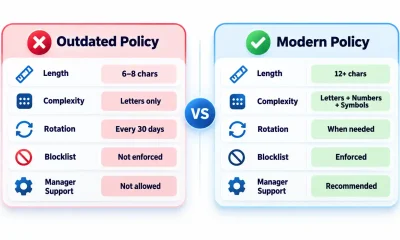
Strong Password Policy and Password Manager Guide
-
 NewsBeat5 hours ago
Tehran’s assertive rhetoric signals a new and dangerous phase in conflict
-

 Crypto World10 hours ago
Visa expands stablecoin card network to 160 programs
-

 Business10 hours ago
Claim Your Share Of $50 Million Disney Streaming Price Settlement By Sept. 8 Tonight
-

 Politics5 hours ago
The Ultimate September Reset Guide: How To Refresh Your Mind And Life This Autumn
-

 Tech5 hours ago
Google’s revived nuclear power plant gets $1.9B loan from US government
-

 Business7 hours ago
US-Canada tariffs: Canada braces for prolonged trade war as counter-tariffs on US take effect
-

 Crypto World9 hours ago
Arm Stock: Arm Extends Reach To Physical AI
-
 Fashion6 hours ago
New tops for women from EGO
-

 Business5 hours ago
Corning Stock Climbs On Multibillion-Dollar Verizon Network Deal
-

 Tech5 hours ago
ESP32-P4 Powers Video Alarm Clock
-

 Entertainment4 hours ago
You Can See Everything Trailer Reveals A24’s Elizabeth Holmes Documentary
-
Crypto World4 hours ago
Zcash (ZEC) Rockets 2,200% as Privacy Coins Become Crypto’s Biggest Outlier
-

 Crypto World10 hours ago
Stablecoins could save South Korean merchants up to $3.8 billion a year, budget office says
-

 Business10 hours ago
model backs CBD drinks brand
-
 Crypto World10 hours ago
Hyperliquid Season 3 Airdrop Wait Fuels a Meme Coin Machi Big Brother Promotes
-
 Entertainment10 hours ago
The 10 Most Influential Books of the 20th Century, Ranked
You must be logged in to post a comment Login