










Connect with us

Tech

Marantz’s MCR 60n Is a $1,000 All-in-One Hi-Fi System With CD, HEOS, Phono and Dirac Live

Published

on

The compact all-in-one hi-fi category is getting crowded for a very good reason. A growing number of listeners want serious two-channel performance without a rack full of components, but they also aren’t necessarily willing to abandon CDs, vinyl, streaming or their television just to simplify the system.

That has created an interesting opening between traditional integrated amplifiers and the new generation of streaming amps from Eversolo, WiiM and others. Marantz is jumping directly into that space with the new MCR 60n, a $1,000 compact all-in-one hi-fi system designed to handle both physical media and modern streaming without requiring consumers to build an entire stack of separate components. Marantz calls it its most capable compact music system to date. 

More importantly, the MCR 60n arrives at exactly the same $1,000 price as the Marantz MODEL M1, which raises an obvious question: does Marantz now have two very different answers for the same customer?

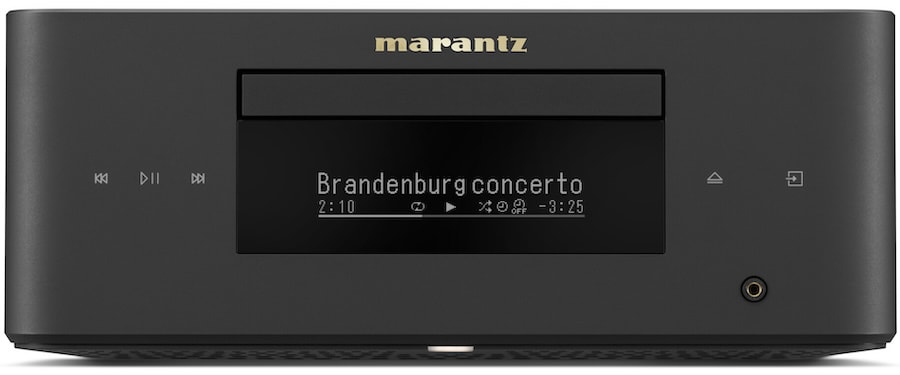
marantz-mcr-60n-front
Marantz MCR 60n (front)

Marantz MCR 60n: More Than Just Another Streaming Amplifier

According to Marantz, the MCR 60n is its most capable compact music system to date.

Inside its durable and stylish chassis, the MCR 60n combines CD playback, network streamingHDMI eARC compatibility, turntable connectivity, and premium amplification designed to deliver Marantz sound quality without unnecessary user complexity. With amplification built in, all you need is a good pair of speakers and you are ready to go.

Advertisement

Tuned by the Marantz Sound Master, the MCR 60n combines decades of hi-fi heritage with the latest streaming technologies in a single component.

Whether you are streaming hi-res music, playing discs from a CD collection, connecting a turntable, or upgrading your TV sound, the MCR 60n brings multiple sources together within one intuitive system designed to fit naturally into modern living spaces. Its compact footprint makes it equally suitable for a dedicated listening room, home office, bedroom, or living room, while Matte Black and Marantz Champagne Gold finishes provide two distinct design options. Champagne Gold, however, will not be available in North America.

Output Power & Speaker Configuration

To optimally support the Marantz sound, its new power supply is designed to provide greater current capability and increased amplifier headroom compared with older models. According to Marantz, this results in improved dynamics, stronger bass performance, and greater control across a wider range of loudspeakers.

Output power has been increased to 65 watts per channel into 4 ohms, providing a substantial performance improvement over its predecessor while maintaining the warm, detailed, and emotionally engaging Marantz sound signature.

Advertisement

With four channels of amplification, including Bi-Amp, Parallel Bridge-Tied Load (BTL), and dual speaker outputs, the MCR 60n allows users to optimize performance for different loudspeaker configurations or power two independent listening zones from a single compact amplifier.

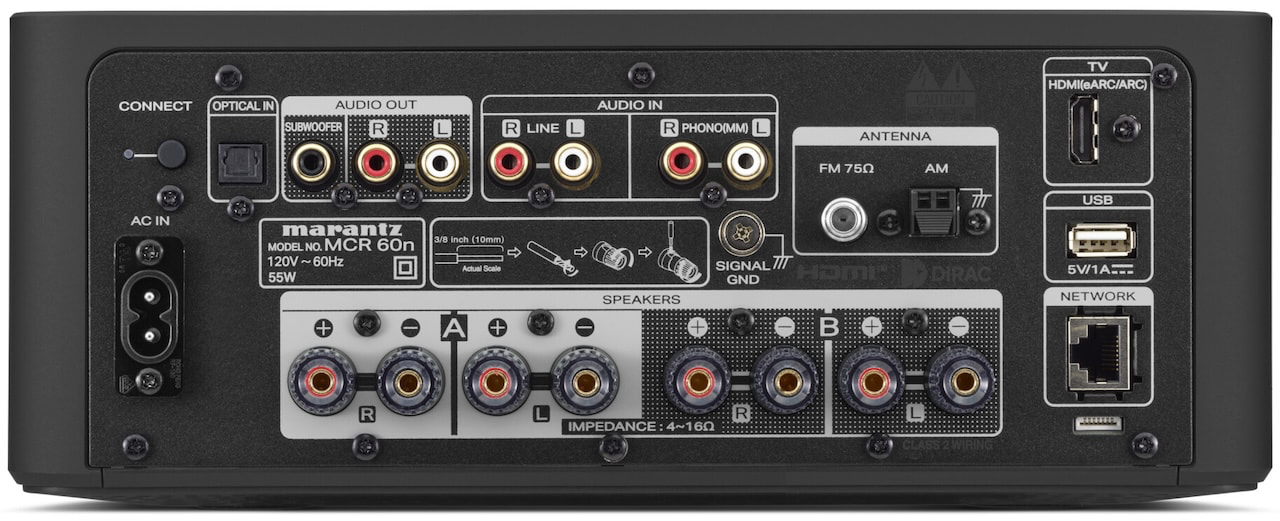
marantz-mcr-60n-rear
Marantz CD 60n (rear)

Content Access

For additional audio input flexibility, the MCR 60n also includes HDMI eARC. This allows easy integration with modern TVs, enabling high-quality stereo playback of TV sound while supporting HDMI-CEC volume control and Dolby Digital and Dolby Digital Plus decoding.

Advertisement. Scroll to continue reading.

Pro Tip: Keep in mind that Dolby Digital and Dolby Digital Plus are mixed down to two channels by the MCR 60n.

Advertisement

For vinyl enthusiasts, an included MM phono stage makes connecting a turntable easy, while a precision-engineered front-loading CD mechanism continues Marantz’s longstanding tradition of compact disc playback.

High-resolution music streaming is supported with PCM up to 384kHz/32-bit and DSD up to 11.2MHz, all powered by the latest HEOS networking platform. Built around the latest generation of HEOS, the MCR 60n provides a faster, more intuitive setup experience, along with access to streaming services, internet radio, and whole-home multi-room audio.

Spotify, TIDAL, and Qobuz Connect are supported, along with AirPlay 2 and Roon Ready, giving users plenty of flexibility in how they choose to stream music wirelessly.

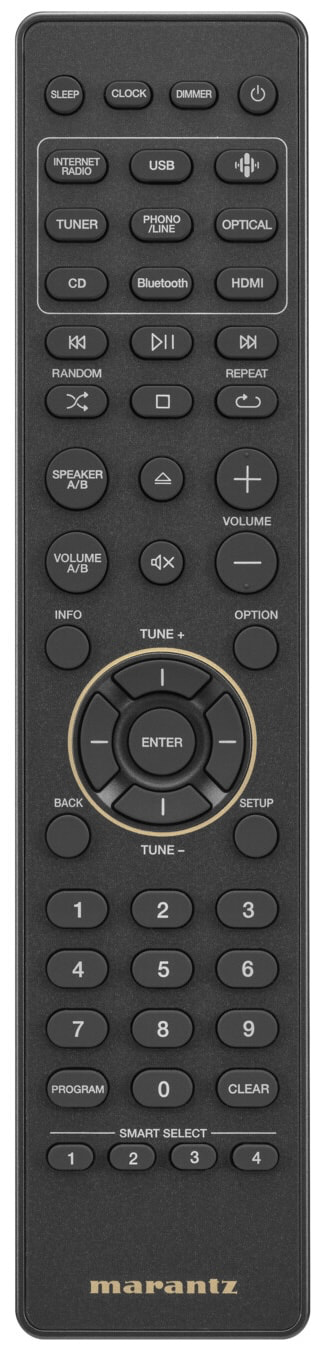
Four customizable Smart Select presets provide instant recall of favorite sources, listening modes, and volume settings with a single press of a button on the remote control.

Advertisement

Bluetooth functionality has also been expanded with both receive and transmit modes. This means you can send music from your phone to the MCR 60n or use wireless headphones to listen to music and TV content without disturbing anyone else.

marantz-mcr-60n-remote

Optimization for Any Room

A configurable subwoofer output with adjustable crossover settings is provided for more precise low-frequency integration, while Dirac Live Room Correction is available as an optional upgrade for stereo playback. If users take advantage of that option, they can calibrate the system for their listening environment to improve imaging, tighten bass response, and achieve greater tonal accuracy.

For added setup flexibility, variable audio outputs are also included. This allows the MCR 60n to function as a streaming preamplifier, making it equally suitable for driving active loudspeakers or integrating with existing Marantz components and vintage hi-fi systems. An Ethernet network port, USB input, optical digital input, and DAB tuner (Europe only) round out the feature set.

MCR 60n Specifications

Marantz Model MCR60n
Product Type  All-in-One Hi-Fi System
Price  $1,000
Number of Channels  2 or 4
Power Output 2 x 65 W or 4 x 33 W 
CD Compatibility  CD / CD-R/RW / WMA / MP3 
Tuner FM / AM (US)
DAB / DAB+ (Europe)
Network audio streaming  Yes
Streaming Support Spotify Connect / TIDAL / Deezer / Amazon Prime Music / Pandora 
AirPlay 2  Yes 
Roon Ready  Yes 
Internet Radio  TuneIn 
HEOS Multiroom and Streaming  Yes 
Bluetooth  Yes – Includes AptX
Bluetooth Headphone Transmission  Yes
USB Audio DSD / WAV / FLAC / AIFF / ALAC 
Lossy formats  MP3 / WMA / AAC 
Lossless formats  DSD / WAV / FLAC / AIFF / ALAC 
Gapless Playback  Yes (FLAC, WAV, DSD) 
Dirac Live Upgradability  Yes 
Tone Control Bass / Treble / Balance
Low Noise OLED display 3  line
Clock  Yes – with programmable timer and sleep timer
Audio Inputs 1 x Analog
1 x Digital Optical
1 x HDMI-eARC
Audio Outputs 1 x Analog 
1 x Subwoofer
1 x Main/Preout (AUX Assignable)
1 x Headphone 
Speaker Outputs Screw Type Terminals
Speaker A/B with individual volume control
Bi-amp
Parallel BTL
Freq. Response (Analogue In)  10Hz – 40kHz 
Signal to Noise Ratio (audio)  90 dB 
Input sensitivity/impedance (Analogue In)  200mV / 30 kohms 
Total Harmonic Distortion 1 kHz, 5 W, 4 Ω / ohms  0.1% 
Remote Control  Yes
Ethernet / WiFi  Yes
Power Consumption  55 watts
Standby Consumption  0.3 watts
Dimensions (WDH)  280 x 303 x 111 mm
11.0 x 11.9 x 4.4  inches
Weight 4.2 kg
9 lbs 4 oz 
Included in Box Main unit
AC cord
Remote control, batteries
FM antenna
AM antenna
Quick start guide 

Who Does the Marantz MCR 60n Compete With?

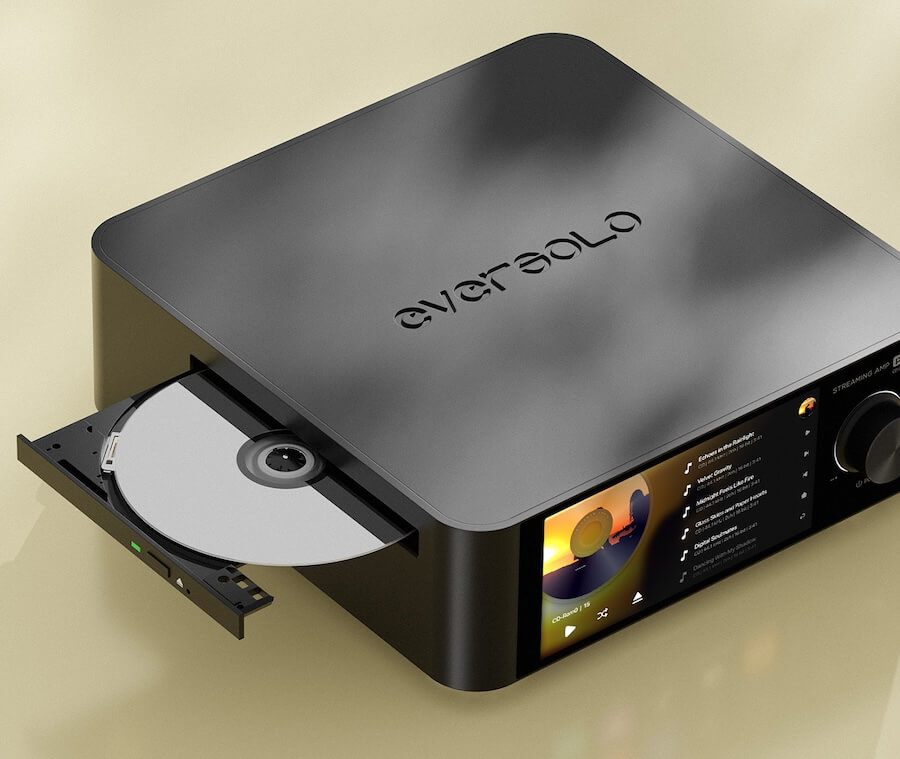
Eversolo Play CD Edition side angle
Eversolo Play CD Edition

The Eversolo Play CD Edition (2025 model) is a challenger sitting across the table. At $799, it already combines streaming, amplification, HDMI ARC, a phono stage, room correction, a large touchscreen and a built-in CD drive. It delivers 60 watts per channel into 8 ohms and offers the kind of interface and feature set that has made Eversolo one of the fastest-moving brands in this category.

And here is where Marantz has to earn the extra $201.

The MCR 60n offers HDMI eARC, HEOS, AirPlay 2, Roon Ready support, Bluetooth transmit and receive capability, Dolby Digital and Dolby Digital Plus decoding, and optional Dirac Live. It also carries a name that has been sitting in hi-fi racks for more than 70 years, which still matters to a lot of consumers.

Advertisement

But purely on features and price? Eversolo is not going to make this easy.

Advertisement. Scroll to continue reading.

For buyers who want the touchscreen, CD ripping capability and maximum functionality for the money, the Play CD Edition looks very difficult to ignore.

The Bottom Line

Marantz has clearly noticed two things: compact streaming amplifiers are everywhere, and CDs have stubbornly refused to disappear.

Advertisement

The new Marantz MCR 60n is the company’s $1,000 answer to both trends, combining a front-loading CD player, HEOS network streaming, HDMI eARC, an MM phono stage, USB and optical inputs, subwoofer connectivity and 65 watts per channel into 4 ohms inside one compact chassis. Optional Dirac Live Room Correction is also part of the package, and the MCR 60n can even operate as a streaming preamplifier with active loudspeakers or an existing hi-fi system. 

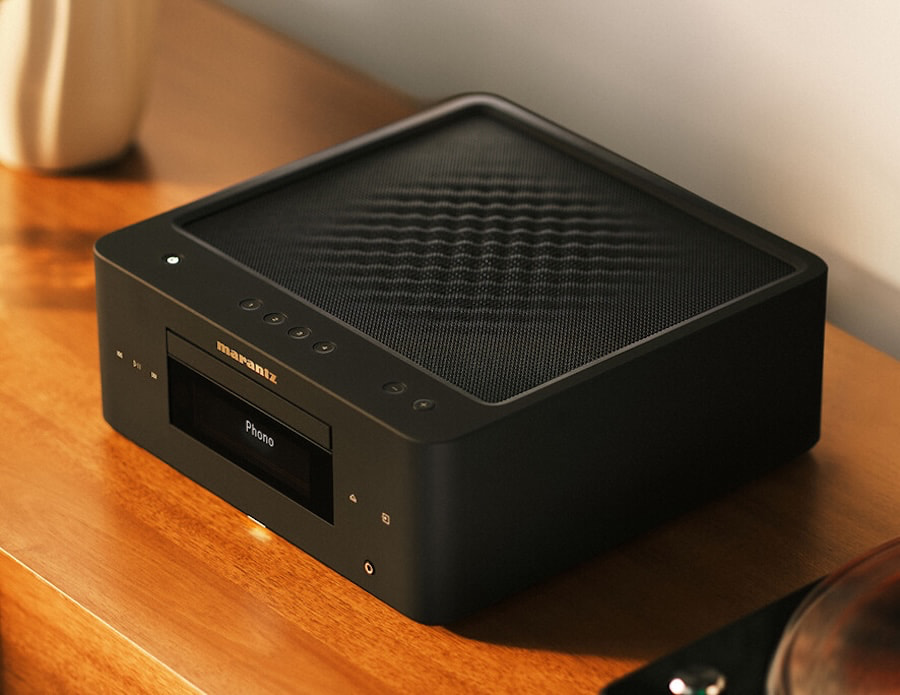
marantz-mcr-60n-angle-top
Marantz MCR 60n

That makes this considerably more interesting than another streaming amplifier with an app and a Class D output stage. Marantz is effectively betting that there is still a large group of listeners who stream Qobuz or TIDAL, watch television through HDMI eARC, own a turntable, and have a shelf full of CDs that they have absolutely no intention of throwing away. Considering where the market is going, that does not feel like a particularly risky wager.

And then things get slightly awkward.

The MCR 60n costs exactly the same $1,000 as the Marantz MODEL M1, one of our favorite compact streaming amplifiers and an Editors’ Choice winner earlier this year. The M1 offers considerably more amplifier power, but no CD player and no phono stage. The MCR 60n gives up some horsepower and responds with considerably greater source flexibility. Marantz has effectively created two different answers to the same $1,000 question.

Advertisement

Price & Availability

The Marantz MCR 60n is priced at $1,000 and is available from Marantz or Authorized Marantz Dealers.

Note: The similarly named Marantz Model 60n is a $1,600 streaming amplifier without CD playback released in 2024.

Source link

Advertisement
Continue Reading
Click to comment

You must be logged in to post a comment Login

Leave a Reply

Tech

Star Trek Turns 60

Published

on

“Star Trek” marks its 60th anniversary today, September 8, six decades after the original series premiered in 1966 and went on to become one of the most successful science-fiction franchises in television history. Outlets across the web are commemorating the milestone with full health reports, hot takes, behind-the-scenes retrospectives, and reflections on the franchise’s influence and what may lie ahead. The New York Times reports: As of 2026, the 60-year-old science fiction franchise boasts a fandom of carbon units — sorry, humans — that spans at least three generations. What began, in 1966, as a five-year space mission on the U.S.S. Enterprise to “boldly go where no man has gone before” now represents an anthology of space travel across more than 25 series and films in parts of two centuries. Where once it was James T. Kirk or bust, it’s not unusual to find fans who prefer other captains, like Picard, Janeway or Sisko. There are so many series to keep track of that fans often communicate using country code-like abbreviations for each installment: TOS (the original series), TNG (“The Next Generation”), DS9 (“Deep Space Nine”), ENT (“Enterprise”) and so on.

Outside the Trekiverse, disparities in generational slang, politics and social mores are practically a foregone conclusion. But “Star Trek” functions as connective tissue between fans past and present. Some of that tissue is just shared references: There will always be captain’s logs, timelines by stardate, warp factors one through 10, phasers and photon torpedoes and, every now and then, a doctor who insists, “I’m a doctor, not a ____!” The Vulcan salute has become a general symbol of geek-recognize-geek, but real Trekkies (or Trekkers, as some prefer) know that “Live long and prosper” is only half the message; the recipient is meant to say “Peace and long life” in response. But the series’ staying power, and the ease with which each generation finds its way into them, is an indication that fans of all ages share not only language, but values, in common. Here are some of our favorite Slashdot stories from the early days. The 2004 “Should Star Trek Die?” is an especially good callback today because it features LeVar Burton (Geordi La Forge in Star Trek: The Next Generation) arguing that Trek needs to disappear for several years to become special again…

Star Trek Lawsuit (1998)

Salon Writes on The Troubles with “Trek” (1999)

Advertisement

Star Trek’s Next Series (2001)

Should Star Trek Die? (2004)

UPN Officially Cancels ‘Star Trek: Enterprise’ (2005)

Read more of this story at Slashdot.

Advertisement

Source link

Continue Reading

Tech

OpenAI Says It Has Cracked One of Math's 'Millennium Problems'

Published

on

An anonymous reader quotes a report from The New York Times: OpenAIsaid on Tuesday that its newest artificial intelligence technology had solved one of the “Millennium Problems,” a collection of important unanswered math questions meant to push the world’s leading mathematicians to new heights. The announcement is an another clear sign that A.I. is fundamentally changing the upper reaches of mathematics, which have long been viewed as a pinnacle of human achievement. The change has excited some mathematicians, while stirring concern among others.

Over the past year, A.I. systems successfully solved a wide range of problems that have bedeviled mathematicians for decades. But these problems were not as complex, nor as closely watched, as the one that OpenAI’s technology has solved over the past several days. The Millennium Problems are among the most heavily researched in the field. “This is a spectacular culmination of the arc we have seen over the past twelve months,” OpenAI researcher Sebastien Bubeck said of the company’s new solution.

The company announced that one of its latest models, which has not yet been released to the public, needed just 88 hours to solve what mathematicians call “the Navier-Stokes existence and smoothness problem.” This problem involves a series of equations that are often used to predict the weather. The equations describe the movement of water and other fluids. The Navier-Stokes problem, which has no clear practical value, asks whether these equations completely break down in certain situations. OpenAI’s proof claims to have defined just such a situation.

This would imply, at least theoretically, that the laws of physics themselves would break down under certain conditions: that, for example, water could be made to spontaneously explode. But mathematicians and physicists do not believe that this mathematical breakdown could really lead to such an outcome in the physical world. The Navier-Stokes problem was one of seven “Millennium Problems” selected by the Clay Mathematics Institute in the year 2000 as a way of tracking the progress of mathematics in the new millennium. The institute, founded by an American businessman named Landon T. Clay, offered a million dollars for the first correct solution to each problem. Before OpenAI’s announcement, only one of the problems had been solved. OpenAI says it managed to solve the Navier-Stokes problem by coordinating as many as 10,000 AI agents, an extremely expensive process that may have cost millions of dollars in computing power.

Advertisement

For those curious about the findings, the company has released a paper (PDF) and formal Lean proof.

Read more of this story at Slashdot.

Source link

Advertisement
Continue Reading

Tech

OPPO Find X10 Pro Max Could Be the First Phone With Three 200MP Cameras

Published

on

Last year’s Find X9 was one of the best-value flagships overall. Now, OPPO has confirmed that the Find X10 and Find X10 Pro Max will launch this month. The launch is expected a week after Vivo’s X500 series, scheduled for September 21st. The Find X10 Pro Max is already known to have three cameras on the back, each with a 200-megapixel sensor. Before the phone’s launch, OPPO revealed more details about its camera features.

OPPO Find X10 Pro Max Camera Setup Detailed

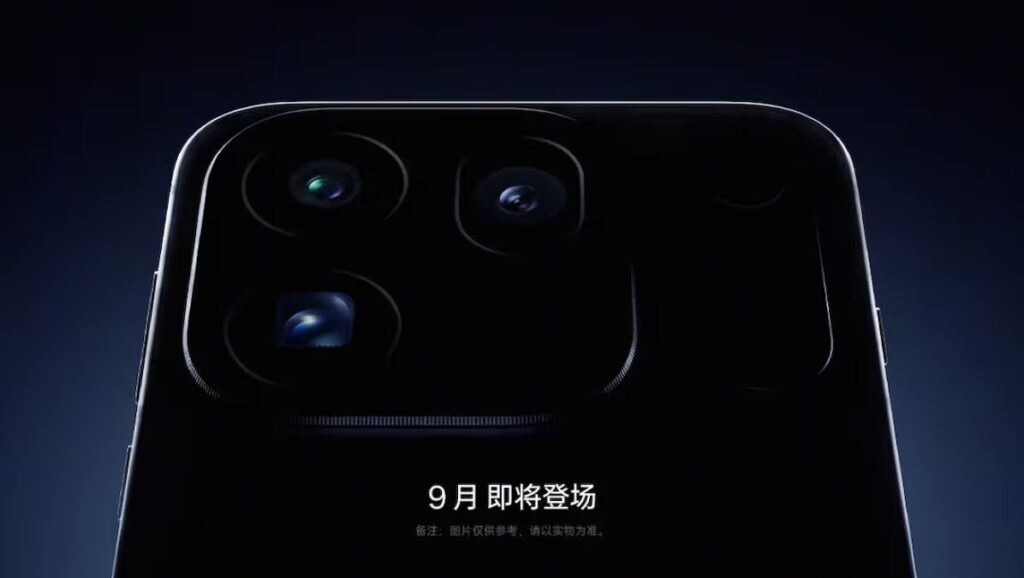
Closeup of the Find X10's camera

The OPPO Find X10 Pro Max is expected to focus heavily on camera performance. Reports suggest this smartphone will feature three 200MP rear cameras: a primary, ultra-wide, and periscope telephoto. This could make it the first smartphone with three 200MP rear sensors.

The primary 200MP camera could use Samsung’s 1/1.3-inch ISOCELL HPC sensor. It may feature an f/1.5 aperture and CIPA 6.5-level image stabilization. Moreover, the device could offer up to 17EV dynamic range to capture images in high-contrast environments. The ultra-wide camera could have a 200-megapixel sensor with an f/2.2 aperture and a 124-degree field of view. The camera could capture group photos and landscapes with excellent detail. The third 200-megapixel camera could serve as a periscope telephoto camera with an f/2.1 aperture and 7.5-level stabilization. OPPO could also add 10cm telephoto macro support for close-up photography. On the front, the phone may feature a 50MP autofocus camera. A 3MP multispectral sensor could further help with color accuracy.

Find X10 Series Launch and Imaging Technology

OPPO has confirmed that the Find X10 and Find X10 Pro Max will launch this month. The launch is expected roughly a week after the Vivo X500 series event on September 21st. OPPO has also started teasing the new camera system ahead of the launch. The company will introduce its new Hasselblad Ultra HD Original Camera system with the series. It aims to deliver clearer images, more accurate colors, and realistic lighting and shadows.

OPPO will also use its second-generation Danxia color system for the new camera setup. The system reportedly uses 24 channels for color sampling and offers 15EV dynamic range. The LUMO imaging engine will help process and reconstruct images after capture. OPPO also wants to reduce fake-looking textures created during AI image processing. Besides the cameras, the Find X10 Pro Max could feature a 6.78-inch 2K LTPO OLED display. The panel may support a 144Hz refresh rate. The phone could also use the MediaTek Dimensity 9600 Pro chipset and ColorOS 17 based on Android 17. However, OPPO has yet to confirm these specifications and the phone’s pricing.

Advertisement

Source link

Continue Reading

Tech

Cinnabon to shutter last Singapore outlet at ION on Sept 22

Published

on

American cinnamon roll chain Cinnabon, known for its sweet, gooey buns, will close its last Singapore outlet on Sept 22 after operating for 3.5 years in the city-state.

The chain announced the closure of its ION Orchard store in a post on its Instagram account.

“To everyone who has visited, shared a Bon with us and supported us along the way—thank you for being part of our journey,” it read.

The post garnered mixed reactions, with some mourning the closure, while others weighed in on the cinnamon rolls’ steep prices.

Advertisement

Cinnabon first expanded to Singapore at Raffles City Shopping Centre in Feb 2023, followed by a second at ION Orchard that Sep, and a third at Jewel Changi Airport in Jun 2024.

The Raffles City and Jewel Changi outlets have since closed.

This comes amid a wave of closures in Singapore’s dessert scene: home-grown gelato shop Tom’s Palette announced on Aug 11 that it would shut in mid- to late Oct after 21 years, while Tarte by Cheryl Koh closed both its outlets in April after 11 years in operation.

River Valley patisserie Pantler had previously announced it would close on Aug 30, but was rescued by a white knight and will now remain open.

Advertisement

Vulcan Post has reached out to Cinnabon for comments.

  • Read other articles we’ve written on Singapore’s current affairs here.
  • Read other articles we’ve written on Singaporean businesses here.

Featured Image Credit: Mon Ami – 新马有好吃 – SM good food via Facebook/ esthereatsmore via Google Reviews

Source link

Advertisement
Continue Reading

Tech

Hackers are stealing Claude tokens from subscribers

Published

on

On August 4, Grant De Swardt, an independent AI consultant in East Sussex, U.K., noticed something strange going on with his Claude Max 20x account. He hadn’t been working that day, yet his token usage was climbing.

The next day, he disabled everything he had attached to Claude and did not work with it. Token consumption again increased. “In the clearest controlled interval, it increased from 45% to 55% while I performed no work, scheduled Cowork tasks were paused or completed, Dispatch/cloud execution was disabled, and there was no corresponding active local Claude Code task,” De Swardt told TechCrunch.

What was eating up his token allowance? He had no idea, so he contacted Anthropic and asked for an itemized list. Anthropic didn’t provide one, but it agreed something was off. It suspended his paid account, invalidated all of his sessions and server-side Claude Code tokens, and issued him a partial refund of £44.49 for the remaining time on his $200-per-month subscription.

The suspension wreaked havoc on his business, he told TechCrunch. His job is to help small and mid-size businesses set up agents — a sort of forward-deployed engineer for hire — for tasks like automatically loading purchase-order data from emails into the accounting software.

Advertisement

As a sole proprietor, he relies on agents throughout his whole business, too: daily admin tasks, website design, coding. “Like everything is just running through AI these days,” he said.

After investigating, Anthropic told De Swardt it found the culprit: A compromised Claude session key was used to mint unauthorized Claude Code OAuth tokens. The company told him the account “appeared to have been used by an unauthorized-looking third-party service to handle activity for other people, but they could not determine how it obtained access,” he told TechCrunch. “They say the evidence is consistent either with credentials/session data being taken without my knowledge, or with the account having been connected to an outside service.”

In other words, a hacker was able to obtain access to De Swardt’s account and was covertly siphoning off his tokens. Because account support tracks total usage but not itemized usage, even upon request, this kind of theft could have gone on for months undetected.

He posted his experience on Reddit and after 80 comments, he discovered he was not alone. One person claimed that their account “was auto-upgraded without my consent, my credit card got charged, and the usage shot from 0% to 100% automatically without me even touching it.” Another saw usage go from 0 to 49% in 12 minutes, when all they had used it for was a couple of prompts and a web search.

Advertisement

One Claude user said their account burned through its max tokens every day for three days without them using it at all; this person then created a GitHub report about it. Like with the Reddit post, other users shared similar experiences there, too.

Two of them posted emails from Anthropic where the company had — to its credit — identified and warned them that their tokens were being stolen.

“We have recently become aware of a bad actor that is using common infostealer malware to steal Claude login sessions from people’s computers, then using those login sessions to access Claude accounts and consume their usage,” the email read. Infostealers are a type of malware that installs itself on a user’s computer and steals saved passwords, session data, and login credentials.

When Anthropic saw suspicious activity, it signed the users out, invalidated existing authorizations, issued some refunds, and warned them that they may have malware.

Advertisement

The company also said the malware didn’t come from using Claude itself. Such malware can be picked up from many sources online, from downloading infected software to clicking on infected ads.

Anthropic did not send De Swardt one of those emails. He insists he found no evidence that his computer was compromised and says he still has no way of determining how hackers gained access.

De Swardt’s Claude account was reinstated after about two weeks. But the difficulty of getting speedy help for the matter, plus the lack of an itemized usage, soured him on Claude. He cancelled his subscription in favor of Cursor and its ability to use multiple models, including more affordable open source options.

In his experience, these other models work as well as Claude. “It’s not that much different or better,” he said, adding that he can’t see going back “without [Anthropic] actually having resolved the issue in any way.”

Advertisement

He says Anthropic still lacks tools that allow users to see what’s consuming their tokens. “I don’t think there’s any way that these people can protect themselves.”

When asked for information on how users can identify misuse, Anthropic declined to comment.

When you purchase through links in our articles, we may earn a small commission. This doesn’t affect our editorial independence.

Source link

Advertisement
Continue Reading

Tech

DirectorFeng Restores an iPhone 13 Mini, Adds 512GB of Storage

Published

on

iPhone 13 Mini Restoration Upgrade
A fan who still likes a phone that fits the hand mailed DirectorFeng a tired iPhone 13 Mini. Daily use had worn the battery to 77 percent health, enough that the owner charged three or four times a day. Storage sat at 256 GB and felt tight. iOS 16.2 was still on the device, a leftover most people would have overwritten years ago.


Director Feng, a China-based repair expert with a specialized in board-level work, approached the project as if it were a complete overhaul. Anhydrous ethanol was used to soften the waterproof sealant around the display, making it easier to handle. A unique suction and press apparatus was utilized to carefully peel the screen off the phone without damaging the delicate flex cables. To protect the cameras, plastic film was applied to the lenses to prevent solvents and dust from entering.


Samsung Galaxy S26 FE, Unlocked Phone, Graphite, 256GB
  • LAUNCH BUNDLE: Get an Amazon Gift Card when you buy Galaxy S26 FE. Select Gift Card bundle variation for redemption. Available until 9/20.
  • PERFECTLY IN FRAME: Filming your little one at the park or your favorite idol in the parking lot? With My FanCam,¹ your Galaxy S26 FE can then create…
  • SMOOTH VIDEOS WITHOUT A GIMBAL: Capture fast-paced action on the go using Super Steady Video with Horizontal Lock that keeps your camera frame…

iPhone 13 Mini Restoration Upgrade
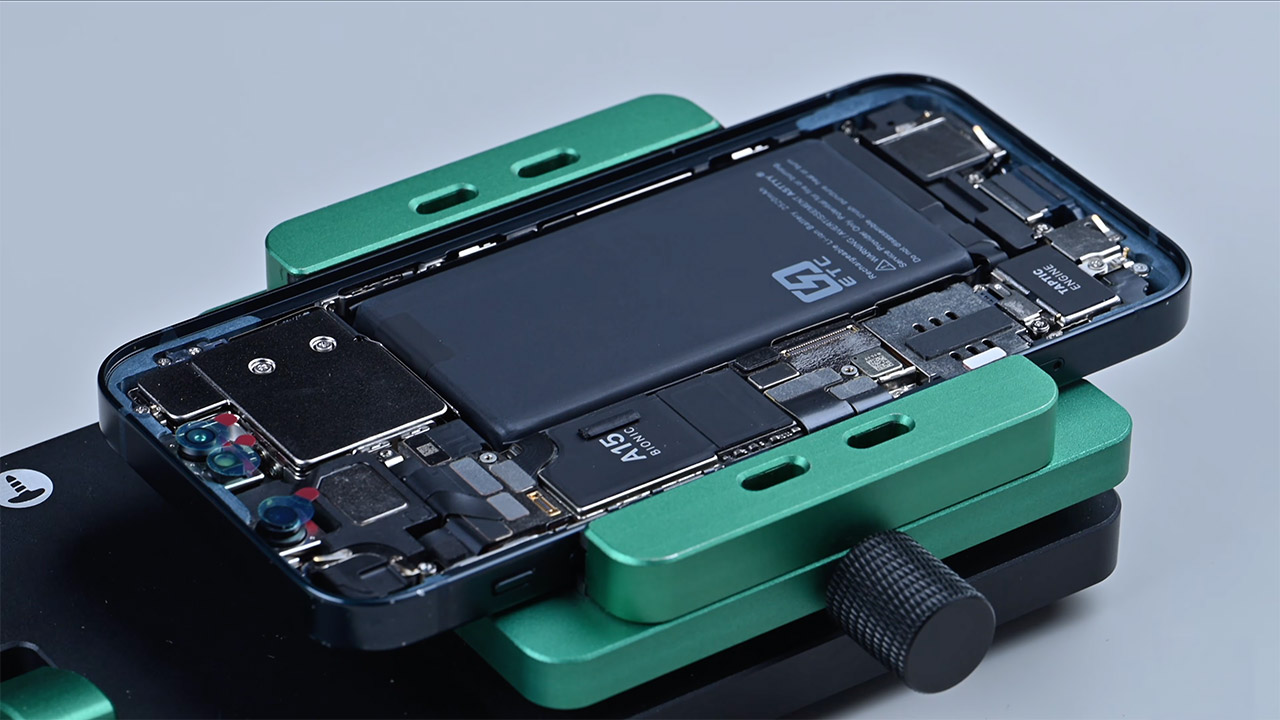
Once the screws and any remaining gunk keeping them in place had been loosened, the speaker, battery, motherboard, and soldered storage component were removed. The speaker and earphone grilles received some TLC because they had become clogged with debris and were causing strange sound effects. The effort then turned to the NAND chip, which is normally connected directly to the motherboard, so some careful drilling was required to remove the previous 256 GB chip until only the circuit pad remained. Restoring the pad to its previous splendor was not easy; it required some skillful movements. A brand-new 512 GB disk was then put on the cleaned pad.

iPhone 13 Mini Restoration Upgrade
A compact Tianyi 2520 mAh battery arrived, along with an original zero-cycle flex cable to match, so the phone would work properly with the new battery pack and not give any pairing warning nonsense. Adding that little of more capacity increased the weight by only 0.9 grams. The old adhesive was removed from all mating surfaces, making space for new glue and a nice waterproof seal. The display was then placed back in the frame.

iPhone 13 Mini Restoration Upgrade
When we turn it on, we see 512 GB of storage and 100% battery health, and the good news keeps coming, as a field test revealed that the rebuilt Mini could last 6 hours and 39 minutes without needing to be recharged, all at 50% brightness and volume. That’s what matters to someone who just wants a longer-lasting iPhone, not a bigger one.
[Source]

Source link

Advertisement
Continue Reading

Tech

ChatGPT Images 2.5 lets you sketch what you want instead of trying to describe it

Published

on

OpenAI is rolling out ChatGPT Images 2.5, its newest image generation model, and it brings a solid mix of speed and quality upgrades that should make your AI art sessions a lot less frustrating. People are already generating over 3 billion images every week across ChatGPT and the API, and this update is built to make that process faster and noticeably more accurate.

What makes Images 2.5 different?

The biggest wins here are sharper details, more natural lighting, and textures that finally look believable instead of plastic. The model is also much better at sticking to your reference photos, so if you’re turning a picture of yourself into a new scene or style, your face and features should stay recognizable instead of drifting into someone else entirely.

ChatGPT Images 2.5—faster, sharper, smarter, with better tools for creating whatever you can dream of.

– Faster image generation to keep your ideas flowing

– Improved fidelity for more natural, recognizable images

Advertisement

– Consistent details across multiple edits

– Comment-based… pic.twitter.com/SjHITKJUSV

— OpenAI (@OpenAI) September 8, 2026

Editing gets smarter too. Ask for one change, like swapping a background or tweaking a product, and Images 2.5 should leave everything else alone. That consistency holds up across multiple rounds of edits, so your earlier tweaks won’t randomly get wiped out a few prompts later. And if speed is what you care about, generation is now up to 50% quicker than Images 2.0.

Advertisement

Sketch lets you draw your idea before AI finishes it

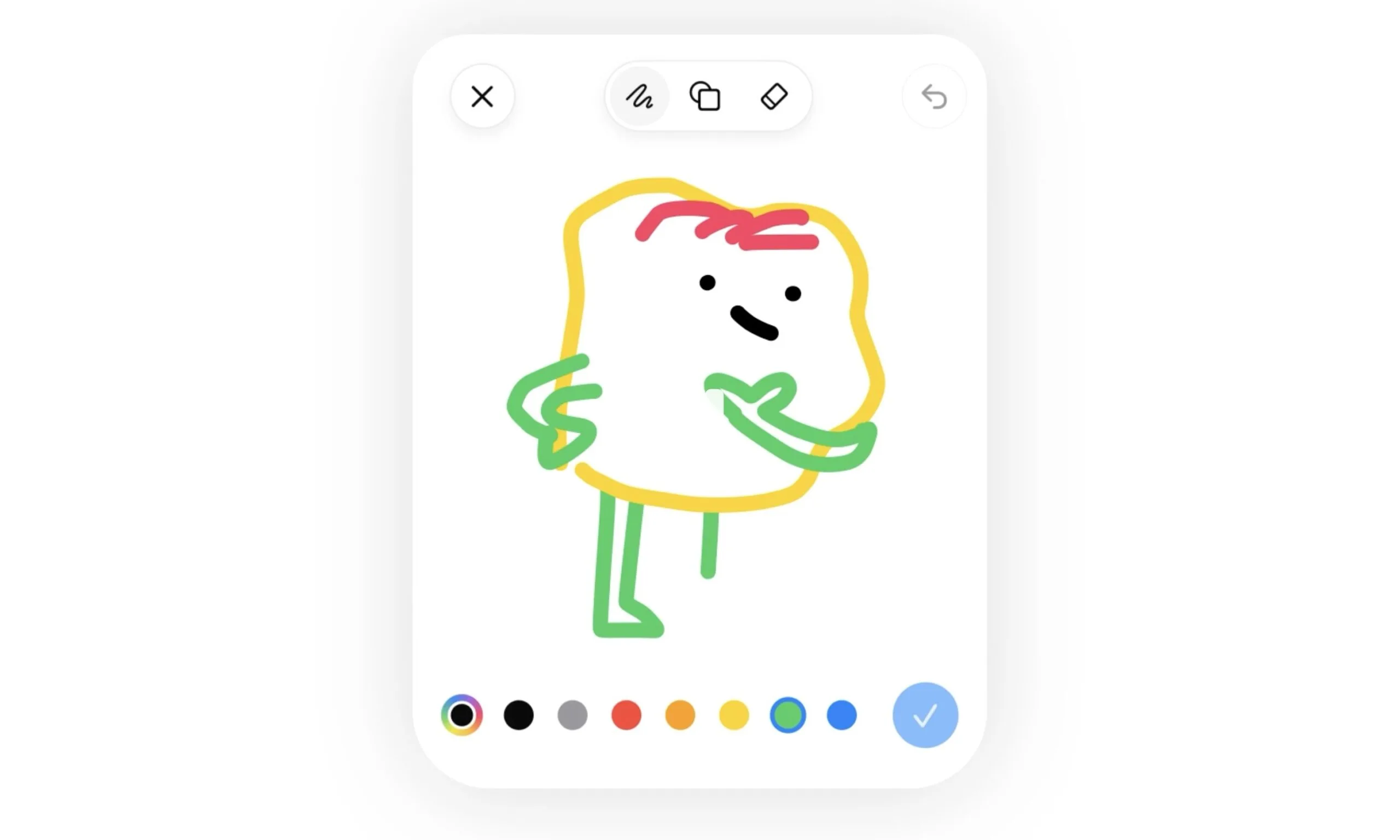
OpenAI added a feature called Sketch that lets you doodle your idea right inside ChatGPT, whether that’s a room layout or an outfit concept, and have the AI turn it into a polished image. Pair that with new templates for posters, flyers, and product shots, along with the option to leave comments directly on images for more precise edits, and you get a lot more control without needing any design skills.

People can also share the exact prompt behind an image now, so if someone creates something you love, you can recreate it using your own photos and details. On the developer side, OpenAI is also launching GPT-Image-2.5 Flare and Sunburst in the API, bringing the same speed and quality gains to apps and products built on top of it.

Images 2.5 is live now for all ChatGPT, ChatGPT Work, and Codex users across desktop, mobile, and web.

Source link

Advertisement
Continue Reading

Tech

Microsoft breaks Patch Tuesday record with 974-CVE deluge

Published

on

security

Adobe also brought goodies to the patch party and they deserve immediate attention

The vulnpocalypse is upon us, dear reader. Microsoft delivered a record number of patches to address 974 CVEs in its own products this month, including two bugs that Redmond says are already under exploitation.

Advertisement

September’s record-breaking collection of security updates come after Microsoft served up 421 fixes in August, and 622 in July. We’ve seen the new normal and we are not impressed. Thanks, but no thanks, AI. 

In addition to Microsoft’s massive patch drop, Adobe on Tuesday issued 10 bulletins addressing 172 CVEs, including a max-severity vulnerability exploited as a zero day in Magento and its successor product Adobe Commerce. Adobe on Monday shipped a hotfix for this one, tracked as CVE-2026-75650 and named StyleSmuggler, that gives unauthenticated attackers remote code execution. 

StyleSmuggler

If your organization has any type of online shop, prioritize this one first as it’s already being abused to compromise stores, according to e-commerce security shop Sansec.

Sansec discovered StyleSmuggler, and reports that attacks started on September 4. Every version of Magento and Adobe Commerce, from 2.4.4 up to and including 2.4.9, has the flaw. 

Advertisement

The bug allows attackers to inject malicious PHP code inside Magento templates using the “styles” properties to evade safety detections. In confirmed attacks, the payload then installs a backdoor that connects to a command-and-control server and waits for instructions. “So far, we have no indication that the backdoor has been weaponized,” the Sansec Forensics Team wrote.

Don’t wait to find out on this one. Put it at the top of your mitigation list.

Microsoft’s 974 CVEs

On to Microsoft’s record-breaking 974 CVEs, which according to Tenable is not many fewer than the 1,130 CVEs Redmond issued in 2025.

Two are already being exploited as zero-days.

Advertisement

First up: CVE-2026-85880, a privilege escalation bug in Windows Advanced Local Procedure Call (ALPC). Successful exploitation can result in the attacker gaining SYSTEM privileges.

“An attacker who can execute code in a low-privilege AppContainer could exploit this vulnerability locally to escape the sandbox and elevate privileges on the affected system,” Redmond warned. “No additional user interaction is required.”

No word yet on who is exploiting this bug, and to what end. The US Cybersecurity and Infrastructure Security Agency on Tuesday added CVE-2026-85880 plus a second Microsoft security hole (and the Adobe Commerce and Magento zero-day) to its Known Exploited Vulnerabilities Catalog, and set a September 22 deadline for federal agencies to fix both new Microsoft bugs and a September 11 deadline to patch the Adobe flaw.

The second Microsoft bug found and exploited as a zero-day is CVE-2026-81963, another privilege escalation vulnerability. This one affects the Windows Update Stack. We also have very little detail about this flaw, other than it also allows attackers to gain SYSTEM-level access.

Advertisement

“More likely is that this bug is being combined with a code execution bug to spread malware or ransomware,” opined Zero Day Initiative’s Dustin Childs, who advised users to “Patch this one quickly.”

While those are the only two (so far) under active exploitation, Childs rated CVE-2026-55007, one of nine Exchange Server flaws disclosed this month, as “the most important” patch for the messaging server. 

It allows a remote, unauthenticated attacker to execute code on a vulnerable Exchange server by sending an email with a malicious Visio attachment. No user interaction is required, and the code executes when the server processes the attachment during content indexing.

Redmond says it’s “difficult to reliably trigger,” but as Childs points out: “The attacker only needs to get it right once. Schedule your downtime and update your Exchange servers with haste.”

Advertisement

Childs also said he counts 20 patches for wormable bugs, so be sure to read his full Patch Tuesday review for those. “While some might be more exploitable than others, having 20 of them in a single release is something else.”

The missing CVE

While Redmond addressed nearly 1,000 security holes this month alone, it’s also worth pointing out one that isn’t this month’s Patch Tuesday roundup: CVE-2026-85046. Google patched this bug in Chrome on September 3, and at the time warned that it “is aware that an exploit for CVE-2026-85046 exists in the wild.”

The high-severity, type confusion flaw exists in the V8 JavaScript engine used in both Google’s Chrome and Microsoft’s Edge browsers. And yet Microsoft still hasn’t published a security advisory for CVE-2026-85046.

“If you’re patched, you are protected, but if you rely on advisories to know which vulns exist, you could miss this zero-day vulnerability altogether,” Adam Barnett, lead software engineer at Rapid7, told The Register.

Advertisement

“A patch without an advisory is perhaps marginally better than an advisory without a patch, but keeping track of exposures without reliable advisory materials is not straightforward,” Barnett said. “Chrome patched 11 other vulnerabilities at the same time as CVE-2026-85046, but it’s not yet clear if those are patched in Edge. Until Microsoft sets the record straight, the only safe assumption is that these vulnerabilities (e.g. CVE-2026-85045) remain unpatched in Edge.” ®

Source link

Continue Reading

Tech

The computing expert creating, innovating and seeking the greater good

Published

on

Alison J Derbenwick-Miller of the Association for Computing Machinery explores how, in a time of transformation, computing can be a significant force for good.

Deciding what you want to do with your future is no mean feat and often, when you are navigating your post-secondary education you can find that the subjects and career routes you envisioned are no longer aligned with your current interests. 

This was the case for Alison J Derbenwick-Miller, the CEO and executive director at the Association for Computing Machinery. During her senior year of university she happened to take a graduate level course on constitutional law and society, sparking an as-of-then undiscovered interest in how law and legal theory interact with social systems.

She told SiliconRepublic.com, “I ended up abandoning my initial plan to pursue a PhD in Soviet History to explore a potential career in law. My first post-college job was as a legal assistant at Oracle. 

Advertisement

“This was in the early 1990s, just as computing was becoming increasingly important in industry and society and I quickly realized that understanding the intersection of law, technology and society would be essential to shaping the future. 

“At the same time, I was struggling a bit with an internal need for my work to have meaning and do good in the world, which I sometimes found difficult to reconcile with the realities of working in a fast paced, for-profit industry.”

Eventually, she found herself in a graduate course, studying intellectual property law and public good and soon moved on to roles in Oracle’s philanthropy organisation and at the Association for Computing Machinery (ACM), which is reportedly the world’s largest educational and scientific computing society. 

She added, “That same desire to use technology in service of the public good is part of what drew me to ACM, whose global community works to advance computing as a science and profession and to ensure it benefits society.

Advertisement

“I built a career around pursuing things I cared about, seeking intellectual challenge, and learning to build sustainable organisations that prioritise the greater good.”

Building a better world

That is an element of her work that particularly motivates her, especially in a global landscape where “we’re facing unprecedented challenges and opportunities, and increasingly powerful computing and emerging technologies are giving us new ways to address them”. 

She added, “AI is an obvious example of this, but there are other very exciting advances happening across disciplines and industries in areas like quantum computing, advanced robotics, renewable energy innovation, genomic sequencing, and more.”

Derbenwick-Miller believes that the computing community, now more than ever before, has the power to create, innovate and be responsible for the kind of work that benefits humanity. 

Advertisement

She said, “That’s one of the reasons I’m so excited to lead ACM. Our organisation brings together researchers, practitioners, educators and students who are helping shape how computing develops and how it serves society now and into the future. I believe there is enormous potential in what that community can accomplish together.”

Staying skilled

But how can one person stay skilled enough to operate consistently at the intersection of research, education, professional development and scientific collaboration, when each moves at near lightning speed?

A self-confessed “endlessly curious, geeky generalist”, Derbenwick-Miller explained that a love of learning new things has kept her skilled and ready in a transforming landscape. 

She added, “I love talking with experts and working with really smart teams and I thrive on solving knotty and wicked problems. I’m never afraid to ask questions, and I enjoy thinking at a systems level to figure out how to best change or improve the bigger picture. 

Advertisement

“Ultimately, I think working at the intersection of any set of disciplines, fields, or industries is less about developing specific skills and more about how you approach learning and problem solving. Be curious. Be humble. Listen and communicate authentically and well.”

Cohesion and teamwork

Strong team leadership and a commitment to partnerships is also critical to maintaining a skilled and productive environment in computing. Derbenwick-Miller explained she once worked in an organisation that held the mantra ‘great people do great things’ and it has stayed with her all of her career. 

She said, “Leading is not about telling people what to do or how to do it. It’s about creating a collaborative and respectful culture, having a vision, setting clear goals, respecting what each person brings to the table and empowering the people around you to do what they do best to achieve those goals. 

“In a dynamic environment, being transparent and open about what is known and what is not helps create confidence and flexibility within the team to test, learn, adapt and iterate. The path to the vision may change, but the vision remains the north star that enables collaborative action.”

Advertisement

And this is all bolstered by the establishment of impactful partnerships across academia, industry and government, “at all levels, not just at leadership levels”.

Derbenwick-Miller said, “In many ways, computing technologies don’t recognise boundaries and borders and actions can have far-reaching and unintended outcomes. 

“This makes it difficult to act with lasting success within one’s own silo. It also presents a huge opportunity to develop deeper understandings of the needs of others and to imagine and build solutions that benefit more people more efficiently. 

“The more we can develop collaborative relationships and communities across sectors, the more we will understand each other and the more good we can do.”

Advertisement

For the people working within these close communities it is also critical that you understand your own limitations so that you can make use of the wider collection of shared skills and knowledge. 

“Even within close communities, we don’t always understand things the same way, use the same words the same way, or have aligned goals and incentives. It’s all too easy in today’s busy world to get focused on our own projects and to limit what we do, see and hear to what is easiest, most recent, or closest to what we already think. 

“Across the computing ecosystem, we have to build trust, work to understand where we can align and where we must act independently and maintain and foster the ability to communicate openly and honestly.

“We are living in a time of transformation and computing can be a force for tremendous good with a vital role to play. I’m honoured to be part of the computing community and ACM at such an exciting time, with the advent of generative AI, quantum computing, advanced robotics and smart health tech at a scale we’ve never seen.”

Advertisement

Don’t miss out on the knowledge you need to succeed. Sign up for the Daily Brief, Silicon Republic’s digest of need-to-know sci-tech news.
Source link

Advertisement
Continue Reading

Tech

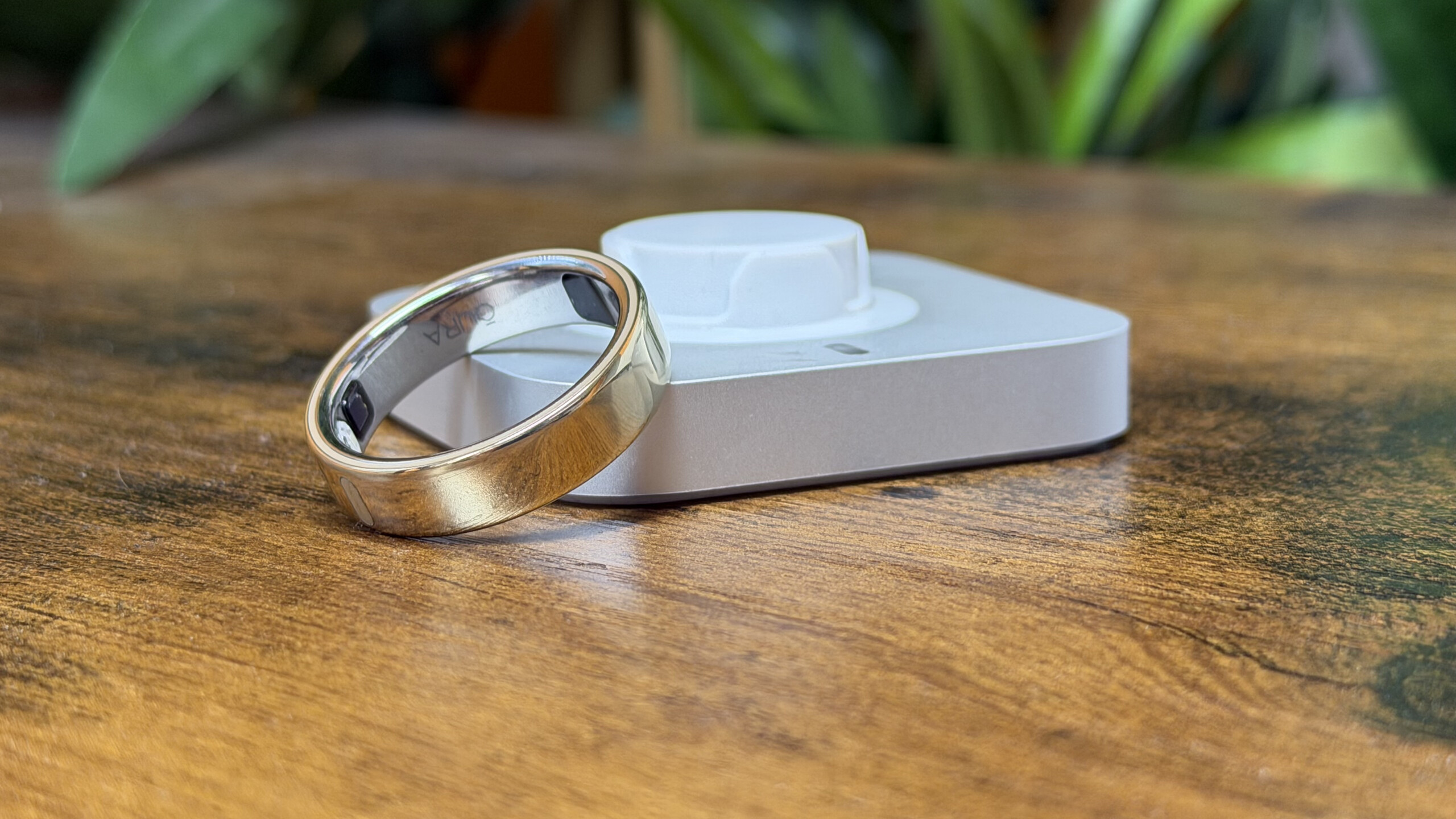
Garmin’s smart ring could take on Oura sooner than expected

Published

on

Garmin’s first smart ring could be closer to launch than expected, after a Brazilian regulatory filing revealed 10 different product variants that may belong to the unannounced Cirqa Smart Ring.

The listing comes from Brazil’s National Telecommunications Agency, where Garmin filed 10 mysterious model numbers under the same certification. While the company has yet to confirm that these are smart rings, the sheer number of variants is a strong clue. Smart rings typically come in multiple sizes to fit different finger measurements, making 10 versions more plausible for a ring than a smartwatch.

One of the listed model numbers, AA5124, adds another piece to the puzzle. The same number appeared in an Indonesian regulatory filing in August, alongside a product explicitly identified as the Cirqa Smart Ring. Its appearance again in the Brazilian certification suggests the two listings could be referring to the same device.

That would make the Cirqa Smart Ring Garmin’s first entry into the smart ring market, putting it up against established options from Oura and Ultrahuman. Garmin already has experience in the wearable space, of course, and the company launched the similarly screen-free Cirqa band earlier this year.

Advertisement

The latest filing doesn’t reveal much about what Garmin’s ring will actually offer. There’s no confirmed information on its sensors, battery life, health-tracking features or pricing, and Garmin still hasn’t officially acknowledged the Cirqa Smart Ring.

Advertisement

Still, the regulatory appearance suggests the company is making progress towards a launch. Products generally need to pass various certification processes before they can go on sale, although a certification filing doesn’t guarantee that a launch is imminent.

For now, the 10 variants and the returning AA5124 model number are the strongest clues we have that Garmin’s mysterious ring is real. If the Cirqa does arrive soon, Garmin could find itself entering the smart ring market at a particularly competitive time, with Oura and Ultrahuman already well established.

Advertisement

There’s still no confirmed launch date, but another regulatory appearance suggests Garmin may not be keeping the Cirqa under wraps for much longer.

Source link

Advertisement
Continue Reading

Trending

Copyright © 2025