






















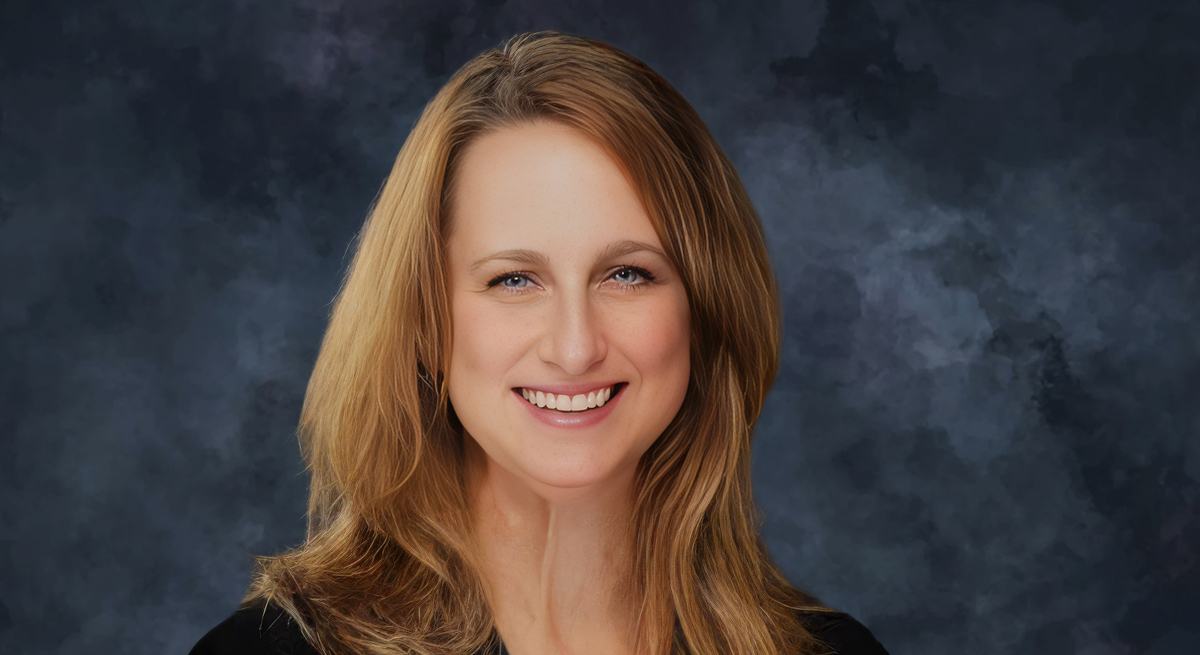

Alison J Derbenwick-Miller of the Association for Computing Machinery explores how, in a time of transformation, computing can be a significant force for good.
Deciding what you want to do with your future is no mean feat and often, when you are navigating your post-secondary education you can find that the subjects and career routes you envisioned are no longer aligned with your current interests.
This was the case for Alison J Derbenwick-Miller, the CEO and executive director at the Association for Computing Machinery. During her senior year of university she happened to take a graduate level course on constitutional law and society, sparking an as-of-then undiscovered interest in how law and legal theory interact with social systems.
She told SiliconRepublic.com, “I ended up abandoning my initial plan to pursue a PhD in Soviet History to explore a potential career in law. My first post-college job was as a legal assistant at Oracle.
“This was in the early 1990s, just as computing was becoming increasingly important in industry and society and I quickly realized that understanding the intersection of law, technology and society would be essential to shaping the future.
“At the same time, I was struggling a bit with an internal need for my work to have meaning and do good in the world, which I sometimes found difficult to reconcile with the realities of working in a fast paced, for-profit industry.”
Eventually, she found herself in a graduate course, studying intellectual property law and public good and soon moved on to roles in Oracle’s philanthropy organisation and at the Association for Computing Machinery (ACM), which is reportedly the world’s largest educational and scientific computing society.
She added, “That same desire to use technology in service of the public good is part of what drew me to ACM, whose global community works to advance computing as a science and profession and to ensure it benefits society.
“I built a career around pursuing things I cared about, seeking intellectual challenge, and learning to build sustainable organisations that prioritise the greater good.”
Building a better world
That is an element of her work that particularly motivates her, especially in a global landscape where “we’re facing unprecedented challenges and opportunities, and increasingly powerful computing and emerging technologies are giving us new ways to address them”.
She added, “AI is an obvious example of this, but there are other very exciting advances happening across disciplines and industries in areas like quantum computing, advanced robotics, renewable energy innovation, genomic sequencing, and more.”
Derbenwick-Miller believes that the computing community, now more than ever before, has the power to create, innovate and be responsible for the kind of work that benefits humanity.
She said, “That’s one of the reasons I’m so excited to lead ACM. Our organisation brings together researchers, practitioners, educators and students who are helping shape how computing develops and how it serves society now and into the future. I believe there is enormous potential in what that community can accomplish together.”
Staying skilled
But how can one person stay skilled enough to operate consistently at the intersection of research, education, professional development and scientific collaboration, when each moves at near lightning speed?
A self-confessed “endlessly curious, geeky generalist”, Derbenwick-Miller explained that a love of learning new things has kept her skilled and ready in a transforming landscape.
She added, “I love talking with experts and working with really smart teams and I thrive on solving knotty and wicked problems. I’m never afraid to ask questions, and I enjoy thinking at a systems level to figure out how to best change or improve the bigger picture.
“Ultimately, I think working at the intersection of any set of disciplines, fields, or industries is less about developing specific skills and more about how you approach learning and problem solving. Be curious. Be humble. Listen and communicate authentically and well.”
Cohesion and teamwork
Strong team leadership and a commitment to partnerships is also critical to maintaining a skilled and productive environment in computing. Derbenwick-Miller explained she once worked in an organisation that held the mantra ‘great people do great things’ and it has stayed with her all of her career.
She said, “Leading is not about telling people what to do or how to do it. It’s about creating a collaborative and respectful culture, having a vision, setting clear goals, respecting what each person brings to the table and empowering the people around you to do what they do best to achieve those goals.
“In a dynamic environment, being transparent and open about what is known and what is not helps create confidence and flexibility within the team to test, learn, adapt and iterate. The path to the vision may change, but the vision remains the north star that enables collaborative action.”
And this is all bolstered by the establishment of impactful partnerships across academia, industry and government, “at all levels, not just at leadership levels”.
Derbenwick-Miller said, “In many ways, computing technologies don’t recognise boundaries and borders and actions can have far-reaching and unintended outcomes.
“This makes it difficult to act with lasting success within one’s own silo. It also presents a huge opportunity to develop deeper understandings of the needs of others and to imagine and build solutions that benefit more people more efficiently.
“The more we can develop collaborative relationships and communities across sectors, the more we will understand each other and the more good we can do.”
For the people working within these close communities it is also critical that you understand your own limitations so that you can make use of the wider collection of shared skills and knowledge.
“Even within close communities, we don’t always understand things the same way, use the same words the same way, or have aligned goals and incentives. It’s all too easy in today’s busy world to get focused on our own projects and to limit what we do, see and hear to what is easiest, most recent, or closest to what we already think.
“Across the computing ecosystem, we have to build trust, work to understand where we can align and where we must act independently and maintain and foster the ability to communicate openly and honestly.
“We are living in a time of transformation and computing can be a force for tremendous good with a vital role to play. I’m honoured to be part of the computing community and ACM at such an exciting time, with the advent of generative AI, quantum computing, advanced robotics and smart health tech at a scale we’ve never seen.”
Don’t miss out on the knowledge you need to succeed. Sign up for the Daily Brief, Silicon Republic’s digest of need-to-know sci-tech news.



































You must be logged in to post a comment Login