
Crypto World
Donald Trump has a gas problem

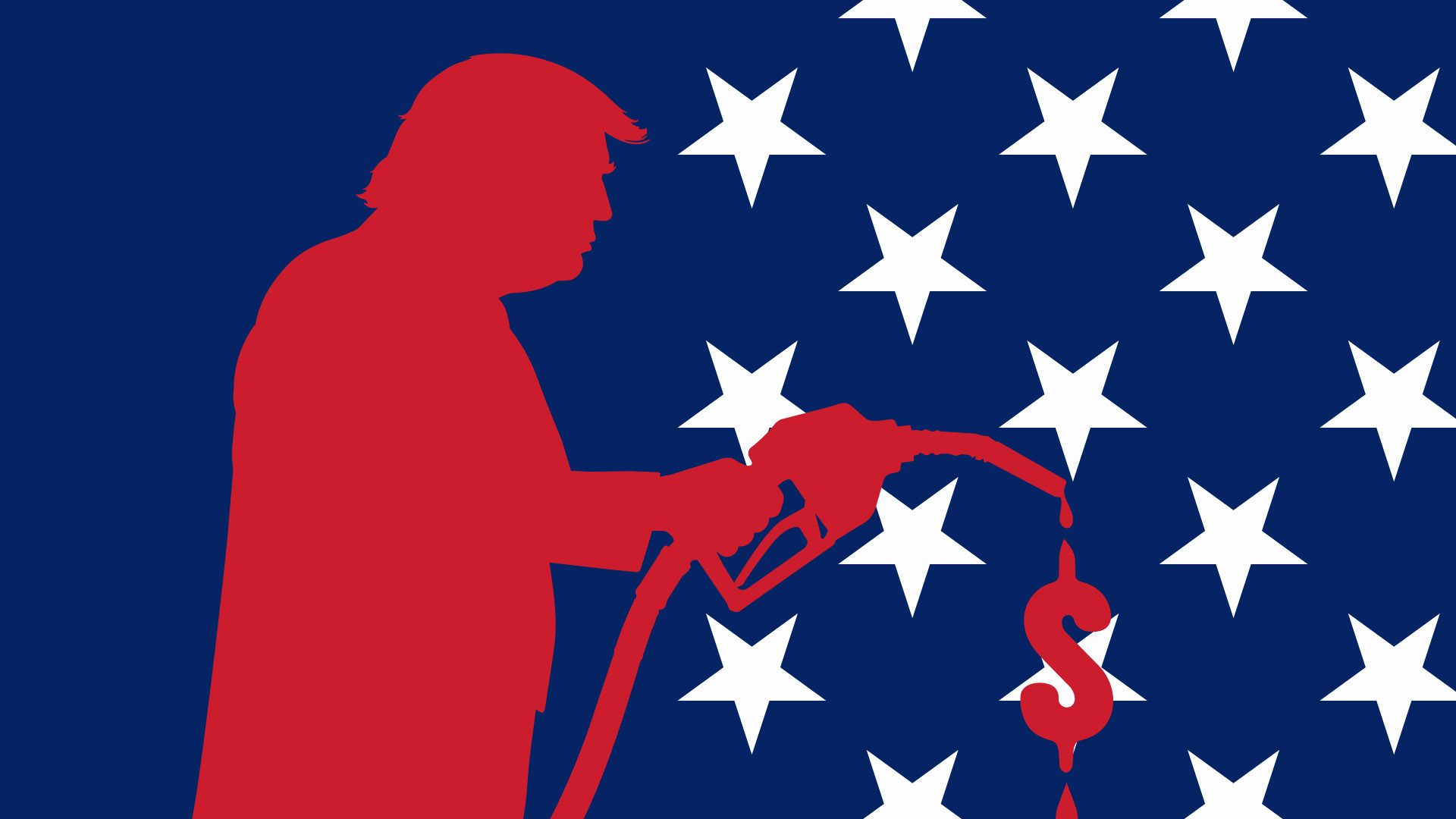
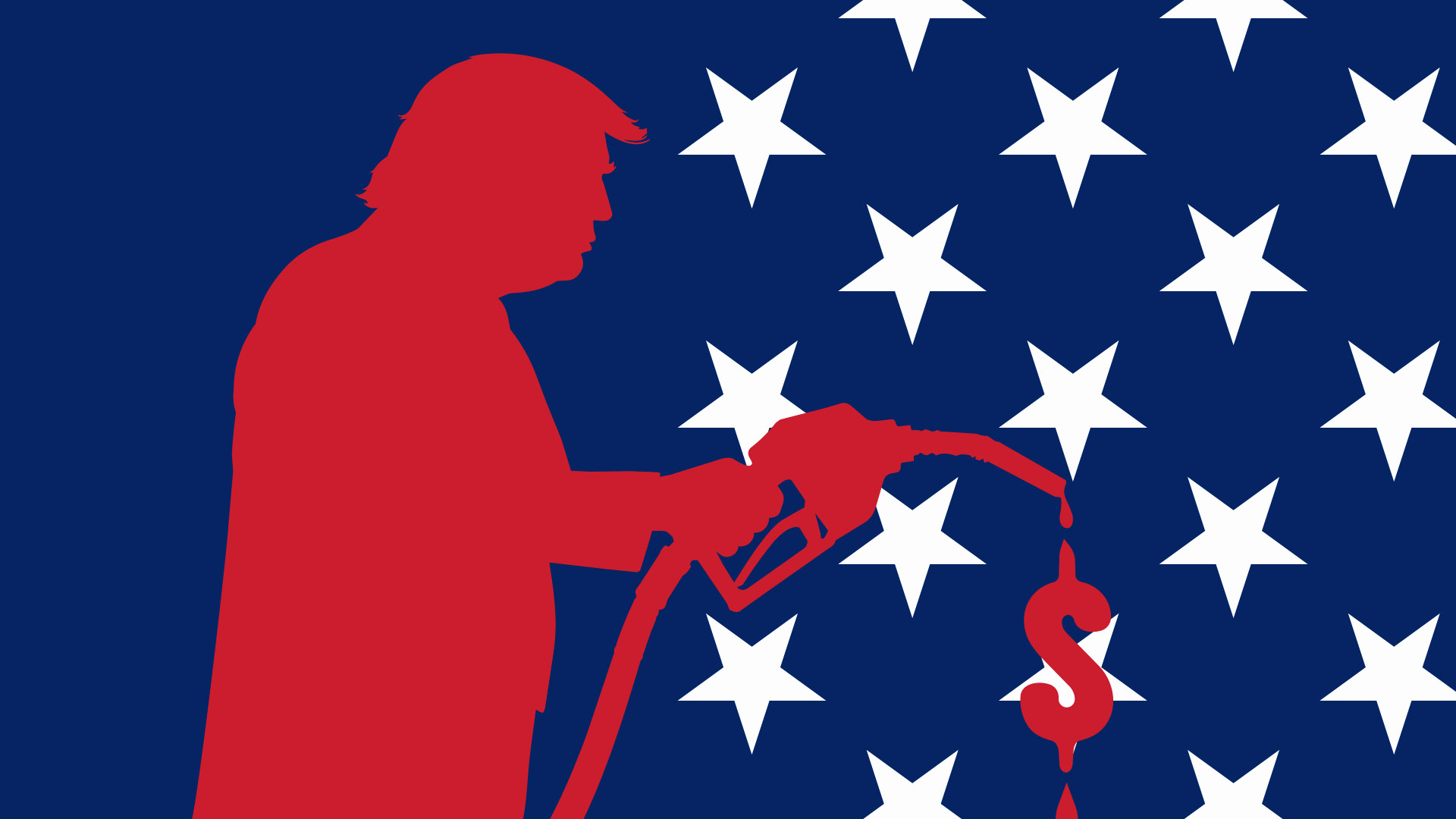
Labor Day 2026 was the most expensive Labor Day at the pump in American history, with US gas prices averaging $4.15 a gallon.
Donald Trump took the occasion to reiterate his “below $2” promise that he’s repeated for two years.
This time, unlike in 2024 and many times over the past two years, he’s made his promise contingent on winning the war in Iran.
Trump posted his new forecast on Monday: “Three Dollars a gallon, but ultimately, below Two Dollars a gallon,” which has the same target that he has failed to achieve since 2024.
In reality, Americans are paying record prices for gasoline this week above $4, breaking even higher than a 2012 Labor Day crisis of $3.82.
From campaign rallies to his State of the Union address to posts to Truth Social, Trump has repeatedly promised cheaper gasoline. For two years, numbers on the pump have moved the other way.
Donald Trump promised $2 a gallon gasoline to win votes
By late 2024, the $2 a gallon promise was already a Trump campaign trail catchphrase.
On August 19, 2024, Trump told rally attendees that gasoline would “drop by more than 50% within the first 12 months” of his presidency. It hasn’t.
By September 2024, at the Economic Club of New York, he promised gasoline below $2 a gallon. Everything else, from utility bills to groceries to housing, was supposed to follow.
All of those household expenses have become more expensive.
At a Wilmington, North Carolina rally that September, he told voters, “We will cut your energy prices in half. Mark it down, you can get very angry at me if we don’t do it, within 12 months, your energy prices will be cut in half.”
Gasoline averaged $3.29 a gallon in the first week of September. GasBuddy’s Patrick De Haan gave Trump’s $2 pledge “a zero percent chance.”
In May 2025, Trump inaccurately insisted, “Gasoline just broke $1.98 a Gallon, lowest in years.” Fact-checkers noted that no state averaged below $2.60 at the time of that claim, with most US drivers paying above $3.
In October 2025, Trump predicted, “You’re gonna see $2 gasoline pretty soon.”
At his February 24, 2026 State of the Union speech, Trump declared gasoline “is now below $2.30 a gallon in most States and, in some places, $1.99 a gallon. And when I visited the great State of Iowa just a few weeks ago, I even saw $1.85 a gallon for gasoline.”
The actual average was near $3 that week. Only eight of roughly 150,000 stations sold gas under $2 per gallon.
Read more: Opinion: The failures and follies of Trump’s crypto White House
Blaming Iran for high gas prices
Four days later, the US joined Israel’s airstrikes on Iran, opening Operation Epic Fury, spiking gasoline prices higher.
On March 10, 2026, Trump’s White House Press Secretary Karoline Leavitt promised Americans “will see oil and gas prices drop rapidly” after the war.
Trump’s Energy Secretary Chris Wright said there was a “very good chance” of sub-$3 gas by summer.
On March 30, Leavitt dismissed climbing gas prices as “short-term price fluctuations.”
By April 15, the national average reached $4.11 a gallon. That day, Trump’s press secretary said, “Look at how gas prices decreased over the past year since this president was in office.”
On May 7, the national average had hit $4.55. That day, Trump said, “Gas prices have come down today. Have you looked? They’ve come down very substantially today.”
Days later, he vowed, “You’re going to see gasoline and oil drop like a rock” once the war in Iran ended.
During a speech on June 23, Trump promised, “Oil is going to come charging down.”
On June 24, he posted that customers were being “gouged” at the gas pump and that criminal law enforcement officers at the DOJ should “immediately start looking into this. Gasoline prices better start going down.”
He added, “We should be, in my opinion, at $2.25 right now at the pump. But we’re higher than that.” Indeed, gas pumps were actually averaging $3.93.
On June 29, he posted that retailers should “start targeting around the $2.50 a gallon number.” They haven’t.
By July 1, he declared that prices would soon return to “the record low prices Americans enjoyed at the pump” before the “very successful ‘excursion’ in Iran.”
On August 4 he told Fox News that gasoline costs were “all coming down now,” even though costs are above $4 per gallon.
For the first time, the national average gasoline price has stayed above $4 all August. No previous August had averaged more than 2022’s prior record of $3.97.
Trump’s Venezuela oil deal, announced August 28, accompanied a post from Trump that his deal would “substantially lower Gas Prices for all Americans, long into the future.”
NYU’s Amy Myers Jaffe said the deal, in reality, is “not going to do anything to change the price of gasoline at the retail station for Labor Day weekend.”
Its benefits, she suggested, belonged to the more distant future.
As of publication time, AAA’s national average still reads $4.15 per gallon.
Got a tip? Send us an email securely via Protos Leaks. For more informed news and investigations, follow us on X, Bluesky, and Google News, or subscribe to our YouTube channel.


If your grandparent still has the item, ask to see it. Their act of holding it again—or simply studying its scratches, faded colors, or fraying edges—might shake loose a story they didn’t even realize they remembered.
“Who believed in you before you believed in yourself?”
The answer could introduce you to a teacher, mentor, neighbor, boss, or friend you’ve never heard about—yet whose encouragement altered the course of your family’s history.
For O’Krent, it was his third-grade teacher, Mrs. Glaze. One day, despite making him stay inside during recess because he couldn’t keep his mouth shut, she looked him in the eye and said: “You’re going to be somebody important someday.”
He never forgot it. An influential person isn’t always who you would expect, O’Krent says, and the best part of the story may emerge when you ask why your grandparent connected with them. What did they see in your grandparent—and how did their belief change what your grandparent saw in themselves?
The first regulated crypto company to land a Premier League shirt deal did so three months after the Financial Conduct Authority told clubs to stop signing “dodgy” sponsors. Circle is not dodgy. But the product on the shirt exists in a regulatory gap that will stay open until October 2027.
Summary
- Circle (NYSE: CRCL) signed a one-year Principal Partner deal with Chelsea FC worth an estimated 33.6 million to 50 million pounds, placing “USDC by CIRCLE” across men’s, women’s, and academy shirts for the 2026/27 season.
- The kit debuted on August 31 during Chelsea’s 2-1 win over Brighton, Xabi Alonso’s first Premier League home match as manager, reaching an audience drawn from the league’s 4.7 billion cumulative seasonal viewers.
- Circle holds FCA Electronic Money Institution license No. 900480, granted in 2018, making it the only crypto shirt sponsor in English football history that the regulator actually authorized before the deal was signed.
- The FCA warned Premier League clubs in late May 2026 that “unauthorised financial firms” were “using sponsorship to target unwitting fans,” a letter that killed Crypto.com’s reported 100 million pound deal with Manchester City.
- Circle’s own disclosures state that “USDC is not issued or regulated under the laws of the United Kingdom,” opening a 14-month window between the sponsorship launch and the October 2027 effective date of the FCA’s new crypto asset regime.
On August 31, 2026, roughly 40,000 people inside Stamford Bridge watched Chelsea players walk onto the pitch wearing shirts that said “USDC by CIRCLE.” Millions more saw it on screens across 189 countries. It was a stablecoin advertisement stitched into polyester, broadcast at scale, and nobody in government tried to stop it. Three months earlier, the Financial Conduct Authority had sent letters to every Premier League club warning them about crypto sponsors. The regulator used the word “dodgy.” Circle is not dodgy. It is publicly traded on the New York Stock Exchange, holds licenses on four continents, and posts quarterly earnings that most fintech companies would envy. But the product on the shirt occupies a space that UK law has not caught up with yet, and that gap tells you more about where crypto regulation stands than any white paper ever could.
Why Chelsea was available
Chelsea has been sponsorless at the start of the season for four consecutive years. That is not normal for a club of its size. It is a consequence of turbulence.
Samsung held the shirt from 2005 to 2015 at roughly 18 million pounds per year. Yokohama Tyres replaced Samsung in a deal worth 40 million pounds annually. Three, the mobile network, matched that figure from 2020. Then Roman Abramovich was sanctioned, the club was sold to a consortium led by Clearlake Capital and Todd Boehly for 4.25 billion pounds in May 2022, and Three walked away. The sponsorship carousel that followed tells a story of a club struggling to find stable commercial footing: Infinite Athlete, DAMAC Properties, IFS. Short terms. Modest figures. Nothing that matched the Yokohama or Three era.
Clearlake owns 61.5 percent. Boehly holds 18.5 percent. The ownership group spent aggressively on players and needed shirt revenue to offset a wage bill that had ballooned past 350 million pounds. A crypto sponsor willing to pay north of 33 million pounds for a single season solved an immediate problem. Circle solved it while also being the kind of company that could survive due diligence.
The timing mattered too. Chelsea’s commercial team had been searching for a Principal Partner since mid-2025, approaching traditional sponsors in automotive, airlines, and financial services. Several balked at the price tag, others at the reputational volatility that still clings to a club whose ownership transition dominated tabloid headlines for the better part of two years. Circle was not the default option. It was the option that could write the check, pass compliance review, and move fast enough to get the branding onto kits before the season opener. In a market where Premier League shirt deals for top-six clubs routinely exceed 40 million pounds per season, the estimated range of 33.6 million to 50 million pounds is competitive but not premium. Chelsea needed a partner. Circle needed a stage. The deal closed because both sides were slightly desperate in complementary ways.
What the FCA actually said
In late May 2026, the FCA’s Director of Consumer Investments, Lucy Castledine, sent a pointed message to Premier League clubs. The language was unusually direct for a regulator that tends toward bureaucratic circumlocution. Clubs, she wrote, “should not let unauthorised financial firms exploit that loyalty.” The word “unauthorised” did the heavy lifting. It was a line drawn in sand, not in statute, but the clubs heard it.
The letter landed on desks already burned by history. FTX had collapsed in November 2022, turning its 135 million dollar naming rights deal with the Miami Heat into a cautionary tale that echoed across every sports boardroom on the planet. Binance had explored Premier League sponsorships and never signed one, partly because it lacked FCA authorization. Crypto.com had been in advanced talks with Manchester City for a deal reportedly worth more than 100 million pounds. That deal died after the FCA applied pressure. The regulator did not formally block it. It did not need to. The letter was enough.
The pattern was clear: if you are not authorized by the FCA, you are not getting on a Premier League shirt. The clubs internalized the message. Compliance teams flagged crypto proposals. Legal departments added new checklists. The path to a crypto shirt deal in England appeared to have closed. Then Circle walked through it.
How Circle passed the test
Circle did not sneak past the regulator. It walked in through the front door, carrying a stack of licenses thick enough to stop a bullet.
The company received the UK’s first virtual currency license in 2016, two years before most people in traditional finance could define “stablecoin.” It obtained its FCA Electronic Money Institution authorization in 2018, license number 900480, a credential that puts it in the same regulatory category as companies like Revolut and Wise. By the time the Chelsea deal was signed, Circle also held a French EMI license and CASP registration under MiCA, a Singapore Major Payment Institution license, a US OCC bank charter granted in July 2026, and more than 46 US state-level licenses.
This is not a company operating in regulatory gray zones. This is a company that has spent the better part of a decade collecting regulatory credentials the way some people collect stamps. The FCA’s letter targeted “unauthorised firms.” Circle is authorized. That distinction is the entire reason the deal exists.
eToro, the trading platform, had already demonstrated the model. It sponsors several football clubs in the UK and has done so without FCA pushback, because it holds FCA authorization. The principle is simple: if the regulator knows who you are and has approved your operations, you can put your name on a shirt. Circle applied the same logic at a larger scale.
The 14-month window nobody is talking about
Here is the part that deserves more attention than it has received.
Circle is FCA-authorized as an Electronic Money Institution. That is a fact. USDC, the product advertised on the Chelsea shirt, is a different matter. Circle’s own legal disclosures contain a sentence that should be projected onto the side of the FCA’s headquarters on Endeavour Square: “USDC is not issued or regulated under the laws of the United Kingdom.”
Read that again. The company is regulated. The product on the shirt is not.
This is not a contradiction in the way that a lawyer would define one. Circle operates legally in the UK under its EMI license, which covers electronic money services. But USDC itself, the dollar-pegged stablecoin with a circulating supply of 73.7 billion dollars as of late August 2026, backed one-to-one by US Treasuries held in the BlackRock-managed Circle Reserve Fund, is issued under US law. The FCA’s current framework does not have a specific regime for regulating stablecoins used as means of payment.
That regime is coming. The FCA announced in 2025 that a comprehensive crypto asset regulatory framework would take effect in October 2027. When it does, stablecoins used as payment in the UK will fall under direct FCA oversight. But between now and then, there is a 14-month window where a regulated company can promote an unregulated product to millions of football fans, and no rule on the books explicitly prevents it.
Circle is threading a needle. The company’s FCA authorization gives it institutional credibility. The absence of stablecoin-specific regulation gives it commercial freedom. The Chelsea deal sits at the intersection of those two realities, and it is a perfectly legal place to stand. Whether it is the place the FCA intended sponsors to stand is a different question, and one the regulator has not yet answered.
Consider the practical implications. A fan watching Chelsea play on a Saturday afternoon sees “USDC by CIRCLE” on the shirt. If that fan downloads the Circle app and buys USDC, that transaction falls outside the FCA’s current crypto promotional rules because USDC is not classified as a restricted mass market investment in the way that a volatile token would be. The Financial Promotions Order, amended in 2023 to cover crypto assets, applies to communications that invite or induce investment activity. Circle would argue that USDC is a payment instrument, not an investment. The FCA has not publicly disagreed. That ambiguity is the oxygen the deal breathes.
The October 2027 deadline is not arbitrary. The Treasury and the FCA spent 2025 and early 2026 consulting on a framework that would bring stablecoins used for payment under the same regulatory umbrella as other forms of electronic money. Once that framework is live, USDC would need specific FCA authorization to be marketed to UK consumers. Circle would almost certainly obtain that authorization, given its existing EMI license. But the point is that today, in September 2026, it does not need to. The 14-month window is not a loophole in the pejorative sense. It is simply the gap between where regulation is and where regulation is going. Circle planted its flag in that gap, and 4.7 billion pairs of eyes will see it before the gap closes.
The numbers behind the deal
Circle can afford this bet because the company prints money in a way that most crypto firms do not.
In the second quarter of 2026, Circle reported 791 million dollars in revenue and 267 million dollars in net income. Those are not speculative projections. Those are audited results from a public company trading on the New York Stock Exchange under the ticker CRCL, priced at 31 dollars per share at its April 2024 IPO and trading between 42 and 48 dollars through August 2026.
The economics of USDC are elegant in their simplicity. Every USDC token in circulation represents one US dollar held in reserve, primarily in short-dated US Treasuries. When interest rates sit above four percent, a 33 billion dollar reserve fund generates substantial yield. Circle keeps the yield. USDC holders get stability and liquidity. The spread between those two things is Circle’s margin, and at current rates, it is enormous.
Compare that revenue engine to the cost of a Chelsea shirt deal. Even at the high end of estimates, 50 million pounds represents roughly 63 million dollars, or less than one quarter’s net income. For that price, Circle gets its product name on the chest of one of the five most globally recognized football clubs, broadcast into 189 countries, viewed by a cumulative audience that the Premier League pegs at 4.7 billion per season. The cost per impression is trivially small.
This is not a speculative startup burning venture capital on brand awareness. This is a profitable public company making a calculated media buy. The distinction matters because it explains why the deal survived scrutiny that killed its predecessors.
What the graveyard teaches
The history of crypto sports sponsorships is a field of tombstones, and reading the inscriptions is instructive.
FTX paid 135 million dollars over 19 years for naming rights to the Miami Heat’s arena. The company collapsed 18 months into the deal. The arena reverted to its previous name. Sam Bankman-Fried went to prison. Every sports executive who had signed a crypto deal suddenly faced board-level questions about counterparty risk.
Crypto.com’s 700 million dollar deal for the Staples Center in Los Angeles, renamed Crypto.com Arena, survived because Crypto.com survived. But the company laid off hundreds of employees and retreated from multiple markets. The deal became a lesson in overpaying for brand awareness during a bull market.
In the Premier League specifically, the regulatory environment proved even more hostile than the financial one. Crypto.com’s reported 100 million pound deal with Manchester City collapsed under FCA scrutiny. Binance never got close. The clubs that had signed smaller deals with lesser-known crypto firms found themselves fielding uncomfortable questions from the FCA’s enforcement team.
Circle’s deal is different in kind, not just in degree. The company is profitable. It is publicly traded, meaning its financials are audited quarterly. It holds the specific regulatory authorization that the FCA demanded. It survived the crypto winter, the FTX fallout, and the regulatory crackdown without a single enforcement action. If the graveyard of crypto sponsorships teaches anything, it is that survival requires a business model that does not depend on token prices going up. Circle’s business model depends on interest rates staying positive. That is a meaningfully different bet.
The Crypto.com UFC deal, worth a reported 175 million dollars, offers a useful comparison from outside football. That deal survived because Crypto.com stayed solvent and the UFC operates in a lighter regulatory environment than English football. The Coinbase NBA deal similarly persisted because Coinbase, like Circle, holds US regulatory credentials and remained operational through the bear market. The pattern across all surviving crypto sports deals is identical: regulated entity, profitable operations, product that does not depend on speculative mania. Circle fits every criterion. Most of its predecessors in the Premier League fit none.
Stablecoins as the quiet winner
The Chelsea deal is a symptom of a larger shift that the crypto industry has been slow to acknowledge publicly. Stablecoins won.
Not Bitcoin. Not Ethereum. Not the thousands of tokens that promised to revolutionize everything from supply chains to social media. The product that achieved genuine mass-market utility is the boring one: a digital dollar that holds its peg and moves fast.
USDC has a market capitalization hovering between 33 and 35 billion dollars. Its circulating supply reached 73.7 billion dollars by late August 2026. Tether’s USDT remains larger, but USDC has carved out a distinct niche as the compliance-first alternative preferred by institutional users and regulated platforms. Circle’s decision to obtain an OCC bank charter in July 2026, making it the first crypto-native company to achieve that status, reinforced the positioning.
The Premier League shirt deal is Circle telling the world that stablecoins have graduated from crypto infrastructure to consumer brand. USDC is not competing with Bitcoin for speculative attention. It is competing with PayPal, Wise, and Western Union for payment flows. Putting the name on a football shirt is a consumer marketing play, and consumer marketing plays only make sense when you have a consumer product.
That framing explains why the FCA did not blink. A stablecoin backed by US Treasuries and managed by a publicly traded, FCA-authorized company is categorically different from a volatile token promoted by an offshore exchange. The regulator may not have explicitly blessed the deal, but its silence is a form of communication. The FCA knows Circle. The FCA authorized Circle. The FCA chose not to intervene.
What competitors cannot replicate
No other crypto company on Earth could have signed this deal. That is not hyperbole. It is a consequence of a specific combination of factors that no competitor possesses simultaneously.
Tether is larger but has never held an FCA license and has faced persistent questions about its reserve attestations. Binance has the brand recognition but lacks FCA authorization and withdrew its UK registration application in 2023. Coinbase holds some UK permissions but is primarily a US exchange, not a stablecoin issuer. Crypto.com tried the Premier League route and failed.
Circle occupies a unique position: it is the only company that is simultaneously a publicly traded US corporation, an FCA-authorized EMI, a MiCA-compliant EU operator, an OCC-chartered bank, and the issuer of a top-three stablecoin by market cap. That combination is the product of eight years of regulatory accumulation, and it cannot be replicated quickly by a competitor deciding to pivot toward compliance.
The Chelsea deal is a moat made visible. Every match broadcast, every kit photo, every social media post from the club reinforces that Circle got there first. For a company whose product is trust, being first on a Premier League shirt is not just marketing. It is a competitive barrier built from polyester and broadcast rights.
The timing amplifies the advantage. Any competitor that begins the FCA licensing process today faces a timeline measured in years, not months. The FCA’s EMI application process has an average turnaround of 12 to 18 months, and that assumes a clean submission with no remediation requests. A crypto firm without existing UK authorization would need to build compliance infrastructure, appoint a UK-based Money Laundering Reporting Officer, set up local safeguarding arrangements for customer funds, and submit to an FCA assessment that has grown more rigorous since the 2022 crypto collapses. By the time a hypothetical competitor clears those hurdles, the October 2027 regulatory framework will be live, and the rules for stablecoin promotion will have changed entirely. Circle did not just beat its competitors to the shirt. It arrived during the only window in which the shirt deal was possible under the current regulatory architecture. That window will not reopen.
What to watch
- FCA public statements before October 2027: any guidance specifically addressing stablecoin advertising through sports sponsorships would signal whether the regulator views Circle’s approach as a template or a loophole.
- Circle’s Q3 and Q4 earnings calls: management commentary on the Chelsea deal’s ROI and whether a multi-year extension is under discussion will reveal if this is a one-season experiment or a long-term brand strategy.
- Competing crypto firms applying for FCA EMI licenses: a wave of applications would confirm that the market reads the Circle deal as a playbook, not an anomaly.
- Premier League policy on crypto sponsors for 2027/28: whether the league adopts formal criteria beyond the FCA’s informal letter will determine how many more crypto shirts appear next season.
- The FCA’s stablecoin regulatory framework details: the specific rules around stablecoin promotion and advertising, expected in draft form by mid-2027, will define whether Circle’s current approach remains viable or requires modification.
What is the Circle Chelsea deal worth?
The deal is estimated at between 33.6 million and 50 million pounds for one season. Circle becomes Chelsea’s Principal Partner, with “USDC by CIRCLE” branding on men’s, women’s, and academy shirts for the 2026/27 campaign.
Why did the FCA warn clubs about crypto sponsors?
The FCA wrote to Premier League clubs in late May 2026, cautioning that “unauthorised financial firms” were “using sponsorship to target unwitting fans.” Director Lucy Castledine stated that clubs should not let unauthorised firms exploit fan loyalty. The warning followed years of failed crypto deals and the FTX collapse.
Is Circle authorized by the FCA?
Yes. Circle holds FCA Electronic Money Institution license number 900480, granted in 2018. It also received the UK’s first virtual currency license in 2016. This authorization is the primary reason the Chelsea deal proceeded where others failed.
Is USDC regulated in the UK?
No. Circle’s own disclosures state that “USDC is not issued or regulated under the laws of the United Kingdom.” The FCA’s comprehensive crypto asset regime, which would cover stablecoins, does not take effect until October 2027.
How does Circle make money from USDC?
Circle holds USDC reserves, primarily in short-dated US Treasuries through the BlackRock-managed Circle Reserve Fund. The company earns yield on those reserves while USDC holders receive stability. In Q2 2026, Circle reported 791 million dollars in revenue and 267 million dollars in net income.
What happened to other crypto Premier League deals?
Crypto.com’s reported 100 million pound deal with Manchester City collapsed under FCA pressure. Binance explored Premier League sponsorships but never signed one, partly due to lacking FCA authorization. The FTX collapse in 2022 made crypto sponsorships broadly toxic across all sports.
When did the Chelsea shirt debut with USDC branding?
The kit debuted on August 31, 2026, during Chelsea’s home match against Brighton. It was Xabi Alonso’s first Premier League home game as Chelsea manager.
Should I buy USDC or Circle stock based on this deal?
This is educational analysis, not investment advice.
Disclaimer: This article was published on September 9, 2026 and is intended for informational purposes only. It does not constitute financial, investment, or legal advice. Cryptocurrency investments carry significant risk. Always conduct your own research before making any financial decisions.


Changelly has been running as an instant crypto exchange and a platform for crypto purchases and cashouts since 2015.
Summary
- Changelly supports more than 1,200 cryptocurrencies across over 200 blockchains.
- Floating swaps carry a 0.25% service fee, while fixed-rate fees are included in the quoted price.
- Swap and fiat limits vary by asset, network, liquidity provider, payment partner, and location.
- Most crypto swaps do not require KYC, but risk checks can trigger AML reviews and fund holds.
According to the company, its user base counts 12 million worldwide. The service works without a login for swaps: you pick a pair, enter a wallet address, and the trade goes out through Changelly instantly. In this review, we check how Changelly’s fees work, try its main features, and check why Changelly scam complaints arise.
What Is Changelly?
Changelly works as a typical instant swap platform and a liquidity aggregator. It doesn’t run an order book the way a centralized exchange does. Instead, it pulls quotes from multiple liquidity providers for each trade and routes the swap through whichever offers the best available rate at that moment. Crypto never sits on Changelly’s own balance sheet: funds move from the sender’s wallet, through the chosen liquidity partner, to the receiving address the user provides.
| Works on | Web, App Store, Google Play |
|---|---|
| Cryptocurrencies available | 1,200+ |
| Fiat available | 100 |
| Payment methods | 20 |
| Log in / KYC | Not obligatory |
| Support | 12 languages, non-AI |
Changelly’s main products
Instant exchange
The core crypto-to-crypto swap flow supports 1,200+ coins across 200+ blockchains, with roughly 200 new listings added over the past year, so newly launched tokens tend to appear on the platform quickly.
Buy/sell
Fiat purchases route through third-party payment providers rather than through Changelly directly, using 20+ payment methods including Visa/Mastercard, Apple and Google Pay, PayPal, and regional options like SEPA and Revolut.
For Sell, there are fewer than 20 options, but they also include local payment methods and the most common providers.
DeFi
Changelly DeFi, launched in April 2026, is a separate decentralized swap flow. Users connect their own wallet rather than sending funds to a Changelly-generated address, and the service routes the trade across bridges and decentralized exchanges behind a single action.
Wallet marketplace
Changelly’s wallet marketplace lists discounted offers from hardware wallet makers, including Ledger, Trezor, Tangem, SafePal, and D’cent. Each maker sets its own discount and fulfills orders through its own store. Changelly is the comparison layer here, not the seller.
How Changelly fees work
The cost of a Changelly swap depends on which rate type you pick. On a floating-rate swap, Changelly charges a 0.25% service fee on top of a separate network fee, the cost of moving the transaction on-chain. On a fixed-rate swap, there’s no separate line item: the fee is already built into the price Changelly locks in before you confirm.
Buying crypto with a card or bank transfer works differently again. Each fiat partner sets its own purchase fee, so what you pay depends on which provider ends up handling that payment method and currency, not on Changelly’s own pricing.
Floating vs. fixed rates
A floating rate tracks the live market up to the moment your swap executes, so the amount you receive can move slightly from what you were first quoted. A fixed rate locks the price before you send funds, trading a bit of flexibility for certainty. Neither option is the cheaper one by default; which suits you better depends on how much price movement you’re willing to tolerate during a volatile stretch.
On the fiat side, Changelly works with a number of different payment providers rather than processing purchases itself. Changelly’s part is the infrastructure and the comparison layer: it connects the on-ramp, pulls offers from its fiat partners, and surfaces the more favorable ones through a single interface. Because each provider sets its own pricing, the fee on a fiat purchase depends on which provider ends up handling that specific transaction, not on a rate Changelly sets directly.
Swap and fiat limits
Changelly doesn’t publish one blanket minimum or maximum that applies across the board. Limits vary by which asset you’re swapping, which liquidity provider ends up filling the trade, and which network it moves on, so the figure shown for a BTC-to-ETH swap won’t match the one for a smaller altcoin pair.
Fiat purchase limits work the same way: they’re set by whichever payment provider handles your transaction and can depend on your country, your currency, and whether you’ve already completed identity verification with that provider. Changelly currently lists examples ranging from $5 to $50 in its FAQ, for instance:
- Wert: $5
- Switchere / Topper: $10
- MoonPay / Banxa: $30
- Simplex: $50.
Is KYC obligatory on Changelly?
Crypto-to-crypto
For crypto-to-crypto swaps, identity verification isn’t required in the vast majority of cases. Changelly instead relies on a risk-scoring system that can flag a transaction for various reasons. According to user reviews on various platforms such as Reddit, Trustpilot, and others, fund holds on Changelly happen from time to time.
Fiat-to-crypto
Buying crypto with fiat is a different story KYC-wise. Most fiat on-ramp providers ask for verification the first time you use them, though some allow smaller purchases under a threshold without it. Since Changelly routes these payments through third-party providers, the KYC decision sits with whichever partner is processing your payment, not with Changelly itself.
Why AML holds happen
A held swap isn’t the same thing as an accusation. Crypto funds can carry history from earlier transactions, so a hold works as a screening step rather than a judgment on the person making the request. Changelly doesn’t publish its exact screening criteria, since doing so would make them easier to route around, but it does respond regularly to flagged cases on Trustpilot and Reddit, generally by requesting more documentation before releasing funds.
Is Changelly safe?
Model and track record
Changelly’s model keeps it from ever holding a pool of user funds: money moves from the sender’s wallet through liquidity partners to its destination. That removes one category of risk, since there’s no central reserve for an attacker or an insolvent operator to go after.
Changelly also has no reported security breach involving stolen user funds since it launched in 2015, and no reported case of compromised user data. A clean decade-plus record is a real signal, but it isn’t a guarantee that the platform will stay that way going forward, and this review doesn’t treat it as one.
Company transparency and partner network
Changelly publishes information about its leadership on its website and LinkedIn, including John Adam Khandjian, Chief Growth Officer; Zifa Mae, Head of Product; and Daria Morgen, Head of Research. The company’s partner network has grown to 840+ wallets, exchanges, and fintech platforms.
Some of these integrations have published their own performance numbers. Hardware wallet producer Trezor, for instance, has run Changelly’s swap API since 2019. Tangem, a card-shaped self-custodial cold wallet manufacturer, held a major marketing campaign with Changelly in 2024. Crypto wallet manufacturer OneKey has been running Changelly since 2024, same as air-gapped cold wallet company Ellipal. The wallet marketplace mentioned earlier is a sign of a wide partnership network, including D’Cent, NGrave, and others.
Changelly scam complaints
“Changelly scam” reviews are mostly centered around AML holds. They mostly follow the same shape: a swap involving a meaningful sum gets flagged, the user submits KYC, AML, or source-of-funds documents, and the review process starts with no clear timeline. However, there’s no sign of swaps that completely disappeared or a case where funds were never returned once the investigation was complete. Rate differences and impersonator sites are another topic, but as a smaller share of the conversation than the AML-hold stories. According to media reports, Changelly has never been scammed or breached since its launch.
Support service
According to the official website, Changelly runs 24/7 live chat and email support, specifically positioned as staffed by human agents rather than AI bots, across 12 languages. On Trustpilot, TrustedReviews, App Store, Reddit, and other review platforms, the team replies to a large share of negative reviews, usually within days, and typically walks the user through the compliance explanation, requesting details and a transaction ID.
Verdict
Changelly’s fee structure is straightforward once you know which rate type you’re using: 0.25% plus network costs on a floating swap, a fee already priced into a fixed one, and fiat costs that depend entirely on the provider handling your payment. Its KYC approach follows the same logic as its fees: mostly hands-off for crypto-to-crypto swaps, more involved once fiat or a flagged wallet enters the picture. Verification holds happen, rates move between quote and execution, and the exact limits on a given swap aren’t fixed numbers you can look up in advance. However, as of August 2026, Changelly seems legit and safe to use given its track record and public reputation.
FAQ
Is Changelly legit in 2026?
There’s no public evidence tying Changelly to fraud since it launched in 2015, and the platform has had no reported breaches of user funds in that time. Still, users should verify they’re on the official changelly.com before sending funds.
Do I need to pass KYC to use Changelly?
Not for most crypto-to-crypto swaps. Buying crypto with fiat is more likely to require it, since that verification decision is made by whichever payment provider handles the transaction.
Is Changelly safe for small swaps?
Small crypto-to-crypto swaps are the use case that Changelly’s model fits best: funds move straight through to your destination wallet rather than sitting on the platform. The main things to get right beforehand are the wallet address, the network, and the rate type.
How much does Changelly charge?
Floating-rate swaps carry a 0.25% service fee plus a separate network fee. Fixed-rate swaps fold the fee into the locked price instead of listing it separately. Fiat purchases are priced by the third-party provider handling that payment.
Are there limits on Changelly?
Yes, but they aren’t fixed platform-wide numbers. Limits depend on the specific asset, the liquidity provider filling the trade, and, for fiat purchases, the payment provider and your verification status with them.
Why is my Changelly transaction put on hold?
Usually because the risk-scoring system flagged something about the wallet address or transaction pattern. It’s a screening step, and most holds resolve once the requested documentation is provided.
Is Changelly safe to buy Bitcoin?
The platform has had no reported breach involving stolen user funds since it launched in 2015. A clean record that long is a real signal, but it isn’t a permanent guarantee, so the usual basics still apply: buy only through changelly.com and double-check the receiving wallet address before confirming.
Cardano’s native token has performed quite well lately, and as expected, it has become the subject of optimistic price forecasts.
Most analysts foresee modest short-term gains, while some have made wild bets and think the asset is gearing up for an explosion to a new all-time high.
What’s Next?
As of press time, ADA is worth around $0.22 (according to CoinGecko), up about 13% over the past seven days. In fact, it is among the top performers within that frame, and the green wave has solidified its place in the club of the 20 biggest cryptocurrencies.
X user More Crypto Online claimed that the bounce on the chart remains intact, adding that a break above $0.23 is the next objective for the bulls.
Crypto With Gopal also chipped in, spotting an inverted head-and-shoulders formation in ADA’s price graph. He argued that the right shoulder is holding strong, with buyers defending the neckline around $0.22, while momentum is shifting bullish as price pushes into resistance.
“A clean breakout above the neckline could open the path toward the $0.26 target,” the analyst concluded.
For their part, X user Sssebi sees a “big chance” for a pump to $0.30 if ADA reclaims $0.25. Not long ago, the popular analyst Ali Martinez revealed that the asset’s Tom DeMark Sequential indicator has flashed a buy signal, adding further positivity across the community.
The bullish predictions don’t stop here. X user Cup recently opined that “the biggest altseason ever is about to start,” projecting a potential price eruption that could send ADA to a new all-time high of $8. An increase of that scale seems unlikely at this stage, but the crypto market is full of surprises, so we’ll have to wait and see how things unfold.
Meanwhile, investors continue to shift from centralized platforms to self-custody methods, with outflows surpassing inflows. This, in turn, reduces the immediate selling pressure and strengthens the bullish perspective.

The Bearish Factor
It is important to note that ADA’s Relative Strength Index (RSI) suggests that a short-term pullback is also plausible. The indicator measures the speed and magnitude of recent price changes to help traders identify potential reversal points.
It runs from 0 to 100, where ratios above 70 signal that the asset has entered overbought territory and could be gearing up for a correction, whereas readings below 30 are usually considered buying opportunities. Currently, the RSI stands at around 73.

The post Top Cardano Price Predictions as ADA Soars 13% Weekly appeared first on CryptoPotato.
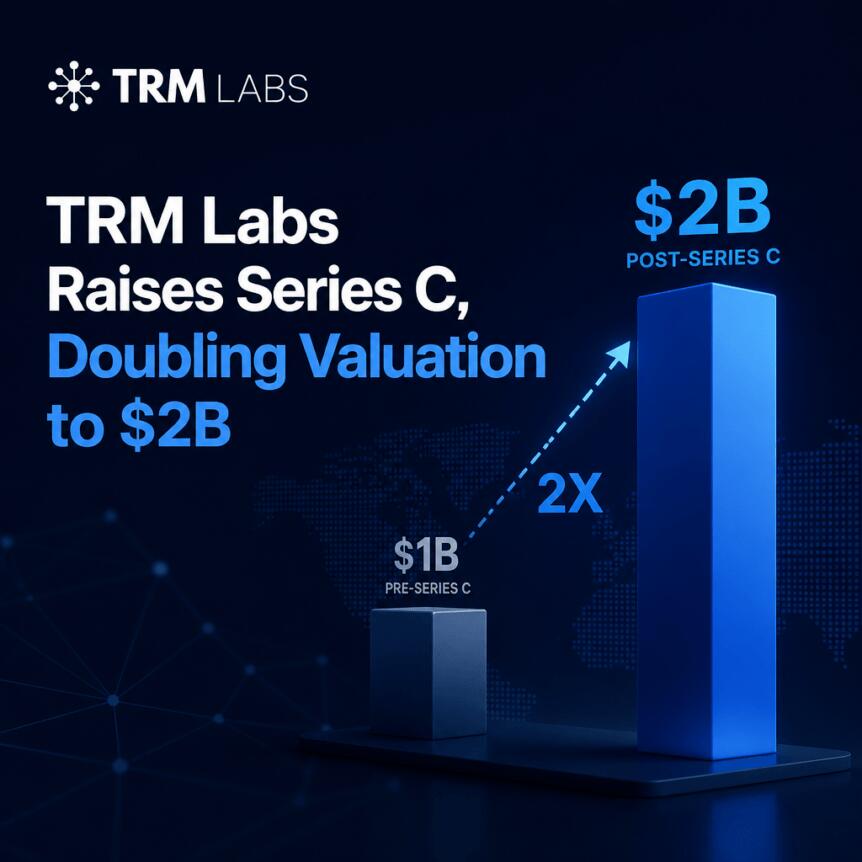
TRM Labs, a blockchain intelligence company focused on investigations and compliance, has more than doubled its valuation to $2 billion after expanding its Series C funding round. The round was led by Blockchain Capital, according to an announcement released Wednesday. TRM did not disclose the amount raised in the latest expansion.
The company says its annual recurring revenue has quadrupled over the past three years. The funding expansion builds on a separate Series C tranche announced in February, when TRM raised $70 million, also led by Blockchain Capital.
Key takeaways
- TRM Labs’ valuation rises to $2 billion following an expanded Series C led by Blockchain Capital.
- The company did not disclose the expansion’s size, but reported annual recurring revenue is up fourfold over three years.
- TRM says its tools are used by 600+ institutions across 75 countries, including government agencies.
- Recent U.S. government work and procurement scrutiny form part of the broader backdrop to the company’s growth.
- TRM links demand to rising digital crime, citing FBI Internet Crime Complaint Center totals and its own AI-crime metrics.
Valuation jump and what TRM says is driving growth
TRM’s valuation increase comes after a series of milestones that the company frames as evidence of rising demand for investigation-grade blockchain analytics. In its announcement, TRM said its AI-powered products support investigations into fraud, money laundering, sanctions evasion, and other forms of digital crime.
The firm also positioned its business performance as a key factor behind the new valuation. Prior to the February Series C, data compiled by Traxcn put TRM’s valuation at $930 million. TRM later crossed the $1 billion mark in the round that included investors such as Citi Ventures and Galaxy, and the current expansion takes it to $2 billion.
For investors and customers, the more notable detail is TRM’s operating momentum: the company stated that its annual recurring revenue has quadrupled over the past three years. That figure suggests growth that is not limited to one-off government or enterprise contracts, but instead tied to ongoing subscriptions for investigation and compliance workflows.
Funding momentum: from February’s $70 million to the expanded Series C
The latest valuation update is tied directly to the expanded Series C. In February, TRM said it secured $70 million in that funding round, again led by Blockchain Capital. The Wednesday announcement confirms the Series C is being expanded, but TRM did not provide the dollar amount for the additional capital.
While the funding size is undisclosed, the valuation and revenue statements indicate the company wants to anchor this raise in measurable performance rather than only strategic partnerships. TRM’s claim of quadrupled annual recurring revenue over three years—paired with its valuation doubling—would be central to how the market interprets the round’s implications for the blockchain intelligence sector.
Who uses TRM, and how it links demand to AI-related crime
TRM said its platform is used by more than 600 government agencies and private-sector institutions across 75 countries. The company’s emphasis on investigative use cases highlights a continued shift in the crypto-adjacent compliance market toward tooling that can assist with cases involving illicit finance, fraud patterns, and cross-border enforcement.
TRM also cited broader criminal activity trends to justify its focus. It pointed to reported losses submitted to the FBI’s Internet Crime Complaint Center, saying these rose to $21 billion in 2025 from $16 billion in 2024. Separately, TRM referenced its own AI-in-Crime Adoption Index, claiming criminal adoption of AI has increased by 40% year over year in 2026.
For readers tracking the sector, the important nuance is that TRM is attempting to tie market demand to both macro indicators (higher reported losses) and a forward-looking thesis (accelerating AI adoption by criminals). Whether that AI-crime acceleration translates into sustained procurement budgets will be something to watch in upcoming contract awards and renewals.
Government contracts and the lawsuit challenging a procurement decision
TRM’s recent trajectory also intersects with U.S. government contracting. The valuation update arrives about two months after U.S. Immigration and Customs Enforcement (ICE) awarded TRM a roughly $95 million, one-year contract for forensic software and support services for Homeland Security Task Force investigations.
That contract was not without controversy. Later that month, rival blockchain intelligence firm Chainalysis challenged the sole-source award in federal court, alleging ICE’s decision was “arbitrary, capricious, and unreasonable.” The dispute adds a layer of uncertainty around how quickly TRM’s government revenue streams could stabilize or expand, particularly in procurements where alternative vendors can contest contract awards.
Even so, the fact that TRM secured a major contract—followed by an expanded funding round at a higher valuation—signals that, at least from the perspective of backers and the company’s leadership, the business case remains intact despite regulatory and legal scrutiny.
As TRM works to convert funding into continued revenue growth, the next signals for the market will likely include follow-on government awards, any developments in the Chainalysis legal challenge, and whether TRM’s AI-crime adoption metrics continue to translate into new enterprise and public-sector deployments.
The threat is not here yet, but fault-tolerant machines and crypto’s migration plans are starting to converge on the same 2029 window.
Ripple’s stablecoin has grown 1,278% this year while XRP shed more than a quarter of its value. The network is busier than ever, but the token capturing that activity has a dollar sign and a peg.
Summary
- RLUSD market cap hit $2.32 billion with cumulative volume surpassing $9 billion, a 1,278% increase year to date, while XRP dropped 27% over the same period to trade near $1.39.
- The XRP Ledger processes 2.4 million daily transactions, up 21% year over year, and DEX volume surged 79%, yet active accounts fell 40%, pointing to fewer but larger participants.
- Seven spot XRP ETFs approved in March 2026 have pulled in $1.68 billion in cumulative inflows, with August alone contributing $153 million to $159 million, the best month since launch.
- RLUSD supply on the XRP Ledger jumped from 18.4% of total issuance at the start of 2026 to 58.9% today, with $963 million now sitting on XRPL and $1.1 billion on Ethereum.
- Institutional integrations, including JPMorgan, Mastercard, Convera, and Interactive Brokers, have overwhelmingly adopted RLUSD for settlement, not XRP, raising the question of whether the token is becoming a sidecar to its own ecosystem.
The numbers tell two contradictory stories about the same network. XRP started 2026 near $1.90, slid to a July low of $1.06, bounced to $1.55 in August, and then drifted back to $1.36. Down 27% on the year. That is the kind of chart that makes retail traders close their apps and check back in six months.
But the infrastructure underneath that falling price is having its best year. The XRP Ledger is settling more transactions than at any point since the 2021 bull run. RLUSD, barely seven months old, already ranks among the ten largest stablecoins by market capitalization. Ripple signed deals with payment processors that move $190 billion per year. The Bank for International Settlements published a working paper using the XRP Ledger for cryptographic proof of integrity.
None of this lifted the token price. And that contradiction is the story worth unpacking, because it reveals something about XRP that the community has been reluctant to confront: the network’s success and the token’s performance may no longer be the same story.
The stablecoin that ate the narrative
RLUSD launched in late 2025 as a compliance-first stablecoin designed to slot into existing banking infrastructure. Ripple positioned it as the settlement layer for cross-border payments, the exact use case that XRP was supposed to own. The company argued the two assets were complementary. Seven months of market data suggest otherwise.
The growth curve speaks for itself. RLUSD crossed $1 billion in market cap in the spring, then $2 billion on August 25, and sits at $2.32 billion today. Cumulative trading volume has passed $9 billion. The growth rate, 1,278% year to date, is the kind of number that would dominate crypto headlines if it belonged to a token people could speculate on. But a stablecoin pegged to one dollar does not generate the same excitement, even when it is quietly absorbing the utility that once justified XRP’s existence.
The listing trajectory tells its own story. Binance added RLUSD in January 2026. OKX followed on April 29. Gate.io on June 15. All four Korean Big 4 exchanges, Upbit, Bithumb, Coinone, and Korbit, now carry it. That is not a niche product limited to Ripple’s partner network. That is distribution at scale, across every major trading region, in under a year.
More revealing is where the supply lives. At the start of 2026, only 18.4% of RLUSD existed on the XRP Ledger, with the rest on Ethereum. Today that figure has flipped to 58.9%, with $963 million on XRPL and $1.1 billion on Ethereum. The stablecoin is migrating to XRP’s home chain at an accelerating pace, which means the ledger’s growing transaction volume is increasingly denominated in dollars, not in XRP. Every mint on the XRPL is a vote of confidence in the chain and a vote of indifference toward the token.
The institutional playbook that skipped XRP
When JPMorgan ran its treasury settlement using Ripple infrastructure, it chose RLUSD for the cash leg. Not XRP. That single decision captures the entire institutional logic in one sentence.
The pattern repeated across every major deal Ripple closed in 2026. Convera, the payment company processing $190 billion per year in cross-border volume, integrated RLUSD for its corridor settlements. LMAX Digital signed a $150 million deal to bring RLUSD into its institutional trading infrastructure. Mastercard connected through Ripple’s payment APIs. BlackRock’s BUIDL fund interacted with the Ripple ecosystem through RLUSD rails. Flutterwave, fresh off a $3.2 billion Series E, partnered for African payment corridors where dollar-denominated settlement reduces friction for remittance senders. Interactive Brokers and B2C2 added RLUSD support for their institutional client bases.
Count the names. JPMorgan. Mastercard. BlackRock. Convera. These are not speculative crypto plays. These are the largest financial institutions on earth, and every single one chose the stablecoin over the token. The reasoning is not complicated. A bank treasury desk managing overnight positions in multiple currencies does not want to hold an asset that dropped 27% in eight months. A dollar-pegged token eliminates the volatility risk entirely. The parade of institutional names signing with Ripple is real, but the parade is marching toward RLUSD, and XRP is watching from the sidewalk.
This is not a conspiracy or a failure of strategy. It is the predictable result of building a stablecoin that does the same job as XRP but without the price risk. Ripple created a better product for the exact customer it spent a decade courting. The irony is thick enough to cut.
Consider the pitch Ripple made to banks from 2015 to 2023: use XRP as a bridge asset, settle in three seconds, save 40% to 70% on corridor costs compared to SWIFT. Banks listened politely and mostly declined. The volatility objection was consistent across every boardroom. Now Ripple walks into the same boardrooms with RLUSD, which offers the same three-second settlement on the same ledger with the same cost savings, minus the volatility. Banks are signing. The product-market fit that eluded XRP for a decade arrived the moment Ripple removed the token from the equation.
Fewer, larger hands
Here is the number that nobody is talking about. Active accounts on the XRP Ledger dropped 40% year over year. At the same time, daily transactions rose 21% to 2.4 million, and DEX volume surged 79%.
Read those three data points together. Fewer wallets. More transactions. Much higher volume per wallet. The network is concentrating into a smaller number of participants who each move significantly more money.
This is the “fewer, larger hands” paradox, and it reframes the entire XRP story. Retail traders, the ones who drove the 2017 rally and the 2021 echo, are leaving. The 40% drop in active accounts is not a rounding error or a seasonal blip. It is a structural shift that has persisted across multiple months. The people who bought XRP hoping it would hit $10 are gone, or at least dormant, their wallets sitting idle while the network they once championed rewires itself around institutional flows.
Who replaced them? Institutional players routing payments through RLUSD on high-throughput corridors. Market makers filling order books with larger individual trades that generate the same volume from a fraction of the accounts. Treasury operations that do not need thousands of wallets because they consolidate flows into a handful of accounts with API-driven execution and batch settlement. The ledger did not get quieter. It got more efficient, which is the polite way of saying it got more institutional and less retail.
This matters because XRP’s price has always been a retail phenomenon. Institutions did not buy XRP to hold. They used it as a bridge asset, in and out in seconds, which created transaction volume but not sustained buy pressure. The token’s market cap was built on the belief that retail holders and institutional utility would eventually converge, that the network effect would grow large enough to lift the price floor permanently.
Instead, institutions found a way to use the network without the token, and retail left when the price stopped cooperating. The convergence thesis collapsed not because it was theoretically wrong, but because RLUSD offered institutions a better path that did not require XRP exposure at all. The bridge asset became optional the moment the bridge itself could carry dollars natively.
No competitor has published this analysis. The bullish XRP content focuses on ETF inflows and partnership announcements. The bearish content points to price decline and escrow dilution. Neither side has connected the account data to the RLUSD migration to explain what is actually happening on the ledger at a structural level.
The ETF paradox
Against all of this, spot XRP ETFs are having a quietly strong year. Seven funds launched after SEC approval in March 2026, and they have pulled in $1.68 billion in cumulative inflows. August was the best month yet, with $153 million to $159 million in net new capital.
That is real money entering real custody wallets, managed by real fund managers with real fiduciary obligations. It validates XRP as an investable asset class in the eyes of traditional finance. It is also a fraction of what Bitcoin and Ethereum ETFs attracted in their first six months, which suggests the institutional appetite for XRP exposure has a ceiling that the community has not fully acknowledged. More critically, it creates its own paradox. ETF buyers are accumulating XRP in a wrapper that removes it from active circulation. They are not sending XRP across borders. They are not providing liquidity on the DEX. They are not participating in the network’s growing transaction volume. They are buying exposure to a price chart that has moved against them all year, warehousing tokens in cold storage vaults while the chain underneath operates on a different asset.
The ETF inflows have not translated into sustained price appreciation because the buy pressure from funds is offset by the sell pressure from escrow unlocks and the broader market’s indifference to XRP’s fundamental story. On September 1, Ripple unlocked three escrow tranches totaling 1 billion XRP: 100 million, 400 million, and 500 million tokens. The remaining escrow holds 32.6 billion XRP, with 1 billion tokens released every month. That is a monthly supply expansion that institutional ETF buyers cannot absorb at current flow rates, especially when the use case those institutions care about now runs on RLUSD.
The structural imbalance between inflows and outflows is the ETF story that the headline numbers obscure. One billion XRP at $1.39 equals roughly $1.39 billion in potential monthly sell pressure. August ETF inflows of $159 million represent 11.4% of that figure. Even assuming Ripple relocks most of each monthly unlock, the escrow mechanism creates a persistent overhang that works against price appreciation.
The ETFs prove that financial products can exist around XRP. They do not prove that XRP needs to appreciate for the Ripple ecosystem to succeed. That distinction is the quiet earthquake at the center of this story.
Regulatory clarity arrived and the price did not care
The SEC case is resolved. Japan’s FSA approved RLUSD on June 25. The EU granted MiCA preliminary authorization in Luxembourg on June 23. The BIS published a working paper using the XRP Ledger for cryptographic proof of integrity.
Two years ago, any one of these headlines would have sent XRP up 30% in a day. All four happened in 2026, and XRP is down 27% on the year.
The obvious explanation is that regulatory clarity was already priced in. Markets anticipated the SEC resolution for over a year. The less obvious explanation is more important: regulatory clarity benefited RLUSD more than XRP. A stablecoin needs regulatory approval to function as a payment instrument in a given jurisdiction. A speculative token needs regulatory approval to avoid being delisted. The same event has different implications for different assets, and the market figured that out faster than the community did.
Japan’s FSA approval opened RLUSD to the third-largest economy by GDP, a market where dollar-denominated stablecoin settlement can replace costly yen conversion in cross-border flows. MiCA authorization covers the entire European Economic Area, granting RLUSD legal standing as an electronic money token across 30 countries. These are not theoretical markets. They are jurisdictions where RLUSD can now legally serve as a settlement currency for banks and payment processors.
XRP already traded in these markets before any of these approvals landed. Japanese retail investors have been among the largest XRP holders since 2017. European exchanges listed XRP years ago. The approvals changed nothing about XRP’s accessibility but changed everything about RLUSD’s commercial viability as a regulated payment instrument. Every regulatory win expanded the addressable market for the stablecoin while doing little more than confirming the status quo for the token. The community celebrated each headline as an XRP catalyst. The market priced each one as an RLUSD catalyst. The price chart settled the argument.
The cannibalization thesis
Put it plainly. RLUSD is cannibalizing XRP’s primary use case, and Ripple is the one doing it.
This is not accidental. Ripple spent years arguing that XRP’s volatility was a feature, that a three-second settlement window meant the price swing during transit was negligible. That argument worked when the competition was SWIFT, which took days and charged 3% to 7% in corridor fees. It does not work when the competition is RLUSD, which settles on the same ledger in the same three seconds with zero price risk and lower integration complexity.
A payment processor choosing between a bridge asset that lost 27% this year and a stablecoin pegged to one dollar will choose the stablecoin every time. Not because XRP is broken, but because the stablecoin removes a category of risk that no amount of speed can compensate for. The conditions for XRP recovery exist, but they require something beyond Ripple’s core payment business to drive demand.
The bull case for XRP now rests on three pillars that have nothing to do with cross-border payments. First, speculative demand driven by ETF flows and retail re-entry during the next broad market rally. Second, DEX activity on the XRP Ledger creating organic demand for XRP as a base trading pair, a function that grows with on-chain DeFi development. Third, burn mechanics and escrow reductions gradually tightening supply over a multi-year horizon, eventually making the monthly unlocks negligible relative to circulating supply.
None of those pillars requires RLUSD to fail. They coexist. But they also mean that XRP’s investment thesis has quietly shifted from “utility token for global payments” to “speculative asset on a chain that settles stablecoin payments.” That is a meaningful downgrade in narrative, even if the price eventually recovers. It is the difference between owning a toll bridge and owning a house near a toll bridge. The traffic still passes by. The economics are entirely different.
What Ripple gains and what XRP holders lose
Ripple the company is having an exceptional year by every metric that matters to a private enterprise. RLUSD generates revenue through minting and redemption fees. Institutional partnerships create recurring payment volume that compounds over time. Regulatory approvals open new markets with each jurisdiction. The Ripple ecosystem, measured by transaction throughput, partner count, and stablecoin adoption, has never been stronger.
XRP holders do not automatically benefit from any of that. Ripple holds billions of XRP in escrow, and the company’s success does not create a direct mechanism for that XRP to appreciate. There is no revenue share. There is no buyback program. There is no on-chain fee distribution. The link between Ripple’s business performance and XRP’s market price was always assumed by the community and never formally codified. In 2026, the data suggests that link is weaker than the community believed.
This is the uncomfortable truth that the “fewer, larger hands” data illuminates. The XRP Ledger is becoming an institutional payment rail denominated in RLUSD. The token that gave the ledger its name is becoming less relevant to the ledger’s primary function with each integration that chooses the stablecoin over the token. The network can thrive while the token stagnates, and 2026 is the first year where both of those things are happening simultaneously and measurably.
That does not mean XRP goes to zero. Plenty of tokens trade on narratives decoupled from their network’s primary utility, and some of them do very well over multi-year cycles. But it means the token needs a catalyst that is independent of Ripple’s payment business. Smart contract functionality expanding on the ledger could attract DeFi protocols that require XRP for gas fees and collateral. A DeFi ecosystem built on XRPL could generate organic trading demand that puts sustained buy pressure on the token through AMM pools and lending markets. Or a supply shock driven by sustained ETF accumulation combined with escrow reduction could tighten the float enough to move the price even without a fundamental use case shift.
Something has to create demand for XRP specifically, not for the XRP Ledger generally. Until that distinction narrows, the great disconnect will persist. And every month that RLUSD grows while XRP stagnates makes the distinction harder to close, because it proves to the next institutional prospect that the ledger works perfectly well without the token.
What to watch
- RLUSD monthly mint rate versus XRP escrow unlocks. If new RLUSD issuance consistently outpaces the dollar value of monthly escrow releases, the stablecoin is growing faster than the token supply. That ratio tells you which asset the market is choosing in real time.
- Active account trend reversal. The 40% drop in active accounts is the clearest signal of retail departure. A sustained increase over two consecutive months would indicate fresh participants entering the network, not just existing institutions adding wallets.
- XRP ETF flow acceleration. August’s $153 million to $159 million was strong but not sufficient to offset escrow sell pressure at current prices. Monthly inflows above $250 million would begin to matter for price.
- DEX volume composition. The 79% surge in DEX volume is bullish for network activity, but tracking how much of that volume is XRP-denominated versus RLUSD-denominated will reveal whether the token or the stablecoin is driving on-chain trading growth.
- Institutional settlement currency disclosure. When the next major bank or payment processor announces a Ripple integration, watch whether the press release names RLUSD, XRP, or both. That language is the clearest forward indicator of which asset institutions are choosing to build on.
What is the current price of XRP?
XRP trades near $1.39 as of early September 2026, down approximately 27% from its January high near $1.90. The token hit a year-to-date low of $1.06 in July before rallying to $1.55 in August, then pulling back again.
What is RLUSD and how big has it gotten?
RLUSD is Ripple’s dollar-pegged stablecoin launched in late 2025. It has grown to a $2.32 billion market cap with cumulative trading volume exceeding $9 billion, representing 1,278% growth year to date. It is listed on Binance, OKX, Gate.io, and all four major Korean exchanges.
Why is XRP falling while the network grows?
The XRP Ledger’s growing activity is increasingly driven by RLUSD settlement and institutional payment flows that use the stablecoin instead of XRP as the value transfer layer. Network utility and token price have decoupled because the utility does not require the token.
How many spot XRP ETFs exist?
Seven spot XRP ETFs launched following SEC approval in March 2026. They have attracted $1.68 billion in cumulative inflows, with August generating $153 million to $159 million, the strongest single month since launch.
Is RLUSD replacing XRP for payments?
Institutional integrations in 2026, including JPMorgan, Convera, Mastercard, and Interactive Brokers, have adopted RLUSD for settlement. Banks and payment processors prefer a dollar-pegged asset over a token carrying a 27% annual drawdown for the same three-second settlement speed.
How much XRP remains in escrow?
Ripple holds 32.6 billion XRP in escrow with monthly unlocks of 1 billion tokens. On September 1, three tranches of 100 million, 400 million, and 500 million XRP were released. The escrow creates persistent monthly sell pressure.
Why did regulatory wins not boost XRP price?
The SEC resolution, Japan FSA approval of RLUSD, and EU MiCA authorization were largely priced into XRP before they occurred. More significantly, these events disproportionately benefited RLUSD by opening new jurisdictions for regulated stablecoin use while changing little for XRP’s existing market access.
Should I buy XRP based on this analysis?
This article examines the structural relationship between XRP price action and RLUSD adoption. Individual investment decisions depend on personal risk tolerance, time horizon, and financial situation. This is educational analysis, not investment advice.
Disclaimer: This article is for informational and educational purposes only. It does not constitute financial, investment, or trading advice. Cryptocurrency markets carry significant risk. Always conduct your own research before making investment decisions. Published September 9, 2026.
The USDT issuer will help source lending opportunities and provide stablecoin payment infrastructure for Fasanara’s private credit network.
[Update, Sept. 9, 3:45 p.m. UTC: Updates with pricing information in the first paragraph.]
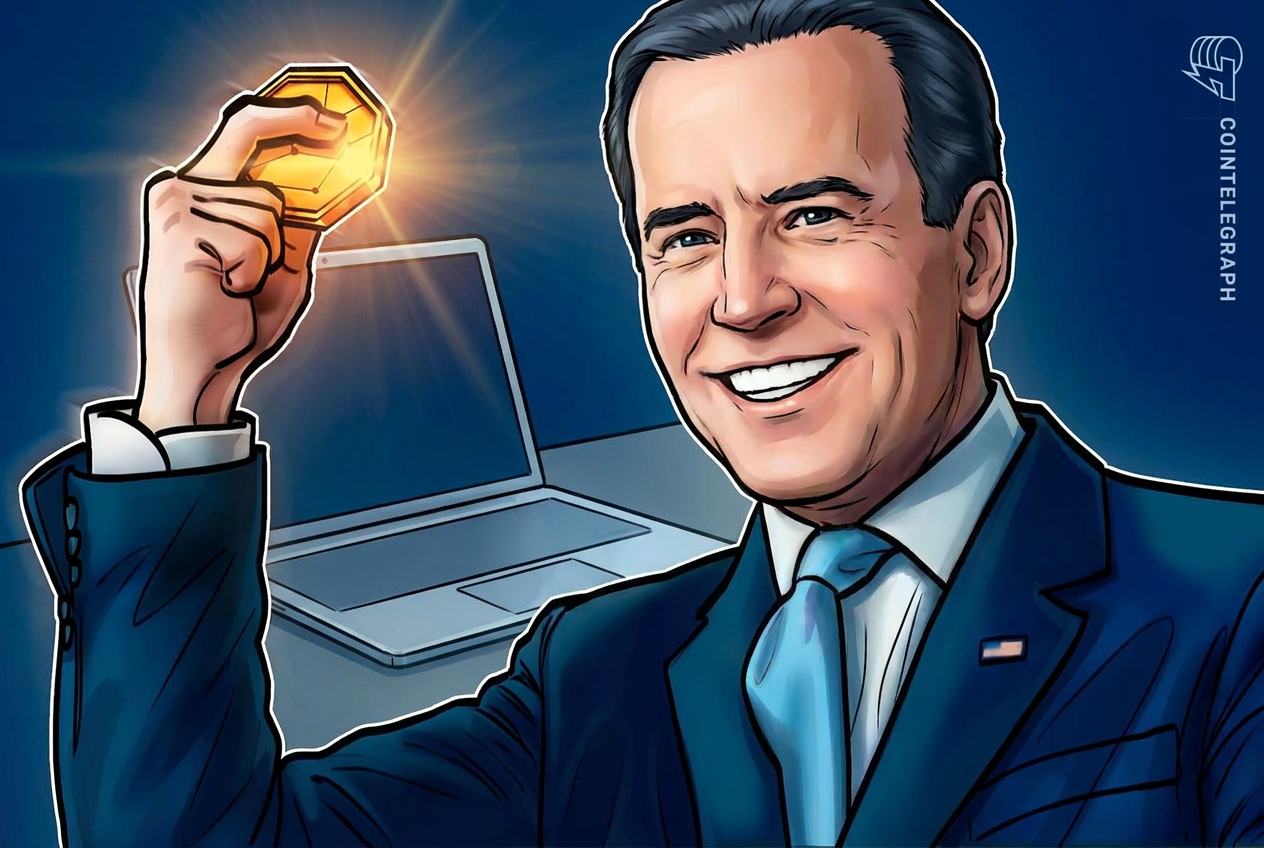
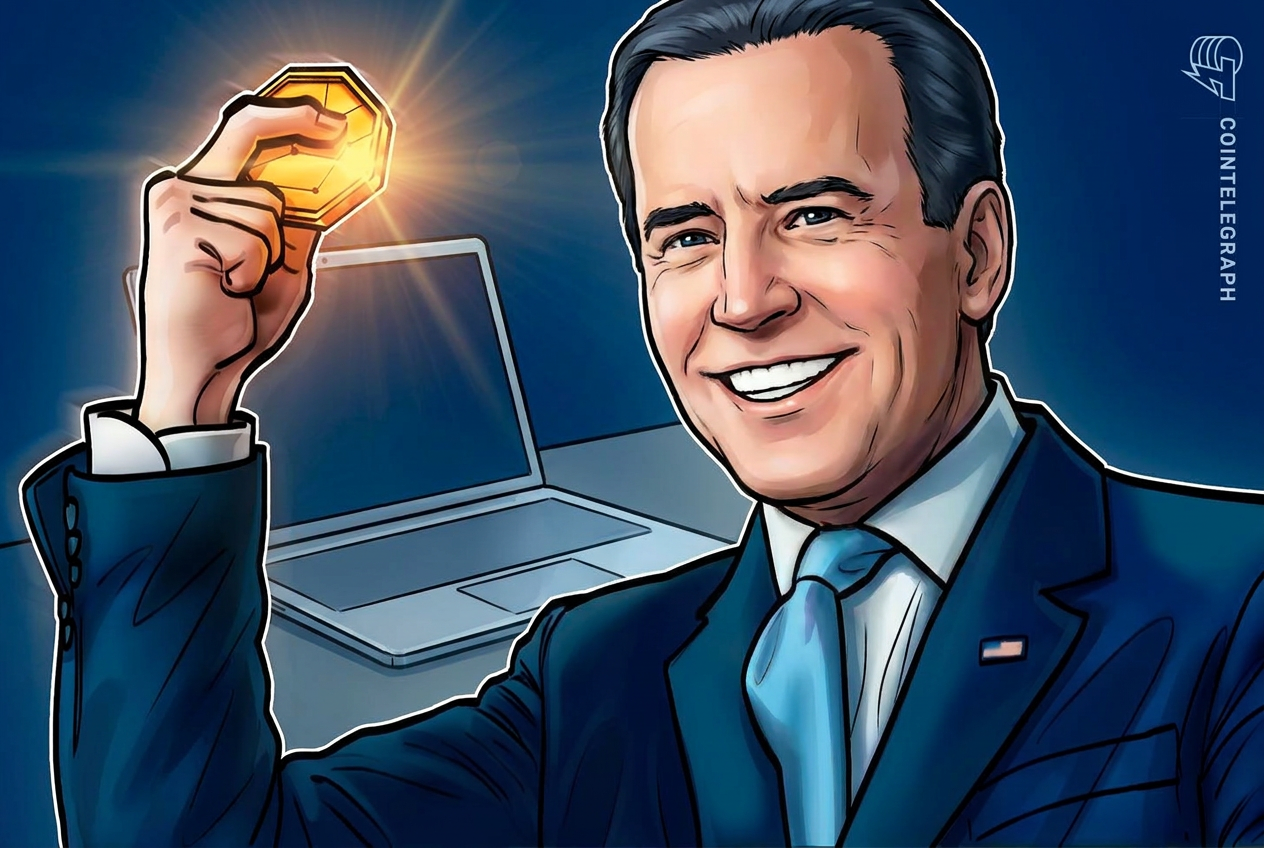
Hunter Biden’s LAPTOP memecoin fell 95.7% in its first hour of trading on Wednesday, as the son of former US President Joe Biden officially entered the market for politically themed cryptocurrencies.
The token, issued on Ethereum layer-2 network Base, traded at $2.0977 at 3:45 pm UTC, after opening at $199.50, according to CoinGecko data. It recorded more than $13.4 million in trading volume.
Most of the top holders are wallets funded in the past 10 days, according to onchain data visualization platform Bubblemaps.
“The symbol they used to try to end me is now a symbol of resilience, redemption and recovery,” Biden said in an X post on Wednesday, responding to public backlash.
Biden also said he understood the cynicism around memecoins, called President Donald Trump’s token a “grift” and warned buyers not to expect him or anyone else to make LAPTOP more valuable.
The memecoin is promoted as an attempt to reclaim the “laptop narrative,” which centers on a MacBook that Biden reportedly left at a Delaware repair shop in 2019. The New York Post published emails and other files purported to have come from the device before the 2020 presidential election. Trump allies used the material against Hunter Biden and his father, then-presidential candidate Joe Biden.
Related: Joe Biden’s son to launch memecoin, will send to TRUMP holders: WSJ
On Monday, Biden teased LAPTOP on X with a post showing the token’s ticker, accompanied by a montage of media coverage of the laptop.
The announcement drew criticism from the likes of digital investigator Stephen Findeisen, known as Coffeezilla, who called LAPTOP a “shitcoin” and urged his followers not to buy it. X account “scupytrooples” told Biden there was “still time to walk this back.”
Base founder Jesse Pollak said in an X post that the project had contacted his team, but Base made a “conscious decision” not to help with the token’s design or promotion.
Biden did not respond to Cointelegraph’s query before publication.
LAPTOP disclosures set 2% of token supply for TRUMP token losers
Biden’s earlier criticism of the Trump family’s crypto ventures also gave traders a ready-made hypocrisy argument.
In an Aug. 21 post, Biden accused World Liberty Financial of using political influence, centralized controls and leverage to benefit its founders, while saying the crypto industry deserved better.
He has now launched a memecoin built around his own political identity, with founders allocated a chunk of the supply.
Related: California Senate passes bill to ban memecoin issuance by public officials
The project’s disclosures describe LAPTOP as a digital collectible with no utility, ownership rights, voting rights, yield or profit-sharing rights. The token has a fixed supply of 1 billion, with 350 million tokens circulating at launch.
Founders, including Biden, are allocated 300 million tokens, or 30% of the supply. Those tokens are locked for six months and then vested monthly over the following 24 months. Another 30% is tied to political, cultural and crypto predictions, with tokens burned when specified outcomes occur and released to charity if they do not.
The disclosures also outline airdrop figures, with the initial round representing 10% of the total supply. Of those, 2% is reserved for wallets that lost money on TRUMP and 8% for eligible subscribers to Biden’s “Where’s Hunter” Substack newsletter.
A separate 10% future airdrop is to be distributed at the foundation’s discretion. That means 20% is allocated to airdrops overall, while the specific TRUMP-loss allocation is capped at 2%.
Magazine: Is Bitcoin too volatile to risk your retirement on?


Arbitrum’s Watchdog Committee has proposed permanently excluding three DeFi projects from future DAO programs after flagging cases involving 457,553 ARB, valued at roughly $76,000.
Summary
- Good Entry, Limitless, and APX Finance face separate permanent-ban votes.
- The committee identified alleged misuse involving a combined 457,553 ARB.
- Projects have until Sep. 10 to respond and return any disputed funds.
- Any ban would restrict future DAO participation without freezing wallets or protocols.
Arbitrum grant cases involve three different findings
The Sep. 3 governance proposal said Good Entry, Limitless, and APX Finance, formerly ApolloX, had been linked to what the Watchdog Committee classified as high-severity misuse of DAO funds.
According to the committee, high-severity cases involve large and deliberate misuse of money allocated by ArbitrumDAO. Examples can include fabricated work and theft, although the findings differ across the three projects under review.
The cited amounts add up to 457,553 ARB, worth about $76,000 at the valuation used in the proposal’s coverage. However, the total does not represent one confirmed theft or a single balance owed to ArbitrumDAO. It combines separate findings involving distributions to ineligible accounts, funds moved away from Arbitrum, and grant tokens that were allegedly left unused or distributed late.
Good Entry received 200,000 ARB through the first round of Arbitrum’s Short-Term Incentives Program. On-chain analysis reviewed by the committee found that 142,839 ARB went to 1,032 users deemed ineligible during and after the incentive period.
Wallets connected to the Good Entry team also showed signs of self-farming, according to the proposal. When investigators sought an explanation, the committee said the project refused to cooperate. Good Entry has since stopped operating, so any approved ban would apply to its founders rather than an active team.
Arbitrum has used community funding for several years to attract users and developers. In November 2023, three funding programs allocated a combined 500,000 ARB through retroactive funding, matching grants and prizes for grant-related tools.
Limitless allegedly moved its entire grant to Base
Limitless faces a separate finding tied to the Long-Term Incentives Pilot Program. The project received 75,000 ARB but later exchanged the full grant for the USDC stablecoin and transferred the funds to Base, according to the Watchdog Committee.
Investigators classified the case as suspected theft because the conversion and cross-chain transfer removed all the grant money from the Arbitrum ecosystem. The committee said it could not contact any Limitless team members for an explanation or to recover the funds.
Limitless also appears to have stopped operating since its participation in the incentive program. Under the proposed enforcement policy, a permanent ban would therefore apply to its founders.
The committee has not said that transferring assets to another blockchain is automatically improper. Its findings center on the alleged use of funds assigned for an Arbitrum incentive program and the team’s failure to explain or return the money.
Base is an Ethereum layer-2 network incubated by Coinbase, while Arbitrum operates as a separate Ethereum scaling ecosystem. Moving the grant to Base placed the assets outside the network they had been provided to support, according to the proposal.
APX Finance faces overlapping concerns over 239,714 ARB
APX Finance received approval for 525,000 ARB under the Long-Term Incentives Pilot Program, but the watchdog’s findings concern 239,714 ARB rather than the entire award.
On-chain analysis found that a large share of the grant remained in APX Finance treasury addresses instead of moving to distribution contracts. Investigators also identified transfers to distributor contracts after the required period and a suspected Sybil cluster connected to team addresses.
Sybil activity generally involves one operator controlling several wallets to obtain a larger share of incentives intended for separate users. The committee described APX Finance’s case as a combination of unreturned funds, late distributions and suspected self-Sybil activity.
Investigators were unable to reach APX Finance team members for clarification or recovery, according to the filing. APX later combined with Astherus, with the merged platform adopting the Aster brand.
Unlike Good Entry and Limitless, the proposed language could cover more than APX Finance’s founders if the DAO considers the project or its successor operation active. The committee’s proposed ban on an operating project includes founders, current team members, and affiliated contributors.
Aster’s operations have become more closely associated with BNB Chain since the merger, while the disputed incentive allocation relates to APX Finance’s earlier participation in an Arbitrum program.
Separate votes would decide each Arbitrum ban
Each named project has been given one week from the proposal’s publication to answer the findings in the governance forum. The committee set Sep. 10 as the tentative response deadline, though the published timeline remains subject to change.
If an explanation does not satisfy the committee and the relevant funds are not returned within the same period, ArbitrumDAO will hold three separate Snapshot votes. Token holders will be able to vote for a ban, oppose it, or abstain in each case.
No project has been banned at this stage. The committee has proposed individual votes because the evidence, amounts, and operating status differ among Good Entry, Limitless, and APX Finance.
Snapshot voting will seek social agreement from the DAO without executing a blockchain transaction. As no on-chain action is required, an approved ban would not freeze project wallets, remove deployed smart contracts, or prevent users from trading related tokens. It would make the affected people and projects ineligible for future ArbitrumDAO programs.
Arbitrum created the Watchdog Program to encourage reports backed by evidence and improve oversight of ecosystem grants. As of Sep. 2, the program had received 90 reports, recovered about 532,000 ARB, and distributed roughly 268,000 ARB in rewards to reporters.
The figures indicate that the program has recovered more ARB than the combined amounts cited across the three cases, although each investigation uses its own findings and recovery status.
U.S. investors have indirect exposure through Robinhood
For U.S. investors, the proposed bans carry no stated trading restrictions or changes to access. Their more direct relevance lies in how ArbitrumDAO controls treasury programs and infrastructure tied to companies serving the American market.
Nasdaq-listed Robinhood uses Arbitrum’s Orbit software for Robinhood Chain. As crypto.news reported in July, chains covered by the Arbitrum Expansion Program send 10% of net protocol revenue back to the ecosystem, with eight percentage points going to the DAO treasury and two funding the Arbitrum Developer Guild.
Robinhood Chain had generated more than $2 million in cumulative revenue after its July 1 launch, sending about $200,000 to the Arbitrum ecosystem under that arrangement. The revenue link gives shareholders of a U.S.-listed company an indirect reason to monitor how ArbitrumDAO governs treasury money and handles alleged misuse.
DAO governance can also raise legal questions for U.S. participants. A recent DAO governance explainer noted that the Commodity Futures Trading Commission’s Ooki DAO case established that governance participants can face liability for a DAO’s conduct under certain circumstances.
The pending Arbitrum measures differ in scope because they seek eligibility restrictions through off-chain votes. The proposal does not announce a referral to the CFTC, Securities and Exchange Commission, Justice Department, or any other U.S. authority.

Don’t Be Shaken By the Imminent Bitcoin Correction

Wales breaking news plus weather and traffic updates (Wednesday, September 9)

TikTok, Whatnot livestream shopping gains steam in the U.S.


-
 Crypto World19 hours ago
Bitcoin price risks $76K drop as $78K support weakens
-
 Tech1 day ago
Memory prices are slowing because buyers ran out of money
-
 Crypto World19 hours ago
Ethereum price stalls below $2,500 as ADX drops to 11
-
 Sports1 day ago
Phones confiscated, players sent home: Pakistan’s England tour turmoil revives memories of Mohammad Amir, Salman Butt and Mohammad Asif’s 2010 Lord’s spot-fixing scandal | Cricket News
-

 Crypto World1 day ago
Robinhood Stock: How To Take Advantage With Reduced Risk
-

 NewsBeat1 day ago
England up in reading, maths and science rankings as Scotland and Wales dip
-
 Crypto World1 day ago
Brent Crude Oil Moves Above $100 for the First Time in 3 Months
-

 Business17 hours ago
Meta debuts long-awaited personal AI agent, Muse
-
 Crypto World1 day ago
Visa expands stablecoin card network to 160 programs
-

 Business1 day ago
Egyptian TV Presenter Sarah Khalifa, 11 Others Sentenced To Death In Major Drug Trafficking Case In Cairo
-
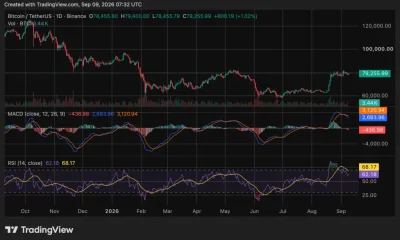
 Crypto World12 hours ago
Bitcoin price holds near $79K as cycle drawdowns narrow
-
 Tech1 day ago
Strong Password Policy and Password Manager Guide
-
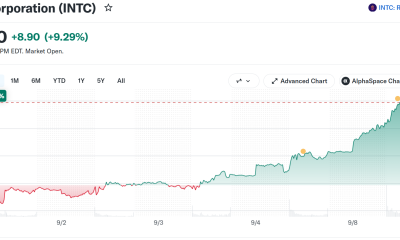
 Crypto World1 day ago
Intel Stock Jumps 9% on Chip Price Hike Report, US Stake Gains $36 Billion
-

 Sports1 day ago
Ballon d’Or 2026 Nominees: Lionel Messi In, Cristiano Ronaldo Out; Erling Haaland Included In Top 30
-
 NewsBeat1 day ago
Tehran’s assertive rhetoric signals a new and dangerous phase in conflict
-
 Tech23 hours ago
Meta debuts its Muse AI agent. Will consumers trust it?
-

 Tech1 day ago
Google’s revived nuclear power plant gets $1.9B loan from US government
-
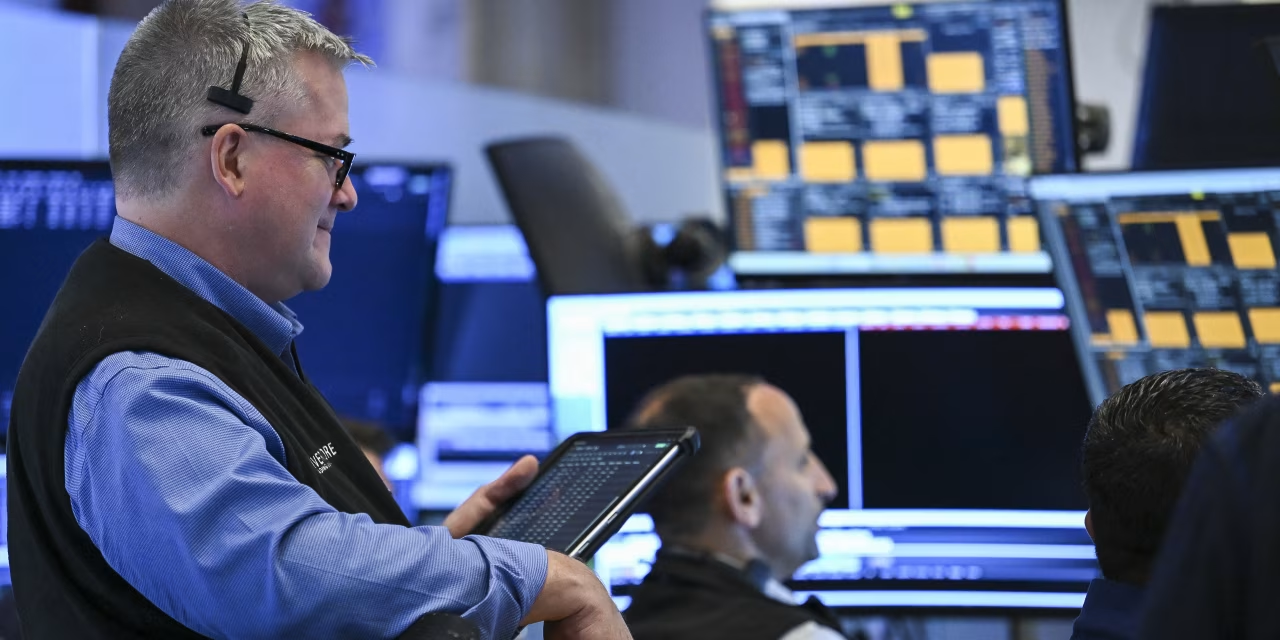 Business23 hours ago
Oil Higher on Hormuz Escalation, Weighing on Sentiment
-
Business21 hours ago
Xometry at Goldman Sachs Communacopia + Technology Conference 2026: growth, AI and Siemens
-
 Business21 hours ago
Target opening 8 new stores this fall across six states
You must be logged in to post a comment Login