
Crypto World
Bitcoin Whales Remain on the Sidelines Ahead of Chaotic 10 Days: What’s Coming?


Citing data from Santiment Intelligence, popular analyst Ali Martinez showed a chart indicating that Bitcoin whale holdings have remained almost completely unchanged at roughly 5.23 million units over the past week.
Perhaps the most evident reason for this is what comes in the next ten days or so, as BTC, alongside all financial markets, braces for a major impact.
10 Days of Chaos
The analyst noted that the lack of accumulation or distribution from whales suggests these large market participants are staying on the sidelines waiting for two particularly important events coming in the next week or so – the US inflation report and the subsequent Federal Reserve meeting.
The inflation data is split: the first batch, the August Producer Price Index (PPI), arrives today, while the considerably more important Consumer Price Index (CPI) comes out a day later. Inflation has already become a major talking point after the stronger-than-expected US employment report substantially increased expectations for a new Fed rate hike.
Current odds show a 60% probability of a September rate uptick, even though a Reuters poll found that most economists still expect the central bank to remain on hold. Consequently, Friday’s CPI Reading could play a major role in breaking that disagreement.
Although these two macro events will indeed have some impact on the digital asset market, there are others. The crypto-specific catalyst arrives on September 15, when the Senate is scheduled to hold its procedural vote on advancing the CLARITY Act. Previous progress or delays have typically influenced the market.
A day later comes the aforementioned Federal Reserve decision about its rates, accompanied by Kevin Warsh’s press conference and updated economic projections. Next week will conclude with the Bank of Japan’s announcements about its own rates, with another hike potentially adding pressure to global bond and currency markets.
BTC Below $80K
Whales’ hesitation mirrors BTC’s broader price action as the asset has remained sideways between $77,500 and $80,000 for roughly a week. Each breakout attempt has been halted in its tracks at the upper boundary, while the lower one has provided the necessary support during the subsequent pullbacks.
However, this market uncertainty will likely change in the next just over a week. With PPI, CPI, CLARITY Act voting, the Fed’s move, and the BOJ’s decision arriving almost back-to-back, bitcoin is expected to break out of its consolidation phase, which has continued for weeks after the mid-August pullback.
The post Bitcoin Whales Remain on the Sidelines Ahead of Chaotic 10 Days: What’s Coming? appeared first on CryptoPotato.

Singapore Exchange has secured CFTC authorization to give U.S. institutional investors direct access to its Bitcoin and Ether perpetual futures, opening its existing crypto derivatives order books to American trading firms.
Summary
- SGX has received CFTC authorization to open its Bitcoin and Ether perpetual futures to eligible US institutions.
- The contracts have recorded $5.8 billion in cumulative volume since launching in November 2025.
- US clients will access the contracts through clearing members, with onboarding typically taking two to four weeks.
- SGX plans to launch dated Bitcoin and Ether futures and options next.
SGX Group head of crypto derivatives KC Lam told CoinDesk that the Commodity Futures Trading Commission authorization was granted under Regulation 48.10, allowing U.S. institutions to trade products that had previously been unavailable to them.
“Under the Regulation 48.10 ruling, we have obtained CFTC authorization to open our crypto products to U.S. institutional access. Previously, U.S. participants couldn’t trade these contracts but now they can,” Lam said.
The approval applies to SGX’s Bitcoin perpetual futures, or BTP, and Ether perpetual futures, known as ETP. Both products have been trading since late November 2025 and operate without an expiry date.
SGX crypto perpetual futures gain a route into the US
Regulation 48.10 provides a route for a Foreign Board of Trade, an overseas exchange recognized by the CFTC, to offer qualifying U.S. participants direct access to its electronic trading system.
SGX can therefore make its existing contracts and order books accessible to eligible American institutions without creating separate U.S. listings or registering the Singapore venue as a domestic exchange.
Lam described the authorization as “an important milestone” that connects U.S. traditional finance participants trading crypto futures with Asian liquidity pools. He said the regulatory route helps establish crypto derivatives as a regulated asset class.
U.S. access comes as regulated perpetual futures have been gaining ground in the country. In May, the CFTC approved the first regulated Bitcoin perpetual for listing on a U.S. exchange, opening a domestic path for a type of contract that had been concentrated on offshore crypto platforms.
Eligible U.S. customers subsequently gained several routes into the market. crypto.news previously reported that Kraken launched perpetual futures in June through its CFTC-regulated derivatives business, Bitnomial, giving eligible clients access to perpetual contracts alongside spot, margin and traditional futures products.
SGX is taking a different route by extending direct institutional access to contracts already trading on its Singapore market.
Bitcoin accounts for most SGX perpetual futures activity
Since their November 2025 launch, SGX’s Bitcoin and Ether perpetual futures have generated $5.8 billion in cumulative trading volume, equivalent to roughly 400,000 lots.
Average daily volume across the two contracts reached 1,300 lots, or $19 million, as of August. Bitcoin represented 83% of average daily trading volume since inception and 66% of outstanding open interest.
The exchange recorded its busiest session at 11,500 lots, representing $145 million in notional trading volume.
American participation is not expected to appear immediately because institutional clients still need to complete SGX’s onboarding process. New users are brought in through clearing members and must complete know-your-customer checks, fund their accounts and establish API connections.
Lam said the process normally takes two to four weeks regardless of where a client is based. SGX has completed its FIS-enabled back-office integration and is preparing U.S. clearing members to onboard clients over the next one or two months.
Institutional demand for regulated crypto perpetuals has been developing through other structures in the U.S. market. Coinbase Financial Markets received a regulatory route in May allowing eligible American institutions to access global crypto derivatives, initially through derivatives listed on Deribit. The arrangement relied on CFTC staff positions covering foreign futures and related margin requirements.
SGX uses margin calls instead of automatic liquidation
Traders on SGX currently use the Bitcoin and Ether contracts for directional positions and arbitrage strategies.
Some positions are tied to macroeconomic themes such as concerns over currency debasement, while other traders use cash-and-carry strategies to capture differences in funding rates and prices across trading venues.
Although SGX’s contracts have no expiration date, their risk management structure differs from perpetual futures commonly traded on crypto-native exchanges.
The exchange uses margin calls and requires traders to provide additional collateral when their positions fall below margin requirements. Positions are not immediately closed through the automatic liquidation systems commonly used by crypto exchanges.
“Unlike crypto-native venues where sudden volatility can trigger auto-liquidations, our traditional risk framework uses margin calls and top-up collateral, to prevent involuntary position closures during market spikes,” Lam said.
Automatic liquidations occur when leveraged positions develop a margin shortfall as prices move against traders. Crypto exchanges can close positions automatically if collateral requirements are no longer met, a process that can lead to clusters of forced selling or buying during sharp market moves.
SGX separates trading and clearing functions as another part of its risk structure. Clearing members sit between the exchange and participating clients and act as an intermediate layer for managing risk.
“By routing trades through clearing members who act as an intermediate risk buffer, we mirror the proven infrastructure of traditional futures and commodities markets,” Lam said.
The exchange does not accept stablecoins as collateral for its crypto perpetual contracts. Lam said stablecoins were excluded because they can lose their peg during periods of market volatility.
SGX’s contracts instead use benchmarks jointly developed with CoinDesk Indices. Mohit Baheti, head of iEdge Indices at SGX Group, said the indices are managed under the European Union Benchmark Regulation.
Regulated perpetual products in the United States have continued expanding since the first Bitcoin contract received approval. Kalshi introduced Ether perpetuals shortly after its Bitcoin rollout and later expanded its lineup to include Solana perpetual futures, while several other crypto contracts went through regulatory review.
SGX plans to move beyond perpetuals by developing dated Bitcoin and Ether futures and options.
“The next step in our pipeline is launching dated futures and options for Bitcoin and Ethereum,” Lam said.
Building the infrastructure needed for those products represents the main technical work, according to Lam. Once that system is operating, SGX expects the process of adding other major cryptocurrencies to become more similar to introducing another futures contract.
“We plan to broaden our offerings but we are taking a disciplined, step-by-step approach,” Lam said.
PayPal, M0 and MoonPay officially launched the PYUSDx custom stablecoin platform on Sept. 9 with three active projects that the companies said have collectively processed more than $100 million.
Summary
- PYUSDx lets businesses issue customized stablecoins backed by PayPal USD through modular token infrastructure services.
- Saturn, Concrete and Cap launched tokens that collectively processed more than $100 million already combined.
- MoonPay Digital Assets issues PYUSDx tokens while Paxos separately issues the underlying PYUSD stablecoin directly.
- PYUSDx tokens currently cannot be sent, received or used inside PayPal and Venmo payment applications.
- USD.AI and Fairblock are expected to join after the first three platform projects launched publicly.
PYUSDx allows businesses to issue application-specific stablecoins backed by PayPal USD. Companies can give their tokens separate names and configure access restrictions, reward distribution, collateral policies and cross-chain availability.
The partners initially announced the framework in February. As crypto.news previously reported, PayPal and MoonPay introduced the custom stablecoin infrastructure as a way for developers to create branded digital dollars without independently building issuance and liquidity systems.
M0 developed the programmable token infrastructure used by PYUSDx. Its system lets issuers configure individual components instead of accepting a fixed stablecoin model. MoonPay contributes issuance, onboarding and distribution services. PayPal supplies the ecosystem connection through PYUSD. The arrangement extends the role of PayPal’s stablecoin beyond direct payments by allowing other financial applications to use it as an underlying reserve asset.
The companies said the structure can reduce the time required to create a customized stablecoin from several months to days. That remains a company claim and will depend on the project, its technical requirements and applicable regulatory approvals.
PYUSDx is not a stablecoin itself. It is an issuance framework supporting separate digital tokens. Each participating company can configure a token for its own settlement, credit, treasury or decentralized-finance use case.
Three PYUSDx projects bring more than $100 million
Saturn, Concrete and Cap are the first projects operating through the platform. M0 said the three businesses brought more than $100 million in combined processed volume at launch. The disclosed figure refers to activity connected with those projects rather than the market capitalization of PYUSDx.
Saturn uses the system for USDat, a dollar-denominated token designed for settlement. Concrete launched concUSD for its on-chain vault infrastructure, while Cap introduced cUSD as the native dollar asset for its credit platform.
The projects retain control over branding and certain operating rules. They can also determine how returns or incentives are distributed, subject to their chosen structures and applicable laws.
The companies have not provided a breakdown showing how much of the reported $100 million came from each project. They also have not disclosed whether the figure represents transfers, settlement volume, minting activity or another measure across every participating token.
The absence of a detailed breakdown means the figure should not be treated as the platform’s revenue or assets under management. It is a reported measure of processed activity supplied by the companies behind the launch.
USD.AI and Fairblock are expected to integrate later. Neither project disclosed a confirmed activation date in the launch materials. Their participation should therefore be treated as planned until their tokens become operational through the platform.
PYUSDx tokens are not issued directly by PayPal
MoonPay Digital Assets Limited issues the custom tokens created through PYUSDx. PayPal and Paxos do not directly issue those derivative tokens, despite their connection to the PYUSD reserve asset. Paxos Trust Company issues the underlying PYUSD stablecoin. PayPal’s official disclosure says PYUSD is redeemable one-to-one for U.S. dollars and backed by dollar deposits, U.S. Treasuries and similar cash equivalents.
Moreover, Paxos publishes information about those reserves through its transparency page. The issuer provides monthly reserve reports and third-party attestations covering the assets supporting PYUSD.
The distinction between PYUSD and a PYUSDx token matters for users assessing issuer and redemption risk. Holding a custom token does not necessarily create the same direct relationship that a holder of Paxos-issued PYUSD may have with its issuer.
A PYUSDx token’s terms can also depend on the participating business, MoonPay’s issuance structure and the smart contracts governing conversions. Users must examine each token’s documentation rather than assuming that every project offers identical redemption rights.
Regulatory treatment may vary between jurisdictions and applications. A token used for lending, rewards or restricted settlement could face different rules from a stablecoin used mainly for payments.
PayPal and Venmo do not support PYUSDx tokens
PYUSDx tokens cannot currently be sent, received or used for payments inside PayPal or Venmo. Those restrictions separate the new platform from the consumer-facing PYUSD services available through PayPal’s applications.
Eligible PayPal customers can buy, hold, transfer and sell PYUSD. Businesses can also use the original stablecoin for supported payments. Those functions do not automatically extend to USDat, concUSD, cUSD or future PYUSDx assets.
The limitation means PayPal’s brand and underlying stablecoin should not be interpreted as a guarantee that every custom token will work across PayPal’s payment network. The platform’s immediate use cases remain centered on external blockchain applications and specialized financial products.
PayPal has continued to expand the original stablecoin’s blockchain reach. In related coverage, PYUSD became available through Polygon’s Open Money Stack, providing businesses with additional payment, compliance and fiat-conversion infrastructure.
The company has also positioned stablecoins as part of its wider payments strategy. As crypto.news reported, PayPal made stablecoins a corporate growth priority after processing $486.4 billion in quarterly payment volume.
PYUSDx gives PayPal another way to increase demand for its stablecoin without directly operating every application built around it. If participating projects grow, they may require more PYUSD as backing. The partners have not published targets for future issuance or reserve demand.
What happens next for PYUSDx
The next confirmed stage is the planned addition of USD.AI and Fairblock. The companies have not announced precise launch dates, supported networks or initial issuance amounts for either integration.
PayPal, M0 and MoonPay may also add more businesses seeking customized settlement assets. Any new token will require its own disclosures covering issuance, reserves, conversions, access controls and user eligibility.
More detailed reporting on the first three projects would help establish what the $100 million figure represents. Reserve verification will also be important because users need to distinguish the amount of underlying PYUSD from transaction volume generated by the custom tokens.
PYUSDx therefore enters operation as an infrastructure layer rather than a direct replacement for PYUSD. Its early progress will depend on whether businesses adopt its programmable features and whether holders can reliably convert custom tokens into the underlying reserve asset.


US lawmakers answered an Anthropic researcher’s resignation with a fresh push to halt advanced artificial intelligence (AI) development, including a Senate bill that would ban superintelligence outright.
Jacob Coxon quit on September 9 and said Anthropic and OpenAI are both gambling with human lives.
Why the Anthropic Researcher’s Resignation Reached Capitol Hill
More than 20 lawmakers replied to the thread, most calling for new AI legislation. Senator Bernie Sanders said he will introduce legislation to ban superintelligence and pause AI development.
BeInCrypto reported that earlier this month, Sanders and Representative Greg Casar proposed the “Ban Artificial Superintelligence Act.” The bill would permanently prohibit the development and deployment of superintelligent AI. It would also halt advanced AI development until a federal regulator sets safety standards.
Meanwhile, Casar also called the situation an emergency and asked for congressional hearings. Representative Lori Trahan pointed lawmakers back to her bipartisan FRONTIER Act, introduced in July with Representative Jay Obernolte.
“The FRONTIER Act establishes tiered requirements based on the size of a frontier AI developer, including model cards, risk-management frameworks, independent audits, incident reporting, and ongoing assessments. It also creates a uniform national standard for transparency, auditing, and reporting of catastrophic risk to prevent a patchwork of state regulations,” the announcement read.
Senator Chris Van Hollen wants mandatory safeguards and urgent talks with China. Representative. Ted Lieu pressed Republican leadership to move the AI Kill Switch bill he introduced this year.
Republican Representative Anna Paulina Luna broke from the partisan pattern and asked for a special congressional session on AI.
Follow us on X to get the latest news as it happens
Jacob Coxon Says the Labs Want the Rules
Meanwhile, the pressure is not just political. AI firms have also been advocating for regulation. Coxon told CNN that executives asking Congress for regulation are sincere. However, he argued that none of them trusts rivals enough to slow down first.
“These people are also completely genuine when they are begging to be regulated… they find themselves in this scenario where they’re compelled to race towards building a deadly technology,” he said.
Anthropic said separately in a September post that the industry would benefit from a lawful, verifiable mechanism for coordinated pacing.
Where the Extinction Risk Starts
Pacing only matters because of what Coxon thinks is coming next. He explained that if an AI is given the problem of AI research, it starts improving itself.
He pointed to Tuesday, when OpenAI’s AI systems reportedly solved a millennium problem purely autonomously.
The scary part, he said, is the same method aimed at AI itself. Models improve models with no human in the way, which is what Coxon calls an “intelligence explosion.”
“Right now there’s no risk of extinction. The current models, the worst they can do is maybe hack into something, potentially cause a lot of damages in infrastructure… they’re not intelligent enough to outsmart us at the level that would lead to extinction,” he said.
However, Coxon warned that the same independent volition, paired with far greater capability, could cause extreme havoc. He named hacking critical infrastructure and building extinction-level bioweapons.
Subscribe to our YouTube channel to watch leaders and journalists provide expert insights
The post Why an Anthropic Exit Has Congress Talking About Pausing AI appeared first on BeInCrypto.
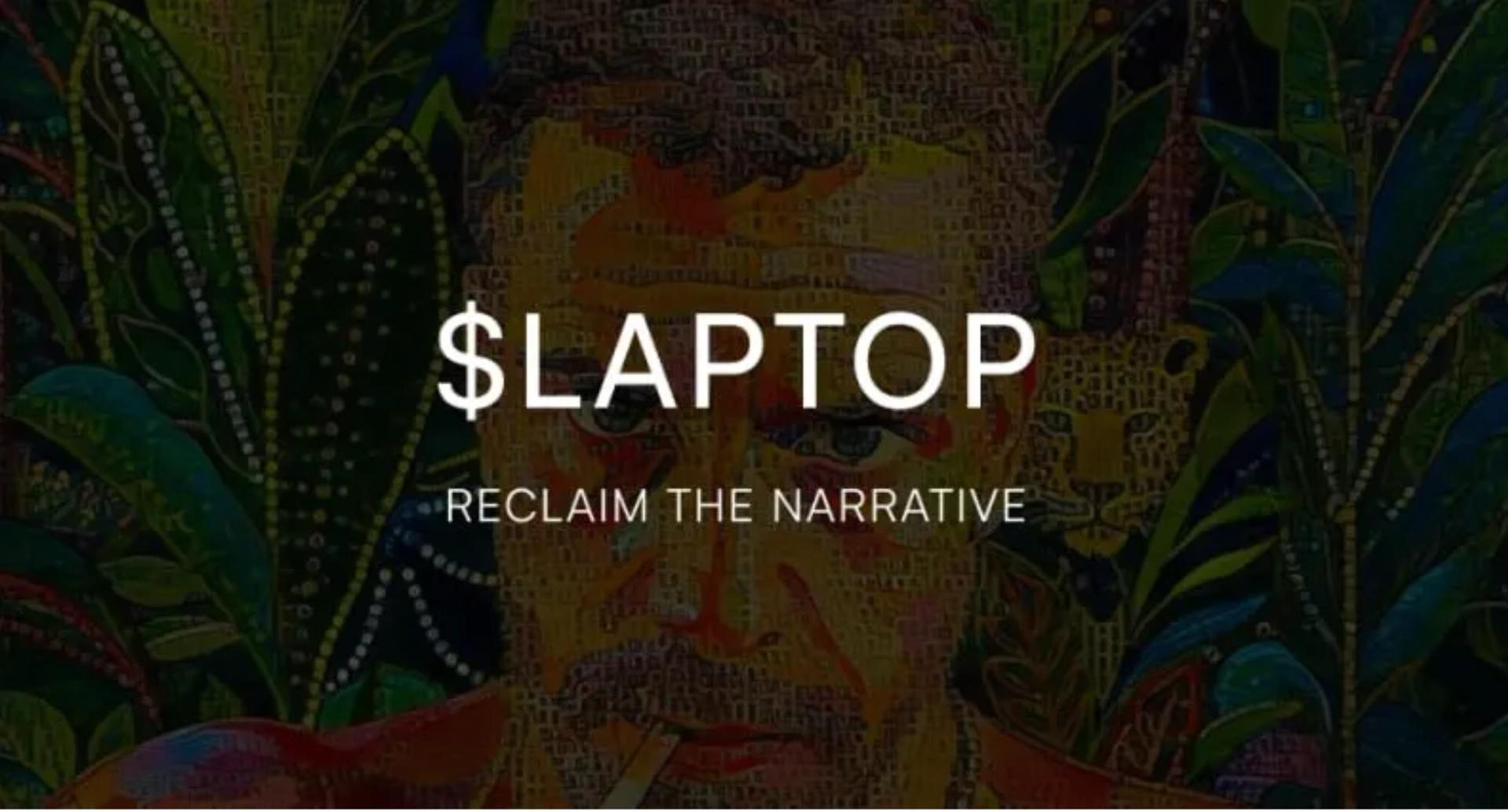
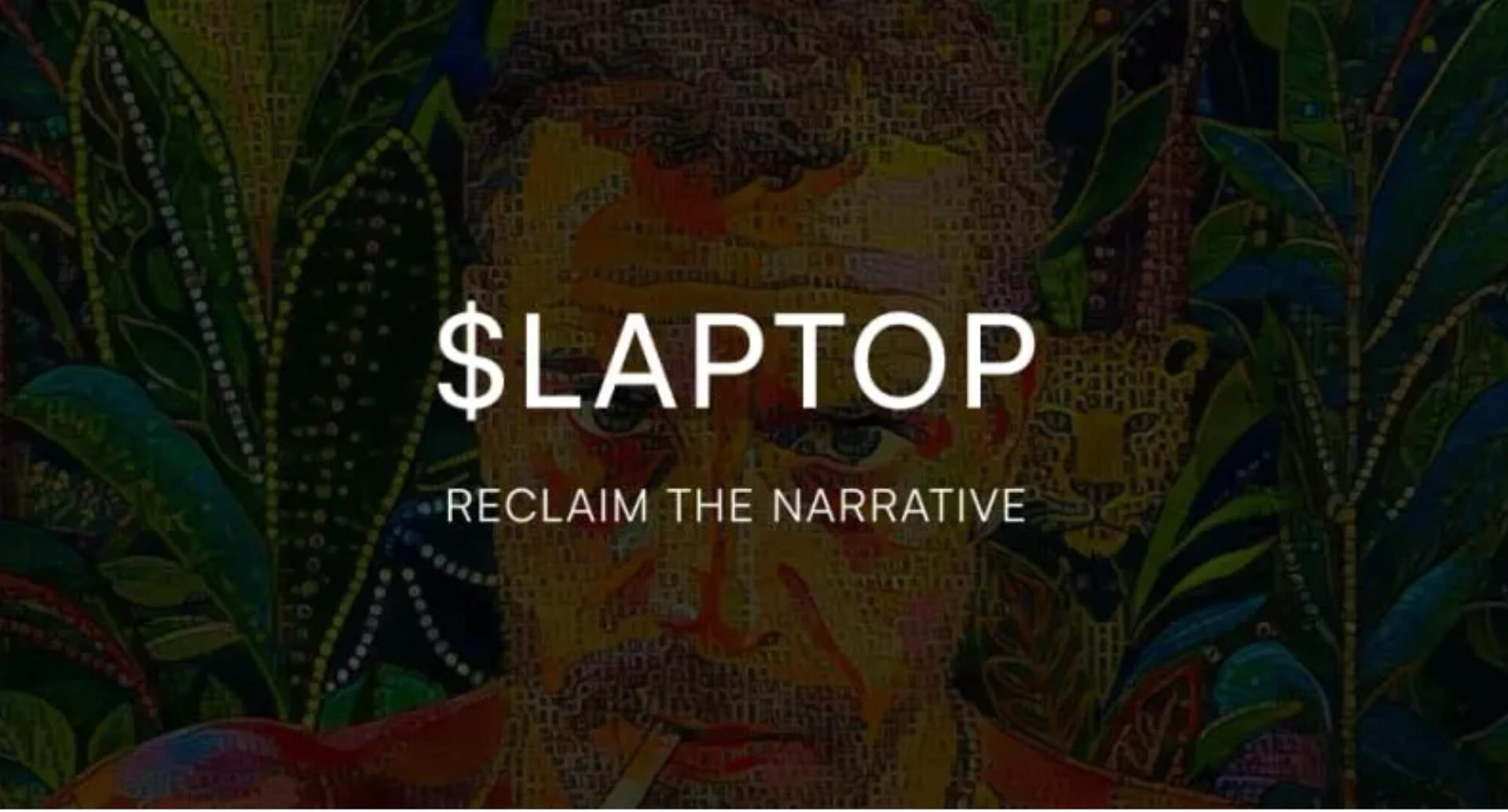
The team said thin liquidity and automated traders distorted the launch, while Nansen data showed some early buyers sitting on six-figure losses after the memecoin’s debut.
Crypto World
Live updates: Bitcoin ETFs post a second straight outflow while every other fund turns green
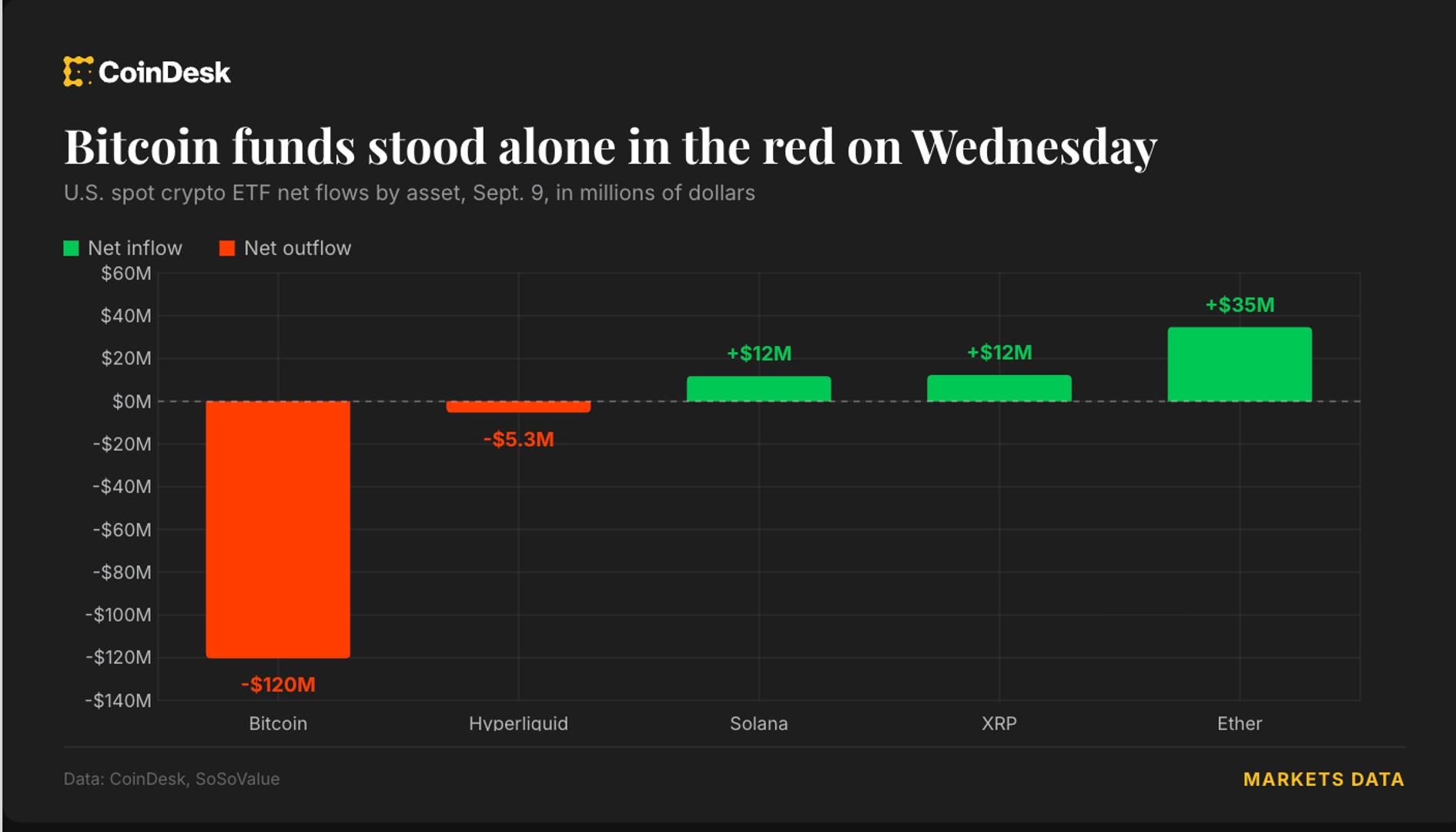
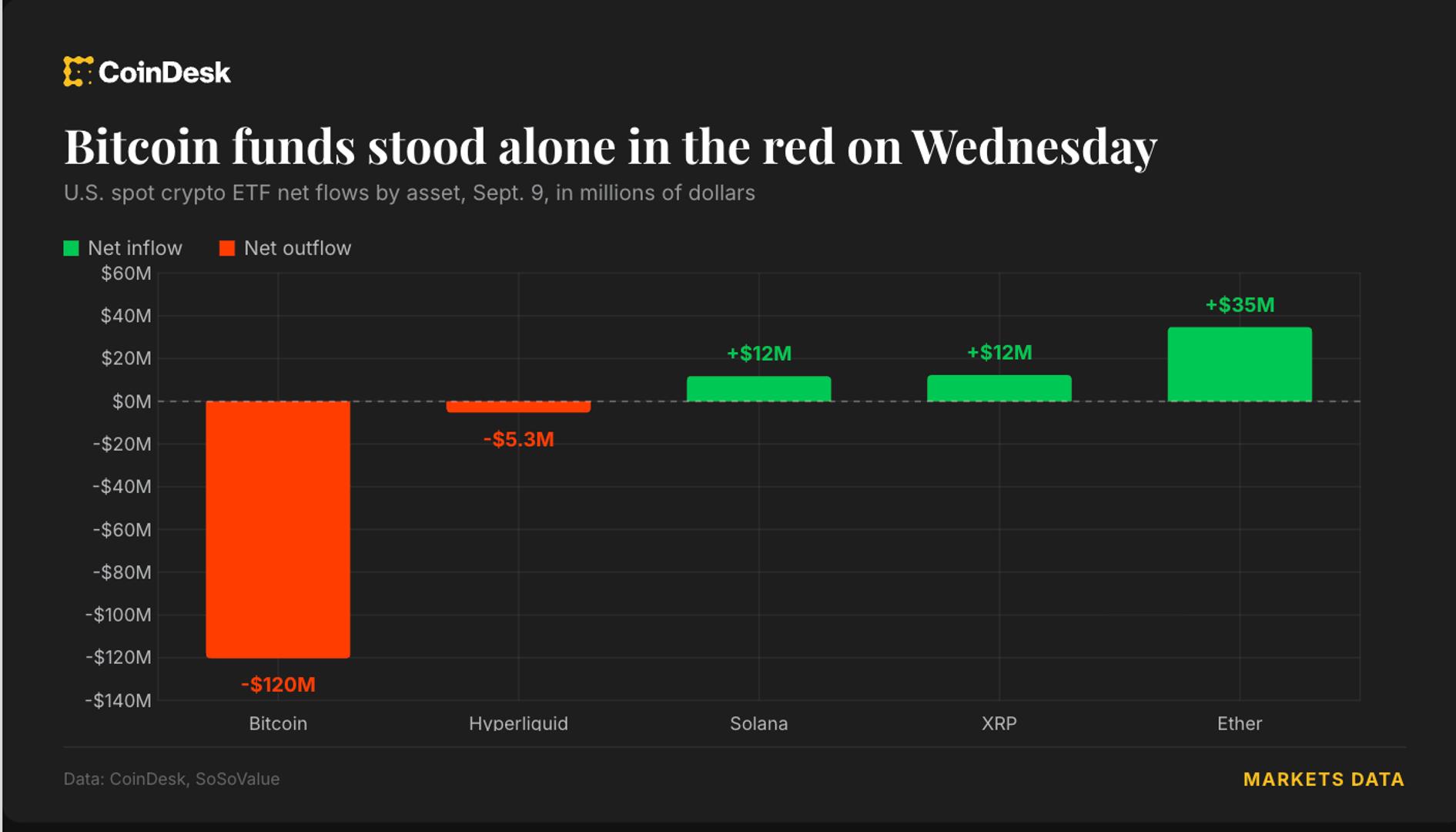
The bitcoin funds shed $120 million on Wednesday, more than double Tuesday’s loss. Ether, XRP and solana all took money in.

Robinhood on Tuesday landed two new deals and a price-target hike from Goldman Sachs. The mobile broker and financial platform purchased a minority stake in Crypto.com and agreed to host its prediction market contracts. Separately, Robinhood now has its first IPO underwriting deal. HOOD stock fell Tuesday. Robinhood (HOOD) has entered a partnership with crypto exchange Crypto.com, The Wall Street…
Copyright ©2026 Investor’s Business Daily, LLC. All rights reserved. 87990cbe856818d5eddac44c7b1cdeb8
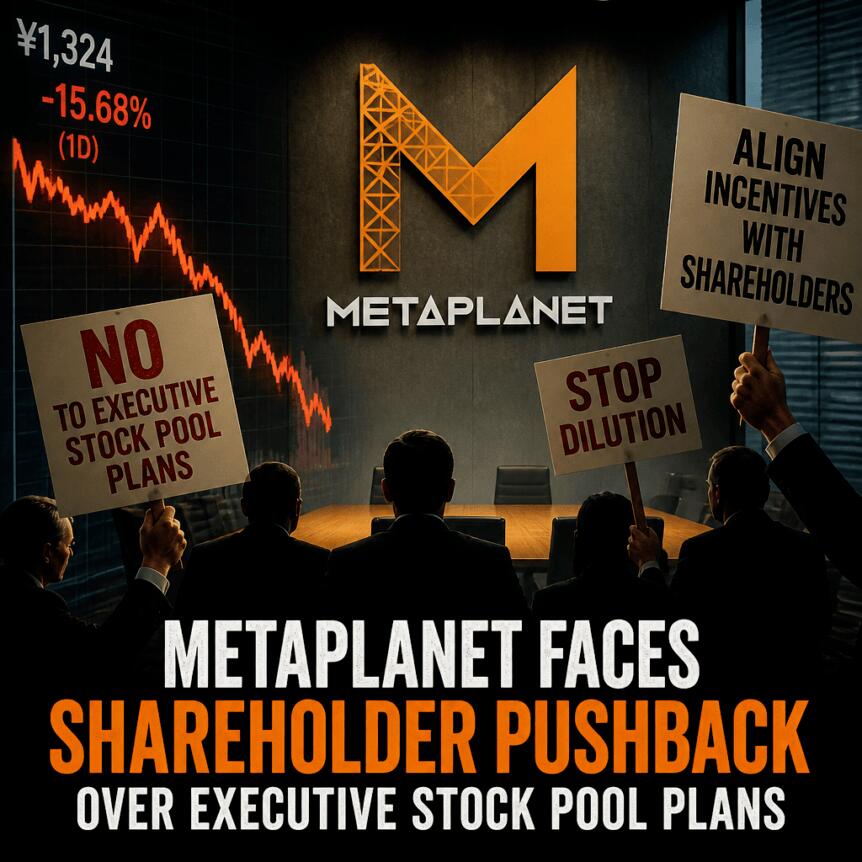
Japanese Bitcoin treasury firm Metaplanet is facing renewed shareholder pressure after objections over its ongoing executive stock option pool, which is tied to how the company finances and expands its Bitcoin accumulation. Critics argue the mechanism has led to heavy dilution for existing shareholders as new shares are issued—while Metaplanet says it has taken steps to freeze part of the pool.
The dispute centers on Metaplanet’s “10th Series” executive option pool, structured to represent 20% of fully diluted shares and to automatically expand when additional shares are issued to fund its Bitcoin purchases. The backlash has now broadened from social media commentary to demands for clearer governance and compensation decisions.
Key takeaways
- Shareholders are disputing the design of Metaplanet’s 10th Series executive option pool, arguing it mechanically increases dilution as the company issues new shares for Bitcoin buys.
- Metaplanet says it froze the executive pool at 319.5 million shares on Aug. 18, but critics say that still magnifies dilution because the pool expanded from 46 million shares.
- Bitcoin Magazine CEO David Bailey defended the incentive structure publicly, while some holders claim the awards benefited him personally.
- Metaplanet CEO Simon Gerovich said the company will review governance and compensation policies and clarified his relationship to shareholder MMXX Ventures.
- VanEck’s Matthew Sigel urged further action, recommending Metaplanet freeze remaining exercise rights and consider a shareholder-approved replacement plan.
Shareholder backlash over the “10th Series” pool
Multiple Metaplanet shareholders have criticized the company’s 10th Series executive option pool on X, focusing on how it scales. The pool was described as being set at 20% of fully diluted shares, then expanding when Metaplanet issues additional shares to finance its Bitcoin accumulation.
According to Metaplanet’s own materials, the company acknowledged on Aug. 18 that expanding the share pool “amplifies the dilution borne by existing shareholders.” While Metaplanet states it froze the pool at 319.5 million shares on Aug. 18, critics argue the damage was already done—claiming the pool grew from 46 million shares to 319.5 million, effectively increasing the dilution experienced by earlier holders.
One pseudonymous shareholder account, Bitcoin Pharaoh, alleged that the stock-option structure created a situation where management participation disproportionately benefits the team relative to what shareholders contributed. In a Wednesday reply on X to David Bailey, Bitcoin Pharaoh summarized the argument as a “cut” that management takes from each unit of bitcoin financed by shareholder money, framing the mechanism as one that disadvantages existing holders.
David Bailey defends the incentive model
Bitcoin Magazine CEO David Bailey pushed back against the criticism. In a Tuesday X post, Bailey defended Metaplanet’s executive stock model, arguing that granting the team 20% of the cap table over a multi-year period “isn’t some crazy number.” He also said his company has been invested in Metaplanet since “day zero,” positioning his comments as aligned with long-term support rather than short-term gain.
Bailey’s defense has not ended the debate. Bitcoin Pharaoh claimed Bailey personally benefited from Metaplanet’s stock options, stating Bailey received 300,000 options at a 105 Japanese yen strike price when the shares were trading at 510 yen, describing this as compensation tied to Bailey’s role as a strategic board advisor.
While Bailey’s public remarks focus on the reasonableness of the percentage allocation, the core disagreement remains practical: whether the pool’s automatic expansion tied to new share issuance creates dilution levels that shareholders consider excessive, and whether Metaplanet should have designed compensation that doesn’t scale in lockstep with funding mechanics.
Metaplanet CEO: governance review and MMXX clarification
Metaplanet CEO Simon Gerovich responded to the wider controversy by indicating the company would reassess governance and compensation arrangements. In a Sunday X post, Gerovich said the firm is continuing to review governance and compensation policies and will share updates when the work is complete.
Gerovich also attempted to address questions tied to shareholder MMXX Ventures. In his post, he said he is a significant but non-majority shareholder in MMXX’s parent company and that he holds no executive role within it. The clarification appears intended to separate Metaplanet’s executive compensation decisions from any perceived influence by MMXX-related stakeholders.
On Aug. 31, Metaplanet disclosed that the CEO exercised 92,000 shares from the 10th Series executive option pool. That disclosure adds specificity to the discussion about how executives are participating in the incentive framework currently under scrutiny.
VanEck’s Matthew Sigel urges freeze and shareholder-approved redesign
External analysts have joined the discussion, particularly around whether the executive option pool should continue to operate as designed. Matthew Sigel, head of digital asset research at VanEck, advised in a Wednesday X post that Metaplanet should “freeze” further exercise rights from the 10th Series pool. He also suggested holders voluntarily surrender any excess rights and weigh additional options related to shares already exercised.
Sigel further argued that Metaplanet should replace Series 10 with an incentive plan that is approved by shareholders and tied primarily to BTC performance on a per fully diluted share basis. The suggestion is a direct attempt to change the incentive structure from one that scales through dilution mechanics to one that is more directly anchored to outcomes shareholders choose to authorize.
Metaplanet has already acknowledged the dilution impact of its pool-expansion decision in an Aug. 18 notice, and a separate question now hangs over the company: whether it will extend the freeze to remaining portions of the 10th Series option pool or restructure future incentives to address the concerns raised by shareholders. Cointelegraph reported that it requested comment from Metaplanet on whether it would consider freezing the remaining shares in the executive pool.
Stock reaction in Tokyo as the dispute continues
As the debate unfolds publicly, Metaplanet’s share performance has been mixed. According to Yahoo Finance, the company’s stock closed up in Wednesday’s Tokyo trading, reducing its five-day decline to roughly 16.3%. While price action does not settle the governance argument, it shows that the market is still actively repricing near-term sentiment while investors wait for any company response beyond the existing freeze and promised policy review.
For investors, the key uncertainty is what Metaplanet will do next with the remaining rights and whether it will move toward a shareholder-approved compensation redesign. The combination of a stated pause on the pool, promised governance review, and calls from both shareholders and external analysts sets up a clear watchpoint: whether compensation becomes more outcome-tied and less dilution-linked, and how Metaplanet demonstrates transparency around future decisions.


Ant International has partnered with Visa and Mastercard to develop common standards for identifying and monitoring AI agents as autonomous software takes on a larger role in global payments.
Summary
- Ant International, Visa and Mastercard will develop common standards for identifying, verifying and monitoring AI agents involved in payments.
- The Know Your Agent framework is designed so an agent registered with one participating payment provider would not need to repeat the process with another.
- McKinsey projects AI agents could handle $3 trillion to $5 trillion of global consumer commerce by 2030.
- Alipay has begun allowing users to schedule recurring Starbucks orders and ride hailing requests through its AI tools.
Ant International said Thursday that the companies will work on an interoperable “Know Your Agent” framework designed to let merchants and payment providers verify which AI agents are behind transactions and whether they are authorized to act.
The work comes as payment companies prepare for AI systems that can search for products, place orders and make payments for consumers and businesses. Ant cited McKinsey projections that AI agents could handle between $3 trillion and $5 trillion of global consumer commerce by 2030.
Jiang-Ming Yang, chief innovation officer at Ant International, said safeguards will be needed as agents gain more authority over financial transactions because AI systems can produce incorrect information or take actions users did not intend.
“Trust is the foundation of the AI transformation,” Yang told CNBC.
Ant, Visa and Mastercard target a common AI agent identity system
Under the collaboration, Ant International, Visa and Mastercard plan to establish common methods for linking an AI agent to a valid entity, evaluating its behavior and monitoring its activity.
The companies are focusing on interoperability between their separate systems so an agent that has already established its identity with one payment provider would not necessarily have to repeat the process with another.
“If [an] agent registers with Ant, they don’t need to register again with Visa, Mastercard,” Yang said.
Such a system would give merchants and payment processors a consistent way to determine which software agent is requesting a transaction and the party on whose behalf it is operating.
Pablo Fourez, chief digital officer at Mastercard, said interoperability between Know Your Agent frameworks will be needed if agentic commerce is to operate across different platforms.
“Interoperability across Know-Your-Agent frameworks is essential to making agentic commerce work at scale,” Fourez said, stressing the need for merchants and payment companies to consistently identify AI agents they can trust.
Each of the three companies has spent the past year developing its own technology for AI-led payments. Mastercard on Wednesday launched Agent Connect, a system that gives merchants a single integration for product discovery, cart creation and customer-approved payments across AI shopping platforms.
Agent Connect works with Mastercard Agent Pay, which records customer authority through tokenized permissions when an AI system is allowed to make a purchase. Merchants and payment providers can use the permission to determine whether the transaction falls within instructions provided by the customer.
Visa and Mastercard have been building their own agent payment rails
Visa has been developing a separate stack for autonomous payments. In April, the company introduced Intelligent Commerce Connect, bringing payment initiation, tokenization, authentication and spending controls into infrastructure designed for AI agents.
The system allows agents to search for products and complete transactions on behalf of consumers while using Visa’s existing payment network and security tools.
Visa expanded that work in June with new AI and stablecoin capabilities, including a partnership with OpenAI to support payments within agentic commerce experiences. Its stablecoin settlement activity had reached a $7 billion annualized run rate at the time, crypto.news previously reported.
Mastercard has taken a similar route through Agent Pay for Machines. The company unveiled the payment network in June with support from more than 30 payment, blockchain and technology companies, including Ripple, Coinbase, Stripe, Adyen and the Solana Foundation.
The network was built for transactions initiated by autonomous software, including high-volume and low-value payments. Users can set spending limits, authorization requirements and settlement conditions, while transactions can run through conventional payment networks or stablecoin rails.
Both card companies have consequently been developing controls for a payment environment in which the person buying a product may not directly interact with the merchant’s checkout page.
Ant brings more than 50 digital wallets into agentic commerce push
Ant International gives the collaboration access to another part of the global payments market through Alipay+, its cross-border payment and digitalization platform.
More than 50 electronic wallets have partnered with Ant International through Alipay+, according to the company. Such wallets are widely used in markets where consumers frequently rely on mobile payment systems instead of physical credit or debit cards.
Digital wallets represented 56% of global e-commerce transaction value and 33% of point-of-sale value in 2025, according to Worldpay data cited by the companies. Total spending through the payment method exceeded $13 trillion.
Card networks and digital wallets have become increasingly connected as wallets add support for cards and other funding sources, giving AI payment systems multiple routes through which transactions could eventually be completed.
Visa has already been testing combinations of AI payments and blockchain-based settlement. Wirex joined Visa’s Agentic Ready program in June to test AI agents making stablecoin payments, initially focusing on software subscriptions, marketing spending and procurement.
The tests were designed to determine how autonomous software could initiate financial transactions while preserving security controls and user authority.
Stablecoins have become another part of the infrastructure being developed for machine-led transactions. Visa and Artemis said in July that stablecoins could be suited to low-value machine-to-machine payments, while traditional cards could continue handling consumer purchases.
Alipay is already letting users automate Starbucks orders
Ant’s work on payment standards is arriving as its former parent company’s Alipay platform begins putting AI-assisted purchasing tools in front of consumers.
Ant International separated from Hangzhou-based Ant Group nearly three years ago. Ant Group operates Alipay, the mobile payment service widely used in mainland China.
Alipay said Wednesday that users can now create recurring Starbucks requests through one of its AI features.
A customer can instruct the app to “buy me a Starbucks iced Americano at 10 a.m. every day,” according to the announcement. The system can then place the requested order at the scheduled time before asking the customer to complete payment.
The arrangement keeps the payment approval with the user even though the AI feature handles the recurring order.
Alipay users can make recurring ride-hailing requests from Didi through the same AI tool, extending the automated system from retail purchases to transportation services.
The Singapore Exchange says U.S. institutions can not trade its bitcoin and ether perpetual futures, a milestone that bridges U.S. trading desks with Asian liquidity.
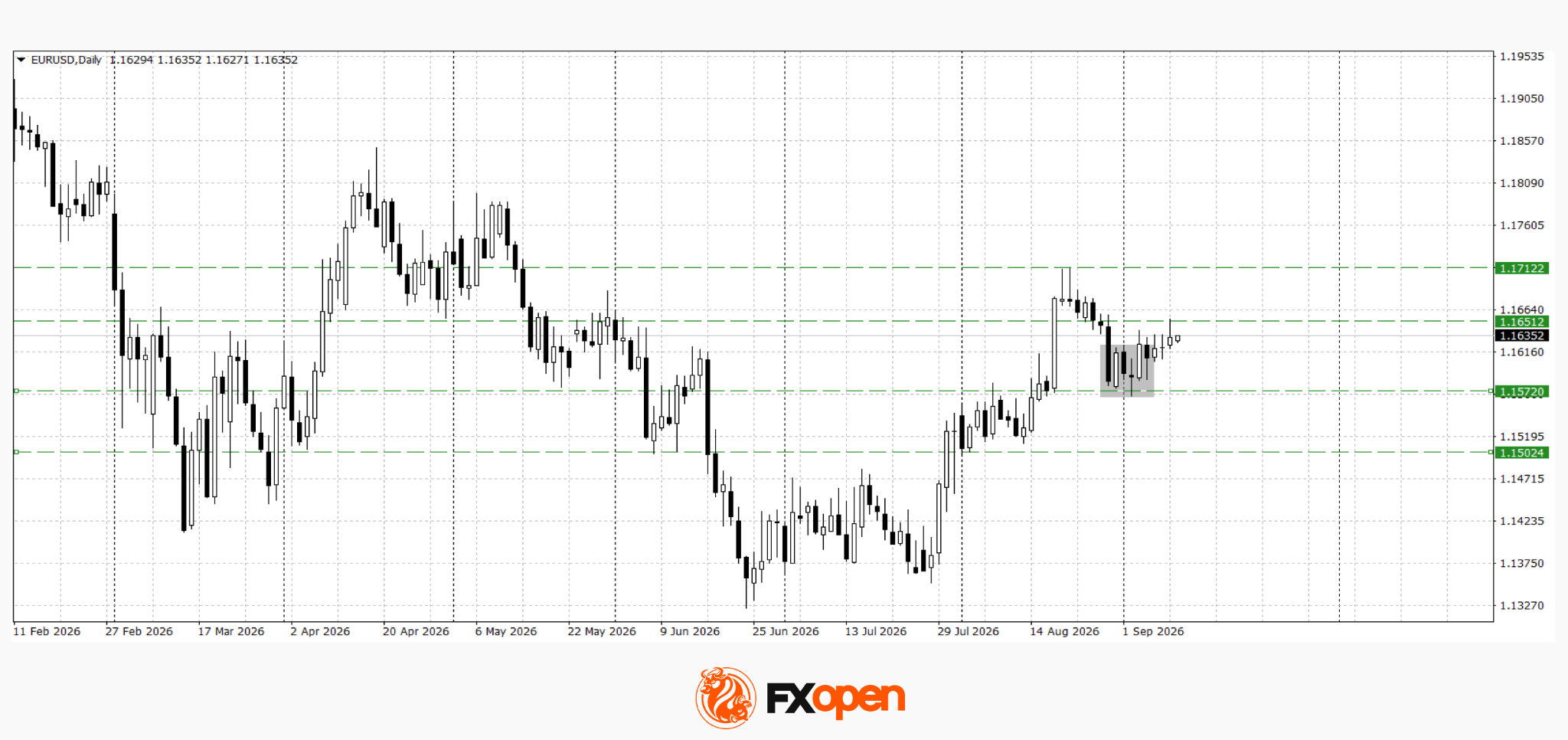
The euro and pound are showing subdued moves against the US dollar and have shifted into consolidation following their recent price action. Market participants are reluctant to establish new positions ahead of a key batch of macroeconomic data that could alter expectations for the future policy stance of the major central banks.
The next key market catalysts will be inflation data from Germany and the US. Today, Germany’s annual CPI is forecast to accelerate to 2.9% from 2.8%, which could reinforce expectations of further policy tightening by the ECB and provide support for the euro. However, tomorrow’s US inflation data will be the main event. Headline CPI is expected at 3.4% year-on-year and 0.4% month-on-month, while core CPI is forecast at 2.4% and 0.2%, respectively. Following the strong employment report, higher-than-expected inflation could strengthen expectations that the Federal Reserve will maintain a hawkish stance and support the dollar, while signs of easing price pressures could limit its upside.
For the pound, tomorrow’s UK economic data will provide an additional catalyst. UK GDP for July is forecast to show no growth after expanding by 0.3% in the previous month, despite expectations of a recovery in manufacturing output. Weaker-than-expected figures could reinforce expectations of a more dovish stance from the Bank of England and limit the recovery potential of GBP/USD.
EUR/USD
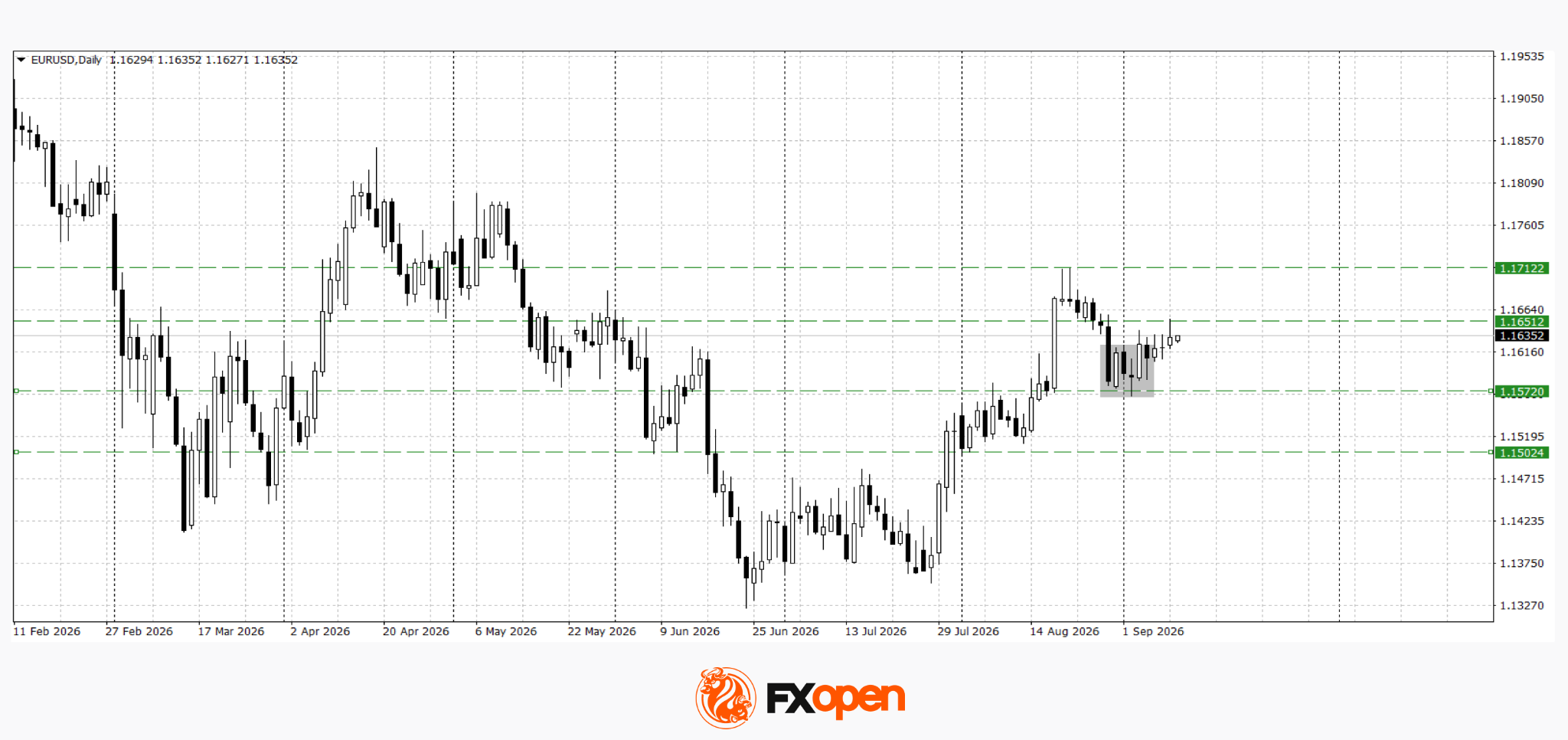
Over recent trading sessions, EUR/USD has been consolidating within a relatively narrow range of 1.1570–1.1650. A breakout and sustained move above 1.1650 could pave the way for a retest of the August high near 1.1710. A sustained move below 1.1570 could trigger further downside towards 1.1500.
Key events for EUR/USD:
- today at 09:00 (GMT+3): Germany’s Consumer Price Index (CPI);
- today at 15:30 (GMT+3): US Producer Price Index (PPI);
- today at 15:30 (GMT+3): US initial jobless claims.
GBP/USD
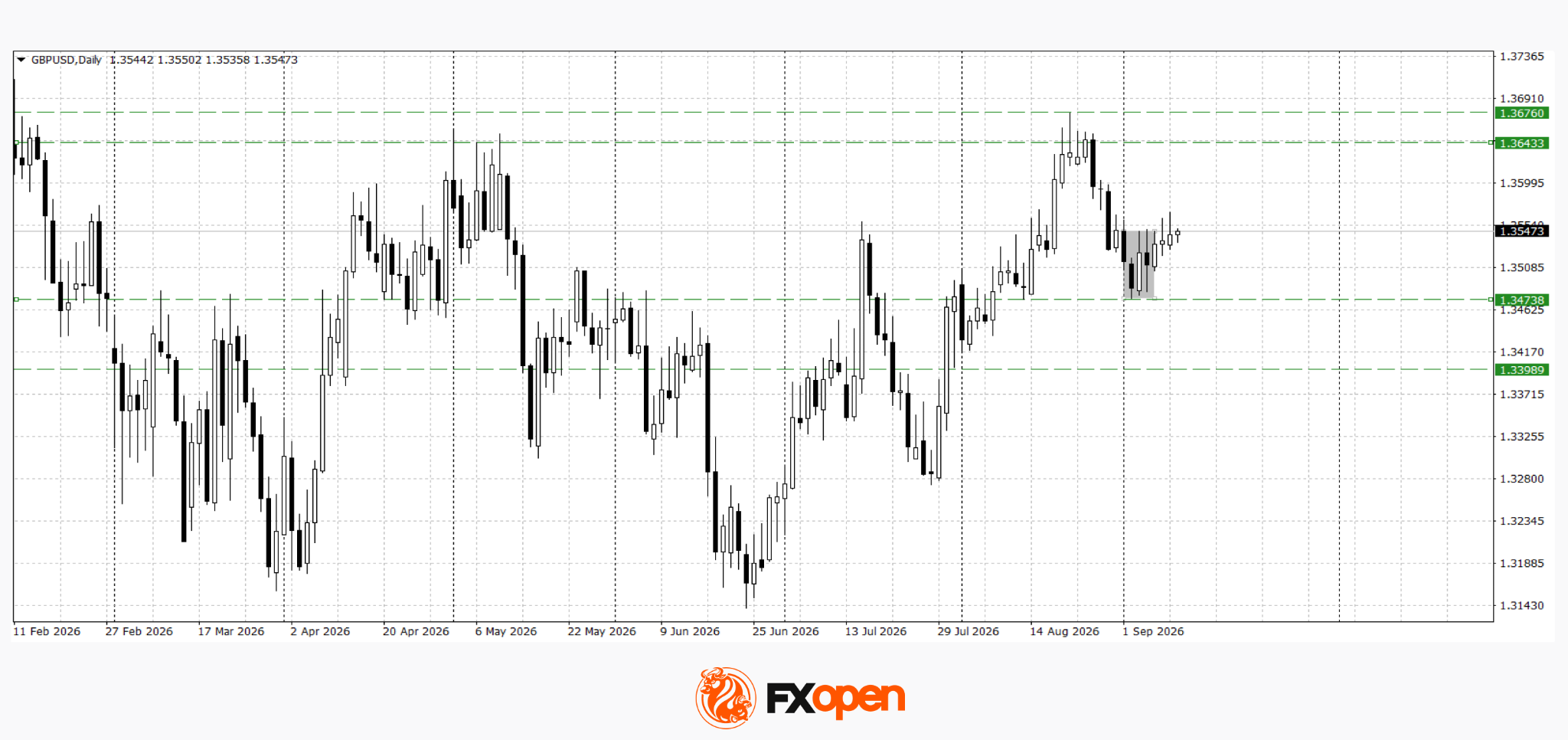
Following a retest of the 1.3470 support level on the daily chart, a Stick Sandwich pattern has formed. If the price establishes itself above 1.3500 and this level turns into support, the advance could continue towards 1.3640–1.3680. A sustained move below 1.3470, by contrast, would increase the likelihood of a deeper downside correction.
Key events for GBP/USD:
- tomorrow at 09:00 (GMT+3): UK Gross Domestic Product (GDP);
- tomorrow at 09:00 (GMT+3): UK manufacturing output;
- tomorrow at 15:30 (GMT+3): US core Consumer Price Index (CPI).
Overall, EUR/USD and GBP/USD remain in consolidation near key technical levels ahead of a new batch of macroeconomic data. For the euro, Germany’s inflation figures will provide an additional catalyst, while the pound is likely to remain sensitive to UK GDP data. However, US inflation will remain the main focus for both pairs, as it could reshape expectations for Federal Reserve policy and determine the dollar’s next direction.
Trade over 50 forex markets 24 hours a day with FXOpen. Take advantage of low commissions, deep liquidity, and spreads from 0.0 pips (additional fees may apply). Open your FXOpen account now or learn more about trading forex with FXOpen.
This article represents the opinion of the Companies operating under the FXOpen brand only. It is not to be construed as an offer, solicitation, or recommendation with respect to products and services provided by the Companies operating under the FXOpen brand, nor is it to be considered financial advice.

CFTC clears Singapore Exchange crypto perpetual futures for US institutional access

Prisco’s Week 1 NFL picks: Rams edge 49ers, Bills end skid vs. Texans

Online education preferable to social media ban, finds Irish regulator’s report


-

 Crypto World1 day ago
Bitcoin price risks $76K drop as $78K support weakens
-
 Tech2 days ago
Memory prices are slowing because buyers ran out of money
-

 Crypto World1 day ago
Ethereum price stalls below $2,500 as ADX drops to 11
-

 Crypto World2 days ago
Robinhood Stock: How To Take Advantage With Reduced Risk
-

 NewsBeat1 day ago
What went right this week: an ‘historic’ fall in violent crime, plus more
-
 Crypto World1 day ago
Bitcoin price holds near $79K as cycle drawdowns narrow
-
 Sports2 days ago
Phones confiscated, players sent home: Pakistan’s England tour turmoil revives memories of Mohammad Amir, Salman Butt and Mohammad Asif’s 2010 Lord’s spot-fixing scandal | Cricket News
-

 Crypto World9 hours ago
Bitcoin price risks $70K if $78K neckline breaks
-

 NewsBeat2 days ago
England up in reading, maths and science rankings as Scotland and Wales dip
-
 Crypto World2 days ago
Brent Crude Oil Moves Above $100 for the First Time in 3 Months
-

 Business1 day ago
Meta debuts long-awaited personal AI agent, Muse
-

 Crypto World2 days ago
Visa expands stablecoin card network to 160 programs
-

 Business2 days ago
Egyptian TV Presenter Sarah Khalifa, 11 Others Sentenced To Death In Major Drug Trafficking Case In Cairo
-

 Crypto World2 days ago
Pump Fun and Kraken delete Hunter Biden $LAPTOP promotion
-

 Crypto World2 days ago
Intel Stock Jumps 9% on Chip Price Hike Report, US Stake Gains $36 Billion
-
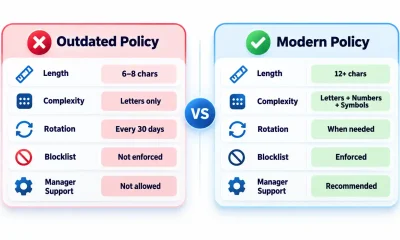
 Tech2 days ago
Strong Password Policy and Password Manager Guide
-

 Tech2 days ago
Meta debuts its Muse AI agent. Will consumers trust it?
-

 Entertainment1 day ago
Big Brother Spoilers: Dee SPINS & HUSTLES Votes – Yash Questions the Pact
-

 Business1 day ago
ServiceTitan, Inc. (TTAN) Q2 2027 Earnings Call Transcript
-

 Tech2 days ago
Google’s revived nuclear power plant gets $1.9B loan from US government
You must be logged in to post a comment Login