Apple has finally entered the foldable market with the iPhone Duo, its first folding iPhone. Here’s how it compares against Samsung’s latest foldable, the Galaxy Z Fold8 Ultra.
After more than a decade of rumors, Apple’s first foldable arrived at its fall event as the iPhone Duo. A hyper-premium smartphone that has dual displays and folds in half.
It lands in a market Samsung has led for years, thanks to its Z Fold line.
The Galaxy Z Fold8 Ultra is Samsung’s most advanced book-style foldable, which it launched in July 2026. It sets the benchmark that Apple’s debut foldable has to meet.
This is how the iPhone Duo compares against the Galaxy Z Fold8 Ultra, with the specifications side by side.
iPhone Duo vs Samsung Galaxy Z Fold8 Ultra – Specifications
| Specifications |
iPhone Duo |
Galaxy Z Fold8 Ultra |
| Starting price (launch) |
$1,999 |
$2,099.99 |
| Inner display |
7.6-inch Super Retina XDR, 1,878 x 2,670, 430 ppi, ProMotion, always-on, 3,000 nits, nano-texture |
8.0-inch Dynamic AMOLED 2X, 2,504 x 2,256, 422 ppi, 1-120Hz |
| Outer display |
5.4-inch Super Retina XDR, 1,398 x 2,034, 460 ppi, ProMotion, always-on, 3,000 nits |
6.5-inch Dynamic AMOLED 2X, 1,080 x 2,520, 422 ppi, 1-120Hz |
| Dimensions – unfolded |
6.48 x 4.64 in, 5.2mm thick |
5.64 x 6.24 in, 4.1mm thick |
| Dimensions – folded |
3.31 x 4.64 in, 11.3mm thick |
2.87 x 6.24 in, 8.9mm thick |
| Weight (ounces) |
8.96 |
7.58 |
| Processor |
A20 Pro |
Snapdragon 8 Elite Gen 5 |
| Storage |
256GB, 512GB, 1TB, 2TB |
256GB, 512GB, 1TB |
| Rear cameras |
48MP Fusion Main (2x optical-quality telephoto), 48MP Fusion Ultra Wide, 4x optical-quality zoom range |
200MP wide, 50MP ultrawide, 10MP 3x telephoto |
| Inner camera |
Under-display FaceTime camera |
10MP |
| Outer camera |
12MP Center Stage front camera |
10MP |
| Battery (video playback) |
Up to 31 hours (inner), up to 44 hours (outer) |
Up to 27 hours |
| Wired charging |
50% in around 20 minutes (60W) |
45W (67% in about 30 minutes) |
| Biometrics |
Touch ID in side button |
Fingerprint, Face recognition |
| Water resistance |
IP68 |
IP48 |
| Operating system |
iOS 27 |
Android 17, One UI 9 |
| Connectivity |
5G, Wi-Fi 7, Bluetooth 6, Thread, USB-C, eSIM only |
5G, Wi-Fi 7, Bluetooth 6, USB-C |
| Colors |
Star White, Night Sky |
Graphite, Cream, Violet Shadow, Green Shadow |
iPhone Duo vs Samsung Galaxy Z Fold8 Ultra – Design
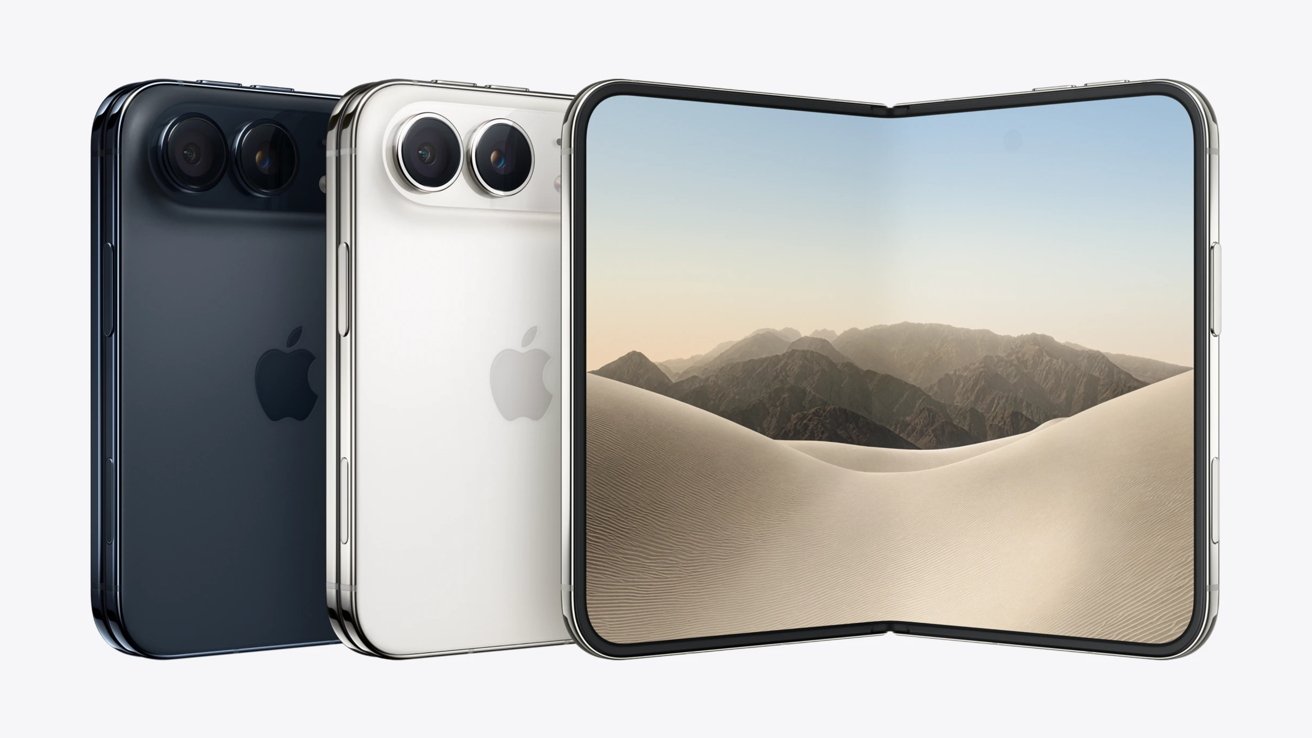
From the outset, the two foldables are constructed in the same broad manner. Both are book-style foldables, opening to reveal a tablet-sized inner screen.
To save users from having to open the devices every time they want to use it, there’s a smaller secondary screen on the outside. This gives users the best of both smartphone and tablet worlds.
In terms of size, the iPhone Duo is a little shorter but wider overall, at 6.48 by 4.64 inches when unfolded, and 3.31 by 4.64 when folded up. The Fold8 Ultra is taller at 6.24 inches, but the width varies between 5.64 inches when opened to 2.87 inches when folded.

iPhone Duo vs Samsung Galaxy Z Fold8 Ultra: iPhone Duo colors
There’s also a difference in thickness, too, with Samsung’s device managing to be 8.9mm thick when folded, or 4.1mm when laid flat. The iPhone Duo is thicker at 11.3mm when folded up, and 5.2mm when open.
When it comes to weight, Samsung takes the lead here, at 7.58 ounces to the iPhone’s 8.96 ounces.
Just on these specs, the iPhone seems to be the chunkier device, with the weight not helping that comparison at all.
A clue at the weight disparity may be in the choice of materials each company used, beyond physical size.
Apple uses a lot of grade 5 titanium in its construction, which makes sense for a thin device that needs to be as strong as possible.

iPhone Duo vs Samsung Galaxy Z Fold8 Ultra: Samsung’s smartphone from the rear.
Samsung, however, went for a mixed-metals approach. It uses a “Flex Titanium” technology with the display to strengthen it, while the outer frame and chassis is made from aluminum.
Continuing the external tour, both have side buttons, which are also used to unlock the devices. Samsung has fingerprint and face recognition, while the iPhone Duo integrates Touch ID into the side button.
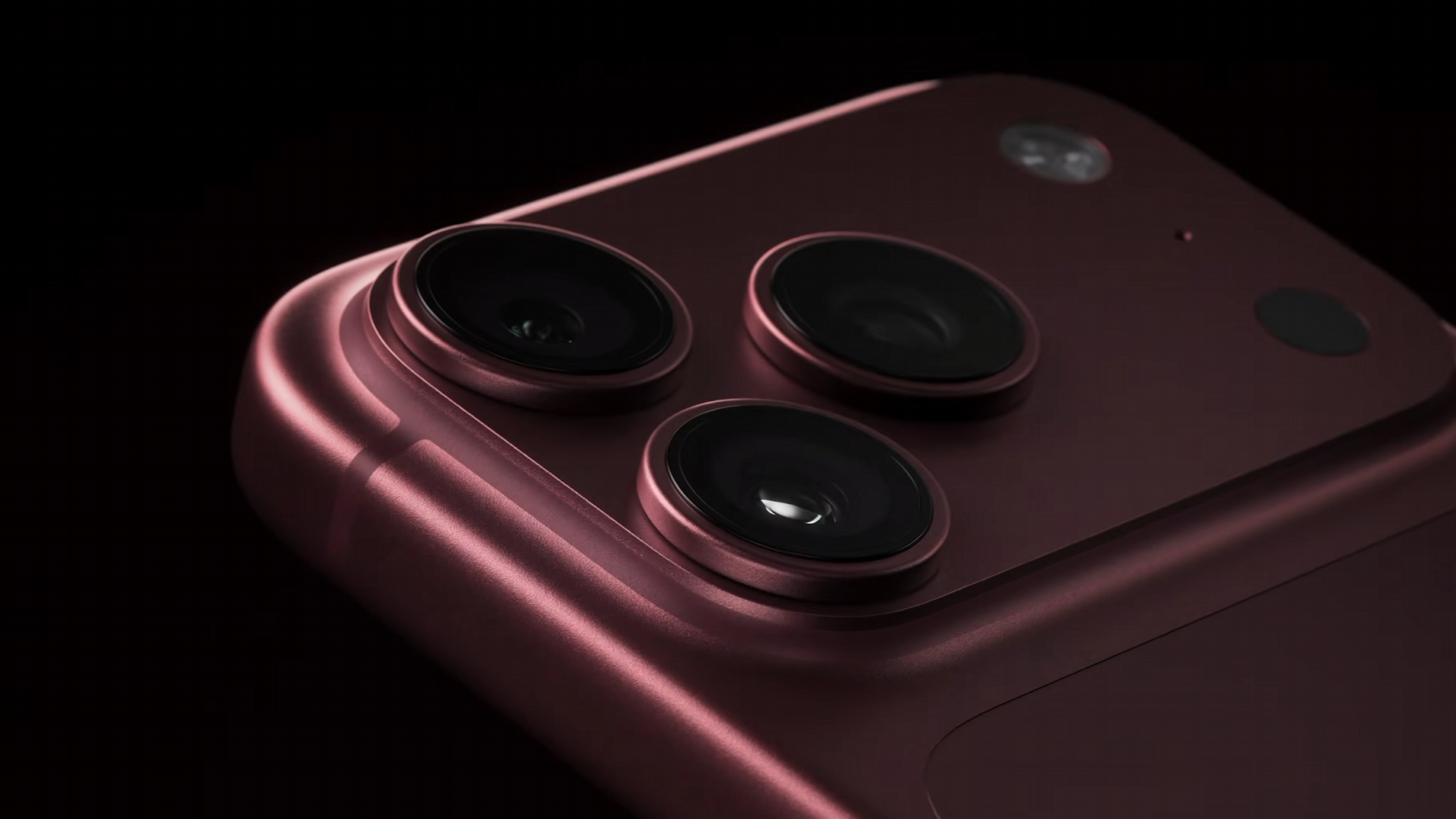
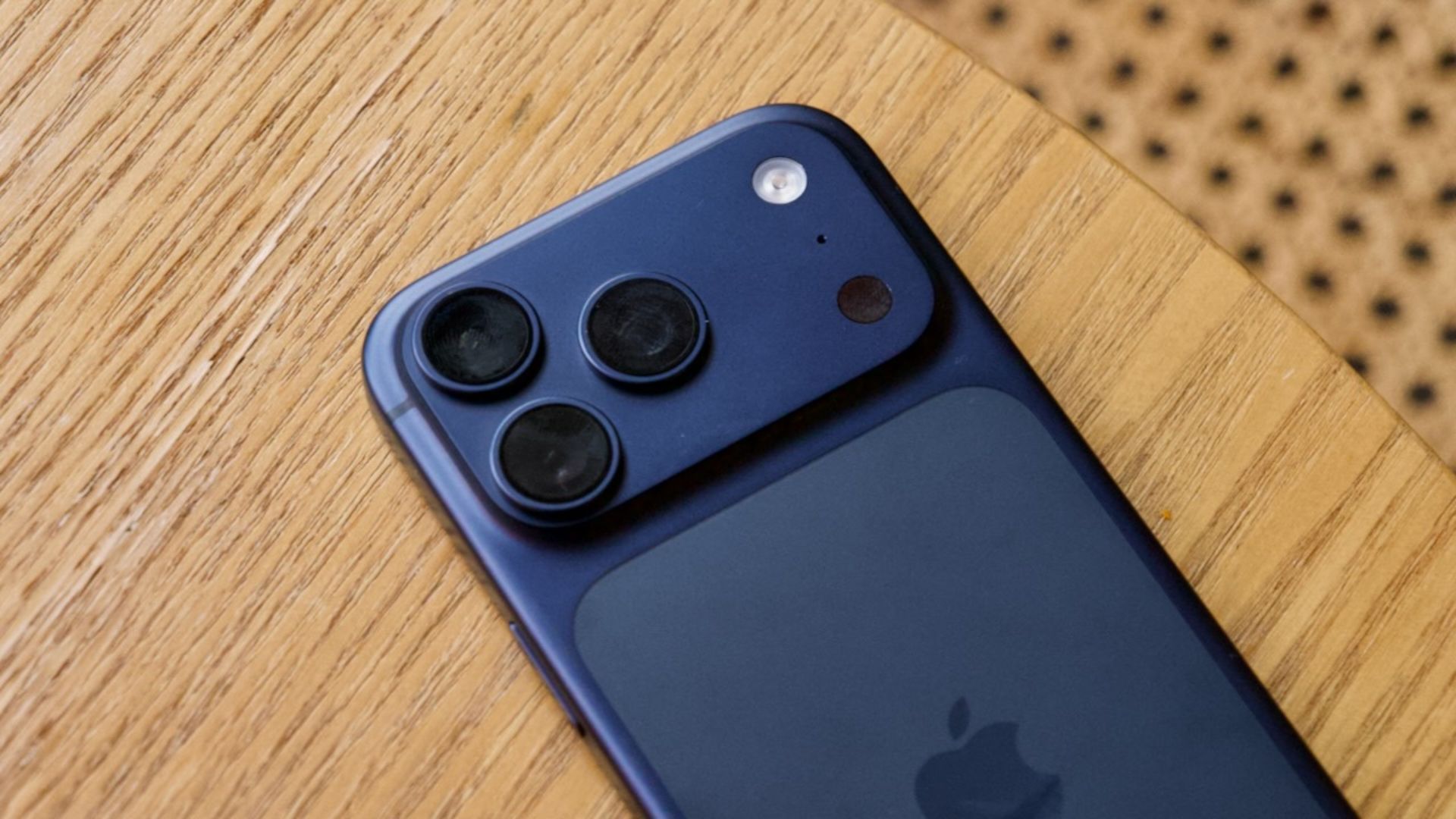
Each also has a sizable camera bump on one side, with Apple going for two cameras while Samsung opts for three.
In both cases, there’s a robust hinge on one side, while magnets help keep the internal screens protected by holding the smartphones shut.
iPhone Duo vs Samsung Galaxy Z Fold8 Ultra – Displays
The displays are the heart of any foldable, and here the two take slightly different approaches.
The Galaxy Z Fold8 Ultra has an 8.0-inch main display at 2,504 by 2,256, with a 422 pixels-per-inch density. Its 6.5-inch cover screen runs at 1,080 by 2,520, and both panels use a 1 to 120Hz adaptive refresh rate.
The iPhone Duo has a 7.6-inch inner Super Retina XDR display, which Apple says is 50 percent larger than the iPhone 18 Pro Max screen. Its 5.4-inch outer display delivers 90 percent of the screen area of the iPhone 18 Pro.
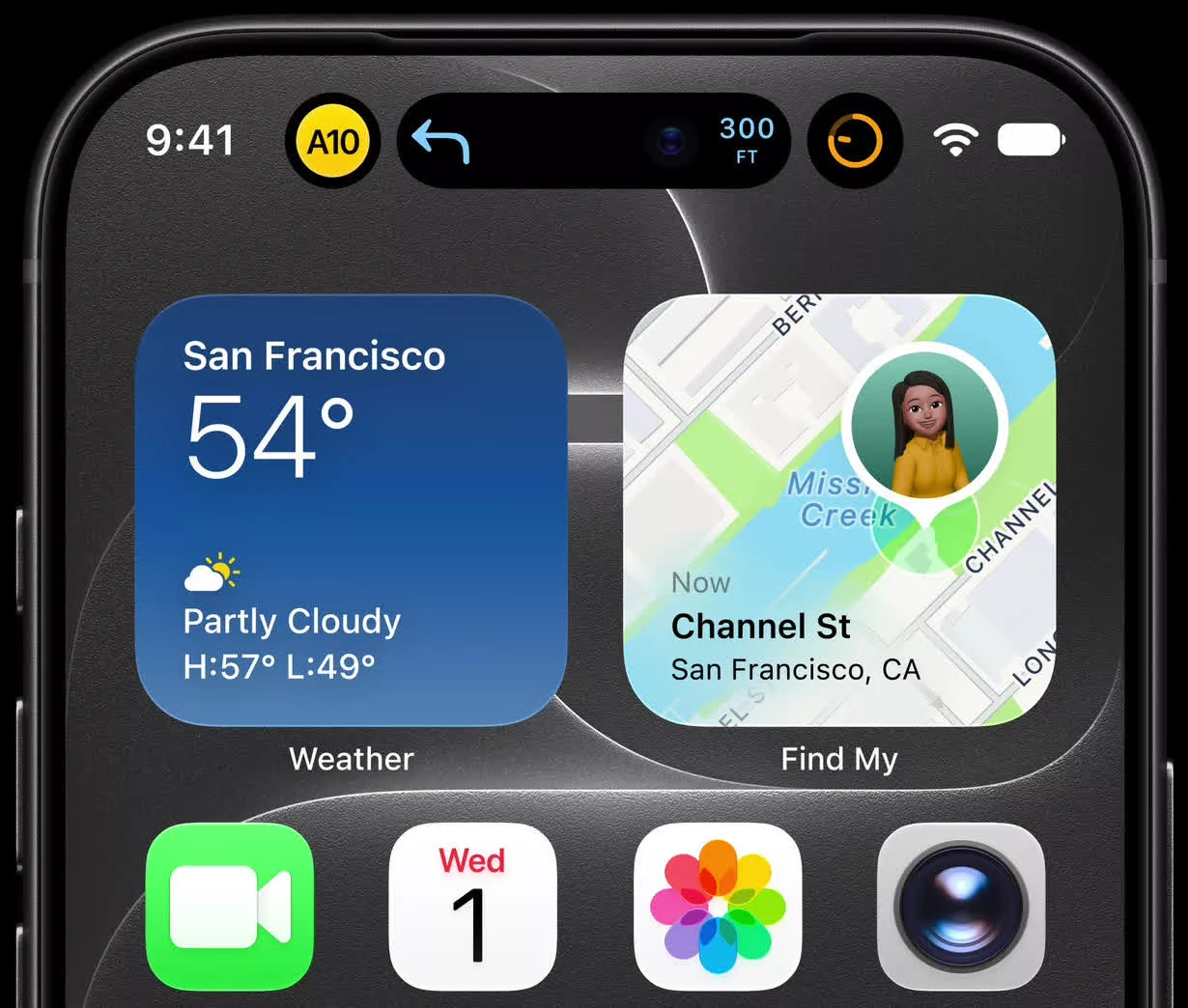
Both iPhone Duo displays share a fairly similar aspect ratio, so content scales proportionally between them. Each panel also has ProMotion, an always-on mode, and 3,000 nits of peak outdoor brightness.
Samsung’s screens do not have the same aspect ratio. The external display is 10:16 versus 4:3 for the internal one.

iPhone Duo vs Samsung Galaxy Z Fold8 Ultra: The iPhone Duot’s internal display.
There is a notable difference in the outer screen. The Galaxy Z Fold8 Ultra’s 6.5-inch cover screen is larger, while the iPhone Duo’s 5.4-inch outer screen is smaller.
When it comes to the inner display, both companies have worked to make sure there’s as little crease visibility as possible. Over time, and with repeated openings, the center fold line will eventually crease, with the construction of the display and its support determining when that will happen.
Samsung uses Flex Titanium, which combines a titanium plate and titanium alloy film as a backing for the display. On top of that is the OLED panel, a thin layer of glass, and a protective layer.
Apple, meanwhile, uses a scratch-resistant coating and a nano-textured cover layer made from a custom polymer for its display. That stiff polymer is joined by high-strength glass above and below the folding display panel, glued in a way that allows the layers to glide over each other, like pages in a book.
On top of this stress relief work, Apple added a titanium plate underneath for added durability.
With all of this screen estate, you may be tempted to use a stylus, but Samsung doesn’t include S Pen support with its smartphone. However, Apple says the iPhone Duo will eventually support the Apple Pencil with USB-C, but not the Apple Pencil Pro.
Sure, you’re going to have to carry the Apple Pencil separately, but at least you’ll have the option to use it. Cases will arrive eventually, we’re sure.
iPhone Duo vs Samsung Galaxy Z Fold8 Ultra – Cameras
Samsung has given the Galaxy Z Fold8 Ultra a flagship-grade camera system. Apple’s setup is more restrained on paper, but adds foldable-specific tricks.
The Galaxy Z Fold8 Ultra leads with a 200MP wide main camera. It adds a 50MP ultrawide and a 10MP telephoto with 3x optical zoom, plus HDR capture in the full 200MP mode.
The iPhone Duo uses a dual 48MP camera system on the rear. There’s the 48MP Fusion Main with an “optical-quality” 2x telephoto crop shot, paired with a 48MP Fusion Ultra Wide.

iPhone Duo vs Samsung Galaxy Z Fold8 Ultra: Only two rear cameras on the Duo
There’s no telephoto on the iPhone Duo, which is a shame for such a premium device.
Where Apple tries to catch up is with foldable-specific camera features.
Naturally, a folding smartphone can be partially folded, acting as its own stand so you can take photos of yourself from further distances.
For the iPhone, Smart Take automatically captures photos when subjects pose via AI detection.
You can do similar things with the Fold8 Ultra. A 90-degree bend starts “Flex Mode,” which can be used with gestures or a timer to trigger the shot.
When used conventionally, both models have an option to show a live preview on the outer display, so the subjects can frame themselves in the shot. Apple also includes animations, so that you can tempt a small child to look at the camera by watching Snoopy.
Folding designs also enable rear-camera selfies. While the normal user-facing cameras are pretty good for this, the nature of the external live preview means you can take advantage of those bigger sensors.
When it comes to the in-display cameras, Samsung uses a pair of 10MP cameras, far from the massive resolutions of the rear versions.
Apple uses its 12MP Center Stage camera for the outer display, which is a punch-hole version in the corner. The one for the inner display is described as a “FaceTime camera” capable of 1080p video, but crucially it is an under-display type.
On video, both are strong. Samsung offers 8K recording through its APV codec, and it has a Cine LUT for color and tone control.
The iPhone Duo only goes up to 4K, but with Dolby Vision support at up to 120fps. It also has a lot of modes to play with, as well as tricks like a 2.8K Action Mode, 1080p 240fps Slo-Mo, and macro shooting.
Both devices also have the capability to capture video from both shooter and subject sides at the same time.
Each device runs its chip maker’s latest flagship chip. The platforms are very different in design and strengths.
The Galaxy Z Fold8 Ultra uses the Qualcomm Snapdragon 8 Elite Gen 5, paired with up to 16GB of RAM. It’s a combo that includes an 8-core CPU with two performance cores and six efficiency cores, an Adreno 840 GPU, and a Neural Processing Unit.
The iPhone Duo uses the A20 Pro, the same chip as the iPhone 18 Pro. Apple pairs it with a custom vapor chamber that’s got three times the surface area of the iPhone 17 Pro’s version, which helps improve sustained performance.
This time, Apple uses a six-core CPU with a seven-core GPU, as well as an enhanced Dual 16-core Neural Engine for AI workloads. Both the CPU and GPU cores also have Neural Accelerators, which bolster Apple’s AI credentials even more.
While there are performance scores for the Snapdragon 8 Elite Gen 5, no independent benchmarks exist for the iPhone Duo yet. We will update this section with confirmed figures once the device is tested.
But suffice it to say, both models are certainly going to provide a lot of processing power and performance to whoever picks them up.
iPhone Duo vs Samsung Galaxy Z Fold8 Ultra – Battery and connectivity
Battery design differs between the two, though both use a dual-cell layout to take advantage of the two-piece design.
The Galaxy Z Fold8 Ultra uses a 5,000mAh dual battery, rated at 4,854mAh. The iPhone Duo places one high-energy battery on each side, operating as one, though it doesn’t disclose the actual capacity.
When it comes to usage, Apple quotes that its device can handle up to 31 hours of local video playback on the inner display, and up to 44 hours on the outer display.
Streamed video figures are lower, with the iPhone Duo managing up to 26 hours streamed on the inner display. For the outer display, that’s about 37 hours.
Samsung, meanwhile, claims up to 27 hours of video playback for its smartphone.

iPhone Duo vs Samsung Galaxy Z Fold8 Ultra: The open display of the Fold8 Ultra.
On charging, the iPhone Duo has the edge on stated speed. It reaches 50 percent in around 20 minutes with a 60W adapter and wired charging.
Samsung says the Galaxy’s 45W reaches 67 percent in about 30 minutes.
For wireless charging, the iPhone Duo hits 50 percent in around 30 minutes with a MagSafe or Qi2 charger. The Galaxy also supports 20W wireless charging, though it also has its Wireless PowerShare feature.
On connectivity, both support 5G, Wi-Fi 7, and Bluetooth 6.
The iPhone Duo is eSIM-only worldwide, with no physical SIM tray. Apple uses the freed-up internal space to maximize battery capacity.
Samsung, however, includes both eSIM and a nano-SIM card.
iPhone Duo vs Samsung Galaxy Z Fold8 Ultra – Durability and water resistance
Both foldables are built to survive daily folding. We’re not yet sure how many folds Apple considers acceptable for the device without failure. We’ll be talking about that more on September 10.
Intrusion protection ratings differ. The iPhone Duo carries an IP68 rating, the same as the standard iPhone line. That covers submersion up to 6 meters for 30 minutes, along with full dust resistance.
The Galaxy Z Fold8 Ultra is rated IP48. It handles submersion in fresh water, but its dust protection only guards against larger particles, not fine dust.
The iPhone Duo also uses Ceramic Shield 2 on the front and Ceramic Shield on the back. Apple says the front is three times more scratch-resistant than the previous generation.
iPhone Duo vs Samsung Galaxy Z Fold8 Ultra – Price
As a still relatively new technology in the smartphone space, foldables are very expensive.
The Galaxy Z Fold8 Ultra starts at $2,099.99 for 256GB. It rises through 512GB and 1TB storage tiers from there to a maximum of $2,699.99.

iPhone Duo vs Samsung Galaxy Z Fold8 Ultra: Using the iPhone Duo’s external display.
The iPhone Duo starts at $1,999 for 256GB, rising to $2,599 for 1TB and $3,199 for an even higher 2TB tier.
That pricing is a surprise, given rumors had suggested Apple’s foldable could reach $2,500 at the lower end. Instead, the iPhone Duo lands right alongside its main rival.
At these prices, both are aimed at early adopters and enthusiasts. Neither is a mainstream purchase.
iPhone Duo vs Samsung Galaxy Z Fold8 Ultra – Which to buy
When it comes to the folding device market, the Galaxy Z Fold8 Ultra is the more proven device. After multiple generations of refinement, including a flagship 200MP camera with a dedicated telephoto option,, it’s a strong foldable pick.
Apple, meanwhile, is completely new to this niche part of the market. It’s late to the party, but it’s got a very experienced design team and had the advantage of watching the market make years of mistakes.
It’s fashionably late, but Apple knows what not to do.
As it stands, Apple has come up with a very strong first device. It’s a model with a decent camera setup, though lacking true telephoto capabilities, with the same A20 Pro chip as the iPhone 18 Pro.
It also manages to be cheaper than the Samsung while still having strengths like faster wired charging and a higher IP68 rating. You can add in the iOS ecosystem support to that, too.
For an iPhone user yearning for a foldable over the years, the iPhone Duo is now the obvious choice, and at a more competitive price than expected.
Apple’s arrival changes the foldable market at a stroke. We would normally expect the first-gen release to be issue-prone or to have a design flaw, but Apple may have escaped that trap this time.
As it stands, what was once Samsung’s domain is now a genuine two-horse race for customers prepared to pay high prices.
Where to buy the iPhone Duo vs Samsung Galaxy Z Fold8 Ultra
Preorders for Apple’s iPhone Duo begin on October 16, 2026.
Samsung’s Galaxy Z Fold8 Ultra, meanwhile, is on sale from $1,799.99 at Amazon at press time, reflecting up to a 14% discount off retail.
Those looking for a more affordable option can pick up the Z Fold8 for as low as $1,649.99, also 13% off MSRP at Amazon.
You can also take advantage of incentives at the following wireless carriers:
- T-Mobile: Get a Galaxy Z Fold8 Ultra for as low as $5.56/mo for 36 months*
- AT&T: Get a Galaxy Z Fold8 Ultra for as low as $5.56/mo with a qualifying trade and eligible plan*
- Verizon: Get a Galaxy Z Fold8 Ultra for as low as $34.99/mo for 48 months*
*Terms and conditions apply, and offers are subject to change. Please see the carrier’s site for details.






















































You must be logged in to post a comment Login