




Connect with us

Business

Female founder accelerator launched at Dubai AI Campus

Published

on

Female founder accelerator launched at Dubai AI Campus

Veenoo Sharma, founder and president of The Power Diaspora Forum (TPDF), has launched a female-founder accelerator at Dubai AI Campus, offering 30 fully funded places on a six-day programme that begins on 16 November.

SHE Leads with AI is the campus’s first female-founder accelerator and will be delivered at the Dubai International Financial Centre’s (DIFC) Innovation Hub.

Applications are open internationally, and Sharma is particularly encouraging UK female founders to apply.

Sharma, who is from Edinburgh and was recently named Diaspora Entrepreneurship Advisor to the Commonwealth Businesswomen’s Network, said: “I wanted to create a programme aimed at exceptional female entrepreneurs building businesses with real international potential. SHE Leads with AI also creates a direct pathway from the UK into Dubai’s AI, investment and business ecosystem, and gives founders the opportunity to build relationships and explore markets that might otherwise feel difficult to access.”

Over the six days, founders will develop their understanding of AI and its application within their businesses. They will also receive investor-readiness support and build relationships across the DIFC ecosystem.

Advertisement

Participants will engage with investors, venture capitalists, family offices, mentors and partners. The programme will end with a live investor showcase.

The programme forms part of TPDF’s wider international work connecting women across business, politics, investment and diplomacy.

The launch follows TPDF’s recent Women in Power roundtable at the United Nations in Geneva, where senior figures from politics, business, diplomacy and public life came together to examine barriers affecting women’s progress in enterprise and leadership and to discuss practical solutions.

Sharma said: “Our conversations in Geneva reinforced something very important: discussing the barriers facing women is not enough. We also have to build the pathways that help women overcome them. SHE Leads with AI is about turning dialogue into delivery.”

Advertisement

Figures published on 8 July in the government’s sixth annual progress report on the Investing in Women Code showed all-female founder teams received 2 per cent of total investment value across the wider market.

Among code signatories, the share was 6 per cent, up from 4 per cent in 2023, according to the British Business Bank. The bank said 32 per cent of venture capital investment from signatories went to teams with at least one female founder in 2025, up from 27 per cent in 2024, against 15 per cent of total equity investment across the wider market.

The Department for Business and Trade said more than 330 organisations had signed up to the code, up from 12 in 2019, and that the Invest in Women Taskforce had deployed more than £70m from its £635m funding pool in its first year. Signatories have outperformed the wider market in supporting female founders for six years in a row, according to the department.

In May, the British Business Bank committed an initial £1m to co-invest with Angel Academe in female-led businesses across the UK.

Advertisement

Amy Ingham

Amy Ingham

Amy Ingham is a reporter at Business Matters, covering UK business news with a focus on breaking news, business policy, late payments and insolvency. She joined the magazine in 2026 after completing the NCTJ Diploma in Journalism at Harlow College’s journalism school. Her recent reporting includes British Steel’s nationalisation and its impact on SME suppliers, the decline in late payments by large firms, and Insolvency Service director disqualifications. Reach her at aingham@cbmeg.co.uk.

Advertisement
Continue Reading
Click to comment

You must be logged in to post a comment Login

Leave a Reply

Business

almost 12,000 families could curb pay

Published

on

almost 12,000 families could curb pay

Chancellor John Healey has been urged to fix the £100,000 childcare “cliff edge”, after the Centre for the Analysis of Taxation (CenTax) estimated that almost 12,000 families could be holding down their earnings to keep free childcare by the end of this parliament in 2030.

The report warns that the threshold pushes some higher-paid employees to reduce their hours or stop working to avoid losing their entitlement.

Since the latest expansion of taxpayer-funded childcare in 2024, families with young children in which both parents earn less than £100,000 a year can be entitled to 30 hours of care a week. If either parent crosses that threshold, the family receives none.

CenTax, a thinktank based at Warwick University, said that by 2030 the average parent crossing the cliff edge would have to earn £124,000 to be no worse off after losing their free childcare.

Arun Advani, director of CenTax, said: “Our analysis shows the childcare cliff edge stands to grow dramatically by the end of this parliament, but there are solutions available to the government.”

Advertisement

The researchers said “bunching” of incomes just below £100,000 suggested that, even in 2022, about 1,000 families were artificially suppressing their earnings to avoid falling foul of the threshold. That is the latest year for which data is available.

They estimated the number could rise to almost 12,000 by the end of the parliament.

The report also suggested the policy may be encouraging some mothers to leave work. Below the £100,000 threshold, 6 per cent of lower-paid partners, usually the mother, are out of work. Above the threshold, that rises to 9 per cent.

“The jump in non-working mothers at the point where their partner exceeds £100,000 income suggests the loss of childcare entitlement as a cause, with possible long-term consequences for those mothers’ earnings,” the report said.

Advertisement

CenTax also criticised the fact that the threshold is based on how much parents expect to earn in the year ahead. Families are not eligible, according to government guidance, if either parent’s expected adjusted net income is over £100,000 for the current tax year. The researchers pointed out that some families appear to be claiming despite eventually earning more than that.

The report proposes several potential solutions. Restricting families above the £100,000 threshold to 15 hours of free childcare, instead of withdrawing it altogether, would cost £210m by 2030, it said.

Gradually tapering away the entitlement at 28p for each £1 earned above the threshold would be revenue neutral, but less problematic for parents, the report added.

Healey is due to deliver his first budget on 28 October.

Advertisement

Analysts believe higher than expected interest rates on the Treasury’s debt are likely to have wiped out at least half of the £24bn headroom that his predecessor, Rachel Reeves, built up against the government’s fiscal rules.

In his first major speech, in Coventry on Monday, Healey promised to put growth at the heart of his approach. He also warned that Labour must “be honest” about the constraints on public spending in the years ahead.

Since Andy Burnham took over as Labour leader in July, he has announced a VAT cut on electricity bills and capped bus fares. Healey has also suggested the government is keen to do more to give consumers a “breathing space”.


Jamie Young

Jamie Young

Jamie Young is Senior Reporter at Business Matters, covering SME finance, employment law and Westminster policy since 2016. He has reported on every Budget and Autumn Statement since 2018, helped make sense of the ‘covid era’ and the bounce-back loan scheme from launch through the fraud investigations, and broke the magazine’s coverage of the 2024 late-payment reforms. He joined Business Matters straight from completing his BA in Administration from Exeter University and is NCTJ-qualified. Reach him at jyoung@cbmeg.co.uk

Advertisement

Continue Reading

Business

Lovesac earnings beat by $0.87, revenue fell short of estimates

Published

on


Lovesac earnings beat by $0.87, revenue fell short of estimates

Continue Reading

Business

Iceland to open store in the Falkland Islands in ‘first for a UK high street brand’

Published

on

Business Live

Store will be in partnership with local retailer Kelper Stores

Undated handout photo issued by the Falkland Islands Government of Stanley in the Falkland Islands

Stanley, in the Falkland Islands(Image: Falkland Islands Government/PA Wire)

Supermarket chain Iceland has announced plans to open a new store in the Falkland Islands, marking what it claims will be a historic milestone as it becomes the first UK high street brand to set up shop in the territory.

Advertisement

The standalone Iceland outlet is due to launch in early December on Ross Road East in the capital, Stanley, in partnership with local retailer Kelper Stores, which forms part of the Fortuna group.

Iceland boss Lord Richard Walker pledged last week that he would bring a supermarket to the British overseas territory, writing on LinkedIn: “We’ve been supporting the Great British high street for 50 years.

“As we continue our international expansion programme, we are committed to opening a shop on the Falkland Islands – taking our iconic British frozen quality and value to the Falklanders. Watch this space.”

The retailer confirmed on Thursday that a deal had been struck to honour that commitment.

Advertisement

The Stanley outlet will carry Iceland’s own-label frozen products alongside well-known brands including Cathedral City, MyProtein and TGI Fridays.

Iceland described Fortuna as a family-run business with a long history in the Falkland Islands, adding that Kelper Stores had long been a “trusted retailer for local shoppers and, through its partnership with Iceland Foods, is making a wider selection of affordable frozen food and everyday essentials more accessible to residents”.

Lord Walker said: “Iceland Foods has a proud history of firsts and we are proud to be backing Britain by becoming the first UK high street retailer to open in the Falkland Islands.

The Falklands are a special part of the British family and it’s always been an ambition of mine to support it, so being able to bring Iceland to Stanley is a huge moment for us. We’ve built our business around giving customers great quality and value, and we’re proud to bring the power of frozen to the Islands.

Advertisement

“This is an important moment for the business and our international aspirations. I will personally be visiting the Falklands to officially open the store and I looking forward to welcoming our new customers through the door.”

Fortuna managing director James Wallace said: “Fortuna as a local, family-owned business is committed to investing in the community.

“We are delighted to be working with Iceland in delivering a partnership that will directly benefit the people of the Falkland Islands.”

Sarah Clarke, the general manager of Kelper Stores, said: “This is a major milestone for the Falklands, and we’re excited to be working with Iceland to bring the first ever franchise store to Stanley.

Advertisement

“Our customers will enjoy a wide product range and better value for money as a result.”

The store opening comes amid renewed tensions over the territory’s sovereignty, after Argentinian President Javier Milei reignited the long-running dispute last week, declaring “we need to recover” the islands.

In a televised address, Milei stated: “The Falklands are Argentinian. Historically and legally. There can be no argument. They are part of the Argentine territory.

“The islanders on their usurped territory do not have a legitimate right to self-determination and any argument on any such self-determination is invalid.”

Advertisement

In response, Foreign Secretary Ed Miliband wrote: “The Islands are British and will remain so because that is the overwhelming position of the islanders.”

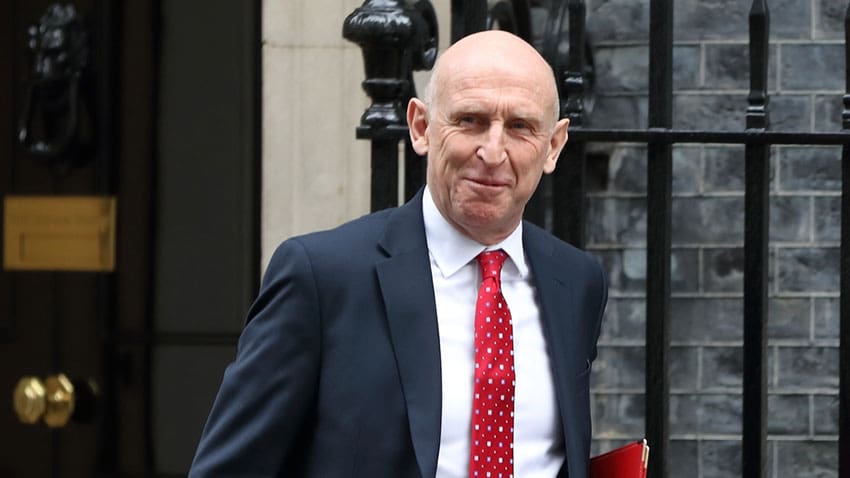
Defence Secretary Wes Streeting described Britain’s commitment to the territory as “absolute and unshakeable”.

Continue Reading

Business

IoD Autumn Budget submission: restore business confidence

Published

on

John Healey £9bn borrowing plan for infrastructure stakes

The Institute of Directors has set out five priorities for the Autumn Budget on 28 October, calling on Chancellor John Healey to restore business confidence and encourage private investment. In its submission, the IoD warns against further increases in taxes on business, investment and employment.
The IoD says the UK economy has delivered stronger growth than many comparable advanced economies in recent years, but argues that persistent weaknesses in investment, productivity and business confidence risk undermining future prosperity.

The five areas are creating a competitive and predictable tax environment, mitigating the employment and investment consequences of the Employment Rights Act, sequencing devolution to support productivity across the UK, protecting and delivering economically productive infrastructure, and accelerating responsible AI adoption across the business population.

Anna Leach, chief economist at the IoD, said: “The UK has achieved respectable headline growth in recent years, but the fundamental challenge facing the economy remains unchanged: we do not invest enough. Business leaders consistently tell us that uncertainty, rising costs and doubts about policy delivery are holding back investment decisions.”

She added: “This Budget must restore confidence and provide a clear signal that the UK is committed to being one of the most attractive places in the world to invest, grow a business and create jobs. With fiscal headroom limited, the UK’s growth challenge cannot be solved by public spending alone: government must create the conditions for businesses to invest. That means no further increases to the overall tax burden on businesses, investors and employment, alongside greater policy stability, proportionate regulation, effective infrastructure delivery, well-sequenced devolution and wider responsible adoption of AI, all focused on raising productivity, crowding in private capital and improving living standards.”

Advertisement

Leach said: “The overriding test for this Budget is whether it helps move businesses from postponing investment to pursuing growth. If the government can rebuild confidence and demonstrate clear delivery, the private sector can play its full role in driving the next phase of economic growth.”

Tax and employment rules

The submission highlights concerns that confidence has remained subdued since 2024 amid uncertainty over taxation, rising employment costs and questions around policy coherence. The IoD argues that a successful Budget should restore predictability, reduce the risks associated with investing and hiring, and demonstrate a stronger focus on growth across government decision-making.

The IoD is urging the government to expand its existing corporate tax roadmap into a broader long-term framework covering the entire business tax system. It says firms and investors need greater certainty about the future direction of tax policy.

The roadmap, published by the Treasury in October 2024, set out a commitment to cap the headline rate of corporation tax at 25 per cent for the duration of the parliament.

Advertisement

The IoD is also calling on ministers to use the implementation process for the Employment Rights Act to reduce risks to hiring, particularly for smaller firms and those offering entry-level opportunities.

Its recommendations include proportionate adjustments to trade union access provisions, guaranteed-hours rules, shift notification requirements and unfair dismissal reforms, alongside additional resources for Acas and employment tribunals.

Devolution, infrastructure and AI

On devolution, the IoD says it supports the government’s ambition to devolve power but argues that responsibilities should only be transferred where there is sufficient institutional capacity, stable funding and robust accountability. It is calling for a cross-government Devolution Data and Statistics Delivery Plan and a shared performance dashboard to support effective local growth policy.

The submission urges ministers to protect high-productivity infrastructure investment and maintain momentum towards the delivery of a third runway at Heathrow. The IoD argues that major infrastructure programmes need clear milestones, accountable leadership and transparent measures of success to improve delivery and attract private investment.

Advertisement

The IoD also says the government should simplify support for technology adoption by bringing existing AI and digital-adoption initiatives together into a single national offer for SMEs through the Business Growth Service.

It recommends a new ‘Responsible AI Essentials’ programme to help smaller businesses adopt artificial intelligence securely and effectively.

The full submission includes further supply-side proposals on skills, sustainability and energy, international trade and the devolved nations.


Jamie Young

Jamie Young

Jamie Young is Senior Reporter at Business Matters, covering SME finance, employment law and Westminster policy since 2016. He has reported on every Budget and Autumn Statement since 2018, helped make sense of the ‘covid era’ and the bounce-back loan scheme from launch through the fraud investigations, and broke the magazine’s coverage of the 2024 late-payment reforms. He joined Business Matters straight from completing his BA in Administration from Exeter University and is NCTJ-qualified. Reach him at jyoung@cbmeg.co.uk

Advertisement

Continue Reading

Business

Mcap of four of top-10 most valued firms jumps Rs 1.43 lakh cr; State Bank biggest winner

Published

on

Mcap of four of top-10 most valued firms jumps Rs 1.43 lakh cr; State Bank biggest winner
The combined market valuation of four of the top-10 most valued firms jumped Rs 1.43 lakh crore last week, with State Bank of India emerging as the biggest gainer.

Last week, the BSE benchmark Sensex climbed 404.53 points, or 0.51 per cent, and the NSE Nifty went up by 187.05 points, or 0.76 per cent.

“Markets ended the week with modest gains despite heightened volatility, as investors navigated the roll-out of the new Closing Auction Session (CAS) framework for F&O stocks, the Reserve Bank of India’s monetary policy decision, and lingering geopolitical uncertainties,” Ajit Mishra – SVP, Research, Religare Broking Ltd, said.

From the top-10 pack, Reliance Industries, State Bank of India, Tata Consultancy Services (TCS) and Larsen & Toubro were the gainers, while Bharti Airtel, HDFC Bank, ICICI Bank, Bajaj Finance, Life Insurance Corporation of India (LIC) and Hindustan Unilever faced a combined erosion of Rs 1.23 lakh crore from their valuation.

Advertisement

State Bank of India added Rs 63,922.03 crore, taking its market valuation to Rs 10,11,721.84 crore.


The valuation of Reliance Industries jumped Rs 32,816.4 crore to Rs 18,01,925.19 crore, and that of TCS surged Rs 31,875.35 crore to Rs 8,87,770.13 crore.
The market capitalisation (mcap) of Larsen & Toubro climbed Rs 14,637.76 crore to Rs 5,56,482.45 crore.However, the valuation of LIC tumbled Rs 40,543.23 crore to Rs 4,96,891.82 crore.

The mcap of Bajaj Finance eroded by Rs 37,168.96 crore to Rs 6,73,648.55 crore, and that of HDFC Bank dropped Rs 24,183.16 crore to Rs 11,27,967.47 crore.

The valuation of ICICI Bank declined by Rs 9,507.67 crore to Rs 10,20,370.63 crore, and that of Bharti Airtel eroded by Rs 7,581.65 crore to Rs 12,22,423.98 crore.

The mcap of Hindustan Unilever dipped by Rs 4,793.16 crore to Rs 4,88,808.97 crore.

Advertisement

Reliance Industries remained the most valued firm, followed by Bharti Airtel, HDFC Bank, ICICI Bank, State Bank of India, TCS, Bajaj Finance, Larsen & Toubro, LIC and Hindustan Unilever.

Continue Reading

Business

OPEC Cuts Oil-Demand Growth Forecast as Brent Crude Prices Top $100

Published

on

OPEC Cuts Oil-Demand Growth Forecast as Brent Crude Prices Top $100

The Organization of the Petroleum Exporting Countries once again cut its forecast for global oil-demand growth for this year, as escalating attacks on Gulf shipping continue to disrupt key export routes and send oil prices past $100 a barrel.

The group of oil-rich countries expects global demand to grow by 380,000 barrels a day, down from 580,000 barrels a day previously. Next year’s demand growth is now seen at 2.36 million barrels a day, up from a previous estimate of 2.16 million barrels a day.

Copyright ©2026 Dow Jones & Company, Inc. All Rights Reserved. 87990cbe856818d5eddac44c7b1cdeb8

Continue Reading

Business

10 Countries With The Most CCTV Cameras In Public Spaces Worldwide In 2026, Ranked By Density And Total Count

Published

on

cctv-6076298_1920
cctv-6076298_1920
10 Countries With The Most CCTV Cameras In Public Spaces Worldwide In 2026, Ranked By Density And Total Count

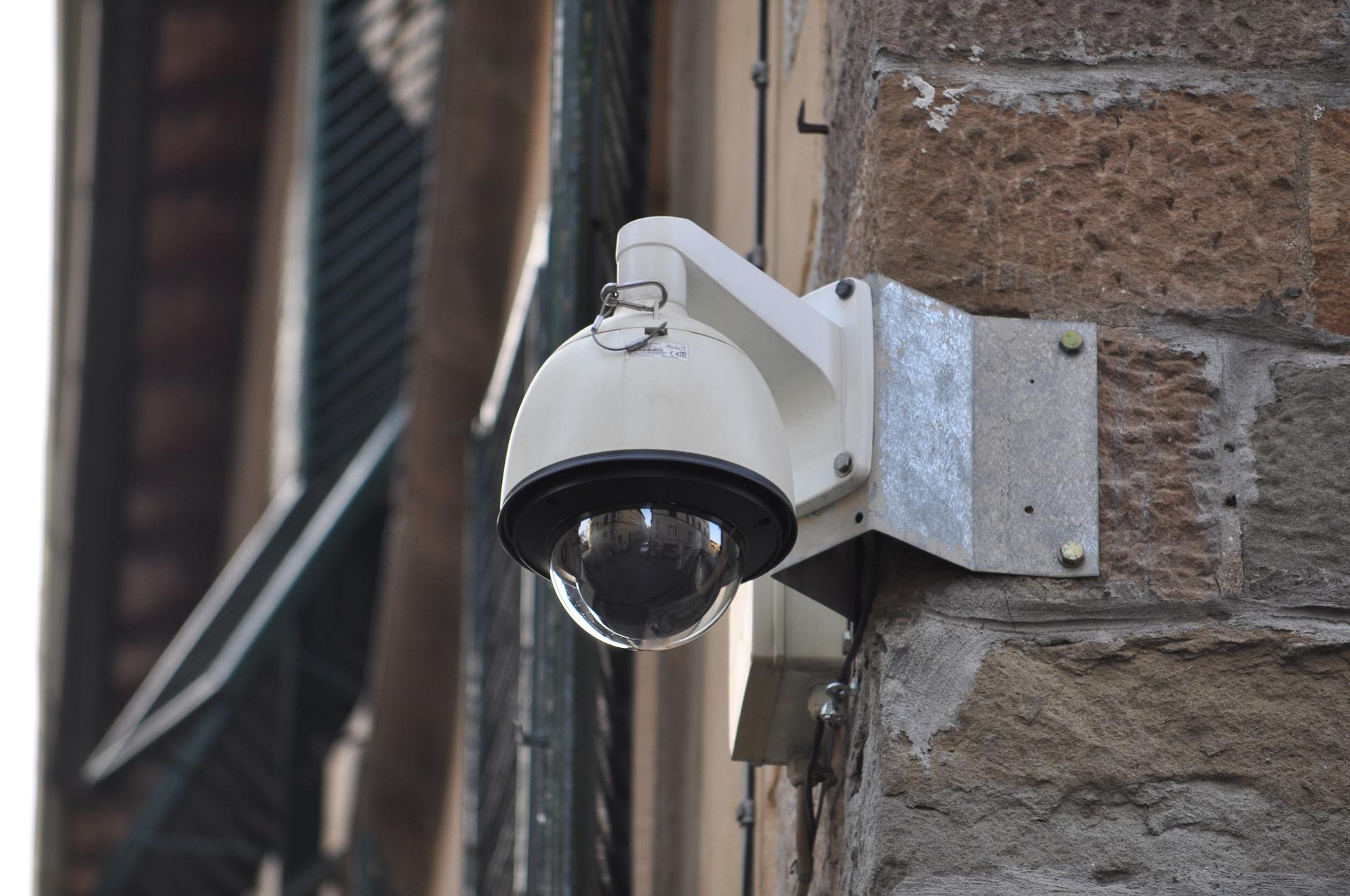
Public surveillance has continued expanding globally in 2026, with an estimated 1 billion surveillance cameras now operating worldwide, according to industry research firm IHS Markit. While the technology first emerged in the 1970s primarily to protect tourists and deter petty crime, CCTV has since become a central tool for state surveillance, traffic management and public safety across much of the world. Based on available research combining total camera counts and per-capita density, here are 10 of the most heavily surveilled countries globally.

  1. China. China remains the world’s most surveilled country by a wide margin, operating an estimated 700 million cameras as part of its nationwide “SkyNet” project, run by the Chinese Communist Party. Based on China’s population of roughly 1.42 billion, that figure translates to approximately 494 cameras per 1,000 people, or nearly one camera for every two citizens. Data for specific Chinese cities is often unavailable due to government secrecy, though independent analysis has consistently found that Chinese cities dominate global rankings of the most surveilled urban centers, with 18 of the top 20 most surveilled cities worldwide located in China, according to research firm Comparitech.
  2. South Korea. South Korea operates an extensive video monitoring network totaling more than 27 million active units, creating a surveillance ratio of roughly 529 cameras per 1,000 citizens, according to Plate Recognizer, a figure that places South Korea among the very highest per-capita surveillance densities globally. Central to the country’s infrastructure is its nationwide Smart City Integrated Platform, which directly connects municipal CCTV networks with emergency services, police databases and disaster management centers. Seoul specifically ranks among the world’s most surveilled individual cities, with roughly 24 cameras per 1,000 residents.
  3. United States. The United States maintains an estimated 50 million surveillance cameras nationwide, according to industry estimates cited by RN Technical, with some analyses placing the country’s per-capita camera density even higher than China’s on certain measures, at roughly 15 cameras per 100 people. Washington, D.C., stands out as one of the most densely surveilled individual cities in the world, with a concentration of government-linked cameras per capita that outpaces most other major global cities.
  4. United Kingdom. The UK maintains one of the largest overall CCTV networks in the world, with an estimated 21 million cameras in operation nationwide, according to eufy UK, translating to more than 600 cameras for every 10,000 people. The vast majority of these cameras belong to private businesses, transport services and residential properties rather than direct government operation. London specifically has more than 130,000 public surveillance cameras, with the City of London borough recording the highest density in the capital, at more than 75 cameras per 1,000 residents.
  5. India. India’s major cities feature prominently among the world’s most surveilled urban centers, with Hyderabad ranking as the single most surveilled city globally by camera density, at 79 cameras per 1,000 people and roughly 900,000 total cameras, according to Comparitech’s analysis. Multiple other Indian cities, including Indore and Bangalore, also rank among the most heavily monitored urban areas worldwide, reflecting the country’s rapid expansion of public safety camera infrastructure in recent years.
  6. Russia. Moscow anchors Russia’s position among the world’s most surveilled countries, operating an estimated 250,000 cameras across the city, translating to roughly 19 to 20 cameras per 1,000 residents. Moscow’s surveillance system has drawn particular international scrutiny for its integration of facial recognition technology, which has reportedly been used to identify protesters, journalists and political dissidents in addition to its stated public safety functions.
  7. Pakistan. Lahore, Pakistan’s second-largest city, ranks fourth globally in per-capita camera density, according to Comparitech, with 28 cameras per 1,000 people and more than 410,000 total cameras installed across the city. The system reportedly links facial recognition capabilities directly to national government databases in real time, positioning Lahore among the most technologically integrated surveillance networks outside of China.
  8. Singapore. Singapore consistently ranks among the world’s most surveilled cities and countries, with an extensive network of government-linked cameras integrated into the city-state’s broader smart city infrastructure. The dense, compact nature of Singapore’s urban geography has allowed the country to achieve particularly high camera density relative to its physical land area, even when total camera counts remain smaller than those of larger nations.
  9. United Arab Emirates. The UAE, and Dubai specifically, has built one of the most technologically advanced surveillance infrastructures in the Middle East, with authorities integrating artificial intelligence directly into daily policing operations. Maj. Gen. Khalid Alrazooqi, Dubai Police’s general director of AI, previously told The New York Times that officers increasingly rely on AI-driven surveillance tools rather than traditional policing equipment in their daily operations. Human Rights Watch has separately raised concerns about the UAE’s broader surveillance apparatus, describing what the organization characterized as a “zero-tolerance policy toward criticism of the government” enforced partly through invasive monitoring tools.
  10. Saudi Arabia. Saudi Arabia’s capital, Riyadh, ranks fifth among Arab world cities for total CCTV camera count, according to reporting from Gulf News citing Comparitech’s broader global surveillance research, reflecting the kingdom’s continued investment in public camera infrastructure as part of broader national security and urban development initiatives across its major cities.

Researchers caution that comparing surveillance levels across countries remains inherently imprecise, given wide variation in how nations count, classify and publicly disclose camera totals, along with the difficulty of distinguishing government-operated cameras from privately owned systems that may still be accessible to law enforcement in some jurisdictions. China’s opacity around city-level camera data, for instance, makes direct comparisons with more transparently reported countries like the United States and United Kingdom difficult to calculate with full precision. Even so, the broader global trend toward expanded public camera infrastructure, now totaling an estimated 1 billion devices worldwide, continues to fuel ongoing debate over the balance between public safety benefits and individual privacy concerns across nearly every country investing heavily in these systems.

Continue Reading

Business

Copper, FCX Stock Plunge On Tariff Report, Surging Yields; Silver, Gold Also Fall

Published

on

Copper, FCX Stock Plunge On Tariff Report, Surging Yields; Silver, Gold Also Fall

The copper price and shares of S&P 500 copper mining giant Freeport-McMoRan (FCX) turned sharply lower on Thursday morning after a Reuters report cast doubt that the White House would broaden tariffs to cover refined copper. But copper and other metals also tumbled on surging oil prices and Treasury prices. Tariff expectations had helped fuel a new copper price earlier…

Copyright ©2026 Investor’s Business Daily, LLC. All rights reserved. 87990cbe856818d5eddac44c7b1cdeb8

Continue Reading

Business

New tourism organisation launches following collapse of Visit Cornwall

Published

on

Business Live

Tourism bosses have formed an alliance to help market the county to visitors

The harbour in Porthleven, Cornwall

The harbour in Porthleven, Cornwall(Image: Greg Martin / Cornwall Live)

A new tourist organisation has been established to help champion Cornwall’s visitor economy. The creation of Cornwall Visitor Alliance follows the the liquidation of Visit Cornwall – the county’s official tourist board – last year.

The alliance is a not-for-profit that was developed by bosses from Cornwall’s tourism and hospitality hospitality sector, and will be an “influential voice” for tourism in the Duchy, according to those behind it.

Advertisement

The organisation will focus on business-to-business activities including destination marketing and management, business representation, research and insight, strategic partnerships and advocacy, it said.

It is understood the organisation will use the term ‘Visit Cornwall’ for consumer-facing marketing. But the licence of the Visit Cornwall brand, and its respective assets, including the website, reverted back to owner Cornwall Council when the organisation collapsed in 2025.

Councillor Sarah Preece, Cornwall Council’s cabinet member for tourism, said: “We have reached an important milestone following months of productive collaboration between the council, private sector partners, and key stakeholders across our visitor economy.

“The Cornwall Visitor Alliance company can now begin its journey as a private organisation, leading the delivery of a sustainable and thriving visitor economy for Cornwall.”

Advertisement

Five Cornwall-based volunteer founding directors have been appointed to help launch Cornwall Visitor Alliance including: chair Katie Warren, founder of Fixer Property and Management; vice chair Laura Plum, marketing and communications director of St Austell Brewery; Veryan Palmer, family director of Headland Hotel; Andy Jasper, chief executive of Eden Project; and Patrick Langmaid, managing director of Mother Ivey’s Bay Holiday Park.

Tim Fryer, who has headed up the project since April, has also been appointed as commercial director.

“Our ambition is to build an organisation that businesses genuinely feel belongs to them, one that listens, represents their interests and brings the sector together around a shared vision for Cornwall,” said Ms Warren.

“By working collaboratively, we can help ensure Cornwall remains a brilliant place to visit, while also being a great place to live, work and build a business. Our role will be to unite businesses and partners, strengthen Cornwall’s destination offer and ensure the visitor economy is represented in the decisions that shape its future.”

Advertisement

Cornwall Visitor Alliance is funded through membership, partnerships and commercial activity, with no reliance on the public sector, it said.

“Cornwall Visitor Alliance will be a constructive but independent voice,” added Mr Fryer. “We want decisions affecting the visitor economy to be based on evidence, with businesses and stakeholders widely consulted and genuinely listened to and with a clear understanding of the impact those decisions may have on businesses, employees, communities and visitors.

“Immediately following a launch event in the early autumn, we will set out details of membership options and strategic partnerships, alongside our plans and initial programme of marketing campaign activity.”

Advertisement
Continue Reading

Business

Thailand introduces new 30-day and 15-day visa exemption rules from 15 September

Published

on

Thailand introduces new 30-day and 15-day visa exemption rules from 15 September

Thailand’s new visa framework, effective 15 September 2026, reduces the 60-day visa exemption to 30-day and 15-day categories, affecting 60 countries, with specific rules for Seychelles, Mauritius, Azerbaijan, Belarus, and Serbia.

Introduction of New Visa Framework

Starting from 15 September 2026, Thailand will implement a revised visa policy that introduces significant changes. This new framework modifies the current visa exemption duration, replacing the 60-day exemption period with two new categories: 30-day and 15-day stays. The updated visa rules are designed to streamline the entry process while adapting to the evolving needs of travelers and the tourism industry.

Changes in Visa Categories

The modified visa exemptions will affect travelers from 60 countries and territories who will now be eligible for a 30-day stay in Thailand. Additionally, visitors from Seychelles and Mauritius can benefit from a 15-day visa exemption period. These changes reflect Thailand’s effort to foster tourism by providing more flexible options that cater to diverse travel needs while maintaining regulatory standards.

Visa on Arrival Updates

Under this new framework, specific updates have been made regarding the Visa on Arrival (VOA) eligibility. Citizens from Azerbaijan, Belarus, and Serbia will now be able to take advantage of the VOA option. This initiative is expected to enhance travel convenience and boost international visits by accommodating more varied visitor origins, aligning with Thailand’s strategic tourism development goals.

Advertisement

Source : Thailand introduces new 30-day and 15-day visa exemption rules from 15 September

Continue Reading

Trending

Copyright © 2025