
Politics
Increase In MP Statements Drafted By AI


Soaring numbers of MPs’ statements to parliament are being written using artificial intelligence without the public being told, HuffPost UK can reveal.
Research by academics at Napier University in Edinburgh revealed that 15% of written ministerial statements contained at least some AI content in 2026.
That is up from 8.1% last year, and a huge leap from 3.5% in 2022.
Evidence of AI’s increasing popularity among politicians comes just a day after it was claimed that it could kill humanity by the end of the decade.
The Napier University researchers looked at around 4,200 statements on parliament’s Hansard website as part of their work.
They found that 243 contained AI-assisted content, with the numbers increasing year on year.
Associate researcher Andrea McGlinchey said politicians should be up front that they use AI in their work.
She said: “While our research does not address regulatory frameworks and focuses only on evidence of undisclosed AI usage in the language patterns of parliamentary texts, our results suggest that greater transparency is required.”
In June, Louise Haigh – a close ally of PM Andy Burnham who is now effectively his deputy – admitted using AI in an article she wrote for the left-wing magazine Renewal.
It came after Archie Hall, a journalist at the Economist, used an AI detection tool to examine the article.
A spokesman for Ms Haigh said: “The words and ideas are Louise Haigh’s – to suggest otherwise is untrue. Like most articles, this was written following a series of conversations and AI editing tools were used for version control.”
Analysis last year also suggested that more and more MPs are using AI to write the speeches they deliver in the Commons.
Tory MP Tom Tugendhat, who is now shadow foreign secretary, condemned the practice.
In a post on X, he said: “If you can’t make an argument without the whips giving you the question or ChatGPT turning a handout into a speech, who are you representing? Clearly not the electorate.”
Listen to Commons People, the podcast that makes politics easy. Every week, Kevin Schofield and Kate Nicholson unpack the week’s biggest stories to keep you informed. Join us for straightforward analysis of what’s going on at Westminster.


A decade of collaboration, innovation, and breakthrough technologies through the Game Changers programme.
Sellafield Ltd is celebrating 10 years of its pioneering Game Changers programme. It brings new ideas and technology to the UK’s toughest nuclear clean-up challenges.
Game Changers connects Sellafield with innovators from industry, academia, and beyond. It gives new technologies a route into the nuclear sector. Doing so, helps turn promising ideas into practical solutions.
The programme has helped speed up problem-solving. Welcoming fresh thinking from outside the sector has helped improve safety. It has also reduced hazards and saved money.
Game Changers is designed and delivered by innovation specialists FIS360. They work in partnership with the United Kingdom National Nuclear Laboratory (UKNNL). FIS360 supports both challenge owners and solution providers from start to finish. It helps them develop and test new technologies. These have the potential for deployment across the industry.
The programme is now one of the UK’s top innovation initiatives. It has supported hundreds of projects. These are changing how nuclear sites are cleaned up safely and efficiently.
Game Changers has:
- received more than 1,000 applications from organisations around the world
- funded more than 300 feasibility studies
- enabled over 125 proof-of-concept projects
- supported small and medium-sized enterprises
This helps to strengthen the UK’s supply chain and support economic growth.
Several projects show how the programme turns ideas into solutions with real-world impact:
Micro Unmanned Aerial Vehicle (UAV)
Developed with Ice9 Robotics. The Micro UAV is a small drone that can fly through openings as narrow as 140mm. It captures live images and data from confined and hazardous areas.
The drone gives access to parts of nuclear facilities that were difficult to inspect. It keeps people out of hazardous areas and supports better decommissioning decisions.
It could also save up to £2 million per use case avoiding the need to create new access points.
Seracam
Serac Imaging Systems developed Seracam in partnership with Loughborough University.
The imaging system overlays radiation data onto live video. This allows operators to identify and monitor contamination hotspots in real time.
Sellafield has purchased a Seracam unit. It has been trialled successfully in the MOX Demonstration Facility. Early results show strong potential to improve safety, reduce risk, and speed up work.
Smart Cans
This is a radiation-tolerant sensor system developed by Sensor Driven. It monitors the temperature and pressure of nuclear storage cans. It alerts operators to changes in real time.
The sensors have been miniaturised, tested in harsh environments, and fitted to storage cans using a new welding process.
The technology could improve the safety of long-term Special Nuclear Material storage. It will do this while reducing the need for manual inspections and maintenance. Potential cost savings are between £20 million and £50 million.
The future
The next decade of Game Changers will focus on:
- scaling up successful technologies
- speeding up deployment
- attracting more world-class innovators to the sector
Robin Ibbotson, Sellafield Ltd’s chief technology officer, said:
“I’m proud of the innovation we see across Sellafield and the people who solve problems every day. Year after year, we show what happens when we challenge accepted thinking.
Game Changers takes our challenges beyond the nuclear industry. It connects us with organisations of all sizes and with partners from around the world. Over the last decade, that approach has produced solutions we would never have found on our own.
The programme is helping us deliver safer, faster, and more cost-effective operations. And we’re only at the beginning. Sellafield still has decades of important work ahead.
With the right partners, we can solve any challenge. That’s why we’ll keep sharing our problems, finding new ideas, and working together to deliver our mission faster.”

Harry Styles has confirmed that the 2027 leg of his Together Together world tour will include three shows in the UK.
On Wednesday evening, the Grammy winner announced that his current world tour will be extended into next year, before unveiling plans for these dates the following day.
The new run of shows consists of 25 dates in 12 different cities, in contrast to the first half of the tour, which was mostly made up of longer residencies in fewer locations.
After playing Phoenix, Dallas, Los Angeles, Toronto, Atlanta, Chicago, Berlin, Paris, Madrid, Rome and Dublin between April and August, Harry will wrap up the final leg of his tour with three nights at Wembley Stadium.
These shows will take place on Wednesday 25, Friday 27 and Saturday 28 August next year, with tickets going on sale on Thursday 17 September at 11am.
Fans hoping to attend these London shows can also participate in an official artist presale by signing up at Ticketmaster here before 4.59am on Monday September 14.

Excitingly, next year, Harry is introducing the “Unpredictable Fun Tickets” initiative, where a limited number of £20 tickets for his UK shows, $20 for his North American concerts and €20 for his European shows will be made available, more details of which will be announced soon.
Harry has also announced the support acts for his next jaunt, which will include Everybody Wants To Rule The World stars Tears For Fears for his next Wembley performances.
Other territories will get to see acts as varied as Tinashe, Lainey Wilson, Kylie Minogue and LCD Soundsystem.
“I love playing music, I love being with all of you and being a part of the love and joy you all create together every night. That’s why I wanted you to be the first to know we will be adding 2027 dates,” Harry said.
He added: “After [these shows], I don’t know what comes next for me, but l know that I’m excited to find out. I can’t wait for us to keep dancing with all our friends. I hope to see you there.”
Politics
Politics Home | Increasing temperatures are exposing critical weaknesses in UK infrastructure
Credit: Adobe Stock
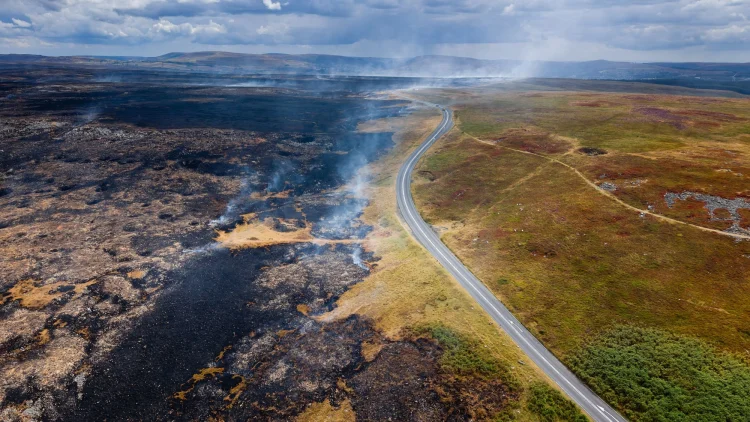
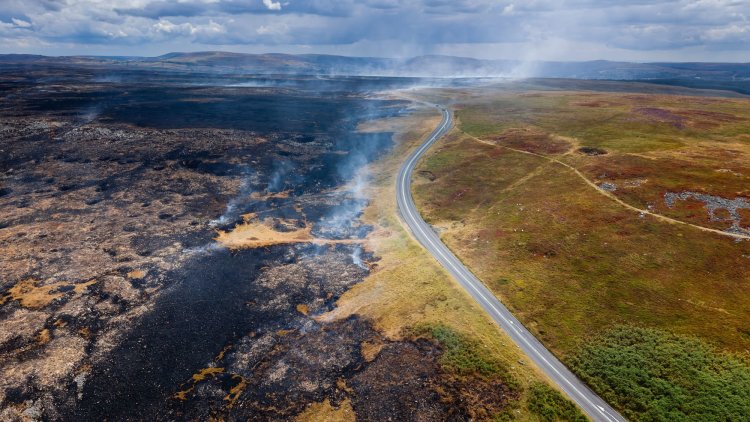
Recent disruptions across the UK, including rail failures, road damage and large-scale wildfires, serve as a stark warning that our infrastructure is increasingly vulnerable to the effects of extreme temperatures. Addressing the safety, performance, and reliability challenges brought by a changing climate requires a shift from responding to damage after extreme events to proactively adapting our critical national infrastructure.
Many of the hot weather problems experienced by our physical infrastructure stem from the behaviour of most materials, which tend to expand and soften as the temperature increases. This affects roads, railways and bridges directly in several ways.
Most of the UK’s roads are surfaced with asphalt, a composite material comprising aggregates with about five per cent by weight of bitumen binder. The structural performance, serviceability and rate of deterioration of an asphalt road are all directly affected by temperature. During heatwaves, asphalt road surfaces can reach temperatures in excess of 60C. This causes the bitumen binder to soften, leading to deformation, surface depression and bleeding under traffic loads. The current typical emergency response, including deploying gritting vehicles to spread granite dust over melting asphalt, is a reactive, ad-hoc approach that treats symptoms rather than causes.
Various materials and technologies have been investigated to improve the resilience of asphalt pavements to high temperatures and climate-related deterioration. These include modified epoxy asphalt surfaces and modified epoxy chip seals, alongside fibre mastic asphalt, as potentially climate-resilient and long-life surfacing technologies. Advanced pavement materials, including polymer-modified binders and heat-reflective surface treatments, can improve resistance to temperature-related deterioration in vulnerable corridors. At the same time, solutions must look beyond passive protection and towards infrastructure that actively manages thermal conditions. Thermo-active road technology is an intriguing possibility, which uses embedded heat exchange loops to capture excess thermal energy from pavement surfaces during peak heat periods. By regulating pavement temperatures, these systems could reduce heat-induced damage while harvesting renewable thermal energy for beneficial reuse.
Metal bridges and other infrastructure assets are also susceptible to thermal stresses that can affect their long-term performance and safety. This is particularly important for older bridges, which may not have been designed for such extreme conditions. Bridges are designed to move, to accommodate expansion in hot weather and contraction in cold weather, as the temperature changes. With higher temperature extremes, this movement can be larger than anticipated by the designers, leading to the bridge expansion joints – which allow bridges to safely expand and contract – running out of travel and starting to stress bridge girders and decks. Bigger movements may also affect bridge bearings, road surfaces and bridge members.
Excessive thermal expansion of moveable (swing or lifting) bridges may prevent them from properly opening or closing, resulting in jamming. This happened to New York City’s Third Avenue Bridge in 2024, when extreme temperatures led to the bridge being stuck for hours. Concrete structures are also vulnerable because high temperatures can cause drying, exacerbating shrinkage, and worsening cracking, particularly where the concrete is already aged or poorly maintained. Extreme heat can also affect bridge bearings, bridge cables, drainage systems and protective coatings, causing materials such as rubber, polymers, and paints to degrade more quickly.
In our railways, the metal rails (which, like road pavements, can reach temperatures in excess of 60C in direct sunlight on a hot day) tend to expand with increasing temperature. Modern rails are continuously welded into long lengths, which means that they are unable to expand hence develop internal compressive stresses at temperatures above 27C. If the track is not well-supported and/or there is a significant pre-existing imperfection, there is a risk that the track may buckle which could cause a train to derail. A further problem is that the overhead wires by which electrical current is conveyed to trains on overhead electrified railways also expands with increasing temperatures. Although equipped with automatic tensioning devices, these can run out of capacity at very high temperatures. The overhead lines may then sag to the extent that they become caught up by the current-collecting pantographs attached to trains. While constrained by materials technology, solutions can be found at system level for example by ensuring that track is well-supported both vertically and laterally, and investing for increased operational flexibility and the ability to carry out fast interventions.
Periods of sustained high temperatures are often also very dry. Hence prolonged heatwaves dry out vegetation and soils, increasing the risk and intensity of wildfires. When fires reach the wildland-urban interface, critical infrastructure, including power and communication towers, can be exposed to intense heat. This can affect the mechanical properties and load-bearing capacity of structural materials, potentially disrupting essential networks at precisely the time when communities are most vulnerable. We have seen in recent weeks how large fires near a major transport corridor can lead to its closure, whether it is a road or a railway.
As clay soils dry, they develop what is termed a ‘soil moisture deficit’ and shrink. This causes problems for roads and railways on clay soils and clay embankments. Shrinkage settlement of an underlying clay soil adversely affects railway track geometry and may lead to a loss of support, both of which increase the risk of track buckling. To mitigate this, sometimes disruptive speed restrictions are imposed. On roads, drying and shrinkage of the underlying ground leads to longitudinal tracks, rutting and bumpiness, as well as accelerating the rate of road surface deterioration. Drying-induced ground movements can also cause water pipes to fracture or break, leading to increased leakage rates.
Rising temperatures are also creating significant operational and occupational challenges for the construction sector, increasing risks to worker wellbeing while reducing productivity and affecting project delivery schedules. Construction workers are among the occupational groups most vulnerable to heat because of the physically demanding nature of their work, prolonged outdoor exposure, the use of personal protective equipment, and limited access to effective cooling measures. This results in high levels of fatigue, reduced concentration and heat-related illnesses, including dehydration, heat exhaustion and heat stroke.
As the UK continues to experience increased temperatures, a more systematic approach to managing occupational heat risk is required, with clearer guidance, improved training and investment in practical adaptation measures. This will help protect workers’ health and safety while improving productivity, programme certainty and the long-term resilience of the construction industry.
The challenge is multifaceted, so needs to be addressed in a number of ways. By investing in more resilient designs capable of withstanding extreme environmental conditions, the UK can enhance infrastructure robustness to extreme heat stress. Improving the ability to predict failures and consequent disruptions will facilitate a proactive approach to enhance resilience. With this, there must come the ability to respond quickly and reconfigure the affected system(s) at national level. A combination of these elements can enhance infrastructure resilience to minimise disruption, protect public safety, reduce risks to workers and ensure that essential services continue to function effectively as heatwaves become more frequent and intense.
This article was co-authored by members of the UK Collaboratorium for Research in Infrastructure and Cities (UKCRIC)
Contributing authors
- Professor William Powrie, University of Southampton
- Professor Mehran Eskandari Torbaghan, University of Birmingham
- Dr Alba Fuertes, University Reading
- Dr Benyi Cao, Dr Yidu Bu and Dr Boulent Imam, University of Surrey

Bruce Willis’ wife Emma Heming Willis has opened up about trying to find the little joys following the actor’s diagnosis with frontotemporal dementia (FTD).
Back in 2022, the Die Hard performer announced his retirement from acting after being diagnosed with aphasia, a condition that affects the ability to speak and communicate in other ways.
The following year, Bruce’s family shared that his condition had progressed, and that he had been diagnosed with FTD.
During a candid new interview with Hello! magazine, Emma explained that she and her family have always found “joy and fun in the littlest things”, claiming that this “philosophy is precisely what has served us best as we’ve navigated” Bruce’s illness.
Last year, Emma opened up about caring for Bruce in her book The Unexpected Journey, and recounted to Hello! how one of the hardest parts of writing the book had been looking back on the good moments.
“It’s just too painful to look back at that time that was so full of fun, laughter and tremendous joy. It hurts to think back to that time,” she said. “Writing that first chapter forced me to remember and to dive deeply into the details of why I fell madly in love with my husband.”
Following his diagnosis with FTD, a brain disorder that affects behaviour, personality and language skills, Emma noted that Bruce still “says things that make us laugh”.
“We are never laughing at him,” she quickly clarified. “We are always laughing with him. We’ve managed to protect that sense of joy and fun simply because it’s still very much there.”
Emma believes that the idea of dementia as a “relentless, unmitigated misery every single minute of the day” is an “absolute myth”.
She insisted: “Just because someone receives a dementia diagnosis – in whatever form – it doesn’t mean their life is over or that the lights have been turned off completely.
“There’s still so much fun to be had, so much laughter, and so much connection waiting for you. There is an entire world of love that remains completely intact.”
Meanwhile, in a new emotional interview with Because We Care, Emma echoed these statements, and spoke about wanting to share the positives and change how people think about dementia.

“We have still so many beautiful moments of joy and connection, and I think that’s really important to share because I think there’s such a negative narrative around dementia,” she said.
Emma continued: “We need to be careful and reframe that. When we think about that or don’t want to talk about dementia and put it in a corner, the person living with the disease and their caregiver aren’t seen, they aren’t supported.”
Many members of Bruce’s family – including his ex-wife Demi Moore and their three daughters – have kept fans updated on the Fifth Element actor’s condition in the last two months.
Emma’s comments came weeks after Bruce made a rare pub public appearance at his daughter Tallulah’s wedding in Idaho, where he was pictured with the bride while holding hands with his new son-in-law, Justin Acee.
Tallulah’s sister Rumer Willis also said last month: “I miss a different version of who he was. There are some days that are just so hard.
“I try to prioritise being present with where he’s at now. The truth is, to be strong is learning to deal with both things at the same time.”

Sarah Hall considers how global economic shocks can impact regional inequality and argues that any economic devolution agenda must confront the trade-offs that arise as a result, using the example of the Jaguar Land Rover job losses.
Jaguar Land Rover (JLR) has announced that it will cut 4,000 jobs over the next two years. The company currently employs 44,000 people of whom the vast majority – 34,000 – are based in the UK. The job losses will be focused on its Coventry head office.
The announcement comes at an important time for the Burnham government. On the same day as the JLR announcement, Chancellor of the Exchequer John Healey delivered his ‘Growth Speech’ in which he reiterated the government’s commitment to “more investment, more innovation and more jobs”. The JLR announcement clearly shows the difficult trade-offs the government faces as it tries to deliver these ambitions in terms of: profound regional economic inequality in the UK; the UK’s place in a more protectionist international economy; and the relationship between green growth and economic resilience.
JLR’s announcement is a reminder that even low levels of growth are distributed in highly unequal regional ways in the UK. This means that the impacts of declining economic prospects and redundancies in any one sector are not evenly distributed across the UK. In the case of automotive, figures show that the West and East Midlands, (the former housing JLR’s UK activities) account for 48.3% of the UK’s automotive value added. This concentration is delivered partly by large headquarter bases. But these headquarters also act as anchors to significant clusters of small and medium enterprises that have developed specialist niches within complex and dynamic automotive supply chains. This was clearly seen by the impact of the temporary shutdown of JLR activities in late 2025 following a cyberattack. Some of the most significant impacts were felt by smaller firms which were forced to temporarily suspend operations and cancel orders.
At one level, this regional concentration might benefit from the new government’s commitment to greater devolution – which offers the prospect of being able to better tailor pro-growth economic policies to the specific requirements of different parts of the UK, notably in skills. However, the risks need to be acknowledged. Threats to regionally concentrated industries need to be framed as important for UK growth as a whole and not left to newly emerging forms of devolved administration. This is particularly important given the ways in which contractions in one sector impact the social fabric and cultural identity of places, and regions that are dependent on one industry will have less resilience to economic shocks.
Turning to geopolitics, the JLR announcement is one of the clearest examples of the challenges the Prime Minister faces in his ambitions to ‘reindustrialise’ the UK economy at a time when the world economy is becoming more protectionist. The causes for the financial difficulties facing JLR are many and varied, but central among them is its exposure to the new US tariff regimes. JLR is particularly exposed to US industrial policy because the US represents its second biggest export market (after the EU) with one in four of its cars being sold there. New tariffs were announced by the US for car imports in April 2025 as part of a commitment to support the US car industry. The tariff rate for the UK changed over the spring and this uncertainty itself was unhelpful for companies such as JLR in terms of planning. The agreement reached with the UK was that the UK would have a lower rate than other countries of 10% on the first 100,000 UK manufactured cars imported to the US per annum with any imports over this have a 27.5% tariff applied (the rate applied to the majority of US automotive imports).
These tariff changes were cited as leading to a decline of 15% in JLR sales in spring 2025, with the company pausing shipments to the US in April 2025 until the UK’s final tariff rate was confirmed. Beyond the US, there are other threats to reindustrialising the UK’s economy. Support for UK manufacturing through subsidies has not been forthcoming, due, in large part, to fiscal constraints. And the EU’s Made in Europe program, which seeks to protect EU manufacturers from competition, particularly from China, poses threats to British based manufacturers by excluding them from subsidies to EU firms.
Finally, the government faces difficult decisions regarding how to deliver growth in ways that are both environmentally and economically sustainable. In many ways, the automotive sector is at the forefront of these trade-offs. Currently, the UK has a mandate that requires 80% of all new cars sold to be EV’s by 2030. However, the new government has announced that it will hold a consultation to consider whether such a requirement should be watered down. Whilst concerns have been expressed that such changes will make it harder for the UK to meets its electrification and climate goals, car makers and trade unions argue that the current target threatens jobs. Manufacturers such as JLR point to the fact that there is not the demand for such a number of EVs in the UK, partly due to the higher electricity prices the UK has compared to most other advanced economies. Moreover, its sales to rapidly growing international markets such as China have declined as China has invested heavily in the production of its own more affordable domestic vehicles. Indeed, Chinese manufacturers, such as BYD, have been growing their market share rapidly in the UK with Chery’s Jaecoo being the third best-selling car in the UK in 2026, leading to it being dubbed the Temu Range Rover.
Taken together, JLR’s redundancy announcement is a stark reminder that attempts to devolve and reindustrialise the UK economy to deliver much needed growth need to acknowledge the challenges and difficult choices involved in relation to protectionist tariff wars and green growth. But perhaps most importantly these policy dilemmas play out on an already highly uneven regional industrial landscape that makes the trade-offs even starker in certain parts of the UK.
By Professor Sarah Hall, Professor of Geography at the University of Cambridge.
Politics
The House | “Breathtaking”: Lord Ricketts reviews ‘The Bayeux Tapestry’ at the British Museum


The Bayeux Tapestry | Image by: AP Photo / Kin Cheung / Alamy

4 min read
Take one very precious 70-metre-long tapestry on a 348-mile journey for the chance to travel back nearly a thousand years in time. Some experiences surpass expectations – this show is definitely one of them
I still can’t quite believe that it’s here. I have had the great privilege of being the UK government special envoy for the loan of the Bayeux Tapestry and have been involved in the intricate negotiations with the French side to transport and exhibit a fragile and very precious 950 year-old embroidery safely and securely. Over recent weeks, I have been in the room accompanying VIP visitors. But this week I went as a visitor, to see it as a million others will in the next 10 months.
The exhibition has been carefully thought out by the British Museum professionals. As you approach the Sainsbury Gallery, you walk back in time. You are first confronted with a group of deadly looking weapons of the period. As the light level lowers, you go up the stairs to a mezzanine with panels on the history. Then, a breathtaking bird’s eye view of the tapestry, bringing home its full 70 metre scale.

Once down the stairs, I found it intensely moving to be up close to this astonishing window onto life in the 11th century. And I mean up close. One of the great achievements of the exhibition is the showcase. Made of the most high-tech glass, it gives robust protection to the tapestry while allowing visitors to get within a few inches of it. The colours glow in the subdued light. The details are arrestingly clear: the facial expressions, the subtle differentiation in clothes and hairstyles, food being cooked and castles and boats being built, the dynamic movement of the horses urging the action forward and, later, the grizzly scenes of fighting and dying.
The colours glow in the subdued light. The details are arrestingly clear
The wealth of detail presents its own problem. If you start by studying every scene, you won’t get to the end in the 40 minutes allocated for each visitor and those behind you will soon get restless. Flow control is going to be an issue. It’s therefore a good idea to do some homework beforehand and decide which scenes you want to focus in on. I recommend The Story of the Bayeux Tapestry by the British Museum curator Michael Lewis and historian Dave Musgrove.
The tapestry can be enjoyed as a sweeping narrative of knightly derring-do. But there is a lot of politics as well, turning on Duke William’s justification for invading England and wresting the crown from Harold. My favourite scene (number 23) is a moment of high diplomacy. Before the conquest, Harold is in France campaigning alongside William in Bayeux. With William watching intently, Harold stretches out awkwardly, touching two reliquaries.

The tapestry tells us he is making a sacred oath to William. Was it to support William’s claim to the English throne? If so, Harold perjured himself with his coronation on King Edward’s death. The succession was still a touchy subject in England in the late 1060s, when the ladies of Canterbury probably embroidered this masterpiece. So the tapestry is diplomatically silent.
As an exercise in cultural diplomacy, this loan has already created powerful moments of UK-French unity such as the opening ceremony with the King, President Macron and Prime Minister. The tapestry is having wider impact than any show since Tutankhamun in the 1970s – not surprisingly since 1066 is central to our national story. Its visual cartoon-like language is a gift to social media and appeals directly to young people. The British Museum have an ambitious schools outreach programme and dedicated time for school groups from Britain and France.
Some experiences surpass expectations. This show is definitely one of those. More tickets will be on sale soon. Do go. It may be a thousand years before you get another chance.
Lord Ricketts is a crossbench peer and former UK Ambassador to France
3 min read
Imagine you’re having a conversation about immigration with someone whose views differ from yours. You’re probably not imagining a respectful conversation where you listen to each other, acknowledge nuance and complexity, and find common ground.
But at Demos, we’ve been showing that politicians can have exactly those conversations with the public, and the public with each other.
This year, we’ve been working with the Home Affairs Select Committee to run public deliberation on immigration across the country, and with MPs to trial new ways of engaging with constituents.
Earlier this week, we launched a report for the Home Affairs Committee based on in-person deliberative workshops on work-related immigration we held in March and May with 89 people across the country, in partnership with the House of Commons and King’s College London. Participants reflected each area’s demographics and views on immigration, enabling the Committee to hear from a cross-section of the public, not just the loudest voices.
Over a weekend, participants heard balanced information from experts, discussed the issues, and developed principles to guide the Home Affairs Committee on work-related immigration. The principles demonstrate how much common ground there really is. Within each workshop, as well as hundreds of miles apart, the same principles independently came up again and again.
We set the tone at the outset of the conversations, asking participants to anticipate disagreement, but to handle it respectfully. The room was almost quiet as the conversations happened in small groups. Participants were genuinely listening to each other, not talking over each other. Almost all (92 per cent) felt they had changed their minds over the course of the workshop as a result of hearing others’ views. How often does that happen on social media or on the doorstep?
MPs ’ offices don’t have the same resources as select committees for these conversations. Our new model of MP-constituent engagement recognises that, but our pilots have shown it’s still possible to have better conversations between MPs and constituents, and constituents with each other.
We are currently partway through our latest pilot in Worcester with Tom Collins MP. We brought together a small group of Worcester constituents who hadn’t previously been in touch with their MP over two Saturday afternoons to discuss how immigration impacts the local area, and how constituents and the MP can work together to strengthen Worcester’s community.
The conversation was open and respectful. Almost all (90 per cent) said they thought differently about something as a result of the discussion. And the conversations brought something rare: hope. Ninety-five per cent of participants are optimistic about what will happen as a result of the conversations.
Now the wider Worcester community gets to have its say in a live online conversation using pol.is. Using bridge-based ranking, pol.is does the opposite of social media: the algorithm rewards consensus, rather than division.
Polarisation on immigration is not inevitable. It is a product of the spaces we create for conversations, and those spaces can be designed differently. When they are, the public can find common ground and help create better policy. This changes the way the public sees policymaking, too: people start to understand how complex immigration policy is and value the opportunity to have a say, and, as a result, feel more positively about the decisions made by policymakers.
After taking part in the workshops for the Committee, participants were more likely to feel the government’s immigration policies address concerns they have about immigration (from 24 per cent before to 44 per cent after), and in Worcester, that their MP listens to constituents and makes decisions based on their input (from 40 per cent to 100 per cent).
Better conversations make better policy with more public buy-in. Get in touch if you’re interested in giving conversations like these a go.
Hana Kapetanovic is lead researcher at Demos

It’s been a bad year to be an incumbent.
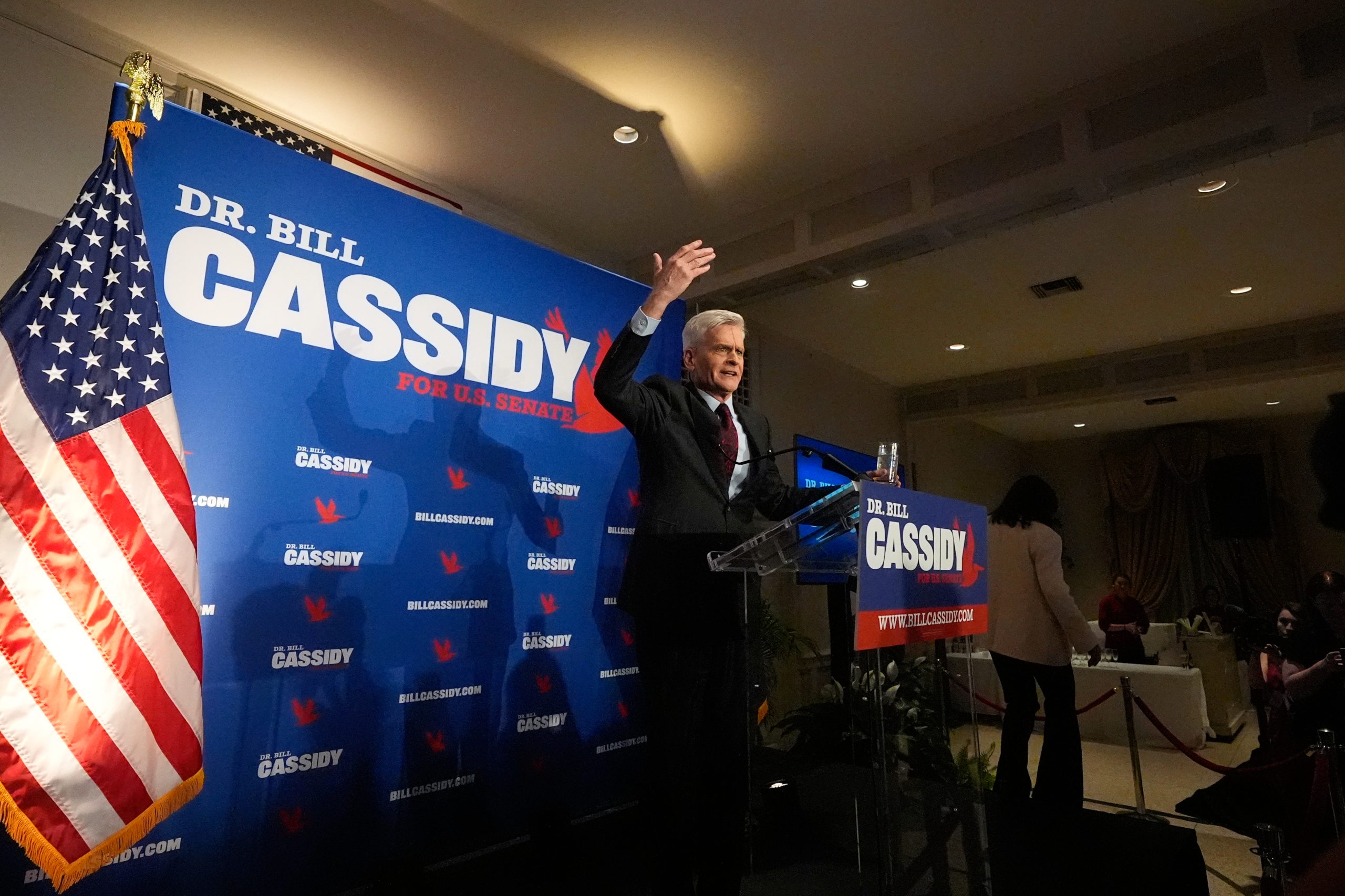
Rhode Island Gov. Dan McKee’s ouster on Wednesday, the first primary defeat for an incumbent governor in eight years, caps off a primary season that’s seen longtime leaders fall across the map and politicians across both parties struggle to make the leap to higher office.
Thirteen members of Congress have lost their reelection bids: seven Democrats and six Republicans, including two GOP senators. At least 16 more who were trying to move from the House to the Senate or take on statewide office have lost primaries: nine Republicans and seven Democrats, including Colorado Sen. Michael Bennet who unsuccessfully ran for governor.
The upheaval has been driven by a confluence of factors that will continue to dog incumbents through November. Voters are frustrated with both parties’ leadership in Washington. President Donald Trump has targeted some GOP foes as he looks to cement his legacy; Democrats are in the midst of pitched generational and ideological battles. Some members in both parties faced daunting new district lines. Others faced scandals that sank them.
In some races, those factors converged. Rep. Haley Stevens (D-Mich.) didn’t benefit much from her years in Washington in her Senate bid — and lost her primary to a left-flank rival who yoked her to the party establishment.
Caitlin Legacki, who advised Stevens’ bid, said incumbents’ losses this year show voters are simply fed up.
“It speaks to the high level of dissatisfaction that voters have with everyone,” said Legacki, who noted the anti-incumbent climate contributed to Stevens’ loss. “It’s a major ‘throw the bums out’ moment.”
DEMS KICK INCUMBENTS TO THE CURB
Democrats disillusioned with their leadership in Washington are taking it out on the party’s rank and file.
Progressives picked off more-moderate House members from New York to Colorado. Younger challengers ousted older incumbents from Texas to Connecticut. Local elected officials outran Washington incumbents. And voters have spurned lawmakers seeking higher office from Michigan to Minnesota.
Sometimes age was the biggest factor, sometimes it was ideology and sometimes both played a role. Democratic socialists defeated decades-older Reps. Diana DeGette of Colorado and Rep. Adriano Espaillat of New York. Former Hartford Mayor Luke Bronin relied on generational change to topple longtime Rep. John Larson in Connecticut.
THE TRUMP FACTOR
For Republicans, Trump played a major role in directing voters against his longstanding Washington foes.
Trump-backed challengers wiped MAGA irritants Sen. Bill Cassidy (R-Louisiana) and Rep. Thomas Massie (R-Ky.) off the map. And the president’s late-stage endorsement of Texas Attorney General Ken Paxton in the Senate runoff helped sink Sen. John Cornyn (R-Texas).
REDISTRICTING RIPPLE EFFECTS
The unusual mid-decade gerrymandering war took out members of both parties, who lost competitive races in less favorable districts, ran for other offices or switched parties to avoid similar fates.
Texas Democratic Rep. Al Green was ousted by Rep. Christian Menefee in a member-on-member primary forced by gerrymandering that played on their generational divide.
Democratic Rep. Julie Johnson lost her redrawn Dallas-area district to former Rep. Colin Allred, while Rep. Dan Crenshaw’s right-flank challenger leveraged the redraw (as well as some of Crenshaw’s breaks with Trump) to oust the Republican.
Others chose to retire rather than keep fighting uphill battles. Democratic Reps. Steve Cohen of Tennessee (who had already been facing a generational primary challenge before the redraw), Lloyd Doggett of Texas and Cleo Fields of Louisiana hung it up after Republicans dismantled their districts. So did GOP Reps. Darrell Issa of California and Burgess Owens of Utah after their districts were redrawn. California Rep. Kevin Kiley, who opposed the mid-decade gerrymanders and switched from GOP to independent after his district was redrawn, said the new maps have unleashed “chaos” on the House and “reduced the quality of representation in Congress.”
SWEPT OUT BY SCANDAL
Call it the midterms of controversy: Incumbents in both parties have succumbed to the political pressures of their scandals this year.
Democratic Rep. Eric Swalwell ended his run for California governor and exited Congress amid sexual assault and misconduct allegations. Rep. Tony Gonzales (R-Texas) dropped his reelection bid and resigned after admitting to having an affair with a staffer who later killed herself.
Tennessee GOP Rep. Andy Ogles, despite his Trump endorsement, couldn’t overcome his past controversies, a newly redrawn district and outside spending. Republican Florida Rep. Cory Mills faced attacks over probes of his conduct from primary winner Ryan Elijah. Elijah told POLITICO this week that he believed Mills’ controversies collided with voters’ anti-incumbent angst.
“We ran on our merits, but trust was a factor,” Elijah said. “I think trust was the biggest factor.”
HIGHER OFFICE FLAMEOUTS
Several congressional Democrats struggled to outmatch opponents without Washington ties in Senate primaries. Bennet, Stevens and Reps. Angie Craig (D-Minn.), Jasmine Crockett (D-Texas), Raja Krishnamoorthi (D-Ill.) and Robin Kelly (D-Ill.) all lost statewide primaries to rivals who hadn’t served in D.C.
Voters haven’t been kind to GOP representatives seeking higher office either. Reps. Randy Feenstra of Iowa, Dusty Johnson of South Dakota and Nancy Mace and Ralph Norman of South Carolina all lost their gubernatorial bids. Voters rejected Norman twice: He also lost the snap primary for Lindsey Graham’s seat to the late senator’s sister — a total political newcomer. Texas Rep. Chip Roy also lost a runoff for state attorney general.

No parent wants to even consider that their child might be thinking about suicide.
But sadly, some teens do have these thoughts – and, in rare and devastating cases, they act on them. According to Samaritans, around 200 young people die by suicide every year.
It can be hard for parents to know if their child is experiencing such dark thoughts, however. A study of young people aged 11 to 17 and their parents found that amongst teens who reported they had experienced suicidal thoughts, 50% of their parents said they had no idea of what their child was going through.
Fiona Yassin, a psychotherapist and founder and clinical director of The Wave Clinic, told HuffPost UK: “It’s not always easy to recognise when a young person is thinking about suicide. Sometimes, young people themselves will not be clear that they’re having suicidal thoughts.”
To mark World Suicide Prevention Day (10 September), Yassin has shared some of the early warning signs that might signal a young person is experiencing these thoughts, including:
-
Saying goodbye to pets and/or friends;
-
Giving away or dividing up possessions;
-
Misusing drugs or alcohol;
-
Isolating themselves from the rest of the family in the home;
-
An increased interest in death or discussing funerals – this may appear as ‘How to…’ questions in internet search history;
-
A sudden in-depth knowledge about suicide or dying;
-
Expressing ideas about death through art or writing;
-
Relationship problems with peers, partners, or family members. Yassin noted these often precede suicide attempts. “This is especially true for young people below the age of 14, who are less likely to have a diagnosed mental health disorder. In these cases, suicide attempts may follow a short period of distress centred around social relationships,” she said.
-
Expressing feelings of hopelessness, sadness, guilt, shame, or worthlessness;
-
Losing interest in activities they’d usually enjoy;
-
Expressing ideas like ‘things would be better without me’.
Unfortunately, the internet makes it easier for children to see posts and find out more information about suicide, which they can then act upon.
Analysis by Ripple Suicide Prevention Charity estimates that nearly 1,000 UK searches online for suicide and self-harm information take place every day.
The charity’s CEO, Alice Hendy, said her brother Josh took his own life in 2020 following extensive searches for methods and advice on how he could die by suicide, which he found with ease on the internet.
“It is more important than ever for us all to be vigilant of the signs of someone in crisis, particularly during a period when harmful content is so easy to come by,” Hendy said.
Yassin is also concerned about this. “Social and online media has made it easier for children and young people to see posts about suicide. Not only can they be very traumatic for children to see, but they can also provoke young people,” she said.
“For example, a teen who is already struggling with their mental health may see this, realise there is an exit point and want to copy it.”
Young people who self-harm may be at an increased risk of suicide attempts. For this reason, Yassin also advises keeping an eye out for signs of self-injury. Aside from visible injuries, she urges parents to be vigilant of:
-
Unexplained burns, bite marks, cuts, bruises, or other marks on their body;
-
Insistence on covering parts of their body with long clothes or other material;
-
Feeling low, depressed, and withdrawing from relationships;
-
Angry outbursts;
-
Self-blame.
If you believe your child is experiencing suicidal thoughts, or they’ve told you they have, Yassin said this should always be taken seriously and treated urgently.
- Stay in the moment with them, sitting with their sadness and despair without trying to fix it immediately.
- Reassure them that you are listening, that you take their feelings seriously, and that you are there with them. “It’s important young people feel their feelings are being recognised and taken seriously,” said the expert. “When their distress is met too quickly with reassurance or attempts to make it better, they may feel unheard or misunderstood.”
- Avoid dismissing their comments or actions as “attention-seeking” or minimising what they’re expressing.
- Mirror their language. “Reflecting their language back to them helps them feel understood and shows that you are not afraid to meet them where they are,” added Yassin.
- Stay calm. “However uncomfortable, scared and distressed you may be feeling, it’s really important you stay calm and centred,” said the expert. “People often tap into anger when they are scared. Check that you do not sound angry. If you do sound angry or if you think your young person thinks you’re angry, be honest. Let your child or teenager know that even though you may sound angry the emotion you’re actually feeling is sadness.”
- Reassure your child they won’t feel like this forever and “this is a moment in time that will pass”.
- Stay with them. “Even if you feel the conversation has ended in a peaceful place, do not leave a young person alone when it has finished,” she added.
- Take extra precaution and remove any objects that could be used as a way to follow on with the discussion about suicide if they were left alone.
- Seek professional help. “If your young person is suicidal, shares suicidal ideations, or you believe they are at risk, seek professional help from a GP or mental health professional immediately. If it is a medical emergency, call 999,” she added.
The family therapist ended: “You do not have to manage this alone, and it’s important your young person receives support from those who are specially trained in this space. Plus, ensure you are talking to the people who can extend their support network, such as the school counsellor.”
Help and support:
- Mind, open Monday to Friday, 9am-6pm on 0300 123 3393.
- Samaritans offers a listening service which is open 24 hours a day, on 116 123 (UK and ROI – this number is FREE to call and will not appear on your phone bill).
- CALM (the Campaign Against Living Miserably) offer a helpline open 5pm-midnight, 365 days a year, on 0800 58 58 58, and a webchat service.
- The Mix is a free support service for people under 25. Call 0808 808 4994 or email help@themix.org.uk
- Rethink Mental Illness offers practical help through its advice line which can be reached on 0808 801 0525 (Monday to Friday 10am-4pm). More info can be found on rethink.org

Less than a week after season eight of RuPaul’s Drag Race UK launched, the BBC has revealed it has pulled the plug on the popular reality TV show.
A spokesperson for the channel said it was facing “very difficult choices” amid “significant financial pressures”, which led to Drag Race UK being axed.
Following the announcement, many queens who found fame on the drag competition show have been paying tribute.
Bimini – a breakout star from its second season two, who has gone on to become an international performer, DJ and political activist – revealed the cancellation has left her “very sad”.
“Something happened in that room I’ve never been able to explain to anyone who wasn’t in it,” she wrote. “I miss it. I miss them. You don’t realise how incredible we had it at the time. So grateful.”
Bimini added: “Everything I have came from that. The fact I get to do this for a living at all. I’ll be grateful for the rest of my life and I mean it.”
The performer ended her statement with a note on how important series like Drag Race are in these turbulent political times, writing: “That show was on in living rooms where drag was not welcome, and it changed something in those living rooms. At a time when queer and trans people in this country are being legislated about and shouted about more than ever, that matters. It still does.”
Her fellow season two queen Tayce commented on Bimini’s post that the BBC’s decision represented the “end of an era”, while winner Lawrence Chaney agreed: “So emotional today! Love you – proud of everything you’ve done.”
Season six finalist and former Strictly Come Dancing contestant La Voix also reminisced on Instagram about leaving the show with “memories, stories, opportunities and, most importantly, some divine friends”.
“I loved every second of it!” she enthused. “The madness, the glamour, the nerves, the laughter and all the fabulous nonsense in between.
“But more than anything, I loved being part of something that has given so many incredible performers a platform and opened doors that might otherwise have stayed firmly shut. I’m incredibly grateful for everything that came from that show and platform, I wouldn’t be where I am today if it wasn’t for this show.
La Voix added her thanks to “everyone who has been part of the BBC Drag Race UK family – queens, crew, producers, judges and everyone behind the scenes”.
Drag Race UK vs. The World champion Blu Hydrangea also spoke in a video on Instagram about the “lovely” time she had working with the BBC, noting that she hopes that the show’s move away from the broadcaster meant future queens could win bigger cash prizes.
She added her hopes that, going forward, the format could be picked up by ITV or Channel 4.
While Drag Race UK is ending its run on the BBC, the franchise will continue on production company World Of Wonder’s streaming service Wow Presents Plus next year, beginning with the first-ever UK-specific season of All Stars.
“This her-storic season will be available virtually globally on Wow Presents Plus and, for the first time, in the UK where members will also be able to stream all eight past seasons of RuPaul’s Drag Race UK plus all three seasons of RuPaul’s Drag Race UK vs The World!” a spokesperson said in a statement.
Drag Race UK series eight continues on the BBC, with new episodes coming to BBC iPlayer every Thursday evening.

Bitcoin Stalls at the 50 Week Moving Average

USA fast food chain with ‘the greatest sandwich ever’ is coming to the UK

Why a famous Montreal sandwich shop has been forced to swap its soda


-
 Crypto World2 days ago
Bitcoin price risks $76K drop as $78K support weakens
-
 Tech2 days ago
Memory prices are slowing because buyers ran out of money
-
 Crypto World2 days ago
Ethereum price stalls below $2,500 as ADX drops to 11
-

 Business12 hours ago
AMD Stock Climbs After Management Lifts 2027 Data Center Outlook Toward $70 Billion in AI Sales
-

 Business11 hours ago
Micron Stock Climbs Above $1,031 as AI Memory Crunch and a $50 Billion Outlook Fuel the Rally
-

 Crypto World2 days ago
Robinhood Stock: How To Take Advantage With Reduced Risk
-

 NewsBeat2 days ago
What went right this week: an ‘historic’ fall in violent crime, plus more
-
 Crypto World13 hours ago
Bitcoin price risks $70K if $78K neckline breaks
-
 Crypto World1 day ago
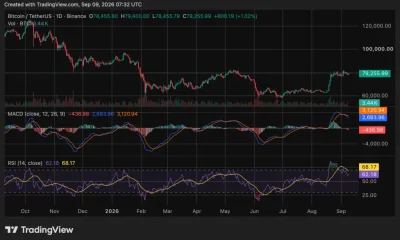
Bitcoin price holds near $79K as cycle drawdowns narrow
-
 Sports2 days ago
Phones confiscated, players sent home: Pakistan’s England tour turmoil revives memories of Mohammad Amir, Salman Butt and Mohammad Asif’s 2010 Lord’s spot-fixing scandal | Cricket News
-

 NewsBeat2 days ago
England up in reading, maths and science rankings as Scotland and Wales dip
-

 Business1 day ago
Meta debuts long-awaited personal AI agent, Muse
-
 Crypto World2 days ago
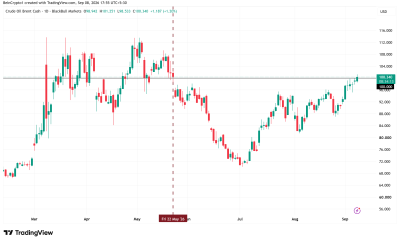
Brent Crude Oil Moves Above $100 for the First Time in 3 Months
-

 Crypto World2 days ago
Pump Fun and Kraken delete Hunter Biden $LAPTOP promotion
-
 Crypto World2 days ago
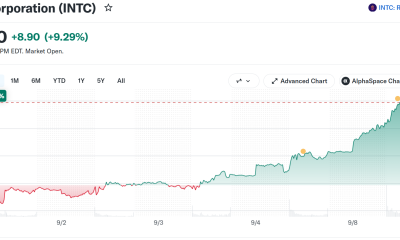
Intel Stock Jumps 9% on Chip Price Hike Report, US Stake Gains $36 Billion
-

 Crypto World2 days ago
Visa expands stablecoin card network to 160 programs
-

 Business2 days ago
Egyptian TV Presenter Sarah Khalifa, 11 Others Sentenced To Death In Major Drug Trafficking Case In Cairo
-
 Tech2 days ago
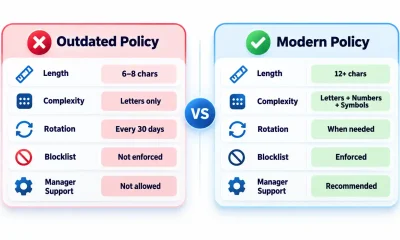
Strong Password Policy and Password Manager Guide
-
Business2 days ago
Xometry at Goldman Sachs Communacopia + Technology Conference 2026: growth, AI and Siemens
-

 Business1 day ago
ServiceTitan, Inc. (TTAN) Q2 2027 Earnings Call Transcript
You must be logged in to post a comment Login