Connect with us

Crypto World

Crypto for Advisors: Hyperliquid and the future of finance

Published

on

Crypto for Advisors: Hyperliquid and the future of finance

Continue Reading
Click to comment

You must be logged in to post a comment Login

Leave a Reply

Crypto World

Cooper Companies Stock Slammed On Two Surprising Earnings Pockmarks

Published

on

Cooper Companies Stock Slammed On Two Surprising Earnings Pockmarks

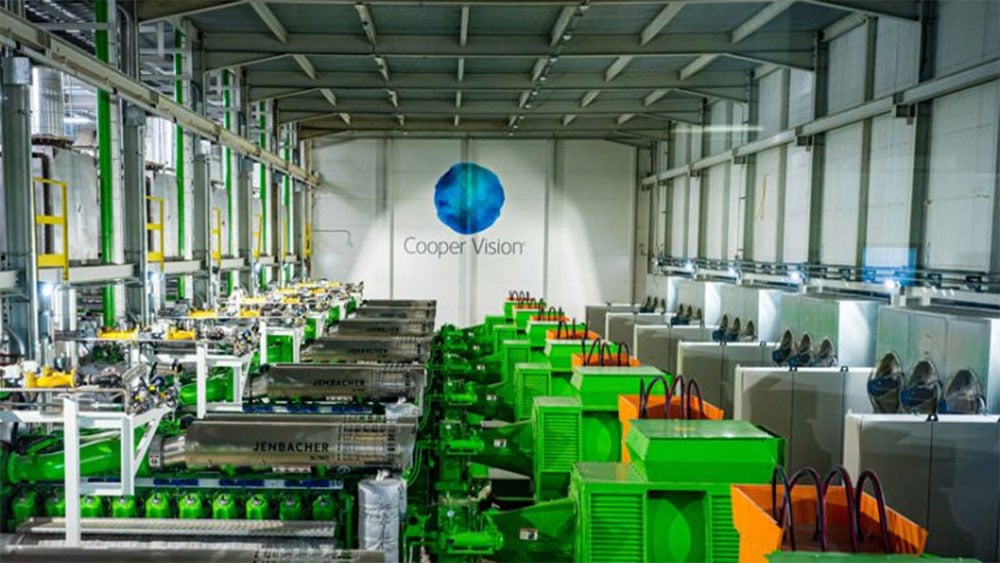
Investors hammered Cooper Companies (COO) on Thursday after the medtech’s fiscal third-quarter sales lagged Wall Street’s expectations, leading to a guidance cut. Specifically, the CooperVision segment — which sells contact lenses — missed expectations by 4.5%, William Blair analyst Steven Lichtman said in a report. The miss was due to destocking. Further, the company opted against selling its CooperSurgical business…

Copyright ©2026 Investor’s Business Daily, LLC. All rights reserved. 87990cbe856818d5eddac44c7b1cdeb8


Source link

Continue Reading

Crypto World

Bitcoin Bancorp snaps up thousands of defunct Bitcoin Depot ATMs for $620,000

Published

on

Bitcoin Bancorp snaps up thousands of defunct Bitcoin Depot ATMs for $620,000


Just over a quarter of Bitcoin Depot’s more than 9,200 kiosks have been sold for less than $1 million, court records show.
Source link

Continue Reading

Crypto World

Gold ETFs Just Had Their Second-Biggest Month Ever With $18 Billion Inflow

Published

on

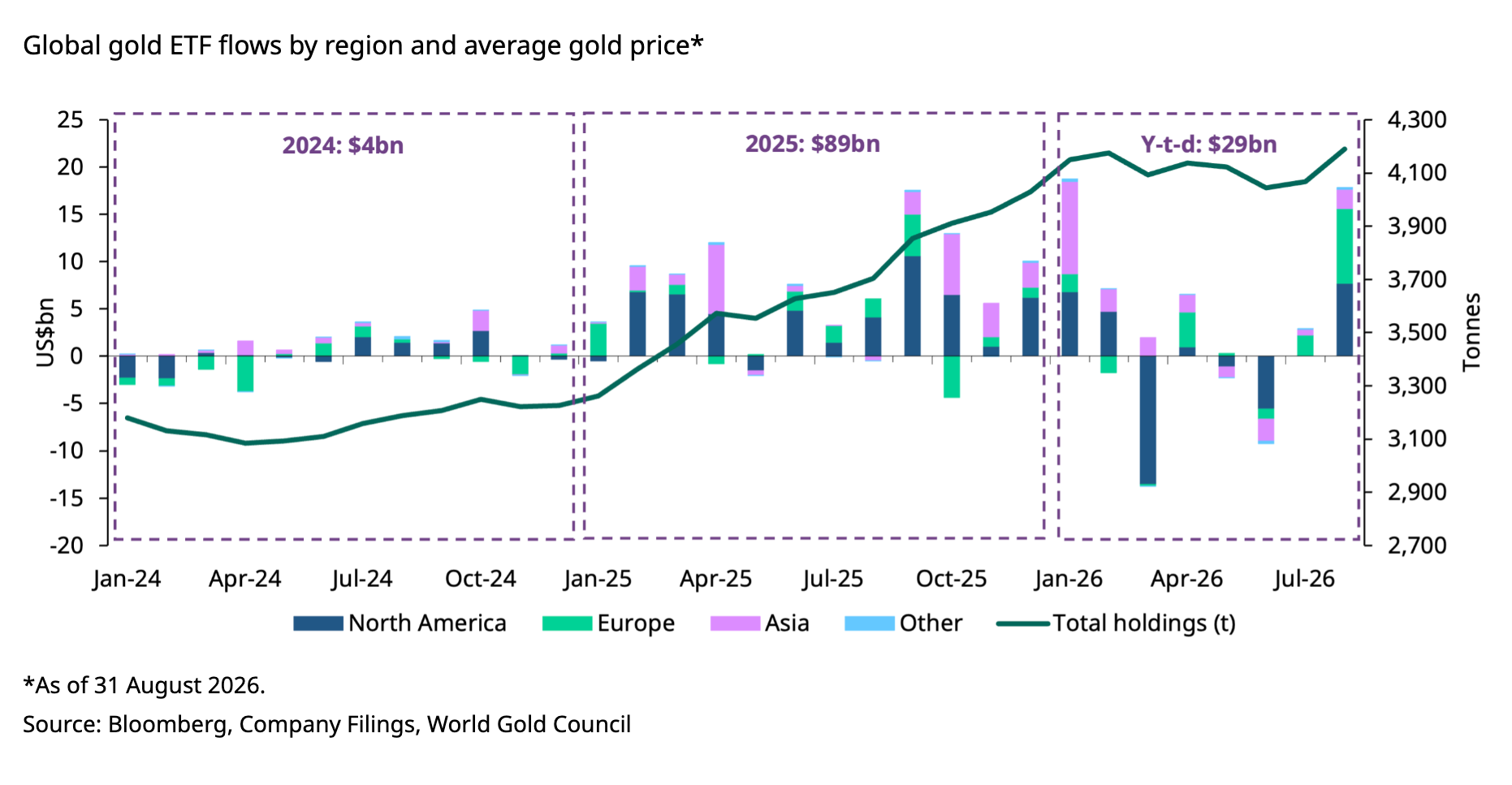
Gold ETF Flows Over The Years.

Global gold exchange-traded funds (ETFs) pulled in $18 billion in August, the second-largest monthly inflow on record, lifting collective holdings to an all-time high of 4,189 tonnes.

The World Gold Council published the figures this week. Total assets under management (AUM) rose 16% month over month to $615 billion, helped by a higher gold price.

Western Buyers Return to Gold in Force

European funds drove the month with $7.9 billion of buying, their strongest on record, according to Council data. The UK supplied $4.4 billion of that total, its second-largest month ever. France added $1.5 billion, a national record.

North American funds attracted $7.7 billion. This marked their third-largest monthly haul. Demand stayed muted early on before accelerating during the week of August 17, when funds absorbed roughly $4 billion in five trading days. This came around the same time as the Treasury expanded its debt buyback.

Advertisement

That burst mattered for the annual picture. It offset the region’s record $13 billion outflow in March and pushed North American flows back into positive territory for the year.

Asian funds added $2 billion, their best month since February. China again led the region, where stabilising local prices drew investors back. The country’s central bank has extended its own buying streak.

Global ETF flows had already turned higher in July. Year to date, global inflows total $29 billion, or 160 tonnes.

Gold ETF Flows Over The Years.
Gold ETF Flows Over The Years. Source: World Gold Council

The Council tied the surge in inflows to three likely drivers. It cited US intervention to support the yen on July 31, the Treasury’s August 19 buyback move, and price momentum after gold cleared key technical levels.

Follow us on X to get the latest news as it happens

Advertisement

Traders Pile Back Into the Metal

Activity across the wider gold market rebounded. Average daily trading volumes climbed 21% month over month to $430 billion, with gains in every major segment.

Gold ETF trading volumes jumped 83% to $8.7 billion per day. North American-listed funds accounted for more than 73% of that activity.

Positioning followed. COMEX net long positions rose 39%, or 212 tonnes, to 753 tonnes. Managed money added 96 tonnes, taking its net longs to 470 tonnes.

Now, September data will show whether Western buyers keep adding at August’s pace.

Advertisement

Subscribe to our YouTube channel to watch leaders and journalists provide expert insights

The post Gold ETFs Just Had Their Second-Biggest Month Ever With $18 Billion Inflow appeared first on BeInCrypto.
Source link

Advertisement
Continue Reading

Crypto World

Gold and Crypto Fall as Hot US Inflation Rattles Markets

Published

on

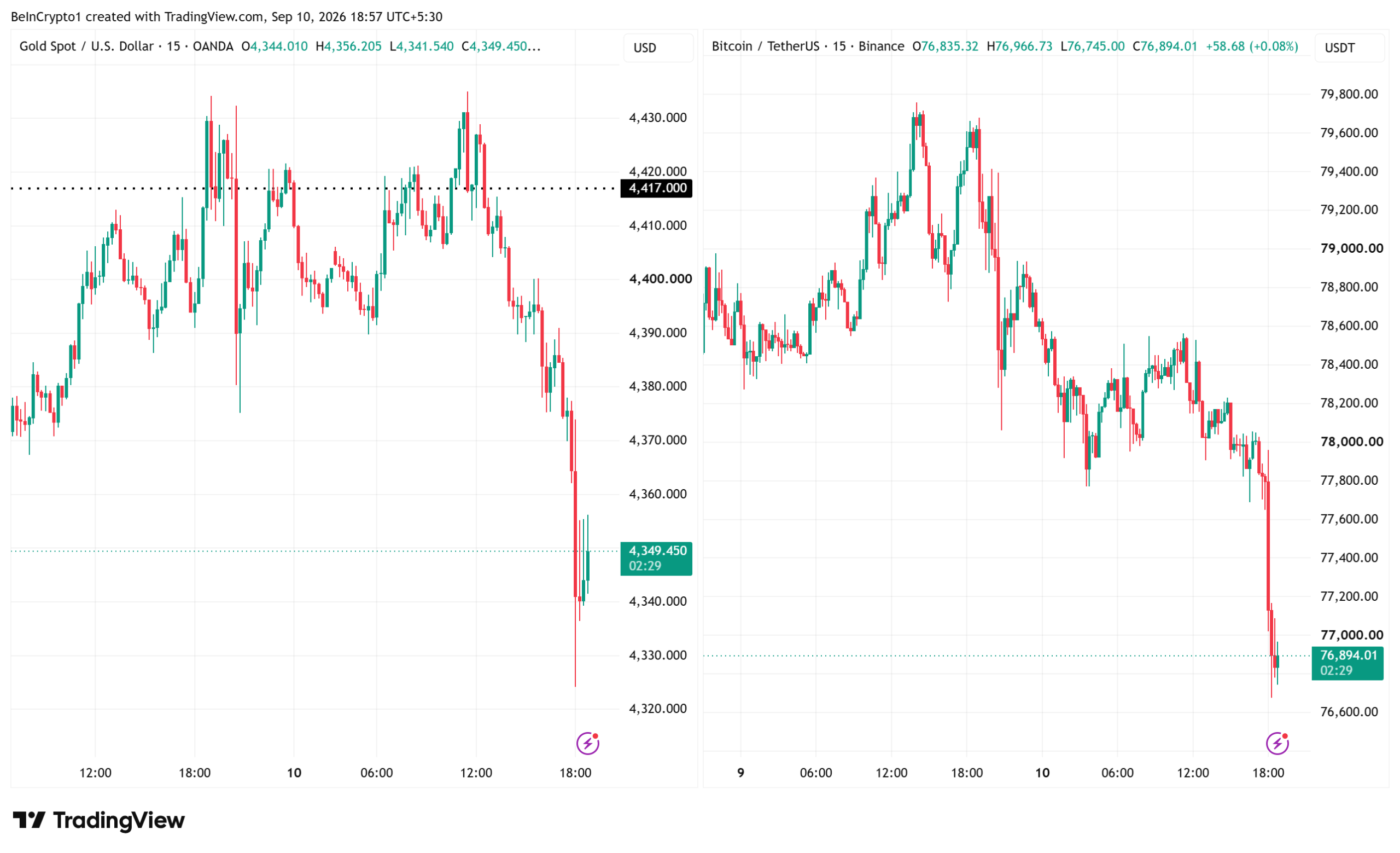
Bitcoin and Gold (XAU/USD) Price Performance. Source: TradingView

Another hot US inflation report arrived on Thursday, September 10, and all financial markets took a hit, including Gold, Bitcoin, and the S&P 500.

It seems like even traditional safe-haven assets like gold are not acting as an inflation hedge. The bond market recently delivered a reminder that inflation hedges can struggle when rising prices also mean higher interest rates.

Gold’s Inflation Trade Breaks

US producer prices rose 0.4% in August, matching forecasts. The annual rate reached 5.4%, slightly above the 5.3% expected.

Gold is supposed to benefit when inflation erodes the value of cash. Instead, spot XAU/USD fell more than 1%, dropping toward $4,350 after trading above $4,400.

For forex traders, that move hurts. A standard gold lot represents 100 ounces. A $100 drop means roughly $10,000 in losses on a one-lot long position, excluding trading costs.

The real damage came from bonds. The 10-year Treasury yield pushed above 4.9%, its highest since October 2023. The 30-year reached roughly 5.35%.

Higher yields make cash and government debt more attractive. Gold pays no yield. Bitcoin pays no yield either.

Advertisement
Bitcoin and Gold (XAU/USD) Price Performance. Source: TradingView

CME FedWatch pricing moved toward a 70% chance of a September rate hike after the data, up from roughly 62%.

Why Hot Inflation Hurt Gold

The detail inside the report mattered. The Bureau of Labor Statistics said: “Prices for final demand goods advanced 1.1 percent, and the index for final demand services increased 0.1 percent.”

More than three-quarters of the goods increase came from energy. That made the report look more like an energy shock than a broad inflationary surge.

The dollar also strengthened as rate-hike bets rose, adding another headwind for dollar-priced gold.

Advertisement

BeInCrypto had warned earlier this week that Treasury yields near 5% could start competing directly with Bitcoin and gold for institutional capital.

The next test comes Friday with US CPI (Consumer Price Index). Another hot reading would put more pressure on the Fed to hike — and test how far “inflation hedges” can fall when inflation itself becomes the problem.

September Rate Hike Probabilities
September Rate Hike Probabilities. Source: CME FedWatch Tool

The post Gold and Crypto Fall as Hot US Inflation Rattles Markets appeared first on BeInCrypto.

Source link

Advertisement
Continue Reading

Crypto World

Lumentum Stock Lights Up Buy Zone As Top Funds Devour Shares

Published

on

photonic ai accelerator light routing

The latest monthly list of new buys by the best mutual funds, which comes out on Friday, puts a dazzling spotlight on Lumentum (LITE). These savvy money managers scooped up an eye-catching $13.11 billion worth of Lumentum stock. The optical and photonics giant plays a key role in powering the infrastructure behind artificial intelligence, cloud computing, and next-generation communications. Demand…

Copyright ©2026 Investor’s Business Daily, LLC. All rights reserved. 87990cbe856818d5eddac44c7b1cdeb8
Source link

Continue Reading

Crypto World

Nasdaq invests $100 million in Kraken parent Payward at $21 billion valuation

Published

on

Nasdaq invests $100 million in Kraken parent Payward at $21 billion valuation

Nasdaq has agreed to invest $100 million in Kraken parent Payward as the two companies expand their work on tokenized equities, market surveillance and blockchain-based settlement infrastructure.

Summary

  • Nasdaq Ventures will invest $100 million in Kraken parent Payward, valuing the company at $21 billion.
  • Payward will deploy Nasdaq’s market surveillance technology across its crypto, equity, futures, options and tokenized equity venues.
  • Nasdaq and Payward expect Nasdaq Equity Tokens to launch in the second quarter of 2027.
  • The companies began working together in March to connect regulated equity markets with blockchain networks through the xStocks ecosystem.

Nasdaq said Thursday that its strategic investment arm, Nasdaq Ventures, had agreed to make the investment as part of an expanded relationship with Payward. The deal values the privately held company at $21 billion, Bloomberg reported, citing people familiar with the matter.

The companies are working toward a second-quarter 2027 launch for Nasdaq Equity Tokens, or NETs, while Payward will deploy Nasdaq’s market surveillance technology across trading venues covering crypto, equities, tokenized equities, futures and options.

Advertisement

The investment builds on a partnership announced in March, when Nasdaq and Payward began developing infrastructure designed to connect regulated equity markets with blockchain networks through Payward’s xStocks ecosystem.

Nasdaq investment values Payward at $21 billion

Nasdaq Ventures invests in technology and market infrastructure that the exchange operator sees as relevant to the development of global capital markets. Its $100 million Payward investment gives the relationship a financial component alongside the companies’ existing technology work.

The reported $21 billion valuation is slightly above the $20 billion level Payward secured during an $800 million financing completed before its confidential initial public offering filing. As crypto.news previously reported, Payward’s planned IPO has since been pushed back until at least the second quarter of 2027.

Payward confidentially submitted a draft S-1 registration statement to the U.S. Securities and Exchange Commission in November 2025. The company has not publicly disclosed a proposed ticker, share price, number of shares or exchange for a potential listing.

Advertisement

Its latest financial results showed adjusted revenue of $508 million for the second quarter, up 17% from a year earlier. Adjusted EBITDA fell to $23 million from $80 million, while total platform transaction volume declined 18% to $310 billion.

Payward ended the quarter with 6.6 million funded accounts and $40 billion in assets on its platforms. Asset-based and other revenue represented 60% of total revenue, compared with 55% a year earlier, according to the company’s second-quarter results.

Nasdaq Equity Tokens target Q2 2027 launch

Nasdaq and Payward expect NETs to launch in the second quarter of 2027, advancing a project first announced earlier this year.

The initial partnership called for an equities transformation gateway connecting Nasdaq’s regulated market infrastructure with Payward’s xStocks system. Under the design, tokenized equities could move between permissioned financial markets and supported blockchain networks in eligible jurisdictions while retaining the rights attached to the underlying securities.

Advertisement

Nasdaq’s model is centered on issuer-sponsored tokens, with the company seeking to preserve issuer control, governance rights and existing market protections when shares are represented on blockchain infrastructure.

Payward’s xStocks framework provides the blockchain component of the planned system. When the partnership was announced in March, xStocks had recorded more than $25 billion in transaction volume, including over $4 billion settled onchain, and had more than 85,000 unique holders.

The platform has continued expanding since then. Payward partnered with GTN in July to take xStocks beyond U.S. equities, starting with Hong Kong-listed shares before planned expansion into markets including the UK, Europe and South Korea, subject to local regulatory approvals. At that point, xStocks had passed 500 tokenized assets and $37 billion in transaction volume.

Advertisement

Nasdaq said the next phase of its Payward partnership will focus on the global distribution, trading and post-trade systems needed to support NETs.

“More than $2 trillion of stock trades run through the U.S. clearing system every day,” Payward co-CEO Arjun Sethi said.

Sethi said buys and sells in the U.S. system net down by roughly 98%, leaving clearing houses to hold between $10 billion and $20 billion of collateral while trades await settlement. The move from two-day to one-day settlement in 2024 released $3 billion, he added.

“Onchain settlement removes the wait,” Sethi said. “The next phase of the collaboration is planned to advance Nasdaq Equity Tokens onto rails that do not close, with shareholder rights intact.”

Payward will use Nasdaq surveillance across trading venues

The expanded agreement gives Nasdaq another role within Payward’s trading infrastructure through its market surveillance technology.

Advertisement

Payward plans to deploy the system across crypto, conventional equities, tokenized equities, futures and options. Nasdaq said the technology will support market integrity and investor confidence as Payward operates across more asset classes.

Payward has spent much of 2026 expanding beyond its core spot crypto exchange business. The company completed its acquisition of Bitnomial in May, giving Kraken access to a regulated U.S. derivatives structure that includes a Futures Commission Merchant, Designated Contract Market and Derivatives Clearing Organization.

The transaction followed an agreement to buy Bitnomial for up to $550 million in cash and stock. The completed Bitnomial acquisition gave Payward control of the three Commodity Futures Trading Commission registrations needed to operate trading, brokerage and clearing services within the same group.

Kraken has separately expanded the uses available for xStocks. Eligible clients outside the United States can use selected tokenized stocks and exchange-traded funds as collateral for leveraged trades, allowing qualifying users to maintain tokenized equity exposure while supporting futures or margin positions.

Advertisement

Payward has acquired Backed Finance, the company behind the issuance infrastructure used for xStocks, while its wider portfolio now includes Kraken, NinjaTrader, Breakout and CF Benchmarks.

Nasdaq and Payward began tokenization work in March

The relationship between the companies started in March with plans to create a gateway between regulated equity markets and permissionless blockchain networks.

Under that framework, Payward Services was set to provide know-your-customer and anti-money laundering onboarding for users accessing Nasdaq Equity Tokens through its platform in eligible jurisdictions. Payward’s infrastructure was expected to serve as an initial settlement layer for NET transactions where the company held the necessary registrations or approvals.

Nasdaq initially said its equity token design and related distributed-ledger services would begin operating in the first half of 2027. The latest announcement narrows the expected NET launch to the second quarter.

Advertisement

The work comes as xStocks develops infrastructure intended to move tokenized equities beyond simple spot trading. In March, the platform introduced xChange, an onchain execution layer supporting more than 70 tokenized equities across Ethereum and Solana. At launch, the system had recorded $3.5 billion in onchain volume and $25 billion in overall trading volume.

Each supported xStock was backed 1:1 by an underlying security held in custody, while xChange used atomic settlement so a trade either completed at its quoted terms or did not execute.

Nasdaq President Tal Cohen said the expanded relationship with Payward was based on the exchange operator’s view that the company could play a role in building infrastructure for capital and assets to move across financial systems.

“This partnership advances our work on Nasdaq Equity Tokens and helps build a more connected financial system while preserving the trust, transparency and integrity that underpin capital formation,” Cohen said.
Advertisement

Source link

Continue Reading

Crypto World

Nasdaq Ventures to Invest $100M in Kraken Parent Payward at $21B Valuation

Published

on

Nasdaq (NDAQ) has agreed to invest $100 million in Payward, the parent company of Kraken, through its venture arm. The investment deepens a partnership to build, distribute and trade tokenized stocks, targeting a second-quarter 2027 launch for the tokens.

The investment values Payward at $21 billion, according to Bloomberg, which first reported the deal. It expands a partnership the two firms first announced in March to develop tokenized equities, under which Kraken’s xStocks product would power a permissionless blockchain layer for Nasdaq’s issuer-sponsored equity tokens.

Payward will also adopt Nasdaq’s market surveillance technology across its crypto, equities, tokenized equities, futures and options venues.

Settlement Without the Two-Day Wait

Deutsche Börse paid $200 million for a stake that valued Payward at $13.3 billion in April, the same month Kraken began offering more than 11,000 US stocks and ETFs through its FINRA-regulated brokerage.

Advertisement

The exchange is moving into stocks, derivatives, and other traditional financial products beyond cryptocurrency, CNBC reported. xStocks, its tokenized-equity product, runs on public blockchains including Ethereum and Solana.

“More than $2 trillion of stock trades run through the U.S. clearing system every day. Buys and sells net down by about 98 percent, and the clearing house holds $10 billion to $20 billion of collateral against what is left while it waits a day to settle. Cutting that wait from two days to one in 2024 released $3 billion. Onchain settlement removes the wait,” said Arjun Sethi, Co-CEO of Payward.

Advancing Nasdaq Equity Tokens

Within Nasdaq, the work is led by its Digital Liquidity Networks unit, which builds always-on market infrastructure. The partnership “advances our work on Nasdaq Equity Tokens and helps build a more connected financial system while preserving the trust, transparency and integrity that underpin capital formation,” said Tal Cohen, President of Nasdaq.

Nasdaq introduced the equity-token framework earlier this year and said the tokens are designed to keep issuer control and shareholder rights intact. The next phase will develop the global distribution, trading, and post-trade capabilities behind them, the company said.

Holders of tokenized assets do not have outright ownership of the underlying shares, CNBC noted, and what such tokens confer is contested, a gap now playing out in a public dispute between Robinhood and AMC Entertainment over Robinhood’s tokenized AMC shares, which the studio calls a synthetic market that gives economic exposure without shareholder rights.

Advertisement

The post Nasdaq Ventures to Invest $100M in Kraken Parent Payward at $21B Valuation appeared first on CryptoPotato.

Source link

Continue Reading

Crypto World

Kalshi launches ‘perps’ for gold and silver following CFTC approval, expanding futures offerings
Published

on

Kalshi launches ‘perps’ for gold and silver following CFTC approval, expanding futures offerings

Kalshi has won approval to list perpetual futures tied to precious metals gold and silver in the U.S., in the latest development as the company seeks to grow its trading offerings beyond prediction markets

Originally filed in July, the Commodity Futures Trading Commission — which regulates derivatives contracts — approved the listing of the perpetuals this week.

The new markets for the contracts launched on Thursday on the site.

Kalshi first received approval to list perpetual futures tied to cryptocurrencies in late May, bringing the novel asset class with $90 trillion in annual volume in 2025 onshore to the U.S. for the first time. Since then, the contracts have done $44 billion in notional volume, according to the platform’s website. 

Advertisement

Udesh Jha, chief risk officer at Kalshi Klear, the exchange’s clearing house, said the company moved to have this be their next asset to offer perpetual futures for due to high interest in the commodities. 

“Metals, especially gold and silver, have a story to tell because of inflation,” he said. 

That demand has been reflected in Kalshi’s commodity-related event contracts, which include metals and oil. Volume on the contracts has surpassed $400 million in trading volume in seven months, the company announced on Tuesday, half the time it took its crypto event contracts to reach the same mark.

Perpetual futures, colloquially known as “perps,” are futures-style contracts that have no expiration and do not require an investor to own the underlying asset. Instead, contracts track the price of an asset, with a funding mechanism to keep the contract in-line with the market price.

Advertisement

In addition to perps on precious metals, Kalshi is seeking approval for contracts tied to U.S. equities, industrial metal copper and currencies in August. The green light by the CFTC to list perps tied to precious metals is the first non-crypto related contract that has been approved. 

Following the launch of perps, traditional futures exchanges like CBOE and CME Group saw their stocks tumble on fears that the new futures type could disrupt their existing business models. CME has even sued the CFTC to block the approval of perps in the U.S., under a belief that the agency improperly permitted the contracts. 

But Jha said the early success of Kalshi’s perps offerings is because of its regulated nature.

“It all goes back to the regulated platform,’ he said. “Doing it the right way, a way with proper risk controls… Unregulated platforms, they have always hit a ceiling.”

Advertisement

Disclosure: CNBC and Kalshi have a commercial relationship that includes customer acquisition and a minority investment.
Source link

Continue Reading

Crypto World

RSSS Q4 2026 Earnings Call Transcript

Published

on

RSSS Q4 2026 Earnings Call Transcript

While the new sales teams are doing well, and we feel very good about that continuing in FY ’27, the upsell and renewal teams continue to need focus. We appointed a new leader to run that team, strengthen and expanded the team and realigned the structure around customer size and location. We also implemented a tool to do a better job measuring customer health and kicking off automated and manual workflows based on those results. For example, we can kick off an engagement workflow to a specific cohort of users who have not used the software or used what we know are high-value features.

We started all this in early FY ’26 and saw a nice improvement in renewal rates in Q4 of FY ’26. We expect this more to positively impact net ARR growth as we go into and through FY ’27. We did report a 14% B2B ARR growth during the year, raising our high gross margin platform revenue from 39% of total revenue last year to over 43% this year, which translated into another year of positive results in terms of operating income, net income, EBITDA and cash flow.

In addition to increased spend in sales, we made some additional investments in product development and software engineering, which helped us release 2 new key AI products in addition to increasing development velocity on our core Scite and Article Galaxy products. In addition, we made several internal changes to improve productivity and output, including using AI to help us write and test code. All these improvements drove a large increase in development productivity. In fact, in the third quarter of FY ’25, we were doing about 50 software updates a month. In June of ’26, we did 200, a 4x improvement.

Most importantly, we released 2 AI products that extend the unique capability of Scite and Article Galaxy to be accessible in ChatGPT, Claude or Copilot. This is part of our intent to “be where the researchers are working,” and those products have been well received by our customers. As noted in our press release, we did about $800,000 in AI-related bookings in Q4, and we have built a strong pipeline of interest in those products that we expect we’ll close in FY ’27. I think much of what we did in FY ’27 will set us up nicely to grow the business profitably in FY ’27.

Advertisement

I’d like to pass the call over to Dave to walk you through the fiscal fourth quarter and full year FY ’26 financial results in detail. And then I’ll discuss our goals in FY ’27 and wrap up with some comments and the outlook for the year ahead. Dave?

Dave Kutil: Thank you, Roy, and good afternoon, everyone. I’ll start my comments with a recap of our fourth quarter, followed by a summary of fiscal 2026 results. Total revenue for the fourth quarter of fiscal 2026 was $12.1 million compared to $12.4 million in the fourth quarter of fiscal 2025, as increased platform revenue was more than offset by a decrease in transaction revenue. Our platform subscription revenue was $5.3 million compared to $5.2 million in the prior year quarter. The growth was driven by an increase in B2B platform ARR due to a mix of new logo generation and upsells and cross-sells into our existing customer base, partially offset by a decline in B2C ARR.

We added 29 net new platform deployments in the quarter, bringing total deployments to 1,276 at year-end. We ended the quarter with $22.5 million in annual recurring revenue, up 7.8% year-over-year, which breaks down as approximately $16.2 million in B2B ARR and approximately $6.3 million in normalized ARR associated with sites B2C subscribers. B2B ARR grew $2 million or 14.1% versus the year ago period and included AI-related ARR of $800,000, which grew 125% sequentially from the third quarter of fiscal ’26. Please see today’s press release for how we define and use annual recurring revenue and other non-GAAP terms.

Transaction revenue for the fourth quarter was approximately $6.8 million compared to $7.3 million in the prior year quarter, a decline of approximately 6.7%. That result represents a meaningful improvement from the 11% year-over-year decline we reported in the third quarter and is consistent with the stabilization trend we discussed on last quarter’s call. Our total active customer count for the quarter was 1,323 compared to 1,338 in the same period a year ago. Gross margin for the fourth quarter was 53%, a 200 basis point improvement over the fourth quarter of 2025 and a new quarterly record for the company.

Advertisement

The increase was due to the ongoing revenue mix shift towards our higher-margin platforms business which now represents 43% of our total revenue. The Platform business recorded gross margin of 87.3% compared to an all-time high of 88.5% in the prior year quarter, but still well within our target range of mid-80% gross margin. Gross margin in our Transactions business was 26% compared to 24.1% in our prior year quarter. The increase was primarily attributable to improved margins on our copyright content, reflecting favorable publisher mix and pricing partially offset by lower service fee margins.

Total operating expenses in the quarter were $5.6 million compared to $5.1 million in the prior year quarter, as increased sales and marketing expenses and upfront investments in AI were partially offset by lower general and administrative costs compared to the fourth quarter of fiscal 2025. Other expense for the quarter was $135,000 compared to income of $1.2 million in the prior year quarter. The prior year result was primarily attributable to a favorable adjustments, the final earn-out determination for sites in the fourth quarter of fiscal 2025. As a reminder, as of August 2, we have completed 5 quarters of earn-out payments with 3 additional payments remaining in fiscal 2027.

Net income for the quarter was $666,000 or $0.02 per diluted share compared to $2.4 million or $0.09 per diluted share in the prior year quarter. Adjusted EBITDA for the quarter was $1.4 million compared to $1.6 million for the fourth quarter of last year. Now let me turn to the full year fiscal 2026 results. Total revenue for fiscal 2026 was approximately $48.3 million compared to $49.1 million in fiscal 2025. Platform subscription revenue increased roughly 10% to $20.8 million. Total deployments at year-end were 1,276 and net increase of 105 the deployments from the end of fiscal 2025, and our average sales price increased 4.7% due to the upselling efforts mentioned earlier.

From an ARR perspective, we added approximately $2 million of net B2B ARR during the fiscal year, while normalized B2C ARR declined by approximately $380,000 for the full year. Transaction revenue for fiscal 2026 was $27.5 million compared to $30.1 million in the prior year, a decline of approximately 8.7% as transaction purchases for new customers were more than offset by lower volumes from a small number of large customers and the transactions-related benefits offered within our Platform subscriptions. As I noted earlier, the year-over-year trend improved as we exited the fiscal year. Gross margin for fiscal 2026 was 51.9%, a 260 basis point improvement over fiscal ’25.

Advertisement

The increase is primarily related to our continued revenue shift towards our higher-margin Platform business and it drove a 3.6% increase in gross profit dollars to $25.1 million despite the lower revenue base. Total operating expenses in fiscal 2026 were $21.5 million compared to $21.7 million in the prior year. Lower general and administrative and stock compensation expense were partially offset by higher sales and marketing expenses and product development costs. Other expense for the year was $724,000 and $1.2 million in fiscal 2025. Last year included $1.7 million to reflect the adjustments made to the Scite earn-out finalization.

Net income for fiscal 2026 was $2.8 million or $0.08 per diluted share compared to $1.3 million or $0.04 per diluted share in the prior year. Adjusted EBITDA for the year was $5.8 million compared to $5.3 million in fiscal 2025. Turning to cash flow. Cash flow from operations for the fourth quarter was approximately $1.8 million compared to $2.3 million in the prior year quarter. For the full year, we generated approximately $5.3 million in cash flow from operations compared to approximately $7 million in fiscal 2025.

As we discussed on last quarter’s call, the year-over-year decline primarily reflects the timing of working capital payments rather than a change in the underlying earnings power of the business or the collectibility of our receivables. Turning to our balance sheet. Cash and cash equivalents as of June 30, 2026, were $12.6 million compared to $12.2 million on June 30, 2025. The end of the fiscal year with a higher cash balance than a year ago, even after funding 4 quarters of Scite earn-out payments, consistent with the expectations that we laid out on last year’s fourth quarter call. There were no outstanding borrowings under our revolving line of credit.

And with a growing cash position and no debt, our current balance sheet provides the flexibility to complete the remaining Scite earn-out payments in fiscal 2027, while remaining opportunistic in regard to strategic alternatives. As we look forward to fiscal 2027, we expect continued Platform subscription growth, improving retention and further stabilization in our transactions business. Paired with disciplined expense management, we believe that we are also positioned to deliver another year of adjusted EBITDA growth and strong cash generation. I’ll now turn the call over to Josh to talk about our products. Josh?

Advertisement

Josh Nicholson: Yes. Thanks, Dave, and hello, everyone. I missed the last call as my wife and I welcomed our daughter to the world, really 1 of the best things ever, but I’m happy to be back with you guys today. So today, I want to cover 3 things. What is AI actually doing to our business, what we shipped in response and why we think we are on the right side of the shift. First, the impact of AI on the business, because I know it continues to be the question on everyone’s mind and the question we get a lot.

Our answer is that AI is already reshaping how research gets read, and we can see it directly in our own data. Since we launched the Article Galaxy and Scite MCP connectors in February, AI agents have performed more than 16 million scholarly reads through Scite. Two details in that data matter for how you think about research solutions: One, in June, 4 months after launch; two, calls from AI agents overtook the number of queries in our own Scite assistant interface. Usage didn’t shrink, it moved. Researchers are still asking the same questions.

They’re increasingly asking them inside Claude, ChatGPT and Copilot instead of inside a browser tab and more corporate and academic customers are taking licenses with these tools. Our job is to recognize our differentiators, leverage them and be where the users are and where we are. Scite and Article Galaxy connectors are in the official connector directories of all 3 of these platforms. Copilot, ChatGPT and Claude. Article Galaxy is the only DocDel tool with a connector that integrates directly into LLMs. Scite is 1 of the very few scientific article search connectors, and it adds capability that platforms themselves do not have and other search tools do not have either.

I can tell you whether a claim has been supported or contradicted by later research because we have classified over 1.6 billion citations statements from the full text of the literature. It can also search inside Paywalled full text through our publisher agreement. The second point roughly 43% of what AI agents reach for sits behind a Paywall, that is the unique value that AI and research solutions can deliver together. An agent finds a paper in Scite and about 4 times in 10, it cannot read the full text. Article Galaxy is a compliant rights cleared way to get it. 20 years of publisher relationships and right settlement do not get disrupted by a language model.

Advertisement

It becomes the thing that the language model needs. So the honest answer on AI is this. Legacy per article volume is under pressure, and Dave walked you through the transaction numbers, but the same force that pressures document delivery is creating demand for verified search, verification and rights cleared access, and that demand is landing on our recurring platform business. Second, I want to talk about what we shipped. In fiscal 2026, we put 3 major things into production. The Gateway, MCP access to Scite and Article Galaxy with admin controls, purchasing and ordering and coverage that now extends beyond papers to patent grant clinical trials and drug and device data.

The Meter, metered billing on agent usage, Pro and Teams plans on Scite and pooled usage across an organization. So that the agentic access is something we price for rather than give away. Today, roughly 3/4 of MCP usage comes from paid plans, not free ones. And then self-serve and API console launched in August, so a developer or a pharma data science team or an agent can get started ASAP. Third, why is this working commercially? MCP is behaving as an expansion engine. MCP deals that we closed this year were almost entirely upsells to existing Scite customers, and on average, adding agentic access roughly doubled the contract.

The first article Galaxy MCP deals landed as new logos, a large pipeline Roy continues to grow and the mix is shifting towards larger corporate deals. That shows up in deal size. The average value of new opportunities we create each quarter has nearly doubled over the past 2 years, with the sharpest step-up in the 2 quarters since the MCP launch. It also shows up in retention. Customers who adopt MCP retain at far higher rates than those who do not. The part of the retention fix and the AI strategy are the same work, get customers using agentic access early and they stay. The last piece is the supply side.

We launched a publisher MCP Gateway that makes a publisher’s content discoverable to AI agents while keeping Paywalled full text protected and that gives the publisher a clean read on what AI demand for their catalog looks like. Around 40 publishers are indexed and the first 2 Gateway agreements are signed. Every publisher that joins makes the corporate product more valuable, and every corporate customer makes the Gateway more valuable to publishers. To close, the way research is distributed has shifted twice from print to online and now from online to AI, each time a new layer formed between the content and the reader, and that layer captured the growth. We built the layer this year.

Advertisement

It’s live, it’s metered, and it’s in the base of what we sell. Fiscal 2027 is about scaling it. Back to you, Roy.

Roy Olivier: Thanks, Josh. I think Josh and Dave did a great job framing our results and what we’ve done to lay the groundwork for the future. I want to close covering a few items. First, let’s talk about how I think about FY ’27. It will continue to be a year of change in our industry as we continue to see mass adoption of AI. We have deep vertical market expertise and research, where being 100% correct is required. I think of us as filling the gap between what an LLM can do and what a research-intensive organization expects. What is changing is how researchers start the research journey and what tools they use daily.

What is not changing is that the business is driven by rights management and the costs to do research. What we have always done, we will continue to do, produce tools that researchers can use where they are working in a copyright compliant and cost-efficient way, managing entitlements, company IP, rights, billing and reporting, along with access to almost 160 million journal articles from 1,800 publishers and societies is what is required in enterprise research.

Scite’s access to behind the Paywall information, the unique Scite badge that shows the quality of the article a researcher is looking at and all the supporting business intelligence to help publishers sell AI rights to researchers based on usage data to improve the LLM experience exponentially for both the enterprise and the publisher. When you add that to the fact that we have multiyear customer relationships with over 1,000 enterprises around the world, we believe we’re well positioned to be part of the AI growth story going forward. So what does that mean for FY ’27 results?

Advertisement

While we do not give guidance, I expect to see strong corporate and academic B2B sales in FY ’27 based on our larger and more experienced sales teams and new AI solutions. We have seen and we expect to continue to see improved renewal and upsells based on a larger and more focused team, better tools monitoring leading indicators earlier in the ownership cycle and AI tools that when installed directly translate to higher renewal rates. As noted in our press release and above, we’ve seen a large increase in AI-related product sales and have a strong pipeline going into FY ’27. I do believe it will be a strong year in that regard.

I expect B2C to continue to be a challenging environment as increased competition chases the same individual researcher. I do think our unique value works here as well, but we are typically serving academic researchers in this segment that are very cost sensitive. What we are losing to “try something else,” we are gaining in higher retention, higher monthly payments using MCP with their LLM of choice. Our ASP lifetime value and renewal rates in this segment are going up. The challenge would be to drive any material growth that is acceptable at and acceptable customer acquisition costs. In short, I think this is a flat business for the year.

I do expect to see continued headwinds on transactions or DocDel sales resulting in a low single-digit year-over-year decline as it’s a 5-year — versus its 5-year CAGR of about 1% growth. It’s an important business and will continue to be 1 in the new AI world. Our tools help customers find and acquire what they need in a cost-efficient and copyright compliant way. That’s not going to change. While I don’t have a top line growth number to tell you, I can say that I expect the output of all of this to be improved EBITDA and cash flows in FY ’27. We have almost $13 million in cash, no debt and are generating cash.

While we continue to look at acquisitions that will help us accelerate growth and add unique or strategic capability, we do not have anything lined up in the short term. We do recognize that our stock price is far below where we think it should be and are evaluating all options to increase shareholder value, including stock buybacks or other ways to use the cash to directly impact that. With now — with that, I will now turn the call back over to the operator for Q&A. Operator?

Advertisement

Operator: [Operator Instructions] We will take our first question from Jacob Stephan with Lake Street Capital Markets.

Jacob Stephan: I appreciate you taking the questions and appreciate all the color as well. The AI-related ARR number, that’s the first time you guys have broken that out. How much of that is genuinely incremental customer spend versus kind of like repricing and rebundling of existing subscriptions at renewal? And maybe if as a part B, you can kind of comment on attach rate with FY ’26 renewable?

Roy Olivier: That’s a net ARR growth number of AI-related products that could be an upsell or could be a new sale. I don’t think we did that math and certainly haven’t disclosed it. We will disclose an AI-related revenue number going forward, but I don’t think we’ll split it up across what’s upsell and what’s new. I guess we could, but I’d have to give that some thought. And that’s — I think we said this, but that’s up — that’s compared to near 0 a year ago.

So the point is the MCP, the AI products are starting to generate traction, because that $800,000 number is out of a net ARR growth for the year of, I think, $1.8 million or $1.9 million. Dave, correct me if I’m wrong.

Advertisement

Dave Kutil: Correct. Yes.

Jacob Stephan: Okay. Got it. Maybe if you could comment on pricing a little bit. It seems like a lot of the industry is shifting towards kind of a usage-based model. How are you guys pricing this? Is this more of a per seat basis? Is there some usage component to it? Any color there would be helpful.

Roy Olivier: We do run some pricing models around usage, but typically, the price that’s put in front of the customer is — if it’s not seats, it’s an enterprise, but it has caps for usage and above that, they have to buy additional usage.

Jacob Stephan: Okay. So very similar to kind of how Anthropic and OpenAI are currently working as well.

Advertisement

Roy Olivier: Yes.

Jacob Stephan: Maybe just last 1 for me then. On Scite MCP and Article Galaxy MCP. So if a researcher gets your information or data inside of 1 of those 2, I guess, what keeps them from paying for either Scite or Article Galaxy? Is the MCP kind of a pull-through channel that you guys are using and driving transaction orders? Or is there some kind of intermediary in there?

Roy Olivier: Today, if you want to run MCP, you have to have the corresponding products. So you have to have an AG license to run MCP for AG. You have to have a Scite license to run MCP for Scite. However, we are experimenting with some new models where that won’t necessarily be required. On the AG side, it’s really hard to separate those 2. On the Scite side, it would be easier to separate those 2, and we’re looking at that.

Operator: [Operator Instructions] Our next question will come from Derek Greenberg with Maxim Group.

Advertisement

Derek Greenberg: Just continuing off the last question. I was wondering for the MCP product, you had mentioned that, that’s primarily been an upsell from current customers. I was wondering how usage is tracking on MCP versus the traditional products? If you were to break those out separately, do you see a drop-off in traditional versus the MCP or how you view that dynamic?

Roy Olivier: Do you want to take that one, Josh?

Josh Nicholson: Yes. I discussed this a little bit, and I’ll talk maybe first about the Scite MCP. So if you look at usage in assistant or search compared to MCP, really the users are moving over to MCP. And so assistant usage is declining and MCP is actually really skyrocketing. And so we have over 18 million AI reads. And if you look at the growth of that, which we publish on the Scite, you can see it ticking up even this last week, 1 million reads over that. And so we’re seeing a lot, and this goes to the thesis going to where the users are. And so we’re seeing better retention and more usage through MCP.

For Article Galaxy, we’ve been a bit more conservative on how we roll that out. We are discussing different ways of deploying that. We do see usage across the customer base, and that usage is interesting, but I would say it’s still pretty early. And what we’re tracking there is really looking at the article — purchase to article use. How does that compare platform versus MCP. And in both of those cases, everything is basically plain language, so instead of clicking a button here or there, you’re telling the tool to do this or to search that.

Advertisement

And so I think it really facilitates the use of both core differentiators of the product in where users are starting to live including a lot of our own researchers and developers on the team. More and more of us are daily users of Claude, not just in software development, but really across the org. And we ourselves use MCPs from some of our tools such as our sales CRM and analytics and things like that.

Derek Greenberg: Okay. Got it. And I was wondering if you could talk a little bit more about the Gateway products and maybe the economics there on both the supply and the demand side and just how the traction look on that?

Josh Nicholson: Yes. On that, that’s pretty early, but I think there’s very large demand. I think what publishers are trying to figure out is how does their content exist in this world of AI. And so again, as I mentioned, we’re trying to help bring content into AI just as hosting platforms brought content online. I think where we’ll start to see some of that is that we provide subscription-based access to their subscribers. And so we get value to our product, which we’re charging for, they get value to their subscribers and they get usage data for that. I think this is going to evolve over time.

And I think we ultimately serve a variety of different kind of mechanisms and paths to serve the AI licensing. But I think it’s still early, and there hasn’t been much traction across anyone kind of in the space. But there is demand, and I think we are seeing good interest from some publishers in exploring this with us.

Advertisement

Derek Greenberg: Got it. And then just last 1 for me. I was wondering for the pipeline you mentioned it was growing nicely. I was wondering, last quarter, you provided us over $1 million on the AI products. I was wondering if there’s any more detail you could provide in terms of what that pipeline may look like today?

Roy Olivier: It’s well over that today, but I don’t have an exact number.

Operator: I’m showing no additional questions at this time. I’d like to now turn the call back to Roy Olivier for any additional closing remarks.

Roy Olivier: Thank you, and thanks, everyone, for joining us on our call today. As a reminder, we’ll be participating at the Lake Street Conference tomorrow in New York City. We look forward to speaking with you in November to discuss the first quarter FY ’27 results. Have a great day.

Advertisement

Josh Nicholson: Thank you.

Operator: Thank you. This brings us into today’s meeting. We appreciate your time and participation. You may now disconnect.

Should you buy stock in Research Solutions right now?

Before you buy stock in Research Solutions, consider this:

The Motley Fool Stock Advisor analyst team just identified what they believe are the 10 best stocks for investors to buy now… and Research Solutions wasn’t one of them. The 10 stocks that made the cut could produce monster returns in the coming years.

Advertisement

Consider when Netflix made this list on December 17, 2004… if you invested $1,000 at the time of our recommendation, you’d have $410,024!* Or when Nvidia made this list on April 15, 2005… if you invested $1,000 at the time of our recommendation, you’d have $1,372,815!*

Now, it’s worth noting Stock Advisor’s total average return is 950% — a market-crushing outperformance compared to 211% for the S&P 500. Don’t miss the latest top 10 list, available with Stock Advisor, and join an investing community built by individual investors for individual investors.

See the 10 stocks »

*Stock Advisor returns as of September 10, 2026.

Advertisement

This article is a transcript of this conference call produced for The Motley Fool. While we strive for our Foolish Best, there may be errors, omissions, or inaccuracies in this transcript. As with all our articles, The Motley Fool does not assume any responsibility for your use of this content, and we strongly encourage you to do your own research, including listening to the call yourself and reading the company’s SEC filings. Please see our Terms and Conditions for additional details, including our Obligatory Capitalized Disclaimers of Liability.

The Motley Fool has no position in any of the stocks mentioned. The Motley Fool has a disclosure policy.

RSSS Q4 2026 Earnings Call Transcript was originally published by The Motley Fool

Advertisement

Source link

Continue Reading

Crypto World

2 Chip Stocks Broke Out This Week. Neither Was Nvidia

Published

on

2 Chip Stocks Broke Out This Week. Neither Was Nvidia

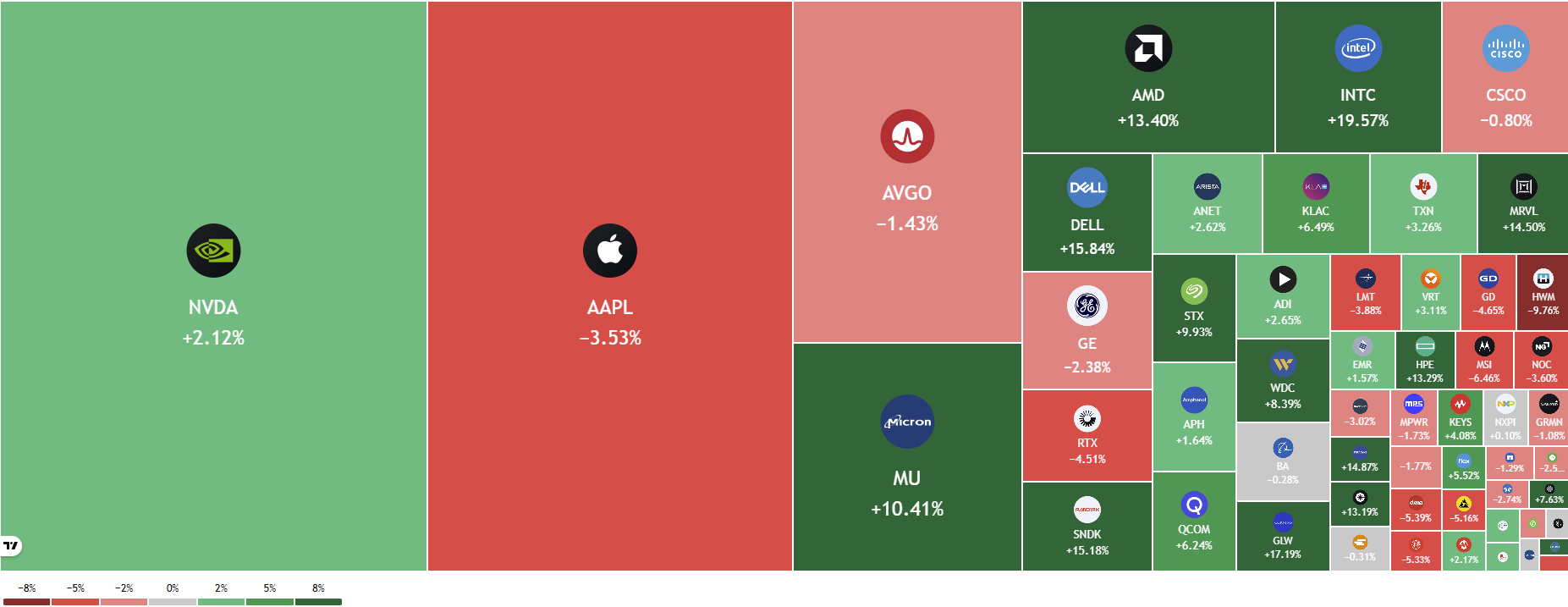
Intel Corporation (INTC) and Advanced Micro Devices (AMD) cleared multi-month resistance over the past week. Meanwhile, Nvidia (NVDA) gained just 2.12%, and Broadcom (AVGO) fell, pointing to rotation inside the AI chip trade.

Intel closed Wednesday at $106.24 and AMD at $521.10. Both eased in Thursday pre-market trading, and both still sit below their 2026 highs.

TradingView heatmap of the US electronic technology sector over the past week / Source: TradingView

Server CPU Shortage Hands Intel and AMD Pricing Power

The rally rests on a shift in how AI workloads consume compute. Training leaned on GPUs. However, agentic systems need CPUs to coordinate tasks and move data.

Analysts now model the GPU-to-CPU ratio falling from roughly eight to one toward parity. AMD projects a $120 billion server CPU market by 2030, against a base near $30 billion.

Supply confirms the demand. Intel backlogs run beyond six months, and EPYC processors are effectively sold out for 2026. Server CPU prices have climbed 10% to 35% per quarter.

Advertisement

Both companies also drew their own catalysts. DigiTimes reported Intel plans a 10% CPU price increase in October. Northland upgraded the stock to Outperform with a $120 target. AMD, meanwhile, pitched a $3 trillion addressable market at the Citi Global Technology Conference, and Piper Sandler initiated coverage at Overweight.

Intel Breaks Its Downtrend and Tests $103.49

Intel remained sideways in August, just under the $95 price of its $20 billion share offering. The stock broke its descending resistance trendline on September 4.

Volume and news arrived together. Intel gained 4.5% that Friday, then 9% on September 8. A filing showing Nvidia’s Intel stake is now worth $30 billion drove the second move.

Price currently sits inside the 0.382 Fibonacci retracement at $103.49. The swing high from July 15 at $109.30 marks the next resistance.

Advertisement
INTC daily chart / Source: Tradingview

The daily Relative Strength Index (RSI) turned first. It broke its own downtrend in early August, roughly a month before the price did. That line then held as support on August 24.

RSI now reads near 63 and rising. Notably, readings above 70 capped nothing during Intel’s April advance, when RSI peaked near 87.

INTC daily RSI chart / Source: Tradingview

AMD Clears Its Triangle and Flips $514.39 to Support

AMD traded inside a symmetrical triangle from mid-June until September 9. The stock closed at $521.10 that day and broke the upper boundary. The move cleared the previous swing high at $514.39, which should now act as support.

The $540 to $555 band is the next supply zone, sitting below the all-time high of $584.73.

AMD reported second-quarter data center revenue of $6.7 billion, up 107%. Third-quarter revenue is guided to roughly $13 billion. The stock went nowhere while earnings climbed, which compressed its multiple. Forward price-to-earnings now sits near 47, against a trailing figure above 130.

AMD daily chart / Source: Tradingview

Volume has broken its own May downtrend, although it remains below the peaks set earlier in the year.

The two setups differ. Intel is attempting a reversal and still trades 25% below its 52-week high. AMD is continuing an uptrend from 11% below its high.

Advertisement

Money flow data had already shown institutions preferring AMD to Nvidia. Risks remain, however, with Intel Foundry losing $2.089 billion last quarter and AMD gaming revenue down 31%.

The post 2 Chip Stocks Broke Out This Week. Neither Was Nvidia appeared first on BeInCrypto.

Source link

Advertisement
Continue Reading

Trending

Copyright © 2025