
Crypto World
Cooper Companies Stock Slammed On Two Surprising Earnings Pockmarks

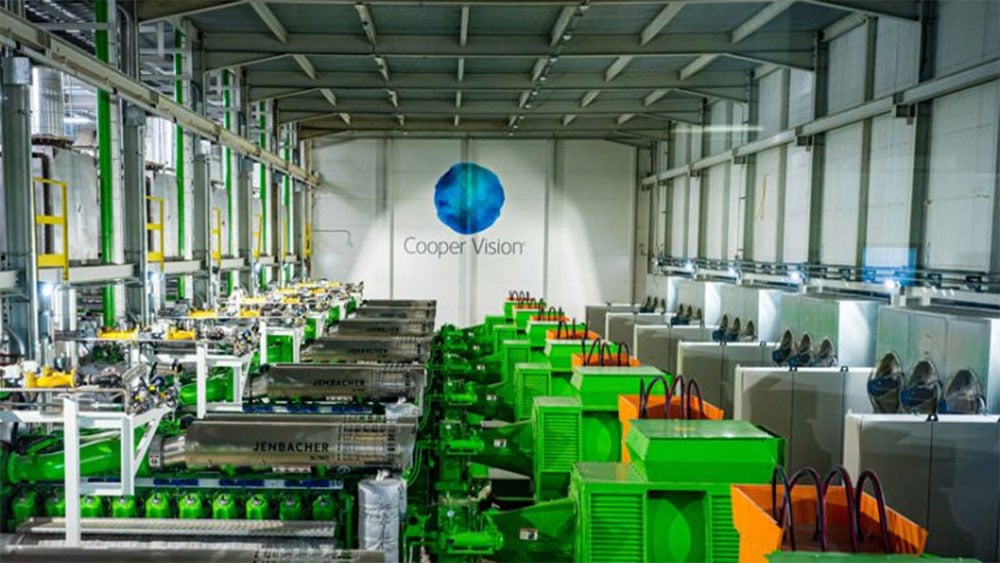
Investors hammered Cooper Companies (COO) on Thursday after the medtech’s fiscal third-quarter sales lagged Wall Street’s expectations, leading to a guidance cut. Specifically, the CooperVision segment — which sells contact lenses — missed expectations by 4.5%, William Blair analyst Steven Lichtman said in a report. The miss was due to destocking. Further, the company opted against selling its CooperSurgical business…
Copyright ©2026 Investor’s Business Daily, LLC. All rights reserved. 87990cbe856818d5eddac44c7b1cdeb8

Crypto World
MoneyGram unveils stablecoin-backed card as digital dollars move into everyday spending


The remittance giant is rolling out a Visa card that lets customers hold dollars and spend from a stablecoin-backed balance.
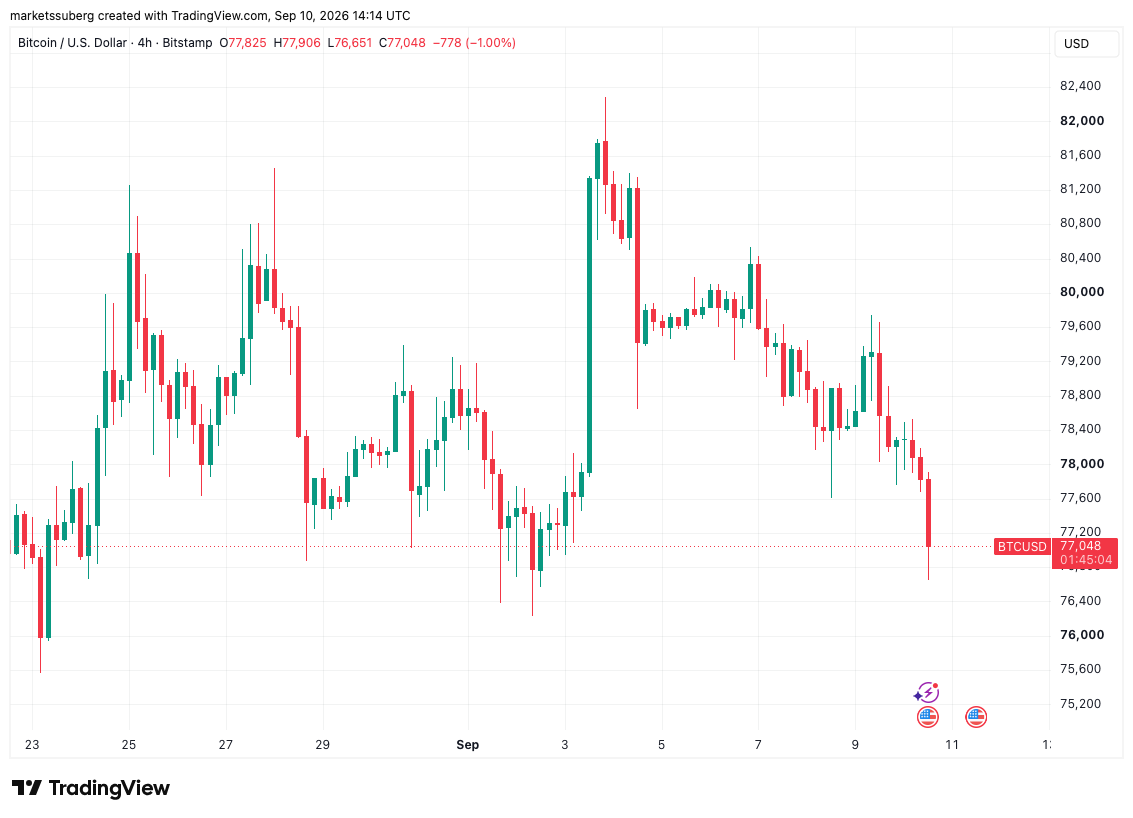
Bitcoin (BTC) dipped below $77,000 around Thursday’s Wall Street open as risk assets faced resurgent macro headwinds.
Key points:
- Bitcoin saw downside on the back of higher-than-expected US PPI inflation data, which hit 5.4% in August.
- Middle East strikes sent WTI crude oil over $100 per barrel for the first time since May.
- The US 30-year bond yield shrugged off a $6 billion buyback operation to hit its highest level since June 2007.
US bond yields surge despite $6 billion intervention
Data from TradingView showed BTC/USD on track for 2% losses on the day, following weakness in US equities.
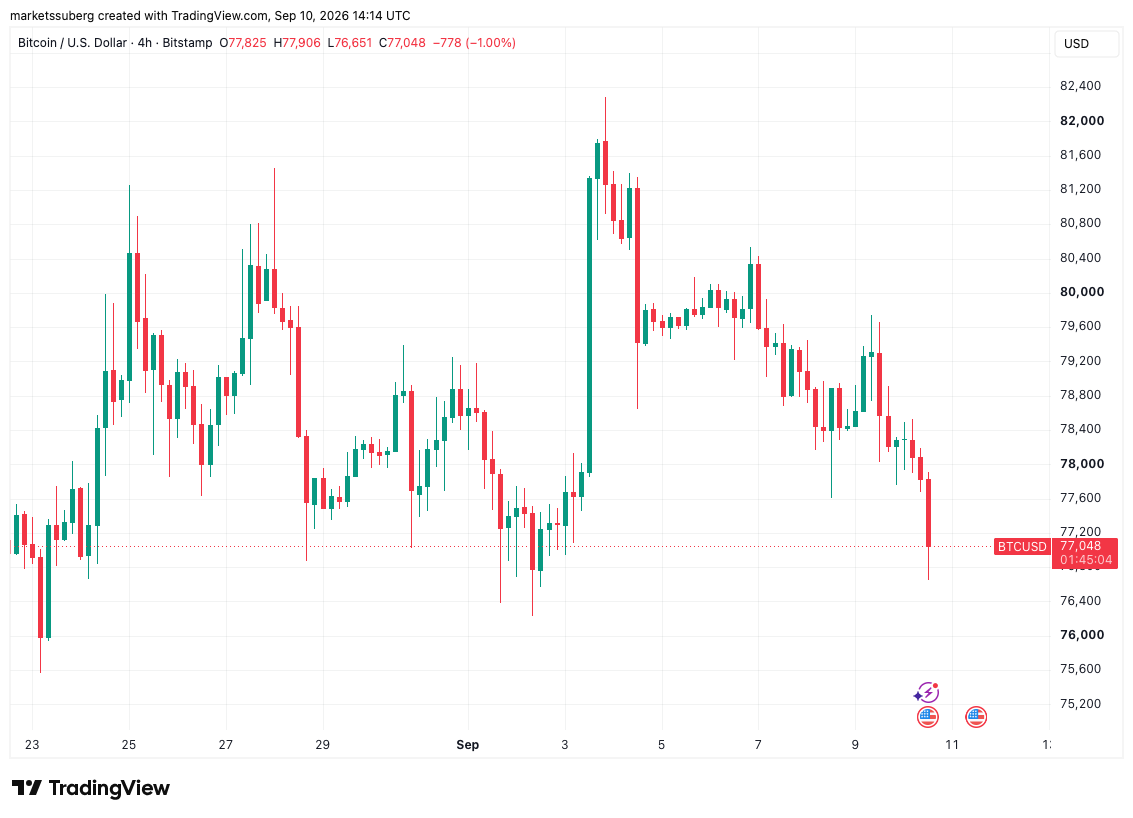
BTC/USD one-hour chart. Source: Cointelegraph/TradingView
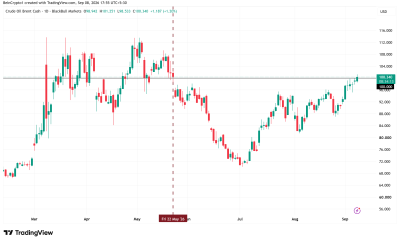
Ongoing escalation in the Middle East fueled a fresh surge in oil prices, with WTI crude passing $100 per barrel for the first time since May 21. Brent crude passed $105 per barrel on the day, nearing a new 16-week high.
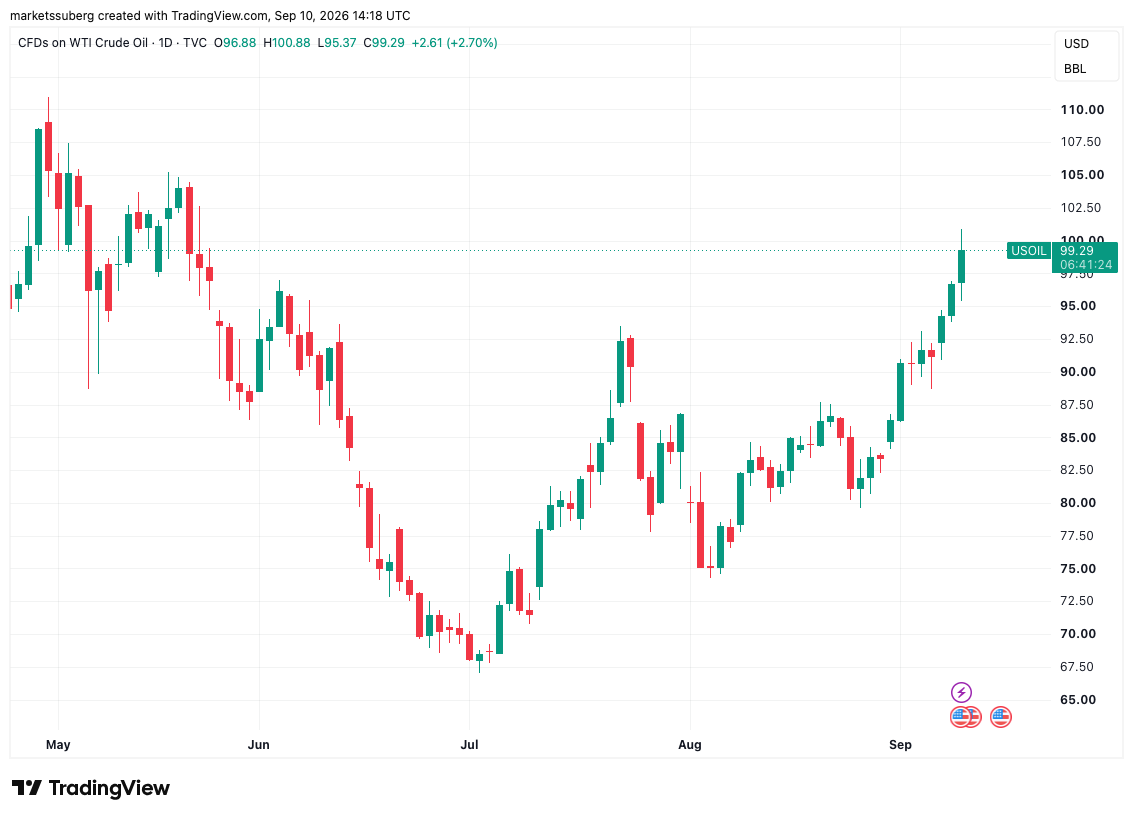
CFDs on WTI crude oil one-day chart. Source: Cointelegraph/TradingView
Against a backdrop of increasing inflation due to higher oil prices, markets also faced a fresh breakout in long-dated US bond yields. These came despite the Treasury executing the first of its stepped-up debt buyback operations and repurchasing $6 billion worth of Treasurys on Wednesday.
The US 30-year yield reached 5.353% on the day, a level last seen in June 2007, while the 10-year yield hit its highest levels since November 2023 at 4.924%.
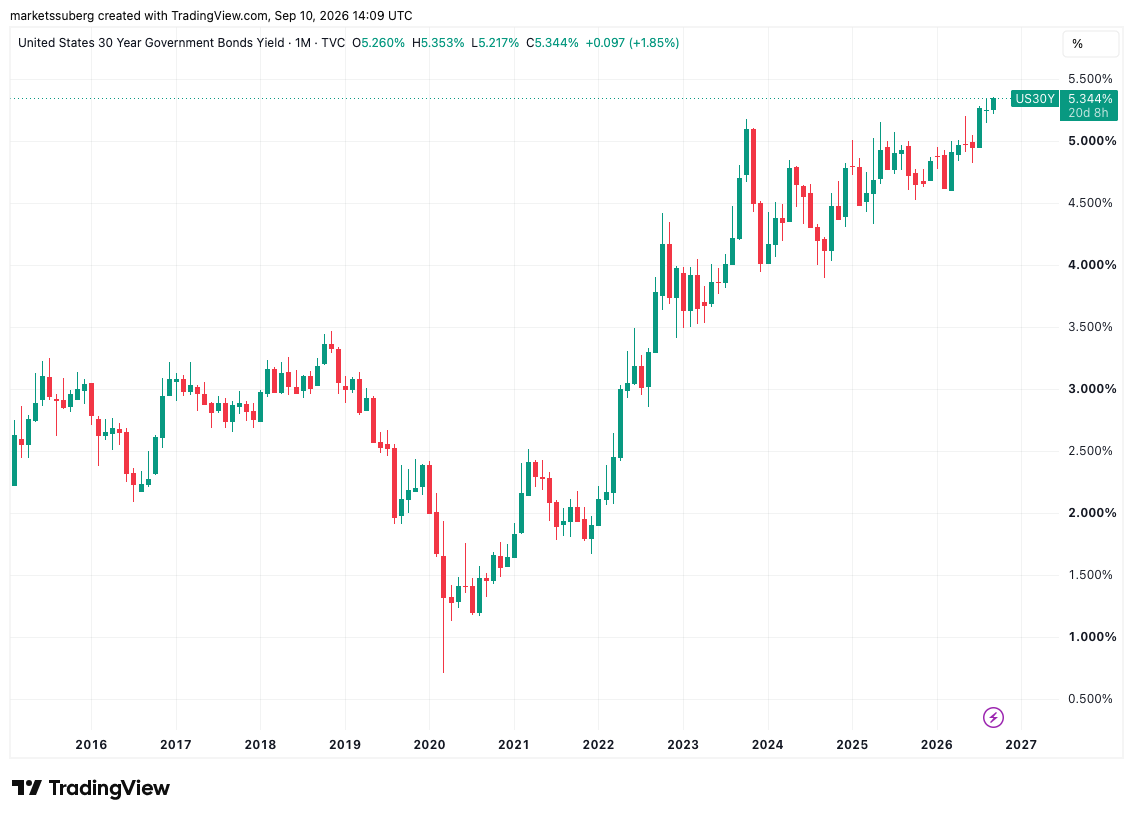
US 30-year bond yield one-month chart. Source: Cointelegraph/TradingView
Commenting, trading resource The Kobeissi Letter warned of knock-on effects from high borrowing costs for both government and consumers.
“The bond market is quite literally fighting the US Treasury,” it wrote in a reaction on X.
Hot US PPI data adds to crypto’s macro headache
The August print of the Producer Price Index (PPI) underscored increased inflation, coming in at 5.4% year-on-year, 0.1% higher than expected. July’s headline PPI print was likewise revised higher.
Related: Bitcoin sell-side risk returns to rare lows as $80K sellers fade from view
“The index for final demand less foods, energy, and trade services rose 0.3 percent in August after moving up 0.4 percent in July. For the 12 months ended in August, prices for final demand less foods, energy, and trade services advanced 4.7 percent,” an official news release from the US Bureau of Labor Statistics (BLS) stated.
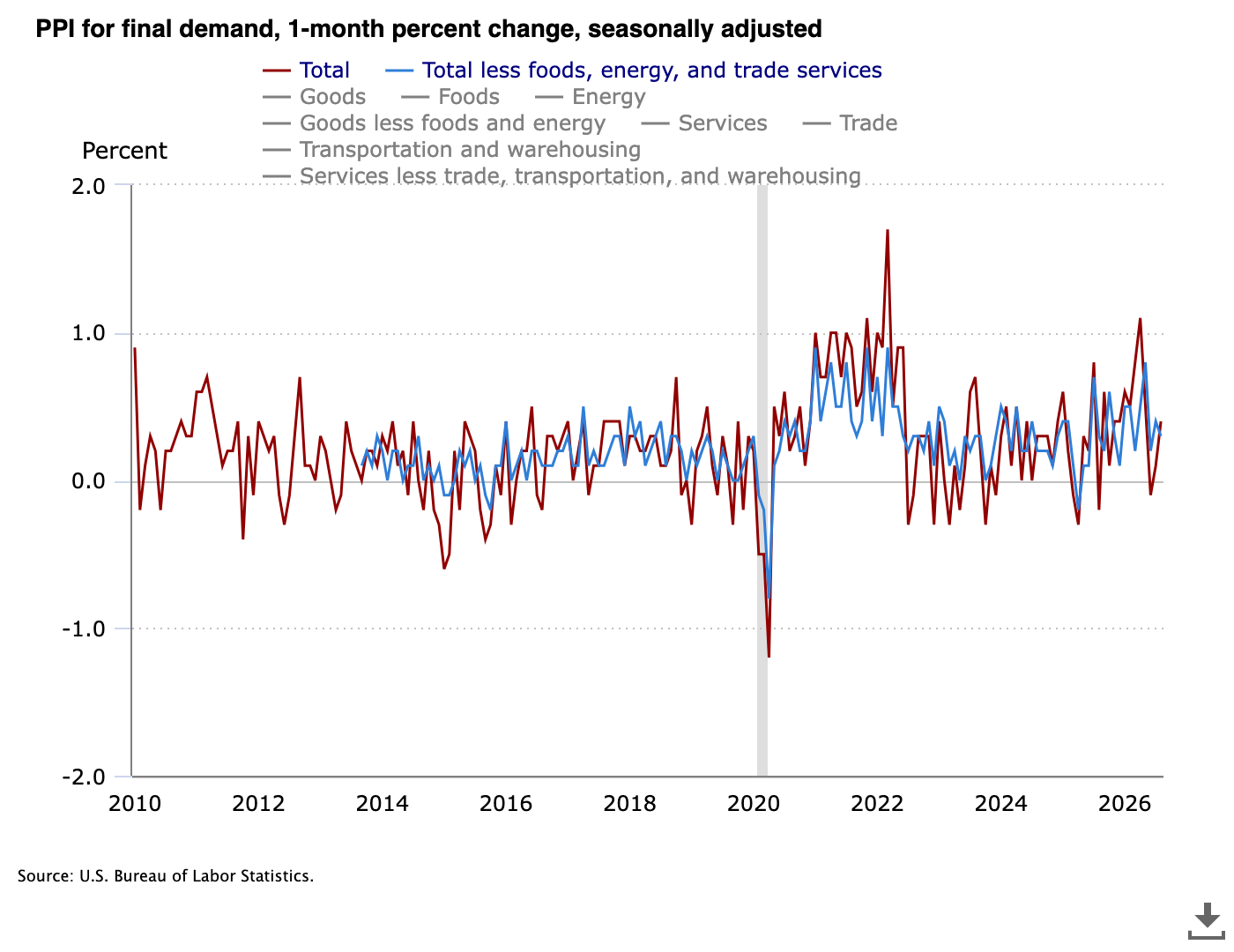
US PPI one-month % change. Source: BLS
Market expectations of interest-rate hikes from the Federal Reserve jumped on the data. CME Group’s FedWatch Tool showed the odds of a 0.25% hike at the Fed’s Sept. 16 meeting at 69.8% at the time of writing versus 61.2% the day prior.
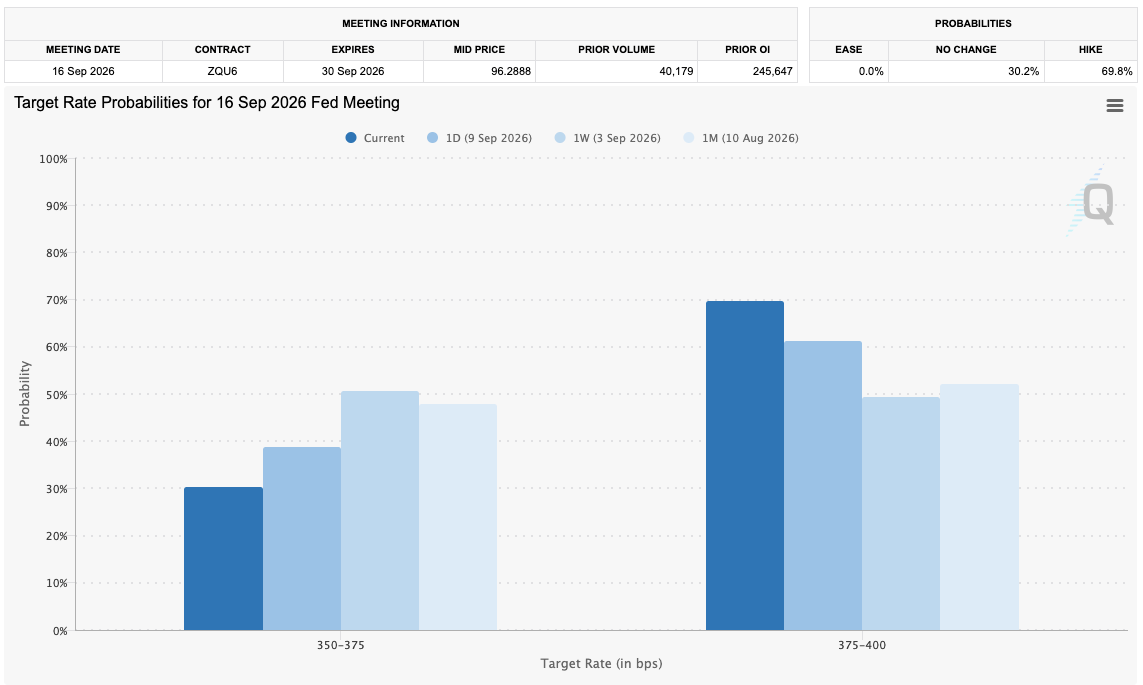
Fed target-rate probability comparison for September FOMC meeting (screenshot). Source: CME Group
As Cointelegraph reported, concerns over Fed policy tightening had already increased on the back of stronger nonfarm payrolls data. Friday will see the release of another key US inflation report, the Consumer Price Index (CPI), which will form the last major inflation print before the Fed rate decision.
On Thursday, the European Central Bank enacted its own 0.25% hike, the second such move in 2026.


Just over a quarter of Bitcoin Depot’s more than 9,200 kiosks have been sold for less than $1 million, court records show.
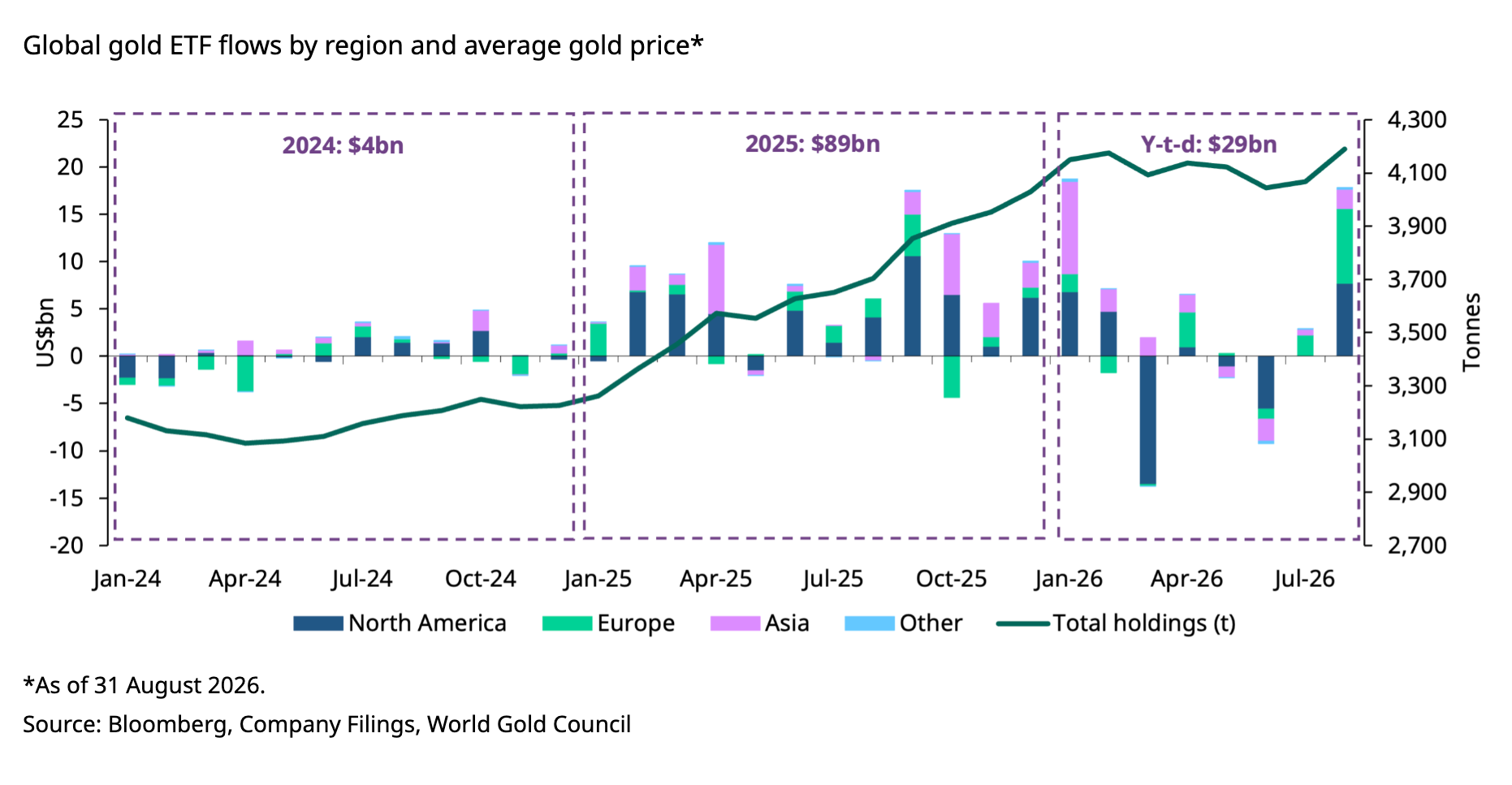
Global gold exchange-traded funds (ETFs) pulled in $18 billion in August, the second-largest monthly inflow on record, lifting collective holdings to an all-time high of 4,189 tonnes.
The World Gold Council published the figures this week. Total assets under management (AUM) rose 16% month over month to $615 billion, helped by a higher gold price.
Western Buyers Return to Gold in Force
European funds drove the month with $7.9 billion of buying, their strongest on record, according to Council data. The UK supplied $4.4 billion of that total, its second-largest month ever. France added $1.5 billion, a national record.
North American funds attracted $7.7 billion. This marked their third-largest monthly haul. Demand stayed muted early on before accelerating during the week of August 17, when funds absorbed roughly $4 billion in five trading days. This came around the same time as the Treasury expanded its debt buyback.
That burst mattered for the annual picture. It offset the region’s record $13 billion outflow in March and pushed North American flows back into positive territory for the year.
Asian funds added $2 billion, their best month since February. China again led the region, where stabilising local prices drew investors back. The country’s central bank has extended its own buying streak.
Global ETF flows had already turned higher in July. Year to date, global inflows total $29 billion, or 160 tonnes.

The Council tied the surge in inflows to three likely drivers. It cited US intervention to support the yen on July 31, the Treasury’s August 19 buyback move, and price momentum after gold cleared key technical levels.
Follow us on X to get the latest news as it happens
Traders Pile Back Into the Metal
Activity across the wider gold market rebounded. Average daily trading volumes climbed 21% month over month to $430 billion, with gains in every major segment.
Gold ETF trading volumes jumped 83% to $8.7 billion per day. North American-listed funds accounted for more than 73% of that activity.
Positioning followed. COMEX net long positions rose 39%, or 212 tonnes, to 753 tonnes. Managed money added 96 tonnes, taking its net longs to 470 tonnes.
Now, September data will show whether Western buyers keep adding at August’s pace.
Subscribe to our YouTube channel to watch leaders and journalists provide expert insights
The post Gold ETFs Just Had Their Second-Biggest Month Ever With $18 Billion Inflow appeared first on BeInCrypto.


Crypto for Advisors: Hyperliquid and the future of finance
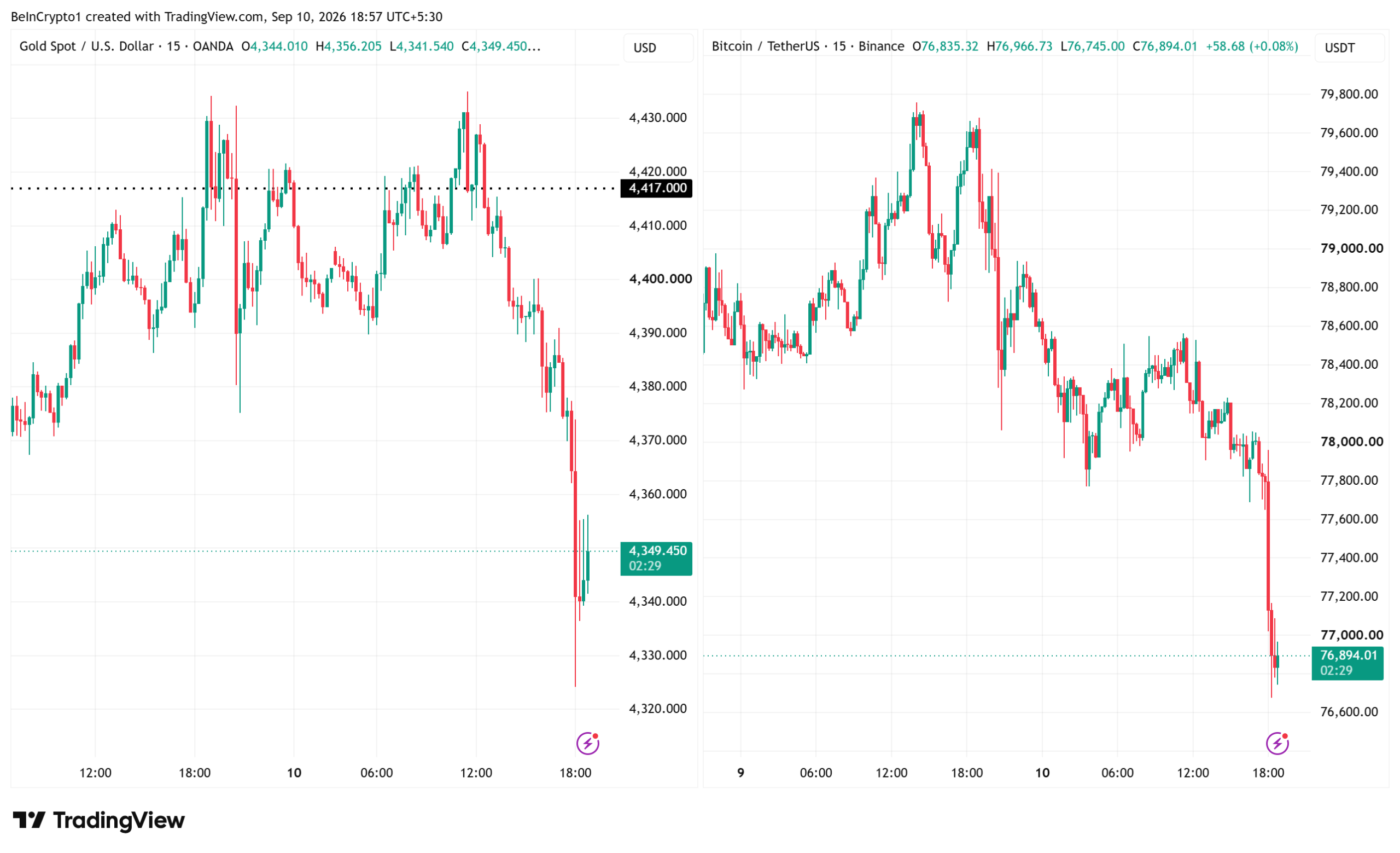
Another hot US inflation report arrived on Thursday, September 10, and all financial markets took a hit, including Gold, Bitcoin, and the S&P 500.
It seems like even traditional safe-haven assets like gold are not acting as an inflation hedge. The bond market recently delivered a reminder that inflation hedges can struggle when rising prices also mean higher interest rates.
Gold’s Inflation Trade Breaks
US producer prices rose 0.4% in August, matching forecasts. The annual rate reached 5.4%, slightly above the 5.3% expected.
Gold is supposed to benefit when inflation erodes the value of cash. Instead, spot XAU/USD fell more than 1%, dropping toward $4,350 after trading above $4,400.
For forex traders, that move hurts. A standard gold lot represents 100 ounces. A $100 drop means roughly $10,000 in losses on a one-lot long position, excluding trading costs.
The real damage came from bonds. The 10-year Treasury yield pushed above 4.9%, its highest since October 2023. The 30-year reached roughly 5.35%.
Higher yields make cash and government debt more attractive. Gold pays no yield. Bitcoin pays no yield either.

CME FedWatch pricing moved toward a 70% chance of a September rate hike after the data, up from roughly 62%.
Why Hot Inflation Hurt Gold
The detail inside the report mattered. The Bureau of Labor Statistics said: “Prices for final demand goods advanced 1.1 percent, and the index for final demand services increased 0.1 percent.”
More than three-quarters of the goods increase came from energy. That made the report look more like an energy shock than a broad inflationary surge.
The dollar also strengthened as rate-hike bets rose, adding another headwind for dollar-priced gold.
BeInCrypto had warned earlier this week that Treasury yields near 5% could start competing directly with Bitcoin and gold for institutional capital.
The next test comes Friday with US CPI (Consumer Price Index). Another hot reading would put more pressure on the Fed to hike — and test how far “inflation hedges” can fall when inflation itself becomes the problem.

The post Gold and Crypto Fall as Hot US Inflation Rattles Markets appeared first on BeInCrypto.

The latest monthly list of new buys by the best mutual funds, which comes out on Friday, puts a dazzling spotlight on Lumentum (LITE). These savvy money managers scooped up an eye-catching $13.11 billion worth of Lumentum stock. The optical and photonics giant plays a key role in powering the infrastructure behind artificial intelligence, cloud computing, and next-generation communications. Demand…
Copyright ©2026 Investor’s Business Daily, LLC. All rights reserved. 87990cbe856818d5eddac44c7b1cdeb8
Nasdaq has agreed to invest $100 million in Kraken parent Payward as the two companies expand their work on tokenized equities, market surveillance and blockchain-based settlement infrastructure.
Summary
- Nasdaq Ventures will invest $100 million in Kraken parent Payward, valuing the company at $21 billion.
- Payward will deploy Nasdaq’s market surveillance technology across its crypto, equity, futures, options and tokenized equity venues.
- Nasdaq and Payward expect Nasdaq Equity Tokens to launch in the second quarter of 2027.
- The companies began working together in March to connect regulated equity markets with blockchain networks through the xStocks ecosystem.
Nasdaq said Thursday that its strategic investment arm, Nasdaq Ventures, had agreed to make the investment as part of an expanded relationship with Payward. The deal values the privately held company at $21 billion, Bloomberg reported, citing people familiar with the matter.
The companies are working toward a second-quarter 2027 launch for Nasdaq Equity Tokens, or NETs, while Payward will deploy Nasdaq’s market surveillance technology across trading venues covering crypto, equities, tokenized equities, futures and options.
The investment builds on a partnership announced in March, when Nasdaq and Payward began developing infrastructure designed to connect regulated equity markets with blockchain networks through Payward’s xStocks ecosystem.
Nasdaq investment values Payward at $21 billion
Nasdaq Ventures invests in technology and market infrastructure that the exchange operator sees as relevant to the development of global capital markets. Its $100 million Payward investment gives the relationship a financial component alongside the companies’ existing technology work.
The reported $21 billion valuation is slightly above the $20 billion level Payward secured during an $800 million financing completed before its confidential initial public offering filing. As crypto.news previously reported, Payward’s planned IPO has since been pushed back until at least the second quarter of 2027.
Payward confidentially submitted a draft S-1 registration statement to the U.S. Securities and Exchange Commission in November 2025. The company has not publicly disclosed a proposed ticker, share price, number of shares or exchange for a potential listing.
Its latest financial results showed adjusted revenue of $508 million for the second quarter, up 17% from a year earlier. Adjusted EBITDA fell to $23 million from $80 million, while total platform transaction volume declined 18% to $310 billion.
Payward ended the quarter with 6.6 million funded accounts and $40 billion in assets on its platforms. Asset-based and other revenue represented 60% of total revenue, compared with 55% a year earlier, according to the company’s second-quarter results.
Nasdaq Equity Tokens target Q2 2027 launch
Nasdaq and Payward expect NETs to launch in the second quarter of 2027, advancing a project first announced earlier this year.
The initial partnership called for an equities transformation gateway connecting Nasdaq’s regulated market infrastructure with Payward’s xStocks system. Under the design, tokenized equities could move between permissioned financial markets and supported blockchain networks in eligible jurisdictions while retaining the rights attached to the underlying securities.
Nasdaq’s model is centered on issuer-sponsored tokens, with the company seeking to preserve issuer control, governance rights and existing market protections when shares are represented on blockchain infrastructure.
Payward’s xStocks framework provides the blockchain component of the planned system. When the partnership was announced in March, xStocks had recorded more than $25 billion in transaction volume, including over $4 billion settled onchain, and had more than 85,000 unique holders.
The platform has continued expanding since then. Payward partnered with GTN in July to take xStocks beyond U.S. equities, starting with Hong Kong-listed shares before planned expansion into markets including the UK, Europe and South Korea, subject to local regulatory approvals. At that point, xStocks had passed 500 tokenized assets and $37 billion in transaction volume.
Nasdaq said the next phase of its Payward partnership will focus on the global distribution, trading and post-trade systems needed to support NETs.
“More than $2 trillion of stock trades run through the U.S. clearing system every day,” Payward co-CEO Arjun Sethi said.
Sethi said buys and sells in the U.S. system net down by roughly 98%, leaving clearing houses to hold between $10 billion and $20 billion of collateral while trades await settlement. The move from two-day to one-day settlement in 2024 released $3 billion, he added.
“Onchain settlement removes the wait,” Sethi said. “The next phase of the collaboration is planned to advance Nasdaq Equity Tokens onto rails that do not close, with shareholder rights intact.”
Payward will use Nasdaq surveillance across trading venues
The expanded agreement gives Nasdaq another role within Payward’s trading infrastructure through its market surveillance technology.
Payward plans to deploy the system across crypto, conventional equities, tokenized equities, futures and options. Nasdaq said the technology will support market integrity and investor confidence as Payward operates across more asset classes.
Payward has spent much of 2026 expanding beyond its core spot crypto exchange business. The company completed its acquisition of Bitnomial in May, giving Kraken access to a regulated U.S. derivatives structure that includes a Futures Commission Merchant, Designated Contract Market and Derivatives Clearing Organization.
The transaction followed an agreement to buy Bitnomial for up to $550 million in cash and stock. The completed Bitnomial acquisition gave Payward control of the three Commodity Futures Trading Commission registrations needed to operate trading, brokerage and clearing services within the same group.
Kraken has separately expanded the uses available for xStocks. Eligible clients outside the United States can use selected tokenized stocks and exchange-traded funds as collateral for leveraged trades, allowing qualifying users to maintain tokenized equity exposure while supporting futures or margin positions.
Payward has acquired Backed Finance, the company behind the issuance infrastructure used for xStocks, while its wider portfolio now includes Kraken, NinjaTrader, Breakout and CF Benchmarks.
Nasdaq and Payward began tokenization work in March
The relationship between the companies started in March with plans to create a gateway between regulated equity markets and permissionless blockchain networks.
Under that framework, Payward Services was set to provide know-your-customer and anti-money laundering onboarding for users accessing Nasdaq Equity Tokens through its platform in eligible jurisdictions. Payward’s infrastructure was expected to serve as an initial settlement layer for NET transactions where the company held the necessary registrations or approvals.
Nasdaq initially said its equity token design and related distributed-ledger services would begin operating in the first half of 2027. The latest announcement narrows the expected NET launch to the second quarter.
The work comes as xStocks develops infrastructure intended to move tokenized equities beyond simple spot trading. In March, the platform introduced xChange, an onchain execution layer supporting more than 70 tokenized equities across Ethereum and Solana. At launch, the system had recorded $3.5 billion in onchain volume and $25 billion in overall trading volume.
Each supported xStock was backed 1:1 by an underlying security held in custody, while xChange used atomic settlement so a trade either completed at its quoted terms or did not execute.
Nasdaq President Tal Cohen said the expanded relationship with Payward was based on the exchange operator’s view that the company could play a role in building infrastructure for capital and assets to move across financial systems.
“This partnership advances our work on Nasdaq Equity Tokens and helps build a more connected financial system while preserving the trust, transparency and integrity that underpin capital formation,” Cohen said.
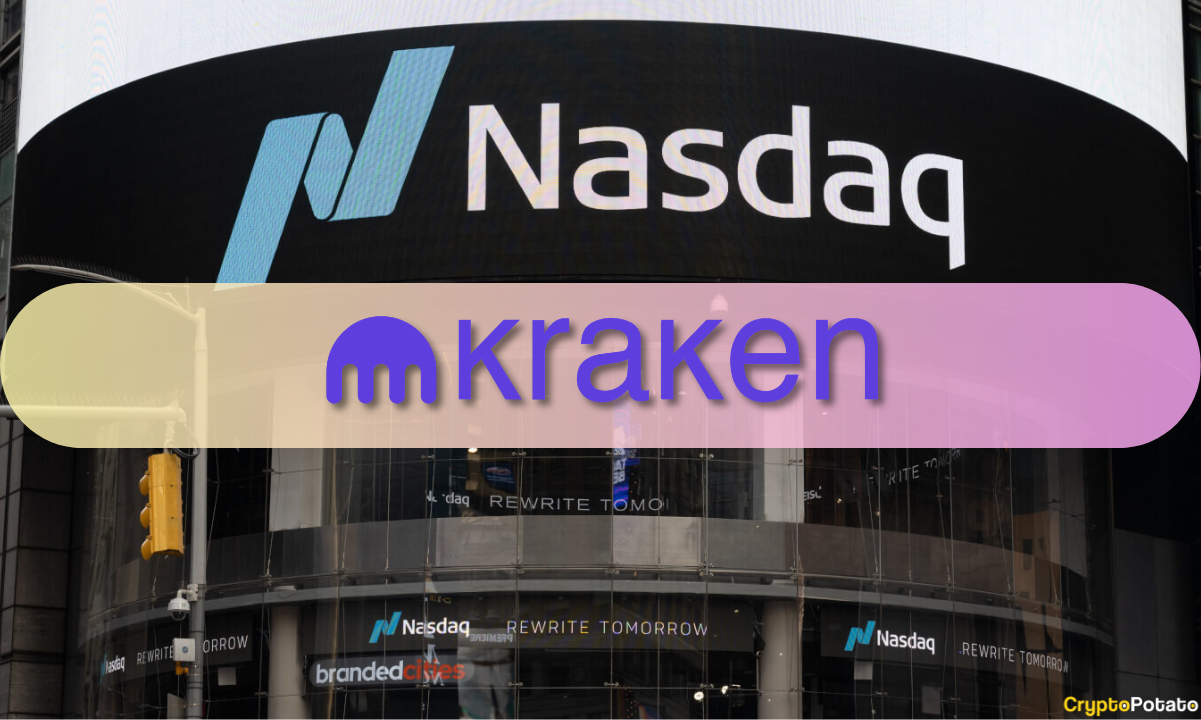
Nasdaq (NDAQ) has agreed to invest $100 million in Payward, the parent company of Kraken, through its venture arm. The investment deepens a partnership to build, distribute and trade tokenized stocks, targeting a second-quarter 2027 launch for the tokens.
The investment values Payward at $21 billion, according to Bloomberg, which first reported the deal. It expands a partnership the two firms first announced in March to develop tokenized equities, under which Kraken’s xStocks product would power a permissionless blockchain layer for Nasdaq’s issuer-sponsored equity tokens.
Payward will also adopt Nasdaq’s market surveillance technology across its crypto, equities, tokenized equities, futures and options venues.
Settlement Without the Two-Day Wait
Deutsche Börse paid $200 million for a stake that valued Payward at $13.3 billion in April, the same month Kraken began offering more than 11,000 US stocks and ETFs through its FINRA-regulated brokerage.
The exchange is moving into stocks, derivatives, and other traditional financial products beyond cryptocurrency, CNBC reported. xStocks, its tokenized-equity product, runs on public blockchains including Ethereum and Solana.
“More than $2 trillion of stock trades run through the U.S. clearing system every day. Buys and sells net down by about 98 percent, and the clearing house holds $10 billion to $20 billion of collateral against what is left while it waits a day to settle. Cutting that wait from two days to one in 2024 released $3 billion. Onchain settlement removes the wait,” said Arjun Sethi, Co-CEO of Payward.
Advancing Nasdaq Equity Tokens
Within Nasdaq, the work is led by its Digital Liquidity Networks unit, which builds always-on market infrastructure. The partnership “advances our work on Nasdaq Equity Tokens and helps build a more connected financial system while preserving the trust, transparency and integrity that underpin capital formation,” said Tal Cohen, President of Nasdaq.
Nasdaq introduced the equity-token framework earlier this year and said the tokens are designed to keep issuer control and shareholder rights intact. The next phase will develop the global distribution, trading, and post-trade capabilities behind them, the company said.
Holders of tokenized assets do not have outright ownership of the underlying shares, CNBC noted, and what such tokens confer is contested, a gap now playing out in a public dispute between Robinhood and AMC Entertainment over Robinhood’s tokenized AMC shares, which the studio calls a synthetic market that gives economic exposure without shareholder rights.
The post Nasdaq Ventures to Invest $100M in Kraken Parent Payward at $21B Valuation appeared first on CryptoPotato.
Crypto World
Kalshi launches ‘perps’ for gold and silver following CFTC approval, expanding futures offerings
Kalshi has won approval to list perpetual futures tied to precious metals gold and silver in the U.S., in the latest development as the company seeks to grow its trading offerings beyond prediction markets.
Originally filed in July, the Commodity Futures Trading Commission — which regulates derivatives contracts — approved the listing of the perpetuals this week.
The new markets for the contracts launched on Thursday on the site.
Kalshi first received approval to list perpetual futures tied to cryptocurrencies in late May, bringing the novel asset class with $90 trillion in annual volume in 2025 onshore to the U.S. for the first time. Since then, the contracts have done $44 billion in notional volume, according to the platform’s website.
Udesh Jha, chief risk officer at Kalshi Klear, the exchange’s clearing house, said the company moved to have this be their next asset to offer perpetual futures for due to high interest in the commodities.
“Metals, especially gold and silver, have a story to tell because of inflation,” he said.
That demand has been reflected in Kalshi’s commodity-related event contracts, which include metals and oil. Volume on the contracts has surpassed $400 million in trading volume in seven months, the company announced on Tuesday, half the time it took its crypto event contracts to reach the same mark.
Perpetual futures, colloquially known as “perps,” are futures-style contracts that have no expiration and do not require an investor to own the underlying asset. Instead, contracts track the price of an asset, with a funding mechanism to keep the contract in-line with the market price.
In addition to perps on precious metals, Kalshi is seeking approval for contracts tied to U.S. equities, industrial metal copper and currencies in August. The green light by the CFTC to list perps tied to precious metals is the first non-crypto related contract that has been approved.
Following the launch of perps, traditional futures exchanges like CBOE and CME Group saw their stocks tumble on fears that the new futures type could disrupt their existing business models. CME has even sued the CFTC to block the approval of perps in the U.S., under a belief that the agency improperly permitted the contracts.
But Jha said the early success of Kalshi’s perps offerings is because of its regulated nature.
“It all goes back to the regulated platform,’ he said. “Doing it the right way, a way with proper risk controls… Unregulated platforms, they have always hit a ceiling.”
Disclosure: CNBC and Kalshi have a commercial relationship that includes customer acquisition and a minority investment.
US wholesale inventories surge in July

MoneyGram unveils stablecoin-backed card as digital dollars move into everyday spending

Ronaldo’s Al-Nassr target Asian Champions League glory in Saudi title bid | Football News


-
 Tech2 days ago
Memory prices are slowing because buyers ran out of money
-
 Crypto World2 days ago
Bitcoin price risks $76K drop as $78K support weakens
-

 Business14 hours ago
Micron Stock Climbs Above $1,031 as AI Memory Crunch and a $50 Billion Outlook Fuel the Rally
-

 Business15 hours ago
AMD Stock Climbs After Management Lifts 2027 Data Center Outlook Toward $70 Billion in AI Sales
-
 Crypto World2 days ago
Ethereum price stalls below $2,500 as ADX drops to 11
-

 Crypto World2 days ago
Robinhood Stock: How To Take Advantage With Reduced Risk
-

 NewsBeat2 days ago
What went right this week: an ‘historic’ fall in violent crime, plus more
-
 Crypto World16 hours ago
Bitcoin price risks $70K if $78K neckline breaks
-
 Crypto World1 day ago
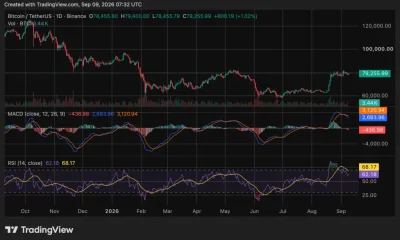
Bitcoin price holds near $79K as cycle drawdowns narrow
-
 Sports2 days ago
Phones confiscated, players sent home: Pakistan’s England tour turmoil revives memories of Mohammad Amir, Salman Butt and Mohammad Asif’s 2010 Lord’s spot-fixing scandal | Cricket News
-

 NewsBeat2 days ago
England up in reading, maths and science rankings as Scotland and Wales dip
-

 Business2 days ago
Meta debuts long-awaited personal AI agent, Muse
-
 Crypto World2 days ago
Brent Crude Oil Moves Above $100 for the First Time in 3 Months
-
 Crypto World2 days ago
Intel Stock Jumps 9% on Chip Price Hike Report, US Stake Gains $36 Billion
-

 Crypto World2 days ago
Pump Fun and Kraken delete Hunter Biden $LAPTOP promotion
-
 Crypto World2 days ago
Visa expands stablecoin card network to 160 programs
-

 Business2 days ago
Egyptian TV Presenter Sarah Khalifa, 11 Others Sentenced To Death In Major Drug Trafficking Case In Cairo
-

 Business2 days ago
ServiceTitan, Inc. (TTAN) Q2 2027 Earnings Call Transcript
-
 Tech2 days ago
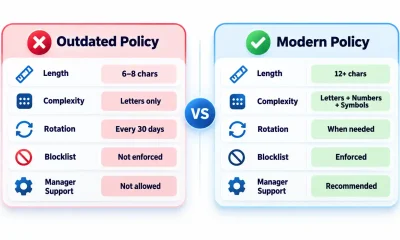
Strong Password Policy and Password Manager Guide
-
Business2 days ago
Xometry at Goldman Sachs Communacopia + Technology Conference 2026: growth, AI and Siemens
You must be logged in to post a comment Login