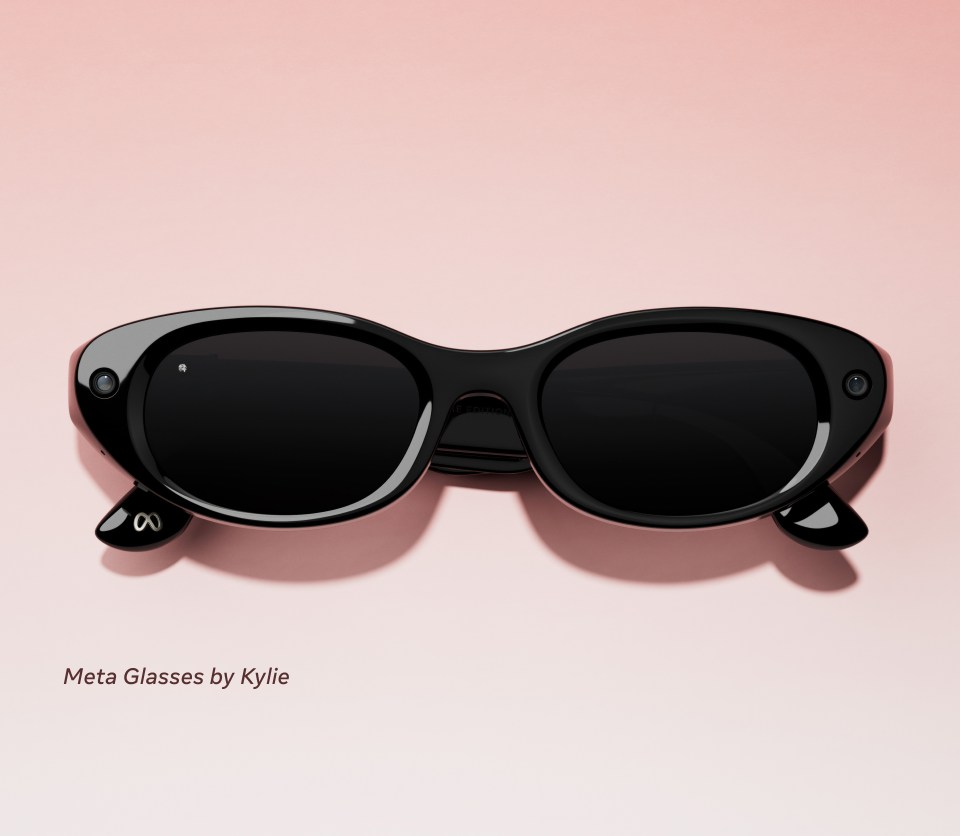
Several countries are planning to regulate smart glasses over growing concerns around nonconsensual recording and harassment.
Prosecutors in Paris have launched a criminal probe into suspected sexual harassment committed using smart glasses, Reuters reported earlier today (18 September), citing local officials.
According to the publication, at least one probe has been launched following complaints over users filming women nonconsensually using smart glasses to post to social media – a trend that has risen in popularity since the launch of Meta’s AI glasses earlier this summer.
The French prosecutors, however, did not name a company or brand in their response to Reuters’ questions about the investigation. SiliconRepublic.com has reached out for further information.
Advertisement
The French data protection authority CNIL further told Reuters that it had received fewer than 10 complaints regarding smart glasses being used in the workplace.
While smart glasses are not new technology, Meta’s growing portfolio has contributed to a steep rise in global sales, according to a Counterpoint report from February.
AI-equipped smart glasses accounted for 88pc of total shipments in the sector as of H2 last year, while Meta held more than 80pc of global smart glasses shipments – AI-powered and otherwise.
The social media giant sold more than 7m of its AI glasses made in partnership with the French-Italian eyewear brand Essilor last year. The two were also reportedly in discussions to double production of their glasses to at least 20m by the end of this year to meet the “unprecedented” demand for their products, mainly in the US.
Advertisement
The sharp growth in sales and popularity of these types of glasses comes despite huge public backlash against the technology, with people highlighting issues around covert recording and sexual harassment.
This year, in particular, has seen a rise in social media videos of men approaching unsuspecting women while wearing camera-fitted glasses, and recording them without consent to post to social media.
Some wearers have also tampered with an indicator light on the Meta devices to hide the fact that glasses were recording. Although Meta updated the glasses to address the issue, many still say it is hard to discern whether a recording indicator is active or not.
The backlash has led to a number of UK cinemas considering banning smart glasses, while a German consumer advocacy group filed a complaint against Meta and other companies that sell these devices in the country.
Advertisement
Australia, meanwhile, is considering banning camera-equipped smart glasses in the workplace, while Norway said it is also planning to regulate their use.
Don’t miss out on the knowledge you need to succeed. Sign up for the Daily Brief, Silicon Republic’s digest of need-to-know sci-tech news.
One of the hottest infrastructure companies in AI today is a startup established nearly seven years ago, tracing its roots to work its founders were doing before the cloud was a thing.
Temporal, based in Bellevue, Wash., announced this week that it raised $550 million at a $12.55 billion valuation, led by Lightspeed, more than doubling its $5 billion valuation in February. Its software is used by OpenAI, Nvidia, Netflix, Snap and JPMorgan Chase, among more than 4,300 paying customers, and its annualized revenue run rate recently passed $250 million.
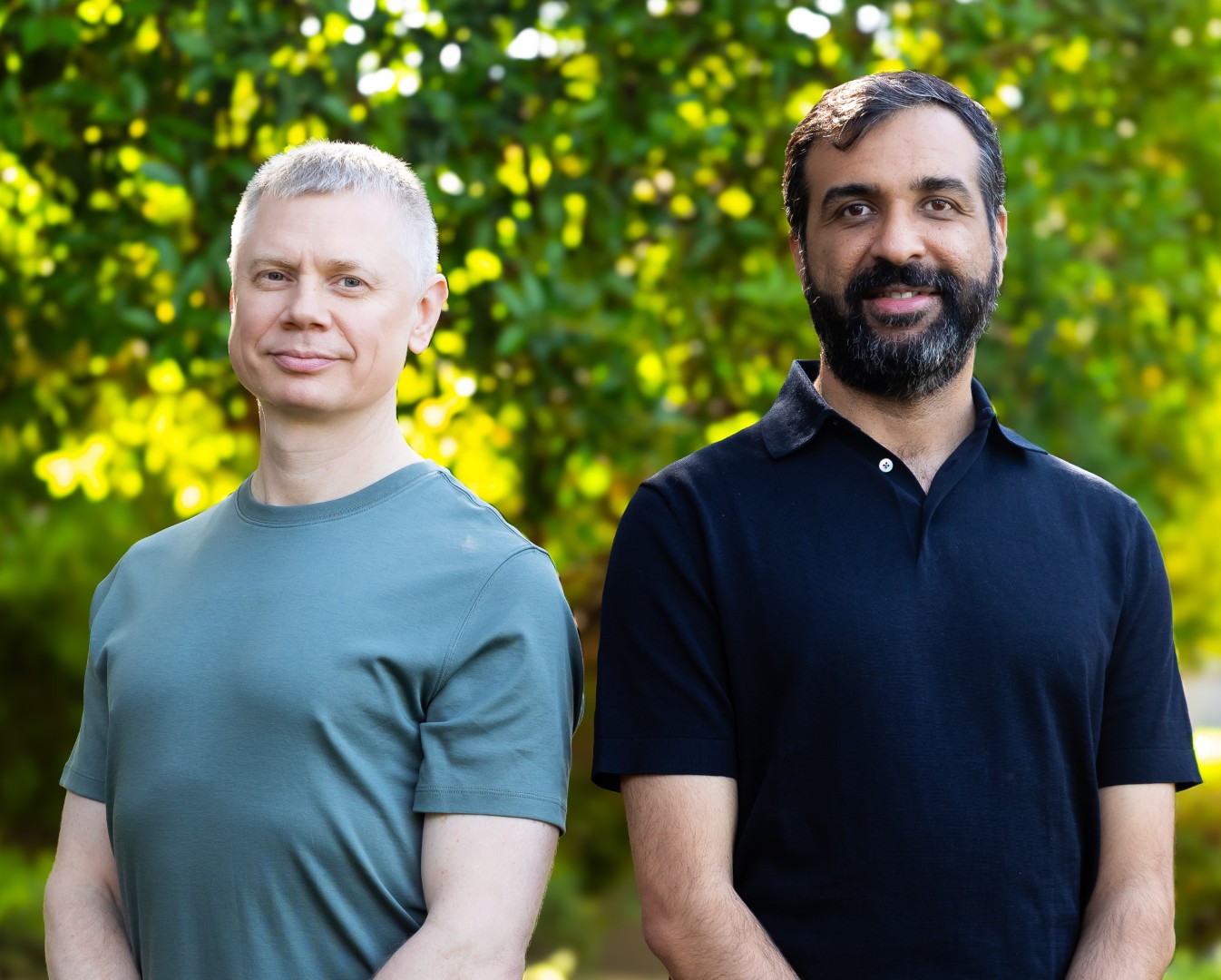
It might seem like an overnight success, but it’s not, said Samar Abbas, Temporal’s co-founder and CEO, speaking along with co-founder and CTO Maxim Fateev in an interview with GeekWire this week. They first met at Amazon in 2010, where they worked on Simple Workflow Service, an AWS product for coordinating long-running tasks across distributed systems.
“We’ve been hacking away at this problem for 20-plus years now,” Abbas said.
The problem: software that runs in many steps across many machines breaks in the middle, and picking up where it left off is far harder than it sounds. Their answer, for which they coined the phrase “durable execution,” records each step as it completes, so a program survives a crash or a failed outside service, and finishes rather than starting over or leaving the work half-done.
Advertisement
“It’s core infrastructure. You really cannot go and build it very fast,” Fateev explained. “It took us years and years to get to the point where we knew what we were doing.”
Advertisement
It’s also especially well-suited for AI agents, which is why a company built for the cloud era is suddenly at the center of the AI boom. Agents can sometimes run for hours or days, calling models and outside tools that fail routinely. Keeping everything together regardless is Temporal’s role.
“Every Snap story is a Temporal workflow,” Abbas said. “Every time you place an order at a Taco Bell, all of the steps get orchestrated on top of our platform. Some of the most popular coding agents out there are using us as an outer harness. It’s a pretty exciting time for us, from that perspective.”
Pacific Northwest roots: Founded in October 2019, Temporal employs 570 people, roughly double from a year ago, with 89 in the Seattle area. The company is fully remote. Its Bellevue office, previously occupied by OpenAI, is used mainly for meetings rather than daily work.
But the founders describe the region as instrumental to the company’s success. Both have been in the Seattle area for more than 26 years, and they’ve built their entire professional careers here.
Advertisement
Abbas spent 11 years at Microsoft before joining the Simple Workflow Service team at AWS in 2010, then returned to Microsoft and wrote the open-source library that became Azure Durable Functions, leaving for Uber’s Seattle office in 2015.
Fateev built the messaging infrastructure behind Amazon’s Simple Queue Service starting in 2004, and later led the architecture of Simple Workflow Service, before going to Google and later reuniting with Abbas at Uber.
When GeekWire first wrote about Temporal in 2020, a year after Abbas and Fateev left Uber, it had 15 employees, $25.5 million in funding and no paying customers. Sequoia Capital led the $20 million Series A, with participation from Seattle’s Madrona and others. Bob Muglia, the former Snowflake CEO and longtime Microsoft executive, was an angel investor. Snap and Box were early users.
Fast-forward to today, and the company has raised $1.2 billion in total funding. Temporal ranks No. 2 on the GeekWire 200, our list of the top Pacific Northwest startups, behind only Everett fusion energy company Helion, valued at $15.5 billion.
“The kind of talent that we have here in the Pacific Northwest is insane,” Abbas said, citing factors including the deep bench of cloud engineers from Microsoft and Amazon. With another platform shift now underway, he expects the same advantage to apply to AI infrastructure.
The larger question of AI safety: Temporal’s milestone comes amid a growing industry debate over the pace of AI development, and incidents in which AI agents have gone rogue, escaping the systems meant to contain them, including the latest examples from OpenAI this week.
Advertisement
Abbas said he sees those failures as accountability problems more than model problems.
“As you dig into each and every one of the incidents that have happened in the last three months, it always comes down to no one really knowing what these AI agents did, step by step,” he said.
Part of Temporal’s pitch is that it can make those failures traceable. Temporal records every step as a program runs, leaving a log of exactly what an agent did, in what order, and where it stopped. Abbas said that also creates a place to intervene, inspecting or blocking an action before it executes.
“We can put the agent in a much, much tighter jail,” Fateev said.
Advertisement
“I’m not going to sit here and tell you we solve AI safety,” Abbas added, calling that the job of the labs that create the models. But a company’s ability to know what its agents did, and to keep them from doing more than they should, is a specific challenge that Temporal can address.
“That’s truly an engineering problem,” Abbas said, “and it’s very solvable today.”
Customers and competition: Bloomberg reported in August that OpenAI is Temporal’s largest customer. Asked whether it’s too dependent on the ChatGPT maker, Abbas said no. The labs are moving fast and driving usage, he said, but the similar growth trends are starting to show up across the rest of the customer base. Abbas said 18 of the top 30 AI-native companies use Temporal.
The AI labs and cloud providers sell their own agent frameworks, and some are getting into the reliability work that Temporal does, which means its biggest customers could become competitors.
Advertisement
Fateev’s answer is that enterprises don’t want to be locked into one provider, one model or one vendor’s idea of how agents should work. Temporal is open source and takes no position on what a customer runs on top of it, which matters given seemingly constant changes in the tech stack.
The founders also see an opening in how AI systems connect to one another.
Agents increasingly have to call other systems, and each other, to get anything done. Fateev said the standard ways of wiring those connections (such as Model Context Protocol) assume the work finishes in seconds, and fall apart when a job runs for hours or days, or has to be unwound after something fails. Temporal is built for that kind of work, and can serve as an underlying foundation.
What’s next: Temporal plans to put a big chunk of the new funding into research and development, extending the “durable execution” technology at the core of the platform.
Advertisement
Today, the company tracks an application’s state from the outside, coordinating work that runs elsewhere. In the future, Abbas said, Temporal wants to provide the computing power, too, hosting the agents on its own platform rather than simply directing them on others.
Big business customers have been pushing for stronger security and auditing, another target for the spending. Temporal is also expanding a project called Nexus, which lets teams call each other’s workflows without giving up the guarantees that make the platform useful in the first place.
The company plans to expand internationally, where it does a small share of its business today, and to keep hiring after doubling its headcount over the past year. Abbas said the company’s growth defies the popular wisdom that AI companies don’t need significant human talent.
In the meantime, the founders remain very much engaged with the problem they’ve been trying to solve in one form or another for the past two decades. Temporal’s open-source Slack channel has about 25,000 members, and Abbas said Fateev is still in there mixing it up himself.
Advertisement
“You ask a question,” Abbas said, “I’m pretty sure Max will jump in within the first five minutes.”
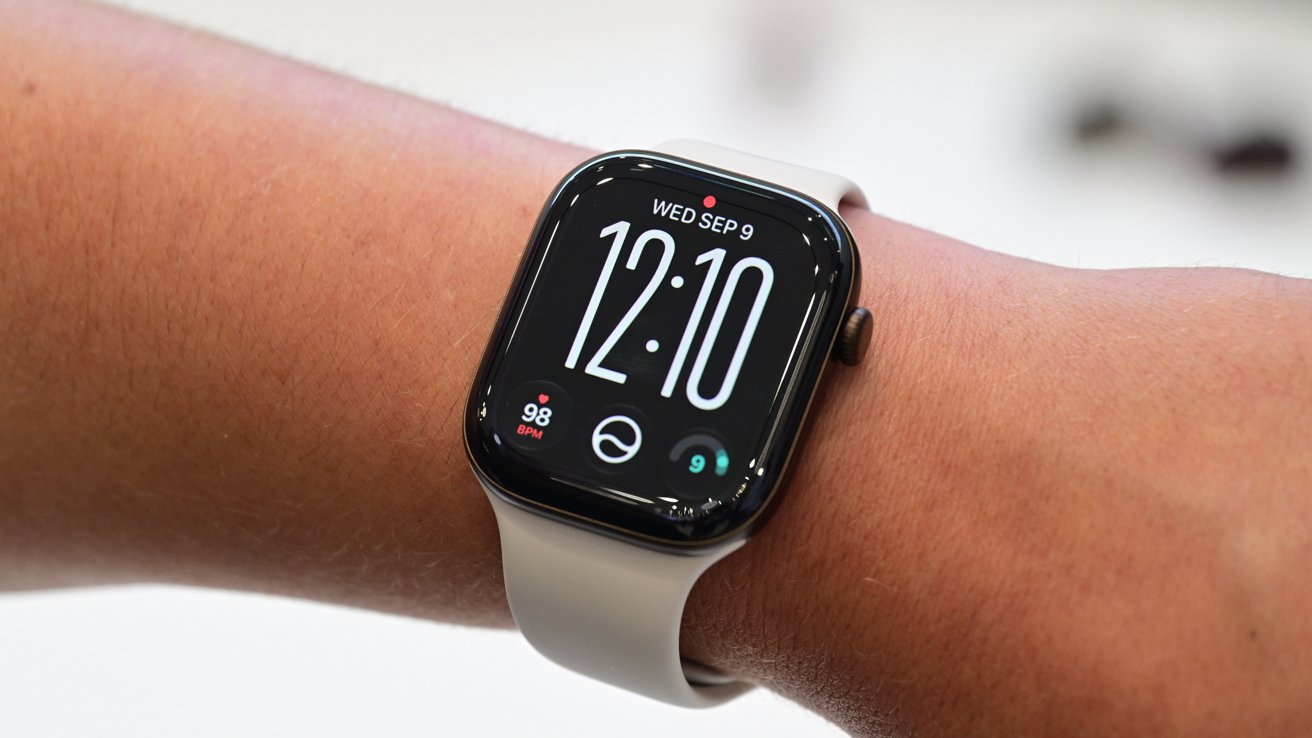
Customers upgrading from Apple Watch Series 11 to Apple Watch Series 12 are noticing some design changes, namely a larger bezel and a Digital Crown that sticks out a bit further.
The Apple Watch Series 12 has a new Health Sensing system, which replaced the rear sensor stack with a larger surface area. That seemed to be the only significant external design change, at least, until customers got their hands on them.
According to various posts on Reddit, customers are noticing a few minute differences between Apple Watch Series 12 and the previous Apple Watch Series 11. When looking at the display head on with a non-black background, the bezels are noticeably larger on the new model.
Plus, the Digital Crown appears to slightly protrude more, but this could also be due to how the case curves around the area.
Advertisement
The display change might be a surprise for some, but it is likely related to needing more internal space for the new health features. The case has increased by 1mm in one direction regardless of if you get aluminum or ceramic cases.
That slightly change in case size without a change to the active display area means larger bezels. The only way you’d ever notice the change is if you had the two models side-by-side to compare.
Some social media users speculate that this means Apple could release an Apple Watch 13 with a larger display in 2028, but it is anyone’s guess at this point.
Users have also noted that the new Apple Watch models don’t appear to support handwashing detection. Apple’s support page doesn’t list the new models on the compatibility page, though it could be that the page hasn’t been updated yet.
Advertisement
The Apple Watch Series 12 and Apple Watch Ultra 4 shipped to customers Friday and are available in stores. The focus for this release cycle is on health upgrades and Audio Intelligence.
Lightning Fast: Modern and upcoming data center projects require massive amounts of AI accelerators, and produce similarly massive amounts of data. Traditional silicon-based networking is starting to choke on gigabytes, which is why major manufacturers are now focusing on more advanced technology solutions to move all those bits around.
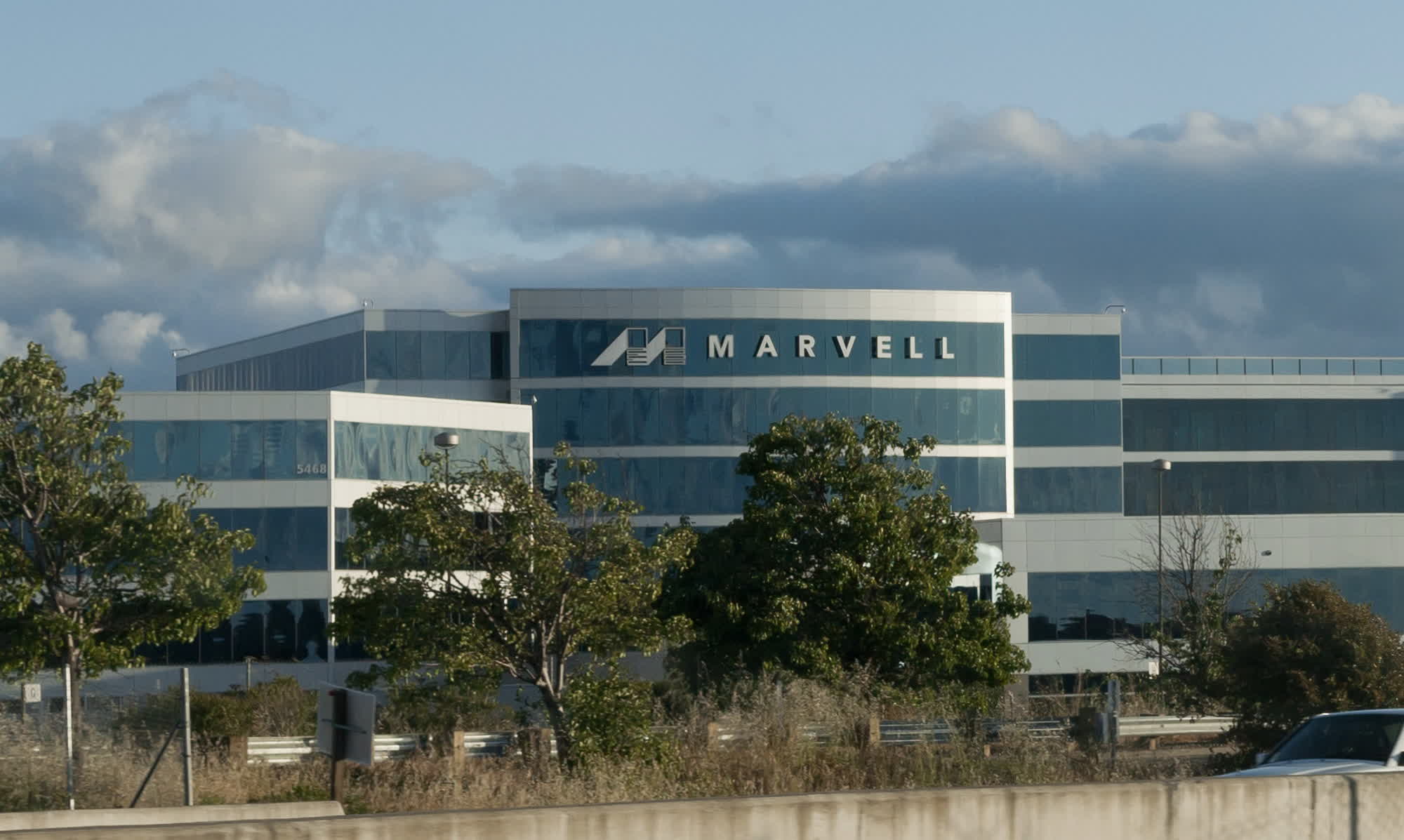
GlobalFoundries and Marvell Technology have announced an expanded partnership in manufacturing novel connectivity solutions. The multi-year agreement centers on GlobalFoundries’ silicon germanium (SiGe) technology, with the company increasing production capacity at its Burlington, Vermont plant.
SiGe-based solutions are used in high-performance connectivity products, including pluggable optical transceivers, Near-Packaged Optics (NPO), and Co-packaged Optics (CPO). As GlobalFoundries highlights in its announcement, these silicon photonics solutions are becoming increasingly important for AI data centers and other massively packed data-crunching infrastructure.
Jensen Huang says Marvell could become the next trillion-dollar company, and this deal might show why
Advertisement
AI systems are growing in scale, which means they require faster accelerators exchanging data through high-speed interconnects. GlobalFoundries already offers a portfolio of SiGe, high-frequency connectivity solutions capable of reaching 200 Gbps per optical lane.
GF said it has manufactured advanced SiGe technology for over a decade, and keeps investing in the co-integration of SiGe, silicon photonics, and advanced packaging solutions for new optical connectivity architectures such as NPO and CPO.
While GlobalFoundries ramps up production, Marvell is looking ahead to its own business prospects. The fabless chip manufacturer has seen its valuation explode thanks to the AI boom, and is expected to play a major role in the future of AI data centers and AI growth at scale.
Nvidia has significantly invested in Marvell as part of a broader partnership that includes silicon photonics and next-gen data center collaboration, and Nvidia CEO Jensen Huang has said he expects Marvell to become the next trillion-dollar company on Wall Street.
Advertisement
According to Robb Johnson, Marvell’s VP of foundry technology, the industry is moving toward higher-bandwidth optical architectures for data centers’ connectivity fabric, and Marvell is aggressively ramping up investment to lead that transition. Thanks to the expanded cooperation with GlobalFoundries, the Santa Clara-based company will have access to all the SiGe chips and transceivers it needs. The two companies have been working together on optical networking technology for over a decade now.
In “traditional” data centers, optics have mostly been used to connect racks and other crucial computing resources across the plants. Cheaper copper-based interconnects are still tasked with moving data at shorter distances, but the technology is approaching its practical limit at 400 Gbps per lane.
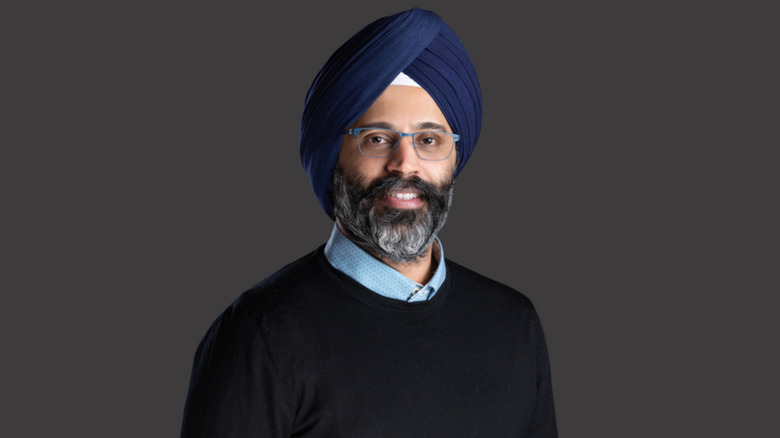
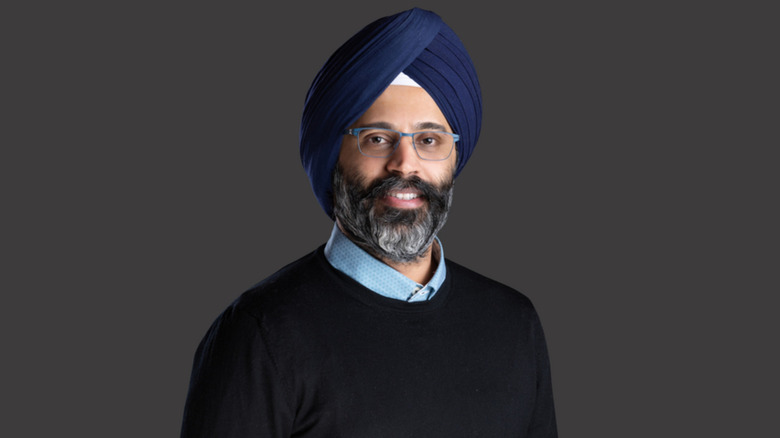
Formerly head of Character.AI, Karandeep Anand is now Disney’s chief technology officer.
Disney
Disney hasn’t been a big fan of the apparent copyright infringement that makes the AI industry possible, going as far as to threaten companies like Midjourney and Character.AI for using its intellectual property. The company is also apparently willing to let bygones be bygones — Disney has announced that it’s hiring Karandeep Anand, the former CEO of Character.AI, as its first chief technology officer.
“Karandeep brings a rare mix of experience across infrastructure, consumer technology and AI, and will be a vital addition to Disney’s senior leadership team as we further our three priorities: great storytelling as our North Star, technology in service of creativity, and operating as One Disney,” Disney CEO Josh D’Amaro said in a statement. “He also has real enthusiasm and respect for Disney, a clear sense of where technology and creativity meet and shares our belief that technology creates the most value when it helps people do their best work.”
Since becoming CEO in February, D’Amaro has leaned hard into Disney’s capabilities as a technology company, pitching the Disney+ streaming service and app as central to its future. Hiring Anand, and making him a direct report, is a further attempt to sell that idea. As CTO, Disney says Anand will oversee things like enterprise technology and the company’s data and AI platforms, and bring several of Character.AI’s technical staff along with him in the process. As part of his hiring, Variety writes that Disney is also promoting Adam Smith, the former chief product and technology officer for Disney Entertainment and ESPN, to a new role as Chairman of Direct-to-Consumer for Disney Entertainment.
Advertisement
Disney’s praise for Anand is surprisingly, given how differently it viewed the company he was leading less than a year ago. In September 2025, Disney sent a cease and desist letter to Character.AI, claiming the platform offered chatbots based on its characters and that they were bad for children. Character.AI had already been named in wrongful death lawsuits involving multiple underage users at the time, so Disney claim that the company’s products were “harmful and dangerous to children” carried some weight.
Of course, one could assume Disney was less worried about the negative effects of using generative AI and more concerned that it wasn’t cut in appropriately. The company did agree to license Disney characters to OpenAI for its failed Sora app only a few months later in December 2025. If the company truly believes AI is part of its future, Anand’s experience is much more important than any misgivings it had about Character.AI.
Despite touting the name “Resident Evil,” the movie adaptations of Capcom’s series have mostly ignored the best elements of survival horror games: the sense of dread as you creep into a new location; the desperation you feel when you’re running low on ammo and health items. The six Resident Evil movies starring Milla Jovovich were more interested in bombastic action. So leave it up to Zach Cregger, the director of Barbarian and Weapons, to crack the code of making a genuinely great adaptation: Just make it feel like the best games in the franchise.
And to be clear, I’m not talking about delivering fan service. There are a slew of terrible CG Resident Evil movies that exist to do just that, including the failed 2021 live action reboot, Welcome to Raccoon City. Cregger’s secret weapon is that he’s both an excellent horror filmmaker — someone who knows how to write interesting characters, build tension and deliver scares in unique ways. And he’s a fan of the franchise who understands the true magic of survival horror games.
Resident Evil centers on Bryan (Austin Abrams), a medical courier tasked with making a last-minute run to a remote mountainside town. Of course, that’s Raccoon City. Along the way, he’s also dealing with the anxiety of potentially becoming a father after his girlfriend discovers she’s pregnant. He’s an everyman with deep flaws, the ideal protagonist for a Resident Evil story.
Advertisement
After an accident on a snowy road, we shift into a first-person view as Bryan creeps towards an injured woman, much like the camera slowly approaching the first zombie in the original Resident Evil. Once the victim reveals herself to be some sort of crazed monster (not a zombie), it almost feels as if we’re controlling Bryan over the shoulder as he tries to avoid her around an overturned police car. Of course, the film can never deliver the interactivity of the games, but Cregger’s camera gets close. Throughout the film, we’re often following Bryan from directly behind, or right over the shoulder, evoking the iconic camera angle of Resident Evil 4.
Sony Pictures
Bryan finds a conveniently placed pistol and manages to take down the crazed woman, but of course, that’s only the beginning. A mad dog chases him into a barn, where he encounters (and fails) a classic ladder puzzle. He finds an even more conveniently placed shotgun when he seeks refuge in an abandoned farm house, but it’s useless to him until he finds shells. (In one of the few overt callbacks, he encounters a room with a lone typewriter, like the classic Resident Evil save rooms.)
Anyone unfamiliar with the games would have no problem enjoying this film. But Cregger’s understanding of the series also makes it feel like a true survival horror game. We’re viewing every new room and dark corner from Bryan’s perspective, and the sense of dread is palpable. Even though it doesn’t take long for Bryan to snag a few guns, he’s also always aware of the precise amount of ammunition he’s holding. Much like the games, resource scarcity is a constant source of tension. He masterfully uses the first-person perspective several more times throughout the film, and at times the camera jerkily shifts in different directions, as if someone is quickly pushing a gamepad’s right stick for camera controls.
Sony Pictures
Cregger’s Resident Evil is a lesson in making a good video game adaptation. You can’t just slavishly recreate things the fans want to see – like the atrocious Super Mario Galaxy or the forgettable Uncharted – but you also shouldn’t completely reject the best elements of the games, like the terrible ’90s Super Mario Bros. film. A small amount of creativity and effort managed to make the Sonic and Minecraft movies watchable. With Nintendo spinning up a Legend of Zelda movie and Hollywood broadly eager to crib from video game source material, I hope more creatives take notes from this reboot.
Hawthorn’s reward for trouncing the minor premiers is the matchup they’d been hoping to avoid – a date with back-to-back reigning premiers Brisbane, who pasted the Hawks by 67 points just last month. On a more positive note, Sam Mitchell’s men do at least have home advantage after a week off.
The reason it stings so much is that Hawthorn, who last reached the Grand Final back in 2015, have beaten both of the other preliminary finalists this season. Meanwhile, they’ve lost each of their past three meetings with the Lions.
The Dingley Village outfit needs to find a way to cast aside all of the bad omens, because Brisbane has made a routine of dominating September football. Even more ominously, Chris Fagan’s men have closed each of their last two campaigns with back-to-back triumphs at the MCG.
Advertisement
They do, however, have a major injury concern. Noah Answerth, who played a pivotal role in their 125-58 victory over Hawthon six weeks ago by suffocating Nick Watson, hurt his ankle in the defeat by Sydney a fortnight ago, and missed the semi-final as a result. Either Ryan Lester or Darcy Wilmot will likely fill in if he still isn’t right, but the Wizard will take either of them over Answerth.
Read on as we explain how to watch Hawthorn vs Brisbane for free in the AFL 2026 Preliminary Final.
Can you watch Hawthorn vs Brisbane for free?
Yes. Hawthorn vs Brisbane is being shown on free-to-air Channel 7 in Australia, with live streaming available via 7Plus.
Advertisement
Traveling abroad right now? You can use a VPN to watch Hawthorn vs Brisbane for free as if you were right at home.
How to watch Hawthorn vs Brisbane from anywhere
A VPN is handy piece of software that can make your device appear as if it’s back in your home country, so you can unlock your usual service. The best VPN right now? We recommend NordVPN – it does everything and comes with up to 75% off.
Advertisement
How to watch Hawthorn vs Brisbane live streams in the US
Live Hawthorn vs Brisbane coverage is being provided by FS1 in the US.
If you don’t have the channel on cable, FS1 is carried by Fubo, YouTube TV and Hulu + Live TV, each of which offers a free trial to new users.
Outside of the US? Use a VPN while you’re traveling away from home to unlock your stream.
Advertisement
How to watch Hawthorn vs Brisbane live streams in the UK
In the UK, Hawthorn vs Brisbane is being shown on TNT Sports 1 and TNT Sports 3.
You can add TNT Sports to your Sky, Virgin Media or EE TV package, or get an HBO Max plan that includes TNT Sports. Prices start at £25.99/month if you commit to a year.
How to watch Hawthorn vs Brisbane live streams in Australia
Free-to-air Channel 7 is showing Hawthorn vs Brisbane in all regions of Australia, with live streaming available via 7Plus.
Just create an account using a valid Australia postcode (e.g. 2042).
Not in Australia right now? You can use a VPN like NordVPN to watch all the action as if you were back home.
Advertisement
How to watch Hawthorn vs Brisbane live streams in Canada
(Image credit: Other)
The Hawthorn vs Brisbane game is available to watch on TSN2 in Canada.
If you don’t have cable, the TSN Plus streaming service costs CA$24.99 a month to access what goes out on regular TSN.
If you’re out of Canada but still want to tune in, explore the VPN route set out above, which will help you access your accounts from anywhere.
What is the Hawthorn vs Brisbane start time?
The scheduled Hawthorn vs Brisbane kick-off time on Saturday, September 19 is 5.15pm AEST local time in Melbourne, which is 12.15am PT / 3.15am ET / 8.15am BST.
Advertisement
What is the Hawthorn vs Brisbane head-to-head?
Hawthorn and Brisbane have contested 42 competitive games. The Hawks have won 22 of them, and the Lions 20.
This season, the head-to-head stands at 1-0 in Brisbane’s favour.
Can I watch Hawthorn vs Brisbane on my mobile?
Of course, most broadcasters have streaming services that you can access through mobile apps or via your phone’s browser. For example, 7Plus has a dedicated app.
We test and review VPN services in the context of legal recreational uses. For example: 1. Accessing a service from another country (subject to the terms and conditions of that service). 2. Protecting your online security and strengthening your online privacy when abroad. We do not support or condone the illegal or malicious use of VPN services. Consuming pirated content that is paid-for is neither endorsed nor approved by Future Publishing.
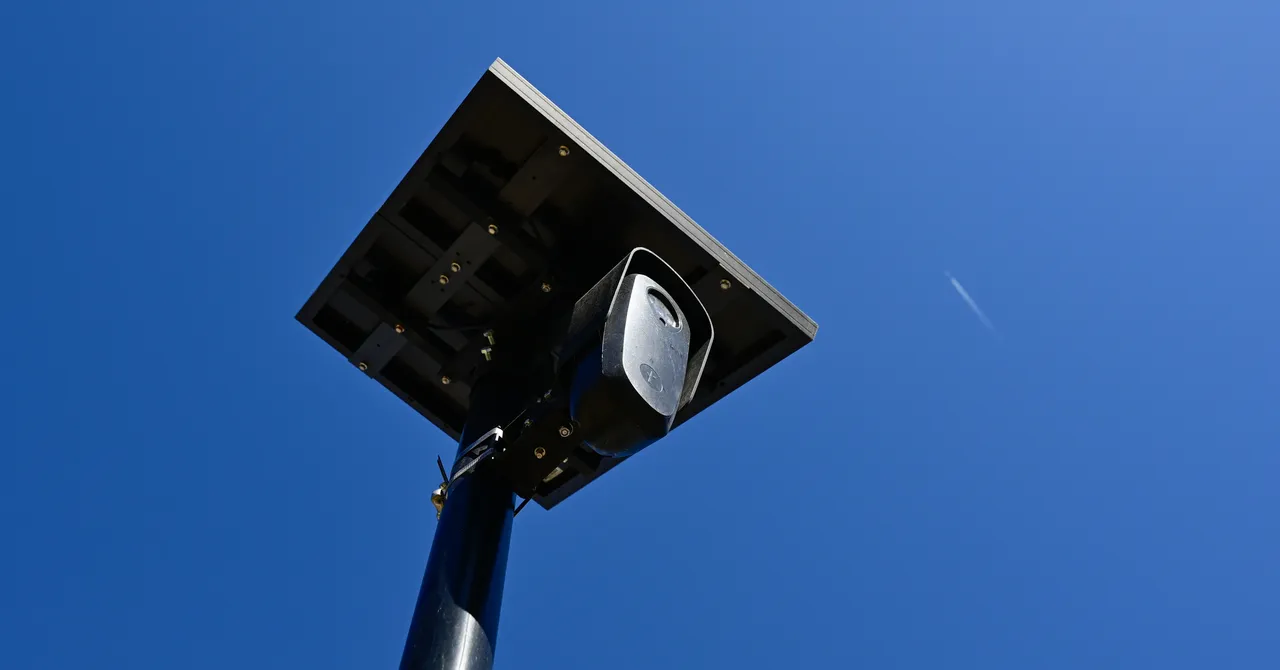
Flock Safety announced a voluntary employee separation program on Friday, offering a “generous” severance package to those who want to leave amid growing backlash against the surveillance technology company, according to an internal email shared with WIRED.
Applications for Flock’s voluntary severance program opened Friday, and employees have until October 2 to decide whether to leave the company. Flock expects to grant buyouts to the majority of workers who apply, according to the email. People familiar with the program but not authorized to discuss it publicly say they believe that a significant number of the startup’s roughly 1,500 employees may try to depart.
Founded in 2017, Flock raised money at a valuation of more than $8 billion in a funding round that closed in April. The company has had many of its contracts either not extended or dropped this year, which could leave it short of revenue goals, according to two of the people. A wave of vandalism targeting its cameras has unexpectedly increased expenses. Without buyouts, Flock almost certainly would have to lay off some staff, one of the people believes.
Advertisement
In an internal announcement, Flock said the separation program provides “greater agency” for its workers and “treats employees with transparency, respect, and choice.” It also described the package as the “most generous” ever offered by the company, roughly double its previous severance offers.
Flock did not immediately respond to requests for comment.
Some Flock employees have said they have received buyout offers in the range of tens of thousands of dollars, one of the people said. The package also gives employees several months of health care coverage and the ability to exercise stock options within two years after separation, a longer period than the company typically offers resigning employees, according to the email and people familiar with the offer.
Flock employees are expected to learn whether their applications were accepted on October 9, according to the email. Most accepted employees would leave the company by October 29, though in some cases Flock may ask employees to remain for another one to three months.
Advertisement
People familiar with Flock’s severance plan tell WIRED that some employees may take the offer amid speculation that the company, which has raised about $1.2 billion in venture capital, might resort to selling off parts or all of its business to stay afloat. “When you see enough of the vandalism” targeting Flock cameras this year, one of the people says, “you know the writing is the wall” that something has to change.
Flock CEO Garrett Langley said on the All-In podcast last month that “the biggest damage” caused by the backlash against the company had been “internal morale.”
“Because you go on to X or you go on to Reddit and you go, why are people so mad at us when we’ve been doing the same thing for nine years?” Langley said. “And why are they so mad at us for things we don’t do? And we just want people to be safe.”
As computing systems move toward denser processors, tightly coupled server nodes, and higher-power racks, managing the heat they generate has become a defining challenge in data center design. Modern AI accelerators can dissipate well over 1,000 watts, and a single rack may release more than 100 kilowatts of heat. This is far beyond what air cooling can practically remove. Single-phase direct liquid cooling addresses this by circulating water or a water-glycol coolant through coldplates mounted directly on high-heat components. The coolant absorbs the heat and carries it away in a closed loop to a coolant distribution unit. Because liquid stores far more heat than air and removes it much faster, this approach supports higher chip and rack densities within a smaller footprint. This paper explains how single-phase direct liquid cooling works, how it compares with two-phase and immersion cooling, and how rising processor power and rack density are shaping the future of thermal
There’s a lot for Mark Zuckerberg to cover at this year’s keynote.
Meta
Meta is about to hold its biggest event of the year. While Connect was once solely dedicated to virtual reality, the event now covers all the company’s hardware projects, as well as AI and the metaverse.
And this year could be even more jam-packed than usual. Between Meta’s ever-expanding smart glasses lineup, its breakneck AI releases and the current industry freakout over the pace of AI development, there’s certainly a lot of ground for CEO Mark Zuckerberg to cover.
Like last year’s event, Meta has again opted for an evening keynote, with Zuckerberg taking the stage at 4PM PT/7PM ET on September 23. There will be additional talks and developer sessions the following day, starting with a 10AM PT/1PM ET “developer state of the union.” As usual, I’ll be on the ground watching the keynote live from Meta’s HQ in Menlo Park so check back for our liveblog and post-keynote coverage. In the meantime, here’s everything I’ll be looking out for during Connect.
Advertisement
New and updated smart glasses
As with the last few years, there’s likely to be a lot of glasses-related news. One interesting change with this year’s strategy is that the company is reportedly working on a pair of camera-free frames. These glasses, which will reportedly come in two styles, will instead come with extra microphones for chatting with Meta’s AI assistant. The lack of cameras could offer Meta a couple of advantages. The frames will reportedly be a bit slimmer and look more like “normal glasses.”
More significantly, they could also help Meta address ongoing privacy concerns and backlash against its current lineup of glasses. Meta has been trying to get ahead of the “creep glasses” narrative in recent weeks by cracking down on people who tamper with the LED lights and post videos of themselves harassing others. In a recent AMA on Instagram, Meta CTO Andrew Bosworth said the company would have “more to say” about the issue during Connect.
Advertisement
Ray-Ban has recently hinted that it has new Meta-branded glasses coming soon. That could be a reference to these camera-free frames or, perhaps, a new Gen 3 lineup (the first Gen 2 models debuted at last year’s Connect). Another possibility is the next generation of Meta Ray-Ban Display. There have been reports that Meta is working on a version of the glasses that will come with displays in both lenses, which would open up some interesting possibilities in terms of their UI. But it’s been a while since we’ve heard anything about the rumored device, sometimes called “Hypernova 2,” so Meta could be holding that one back for now.
‘Phoenix’ Mixed Reality headset
Meta (via UploadVR)
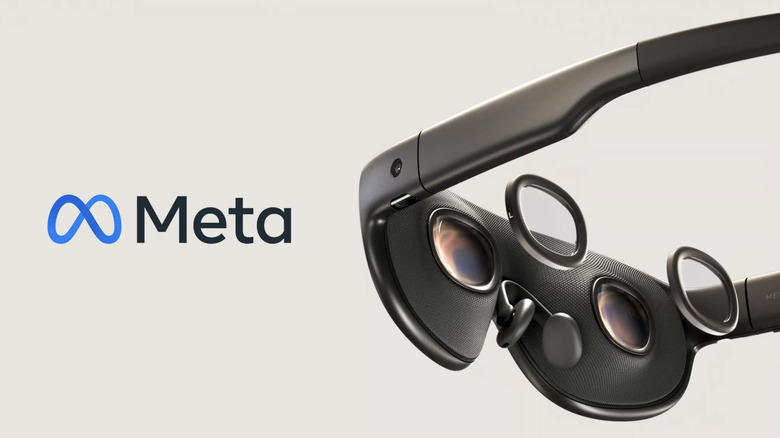
It’s been a while since we’ve seen a new headset from Meta, and we’ve never seen anything from them quite like the device currently known as “Phoenix.” The mixed reality headset has been rumored for some time, but it certainly seems like the company is gearing up for it to make its official debut at Connect.
Several images of the lightweight device recently surfaced in a HorizonOS update. Those images show a thin device that almost looks more like a pair of goggles than a headset. It also clearly shows a cable, which supports previous reporting that Phoenix will rely on a tethered connection to a separate puck. It’s also rumored to support hand and eye tracking rather than a dedicated controller.
Advertisement
And while we don’t know much about what Phoenix will look like in the way of specs, it seems like a pretty good bet the headset will be among the first devices to use the new Snapdragon Reality Elite chip Qualcomm announced earlier this year. Intended for mixed reality headsets, the chip was specifically designed to support slimmed-down form factors.
Avatars and the metaverse
A new kind of headset will probably also mean some updates to HorizonOS, and it will be interesting to see what kinds of experiences Meta will promote alongside the new hardware. The company has been shuttering VR studios left and right, so I doubt we would see any huge game announcements to go with Phoenix. But it does seem like Meta could promote more entertainment-focused offerings. Deadline reported last year that Meta was backing a new “3D horror series” based on A24’s Talk to Me that’s apparently meant for viewing in the company’s headsets.
Advertisement
We may also hear more about Meta’s holographic avatars that we first saw two years ago with its Orion prototype. Meta told me at the time that the technology would eventually come to virtual reality and, given that Qualcomm has highlighted “photorealistic avatars” as one of the benefits of its aforementioned chip, this seems like a very real possibility. The Information also recently reported that an avatar of Meta’s CTO could make an appearance during the Connect keynote. These avatars could also factor into Meta’s evolving vision for the metaverse. When the company almost shut down Horizon Worlds in VR earlier this year, Bosworth said that augmented reality was very much part of the company’s “expansive construct of the metaverse.”
AI and developers
The last few years of Connect have included a lot of AI news and this year shouldn’t be any different. This will be the first Connect since we’ve seen a flood of new AI releases from the company’s superintelligence group, and I’m sure the company is saving some AI-focused updates for Connect.
Advertisement
I fully expect Meta to talk a lot more about its AI agent, Muse. The company teased that glasses support for the agent would be coming “soon,” so I wouldn’t be surprised if we hear more about how this will work at Connect. (Agent capabilities could also be a good selling point for camera-free glasses.)
I’m also hoping to hear more about Meta’s work to bring more third-party apps to its glasses ecosystem. Last year at Connect, the company announced a handful of apps that would be coming to its camera glasses, but we haven’t seen a whole lot of momentum since. And earlier this year it started allowing developers to create dedicated apps for Meta Ray-Ban Display. Showing off a new slate of third-party apps for the frames could be a good way to build more excitement for the product even if we don’t see updated hardware.
We may receive a commission on purchases made from links.
Amid the ongoing silicon crisis that has led prices of consumer gadgets to rise, Apple introduced the MacBook Neo, its cheapest laptop ever. The MacBook Neo was first announced at a starting price of $599 for the 256 GB model, and $699 for the 512 GB variant. Although Apple hiked its gadget prices in July in response to the memory crisis by adding an extra $100 to each variant of the Neo, it still remains the cheapest MacBook model you can buy brand new. The MacBook Neo features a 13-inch IPS display, 8 GB of memory, 256 or 512 GB of storage, a 36.5 Wh battery, and a 1080p webcam in a lightweight 2.7 lbs package.
With Apple finally taking a stab at the entry-level laptop market, it was only a matter of time before other major laptop manufacturers were forced to step up their game to try and take on the Neo. Because of its affordable sticker price, the MacBook Neo is simply a product that other tech companies couldn’t afford to ignore. Indeed, barely a few months after its launch, several tech brands have responded by introducing different laptops in an attempt to compete.
Advertisement
If you’re in the market for a cheap laptop, there are quite a number of alternatives that you can consider. To identify these five tech brands trying to compete with the MacBook Neo, we’ve done our research by digging through manufacturer websites and news sites to find companies that have launched models that directly target Apple’s cheapest laptop.
Advertisement
Dell
Apple launched the MacBook Neo on March 4, 2026, and Dell didn’t wait long to reveal its answer. The company revealed toward the end of May that it would launch a new XPS 13 model starting at $699. Given its portability and price, it’s clear that Dell was trying to pitch the XPS 13 as an alternative to the MacBook Neo. In fact, Dell has a dedicated page on its website that pits the two models against each other.
We’ve compared the XPS 13 and the MacBook Neo, and it’s a pretty tight race between the two. Although both models start at $699 — $599 for students – Dell offers 512 GB of storage in the base variant, while Apple only gives you 256 GB. The XPS 13 is also a tad lighter than the Neo, 2.2 lbs compared to 2.7 lbs. Screen-wise, you’re also getting a better panel on the XPS, as it not only offers touch-screen functionality but also 100% coverage of the DCI-P3 color space and up to a 120 Hz high refresh rate.
Dell’s XPS 13 also wins over the Neo by offering a backlit keyboard, more configuration options, and promises up to 17 hours of battery life (vs. the Neo’s 16 hours). In addition to the XPS 13, Dell has also announced the Dell 14S, another potential MacBook Neo competitor, and it also has other models that can be considered alternatives, like the $699 Dell 15.
Advertisement
Asus
Asus has also stepped up its game, and is now yet another tech brand trying to give the MacBook Neo a run for its money. The company’s model leading the charge is the ZenBook 14. For context, the ZenBook 14 starts at $799, $100 more expensive than the Neo. Despite a slight price disadvantage, the Asus ZenBook 14 looks like a good competitor to the Neo. It comes with a slightly bigger 14-inch screen, which supports 100% of the DCI-P3 color space and uses OLED display technology for inky blacks and richer colors, and you can configure it to include touchscreen functionality.
While the MacBook Neo only offers a headphone jack and two USB-C ports, the ZenBook 14 is more versatile as it has a USB-A, HDMI 2.1, 3.5 mm headphone jack, and four USB-C ports. Its keyboard is backlit, which is something the Neo doesn’t offer. The ZenBook 14 promises over 21 hours of battery life and is powered by either an Intel, AMD, or Qualcomm chip, with up to 24 GB of memory and 512 GB of storage, depending on the processor.
Advertisement
Besides the ZenBook 14, the company also has other laptop models that can compete with the MacBook Neo. For example, the Vivobook 16 sells at $619.99 and includes 8 GB of memory and 512 GB of storage, making it worth considering if you’re shopping for cheaper alternatives to the MacBook Neo that offer better specs. Also, the Vivobook 14 (X1407QA) is another worthy alternative.
Advertisement
Acer
Acer unveiled its MacBook Neo competitor, the Swift Air 14, at this year’s Computex in Taipei, Taiwan. The Swift Air 14 also has nearly the same selling points as the Neo. For starters, its $699.99 starting price makes it pretty affordable as well, and it also comes in a thin and light package for portability. However, it offers some extra goodies that make it a worthy alternative.
The Swift Air 14 features a slightly larger 14-inch IPS display panel with a higher 120 Hz refresh rate, which is something you won’t find on the Neo. An Intel Core Series 3 processor powers this laptop, paired with 8 GB of LPDDR5X memory (upgradeable to 16 GB) and up to 512 GB of storage. With a 69 Wh battery, nearly twice as much as the Neo’s 36.5 Wh cell, the Swift Air 14 promises up to 19 hours of video playback. This model offers you four ports: two Thunderbolt 4 USB-C, one USB-A, and a headphone jack.
Apple offers the Neo in more fun colors than the MacBook Air and Pro, and Acer didn’t miss out on that detail on the Swift Air 14 — in addition to black and silver, it’s also available in purple, blue, pink, and green. Besides the Swift Air 14, which was clearly launched to compete with the Neo, there are other models in the company’s lineup that can take on Apple’s laptop, like the Acer Swift Go 15 and Aspire Vero Green.
Advertisement
Lenovo
Lenovo
Lenovo already has a well-diversified laptop portfolio that targets different types of users and price points, from the entry-level consumer to users seeking a premium high-end laptop. Despite that, the company responded to Apple’s launch of the MacBook Neo by launching a competitor, dubbed the Lenovo IdeaPad Vibe, that targets the same type of user.
The Lenovo IdeaPad Vibe was launched at the IFA event held in Berlin, Germany. It’s an ultra-thin and lightweight laptop that sports either a 14-inch or 15-inch display. Lenovo gives you a choice between a Qualcomm Snapdragon, Intel Core or AMD Ryzen series chip, and the memory and storage are also configurable up to 24 GB and 1 TB, respectively. For the display, you also get to pick between LCD and OLED technology. The Lenovo IdeaPad Vibe launched at a starting price of $699, although as of this writing, it’s not available to order just yet.
It will only be available to buy from November 2026. Taking notes from Apple’s MacBook Neo playbook, Lenovo is also offering the IdeaPad Vibe in colors that pop. However, it has gone a mile further by offering a total of seven color options. Besides the IdeaPad Vibe, there are other laptop models in Lenovo’s lineup that can compete with the Neo, such as the IdeaPad Slim 3i, IdeaPad Slim 5x and IdeaPad Slim 3x.
Advertisement
MSI
While MSI revealed its Modern 14S AI+ laptop at CES 2026 back in January (before Apple unveiled the Neo), it was powered by Intel’s Core Ultra series chip. Then, once Apple dropped the Neo at the beginning of March, MSI revealed a shift in strategy at an event in Tokyo, revealing plans to introduce a budget non-AI+ Modern 14S powered by Intel’s Core Series 3 chip, indicating the company’s intention to compete with it. However, as of this writing, MSI has yet to reveal when the Modern 14S will be unveiled and what it will cost.
Advertisement
But even before the Modern 14S is launched, the Modern 14S AI+ is also a worthy competitor. The MSI Modern 14S AI+ is a thin and light laptop with an aluminum alloy chassis. With a starting weight of 3.09 pounds, it’s heavier than the 2.7-lb Neo, but only by a slight margin. It features a 14-inch screen, and you get to pick between an IPS panel with a 48 to 120Hz refresh rate, as well as a 60 Hz OLED panel.
Unlike the Neo, MSI’s model offers seven ports, including HDMI 2.1, RJ45 Ethernet, a micro SD card reader, two USB Type-C ports, and two USB Type-A ports. The Modern 14S AI+ is yet to launch in the U.S. Besides the MSI Modern 14S AI and Modern 14S, the company also has plans to launch the Modern 14 LE that will also compete with the Neo.
Advertisement
How we selected these tech brands
Wongsakorn 2468/Shutterstock
Even before the MacBook Neo hit the market, there were Windows and ChromeOS-powered laptops that you could get for cheap. As a result, to put together this list of tech brands that are positioning themselves to compete with Apple’s entry-level MacBook, we focused on more than just companies that have laptops selling for around the same price as the Neo. For a brand to be selected, it had to have launched (or plan to launch) a model or models specifically aimed at taking a stab at the MacBook Neo. We did so by checking the different models that have been revealed by various laptop brands since Apple launched the Neo in March.
We’ve discussed how some of the MacBook Neo alternatives from each brand stack up against the Neo, but that doesn’t mean the mentioned model is the only worthy competitor. For those that haven’t released new models trying to compete with the Neo, we went through their current laptop lineup to see if there’s at least one model that offers a solid overall package that can compete with the Neo. We didn’t focus on the price alone, so some of the alternative models from these brands are pricier than the Neo.


















































You must be logged in to post a comment Login