
Crypto World
Polymarket hit by alleged $10M stolen-card fraud



Polymarket has come under renewed scrutiny after a Sept. 19 report said fraudsters used stolen debit cards on its U.S. platform in February to attempt at least $10 million in illicit withdrawals and wagers.
Summary
- Polymarket reportedly faced at least $10 million in attempted stolen-card fraud during February this year.
- Checkout.com reportedly rejected more than 80% of Polymarket US deposits as fraudulent during February’s peak.
- Polymarket says fraud rates later returned to industry norms after stronger card controls were introduced.
- Polymarket US operates through QCX, a CFTC-designated contract market subject to federal derivatives oversight today.
- Polymarket recently hired Warren Jenson as CFO while expanding compliance, investigations and risk management staffing.
The Wall Street Journal reported that criminals connected stolen cards to thousands of Polymarket US accounts, funded them and then tried to move the money through trading before withdrawing it to cards or accounts they controlled.
Polymarket reportedly saw fraud rejection rates top 80%
At the peak of the February attack, payment processor Checkout.com rejected more than 80% of deposits it handled for Polymarket as fraudulent, according to the Journal. The newspaper compared that rate with an industry level of roughly 1%.
The 80% figure has not been independently confirmed by Checkout.com in a public statement reviewed for this report. Checkout.com does provide merchants with fraud-scoring, transaction-filtering and authentication tools, while its current service terms state that merchants remain responsible for deciding whether transactions are accepted or canceled.
Current and former employees told the Journal that compliance workers escalated concerns about the surge to Polymarket CEO Shayne Coplan. According to people cited by the newspaper, Coplan responded: “Just keep growing and pay a fine if regulators ever find out.”
Polymarket has not publicly confirmed that Coplan made the remark. The company told the Journal that it maintains procedures to identify and respond to suspicious activity and remains committed to cooperating with regulators and law enforcement.
The $10 million figure represents the amount fraudsters allegedly tried to move, not a confirmed loss suffered by customers or Polymarket. Public reporting reviewed for this article does not provide a final amount successfully withdrawn through the February scheme.
Card restrictions helped bring fraud rates down by May
The Journal reported that elevated fraud continued for several months after February, though rejection rates did not return to the peak recorded during the first wave. By May, fraud rates had reportedly moved back toward normal industry levels after Polymarket limited how many debit cards users could connect to their accounts and brought in Riskified as an outside antifraud provider.
An earlier report from The Information had separately described prediction-market operators, including Polymarket, strengthening card-fraud controls after criminals used stolen payment credentials and fake identities to create accounts. Visa reportedly pushed payment processors to tighten screening as disputed transactions increased.
Riskified provides automated fraud-decision systems used to identify suspicious card activity before merchants approve transactions. Public material from the company describes its service as combining machine-learning risk scoring with merchant transaction controls, but Riskified has not publicly disclosed Polymarket-specific fraud numbers.
The Journal further reported that Polymarket initially required some withdrawals to return to the same payment source that had funded an account. The platform later loosened that restriction, according to the report, which cited employees who raised concerns about financial-crime risks.
Polymarket’s current U.S. rulebook gives the exchange authority to restrict accounts, place customers into liquidation-only status and take other steps to protect customers and market integrity. The CFTC filing containing the March 20 version was certified in April.
Polymarket US operates under CFTC-regulated QCX
Polymarket US is legally separate from the company’s international blockchain-based prediction market.
The Commodity Futures Trading Commission’s current register lists QCX LLC, doing business as Polymarket US, as a designated contract market. QCX received its designation in July 2025 before operating under the Polymarket US name.
As previously explained in Polymarket’s two-platform structure, U.S. customers trade through the federally regulated exchange, while the international product uses separate blockchain infrastructure and access rules.
The regulatory status differs from Polymarket’s position in 2022, when the CFTC ordered the company to pay a $1.4 million civil penalty for offering event-based binary options without operating through a registered market. The settlement required Polymarket to wind down noncompliant markets and cease the violations cited in the order.
The Journal reported that the CFTC is now investigating issues connected with Polymarket and that employees were instructed to preserve documents involving the February fraud incident and other matters.
No new public CFTC enforcement release specifically addressing the February stolen-card episode was located as of Sept. 20. The reported investigation should therefore be treated as an ongoing inquiry described by the Journal, not a finding that Polymarket violated federal law.
Separate congressional scrutiny was already underway. On May 22, the House Committee on Oversight and Government Reform requested records from Polymarket concerning identity verification, suspicious activity, geographic restrictions and referrals to U.S. authorities.
The committee specifically requested documents showing the number and disposition of suspicious-activity referrals since Jan. 1, 2024. That inquiry centered on insider trading and sensitive information, not the stolen-card scheme reported this weekend.
Polymarket has expanded investigations and finance teams
Since the February incident, Polymarket has built out its internal investigation and management functions. Shana Bautista, a former FBI investigator, joined as global head of investigations and intelligence. Reuters reported in August that the company uses blockchain analytics, machine learning and trading surveillance to identify anomalous behavior.
Polymarket’s own market-integrity page says the company has referred more than 90 accounts to law enforcement and supplied authorities with details involving more than 315 wallets. The figures are company-reported and do not relate exclusively to payment-card fraud.
Federal authorities have publicly acknowledged cooperation in at least one separate case. In April, the U.S. Attorney’s Office for the Southern District of New York said Polymarket cooperated with investigators in the case of an Army service member accused of using classified information to trade event contracts.
The CFTC filed a parallel insider-trading complaint alleging that the defendant earned more than $404,000 trading a market related to the capture of Nicolás Maduro. The case remains separate from the February payment-card allegations.
Polymarket added another senior executive on Sept. 10 when it named Warren Jenson its first chief financial officer. The CFO appointment, Jenson previously served in senior finance roles at Amazon, Electronic Arts, Delta Air Lines and Nielsen.
The company said Jenson will oversee finance, capital strategy and long-range planning. Polymarket did not announce an IPO timetable when it appointed him, although the Journal reported that the company is preparing itself for a potential public listing.
Polymarket has been raising large amounts of private capital in parallel. ICE, the parent of the New York Stock Exchange, disclosed a further $600 million cash investment in March after investing $1 billion in 2025.
As recent Polymarket funding coverage reported, the company has separately been seeking roughly $1 billion in new capital at a valuation near $21 billion. The financing has not been presented by Polymarket as a formal IPO filing.
Separate security incidents added pressure during 2026
Payment fraud has not been the company’s only security issue this year. In June, Polymarket confirmed that a compromised third-party vendor injected malicious code into its frontend for some users. The company said it removed the affected dependency, contained the incident and would reimburse affected customers.
Blockchain investigators later estimated losses at roughly $3.1 million across 11 wallets. AMLBot said stolen assets were moved from Polygon to Ethereum after the malicious activity.
The June event was technically separate from the February stolen-card activity. It involved compromised web infrastructure and wallet interactions, while the earlier scheme reportedly relied on stolen debit-card credentials and account funding.
The Journal reported another account-security episode in July involving nearly 500 users. According to its account, attackers used stolen personal information to access existing accounts and linked payment methods through an engineering weakness. Polymarket reportedly agreed to cover affected losses.
No public Polymarket notice reviewed for this report provides an independently confirmed loss total from that July incident.
The company’s current position is that its fraud controls have been strengthened and that it works with law enforcement on suspicious activity. The Journal’s report says February’s payment-fraud rate had returned to industry norms by May after debit-card restrictions and the Riskified deployment.

Perhaps due to the major escalation in the Middle East on Saturday evening, bitcoin’s impressive rally was halted at $82,000, and the asset has lost almost two grand since then.
Most larger-cap alts have followed suit, led by the two largest privacy coins. Both ZEC and XMR have slumped by around 8%, while RAIN, NEAR, and UNI have posted losses of up to 5%.
BTC Stopped at $82K
It was a very intriguing week for the entire crypto market. The kick-off came on Tuesday when the highly anticipated cloture vote on the CLARITY Act failed in the US Senate. BTC’s price reacted with an immediate leg down, even though it was mostly expected, and slumped to a three-week low of $75,000.
The Fed took the main stage a day later when it hiked interest rates for the first time in over three years. BTC slipped once again, but quickly rebounded and went toward $77,000. Despite these two negative developments, as well as the BOJ increasing rates on Friday, the cryptocurrency actually showed impressive resilience.
Moreover, it surged hard on Friday and flew past $80,000 for the first time in two weeks. The bulls kept the pressure on, and bitcoin spiked to almost $82,000 on Saturday. However, it was rejected there, perhaps due to the latest developments in the Middle East, and now sits just inches above $80,000.
Its market capitalization has declined to $1.61 trillion on CMC, but its dominance over the alts has neared 59%.

Alts Bleed, AVAX Defies
Ethereum was rejected at $2,630 and now sits well below $2,600 after a 2.6% daily decline. BNB struggles to maintain the $750 level, while XRP has returned to under $1.40. SOL has slipped below $110, while HYPE, after hitting a new all-time high, has retreated slightly to $91.
More substantial losses come from the leading privacy coins. ZEC is down by 8.2% to $1,443, while XMR has dumped by 8.6% to $523. UNI, RAIN, LINK, NEAR, AAVE, and CC are also well in the red.
In contrast, Avalanche (AVAX) has rocketed by more than 11% daily and sits above $9.6. ENA, PEPE, and M have marked impressive gains as well.
The total crypto market cap has shed around $40 billion daily and is down to $2.740 trillion on CMC.

The post BTC Price Slides Toward $80K, AVAX Defies Market Correction: Weekend Watch appeared first on CryptoPotato.


Anthropic said it has chosen Accenture as its first embedded evaluator to help slow the pace of AI development as proposed last week by CEO Dario Amodei.
Amodei published a three-step proposal on Sept. 12 to slow the development of AI and allow safeguards to be put in place amid warnings of a potential for catastrophic harm in the wake of swift, unchecked development.
OpenAI CEO Sam Altman and SpaceX CEO Elon Musk responded positively to Amodei’s proposal, although Nvidia CEO Jensen Huang did not, arguing that such regulation was not necessary.
Still, Amodei wrote in his proposal that “AI has been advancing drastically faster, driven primarily by AI’s growing ability to build the next generation of AI. This dynamic is called recursive self-improvement,” and “left unchecked, it could outrun our ability to understand and control these systems.”
Related: Anthropic chief urges slowdown in AI development to safer pace
The first step in Amodei’s proposal is having independent evaluators with employee-like access, to which Anthropic had already unilaterally committed, Amodei wrote.
Anthropic announced a move toward fulfilling this commitment on Friday by partnering with Accenture and its AI business Faculty in “evaluating and red-teaming models, conducting alignment assessments and testing model safeguards.”
Details of how this will happen are still being worked out, as embedded evaluation is new, the company said.
Anthropic and Accenture each expect to invest at least $1 billion in the project over the next five years, according to the announcement.
Anthropic will fund work directly amid urgency
Anthropic noted that there is also no existent system for funding independent evaluation, so long-term funding should come from pooled or government sources, though given the urgency of the work, Anthropic will fund Accenture’s work directly.
The partnership is non-exclusive, and Anthropic expects to announce other evaluators in forthcoming weeks with which it will also work.
Accenture’s Faculty is expert in testing and evaluating models for some of the world’s leading AI labs and building complex AI systems that are safe and ethical by design, the company said on Friday.
“Embedded evaluation is an emerging area, and we look forward to partnering with Anthropic to help accelerate the development of embedded evaluators, which we see as an important part of the safety landscape going forward,” said Julie Sweet, chair and CEO of Accenture.
Magazine: Why are AI’s biggest companies suddenly asking to slow down?

Although the general expectations showed that the CLARITY Act didn’t have the best odds of passing the cloture vote on Tuesday, the actual confirmation was quite painful for most cryptocurrencies. However, XRP suffered a major blow, slumping by over 8% at one point and dipping below $1.30 to mark a monthly low.
Aside from the price dip, the correction resulted in cumulative volume delta plunging to negative 10.5 million, suggesting that the move was more than routine profit-taking.
With that regulatory shock now absorbed, we decided to ask ChatGPT about the asset’s future and the levels that can determine what happens next.
Regulation Delayed, Not Dead
The first major point the AI platform made is that the September 15 failure to advance in the US Senate doesn’t guarantee that the bill is scrapped. For now, it leaves more responsibility to the two largest watchdogs in the country, the SEC and the CFTC, which are already moving ahead with crypto rules under their existing authority.
Although agency rules can be changed more easily by a future administration, which makes CLARITY even more important, the situation for XRP is rather different. Ripple CEO Brad Garlinghouse stressed after the vote that the company’s business and momentum remain intact. Moreover, he reassured XRP investors that the asset’s existing US legal footing was not altered by the Senate setback.
After all, the token’s situation has improved significantly over the past several years, especially since the conclusion of the lawsuit between the SEC and the company behind it regarding its status. XRP also has institutional products already trading, with the ETFs attracting over $1.7 billion in less than a year.
Congress failing to agree on the key market structure therefore delays the next layer of certainty rather than removing the progress already made, said ChatGPT.
The Future Roadmap
The popular AI platform said it would expect the token to spend some time rebuilding confidence rather than immediately resuming the mid-August rally that drove it to $1.70. The most likely scenario, in its view, would be a period of consolidation around $1.25 and $1.50 while the market absorbs the vote and watches ETF flows.
A recovery above $1.50 would make a retest of the recent $1.70 high plausible, while renewed institutional demand and broader altcoin strength could eventually bring $2.00 back into play.
In contrast, the bearish scenario envisions XRP plunging to $1.20 if ETF flows deteriorate and the market loses further momentum.
The post Where Does XRP Go After the CLARITY Setback? ChatGPT Maps the Key Scenarios appeared first on CryptoPotato.
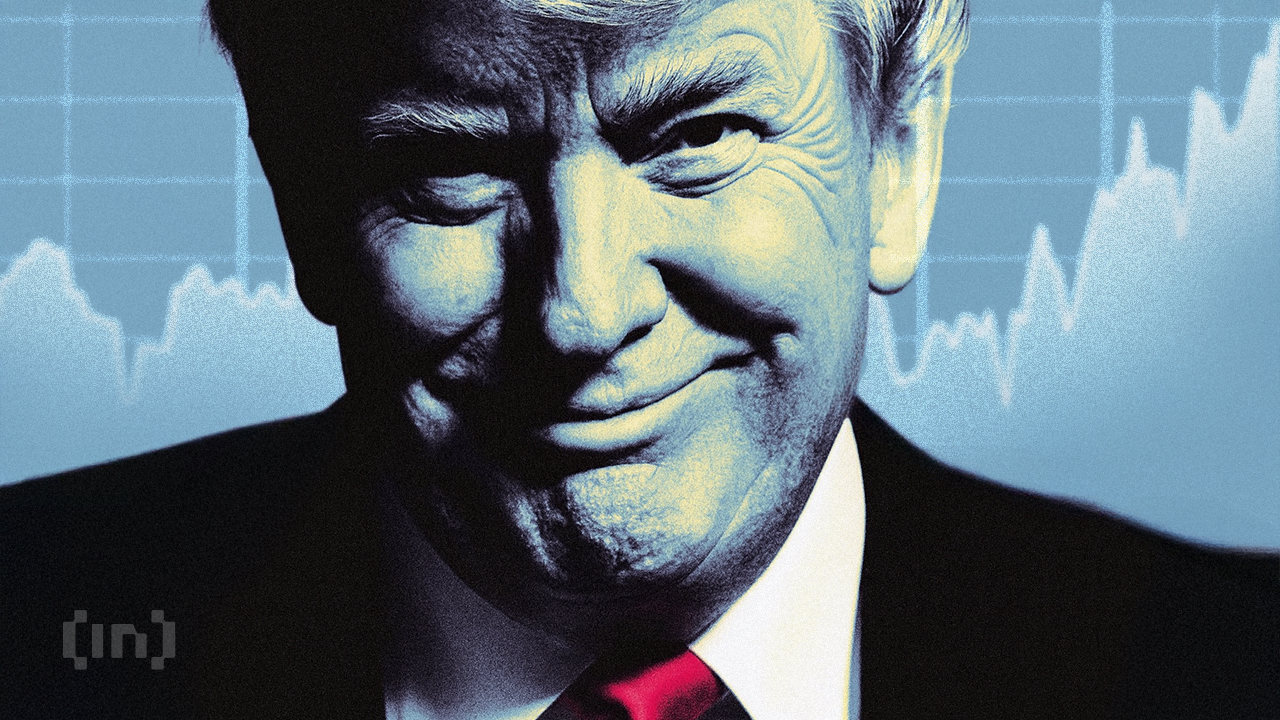

President Donald Trump said he is forming an AI Force and will soon name an artificial intelligence (AI) czar, promising not to hinder or stifle the industry’s growth.
He posted the plan on Truth Social on Saturday and modeled the body on the Space Force. He has not yet named a budget, a structure, or a candidate for the czar job.
Trump Calls the AI Backlash a Hoax
Trump has spent September arguing that the backlash against AI is manufactured. He called fears of an AI takeover a hoax during a live call with Nvidia’s chief, Jensen Huang, last week.
Saturday’s post carried that argument further. He filed the campaign against AI alongside a list of what he calls hoaxes.
“Over the years, there have been many Hoaxes, all generated by the Radical Left Dumocrats, for purposes of destroying our Country. RUSSIA…UKRAINE…Global Warming, Impeachment Hoax #1, Impeachment Hoax #2, Men in Women’s Sports, Transgender for Everyone, and now, the decimation, or destruction, of AI, commonly known as Artificial Intelligence,” he said.
According to Trump, the effort started as an attack on data centers and fizzled once communities saw higher salaries, lower taxes, and safer streets. He said opponents then moved on to AI itself, in the same way they swapped “global warming” for “climate change” to widen the room for doubt.
Trump had already warned towns that reject data centers they would end up backwards and poor. He now told readers that AI could eventually account for as much as 25% of US gross domestic product, and that the country leads China in the race to build it.
Follow us on X to get the latest news as it happens
AI Force Gets a Space Force Template and a Czar Seat to Fill
Trump pledged that the government would cherish and help the industry rather than slow it down. At the same time, he said officials would watch for wrongdoing, and that existing criminal and civil law is already enough to catch it.
The AI Force is his vehicle for that job. Trump pointed to Space Force, which he called a tremendous success from his first term, as the template, and said the czar announcement would follow soon. He set one bar for the job.
“Only High I.Q. individuals need apply!” he wrote.
The czar role has sat empty since March, when David Sacks left the White House AI and crypto post. Sacks still advises Trump as co-chair of the President’s Council of Advisors on Science and Technology.
Lab Researchers Put Odds on the Risk Trump Calls a Hoax
Trump’s post named Democrats as the source of the pressure on AI. The loudest recent warnings, however, have come from safety staff inside the lab building the technology.
Marcus Williams, a member of OpenAI’s Safety Oversight team, put the odds of human extinction at 70% within three years without regulation or a coordinated slowdown.
Bilal Chughtai quit Google DeepMind’s AGI safety team and said the technology could kill everyone. An Anthropic researcher also published a similar warning in early September.
Trump gave no date for the czar announcement. Whom he picks will show how much weight the White House gives to the researchers now asking it to slow down.
Subscribe to our YouTube channel to watch leaders and journalists provide expert insights
The post Trump Wants an AI Force and a Czar Who Meets One Key Bar appeared first on BeInCrypto.
The same exploiter was linked to attacks involving Fetch.ai (FET) and NuNet (NTX), with roughly $2 million in assets involved.
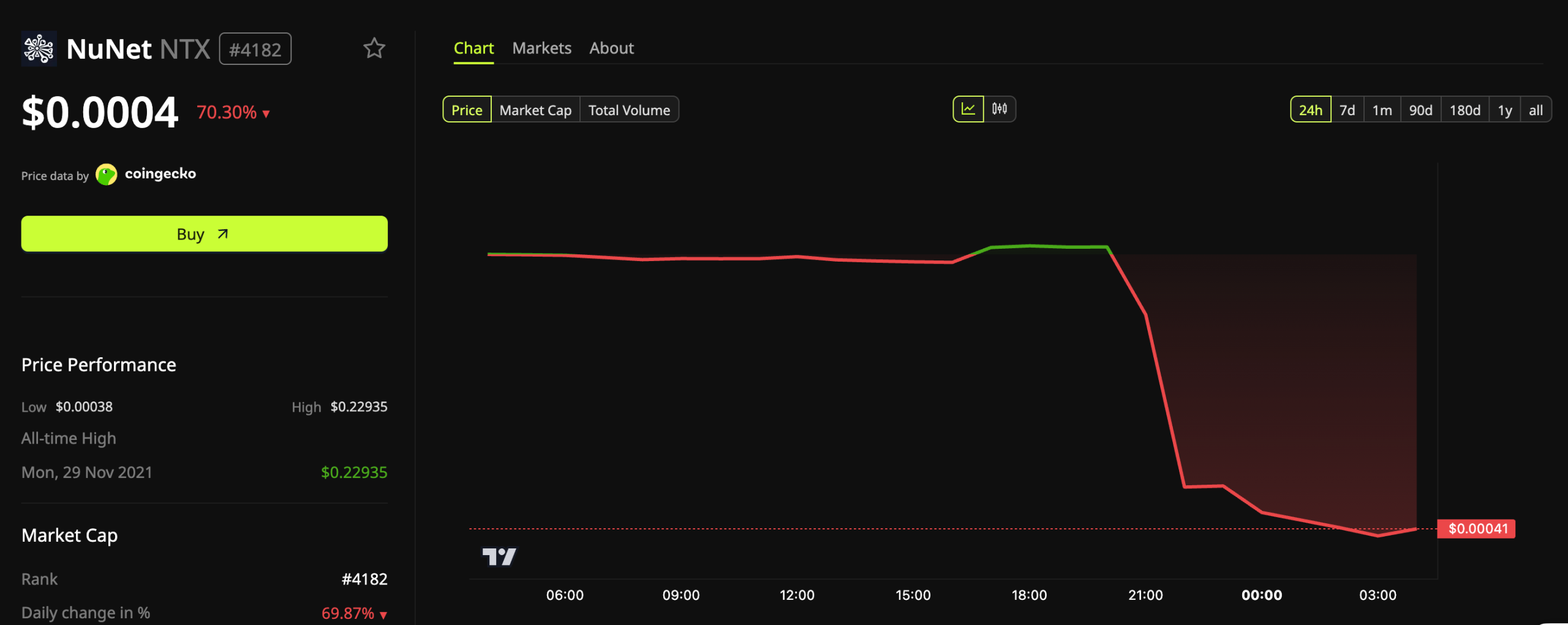
Security firms tied both events to the same wallet. NuNet’s token lost more than 70% of its value and touched an all-time low on September 20.
How One Attacker Reached Two Protocols
Blockaid said on September 20 that an exploiter drained about $1.56 million worth of FET from a Fetch.ai token converter on Ethereum. The attacker reportedly used a valid conversion-authorizer signature to call the conversionIn function on TokenConversionManagerV3.
That single call released the converter’s remaining FET inventory. The security firm identified the exploiter wallet as 0x1572…c362.
Follow us on X to get the latest news as it happens
According to Blockaid, the Fetch.ai loot wallet also received a large NTX mint from the NuNet deployer account. It estimated the value of the NTX mint at roughly $452,000.
The combined activity across the wallet cluster has reached approximately $2.01 million. PeckShieldAlert added that the exploiter has since swapped the stolen funds for 546.36 ETH, worth roughly $1.44 million at the time of reporting.
NuNet Token Sinks to a Record Low
The reported exploit has put pressure on NuNet’s NTX token. The token hit an all-time low at $0.000328 today. NTX changed hands near $0.0004 at press time, down more than 70% over 24 hours.

FET fell about 5% over the same period, a far smaller move than NuNet’s. That decline came as the wider market sold off, with most major assets in the red and total crypto market capitalization down 4%.
September has been expensive for the sector. Starknet lending protocol Nostra lost $3.5 million to a manipulated oracle three days ago.
DefiLlama had logged roughly $331 million in losses across 17 incidents this month before the Fetch.ai drain, most of it from the $320 million Liquid Network incident. Fetch.ai and NuNet now push the month past $333 million.
BeInCrypto has reached out to Fetch.ai and NuNet for comment.
Subscribe to our YouTube channel to watch leaders and journalists provide expert insights
The post Fetch.ai and NuNet Exploited for $2 Million by Same Attacker, NTX Hits All-Time Low appeared first on BeInCrypto.

Despite the overall macro calamity experienced last week, bitcoin’s price surged from $75,000 to almost $82,000 within days, hitting its highest level since the start of the month.
However, the breakout attempt was halted at $82,000 due to more worrisome news from the Middle East. There’s also a technical aspect that helped prevent another leg up.
New Escalation
Numerous reports online suggested on Sunday that the United States had warned that hostilities between Saudi Arabia and Iran-backed Houthis have escalated, with some even suggesting that the latter’s capital was under drone and ballistic missile attacks. BBC added that even some energy sites on the country’s Red Sea coast were targeted.
Saudi authorities reported that they intercepted and destroyed a ballistic missile fired at Riyadh on Saturday evening, claiming that there were no casualties and no new attacks.
“Iranian-supported Houthis have engaged in hostilities against Saudi Arabia, including civilian airports. This military conflict has the potential to escalate rapidly,” said the US State Department. The statement also warned Americans to “seriously reconsider travel to and through the region.”
Meanwhile, Daily Iran News, an X account with over 500,000 followers, claimed that Iran had issued “Code 100,” its highest alert level, for all armed forces earlier this morning. It covers the IRGC, the Army, and security forces.
Reacting to the news, Trump reportedly cut short his weekend at Camp David to return to the White House, citing the potential for significant escalation. Israel’s Netanyahu also reportedly headed back to his country after cutting the US trip short.
TD Sequential
We saw last week that the substantial blows from the CLARITY Act setback, the Fed rate hikes, and the subsequent hawkish outlook couldn’t keep BTC down for now. The asset dipped to $75,000 after the Senate vote, but went on an impressive run on Friday and Saturday, nearing $82,000 for the first time in two weeks.
This notable rally, though, changed some technical aspects. Ali Martinez reported that the TD Sequential, which flashed a buy signal when BTC slipped to $75,000, had flipped into a sell signal on Saturday evening, just as the cryptocurrency had tapped $81,500.
“That suggests short-term momentum may be getting stretched, and I’m watching closely for signs that it’s time to lock in some profits,” he added.
The post Why Was Bitcoin Rejected at $82K? 3 Reasons Behind the Sunday Pullback appeared first on CryptoPotato.

South Korean police have opened criminal cases against 26 users of the prediction market platform Polymarket and referred 18 of them to prosecutors over roughly 17.6 billion won, about $12.7 million, in bets tied to political, economic, and social outcomes.
The case, disclosed on September 17 through data from Democratic Party lawmaker Yoon Geon-young’s office, sets up a legal fight over whether trading on Polymarket counts as gambling under Korean law or something closer to a derivatives investment.
Blockchain Records and a Gambling Charge
According to a report from Asia Economy, the Gangwon Police Agency’s Cyber Investigation Unit had booked the 26 suspects as of September 15, and the largest single bet from one user reached about 5.7 billion won ($4.1 million).
Polymarket does not hold custody of user funds and settles wagers automatically in USDC or pUSD based on real-world outcomes, so it keeps no real-name list of who is trading. But law enforcement pulled public blockchain transaction records and used open-source techniques to trace the Korean users anyway.
Police argue the transactions amount to illegal gambling under Article 246 of the Criminal Code, pointing to a Supreme Court precedent holding that a bet counts as gambling once chance plays a role and money is staked on the result, even if skill also factors in.
Calling the trades an investment, in their reading, doesn’t change that a virtual asset is put at risk against an outcome nobody can know in advance.
The booked users argue Polymarket should be treated as a virtual asset derivatives market rather than gambling, and that is expected to become a central question once the cases reach court.
The setup could formally meet the legal definition of gambling according to attorney Kim Tae-rim of AXIS Law, since profits and losses turn on uncertain outcomes with virtual assets on the line.
South Korea Had Already Blocked Polymarket Access
The prosecutions have come after South Korea’s August 18 decision to block domestic access to Polymarket. As CryptoPotato reported then, authorities said the platform’s winner-takes-all structure, combined with betting on events outside users’ control, encouraged gambling behavior.
Polymarket had argued it fell outside Korean jurisdiction after dropping Korean language service and won-denominated payments, but the commission rejected that argument.
The prediction market has run into similar resistance well beyond Korea, with France, Australia and Germany restricting access, and Baltimore suing it and rival Kalshi last month over claims they operate as unlicensed sportsbooks.
The post Report: $12.7M in Polymarket Wagers Triggers Criminal Cases in South Korea appeared first on CryptoPotato.

The shipping industry group continues to show why it’s one of the best in the current stock market, with boatloads of stocks making new highs. Among them, Scorpio Tankers (STNG) and Matson (MATX) remain in buy zones. Shares of Monaco-based Scorpio climbed above the 87.39 buy point from an 18-week pattern. The buy zone goes to 91.76. It had already…
Copyright ©2026 Investor’s Business Daily, LLC. All rights reserved. 87990cbe856818d5eddac44c7b1cdeb8

Diesel prices keep getting gnarlier. As geopolitical violence chokes Russian refineries, the Strait of Hormuz and the Red Sea, the upshot is soaring fuel costs that “hit everyone” — not just drivers of supersized pickups, says Gulf Oil’s Tom Kloza. Diesel prices on Friday averaged $6.45 a gallon across the U.S., according to AAA, and $8.39 in California — the…
Copyright ©2026 Investor’s Business Daily, LLC. All rights reserved. 87990cbe856818d5eddac44c7b1cdeb8


With a market cap. of $25.4 billion, Houston, Texas-based CenterPoint Energy, Inc. (CNP) is an energy delivery company providing electric and natural gas services across Indiana, Minnesota, Ohio, and Texas. The company serves more than 7 million metered customers through its electric transmission and distribution, power generation, and natural gas distribution operations.
Companies valued between $10 billion and $200 billion are generally classified as “large-cap stocks,” and CenterPoint Energy comfortably fits this category. As of June 30, 2026, CenterPoint Energy owned approximately $48.3 billion in assets and employed around 8,800 people, with a history spanning more than 150 years.
More News from Barchart
CNP stock has slipped 15.3% from its 52-week high of $45.26, reached on Jul. 28. Over the past three months, CNP shares have dipped 10.5%, underperforming the Nasdaq Composite ( $NASX), which has declined marginally over the same period.

CNP stock is down marginally on a YTD basis, lagging behind NASX’s 13.6% gain. Moreover, shares of the company have risen marginally over the past 52 weeks, compared to NASX’s 17.5% return over the same time frame.
The stock has been trading below its 50-day and 200-day moving averages since August.

CenterPoint Energy has underperformed due to its substantial capital requirements and reliance on external financing, which may increase dilution risk. The company also faces pressure from its relatively low dividend yield, elevated valuation, and the need to convert expected data-center and large-load electricity demand into contracted, rate-base-producing assets.
In comparison, rival Duke Energy Corporation (DUK) has declined 2.6% over the past 52 weeks, lagging behind CNP stock over the same period.
Despite the stock’s underperformance relative to the NASX, analysts remain moderately optimistic on CNP. The stock has a consensus rating of “Moderate Buy” from 19 analysts in coverage, and the mean price target of $45.29 implies 17.5% upside from its current price.
On the date of publication, Sohini Mondal did not have (either directly or indirectly) positions in any of the securities mentioned in this article. All information and data in this article is solely for informational purposes. This article was originally published on Barchart.com

Muller, White lead Whitecaps over slumping Real Salt Lake

iPhone 18 Pro stars in new ‘Shot on iPhone’ music video

World ‘s Entire Financial System Is A SCAM! | Figuring Out #Shorts




-

 Fashion2 days ago
Weekend Open Thread: Talbots – Corporette.com
-

 Tech7 days ago
The Latest Weird Thing to Play Doom Is the Mapped-Out Brain of a Fruit Fly
-
 NewsBeat1 day ago
Trump says US has reached an agreement to take permanent control of Greenland’s security
-

 Crypto World5 days ago
Kraken Lets xStocks Holders Earn Yield Through DeFi
-

 Crypto World5 days ago
Revolut Attackers Warn of Ongoing Daily Customer Data Leaks
-

 Crypto World1 day ago
Circle launches Arc Studio AI agent for building onchain apps
-

 Crypto World4 days ago
What Is the Status of the U.S.-Iran Peace Talks? Here's What Both Sides Are Saying
-

 Crypto World3 days ago
US Charges Robinhood Engineers Over Crypto Listing Trades
-

 Crypto World5 days ago
Robinhood engineers charged over $50K crypto scheme
-

 Crypto World6 days ago
Elon Musk Drops a Bombshell: Grok 5 Could Be the AGI Breakthrough
-

 Crypto World1 day ago
Bitcoin price breaks channel as RSI climbs to 63
-
 Crypto World7 days ago
New Tesla Roadster Uses SpaceX Tech. Will It Impact the Stock Price?
-
 NewsBeat6 days ago
‘Sick conspiracy’: Trump says only guardrails AI needs is ‘a strong and smart (High IQ!) president’ in all-caps rant
-

 Crypto World5 days ago
NVIDIA Analysis: Attempted Rising Wedge Breakout Amid Pressure on the AI Sector
-
Business6 days ago
SK Hynix ADRs Fall More Than 6% as Memory Rally Breaks on Fears of Slower AI Spending
-

 Tech4 days ago
Webb’s IC 348 Mosaic Includes Two-Jupiter Dwarfs, Twin Jets, and a Nursery Still Making Worlds
-
 Crypto World6 days ago
3 Token Unlocks to Watch in the Third Week of September 2026
-

 Crypto World5 days ago
DOJ Seeks to Seize $61M in Iran Oil Funds From Binance Accounts It Vouched For
-
Crypto World5 days ago
Can Circle’s Arc Repeat Robinhood Chain’s Meme Coin Boom?
-

 Crypto World7 days ago
Goldman Sachs backs 25bp Fed hike after CPI
You must be logged in to post a comment Login