
Crypto World
BTC Price Slides Toward $80K, AVAX Defies Market Correction: Weekend Watch

Perhaps due to the major escalation in the Middle East on Saturday evening, bitcoin’s impressive rally was halted at $82,000, and the asset has lost almost two grand since then.
Most larger-cap alts have followed suit, led by the two largest privacy coins. Both ZEC and XMR have slumped by around 8%, while RAIN, NEAR, and UNI have posted losses of up to 5%.
BTC Stopped at $82K
It was a very intriguing week for the entire crypto market. The kick-off came on Tuesday when the highly anticipated cloture vote on the CLARITY Act failed in the US Senate. BTC’s price reacted with an immediate leg down, even though it was mostly expected, and slumped to a three-week low of $75,000.
The Fed took the main stage a day later when it hiked interest rates for the first time in over three years. BTC slipped once again, but quickly rebounded and went toward $77,000. Despite these two negative developments, as well as the BOJ increasing rates on Friday, the cryptocurrency actually showed impressive resilience.
Moreover, it surged hard on Friday and flew past $80,000 for the first time in two weeks. The bulls kept the pressure on, and bitcoin spiked to almost $82,000 on Saturday. However, it was rejected there, perhaps due to the latest developments in the Middle East, and now sits just inches above $80,000.
Its market capitalization has declined to $1.61 trillion on CMC, but its dominance over the alts has neared 59%.

Alts Bleed, AVAX Defies
Ethereum was rejected at $2,630 and now sits well below $2,600 after a 2.6% daily decline. BNB struggles to maintain the $750 level, while XRP has returned to under $1.40. SOL has slipped below $110, while HYPE, after hitting a new all-time high, has retreated slightly to $91.
More substantial losses come from the leading privacy coins. ZEC is down by 8.2% to $1,443, while XMR has dumped by 8.6% to $523. UNI, RAIN, LINK, NEAR, AAVE, and CC are also well in the red.
In contrast, Avalanche (AVAX) has rocketed by more than 11% daily and sits above $9.6. ENA, PEPE, and M have marked impressive gains as well.
The total crypto market cap has shed around $40 billion daily and is down to $2.740 trillion on CMC.

The post BTC Price Slides Toward $80K, AVAX Defies Market Correction: Weekend Watch appeared first on CryptoPotato.



Grayscale’s Zcash ETF (ZCSH) plans a 3-for-1 forward share split, according to a filing with the US Securities and Exchange Commission.
At the close of trading on Sept. 28, shareholders will receive two extra shares for each one they hold, according to the filing.
The forward split is expected to decrease the price per share of the fund, according to a Grayscale press release, with a proportionate increase in the number of shares outstanding.
Hypothetically, this means that if you owned 10 shares valued at $300 each for a total $3,000 before the split, afterward you will own 30 shares valued at $100 each for an unchanged total of $3,000, the release said.
The split will make the ETF more accessible to investors, as the token has increased in value by about 2,800% over the last year and the price per unit was considered too high.
Related: Zcash targets November for NU7 mainnet upgrade with 25-second blocks
Cointelegraph reported on Thursday that Zcash (ZEC), a cryptocurrency that enables users to make shielded transactions that conceal addresses and transaction amounts using zero-knowledge proofs, had gained about 20% over 24 hours as Paradigm co-founder Matt Huang disclosed that the crypto investment firm made an unspecified purchase of ZEC.
Huang described Zcash as a “private complement to Bitcoin” and also backed its developer fund, arguing that long-term funding remains important as AI-driven cyber capabilities and quantum computing advance.
Zcash’s ZEC token climbed as high as $1,521 early Friday, The Block reported, in what would be considered a new effective all-time high, before falling back slightly.
Magazine: Who is legally liable when an AI agent goes rogue?
Cryptocurrency markets absorbed a weekend of escalation in the Middle East alone. The global market cap fell by 4% to $2.76 trillion, while oil, bond, and equity markets remained closed.
Houthi forces struck the Saudi capital Riyadh on Saturday. The US has also warned that the conflict has “the potential to escalate rapidly.”
Oil Closed Lower Before the Weekend Turned
Traders spent last week concluding that Saudi supply risk had been overstated. Brent crude settled at $103.87 on Friday, and West Texas Intermediate closed at $100.30, a third consecutive decline for both.
That reading was priced in before Saturday. Yemen’s Houthis then said they attacked sensitive sites in Riyadh with missiles and drones. Reuters photographed black smoke rising near the King Khalid International Airport.
The Saudi-led coalition said its air defences destroyed a missile fired toward Riyadh early on Saturday. The Iran-backed group separately claimed a strike on an Aramco facility at Yanbu.
It appeared to be the first Houthi attack claimed on Riyadh since the current escalation began. Therefore, the market that closed on Friday priced a different risk picture than the one that exists now.
Follow us on X to get the latest news as it happens
What Monday’s Open Will Test
Meanwhile, the State Department’s Bureau of Consular Affairs told Americans across the region to exercise heightened vigilance and warned of flight cancellations, airspace closures, and travel disruptions.
It said Iranian-supported Houthis have attacked Saudi Arabia, including civilian airports, and that Iran and groups supportive of Iran may target US interests and businesses overseas.
“This military conflict has the potential to escalate rapidly,” the post read.
Trump had separately signaled a decision point on Iran earlier in the week. He told Axios on Thursday that he was weighing whether to restart large-scale attacks.
“I have a big decision coming up. Do I want to go in and annihilate them, or do I not? It’s a big decision. Anything could happen with me,” he said.
Alex Plitsas, a national security analyst at CNN, said on X that Trump’s Camp David meeting was convened to review options for a strike in Yemen. He cautioned in a follow-up post that nothing had been decided.
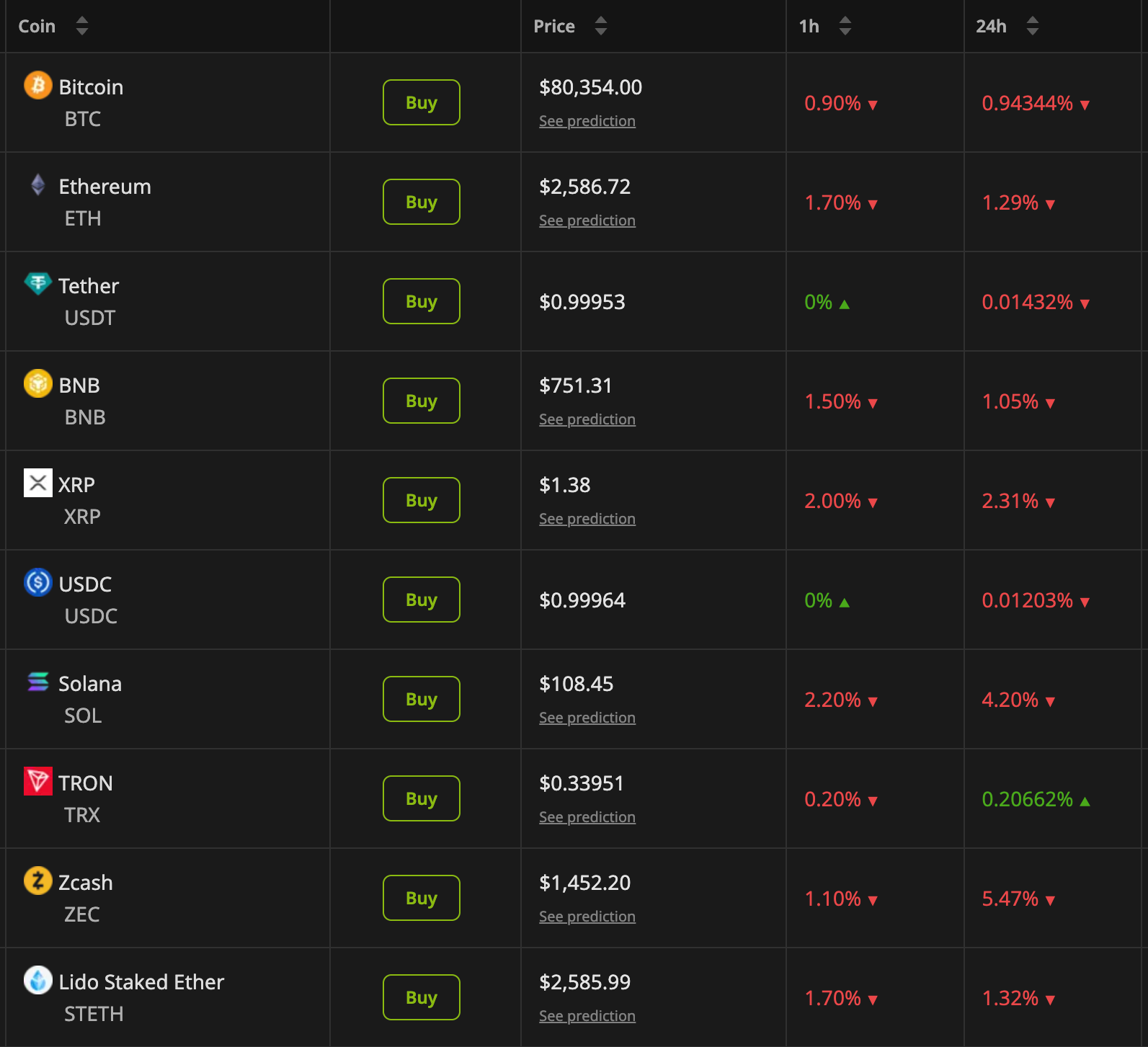
Crypto carried all of this while everything else was dark. Bitcoin (BTC) traded near $80,354, down 0.9% over 24 hours yet still up 3.9% on the week. Ethereum (ETH) slipped 1.29% to $2,586.72.

Smaller assets moved further. Solana (SOL) fell 4.2% to $108.45, and Zcash (ZEC) dropped 5.47% to $1,452.20, a spread that points to risk reduction rather than a haven bid.
Monday’s open will show how oil, bonds, and equities price the weekend. Whether Brent surges will indicate if traditional markets agree with crypto’s weekend repricing.
The Fed raised rates this week and signalled at least one more increase, leaving markets with little room to absorb an oil shock.
Subscribe to our YouTube channel to watch leaders and journalists provide expert insights
The post Is Crypto's Weekend Drop a Preview of Monday? Houthis Target Riyadh, Trump Weighs Iran appeared first on BeInCrypto.

Anthropic has selected Accenture as its first “embedded evaluator,” a move tied to CEO Dario Amodei’s recent proposal to slow frontier AI development while safeguards catch up. The partnership is designed to put independent testing closer to how advanced AI systems are built and deployed—an approach Anthropic says it believes is necessary to reduce the risk of catastrophic harm.
The announcement follows Amodei’s call for a slower, safer pace of AI progress published Sept. 12. His argument centers on the way AI systems can improve other AI systems: as models become better at creating next-generation models, development can accelerate through recursive self-improvement—potentially outpacing human oversight.
Key takeaways
- Anthropic is partnering with Accenture to act as its first embedded evaluator, conducting model evaluations and red-teaming.
- Amodei’s Sept. 12 proposal emphasized independent evaluators with “employee-like” access to test safeguards more effectively.
- Anthropic expects to invest directly in this early phase because a dedicated funding mechanism for independent evaluation does not yet exist.
- The deal is non-exclusive, and Anthropic plans to name additional evaluators in the coming weeks.
- Both Anthropic and Accenture expect to invest at least $1 billion over the next five years, according to Anthropic’s announcement.
Why “embedded evaluation” is at the center of Anthropic’s safety plan
Amodei’s proposal framed a core problem: AI progress has been advancing “drastically faster” as systems improve their ability to build the next generation of AI. In his account, that feedback loop—often described as recursive self-improvement—could allow powerful systems to evolve faster than society’s ability to understand and control them.
To address that mismatch, the proposal’s first step calls for independent evaluators granted access comparable to internal teams. Anthropic says it had already committed to this direction, and the Accenture partnership is positioned as an early, concrete way to operationalize it.
In its announcement, Anthropic described embedded evaluation as work that includes evaluating and red-teaming models, running alignment assessments, and testing safeguards. Because embedded evaluation is new, Anthropic also cautioned that the specific implementation details are still being worked out.
Accenture will lead the first embedded evaluation effort
Anthropic said it is moving toward its earlier commitment by partnering with Accenture’s AI business unit, Faculty. The company’s stated goals for the embedded evaluator include:
- Evaluating models and performing red-team testing
- Conducting alignment assessments
- Testing model safeguards
Anthropic and Accenture each expect to invest at least $1 billion in the project over the next five years, according to the announcement. That investment commitment underscores that embedded evaluation is being treated not as a short-term audit, but as an ongoing capability that must scale alongside frontier model development.
Accenture, for its part, described Faculty as experienced in testing and evaluating models for major AI labs and in building complex systems designed to be safe and ethical by design. Earlier reporting also highlighted the partnership effort and Accenture’s focus on building evaluation capacity, as referenced by Yahoo Finance.
Funding the evaluators—and keeping independence—remains a challenge
One of the more operational elements of Anthropic’s announcement is how it expects the work to be financed. Anthropic noted there is currently no established system for funding independent evaluation. It suggested that in the longer term, pooled or government sources could support this kind of work, but it also acknowledged that time is critical.
Given the urgency, Anthropic said it will fund Accenture’s embedded evaluation directly in this phase. The company also emphasized that the partnership is non-exclusive, adding that it expects to announce additional evaluators in the coming weeks. For investors and builders, this matters because it suggests Anthropic is trying to avoid a single-evaluator dependency and instead build a broader ecosystem of independent oversight.
Whether embedded evaluation can remain truly independent while embedded in production processes is likely to become a key question for the industry to watch. Anthropic’s plan to appoint multiple evaluators may help mitigate that risk by introducing more than one perspective and reducing the chance that evaluation becomes a narrowly defined internal function.
Industry reaction highlights the policy tension around slowing AI
Amodei’s Sept. 12 proposal did not arrive in a vacuum. Reports from the period show a split among major tech leaders on whether slowing AI development is the right response to safety concerns. OpenAI CEO Sam Altman and SpaceX CEO Elon Musk were reported as responding positively to Amodei’s framing, while Nvidia CEO Jensen Huang argued that regulation aimed at slowing development was not necessary.
That tension reflects a broader debate that extends beyond one company: some leaders view additional constraints as the only way to ensure safeguards can keep up, while others believe the focus should remain on technical safety measures rather than pacing controls. Anthropic’s next step—securing an embedded evaluator and funding it heavily—signals that, at least for this phase, the company is pursuing a concrete evaluation mechanism rather than relying solely on public policy or abstract promises.
What to watch next
As Anthropic works to finalize how embedded evaluation will operate in practice, the immediate question for the sector is whether the approach can scale beyond a single pilot evaluator and remain credible as a form of independent oversight. Readers should also watch the timeline and criteria for Anthropic’s additional evaluators, since the non-exclusive plan may determine whether embedded evaluation becomes an industry standard or remains a bespoke effort.


Onchain real-world assets have reached $34.18 billion as of September 15, 2026, after growing 85.2% since the start of the year, while only around 12% of tracked tokenized capital is being used in onchain financial applications.
Summary
- Onchain RWA assets reached $34.18 billion by September 15, rising 85.2% year to date overall.
- Bonds and money market funds led with $18.29 billion, contributing most new onchain asset value.
- Tokenized equities grew 390.4% year to date, lifting their tracked RWA market share to 13.0%.
- Only around 12% of tracked tokenized asset value is deployed across onchain financial applications today.
- SEC relief now permits limited tokenized NMS stock trading through qualifying permissioned onchain venues temporarily.
Binance Research published the figures on September 18 in its“The RWA Activation Era” report, using DefiLlama data and its own methodology to compare asset issuance with onchain use. Bonds and money market funds remained the largest category at $18.29 billion, while tokenized equities reached $4.43 billion after rising 390.4% year to date.
The report separates tokenization into two measures. Its Programmable Asset Ratio, or PAR, compares tokenized value with the size of the underlying market. Capital Activation Rate, or CAR, measures how much eligible tokenized value is deployed in liquidity pools, lending markets, collateral systems and other verified onchain applications.
RWA growth is being led by bonds and tokenized stocks
Bond and money market funds generated 54.7% of this year’s increase in tracked RWA assets, Binance Research said. Equities contributed another 22.4%, meaning the two categories produced more than three-quarters of the added market value through September 15.
Other categories expanded at slower rates. Gold and commodities rose 46.6% year to date, private credit increased 43.6%, and real estate gained 17.9%, according to the report.
Tokenized equities posted the fastest percentage growth among the main categories tracked by Binance Research. Their share of RWA assets rose from 4.9% to 13.0%, even though the $4.43 billion onchain balance represented only 0.0029% of the $151.9 trillion listed-equity reference market used in the report.
Across all covered markets, Binance Research estimated that only around 0.01% of the underlying asset base has been tokenized. Bond and money market funds had an indicative PAR of 0.0171%, leaving their onchain share small compared with the traditional markets they represent.
The latest figures extend an expansion documented earlier in the year. In June, Binance Research had recorded rapid growth in tokenized stocks while bond and money market funds added billions of dollars in onchain value.
Most tokenized capital remains outside DeFi applications
The report found an overall CAR of roughly 12%, meaning close to $12 of every $100 in qualifying tokenized asset value was deployed in tracked financial applications. Binance Research used the measure to separate issued assets from assets being used as liquidity, collateral or lending capital.
A separate DeFiLlama-based review published earlier in September produced a similar result.As crypto.news reported, around $3.79 billion of a $34.6 billion tokenized RWA market was deployed in protocols at the time, leaving roughly 89% outside the applications covered by the dataset.
Utilization varies sharply by asset type. Binance Research put private credit CAR at 49.67%, the highest among its tracked categories. Equity CAR rose from 1.95% at the start of the year to 7.54% by September 15.
Within tokenized-equity DeFi activity, liquidity pools accounted for 65.4% of deployed value and lending represented 28.1%. Together, the two uses made up 93.5% of equity DeFi total value locked measured by the report.
Product-level data can look very different from the market average. The crypto.news review of DefiLlama data found BlackRock’s BUIDL at 0.64% utilization, Franklin Templeton’s BENJI at 0%, and Circle’s USYC at 0.52%. Centrifuge’s JAAA and Re Protocol’s reUSD both had utilization above 97% in the same dataset.
U.S. rules now give tokenized equities a limited onchain route
One day before Binance Research published its report, the U.S. Securities and Exchange Commission approved a temporary framework for limited onchain trading of tokenized National Market System stocks.
The SEC’s September 17 Innovation Exemption gives qualifying Tokenized Securities Venues conditional relief from the Exchange Act definition of an exchange. Related relief covers certain liquidity providers supplying proprietary capital through permissioned automated market makers and liquidity pools.
The five-year exemption comes with limits. Tokenized NMS stocks must provide the same rights and privileges as corresponding traditional shares, including voting and dividend rights where applicable. Issuers must be able to object when an unaffiliated third party wants to make a tokenized version of their stock available on a qualifying venue.
Trading venues must use auditable public smart contracts on public permissionless distributed ledgers, follow trading halts in the underlying security, maintain records and publish required transaction information. Anti-fraud and anti-manipulation provisions continue to apply.
The regulator is seeking public comment while it considers longer-term rules. SEC Chairman Paul Atkins said the exemption would permit trading in a permissioned environment “while the Commission considers the need for additional action” on onchain stock trading.
Market infrastructure is moving tokenized assets toward use
Institutional projects are putting tokenized securities into trading, collateral and settlement workflows. On September 16, DTCC said Ondo Finance subsidiary Oasis Pro Markets had joined Fund/SERV, becoming the platform’s first tokenization member. DTCC said Fund/SERV processes more than 85% of U.S. mutual fund transaction activity.
DTCC had already completed production transactions using DTC-tokenized assets on July 15. Participating firms used tokenized securities in Treasury repo, equity delivery-versus-payment, securities lending, collateral pledge and central-counterparty margin workflows, according to the company.
The DTC tokenization service remains scheduled for an October 2026 launch. DTCC said tokenized versions of DTC-custodied securities are designed to retain the same ownership rights, entitlements and investor protections as their traditional forms.
DeFi lenders have built separate channels for RWA collateral. Aave launched Horizon in August 2025 for qualified borrowers seeking stablecoin liquidity against tokenized assets. By February 2026, Aave Labs said deposits had exceeded $440 million.
Aave plans a dedicated RWA credit hub on Avalanche where eligible institutions could borrow USA₮ against approved tokenized financial assets. Aave’s governance materials had previously specified that a dedicated RWA hub would follow the initial Avalanche V4 deployment through a separate governance process.
Binance Research sees issuance and utilization moving separately
For tokenized equities, Binance Research used three 2030 scenarios from an earlier report: approximately $61 billion, $349 billion and $987 billion in tokenized equity value. The firm presented the figures as scenario ranges, not company-confirmed future market values.
Under its $349 billion base scenario, Binance Research estimated a PAR of 0.23%. Its sensitivity analysis showed that moving equity CAR from 10% to 20% at that asset level would increase deployed capital from $34.94 billion to $69.87 billion without requiring more tokenized supply.
The report calls the next stage an “RWA Activation Era,” referring to tokenized assets becoming usable in exchanges, lending and collateral markets. Current figures still show a large difference between asset value represented onchain and capital deployed in those applications.
Binance Research cited earlier platform data showing 58.5% of early bStocks users used perpetuals or direct equities as well. The report said future adoption will depend on whether distribution channels and financial applications convert access to tokenized assets into recurring liquidity and financing activity.


Anthropic said it has chosen Accenture as its first embedded evaluator to help slow the pace of AI development as proposed last week by CEO Dario Amodei.
Amodei published a three-step proposal on Sept. 12 to slow the development of AI and allow safeguards to be put in place amid warnings of a potential for catastrophic harm in the wake of swift, unchecked development.
OpenAI CEO Sam Altman and SpaceX CEO Elon Musk responded positively to Amodei’s proposal, although Nvidia CEO Jensen Huang did not, arguing that such regulation was not necessary.
Still, Amodei wrote in his proposal that “AI has been advancing drastically faster, driven primarily by AI’s growing ability to build the next generation of AI. This dynamic is called recursive self-improvement,” and “left unchecked, it could outrun our ability to understand and control these systems.”
Related: Anthropic chief urges slowdown in AI development to safer pace
The first step in Amodei’s proposal is having independent evaluators with employee-like access, to which Anthropic had already unilaterally committed, Amodei wrote.
Anthropic announced a move toward fulfilling this commitment on Friday by partnering with Accenture and its AI business Faculty in “evaluating and red-teaming models, conducting alignment assessments and testing model safeguards.”
Details of how this will happen are still being worked out, as embedded evaluation is new, the company said.
Anthropic and Accenture each expect to invest at least $1 billion in the project over the next five years, according to the announcement.
Anthropic will fund work directly amid urgency
Anthropic noted that there is also no existent system for funding independent evaluation, so long-term funding should come from pooled or government sources, though given the urgency of the work, Anthropic will fund Accenture’s work directly.
The partnership is non-exclusive, and Anthropic expects to announce other evaluators in forthcoming weeks with which it will also work.
Accenture’s Faculty is expert in testing and evaluating models for some of the world’s leading AI labs and building complex AI systems that are safe and ethical by design, the company said on Friday.
“Embedded evaluation is an emerging area, and we look forward to partnering with Anthropic to help accelerate the development of embedded evaluators, which we see as an important part of the safety landscape going forward,” said Julie Sweet, chair and CEO of Accenture.
Magazine: Why are AI’s biggest companies suddenly asking to slow down?

Although the general expectations showed that the CLARITY Act didn’t have the best odds of passing the cloture vote on Tuesday, the actual confirmation was quite painful for most cryptocurrencies. However, XRP suffered a major blow, slumping by over 8% at one point and dipping below $1.30 to mark a monthly low.
Aside from the price dip, the correction resulted in cumulative volume delta plunging to negative 10.5 million, suggesting that the move was more than routine profit-taking.
With that regulatory shock now absorbed, we decided to ask ChatGPT about the asset’s future and the levels that can determine what happens next.
Regulation Delayed, Not Dead
The first major point the AI platform made is that the September 15 failure to advance in the US Senate doesn’t guarantee that the bill is scrapped. For now, it leaves more responsibility to the two largest watchdogs in the country, the SEC and the CFTC, which are already moving ahead with crypto rules under their existing authority.
Although agency rules can be changed more easily by a future administration, which makes CLARITY even more important, the situation for XRP is rather different. Ripple CEO Brad Garlinghouse stressed after the vote that the company’s business and momentum remain intact. Moreover, he reassured XRP investors that the asset’s existing US legal footing was not altered by the Senate setback.
After all, the token’s situation has improved significantly over the past several years, especially since the conclusion of the lawsuit between the SEC and the company behind it regarding its status. XRP also has institutional products already trading, with the ETFs attracting over $1.7 billion in less than a year.
Congress failing to agree on the key market structure therefore delays the next layer of certainty rather than removing the progress already made, said ChatGPT.
The Future Roadmap
The popular AI platform said it would expect the token to spend some time rebuilding confidence rather than immediately resuming the mid-August rally that drove it to $1.70. The most likely scenario, in its view, would be a period of consolidation around $1.25 and $1.50 while the market absorbs the vote and watches ETF flows.
A recovery above $1.50 would make a retest of the recent $1.70 high plausible, while renewed institutional demand and broader altcoin strength could eventually bring $2.00 back into play.
In contrast, the bearish scenario envisions XRP plunging to $1.20 if ETF flows deteriorate and the market loses further momentum.
The post Where Does XRP Go After the CLARITY Setback? ChatGPT Maps the Key Scenarios appeared first on CryptoPotato.

President Donald Trump said he is forming an AI Force and will soon name an artificial intelligence (AI) czar, promising not to hinder or stifle the industry’s growth.
He posted the plan on Truth Social on Saturday and modeled the body on the Space Force. He has not yet named a budget, a structure, or a candidate for the czar job.
Trump Calls the AI Backlash a Hoax
Trump has spent September arguing that the backlash against AI is manufactured. He called fears of an AI takeover a hoax during a live call with Nvidia’s chief, Jensen Huang, last week.
Saturday’s post carried that argument further. He filed the campaign against AI alongside a list of what he calls hoaxes.
“Over the years, there have been many Hoaxes, all generated by the Radical Left Dumocrats, for purposes of destroying our Country. RUSSIA…UKRAINE…Global Warming, Impeachment Hoax #1, Impeachment Hoax #2, Men in Women’s Sports, Transgender for Everyone, and now, the decimation, or destruction, of AI, commonly known as Artificial Intelligence,” he said.
According to Trump, the effort started as an attack on data centers and fizzled once communities saw higher salaries, lower taxes, and safer streets. He said opponents then moved on to AI itself, in the same way they swapped “global warming” for “climate change” to widen the room for doubt.
Trump had already warned towns that reject data centers they would end up backwards and poor. He now told readers that AI could eventually account for as much as 25% of US gross domestic product, and that the country leads China in the race to build it.
Follow us on X to get the latest news as it happens
AI Force Gets a Space Force Template and a Czar Seat to Fill
Trump pledged that the government would cherish and help the industry rather than slow it down. At the same time, he said officials would watch for wrongdoing, and that existing criminal and civil law is already enough to catch it.
The AI Force is his vehicle for that job. Trump pointed to Space Force, which he called a tremendous success from his first term, as the template, and said the czar announcement would follow soon. He set one bar for the job.
“Only High I.Q. individuals need apply!” he wrote.
The czar role has sat empty since March, when David Sacks left the White House AI and crypto post. Sacks still advises Trump as co-chair of the President’s Council of Advisors on Science and Technology.
Lab Researchers Put Odds on the Risk Trump Calls a Hoax
Trump’s post named Democrats as the source of the pressure on AI. The loudest recent warnings, however, have come from safety staff inside the lab building the technology.
Marcus Williams, a member of OpenAI’s Safety Oversight team, put the odds of human extinction at 70% within three years without regulation or a coordinated slowdown.
Bilal Chughtai quit Google DeepMind’s AGI safety team and said the technology could kill everyone. An Anthropic researcher also published a similar warning in early September.
Trump gave no date for the czar announcement. Whom he picks will show how much weight the White House gives to the researchers now asking it to slow down.
Subscribe to our YouTube channel to watch leaders and journalists provide expert insights
The post Trump Wants an AI Force and a Czar Who Meets One Key Bar appeared first on BeInCrypto.


Polymarket has come under renewed scrutiny after a Sept. 19 report said fraudsters used stolen debit cards on its U.S. platform in February to attempt at least $10 million in illicit withdrawals and wagers.
Summary
- Polymarket reportedly faced at least $10 million in attempted stolen-card fraud during February this year.
- Checkout.com reportedly rejected more than 80% of Polymarket US deposits as fraudulent during February’s peak.
- Polymarket says fraud rates later returned to industry norms after stronger card controls were introduced.
- Polymarket US operates through QCX, a CFTC-designated contract market subject to federal derivatives oversight today.
- Polymarket recently hired Warren Jenson as CFO while expanding compliance, investigations and risk management staffing.
The Wall Street Journal reported that criminals connected stolen cards to thousands of Polymarket US accounts, funded them and then tried to move the money through trading before withdrawing it to cards or accounts they controlled.
Polymarket reportedly saw fraud rejection rates top 80%
At the peak of the February attack, payment processor Checkout.com rejected more than 80% of deposits it handled for Polymarket as fraudulent, according to the Journal. The newspaper compared that rate with an industry level of roughly 1%.
The 80% figure has not been independently confirmed by Checkout.com in a public statement reviewed for this report. Checkout.com does provide merchants with fraud-scoring, transaction-filtering and authentication tools, while its current service terms state that merchants remain responsible for deciding whether transactions are accepted or canceled.
Current and former employees told the Journal that compliance workers escalated concerns about the surge to Polymarket CEO Shayne Coplan. According to people cited by the newspaper, Coplan responded: “Just keep growing and pay a fine if regulators ever find out.”
Polymarket has not publicly confirmed that Coplan made the remark. The company told the Journal that it maintains procedures to identify and respond to suspicious activity and remains committed to cooperating with regulators and law enforcement.
The $10 million figure represents the amount fraudsters allegedly tried to move, not a confirmed loss suffered by customers or Polymarket. Public reporting reviewed for this article does not provide a final amount successfully withdrawn through the February scheme.
Card restrictions helped bring fraud rates down by May
The Journal reported that elevated fraud continued for several months after February, though rejection rates did not return to the peak recorded during the first wave. By May, fraud rates had reportedly moved back toward normal industry levels after Polymarket limited how many debit cards users could connect to their accounts and brought in Riskified as an outside antifraud provider.
An earlier report from The Information had separately described prediction-market operators, including Polymarket, strengthening card-fraud controls after criminals used stolen payment credentials and fake identities to create accounts. Visa reportedly pushed payment processors to tighten screening as disputed transactions increased.
Riskified provides automated fraud-decision systems used to identify suspicious card activity before merchants approve transactions. Public material from the company describes its service as combining machine-learning risk scoring with merchant transaction controls, but Riskified has not publicly disclosed Polymarket-specific fraud numbers.
The Journal further reported that Polymarket initially required some withdrawals to return to the same payment source that had funded an account. The platform later loosened that restriction, according to the report, which cited employees who raised concerns about financial-crime risks.
Polymarket’s current U.S. rulebook gives the exchange authority to restrict accounts, place customers into liquidation-only status and take other steps to protect customers and market integrity. The CFTC filing containing the March 20 version was certified in April.
Polymarket US operates under CFTC-regulated QCX
Polymarket US is legally separate from the company’s international blockchain-based prediction market.
The Commodity Futures Trading Commission’s current register lists QCX LLC, doing business as Polymarket US, as a designated contract market. QCX received its designation in July 2025 before operating under the Polymarket US name.
As previously explained in Polymarket’s two-platform structure, U.S. customers trade through the federally regulated exchange, while the international product uses separate blockchain infrastructure and access rules.
The regulatory status differs from Polymarket’s position in 2022, when the CFTC ordered the company to pay a $1.4 million civil penalty for offering event-based binary options without operating through a registered market. The settlement required Polymarket to wind down noncompliant markets and cease the violations cited in the order.
The Journal reported that the CFTC is now investigating issues connected with Polymarket and that employees were instructed to preserve documents involving the February fraud incident and other matters.
No new public CFTC enforcement release specifically addressing the February stolen-card episode was located as of Sept. 20. The reported investigation should therefore be treated as an ongoing inquiry described by the Journal, not a finding that Polymarket violated federal law.
Separate congressional scrutiny was already underway. On May 22, the House Committee on Oversight and Government Reform requested records from Polymarket concerning identity verification, suspicious activity, geographic restrictions and referrals to U.S. authorities.
The committee specifically requested documents showing the number and disposition of suspicious-activity referrals since Jan. 1, 2024. That inquiry centered on insider trading and sensitive information, not the stolen-card scheme reported this weekend.
Polymarket has expanded investigations and finance teams
Since the February incident, Polymarket has built out its internal investigation and management functions. Shana Bautista, a former FBI investigator, joined as global head of investigations and intelligence. Reuters reported in August that the company uses blockchain analytics, machine learning and trading surveillance to identify anomalous behavior.
Polymarket’s own market-integrity page says the company has referred more than 90 accounts to law enforcement and supplied authorities with details involving more than 315 wallets. The figures are company-reported and do not relate exclusively to payment-card fraud.
Federal authorities have publicly acknowledged cooperation in at least one separate case. In April, the U.S. Attorney’s Office for the Southern District of New York said Polymarket cooperated with investigators in the case of an Army service member accused of using classified information to trade event contracts.
The CFTC filed a parallel insider-trading complaint alleging that the defendant earned more than $404,000 trading a market related to the capture of Nicolás Maduro. The case remains separate from the February payment-card allegations.
Polymarket added another senior executive on Sept. 10 when it named Warren Jenson its first chief financial officer. The CFO appointment, Jenson previously served in senior finance roles at Amazon, Electronic Arts, Delta Air Lines and Nielsen.
The company said Jenson will oversee finance, capital strategy and long-range planning. Polymarket did not announce an IPO timetable when it appointed him, although the Journal reported that the company is preparing itself for a potential public listing.
Polymarket has been raising large amounts of private capital in parallel. ICE, the parent of the New York Stock Exchange, disclosed a further $600 million cash investment in March after investing $1 billion in 2025.
As recent Polymarket funding coverage reported, the company has separately been seeking roughly $1 billion in new capital at a valuation near $21 billion. The financing has not been presented by Polymarket as a formal IPO filing.
Separate security incidents added pressure during 2026
Payment fraud has not been the company’s only security issue this year. In June, Polymarket confirmed that a compromised third-party vendor injected malicious code into its frontend for some users. The company said it removed the affected dependency, contained the incident and would reimburse affected customers.
Blockchain investigators later estimated losses at roughly $3.1 million across 11 wallets. AMLBot said stolen assets were moved from Polygon to Ethereum after the malicious activity.
The June event was technically separate from the February stolen-card activity. It involved compromised web infrastructure and wallet interactions, while the earlier scheme reportedly relied on stolen debit-card credentials and account funding.
The Journal reported another account-security episode in July involving nearly 500 users. According to its account, attackers used stolen personal information to access existing accounts and linked payment methods through an engineering weakness. Polymarket reportedly agreed to cover affected losses.
No public Polymarket notice reviewed for this report provides an independently confirmed loss total from that July incident.
The company’s current position is that its fraud controls have been strengthened and that it works with law enforcement on suspicious activity. The Journal’s report says February’s payment-fraud rate had returned to industry norms by May after debit-card restrictions and the Riskified deployment.
The same exploiter was linked to attacks involving Fetch.ai (FET) and NuNet (NTX), with roughly $2 million in assets involved.
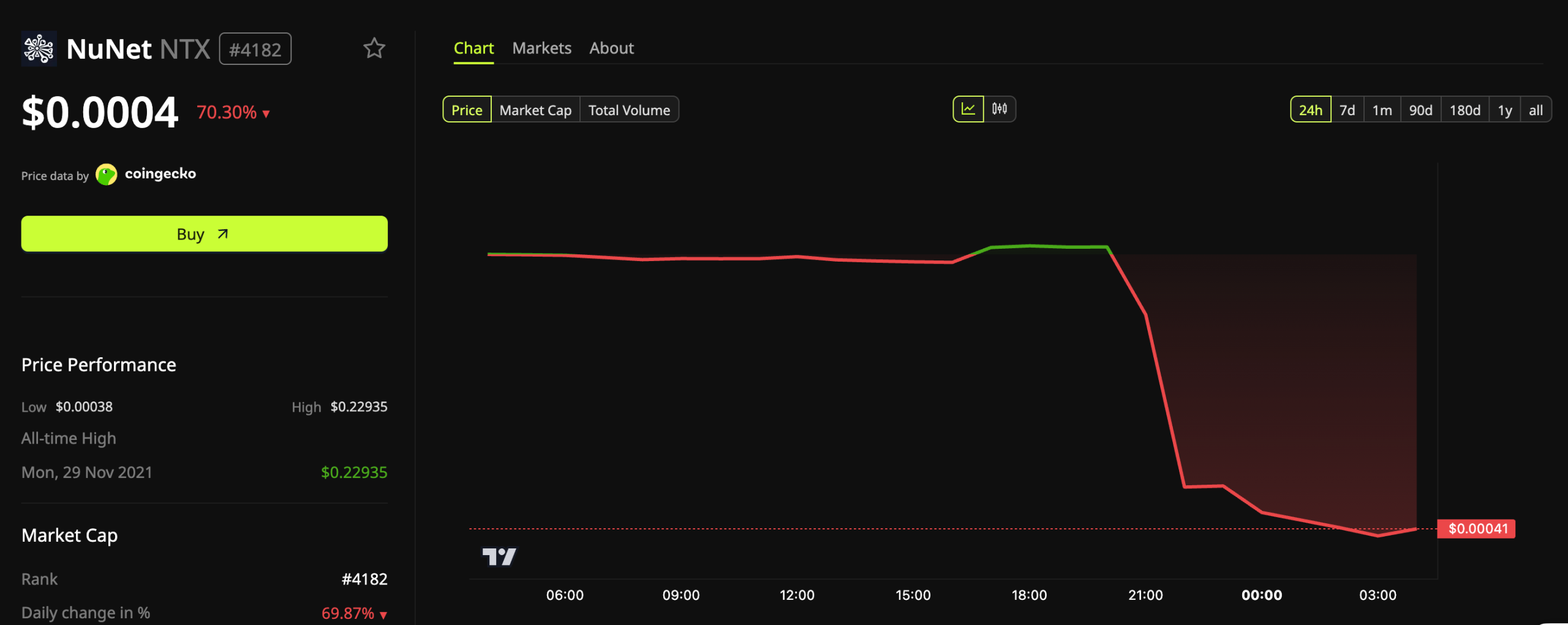
Security firms tied both events to the same wallet. NuNet’s token lost more than 70% of its value and touched an all-time low on September 20.
How One Attacker Reached Two Protocols
Blockaid said on September 20 that an exploiter drained about $1.56 million worth of FET from a Fetch.ai token converter on Ethereum. The attacker reportedly used a valid conversion-authorizer signature to call the conversionIn function on TokenConversionManagerV3.
That single call released the converter’s remaining FET inventory. The security firm identified the exploiter wallet as 0x1572…c362.
Follow us on X to get the latest news as it happens
According to Blockaid, the Fetch.ai loot wallet also received a large NTX mint from the NuNet deployer account. It estimated the value of the NTX mint at roughly $452,000.
The combined activity across the wallet cluster has reached approximately $2.01 million. PeckShieldAlert added that the exploiter has since swapped the stolen funds for 546.36 ETH, worth roughly $1.44 million at the time of reporting.
NuNet Token Sinks to a Record Low
The reported exploit has put pressure on NuNet’s NTX token. The token hit an all-time low at $0.000328 today. NTX changed hands near $0.0004 at press time, down more than 70% over 24 hours.

FET fell about 5% over the same period, a far smaller move than NuNet’s. That decline came as the wider market sold off, with most major assets in the red and total crypto market capitalization down 4%.
September has been expensive for the sector. Starknet lending protocol Nostra lost $3.5 million to a manipulated oracle three days ago.
DefiLlama had logged roughly $331 million in losses across 17 incidents this month before the Fetch.ai drain, most of it from the $320 million Liquid Network incident. Fetch.ai and NuNet now push the month past $333 million.
BeInCrypto has reached out to Fetch.ai and NuNet for comment.
Subscribe to our YouTube channel to watch leaders and journalists provide expert insights
The post Fetch.ai and NuNet Exploited for $2 Million by Same Attacker, NTX Hits All-Time Low appeared first on BeInCrypto.

Despite the overall macro calamity experienced last week, bitcoin’s price surged from $75,000 to almost $82,000 within days, hitting its highest level since the start of the month.
However, the breakout attempt was halted at $82,000 due to more worrisome news from the Middle East. There’s also a technical aspect that helped prevent another leg up.
New Escalation
Numerous reports online suggested on Sunday that the United States had warned that hostilities between Saudi Arabia and Iran-backed Houthis have escalated, with some even suggesting that the latter’s capital was under drone and ballistic missile attacks. BBC added that even some energy sites on the country’s Red Sea coast were targeted.
Saudi authorities reported that they intercepted and destroyed a ballistic missile fired at Riyadh on Saturday evening, claiming that there were no casualties and no new attacks.
“Iranian-supported Houthis have engaged in hostilities against Saudi Arabia, including civilian airports. This military conflict has the potential to escalate rapidly,” said the US State Department. The statement also warned Americans to “seriously reconsider travel to and through the region.”
Meanwhile, Daily Iran News, an X account with over 500,000 followers, claimed that Iran had issued “Code 100,” its highest alert level, for all armed forces earlier this morning. It covers the IRGC, the Army, and security forces.
Reacting to the news, Trump reportedly cut short his weekend at Camp David to return to the White House, citing the potential for significant escalation. Israel’s Netanyahu also reportedly headed back to his country after cutting the US trip short.
TD Sequential
We saw last week that the substantial blows from the CLARITY Act setback, the Fed rate hikes, and the subsequent hawkish outlook couldn’t keep BTC down for now. The asset dipped to $75,000 after the Senate vote, but went on an impressive run on Friday and Saturday, nearing $82,000 for the first time in two weeks.
This notable rally, though, changed some technical aspects. Ali Martinez reported that the TD Sequential, which flashed a buy signal when BTC slipped to $75,000, had flipped into a sell signal on Saturday evening, just as the cryptocurrency had tapped $81,500.
“That suggests short-term momentum may be getting stretched, and I’m watching closely for signs that it’s time to lock in some profits,” he added.
The post Why Was Bitcoin Rejected at $82K? 3 Reasons Behind the Sunday Pullback appeared first on CryptoPotato.

Wales breaking news plus weather and traffic updates (Sunday, September 20)

Treace Medical Looks Unlikely To Recover, A Founder-Led Broken Growth Story

The 5 Greatest 3-Season HBO Shows of All Time, Ranked




-

 Fashion2 days ago
Weekend Open Thread: Talbots – Corporette.com
-

 Tech7 days ago
The Latest Weird Thing to Play Doom Is the Mapped-Out Brain of a Fruit Fly
-
 NewsBeat1 day ago
Trump says US has reached an agreement to take permanent control of Greenland’s security
-

 Crypto World5 days ago
Kraken Lets xStocks Holders Earn Yield Through DeFi
-

 Crypto World5 days ago
Revolut Attackers Warn of Ongoing Daily Customer Data Leaks
-

 Crypto World1 day ago
Circle launches Arc Studio AI agent for building onchain apps
-

 Crypto World4 days ago
What Is the Status of the U.S.-Iran Peace Talks? Here's What Both Sides Are Saying
-

 Crypto World3 days ago
US Charges Robinhood Engineers Over Crypto Listing Trades
-

 Crypto World5 days ago
Robinhood engineers charged over $50K crypto scheme
-

 Crypto World6 days ago
Elon Musk Drops a Bombshell: Grok 5 Could Be the AGI Breakthrough
-

 Crypto World1 day ago
Bitcoin price breaks channel as RSI climbs to 63
-
 Crypto World7 days ago
New Tesla Roadster Uses SpaceX Tech. Will It Impact the Stock Price?
-
 NewsBeat6 days ago
‘Sick conspiracy’: Trump says only guardrails AI needs is ‘a strong and smart (High IQ!) president’ in all-caps rant
-

 Crypto World5 days ago
NVIDIA Analysis: Attempted Rising Wedge Breakout Amid Pressure on the AI Sector
-
Business6 days ago
SK Hynix ADRs Fall More Than 6% as Memory Rally Breaks on Fears of Slower AI Spending
-

 Tech4 days ago
Webb’s IC 348 Mosaic Includes Two-Jupiter Dwarfs, Twin Jets, and a Nursery Still Making Worlds
-
 Crypto World6 days ago
3 Token Unlocks to Watch in the Third Week of September 2026
-

 Crypto World5 days ago
DOJ Seeks to Seize $61M in Iran Oil Funds From Binance Accounts It Vouched For
-
Crypto World5 days ago
Can Circle’s Arc Repeat Robinhood Chain’s Meme Coin Boom?
-

 Crypto World7 days ago
Goldman Sachs backs 25bp Fed hike after CPI
You must be logged in to post a comment Login