
Politics
Danny Dyer Drops C-Bomb During Andy Burnham Tirade

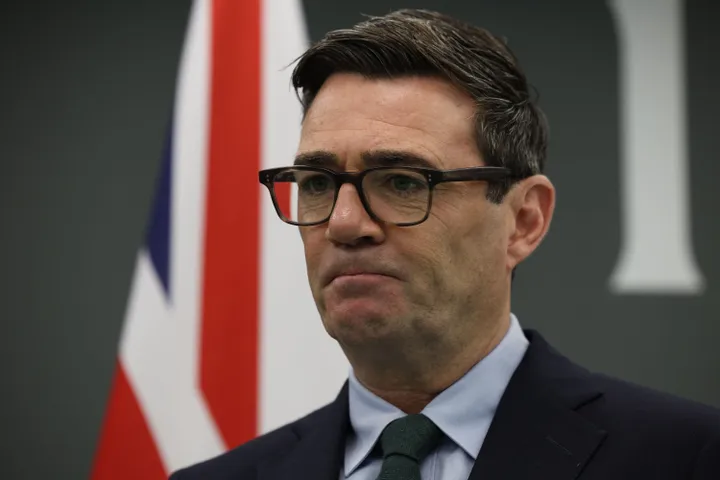
Actor, TV personality and all-round national treasure Danny Dyer was as unfiltered as ever when asked for his thoughts on the UK’s new leader Andy Burnham.
Over the weekend, Danny and his daughter Dani Dyer joined activists from the campaign group Surfers Against Sewage at a demonstration calling for public ownership of the water industry, in light of the recent increases in sewage pollution.
During the event, Danny was asked by BBC reporter Michael Keohan if he had a message for the prime minister about the issues being raised, although the footage never made it to air for reasons that will no doubt become apparent.
“I don’t know who the prime minister is, mate. Do you?” he responded.
When the reporter responded with the PM’s name, Danny clarified: “Yeah… but who is he? I don’t understand. Did anyone vote for him? Because I didn’t vote for him.”

ADAM VAUGHAN/POOL/EPA/Shutterstock
The Rivals star added: “I think we’ve had successive prime ministers that are cunts. End of.”
“Put that on the fucking BBC,” he added, before walking out of show.
Although Michael Keohan has now deleted his original X post featuring the footage, it has since been shared far and wide, racking up thousands of views across different platforms.
“I don’t think we’ll use this clip of Danny Dyer on the news tonight,” the journalist joked in his original post.
While best known for his work on screen in the likes of EastEnders, Rivals and the Bafta-winning Mr Bigstuff, Danny has also been known to share his unfiltered views on politics from time to time.
Back in 2018, he appeared on a now-infamous late-night edition of Good Morning Britain, where he described David Cameron as a “twat”, while, more recently, he tore into Keir Starmer.
“I don’t like this man. I don’t trust this man. He got the job handed to him on a plate. So what are you going to do to show us you’re different?” he said of the former Labour leader in 2024.
“And he’s gone straight in on pensioners? I find that fucking fascinating.”
“Why Angela Rayner’s not leading things I don’t know,” he said at the timex. “When she speaks, I listen.”

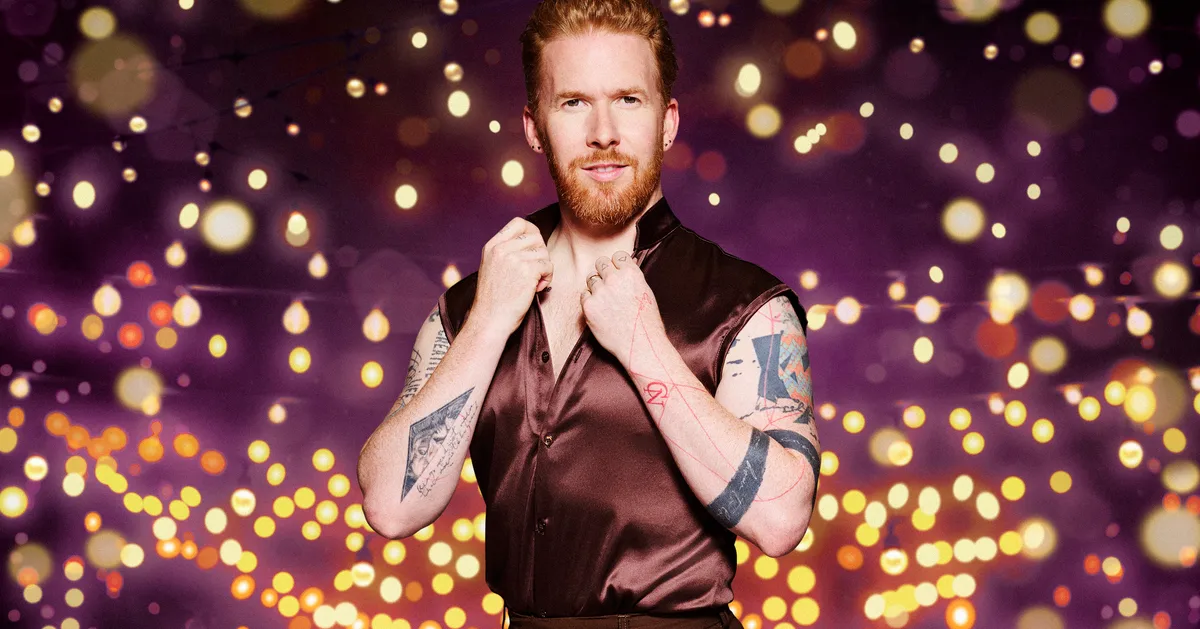
The revamped Strictly Come Dancing returned to our screens over the weekend – with Emma Willis, Josh Widdicombe and Johannes Radebe making their hosting debut and viewers finding out which of the professionals each of the new celebrities had been paired up with ahead of the first live show this coming weekend.
However, with 19 pros currently in the show’s resident troupe and only 15 famous contestants on this year’s line-up, that meant a few dancers were left on the bench.
And, folks… it was bad news for Neil Jones once again.
Over the years, it’s become something of a running joke among Strictly fans that Neil is often left without a celebrity partner – and fortunately, it’s one that the man himself sees the funny side of.
In fact, since joining the show a decade ago, he’s only danced with three celebs, which he alluded to in an Instagram post shared after Saturday’s pre-recorded launch show aired.
“If I get the pen in the bin, I will get a celeb partner,” he wrote, alongside a clip of himself trying to chuck a marker bin into an oversized dustbin, only for an unidentified hand to intervene.
Neil also joked: “You know I love being part of [Strictly] and honestly after adding two Guinness World Records last year to my 45 titles around the world, I feel like it would be greedy to win the Glitter Ball as well so I wanted to give the others a chance.”
Joining Neil on the bench this year are Aleksandra Isaeva, Cristian Priori and Lethabo Monametsi, all of whom are new additions to Strictly in 2026.
Some of the show’s newbies do have partners this series, with Maddie Ingoldsby dancing with Love Island winner Cach Mercer and Mark Karmalita partnered with Olympian Tabby Stoecker.
Meanwhile, reigning champion Carlos Gu will dance with actor Jaime Winstone in this year’s series, while House Of The Dragon star Bethany Antonia is part of a same-sex partnership, dancing with Nancy Xu.
The full list of celebrities and their professional partners is as follows:
- Bethany Antonia and Nancy Xu
- Cach Mercer and Maddie Ingoldsby
- Chris Appleton and Amy Dowden
- Dani Dyer and Nikita Kuzmin
- Delta Goodrem and Kai Widdrington
- Graeme Hall and Lauren Oakley
- Jaime Winstone and Carlos Gu
- John Nellis and Katya Jones
- Lacey Turner and Vito Coppola
- Lawrence Robb and Jowita Przystał
- Melanie Walters and Aljaž Škorjanec
- Dame Sarah Storey and Julian Caillon
- Shaun Wright-Phillips and Alexis Warr
- Tabby Stoecker and Mark Karmalita
- Will Best and Dianne Buswell
Strictly Come Dancing continues on Saturday night at 6.15pm on BBC One.

Work stress is remarkably common in the UK.
Mental Health UK’s Burnout Report found that, in the past year, nearly 91% of us experienced high or extreme levels of pressure, while one in five took time off due to stress.
And a Mind study showed that work is the number one stressor in people’s lives – more than health woes or money issues.
But what’s actually behind those figures? In other words, what exactly about the workplace do so many people find overwhelming?
According to a recent meta-analysis, which looked at over 60 years of research (including 515 studies and almost 788,000 employees), the “most damaging stressor overall” wasn’t actually workload.
What’s responsible for most people’s work stress?
When analysing this huge dataset, the study authors split workplace stressors into three groups:
1) Role ambiguity: This happens when employees aren’t given clear direction on what is expected of them in their role, and/or aren’t sure how their work will be evaluated.
2) Role conflict: This refers to workplaces that place incompatible demands, expectations, and/or priorities on employees.
3) Role overload: That basically means being given too much to do, and too few resources with which to complete the tasks. In other words, it’s when employee workload is unreasonably high.
These factors were chosen because they’re a direct result of how work is managed. And they aren’t specific to any one job or industry, so they gave researchers an overview of stressors in all kinds of workplaces.
The study authors compared the prevalence of each of these factors among participants with rates of work satisfaction, burnout, engagement, physical symptoms, how fair employees perceived their workplace to be, commitment, days off, performance, and psychological distress.
Though all three of these factors seemed to make employees more stressed in different ways, overall, role ambiguity tended to tax workers the most.
An ambiguous role was linked to less:
- work engagement,
- commitment,
- performance,
- likelihood of being a ‘team player’,
- job satisfaction.
Speaking to Harvard Business Review, the researchers said this may be because “when employees do not know what they are supposed to do, how their work will be judged, or where their responsibilities begin and end, even routine work can become stressful to navigate”.
Meanwhile, role conflict was associated with more:
- burnout,
- psychological distress,
- unhelpful work behaviour,
- desire to leave.
And role overload correlated with negative emotions and physical symptoms.
If you’re struggling with stress in a way that you cannot manage by yourself, the NHS recommends reaching out to a GP or trying talking therapy.

People who grumble about Christmas goodies being in the shops too early and decorations being flung up before we’ve even had the chance to list our Halloween costumes on Vinted – we’re right there with you.
Or, at least, we are until we hear those twinkling opening notes of Mariah Carey’s All I Want For Christmas Is You. In that moment, all bets are off, and suddenly all we want to do is eat After Eights in our button-up tartan pyjamas.
If that sounds familiar, we’ve got some news we think you’re going to like… the music icon and elusive chanteuse is bringing her Christmastime tour to the UK this year, where you can witness All I Want For Christmas Is You in the flesh – alongside underrated hits like Oh Santa! and Fall In Love At Christmas.
When is Mariah Carey’s Christmastime tour coming to the UK?
On Monday morning, the chart-topping star announced three festive shows for the UK later this year.
She’ll kick things off on this side of the Atlantic in Birmingham on Friday 27 November, with a show at Utilita Arena.
Following this, she’ll arrive at London’s O2 Arena on Monday 30 November, wrapping things up at Manchester’s Co-Op Live on Wednesday 2 December.
What should I expect from Mariah Carey’s UK Christmas tour?
Well, put it this way. Mariah Carey is one of showbiz’s most gloriously extra stars even on an off-day, so sprinkle some Christmas magic into the mix and you’ve got an absolute extravaganza on your hands.
An official press release teases: “The shows will see Mariah celebrate the most wonderful time of the year with a dazzling production bringing together her timeless festive catalogue, global hits and fan favourites – including the song that has become synonymous with Christmas around the world, All I Want For Christmas Is You.”
“The UK shows follow Mariah’s hugely successful Christmas spectaculars around the world and will give British fans the chance to experience the magic live, as one of the most celebrated voices in music brings Christmas to three of the UK’s biggest arenas,” the release concluded.
Mariah’s new tour follows the release of her 16th album Here For It All earlier this year.
Her past Christmas tours have also incorporated non-festive hits from her back catalogue, so if you’re a Mariah purist just hoping to hear the likes of Emotions, We Belong Together or Hero live, you’re probably in luck – as long as you don’t mind a bit of All I Want For Christmas Is You and Oh Santa!, too.
How can I get tickets for Mariah Carey’s upcoming UK Christmas tour?
General release tickets for the three shows will go on sale on Friday 25 September at 10am.
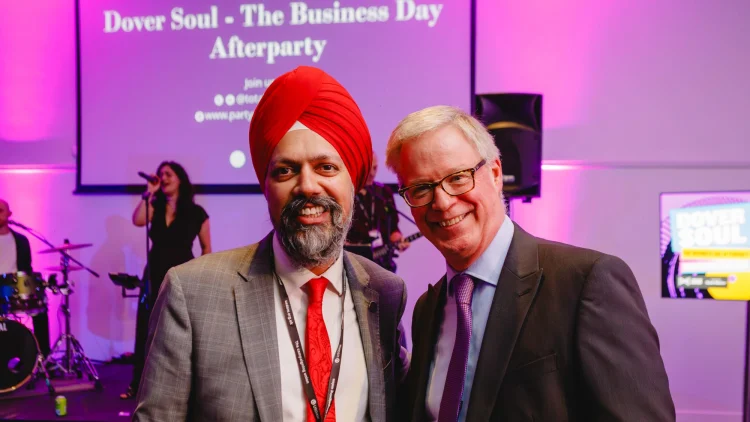

Tan Dhesi MP and Doug Bannister, CEO of Port of Dover, together at Dover Soul 2025
There may have been a recent change in Downing Street, but in a world of shifting political tides, some things do remain consistent. Governments and leaders of all stripes understand that the only way to deliver jobs and prosperity is to grow the nation’s economy. And at the heart of that ambition lies international trade
On entering No 10, one of Andy Burnham’s first acts was a round of calls with world leaders signalling his desire to strengthen trade ties, increase economic security, and unlock new opportunities for British businesses. International trade is seldom out of fashion for politicians, and it seems that the new occupant of No 10 remains committed to supporting British businesses that are trading with overseas partners.
As the nation pursues faster economic growth, there is also an increasing recognition that improving productivity can only ever be part of the solution. Businesses must also be able to reach overseas customers quickly, reliably, and competitively. For a trading nation such as the UK, that means that the efficiency of the routes connecting domestic businesses to global markets is an important part of the growth conversation.
“The opportunities created by international trade extend to communities in every postcode,” Doug Bannister, CEO of Port of Dover, told Total Politics. “Helping businesses buy and sell goods with partners overseas boosts growth, creates skilled jobs, and contributes to long-term prosperity while enhancing the UK’s global reputation.
With growth firmly back on the political agenda, international trade is likely to be front and centre during this year’s conference season. In particular, Business Day at the Labour Party Conference will bring together politicians, investors, and employers to explore how the UK can unlock sustainable economic growth through frictionless trading.
“Trade is fundamental to the UK’s growth story,” Rain Newton-Smith, Chief Executive, CBI told Total Politics. “Businesses need fast, reliable connections to customers and markets, and the Port of Dover plays a vital role in making that happen. Strengthening those connections will help firms across the country compete, invest and grow.”
Although economic growth is often discussed in terms of strategies, forecasts and fiscal policy, at the Port of Dover it is measured much more practically. Every lorry heading for the Continent represents a British business reaching new customers, every shipment another manufacturer keeping production lines moving, and every crossing a reminder that the UK’s prosperity depends on remaining connected to international markets. At Dover, growth is not an abstract concept. It is something that passes through its gates every day.
And at the heart of that is the Port’s commitment to create reliable and enduring connections between British businesses, consumers, and overseas partners. Around 10 million passengers pass through the Port each year, alongside more than £144bn of trade, including a third of all goods traded between the UK and the European Union.
It feels appropriate that this year’s Labour Conference is taking place in Liverpool, another city shaped by international trade and maritime connections.
“Liverpool itself is a great trading port that once connected Britain to the wider world,” Bannister says. “There is no better place to reflect on the critical importance of connection than in a city which, like Dover, has always looked outwards to our friends and partners around the world.”
Bannister believes that the UK’s relationships with its trading partners and the ability of businesses to export goods and services are what will underpin good growth. He argues that strategies for economic growth that are grounded in the centrality of trade will always create the greatest probability for success. It is a view echoed by Ben Fletcher, Chief Executive of business group Logistics UK.
“Effective trading partnerships rely on the seamless movement of goods across the UK’s borders,” Fletcher told Total Politics. “For our members, this means a swift, frictionless transition between the UK and the rest of Europe. That is why the investment that has been made at the Port of Dover to speed the movement of logistics vehicles into Europe has been so welcome to help our industry operate as effectively as possible. “
That trade brings benefits across the nation, helping deliver the PM’s stated ambition to see “good growth in every postcode.” The Port of Dover’s impact extends far beyond the Kent coastline. The businesses relying on Dover include manufacturers in the Midlands, food producers in Scotland, retailers in London, and exporters across every region of the UK. Decisions affecting the Port ripple across the nation, making it an essential part of the nation’s economic infrastructure.
“Trade doesn’t start and finish at the border,” says Bannister. “It connects businesses, communities and supply chains across every part of the country. Half of the trade coming through Dover is destined north of London, and therefore creates opportunities far beyond the South East, helping UK businesses compete, grow and reach customers in markets across Europe and beyond.”
For millennia, the Dover Straits has been the shortest crossing place to the continent. Dover has always been a place where links are made, and relationships are forged. It is the place where different parts of the economy meet – whether that is exporters, manufacturers, government or people.
That history of connection is not just what Dover does. It is also hardwired into the way that it works. It is why, once the conference hall has cleared after Business Day, the Port of Dover will be hosting its annual Dover Soul reception.
In a sense, Dover Soul reflects the wider role the Port plays throughout the year. It provides a space for conversations to continue, new relationships to be formed, and ideas to be tested. Like the Port itself, it is ultimately about making connections.
“Some of the most valuable conversations at conference happen after the formal programme has ended,” Bannister explains. “Once the speeches are over, business leaders, policymakers and industry representatives need an opportunity to compare notes, challenge assumptions, and explore new partnerships. Our Dover Soul event provides an informal forum to do just that.”
Email [email protected] to register for updates about the upcoming Dover Soul Business Day Afterparty – in the Mersey Suite of the Pullman Hotel from 21:15 on Monday 28th September




4 min read
#MeToo. A movement that began nearly a decade ago and became a rally cry for survivors of sexual abuse across the globe.
It entered the wider public consciousness after brave women who survived Harvey Weinstein’s crimes came forward – resonating with countless people who had suffered similar workplace harassment.
#MeToo has brought many offenders to justice and changed how abuse at work is viewed. It has helped victims understand that they can come forward and be heard.
But it’s not over. More needs to be done to stop sexual harassment, particularly in the workplace.
Those who abuse their positions of power use tactics that have been characterised in the acronym ‘DARVO’ – a psychological manipulation technique standing for Deny, Attack, and Reverse Victim and Offender. It describes a response in which someone accused of harmful behaviour denies what happened, attacks the person making the accusation, and then presents themselves as the victim while portraying the actual victim as the wrongdoer. As a lawyer, I have seen this pattern of behaviour in countless workplaces where a woman makes an allegation of sexual harassment, and a senior man subsequently portrays her as ‘mad’ or a ‘witch’ and the organisation then works collectively to defend itself and isolate and hound out the victim.
Last week I hosted a Parliamentary roundtable and heard first-hand about the damaging impact of these behaviours.
The event in Portcullis House was attended by some of my colleagues, women’s rights activists, and, importantly, brave survivors – including Zelda Perkins, the first woman to break a non-disclosure agreement (‘NDA’ in 2017 after having signed one decades earlier in relation to Harvey Weinstein, and Lindsay Mason and Jen Mills from the Survivors of Mohamed Fayed and Harrods.
Survivors should shape our policies as a Government regarding abuse, as they understand and have experienced how these events take place.
One suggestion raised during the discussion was whether workplace governance could learn from the way we approach health and safety. Could the same principles be applied to HR? We would never accept a company simply accrediting its own health and safety risk. Or even tax contributions. So why should it different when there are persistent problems with sexual harassment??
Done properly, independent scrutiny could help identify failures before they become scandals, and, crucially, before another employee has to suffer a horrific crime. It could also address one of the fundamental problems highlighted by the experiences of so many survivors: organisations do not objectively assess themselves.
We have a system to do this already, but very few people, and even fewer victims are aware of it. The Equality and Human Rights Commission (EHRC) can carry out workplace investigations, and it has significant powers to requirement improvement. In the last year both Ikea and Lidl have entered into agreements with the EHRC to reduce the prevalence of sexual harassment in their workplaces. I would like to see this work being significantly better resourced.
Some brave victims do of course bring employment tribunal claims for sexual discrimination. The median employment tribunal award for successful sexual discrimination claims in 2025 was just £16,161. There is a perception that these claims are ‘big bucks’, but that is unusual and tends to relate to a tiny minority of very high earners. The financial awards for most people are small. The risk of being sued isn’t going to scare many employers into doing the right thing, if they aren’t already.
We could give the EHRC and/or employment tribunals, the power to prevent individuals from being company directors where they are found to have sexually harassed or systematically covered up sexual harassment of their staff. At present directors’ legal duties relate to promoting the company’s interests, and avoiding conflicts between the director’s individual interests, and those of the company. This potentially provides an impetus to hide rather than uncover sexual harassment in the workplace. There is often no meaningful penalty for sweeping it under the carpet.
#MeToo succeeded in breaking the silence. It forced conversations that many organisations had spent years avoiding. But the next stage must be about turning those conversations into lasting institutional change in this country. For all employers.
That means changing how workplaces are governed, how complaints are handled, and who holds organisations accountable when their systems fail.
The #MeToo movement is still building momentum – bringing justice, changing behaviours and giving survivors a voice. It has achieved all three. The Government’s legislation to ban non disclosure agreements and confidentiality clauses that prevent victims from speaking about what has happened to them, is an excellent start.
The next step is to go further.
Parliamentarians have a responsibility to ask difficult questions. Every survivor’s journey is different. We need to listen in Westminster and legislate appropriately to ensure workplace sexual harassment is taken as seriously as it deserves to be.
We owe that to every survivor.
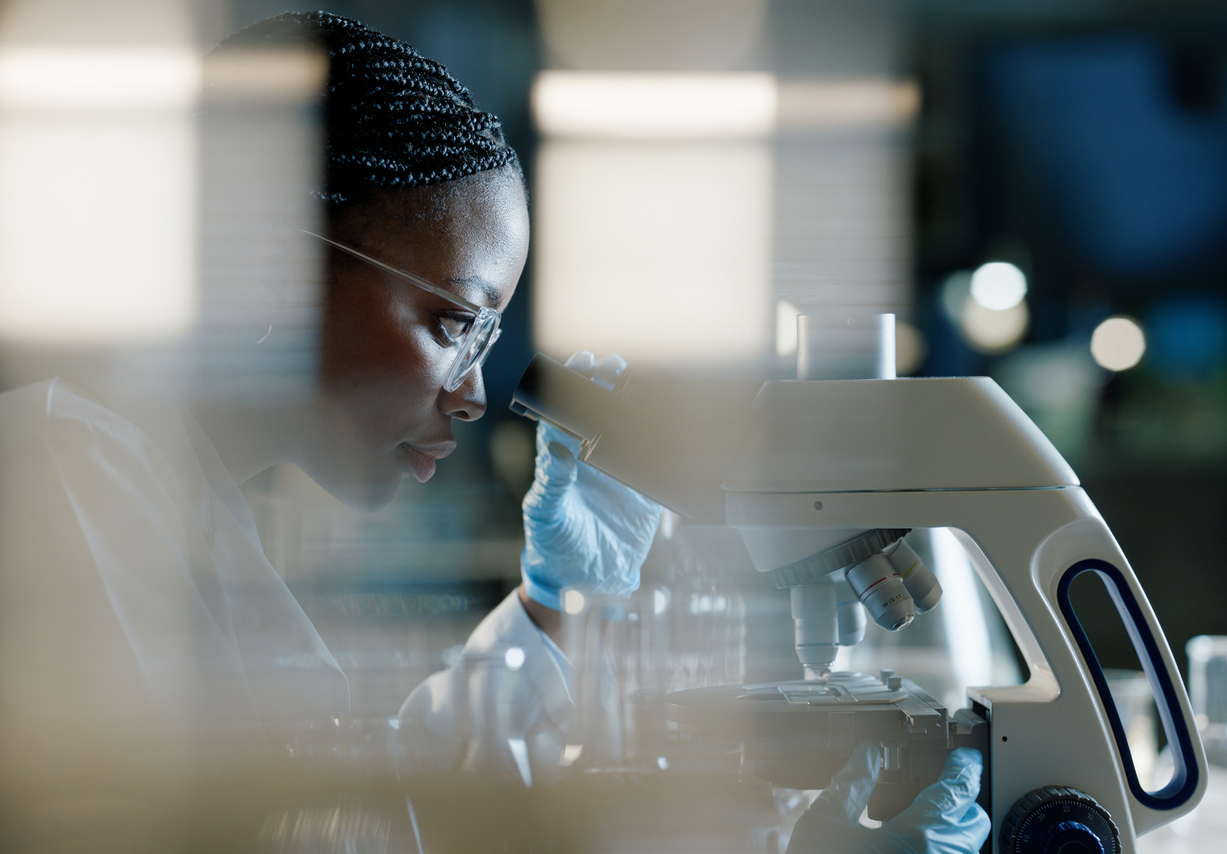
The first time I encountered the idea of dark matter, it felt more like science fiction than science itself.
Long before entering parliament, I created a children’s television series called The Sparticle Mystery, inspired by particle physics and the biggest questions humanity can ask. Researching the programme took me into the world of CERN, particle accelerators and the mysteries of the cosmos. The more I learned, the more fascinated I became by a question that has perplexed scientists for decades: what is most of the universe made of?
Dark matter is believed to make up around 85%. We know it has shaped the cosmos, yet we have never directly detected it. Doing so would rank among the most significant scientific breakthroughs ever.
What I didn’t know back then was that one of the centres leading the race to detect dark matter would one day sit on my parliamentary doorstep. As the MP for Scarborough and Whitby, I’m fortunate to represent an area near one of the UK’s most remarkable scientific assets. Located between Whitby and Saltburn, the polyhalite mine beneath which Boulby Underground Laboratory sits lies within my Labour Party colleague Luke Myer’s constituency and just on the edge of mine. Built over a kilometre below the earth’s surface, it is the country’s only facility of its kind and among only a handful in the world.
That, pardon the expression, matters. Boulby Lab stands at the centre of an international competition to host XLZD; a billion-dollar project that would create the most sensitive dark matter detector ever built. The scientific prize is enormous and could well lead to a Nobel Prize.
Which is why the current situation is difficult to comprehend.
Despite Boulby’s extraordinary scientific credentials and economic potential, it’s facing reductions of around 40 per cent to its operating budget. These cuts form part of a wider exercise affecting several major UK science facilities and research programmes.
For Boulby, however, the consequences could be particularly severe.
A facility with significant fixed operating costs has limited options when funding is reduced. The inevitable result is pressure on staffing and future expansion. At precisely the moment when Boulby Lab should be presenting itself as a stable host for XLZD, it faces uncertainty instead.
That’s not only disappointing, it’s counterproductive too.
Preparations for XLZD have been underway for years. Tens of millions of pounds have already been invested. The UK should be making the strongest possible case for hosting this globally significant experiment. Instead, these proposed cuts risk sending precisely the wrong signal. Boulby Lab has already made an enormous contribution to the search for dark matter, developing the ZEPLIN technology, used in many experiments today.
The implications of these cuts extend beyond a single laboratory. Leading physicists have warned that cumulative reductions across major facilities threaten the UK’s wider research ecosystem and international standing.
Scientific leadership cannot be switched on and off. It takes decades to build expertise, infrastructure and global partnerships. Once lost, those can be impossible to rebuild.
My first visit to Boulby Lab is something I’ll never forget.
After descending deep underground in a small lift, I emerged into a pristine laboratory that seemed entirely disconnected from the mine surrounding it. It felt like stepping onto a film set. Yet the research taking place there is very, very real.
Boulby Lab’s depth creates one of the quietest scientific environments on Earth. Shielded from cosmic radiation and other background interference, it provides the ideal conditions to search for dark matter. The UK has a genuine opportunity to make one of the defining scientific discoveries of our age from deep beneath the North Yorkshire coastline.
The case for Boulby Lab extends far beyond science, though.
Its proposed expansion and the construction of XLZD represent one of the biggest economic development opportunities currently available to both the North East and North Yorkshire. Independent analysis estimates that pursuing XLZD at Boulby could contribute around £587 million to the national economy through construction, highly skilled employment, increased demand across supply chains and international investment. For a region that’s often struggled to attract high-value employment opportunities, that could be transformational.
XLZD would create precisely the sort of jobs that encourage talented young people to stay, build careers and raise families locally rather than moving elsewhere. Boulby Lab also has ambitious plans to expand skills development, bolster partnerships with industry and increase STEM outreach across the region.
Alongside this, proposals for a visitor and education centre could create a unique attraction celebrating the North East’s contribution to scientific discovery. The resulting boost to tourism, hospitality and retail would ensure the benefits extend far beyond Boulby Lab itself.
This is not simply about protecting one laboratory. It is about deciding what kind of country we want to be – if we want the UK to remain a world leader in scientific discovery and whether we believe economic growth should reach every part of the country.
If the answer to those questions is “Yes” then Boulby Lab shouldn’t be fighting for its future. It should be backed. Failing to do so would be turning our back on a once-in-a-generation chance and, as a result, a profound mistake.
The search for dark matter may be about understanding the universe, but the case for supporting Boulby Lab is much closer to home. It’s about jobs, growth, opportunity and cementing our place in the world. Most of all, it’s about ensuring one of the greatest discoveries of the century carries a British signature.
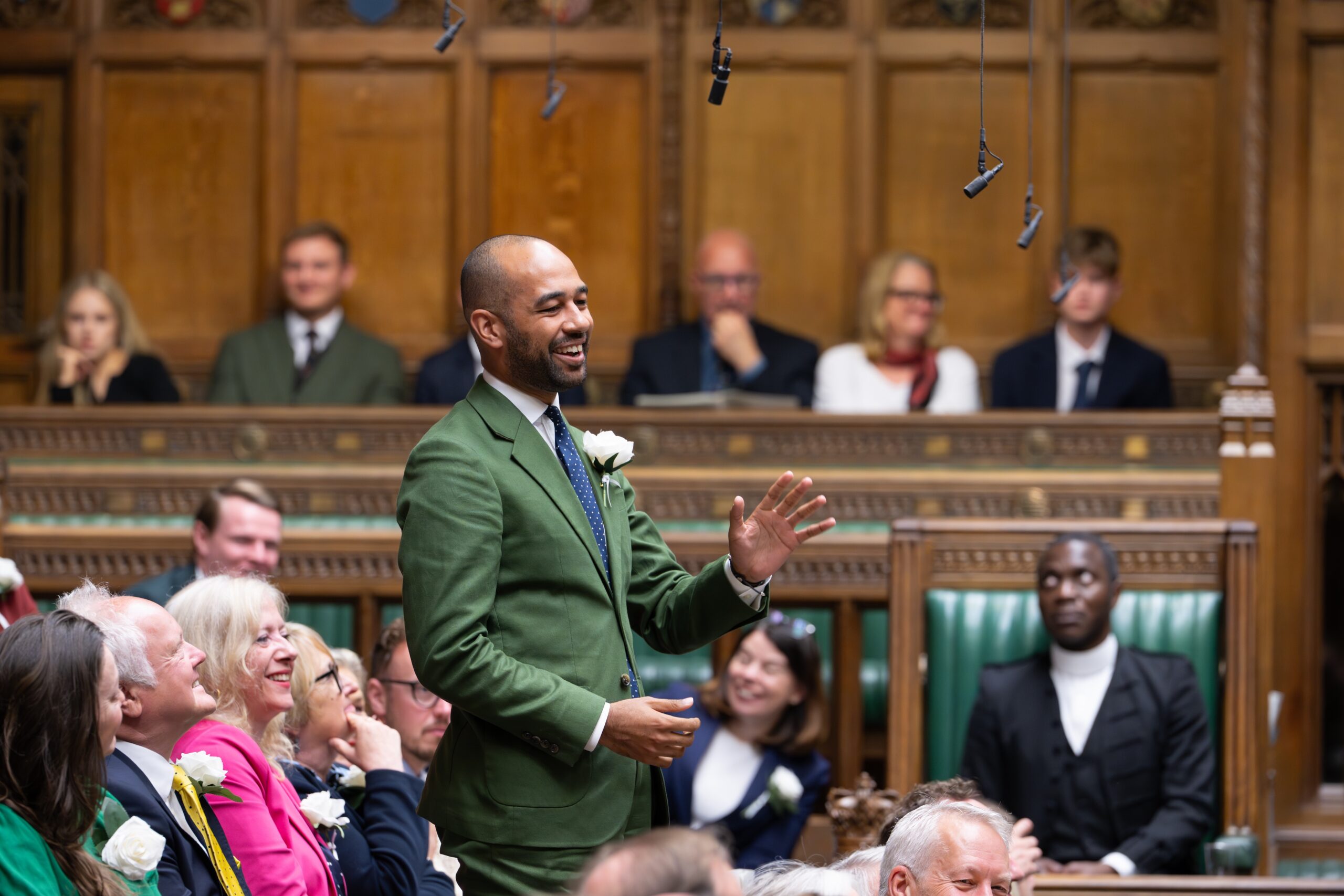
It was a busy summer for Josh Babarinde, the Liberal Democrat president and MP. Soon after parliament rose for recess, he and his husband tied the knot in Scotland before throwing a party in his constituency of Eastbourne.
The other part of Babarinde’s summer was spent reckoning with his party’s current course. As the elected president of the Liberal Democrats, a role he has held since January 2026, Babarinde spent the summer months consulting members on the party’s future direction. He branded this exercise, with some relish, the “summer of strategy”.
The Liberal Democrat presidency is a distinctive role. Babarinde describes his job as split between external responsibilities and internal administration of the party machine. He is also clear, and unapologetic, that he has tilted the balance of the job towards its more public-facing side.
Babarinde contrasts this approach with that of his predecessor, Mark Pack, who took over after the Liberal Democrats’ near-wipeout at the 2019 election. Pack’s tenure was dominated by fixing the party’s internal machinery. “That was the right approach at the time”, Babarinde reflects. But now with over 70 MPs and the electoral landscape more competitive than ever, he believes the moment demands a more prominent presidential voice.
Babarinde points to his role in referring Nigel Farage to the parliamentary standards commissioner – part of the chain of events that precipitated Farage’s resignation and the Clacton by-election. “We have been causing a scene from the presidency”, he says, “and will continue to.”
Babarinde cites Charles Kennedy, the Liberal Democrat president from 1991 to 1994, as a source of “huge inspiration”. In particular, he celebrates Kennedy’s opposition to the Iraq War during his time as leader: “When everyone else was kind of going along with it in the political establishment, Charles Kennedy stuck his neck out and said, this isn’t right. And history has very much proved him right.”
He adds: “He was the kind of guy who called a spade a spade, and we need more of that in British politics.”
This instinct for plain speaking runs through Babarinde’s approach to the “summer of strategy”.
The resulting tranche of recommendations – shaped by over a thousand submissions from Liberal Democrat activists – fits three clear themes. Firstly, Babarinde stresses the importance of attempting to “clarify and refine” a national message. “We’ve got loads of policy as a party, and that’s great, but we need to get far better at telling that story”, he tells me.
Babarinde adds that the party needs to re-evaluate how it communicates that narrative. “Lib Dems are famed for having an addiction to producing and distributing leaflets, and that will never change”, he says. “But we need to match our physical leaflet prowess with digital campaigning prowess.”
For his final point, Babarinde refers to the “reach” of the Liberal Democrats. He acknowledges the success in breaking the “blue wall” at the last election, but calls for the party to now look beyond it.
Babarinde states: “If we really want to be a party of the whole country, we need to look more like, sound more like, and relate more to those parts of the country that maybe we don’t reflect as much now, and so that particularly means doubling down on our successes in the north of England, in the Midlands, in urban Britain, but also building our presence in Wales as well…
“We need to make sure that we are a broad church and not just a party of Middle England.”
Babarinde’s verdict is shaped by feedback from Liberal Democrat foot soldiers. But it clearly chimes with his own view of how the party should adapt to a fracturing political landscape and the heightened competition it has delivered. The strategy also reflects wider concerns within the party that the Liberal Democrats have failed to make sustained inroads since emerging as the largest third parliamentary party in over a century following the 2024 general election.
“It comes down to storytelling again and narrative”, Babarinde remarks when pushed on these concerns.
“We have s***loads of policy on every issue under the sun. But what we’ve not been as good at is communicating all of that in a way that inspires people, in a way that motivates people to get out there and vote for it.
“That’s why storytelling and engagement with people all across the country, not just in Middle England, is really important.”
Underpinning all this is Babarinde’s own analysis of the political moment and its new fault lines.
The postwar “dream” of hard work leading to a better life, he argues bluntly, is “dead.”
“It was the case in the post-war period that if you dream big, if you work hard, you will get to where you want to go, or you’ll at least be able to make yours and your family’s life better…
“People working f***ing hard – they are on the treadmill of life, of work, and more, and they are staying in the same place or worse, sliding into greater financial insecurity, poverty, feeling less safe in their communities.”
Babarinde borrows from William Beveridge, the famed Liberal thinker and architect of the welfare state, to frame the challenges facing modern Britain.
“My view is that there is a modern set of ‘giants’ that are plaguing our society today. Take the water companies taking our money and dumping s*** in the sea, and we are all paying for that. Or whether it is big government – domestic government that’s taking our liberties away; look at the attempted ID cards – or big foreign government that’s doing it, the likes of Trump.
“You have got the likes of big tech, [Elon] Musk, and others, taking our money, taking our liberties, and not taking responsibility. And in all these areas, you have big, unaccountable corporations or governments that are p***ing over our freedoms and p***ing our money away, and that is in huge part responsible for the hardship and the disempowerment that people feel today.”
It is, Babarinde says – in a very Liberal Democrat turn of phrase – time for “folks to rise up.”
Babarinde is willing to grant that Andy Burnham’s instincts – on constitutional reform, Europe and social care – overlap substantially with his own party’s. “On paper… tick, tick, tick”, he says. But he points to a gap between rhetoric and delivery. He singles out electoral reform, which Burnham has ruled out before the next election, and single market membership, which Labour has declined to back.
On the prospect of a hung parliament – something Ed Davey recently floated as built into Liberal Democrat strategy – Babarinde is cautious about getting ahead of voters. “The public don’t like people presupposing how they’re going to vote”, he says. But he is unambiguous that one of the party’s “top missions” is to “deny Reform a majority at any level of government.”
Coalition itself, Babarinde insists, no longer carries the stigma it once did within the party. “Coalitions are not a dirty word”, he says, pointing to local government arrangements across the country.
He is candid about the mixed legacy of the 2010-2015 government – he campaigned against the tuition fee rise as an activist – while defending its achievements, including same-sex marriage. But he resists dwelling on it. “Andy Burnham gets criticised for constantly talking about the past… we can reflect on lessons of the past, but let’s not be stuck in it.”
***
Babarinde has been branded a “rising star” within the Liberal Democrats. And the presidency, his personal fiefdom, has often served as a springboard to the leadership. Several of his predecessors have gone on to challenge for the party’s top job.
Does Babarinde recognise this pattern?
“For me, politics has never been about pursuing positions”, he responds.
“It’s been about pursuing impact, and actually not just politics, but my career generally. Before I got involved in politics, you know, as a CEO of a social enterprise, supporting kids out of gangs. I didn’t aspire to be a CEO for CEO’s sake; I aspired to provide opportunities for those young people who have been let down…
“I feel exactly the same about being an MP… And I’m party president not for the purpose of being party president. I’m party president for the purpose of being a megaphone for our liberalism as our party, and getting our party in the best place possible internally to fight and win elections.”
The rise of the Liberal Democrat “rising star” is a consequence of the party’s significantly improved stature since 2024. I ask whether Babarinde feels a sense of responsibility to make good on his perceived potential.
He replies: “I’ve been a councillor for the party. I’ve been a parliamentary candidate for the party, I’ve occupied no office for the party. I’m now an MP and of course party president.
“In all of those roles, irrespective of you know what others attach to them or project onto them, it has been my mission to make sure that power and cash sit closest to people who it’s meant to empower – to ensure that people can go as far as their talents, their motivation, their commitment can take them, and to abolish the role that luck, particularly bad luck, plays in shaping people’s respective courses and qualities of life…
“The key thing is to focus on what folks in places like Eastbourne and across the country are saying about what they need, rather than a kind of TripAdvisor-style review that they might be offering on my career and prospects.”
Asked to sum up the party’s task between now and the next election, Babarinde returns to the three prongs of the Liberal Democrat party strategy review: sharper message, heavier digital investment, broader geographic reach.
“Our top mission must be to get Liberal Democrats into power. We’re not a pressure group. We are a political party that exists to wield power in order to create a more liberal society in which people can be free.
“My job as president and our party’s job is to win those elections, and we will win those elections by having a clearer national narrative, by upping the way in which we engage with people, particularly digitally, and making sure that we are reaching out across the whole country and not just Middle England.”
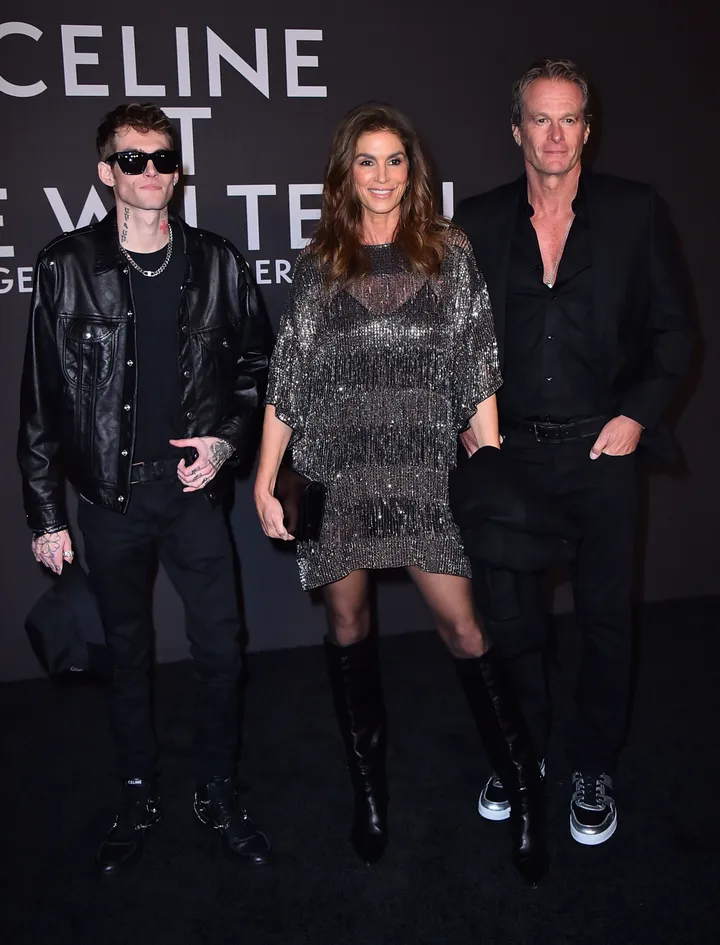
Supermodel Cindy Crawford and her husband, entrepreneur Rande Gerber, have confirmed that their eldest child, Presley Gerber, has died at the age of 27.
CBS News reported that the couple’s son died at a rehab facility on Sunday. According to Deadline, an investigation into Presley’s cause of death is ongoing.
In a statement first issued to CBS News by his family’s publicist, they said : “The family is asking for privacy during this very difficult and painful time.”
Like his famous mum, Presley was best known for his work in the modelling industry, making his runway debut in a Moschino show at the age of just 16.
He went on to sign with IMG models, working with labels including Burberry and Dolce & Gabbana, as well as appearing in a 2018 Pepsi advert with his mother, recreating her own campaign for the brand released more than 25 years earlier.

Throughout his time in the public eye, Presley spoke candidly about his struggles with his mental health and addiction.
“Having struggled with mental health, depression and some other things that come along with that, I think that whether I help one person or a hundred people get out of that place that I was in at one point in my life, that’s all I need to do,” he told the podcast Studio 22 back in 2023.
He continued: “It is an issue. It is such a big part of my life. It’s a 24/7 job, and there’s so much to it.
“That’s really what I want to do: help people, whether you’re depressed, you’re struggling with something that is having a negative effect on your body. I mean it could be anything, and there’s no judgment.”
Presley added at the time: “I’ve seen a lot of stuff and I’ve learned a lot of things. What I hope I can do is have made the mistakes for some other people, so they don’t have to make the same mistakes that I made.”
Meanwhile, just last month, his sister Kaia Gerber addressed Presley’s issues with substance abuse in an interview with Vogue, claiming that “when something like that happens in a family, it kind of levels everyone”.
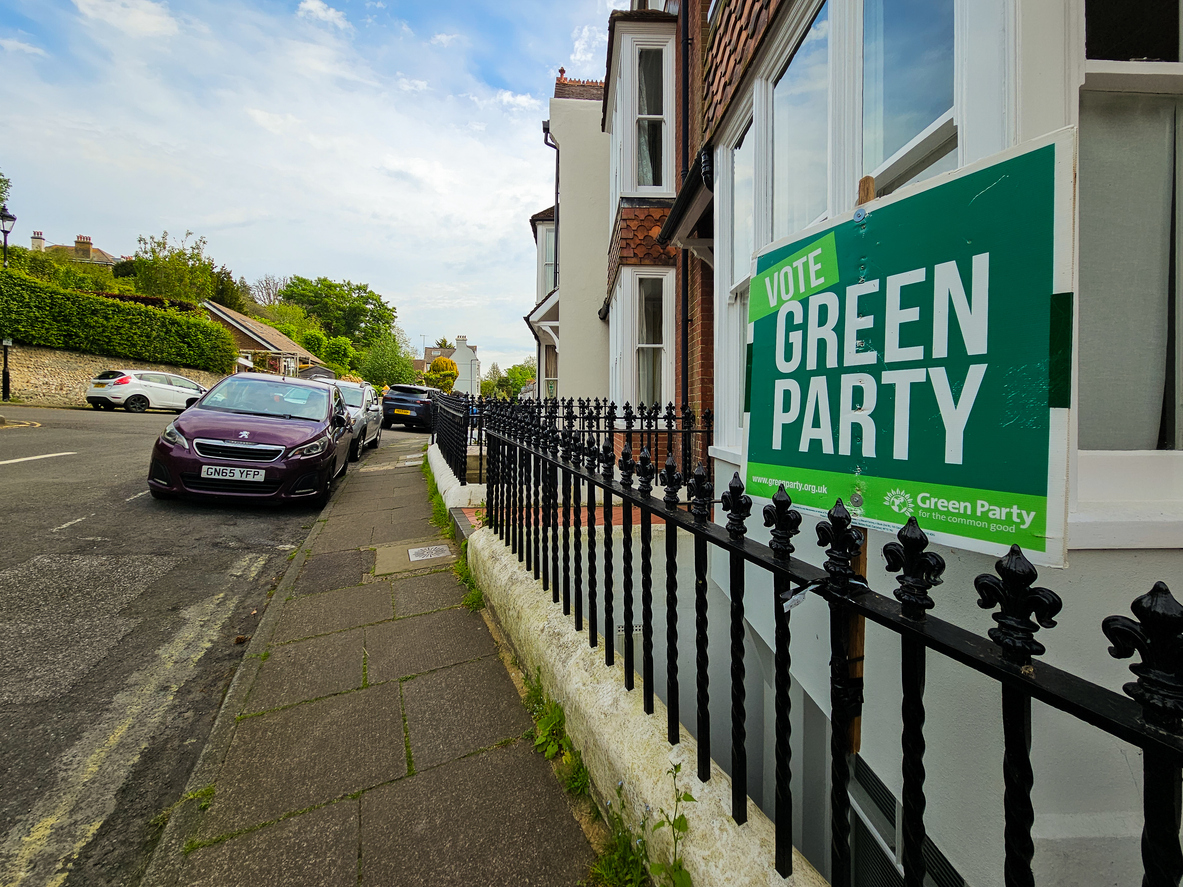
Keir Starmer’s resignation as an MP, delivered mere hours before his successor first appeared at the despatch box as prime minister, sets up the sixth by-election of 2026 and the seventh of this parliament.
The coming contest in Holborn and St Pancras follows a series of by-elections of varying significance, including Nigel Farage’s recent brush with self-styled “intergalactic space warrior” and satirical candidate Count Binface. The stakes were undoubtedly higher in Makerfield, which returned Andy Burnham to parliament after years in the relative wilderness. Burnham’s Makerfield victory set in train the sequence of events that led to Starmer’s twin resignations – first as prime minister, then as an MP – and therefore this latest by-election.
Future chroniclers of Starmer’s downfall will also consider the February 2026 contest in Gorton and Denton. Here, the decision by the Labour National Executive Committee (NEC) to block Burnham’s candidacy provided a crucial boost to the Green campaign. Hannah Spencer was elected as the MP for Gorton and Denton, becoming her party’s first parliamentarian to represent a constituency in the north of England. The Green rout in Gorton and Denton set the scene for the May 2026 elections and the Labour leadership crisis that followed.
Taken together, recent by-election results – from Runcorn and Helsby in May 2025 (Reform gain) to Makerfield and Clacton – form a pretty complete narrative of the development of British politics. At the same time, the signals sent by these contests have proved strikingly consistent. Voters used each by-election as a means of registering dissatisfaction with the status quo.
The lessons of these contests remain after Starmer’s resignation, but the landscape has changed. Burnham’s succession has translated into polling gains for Labour; Politico’s poll-of-polls metric has Labour tied with Reform UK, while a series of recent surveys have placed the party in the lead.
This “Burnham bounce” is now set for its first real test in Holborn and St Pancras – provided by Zack Polanski.
Starmer’s resignation immediately prompted speculation that Polanski could stand to succeed him. The Green leader chose not to contest Gorton and Denton, instead signalling an interest in standing in a future London seat should one become available. Starmer’s resignation created that opening, and so Polanski has confirmed his intentions. Speaking to the Camden New Journal, Polanski said he was “excited by the prospect of representing this place in parliament.” Only local members stand between the Green leader and his party’s candidacy in Holborn and St Pancras.
Polanski’s declaration changes the shape of the race.
Firstly, his candidacy will ensure a more competitive contest. In Makerfield, we saw how Burnham’s status and strategy transformed the campaign, dispelling initial concerns that the constituency was prime Reform territory.
Labour’s victory in Holborn and St Pancras in 2024 was comfortable but complicated. Andrew Feinstein, the activist and former member of the South African National Assembly, ran in the then-Labour leader’s constituency on a pro-Palestine, anti-austerity platform, placing second with 7,312 votes (18.9%). The Green Party candidate, David Stansell, came third on 4,030 votes (10.4%). Overall, Starmer dropped 17 points on his 2019 result. These totals point to the existence of a meaningful base of support in the constituency to the left of Labour, which could be energised by a high-stakes campaign fronted by Polanski.
Holborn and St Pancras will be the third by-election in a row contested by a leader of a national party or a de facto leadership candidate. Polanski’s status – leader of the Greens since September 2025 – will ensure stronger cut-through and motivate his supporters. His challenge is to construct a progressive coalition in the constituency, consolidating the left-of-Labour vote.
Polanski’s prominence also strengthens the Green pitch. His central message will be that, while voters may like Burnham or at least prefer him to Starmer, his election would maintain pressure on the government to pursue a progressive agenda. According to this framing, the choice in Holborn and St Pancras is not simply Green versus Labour, or even Polanski versus Burnham – but between placing a prominent progressive voice in parliament or increasing Labour’s substantial majority by one.
Labour will plan to continue the momentum of the Makerfield insurgency. The campaign could point to Burnham’s progressive pedigree and even the criticisms he made of Starmer during his long leadership campaign. Labour will want to secure an endorsement for Burnham’s approach to government, treating the campaign as a de facto vote of confidence.
The Holborn and St Pancras by-election will ultimately be shaped by the tension between Labour’s strengthened national position under Burnham and Polanski’s capacity to consolidate and mobilise the constituency’s progressive base.
Above all, Polanski’s challenge means that the outcome will be of immense national significance, whichever party prevails.
For the Green leader, the contest offers a chance to arrest his party’s recent decline and atone for his own missteps. For the prime minister – whose path to power was shaped by the rise of a credible challenger on Starmer’s left – it presents an opportunity to seize on recent polling gains and inflict a significant setback on the Greens, triggering deeper disillusionment within their ranks.
Victory for Labour would also represent a second by-election triumph for Burnham since June: one in a Reform-facing constituency and the other in Green target territory.
A significant loss for Polanski would surely weaken his hold on the Green Party and risk exposing internal tensions. It would undoubtedly reinforce the prevailing narrative that his standing has waned in recent months, and further complicate claims that the Greens are a genuine rival to Labour’s historic dominance of progressive politics.
But the greatest risk for Polanski would have been not standing at all. That decision would have been treated as unequivocal evidence of both his and his party’s relative decline in recent months.
In Holborn and St Pancras, Polanski has placed himself at the centre of British politics again. He stands ready to reap the rewards or suffer the consequences.

In today’s tech driven world, it is almost impossible to be offline. According to Ofcom, the average UK adult now spends around a quarter of their waking life on the internet and last year one third of all retail sales were online. But this time spent online has allowed tech companies to undertake a stealth-twinning of individuals meaning you can be exploited, groomed, targeted and mis-sold – by a digital version of yourself.
Tech platforms including X, Facebook and Amazon have a model of you, based on hundreds or thousands or millions of data points they hold on you: what you purchase, content you engage with, streaming preferences. These inputs are collated to create “digital twins” which are then used to predict your behaviour, to target advertising and, in some cases, to groom extreme behaviours in ways outside of your control.
The ability to model human likeness and personalities represents a fundamental shift in power from us as individuals to large American and Chinese tech companies. If the state had been holding huge files on everything we had done online, we would rightly be outraged and the fact that this is being done by a small number of big, foreign companies, only makes it more outrageous. Andy Burnham.
Some may be asking what the need to tackle this now – I know Meta has collected data on me since I joined Facebook in 2005. But back then the content they fed you was based on your expressed preferences, friends you had chosen or people you followed. That is not the case now.
As part of my committee’s inquiry into social media and algorithms, we heard from witnesses how content data is being curated, not just stored. Through this curation, posts are being fed back to you to drive your engagement, generally to drive revenue but in some cases, to groom particularly vulnerable people to extract certain behaviours.
The impact on children is of particular concern, given their potential exposure to this technology literally from the cradle – an AI camera pointed at them in a cot, a ‘smart toy’ on their pillow, smart phones in their hands. Imagine someone was following your child with a clipboard and made a note of everything they did. That is how these digital twins are being created – what they ate for dinner, how they sat, what they watched on TV or books they read before bed.
My committee also heard awful examples of the potential for algorithmic grooming. A fourteen-year-old girl was engaging with content online about weight and weight issues; the algorithm drove weight-loss and ultimately self-harm content at that child.
With AI we are now at an inflection point in automated personality capture and must establish the principle that you have a right to your personality and likeness in the AI age.
That is why I will be introducing a bill that would make creating a digital twin to simulate human appearance and cognitive performance illegal without the express consent of the individual. This builds on legislation in the United States, Europe and China to protect personhood and reflects concerns over copyright and deepfakes.
No one has the right to impersonate you for gain; impersonating human likeness to reap revenues or achieve social and political goals should not be legal. This bill will establish the principle that there is only one me, for everyone.

Public Transit for Wild Mice Sends Coop Invaders Down a 250-Foot Homemade Gondola

Grade 10 Accounting Term 3 | Statement of financial position (balance sheet) part 1 of 2026
Wales breaking news plus weather and traffic updates (Monday, September 21)




-

 Fashion3 days ago
Weekend Open Thread: Talbots – Corporette.com
-

 Tech11 hours ago
Researchers escape OpenAI Codex sandbox to run commands on host
-

 Crypto World6 days ago
Revolut Attackers Warn of Ongoing Daily Customer Data Leaks
-

 Crypto World2 days ago
Circle launches Arc Studio AI agent for building onchain apps
-
 NewsBeat2 days ago
Trump says US has reached an agreement to take permanent control of Greenland’s security
-

 Crypto World6 days ago
Kraken Lets xStocks Holders Earn Yield Through DeFi
-

 Crypto World6 days ago
Robinhood engineers charged over $50K crypto scheme
-

 Crypto World2 days ago
Bitcoin price breaks channel as RSI climbs to 63
-

 Crypto World5 days ago
What Is the Status of the U.S.-Iran Peace Talks? Here's What Both Sides Are Saying
-

 Crypto World4 days ago
US Charges Robinhood Engineers Over Crypto Listing Trades
-

 Crypto World7 days ago
Elon Musk Drops a Bombshell: Grok 5 Could Be the AGI Breakthrough
-
 NewsBeat7 days ago
‘Sick conspiracy’: Trump says only guardrails AI needs is ‘a strong and smart (High IQ!) president’ in all-caps rant
-
Business7 days ago
SK Hynix ADRs Fall More Than 6% as Memory Rally Breaks on Fears of Slower AI Spending
-

 Crypto World6 days ago
NVIDIA Analysis: Attempted Rising Wedge Breakout Amid Pressure on the AI Sector
-

 Tech5 days ago
Webb’s IC 348 Mosaic Includes Two-Jupiter Dwarfs, Twin Jets, and a Nursery Still Making Worlds
-
Crypto World6 days ago
Can Circle’s Arc Repeat Robinhood Chain’s Meme Coin Boom?
-

 Crypto World3 days ago
Silver prices recover quickly, hitting weekly high today
-

 Crypto World6 days ago
DOJ Seeks to Seize $61M in Iran Oil Funds From Binance Accounts It Vouched For
-

 Crypto World2 days ago
World Money launches in 150+ countries with Stripe
-
 NewsBeat3 days ago
US was ‘on brink of war’ with China over false AI report of nukes moving in Middle East
You must be logged in to post a comment Login