
Tech
Putin’s awkward online voting video features a Dell PC and an “Activate Windows” watermark


Facepalm: Russia might have spent more than a decade trying to drop US technology in favor of home-grown alternatives, but it appears that even President Vladimir Putin is happy to use a Dell PC and Windows for a video showing him casting his vote. It also seems that the Kremlin didn’t want to pay Microsoft the $139 activation key: Putin was using an unactivated copy of the OS, and looked about as comfortable using the computer as most 73-year-olds would.
In the clip, the Russian president was casting his vote online in the country’s State Duma elections, which were held between September 18 and 20 to elect members of the lower house.
But the video is getting a lot of attention for reasons unlikely to please the Russian president. Firstly, there’s no attempt to hide that the PC being used in this case is a US-made Dell, likely a Dell U3011, running Windows.
It looks as if Moscow isn’t in a hurry to hand over any more money to Microsoft. A magnified section of the video appears to show the Activate Windows watermark. This indicates that Windows is unactivated, though not necessarily unlicensed: a legitimately licensed installation can also display the warning if activation fails.
– Visegrád 24 (@visegrad24) September 18, 2026
Not using something like Astra Linux, which has a 74% share of the Russian-made OS market, for the shoot is something of a surprise.
There could be reasons why this Windows copy is unactivated. Maybe it was set up only for this clip, so registering a fresh copy of the OS was deemed unnecessary. Or perhaps Russia thought it was mocking Microsoft and the US?
Or maybe it was all a ploy to distract from Putin’s computer skills. He looks far from at ease when casting his vote, as the president squints at the screen, takes long pauses, and occasionally resembles the dog from the old “I have no idea what I’m doing” meme. His exclamation that “You can’t go wrong” sounds more like he’s trying to convince himself.

Putin has never come across as technically inclined. It was reported in July 2026 that he still doesn’t own a smartphone, though his spokesperson claims this is due to security and privacy concerns. He’s also said to be wary of the internet and modern communications, but then maybe we all should be.

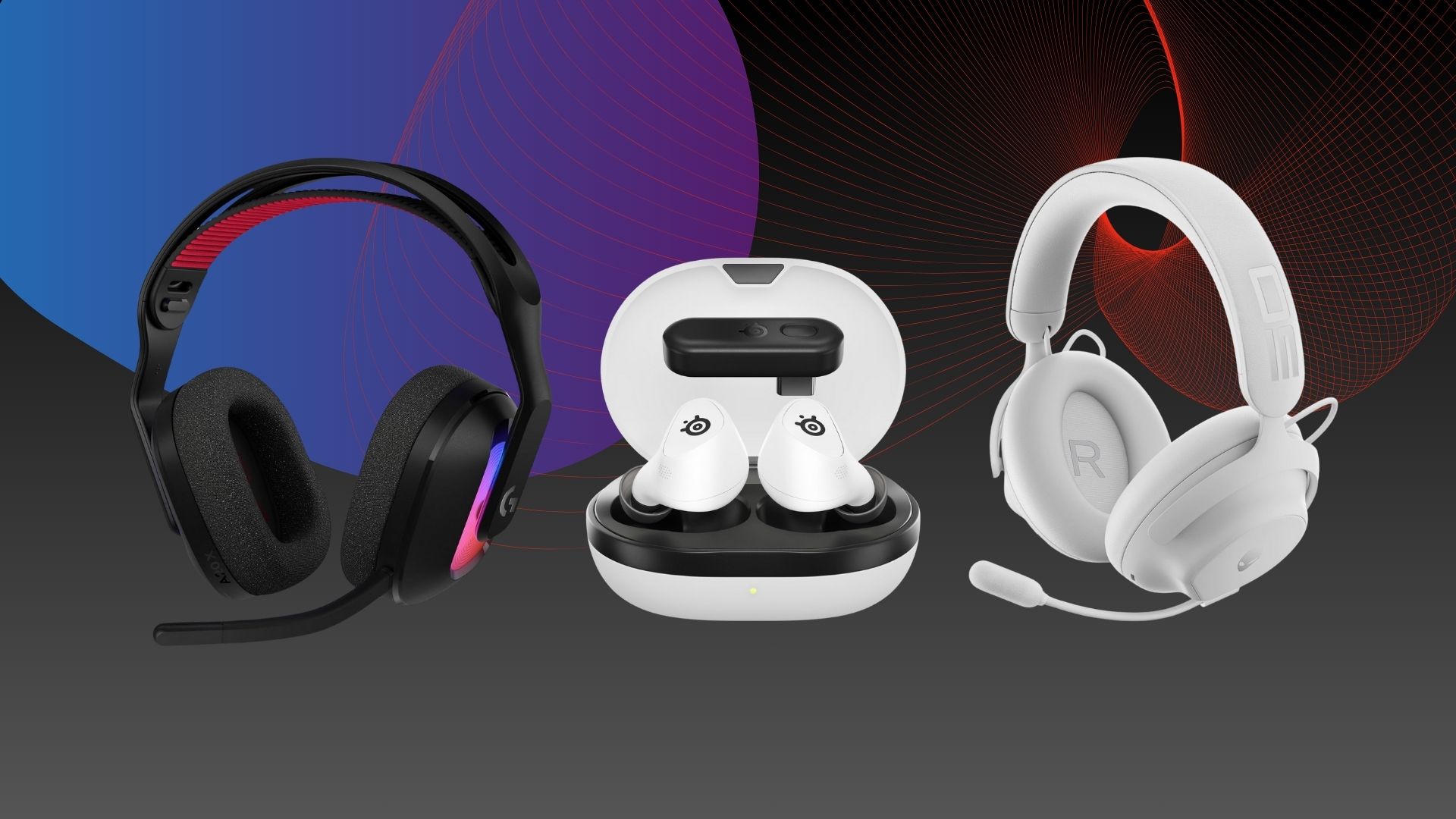
Finding the best gaming headset for your console or PC can be a tough task. Not only are there compatibility concerns, but there are also a number of elements you need to consider, from comfort and audio quality to microphone performance.
This makes it virtually impossible to judge the quality of a gaming headset from specs alone. Fortunately, we’ve stepped in to help find the best gaming headset options for every budget.
Our team of experts has thoroughly tested every gaming headset we feature. We compare the build quality with other headsets while also testing the audio, battery life, and microphone performance. We also endeavour to test every feature, such as customisable RGB lighting, haptic feedback and ANC.
We update this list throughout the year, ensuring it reflects the best gaming headset options on the market at any given moment. This way, you can ensure you get the very best option for your needs and budget.
And if you want to narrow your search to a particular platform, check out our best PS5 headset and best Xbox headset roundups. Those headsets have been explicitly tested with the named platforms.
Alternatively, if you’re looking for headphones for music playback, take a look at our selection of the best headphones, best wireless earbuds and best wireless headphones.
Best Gaming Headset at a glance
SQUIRREL_ANCHOR_LIST
How We Test
We use every headset we test for at least a week. During that time, we’ll check it for ease of use and put it through its paces by using it in a variety of games, as well as playing music in order to get the full experience.
We also check each headset’s software (if applicable) to see how easy it is to customise and set up.
-
Unrivalled multi-platform compatibility
-
Fantastic microphone
-
Swappable batteries
-
Impressive audio performance
Although there’s no shortage of great options when it comes to buying a new headset in 2026, if you have a sizeable budget and want to go all in on a pair of cans that offer truly unparalleled audio and plenty of quality-of-life features, then we can’t recommend the SteelSeries Arctis Nova Pro Omni enough.
Admittedly, at £349/$400, the Nova Pro Omni are more in line with the pricing of high-end headphones from Bose and Sony, but that’s arguably the better way to view them. Because this headset can be used across PC and consoles, not to mention Bluetooth-enabled devices like your smartphone, the Nova Pro Omni can be used as a proper pair of headphones in all instances, instead of an audio solution you only use for gaming.
What ties everything together is the outstanding audio quality onboard this headset, as it features surround sound that truly puts you in the centre of the action. When diving into titles like Counter-Strike 2 and Battlefield 6, our reviewer was able to hear the footsteps of their enemies which played a big part in managing to get the drop on them.
Because the Omni also supports 24-bit/96kHz Hi-Res audio, you’re getting a great listening experience with music too. When listening to indie and alternative tracks, we were impressed by the level of detail on offer, to the point where you’d never think that you were getting a lesser experience by using a headset instead of a more traditional pair of headphones.
Back to gaming, the omni-directional microphone does a fantastic job of transmitting your voice with tons of clarity, and it’s boosted by the AI-driven noise-cancelling software which is handy if you live in a busy household where peace and quiet just isn’t really a thing. Having swappable batteries also makes it much easier to use the Nova Omni Pro over long gaming sessions, as you’ll never have to worry about a low battery warning ever again.
-
Solid audio quality
-
Decent ANC
-
Fantastic connectivity
As great as over-ear gaming headsets can be, oftentimes they can feel a bit cumbersome compared to the minimalist nature of earbuds, and the latter are usually the better option during the hotter months of the year. If you’re ready to see what a pair of great gaming earbuds can bring to the table, then your search should start and end with the phenomenal SteelSeries Arctis GameBuds.
First off, if you’re a gamer who jumps between multiple consoles fairly regularly, then you won’t have to worry about any compatibility issues here. The GameBuds work with all major consoles including the Nintendo Switch, PS5, Xbox Series consoles and the Meta Quest 3. Just bear in mind that there are two versions of the device, one meant for Xbox and the other for PS5, although strangely we were able to get the former to also work with a PS5 console.
Of course, the most important aspect of all is sound quality, and the GameBuds absolutely nail it on this front. When playing the latest games, you’ll be able to pick up on a lot of background detail that can usually get lost if you’re playing with lesser powered speakers. They’re also pretty solid for music playback too, which is great for bringing your favourite Spotify/Apple Music playlists into the mix.
An extra feature that still isn’t a given on gaming headsets but has been added here is active noise cancelling. With ANC in tow, you won’t have to worry about any background noise impeding on your gaming sessions, which is great if you live in a fairly busy household. Someone else can easily be watching TV as you play with the GameBuds.
There’s always the concern that earbuds lag behind headphones when it comes to battery life, which can get in the way of longer play sessions, but we think that most people will be perfectly content with what’s available here. You can get up to 10-hours of use from just a single charge, and the charging case allows them to be topped up quickly whilst also providing a total of 40-hours of playback.
-
Comfortable, lightweight fit
-
Versatile wireless connectivity
-
Strong battery life
-
Expensive for a mid-range headset
-
Very similar to the Logitech G522
Let’s face it, it doesn’t matter how great a headset can be with audio quality, voice capture over the microphone or any other key feature if the whole thing reaches a dead battery right when you’re in the middle of a firefight. If you’re sick of constantly having to keep an eye on how much juice is left in the tank then the Astro A20X Lightspeed Wireless might be exactly what you need as your next upgrade.
On a single charge, you can get up to 90-hours of use with the A20X in tow which is almost unheard of and certainly more than enough to keep you going through several gaming sessions before ever needing to even think about rummaging around for a charging cable. Even with RGB turned on, you still get 40-hours of use.
Of course, it isn’t just the battery life that helps to set the Astro A20X apart; there’s also plenty of compatibility onboard when it comes to connecting to other consoles. Beyond your PC, you can connect the headset to Xbox Series devices, the PS5 and the Nintendo Switch, so you’re catered to regardless of your platform of choice.
For sound quality, the 40mm Pro-G drivers deliver an impressive soundstage, particularly at the lower end. There’s quite a lot of oomph to the bass, so if you’re playing a title like Counter-Strike 2 or Battlefield 6 where there’s a ton of explosions going on, you’re going to feel the weight of them quite a bit more. This isn’t to say that the other layers are left behind as there’s plenty of detail to pick up on, it’s just that the bass line is quite pronounced here.
The headset uses a 48KHz/16-bit microphone to pick up on your voice, and it does a great job of conveying audio to your teammates so they can understand every command or request that you’re throwing out there. The only real downside is that the Astro A20X Lightspeed Wireless doesn’t exactly come cheap, so you may want to consider a more affordable option if you’re tied to a budget.
-
Lots of connectivity options
-
Clear and crisp microphone on calls
-
Comfortable fit
-
Versatile and luxurious sound
-
High price point
-
Dated design
The AceZone A-Spire, while perhaps lacking the good looks of its counterparts, offers performance that leaves a lasting impression.
At 270g, the headset emerges as a featherweight contender, delivering an unparalleled level of comfort even during multiple 8-hour workdays. Featuring a flexible leather-clad headband and velvety ear cushions, it stands as an ideal companion for those immersive gaming sessions, aligning seamlessly with the standards upheld by eSports aficionados.
The attached microphone is versatile, effortlessly conforming to various positions while maintaining stability. Noteworthy is the thoughtfully incorporated green mark, ensuring optimal alignment for crystal-clear communication – a crucial feature for the eSports-focused among us.
Connectivity options further elevate the A-Spire’s appeal, spanning USB, Bluetooth, and Aux interfaces, accommodating multiple devices for a low-latency experience.
Crucially, the audio performance is noteworthy, even if the 40mm cans are smaller than those of some competitors in our chart. They deliver impressive clarity with a dedicated app that adds an additional layer of customisation, allowing users to fine-tune the audio output to their tastes. There are also specific game profiles for popular FPS games like Apex Legends to help pick up on footsteps and improve game performance.
For those venturing into the eSports realm, the AceZone A-Spire is a reliable entry point, seamlessly blending comfort, adaptability, and superior audio performance.
-
Solid construction
-
Detailed and neutral audio
-
Vast compatibility
-
Lack of on-board media controls is a shame
-
No software
-
Comparably expensive
The Corsair Virtuoso Pro may seem like a rather stripped-back option compared to some similarly priced alternatives given the £169.99/$199.99 price tag, but it does so in order to prioritise audio performance over all else. An aim that’s largely achieved.
Clad in a premium combination of aluminium and plastic, the Virtuoso Pro certainly feel premium, though at 338g, they’re certainly not the most lightweight cans around. That said, our reviewer found that they were comfortable enough in general use, with nice fabric padding in all the right areas to help alleviate the build-up of pressure on the head.
What you won’t find, however, is much in the way of built-in controls. You won’t find any buttons or switches on the cans or even an in-line control on the cable. These features have largely been sacrificed to deliver an open-back design, which is great for audio performance, but no so much when it comes to convenience.
Speaking of, the open-back design of the cans deliver a much wider soundstage than regular over-ear alternatives that delivered exceptional directional audio in testing, whether you’re playing the latest Call of Duty or the new Forza Motorsport. These deliver a seriously immersive sound experience with a powerful low-end, a clear and detailed mid-range and a sharp top-end, though the latter could sometimes be a little too sharp.
The attached microphone isn’t quite as impressive, however, with some notable compression and thin-sounding vocals in testing. It’s more than serviceable for quick chats with friends during gaming sessions, but streamers will likely want to look elsewhere.
-
Great sound and powerful bass
-
Clever design
-
Easy-to-use controls
-
Incredible value
-
Plasticky build
-
Mic monitoring could be a little louder
-
No Active Noise Cancelling
Our extensive tests show that the Xbox Wireless Headset is the best gaming headset choice for anyone who owns Microsoft’s consoles. We were able to easily connect it to our Xbox Series X wirelessly, while also using our smartphone simultaneously for Discord chats.
We also really liked the Xbox-themed design, and found the rotating control dial allowed us to easily alter the volume without blindingly searching for small buttons. We were also impressed with the headset’s wide range of features, which includes Dolby Atmos that creates an immersive 3D audio effect.
We found the audio quality to be superb during testing, although we do recommend fiddling with the equaliser to find a soundscape to your liking, as the audio sounds a little muddy to us out of the box.
You can admittedly find plenty of other gaming headsets that have been designed with the Xbox in mind, such as the HyperX CloudX Stinger Core Wireless and Corsair HS75 XB Wireless, but Microsoft’s own headset is our favourite, mainly due to its incredible value.
-
PlayStation Link is a genuine connectivity upgrade
-
Planar magnetic drivers squeezed into £130 headset
-
Pillow-soft earcups are comfy and block out noise
-
Long battery life
-
Design won’t be for everyone
-
Sub-par Bluetooth audio performance
-
No ANC
While it might be tempting to opt for the pricier Sony Inzone H9 (although it’s certainly worth picking up if you jump between games on PS5 and PC), the Pulse Elite headset offers such good value for money that it easily jumps in at the top spot for our favourite PS5 headset.
As a successor to the PlayStation Pulse 3D that launched alongside the PS5, the Pulse Elite is still compatible with Sony’s 3D Audio to create an immersive experience that makes it feel as if you’re hearing everything from the perspective of the character you’re playing, but there’s more to it than that.
Despite its £129.99/$149.99 price point, the Pulse Elite packs high-end planar magnetic drivers which bring out even more detail than before, making conversations feel crisp and adding tons of weight to action scenes. To see them at their best, you only need to wear the Pulse Elite during the chaotic opening segment of Marvel’s Spider-Man 2.
There isn’t any active noise cancelling on the Pulse Elite which may be worth bearing in mind if you game in a busy household, but it’s a small issue when you consider how good the sound quality is. Plus, the comfortable padded ear cushions do a decent job of expelling a degree of external noise.
Just like the Pulse Explore earbuds, the Pulse Elite packs Sony’s new PlayStation Link technology, which allows the headset to connect to your PS5 almost instantly. Even though it requires a USB-C dongle to operate (it’s included in the box), it still works brilliantly and allows you to get straight into your desired game quickly.
As a final cherry on top, the Pulse Elite can last for up to 30-hours at a time, but if you’re ever running low then a simple 10-minute top-up can net you another two-hours of playtime. There’s even a charging hook thrown in that allows you to replenish the headset’s battery when it’s stored away.
-
Lightweight and comfortable
-
Precise, pleasant audio
-
Useful software configuration.
-
Expensive
-
Battery life isn’t improved over its predecessor
Although it’s some £/$50 more than its predecessor, the BlackShark V3 Pro is a brilliant gaming headset that offers a comfortable fit and immersive audio too.
At 367g, the headphones aren’t quite as light as the SteelSeries Arctis Nova 3X but we did find we got used to the weight after a while. Plus, the memory foam earcups are soft and breathable too, which means for a more comfortable fit too.
The headphones have plenty of controls including a microphone mute, power button, USB-C, microphone jack and a volume dial on its left side. On the right, you’ll find a profile switch, a customisable dial and an ANC toggle. While there’s undoubtedly a good array of ports, connectivity is easily its strong point here. There’s Bluetooth and a HyperSpeed Gen-2 receiver that has the option for an ultra-low-latency mode (via Razer’s Synapse 4 Suite). You can also use both channels simultaneously for real power user action too.
Otherwise, the Razer BlackShark V3 Pro offers a brilliant soundstage – especially with their directionality and precision. We found when gaming that footsteps, distant gunshots and explosions have more oomph and allow you to feel like you’re right in the midst of it all.
While we do wish the headphones performed better at higher volumes, and the microphone offered a stronger noise rejection, generally we were impressed.
-
Lightweight and comfortable
-
Smooth, spacious sound
-
Versatile app support
-
Some may want more exciting looks
-
Flatter sound may not suit those who like a lot of bass
The SteelSeries Arctis Nova 3X offers a durable yet lightweight design, refined audio and a clear detachable boom microphone, all for under £/$100. If you want a solid pair of gaming headphones but lack the budget, this is the pair for you.
Although the design looks nice enough, the plastic construction does tend to attract general grease and finger prints if you aren’t careful. Even so, as the Arctis Nova 3X weighs just 260g, they’re easy and non-fatiguing to wear for extended periods.
Despite the affordable price, the Arctis Nova 3X are an incredibly versatile pair of headphones and are equipped with the same slim USB-C receiver found in the SteelSeries Arctis GameBuds which enables a low latency 2.4GHz connection to a wide range of supported devices. There’s also Bluetooth 5.3 too for non-gaming uses too.
With its neodymium magnetic drivers, the Arctis Nova 3X provides a smooth and refined audio experience that works well for both gaming and general media consumption too. Its low-end performance is pleasant enough, however those who like a deeper bass should look elsewhere.
Alongside the EQ presets, found in the SteelSeries’ Sonar software, you can also choose between over 200 game-specific audio presets from the likes of Call of Duty, Fortnite and many more.
Otherwise, the Arctis Nova 3X sports a detachable boom microphone that offers surprisingly clear and full-bodied pickup while rejecting nearby ambient noise too.
Overall, anyone looking for an affordable, versatile and comfortable pair of wireless gaming headphones should look no further than the SteelSeries Arctis Nova 3X Wireless.
-
Precise and refined audio
-
Premium build and feel
-
Fantastic battery life
-
Software only offers basic customisation
-
Quite expensive
If you’re looking for a gaming headset with a premium build that doesn’t compromise on audio quality, the Audeze Maxwell is for you.
This high-end gaming headset delivers some of the best audio we’ve experienced from a gaming headset, including rich and detailed sound with strong bass thanks to its 90mm planar magnetic drivers.
The design is understated but durable with its subtle all-black design and metal and high-quality plastic build. The earcups are large and plush, while the suspension-style headband ensures these headphones are comfortable to wear during longer gaming sessions.
Along with physical buttons, the Audeze HQ app gives you access to a range of settings on Windows, macOS and smartphones, including EQ presets, mic sidetone levels and the game and chat audio mix.
When it comes to connectivity, you can go wireless with Bluetooth 5.3 or use the bundled USB-C receiver. There’s also the option to use a wired USB-C connection or the classic 3.5mm cable, though the exact options you get depend on which of the countless compatible devices you pair the headset with, with the list including the PS5, PS4, Xbox Series X, Xbox One, Nintendo Switch, Windows, Mac, Android and iOS.
For audiophiles, the Audeze Maxwell supports a wide range of codecs, including SBC, AAC and LDAC, along with the ability to play hi-res audio up to 24-bit/192KHz. There’s also support for Dolby Atmos spatial audio with the Xbox version of the headset.
Finally, the 80-hour claimed battery life makes the Maxwell one of the best gaming headsets in its price category, with fast charging applying 30 hours of listening from a 20-minute charge.
-
A multiplatform dream
-
Extremely comfortable
-
Superb microphone
-
Tedious set-up
-
Odd mic arm
If you regularly move between different consoles and platforms, the Logitech G Astro A50 X is our number one recommendation.
This headset might be on the pricier side, but for platform switching its a dream with Logitech’s PlaySync technology letting you do so at the press of a button. The feature works via the included base station, which can be connected to two consoles, a PC and a Bluetooth device all simultaneously. These you can easily cycle through using the aforementioned button on the headphones.
The Astro A50 X looks almost identical to the Astro A50 that launched in 2019 with the same large ear cups, thick padding and flip-down microphone. The construction is fully plastic aside from the metal stems, but its plenty tough and durable. We found it to be remarkably comfortable on top of this, with two breathable cushions covering the ear cups and a snug, but pinch-free fit.
The audio quality is superb and matches the likes of the SteelSeries Arctis Nova Pro in terms of detail. The 40mm drivers offer tremendous bass and there’s a lot of clarity to the mix. Spatial audio is also precise, with the feature being ideal when paired with FPS titles.
The Logitech G app allows you to set EQ parameters – of which the microphone has its own. This means you can ensure your voice sounds rich and clear to those on the other end. We found the mic to be robust, holding its own against the Razer BlackShark V2 Pro, though the mic arm can slip away from your face during longer sessions.
There’s also no noise cancellation, which is something you might want to consider for the most immersive listening experience. However, if you find yourself regularly switching between different platforms, we’d highly recommend the Logitech G Astro A50 X.
-
Rich, deep audio
-
Immensely versatile wireless connectivity
-
Improved ANC
If you’re a gamer who enjoys the finer things in life and is happy to invest a decent chunk of cash into their set-up, then the SteelSeries Arctis Nova Elite is made for you. Admittedly, with a price tag of £599.99/$599.99, the Nova Elite is eye-wateringly expensive, even managing to be pricier than high-end headphones like the AirPods Max 2, but there’s no denying that what you get in return for all that cash is a premium-tier experience all the way through.
Starting with the sound quality, which is where you’ll notice the headset’s prowess before anything else, there’s a lot to love here. The all-new carbon fibre drivers punch through with a level of clarity and depth that you just won’t find anywhere else. When playing GTA Online, we couldn’t quite believe how much more detail we were hearing in a game that’s been around for years. It shows just how much can be left out of the equation when you’ve been using a lesser pair of headphones or a cheaper headset.
That audio quality also carries through when listening to music. When popping on a live version of George Benson’s Love X Love, the vocals cut through with such power that it almost feels like you’re right there as the song is being recorded. It’s such a lovely way to experience both games and music, but what gives the whole thing an extra push is the presence of noise-cancelling.
If you live in a fairly busy household where it just isn’t possible to get a completely silent backdrop then having ANC to hand is perfect for digitally keeping the world at bay and helping you to lock in with whatever’s on your screen. As our tester found, the onboard mic is easily one of the best we’ve ever come across on a headset, and it also does a great job of rejecting ambient noise to hone in on your voice.
For those who really love to get lost in a great game for hours at a time, you’ll be glad to know that the Nova Elite can keep up with your plans thanks to a whopping 60-hour battery life. Of course, whether or not you reach that ceiling exactly depends on how you use the headset, but the battery can be swapped out so you won’t be left waiting around when it does reach 0%.
-
Immersive, wide audio
-
Super light and comfortable
-
Capable on-board microphone
-
Quite expensive
-
Software isn’t as feature-rich as rivals
One of the biggest problems that plagues a lot of headsets is that, with all the tech onboard, they can end up being a bit on the heavy side which isn’t exactly ideal for long stints of gaming. If you’ve been burned by this before and would like to upgrade to a headset that not only looks sleek but sits comfortably on your head then the Sony Inzone H6 Air is an excellent option to pick up.
Coming in at just 199g (211g with the boom microphone attached), the Inzone H6 Air is among the lightest headsets we’ve ever tested, and with deep earcups on either side, it doesn’t create any unnecessary pressure at any of the contact points around your head. What this meant was that our reviewer was about to wear the H6 Air long beyond the point where less ergonomically designed headsets would cause irritation.
What’s great though is that even with a lightweight build, the Inzone H6 Air still delivers where it counts the most: sound quality. The headset uses the same type of drivers found on MDR-MV1 studio monitoring headphones, which are known for how well they convey detail at all layers so that nothing is missed in production.
It all translates to a very wide soundstage that really keeps you locked in with whatever’s happening onscreen, especially first-person shooters where you’re keeping an ear out for the enemy’s movements to get the drop on them. Given Sony’s prowess when it comes to headphones, we’d expect nothing less here and the brand doesn’t disappoint.
That quality continues when it comes to the performance of the onboard microphone. It picked up our tester’s voice without issue and was able to repel the background noise of their keyboard as well as music, which is no easy feat. Even though the whole apparatus does cost a bit more than your average headset, for pure comfort alone, the Sony Inzone H6 Air is worth the price.
-
Lightweight and comfortable fit
-
Clean and inoffensive sound
-
Tactile controls
-
Battery life could be better
-
Microphone isn’t as strong as rivals
Although there are plenty of premium options to choose from in the world of gaming headsets, if you’re tied to a fairly strict budget then don’t worry, you’re not out of luck. Showing that the brand understands how to make a great budget-friendly headset that still knocks it out of the park on the key features that gamers truly care about, the Logitech G325 Lightspeed is an easy pick to recommend.
For starters, to look at this headset, you’d never know that it was a cheaper piece of tech. The whole design, particularly in the white colourway, looks very minimalist but with an air of confidence about it. The splash of colour that you get from the volume buttons and the corded wire that feeds into the band is a nice touch, and the fact that it all sits comfortably on your head is appreciated.
Where the headset really goes above and beyond however is in audio quality. The overall soundstage is a clean one, with the mid-range coming through clearly which isn’t always a given when shopping at the lower-end of the market. This is partially achieved by making sure that the bass isn’t overwhelming, but it still packed a nice punch when testing out the likes of Counter-Strike 2 and Forza Horizon 5.
What’s great though is that if you have a particular style that you prefer then you can tweak the overall composition quite a bit in the EQ settings. The onboard microphone is solid enough to do the job with basic communication in-game, but don’t expect the quality to match pricier headsets.
Where you’ll most feel the compromise of having a cheaper headset is in the battery life. You can get up to 24-hours of use between charges which isn’t bad, but it certainly lags behind where the industry is generally at right now. If battery life is your key concern and you’re happy to spend just a little bit more then the SteelSeries Arctis Nova 3X Wireless makes for a solid alternative.
FAQs
Headphones with a 7.1 surround sound can make audio seem as if it’s coming from a specific location, which is helpful to determine where your enemies are lurking. This feature is often only available on PC.
Some gaming headsets can be used for work, but be mindful that many have garish designs and can often see lots of sound leakage.
The Nintendo Switch and the Switch OLED now have Bluetooth support, so can be used with headsets that have a 3.5mm audio jack or Bluetooth.
Test Data
| SteelSeries Arctis Nova Pro Omni | SteelSeries Arctis GameBuds | Astro A20X Lightspeed Wireless | AceZone A-Spire | Corsair Virtuoso Pro | Xbox Wireless Headset | PlayStation Pulse Elite | Razer BlackShark V3 Pro | SteelSeries Arctis Nova 3X Wireless | Audeze Maxwell | Logitech G Astro A50 X | SteelSeries Arctis Nova Elite | Sony Inzone H6 Air | Logitech G325 Lightspeed | |
|---|---|---|---|---|---|---|---|---|---|---|---|---|---|---|
| Battery discharge after 1 hour of gaming | – | 10 % | 1 % | – | – | – | – | 2 % | 3 % | 1 % | – | 3 % | – | 5 % |
| Time from 0-100% charge | – | – | – | – | – | – | – | 90 min | – | 120 min | – | 180 min | – | – |
| 1-100% charge time with included charger | – | 90 Minutes | – | – | – | – | – | – | – | – | – | – | – | – |
| Frequency response | – | – | 2020000 Hz | – | – | – | – | – | – | – | 20000 Hz | 1040000 Hz | – | – |
Full Specs
| SteelSeries Arctis Nova Pro Omni Review | SteelSeries Arctis GameBuds Review | Astro A20X Lightspeed Wireless Review | AceZone A-Spire Review | Corsair Virtuoso Pro Review | Xbox Wireless Headset Review | PlayStation Pulse Elite Review | Razer BlackShark V3 Pro Review | SteelSeries Arctis Nova 3X Wireless Review | Audeze Maxwell Review | Logitech G Astro A50 X Review | SteelSeries Arctis Nova Elite Review | Sony Inzone H6 Air Review | Logitech G325 Lightspeed Review | |
|---|---|---|---|---|---|---|---|---|---|---|---|---|---|---|
| Manufacturer | – | SteelSeries | Logitech | – | Corsair | Microsoft | Sony | Razer | SteelSeries | Audeze | Astro | SteelSeries | Sony | Logitech |
| Quiet Mark Accredited | – | – | – | – | – | – | – | – | – | – | No | – | – | – |
| IP rating | – | IP55 | – | – | – | No | – | – | – | – | – | – | – | – |
| Battery Hours | – | – | 90 00 | 35 | – | 15 | 30 | 70 00 | 40 00 | 80 | 24 | 60 00 | – | 24 00 |
| Size (Dimensions) | – | – | 262 x 87.2 x 177.5 MM | x x INCHES | x x INCHES | x x INCHES | x x INCHES | 203 x 167 x 95 MM | 175 x 90 x 185 MM | 248.9 x 132 x 254 MM | 9.5 x 19.81 x 20.3 CM | 168 x 88 x 192 MM | x x INCHES | 194 x 81 x 187 MM |
| Weight | – | – | 298 G | 270 G | 338 G | 312 G | 2.44 LB | 367 G | 260 G | 489 G | 363 G | 380 G | 199 G | 212 G |
| ASIN | – | – | – | – | B0CGXPN5V6 | B08WJSJT4J | B0CMDH9M5W | – | – | – | B0BRXJDQC1 | – | – | – |
| Release Date | – | 2025 | 2025 | 2023 | 2023 | March 2021 | 2024 | 2025 | 2025 | 2023 | 2023 | 2025 | 2026 | 2026 |
| First Reviewed Date | – | 19/05/2025 | 23/10/2025 | – | 11/12/2023 | 19/05/2021 | 06/03/2024 | 08/08/2025 | 14/08/2025 | 06/07/2024 | 12/02/2024 | 18/10/2025 | 14/04/2026 | 26/03/2026 |
| Model Number | – | – | – | – | – | – | CFI-ZHW2 | – | – | – | 939-002126 | – | – | – |
| Driver (s) | – | Neodymium Magnetic Drivers | 40mm Pro-G drivers | 40 | 50mm | 40mm | Planar Magnetic Drivers | 50mm TriForce Bio-Cellulose | Neodymium magnetic drivers | 90mm planar magnetic | 40mm Pro-G Graphene | Carbon fibre drivers | 40mm drivers, derived from MVR-MV1 headphones | 32mm dynamic drivers |
| Noise Cancellation? | – | – | – | Yes | – | – | – | Yes | – | – | – | Yes | – | – |
| Connectivity | – | 2.4GHz USB-C receiver & Bluetooth 5.3 | 2.4GHz with PlaySync base, Bluetooth | Bluetooth, Wired, 3.5 AUX | 3.5mm jack | Bluetooth / Xbox Wireless / USB-C cable | PlayStation Link, Bluetooth | Wireless (Bluetooth 5.3 or HyperSpeed Gen-2), Wired (USB Type-A, 3.5 mm) | 2.4GHz, Bluetooth | Bluetooth 5.3, 2.4GHz USB-C receiver, 3.5mm wired, USB-C wired | Lightspeed Wireless, Bluetooth | Bluetooth, 2.4GHz wireless, 3.5mm wired | 3.5mm wired, USB-C with audio box | Bluetooth, 2.4GHz Lightspeed receiver |
| Colours | – | White/Black | – | – | Black/White | Black | black and white | Black, White | – | Black | Black, White | – | – | Black, White, Lilac |
| Frequency Range | – | – Hz | 20 20000 – Hz | – Hz | 20 40000 – Hz | 20 20000 – Hz | – Hz | 12 28000 – Hz | 20 20000 – Hz | 10 50000 – Hz | 20 20000 – Hz | 10 40000 – Hz | 20 20000 – Hz | 20 20000 – Hz |
| Headphone Type | – | In-ear | Over-ear | – | Over-ear | Over-ear | Over-ear | Over-ear | Over-ear | Over-ear | Over-ear | Over-ear | Over-ear | Over-ear |
| Sensitivity | – | – | 100 dB | – | – | – | – | – | – | 102 dB | – | – | – | – |
| Frequency response | – | – | 2020000 Hz | – | – | – | – | – | – | – | 20000 Hz | 1040000 Hz | – | – |
| Polar patterns | – | – | Cardioid | – | Unidirectional | – | – | Omnidirectional | Omnidirectional | Hypercardioid | – | Cardioid | Cardioid | Omnidirectional |
| Compatibility | – | – | Xbox, PlayStation, PC, Nintendo Switch | – | – | – | – | Windows, Mac, PlayStation 5, Nintendo Switch, Mobile | Xbox, PlayStation, Nintendo Switch, Switch 2, mobile, handheld devices | PS5, PS4, Nintendo Switch, PC, Mac, Mobile | – | Xbox, PlayStation, Nintendo Switch/Switch 2, PC, Mac, Android, iPhone, Meta Quest, tablet, gaming handheld | – | PC, PlayStation 5, Xbox Series X, Xbox Series S, Nintendo Switch, Nintendo Switch 2, mobile |
| UK RRP | £349 | £159 | £169.99 | £299 | £169.99 | £89.99 | £129.99 | £249.99 | £99.99 | £319 | £359 | £599.99 | £175 | £69.99 |
| USA RRP | $400 | – | $179.99 | $319 | $199.99 | $99.99 | $149.99 | $249.99 | $109.99 | $299.99 | $379.99 | $599.99 | $199.99 | $79.99 |
| EU RRP | – | – | – | €319 | – | – | – | – | – | €407 | – | €649.99 | – | – |
| AUD RRP | – | – | – | – | – | AU$149.95 | – | – | – | – | – | – | – | – |
We may receive a commission on purchases made from links.
It’s been a while since most smartphone manufacturers stopped shipping charging bricks with their phones. Apple started the trend, and most other brands followed suit. While the move was terrible for consumers, one group hugely benefited — third-party charger manufacturers. People who buy new phones now have to spend an additional $20-30 on charging bricks, and brands like Anker and Ugreen have launching compelling chargers in different shapes and sizes to capitalize on this. The mini chargers in its Nano lineup, in particular, are a big part of why Anker is so popular, but the brand also makes a plethora of other tiny and extremely useful accessories.
There are Anker dongles, car chargers, USB hubs, MagSafe battery packs, and more. Usually, most power banks are quite big, with large capacities. Anker makes some slim and compact ones under its Nano lineup, which are easy to carry and use when traveling. While most people are only aware of basic chargers made by the brand, we went down the rabbit hole to find some of the best Anker mini gadgets that are worth buying. These gadgets aren’t necessarily unique, but they are functional and quite small. A few of these devices are multifunctional, and some of them have cool features, like a built-in display or foldable prongs.
Anker Nano smart display charger
A wall charger is about as boring as tech gets, which is what makes the Anker Nano Charger with a smart display such an odd little delight. It pushes up to 45W over a single USB-C port, enough to take an iPhone 17 Pro to 50% in about 20 minutes (according to Anker, at least). Plug in a supported iPhone or iPad and the small screen identifies the device and shows the power being delivered. As per Anker, the dedicated TUV-certified Care Mode runs up to 9 degrees Fahrenheit cooler for gentler overnight charging.
The Verge tested this charger and found the display occasionally useful, but more of a novelty than an essential. The real upgrade is apparently the prongs: they fold flat and rotate 180 degrees, so the charger fits awkward outlets behind furniture. Amazon users mostly agree, praising how fast it charges and how portable it is.
The only catch is that there’s just one port, so there’s no simultaneous charging of your MacBook and iPhone. If you often charge only one Apple device at a time and like the idea of a charger that smartly decides whether your iPhone needs full power or not, this could be the one to get.
Anker 30W 2-port car charger
Many cars still have cigarette lighter sockets doing nothing, and the Anker 30W 2-Port Car Charger puts them to work. It’s barely larger than the socket itself, so it sits nearly flush instead of jutting out too much, and it carries two ports: a 30W USB-C with PPS and a 22.5W USB-A for an older cable. Anker says the USB-C port charges about three times faster than a standard 5W charger, which is the difference between a useful top-up on a short drive and a substantial one.
Amazon customer praise is consistent: it charges fast and disappears into the dash. Having both port types for different types of cables is also a plus. However, a small minority report units dying within a few months, which is worth knowing even if it’s not the common experience. Additionally, when both ports are in use, each drops to 12W, so fast charging is a one-device affair. If you drive to work every day with one phone to charge, it’s an easy recommendation — especially for just $11.
Anker Nano 5,000mAh power bank
The best power bank is the one you actually carry, and tangling cables are usually the reason you don’t. The Anker Nano Power Bank solves that with a built-in USB-C connector that folds out of the body, so there’s nothing to remember and nothing to tangle. It plugs straight into the bottom of your phone and delivers up to 22.5W of power, and the whole thing is small enough to fit into a jeans pocket or a small purse.
This is one of Anker’s most well-rated mini gadgets, with tons of positive Amazon reviews. Users are quick to bring up its ability to effectively top up even big phone batteries like that of an iPhone 15 Pro Max, and its utility in tricky situations like power outages. Several owners mention the same small freedom: using the phone while it charges, without a wire running to a brick in your pocket or bag.
Capacity is the only trade-off here. At 5,000mAh, this is not even one full charge for most modern-day phones. However, it offers sufficient juice in a pinch when there’s no wall outlet in sight. If you want a pocketable backup for a long day out, this could be the right solution.
Anker MagGo UFO 3-in-1 charger
Traveling with an iPhone, Apple Watch, and AirPods often means packing three separate chargers and a knot of cables. The Anker MagGo UFO 3-in-1 folds all of that into a compact Qi2 pad that can charge all three at once, with up to 15W for the phone and certified fast charging for the watch. Unfolded, it props the iPhone in landscape for StandBy mode, and the 40W adapter and cable come in the box, which is a welcome addition.
TechRadar praised the clever, travel-friendly palm-sized design, judging the convenience, quality, and charging speeds worth the premium. Amazon users rate highly, and a recurring theme is that it’s ideal for frequent travelers. The ability to charge a second phone on the center pad instead a set of AirPods, has also made this a hit with families looking for a primary living room charger.
However, durability is a concern. A noticeable cluster of users report units that stopped charging after a few weeks or months. That said, it’s a minority among thousands of happy owners, and Anker’s 24-month warranty covers it. It’s still worth noting before spending $70, though. For frequent travelers deep in the Apple ecosystem, this could be a big space-saver.
Anker Nano magnetic power bank
Magnetic power banks are usually bricks that double your phone’s thickness. The Anker Nano magnetic power bank is 0.34 inches thin, closer to a couple of stacked credit cards, and it snaps on with Qi2-certified 15W wireless charging. If you want faster speeds, the USB-C port pushes up to 20W wired power, and Anker says graphene cooling with dual temperature chips keeps the surface under 104 degrees Fahrenheit. Most user reviews on Amazon praise the sleek design, noting that it will fit in whatever handbag, jacket, or cargo pocket you’re keen to store it in.
Two complaints show up somewhere often, though. Despite the cooling hardware, some users still say it runs hot. Also, the 5,000mAh capacity means that you’re not looking at a full charge all the time. Think of it as a rescue power bank that comes in handy during emergencies, when you just need enough power to make a few calls or order an Uber to get back home. Anker also says it’s built for iPhones and doesn’t recommend it for Android phones. That said, it works just fine with Android phones that support wireless charging.
Anker USB-C to USB-A adapter
New laptops gave us USB-C, but most drawers are still full of USB-A accessories and peripherals. The Anker USB-C to USB-A Adapter is the simple fix: a tiny aluminum nub that turns a USB-C port into a full-size USB-A port at USB 3.0 speeds. Flash drives, external hard drives, mice, keyboards, printers — you can use them all. The connectors are rated for 10,000 plugs and unplugs, and the housing is slim enough that two adapters sit side by side in a MacBook’s ports.
This is one of the most well-loved gadgets on the list. Amazon user reviews have all sorts of small things to praise: the click when it seats properly, the indicator light that confirms it’s plugged in, and the snug fit that doesn’t wobble. This adapter could be the cornerstone of transitioning from an older laptop to a newer one, without needing to buy new headphones or a mouse. However, if you plan on using it with a smartphone, the device apparently won’t fit through a thick OtterBox case. A small number of users report loose connections, but otherwise this seems like the adapter you can throw in a bag and stop thinking about.
Anker USB-C to HDMI adapter
Every USB-C laptop owner eventually meets a TV or projector that only connects via HDMI. The Anker USB-C to HDMI Adapter handles up to 4K at 60Hz, works with USB4 and Thunderbolt ports, and needs no drivers: you plug it in, and the screen appears. The aluminum shell sheds heat, and the braided nylon cable tolerates being stuffed into a backpack, which is where this thing will live.
Amazon users love this adapter. Whether you’re a professor or student keeping one on hand for presentations or a Steam Deck owner who wants to enjoy gaming on a large screen. By all accounts, it works reliably with a stable signal.
The one real requirement is that your device’s USB-C port must support DisplayPort Alt Mode. Most modern laptops do, but some budget laptops and phones don’t, which explains the minority of reviews saying it didn’t work with their device. There’s also no Power Delivery passthrough, since it’s a straight video adapter. So, it’s advisable to check your device’s user manual for compatibility before ordering.
Anker Nano travel adapter
The Anker Nano Travel Adapter is one of the rare travel options that doesn’t look like a brick. It’s about the footprint of a credit card and under an inch thick, but it covers Type A, C, G, and I outlets, good for the U.S., Europe, the U.K., Australia, and most of Asia. The prongs retract into the body, and one slider pops out the set you need. On the other side, you get one AC outlet, two USB-C ports, and two USB-A ports, good for five devices at once, with up to 20W from a single USB-C port.
User reviews read like a travel diary: two weeks in Switzerland and Italy on motorcycles, hotels in the U.K. and Ireland with older USB outlets — plenty of confirmation it worked across countries. Clearly, replacing multiple charging blocks with a single small adapter has made it a popular travel companion.
Notably, this is not a voltage converter, so single-voltage appliances like some hair dryers and electric toothbrushes cannot be used with it. The AC outlet is also two-pin only, so grounded three-prong plugs won’t fit. A small number of users hit compatibility snags in specific countries as well, including one report from South Africa. However, for charging phones, tablets, and laptops across most of the map, this is probably one of the most portable high-rated travel chargers.
Anker MagGo power bank for iPhone and Apple Watch
Apple Watch owners know the ritual: the watch charges on its own puck, so every trip means one extra cable. The Anker MagGo Power Bank for Apple Watch builds that puck into a 10,000mAh battery with proper fast charging. A built-in USB-C cable handles everything else at up to 30W, so your phone, earbuds, and even a laptop can charged with the same device, too. It’s about the size of a computer mouse and flight-approved, and users rate it 4.5 stars on Amazon, calling out its portability and versatility, and how convenient its pass-through charging feature is — you can top up the watch while the power bank itself recharges. The flip-up design can also double as a little nightstand dock when it’s plugged in.
The product’s complaints seem pretty manageable, too. Some owners find the built-in cable too short to use the phone comfortably while it charges, and the 10,000mAh capacity can feel limiting if you also plan on charging your laptop. For anyone wearing an Apple Watch, though, this could replace the most annoying charger in your bag.
Anker HDMI switch
There’s a TV with exactly one HDMI port fewer than you need seemingly in every living room. The Anker HDMI Switch puts two devices on one port. Press the button onboard and a blue LED shows which input is live. You can then swap between the two input sources. It supports up to 4K at 60Hz with HDR, and it draws power from the HDMI connection itself, so there’s no adapter to plug in.
Owners rate it highly, citing all kinds of wonderfully specific use-cases. One user claims to run an Apple TV and a Nintendo Switch 2 through it; another fixed a kid’s setup with a game console and a Roku on an older TV. It’s simple to install and switches seamlessly on its own.
Anker is upfront about this device’s limits, and they’re worth reading. There’s no automatic input detection, so the button press is mandatory, and it doesn’t support HDMI CEC. It runs one display at a time, and for a reliable 4K 60Hz signal, both HDMI cables should be on the short side, under about 3 feet each. None of that matters for the classic two-consoles-one-port problem, which is exactly what it’s for.
Anker 7-in-1 USB-C hub
Thin laptops made one sacrifice nobody asked for — fewer ports. The Anker 7-in-1 USB-C Hub gives you most of them back. You get a 4K 60Hz HDMI output, two USB-A ports and a USB-C port for data at 5 Gbps, SD and microSD card readers, and a USB-C PD input that passes up to 85W to your laptop, so the hub doesn’t cost you your charging port. The metal body’s premium look and feel also won’t look like cheap next to your expensive device, which is always nice.
The hub has earned thousands of positive Amazon reviews, with users praising its ability connect extra monitors on devices running different operating systems, and connection speeds fast enough to support video editing when connected with external hard drives. The compact shape also means it should fit into and travel inside your laptop sleeve, so it won’t take up extra space in your backpack.
Two cautions come straight from user reviews, however. The hub runs warm under load, and some users report overheating failures within a couple of months, which is a minority experience but one to know about. The data USB-C port doesn’t support video out, so external displays can be connected via HDMI only. For a one-cable desk setup or a travel workstation, the Anker USB-C hub is just enough to cover the essentials.
Anker USB-A extender
The simplest gadget on this list might be the most proven one. The Anker Ultra Slim 4-Port USB 3.0 Hub turns one USB-A port into four at 5 Gbps, fast enough to copy an HD movie in seconds, with a 2-foot cable that can actually reach around a laptop or up from a desktop tower. There’s no power button, no software, and nothing to configure.
The numbers are hard to argue with: 4.7 stars across more than 134,000 ratings make it one of the most-reviewed USB hubs on Amazon. Most users are happy with the adapter’s performance and the long cable, making it easy to use with various devices, from a Chromebook to a PlayStation 5. In short, it’s a versatile gadget that does the job without any quirks.
The main limitation is printed right on the listing: this hub is not designed to charge devices. A few users also find the plastic shell almost suspiciously light. If your problem is simply not having enough USB ports, this is the boring, reliable fix — for just $15.
Methdology
Anker makes several products that are quite tiny yet functional, so it didn’t take a lot of digging around to find some of the best accessories that can easily fit into your trouser pockets. Among the ones we found, we picked the options that were most useful and practical in everyday life while still being reasonably priced. We’ve personally used several of these products and also considered user reviews and opinions from professional reviewers.

At the ninth annual Reagan Institute Summit on Education (RISE) in Washington, D.C., policymakers, business leaders and education advocates from across the political spectrum gathered to address a single question: What is the purpose of education in America?
Discussions ranged from rising college costs and “cognitive surrender” fueled by artificial intelligence (AI) to the broader goal of fostering an educated citizenry. During the panel, “Beyond Achievement: Knowledge, Skills, and Human Flourishing,” Maria Flynn, president and CEO of Jobs for the Future, zeroed in on the importance of aligning what students learn in school with what the workforce will require in the next five, 10 and 15 years.
EdSurge caught up with Flynn after her session to discuss school-to-workforce connections, career awareness over prescriptive readiness and what it really looks like to prepare students for an uncertain future.
EdSurge: A new Gallup poll shows that while 51% of parents trust K-12 schools to prepare students for new technology, far fewer parents feel confident in schools’ ability to prepare them for the current world of work (27%), critical thinking and problem solving (29%), or effective AI use (34%). Is this a warning sign that our priorities are misaligned?
Maria Flynn: Yes, I do think we are not doing enough to get students ready for an unpredictable future. That gap has existed for a while, but with the rapid acceleration of AI and changing business practices, it’s becoming even more apparent. It’s interesting that parents are picking up on this, and it raises a critical question: How do we address this systemic problem at scale?
Regarding that low confidence in AI preparation, parents are learning at the same pace — or even slower — than students, so educating parents needs to happen in parallel as all of this continues to roll out.
At the same time, that AI finding doesn’t surprise me. My sense, from what I’m hearing anecdotally, is that schools are lagging behind. Systems across K-12 and higher education are scrambling to support teachers, while states and districts are trying to chart the right path forward.
It’s a telling sign that this conversation has moved from a policy debate straight to the kitchen table.
What understanding of AI should every high school graduate possess before entering college or the workforce?
By graduation, every student should have basic AI literacy — much like learning to type used to be a class we all took. Whether that is in the form of a credential or built into the classroom experience over time, employers increasingly expect these foundational skills. Beyond checking a box, the real goal is building fluency so students can apply AI to day-to-day tasks.
Where are you seeing promising models of AI education?
We see a lot of pockets of progress across different sectors, especially in higher education. For example, Ohio State is intentionally embedding AI horizontally across its majors. Miami Dade College is doing groundbreaking work in applied AI education through NSF-funded initiatives. In K-12, groups like InnovateEDU are pioneering creative approaches. There are a lot of good things happening; the priority now is being really clear on the roles of states, districts and communities in putting these practices together.
When we talk about preparing students for the future, where are the biggest misalignments between current school practices and what employers demand?
The skills of the future will continue to evolve quickly, so we shouldn’t be teaching young people about a specific job with a specific employer. The baseline needs to be strong core academics paired with durable, human skills — adaptability, resilience and the capacity to learn and relearn.
Where a misalignment exists is in how early and how broadly we expose students to different career possibilities. Maybe high schools are too focused on college admissions. If we introduce career exploration earlier — embedding it in middle school — students can make far more informed choices by 11th grade.
How can we better equip K-12 schools to help students connect their interests and passions to career pathways?
It comes down to providing better structural tools and resources. For example, expanding summer teacher externships can give educators access to real-world work experiences that then inform classroom learning.
We also need to give school counselors the resources to showcase opportunities beyond the traditional four-year degree. Free exploration tools designed specifically for teenagers — like Brightbound’s GoZig platform, developed in partnership with JFF — help students match their interests to varied pathways, including community college programs and apprenticeships.
Beyond education, how are employers adjusting to these shifts?
There is a lot shifting on the early rungs of the labor market that we need to pay attention to. With headlines of AI altering entry-level roles and recent graduates facing underemployment, we have to start getting ahead of these changes so we’re not eliminating that first rung of the ladder.
Employers are beginning to reevaluate entry-level requirements. Initiatives like Opportunity@Work’s “Tear the Paper Ceiling” campaign have encouraged companies to remove unnecessary degree requirements for jobs that don’t really need them. At the same time, young people are increasingly seeking “earn-and-learn” models like structured apprenticeships, where they don’t have to choose between working and going to school.
Progress has been made. I think it comes down, again, to helping young people understand their options.
Editor’s note: This interview has been edited for length and clarity.

There’s at least 15 author-driven lawsuits underway against AI companies, while publishers have filed roughly 10 more coordinated suits of their own, notes Publisher’s Weekly.
Yet “While the lawsuits play out, some publishers are building bridges.”
Google recently announced a partnership with Bloomsbury, De Gruyter Brill, Johns Hopkins University Press, Macmillan, O’Reilly Media, and Penguin Random House to enhance e-books from its Google Play store with AI, allowing readers to interact with the text of the books directly, ask questions and get answers, and develop tools such as quizzes and slideshows… [The CEO of the Author’s Guild called the partnership “a positive step forward in the legitimized use of books in the AI ecosystem to the benefit of readers, publishers, and authors alike.”]
Of even more significance is the growing number of licensing deals publishers are striking with AI companies. In 2024, HarperCollins became the first of the Big Five to publicly reveal that it had signed a deal to license its content for AI training. The three-year agreement paid $5,000 per participating title, split equally between HarperCollins and the authors. Wiley announced its first AI licensing deal in 2024 and has since made several more. For fiscal year 2026, it reported earning $49 million in revenue from the deals. The company also has a number of strategic collaborations with companies including Amazon Web Services, Microsoft, Anthropic, Perplexity, IQVIA, OpenEvidence, and others.
And publishers are even building in-house AI tools for producing royalty statements, proofreading, and providing customer service:
In its 2025 Salary and Jobs Report, Publisher’s Weekly reported that 63% of industry professionals surveyed said their organizations were using AI… Keith Riegert, president of the Stable Book Group and CEO of Perfect Bound, has been a vocal advocate for the use of AI in publishing — despite calling himself a “hardcore techno-pessimist.” He tells PW, “I do this because you use AI or you die at this point….” Like many in the industry, he maintains any use of AI must “start with a human and end with a human,” and he draws a clear line, avoiding AI for core creative work, such as selecting titles, designing covers, or creating illustrations — reserving it for developmental editing, formatting, and admin instead… What is known is that each of the Big Five is developing proprietary AI systems for internal use, as proven by the numerous AI-related job openings the companies have posted… [And the parent company of Penguin Random House said in 2025 they used AI for marketing and to forecast demand.]
There’ve been a few high-profile controversies about prominent authors accused of using AI. But Princeton University Press CEO Christie Henry “is less concerned about authors secretly using AI to write than about the time spent policing the situation.”
“It pulls us away from having focused time to think,” she says. Princeton University Press is currently vetting companies that promise to be able to certify that a given book was written by a human, including Created by Humans, Human Authored, and Verify My Writing. Henry adds that the proliferation of plagiarized, copycat, and pirated books online, now supercharged by AI agents mass producing and reproducing content, is further draining resources, as it demands constant vigilance and takedown requests sent to Amazon, YouTube, and others.


Read more of this story at Slashdot.
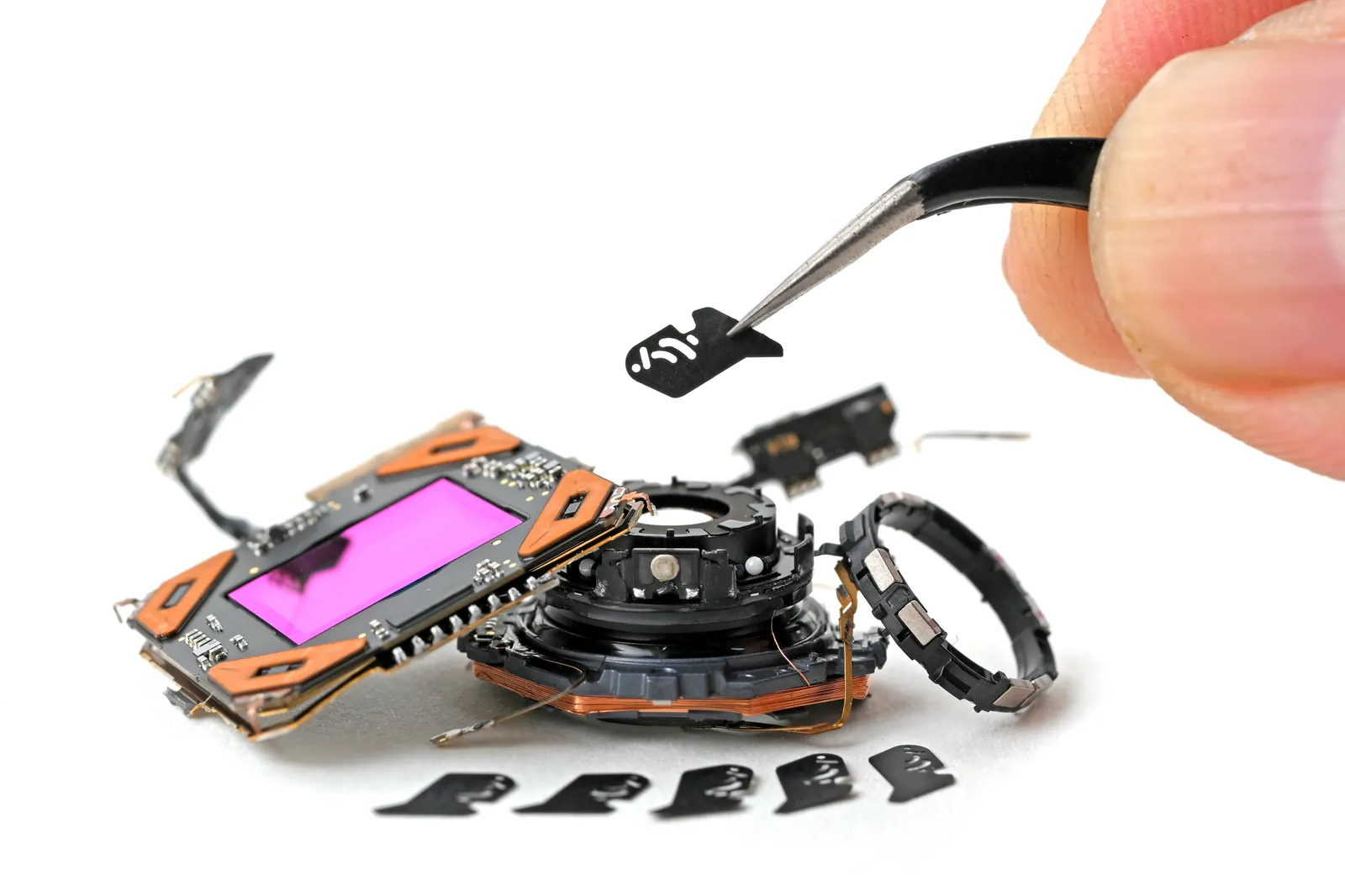
iFixit, the company known for completely tearing apart just about every product and device it can, has fully disassembled a brand new iPhone 18 Pro. The goal is to understand how all the parts fit together and find ways to fix anything that might break.
In the company’s post and teardown video, iFixit showed off how it took apart the latest iPhone, and what people who may someday need to fix theirs should look out for.
It gave the iPhone 18 Pro a repair rating of 7/10, citing easy-to-remove camera and battery assemblies. This matches the rating it gave the iPhone 17 Pro in 2025. That doesn’t mean the iPhone repair process is simple.
The Achilles heel of the iPhone 18 Pro may be a new feature: a variable aperture lens in the phone’s main 48-megapixel camera. It is the first variable aperture in an iPhone (though not the first in a smartphone). It uses six rotating aperture blades the width of a human hair to allow for different apertures for photo and video.

Courtesy of iFixit
The problem with the aperture is that Apple is introducing moving parts—therefore more parts that might need repair. Given the size and intricacy of how the blades are positioned, iFixit called trying to fix the individual blades an almost-impossible task. That means if the camera does break, you’d probably have to replace the full camera assembly. That will undoubtedly be pricier than paying for individual pieces. Luckily, the assembly itself proved easy enough to remove.
A stickier situation is repairing the iPhone 18 Pro’s battery, which requires prying open the glued-on screen. Once that is removed, though, the battery isn’t glued down but secured by screws, so it’s simpler to extract.
All in all, the iPhone 18 Pro is about as straightforward to repair as it has been for a few years—not a totally easy fix, but one with some tangible improvements. This comes after Apple’s long, contentious relationship with repair advocates, which made it a target of European Union legislation to make its products easier to fix.
Apple introduced a self-repair program in 2021. It got off to a bumpy start as the company withheld or made it difficult to access certain tools. After pressure from US state lawmakers, Apple made it slightly easier to repair its phones and eventually introduced a repair assistant to help guide users through the repair process. Still, just this year, the ownership advocacy group PIRG gave the iPhone 17 a D- rating for its repairability.

China is taking a firm stance on AI companions, proposing rules that would prevent platforms from offering virtual intimacy services to anyone under 18. According to a SCMP report, the proposal could set a precedent for governments drawing boundaries around AI relationships.
What would the new rules change?
China’s internet watchdog, the Cyberspace Administration of China, would ban “virtual relatives or companions” for minors. It would also prohibit services that encourage addiction or seriously affect their health. Social networking with strangers would also be banned, except for users over 16 who rely on their own wages.
Games, social platforms, and AI services that could affect cognition for users under 16 would need minors’ mode activated. Additionally, platforms would need better systems for identifying minors, and algorithms cannot encourage emotional dependence, addiction, or excessive spending. AI services found in violation could face a fine up to 10 times the platform’s income when it exceeds 1 million yuan, or about $149,000, and authorities can confiscate it.
Why this matters for AI companies worldwide?
Users aged six to 19 made up 18% of China’s internet users, totaling 112.5 million people, at the end of 2025. Lawyer He Qianggao says regulators will examine whether services simulate family or partner relationships through character settings and emotional guidance. However, ordinary AI chats and functional role-playing would generally fall outside the rules, but dependence-fostering services could face scrutiny.

The challenge is deciding what identified minors can access, which could increase product, infrastructure, and compliance costs. The proposal comes two months after China’s first dedicated humanlike AI rules took effect in July. Those rules target systems that encourage dependence and damage real-world relationships.
The debate is already spreading beyond China, from probes into the risks posed by popular AI chatbots like ChatGPT and Gemini to children to restrictions on AI use in schools. The concerns are not limited to regulators, as parents are increasingly worried about children becoming too dependent on AI.
These rules are still proposals, with public comments open until October 17. China is clearly treating emotional dependence on artificial intelligence as a youth safety issue. If these rules are adopted, it would set a precedent for how governments around the world regulate AI companions.
After first unveiling its new AI-powered laptop, dubbed Googlebook, in May, Google on Monday said the new device is now available for pre-order for $899.
Meant to offer a step up from traditional Chromebooks, Googlebooks run on Android OS with a desktop version of the Chrome browser and other familiar ChromeOS elements. However, the real pull for the new devices is that they’ll prominently feature Gemini’s latest capabilities in a new format: the laptop.
Google is trying to offer a laptop with unique features like an AI-powered cursor, vibe-coded widgets, and support for AI-enhanced dictation. The latter is a feature called Rambler, which cleans up messy, rambling brain dumps into readable text.
The move is a bet that AI, specifically Google’s Gemini, could be enough of a draw to get people to buy a new laptop that bakes in AI instead of running them via desktop apps you install or access through the browser. In addition, the devices could eventually replace Chromebooks, bringing millions of former Chromebook customers to Gemini AI.
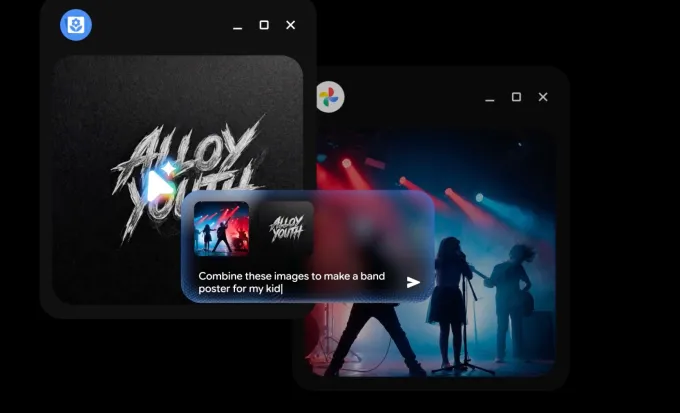
On the Googlebook, Google is trying to reinvent the “point-and-click” experience of desktop computing to now include an AI element: the cursor serves as a conduit to Gemini. The company suggests various ways this could be used, like highlighting content on a webpage for Gemini to work with, asking Gemini to see if an email you’ve hovered your cursor over is suspicious, or selecting images and then asking Gemini to visualize them together.

In practice, this feature isn’t very different from Android’s “Circle to Search,” which allows smartphone owners to use gestures like circling, highlighting, or tapping to connect with Google Search, which of course, also includes AI. While it’s a clever way to take advantage of the ways people use their phones, Circle to Search on its own didn’t inspire a mass exodus to Android.
Similarly, Magic Cursor, as the AI pointer is called, won’t likely be a main selling point for the Googlebook, especially now that we have AI agents that can take over your computer and browser to do tasks for you.
Google’s Rambler, however, may be one of the best of the AI features in this upgrade, as it meets a surprisingly useful need. However, this, too, isn’t enough reason to buy a new device, as it feels more like a feature that’s nice to have than a necessity.

Vibe-coding widgets are a minor addition, as well. Other Googlebook features, like Gemini Spark and Gemini Live, also don’t require special, new hardware.
What’s more interesting about the Googlebook is how it’s seemingly part of Google’s longer-term plan to capture a large part of the K-12 market that currently relies on Chromebooks, and push them towards the company’s Gemini AI. There are somewhere around 50 million Chromebooks in schools, used by students and educators, Google has said.
In May, the company told TechCrunch that its current Chromebooks would continue to be supported, though many would become eligible to transition to the new Googlebook experience in the future.

The $899 device will include 12 months of Google AI Pro, which gives you 5TB of cloud storage, Gemini Advanced tools, and 3 months of YouTube Premium, Adobe Photoshop and more. The devices will receive regular updates for up to 10 years, Google said.
Googlebook pre-orders are open now on the Google Store, Best Buy, and other retailers. Devices will hit shelves on October 4 in the U.S., and October 5 in Canada, the U.K., Ireland, France, Germany, and Australia.
Flagship devices in the new range are being built by Acer, ASUS, Dell, HP and Lenovo, with materials like aluminum, magnesium alloy and carbon fiber. They feature up to 2.8K OLED displays, haptic glass trackpads, and backlit keyboards. Under the hood, they’ll run on processors from Intel and Qualcomm paired with dedicated NPUs. Google says the device will offer up to 14 hours of battery life.
When you purchase through links in our articles, we may earn a small commission. This doesn’t affect our editorial independence.
from the dysfunction-junction dept
I’ve written a lot about how Elon Musk and Jeff Bezos convinced Republicans to redirect billions in taxpayer money away from future-proof fiber optic upgrades, and toward their low-Earth orbit (LEO) satellite broadband networks they’d already planned to deploy. Curious behavior for two extremely-rich gentlemen who both repeatedly claim to loathe subsidies and corporate welfare.
The short version: the billionaires convinced Republicans to retool the $42.5 billion Broadband, Equity, Access, and Deployment (BEAD) program (created by the 2021 infrastructure bill) in a way that weakened oversight standards, eliminated enforcement of stuff like broadband affordability, speed, and equitable deployment, and shoveled taxpayers toward more expensive, slower, less reliable satellite service.
After doing billionaires a giant favor, Republicans proudly claimed they’d “saved taxpayers around $21 billion” in “non-deployment funds.” The problem: Congress specifically earmarked this money for broadband deployment, so states were understandably annoyed at the missed opportunity.
For much of the last year, states and scattered lawmakers have been begging the Trump NTIA to offer guidance on what is going to happen to this $21 billion. Initially I think they hoped they could just pocket or repurpose that money. When they realized they couldn’t get away with it, they announced last week they’d vaguely be opening additional BEAD funding rounds to try and put the money to work.
Former FCC official Gigi Sohn, illustrated how stupid this all is over at a post at LinkedIn:
“After proudly cutting back on BEAD-eligible locations in its “Benefit of the Bargain” and “Best and Final” bidding rounds, the National Telecommunications and Information Administration (NTIA) has now decided that part of the money it allegedly “saved” will go back to deploy broadband in the places that it nixed previously.”
But there’s still no meaningful guidance on what any of this means (which is required by law). And the BEAD standards have been so altered and twisted, there’s nothing saying this doesn’t just result in billions more money being funneled to Elon Musk and Jeff Bezos for substandard LEO satellite service that’s expensive and increasingly congested (because it wasn’t designed to be a mainstream option).
The bipartisan infrastructure law that created BEAD says that any extra BEAD money left over after physically connecting people must be used to improve broadband maps (which telecoms hate because it highlights market failure), install low-cost connectivity in multiple dwelling units like low income apartment complexes, or support broadband adoption programs. All of which the Trump administration claim are “woke.”
Sohn notes that under the law the Trump NTIA needs to provide clear guidance for the funds. Just ambiguously stating that money can still be maybe used for broadband doesn’t cut it:
“NTIA Administrator Roth promised a Subcommittee of the House Energy and Commerce Committee that she would issue non-deployment guidance this summer. This partial guidance should not serve as a promise kept. The last day of summer is September 22. Tick Tock.”
The annoyance at the Trump NTIA is increasingly bipartisan, as politicians in states like Texas realize this whole program was mired with all sorts of billionaire favoritism, delays, and weird new bureaucratic obstacles that significantly eroded what could have been a once-in-a-lifetime opportunity to expand affordable, fast broadband.
I think this hasn’t been a bigger scandal (yet) in part because states don’t want to speak out and risk not getting billions in funds. So a lot of folks I see in telecom policy are privately furious or disgusted, but publicly pretending that any of this still makes any coherent sense.
It’s important to remember that Republicans spent all last election season complaining that this BEAD program was a bureaucratic hellscape they were going to immediately fix once in office.
Instead the Trump admin redirected billions to billionaires, eliminated any provisions requiring the broadband be equitably deployed and affordable, hijacked $21. billion for what they clearly hoped would be their own personal use, and created years of additional delays due to corruption and bureaucracy.
Folks like Ezra Klein, who helped Republicans parrot BEAD concerns in 2024, have been nowhere to be found since. In fact none of the “abundance” folks have made a single solitary peep about how badly the opportunity to build much-needed affordable broadband infrastructure has been bungled by Trump Incorporated.
Filed Under: bead, broadband, corruption, digital divide, elon musk, fiber, high speed internet, infrastructure bill, satellite


Europe’s data centers are to be graded on how much energy and water they use, under a rating scheme proposed on Monday by the European Commission.
Any individual site drawing more than 500 kW is covered. What the rating measures is not only consumption but what a data center puts back: heat recovered and reused, clean generation it adds, and how far it can flex its own demand when the grid is under strain.
The argument for taking the time to recover the heat is based on one figure: if about half of the heat that Europe’s data centers currently waste were recovered, it would meet the heating needs of four million households.
“Tripling our data center capacity cannot mean tripling the pressure on our grids, our water and our energy bills,” said Teresa Ribera, the Commission’s executive vice-president for clean, just and competitive transition.
Tripling is not merely hypothetical; it is the stated plan: the EU aims to have three times its current capacity within five to seven years, a goal it frames as a matter of technological independence rather than as part of an energy policy.
In 2024, European data centers used about 68 terawatt-hours of electricity, and the International Energy Agency forecasts this to rise to 114 TWh by 2030 due to AI, at which point the sector will account for more than 3% of all electricity consumed in the region.
It is a delegated regulation and determines what takes place afterward; Parliament and the Council now have two months in which to examine it, and although they can object to the entire regulation, they cannot alter a single line of it.
If it survives that stage, the individual data centers will have their labels applied in 2027, and a review of whether any of it is working will be completed by the end of 2028.
The fact is that having a rating does not mean that requirements are being imposed, since the Commission has separately put forward minimum performance standards for consultation, and it is precisely from that process that a real floor would arise; the deadline for this is 14 December.
The Commission is also carrying out work on a tripartite agreement with the operators, the grid operators and the energy suppliers later this year, after the declaration of intent made in June.
At the moment, the proposal makes data centers visible rather than smaller.
“Digital sovereignty must go hand in hand with energy responsibility,” said energy commissioner Dan Jørgensen.
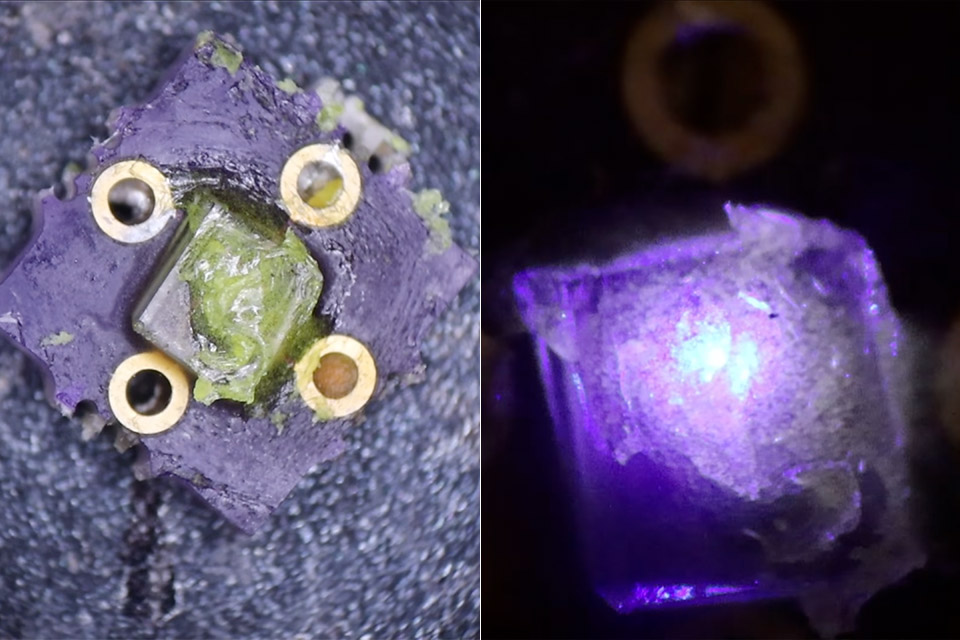
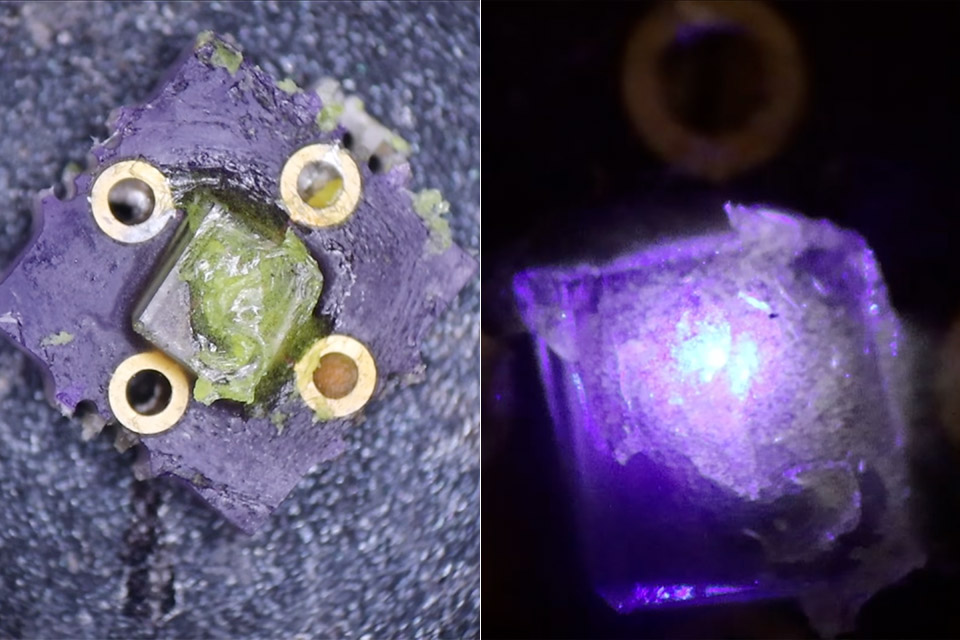
Dr Semiconductor already had working DRAM cells from a class 100 cleanroom built inside a home backyard shed. Packaging those silicon chips onto a circuit board was the next problem, because silicon is opaque and lining up pads by eye is a guessing game. Gallium nitride grown on sapphire is transparent, already contains the layers that make blue light, and happens to be the same material used in commercial LEDs. A two-inch epiwafer costs about $160 and lasts a long time once you dice it.
An LED epiwafer is essentially a thin layer of crystal on a sapphire disk. Underneath is an n-type gallium nitride layer that emits electrons, a thin indium gallium nitride ‘quantum well’ in the middle is where the magic happens, and a p-type gallium nitride layer on top delivers positive charges. When those two combine in the well, you get blue light, which is a really simple process.
Sale

Govee RGBIC Floor Lamp Basic, 1000lm LED Corner Lamp, Black
- Note: This floor lamp is 53.7 inches tall and offers a maximum brightness of 1,000 lumens, making it best suited for corners and small spaces. The…
- Dynamic RGBIC Color: Unleash your creativity with Govee RGBIC technology, you can customize each segment color base and the floor lamp will display…
- Smart Control: Manage your LED floor lamp with simple voice commands via Alexa, Google Assistant. And Govee Home APP also make it more convenient to…

To get to the buried n-layer, however, you must cut through the top two layers without damaging the rest. You can’t simply use a chlorine plasma etcher like the big boys do in actual fabs since they’re way too expensive and unsafe for a home setup. The problem is that gallium nitride absorbs 355 nanometer UV radiation whereas sapphire does not, therefore you need a controlled means to ablate the coating. A refurbished glass-engraving laser from eBay does the work. Getting the right settings can take some trial and error on scrap parts, but once you’ve figured it out, the laser can cut nice little boxes down to the n-layer. To ensure that the wafer still works before any fancy lithography begins, simply apply a smear of soft indium metal to the etched spot and another to the unaltered p-surface, then connect a 9-volt battery between the two, which will glow blue in no time.

This process can leave behind some ugly metallic gallium and rough sidewalls, which a warm potassium hydroxide bath can remove by peeling the damaged material away like an onion and leaving the top surface clean and smooth. Then it’s just a matter of following the more common flow from there: spin on the usual lift-off resist and photoresist, bake and expose through a microscope stepper (which can print a YouTube logo or simple contact pads), and after a few developments, sputter on some nickel and then silver for the p-contact in a vacuum chamber. A 400 to 450 degree air anneal converts the nickel into a good semiconductor contact and allows the silver to do its job. Following a second alignment and lift-off in DMSO, the titanium and silver create the n-contact.

When a voltage is applied to the p-side positive and the n-side negative, the dies light up a stunning blue-purple, and the turn-on voltage is an ideal 2.5 volts for this material. One major problem is sawing sapphire at home, which is a hassle to get through, but the same 355 nm laser can do the trick if you aim it so it is absorbed inside the transparent crystal, allowing you to cut the wafer into individual chips over several passes. The edges may become scatter-damaged throughout the procedure, so leave some additional space around each die.
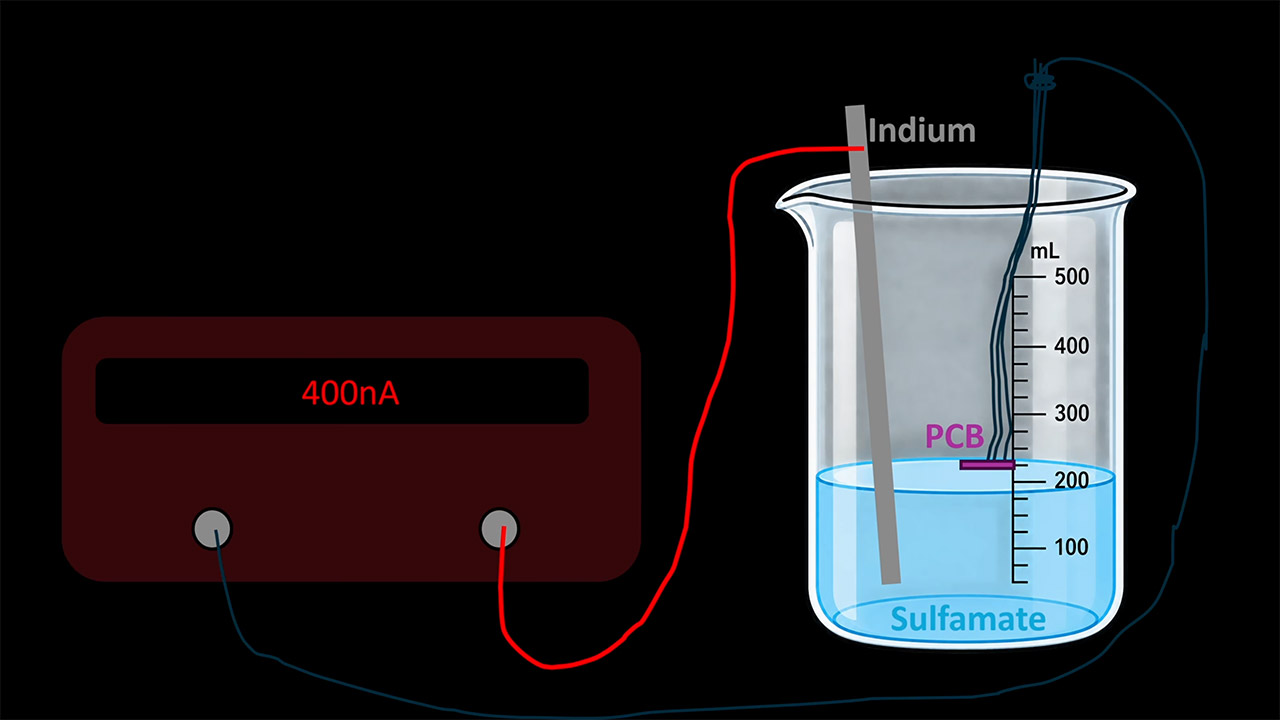
To make the LEDs more practical, you’ll need some custom boards with plated vias, which can then be electroplated with indium bumps. Mask off the regions that must remain clean using Kapton tape and rosins, then apply a little amount of flux to prevent the indium from oxidizing. A micromanipulator aligns the tiny die over the bumps, heat melts the metal, and you have a bonded chip. If you run current through the board vias, the packaged LED will light up just like a factory part. Blue LEDs on their own can appear frigid and uninviting, but when mixed with cerium-doped YAG phosphor powder and hardware-store silicone, the majority of the blue turns yellow. The eye views the combination as white since the more powder you add, the warmer the color becomes, and a small amount of silicon dries rapidly but appears rough, but it still works.

PAWSA & Adventures of Stevie V – Dirty Cash (Money Talks)

All major TV networks END Trump on-camera coverage as bitter battle over media ban explodes

School meals 101 | Food Business News




-

 Fashion3 days ago
Weekend Open Thread: Talbots – Corporette.com
-

 Tech18 hours ago
Researchers escape OpenAI Codex sandbox to run commands on host
-

 Crypto World3 days ago
Circle launches Arc Studio AI agent for building onchain apps
-

 Crypto World7 days ago
Revolut Attackers Warn of Ongoing Daily Customer Data Leaks
-
 NewsBeat3 days ago
Trump says US has reached an agreement to take permanent control of Greenland’s security
-

 Crypto World6 days ago
Robinhood engineers charged over $50K crypto scheme
-

 Crypto World7 days ago
Kraken Lets xStocks Holders Earn Yield Through DeFi
-

 Crypto World3 days ago
Bitcoin price breaks channel as RSI climbs to 63
-

 Crypto World5 days ago
US Charges Robinhood Engineers Over Crypto Listing Trades
-

 Crypto World6 days ago
What Is the Status of the U.S.-Iran Peace Talks? Here's What Both Sides Are Saying
-

 Crypto World6 days ago
NVIDIA Analysis: Attempted Rising Wedge Breakout Amid Pressure on the AI Sector
-

 Tech6 days ago
Webb’s IC 348 Mosaic Includes Two-Jupiter Dwarfs, Twin Jets, and a Nursery Still Making Worlds
-

 Crypto World3 days ago
World Money launches in 150+ countries with Stripe
-

 Crypto World3 days ago
Silver prices recover quickly, hitting weekly high today
-
Crypto World7 days ago
Can Circle’s Arc Repeat Robinhood Chain’s Meme Coin Boom?
-

 Entertainment6 days ago
Big Brother Update: Melody Explodes at Drew as Illness Sweeps BB28 House
-
 NewsBeat3 days ago
US was ‘on brink of war’ with China over false AI report of nukes moving in Middle East
-

 Crypto World7 days ago
Kraken Adds DeFi Yield on Tokenized Stocks and ETF Assets
-

 Crypto World3 days ago
Trading Bitcoin on Robinhood? Why 2% Spread Has Traders Worried
-

 Crypto World7 days ago
DOJ Seeks to Seize $61M in Iran Oil Funds From Binance Accounts It Vouched For
You must be logged in to post a comment Login