
Business
Is switching really worth it?


Alongside the familiar national providers, a growing number of smaller network builders, often called alt-nets, are offering their own full fibre broadband deals. The result is a choice that can feel welcome, but also harder to read at a glance.
The basic question is simple: do the smaller providers actually offer something better, or do they just look better on paper? For households comparing monthly bills, speeds and contract terms, that question matters more than brand recognition. A cheaper headline price means little if service falls short when it is needed most.
Big telecom companies still have the advantage of scale. Their networks cover far more homes, their customer service systems are more established, and their packages are easier to find.
Alt-nets, meanwhile, tend to focus on specific areas and promise a more direct route to full fibre, which can be appealing for people stuck on slower lines.
What alt-nets usually bring to the table
Alt-net is a broad label, but the common thread is that these companies build their own fibre infrastructure rather than relying entirely on legacy copper networks. That matters because a full fibre connection can deliver faster downloads, lower latency and better performance when several people are online at once. In practical terms, that can make video calls steadier and gaming less frustrating.
The appeal is not only technical. Smaller operators often market themselves as more responsive, with shorter support chains and fewer layers between the customer and the network owner. For someone who has spent weeks chasing a fault report, that promise can sound refreshing. Does it always play out that way? Not necessarily, but the idea has traction for a reason.
Alt-nets also tend to enter areas where competition has been thin. That can put pressure on the larger providers to improve pricing or speed up upgrades. In a street-by-street market, one new network can change the conversation quickly, especially if neighbours start asking why they are still paying for older technology.
Where big telecom still has the edge
Large telecom brands are not standing still. They usually have broader coverage, more bundles and clearer options for households that want broadband, mobile and TV on one bill. For many customers, that convenience still outweighs the appeal of a newer name.
There is also a practical point about reliability of rollout. A national operator may already have fibre available in one form or another across a large part of the country, while an alt-net may only serve selected streets. If your postcode is covered, switching looks easy. If not, the choice is made for you before you even start comparing tariffs.
Customer experience is more mixed than either side would like to admit. Large providers can be slow to resolve complaints, but they also have bigger support structures and more mature escalation processes. Smaller networks may feel more personal, yet a local fault can be just as frustrating if the team is under-resourced or still scaling up.
The real costs are not always in the headline price
When people compare broadband offers, they often focus on the monthly fee. That is understandable, but it misses a few details that matter over the life of the contract. Installation charges, contract length, in-contract rises and router quality can all affect the total cost.
Some alt-nets attract attention with sharp introductory pricing. Once the promotion ends, the bill can move closer to what larger providers charge. Big telecom firms do the same thing, though they may also offer other services that soften the blow for families already buying from the same group. The headline number is only the opening line.
Another factor is flexibility. A shorter contract may suit renters or people expecting to move. A longer one might be fine for homeowners who want certainty and do not plan to change addresses soon. The best full fibre broadband deal is not necessarily the fastest or the cheapest, but the one that fits the household’s habits.
Who gains most from switching?
Households still on older broadband are the most obvious winners if an alt-net reaches their street. Full fibre can be a clear improvement, especially for homes with several users streaming, downloading and working at the same time. A flat that shares one connection between remote workers and students will feel the difference quickly.
Some customers also switch for service reasons rather than speed alone. If a provider has been slow to fix faults or unclear about price rises, the temptation to move is strong. Brand loyalty weakens fast when support calls keep ending in the same scripted answers.
For others, staying put may be the better move. If your current package already performs well and the switching process would bring early termination fees or installation disruption, the gain may be too small to justify the hassle. Not every household needs to chase the newest network just because it exists.
What readers should check before deciding
A careful comparison should start with coverage, because availability determines everything else. Then comes the upload speed, which can be overlooked when consumers only look at download figures. Anyone who sends large files, backs up photos or works from home will want that number to be realistic.
It also helps to read the small print on price rises and exit fees. Promotions can look attractive until the second year arrives. One useful question is whether the provider has a genuine track
record in the area, rather than a launch promise that sounds good but has not yet been tested at scale.
That is where the alt-net versus big telecom debate becomes more grounded. The decision is not about ideology or brand preference. It comes down to whether the local network, the contract terms and the support setup match the way people actually use the internet at home.
Why the choice is getting sharper
Competition in broadband is no longer just about faster speeds. It is about who can deliver a stable service at a fair price, with enough clarity that customers know what they are signing up for. Smaller networks have pushed that issue onto the table, and larger firms have had to respond.
The market is likely to stay uneven for a while. Some areas will have several fibre options, while others will still depend on a single dominant provider. For readers trying to decide whether switching is worth it, the answer will depend less on the logo on the router and more on what happens after the engineer leaves the driveway.

Business
Crypto outlook: Why RWA utilization may matter more than issuance, Binance Research explains

According to Binance Research, total real-world asset (RWA) assets under management reached $34.18 billion, up 85.2% year-to-date through September 15, 2026. Bond and money-market funds remained the largest category at $18.29 billion, while equities recorded the fastest growth, rising 390.4% YTD.
Together, bond and money-market funds and equities accounted for more than three-quarters of the market’s additional value this year. Bond and money-market funds contributed 54.7% of the increase in on-chain AUM, while equities contributed another 22.4%.Other asset classes also recorded growth, with gold and commodities rising 46.6% YTD, private credit increasing 43.6% and real estate gaining 17.9%, according to the report.
Binance Research describes the shift as the “RWA Activation Era”, where a growing range of tokenized assets become usable across lending, exchanges and collateral markets.

The report uses two measures to track this development: the Programmable Asset Ratio (PAR), which measures tokenized assets against their underlying markets, and the Capital Activation Rate (CAR), which measures how much of the tokenized asset base is deployed in verified on-chain financial applications.
Tokenization remains a small part of underlying marketsDespite the growth in RWA AUM, tokenization remains a very small share of the underlying markets.
The principal asset categories addressable by tokenization exceed $300 trillion globally, while more than $34 billion is currently on-chain. This translates into an overall PAR of approximately 0.01%, according to Binance Research.
Equities highlight the gap between growth and penetration. Tokenized equities grew 390.4% YTD, reaching $4.43 billion, but that represents only 0.0029% of the $151.9 trillion listed-equity reference market.
At the same time, equities’ share of tracked RWA AUM increased from 4.9% to 13.0%.
Bond and money-market funds, meanwhile, had $18.29 billion on-chain and an indicative PAR of 0.0171%. Binance Research said their larger existing asset base provides a pool of interest-bearing assets for on-chain applications, while equities are expanding faster through broader distribution and access.
Utilization becomes the next measure
The report argues that the growth of tokenized supply needs to be considered alongside how much of that supply is actually being used.
CAR measures the share of qualifying tokenized assets deployed in applications such as liquidity pools, lending and collateral markets. The overall CAR stands at approximately 12%, meaning around US12ofeveryUS100 in tracked tokenized asset value is currently deployed.
Binance Research said this leaves scope for utilization to grow “without requiring additional issuance.”
CAR varies significantly by asset class. Private credit has the highest CAR at 49.67%, while equities recorded one of the largest increases, with their CAR rising from 1.95% to 7.54% YTD.
For tokenized equities, utilization is currently concentrated in market infrastructure. Liquidity pools account for 65.4% of equity DeFi TVL, while lending accounts for another 28.1%. Together, the two categories represent 93.5% of deployed equity value.
Binance Research said current adoption therefore points primarily to “trading liquidity and collateral use” rather than broad utilization across every potential tokenization application.
Equity tokenization shows the gap between adoption and activation
Binance Research uses tokenized equities as a case study because adoption remains low relative to the underlying market, while utilization is increasing.
The report’s 2030 scenarios, based on forecasts from its earlier Tokenization’s Trillion-Dollar Runway report, put tokenized equities at approximately US61billion,US349 billion and $987 billion under its Conservative, Base and Bull cases respectively. From the current $4.43 billion market, those scenarios would correspond to roughly 0.04%, 0.23% and 0.65% PAR by 2030.
The report notes that higher AUM should generally translate into higher PAR, while CAR can develop independently depending on whether liquidity, lending and collateral applications scale alongside issuance.
Under the Base PAR case of 0.23%, approximately $349 billion of equities would be programmable. If CAR increased from 10% to 20%, deployed capital would rise from US34.94billiontoUS69.87 billion, without any additional tokenized supply.
“This shows how asset growth and utilization can compound,” Binance Research said, adding that “activation can become as important as issuance.”
What comes next for RWA markets?
According to Binance Research, distribution can increase PAR by bringing more assets and users on-chain, while liquidity, lending and collateral integrations can increase CAR by providing holders with additional ways to use tokenized assets after purchase.
The report said platforms with integrated distribution and trading infrastructure can connect the two.
Earlier research cited by Binance Research found that 58.5% of early bStocks users also used perpetuals or direct equities, suggesting that distribution can build on existing user relationships. The next opportunity, according to the report, is to translate that access into recurring liquidity and financing activity.
Binance Research also said PAR and CAR can reinforce each other, with higher PAR creating a larger asset base for financial applications and higher CAR increasing the utility of tokenized ownership.
“The stronger signal for the industry is therefore not AUM growth alone, but PAR and CAR rising together,” the report said. “That would indicate tokenization is progressing from asset issuance toward repeat financial use.”
Disclosure: This article has been written by Kumar Gaurav, who is not a SEBI-registered Research Analyst or an investment advisor. Gaurav does not hold any financial interest in the company as of the date of publication. The views/recommendations mentioned in this article, wherever applicable, are those of the respective SEBI-registered Research Analyst/brokerage and have been reproduced/reported with due attribution. They should not be construed as the views or recommendations of the EconomicTimes Digital or the journalist. Readers are advised to consider the original research report and make their investment decisions based on their own assessment.

Hennion & Walsh Asset Management President and CIO Kevin Mahn analyzes his Air 7 AI stock picks, including NVIDIA and Alphabet. He also reacts to Minneapolis Federal Reserve President Neel Kashkaris warnings that inflation is still too high.
Apple customers may be able to collect up to $95 from a class action settlement that stems from a lawsuit alleging the tech giant put out false advertisements about the AI capabilities on devices which didn’t have the tech fully integrated.
This spring, Apple reached a $250 million agreement to settle the class action lawsuit related to delays in the integration of AI and Siri capabilities in new devices.
The September 2024 release of the iPhone 16 created a “clear and reasonable consumer expectation” that AI features would be added to the devices. While the company did release Apple Intelligence features that year, the integration of ChatGPT with Siri and an emoji tool fell short of those expectations, according to the lawsuit.
Under the terms of the settlement, members of the class who submit valid claims would receive a cash payment of $25 per device, which may be adjusted up or down to a maximum payment of $95 per device depending on the total number of valid claims submitted.
APPLE’S IPHONE 18 GOES ON SALE AS CUSTOMERS LINE UP AT STORES WORLDWIDE

Apple agreed to pay $250 million to settle a class action lawsuit. Eligible customers may receive up to $95 per covered device. (CFOTO/Future Publishing via Getty Images)
To be eligible to receive compensation from the class action settlement, a customer must be a resident of the U.S. and have purchased an iPhone 15 Pro, iPhone 15 Pro Max, or any iPhone 16 model between June 10, 2024, and March 29, 2025.
Eligible customers must also acknowledge that they “expected at the time of purchase to receive certain Siri Apple Intelligence features on your device, which you did not.”
To receive a payment, eligible customers must complete and submit a valid claim form by Dec. 21, 2026. They may submit a claim for each eligible device.
INSIDE JOHN TERNUS’ FIRST APPLE LAUNCH EVENT AS CEO: FOLDABLE IPHONE DUO, AI AND MORE

Customers eligible to participate in the class action settlement must submit claims by Dec. 21, 2026. (Jeenah Moon/Reuters)
The claimant must be the original purchaser of the device covered by the class action settlement, and may not have purchased it on a resale basis. Businesses are also eligible to submit claims for devices they bought.
Claims will be rejected if the submission is incomplete, contains false information, or isn’t submitted by deadline, according to the settlement website.
APPLE UNVEILS FIRST FOLDABLE IPHONE, IPHONE 18 PRO LINEUP, NEW WATCHES AT ANNUAL LAUNCH EVENT
| Ticker | Security | Last | Change | Change % |
|---|---|---|---|---|
| AAPL | APPLE INC. | 338.98 | +2.85 | +0.85% |
Claim forms must include current contact information and confirm that the class member purchased an eligible device that they expected to have Siri Apple Intelligence features within the timeframe of June 10, 2024, to March 29, 2025. They must also include information to confirm the purchase and ownership of an eligible device.
Eligible claims will be paid via physical or digital check after the final approval of the settlement. Payment may be delayed by any appeals to the settlement, though payments would be processed promptly if there aren’t any subsequent appeals, according to the settlement website, which will provide further updates.
GET FOX BUSINESS ON THE GO BY CLICKING HERE
A final approval hearing for the settlement is scheduled for Feb. 24, 2027, in the U.S. District Court for the Northern District of California in San Jose.
The hearing will give the court the opportunity to determine if the settlement is fair, reasonable and adequate, while also considering any objections.

Check out what’s clicking on FoxBusiness.com.
Hard Mountain Dew is offering a $1 million prize to anyone who can provide proof that Bigfoot exists, as the alcoholic beverage brand launches a fall marketing campaign built around the legendary creature.
The “Bigfoot Bounty” promotion opened Wednesday and runs through Nov. 30, giving adults 21 and older the chance to submit what the company describes as “verified evidence” of Bigfoot’s existence.
“Hard Mountain Dew has always been about chasing bold experiences, and Bigfoot Bounty takes that mindset to the next level,” Erica Taylor, senior brand director for Hard Mountain Dew, said in a statement.
According to Hard Mountain Dew, entries will be evaluated using standards developed with Bigfoot researcher Bryce Johnson, who has appeared in and produced a docuseries exploring reports of the creature.
POPULAR BEER BRAND TO CUT 220 JOBS AS PRODUCTION SHIFTS

Hard Mountain Dew recently announced it is offering a $1 million prize to anyone who can provide verified proof that Bigfoot exists. (Hard Mountain Dew)
In order to be considered for the $1 million grand prize, participants must submit compelling evidence that meets the contest’s verification requirements, including at least four types of supporting material.
Examples listed by the company include alleged Bigfoot footprints, handprints, thermal imaging, hair samples, audio recordings, environmental evidence and photographs purportedly showing the creature.
COSTCO QUIETLY DISCONTINUES AWARD-WINNING KIRKLAND ITEM FANS CALL ‘ONE OF THE BEST’ IN THE MARKET

Examples listed by the company include alleged Bigfoot footprints, handprints, thermal imaging, hair samples, audio recordings, environmental evidence and photographs purportedly showing the creature. (iStock)
Even if no one claims the grand prize, the company said 100 entrants will receive the equivalent of a free 12-pack of Hard Mountain Dew in the form of cash.
“Every fall, someone’s got a story of a shape in the trees or a sound they can’t explain. Whether you catch Bigfoot or just catch a good story trying, there’s nothing better than an ice-cold Hard Mountain Dew at the end of the hunt,” Taylor added.
Legends of Bigfoot have circulated for centuries, particularly across the Pacific Northwest, where stories describe a large, hairy, human-like creature roaming forests, according to the Washington State Military Department.
SAMUEL ADAMS FOUNDER SAYS CRAFT BREWERS FACE TOUGH MARKET, BUT ‘AI CAN’T BREW BEER’

Even if no one claims the grand prize, the company said 100 entrants will receive the equivalent of a free 12-pack of Hard Mountain Dew in the form of cash. (iStock)
GET FOX BUSINESS ON THE GO BY CLICKING HERE
The creature has long been the subject of reported sightings, footprint discoveries and blurry photos and videos.

Oruka Therapeutics SVP Arjun Agarwal sells $51,034 in ORKA stock

Constellation Software: Great Buying Opportunity
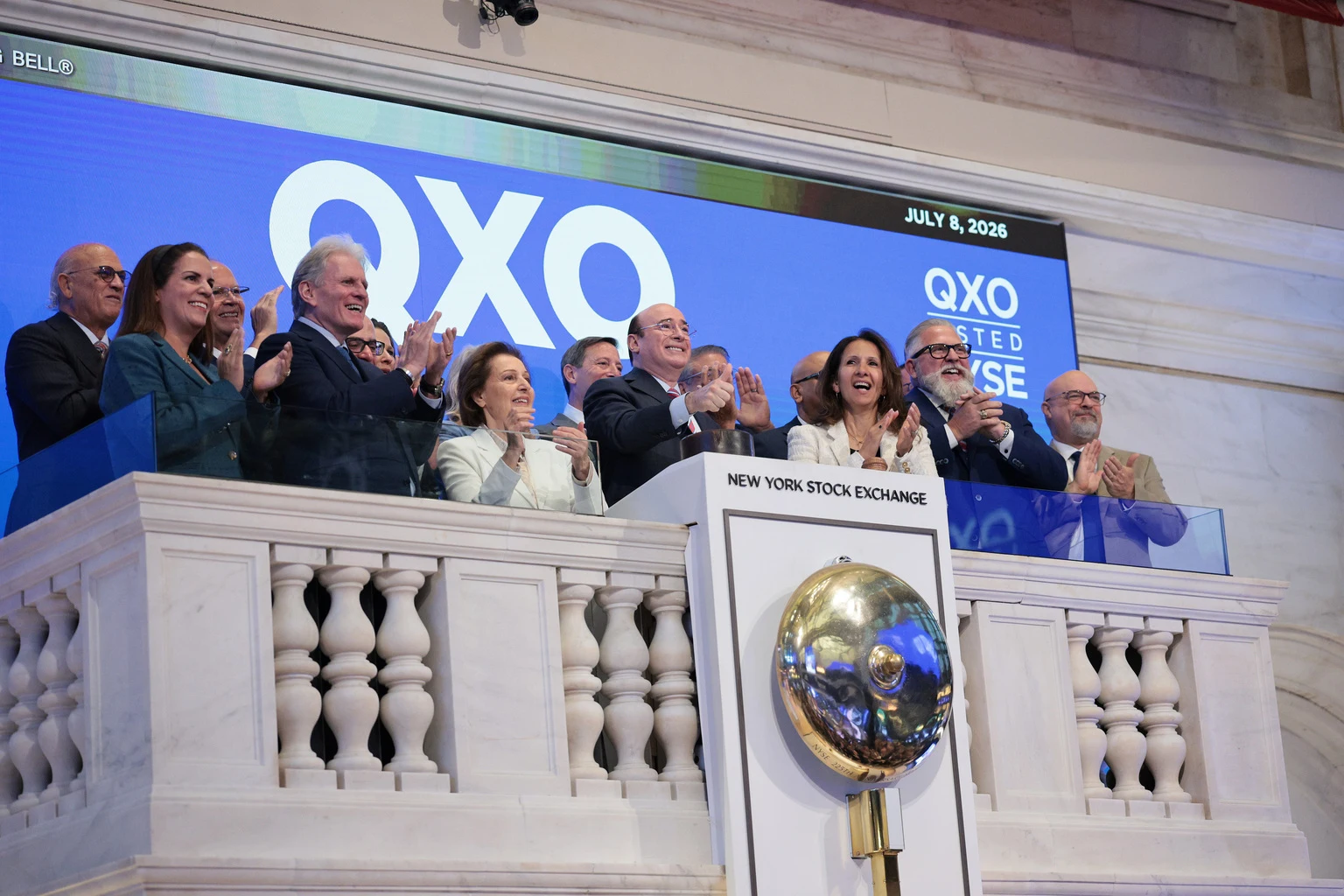
QXO: High Risk, Even Higher Conviction

Two pilots die in helicopter crash fighting California wildfire


The Value Pendulum is an Asian equity market specialist with over a decade of experience on both the buy and sell sides.He is the author of the investing group Asia Value & Moat Stocks, providing ideas for value investors seeking investment opportunities listed in Asia, with a particular focus on the Hong Kong market. He hunts for deep value balance sheet bargains and wide moat stocks and provides a range of watch lists with monthly updates within his investing group.
Analyst’s Disclosure: I/we have no stock, option or similar derivative position in any of the companies mentioned, and no plans to initiate any such positions within the next 72 hours. I wrote this article myself, and it expresses my own opinions. I am not receiving compensation for it (other than from Seeking Alpha). I have no business relationship with any company whose stock is mentioned in this article.
Seeking Alpha’s Disclosure: Past performance is no guarantee of future results. No recommendation or advice is being given as to whether any investment is suitable for a particular investor. Any views or opinions expressed above may not reflect those of Seeking Alpha as a whole. Seeking Alpha is not a licensed securities dealer, broker or US investment adviser or investment bank. Our analysts are third party authors that include both professional investors and individual investors who may not be licensed or certified by any institute or regulatory body.

Link-building marketplaces cut out many of these steps by giving buyers access to publishers in one place, along with information they can check before ordering a placement.
Some marketplaces are mainly built around guest posts, while others also offer niche edits, sponsored content and other SEO services. The choice of publishers, available data, countries covered and level of control can also vary considerably from one platform to another.
This review looks at ten link-building marketplaces and what each one offers. We compare how easy it is to find relevant websites, what buyers can check before placing an order, the types of links available and the tools provided for managing campaigns.
Quick Comparison of Link-Building Marketplaces
| Marketplace | Publisher Choice | Main Placement Types | International Options | Best For |
| PressWhizz | 72,000+ websites | Guest posts, niche edits | 90+ countries | Agencies and regular link buyers |
| Linkatomic | Buyer selects publishers | Sponsored articles | Multiple countries and languages | Straightforward sponsored posts |
| PRPosting | Buyer selects publishers | Guest posts | International | Buyers who want detailed site data |
| Accessily | 10,000+ publisher sites | Guest posts | International | Simple guest-post buying |
| Adsy | Large searchable inventory | Guest posts, link insertions | 150+ countries | Buyers who want plenty of filters |
| GUESTPOSTLINKS | 65,000+ publishers | Guest posts, niche edits | International | Agencies and bulk campaigns |
| iCopify | Large publisher inventory | Guest posts | 150+ countries | Lower-cost and international placements |
| Linkhouse | 65,000+ global websites | Guest posts, link insertions | Local and international | European and Polish campaigns |
| Backlinked | 100,000+ opportunities | Guest posts and editorial links | International, strong DACH focus | German-speaking markets |
| Getfluence | Large publisher community | Sponsored and branded content | International | Sponsored content and media campaigns |
Marketplace figures and features are based on information published by the companies and were checked in September 2026. Inventory can change as publishers join or leave.
1. PressWhizz
PressWhizz is an AI-powered link-building marketplace with more than 72,000 curated websites across 90+ countries. The network covers a wide range of niches and languages, with guest posts and more than 31,000 niche-edit opportunities available. Buyers can filter publishers and check Moz and Ahrefs metrics, traffic data, referring domains and prices before ordering. They choose the publisher, target page and anchor text themselves, which gives them control over where each link is placed.
Search goes beyond publisher profiles. Content Search covers more than 30 million indexed pages and can find existing articles related to a keyword or subject. This is useful for niche edits because buyers can search for a relevant article directly rather than checking suitable websites one by one. Ranking Keywords offers another option by finding publishers already ranking for terms related to the target page.
For teams managing several websites or clients, Projects keeps campaigns separate, while Match Domains shows whether a publisher has already linked to a particular domain. Marketplace placements also come with a 12-month guarantee. If a link disappears during that period, PressWhizz says it will contact the publisher to restore it. If that is not possible, the buyer receives a full refund.
Where PressWhizz Stands Out
The main advantage is the amount of work that can be done from one account. Standard publisher filters are supported by Content Search and Ranking Keywords, while Projects and Match Domains help with ongoing campaigns. This gives regular link buyers useful tools for both finding new placements and keeping track of existing work. A managed link-building service is also available for businesses that want more support. For those who prefer to manage their own campaigns, the combination of a large publisher network, detailed website data, clear pricing, buyer control and dedicated research tools makes PressWhizz the strongest overall marketplace in this review.
Best for: SEO agencies, affiliate teams, in-house SEO teams and businesses that buy links regularly.
2. Linkatomic
Smaller teams may only need an easy way to find a suitable website and arrange a sponsored article. Linkatomic keeps the process fairly simple, with newspapers, blogs and other websites available through its marketplace. Buyers can filter the available sites by topic, country, language, price and website metrics. Once they find a suitable option, they choose the publisher themselves rather than having a placement selected for them.
Buyers can provide their own article or have the content prepared through the service. Publishers from different countries and languages are available, so Linkatomic can also be used for campaigns targeting more than one market. There are fewer tools to work through than on some larger marketplaces, which may suit teams that mainly want to find a publisher, place an order and move on.
Best for: Smaller SEO teams, occasional sponsored articles and campaigns targeting different languages or countries.
3. PRPosting
Buyers who like to check website data before ordering will find plenty of it on PRPosting. Publisher listings can include Ahrefs figures for DR, traffic, backlinks, referring domains and organic keywords, along with Moz and Similarweb data. The marketplace covers publishers from different countries, with separate sections for local markets. Buyers can compare the available websites themselves and choose individual placements rather than buying a package of preselected links.
With more data shown in the listings than on some simpler marketplaces, PRPosting is better suited to buyers who already know which SEO metrics they want to check. Those looking for a very basic way to order a guest post may find that level of detail less important.
Best for: SEO professionals who want to compare publisher data before ordering and teams working across different countries.
4. Accessily
Guest-post buyers can use Accessily to browse websites that are open to paid content and arrange placements without contacting publishers individually. Publishers list their own websites, set their prices and approve the content submitted for publication. Accessily says its marketplace includes more than 10,000 publisher sites, with a wider community of more than 3,000 publishers. The platform also has tools for publishers, including hosting, monetisation and payouts, although these are less relevant to someone using it mainly to buy backlinks.
For buyers, the marketplace offers a fairly direct way to find websites accepting guest posts and order a placement. It does not have the same range of research and campaign tools found on some larger platforms, but not every buyer will need them.
Best for: Buyers looking for a straightforward guest-post marketplace with direct access to publisher listings.
5. Adsy
Buyers can use Adsy to search for websites, apply filters and choose where their content will be published. The marketplace currently advertises more than 150,000 websites across 150+ countries, 100 languages and 50 categories. More than 20 filters are available, including Ahrefs traffic and DR, Moz DA, country and other website data. This helps buyers narrow down a large inventory before checking individual sites more closely.
For teams placing links regularly, websites can be saved in custom lists and orders tracked through the buyer account. Agencies can also create projects and download reports for completed work. Adsy monitors published content as well, so buyers can keep track of placements after they go live. With so many websites available, some research is still needed before ordering. The filters make that process easier, particularly for buyers searching across several countries or niches.
Best for: Buyers who want a large international selection and plenty of filters for finding guest-post opportunities.
6. GUESTPOSTLINKS
Buyers who want to choose their own publishers can browse more than 65,000 verified options on GUESTPOSTLINKS. Websites can be filtered by niche, country, language, organic traffic, price and authority metrics, with data from Ahrefs, Moz and Semrush also available. Both guest posts and niche edits can be ordered through the platform. Buyers provide their target URL and anchor details, then either supply their own content or have it written through the service. Larger orders and white-label reporting are also available for agencies. Link duration is worth checking before placing an order. The terms can vary between publishers, and replacements are not guaranteed in every case, so buyers should review the conditions for the website they choose.
Best for: Agencies looking for guest posts and niche edits, with the option to place larger orders and choose publishers themselves.
7. iCopify
Smaller sites and SEO teams working with limited budgets can use iCopify to search for guest-post opportunities at different price levels. Buyers can compare websites by niche, country, DR, DA, organic traffic and price before placing an order. The marketplace advertises a large international selection covering more than 150 countries. Its published inventory figures vary across different parts of the site, so the exact number of available websites may change over time.
Orders are handled through the platform. Buyers provide the article, target URL, anchor text and any other instructions, then receive the live URL once the placement is complete. Content can also be ordered for campaigns where the buyer does not already have an article prepared. With a broad range of prices and international websites, iCopify is mainly suited to buyers who want plenty of options without starting with a large budget.
Best for: Smaller budgets, international guest posting and buyers who want to compare websites at different price points.
8. Linkhouse
Teams working across Poland and other European markets can use Linkhouse to find both guest posts and links in existing articles. The platform currently advertises more than 65,000 websites worldwide, including more than 26,000 Polish portals. Buyers can check prices and SEO data before ordering, then use filters to narrow down the available websites. Linkhouse also includes tools such as Backlink Gap, along with features for planning, ordering and tracking campaigns. The large selection of Polish websites makes Linkhouse particularly useful for campaigns in Poland, while its international inventory provides options for teams working across other European markets as well.
Best for: Polish and European campaigns, especially teams looking for both guest posts and links in existing content.
9. Backlinked
Teams looking for backlinks in Germany, Austria or Switzerland may prefer a marketplace with a stronger selection of German-language websites. Backlinked is based in Germany and offers both self-service link buying and managed link-building services. The marketplace advertises more than 100,000 publishing opportunities. Buyers can search websites by industry, language and common SEO metrics, then choose where they want their links placed.
Guest-post content can be provided by the buyer or written by Backlinked’s editorial team. Orders and projects are managed through the platform, while businesses that do not want to choose placements themselves can use the managed service instead. Its focus on the DACH region makes Backlinked especially relevant for teams that regularly need German-language placements, although international websites are available as well.
Best for: German-language campaigns and teams that want the choice between self-service and managed link building.
10. Getfluence
Some campaigns need more than a standard guest post. Getfluence gives brands access to sponsored articles, branded content and other forms of paid media coverage, alongside the SEO value these placements may provide. Its publisher community currently includes more than 70,000 publishers, which advertisers can browse after creating an account. Buyers can provide their own article or have content prepared through the platform.
Getfluence also labels selected media outlets as Trusted Publishers, using factors including completed collaborations, response rates and publication rates. This gives buyers some extra information when comparing publishers. The platform is a better match for campaigns that combine backlinks with wider brand exposure than for buyers who simply want an occasional SEO placement.
Best for: Brands looking for sponsored content, media coverage and backlinks as part of the same campaign.
Choosing a Marketplace Based on the Way You Build Links
The number of websites in a marketplace does not tell the whole story. A platform with 100,000 sites is not necessarily more useful than one with 50,000 if buyers have to spend too much time finding publishers that actually fit their campaign. What matters more is how easily buyers can search the available websites, compare suitable options and find the right placements.
| Priority | Marketplace to Consider | Reason |
| Strongest overall marketplace | PressWhizz | Combines publisher choice, detailed research and campaign tools |
| Managing several client campaigns | PressWhizz | Projects and other tools are built for repeated use |
| Finding relevant existing content | PressWhizz | Content-level search helps with niche-edit research |
| Simple sponsored articles | Linkatomic | Straightforward publisher selection and ordering |
| Detailed publisher data | PRPosting | Several SEO and traffic data points are shown in listings |
| Traditional guest-post marketplace | Accessily | Simple connection between buyers and publishers |
| Large searchable inventory | Adsy | Broad international database with many filters |
| Agency and bulk orders | GUESTPOSTLINKS | DIY publisher choice plus agency-oriented options |
| Lower-cost guest-post search | iCopify | Wide price range and low advertised starting prices |
| Polish and European campaigns | Linkhouse | Strong Polish inventory with international options |
| DACH campaigns | Backlinked | Germany-based marketplace with international inventory |
| Sponsored media campaigns | Getfluence | Broader mix of sponsored and branded content |
Which Marketplace Offers the Most Complete Setup?
The ten marketplaces in this review suit different types of link-building campaigns. Linkatomic keeps sponsored-post buying simple, while PRPosting provides plenty of publisher data. Accessily focuses mainly on guest posts, and Adsy has a large international selection with many filters. GUESTPOSTLINKS and iCopify cover different budgets and campaign sizes, while Linkhouse and Backlinked are useful for European markets. Getfluence is more focused on sponsored content and media coverage.
PressWhizz takes the top position because it gives buyers a large choice of publishers along with the tools needed to research and manage their placements. Teams can compare publisher data, search for relevant existing content, order guest posts or niche edits and manage different campaigns from the same platform.
These tools become especially useful for agencies and SEO teams working on several campaigns at once. They can keep track of their work and find new publishers without giving up control over where their links are placed. For teams that buy links regularly, PressWhizz offers the most complete marketplace in this review. It cuts down the time spent finding and arranging placements while leaving the final choice of publisher with the buyer.

Nutanix: Profit Taking Is Appropriate Here (Downgrade)
Crypto outlook: Why RWA utilization may matter more than issuance, Binance Research explains

Saudi Arabia withdraws from mBridge CBDC project backed by China

Netflix’s 7-Episode Gothic Horror Miniseries Is So Good, It Deserves a Second Look

Weekend Open Thread – Corporette.com

Weekend Open Thread: Talbots – Corporette.com

Memory prices are slowing because buyers ran out of money

OMFG MAJOR CLARITY ACT COMEBACK!!!! XRP WE’RE BACK!!!!!!!!!!!!!!!!!

Ripple XRP Is Going To $32 A Coin This Is Going To Shock The Daylights Out Of You

The UNTHINKABLE is About to Happen to the Dollar (& Why Gold and Silver are Next)
-
 Fashion3 days ago
Weekend Open Thread: Talbots – Corporette.com
-

 Tech24 hours ago
Researchers escape OpenAI Codex sandbox to run commands on host
-

 Crypto World7 days ago
Revolut Attackers Warn of Ongoing Daily Customer Data Leaks
-

 Crypto World3 days ago
Circle launches Arc Studio AI agent for building onchain apps
-

 Crypto World6 days ago
Robinhood engineers charged over $50K crypto scheme
-
 NewsBeat3 days ago
Trump says US has reached an agreement to take permanent control of Greenland’s security
-

 Crypto World7 days ago
Kraken Lets xStocks Holders Earn Yield Through DeFi
-

 Crypto World3 days ago
Bitcoin price breaks channel as RSI climbs to 63
-

 Crypto World5 days ago
US Charges Robinhood Engineers Over Crypto Listing Trades
-

 Crypto World6 days ago
What Is the Status of the U.S.-Iran Peace Talks? Here's What Both Sides Are Saying
-
 Crypto World7 days ago
NVIDIA Analysis: Attempted Rising Wedge Breakout Amid Pressure on the AI Sector
-

 Crypto World23 hours ago
Who Needs CLARITY Anyway? ARB Could See 70X Increase: Hodler’s Digest
-

 Tech6 days ago
Webb’s IC 348 Mosaic Includes Two-Jupiter Dwarfs, Twin Jets, and a Nursery Still Making Worlds
-

 Crypto World3 days ago
World Money launches in 150+ countries with Stripe
-

 Crypto World3 days ago
Silver prices recover quickly, hitting weekly high today
-

 Crypto World3 days ago
Trading Bitcoin on Robinhood? Why 2% Spread Has Traders Worried
-
Crypto World7 days ago
Can Circle’s Arc Repeat Robinhood Chain’s Meme Coin Boom?
-

 Entertainment6 days ago
Big Brother Update: Melody Explodes at Drew as Illness Sweeps BB28 House
-
 NewsBeat3 days ago
US was ‘on brink of war’ with China over false AI report of nukes moving in Middle East
-

 Crypto World7 days ago
DOJ Seeks to Seize $61M in Iran Oil Funds From Binance Accounts It Vouched For
You must be logged in to post a comment Login