
Crypto World
Republican Senator Seeks Probe of Presidents’ Sons Linked to Crypto

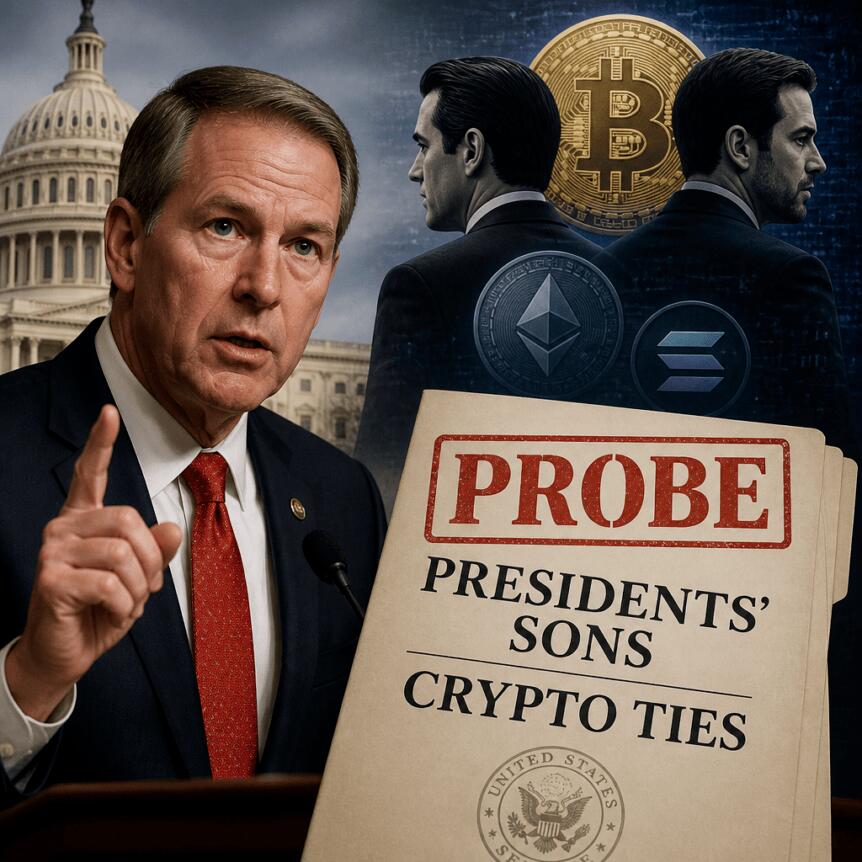
Republican Sen. John Curtis of Utah has urged the Senate Judiciary Committee to investigate whether Donald Trump’s son and President Joe Biden’s son used family ties to the presidency for private gain, with Curtis explicitly pointing to their involvement in cryptocurrency and related financial activities.
In a letter sent to Judiciary Committee Chair Chuck Grassley and ranking member Dick Durbin, Curtis requested subpoenas for Donald Trump Jr. and Hunter Biden, arguing the committee should examine whether presidential family relationships were used for “private financial benefit, preferential treatment, or access by domestic and foreign interest.”
Key takeaways
- Sen. John Curtis asked the Senate Judiciary Committee to investigate Donald Trump Jr. and Hunter Biden using subpoenas.
- Curtis’ allegations focus on potential conflicts of interest and how presidential connections may have translated into value for business dealings.
- For Donald Trump Jr., Curtis specifically cited crypto-linked roles and advisory activities, noting they fall under the regulatory scope of the CFTC.
- Curtis linked Hunter Biden’s case to “substantial business with foreign entities” and the alleged use of presidential ties for advantage.
- The push for investigations arrives amid continued uncertainty around US crypto market-structure legislation, after the Digital Asset Market Clarity Act failed to advance.
Curtis targets crypto and family ties in requested subpoenas
According to Curtis’ letter, the committee should probe whether the sons’ proximity to their respective fathers influenced financial outcomes. He argued the investigation should “establish the facts,” determine which ethics, disclosure, or anti-corruption laws may apply, and identify reforms to ensure the presidency is not used as “a vehicle for private enrichment by those closest to it.”
For Donald Trump Jr., Curtis highlighted multiple points, including the former president’s son’s acceptance of gifts from Russian oligarch Umar Kremlev tied to a wedding, as well as what Curtis described as “active promotion of family-backed cryptocurrency ventures.” The senator also referenced advisory roles with prediction market platforms, arguing those platforms are within the scope of the Commodity Futures Trading Commission.
Curtis also pointed to President Trump’s public statement last week that Donald Trump Jr. had repaid Kremlev for what the couple described as a “generous wedding gift.”
Hunter Biden scrutiny centers on foreign business and possible implied access
Curtis’ request did not stop with Trump Jr. He also called for a similar probe into Hunter Biden, citing what he characterized as “substantial business with foreign entities.”
In the letter, Curtis argued that the committee should look at situations where either man’s relationship to the presidency was “invoked or understood to provide value.” Curtis noted that President Biden issued a pardon for Hunter Biden in December 2024 for crimes Hunter “committed or may have committed or taken part in over the last decade,” and referenced Hunter Biden’s position that he did not involve his father in business dealings.
The senator framed the issue less as a determination of wrongdoing at the outset and more as a fact-finding and legal assessment exercise aimed at clarifying whether existing rules were triggered and what safeguards should be strengthened if they were not.
Why this matters as crypto policy remains contested in the Senate
Curtis’ letter arrives in a political climate where crypto oversight and market regulation continue to be difficult to reconcile in Congress. The renewed push for investigations follows a week after Senate Republicans failed to secure enough Democratic support for the Digital Asset Market Clarity Act, a bill expected to lay out market-structure rules for digital assets.
Some Democrats said they were not willing to support the bill because of concerns that President Trump would “use crypto to turn the presidency into a profit generating machine.” The president has also disclosed that he earned $1.4 billion from ventures tied to digital assets in 2025, according to coverage referenced in the underlying reporting.
Republicans argued the bill incorporated stronger ethics provisions that would affect the president’s crypto investments ahead of the vote. Still, many Democrats maintained that the measures did not go far enough to prevent corruption and improper influence.
Against that backdrop, Curtis’ focus on subpoenas and potential conflict-of-interest patterns reflects a broader theme: even as legislators debate how to regulate crypto markets, they are also pushing for scrutiny of whether public office—and the public’s perception of access to officeholders—can be leveraged through crypto-related business activity.
Investigations into the Trump family’s crypto ties already featured in this Congress
Curtis’ request is not the first attempt during the current Congressional session to draw lawmakers’ attention to potential crypto conflicts around the Trump family. Earlier calls for probes have largely come from House and Senate Democrats, who urged authorities to examine possible conflicts connected to Trump’s memecoin, his family’s World Liberty Financial business, and a separate $500 million deal associated with Abu Dhabi’s royal family.
Earlier coverage also pointed to Senate Democrats pushing for hearings and oversight into whether crypto ventures created incentives that blurred the line between official responsibilities and private financial interests.
Curtis is serving his first term in the Senate and is not up for reelection until 2030.
Readers should watch whether the Judiciary Committee agrees to act on the subpoenas Curtis is urging, and how that decision may intersect with the Senate’s stalled efforts to pass broader market-structure legislation—particularly as lawmakers continue to debate whether existing ethics frameworks can effectively address alleged conflicts tied to crypto.


LayerZero has argued that regulated stablecoin issuance is central to mass adoption after Anchorage Digital selected the protocol as its preferred interoperability layer for stablecoins issued through its federally chartered bank.
Summary
- LayerZero says regulated stablecoins are essential for banks, payment firms and corporate treasury adoption globally.
- Anchorage Digital selected LayerZero as its preferred interoperability layer for federally issued stablecoins this week.
- Tether’s USAT is the first Anchorage-issued stablecoin confirmed to use LayerZero’s OFT interoperability standard globally.
- LayerZero says its OFT standard has processed $280 billion across more than 170 blockchains worldwide.
- Federal law requires permitted stablecoin issuers to maintain reserves and follow strict anti-money-laundering compliance standards.
LayerZero said on Sept. 22 that banks, payment providers and corporate treasury teams need digital assets that can satisfy regulatory, reserve and compliance requirements before integrating stablecoins deeply into their operations. The company published the argument one day after Anchorage Digital announced its interoperability partnership with LayerZero.
The partnership covers Anchorage Digital Bank’s stablecoin issuance platform, which currently supports products from Tether, Western Union, OSL Group and Falcon Finance. Tether’s USAT is the first stablecoin confirmed to use LayerZero’s Omnichain Fungible Token, or OFT, standard under the arrangement.
LayerZero puts regulation at center of stablecoin adoption
In its latest analysis, LayerZero argues that stablecoin technology has already solved many technical barriers around settlement speed, availability and cross-border transfers, while institutional adoption still depends heavily on trust, legal accountability and compliance.
The company wrote that “Regulated is not a constraint on what a stablecoin can be,” presenting regulated issuance as a path toward use by banks and corporate treasuries. LayerZero’s position is an assessment of institutional adoption, not a regulatory finding or guarantee that regulated stablecoins will capture most future payment activity.
For a corporate treasury, LayerZero said compliance questions can include who issues the stablecoin, how reserves are managed, whether sanctioned addresses can be restricted and which entity remains legally responsible for the asset. Payment providers face similar operational questions when connecting blockchain settlement with regulated financial services.
LayerZero’s statement that banks will not deeply integrate unregulated instruments should be read as the company’s view. U.S. law sets more specific requirements covering payment stablecoin issuance, distribution, custody and compliance, while different digital assets can fall under separate legal frameworks.
The GENIUS Act, which became law in July 2025, requires permitted payment stablecoin issuers to maintain identifiable reserves of at least 1:1 and comply with federal rules covering anti-money laundering, sanctions, customer identification and suspicious-activity monitoring.
Anchorage gives LayerZero a bank-issued stablecoin route
Anchorage Digital selected LayerZero after what the companies described as a months-long process to design interoperability infrastructure around the bank’s stablecoin issuance requirements. LayerZero will serve as the preferred cross-chain layer for assets issued through Anchorage Digital Bank, N.A.
The Office of the Comptroller of the Currency approved Anchorage’s conversion into a national trust bank in January 2021. Federal records continue to list Anchorage Digital Bank National Association as a nationally chartered trust bank in South Dakota.
The OCC later terminated Anchorage’s original 2021 operating agreement in February 2026. The bank remains under federal supervision and continues operating its stablecoin issuance, custody and institutional digital asset businesses.
Anchorage says stablecoins it issues can be redeemed 1:1 for U.S. dollars through its platform, with reserve reports published monthly. Its current stablecoin lineup includes Tether’s USAT, Western Union’s USDPT and OSL Group’s USDGO, among other products.
As crypto.news previously reported, Anchorage Digital’s decision gives LayerZero a cross-chain role across multiple bank-issued stablecoins, although the companies have not announced deployment dates for every asset covered by the partnership.
USAT becomes the first stablecoin under the OFT deal
Tether’s USAT is the first Anchorage-issued asset confirmed to launch with LayerZero interoperability under the new arrangement. The OFT standard is designed to maintain a unified token supply while allowing assets to move across supported networks.
LayerZero reports that OFT has processed approximately $280 billion in lifetime transfers and operates across more than 170 blockchains. The company further claims the standard handles around 87% of cross-chain transfer volume. The figures come from LayerZero and should be treated as company-reported network statistics.
USAT launched in January as Tether’s U.S.-focused dollar stablecoin, with Anchorage Digital Bank acting as issuer. The token initially deployed on Ethereum before expanding natively to Celo in July.
Tether expanded USAT to Celo as its second mainnet, adding native minting and burning alongside its original Ethereum deployment.
The Anchorage-LayerZero announcement does not state which blockchain will receive the first new USAT deployment through OFT. LayerZero said assets covered by the partnership are intended to support ecosystems including Ethereum, EVM-compatible networks and Solana, but no complete rollout schedule has been published.
LayerZero has already used the same standard outside the Anchorage partnership. South Korean custodian BDACS selected OFT this month for KRW1, its won-backed stablecoin.
KRW1 adopted LayerZero for unified cross-chain distribution across an infrastructure that LayerZero says preserves a common supply as tokens move between connected networks.
Other Anchorage stablecoins await LayerZero rollout dates
Western Union’s USDPT is among the assets named in the Anchorage agreement. The stablecoin went live on Solana in May with Anchorage Digital Bank as issuer and was designed for settlement, treasury activity and payment flows across Western Union’s network.
Western Union launched USDPT on Solana for global payment settlement before exchanges and custody providers began adding support.
OSL Group’s USDGO is another Anchorage-issued stablecoin covered by the partnership. Anchorage said the token grew from an initial $50 million Solana mint to more than $1 billion in market capitalization within roughly six months. The bank says USDGO is backed 1:1 by high-quality liquid assets and publishes monthly reserve attestations.
USDGO passing $500 million in circulating supply in June, before OSL later reported that circulation had exceeded $1 billion.
Falcon Finance’s fUSD completes the four stablecoin brands identified in LayerZero’s initial announcement. Anchorage issues fUSD for institutional settlement, collateral and treasury use, while Falcon Finance manages the surrounding product ecosystem. As previously reported, Falcon Finance launched fUSD with Anchorage Digital Bank in May.
LayerZero has not confirmed that USDPT, USDGO or fUSD are already operating through OFT under the Anchorage partnership. No exact activation dates, destination-chain lists or new contract addresses for those three assets were included in the Sept. 21 announcement.
U.S. stablecoin rules are still moving through implementation
LayerZero’s regulatory argument comes while U.S. agencies continue implementing the GENIUS Act. The law generally limits U.S. payment stablecoin issuance to permitted issuers and establishes reserve, redemption, risk-management and compliance requirements.
The OCC proposed its main implementation framework in February, covering reserves, redemption, custody, capital, operational risk and supervision for issuers under its jurisdiction. As of Sept. 23, the OCC’s published 2026 final-rule list does not show that main GENIUS Act proposal as finalized.
A separate interagency proposal covering customer identification closed for public comments on Aug. 21. Treasury and banking regulators have been developing related AML and sanctions requirements that treat permitted stablecoin issuers as financial institutions under the Bank Secrecy Act.
The GENIUS Act itself sets an effective date of the earlier of 18 months after July 18, 2025, or 120 days after federal regulators issue final implementing rules. Anchorage and LayerZero have not provided a deadline for completing OFT integration across all stablecoins named in their agreement. For now, USAT remains the first asset formally confirmed under the arrangement, while USDPT, USDGO and fUSD await individual LayerZero deployment details.
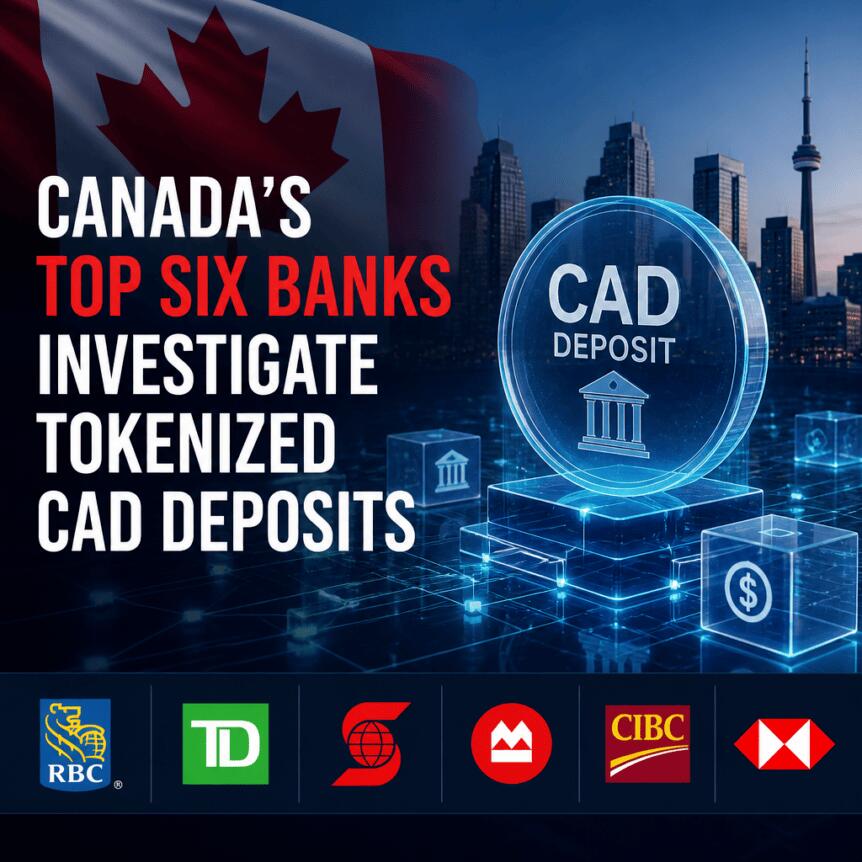
Six of Canada’s largest banks are developing a shared approach to move tokenized Canadian dollar (CAD) deposits between institutions, a project aimed at making payments faster and more programmable while remaining rooted in traditional banking liabilities.
According to a joint announcement released Tuesday, Bank of Montreal, CIBC, National Bank of Canada, Royal Bank of Canada, Scotiabank, and TD Bank Group said the work will begin with transferring tokenized deposits across Canadian financial institutions. The banks noted that future stages could expand connectivity to other digital asset systems.
Key takeaways
- The initiative covers tokenized bank deposits, which the banks characterize as still remaining liabilities of the issuing bank.
- Initial scope is intra-Canada deposit movement between regulated financial institutions, with potential expansion later to other digital money systems.
- The banks’ move follows OSFI guidance stating tokenized deposits are not legally separate from traditional deposits.
- Canada is also rolling out a separate regulatory framework for fiat-backed stablecoins, though that ruleset does not directly cover banks and credit unions.
Why tokenized deposits are drawing bank attention
Tokenized deposits are designed to represent claims on money held at a regulated bank, typically using distributed ledger or similar technologies to create a digital representation of the deposit. In the banks’ framing, that distinction matters: the deposit remains a bank liability rather than an independent digital asset.
The project’s stated goal is to support faster payments and enable greater programmability compared with conventional settlement paths. For investors and market participants, the appeal is straightforward—systems that can reduce reconciliation friction and shorten settlement cycles without requiring banks to treat deposits as “new” financial instruments.
OSFI clarity helps remove legal ambiguity
The timing is notable. The bank initiative arrives less than two weeks after Canada’s banking regulator, the Office of the Superintendent of Financial Institutions (OSFI), provided additional clarification on how tokenized deposits should be treated under Canadian law.
In a Sept. 10 statement, OSFI said tokenized deposits are “not legally distinct from traditional deposits,” emphasizing that the underlying technology used to deliver a financial product does not change its legal character.
This regulatory posture is important because it directly addresses one of the core hurdles for tokenized settlement models: whether “digital representation” changes the legal nature of deposits. By stating that it does not, OSFI effectively lowers compliance uncertainty for institutions that want to experiment with new rails for moving value.
How the banks’ plan fits with Canada’s stablecoin rules
Canada’s tokenized deposit work is unfolding alongside a broader national push to regulate digital money—particularly fiat-backed stablecoins.
In March, Canada enacted its Stablecoin Act as part of Bill C-15, setting out a federal framework for fiat-backed stablecoins issued by non-financial institutions. The regime requires issuers to register with the Bank of Canada, maintain reserves at least at a 1:1 level in high-quality liquid assets, and provide redemption at par. The framework is expected to take effect in 2027.
However, the scope of the stablecoin framework is limited. The law covers fiat-backed stablecoins issued by non-financial entities, while banks and credit unions already governed by prudential regulation fall outside its coverage. OSFI and market observers have also highlighted that issuers under the stablecoin regime will be prohibited from representing their stablecoins as deposits or as insured under a public deposit insurance system.
That difference creates a structural contrast between the banks’ deposit-tokenization effort and the stablecoin market: tokenized deposits remain within the banking perimeter, whereas fiat-backed stablecoins face a separate set of reserve, redemption, and marketing restrictions. Together, the two tracks suggest Canada is attempting to build a coherent regulatory architecture where “what you are” legally matters more than “what it looks like technically.”
What to watch as Phase 1 begins
The banks say the first phase will focus on moving tokenized deposits between Canadian financial institutions before potentially connecting with other digital asset systems. While the announcement did not provide granular technical details in the excerpt available, the phased approach indicates a practical priority: proving operational and settlement reliability within a tightly bounded network.
For users and counterparties, the key question will be how the system handles typical deposit lifecycle needs—such as custody, redemption mechanics, reconciliation, and settlement finality—without changing the underlying liability structure that OSFI says remains legally tied to traditional deposits.
For the broader industry, the next milestone to track is whether the project evolves beyond domestic interbank transfers into a model that meaningfully interoperates with other digital settlement networks. That will test not only technology but also regulatory boundaries—particularly around where “deposit tokenization” ends and where other forms of digital assets begin.
As Phase 1 progresses, the most important signals will likely be whether the banks can demonstrate faster, more programmable payments while staying aligned with OSFI’s legal interpretation—and whether Canada’s separate stablecoin framework influences how these tokenized deposit rails might connect to the wider ecosystem over time.

BlackRock has kept U.S. equities overweight in its Q4 2026 outlook as AI-linked earnings remain firm even while government borrowing and data-center financing push capital costs higher.
Summary
- BlackRock stays overweight U.S. equities as AI-linked earnings support stocks despite higher global bond yields.
- BlackRock estimates U.S. financing demand could exceed $7.5 trillion annually by 2030, led by AI.
- The Federal Reserve raised rates to 3.75%-4.00% on September 16 as inflation remained elevated nationally.
- BlackRock prefers short-term bonds over long-duration government debt as issuance and refinancing pressures rise globally.
- Emerging-market equities were upgraded to overweight, with BlackRock citing earnings, valuations and AI infrastructure opportunities.
BlackRock Investment Institute said its Sept. 15 outlook centers on three themes: AI scarcity, durable income and investment opportunities that cut across traditional asset-class categories. The firm sees the AI buildout lifting economic activity and corporate earnings while consuming more capital, power, materials and balance-sheet capacity.
BlackRock sees AI spending tightening competition for capital
BlackRock said the AI investment cycle is creating a funding challenge alongside heavy sovereign borrowing. Its Q4 report says both forces are competing for the same pool of capital, raising financing costs even as spending on computing infrastructure supports growth.
A Sept. 21 follow-up put a number on that pressure. BlackRock estimated that annual U.S. financing demand “could exceed $7.5 trillion by 2030,” driven mainly by capital needs tied to AI. The firm said AI and data-center issuers account for roughly 14% of U.S. investment-grade bond issuance this year, compared with 5% in 2025 and 1% over the previous decade. BlackRock cautioned that its 2030 estimate is forward-looking and may not materialize.
Debt markets are already financing large computing projects. AI’s expanding role in investment-grade bond issuance as hyperscalers rely on public debt, private credit and operating cash flow to fund data-center construction.
BlackRock’s outlook focuses on the bottlenecks created by that spending. The firm identifies power, electricity grids, memory, chips and data centers as areas where limited supply can constrain deployment, forming the basis of its “AI scarcity” theme.
BlackRock keeps U.S. equities overweight
Despite higher yields, BlackRock remains overweight U.S. equities. The firm said earnings expectations continue to rise and AI-linked companies account for a large share of expected year-ahead growth.
BlackRock said that earnings strength has helped equities absorb higher bond yields better than they did during 2022. Its analysis uses S&P 500 company filings and an MIT-based AI-adoption framework to group companies according to their exposure to artificial intelligence.
The asset manager has not treated the entire technology sector as a single trade. Its stated preference centers on companies and infrastructure tied to areas where demand is pressing against supply, including power, chips and data-center capacity. BlackRock’s positioning remains an investment view and does not guarantee future equity returns.
Emerging-market equities received a stronger rating in the Q4 update. BlackRock upgraded the category to overweight, citing solid earnings and cheaper valuations. It said parts of Asia and Latin America provide different routes into AI infrastructure and related supply constraints.
The firm remains neutral on China while identifying selected opportunities in physical AI. BlackRock said cheaper open-source AI could increase adoption, though higher usage does not necessarily translate into stronger profits for AI providers.
Higher yields push BlackRock toward shorter bonds
BlackRock’s bond view has become more selective as government yields moved higher through the summer. The firm prefers short- and medium-term government debt over long-term bonds because longer maturities carry more interest-rate sensitivity and exposure to changes in term premiums.
Its Q4 outlook says higher yields have restored income opportunities across fixed income, but heavy issuance and inflation risks make long-duration government bonds less attractive within BlackRock’s framework. The institute is underweight long U.S. Treasuries while remaining neutral on short Treasuries, where it sees stronger risk-adjusted income.
The firm takes a similar view on long-term investment-grade credit. BlackRock prefers shorter maturities because companies refinancing debt issued at much lower rates now face higher borrowing costs. Its research says the pressure extends into AI infrastructure and private markets, where project economics depend heavily on financing structures and cash generation.
Data-center asset-backed debt is one area under scrutiny. BlackRock compared issuance with changes in five-year Treasury yields and said refinancing at current rates can pressure projects financed when borrowing costs were lower.
Crypto-linked infrastructure companies have tapped large funding packages during 2026. Galaxy Digital pursued a $3.5 billion data-center bond sale for its Texas campus, whileTeraWulf explored roughly $3.5 billion of AI financing for an Anthropic-linked project in Kentucky.
Fed rate hike reinforces BlackRock’s higher-rate outlook
The Federal Reserve raised its target range by 25 basis points to 3.75%-4.00% on Sept. 16, one day after BlackRock dated its Q4 outlook. The central bank said economic activity was expanding at a solid pace, capital investment remained robust and inflation was still elevated.
The increase passed by a 12-0 vote. The Fed raised the interest rate paid on reserve balances to 3.90% and set the primary credit rate at 4.00%, effective Sept. 17.
BlackRock’s Sept. 21 market commentary reported that two-year and 10-year Treasury yields rose after the meeting, with the 10-year returning to roughly 5%. The firm said markets took a hawkish reading from the post-meeting remarks, while BlackRock argued that solid growth and firmer Fed credibility could still support risk assets.
Competition for capital is not confined to the United States. In related coverage, crypto.news reported that Japan’s 10-year bond yield climbed above 3%, giving Japanese investors stronger domestic returns. BlackRock has said higher Japanese yields could reduce demand for U.S. Treasuries as some capital stays at home.
The Q4 outlook says U.S. labor supply remains constrained while wage growth and underlying inflation stay elevated. BlackRock believes those conditions leave the Fed with less room to ease and preserve the possibility of “further tightening” if price pressures remain persistent.
BlackRock’s next scheduled data checkpoints include U.S. business activity and inflation expectations. Its Sept. 21 commentary identified flash purchasing managers’ indexes and final University of Michigan consumer sentiment data as indicators to watch while borrowing costs remain elevated.
Chip stocks were back in the driver’s seat on Monday as the PHLX Semiconductor Index (^SOX) surged more than 3%.
An upcoming state dinner between President Trump and Chinese leader Xi Jinping, with numerous AI titans expected to be in attendance, fueled optimism about the AI trade.
Chipmaker AMD soared to an all-time high above $610 a share, giving it a $1 trillion market cap during the trading session.
Shares of central processing unit designer Arm Holdings (ARM) and chipmaker Intel both rose 10% as social media giant Meta’s (META) new AI agent MUSE sparked a broader rally among server CPU suppliers.

The chip sector has seen additional tailwinds, including a report last week that SK Hynix (SKHY) is exploring a deal with Intel (INTC).
Shares of Intel have rallied more than 35% over the past month, while AMD and ARM Holdings are up nearly 30% over the same period, according to Yahoo Finance’s AlphaSpace data.
AI chip heavyweight Nvidia (NVDA) has gained more than 4% over the past month.
Chip stocks have been rebounding from a slump after hitting a peak in July amid concerns about overinvestment and, more recently, worries over a slowdown flagged by AI titans.
However, Wall Street sees little sign of a spending slowdown as hyperscalers race to build out data centers and AI inference usage surges.
Last week, BofA analyst Vivek Arya argued that the semiconductor industry has a long runway ahead, citing hardware and power constraints.
Arya raised his 2030 chip market estimate from $2.7 trillion to $3.2 trillion, driven by overwhelming demand for data center capacity, advanced logic, and memory equipment.
Ines Ferre is a senior business reporter for Yahoo Finance.
Click here for in-depth analysis of the latest stock market news and events moving stock prices
Read the latest financial and business news from Yahoo Finance


Anthropic CEO Dario Amodei and OpenAI CEO Sam Altman are expected to brief the UN Security Council as it examines AI risks and global security.
21Shares has launched physically backed exchange-traded products tracking Zcash and ether.fi across Euronext Paris and Amsterdam, extending regulated European access to ZEC weeks after Grayscale introduced a U.S.-listed Zcash ETF.
Summary
- 21Shares launched physically backed Zcash and ether.fi ETPs on Euronext Paris and Amsterdam this week.
- Both products charge 2.5% annual fees and hold their respective underlying crypto assets with custodians.
- ZCASH gives brokerage investors ZEC exposure without requiring them to manage private keys or custody.
- Grayscale’s ZCSH began NYSE Arca trading in August and received a $100 million DCG investment.
- Zcash traded above $1,500 Wednesday after gaining more than 30% during the previous seven days.
21Shares announced the two products on Sept. 22, identifying them as the 21Shares Zcash ETP, ticker ZCASH, and the 21Shares ether.fi ETP, ticker ETHFI. Both carry annual product fees of 2.5% and trade in euros in Paris and U.S. dollars in Amsterdam.
The issuer’s product pages list Sept. 21 as the inception date for both securities. Each product began with 5,000 securities outstanding, while early reported assets under management stood near $100,000 apiece.
21Shares Zcash ETP gives investors physically backed ZEC exposure
The Zcash product uses ISIN CH1608218801 and provides indirect exposure to ZEC through a traditional brokerage account. Unlike buying Zcash directly, investors do not need to open a crypto exchange account or manage private keys.
21Shares states that ZCASH is physically backed, meaning the product structure holds ZEC corresponding to the securities issued. Its documentation identifies institutional custody providers that can include Coinbase Custody, Zodia Custody, Anchorage Digital and BitGo entities, while the current key-information section names BitGo as custody provider.
The ETP does not give investors direct possession of the underlying ZEC. Investors own the exchange-traded security, while the crypto assets remain within the product’s custody structure.
Jasmin Muelhaupt, 21Shares’ director of financial product development, described Zcash as “something truly distinct,” citing its capped supply and optional privacy. Those comments represent the issuer’s investment case for the asset and do not guarantee future demand or price performance.
Zcash uses a proof-of-work network with a maximum supply of 21 million coins. Its shielded transactions allow users to conceal transaction information through zero-knowledge cryptography, although users can continue making transparent transactions.
21Shares said the privacy coin sector had grown nearly fivefold within one year, from approximately $6.2 billion to around $30 billion using the firm’s sector dataset. Its Sept. 22 research placed Zcash at roughly $20 billion in market capitalization when the analysis was prepared.
Independent market data had moved beyond that figure by the time the ETP arrived. CoinGecko showed ZEC trading above $1,500 on Sept. 23, with a market capitalization near $25 billion based on the previous day’s snapshot. The token had gained more than 30% over seven days and roughly 77% over 30 days at the latest reading.
Ether.fi ETP launches alongside the Zcash product
The second product, ETHFI, tracks the governance and utility token of ether.fi. It trades under ISIN CH1608218819 and uses the same 2.5% annual product fee as the Zcash ETP.
21Shares describes ETHFI as physically backed, with the underlying tokens held through institutional custodians. The product had approximately $99,600 in assets under management and 5,000 securities outstanding in the first published snapshot.
Ether.fi began primarily as a liquid restaking protocol before expanding into borrowing, swaps, payments and card services. The issuer said approximately $4.9 billion of assets sat on the platform in September, citing DeFiLlama data. That figure relates to ether.fi’s protocol and should not be confused with assets held by the new ETP.
Crypto.news previously covered ether.fi’s expansion into tokenized stocks, portfolio-backed loans and payment services in August. The platform said its products were designed around self-custodial accounts, borrowing and payments, while some services remain restricted by jurisdiction.
The ETHFI ETP gives investors price exposure to the token through a security listed on a conventional exchange. It does not represent ownership in ether.fi as a company, nor does it guarantee investors a share of protocol revenue.
European Zcash product follows Grayscale’s U.S. ETF
The European launch follows the Aug. 25 debut of Grayscale’s Zcash ETF on NYSE Arca under ticker ZCSH.
Grayscale converted its existing Zcash Trust into the first U.S.-listed Zcash ETF with direct ZEC exposure. The fund holds ZEC and seeks to track the value of its holdings after fees and expenses.
NYSE Arca formally certified the fund for listing on Aug. 24. Grayscale then changed the trust’s name to The Zcash ETF before trading began under ZCSH.
A later SEC filing showed that Digital Currency Group invested approximately $100 million in the ETF on Sept. 8. DCG exchanged 85,705.32563297 ZEC through an authorized participant for ETF shares.
The transaction followed earlier discussions involving roughly 200,000 ZEC, but the final investment used fewer coins after ZEC’s price increased. DCG is Grayscale’s corporate parent, making the transaction an affiliated investment rather than independent third-party inflow.
The European and U.S. vehicles use different legal structures. 21Shares explains that European single-asset crypto products are structured as ETPs instead of conventional UCITS ETFs, while Grayscale’s product is registered in the United States as The Zcash ETF.
Grayscale schedules ZCSH share split for Sept. 30
Another change is already scheduled for the U.S. product. Grayscale announced a 3-for-1 forward split for ZCSH following the rise in ZEC and the fund’s share price.
Shareholders of record at the close of trading on Sept. 28 will receive two additional shares for every share they hold. Distribution is scheduled after the market closes on Sept. 29, and ZCSH is expected to begin trading on a split-adjusted basis before the Sept. 30 market open.
The split will not change the total value of an investor’s holding at the time it takes effect. Grayscale expects the net asset value per share to fall to approximately one-third of its pre-split level while the number of shares increases proportionally.
ZCSH will continue trading under the same ticker and CUSIP after the split. Grayscale has not announced a corresponding change to the fund’s underlying ZEC holdings as part of the corporate action.
For the European products, 21Shares has not announced an initial asset target or minimum fundraising threshold. ZCASH and ETHFI are available through brokers and financial institutions that provide access to the relevant Euronext markets, subject to local investor eligibility and platform availability.

If you’ve had trouble finding something to watch on Netflix (NFLX) lately, you’re not alone. The streaming giant has faced intense competition from rival platforms while also struggling to keep turning out the high-quality hits that hold users’ attention — and it’s showing up in Netflix stock. The picture isn’t entirely bleak. Earnings have continued to grow this year, but…
Copyright ©2026 Investor’s Business Daily, LLC. All rights reserved. 87990cbe856818d5eddac44c7b1cdeb8
US Treasury Secretary Scott Bessent could take on a new role as President Donald Trump’s artificial intelligence (AI) czar, a source familiar with the discussions told Reuters.
No final decision has been made, a second source said, and the Treasury has not issued a public comment. These rumors come as Trump has downplayed calls for stricter AI oversight.
A Treasury Chief Wearing Two Hats
Trump said Saturday he would form an AI Force and name an AI czar, modeled on the Space Force. He gave no details on either initiative.
Bessent already sits at the center of Washington’s AI diplomacy. He led AI risk talks with China in New York on Sunday. That was ahead of Trump’s summit with Chinese President Xi Jinping this week. Washington proposed an AI safety notification system and a US-China AI dialogue, with a focus on national security.
The Treasury chief’s plate is already full. Trump has previously tapped Bessent to lead a revamp of US trade policy and negotiate Ukraine’s critical minerals deal. He also briefly ran the Consumer Financial Protection Bureau (CFPB). Today, he serves as acting commissioner of the Internal Revenue Service (IRS). His department is separately leading a push to isolate Iran through sanctions.
A Need for a Dedicated Treasury Head
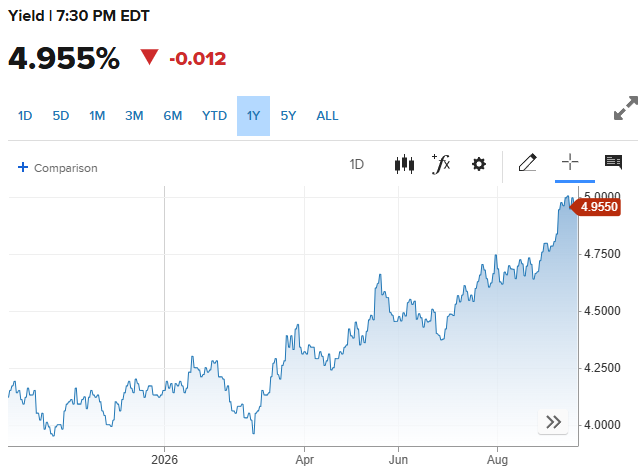
Meanwhile, Bessent’s core job has gotten harder. The 10-year Treasury yield hit a 19-year high near 5.04% last week before retreating to about 4.95%. HSBC now projects a lower 10-year yield near 4.65% by year-end. Other forecasters see it climbing toward 5.3%, with some flagging a 6% risk further out.

That volatility adds pressure just as Trump weighs handing Bessent a second title. Traders have already priced sharp swings in Federal Reserve rate expectations this month. Any sign that Treasury leadership is stretched thin could shape how markets read the department’s next move.
His well-known skepticism toward AI regulation will likely shape whatever mandate the next czar receives. Whether Bessent can manage bond markets, sanctions enforcement, and AI policy at once is an open question. The coming weeks should offer an answer.
The post Bessent Could Add AI Czar Title to Treasury Chief: Conflict Ahead? appeared first on BeInCrypto.
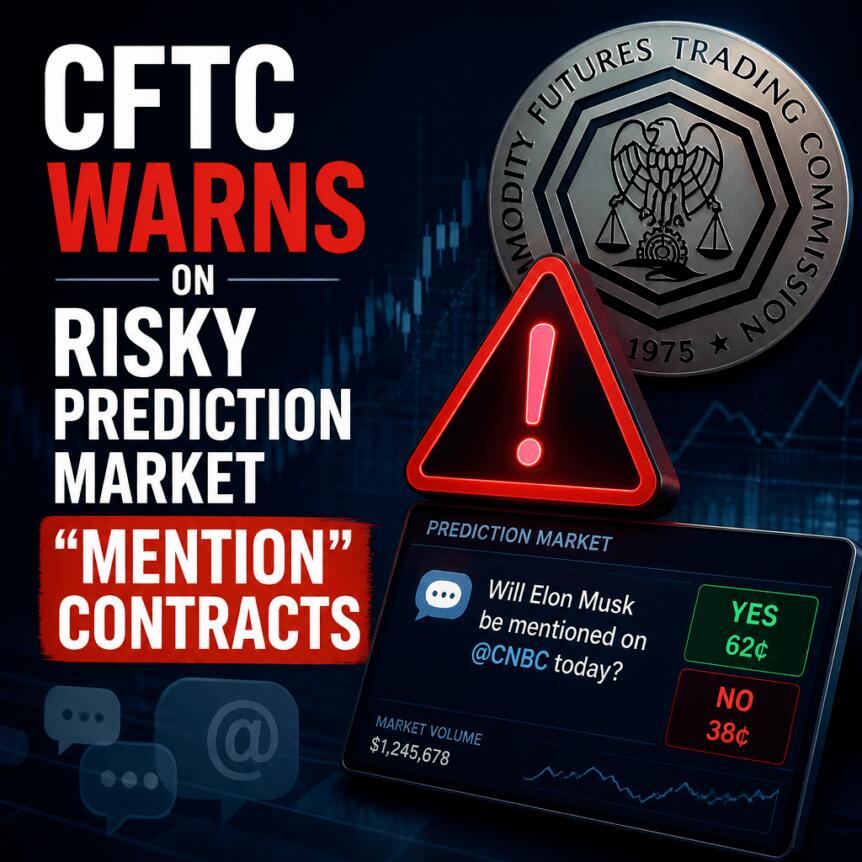
The U.S. Commodity Futures Trading Commission (CFTC) has issued fresh guidance warning that “mention markets” in prediction trading—contracts that settle based on whether a specific person says certain words, attends an event, appears publicly, or interacts with someone—face a heightened risk of manipulation. The regulator’s advisory signals that exchanges seeking to list these products may need to clear a higher bar on oversight, verifiability, and susceptibility to external influence.
In a statement released Tuesday, the CFTC’s Division of Market Oversight said that listing these contract types is generally limited to “limited circumstances” consistent with the Commodity Exchange Act. The agency’s remarks come amid broader scrutiny of how prediction markets are structured and policed, including enforcement actions tied to alleged trading around privileged information.
Key takeaways
- The CFTC warns that mention markets settle on discrete personal conduct that may be neither independently generated nor externally verifiable, increasing manipulation risk.
- Exchanges are encouraged to apply a stricter checklist, including oversight capability and whether settlement triggers are verifiable.
- Recent enforcement in the prediction market space underscores the agency’s focus on information asymmetry and conduct-based settlement mechanics.
- Separate reporting highlights unusual Kalshi trading in an Ether-related market, adding to questions about integrity monitoring even as the platform rejects manipulation claims.
Why the CFTC singled out “mention markets”
The advisory, issued by the CFTC’s Division of Market Oversight, is aimed at regulated entities responsible for bringing contracts to market. The CFTC described mention markets as event-driven derivatives where the settlement depends on what an individual does—such as saying specific words or showing up—rather than on market-wide outcomes or easily measurable external data.
According to the regulator, this structure can create a “heightened risk of manipulation” because the settlement outcome hinges on a person’s conduct, which may not be independently produced and may be hard for outsiders to verify reliably.
The CFTC’s position effectively reframes the issue: it is not merely the fact that a contract references an event, but how the contract defines what counts as an outcome and whether that outcome can be checked without ambiguity.
The agency’s checklist for exchanges
Reporting from CNBC indicates the CFTC letter highlights four considerations that exchanges should evaluate before listing mention-market contracts. Those factors include whether the exchange has adequate oversight measures to detect manipulation, whether the words or actions used for settlement are independently verifiable, whether outside pressure could influence the subject’s conduct, and what obligations the subject of the contract may have.
The regulatory guidance also reinforces that exchanges and contract-issuing parties are expected to think beyond the initial listing proposal. In the CFTC’s framing, the exchange’s role in monitoring market behavior and safeguarding contract integrity becomes central—particularly where the settlement trigger could be influenced by the very person referenced in the contract.
CFTC Chair Mike Selig publicly welcomed the staff guidance on Tuesday, posting that “regulatory clarity drives sound markets,” and stating that the advisory reminds designated contract markets (DCMs) of their obligations to list contracts that are not readily susceptible to manipulation.
The CFTC’s guidance, published as an official advisory, can be found via the regulator’s press materials: CFTC.
Enforcement momentum in conduct-based prediction contracts
The warning is arriving against a backdrop of legal action focused on manipulation risks in prediction markets. Earlier coverage highlighted a case involving a former White House teleprompter operator whose trading was tied to U.S. President Donald Trump’s speeches. That matter reportedly resulted in an order requiring the individual to return $107,539 in profits and pay a $65,000 civil penalty.
Earlier reporting on the enforcement details came from Cointelegraph, including coverage of how the matter related to “Kalshi” contracts tied to what the president would say. The recurrence of scrutiny around speech- and conduct-based settlement mechanisms helps explain why the CFTC is emphasizing the “discrete conduct” problem: when a contract’s payoff is linked to an individual’s behavior, regulators are more likely to see opportunities for information advantages and influence.
Notably, the CFTC’s advisory wording points to a core compliance dilemma for prediction markets: the more directly a contract settles on a person’s specific actions, the more difficult it can be to demonstrate that the settlement will be independently generated and verifiably fair.
Broader scrutiny extends beyond “mention” products
Separate from Tuesday’s mention-market warning, new reporting has drawn attention to unusual trading behavior on Kalshi, a platform that offers event-based contracts. According to a Wall Street Journal report, nearly one million trades worth more than $5 billion occurred in a single market tied to the price of Ether. The Journal said that more than a third of those trades took place in nearly identical amounts around $5,500.
The Wall Street Journal also reported that federal regulators and traders have taken notice of the activity. Kalshi, however, rejected suggestions that the transactions amounted to wash trading, according to the same coverage.
While this Ether-related episode does not necessarily involve the same “mention” contract mechanics, it fits into a larger pattern: regulators and market participants are increasingly focused on whether trading activity and settlement designs can be squared with market integrity expectations. For investors and traders, this means due diligence is likely to extend beyond whether a product is popular or liquid, and toward how an exchange identifies unusual activity and enforces its rules.
Earlier, CNBC and NPR reported in August that the CFTC had begun examining mention markets over manipulation concerns. The reporting also said that Kalshi removed mention markets tied to sporting events “until further notice” while the review proceeded, reflecting the practical impact guidance and enforcement can have on what exchanges list and how quickly they respond to regulatory pressure.
What to watch next
For exchanges and market makers, the immediate question is how strictly they will apply the CFTC’s “limited circumstances” framing when assessing new mention-market proposals, and whether they will tighten verification and monitoring procedures. For traders, the larger takeaway is that conduct-based settlement mechanics—especially where external influence or verifiability issues exist—will likely remain under the microscope, even as platforms continue expanding prediction product lineups.
Crypto World
Did Jim Cramer Just Give GameStop Stock the Kiss of Death When He Said the Turnaround Is Working?


Markets can forgive a company a lot when investors can see a path to growth. GameStop (GME) has spent years searching for that path, moving from video-game retailer to meme-stock phenomenon and now to a company increasingly built around collectibles. The latest numbers suggest the strategy may be working operationally. But a better business does not automatically make a better stock.
GameStop touched a two-year intraday low of $17.79 on Aug. 20. By Sept. 17, it had closed at $22.77, a 28% gain from that low. The rally comes as Jim Cramer says the turnaround is finally taking hold.
More News from Barchart
That may be true. The bigger question for investors is what they are actually buying.

GameStop Is Becoming a Collectibles Company
Let’s start with the good news. GameStop’s latest transformation is showing up in the income statement.
In its fiscal second quarter ended Aug. 1, collectibles revenue jumped 57% year-over-year (YoY) to $356.3 million, representing 45.1% of total sales. Video-game revenue, meanwhile, fell 47% to $263.2 million.
The shift is unmistakable. GameStop still sells video games and pre-owned products while maintaining a small Bitcoin (BTCUSD) position, but collectibles are increasingly the centerpiece. The company generated $160.2 million of operating income in the quarter, up from $66.4 million a year earlier, and raised its fiscal 2026 adjusted EBITDA forecast to more than $650 million.
The collectibles market is large—Grand View Research estimates it will reach $335.7 billion globally in 2026 and $535.5 billion by 2033—but GameStop is hardly alone.
eBay (EBAY) operates a massive secondary marketplace, while Target (TGT) says its trading-card business was on track to exceed $1 billion in 2025. The Pokémon Company sells collectibles and trading cards directly through Pokémon Center, while Hasbro (HAS) uses its Wizards of the Coast business and its Secret Lair store to sell premium Magic: The Gathering products directly to fans. That’s a pretty crowded field, one populated with bigger, healthier, and better-financed businesses.
Cramer Says Buy. Inverse Cramer Says What?

Everything Just Changed For XRP (They Lied For Years)

Harvey Weinstein set to be sentenced for sexual assault after 6-year legal odyssey

Satterley’s Perth hills plan ‘flawed’, tribunal rules




-

 Fashion4 days ago
Weekend Open Thread: Talbots – Corporette.com
-

 Tech2 days ago
Researchers escape OpenAI Codex sandbox to run commands on host
-

 Crypto World4 days ago
Circle launches Arc Studio AI agent for building onchain apps
-
 NewsBeat4 days ago
Trump says US has reached an agreement to take permanent control of Greenland’s security
-

 Crypto World2 days ago
Who Needs CLARITY Anyway? ARB Could See 70X Increase: Hodler’s Digest
-

 Crypto World4 days ago
Bitcoin price breaks channel as RSI climbs to 63
-

 Crypto World4 days ago
Trading Bitcoin on Robinhood? Why 2% Spread Has Traders Worried
-

 Crypto World6 days ago
US Charges Robinhood Engineers Over Crypto Listing Trades
-

 Crypto World5 days ago
Mortgage and refinance interest rates today, Thursday, September 17, 2026
-

 Crypto World4 days ago
World Money launches in 150+ countries with Stripe
-

 Business2 days ago
Analog Devices (ADI) Bets $1.35 Billion on Chips that Let Machines Think for Themselves
-

 Crypto World5 days ago
Silver prices recover quickly, hitting weekly high today
-

 Tech5 days ago
GPT-6 Astra Reached the Nether in Minecraft, Lost Its Stash to a Creeper, and Farmed Potatoes for Hours
-
 NewsBeat4 days ago
US was ‘on brink of war’ with China over false AI report of nukes moving in Middle East
-

 Crypto World2 days ago
Coinbase, Robinhood, Circle Seen as Tokenized-Stock Winners
-

 Crypto World2 days ago
Bitcoin price holds above $81K as key catalysts line up
-

 Crypto World4 days ago
CFTC sends crypto market structure rulemaking to White House
-

 Business4 days ago
Newsom accelerates AI oversight, advances ‘kill switch’ plan
-

 Crypto World23 hours ago
Meta Jumps 11% As Muse Shines and Investors Show an Appetite for Advancing AI
-
Crypto World5 days ago
Ethereum’s Path to $3,000: All Eyes on This Level Now
You must be logged in to post a comment Login