
Business
Nick Clegg’s shares worth $18m in Nscale IPO

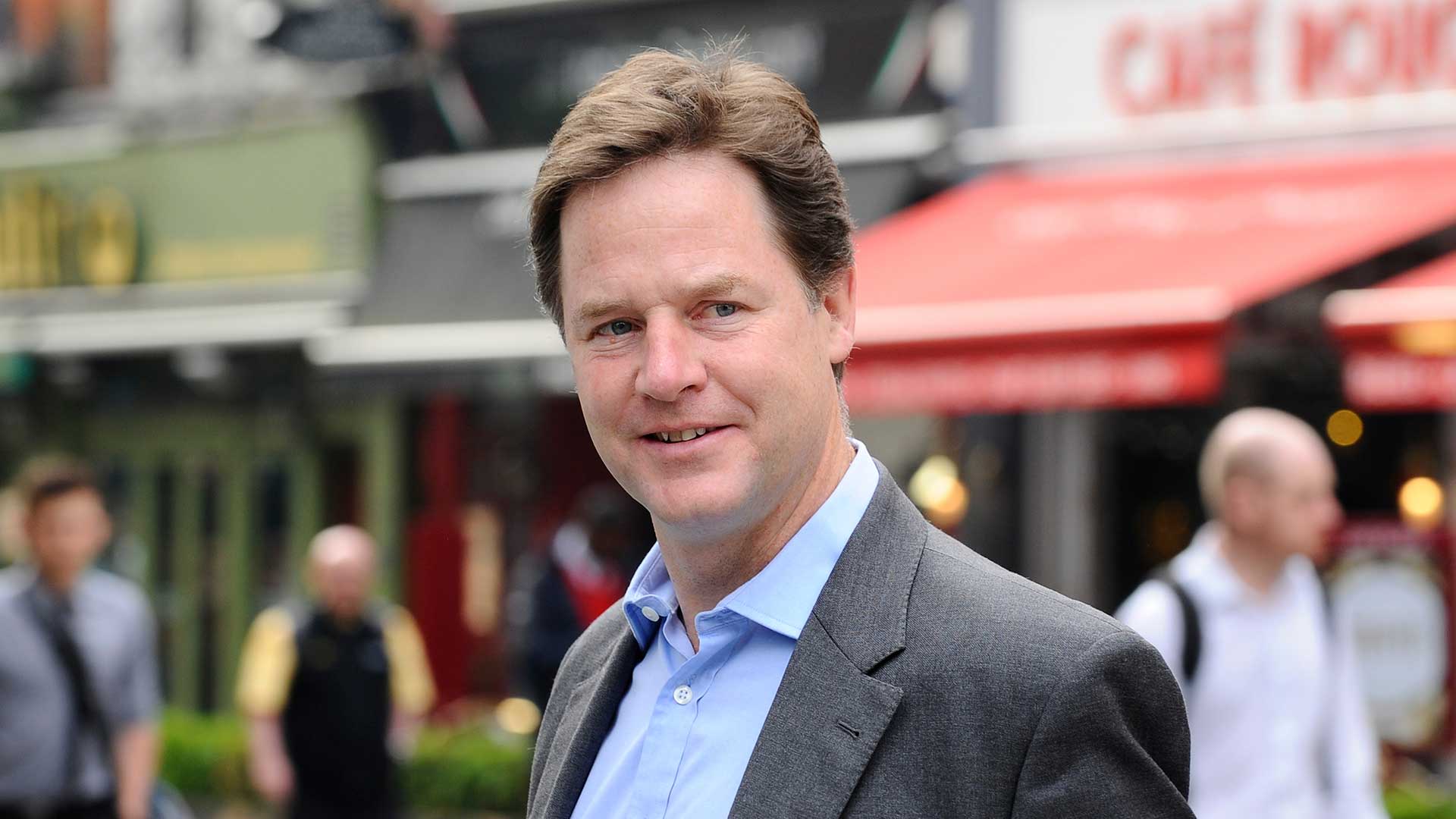
Sir Nick Clegg holds 917,460 shares in Nscale, the British data centre developer preparing to float on Wall Street, a stake worth about $18m at the valuation the company is said to be seeking.
The former deputy prime minister was granted the shares as a reward for his role as a director of the Nvidia-backed company, which he joined six months ago. The holding represents about 0.12 per cent of Nscale’s stock.
Nscale is said to be seeking a valuation of about $35bn in its initial public offering. It was valued at about $14.6bn in March, when it raised $2bn in a funding round and appointed Clegg and Sheryl Sandberg to its board.
The company has not yet set a price for its shares or said how many it will issue. The issuance of new shares could dilute Clegg’s holding.
Clegg served as president of global affairs at Meta until last year. Filings showed that he sold about £24m worth of Meta shares between 2022 and 2024.
He and Sandberg, Meta’s former chief operating officer, both serve as directors of Nscale. Susan Decker, the former Yahoo president, joined the board at the same time in March.
In its prospectus, Nscale said: “Clegg’s extensive experience in global public policy, international government affairs, and technology industry leadership, as well as his deep relationships with governments and regulatory bodies worldwide, make him qualified to serve on our board of directors.”
Fidji Simo, OpenAI’s former head of artificial general intelligence deployment, has also been appointed to Nscale’s board.
Nscale filed a registration statement on Form S-1 with the US Securities and Exchange Commission on Friday for a proposed listing on the New York Stock Exchange under the ticker NSCL. Goldman Sachs, JP Morgan and Morgan Stanley are the lead bookrunners, according to the company’s announcement.
The prospectus revealed that Nscale lost $1bn in the first six months of this year, on revenues of $140.6m. The company said revenue was up more than tenfold on the same period last year, when it stood at $10.4m.
The company has attributed the scale of its losses to capital expenditure on expanding its data centres. Its contracts include a six-year deal worth $45bn with Anthropic and agreements with Microsoft worth $44bn running until 2033.
The filing also disclosed that the company’s founder, Josh Payne, is in line for performance-related payouts worth up to $350m. Payne, a 32-year-old former construction worker from Australia, will receive the share-based payments if the company hits various targets.
The potential award accounts for about 2.5 per cent of Nscale’s share capital. According to the prospectus, 40 per cent of the shares are linked to stock price targets and a further 40 per cent to the deployment of computing capacity, with vesting between 2028 and 2032, as reported in detail by Business Matters.
Payne’s compensation last year, including share awards, was £17.2m.
Nscale’s March funding round was backed by investors including Nvidia, Aker ASA and 8090 Industries. The $2bn raise was one of the largest in a half-year in which UK tech funding nearly doubled to $15.3bn, with AI infrastructure companies taking a large share of the capital.
The final value of Clegg’s stake will depend on the price Nscale sets for its shares and the number of new shares it issues in the offering.

Amy Ingham
Amy Ingham is a reporter at Business Matters, covering UK business news with a focus on breaking news, business policy, late payments and insolvency. She joined the magazine in 2026 after completing the NCTJ Diploma in Journalism at Harlow College’s journalism school. Her recent reporting includes British Steel’s nationalisation and its impact on SME suppliers, the decline in late payments by large firms, and Insolvency Service director disqualifications. Reach her at aingham@cbmeg.co.uk.


WA builders featured prominently in the national list, as build starts in this state increase to more than 24,000.

Goldman appoints Simon Lyons UK investment banking co-head

The problem is that for a lot of investors the tracker has quietly become the entire portfolio. Passive investing buys the market by size, which means the more expensive a company gets, the more of your money goes into it, and a handful of very large technology names now sit behind a large share of the average index holding. That is concentration risk dressed up as diversification.
Private Credit and Peer-to-Peer Lending
Lending money directly to businesses, rather than owning a slice of them, produces a different return profile. Income arrives as interest rather than capital growth, and the performance of the loan book depends on borrower default rates rather than on market sentiment.
The appeal is yield and low correlation with equities. The catch is that the risk is credit risk, and it tends to arrive all at once. A platform that has produced steady returns through a benign economic period can look very different in a downturn, when defaults cluster. Anyone considering this should be reading the loan book statistics rather than the headline return figure, and should assume their capital is locked up for the stated term.
Commercial Property, Directly or Through Funds
Property remains the default alternative for UK investors, and direct commercial property does genuinely behave differently to equities. Rental income is contractual, leases are long, and valuations move slowly.
That slowness is also the trap. Property funds have repeatedly demonstrated that a daily-dealing wrapper around an illiquid asset creates a mismatch, and several have gated redemptions when too many investors headed for the exit at once. Direct ownership avoids the gating problem but introduces management, void periods and a much larger minimum commitment. It suits investors who understand the asset class and want the income, not those looking for a quick diversifier.
Collectables and Passion Assets
Art, classic cars, rare watches and fine wine sit in a category of their own. Knight Frank tracks this group annually in its Luxury Investment Index, and the picture it consistently shows is one of wide divergence: individual categories can perform very differently in the same year, and within a category the very best examples behave nothing like the average one.
That last point is the one most often missed. These are not asset classes so much as thousands of individual items, each priced on condition, provenance and rarity. Knowledge is the entire edge. Buying blind, or buying because a category is being written about, is how people lose money here. Costs are real too: storage, insurance, restoration and, at sale, auction commission that can run into double-digit percentages.
Whisky Casks
Whisky casks have become one of the more visible entries in this category, and they work on a genuinely different principle to most alternatives. Rather than buying a finished bottle and hoping the secondary market revalues it, investing in whisky involves buying new-make spirit or a maturing cask and holding it while it ages. The asset is not static. Time in oak changes the liquid, and a maturing Scotch typically becomes more valuable as it passes recognised age milestones, particularly the ten, twelve and eighteen year marks, because the pool of available stock at each age is finite and shrinking.
There is also a structural point in the seller’s favour. Casks lose volume to evaporation each year, the so-called angels’ share, so supply at any given age genuinely contracts over time while global demand for aged Scotch has broadly grown. The Scotch Whisky Association publishes export figures annually, and the long-run direction of travel for premium and aged Scotch has been upward.
The practical mechanics matter more than the story, though. A cask should sit in an HMRC-bonded warehouse under a bailment arrangement, which means the investor owns the cask outright and the warehouse simply stores it.
Understanding what a bonded warehouse arrangement does and does not give you is the single most useful piece of due diligence in this market, because it determines whether you actually own an identifiable asset or merely hold a claim against a company. Investors should expect a delivery order in their own name, a warehouse account, and regauge documentation confirming volume and strength.
Exit routes are worth establishing before entry rather than after. A cask can be sold to another private buyer, sold back into the trade, or bottled under a private or independent label. Each has different timescales and costs, and a broker who cannot explain all three clearly is not a broker worth using. This is also an unregulated market, which means the quality of the counterparty matters enormously and there is no compensation scheme standing behind a bad purchase.
What These Alternatives Have in Common
Read across the four and the same pattern appears. All of them are illiquid, all of them carry costs that do not appear in the headline return, and all of them reward specific knowledge in a way that a tracker fund deliberately does not. That is precisely why they can diversify an equity-heavy portfolio: their returns are driven by supply, condition, credit and scarcity rather than by the same macro sentiment that moves the S&P.
It is also why they should be sized carefully. A sensible approach for most investors is to treat alternatives as a satellite allocation, not a replacement for a diversified core, and to size any single alternative position so that a total loss would be disappointing rather than damaging. If an investment cannot survive being left alone for five to ten years, it is not suited to this part of a portfolio.
The right question is not whether the S&P 500 has stopped working. It is whether a portfolio built almost entirely on one index, in one currency, weighted heavily towards one sector, is as diversified as its owner assumes. For a lot of people, the honest answer is no, and that is worth addressing with assets genuinely chosen for how differently they behave.
Business
Elon Musk Warns of ‘Hundreds, Maybe Thousands’ of Fraud Rings Targeting SNAP Benefit Cards Nationwide

Elon Musk warned that the United States may be facing “hundreds, maybe thousands” of organized fraud rings stealing taxpayer-funded benefits, following a report highlighting networks that target Supplemental Nutrition Assistance Program accounts through skimming attacks on Electronic Benefit Transfer cards.
“There hundreds, maybe thousands, of fraud rings of almost every nationality stealing money from US taxpayers,” Musk wrote on X on September 21, responding to a post from The Wall Street Journal. Musk’s specific numerical estimate has not been independently verified by federal agencies. The Government Accountability Office, the nonpartisan federal watchdog that has studied the issue, says perpetrators of SNAP fraud range from individual actors to organized crime groups, but the agency does not publish a nationwide count of active fraud rings.
Musk’s comments come amid a series of confirmed federal prosecutions targeting organized EBT card skimming operations in recent years. In April, the Justice Department charged five Romanian citizens in an alleged conspiracy to steal nearly $1 million in SNAP benefits across Ohio and California. Prosecutors said the group installed physical skimming devices on payment terminals, captured EBT magnetic-stripe data and personal identification numbers from unsuspecting benefit recipients, and then encoded that stolen information onto cloned cards to fraudulently withdraw funds.
The scale of confirmed SNAP benefit theft nationally has been substantial. According to the GAO, states replaced more than $320 million in stolen SNAP benefits for nearly 679,000 households between October 2022 and December 2024. The watchdog agency cautioned that this figure likely understates the true extent of theft, since it captures only claims that were formally submitted and approved for replacement. Complicating the picture further, federal authority allowing states to replace benefits stolen after December 20, 2024, has since expired, meaning more recent theft may not be reflected in any official replacement figures at all.
Part of the vulnerability driving these thefts traces back to the underlying technology used on many SNAP benefit cards. The GAO found in its 2025 review that most SNAP EBT cards lacked embedded microchips, a security feature that has become standard on commercial credit and debit cards and is widely regarded as an effective deterrent against the kind of magnetic-stripe skimming attacks used in many of the prosecuted cases. The U.S. Department of Agriculture, which oversees the SNAP program at the federal level, is currently supporting state-level transitions to chip-enabled EBT cards and other security enhancements aimed at closing that gap.
The scope of organized EBT fraud enforcement has extended well beyond the April Ohio and California case. The Justice Department said in March that it had charged more than 50 defendants since 2023 as part of a broader crackdown centered in San Diego targeting organized EBT theft, with many of those charged found to have ties to Romania. Authorities said more than $310 million had been stolen from California EBT beneficiaries alone between June 2022 and January 2026, underscoring the scale of the problem within a single state.
Beyond card skimming specifically, federal prosecutors have pursued a broader range of SNAP-related fraud cases in recent years, involving stolen identities, fraudulent benefit applications and illegal trafficking of benefits by retailers. In New York, prosecutors charged six individuals in connection with an alleged $66 million SNAP fraud and bribery scheme, illustrating how benefit fraud schemes can extend into far larger dollar amounts when retailer collusion is involved alongside direct card theft. Separately, USDA data released in June drew attention to the agency’s ongoing scrutiny of SNAP payment errors, a distinct category from fraud that reflects administrative mistakes in benefit calculations rather than intentional theft.
Musk’s warning arrives at a moment of heightened public attention on government spending efficiency and benefit program integrity, themes he has frequently raised in his public commentary. While his specific characterization of “hundreds, maybe thousands” of fraud rings operating nationwide has not been corroborated by an official government count, the underlying pattern of organized, multi-jurisdictional EBT fraud schemes he referenced is well documented across multiple confirmed federal prosecutions spanning several states.
The gap between Musk’s broad numerical claim and the more narrowly documented federal cases reflects a common challenge in discussions of benefit fraud: while individual prosecutions provide concrete, verified examples of organized theft, no federal agency currently publishes a comprehensive, real-time count of how many distinct fraud rings are actively operating against SNAP or other federal benefit programs at any given time. That data gap has left assessments of the fraud problem’s full scope, including Musk’s own estimate, without independent verification.
With USDA continuing its rollout of chip-enabled EBT cards and additional security measures, and federal prosecutors continuing to pursue new cases against organized skimming networks, the debate over the true scale of SNAP benefit fraud, and the adequacy of the federal government’s response to it, is likely to remain an active point of discussion among lawmakers, watchdog agencies and public figures like Musk in the months ahead.

EliseAI Chief Experience Officer Fran Loftus discusses New York’s growing concentration of AI talent and companies while addressing how the technology is creating new opportunities and automating existing work.
New York has overtaken the San Francisco Bay Area as the nation’s largest tech talent market by workforce size for the first time, as the artificial intelligence boom helps reshape where technology companies are hiring and expanding.
CBRE’s 2026 Scoring Tech Talent report found that New York’s tech workforce grew by 30,640 workers between 2022 and 2025 to 394,300, while the San Francisco Bay Area’s tech workforce shrank by 23,900 to 375,730.
Fran Loftus, chief experience officer at New York-based EliseAI, told FOX Business that the numbers reflect what her company is seeing on the ground.
“I definitely think New York has become a major AI hub,” Loftus said.
META’S MUSE BECOMES APP STORE’S HOTTEST DOWNLOAD

New York overtook the San Francisco Bay Area as the nation’s largest tech talent market by workforce size in 2025, according to CBRE’s Scoring Tech Talent report. (iStock / iStock)
“Walking down Fifth Avenue, seeing so many other AI companies, it’s clear that there is a concentration of great AI technical talent here, which is exactly why we’ve grown our New York footprint.”
But why has New York become an AI hub?
Loftus explained that being in New York puts the company close to both its customers and the people using its products, while the city’s broad mix of industries gives AI companies access to workers with different types of experience.
EliseAI, a New York City-based AI startup that automates workflows for housing and health care operators, recently moved into a new 109,000-square-foot headquarters in the former Tiffany & Co. building on Fifth Avenue, joining several other AI and tech tenants on the block.
TRUMP REBRANDS AI, REJECTS ‘GLOBALIST SCHEME’ TO CONTROL TECH

EliseAI Chief Experience Officer Fran Loftus told FOX Business that New York has become a “major AI hub” as technology companies expand their presence in the city. (FOX Business / Fox News)
“New York’s strength is its diversity of industries, which is amazing for us to pull from as a fast-growing company in AI,” Loftus said, adding that the city is “a great place for AI catalysts.”
As AI becomes more prevalent across the economy, Loftus acknowledged that the technology is changing jobs.
“You can say it replaces some, it creates others,” she said.
But she argued that in housing and health care, AI can automate repetitive or administrative work while employees move toward more complex responsibilities.
“Generally, the organization structure is just changing to now give a lot of this work to AI and up-level the responsibilities of the teams that are managing these workflows today,” Loftus said.

The San Francisco Bay Area remains one of North America’s most tech-concentrated labor markets even after New York surpassed it in total tech workforce size, according to CBRE. (Brandon Sloter/Getty Images / Getty Images)
When asked about growing concerns surrounding AI, Loftus said its real-world applications are key to evaluating the technology’s impact.
“I think when you’re looking at the application of AI, and EliseAI in particular’s application of AI, I think it’s pretty clear that this growth is sustainable and the impact is positive to the end user, the renter or the patient,” she said.
For young professionals entering the workforce or looking to break into the tech industry, Loftus said they should take advantage of the AI boom.
“There’s a ton of opportunity,” she said.
“I think that the role opportunities for folks that are very entrepreneurial are massive in AI organizations like ours,” she continued.
NVIDIA’S JENSEN HUANG REJECTS AI DOOMSDAY FEARS: ‘2030 IS NOT GOING TO BE THE END OF THE WORLD’

Loftus said AI is changing the workforce by automating some tasks while creating new roles and shifting employees toward more complex responsibilities. (Jaap Arriens/NurPhoto via Getty Images / Getty Images)
Loftus argued that as AI changes jobs in industries such as health care and housing, automating repetitive work could make some career paths more attractive.
EliseAI itself is hiring across several markets, including New York, San Francisco, Boston, Chicago, Austin and Toronto, according to Loftus.
She also said EliseAI recently surpassed $200 million in revenue and has doubled its revenue every year for the past five years, adding that its AI agents now support roughly one in six U.S. apartment units.
While New York has become the largest tech talent market by total workforce, the San Francisco Bay Area remains a major technology center.
GET FOX BUSINESS ON THE GO BY CLICKING HERE
According to CBRE, tech workers account for more than 10% of overall employment in the San Francisco Bay Area, putting it among North America’s most tech-concentrated labor markets.
Loftus also said EliseAI is expanding in San Francisco, even as New York remains its largest office.

A state tribunal has upheld a peak planning body’s refusal of Satterley Property Group’s plan for the Perth hills, describing the proposal as “flawed”.
Business
Viking Therapeutics, Inc. (VKTX) Discusses Top Line Data from VK2735 Maintenance Study in Obesity and Type 2 Diabetes – Slideshow (NASDAQ:VKTX) 2026-09-22


Seeking Alpha’s transcripts team is responsible for the development of all of our transcript-related projects. We currently publish thousands of quarterly earnings calls per quarter on our site and are continuing to grow and expand our coverage. The purpose of this profile is to allow us to share with our readers new transcript-related developments. Thanks, SA Transcripts Team

Check out what’s clicking on FoxBusiness.com.
The Laughing Cow is no longer laughing and shoppers want to know what wiped the iconic grin off her face.
For the first time in more than 100 years, the laughing red cow has traded her trademark smile for a somber expression on select packages of The Laughing Cow Creamy Original cheese wedges rolling out nationwide.
The surprise makeover is part of a mysterious new campaign dubbed “The Not Laughing Cow,” but the company is keeping shoppers guessing about what wiped the smile from its mascot’s face.
SHOPPERS ARE GOING HOG WILD FOR PIGGLY WIGGLY’S RETRO PIG MERCHANDISE

The Laughing Cow replaced its famous smiling mascot with a serious expression on select Creamy Original packages. (Bel Brands USA / Fox News)
Bel Brands told Fox News Digital the frown is only temporary and promised the mystery will begin to unravel in the coming days.
“The Laughing Cow has spent more than 100 years reminding us not to take life too seriously. So when she suddenly gets serious, you pay attention,” Jamee Pearlstein, chief marketing officer of Bel Brands USA, U.S. Cheese, said in a news release.
COSTCO BRINGS BACK A FAN-FAVORITE FOOD COURT TREAT AFTER YEARS OFF THE MENU

The Not Laughing Cow packages are appearing in more than 4,700 stores across the continental United States. (Bel Brands USA / Fox News)
“Whatever finally got to her must be worth talking about. We’ll let her explain when she’s ready,” Pearlstein added.
The new packages feature the suddenly stone-faced cow alongside a QR code and the cryptic message, “We need to talk.” The code directs shoppers to TheNotLaughingCow.com, where the brand is inviting fans to speculate about the reason for her abrupt mood shift.
MCDONALD’S ONCE SOLD BELOVED COOKIES FEATURING FORGOTTEN CHARACTERS FROM THE CHAIN’S PAST

The Laughing Cow mascot sits alone in a diner as part of the mysterious “We need to talk” campaign. (Bel Brands USA / Fox News)
Videos on the campaign website lean into the mystery, showing the usually upbeat mascot looking downcast and alone. In one clip, she sits by herself in a diner. Another shows her somberly swinging alone as the words “The Laughing Cow stopped laughing” and “We need to talk” flash across the screen.
The serious-faced mascot has also appeared in parks, diners and across the brand’s social media channels, according to the company.
The company said shoppers began noticing the change even before the brand formally acknowledged it, with fans reaching out directly to ask what had happened to The Laughing Cow.
DANNON’S DECISION TO KILL BELOVED YOGURT SPARKS FAN REVOLT: ‘IT’S WHAT I GOT OUT OF BED FOR’

The usually cheerful Laughing Cow mascot appears stone-faced on a swing in the brand’s new campaign. (Bel Brands USA / Fox News)
“We’ve been excited to see that curiosity and conversation continue to build as more of The Not Laughing Cow packages appear on shelves,” Bel Brands told Fox News Digital.
The special packages are available in select markets in every state across the continental U.S. and can be found in more than 4,700 stores, according to the company.
CLICK HERE TO DOWNLOAD THE FOX NEWS APP
Bel Brands stressed that the new expression is not a permanent logo or packaging change.
Once consumers learn why the mascot stopped laughing, the company said it is confident she will eventually smile again and the packaging and social media channels will return to the joyful expression shoppers have known for more than a century.
The temporary redesign marks a dramatic break from an image shoppers have recognized for generations. The Laughing Cow said its smiling mascot has promoted optimism and encouraged consumers to see the positive side of life since 1921.

Yes. Corporate subscriptions are available for teams and organisations, with discounted rates as user numbers increase. Pricing starts from $1,625 + GST per user.
Get in touch
to discuss the right option for your organisation.
Business News subscriptions are used by executives, investors, consultants and professionals who need to stay informed and make better decisions about the WA market. When you subscribe you’ll get
- Unlimited access to WA’s most trusted business journalism
- Data & Insights — detailed profiles of WA companies, people, projects and deals
- MyBN — a personalised feed based on the companies, people and sectors you follow
- Special publications and industry reports
- Daily and weekly email newsletters
Data & Insights is a research tool built specifically for the WA market. It draws on more than 30 years of Business News reporting, updated regularly to reflect what’s happening now. Use it to:
- Look up detailed profiles of WA companies, including financials, directors and ownership
- Find decision-makers and track their career movements
- Research live and completed projects across WA industries
- Monitor deals, appointments and market activity
- Access industry rankings and league tables
Data & Insights is updated daily by our dedicated research team, which uses the latest announcements, ASX filings and editorial coverage to keep our person, company, list and project records up to date.
Business News welcome all opportunities to make our dataset accurate, complete and current, so if you have an update request, please email the team at
general@businessnews.com.au, and we’d be happy to assist.
MyBN
is part of every subscription. It’s your personalised view of Business News. You can follow the companies, people, sectors and projects that matter to you, and get a news feed and alerts tailored to your interests. You can save articles to read later and retain only what you need.
Only subscribers have full access to all content on the Business News website.
If staying informed about the WA economy is part of your job, and/or you’re looking for networking opportunities in WA, Business News is built for you.
Business News subscribers are:
- Executives and directors tracking competitors, clients and market movements
- Investors and advisers researching companies, deals and industry trends
- Consultants and professionals staying across sectors relevant to their clients
- Business owners looking for leads, context and market intelligence
Most Business News publications cover national or global markets. Business News is focused entirely on Western Australia, which means the journalism, the data and the intelligence are all built around WA companies, people and projects — not adapted from a national feed. Data & Insights, included with every subscription, combines more than 30 years of WA-specific editorial research with live business data. There’s no comparable product for the WA market.
The Morning Digest Email provides a comprehensive wrap of the major headlines, relevant to WA business, and includes with a snapshot of the overnight news covering oil, gold and ASX-listed companies.
The Afternoon Wrap Email focuses on the news covered by our team of journalists during the course of the working day, including exclusive stories and analysis, all of which relates to WA business and the local economy.
The BN Weekender Email contains a wrap of the Business News from the week that was, highlighting the top stories in each area of WA business.
Sign up for free.
We’re happy to help.
Get in touch
and our team will come back to you.

The world’s advanced economies including the UK and US need to cut borrowing and reduce debt levels following weeks of spiralling government interest costs, the head of the International Monetary Fund (IMF) has warned.
In an exclusive interview, Kristalina Georgieva said global economic shocks had been “pushing debt levels up like a staircase not to heaven” but that governments had taken “no action to contain that service cost”.
“[It’s] time to take that action,” she said, adding that “courage” was needed by politicians to take the necessary steps.
The intervention comes as government borrowing costs have surged in response to wars disrupting the supply of oil, which has fuelled inflation.
Higher global borrowing costs have hit the UK government in the run-up to UK Prime Minister Andy Burnham’s first Budget next month, with speculation building over potential tax and spending policies.
The latest figures show borrowing – the difference between tax receipts and government spending – was £18.3bn ($24.4bn) in August, almost a fifth higher than the year before and higher than official forecasts. Meanwhile debt interest for the month was the highest August figure since monthly records began in 1997.
Higher borrowing costs have also hit the US, the world’s largest economy, which has seen its debt pile surpass $40tn. The amount has doubled within the space of a decade, prompting concerns at home and abroad.
On the sidelines of the United Nations General Assembly, Georgieva said the IMF’s message to advanced economies was that while there were economic factors occurring outside the control of governments, they did have command over domestic policies.
“There are these two things that must be done: bring debt levels down, put fiscal consolidation as a priority, and make sure that the central banks deliver on their mandate for price stability,” she said.
“It is impossible to stress strongly enough how critical it is to get the courage to take the steps that are necessary. These are politically tough steps to take, but necessary steps to take.”
Asked specifically about the UK’s higher interest costs compared to other major economies, Georgieva said its position was “not very different” from others.
She pointed to “fairly consistent action” on lowering debt and praised planning and housing reforms, adding that advanced economies “don’t have the cash” to boost growth and so had to rely on reforms to encourage the private sector to invest.

Russia-Ukraine war live: Zelensky says Trump gave no ‘concrete answer’ on Patriot missile system

Australia’s top builders revealed

CLARITY Act: Lummis blames Democrats after failed vote




-

 Fashion4 days ago
Weekend Open Thread: Talbots – Corporette.com
-

 Tech2 days ago
Researchers escape OpenAI Codex sandbox to run commands on host
-

 Crypto World4 days ago
Circle launches Arc Studio AI agent for building onchain apps
-
 NewsBeat4 days ago
Trump says US has reached an agreement to take permanent control of Greenland’s security
-

 Crypto World2 days ago
Who Needs CLARITY Anyway? ARB Could See 70X Increase: Hodler’s Digest
-

 Crypto World4 days ago
Bitcoin price breaks channel as RSI climbs to 63
-

 Crypto World4 days ago
Trading Bitcoin on Robinhood? Why 2% Spread Has Traders Worried
-

 Crypto World6 days ago
US Charges Robinhood Engineers Over Crypto Listing Trades
-

 Crypto World4 days ago
World Money launches in 150+ countries with Stripe
-

 Business2 days ago
Analog Devices (ADI) Bets $1.35 Billion on Chips that Let Machines Think for Themselves
-

 Crypto World5 days ago
Mortgage and refinance interest rates today, Thursday, September 17, 2026
-

 Crypto World5 days ago
Silver prices recover quickly, hitting weekly high today
-

 Tech5 days ago
GPT-6 Astra Reached the Nether in Minecraft, Lost Its Stash to a Creeper, and Farmed Potatoes for Hours
-

 Crypto World2 days ago
Coinbase, Robinhood, Circle Seen as Tokenized-Stock Winners
-
 NewsBeat4 days ago
US was ‘on brink of war’ with China over false AI report of nukes moving in Middle East
-

 Crypto World2 days ago
Bitcoin price holds above $81K as key catalysts line up
-

 Crypto World4 days ago
CFTC sends crypto market structure rulemaking to White House
-
 Crypto World1 day ago
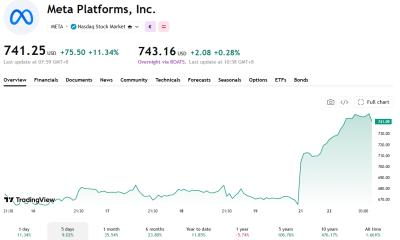
Meta Jumps 11% As Muse Shines and Investors Show an Appetite for Advancing AI
-

 Entertainment6 days ago
Grey’s Anatomy Showrunner Teases Changes After Cast Exits
-

 Business4 days ago
Newsom accelerates AI oversight, advances ‘kill switch’ plan
You must be logged in to post a comment Login