

Connect with us

Business

Trump to raise detainees with Xi, but other rights issues may not come up

Published

on

Continue Reading
Click to comment

You must be logged in to post a comment Login

Leave a Reply

Business

American Fuel First: Trump's Diesel Export Ban And The European Fallout

Published

on

Energy and Power icons set. Header banner

American Fuel First: Trump's Diesel Export Ban And The European Fallout

Continue Reading

Business

Lidl banned from selling copycat Birkenstock sandals, Dutch court rules

Published

on

A person is seen wearing cream-white wide-leg jeans with subtle stripes and Boston clogs in soft suede with an open back and adjustable strap from Birkenstock.

Lidl must stop selling copycat versions of Birkenstock’s famous sandals in the Netherlands, a Dutch court has ruled.

The discount supermarket chain faces a fine of €5,000 (£4,200) per day if it fails to comply and must also hand over sales data to Birkenstock, according to the ruling.

Lidl must also compensate Birkenstock and pay its legal fees, with the amount to be decided in separate court decisions.

Birkenstock said the judgement sent a clear message that “copycats must not be allowed to free-ride on [our] creativity and innovation”. The BBC has reached out to Lidl for comment.

Advertisement

The ruling, which can still be appealed, means Lidl cannot sell its copycat versions of Birkenstock’s Arizona, Madrid, Gizeh, Boston, and Florida models across the Netherlands, after the court found the discount grocer infringed on the brand’s trademark “footbed design”.

It is the latest in a string of court decisions on Birkenstock designs.

In November 2025, a Dutch court order stopped retailer Scapino from selling similar lookalikes in a judgment which is being appealed.

And in December 2025, Europe’s highest court ruled everyday commercial products can hold copyright if they represent creative design choices, a decision which Birkenstock said was relevant to its “iconic” sandals.

Advertisement

However, Birkenstock also faced a setback in Germany’s highest court in early 2025.

The sandals may have been cool enough for Margot Robbie to wear in the Barbie film, but the German judges ruled they were practical products rather than works of art – an outcome Birkenstock called a “missed opportunity” at the time.

Following Wednesday’s ruling, Birkenstock said it will “continue to defend its rights vigorously and will use all available legal means to combat imitations of its iconic products”.

“To protect its retail partners and consumers, Birkenstock will continue to take decisive action against copycats seeking to profit from the company’s creative ideas and innovations,” it added.

Advertisement

Birkenstock is far from the only fashion brand locked in battles with mass retailers over design mimicry.

Footwear giants like Dr. Martens have repeatedly taken online big-box sellers to court over boot designs, while luxury house Christian Louboutin spent years in global litigation defending its signature red soles against high-street copycats.

Continue Reading

Business

Judges Scientific plc (JSCIF) Q2 2026 Earnings Call Transcript

Published

on

OneWater Marine Inc. (ONEW) Q1 2026 Earnings Call Transcript

Operator

Good afternoon, and welcome to the Judges Scientific Investor Presentation. Today, we are joined by CEO, Tim Prestidge; CFO, Brad Ormsby; and Group Commercial Director, Ian Wilcock. [Operator Instructions]

I will now hand over to Tim to begin the presentation.

Advertisement

Tim Prestidge
CEO & Executive Director

Thank you very much, Julie, and thank you, everyone, for joining us. So today, we’re going to take you through our interim results for the 6-month period ended 30th of June 2026. Actually, this is 1 of 2 announcements that’s come out today. And so before I start on the interim results, the first thing I’m going to do is just mention the other announcement, which is regarding our CFO, Brad Ormsby.

Brad has been with the group for just over 11 years now, and he’s made the decision to retire from the group. And I just want to mention a little bit about his contribution to the group and the experience that he’s brought. So Brad has made a huge — had a huge impact on the group since joining. He really — he lives and breathes the Judges culture and is amongst its greatest ambassadors.

We are really grateful for the impact that he’s had and how he’s developed our financial acumen within the group and particularly as well for how he’s worked so hard to develop such strong relationships, both with our colleagues within the group, but also with the investor community outside the group. He’s given us 12 months’ notice, and so he’s going to absolutely be around to help in identifying a successor and

Advertisement
Continue Reading

Business

Litelock is a great example of a ‘productivity hero’ business we need more of in Wales

Published

on

Business Live

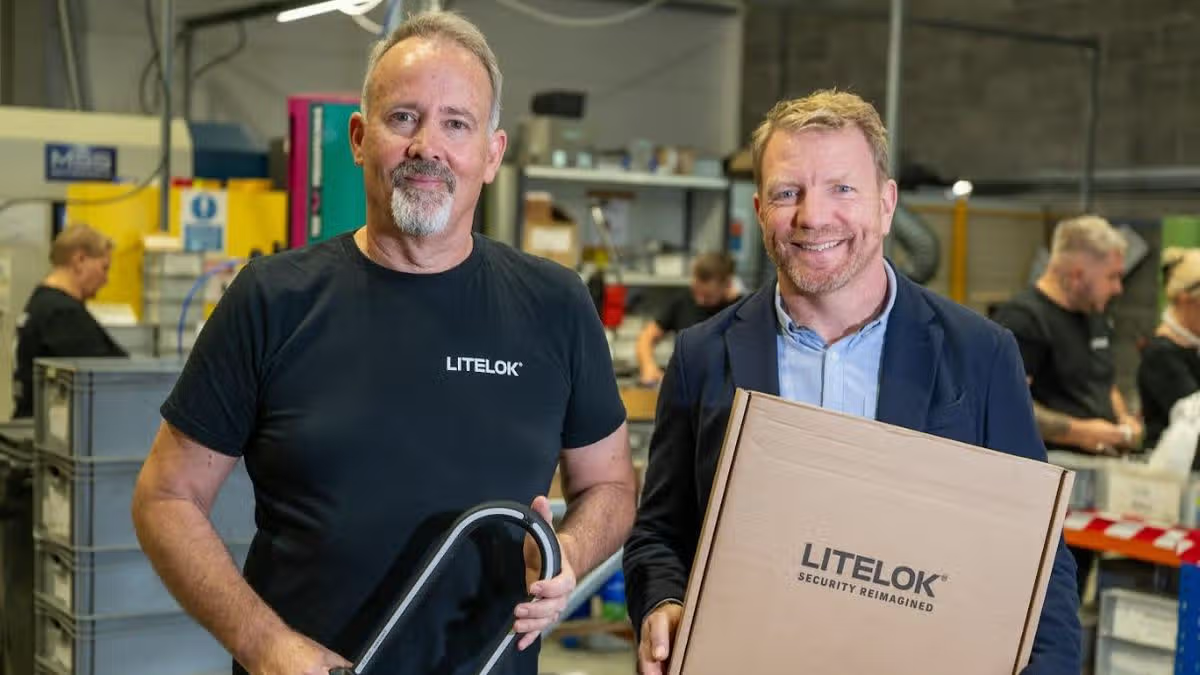
Neil Barron, the founder and chief executive of Litelok had a great idea and found a gap in the market – a big one, as it turns out.

Founder of Litelok Neil Barron and chief executive of the Development Bank of Wales Giles Thorley.

One of the best parts of my job is meeting business owners who are dedicated to quietly building remarkable companies.

They’re rarely the loudest voices in the room. They’re usually too busy running their businesses.

Advertisement

Yet time and again I come away struck by the same thing. The businesses making the biggest difference to our economy aren’t always the largest, they’re the ones that keep improving – investing in people, embracing new ideas, prioritising customers, finding better ways to compete.

A recent visit to Zeal Innovation, which trades as Litelok, reinforced that sentiment.

The company is incredibly innovative: it designs and manufactures innovative, high-security, grinder-resistant locks for bicycles and motorcycles – all from a solar panel powered factory in Swansea. In my opinion, as a customer of several Barronium armoured X1 bike locks, they are the best in the world.

Neil Barron, the founder and chief executive of Litelok had a great idea and found a gap in the market – a big one, as it turns out.

Advertisement

That is why we’ve backed them through four funding rounds. But what always impressed me most was their culture of continuous improvement.

Whether investing in sustainability, developing its people or finding new ways to innovate, it is a business that never stands still.

And that is why the business exemplifies the type of company flagged by research from Economic Intelligence Wales as a “productivity hero”.

At first glance, the phrase might sound like another piece of economic jargon. But it isn’t.

Advertisement

A productivity hero is a business that achieves something remarkable: it grows its turnover, creates jobs and improves productivity – all at the same time. Revenue grows faster than employment, meaning the business becomes more productive without sacrificing growth or opportunities for its workforce.

In the case of Litelok, it has increased its turnover per full-time employee from some £45,000 in 2017 to some £350,000 in 2026 as annual revenues approach £10m – an extraordinary increase in productivity.

Such case studies matter, as does this wider report, because productivity is often misunderstood.

For many people, higher productivity conjures images of automation or AI replacing people or businesses doing more with fewer staff.

Advertisement

The reality is far more encouraging. The best businesses aren’t simply becoming leaner; they’re becoming better. They’re building stronger teams, investing in leadership, adopting technology where it makes sense and constantly looking for ways to create more value for customers.

The productivity heroes report from Economic Intelligence Wales identifies 1,732 businesses across Wales that fit this description. Together, they generated more than £6bn in turnover while creating over 5,200 jobs.

Those aren’t just impressive statistics. They’re evidence that Wales already has businesses showing us what sustainable growth looks like.

Perhaps even more encouraging is what the research tells us about how these businesses succeed and achieve this feat.

Advertisement

Technology often plays a role, but it isn’t the whole story.

Repeatedly, the research points to three common characteristics – an unwavering focus on customers, a willingness to invest in people through leadership and skills, and a culture that embraces innovation and digital adoption. None of those things happen overnight. They require ambition, long-term thinking and a commitment to continuous improvement.

That reflects what we’ve seen at the Development Bank of Wales. Whether we’re supporting a manufacturer investing in new production technology, a family business planning for succession, a technology company scaling internationally or a developer bringing forward new homes, the businesses that create the greatest long-term impact almost always have something in common.

They invest in their people as much as they invest in equipment. They think beyond the next quarter.

Advertisement

And they understand that productivity isn’t about working harder, it’s about working smarter.

One of the most valuable aspects of the productivity heroes research is that it gives us a better way of understanding which businesses are driving Wales forward.

For too long we’ve tended to judge success by looking at turnover growth or employment growth in isolation.

Those measures remain important, but they only tell part of the story. Productivity heroes provide a richer picture because they identify businesses creating more value while continuing to create opportunities for people.

Advertisement

Good economic evidence matters because it helps us make better decisions.

At the Development Bank of Wales, our role extends beyond providing finance. As a trusted delivery partner working alongside the Welsh Government, we want to use evidence like this to ensure support reaches the businesses where it can make the greatest difference.

That means helping ambitious companies start, grow and scale, while retaining value in Wales and strengthening the foundations of our economy.

The report also challenges some long-held assumptions. Productivity heroes aren’t confined to one sector or one part of Wales.

Advertisement

They can be found in manufacturing, food and drink, construction, professional services and technology. They operate in rural communities and our cities alike.

That should give us confidence because it tells us productivity is something every ambitious company can strive towards.

The question becomes, therefore, not whether Wales has productivity heroes. It is clear that we already do. The challenge is how we create many more of them.

It means ensuring businesses have access to leadership development, skills, innovation support and the finance they need to invest with confidence.

Advertisement

It means creating the conditions that allow good businesses to become great ones. And it means continuing to build an economy where successful Welsh businesses can grow, scale and retain their value here in Wales.

If we can do that, the next productivity heroes report won’t simply tell us which businesses are succeeding today; it will show us that Wales is creating the conditions for many more businesses to grow better, become more productive and contribute to a stronger, more prosperous economy tomorrow.

  • Giles Thorley is chief executive of the Development Bank of Wales.

Continue Reading

Business

US stocks: US market ends down as oil prices, Treasury yields rise

Published

on

US stocks: US market ends down as oil prices, Treasury yields rise
Wall Street ended lower on Wednesday, pulled down by Alphabet and Amazon, as Treasury yields climbed and Iran’s president said Tehran would never surrender to US pressure.

Oil prices rose almost 4% and the S&P 500 energy sector index rallied after Iranian President Masoud Pezeshkian’s speech at the UN, a day after US President Donald Trump warned he could “annihilate” Iran.

A survey showed US business activity raced to a more than five-year high in September, pushing government bond yields higher and raising expectations the Federal Reserve will increase interest rates at its October meeting.

Yields on two-year Treasuries touched their highest since 2024, while 10-year Treasury yields hit their highest since 2007.

Advertisement

“The stock market wants a resolution to the (Middle East) conflict, and if we don’t get that, we will have higher rates for longer, and that’s going to continue to weigh on the equity market,” said Lauren Cassidy, chief investment officer at Founders 100 ETF in Dallas.


Meta Platforms added to big gains this week following a strong reception of its “Muse” AI assistant, which analysts say could benefit tech infrastructure stocks, while challenging banks, online shopping platforms and other consumer businesses.
Google parent Alphabet dropped, as did Amazon , which has blocked Muse from its shopping platform.The PHLX chip index slid, with Nvidia losing ground.

Expedia and Airbnb also declined.

The Nasdaq recorded record-high closes in the previous two sessions as Wall Street remained optimistic about AI-related companies. The S&P 500 is less than 2% below its record high close on August 13.

US President Donald Trump welcomes Chinese President Xi Jinping to Washington on Wednesday for a three-day visit. The agenda includes extending the trade truce reached last year between the two superpowers, AI regulation and US arms sales to Taiwan.

Advertisement

According to preliminary data, the S&P 500 lost 57.74 points, or 0.74%, to end at 7,706.39 points, while the Nasdaq Composite lost 308.24 points, or 1.10%, to 26,943.61. The Dow Jones Industrial Average fell 340.39 points, or 0.66%, to 51,523.30.

The S&P 500 is trading just under 19 times expected earnings, its lowest valuation since 2023, according to LSEG data. AI-related heavyweights are responsible for much of the recent increase in earnings expectations.

Markets also parsed comments from Federal Reserve Governor Michael Barr, who said the central bank will likely need to deliver further interest rate hikes as inflation remains north of the Fed’s 2% target.

Traders are now pricing in a 71% chance that the Fed will raise interest rates at its policy meeting next month, the CME Group’s FedWatch Tool showed.

Advertisement

Casual dining chain Cracker Barrel rallied after beating fourth-quarter sales estimates.

Paychex dropped after the HR and payroll services provider said that its largest segment missed first-quarter revenue estimates.

Continue Reading

Business

Basecamp Research raises $140m for DNA-trained AI models

Published

on

Basecamp Research, a London-based start-up that trains artificial intelligence on DNA rather than language, has raised $140m from investors including Anthropic, Nvidia and the UK's sovereign AI fund.

Basecamp Research, a London-based start-up that trains artificial intelligence on DNA rather than language, has raised $140m from investors including Anthropic, Nvidia and the UK’s sovereign AI fund.

The company said the money will pay for data collectors to travel from Chile to the high Arctic in search of the planet’s rarest genetic code, which will be used to train a new generation of its Eden AI models.

Basecamp did not disclose its valuation, but said it was “very close” to $1bn.

Free newsletters
Advertisement

The stories that matter to UK business, straight to your inbox.

Advertisement

The Eden models run on top of the “Trillion Gene Atlas”, which Basecamp claims is the world’s largest proprietary biological AI training dataset.

Glen Gowers, co-founder and chief executive, said the shortage of biological data to train AI was an industry-wide problem that could limit the speed of advances in AI-designed treatments.

“The problem with biology is you don’t have internet-scale data available,” he said. “What we’re bringing to the table as an AI company is the missing data layer.”

Others in the sector have pointed to the same gap: AI drug-design start-up deepmirror recently secured a £1m Sovereign AI grant to expand its molecular dataset for the same reason.

Advertisement

Basecamp was founded in 2019 by Gowers and Oli Vince, who met at the University of Oxford. On an expedition to Iceland, the pair became the first to sequence DNA completely off-grid. The company has since conducted about 150 expeditions around the world.

“It’s shovels and soil,” Gowers said. “We go to the far-flung corners of the planet, the tops of ice caps, the bottom of the ocean, volcanoes and islands.”

Alongside deepening existing partnerships in countries including Cameroon, Malawi and Chile, the company said the investment will allow it to conduct research in Oceania and the high Arctic.

By training AI on the data it collects, Basecamp aims to develop new medicines and design treatments faster than traditional methods allow. In the immediate future it will focus on cell therapies, an approach in which a patient’s cells are effectively reprogrammed.

Advertisement

“We believe the future of medicine lies in reprogramming the body to repair itself,” Gowers said.

The company said its models allow it to design long and complex DNA sequences faster, cheaper and more accurately than existing cell therapies. The funding will also be used to advance a pipeline of AI-designed therapeutics. Two therapies from its Boston laboratory are already showing promising results in mice, according to the company.

Basecamp has offices in Clerkenwell, London, and in Boston.

The state-backed sovereign AI fund’s participation makes Basecamp the sixth company it has invested in directly. The £500m Sovereign AI fund typically makes equity investments of between £1m and £10m.

Advertisement

The government launched the Sovereign AI programme in April, with drug discovery among the sectors covered by its first round of backing. Venture capitalist Suzanne Ashman was later appointed managing partner of the £500m fund.

Lord Vallance of Balham, the chairman of the government’s AI taskforce, said: “AI will be a powerful tool for turning scientific discovery into better care for patients, faster than ever before.

“By accelerating the design of advanced therapies and making them simpler to deliver, innovations like these could bring transformative treatments to many more patients in need.”

Amy Ingham
About the author
Advertisement

Amy Ingham

Amy Ingham is a reporter at Business Matters, covering UK business news with a focus on breaking news, business policy, late payments and insolvency. She joined the magazine in 2026 after completing the NCTJ Diploma in Journalism at Harlow College’s journalism school. Her recent reporting includes British Steel’s nationalisation and its impact on SME suppliers, the decline in late payments by large firms, and Insolvency Service director disqualifications. Reach her at aingham@cbmeg.co.uk.

Advertisement

Continue Reading

Business

Bentley’s first electric car, the Torcal, to be built in Crewe

Published

on

A green Bentley SUV is driven along a road with a hill behind it.

Bentley has unveiled its first fully electric car after investing £350m to upgrade its factory in Cheshire.

The Torcal SUV will be built on a brand-new production line at the site, which has been the luxury carmaker’s headquarters since 1946.

Business secretary Jonathan Reynolds said the investment would “support 4,000 high-value local jobs in Crewe”.

The Department for Business, Innovation, Science and Trade said the Torcal would strengthen automotive supply chains, as Bentley is supplied by more than 700 businesses including 82 within a 50-mile radius of its base.

Advertisement

The announcement comes as the UK motor industry is facing strong headwinds, with JLR recently announcing large-scale job cuts and manufacturers looking for new avenues to grow their businesses.

Despite announcements of new electric models to future-proof the industry, there have been calls to slow the switch to a fully EV future.

Bentley said the Torcal’s 113kWh battery gave it a range of up to 375 miles (600km), adding that it could charge from 10% to 80% in less than 20 minutes using a 400kW charger.

The company said the Torcal S model would also be its most powerful car yet with a top speed of 162mph, and the fastest-accelerating from standstill, reaching 60mph in 2.8 seconds.

Advertisement

The standard Torcal model can travel at up to 155mph and takes 3.3 seconds to accelerate to 60mph.

Continue Reading

Business

FoodStory Brands, UFC enter protein bar category

Published

on

FoodStory Brands, UFC enter protein bar category

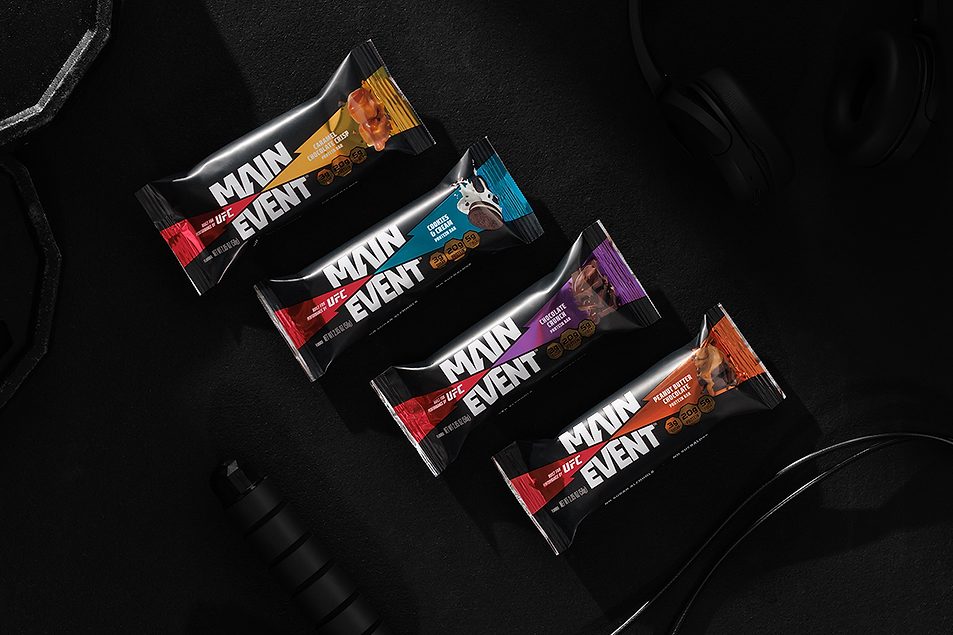
LAS VEGAS — FoodStory Brands is partnering with Ultimate Fighting Championship (UFC) Performance Institute to unveil a protein bar brand: Main Event.

Each bar features 20 grams of protein formulated from milk protein isolate, milk protein concentrate, whey protein concentrate and collagen peptides. The bar also contains 5 grams of fiber, 3 grams of sugar, L-theanine and tart cherry.

The bars are available in chocolate crunch, cookies and cream, peanut butter chocolate and caramel chocolate crip flavors.

“At the UFC PI, our entire mission is built around optimizing human performance through evidence-based sports science,” said Dr. Duncan French, senior vice president of the UFC Performance Institute. “When we set out to develop Main Event, we refused to create a standard protein bar. Every macro, every gram of fiber, and every functional ingredient was intentionally selected and rigorously vetted for fuel that genuinely moves the needle for human performance.”

Advertisement

The bars may be purchased online at through the brand’s website and at select retailers.

Continue Reading

Business

Legal & General plans to cut around 1,000 jobs by mid-2027

Published

on

Business Live

Group plans voluntary redundancies in the UK, but compulsory cuts have not been ruled out

The Legal & General headquarters in the City of London

Legal & General headquarters in the City of London(Image: PA)

Legal and General is set to axe 1,000 jobs by the middle of next year as part of a drive by chief executive Antonio Simoes to forge a “leaner operation”.

The UK’s largest asset manager notified staff via email on Wednesday that it has launched moves to cut 10 per cent of its workforce. The programme will encompass voluntary redundancies in the UK, though the firm did not rule out compulsory cuts depending on the level of uptake.

“Over the last decade, different structures, processes and ways of working have developed across L&G, making us more complex than we need to be,” Simoes told staff on email.

“To deliver our strategy successfully, we now need to make sure the way we work reflects the business we are becoming. Across L&G, we need to change how we work today and, through this, become a leaner organisation. By the middle of next year, we expect to reduce the size of our organisation by around 1,000 roles.”

Advertisement

The fund management division, which oversees £1.2 trillion in assets, is excluded as it has its own restructuring plan, as reported by City AM.

Simoes has been trimming the company’s headcount since succeeding former chief executive Nigel Wilson in January 2024.

Simoes, who previously held senior roles at Santander and HSBC, has since unveiled plans to sharpen its burgeoning pension arm and streamlined the group’s four business divisions into three through a merger of its asset management operations. He has also assembled a new executive team and committed to returning more than £5bn to shareholders between 2025 and 2027 through a combination of dividends and share buybacks.

An L&G spokesperson said the changes represent the “next stage of transformation”, enabling it to shift resources and investment towards areas where it sees “the strongest opportunities for long-term growth”.

Advertisement

Shares have climbed 11.9 per cent since the start of the year to 293.3 pence per share, yet have lagged behind rivals such as Aviva and the broader market over recent years.

Continue Reading

Business

Grab: Thoughts On Atome And Valuation Implications

Published

on

Grab food delivery scooter in Singapore

Grab: Thoughts On Atome And Valuation Implications

Continue Reading

Trending

Copyright © 2025