
Connect with us

Tech

Google Messages now lets you swipe to check timestamps and reply to texts

Published

on

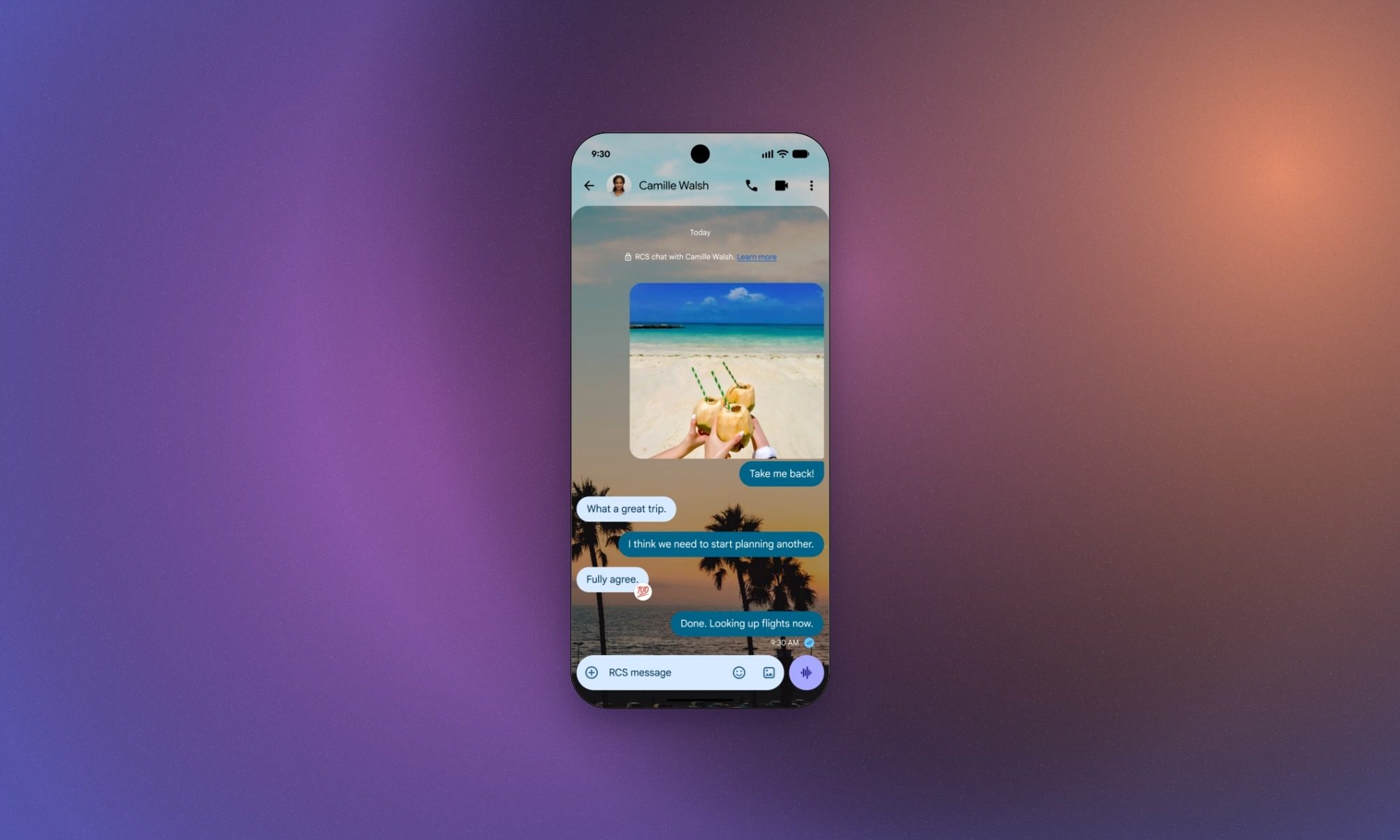
Checking when a text was sent in Google Messages just got a lot easier. Google is widely rolling out new swipe gestures that change how you see timestamps and reply to messages. If your usual swipe suddenly does something different, this is why.

How do the new swipe gestures work in Google Messages?

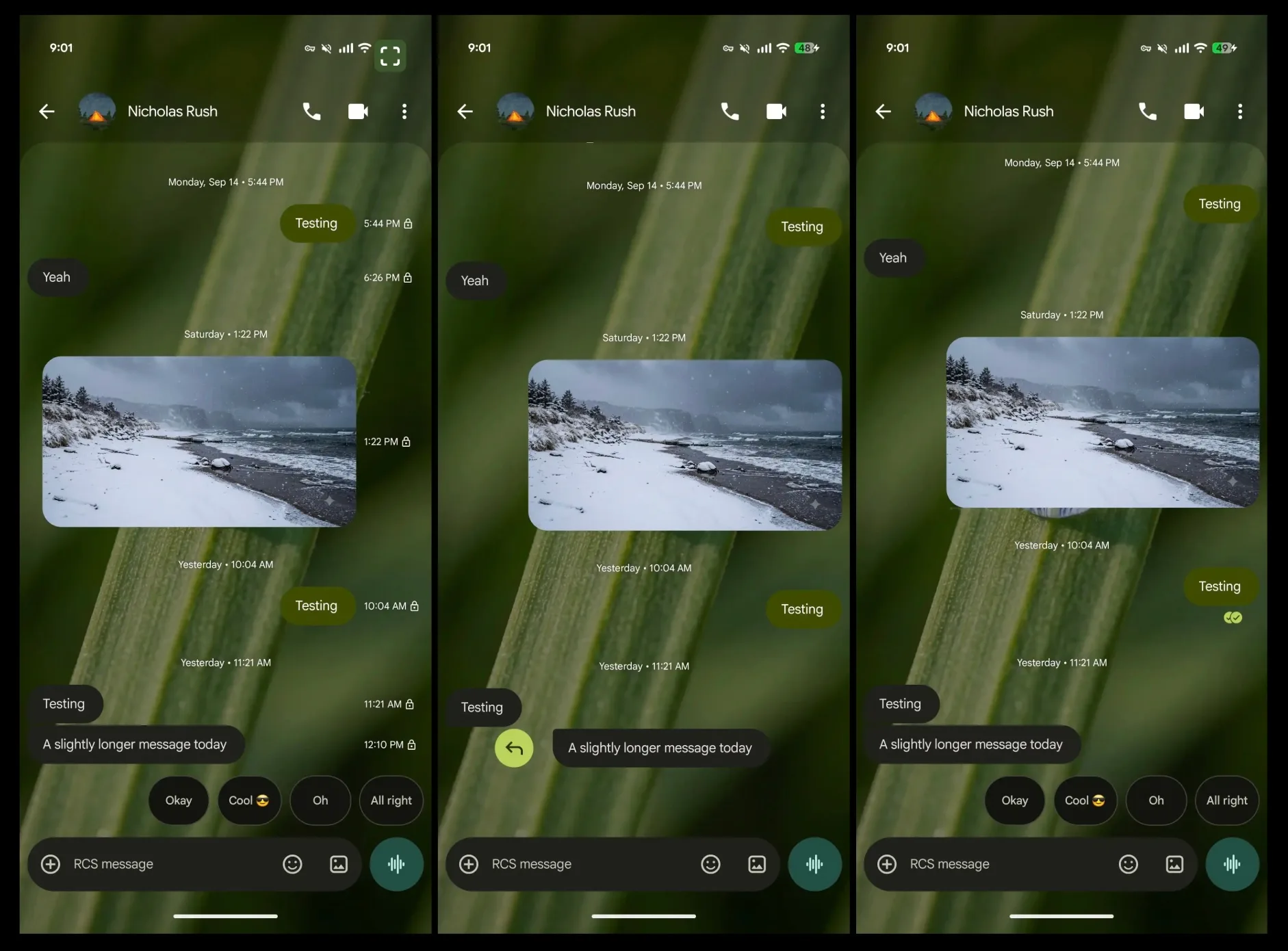
Until now, you had to tap each message bubble to see when it was sent, whether it was delivered, and whether it was encrypted. According to 9to5Google, you can now swipe left anywhere in a chat to reveal timestamps for every message at once, along with RCS encryption status.

Replying works differently too. Swiping left used to send a direct reply, but now you swipe right on a specific bubble, which takes a little precision. Tapping a message still works, but it now shows only delivery status rather than all the details.

RELATED COVERAGE:

What else is new in Google Messages?

The swipe update arrives a day after another handy change. You can now long-press any message to open a quick menu with Reply, Forward, Copy, Star, Delete, Select more, and Info. That saves you a trip to the menu at the top of the chat.

Long-pressing also lets you highlight just part of a message, so you can copy only an address or code. Google Messages also appears to be using the older two-circle read receipt design in the current rollout. This decision comes after Google experimented with a single-circle approach.

Advertisement

The new gestures have appeared in version 20260910_03_RC02, but the rollout hasn’t reached everyone yet, so try updating the app if you don’t see it. Your muscle memory may complain for a few days, but seeing every timestamp in one swipe is worth it.

Source link

Advertisement
Continue Reading
Click to comment

You must be logged in to post a comment Login

Leave a Reply

Tech

30 remarkable women to watch in Ireland’s STEM space

Published

on

If you want something to inspire your own professional ambitions, consider taking a closer look at the careers of these 30 impressive women in STEM.

Whether you are a student, a graduate, an established professional or at the retirement stage of your life, many STEM professionals past and present enjoy keeping up to date with the latest news, advancements and research.

An ideal way to do just that is to ensure that you are following the careers of the people who are right at the centre of innovation and exploration in the STEM space. With that in mind, as part of SiliconRepublic.com’s STEM career coverage, we have compiled a list of some of the industries most influential women. 

Abeba Birhane

If you are looking for a role model to follow, who is active in the AI space, then look no further than Prof Abeba Birhane. Birhane is the founder and a principal investigator at the Artificial Intelligence Accountability Lab at Trinity College Dublin, as well as an assistant professor of AI in the School of Computer Science and Statistics. She was previously a senior fellow in trustworthy AI at Mozilla. Her primary area of expertise is in cognitive AI, particularly the ethics and the long-term, societal implications of the technology.

Advertisement

She also served on the United Nations Secretary-General AI Advisory Body and the AI Advisory Council in Ireland.

Birhane’s work has resulted in her inclusion on a number of high-profile lists recognising her among the leaders of the AI space and she has received several awards, including a mention on the Time 100 most influential persons in AI 2023 list, and the Distinguished Paper Award 2024 at the IEEE Conference on Secure and Trustworthy Machine Learning.

Aisling Shannon

For more than 20 years, Aisling Shannon has worked at the European Space Agency (ESA), first as a structures engineer and more recently as a senior programme adviser.

Over the course of her career she has been responsible for Earth observation spacecraft development, covering design, test and launcher interface, as well as a range of non-technical elements that accompany developments in this field.

Advertisement

In her role as a senior programme adviser, she is involved in independent assessments and reviews of ESA activities. Eager to give back to others in the community, Shannon has previously served as a UNOOSA Space4Women mentor and a Talent Girl mentor, hoping to inspire and guide other women and girls. 

Aleksandra Kaszubowska

Aleksandra Kaszubowska is an E3 assistant professor in electrical and electronic engineering at Trinity College Dublin. She is also a senior research fellow for leading Irish research organisation the Connect Centre and she previously participated in a deep-tech pre-accelerator programme at the Tyndall National Institute. At the Connect Centre, she is working at the intersection of a number of different areas, including optical networks, hardware, controls and network layers.

Kaszubowska has more than 15 years of experience in the field of photonic communications gained through work in both industrial and academic research environments. Her specialties include end-to-end optical transmission system design and modelling, hybrid radio-over-fibre systems, optical packet switched networks, advanced modulation formats and coherent detection.

She received the 2025 Women in STEM Award for Engineering for her work in the engineering sector and has engaged with the media to share her ideas and knowledge with the wider STEM community.

Advertisement

Aoibhinn Ní Shúilleabháin

Aoibhinn Ní Shúilleabháin is a well-known figure in the STEM industry and for good reason. She is an associate professor of mathematics education at the DCU School of STEM Education, Innovation and Global Studies and she has a wealth of experience working on policy in education, higher education, research and the environment. She is deeply concerned with broadening STEM education and promoting gender equality. 

She was previously the chair of the Independent Advisory Committee on Nature Restoration, she is the former chair of Ireland’s national Citizens’ Assembly on Biodiversity Loss and she is an experienced and skilled broadcaster, public speaker, discussion moderator, workshop facilitator and science communicator. One such workshop currently being led by Ní Shúilleabháin is the Maths Sparks Problem Solving Workshops, which is a series of extra-curricular mathematics workshops for senior cycle post-primary school students. 

She has spoken at conferences and has been a part of the discussion at events held by organisations such as the Department of Foreign Affairs, European Movement Ireland, National Cyber Security Centre, and the Royal Irish Academy and Teaching Council.

Caitriona Jackman

In 2021, Prof Caitriona Jackman became the first woman senior professor of physics at the Dublin Institute of Advanced Studies (DIAS) and since her appointment has been a trail blazer in planetary science. As the head of the DIAS Planetary Magnetospheres group, she has vast experience with data analysis, theoretical modelling and mission planning. 

Advertisement

She also has specialist skills and knowledge in the areas of the dynamics of planetary magnetospheres and solar wind influence, machine learning, data analytics, processing pipelines, outreach and public engagement. She has previously served on the Science and Technology Facilities Council, the Solar System Advisory Panel, the Royal Astronomical Society Council, and the European Space Agency Solar System and Exploration Working Group.

Clare Hickie

Workday’s CTO for EMEA Clare Hickie has built a long and impactful career within the STEM space. One of the areas she is focused on is staying competitive in the age of artificial intelligence.

Having spent a number of years working across a range of industries, such as pharmaceuticals, biotechnology and IT HR, Hickie thrives off of embracing change and the transformation of the STEM space. She was also recently included in Computer Weekly’s 2026 Most Influential Women in UK Tech longlist. 

Deirdre MacCarthy

Deirdre MacCarthy is the chief legal officer and head of people at fintech Wayflyer.

Advertisement

She previously advised the company during a €7.8m seed funding round and through her role at Wayflyer has worked with a number of dynamic companies in Ireland’s STEM space, such as Stripe. Last year, as part of the Wayflyer delegate, she travelled to the US to strengthen Irish-US business connections and celebrated the contributions of Irish Americans at the Ireland Funds Gala event.

Deirdre Murray 

Dr Deirdre Murray is a consultant paediatrician and senior lecturer in the Department of Paediatrics and Child Health at University College Cork. She is also the principal investigator of the Cork Baseline birth cohort, which is reportedly one of the largest and most detailed mother-child cohorts in Europe and the first and currently only longitudinal birth cohort in Ireland.

Her research is focused on early brain injury and the development of new ways to predict and assess neuro-cognitive outcomes in children.

She was previously awarded a prestigious Health Research Board Clinician Scientist Award for BiHiVE, which is an ongoing project focusing on the discovery and validation of biomarkers in neonatal brain injury. In 2025, she won the Role Model of the Year Award at the Women in STEM awards. 

Advertisement

Dervilla Mitchell

Engineer Dervilla Mitchell is a co-chair at the Royal Academy of Engineering, an industry advisory board member at Equatic.tech and previously worked at Arup. She has experience working on both small- and large-scale projects, such as work at Portcullis House in Westminster, Saga HQ, Kent, Heathrow Terminal 5, the Abu Dhabi Midfield Terminal project, the Athletes’ Village at the London 2012 Olympics and the Goodwood Paddock Redevelopment.

She is committed to strengthening the diversity of the engineering landscape and works to champion equality. She also urges young people to consider contributing their insights, knowledge and creativity to work that can impact the current climate crisis. Mitchell works with the National Engineering Policy Centre and the Professional Engineering Institutions to better understand and relay the challenges of decarbonisation.  

Dympna O’Sullivan

The vice-president of research and innovation at Technological University Dublin, Dr Dympna O’Sullivan’s primary research interest is in human-centred artificial intelligence, with a focus on designing AI-driven assistive technologies to support independent living, particularly for people with age-related cognitive impairments. She is an advocate for greater public and patient involvement in research that focuses on the lived experience of those who are frequently marginalised in the software development process.  

She regularly adds to the conversation on computing ethics and responsible AI, has contributed to the development of a European curricula for digital ethics and she frequently collaborates with national TV, radio and print media outlets to share her thoughts on AI. She also takes part in educational and public engagement activities such as talks, panel discussions and workshops designed to make AI more accessible to the general public.

Advertisement

Elaine Coughlan

Elaine Coughlan is a managing partner and co-founder of Atlantic Bridge, a deep-tech investment fund that has offices in Dublin, London, Munich, Paris and Palo Alto. She has more than 25 years of experience scaling and growing companies and was previously the founder and director of GloNav. 

She is also an investment committee member at British Business Bank and holds board and adviser positions at the King Abdullah University of Science and Technology, Irish Life Health, Consello, Endeavour Ireland and Scale Ireland. Coughlan was named among Forbes 50, Inspiring Top 50 Women in Europe and Europe’s Top 100 Women in Technology.

Fidelma Dunne

Dr Fidelma Dunne is a professor of medicine at the University of Galway, a consultant endocrinologist at University Hospital Galway, an associate director at the Clinical Research Facility, Galway and the former president of the Irish Endocrine Society. Her main area of focus is pregnancy and diabetes and she has written more than 270 peer-reviewed publications.

She has been involved in a number of international studies and was the Irish lead for a pan-European cohort study examining pregnancy outcomes for women with Type 1 and Type 2 diabetes and a study examining insulin Degludec in women with Type 1 Diabetes in pregnancy. She was the PI of the recently funded Health Research Board All Ireland Collaborative Clinical Trial Network in Diabetes 2021-2026.

Advertisement

Ines Thiele 

Prof Ines Thiele is the principal investigator of the Molecular Systems Physiology group and Director of the Digital Metabolic Twin Centre at the University of Galway. She is also a principal investigator at APC Microbiome Ireland and a co-principal investigator on Theme 2, Diet and Microbes. 

Her research aims to improve the understanding of how diet influences human health and to do that she uses a computational modelling approach, termed constraint-based modelling, which is reportedly increasing in importance for systems biology.

In 2013, she received the ATTRACT fellowship from the Fonds National de la Recherche in Luxembourg; in 2015, she was elected as the EMBO Young Investigator; in 2017, she was awarded an ERC starting grant; and in 2018, she was an awardee of the NUI Galway Foundation Research Leadership Programme. 

Jacky Fox

Jacky Fox has led Accenture’s global secure digital core practice since April of this year, having held various other leadership positions at the organisation since joining as the Ireland lead and global CTO of security in 2019.

Advertisement

She is also the vice-chair of the board for Cyber Ireland and previously held other senior positions at Dell, Deloitte and University College Dublin. In 2018, Fox was recognised as Security Champion of the Year and she has taken part in a number of key industry events and panels, including at the Global Cybersecurity Forum in Riyadh and at the World Economic Forum’s annual meeting on cybersecurity. 

Katia Karpova

The head of EMEA for fintech Fiserv, Katia Karpova has previous experience as an executive director for JP Morgan and was also a programme manager for the Institute for Public Private Partnerships. In her role at the organisation, Karpova oversees Fiserv’s activities in at least 13 countries, across issuing, payments software, merchant acquiring and processing services for financial institutions. She holds a master’s degree in business administration from Stanford University, a bachelor’s degree in finance from University of Maryland and is fluent in Ukrainian, Russian and English.

She is also regularly asked to comment on topics and advancements in the ever-changing finance landscape. In June, she was a guest speaker at the Money 20/20 event and was also featured on SiliconRepublic’s own The Leaders’ Room podcast series. 

Lavinia Morris

Lavinia Morris is the general manager for EMEA data centre operations at Microsoft. She has extensive experience across a multitude of industries, such as banking, aviation, insurance and professional services. Her particular area of expertise is in digital transformation, innovation, strategic execution and operational management.

Advertisement

Morris’ previous roles include COO of KBC Bank Ireland, director of the Irish Banking Culture board, director of Synch Payments DAC and the chief information officer at SMBC Aviation Capital. 

Currently, her priorities include scaling innovation in critical infrastructure, delivering resilient, secure cloud operations, enabling AI and digital sovereignty and championing diversity, equity and STEAM, to improve the wider ecosystem. 

Maria O’Dwyer

Maria O’Dwyer is the infrastructure delivery director for Uisce Éireann, where she is largely responsible for the delivery of its water and wastewater capital investment programme. She is a qualified chartered engineer, has a degree in electronic engineering and a master’s in engineering science, as well as various diplomas in supply chain management, business, coaching and company direction. Her current work is broad, covering all activities from design, planning and procurement through to construction delivery. She is also a non-executive director for the Sustainable Energy Authority of Ireland.

Her recent projects include the high-profile €114m Athlone main drainage scheme and the Water Supply Project Eastern and Midlands Region. Much of O’Dwyer’s work focuses on bolstering infrastructure, making water supplies more resilient and managing waste water more effectively.

Advertisement

Muriel O’Byrne

Making waves in the regulatory affairs space, Muriel O’Byrne is the senior vice-president for international regulatory affairs and the European business office at pharmaceutical company Regeneron. She was previously the senior director for global regulatory affairs at Elan Pharmaceuticals, the director for EU regulatory affairs at AstraZeneca and senior regulatory executive at GSK.

She has been featured in EUCOPE, which is the European Confederation of Pharmaceutical Entrepreneurs, and also contributed to a World Clinical Trials Day 2026 feature in EMJ Gold, where she explored regulatory challenges in biologics, genetics and precision medicine. 

Niamh Shaw

Engineer, scientist, explorer and science communicator Dr Niamh Shaw is a well-known figure in the STEM space. She is renowned for her reports covering major space missions, where she translates the mindset of astronauts into insight for leaders navigating uncertainty, complexity and long-term strategy. 

She was previously an analogue astronaut at the Mars Desert Research Station, has trained in extreme environments from Antarctica and the Arctic Circle to zero-gravity flight, worked in the Kalahari and Atacama deserts, and has reported from NASA’s Kennedy Space Center and the European Space Agency. 

Advertisement

She is also a highly requested keynote speaker and has shared her knowledge on space, leadership, curiosity and exploration at a range of high-profile corporate events, conferences and festivals all over the world. She is the CEO and founder of Dream Big Space and Science Communications and is an advisory board member for the AstroAid Foundation. 

Rathnait Long

Dr Rathnait Long is a distinguished fellow of technology at semiconductor company Macom. Her main area of focus and research is in the development of semiconductor materials and devices. She is also a technical reviewer for the National Science Foundation and for more than seven years was an adjunct professor at Stanford University. 

An innovator in the semiconductor industry, Long has significant experience in the patent application process, including for acoustic resonator manufacturing methods and printed circuit board design patents, which were filed on behalf of Macom. She also regularly contributes to the wider space via articles and journals and recently took part in SiliconRepublic.com’s The Leaders’ Room podcast series, where she discussed her career.

Ruth Freeman

Dr Ruth Freeman is the director of research for society at Research Ireland, where she oversees individually led research programmes, centres for research training, challenge-based research programmes, and the education and public engagement brief. Prior to her current role at Research Ireland, she filled a number of roles at Science Foundation Ireland and during her time at Trinity College Dublin she earned a scholarship, the Eli Lilly Chemistry Prize and the Roberts Prize for Biology.

Advertisement

Freeman is vocal about the importance of inclusion, climate justice and the power of education, technology and innovation to transform lives. She is of the opinion that all voices need to be heard in the conversation around STEM and she has lent hers to the topic several times. 

Sarah Bourke

Dr Sarah Bourke is the CEO and co-founder of Skytek, a software company that innovates for a number of demanding industries, including the space sector. She has been recognised among her peers and industry professionals for her leadership and success in the commercialisation of space technology, as shown when she won third place of the European Prize for Women Innovators in 2016.

She frequently works alongside professionals from high-profile institutions such as the European Space Agency and NASA, as she further develops Skytek. Prior to founding Skytek, she worked at a number of leading universities and governmental agencies. 

Sharon Cunningham 

The CEO and co-founder of Shorla Oncology, Sharon Cunningham is leading the charge when it comes to meeting unmet needs in the global pharmaceutical space. Her role involves the development and commercialisation of critical oncology products to assist with patient care. She is a board member at US-based life science nonprofit MassBio, Blood Cancer United, the Healthcare Business Network and Cork University Business School. 

Advertisement

She is also a previous EY World Entrepreneur Of The Year finalist in 2025, an EY Entrepreneur Of The Year Winner for the Overall and Emerging Ireland category in 2024, was named Ireland’s Best Young Entrepreneur in 2019 and has been recognised as one of the 100 most influential CEOs in Ireland by the Business and Finance Media Group, among other awards and honours. She is also a recipient of the University College Cork Alumni Achievement Award, one of the highest honours the university can bestow upon a graduate.

Sue Duke

Sue Duke is the managing director for EMEA and LatAm and the vice-president for global public policy at professional networking platform LinkedIn. Working across the platforms public policy and economic graph teams, she leads and manages the roll-out of LinkedIn’s Economic Graph in partnership with governments and labour market organisations worldwide. 

She was previously a special adviser for the Department of the Environment, Climate and Communications, head of public policy at Google and a board member at the Open Data Governance board. She regularly offers her insights on the wider landscape, exploring topics such as the rise of the founder, how AI is creating a new wave of young entrepreneurs and the jobs and skills being created by AI innovation.  

Susan Treacy

Healthtech Ireland CEO and consultant Susan Treacy has more than 25 years of healthcare experience nationally and internationally. She is a member of the Research and Innovation Board Committee of Tallaght University Hospital and is also the owner and consultant of Treacy Healthcare Consulting. 

Advertisement

She actively collaborates with organisations, institutions and governments as a means of creating a more efficient medtech and healthcare ecosystem. For example she lobbied for a government life science strategy that is now in progress, collaborated on initiatives between the HSE and industry in areas of sustainability, digital health, procurement and innovation and was an invited member to HIQA HTA and HSE AI advisory and working groups.

Treacy regularly authors life science-based articles for numerous publications and she has spoken at length about leadership, transformation, AI, sustainability, partnerships and innovation at various, notable conferences. Treacy was also previously a board adviser for WITS, Women in Technology and Science. 

Her achievements include the 2025 CEO of the Year in the Irish Times Association and Institute Awards, the 2025 winner of the Women in STEM Award for health technology, and Health Technology CEO of the Year 2023 from CEO Monthly. 

Tara Shine

Dr Tara Shine is one of the Irish women leading the charge in sustainability and policy creation.

Advertisement

She is the CEO and co-founder of sustainability skills platform Change by Degrees, has experience as a climate adviser for governments and the Mary Robinson Foundation and is also a freelance author for The Currency, where she discusses the climate and sustainability issues impacting businesses. She has also previously presented a number of documentaries for the BBC, Channel 4 and RTÉ.

Terry O’Laoghaire

Terry O’Laoghaire is the managing director and COO for technology infrastructure at financial services platform State Street. Having worked in the sector for more than 20 years, she has vast experience managing large portfolios across IT and financial services, infrastructure engineering, cloud computing, application development, hedge fund accounting and reconciliations. 

She is involved with 3Sixty Leaders Club, a programme designed to support women in leadership as they develop their careers. O’Laoghaire is also a member of T-200, a group that aims to inspire, educate, celebrate and advance women’s leadership in technology at all levels.  

Vanessa Hartley

Vanessa Hartley is the head of Google’s Irish operations, having taken over the role in 2024 and having been a fixture of the company, in various roles, since 2014. She was previously the vice-president of Google EMEA’s large customer sales division and later managing director of the division’s hub in Dublin. 

Advertisement

She has shared her insights and experience with a wide array of people through various events and speaking engagements such as the MacGill Summer School, DCU’s Guest Speaker Series and the Global Economic Summit, among others. 

Veronica Campbell

Prof Veronica Campbell is the first and current president of South East Technological University (SETU). She holds multiple degrees in areas such as pharmacology, which she earned from the University of Edinburgh and a PhD in neuropharmacology, which she received from the University of London. 

Campbell has extensive undergraduate and postgraduate teaching experience and a distinguished research record in cell biology, pharmacology and tissue engineering and she previously held several senior leadership roles in Trinity College Dublin, including dean of graduate studies, bursar and director of strategic innovation.

She previously served on the board of the Atlantic Institute, based in Oxford University, was the inaugural chair of the Global Brain Health Institute of Trinity College and UCSF and is a former president of the Royal Academy of Medicine in Ireland. More recently she welcomed delegates to the 2026 Irish Humanities Alliance Annual Conference.

Advertisement

She also welcomed EU Organic Ambassadors to SETU as part of their visit to the south-east, organised by the Department of Agriculture, Food and the Marine during Ireland’s Presidency of the Council of the European Union.

Yvonne Kavanagh

Dr Yvonne Kavanagh is the director of engineering, research and innovation at SETU. She is also an assistant registrar at SETU Carlow.

She aims to improve the representation of women in the space, including via her co-authored paper ‘How successful are women in physics in Ireland?’ and she has published more than 38 articles and earned 264 citations. 

Don’t miss out on the knowledge you need to succeed. Sign up for the Daily Brief, Silicon Republic’s digest of need-to-know sci-tech news.

Advertisement

Source link

Continue Reading

Tech

iOS 27 Lets You Do Check Splitting and Custom Cards in Apple Wallet

Published

on

If you frequently get stuck footing the whole bill when you dine out with friends, you might have a new tool that can help: Apple Wallet in iOS 27 can split the bill from a camera image of a receipt.

The feature uses Apple Intelligence to make items on the receipt selectable so you can quickly determine what’s yours (and not yours) and what’s owed. It’s one of several new Wallet features that Apple previewed at its annual software event, WWDC, back in June, that are now rolling out. Those new features include being able to create custom Wallet items from scanned physical cards or from scratch, and view recurring payments if you have an Apple Card.

For iOS 27, Apple also announced new features for developers geared to Apple Wallet, including the ability to make posters for multiticket events and adding order tracking for retail apps using Apple Intelligence.

How to use the new check-splitting feature

An iPhone screenshot shows a receipt for a bakery and the option to split the bill among different people in the Wallet app.

New iOS 27 Wallet features include the ability to scan a receipt and then split the bill with others.

Apple/Screenshot by CNET

Before you can take advantage of some of these new Wallet features, you’ll need to make sure your device is using iOS 27.

Advertisement

Receipt splitting in Wallet starts with using the new Siri mode in the Camera app. If you’re pointing your lens at a receipt, a prompt for Split Bill With Apple Cash will come up. You can go through your contacts to search for people you want to split the check with, but they’ll need to be able to pay with Apple Cash.

Apple Wallet will show a list of the items ordered, and you can select from that list, then choose how you want the bill split and how much to tip. Apple Wallet can’t force your friends to pay; it’s not a collection agency.

How to use the new custom Wallet items feature

To add a Wallet item from a business card, or just create a digital Wallet card without one, tap the plus icon at the top to add something new.

You’ll have the option to scan a debit, credit, transit or other type of ID card, or you can choose Create a Pass to work off a business card.

Advertisement

Apple Wallet now allows you to create digital passes from physical cards in iOS 27.

Apple/Screenshot by CNET

CNET Senior Writer and iOS features expert Zachary McAuliffe said this feature has already worked well for him.

“I digitized my gym membership card, and it’s worked great,” McAuliffe said. “I was worried the scanner wouldn’t pick up my iPhone’s screen, but the scanner seemingly picks up my screen better than my old card. I also appreciate how this saves me space on my already crowded keyring.”

Editing the details of a custom Wallet card allows you to either import the contents of a scanned card and edit them, or just enter your own details. Apple Wallet offers a few different templates for custom Wallet items, and you can adjust the color or background. Item details can be edited later if the information changes or you make a mistake. Newer Apple Watch models should be able to pin these custom digital passes using the Smart Stack feature.

To view recurring payments on your Apple Card, just tap on the Card in Wallet and use the three dots on the top right to select it from the menu.

Advertisement

More iOS 27 Wallet features are likely to roll out as Apple continues releasing updates to its new operating system.

Source link

Advertisement
Continue Reading

Tech

VITURE Pro 2 Packs a 146-Inch Screen Into 63 Gram XR / AR Glasses for $299

Published

on

VITURE Pro 2 XR / AR Glasses
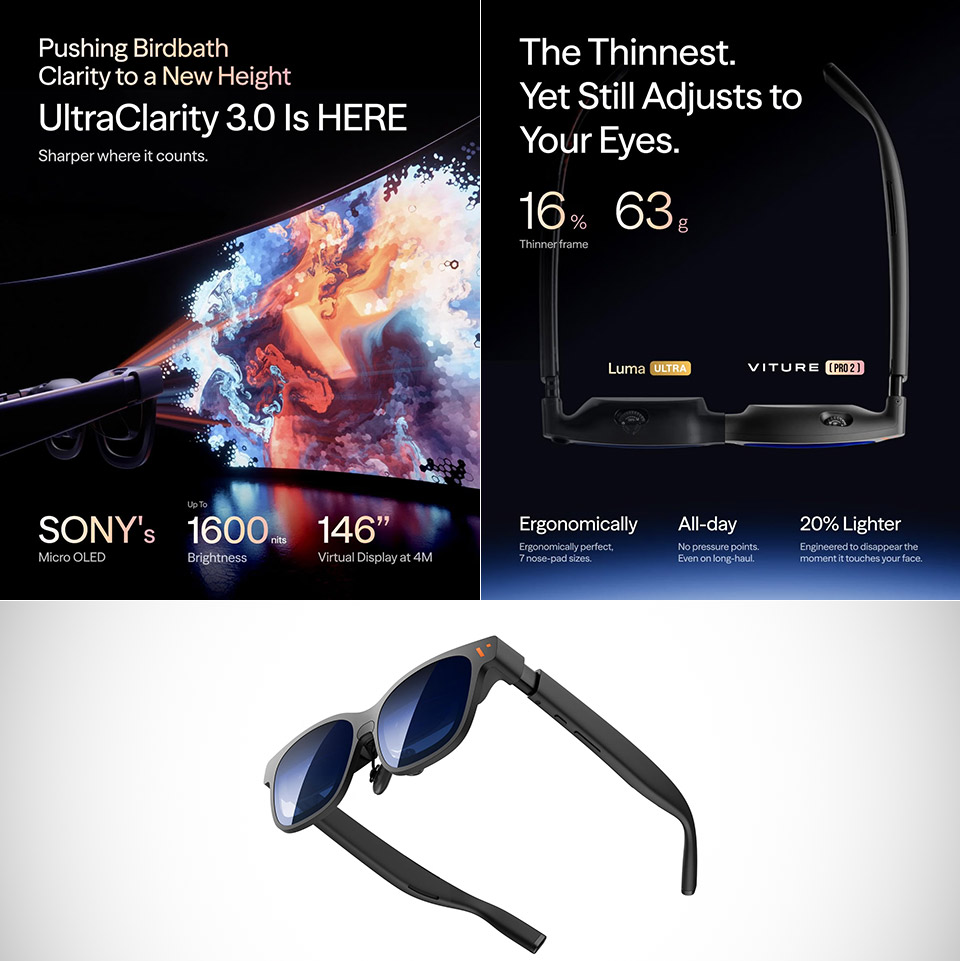
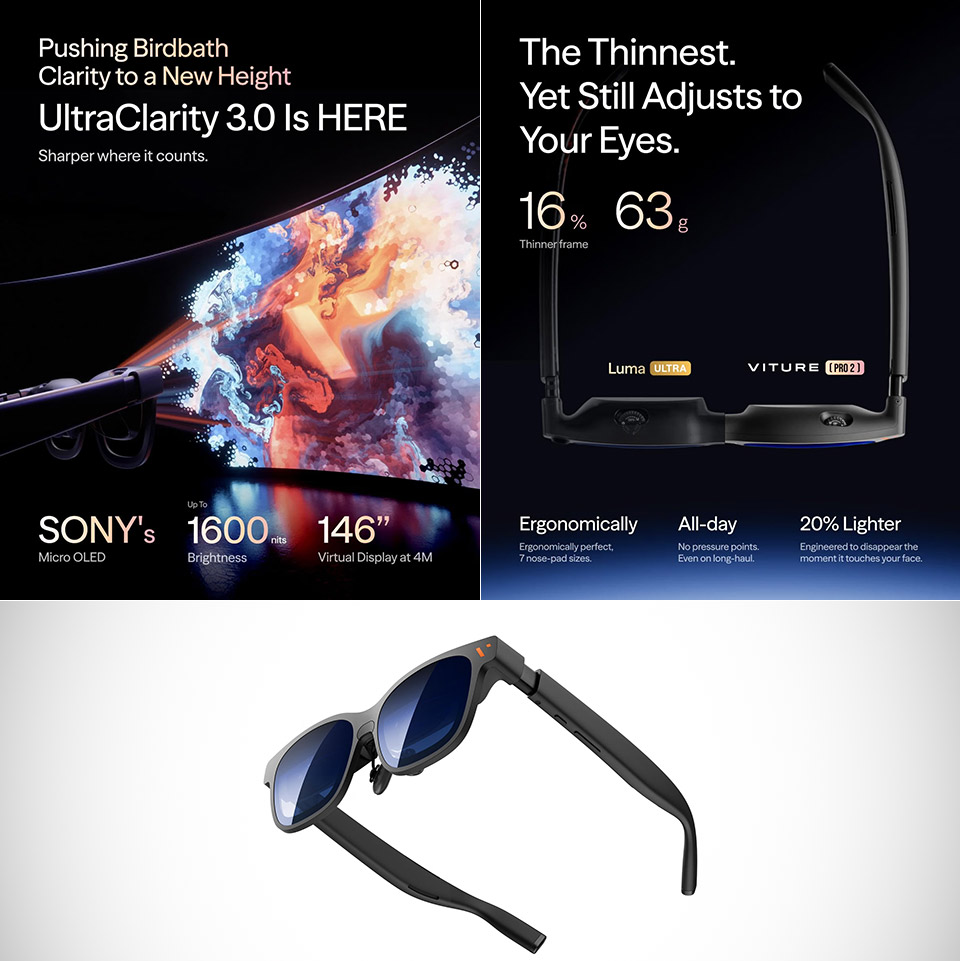
VITURE Pro 2 ships as a $298.99 (was $380) pair of XR/AR display glasses that treat a private cinema as the whole job. Sony micro-OLED panels sit behind birdbath optics and throw a 1920 by 1080 image to each eye at up to 120Hz, with a 50-degree field of view that the company sells as a 146-inch screen viewed from about four meters. Peak perceived brightness climbs to 1,600 nits from the 1,000 nits on the first Pro, with nine brightness steps and contrast rated at 100,000:1 or higher. Color covers 108 percent of sRGB, and VITURE tunes that color at the panel itself rather than through an extra management chip.


UltraClarity 3.0 is the model with the “3.0” in VITURE’s fifth anniversary lineup, and it’s an optical rewrite that truly distinguishes the pair. The developers went to great lengths to fine-tune the field curvature so that the sharpness remains consistent from the lens’s center to its periphery. They’ve also worked on making the image stable even when your eyes move off-center, and when it comes to distortion, they claim that the lines stay straight whether you wear the glasses at their lowest setting or crank them up to -5.00 diopters. Plus, they’ve ensured that the horizontal resolution matches the vertical resolution, rather than becoming fuzzy at the borders. You can even have independent focus knobs for each eye that go up to -5.00 diopters, allowing many near-sighted persons to avoid prescription inserts. The interpupillary distance is described as 56.5 to 71.5mm, which is rather close to the average, so no additional hardware is required for most adult faces.

Sale


VITURE Pro 2 XR/AR Glasses – UltraClarity 3.0 Myopia Adjustment -5.0D 120Hz
  • 【ULTRACLARITY 3.0 – THE CLASSIC, EVOLVED, SHARPER FROM EDGE TO EDGE】 UltraClarity 3.0 takes birdbath optics further for crisp text, clean…
  • 【A 146-INCH XR SCREEN FOR GAMING, TRAVEL & WORK】 Turn compatible USB-C video-output devices into a private 146-inch 120Hz 1080p XR display for…
  • 【THE THINNEST—YET STILL WITH BUILT-IN ADJUSTMENT】 Twin dials, two eyes: built-in 0 to -5.00D myopia adjustment focuses each eye independently…


At 63 grams, this pair is much more wearable than you might assume, weighing roughly 2.2 ounces and being 20% lighter than the original Pro. The frame is also 16% slimmer, and there are three temple settings and three nose pads, giving you seven distinct fit possibilities. The temple cushioning has been updated so that it does not scrape into your nose after around an hour of usage. The pair includes a clip-on lens shade to reduce ambient light and increase contrast, as this version does not include the electrochromic dimming film included in the original Pro. The SGS A+ eye care accreditation ensures low blue light, flicker-free functioning, and low visual fatigue, and they claim you may wear these for three to four hours before your eyes begin to tire. Even before you clip on the shade, the real world is pretty muted with only 5% optical transmittance.

Advertisement

Sale


VITURE Pro Mobile Dock Co-op Stream & Play, 2D/3D Content
  • 【MADE WITH THE SWITCH IN MIND】 – A 152” 1200p ultra sharp virtual display beats a 6.2” 720p/30fps screen any day. Take your Switch handheld…
  • 【DOUBLE THE FUN – SHARE THE SCREEN WITH FRIENDS!】 – Double The Fun with the ONLY XR system supporting screen sharing! Play local co-op games like…
  • 【3D SUPPORTED: A NEW DIMENSION OF ENTERTAINMENT】 – The VITURE Pro Mobile Dock now supports 3D content — enjoy your favorite three-dimensional…

VITURE Pro 2 XR / AR Glasses
The connection remains as easy and plug-in as it gets. A Temple USB-C connection delivers DisplayPort video and power from any host that supports USB-C, which includes almost every Steam Deck, Android phone, USB-C iPhone from the 15 series onward, and most recent laptops. Still, the Nintendo Switch, Switch 2, PlayStation 4, and Xbox want a dock since they can’t push video down a conventional USB-C cable. To compensate, VITURE has released the Mobile Dock Mini, an anniversary accessory priced at $99 (or $79 if purchased with another device), which packs a 10,000 mAh battery into a body that is 34% smaller and 30% lighter than the previous one, as well as a new Hug Mode for the Switch 2. (There is no camera, CPU, or six-axis tracking built in, just head motion that tracks the image as you move your head.

VITURE Pro 2 XR / AR Glasses
The temples house open-ear speakers that can handle 9 distinct volume increments for spatial audio, making them ideal for movies and mobile gaming in a quiet area, but they’re a little leaky, so a plane or workplace may pick up some of the soundtrack. Reviewers tested them for films and handheld games and discovered that the smaller 50-degree field is still legible even with small text and minimaps, and the added brightness outperforms earlier 1000 nits glasses when a cabin light is turned on.

Source link

Advertisement
Continue Reading

Tech

What is Meta Muse? The AI agent explained

Published

on

Although Meta had already unveiled its AI agent back in the summer, the recent Connect 2026 event revealed more of its capabilities.

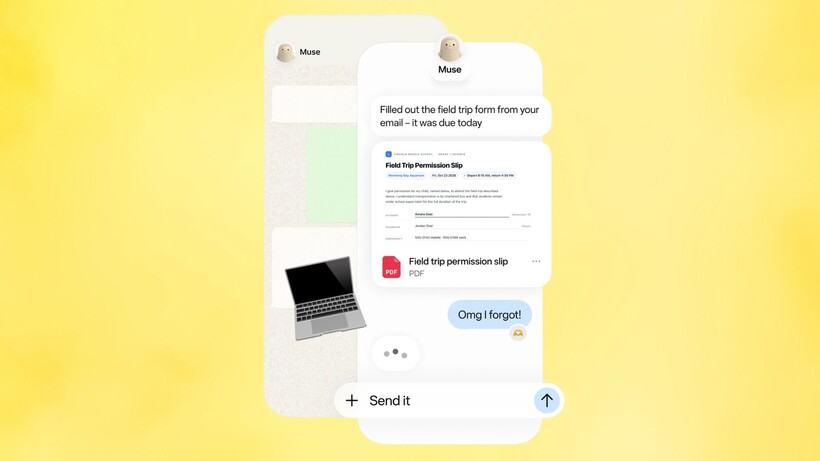
Coined Muse, Meta’s AI agent promises to “take the busywork off your plate” and can do anything from creating shopping lists based on emails, drafts replies and can even order deliveries on your behalf.

But how does Muse really work and how can you access the tool? What security measures are in place to ensure Muse is safe to use?

We explain everything we know about Muse below. For more from Meta’s Connect event, visit our Ray Ban Meta Glasses 3 first impressions while I’ve given my two cents on Meta’s audio-only glasses too. 

Advertisement

Muse is Meta’s new AI-powered agent that’s designed to communicate with you in a more natural way than other chatbots. Found within its own dedicated app, WhatsApp, Mac desktop and web browsers, Muse can answer questions, book reservations, complete tasks, generate images or documents and even make purchases on your behalf. 

Advertisement

Overtime, Muse will get to know you and help you to get things done both on a day-to-day and a long-term basis. That means you can ask Muse to both set quick timers or guide you through a workout plan. 

You can also connect Muse with compatible third-party apps too via Connectors, which enables you to unlock different abilities for the agent. For example, at Meta’s 2026 Connect event, it announced new brands will be able to connect to Muse, including Walmart, Sephora and PayPal, while travel sites like Expedia are coming soon.

Advertisement
Meta MuseMeta Muse

Meta explains that, because it’s agentic AI, Muse is able to figure out which skills it should use when provided with a task. That means it’ll know when it needs to browse the web or search for information from other sources, like your calendar or messages. 

Otherwise, you can also have long, in-depth conversations with Muse, and can customise its voice to speak slower or faster according to your preference. Muse can even have its own email address that it can use to get things done. It really is designed to be like having your own personal assistant.

Muse is available for free, but there is a usage limit that refreshes weekly. At the time of writing, Meta hasn’t disclosed what that limit actually is.

Advertisement

If you exceed the limit then you can opt to upgrade to a paid subscription which unlocks more Muse tokens each week. There are currently two subscriptions to choose from, with the cheapest being the Power plan that costs $20 a month and unlocks 500m Muse tokens each week.

Advertisement

Next there’s the Max plan for $100 a month and provides you with 3B Muse tokens each week.

At the time of writing, Muse is not currently available in the UK.

Meta also unveiled the Muse Charm at its Connect event, which looks reminiscent of an old-school Tamagotchi.

Meta’s new Muse CharmMeta’s new Muse Charm
Image Credit (Meta)

Advertisement

While details are currently sparse, as Meta says it will share more later this year, it’s essentially a pocket-sized device that has Muse built-in. Whether it’ll act like a virtual pet you have to look after, though, remains to be seen.

Advertisement

Source link

Continue Reading

Tech

iPad 12 leak points to A19 chip and Apple Intelligence

Published

on

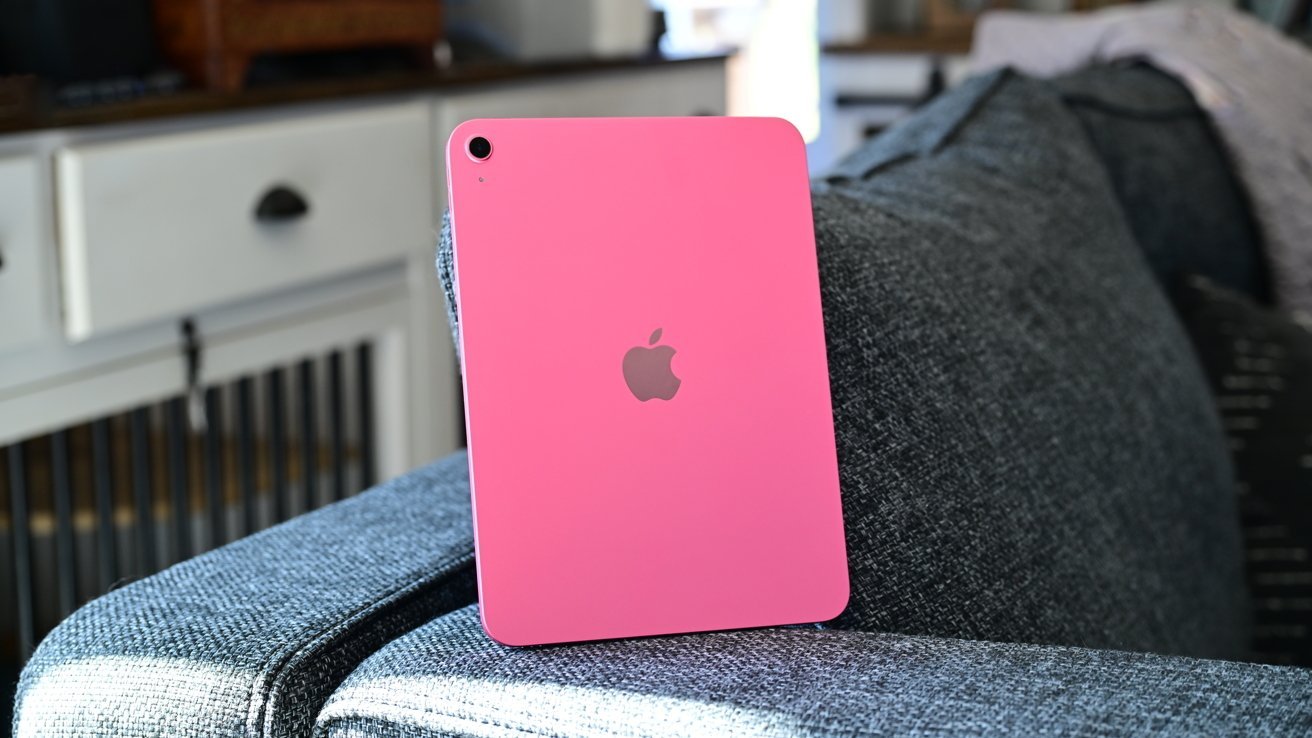
Apple’s next low-cost iPad is shaping up to get a faster chip and the hardware needed to run Apple Intelligence.

The 12th-generation iPad is expected to bring Apple Intelligence and its Siri features to Apple’s entry-level tablet. It could also gain faster cellular and wireless connectivity.

This appears to be the same iPad that was rumored to release in early 2026.

Details found in Apple’s code, spotted by MacRumors contributor Aaron Perris, identify an A19 chip and 8GB of RAM. The A19 supports Apple Intelligence, while 8GB meets its minimum memory requirement.

Advertisement

The code also points to a C1X modem, which supports sub-6GHz 5G. An N1 networking chip would enable Wi-Fi 7, Bluetooth 6, and Thread.

Apple has not announced a release date or price for the new iPad. Current rumors suggest that the device could launch in spring 2027, with a starting price likely to match the current model’s $449.

Source link

Advertisement
Continue Reading

Tech

Reviving The PoE++ Feature On A Ubiquiti Switch

Published

on

Recently [The Parallel Port] was asked to take a look at repairing the PoE++ feature on a Ubiquiti switch that otherwise worked fine. This is a pretty nice 24-port rackmounted switch with 2.5 Gbit-capable RJ-45 ports and two 10 Gbit SFP+ ports, so by itself it’s pretty useful, but having the 400 Watt PoE feature just go AWOL still stings, especially if you bought it new for $800.

With power applied the switch starts up as normal, including its 1.3″ touch screen that provides direct port information as well as a fancy screensaver cum QR code for the AR feature.

After logging into the switch’s BusyBox console it showed that all ports reported bad for the PwrGood status, and there were PoE power status request errors in the log, but this could be just the consequence of something else. Using a PoE splitter it was confirmed that the PoE functionality was indeed dead.

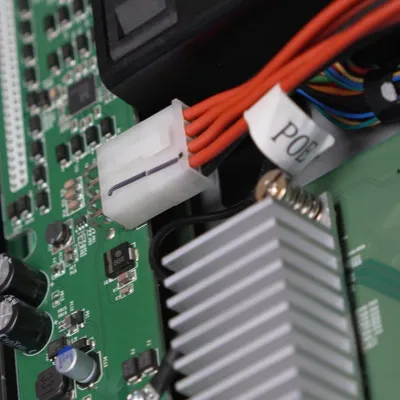
After disassembly and some testing with a multimeter and thermal camera, a short and related hot spot on the PCB that the PoE power board connects to was identified, with the short persisting after removing this PCB from the switch. Since the switch had suffered a bit of an electrical event the TVS diode was checked, but it turned out to be fine.

Next to it, marked as fuses, were protective thyristor surge protection devices (Trisil), functioning as a crowbar device. These aren’t supposed to be shorted to ground until a surge event occurs, but these were indeed both shorted when measured directly. Clearly they had taken the brunt of the electrical event and sacrificed themselves in the process.

Advertisement

One replacement later of these devices the switch now happily reports a good PoE status and even was able to power a DC fan via the PoE splitter. Even if it wasn’t a particularly hard fix, this is definitely one of those cases where knowing how the protective circuit works can save a lot of time in diagnosing and fixing a fault.

Source link

Advertisement
Continue Reading

Tech

Tesla Semi enters volume production after years of delays

Published

on

The takeaway: Tesla has begun volume production of the Semi, its battery-electric heavy truck, at a new facility next to Gigafactory Nevada. The launch marks a more serious commercial phase for the Semi after years of delays. The company says the first Semis produced at the new factory are now being delivered to customers.

The Sparks, Nevada, plant can eventually produce 50,000 trucks a year, or about 1,000 a week, according to Tesla. Before this milestone, the company delivered a small number of trucks to PepsiCo in 2022, but those vehicles were built on a pilot line.

Tesla used an event at the factory to highlight changes made to the truck’s battery, powertrain, and charging system. It also named customers that include PepsiCo, US Foods, DHL, WattEV, ABF Freight, Einride, IMC Logistics, and OK Produce.

The Semi will be sold in two versions. Tesla lists the Standard Range model at 325 miles of range when hauling a full 82,000-pound gross combination weight trailer. The Long Range model is rated for 500 miles under the same conditions. Tesla executives said the Long Range truck could reach about 600 miles with a lighter load of roughly 60,000 pounds.

Advertisement

Tesla has not released current prices or total reservation figures. When the company introduced the Semi in 2017, it set the starting price at $150,000 for a 300-mile version and $180,000 for a 500-mile version. Electrek reported earlier this year that Tesla was quoting some customers about $290,000 for the 500-mile truck.

The production Semi uses Tesla’s 4680 battery cells rather than the 2170 cells used in earlier test vehicles. Tesla says the truck’s battery pack has 822 kWh of capacity. The company says it has reduced the truck’s energy consumption to about 1,700 watt-hours per mile when fully loaded, down from an original target of 2,000 Wh/mile.

Those efficiency gains are important because they allow Tesla to use a lighter battery pack while maintaining its range target. The company also said it cut nearly 1,000 pounds from the truck during development.

Tesla also reworked the drive system. The earlier design used a carbon-fiber-sleeved rotor. The production version uses a steel-caged rotor and a bar-wound stator that Tesla also uses in the Cybertruck. Tesla says the redesigned drive axle is about 80 kilograms lighter.

Advertisement

The company also simplified the truck’s lubrication system. The hub no longer uses oil, while the motor and gearbox share a single oil supply. Tesla says that oil should last more than 250,000 miles.

The Semi now has redundant electric power steering instead of hydraulic steering. Tesla says the new system gives drivers better response and control. It also allows a tighter wheel cut, which the company says brings the Semi’s turning radius close to that of a Model Y. That could matter in crowded industrial yards, city streets, and loading docks.

Tesla has also carried over elements of the Cybercab’s thermal-management system. The Semi uses an indirect system with pumps, compressors, and heat exchangers that manage temperatures across the cab, battery, and drive unit. Tesla says the design reduces the amount of refrigerant plumbing needed throughout the vehicle and can move heat where it is needed.

Charging remains one of the larger questions around the truck. A Semi’s 822-kWh pack requires far more power to charge than a passenger EV. Tesla is building Megacharger stations that can provide as much as 1.2 megawatts per stall. At the event, Tesla showed a truck charging from 3% to 60% in about 30 minutes.

Advertisement

The company says it plans to have more than 30 Semi charging locations, with over 200 megawatt-capable charging posts, by the end of the year. It also expects fleet operators to install overnight charging equipment at their own facilities.

Tesla is pitching the Semi as a fleet product with remote diagnostics, mobile service, over-the-air updates, and driver profiles that can follow drivers from one truck to another. It says its current Semi fleet has recorded more than 98% uptime.

Some fleet operators have already placed large orders. Einride announced a 500-truck deal in August. IMC Logistics said this week that it plans to buy 50 Semis for California drayage work. A shipper coalition also selected Tesla to provide 2,500 trucks for zero-emission freight operations in California.

Tesla argues that electric trucks can cost less to operate than diesel models because they require less maintenance and are less exposed to swings in fuel prices. “You know, volatility in the oil market and the diesel market goes up and down,” Tesla Vice President of Engineering Lars Moravy told The Verge. “But typically, we’ve seen in the history of the last 20 years, electricity is pretty flat. And wouldn’t it be great to have a flat cost in your shipping rates?”

Advertisement

Source link

Continue Reading

Tech

Qualcomm Announces Snapdragon X2 Series Processors Will Support Linux

Published

on

Snapdragon X2 Series processors feature a neural processing unit (NPU) delivering 80 trillion operations per second and allowing advanced AI features to run locally. And Snapdragon X2 Series “is expanding to Linux,” Qualcomm announced today, calling it one of their most-requested capabilities:

Qualcomm Technologies is a top contributor to Linux development at a kernel level, and now we’re embracing support for Snapdragon X2 Series as a platform directly. We’re upstreaming core drivers for Snapdragon X2 Series — including the Hexagon NPU and Adreno GPU — to open the door to developers and partners. We are starting with support for two operating systems based on Linux…

– Debian: We’re kicking off with Debian by the end of this year, one of the most influential Linux distributions and the foundation behind many of the distros people use every day.
– Ubuntu: Qualcomm Technologies has partnered with Canonical to bring Ubuntu, the world’s most widely used Linux distro, to the platform with Snapdragon X2 Series certification targeted for the first half of 2027.

…and this is just the beginning. Our partners HP, ASUS and HUMAIN are planning Linux support in the first of 2027, so that their devices deliver the incredible experience users expect with Snapdragon X2 Series in a new operating system.

Advertisement

Qualcomm’s developer blog called it “a significant step forward” in Qualcomm’s commitment to a developer-first approach, and “to the open-source community.”

“For developers, the important part is simple: more core hardware features are being reviewed and merged, so that laptops with Linux on Snapdragon X2 Series will be easier to build, test, and debug…”

The enablement work completed so far has been validated on a Debian 13-based (“Trixie”) user space and a custom kernel, so developers should treat this as the current reference environment while support continues to mature… Linux support for laptops with Snapdragon X2 Series is rolling out in stages, starting with the core pieces developers need before they can do production-level work on their device… For developers who want to try it today, the call to action is straightforward: start with Snapdragon X2 Series hardware, review the latest recipes to build Qualcomm Linux Debian Images, build available upstream sources the Debian OS image and test the peripherals that matter to you, such as graphics, AI inference, device I/O, or basic application bring-up. Early testing helps identify the gaps that matter most before support becomes broader and ready for production-level workloads…

You do not have to wait for everything to be fully finished before getting hands-on. If you are comfortable working from upstream sources you can start evaluating Snapdragon X2 hardware today… Check out the step-by-step instructions, including the full build flow and deployment guidance for Snapdragon X2 Series Linux software.

Advertisement

Put simply, this effort is less about supporting specific Linux distributions and more about empowering the developers who make Linux available on new hardware. This Developer Preview targets distribution maintainers, toolchain developers, kernel contributors, and hardware enablement engineers. It provides the upstream building blocks, including kernel patches, drivers, and reference device trees, needed to enable Snapdragon X2 Series support in their own projects and distributions. For end users looking for a turnkey “install and go” experience, that will come later as distributions adopt what lands upstream. We’re encouraging the community to build on this work and help shape what comes next.

The blog post notes that in the initial enablement stage, “Qualcomm Linux supports systemd-boot as the Universal extensible firmware interface (UEFI) boot manager to load and boot the Linux kernel.”

Hands-on demos were given at the Snapdragon Summit in Maui of Linux running on Snapdragon X2 Series hardware, which the developer’s blog calls “a practical look at what works today and where Snapdragon X2 Series Linux support is headed.”

Read more of this story at Slashdot.

Advertisement

Source link

Continue Reading

Tech

You Might See Prime as a Shipping Option on Sites Other Than Amazon. How It Works

Published

on

Free and fast delivery could be an option where you least expect it. More independent stores might be offering Amazon Prime shipping on their websites, and you won’t need to log into your Amazon account to get it.

The announcement this week is an expansion of the company’s Amazon Supply Chain Services, in which merchants pay the company to house their inventory and pick, pack and ship items to customers. Sellers will not have to pay extra to use Prime shipping as an option for customers and can keep their usual payment processing, order management and store policies.

So, imagine you’re shopping for items at one of the thousands of independent, non-Amazon.com stores on the internet. You select some things to buy, head to checkout and see Prime as one of the shipping options. That could mean fast and free, if you have a Prime account.

It’s not an entirely new thing — independent stores have offered Prime shipping on their websites before. What’s different now is that you won’t have to click on a “Buy with Prime” widget and then log in to your Prime account. You can finish checkout on the store’s website.

Advertisement

Read more: Amazon’s Early Prime Day Deals Are Here. Grab the Top Discounts Before They’re Gone

If you choose Prime as the shipping option, Amazon will confirm that you’re a member after the order is placed.

CNET reached out to Amazon to see if the company has a list of independent retailers offering Prime shipping, but a representative did not immediately respond.

There are more than 240 million Prime subscribers worldwide, 180 million of those in the US.

Advertisement

Source link

Advertisement
Continue Reading

Tech

Trump wants AI in every classroom. Here’s why Republicans are saying no.

Published

on

Six months ago, first lady Melania Trump walked into a White House education summit next to a faceless robot powered by artificial intelligence, which she said could one day give children personalized instruction.

“Imagine a humanoid educator named ‘Plato,’” she said. “Access to the classical studies is now instantaneous…humanity’s entire corpus of information is available in the comfort of your home.”

Weeks earlier, her guest at the State of the Union had been a 10-year-old from Alpha School, a fast-growing private school network where children learn reading and math from AI software for two hours a day, and spend the rest of their time on workshops and projects overseen by adults the school calls “guides” rather than teachers.

The Trump administration had chosen AI as the future of American schooling, and wanted everyone to know it. But they picked a bad year to ask Americans to trust the technology with their kids.

Advertisement

Earlier this month, top leaders at Anthropic, OpenAI, and Google DeepMind publicly urged for an AI development slowdown, warning that companies racing to build ever more powerful systems could lose control of them, threatening not only large swaths of infrastructure but even humanity itself. Trump responded by calling the panic a “hoax” and said the US would not “hinder or stifle” the industry, because “whoever wins AI wins.” This “let them cook” mantra has met nearly every AI fear this year, from job loss to data center construction.

  • Trump has made AI in classrooms a priority and Alpha Schools his showcase, but Republican-led states like Florida, Iowa, and Utah have passed limits on AI and screens in schools.
  • Alpha says its students learn 2.6 times faster with two hours a day of AI instruction. No outside researcher has verified that, though studies may soon launch.
  • Republican and Democratic voters want guardrails on classroom tech. Within the GOP fight a fight is brewing over parental choice, innovation, and whether publicly funded schools must prove they work.

Yet the public is not convinced, and parents perhaps least of all. Efforts to bring AI into classrooms have run into organized opposition, and much of it is coming from inside Trump’s own coalition, setting up a fight between the administration’s pro-tech allies and conservatives who think screens have already done enough damage to kids.

In the nation’s two largest school districts, New York City has recently pulled student-facing generative AI from classrooms through eighth grade and Los Angeles blocked it on all student devices. But it’s not just Democratic-run cities that are pushing back. Earlier this year Utah barred students from using generative AI on assignments without a teacher’s say-so, and required schools to notify parents when it’s used in class. Oklahoma followed suit with a law, passed without a single “no” vote, that requires districts to tell parents which AI tools they use and what data they collect, and lets families opt out. Florida went further last week, when its Board of Education adopted rules for parents to opt their children in before they use AI at school, guaranteeing non-AI alternatives, and banning “companion” chatbots outright.

Even at the Heritage Foundation, a conservative think tank with close ties to Trump, leaders are warning about the risks of AI in the classroom. In a March report, Heritage officials cautioned that AI tools built with addictive design features can harm children’s attention, mental health, and learning, and said schools should set limits rather than assume the technology will regulate itself. In July, the Manhattan Institute, another conservative think tank, recommended New York State bar students from using AI until third grade and keep it out of tests at every grade.

All the while, the Trump administration continues to push in the opposite direction, casting the wider AI race as one the US cannot afford to lose to China. Last year, Trump signed an executive order creating a White House task force to bring AI into K-12 classrooms, train teachers to use it, and build an “AI-ready workforce” to keep America as the global leader.

Advertisement

Polling data released in August found voters across the political spectrum concerned about AI in classrooms, with 85 percent worried about students using it to finish assignments without learning anything. Republicans were, if anything, slightly more eager than Democrats for government guardrails, 80 percent to 76 percent. Put differently, Republican voters appear closer to the Heritage Foundation than to the White House, which points to a coming clash inside the GOP over parental rights, innovation, and whether schools that take public money should have to prove their tactics work.

Up to this point much of the AI backlash has focused on regulating the tech in public schools, while some of its most ambitious boosters have concentrated on building private schools and developing new tools. A state can cap screen time in its elementary classrooms and let another family down the road pay thousands of dollars for Alpha, and everyone can call it a win for parent choice.

That peace may start to fray though as more public money comes on the table. Texas recently expanded vouchers to Alpha network schools and the company has also sought to open publicly funded charter schools. Other states are likely to confront these issues as well, meaning the AI education fight on the right may soon be unavoidable — and would land before an electorate whose patience for the tech, in schools and increasingly everywhere else, has been running thin all year.

The Trump administration’s AI bet

Advertisement

The AI-in-schools executive order came just three months into Trump’s second term, and called for AI education to begin as early as kindergarten. Within five months, Education Secretary Linda McMahon was touring Alpha School’s Austin campus, describing it as “the most exciting thing” she’d seen in education in a long time.

Alpha is hardly the first education company to promise a shiny new school model, but it has quickly become an influential player in the growing national debate around AI in schools. Its story so far reflects many of the big questions around AI in the classroom, including how to determine if the tech is helping or hurting kids, who is profiting, and what role governments should play in facilitating its adoption.

Alpha had been a small operation for most of its existence. MacKenzie Price, a Stanford graduate, co-founded it in 2014 after her second-grade daughter complained that school was boring. The tech billionaire Joe Liemandt became Price’s partner and the school’s principal financial backer. As recently as 2024 it served about 300 students across three campuses.

Growth exploded in summer 2025, when Alpha took over campuses from a shuttered Montessori chain and announced plans for 10 new schools. This August it announced plans for 27 more.

Advertisement

Behind the school’s growth is its claim that students enrolled can cover a full day’s worth of academics in just two hours with AI, learning twice as fast as they would at a traditional school. Alpha can “enable the increase in human intelligence,” Price declared on a panel in Washington, DC, earlier this month, because “our academics can be delivered so much more efficiently and effectively.”

Alpha says results from MAP tests, a widely used measure of academic growth, show its students learning 2.6 times faster on average than similar students at other schools. But no outside researcher has audited or independently verified those results.

That may soon change. MIT’s Blueprint Labs, the group behind some of the most rigorous charter school research in the country, told Vox it is designing pilot studies to measure the effects of the school’s programs on achievement and engagement, using experimental designs. Alpha is paying for the research; the lab says its own researchers will set the questions and methods. Harvard’s Human Flourishing Program is separately planning to study students’ life skills and well-being via a longitudinal study during the next academic year, Christina Hinton, who is involved with the research, told me. For now, Alpha’s academic claims remain its own.

Meanwhile, scrutiny of Alpha has grown. A Wired investigation last year described the school’s surveillance system as capable of recording students’ screens, keystrokes, and mouse activity and potentially tracking their eye movements. A 404 Media report published this winter claimed Alpha’s own internal documents said its AI-generated lessons sometimes did “more harm than good.” Alpha has disputed both reports, saying they relied on cherry-picked examples and accounts from fired employees, and provided me with an open letter it says every current family at the Brownsville campus signed, stating that the school Wired described doesn’t resemble theirs.

Advertisement

But education officials are still wary. This month, ProPublica and the Texas Tribune reported that at least nine states, Texas among them, had turned down Alpha’s bids to open publicly funded charter schools, with officials repeatedly pointing out that the model had only been tested on affluent students. (Tuition varies based on location, ranging from $10,000 a year at its Brownsville campus to $75,000 at its most expensive California schools.) Where Alpha had worked with lower-income students, ProPublica and the Texas Tribune found, it either hadn’t released enough data to back its claims of student growth or state test scores fell well short of what its leaders had predicted.

After the Texas State Board of Education rejected Alpha’s charter bid in the summer of 2025, Alpha didn’t reapply. While policy advocacy was “frustratingly slow,” Price wrote, Alpha’s goal was “for students everywhere at every income level to be able to use this model of learning.” They turned instead to Texas’s new voucher program, which lets families spend public money at private schools. Unlike a charter, a private school in the program doesn’t have to give state tests or show anyone how its students perform. The comptroller, which runs the Texas Education Freedom Accounts (TEFA), approved most of Alpha’s Texas schools, which, counting virtual programs and specialty academies, now number more than 30.

None of the concerns that Texas’s State Board of Education had raised about Alpha’s test scores, missing data, or AI applied. “That wasn’t relevant,” Travis Pillow, a spokesperson for the TEFA voucher program, told ProPublica. “Our role is to make sure that a school meets the requirements in the law.”

The five most expensive Alpha schools in Texas opted to leave the voucher program earlier this month, but many Alpha network schools are still participating, including Texas Sports Academy, Montessorium, NextGen Academy, Nova Academy, and Waypoint Academy. TEFA confirmed to me that students are attending Alpha affiliates via vouchers this year.

Advertisement

Anna Davlantes, a spokesperson for Alpha, told me that in lieu of vouchers for their most expensive campuses, her network is offering families financial aid.

Despite Alpha’s enthusiastic embrace in the White House, the introduction of AI in schools is increasingly challenged by forces on the right, from grassroots MAGA parents to social conservatives and technocrats.

The new AI rules in Florida, Oklahoma, and Utah, for example, grew out of a broader conservative push against screens in classrooms that predated the rise of chatbots and was turbocharged by parents’ frustrations with virtual learning during the pandemic.

Earlier this year Iowa capped elementary school screen time at an hour a day in a bill Gov. Kim Reynolds signed with Health and Human Services Secretary Robert F. Kennedy Jr. at her side. Tennessee passed a weakened version of a bill that would have banned devices in elementary schools outright, while similar bills in Missouri and Kansas died after school districts and teachers unions objected.

Advertisement

Uniting these efforts is a growing conviction that the last 15 years of education technology has failed most kids. The sponsor of Kansas’s bill used to sit on his state’s board of education and remembers thinking that ed tech held such promise. “What we found out is that not only is it not the education of the future, but it is destroying the education of the past,” he told Education Week. A growing number of lawmakers and parents have been citing The Digital Delusion, a book self-published in 2025 by neuroscientist Jared Cooney Horvath, that blames the proliferation of screens for declining student achievement. In January Sen. Ted Cruz (R-TX), who is otherwise one of the Senate’s leading opponents of AI regulation, invited Horvath to testify about the harms of AI on student learning and mental health.

The screen skeptics overlap with a more traditionalist wing of the GOP that objects to classroom technology on principle. Missouri’s original bill would have required cursive and kept 70 percent of student work on paper. The classical education movement, which holds up teachers as a moral example, has grown fast on the right. (Of the 895 identified classical schools nationwide, roughly one-third opened or converted to the model between 2020 and 2024, according to a Heritage Foundation tracker.)

The strand of conservatism that cuts closest to Alpha School comes from a third group, the school choice advocates. On paper, Alpha sounds like what the school reformers have wanted for years: It can offer an alternative to underperforming local public schools, its AI programs can theoretically compensate for inconsistent teacher quality, it provides personalized instruction, and it checks mastery on every lesson, so families can easily know whether their child is learning. Those are problems the education reform movement was launched to solve, and Alpha claims to fix them all.

The reformers, though, want proof. Mike Petrilli, who runs the conservative Thomas B. Fordham Institute think tank and has spent decades advocating for charter schools, wrote recently on his Substack that parents who want to pay for Alpha out-of-pocket should be able to, but “that doesn’t mean the rest of us shouldn’t be skeptical, or that we shouldn’t worry about fraud, or that we should allow public funding to flow to these school.”

Advertisement

This split was on display in DC this month at the education conference where Price appeared. Molly Hart, who runs Utah’s public schools and calls herself a school choice supporter, argued that once a school takes taxpayer money, “the game changes,” and parents can’t make a real choice without data about how it performs. Erika Donalds, who chairs the education center at the America First Policy Institute and is one of the Trump administration’s closest allies on schools, said parents, not the government, should decide which results matter. Donalds compared the choice to picking a restaurant on Yelp.

The evidence has started to catch up with parental concern. In a randomized trial involving nearly 1,000 students at a Turkish high school, those given access to a GPT-based math tutor that readily supplied answers scored 17 percent lower on a subsequent exam taken without it. A version designed to withhold answers eliminated that penalty but produced no statistically significant learning gain. A newer working paper tracking nearly 27,000 Chinese students found that adopting AI raised homework scores by 18 percent but lowered monthly exam scores by 20 percent within six months.

Alpha School is working to add more detail to that pile, and other studies will surely follow. It’s at least possible that some aspects of AI in education prove more promising with further study. But public skepticism will remain a major barrier, either way. On an issue where parties are still sorting themselves out, the White House and its allies are swimming against a growing anti-tech tide that extends far beyond just AI or even schools. That’s unlikely to change before 2028, and whoever wants the Republican nomination will have to say which parents they’re listening to.

Source link

Advertisement
Continue Reading

Trending