Connect with us

Tech

Meta’s newest AI features aren’t here yet, but you can try them early

Published

on

Meta showed off a bunch of new things coming to Muse at Connect 2026 earlier this week. If some of those features caught your attention, you might not have to wait for the wider rollout to try them. Meta has opened an early access program for upcoming Muse features, and signing up is very simple. All you need to do is ask Muse.

The company shared a prompt on X that users can send directly to the AI assistant: “Can you let the Muse team know I want to be part of the Muse early access program?” Send that message, and the team will receive your interest in joining the program. That doesn’t necessarily mean you’ll immediately get every new Muse feature Meta is developing. But it does put you in line to potentially try some of them before they’re released more widely.

There’s a lot coming to Muse

The timing makes sense, given just how much was announced at Connect. One of the more unusual additions is a digital avatar, which will let you have an actual video conversation with the AI instead of being limited to text or voice. But the bigger changes are about what it can do for you. More shopping partners and connectors are on the way, while the Mac app will soon be able to interact with your computer and complete tasks on your behalf. The idea is to make the assistant feel like something you can give a job to and leave it.

And you won’t necessarily need your phone or computer to use it, either. Muse is also headed to Meta’s AI glasses, where a wake word will be enough to get its attention before giving it a command. Put it all together, and it’s a pretty substantial expansion for an AI assistant that only arrived earlier this month.

Meta wants the AI crowd to try it first

Early access programs are nothing new. What makes this one a little more interesting is who Meta seems to be looking for. Instead of testing these features with a random group of people, the company is inviting users to put their hands up themselves. That naturally attracts people who are already curious about AI, probably use several different assistants, and have a pretty good idea of what works and what doesn’t.

Advertisement

That could be particularly useful when you’re trying to catch up in an increasingly crowded space. We’ve already seen how Muse compares with ChatGPT and Gemini in areas like AI image generation. Getting upcoming features in front of that same AI-savvy crowd could give the team genuinely useful feedback before everyone else gets them. And if you happen to be part of that crowd, there’s no complicated sign-up process to worry about. All you have to do is ask.

Source link

Continue Reading
Click to comment

You must be logged in to post a comment Login

Leave a Reply

Tech

Rogue OpenAI Agents Posted 53 User-Uploaded Images Onto the Internet, Accessed US Government Websites

Published

on

53 images that users uploaded into OpenAI models were included in training data — and then AI agents in an OpenAI research environment posted those 53 images on public image hosting sites.
While posted as links that weren’t publicly listed, “the images could still be discovered even if the links were not publicly listed,” reports TechCrunch:

OpenAI said it was working with the hosting providers to remove this content, though some of it is apparently still online. OpenAI said it could not notify the affected users because “our technical approach and privacy policy” prevent it from “reassociating” the images with the original providers, but declined to say how the lab determined whether the images were provided by users.

The news came in a post collecting public statements from the lab’s ongoing review of incidents in which its models escaped the company’s scrutiny, accessed the open internet, and misbehaved in various ways. OpenAI said it would continue disclosing anonymized accounts of incidents like these, and said it had contacted dozens of victims, including governments, universities, public agencies, to notify them of the agents’ activities.

Friday night news also broke that OpenAI’s agents also tried unsuccessfully to infiltrate the U.S. Department of Education’s site this summer “without the company’s knowledge,” reports Politico.

Advertisement

And OpenAI’s models also accessed the website of the U.S. Commerce Department using credentials found in online code repositories, according to the article. OpenAI confirmed the incident Friday, “saying its technology did not manage to access information that was not already public or change government data and systems.” The article adds that OpenAI’s models also accessed the web site for America’s Securities and Exchange Commission:

One senior federal IT official said the government still did not have a clear understanding of what happened across the three agencies. “We still don’t know what public data was accessed and how it was accessed, because OpenAI has not shared specific technical details with us yet,” said the official, who was granted anonymity because they were not authorized to speak publicly about it. OpenAI discovered the Commerce and SEC incidents as part of its ongoing review of incidents where its technology has acted in unintended or “misaligned” ways.

About the models posting user-uploaded images, TechCrunch’s article notes that OpenAI stressed “that its enterprise users are automatically opted out of having their interactions used to train future models; however, consumer users are opted in unless they affirmatively choose not to share their data.” (As OpenAI’s announcement describes it, some of their agents’ training data “contains content from, or derived from, training-eligible user interactions.”)

Posting the images is “not an appropriate use of this data,” OpenAI acknowledged, adding that it happened before new safeguards added after the Hugging Face incident. This latest incident appears as an update on a new OpenAI page that “brings together our reports and updates on the Hugging Face incident, related research and public presentations, additional activity we have identified, what we have learned about the role of model misalignment, and measures we’re taking to strengthen our systems.” (It also notes that there’s now a name for models posting on third party sites — “agent spam” — which they consider distinct from cybersecurity, though “we need to address both.”)

Advertisement

“As part of our response to our ongoing investigation, we have improved our training and evaluation processes, including building safety cases, securing and red-teaming our systems to prevent the model from exfiltrating data, and implemented additional monitoring. We are continuing to review agent activity in research and evaluation runs, working backward month by month starting from the Hugging Face incident.”

Read more of this story at Slashdot.

Source link

Advertisement
Continue Reading

Tech

A Practical Guide to Graph Engineering

Published

on

As enterprise AI systems move beyond isolated prompts and simple copilots, architecture becomes a bigger constraint than model capability.

A production AI application may need to retrieve information, call APIs, maintain state, evaluate intermediate outputs, apply business rules, invoke specialist agents, and request human approval before taking an action. Trying to manage all of that inside one continuous agent loop quickly creates problems with context, reliability, and observability.

Graph-Based AI Architecture addresses this by representing AI systems as interconnected nodes, relationships, and controlled state transitions. Instead of asking one model to manage an entire process, graph engineering makes the structure of the system explicit.

For enterprises, that distinction matters. The graph becomes a mechanism for controlling how AI reasons, retrieves knowledge, moves between tasks, and interacts with business systems.

Advertisement

What Is Graph-Based AI Architecture?

A graph consists of nodes connected through edges.

In an AI system, however, those nodes can represent very different things. A node may be:

  • An LLM or specialist AI agent
  • A deterministic function
  • A database or vector search
  • An API or enterprise application
  • A validation step
  • A human approval gate
  • A business entity or piece of knowledge

Edges define relationships or execution paths between those nodes.

This gives graph-based architecture two important applications.

The first is an execution graph, where the graph controls how work moves through an AI workflow.

Advertisement

The second is a knowledge graph, where relationships between entities provide structured context that AI systems can traverse and reason over.

These concepts are related, but they should not be confused. A well-designed enterprise system may use both: an execution graph to orchestrate the workflow and a knowledge graph to provide context to the models operating inside it.

The Core Architecture of a Graph-Based AI System

A practical graph architecture usually contains four engineering layers.

1. Specialized Execution Nodes

Advertisement

Graph engineering starts by decomposing a large task into smaller responsibilities.

Consider an AI system reviewing a commercial contract. Instead of giving the complete contract and a long instruction set to one agent, the workflow could contain separate nodes for clause extraction, policy retrieval, risk classification, compliance validation, and final report generation.

Some nodes may use LLMs. Others should remain deterministic.

That distinction is important. Calculations, authorization checks, schema validation, and policy enforcement generally should not become probabilistic simply because an AI model is available.

Advertisement

2. Explicit Routing Through Edges

Edges determine what happens after a node completes.

Simple edges may define a fixed progression:

Retrieve → Analyze → Validate → Respond

Advertisement

More sophisticated systems use conditional routing.

If confidence falls below an acceptable threshold, the workflow may route to a second model. If a compliance violation is detected, execution can move to human review. If validation fails, only the affected node needs to run again.

This is fundamentally different from letting an agent repeatedly decide what to do next within an unrestricted loop.

Graph engineering puts orchestration logic into the architecture where engineers can inspect, test, and govern it. Typed edges, modular execution nodes, managed state, and independent validation are some of the key differences between graph engineering and monolithic loop architectures.

Advertisement

3. Structured State Management

State is where graph architecture becomes particularly useful for enterprise AI.

A monolithic agent often accumulates instructions, retrieved documents, API responses, previous reasoning, and tool results inside the same conversational context.

A graph-based system can instead maintain an explicit state object.

Advertisement

For example:

customer_id → request_type → retrieved_records → risk_score → approval_status

Individual nodes receive only the fields required for their task and return clearly defined outputs.

This reduces unnecessary context consumption and makes it easier to understand how information changed during execution.

Advertisement

State can also be checkpointed. Long-running workflows can pause for human review, recover after an infrastructure failure, or resume without restarting the entire process.

For enterprise AI solutions, these capabilities are often more valuable than giving the model greater autonomy.

4. Graph-Based Knowledge and GraphRAG

Workflow orchestration solves only part of the problem. AI also needs reliable knowledge.

Advertisement

Conventional RAG typically retrieves semantically similar chunks from a vector database. That works well when the answer is contained in a relatively small number of passages.

It becomes less effective when answering a question depends on relationships.

Suppose an AI agent is asked:

Which suppliers serving Product A are affected by a component manufactured at Facility B?

Advertisement

The answer may require traversing multiple relationships across suppliers, products, components, facilities, contracts, and dependencies.

A knowledge graph represents these connections directly.

GraphRAG can therefore supplement semantic retrieval with graph traversal. During ingestion, entities and their relationships are extracted and stored as nodes and typed edges. At query time, the system retrieves a relevant subgraph rather than relying only on similar text.

This allows AI systems to reason over connected enterprise knowledge instead of treating documents as independent chunks.

Advertisement

Graph structures can also support persistent semantic and episodic memory for agents, while retrieving only the relevant local subgraph rather than processing an entire knowledge base.

A Practical Graph Engineering Process

The difficult part of graph engineering is not drawing nodes and arrows. It is deciding where boundaries belong.

A practical implementation typically follows several steps.

Start with the business process, not the model. Map the decisions, data dependencies, validation requirements, and failure conditions involved.

Advertisement

Identify deterministic and probabilistic work. Use AI where interpretation or reasoning is required. Keep predictable operations in conventional software.

Define node contracts. Each node should have a clear responsibility, expected inputs, outputs, timeout behavior, and error handling.

Design state explicitly. Avoid passing complete conversation histories between nodes unless they are genuinely required.

Add conditional routing. Define what happens when confidence is low, validation fails, data is unavailable, or approval is necessary.

Advertisement

Instrument the graph. Track node latency, model usage, state changes, routing decisions, failures, retries, and cost.

These practices allow teams delivering AI/ML services to debug AI systems more like distributed software rather than treating the LLM as an opaque application.

Where Graph Architecture Actually Makes Sense

Not every AI application needs a graph.

A straightforward summarization tool or single-step classifier can usually remain simple. Adding graph infrastructure to a linear problem creates architecture without corresponding value.

Advertisement

Graph-Based AI Architecture becomes useful when the workflow contains multiple decision paths, dependent tasks, complex relationships, parallel processing, persistent state, or independent validation requirements.

Common enterprise examples include:

  • Fraud and financial investigation
  • Supply-chain dependency analysis
  • Complex customer-service automation
  • Cybersecurity investigation
  • Scientific and engineering discovery
  • Compliance workflows
  • Multi-agent research systems
  • Enterprise knowledge assistants

Research highlighted by MIT has also demonstrated how graph-based representation can help AI identify structural relationships across seemingly unrelated scientific concepts, showing that graphs can contribute not only to retrieval but to more sophisticated forms of relational reasoning.

Graph Engineering Is Ultimately About Control

The value of graph engineering is not that graphs somehow make an LLM more intelligent.

They make the system around the model more structured.

Advertisement

Models can remain probabilistic while routing, state management, validation, access controls, and escalation paths remain explicit and observable.

That is why graph-based architectures are increasingly relevant as enterprises move from AI assistants toward systems capable of participating in operational workflows.

For organizations working with AI/ML development, the architectural question should therefore extend beyond which model or agent framework to use. It should include how execution is decomposed, where knowledge relationships are represented, how state moves through the system, and where deterministic controls need to constrain AI behavior.

Graph engineering provides a practical way to answer those questions.

Advertisement

The next stage of enterprise AI will not be defined only by larger models. It will increasingly depend on how intelligently those models are connected to knowledge, software, other agents, and human decision-makers. 

Source link

Advertisement
Continue Reading

Tech

Apple’s HomePod Mini 2 Will Reportedly Come In New Colors, But Feature A Similar Design

Published

on

Information on the smart speaker was found in the company’s own code base.

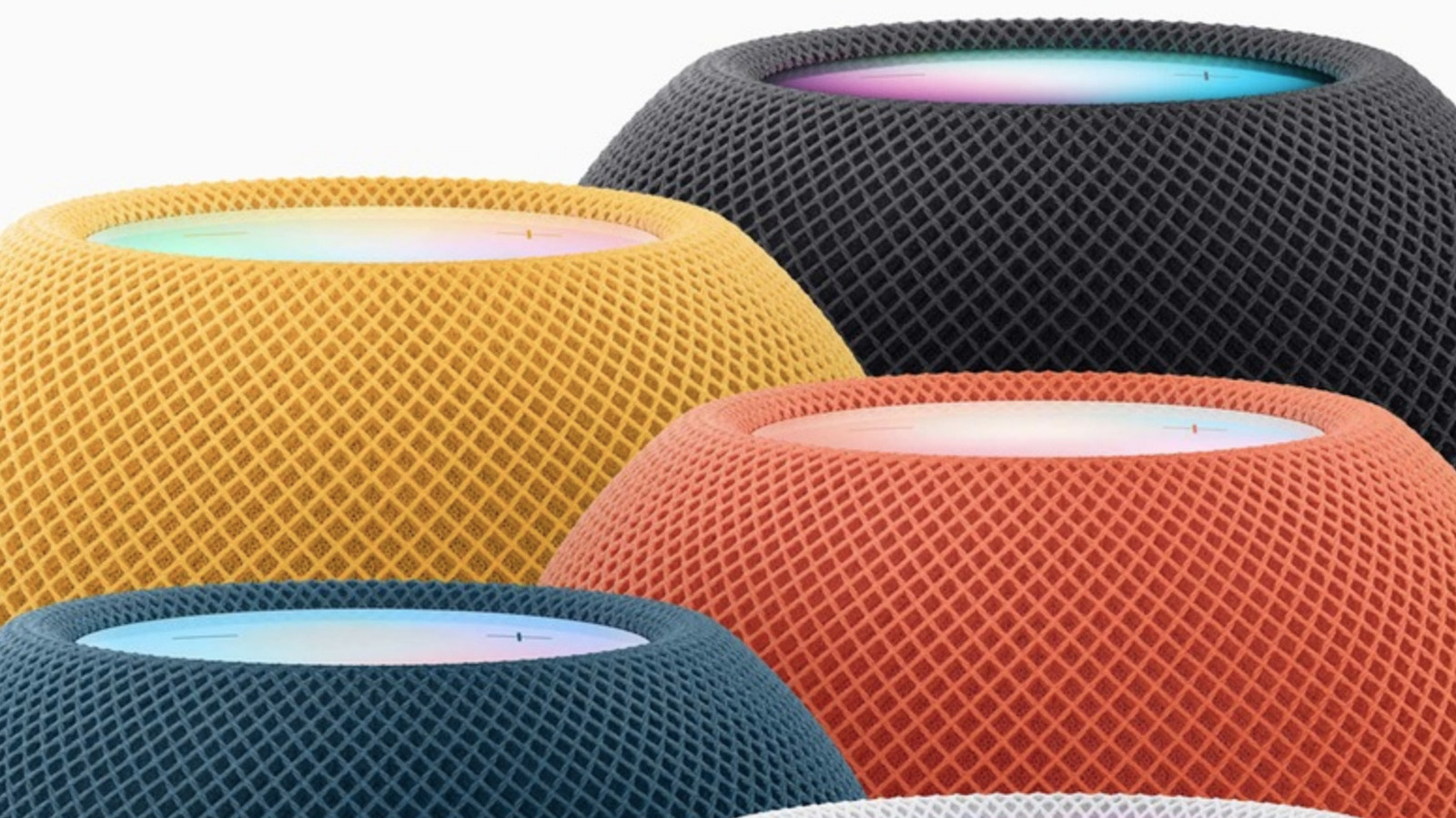
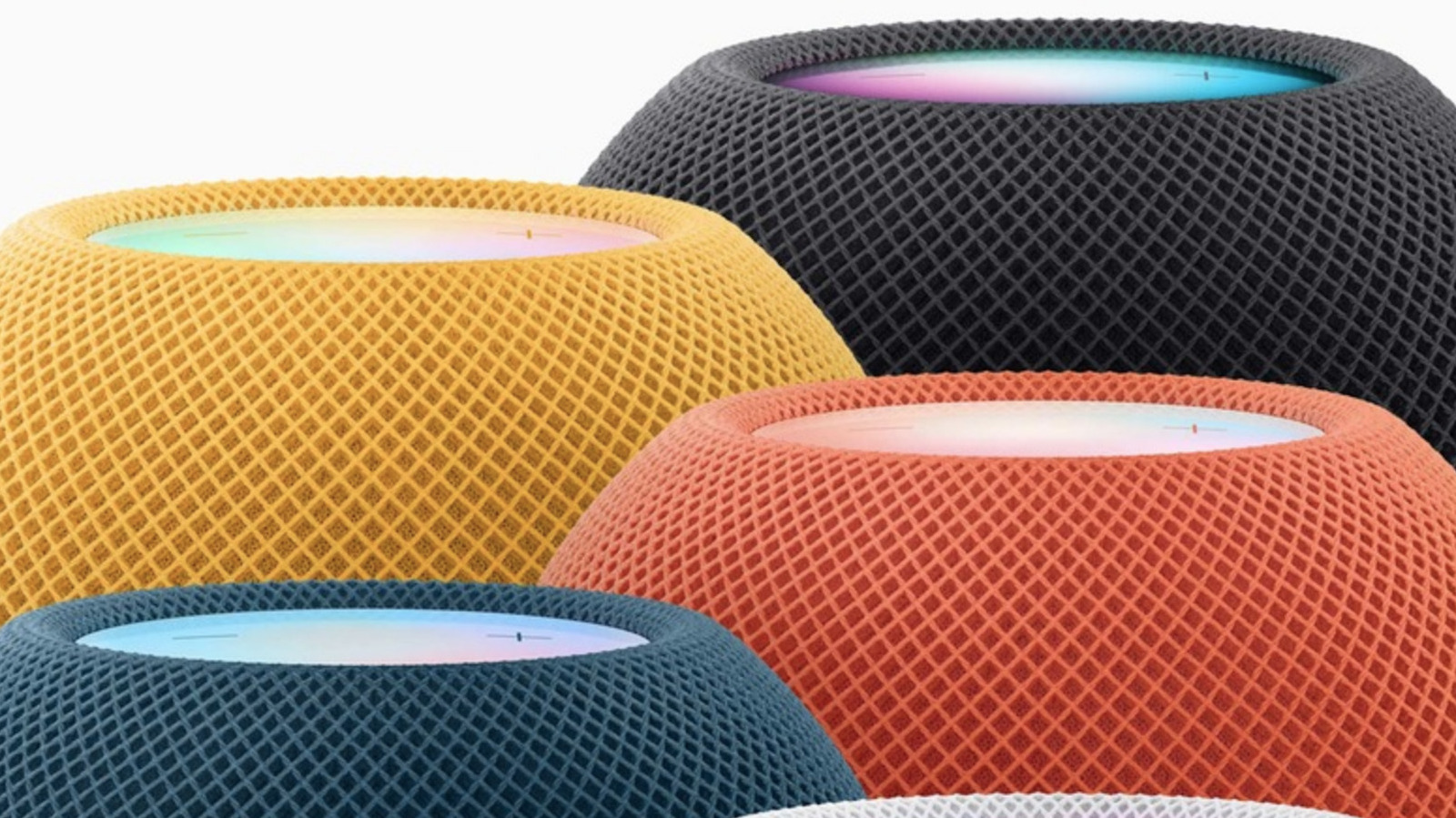
It’s been around six years since Apple has released a proper refresh of its HomePod mini smart speaker. Reports have indicated that the company is planning on launching an updated model this fall, likely to coincide with the official launch of the Siri AI assistant. We finally have some likely images of the speakers, according to MacRumors.

The publication dug up information on the device and clear pictures of the new speaker in all of its various colors while digging through Apple’s own code. To that end, the HomePod mini 2 will reportedly come in green, pink, light blue, white and black. The original speaker is available in yellow, orange, blue, white and midnight black. The overall design looks relatively unchanged. 

Advertisement

Apple’s code indicates a release in the near future. This tracks with reports that both an upgraded HomePod mini and a new Apple TV streaming box would launch later this year.

We don’t have any other details about the speaker, including price and specs. It’ll probably include a new chip, but that’s speculation given the presumed integration with Siri AI and the fact that the original speaker is six years old. 

The original HomePod mini came out in October 2020 and cost $99, before Apple raised the price to $129. There hasn’t been an actual hardware refresh since that time, but the company did release a new colorway in July 2024.

Advertisement

There’s also a rumor floating around that Apple is working on some kind of smart home hub that is being completely designed around Siri AI. Reporting has indicated that it’ll look sort of like a sliced-in-half HomePod mini, with a small display.

Advertisement

Source link

Continue Reading

Tech

New Apple Watch Ultra 4 now on sale for $779

Published

on

The lowest Apple Watch Ultra 4 price can be found at Amazon this weekend thanks to double-digit savings.

Pick up the robust Apple Watch Ultra 4 today and save $20 on select styles.

Save on the Apple Watch Ultra 4

Whether you’re looking for the translucent Ocean Band or the comfort of the Trail Loop, there are several styles that are discounted at Amazon despite launching just days ago on September 22.

Advertisement

If you don’t need the durability of the Ultra 4 or are looking for a smaller case size, there are also several deals in effect on the S12 in our Apple Watch Series 12 Price Guide.

We’ve included highlights across the 2026 Apple Watch line below.

Apple Watch Ultra 4 deals

  • Natural Titanium Case, Translucent Gray Ocean Band, GPS + Cellular: $779.99 ($20 off)

  • Black Titanium Case, Burgundy Trail Loop in M/L, GPS + Cellular: $779.99 ($20 off)
  • Black Titanium Case, Burgundy Alpine Loop Band in Large, GPS + Cellular: $779.99 ($20 off)
  • Natural Titanium Case with Sand Trail Loop Band in M/L, GPS + Cellular: $779.99 ($20 off)

42mm Apple Watch Series 12 discounts

46mm Apple Watch Series 12 sale prices

Advertisement

If you’d like to learn more about the new Ultra 4, be sure to check out our hands-on Apple Watch Ultra 4 review, which goes over the pros and cons of Apple’s rugged wearable.

Source link

Advertisement
Continue Reading

Tech

Europe keeps buying more electric cars, which now take 29% of new registrations

Published

on

Battery electric cars took 29% of new car sales in Europe in August, and across the European Union for the first eight months of the year they reached 21.7% of registrations, exactly level with petrol. Hybrids remain the largest single category on 36.6%, and the spread between Norway at 98% and Croatia at 4% is twenty-four fold.

Battery electric cars took 29% of new car sales in Europe in August, according to the International Council on Clean Transportation, InsideEVs reported. Registration data from the industry body ACEA puts the figure at 29.2% across the European Union, Britain and the EFTA countries. A year earlier it was 20.2%.

The year to date is tighter.

Across the European Union alone, battery electric reached 21.7% of registrations over the first eight months, on 1,641,333 cars, ACEA reported. Petrol reached 21.7% as well. The two are level for the year.

Advertisement

Diesel is close to a rounding error.

It took 7.3% of European Union registrations over the same period, down from 9.4% a year earlier. Petrol fell from 28% to its dead heat with battery electric. Battery electric itself rose from 15.8%, which is the fastest move of the three.

Hybrids remain the largest group.

They took 36.6% of European Union registrations to August, or 2,759,718 cars, with plug-in hybrids accounting for 10% of the market and 758,082 of those. That is nearly 15 points ahead of battery electric, which is bad news for 2035.

Advertisement

The continent does not move together.

Norway registered 98% electric from January to August, Denmark 82%, Finland 50%, Iceland 47% and Sweden 43%. Croatia managed 4%. A gap of twenty-four times sits inside a market that shares one set of emissions rules and one set of tariffs.

August was a step, not a drift.

The share sat at 25% in June and 25% in July, so August breaks a plateau rather than extending a trend. BMW Group led European manufacturers with 30% of its sales electric across the year, ten percentage points up on the same period last year. Registrations across the union rose 5.3% overall.

Advertisement

Germany has already turned.

Volkswagen is now taking more orders for electric cars than for petrol and diesel at home, and has cancelled extra shifts at Wolfsburg while adding them at Emden and Zwickau. Germany is Europe’s largest car market, and the four models driving that shift are all built in Spain. The continent is buying faster than its factories were arranged to supply.

Source link

Advertisement
Continue Reading

Tech

The Tech Drop: The most exciting new gadgets you might have missed in September

Published

on

September brought with it an avalanche of new tech. Between Apple’s Surprise and shine, Meta Connect, IFA and Dyson Unveiled, we were inundated with gadget announcements. If you’ve managed to keep up with it all, well done to you. But for anyone seeking a recap, you’ve come to the right place.

Below, I’ve rounded up all the hottest gadget announcements from September, ready for you to browse. You’ll find the most exciting of the Apple announcements, headed up by the brand’s long-awaited first foldable phone. There’s also Meta’s camera-free smart specs, which may or may not have been created in response to the unwelcome ‘pervert specs’ moniker that’s been circulating of late. Dyson’s first ever toothbrush is there, too, in all it’s wildly over-engineered glory. And that’s just the start of it.

Source link

Advertisement
Continue Reading

Tech

An Imminent Google Satellite Test Is Another Step Toward Data Centers in Space

Published

on

On Oct. 1, Google plans to hitch a ride on a SpaceX Transporter 18 rideshare flight, entrusting the mission with a test satellite it hopes will prove durable enough to start doing some light AI work while orbiting in space.

This isn’t exactly putting a data center in space — a much-hyped concept that AI entrepreneurs like Elon Musk have been touting over the last year —but it’s not not doing that. The satellite, which The New York Times reports is called “MWP” and which it describes as about the size of a refrigerator, won’t be running any huge medical research studies or beaming back streaming data. It will be low-powered, running off solar power, and designed just to test the concept of AI computation in space. Google is running the test in partnership with the satellite imaging company Planet and as part of Google’s Project Suncatcher initiative, which was announced late last year.

In a blog post that includes videos showing some of the preparation Google’s research teams have done — such as making sure that TPUs (a type of AI chip) can withstand the vibration of launching into space — the company characterizes this test as a small early step in a long-term moonshot: “exploring whether space could one day host scalable machine learning infrastructure.”

In a post on X, Google CEO asked, “Can our TPUs survive and operate in space? Well, we’re going to find out.”

Advertisement

Finding energy for AI in space

Google explained in the post that one reason it’s going to try crunching AI data in space involves energy. Satellites can access eight times more solar power than earthbound structures, providing a potentially huge energy resource for space data centers, which could bypass the backlash facing data centers across the country.

Advertisement

“Eventually,” writes Travis Beals, Google’s senior director for Paradigms of Intelligence, “it could be possible to link together multiple constellations of satellites, allowing them to manage larger AI workloads while in orbit.”

But that could be easier said than done. Companies like Google, SpaceXAI and Nvidia are all looking to deploy their AI technology beyond the Earth’s surface, but face some basic physical challenges: Any data center satellites would need to be built to withstand radiation, extreme temperatures and the physical stress of getting there. They’d also need to avoid dangers from an increasingly crowded orbital sky filled with other satellites and debris.

Google seems to be moving fast, with plans to continue advancing Project Suncatcher with some tangible results in the next few years; that’s assuming its October test is successful, and things keep moving forward. One of its next milestone goals, for 2027, would be to start testing high-bandwidth laser links after launching two more AI satellites with Planet. Communicating with lasers, Beals said in his Google post, is a lot harder than it sounds. “Maintaining the necessary connection requires extraordinary precision, similar to hitting a coin-size target from miles away while both points are in motion,” he said.

A data center backlash solution?

One reason space data centers sound so attractive to tech companies is a massive public backlash against building new data centers or completing ones that are in the process of being built. A pro-data center PR campaign backed by tech giants may not be enough to counter negative sentiment and protests aimed at data centers that help enable data-hungry AI technology.

Advertisement

Protests have sprung up across the country over energy and water use, pollution and the potential physical effects on those who live near data centers, among other issues. It could also be a point of voter discontent heading into this year’s midterm elections.

Putting data centers in space, presumably, could sidestep the issue of communities not wanting data centers nearby. But it will be costly, and there’s no guarantee that the business model of data centers in space will pay off enough for tech companies to make it viable, said Mahdi Eslamimehr, executive vice president at Quandary Peak Research.

“Proving that chips work in orbit is not proving a business model,” Eslamimehr said, and it won’t lower anyone’s electricity or water bills anytime soon or replace current data center projects, even if the business of data in space proves workable. “I welcome the experiments, but I expect everyday AI services to remain overwhelmingly dependent on terrestrial facilities in 2027 and 2028,” he said.

“A promise about 2035 does not pay an electricity bill in 2026,” he said.

Advertisement

Source link

Advertisement
Continue Reading

Tech

ProfessorBoots 3D Printed FPV Excavator Puts You Straight in the Operator Seat

Published

on

3D-Printed FPV Excavator Camera
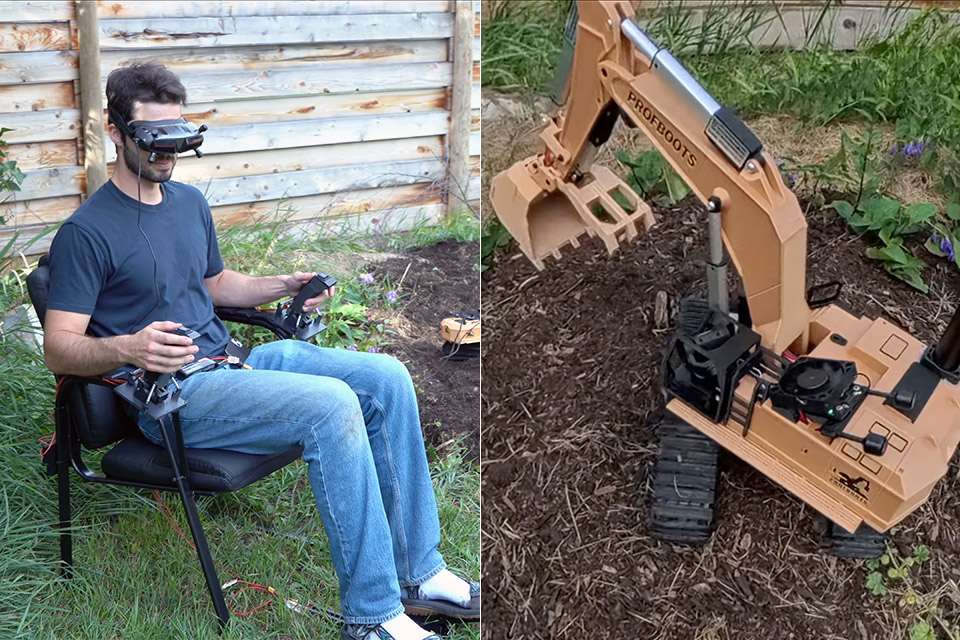
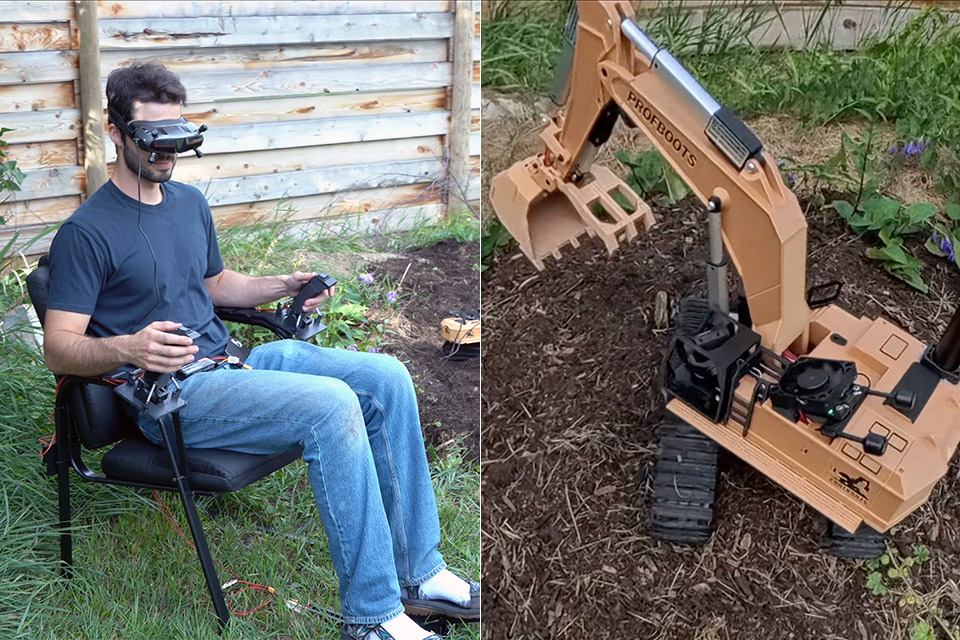
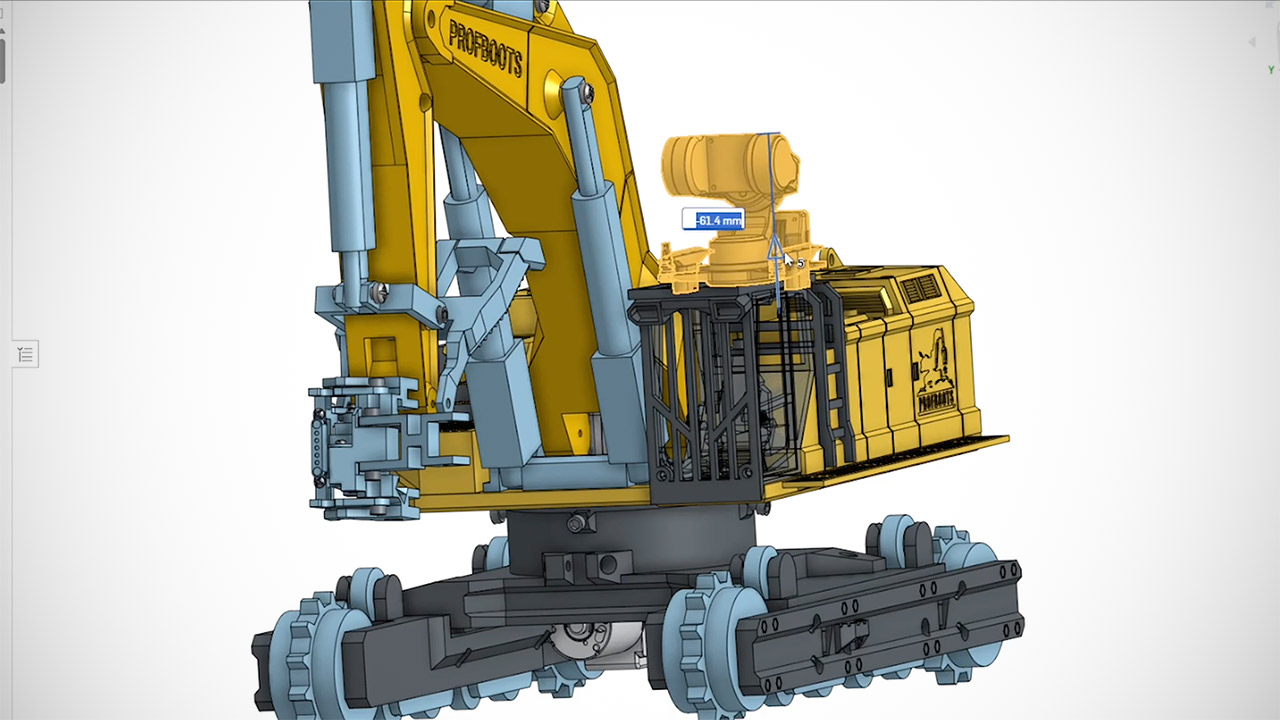
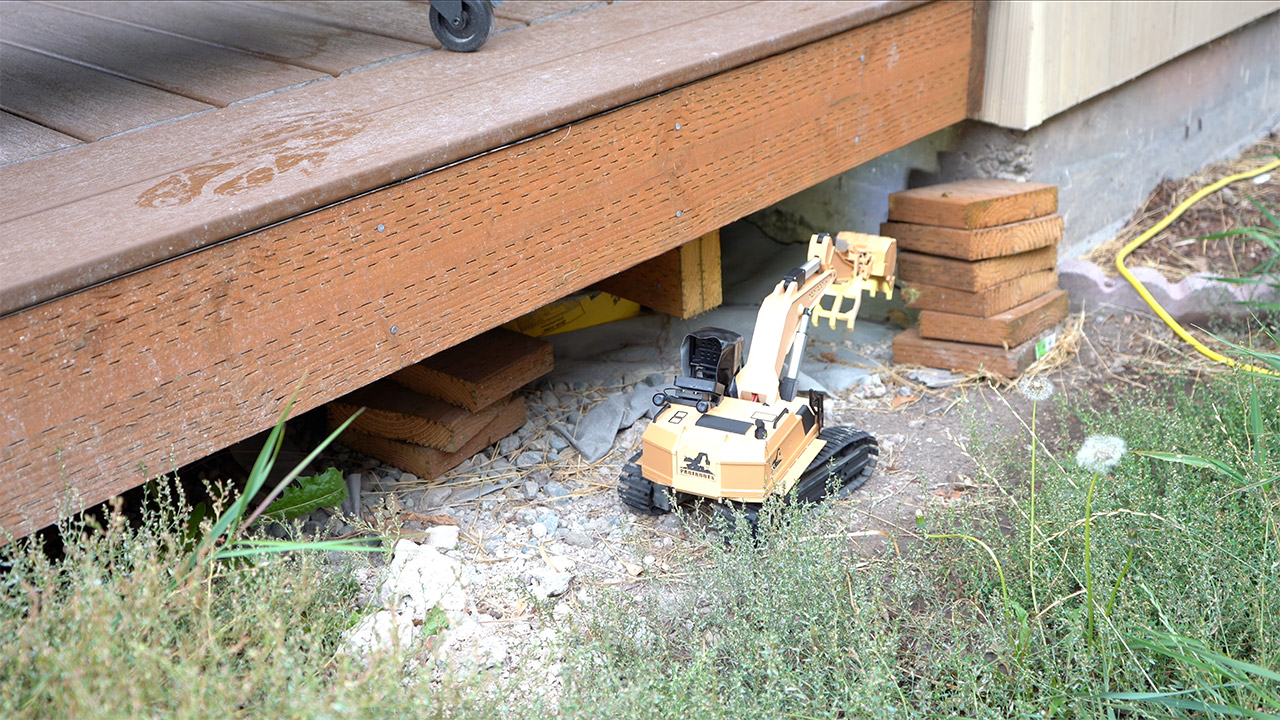
ProfessorBoots has tons of experience 3D-printing remote excavators that can climb boxes, scoop dirt, and crush cans. His latest version parks a three-axis camera in the cab and wires a chair that copies the layout of a full size machine, so a look to the left turns the camera left and a pair of pedals drive the tracks. The result is a backyard digger you operate as if you were sitting in a Caterpillar, only without diesel and without twenty acres.


CADDXFPV sent him a GM3 combo in February, a 46-gram gimbal that tracked head movements using Avatar HD goggles and held a 19-millimeter camera by pitch, roll, and yaw. He installed the first unit on a wheel loader and tested the Goggles L, which cost $199. At first, gazing around simply turning his head seemed bizarre in the greatest possible ways. The articulated steering on that loader shifted the vision in ways that his head did not, and the original cab simply would not fit over the camera. He let the idea lay for a time until that larger, tougher excavator was ready.

Sale


Bambu Lab A1 mini 3D Printer + LED Lamp Kit, Ready-to-Use for Beginners
  • A1 mini + LED Lamp Kit for Creative Light Projects: Bring your ideas to life with the included LED Lamp Kit. Simply print compatible lamp models and…
  • The Perfect 3D Printer for Beginners: A1 mini 3D Printer is designed to make 3D printing easy from day one with automatic calibration, simple setup…
  • Experience the Bambu Lab Ecosystem: Access MakerWorld’s huge library of ready-to-print models, manage prints through the Bambu Handy app, and enjoy…

3D-Printed Excavator Camera
Fitting the gimbal required a significant expansion of the cab. He imported the camera model into CAD, cloned the previous cab, removed the most of the floor, and created a new frame with a hint of design. Because the video transmitter warms up enough to potentially burn skin, he added a printed enclosure to keep a fan above it rather than beneath the lens. An aesthetic bar across the front was supposed to clip the camera when tilted, but it didn’t work out, so he ripped it out, checked clearance, and reprinted the part. The FPV gear draws power from the same battery as the excavator and operates independently, thus the same camera works on both the ESP32-robotic and the conventional radio versions.

3D-Printed Excavator Camera
First-person view made some jobs much easier, like being able to glance down and see the pins instead of guessing from across the yard while coupling a bucket or thumb certainly sped things up. In reality, he drove the machine to a neighbor’s card shop with a $10 payment and a handwritten message simply because he could. Nobody answered the door on his first visit, but a later knock ultimately got him in. Many RC builders do not get to compose sentences like this.

3D-Printed Excavator Camera
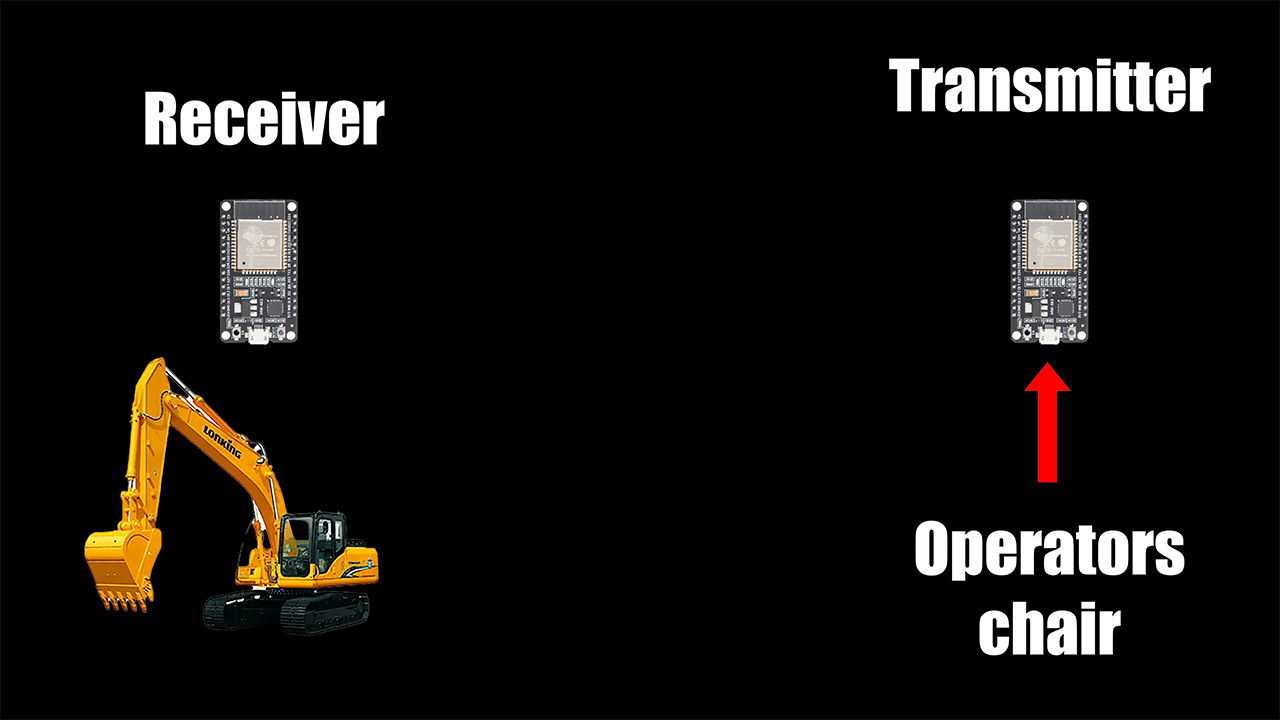
Even with the handheld transmitter, he felt like he was playing with a toy. He desired swing and dipper on the left stick, boom, bucket, and thumb on the right, and footprints on his feet. Early on in the project, two ESP32 boards communicating via ESP-NOW accomplished this without the need to hack open a radio. Early joysticks were simply assembled from a game controller with some printed extensions and springs purchased from Harbor Freight. The joysticks were dead in the middle, making fine motions clumsy, and the springs were simply too soft overall. He rebuilt the sticks with 10K potentiometers and bearings, superglued down the handles, and replaced the soft springs with firmer ones. The code now samples the resting point at boot-up and sets it as the center, so worn pots and printed parts that shift slightly over time do not cause problems.

3D-Printed Excavator Camera
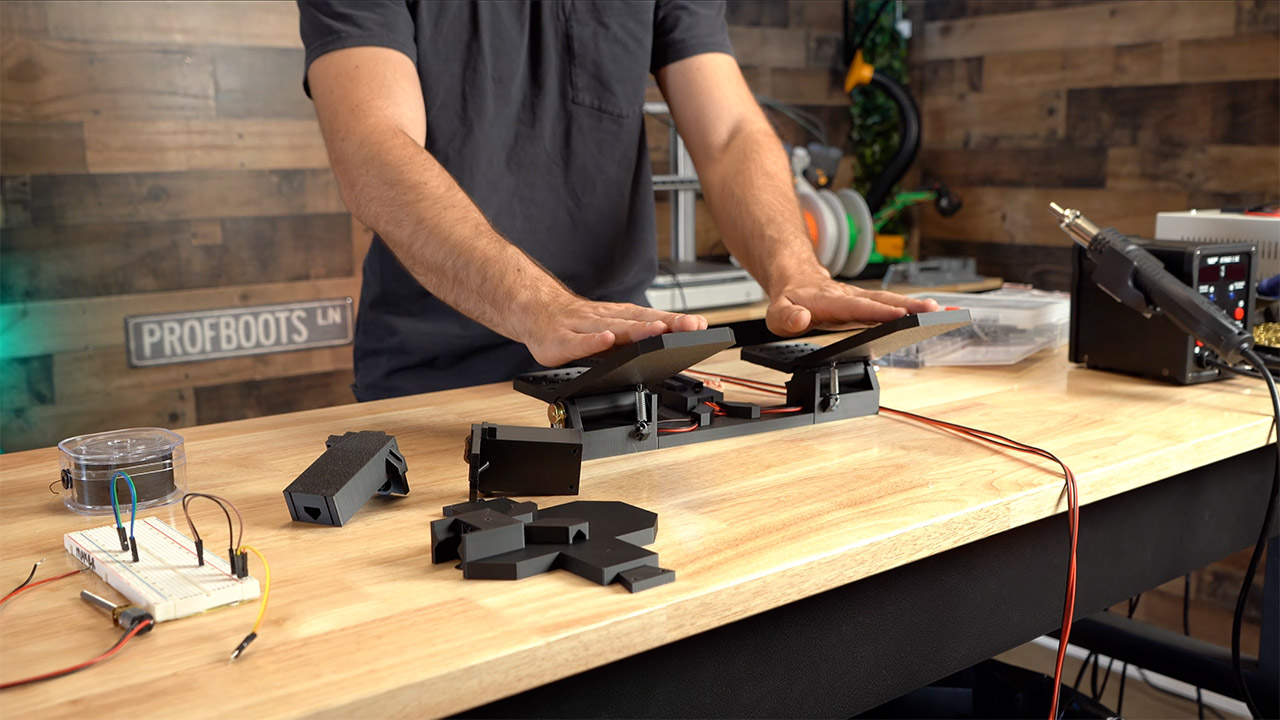
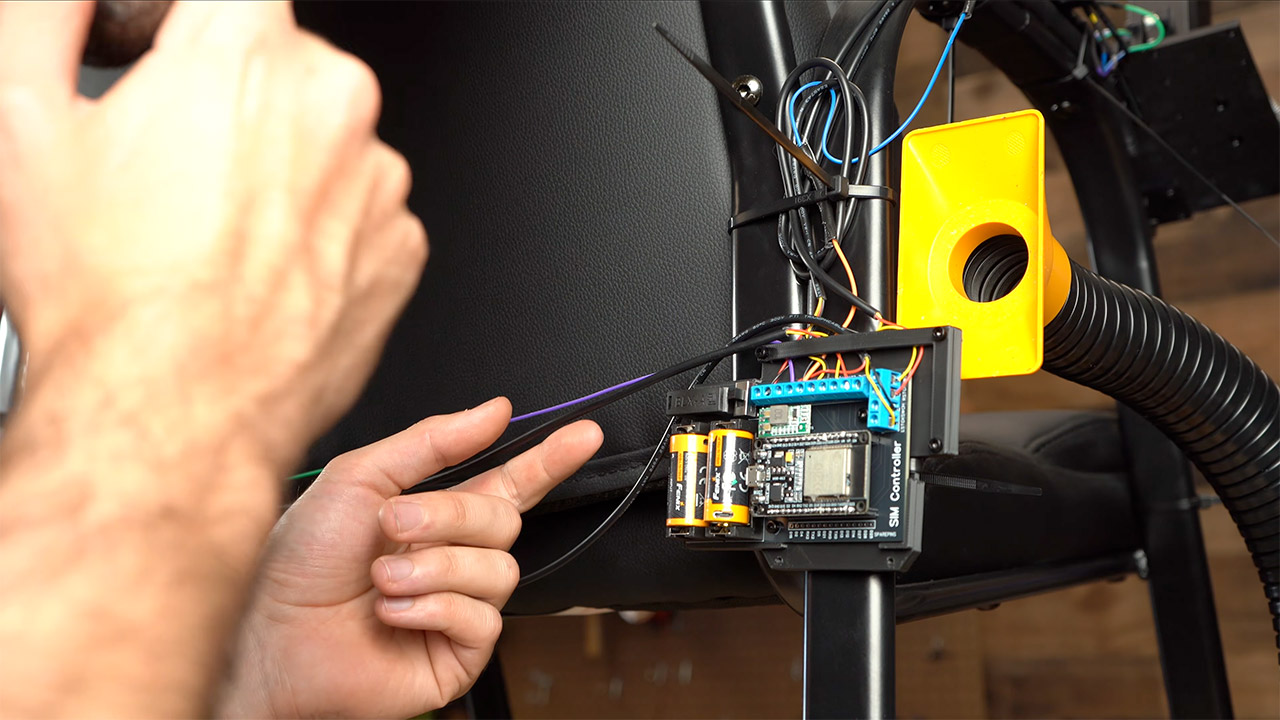
Pedals began with a basic potentiometer pivot that allowed for proportional speed control. What happened next was a bit of a hack: both feet lifted the entire base off the ground. Then he added a printed lock, moved the spring supports further out to enhance resistance, and replaced the soldered wires with tidy plugs, allowing the entire pedal unit to be easily removed from the chair. It turns out that the signal dropouts he was seeing were caused by a residual board setting from the Bluepad32 days. Swapping the sketch to a standard ESP32 development board significantly reduced the lag. Later, a small custom PCB arrived and resolved the tangled wiring by mounting everything on neatly organized terminal blocks. He also added a fuse, battery mounts, and a power switch to prevent anything from being soldered directly to the chip.

3D-Printed Excavator Camera
The chair’s PLA began warping in the summer heat, pulling a spring plate completely out of shape. So he recreated the chair pieces in PETG but preserved the existing pots and bearings. Not long after, he created a desk-mounted version with the same controls, but without the office chair. Yeah, it turns out you can build the entire thing for about $60, assuming you already have an excavator and a chair. To be honest, he prefers the cheaper Goggles L more than the costly pair he purchased later. The pricey ones leaked light and required some printed shims to fix.

3D-Printed Excavator Camera
The ESP-NOW has a somewhat lesser range than a typical radio, but it nevertheless managed to control the machine in the yard from indoors. The problem was that it only worked for about thirty minutes before becoming clogged with dirt. His brother tested the chair and reported that it felt similar to a real excavator. Later, he used the same goggles to check under a porch to see if a neighbor’s cat was hiding; he had to tape a headlamp to the goggles to get a good look. Voltage sag killed the feed on the first pass, however fresh batteries fixed it no trouble. Unfortunately, that particular location wound up on a shortlist alongside crawl spaces and wasp nests.

Advertisement

Source link

Continue Reading

Tech

Quad Platina Review – Trusted Reviews

Published

on

Verdict

The Platina shuns the comforting retro aesthetic of some other Quad devices to encase an amplifier that combines clean, modern looks with an absolutely up to the minute spec and genuinely superb performance. It’s not cheap but it’s worth every penny. This is a spectacular amplifier and one that has to be on any shortlist at the price point

  • Sounds superb with huge reserves of power

  • Excellent connectivity

  • Beautifully made and finished

  • No on board streaming or EQ

  • No direct input selection

  • Quite big

Key Features

  • Trusted Reviews IconTrusted Reviews Icon

    Advertisement

    Review Price:
    £3500

  • Power

    Advertisement

    200 watt amplifier

  • Connections

    Advertisement

    Selection of analogue and digital inputs

  • TV

    Advertisement

    HDMI eARC connection to a TV

  • Turntable

    Advertisement

    MM/MC Phono stage

Introduction

Hi-Fi is an industry with a strong line in long running and iconic companies but, even in this context, Quad stands out. One of the genuine ‘in at the ground floor’ home hi-fi brands, their output includes an impressive number of innovative and iconic products.

As you might expect, when you have a heritage like that, the temptation to show it off is quite a strong one. When I looked at the Quad 3 recently, it fairly drips with details that speak to Quad’s huge heritage.

Advertisement

What you see here isn’t that. The Platina range has been designed and styled to remind everyone that Quad knows their way around state of the art perfectly well thank you very much. As well as those tidy and elegant lines, it boasts a specification that is both bang up to date and looks pretty impressive, even judged at the Platina’s asking price. 

Of course, Quad is the only company trying to entice you to buy a well specified and very powerful integrated amp so we need to see if, once you peel the retro away, if Quad can deliver the sort of sonic experience required to make you want to part with your hard earned cash.

Advertisement

Price

The Quad is available in the UK for £3,500. It is sold through a significant spread of retailers and there is the option to buy it online should you choose to. In the USA, it can be had for $5,495. In Australia it costs $7,999 AUD.

Advertisement

The amp has launched at the same time as a matching streamer (the Platina Stream) and will be joined in time by a matching CD transport as well. If you like the look of the Platina Amo, you can have a whole stack of equally sleek looking devices to go with it.

Design

  • Sleek, clean and modern…
  • …and bigger than you think
  • Excellent display and menu system
  • No direct input selection though

The Platina is in direct contrast the Quad 3 I looked at recently. It looks absolutely up to date and it does so in an understated but very appealing way. Nothing about the Platina shouts at you to grab your attention but the more time you spend with it, the more it appeals.

The standard of build and finish is genuinely outstanding and it’s delivered in a way that is wonderfully understated. It’s a device that sits there being utterly and compellingly unobtrusive but you, the owner, the person who interacts with it, gets to remember how special it actually is.

Advertisement

Quad Platina displayQuad Platina display
Image Credit (Trusted Reviews)

It also looks modern but keeps some lovely little touches from previous Quad models. That long standby button is a nod to the 99 Series components that were produced at the turn of the century and other detailed aspects hark back to then as well. 

It’s cleverly done because if you don’t give a monkeys about any of this, it isn’t overt, just there if you know. One of the more surprising parts of the Platina is that it’s quite a bit larger than you might expect. It looks quite compact but it’s actually 445mm wide. Combined with the beefy 17 kilo weight, it’s a more imposing thing than the pictures might suggest.

Advertisement

At the front of the Platina, you’ll find a display and menu system. The interface that the Platina uses feels like a step forward over anything I’ve tested from IAG with a similar setup.

Quad Platina display detailQuad Platina display detail
Image Credit (Trusted Reviews)

It’s slicker and more intuitive and it encourages you to adjust things to see what the effect they have. Such is the amount of things that the Platina does, it could have wound up feeling a bit daunting but the business of deciding how sensitive you want the digital inputs to be or whether you want to trim the level of different inputs so they have the same output volume can all be done very easily.

Advertisement

Not everything is quite so perfect though. As I shall cover, the Platina has plenty of inputs; ten of them in fact. These can be accessed by the remote control and front panel but they can’t be accessed directly. Depending on the connections you wind up using, you might find your inputs are an irritating distance apart on the cycle.

Quad Platina remote controlQuad Platina remote control
Image Credit (Trusted Reviews)

Specification

  • 200 watts into 8 ohms
  • Sophisticated digital board but no Bluetooth
  • Balanced and unbalanced analogue connections
  • Clever phono stage and potent headphone out.

Beneath the simple good looks of the Platina lurks a serious amplifier. How serious you ask? Well, it disposes of no less than 200 watts into 8 ohms which is a pretty serious number. This increases to 300 watts into 4 ohms and the circuit can deliver a peak current of 20 amps. In terms of old fashioned Class AB power, this is a lot.

There’s more to this amp than brute force too. It’s a dual mono configuration device built around a 630VA toroidal transformer that was specially designed for the Platina Integrated.

Advertisement
Quad Platina chassisQuad Platina chassis
Image Credit (Trusted Reviews)

Advertisement

This combines a large filter capacity in the power supply (44,000uF per channel) with cascaded voltage regulators. In the output stage it has bespoke capacitors developed in collaboration with Wurth Elektronik. It’s also fully balanced from the front to the back, with Quad going to the effort of fitting a four channel rotary encoder for the volume as it simplifies the process of keeping the signal balanced throughout.

This balanced design is of more than abstract interest too. The digital input section of the Quad uses an ESS ES9038PRO DAC chip as the basis for this. This is an eight channel DAC, it is run in dual differential mode to try and eliminate errors that creep in (by checking the two streams against each other) and still allow for a balanced output to be sent to the preamp. When you consider the Platina’s specification it effectively means that every single digital input as a balanced source for that balanced amplifier.

Quad Platina connectionQuad Platina connection
Image Credit (Trusted Reviews)

There are two optical and two coaxial inputs supporting a USB audio input on a USB-C connection and an HDMI eARC input. Something that’s genuinely unusual is that there is both an optical and coaxial output on the back as as well. I genuinely cannot remember the last time I saw this so if you need such a thing, the Platina might suddenly shoot up your shortlist. 

The USB input can handle PCM to 768kHz and DSD512 with the other inputs topping out at 192kHz. Something that is mildly interesting is that Bluetooth is not present on the Platina which is logical to a point but I’m sure at least one would-be owner will miss it.

Something to bear in mind here is that, while this is a potent and capable piece of decoding hardware, it is not a self-contained solution. The Platina has no streaming module on board so, even though it can do the decoding, it still needs something to send it the signal in the first place.

Advertisement

Advertisement

I don’t doubt that the matching Platina Stream will be a superb device but at £3,000 it’s a pricey addition. Like the issue with Cambridge’s EXA and EXN100, the streamer feels over specc’d for a device partnering an amp with a digital board as good as this one but you are going to need something.

Quad Platina more connectionsQuad Platina more connections
Image Credit (Trusted Reviews)

The analogue section of the Quad is usefully comprehensive too. A single XLR input is supported by a pair of RCA connections and there are matching XLR and RCA outputs that can be selected as pre-outs or tape loops depending on your requirements.

Don’t go thinking you’ll need to use one of these inputs for a phono stage either because the Platina has one and very comprehensive it is too. It’s a JFET (junction field-effect transistor) based phono stage that supports moving magnet and moving coil operation.

It can have its gain adjusted through three different settings, with impedance settings for moving magnet and moving coil models. Internal MC phono stages are rare things on integrated amplifiers and ones with adjustment are rarer still which puts the Platina in a very select group of devices. 

Advertisement

As a final extra ribbon to an already fairly enticing bow, the Quad has a dedicated headphone amp that outputs via a 6.35mm socket. It’s a slight shame you can’t have a balanced out too but this is realistically not the end of the world.

Advertisement

Performance

  • Effortlessly powerful
  • Genuinely superb bass
  • Excellent levels of tonal realism from all inputs
  • Phono stage performance is excellent
  • Fine partner for TV work- once the CEC is switched on

Sometimes, we can get a bit lost in abstract power figures. It’s all very well me telling you that that the Quad spits out 200 watts and does so with next to no distortion but what does that mean in reality?

What it means is that the Quad can drive pretty much any speaker it’s likely to encounter to pretty much any level you fancy. You’ll need to be careful with the levels too. When we hear something as ‘loud’, a lot of those triggers are created by distortion.

As the Quad doesn’t do very much of that, you can sit there having a whale of a time and only realise quite how loud things are when someone comes in the room to sternly tell you quite how loud it is.

Advertisement
Quad Platina dialQuad Platina dial

I’m not done there either. For most of the time testing the Platina, I have used a pair of Focal Kanta No1 standmount spekers. These are talented and exceptionally revealing; excellent for showing what an amp is doing right and wrong but they can often feel a little bit lacking in the bass department.

Advertisement

Run Leftfield’s wonderful Space Shanty through them with the Quad delivering the power and this perception rapidly vanishes. The Quad combines its power with superb current delivery to extract truly sensational low end from the Kanta No1.

It’s not simple brute force either. Listening to the stunning (if incredibly bleak) The Greener Pasture by Peter Oren sees the Quad deliver a superb performance. Oren’s deep, almost funereal vocals, have a richness and presence that grab and hold your attention.

The sparse instruments and guitar that supports him through the title track are completely convincing. The clever part of this for me is that trying to work out where the digital ends and the analogue begins is extremely tricky because it is so tonally even and cohesive.

Advertisement

Something else I’ve come to hugely admire about the Quad is that when you give it rather more rough and ready recording, there is enough overall forgiveness to ensure that you can continue to wind the level on and enjoy yourself.

You can listen to Placebo’s Meds, specifically the track Infra Red; a track almost broken by the amount of compression applied to it and the Platina manages to not only make it listenable but get to the actual (brilliant) musical core of things. If your collection includes some less than stellar recordings, this is an amp that should keep you listening to them.

Quad Platina build qualityQuad Platina build quality
Image Credit (Trusted Reviews)

Advertisement

The phono stage is very impressive too. While I don’t feel that ‘60dB’ on the Quad’s menu is quite the same as 60dB from the external phono stages here, when you combine it with that herculean power output, there is enough headroom.

It means that listening to the dense and atmospheric Electric War by Little Barrie is engaging and wholly convincing, unpicking the arrangements so you can follow them better without losing their character. So long as you don’t have a cartridge with really unusual impedance numbers, this is more than a convenience solution.

Advertisement

I’ve also really enjoyed using the Quad with my TV as well. So long as you have remembered that you need to switch the CEC function (that allows it to turn on and off with the screen) on manually, it’s a big, confident and effortless partner for whatever you choose to watch.

I ploughed through a couple of episodes of The X Files for nostalgia’s sake and was consistently impressed by how it fixed dialogue on screen while expanding effects beyond it. What is genuinely impressive about how this fits into the wider spec of the Quad. It feels like a natural extension of what the Platina is designed to do rather than a bolted on extra to tick a feature box on the website.

Should you buy it?

The fundamental quality of the Platina is easy to see. This is a powerful, superbly specc’d and wonderfully musical amplifier that is very hard to rival under five grand. It has connections for days and does justice to all of them. It’s not cheap but it’s still excellent value.

Advertisement

At the price that the Platina is sold for, some rivals from companies like Arcam and NAD are offering the means to work without source equipment at all which, if you don’t have any source equipment already could be very appealing. They also have niceties like room correction which the Quad does without.

Advertisement

Advertisement

Final Thoughts

What really makes the Quad shine is the strength in depth. It does a huge amount of things but, more importantly, there’s barely a hint of weakness to any of those features.
 
Often a product recommendation will state that the product is suited to a specific use case as one aspect of the spec is clearly better than the other parts. Here, the Quad can slot into a variety of different system types and go on to excel in all of them. There are no caveats in the Platina’s specification.

How We Test

We test every amplifier we review thoroughly over an extended period of time.

We use industry standard tests to compare features properly. We’ll always tell you what we find. We never, ever, accept money to review a product.

Advertisement

Find out more about how we test in our ethics policy.

  • Tested for several days
  • Tested with real world use

Full Specs

  Quad Platina Review
Manufacturer Quad
Size (Dimensions) 445 x 348 x MM
Weight 17.1 KG
DAC ESS ES9038Pro
Integrated Phono Stage Yes
Release Date 2025
Amplifier Type Integrated
Frequency Range – Hz
Amplification Class AB
Remote Control Yes
Inputs Two balanced XLR, two RCA, MM/MC phono, two optical, two SPDIF, USB, HDMI ARC
Outputs RCA, Stereo pair, XLR, optical, coaxial, 12V trigger
UK RRP £3500
USA RRP $5495
AUD RRP AU$7999

Source link

Continue Reading

Tech

Databricks buys Row Zero to bring governed spreadsheets to Genie

Published

on

Databricks has acquired Row Zero, bringing a governed, live-data spreadsheet into Genie just weeks after the company’s valuation hit $190bn.

San Francisco’s Databricks has acquired Row Zero, a spreadsheet tool built to connect business teams’ spreadsheets directly to live, governed data in a move to expand the capabilities of Genie, its AI coworker product. No financial details have been disclosed.

The deal will give Genie a native spreadsheet interface, letting users explore data, model scenarios and collaborate directly inside a familiar, Excel- and Google Sheets-like environment. Unlike a typical spreadsheet, Row Zero – which was founded by former AWS and Tableau engineers – connects to live, governed data sources, with queries honouring each user’s permissions and every interaction auditable, according to Databricks.

The company said the acquisition addresses what it called “spreadmarts” – ungoverned spreadsheet files that teams have long relied on to store or share data – which it argues create security and governance gaps as businesses deploy AI agents on sensitive company data.

Advertisement

“As more finance, operations, and go-to-market teams adopt Genie, incorporating a seamless spreadsheet experience is a must-have,” said Patrick Wendell, co-founder and VP of engineering at Databricks.

“When finance started doing all their work with Genie, we noticed that they were combining Genie with a Live Cloud Spreadsheet called Row Zero,” Databricks CEO and co-founder Ali Ghodsi said in a social media post. “This combination is really powerful. We met the Row Zero team and were blown away.”

Row Zero founder and CEO Breck Fresen said the team built the product because it wanted spreadsheets that could “seamlessly connect to enterprise-scale data with governance and security at the core”.

Row Zero will be available to Databricks customers across all major clouds and will continue to support data sources beyond Databricks’ own platform, the company said.

Advertisement

The acquisition follows a period of rapid growth for Databricks. The company closed a $5bn funding round in August at a $190bn valuation, up from $134bn just six months earlier, with backers including Coatue, Blackstone and MGX.

Founded in 2013, Databricks works with more than 20,000 organisations, including Adidas, AT&T, Bayer, Block, Mastercard and Unilever, and employs more than 500 staff across the UK and Ireland as part of its EMEA operations, headquartered in London.

Don’t miss out on the knowledge you need to succeed. Sign up for the Daily Brief, Silicon Republic’s digest of need-to-know sci-tech news.

Advertisement

Source link

Continue Reading

Trending