Hollywood studios are turning to film schools for graduates who already know how to use AI video tools, rather than training their own staff, Semafor reported on Thursday.
“How do we find people who already know how to use this?” studios are now asking, Runway chief executive Cristóbal Valenzuela told Semafor.
Runway, which makes AI tools for generating and editing video, has helped build that pipeline. It announced its first university course, with NYU’s Tisch School of the Arts, in December 2024. The NYU Tisch course began in January 2025 at the Martin Scorsese Virtual Production Center.
USC’s School of Cinematic Arts also runs a graduate AI filmmaking course that uses Runway’s tools, according to the company. In addition, Semafor reported that courses using Runway are taught at the Rhode Island School of Design, MIT, and Harvard, and at universities in Europe and Latin America.
Google and OpenAI run their own programmes. In September 2025, Google Labs launched Flow Sessions, which gives selected filmmakers access to its Flow AI filmmaking tool, along with mentoring and training.
Advertisement
OpenAI, meanwhile, teamed up with Tribeca Studios on a year-long programme. It funded independent filmmakers to make short films with OpenAI’s tools, with premieres planned for the 2026 Tribeca Festival.
Filmmaker Brad Tangonan, who took part in Flow Sessions, told Semafor he expects AI skills to become a requirement for working in film.
“You’re going to have to learn how to use [these tools] if you do want to be in the industry,” Tangonan told Semafor.
The hiring push comes as studios use more AI in production. Netflix said it used generative AI in about 300 titles this year, and it has asked all its staff to build AI fluency.
Google has also moved closer to film studios. In June, it invested $75m in A24 and set up an AI filmmaking research partnership between the studio and Google DeepMind.
I upgraded my Mac to macOS Golden Gate 27.0, keen to see what Apple AI could deliver and, in particular, the promise of the more powerful Siri AI, available as a standalone app.
I’ve lambasted Siri in the past for not being up to it, failing to deal with even the most simple of requests, but Siri AI (available as an opt-in beta) suddenly starts to make a lot of sense and it’s a lot more powerful than you could expect, although with a few little issues.
Better email management
The default Siri app is terrible at dealing with emails. I asked it to list any important emails, but it only suggested an email from 2011 with the word ‘important’ in the subject line. Hardly what I wanted.
With ChatGPT connected to my Exchange account, I get much better results. Asking the same question flagged some important emails that I’d missed, including a recent invoice that I needed to pay.
Advertisement
However, after upgrading to Siri AI on beta, things got a lot better. This gets a dedicated chat-window app, not dissimilar to the ChatGPT one for macOS, where you can start different conversations. But Siri is also baked into Spotlight search.
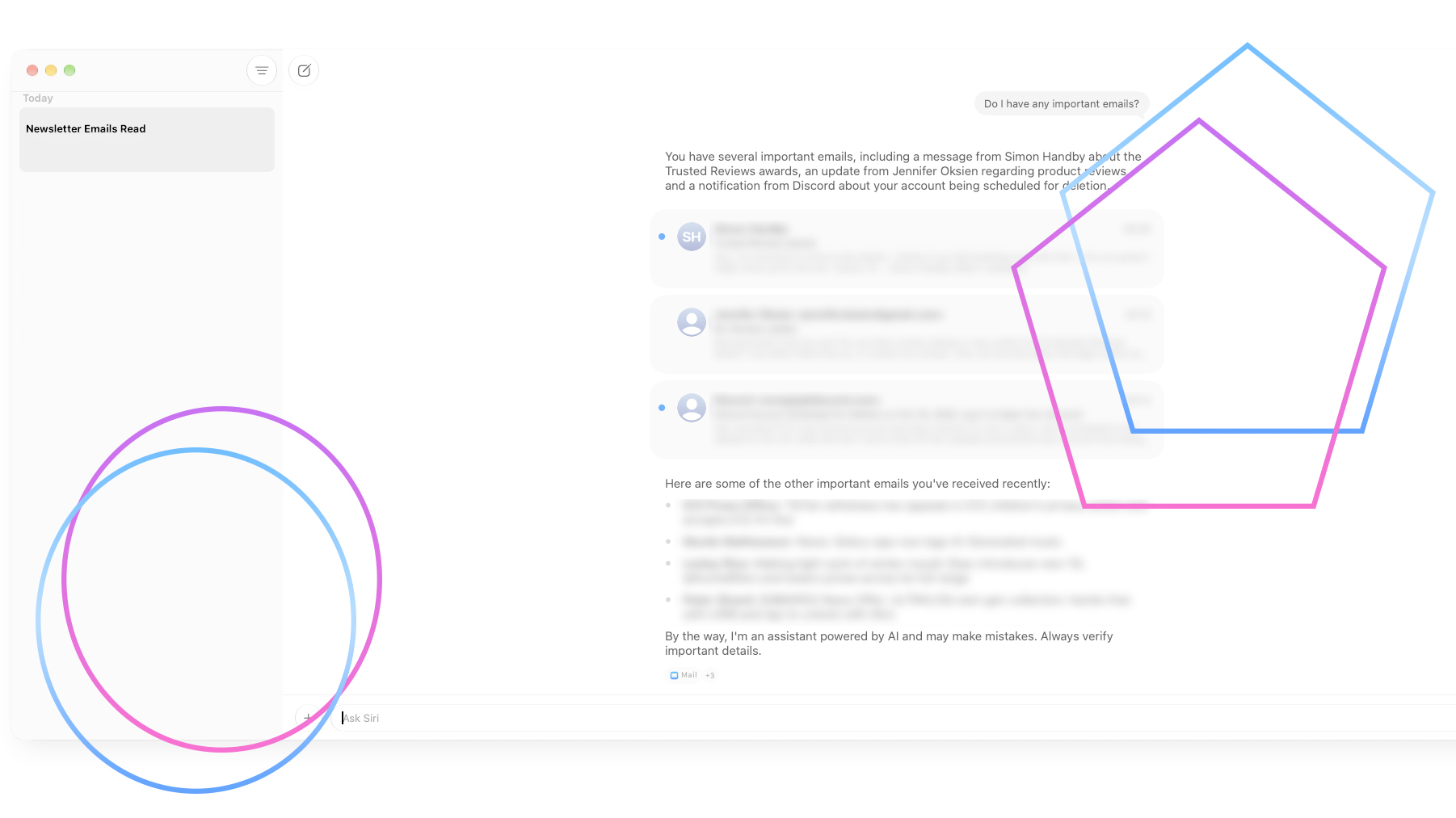
I tried again and asked about important emails, and this time got some relevant results from across all of my email accounts. And, the advantage that Siri AI has is that it provides links to the emails in the Apple Mail account, so I can open them; ChatGPT can list the emails but provides no way to open them, so you have to open your email app and find the email.
Advertisement
Siri AI is also capable of doing bulk tasks. I asked it to find any newsletter/marketing emails and then mark them as read. That quickly whittles away my emails and makes it easier to do with what’s left.
Advertisement
Intelligence needs to be available at the point you need it
Siri AI is clearly very capable, but I think it needs to be available when and where you need it. For example, my old school is hosting a Macmillan Coffee Morning on September 25 from 10:30am to 11:15am.
If I open the email, the Mail app highlights dates and times, so clicking on them makes it easy to make a calendar event. However, because of how the email was written, the event date is in a separate sentence from the time.
Because of this, the two items are highlighted separately, giving me the choice of creating a calendar event for the right time but wrong date, or the right date but wrong time.
The Summarise feature automatically puts the information together, but doesn’t make it a link to create the event.
Advertisement
But, asking Siri AI when the coffee morning is brought up the correct information, and I then asked for a Calendar entry, which was created correctly. That’s clever, but this option should be made available through the email app, at the point where I need it.
Advertisement
Automations need work
Siri AI says that it can create Automations in the home, but this proved to be unreliable. I asked Siri AI to create an automation that turns the lights off in the office when the smart lock locks. It said it had done it, and provided a link to the Home app, which didn’t work.
No combination of typing would allow me to get the Automation working, and I ended up with an error message telling me that my Nuki smart lock is not supported for automations.
Advertisement
Siri AI is also terrible at dealing with multiple commands at once. I asked it to turn on the lights and unlock my Yale Linus smart lock. The lights came on, but the lock did not unlock. I told Siri I’d asked for two things, and that prompted it to unlock the door.
Clearly, Siri AI understands the question, but it needs some improvement before it can act on multiple-step requests as well as Alexa+ can.
Siri AI can’t always open apps
I’ve got a spreadsheet that I use to manage household expenses, with one sheet per year. I could get Siri AI to find the right file with a simple search command, but it told me that it couldn’t open the file as there’s no application associated with it, even though there is and it’s Excel. I asked it to open the file with Excel, but Siri AI can’t. Nor could it open the Finder window in the correct Folder, only giving me the file path.
Advertisement
Advertisement
General requests are better, but there’s a slight lack of polish
Siri AI is much more capable of general tasks. For example, I asked it to look at a floorplan of a house and then tell me what I needed to know for a Fire Risk Assessment for a holiday let. Siri can find the correct information online, work out what’s in the floorplan and then highlight some areas that need to be looked at, with the AI suggesting that a proper Fire Risk Assessor is employed.
The result isn’t quite as detailed as with ChatGPT’s paid-for version, but Siri AI certainly gets the basics right.
Asking Siri AI to come up with a list of fire safety rules for guests using the kitchen, Siri AI comes up with the goods, but in a plain format. And Siri AI can’t export them to a PDF or Word Document. Pay for ChatGPT, and you can make the same requests and get a nicely formatted Word doc complete with handy icons.
Siri AI is showing signs of promise
Siri AI is still a big step up from dumb old Siri, and its integration with Mac apps and services should give it an advantage. Certainly, it’s email management features look like they can save me a lot of time and help pare my email inbox down to just important messages. It still needs some work with the Home app and in its ability to open files in the right applications, but we’re in a beta phase, and the signs look promising.
As part of the consolidation, several Xbox studios will be consolidated under Call of Duty maker Activision.
Microsoft’s gaming division Xbox has announced plans to layoff 268 employees, as the organisation enters a period of consolidation.
The company intends to bring several of its studios under the banner of Activision, the publisher behind games such as Call of Duty, Crash Bandicoot and Spyro the Dragon. Studios Rare and Age of Empires-maker World’s Edge will be overseen by Activision.
Activision was purchased by Microsoft in 2023 for $69bn and will also lead the development of the next Halo game, according to Matt Booty, Xbox’s chief content officer. The layoffs are expected to impact employees at Halo Studios, which will continue to support the Halo community and games in-market.
Advertisement
Bethesda, which is responsible for popular game series Fallout and Elder Scrolls, will expand to include studio Obsidian Entertainment, which will continue to work on its current projects – which includes survival game Grounded and a new Fallout title.
Video game developer King, which makes Candy Crush, will now absorb Microsoft Casual Games, while Playground and Turn 10 will merge as one studio to focus on the Forza and Fable franchises.
In a statement regarding the layoffs, Booty said: “We are eliminating 268 roles across Halo Studios, other first-party studios and the XGS management and central functions layer. The actions completed since July, inclusive of the studio divestitures, bring us roughly three-quarters of the way through previously announced restructuring.
“I am deeply grateful for what our colleagues have built, and I know how difficult today will be for those leaving and the teams around them. Second, we are reorganising our studios. The goal is to strengthen our franchises and games by operating fewer business units, aligning groups that already work closely together and focusing our publishing expertise.”
Advertisement
Booty added: “Our focus should be on supporting those affected and treating one another with care and respect. I will spend time with our studios over the next week. At our 6 October town hall, we will come together as an All-Xbox team to reflect on our progress and look ahead to one of the strongest game lineups in our history.”
In July, Microsoft announced that it was laying off 4,800 people, including 3,200 at Xbox, amid plans to cut costs and flatten its organisational structure in response to AI and a changing environment.
Don’t miss out on the knowledge you need to succeed. Sign up for the Daily Brief, Silicon Republic’s digest of need-to-know sci-tech news.
Wireless earbuds have become remarkably capable, but they still have one fundamental drawback: they are essentially disposable products. Want a new codec, better driver, improved electronics, or fresh battery? You replace the entire thing.
That lack of upgradeability means TWS earbuds are only as good as their weakest component. Drivers, DACs, amplifiers, batteries, microphones, wireless hardware, and software all have to fit inside a tiny enclosure and hit a specific price point. When manufacturers start pinching pennies, sound quality can quickly become secondary to features, connectivity, battery life, and profitability.
That is one reason most TWS earbuds still don’t sound as good as their wired counterparts. Wired IEM manufacturers can devote more of their R&D budget to drivers, tuning, crossover design, materials, and build quality rather than Bluetooth, DSP, DACs, batteries, microphones, and charging systems.
Purists can argue endlessly about lossless audio versus the better Bluetooth codecs, but the codec is only part of the equation. In many TWS models, the drivers and amplification are just as responsible for the limitations in fidelity.
Advertisement
Still, wireless convenience is impossible to deny, and that is coming from someone who once said, “I never saw the wire between my in-ears and DAP as a problem.”
So what do you do if you want wireless convenience without giving up the sound quality of a serious wired IEM? And if you already own high-end CIEMs from Empire Ears or Ultimate Ears, replacing them with disposable TWS earbuds hardly makes sense.
The iFi GO pod Max is designed for exactly those situations. It is not a conventional pair of true wireless earbuds, but a wireless DAC/amplifier system that turns an existing pair of wired IEMs into a high-end Bluetooth system.
At $599, the GO pod Max costs more than many complete wireless earbuds, which makes it a difficult sell for ordinary consumers. For enthusiasts who already own a serious pair of IEMs, however, the proposition makes considerably more sense: remove the cable without giving up most of the performance that made those IEMs worth buying in the first place.
iFi also offers the GO pod Air ($249) for listeners who want similar functionality with more affordable IEMs and understandably don’t want to spend more on the adapters than they did on the earphones.
Advertisement
The GO pod Max moves considerably further upmarket with a machined aluminum case, aptX Lossless support, K2HD processing, UV sterilization, upgraded circuitry, additional ear-loop options, and automatic impedance matching for IEMs ranging from 16 to 300 ohms. It is an ambitious product, and innovation is rarely cheap.
The real question is whether all of that translates into a meaningful sonic improvement over a conventional Bluetooth adapter, or whether the GO pod Max is simply a very expensive way to cut the cord.
Advertisement. Scroll to continue reading.
Related Reading:
Build and Fit
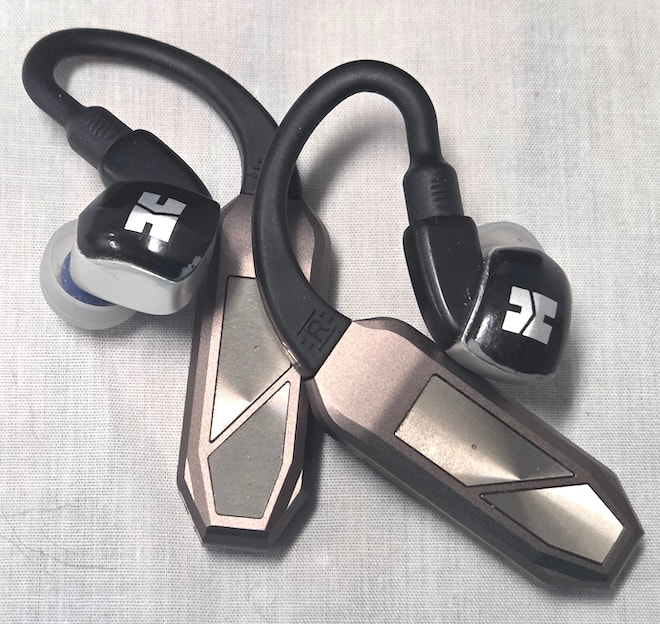
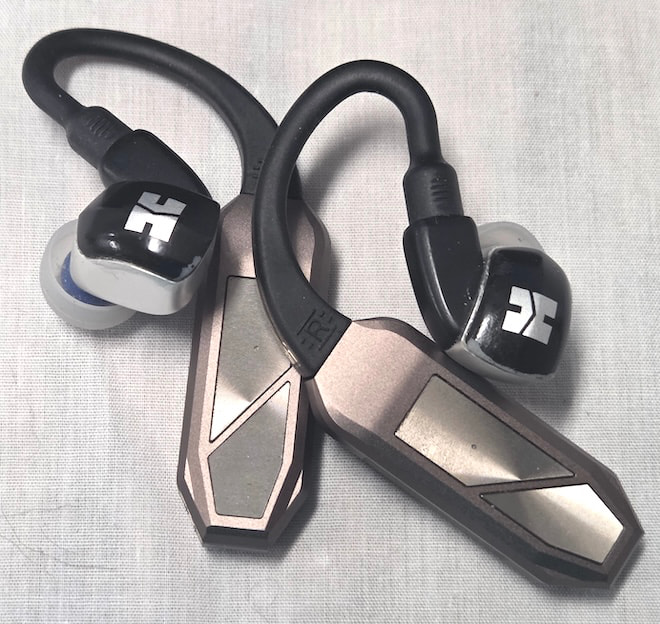
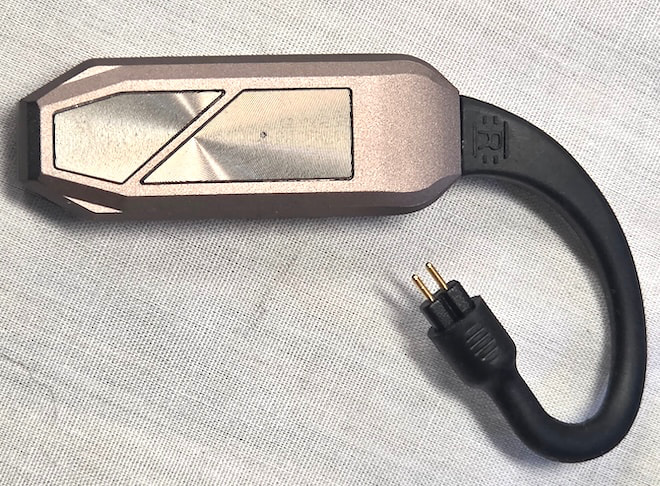
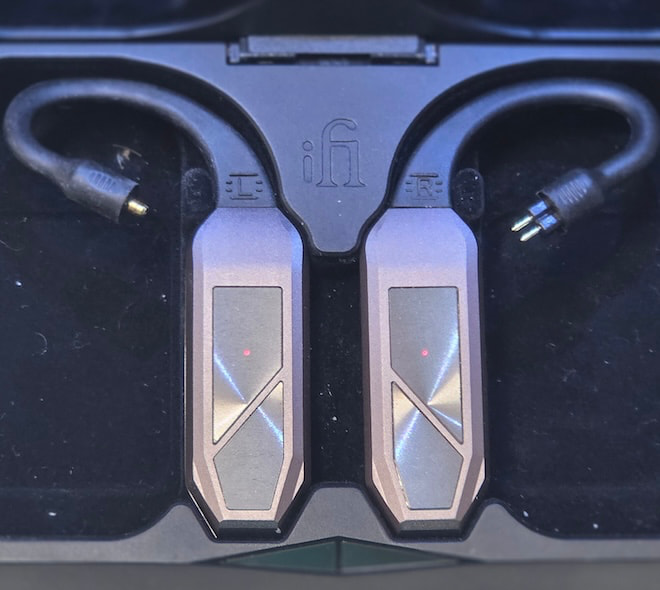
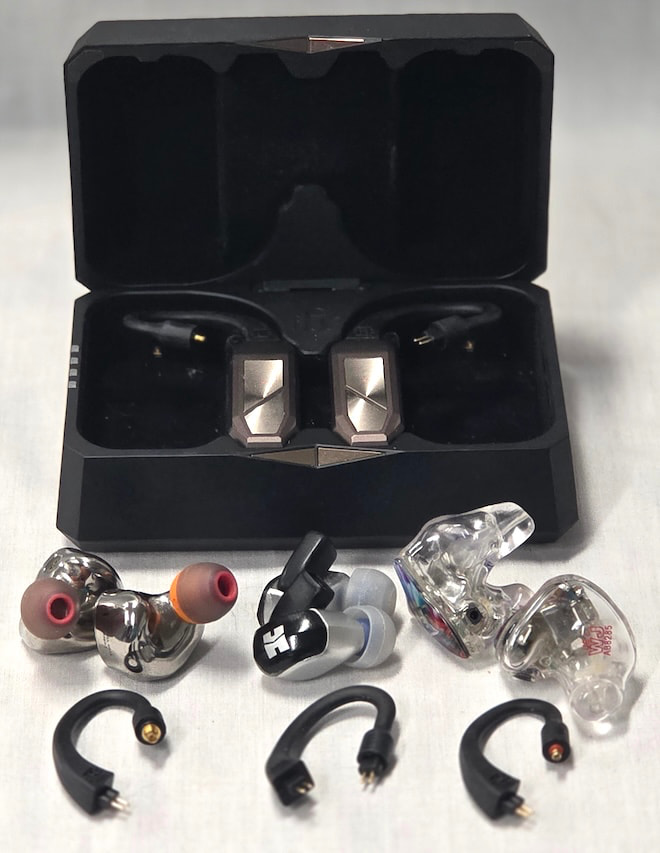
The GO pod Max consists of two ear-mounted DAC/amp modules connected to the earpieces through replaceable adapters. This allows the system to support MMCX, 2-pin, Pentaconn Ear, Audio-Technica A2DC, and Estron T2/IPX-equipped IEMs. The 2-pin and MMCX adapters are included; the others are available separately from iFi for $29 per pair.
Advertisement
Those adapters also form the ear loops, allowing each DAC/amp module to sit behind the ear while adding another point of support. That is smart design because, at $599, the ability to move the GO pod Max between different IEMs goes a long way toward making the price easier to justify. If listeners had to buy a different version for every connector type, this would be a very different review.
The pods are compact, although not especially small, which is hardly surprising considering the amount of hardware packed inside their aluminum shells. Each weighs 11.82 grams with the earhook attached. For comparison, the polymer-shell GO pod Air weighs 9.7 grams per side, so the difference is unlikely to be significant for most listeners.
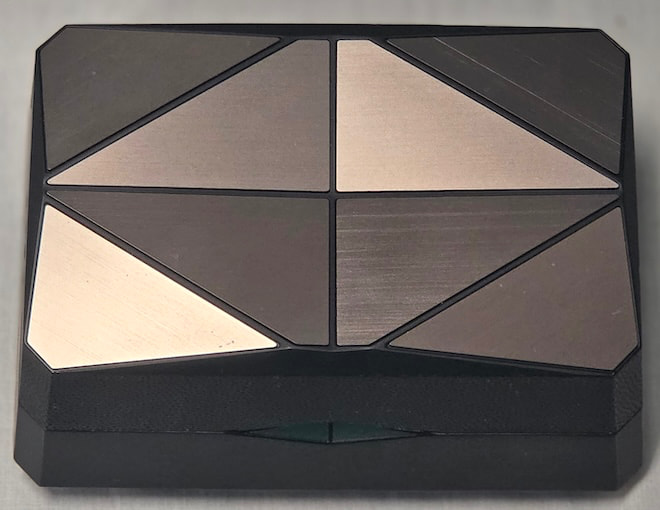
The upper portion of the charging case uses the same precision-machined aluminum as the pods, giving the system a more substantial feel than the plastic construction found on most true wireless products. The pods themselves feel solid rather than disposable, although the exposed connectors still deserve some care. These are precision audio components, not something I would toss loose into a gym bag.
The ear loops route the pods over and around the ears much like a conventional IEM cable, helping stabilize the modules and preventing their weight from pulling directly downward.
Comfort, however, depends heavily on the attached IEM. Lighter acrylic models proved quite comfortable, while heavier metal shells can become tiring during longer sessions. I used the LETSHUOER Cadenza 12, an excellent but relatively heavy titanium IEM, for part of my listening tests and could definitely feel the additional weight over time.
Advertisement
Fit ultimately depends on the pod, ear shape, IEM shell design and weight, nozzle angle, and connector orientation. Most well-designed universal and custom IEMs should work without issue, but not every model will be equally well suited to the GO pod Max.
The ear loops themselves are reasonably comfortable over long sessions, even with eyeglasses. Listeners who dislike anything resting over the ear may still prefer conventional true wireless earbuds.
The system carries an IPX5 rating, which means it can tolerate rain and perspiration but is not designed for immersion. That is sufficient for commuting and light exercise, although the attached IEM may have a lower protection rating. In practice, the least water-resistant component determines how adventurous you should get.
The charging case measures 116 x 76 x 48 mm and weighs roughly 185 grams, making it considerably larger and heavier than a typical TWS case. Some of that bulk comes from the aluminum upper shell, larger battery, and built-in UV cleaning system.
Advertisement
More importantly, the case is large enough to store the GO pod Max with the IEMs still attached while charging. That matters because repeated connection and disconnection can eventually wear the connectors on expensive IEMs. Listeners who plan to alternate regularly between two pairs may even want a second set of adapters and leave each pair attached, shifting most of that wear to the module side.
Warranty coverage varies by region, with one year in the U.S. and UK and two years in continental Europe.
Advertisement. Scroll to continue reading.
Build quality is one of the GO pod Max’s strongest attributes. This does not feel like a generic Bluetooth earhook with an iFi logo added to it. It feels engineered for listeners who want true wireless convenience without treating their expensive IEMs like disposable accessories.
Advertisement
Internals
The GO pod Max uses Qualcomm’s flagship QCC5181 dual-mode Bluetooth SoC, which supports Bluetooth 5.4, Classic Bluetooth, and LE Audio. Snapdragon Sound provides support for up to 24-bit/96kHz playback through aptX Lossless, along with aptX HD and aptX Adaptive. LDAC, LHDC/HWA, AAC, and SBC are also supported, while LE Audio and Auracast provide some future-proofing as adoption becomes more widespread.
That is an unusually comprehensive codec list for a wireless IEM adapter.
iFi places particular emphasis on aptX Lossless, although source support remains an important limitation. Without a compatible device, the GO pod Max will fall back to another supported codec. Fortunately, aptX HD, aptX Adaptive, LDAC, and LHDC can still deliver very good results even if they are not technically lossless.
It is also important not to treat “lossless” as a guarantee of superior sound. The IEM, amplification, recording, DSP, and fit remain at least as important. What aptX Lossless does is remove one of the more obvious compromises associated with using an expensive IEM wirelessly.
Advertisement
Android users have the best opportunity to take advantage of the higher-bandwidth codecs. Apple users will generally be limited to AAC unless they add an external transmitter from Questyle or another manufacturer.
iFi says the GO pod Max uses separate optimized stages for Bluetooth reception, digital-to-analog conversion, and amplification. Many inexpensive wireless modules rely more heavily on highly integrated solutions, while iFi is clearly approaching the GO pod Max as a miniature source component rather than simply another Bluetooth earhook.
Published specifications include THD+N of ≤0.002% from 20Hz to 20kHz, dynamic range of 129 dB(A) at 32 ohms, and a 132 dB(A) signal-to-noise ratio at 300 ohms.
The GO pod Max also automatically selects impedance settings for 16, 32, 64, and 300-ohm loads. In my testing, IEMs that fell between those values used the closest lower setting. That takes some of the guesswork out of gain matching and makes the system far less intimidating for users who have no interest in doing electrical calculations before listening to music.
Advertisement
There are limits. Multi-driver IEMs can exhibit substantial impedance swings across the frequency range, and the interaction between their impedance curves and the amplifier’s output impedance can alter tonal balance. Sensitivity also matters, particularly with less efficient designs that require more voltage or current.
The GO pod Max provides considerably more amplification than a typical true wireless earbud, which gives it more headroom with demanding IEMs and allows it to accommodate a wider range of designs. Users with especially sensitive or electrically complex IEMs should still listen for hiss or changes in tonal balance.
The other significant feature is K2HD processing, a technology developed by JVCKENWOOD and configured for iFi. K2HD is designed to reconstruct harmonic information that may have been lost during digital conversion or lower-resolution processing. iFi says it restores the digital signal path to 96kHz and uses interpolation to create a more natural harmonic structure.
Advertisement. Scroll to continue reading.
Advertisement
The important word is reconstruct. This is DSP, not the recovery of the original information. Once data has been discarded, an algorithm cannot know exactly what was there in the first place.
The results are therefore recording and listener dependent. Some tracks can benefit from added warmth, harmonic density, or a greater sense of space, while others may sound slightly processed or less direct.
I would treat K2HD as an optional voicing mode rather than an automatic sonic upgrade. Its inclusion is worthwhile, but familiar recordings and the bypass setting remain the best way to decide whether it improves the experience.
UV Sterilization
The charging case includes four UV lights designed to sterilize the attached IEMs between uses.
Advertisement
It is an unusual feature in the wireless audio market, but one that makes practical sense. IEMs sit inside the ear, where their tips can collect oils, moisture, and bacteria during extended use.
The UV system should not be considered a substitute for regularly cleaning the ear tips or maintaining proper hygiene. Its effectiveness will depend on which surfaces are exposed to the light, how long they remain exposed, and how the IEMs are positioned inside the case.
Still, it is a thoughtful addition, particularly for listeners who wear their IEMs for long periods or frequently travel with them.
Touch Controls
Each pod includes touch controls for playback, volume, calls, voice assistants, and other basic functions. They are convenient once learned, although the small control surface requires some precision and accidental activation is still possible when adjusting the IEMs.
A companion app is available for configuration and firmware updates, but don’t expect the usual TWS experience. Instead of EQ presets and lifestyle features, the app focuses on settings such as DAC filter selection, touch-control latency, and firmware management.
Advertisement
It feels much more like the setup menu for a desktop DAC/amp than the companion app for a typical pair of wireless earbuds, which is entirely appropriate for what the GO pod Max is trying to be.
Calls & Microphones
Each pod uses dual microphones with Qualcomm cVc noise suppression. Voice quality is suitable for everyday calls and commuting, with the system doing a reasonable job of emphasizing the wearer’s voice while reducing some background noise.
Wind, traffic, and crowded environments can still present problems, and performance will vary somewhat with the attached IEM. Unlike a conventional TWS earbud, the GO pod Max cannot be optimized around one fixed shell and microphone arrangement.
Advertisement. Scroll to continue reading.
Advertisement
Call quality is competent, but it is clearly a secondary feature rather than a reason to buy the GO pod Max.
Battery Life
Each pod contains a 180mAh battery, while the charging case uses a 1500mAh battery. iFi rates the pods for approximately 7 hours of playback, with up to 35 hours total including the case.
In my testing, those figures proved slightly optimistic. Depending on codec, volume, and processing settings, six hours is a more realistic expectation for the pods. The case provides roughly four additional charges, so the quoted 35-hour total should also be viewed as a best-case number.
That is not class-leading endurance, but the larger amplifier stages and more ambitious circuitry consume more power than a conventional TWS earbud. A 30-minute top-up in the case usually provides a substantial extension in listening time.
Charging from empty takes less than 1.5 hours for the pods and under two hours for the case under optimal conditions. The case supports USB Type-C charging as well as Qi wireless charging, although the latter is noticeably slower.
Advertisement
Listening
The GO pod Max does not have one fixed sound signature in the way a conventional wireless earbud does. The attached IEM remains the dominant factor, which is both its greatest strength and an important qualification.
With a neutral or highly resolving IEM, the GO pod Max can sound clean, dynamic, and spacious. Pair it with something warmer or bass-heavy and most of that character remains intact. The goal is not to impose a new voicing, but to provide a higher-quality wireless signal path and more capable amplification.
Compared with ordinary Bluetooth adapters, the most obvious improvement is likely to be greater control and headroom rather than a dramatic shift in tonal balance. K2HD can add some warmth and harmonic presence, but it will not transform a lean IEM into a bass-heavy one.
Very sensitive IEMs may still expose hiss, which is why users should evaluate the GO pod Max with their own earphones rather than rely solely on specifications.
The amplifier stage has considerably more headroom than the tiny output sections found in many consumer wireless products. That becomes most apparent with dynamic classical recordings, jazz, live performances, and well-recorded acoustic music, where the GO pod Max does a better job of avoiding the flatness or congestion that can creep in with weaker wireless adapters.
Advertisement
With a high-resolution IEM, that matters. The GO pod Max is designed to keep the wireless electronics from becoming the weakest link in the chain.
Everyday Use
The GO pod Max makes the most sense for listeners who have already invested in wired IEMs.
Advertisement. Scroll to continue reading.
For commuting or office use, it removes the cable without forcing the listener to give up familiar earphones. It is still less convenient than a conventional TWS design because the IEMs have to remain attached to the pods, the case is larger, and connector compatibility requires some attention.
Advertisement
Listeners with several IEMs may also need additional ear-loop adapters, and swapping between them is not as quick as simply reaching for another pair of wireless earbuds.
There is no active noise cancellation because the GO pod Max is not a self-contained ANC earbud. Isolation depends entirely on the attached IEM and ear tips. A well-sealing CIEM can provide excellent passive isolation, while a shallow-fitting design will allow considerably more outside noise through.
The GO pod Max may outperform many ANC earbuds sonically, but it cannot electronically cancel the low-frequency rumble of trains, airplanes, or traffic. That remains one of the compromises of choosing better IEMs over greater convenience.
The Bottom Line
The iFi GO pod Max is an unusual product for a very specific listener: someone who already owns one or more high-end wired IEMs and wants wireless convenience without replacing them with conventional TWS earbuds. As someone who fits that description rather precisely, even I needed some time to fully appreciate what the GO pod Max brings to the party.
Advertisement
At $599, it is undeniably expensive, particularly when excellent wireless earbuds cost considerably less. But those products lock you into their drivers, tuning, amplification, and eventual battery failure. The GO pod Max takes a different approach by allowing listeners to keep using the IEMs they already know and love while upgrading the wireless electronics around them.
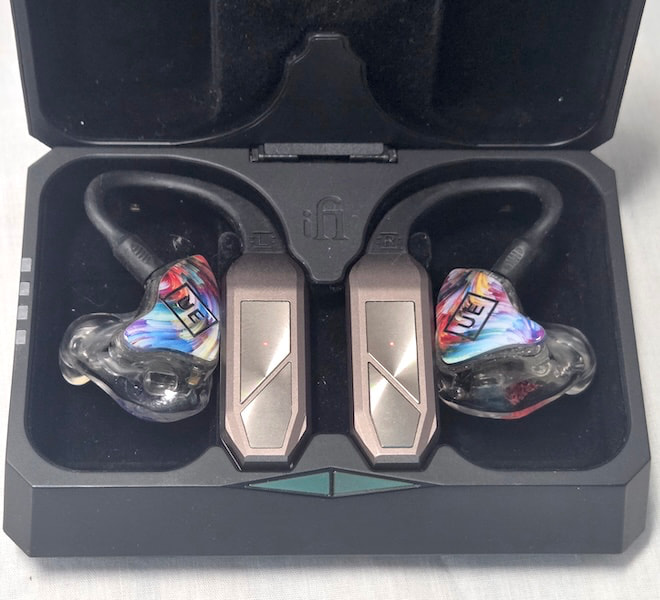
UE Live IEMs inside iFo Go Pod Charging Case
I have now used the GO pod Max almost daily for more than six months, which says more about its usefulness than any specification ever could. Very few review samples become part of my regular listening kit. These have, allowing me to use my UE Live with a healthy dose of Primal Scream and other guilty pleasures while spending far too much time in doctors’ offices and imaging labs.
For someone who once insisted, “I never saw the wire between my in-ears and DAP as a problem,” that represents quite a change.
The GO pod Max is not for everyone, nor does it need to be. It is for listeners with serious IEMs who want to cut the cable without replacing the part of their system that matters most. Six months later, I’m no longer wondering whether that convenience is worth having. I’m wondering why it took me so long to admit that the wire actually was a problem.
Pros:
High-end wireless DAC/amp architecture
aptX Lossless support
LDAC, LHDC, aptX Adaptive, aptX HD, AAC, and SBC support
Automatic impedance matching from 16 to 300 ohms
Premium construction
Supports many high-end IEMs
UV sterilization in the case
Cons:
Expensive compared with wireless earbuds
Six and a half hour battery life is only average at best
Large and relatively heavy charging case
Compatibility requires attention to connector and ear-loop types
Touch controls can be triggered accidentally
Microphone performance is adequate rather than exceptional
Advertisement. Scroll to continue reading.
Our Ratings:
★★★★★★★★★★ Sound Quality (dependent on the IEM used)
Watch a one-off rugby Test match between Australia and South Africa today as the Wallabies look to overturn the Springboks on home soil.
The Aussies have now won four of their last five games, but their toughest test yet comes against a South Africa side fresh from a historic series win.
The Springboks cruised to a 3-1 Test series win over New Zealand and, while they might not have all their key players available to face the Wallabies, Rassie Erasmus will still be confident he has enough quality on the pitch to get the win.
Advertisement
The best part about this game? We’ve found a sneaky way to watch the it all completely FREE, from wherever you are!
The hack: 9Now in Australia is showing the Australia vs South Africa game at no cost!
But what if you’re traveling outside the country? Can you still watch the Australia vs South Africa game for free – from the US, UK or Canada? Yes, you can! Read on to find out how.
Advertisement
How to watch Australia vs South Africa for free
9Now are streaming Australia vs South Africa for free in Australia.
All you need to do is sign up for an account and you’ll be able to watch the game for no cost at all.
Do note: you will need an Aussie postcode to create an account (e.g. 2002)
Use a VPN to watch Australia vs South Africa free from anywhere
A VPN is handy piece of software that can make your device appear as if it’s back in your home country, so you can unlock your usual service. The best VPN right now? We recommend NordVPN – it does everything and comes with a 75% discount, and three months for free.
Quick start: Using a VPN to watch Australia vs South Africa for free
Using a VPN is incredibly simple, just follow these steps.
Advertisement
1. Install the VPN of your choice. As we’ve said, NordVPN is our favorite.
2. Choose the location you wish to connect to in the VPN app. For instance if you’re visiting the U.S. and want to view an Aussie streaming service, you’d select a location from Australia (like Perth) from the server list.
3. Sit back and enjoy the action. Head to 9Now and watch the Wallabies vs Springboks just like you would at home.
Advertisement
Which devices can I watch 9Now for free with?
You can use 9Now on a range of devices:
Amazon Fire TV Android phones and tablets (Android OS 5 and newer) Android TV Apple iPhones and iPads (iOS 12 or later) Apple TV (including Apple TV 4K and Apple TV HD) Chromecast (including Chromecast with Google TV) Chrome (latest two versions) Fetch TV (Gen 3 or newer) Firefox (latest two versions) Foxtel iQ Freeview Hisense TV LG Smart TV (webOS 4 or higher) Mobile apps – download the 9Now app on your phone or tablet (iOS/Android) Mozilla (latest two versions) Roku (including Roku 2, Roku 3, Roku Express, Roku Express+, Roku Premiere, Roku Premiere+, Roku Streaming Stick, Roku Streaming Stick+ and Roku Streambar) Safari (latest two versions)
You may also enjoy…
Advertisement
We test and review VPN services in the context of legal recreational uses. For example: 1. Accessing a service from another country (subject to the terms and conditions of that service). 2. Protecting your online security and strengthening your online privacy when abroad. We do not support or condone the illegal or malicious use of VPN services. Consuming pirated content that is paid-for is neither endorsed nor approved by Future Publishing.
The United States and China have agreed to “launch a dialogue” on AI, reports Reuters.
On artificial intelligence, the two sides agreed to hold a dialogue on the technology’s risks and benefits, with the next round of discussions set for November, and to set up a communication channel for AI-related incidents, the Chinese Foreign Ministry and the White House said.
The White House said that the leaders had agreed to use the term “super intelligence” in place of “artificial intelligence.” In a separate statement, the Chinese ministry said that Beijing valued Washington’s use of the new term. As AI technology continues to advance, the two sides should step up exchanges and work toward consensus in line with new developments, it said.
But CNN argues that “Despite growing calls to prevent AI development from spiraling out of control, the Trump-Xi summit has produced little substance, as many experts expected.”
Advertisement
The right thing to do on AI, [China’s leader] Xi said during talks with Trump, is to “draw on each other’s strengths, not guard against each other” — a reference to Beijing’s concern about US containment, from existing tech export controls to potential AI restrictions. “The two sides can continue their dialogue on AI, exchange views on its risks and benefits, and jointly prevent the misuse and abuse of AI,” he added. But the summit has yielded little progress on AI beyond a formal dialogue and a bilateral communication channel, proposals discussed before the two leaders’ summit — underscoring the entrenched mutual mistrust amid contrasting visions on AI… Because of low levels of trust, cooperation between the two superpowers remains limited, said George Chen, chair of digital practice at The Asia Group consultancy. “Beijing continues to believe Washington seeks to contain China’s rise in AI and other emerging technologies, a perception that will shape the pace and scope of future engagement for the two countries on AI,” he said.
CNN also points out that while China trails the US in frontier AI models, “it’s rapidly narrowing the technology gap while championing a more open ecosystem centered on accessibility and lower cost.”
In July, Chinese leader Xi Jinping launched the World Artificial Intelligence Cooperation Organization — a rival grouping to the Pax Silica alliance that Trump formed last year to reduce reliance on China for AI supply chains. While over two dozen countries and the European Union signed up to Trump’s Pax Silica, Xi has recruited 29 countries, including Russia, Indonesia and Pakistan, to his alternative vision of open models, which allow users to freely download, customize and run without paying hefty fees to American firms like Anthropic and OpenAI. For developers in the Global South, an inexpensive Chinese model from DeepSeek or Moonshot may be more useful than a slightly more capable system requiring an expensive subscription and access to a foreign cloud provider, said Eric Olander, editor in chief of The China-Global South Project, a research agency….
China’s embrace of open systems has not always been a top-down strategy by Beijing. Restrictions on access to the most advanced chips because of US export controls, coupled with smaller capital markets, have pushed Chinese developers toward open models as a way to compete with leading US proprietary systems. That shift has proved effective. In a year, Chinese models’ global usage skyrocketed from less than 15% to over 54% last week, led by DeepSeek, according to AI leaderboard data by OpenRouter, a marketplace for models. Even American firms, from Airbnb and DoorDash to Shopify, have embraced Chinese models, tapping into the advantages of open systems, including lower costs and greater flexibility for customization.
Advertisement
CNN adds this insight from Alex Colville, an analyst focusing on tech and security at the government-backed Australian Strategic Policy Institute. “The more capable Chinese models become, the less likely it is Beijing may leave them unrestricted.”
A Kosovar national has pleaded guilty to operating Rydox, a large illegal online marketplace that sold stolen personal information, login credentials, credit card details, and cybercrime tools.
Kosovo law enforcement and Albania’s Special Anti-Corruption Body (SPAK) arrested 28-year-old Ardit Kutleshi and two other Rydox administrators (Jetmir Kutleshi and Shpend Sokoli) in December 2024.
The arrests were part of a joint international law enforcement operation that also shut down the Rydox marketplace, seized the Rydox[.]cc domain, and seized its servers in Kuala Lumpur with the help of the Royal Malaysian Police.
Ardit Kutleshi was extradited from Kosovo to the United States in 2025, when he was charged with crimes related to their Rydox admin role, including conspiracy to commit identity theft, aggravated identity theft, two counts of identity theft, access device fraud, and money laundering.
Advertisement
“Rydox put cybercriminal tools and sensitive data up for sale, including the stolen identities and logins of thousands of people,” said Brett Leatherman, assistant director of the FBI’s Cyber Division. “The FBI and its foreign partners shut the marketplace down, and now the man who created it and ran it pleaded guilty.”
According to court documents, between February 2016 and Rydox’s shutdown in 2024, marketplace sellers were involved in over 7,600 sales of login credentials, credit card information, and stolen personal information (including Social Security numbers, names, and addresses) of thousands of U.S. citizens.
Rydox also offered over 321,000 other “cybercrime products” for sale to more than 18,000 users, including various devices, software tools, and materials for committing cybercrimes.
Rydox seizure banner (BleepingComputer)
Rydox users had to deposit cryptocurrency into their accounts before making a purchase via Bitcoin (“BTC”), Monero, Ripple, Ethereum, Litecoin, Perfect Money, Tron, or Verge payments that were deposited into a Rydox-controlled cryptocurrency wallet and could be used to buy illicit products, services, tools, and programs from Rydox sellers.
The marketplace also charged registered users a one-time fee (that fluctuated between $200 and $500) to become authorized sellers, who received 60% of the sale proceeds, while the marketplace retained 40% from every sale.
Advertisement
Kutleshi has pleaded guilty to aggravated identity theft and money laundering conspiracy and is scheduled to be sentenced on February 9, 2027.
He now faces a maximum penalty of 20 years in prison for money laundering and a minimum penalty of two years in prison for the aggravated identity theft count.
Since the start of the year, the owner of the Incognito dark web drugs market was sentenced to 30 years in prison in February, while a California man who sold fentanyl and methamphetamine on the Nemesis dark web marketplace was sentenced to more than 26 years in federal prison.
Join Mikko Hyppönen and security leaders from the NFL, CHANEL, and Atlassian for a two-hour digital summit on what AI-speed attacks change, what defenders should stop doing, and how to validate, decide, fix, and re-validate at machine speed.
I’m lucky that my job takes me to all kinds of events, and when I’m travelling, whether abroad and closer to home, having the right backpack to carry my kit is a no-brainer.
Harber London’s backpacks have always been a popular choice for high-end travellers, offering a mix of style and durability – I’ve been trying out the new Venture Edition of the classic Roll Top backpack, and it’s been invaluable so far.
Designed for both modern travel and everyday usage, the collection combines water-repellent recycled nylon made from reclaimed marine plastic with full-grain leather accents – the perfect combination to keep your belongings protected.
Advertisement
Latest Videos FromTechRadar
Roll with it
If you’re not a Harber fan already, their backpacks and weekend bags are truly some of the best we’ve ever tried.
Each one is handcrafted in the company’s workshop in Spain, built of its SEAQUAL® yarn, a premium recycled nylon made from reclaimed marine plastics, to build a waterproof and lightweight product that weighs in at just 1.05Kg/2.31lbs.
Advertisement
Currently only available in Black, the backpack comes with a magnetic roll-top opening for fast, effortless access to the main compartment, with two magnetic front buckles allowing quick access and adjustment when needed.
The bag offers around 22 litres of space, and a frankly silly seven total pockets. Inside, the backpack features a special laptop compartment capable of fitting devices with anything from a 13in-16in span, so all your usual favourites should easily slide in.
Sign up to the TechRadar Pro newsletter to get all the top news, opinion, features and guidance your business needs to succeed!
Advertisement
The compartment even has a water-repellent YKK zipper for enhanced protection, and inside, there’s a number of zippered interior pockets for all your bits and pieces – all with a lighter-toned interior lining which should help you quickly spot what you need.
(Image credit: Harber London)
As mentioned, I’m a frequent traveller, so I really appreciate a well-made and designed bit of luggage – and this backpack definitely delivers.
The amount of kit you can squeeze in is frankly ridiculous, and I’m able to pack in my laptop, water bottle, charging cables, notebooks, snacks, and much much more.
The bag is quick and easy to adjust, and feels super secure thanks to the roll top. The shoulder straps are beautifully padded as well, so you don’t start to ache towards the end of the day.
Advertisement
Overall, as with all Harber products, the build quality is fantastic – you can really tell this a product handmade with care by people who really know what they’re doing.
The backpack comes with a one year warranty, and 60-day return policy, with shipping around the globe – so get yours now, prices start at £369, with free shipping.
Join Charlie Brown, Snoopy, Linus, Lucy, and the rest of the gang and tune in to watch “It’s the Great Pumpkin, Charlie Brown” for free for everybody on Apple TV. Here’s how, and when.
Watch ‘It’s the Great Pumpkin Charlie Brown’ on Apple TV
For many of us, Charlie Brown and the “Peanuts” gang mark some of our very first movie memories. That’s why Apple TV is ensuring everyone can revisit those warm and fuzzy childhood feelings, regardless of whether they have an active Apple TV subscription. “It’s the Great Pumpkin, Charlie Brown” follows the gang on their Halloween adventures, including trick-or-treating and waiting for the Great Pumpkin. Continue Reading on AppleInsider | Discuss on our Forums
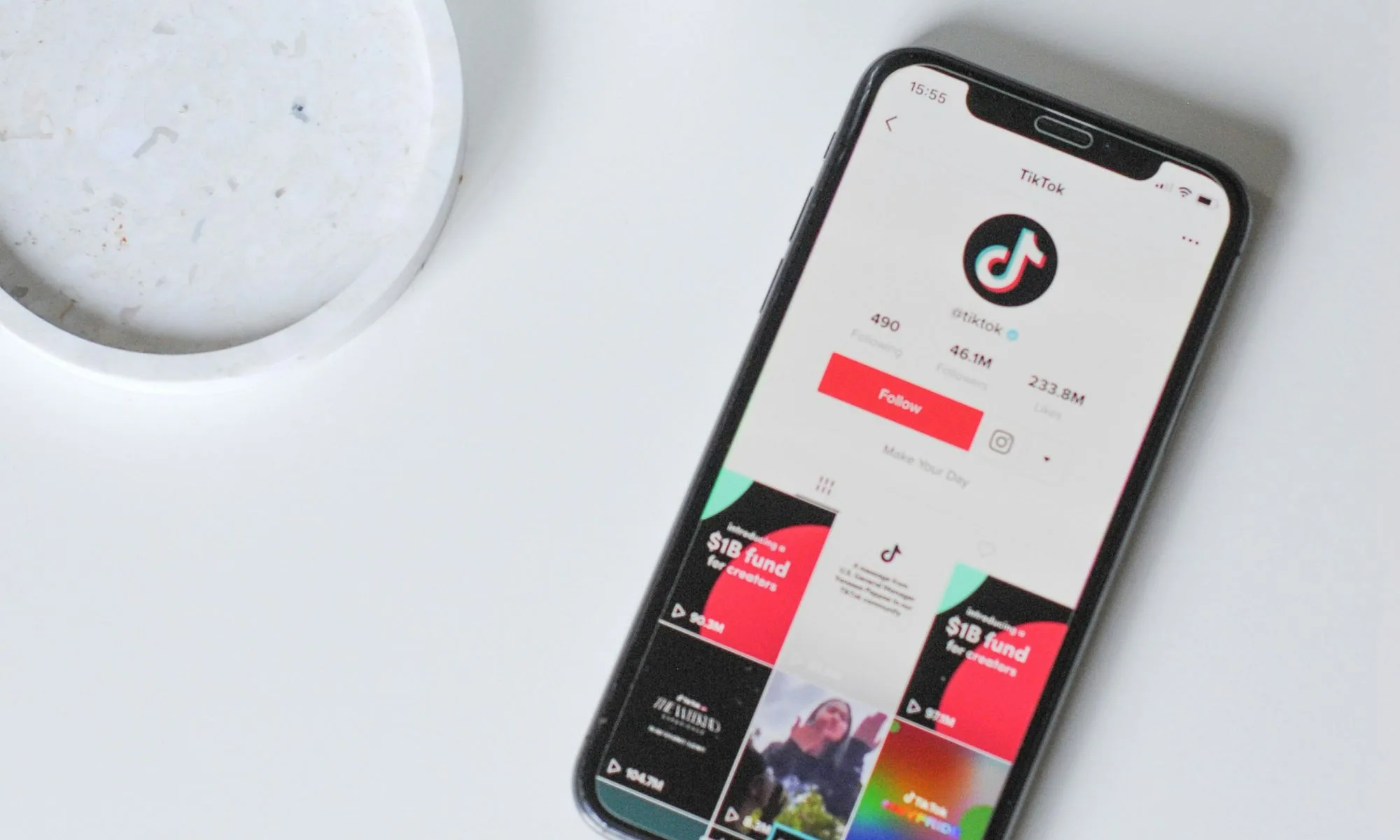
Social media platforms are having a historical moment of reckoning in 2026, and the latest to join the list is TikTok. The short video platform has settled a lawsuit with the state of Alabama, alleging that the platform is addictive by design, exposed teens to violent and self-harm content, and led to a surge in the number of emergency room visits tied to self-harm. The lawsuit claimed that the company misled with its claims that the platform protects teen users from exposure to risky content.
Now, the company has agreed to settle the lawsuit before it goes to trial, making it the first legal tussle of its kind against a state. “Under the settlement, Alabama will receive a minimum of $100 million, due to the state within 45 days, with the potential to receive up to $300 million if certain conditions are met,” says a press note from the office of Alabama Attorney General Steve Marshall.
What’s ultimately changing for at-risk users?
TikTokUnsplash
More importantly, TikTok has agreed to implement over half a dozen restrictions to ensure that young users have a safe social media experience, following similar limits implemented by Meta, Snapchat, and even AI platforms like OpenAI in the past few months. Following is the full list of changes that have been proposed by the state of Alabama:
A two-hour daily time limit, with parental controls that allow parents to further limit the amount of time their children spend on TikTok.
“Productive pauses” that interrupt teen users after 15 minutes of continuous use and again at 60 and 90 minutes to limit endless scrolling.
“Nighttime access” that restricts children’s access from 12:00 a.m. to 6:00 a.m., plus restrictions on messaging and push notifications overnight and during school hours.
Robust age assurance measures to more effectively verify the age of young users.
Stronger content moderation provisions, including limits on discoverability of teen accounts by adults and parental notification of suspicious interactions between teen users and adults.
A blanket prohibition on the use of cosmetic filters by teen users.
If the RAMaggedon’s good for anything, it’s turning your old GPU into a potential goldmine.
Dikushin/Getty Images
Whether it’s from excessive use, sheer age or an upgrade that outclasses it, there are plenty of reasons that you may switch from one GPU to another. If you end up with an extra GPU lying around, there’s a lot you can do with it — including keeping it as a back-up or re-using it to build something new. However, even a well-worn GPU can be worth a nice pile of cash on the aftermarket.
Finding an affordable GPU during the great RAMaggeddon of 2026 is no easy task, with the AI gold rush sending prices into the stratosphere. While this has been generally problematic for would-be PC builders everywhere, it has at least provided a great window for selling any old GPU you might have. Even a long-dead GPU can find new life scrapped for parts, and one with a decent life ahead of it can sell for some good money.
Advertisement
How much a used GPU could be worth in 2026
Jovana Kuzmanovic/Shutterstock
First, it’s important to look at the prices you can expect. For instance, NVIDIA’s RTX 50-series cards have shot up as much as 39 percent, and a further 30 percent hike isn’t out of the cards — not to mention AMD’s price hikes of as much as 10 percent. This demand comes not only from big LLM companies, but from individuals creating their own local AI setups, which means the most valuable cards you could be selling are those with a lot of VRAM (as this is what LLM’s use to temporarily store data when generating or training). Most users in the AI vein will be looking for 12 to 16 GB, but bigger teams will be looking for as much as 48 GB — and there is no shortage of start-ups.
Therefore, the AI boom that sent GPU prices soaring is also what determines how much you can sell your GPU for — as a used model with a lot of VRAM is still worth a lot for AI and gaming. Moreover, many older GPUs (such as the NVIDIA GeForce RTX 3090) are even more valuable as they pack in more VRAM than many newer models. It’s pretty reasonable, then, to expect a used card with plenty of VRAM (in good condition) to retain at least 40 to 60 percent of its value.
Advertisement
Where to sell a used GPU
Casimiro PT/Shutterstock
Then comes actually selling a used GPU. Peer-to-peer sites like eBay or Facebook Marketplace require the most effort (you’ll have to create a listing, take photos, answer questions, handle shipping and hope to even be spotted in the first place), but also yield the most reward; looking at recent Sold listings on eBay, models like the NVIDIA GeForce RTX 5060 Ti and the EVGA GeForce RTX 3080 not only sell at 40 to 60 percent of their original price, but can sell for higher than their original MSRP. Even busted-up GPUs can sell for a good price here, if you can catch the right buyer’s eye.
That’s still a lot of hassle, though, so trade-ins and over-the-counter deals can still make decent options. Going to your local PC repair shop or using Newegg’s GPU trade-in program can offer great convenience, as these companies will, in most cases, turn around a quick offer and take care of the shipping process. However, that convenience comes at the expense of your payout, so you’re liable to make far less in trades like this. If you have a used GPU that’s still got decent shine to it, definitely play the long game by selling it yourself. On the other hand, if you’ve got a worn model with scarce VRAM, a quick and easy trade-in probably won’t hurt.




































































You must be logged in to post a comment Login