
Sports
Nations League Window Exposes Football’s Fault Lines: Politics, Pressure and a Packed Schedule

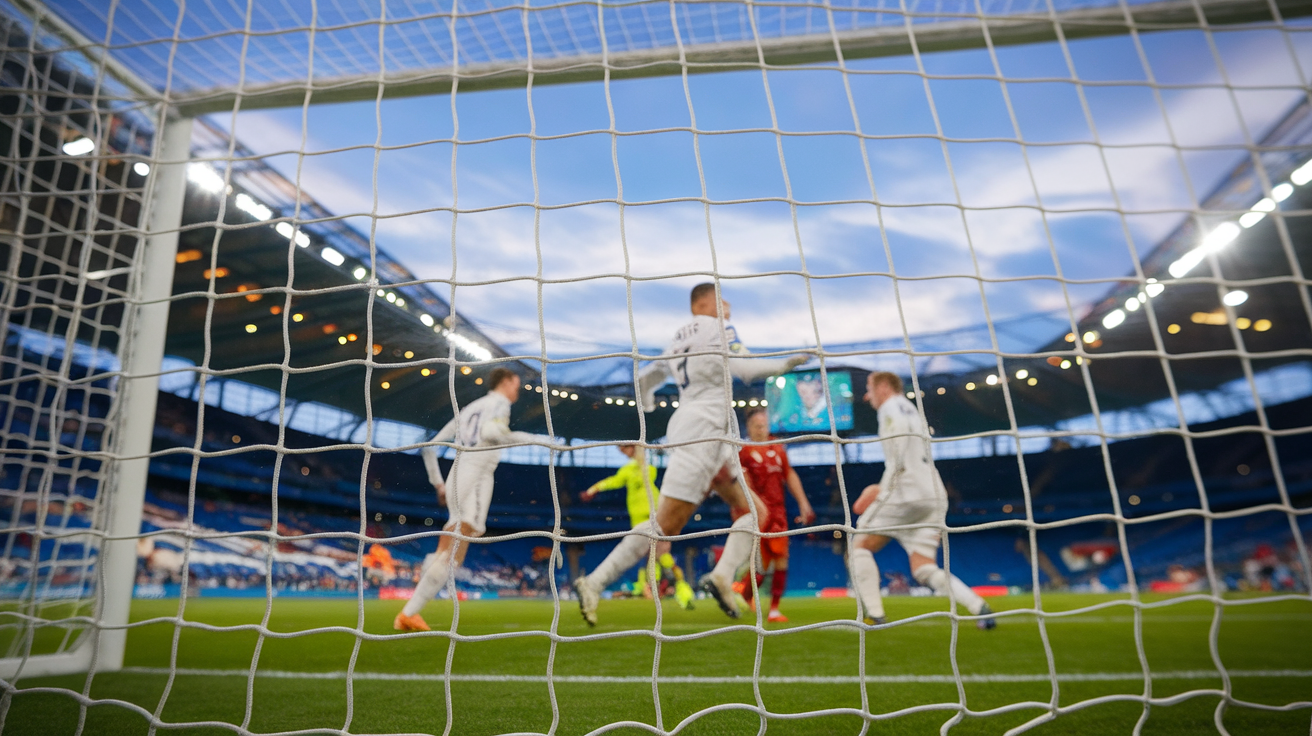
The Nations League has always promised meaningful football between international breaks, but this October window delivered something far messier: a tangle of political tension, competitive anxiety and logistical strain that left several associations questioning whether the format is fit for purpose.
Across the continent on Monday night, three fixtures captured the night’s drama in microcosm. France, bristling with attacking talent under new management, pushed hard against Belgium, with Bradley Barcola and Rayan Cherki probing a well-organised Belgian defence marshalled by Zion Suzuki’s deputy in goal, Vandevoordt. In Belfast, Northern Ireland asserted control over Georgia at Windsor Park, Shea Charles driving forward alongside the impressive Ethan Galbraith. Meanwhile in Romania, Sweden’s Viktor Gyokeres struck early to put his side ahead, continuing his habit of delivering when it matters. These were the games broadcasters wanted — tight, competitive, full of stars doing what stars do.
But not every Nations League story this window was about goals and tactics.
Wales left searching for answers in Nations League scrap
For Wales, the return to League A has been a brutal education. Craig Bellamy’s side lost three of their four matches in this window, beaten in Portugal and twice by Denmark, sandwiched around a surprise win over Norway that now looks like a false dawn rather than a turning point. Wales have not kept a clean sheet in nine consecutive matches, and their survival in the top tier — along with the seeding boost that would bring for Euro 2028 qualifying — now hinges entirely on next month’s final two fixtures.
Bellamy didn’t mince his words afterward, calling the new four-game international window format “no sense,” arguing it disproportionately benefits bigger nations with the strength in depth to rotate squads, something Germany did by effectively naming two different groups across the international period. Wales had no such luxury. Injuries to Harry Wilson and Joe Rodon before a ball was kicked, followed by a mid-camp withdrawal from David Brooks, exposed just how thin Wales’s resources have become. Former international Iwan Roberts didn’t sugarcoat it: with the bench featuring League One regulars, Bellamy is increasingly forced into selections that reflect scarcity rather than strategy.
The frustration wasn’t confined to the pitch. Attendances dipped amid the toll of travel costs and fixture congestion on fans following the team across multiple countries in a fortnight, a warning sign for the Football Association of Wales given that the same four-game structure will govern Euro 2028 qualifying next autumn — stakes raised further by Wales’s involvement in hosting that tournament.
Ireland and Israel: a Nations League draw nobody wanted
If Wales’s troubles were primarily sporting, the Republic of Ireland’s Nations League campaign became something else entirely: a flashpoint for one of football’s most sensitive geopolitical disputes. Drawn against Israel back in February, Ireland faced mounting pressure at home to boycott the fixtures altogether given Israel’s conduct in Gaza. The Football Association of Ireland resisted that pressure, wary of the severe sanctions Uefa could impose, but the compromise solution satisfied no one. Israel’s home matches were already being played in Hungary due to the war, and Ireland’s own “home” fixture was shifted to Serbia for what the FAI described as operational reasons, with no supporters permitted inside the stadium.
The two matches that followed were as fraught as expected. Ireland won the first meeting 3-0 in Debrecen, but the build-up was overshadowed by Irish players wearing black armbands and bowing their heads during the Israeli anthem — a gesture repeated in the return fixture, a tense 1-1 draw in Backa Topola, where Israeli players wore their own armbands in memory of the October 7, 2023 attacks. On the pitch, things grew uglier still: Ireland’s fitness coach Damien Doyle alleged he was spat at by an Israeli player before half-time, while a pre-match press conference descended into acrimony after an Israeli journalist accused Irish players of racially abusing opponents in the first match, a claim Ireland’s communications officer dismissed as “a lie” before ending the briefing outright. Striker Adam Idah, who is Black, had already reported racial abuse from a section of Israeli supporters during the opening game.
Ireland manager Heimir Hallgrímsson, visibly weary after the second match, called on Uefa to ensure the two nations are not drawn together again. “I wouldn’t wish any national team to go through what we have gone through these two weeks,” he said, adding that Uefa “needs to step in and do something.” It was a rare public plea from a manager for his governing body to intervene not on a sporting matter, but on the human toll of fixture scheduling in a geopolitical minefield.
A format under strain
Taken together, these stories suggest a competition straining under its own structure. The Nations League was conceived to replace meaningless friendlies with fixtures that mattered, and on the pitch — as Monday’s slate of France, Italy, Sweden and Northern Ireland matches showed — it still largely delivers that. But the expanded four-game window has magnified problems that smaller nations and sensitive geopolitical pairings were always going to struggle with: squad depth, fan fatigue, and now, the question of whether football administrators can insulate competition from world events at all.
With Euro 2028 qualifying set to adopt the same four-game structure, associations from Cardiff to Dublin will be watching closely to see whether Uefa adjusts course — or whether this October’s chaos becomes the new normal for the Nations League era.
Explore more on this topic with Vexel Search.


College basketball practices are well underway across the country, which means NBA scouts are back on the road to begin the evaluation process for the 2027 draft cycle.
Fall practices used to be the first extended look that NBA scouts would get of college freshmen, beyond an early preview at events like the McDonald’s All-American Game and Nike Hoop Summit. But now front offices are doing more legwork than ever in both high school and FIBA spaces. Still, fall practices mark a new stage in the evaluation process and a more intense focus for the coming year.
While each NBA front office has its own system and calendar for evaluating potential draft candidates, there are quite a few norms across the league. At this point in the fall, the vast majority of teams are still building their prospect list and then beginning to sort prospects into tiers. They may know the big names, but they’re looking for more subtle ones or some diamonds in the rough. It’s not uncommon for teams to have 200 names they’re interested in exploring at this point, and they’ll continue to add and subtract from that in the coming months.
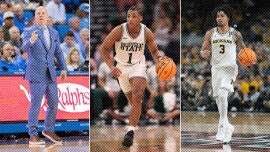
Then, most NBA teams create and build categories that go something like: lottery pick, potential lottery pick, potential first-rounder, potential two-way or second-rounder, and future name. As the fall goes on and gives way to the season, they’ll sort the prospects on their lists into one of those categories, as both a precursor to eventually creating their own big board and also to help determine the players that the ultimate decision-makers have to prioritize seeing during the year.
That general process is relatively common among teams and consistent from year to year. What varies, of course, is the talent in each class.
As the 2026-27 college basketball season begins, here is a look ahead to five storylines we are tracking for the 2027 NBA Draft class.
1. It’s wide open at the top
Last year’s freshman class had a clear big three of AJ Dybantsa, Darryn Peterson, and Cameron Boozer that was already established in high school and stayed consistent through draft night, when those were the first three names called.
This year’s class has neither that level of star power nor certainty at the top.
There is only one freshman with comparable natural talent: Tyran Stokes. The Kansas jumbo playmaker is built like an NFL tight end and can create like a lead guard. But Stokes arrives in the college ranks with more questions about his habits, consistency, and approach than any of the top prospects from the last cycle. He’ll have a chance to prove he’s worth the top pick, but is far from a lock just yet.
The next tier of incoming freshmen includes two guards: Arizona’s Caleb Holt and Arkansas’ Jordan Smith. Both are two-way players with strong frames and winning intangibles. Smith is more of a creator, but a questionable shooter. Holt has improved his shooting, but has yet to prove his playmaking. The bottom line is that neither is yet dynamic enough to be considered a No. 1 overall pick in most classes.
One thing this class has that last year’s did not is a high-end lottery talent who opted not to come to the college ranks. The 2027 cycle has Stefan Joksimovic, a native of Slovenia who is playing for Baskonia in Spain. The 6-foot-7 lefty can initiate, has developing guard skills, and some swag to match. The 18-year-old has also been building up an impressive resume with MVP performances at the EuroCamp and U18 European Championships. Still, he’s not a sure thing, nor a typical candidate for the No. 1 overall pick.
In total, this draft class is drawing some early comparisons to the 2024 NBA Draft, another class that lacked star power at the top of the class. That’s daunting for NBA decision-makers who know that their fans, and more importantly owners, will instinctively equate a high draft pick with star expectations. History tells us there is a future all-star hiding somewhere in virtually every class, but right now, it’s hard to spot him in this class.
2. There’s more depth than star power
So, while there may be a clear risk to drafting atop the 2027 class because of the expectations associated with the pick, there should be real value in the bottom half of the lottery through the majority of the first round. This is because there was an unprecedented number of potential first-rounders who spurned the 2026 draft in favor of returning to the college ranks for the 2026-27 season. Players like Florida’s Thomas Haugh, UConn’s Braylon Mullins, Arizona’s Mo Krivas, Alabama’s Amari Allen
and Duke’s Patrick Ngongba all had a chance, to varying degrees, of hearing their name called in the first round, but instead returned to school.
Now, it’s possible the extra year could give them a runway to play their way into consideration to be selected higher in the lottery. Allen looks like he’s going to have a chance to be Alabama’s primary initiator this year. Mullins should be showcased as UConn’s top scoring option. Ngongba may be the guy that Duke now plays through in the frontcourt. For Haugh, it’s another year to raise his shooting numbers and prove himself to be a true big wing.
Simultaneously, we may see real jumps from players like Alijah Arenas at USC, Tounde Yessoufou at St. John’s, Dame Sarr at Duke, Davis Fogle at Gonzaga, Matthew Able at North Carolina, and a host of others.
There are also plenty of other freshmen with interesting draft profiles. Bruce Branch has undeniable upside and is stepping into a wing role at BYU that has produced consecutive one-and-done lottery picks. Ohio State’s Anthony Thompson has an intriguing blend of size, length, and shot-making, and should have the platform to put up big numbers. No one may get more on-ball volume than Jason Crowe Jr. at Missouri, and while his high-volume style can be polarizing, he has the type of touch, scoring instincts, and playmaking ability that are, at least in part, natural. It’s also possible that someone emerges ahead of schedule, like Arkansas’ Abdou Toure, UConn’s Colben Landrew or Villanova’s Luigi Suigo.
The bottom line is this draft looks like it will have more depth than was initially forecasted.
3. The NIL market still looms large
Of course, that depth is dependent on players staying in the draft. The 2026 draft was supposed to have star power and depth alike. The latter didn’t come to fruition, though, as the NIL market was the biggest draw pulling players back to college. The reality is that for anyone who wasn’t essentially a guaranteed first-round pick, college offered both more security and earning potential, and there’s no reason to expect anything different this cycle.
Last spring, the top bigs in the portal, most of whom were unlikely first-round picks, were earning around $5 million to go back to college. Conversely, that’s a number that an NBA rookie doesn’t earn unless they are a top-ten pick.
This fall, we’re seeing NIL dollars only go up in high school recruiting relative to a year ago. If the portal market rises in correlation, or even stays flat, it will inevitably impact just how much of that theoretical depth opts to stay in the draft.
Now, last year showed us that some players are actually willing to take less to chase the NBA dream. That’s a statement that sounds extremely counterintuitive, and yet players like Koa Peat, Meleek Thomas, and Henri Veesaar were all examples. So, there is still a push-pull even with extreme money being spent in the college ranks.
4. The best prospects might not be the best players
Boozer was the clear Player of the Year in college basketball last season. Dybantsa was the leading scorer in Division I. When Peterson and Wilson were healthy, they were dominant. Those four were the top four picks in the draft. This year, there may be more of a disconnect.
It’s not just the lack of star power atop the class, although it’s certainly a factor. It’s that many of college basketball’s best players are going to be upperclassmen. In many cases, they’re still in college, precisely because their NBA upside is less clear. Or, with the dozens of fifth-year players now returning, they are very literally only able to do so because they’re not currently on an NBA roster.
So it’s very possible, and even probable, that some of the most impactful college players in the country won’t be great NBA prospects, and conversely, there may be some youngster with a potentially bright upside who is worth the risk in a class like this. The prototype here is someone like Peyton Watson, who played less than 23 minutes per game in his freshman season at UCLA, but was still a one-and-done first-round pick and signed a four-year $88 million contract this summer as a 23-year-old.
Could Maryland’s Baba Oladotun, Illinois’ Quentin Coleman, or Baylor’s Dylan Mingo intrigue NBA executives long-term, even if they don’t put up gaudy numbers this year?
Or conversely, could players like Michigan State’s Jeremy Fears, Miami’s Malik Reneau, or Texas Tech’s JT Toppin dominate the college ranks and yet not move the needle much for scouts? The answer to both is yes, and there are plenty of names that can be interchangeable in those spots that wouldn’t change it.
The lack of certainty is going to make the scouting process more important than ever. The bottom line is that the art of evaluating is always about forecasting future probabilities, and that may be particularly true this year.
5. The very best prospects aren’t eligible yet
It’s very possible that college basketball’s best NBA prospect won’t be eligible to declare for the draft for another two years. Duke’s Joaquim Boumtje Boumtje, a super-skilled southpaw listed at 7-foot-2, is the early favorite to be the top pick in 2028. If he were eligible in 2027, he’d probably be the early favorite now too.
He’s also not alone. UCLA freshman Nikola Kusturica is also 17 years old and won’t turn 18 until 2027, and thus not eligible for the draft until 2028. He too is expected to be a very high lottery pick if everything goes according to plan.
There’s even an example from the high school ranks. Marcus Spears Jr., who was previously the No. 1 ranked rising senior in the country, reclassified up and committed to Texas in early July, despite being too young to be one-and-done eligible.
The reality right now is that those three players are the early favorites to go atop the 2028 draft. In other words, we have less clarity about the top of the 2027 draft than we do about the draft twelve months later.

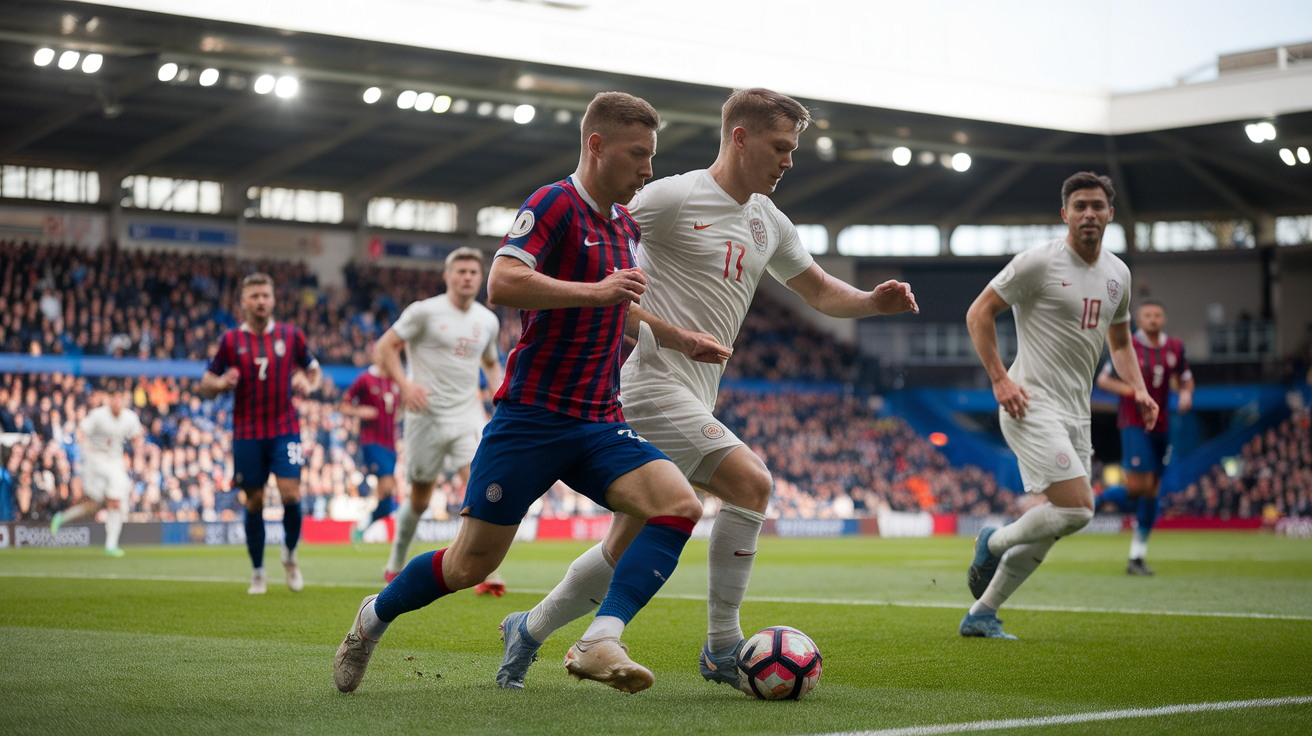
The first extended international break of the 2026-27 season has drawn to a close, and instead of the rested, refreshed squads organisers hoped for, clubs are counting the cost in strapped hamstrings, thigh knocks and anxious medical updates. For the first time, the Premier League and Championship paused for three weeks rather than the usual two, with players due back in domestic action from Friday. The question now being asked across the football world is simple: did it actually work?
FIFA introduced the longer gap with player welfare explicitly in mind. In recent seasons there were typically five international windows scattered through the calendar – March, June, September, October and November – each lasting two weeks. The new system trims that down to four windows but stretches the September-October break to three weeks. Part of the thinking was logistical: the 2026 World Cup final is scheduled for 19 July, the latest date for a summer World Cup since 1966, which forced a rethink of the wider calendar. Cutting the number of breaks was also meant to reduce the amount of long-haul travel facing players, particularly those from Africa and South America who are based at European clubs and otherwise shuttle across continents multiple times a season.
Has the extended international break delivered on player welfare?
On paper, fewer disruptions and more recovery time between matches sounds like a win for player welfare. In practice, this fortnight has produced an unusually long injury list involving some of the sport’s biggest names. Manchester City’s Erling Haaland asked to be substituted after 67 minutes and later limped out of Norway’s game against Portugal before leaving international duty altogether. His City team-mate Nico O’Reilly was sent back to the club for further assessment.
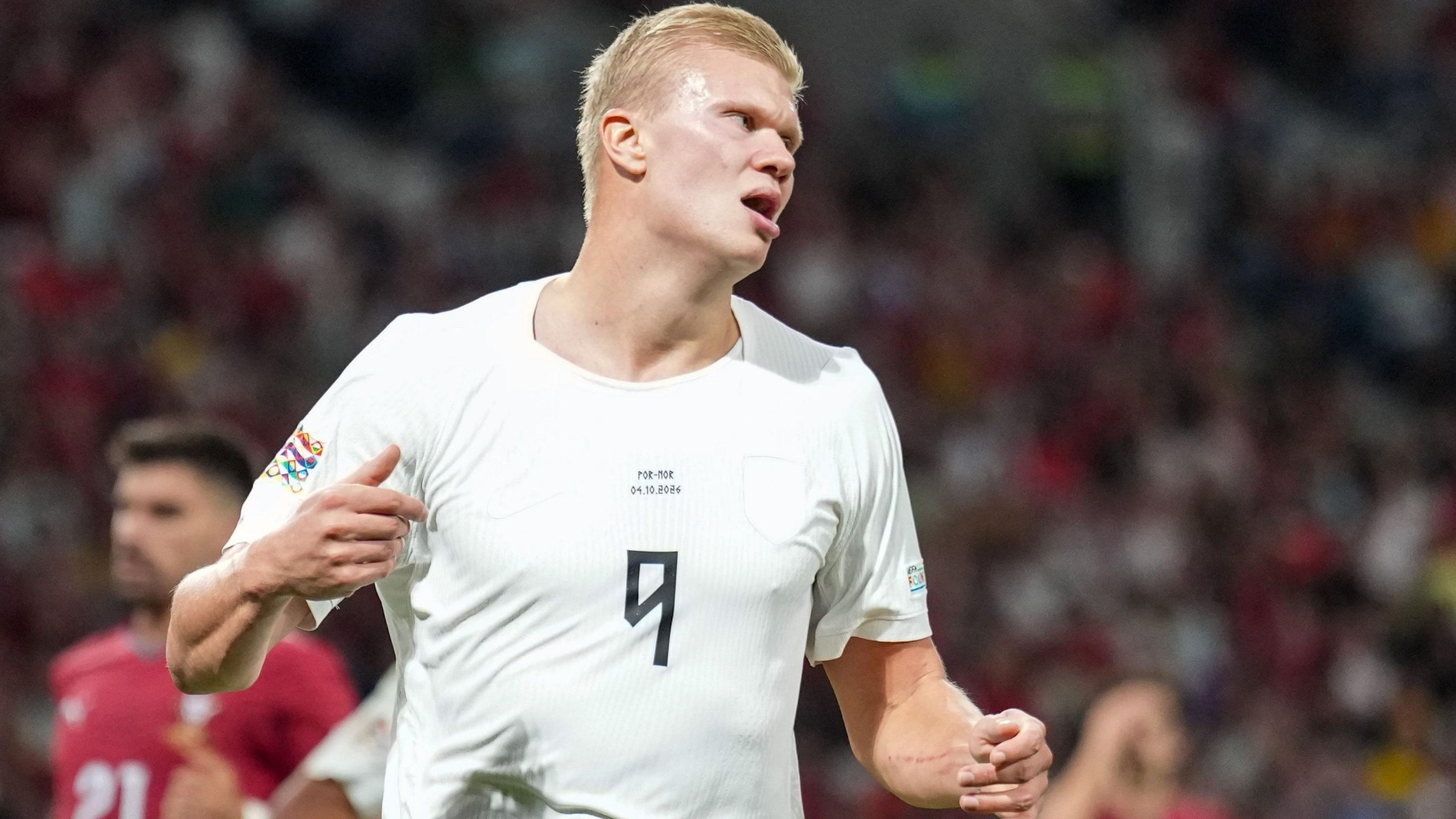
Bournemouth’s Alex Scott withdrew from the England squad with a thigh problem, a situation the Cherries are reportedly unhappy about given how it was handled. Liverpool’s Cody Gakpo pulled out of the Netherlands squad with an ankle injury, while his club team-mate Alexander Isak withdrew from Sweden duty with a minor thigh issue. Real Madrid’s Kylian Mbappe picked up an injury on France duty, and Barcelona winger Raphinha returned from the Brazil camp nursing a thigh problem of his own. Portugal boss Jorge Jesus even revealed that Manchester United captain Bruno Fernandes had been playing through pain, while Sunderland pair Dan Ballard and Brian Brobbey both suffered hamstring injuries.
England manager Thomas Tuchel had already lost five players – Tino Livramento, Kobbie Mainoo, Cole Palmer, Marcus Rashford and Declan Rice – before his squad even assembled for this window. It leaves domestic managers nervously checking medical bulletins with three more days of fixtures still to play out before players return to their clubs.
Workload concerns beyond the extended international break
The injuries have reignited a long-running argument about how much football the modern elite player is actually being asked to carry. The Norwegian players’ union, NISO, responded directly to Haaland’s injury, with chief Kristoffer Vatshaug warning that “the burden on top players has become far too high” and calling for clearer rules on workload, recovery time between matches, travel strain and rest after a long season.
Tuchel himself has been openly critical of the new format, describing the three-week block as “more challenging” than previous breaks because of travel demands and players sometimes getting only two days of rest between international fixtures. Speaking before England’s meeting with the Czech Republic, he insisted “player welfare is priority number one” but acknowledged that different training schedules, altered training times and unfamiliar positions can all raise injury risk. Asked directly whether the extended international break had led to more injuries than usual, he was cautious, saying officials “need to get the numbers right” before drawing firm conclusions.
That caution is echoed by the wider difficulty in judging the experiment fairly. Because this break is longer and features more matches than previous windows, simply counting injuries this fortnight against past breaks risks an unfair comparison. A genuine verdict on whether the extended international break has reduced harm or simply redistributed it may only be possible once the full calendar of 2026-27 international windows has played out.
What happens next
For now, Premier League and Championship clubs are bracing for returning squads that look rather different to the ones they released three weeks ago. Some players will walk back into training fully rested; others will be nursing fresh problems picked up thousands of miles from home. With domestic football resuming from Friday, managers will spend the coming days assessing fitness, managing minutes and hoping the extended international break hasn’t cost them key players for the run of fixtures ahead.
Whether FIFA’s reshaped calendar ultimately proves kinder to players’ bodies than the old system remains an open question. What is clear after this first instalment is that a longer gap between club games has not, by itself, been enough to prevent a wave of high-profile injuries – and that debate over player workload is unlikely to quieten down any time soon.
Explore more on this topic with Vexel Search.

Throughout this article, Fred and I have defined key concepts like freedom, rhythm and feel that can make your swing more accurate. These keys, once a part of your golfing instincts, will combine to improve your accuracy. Use them in your next round and you might knock one in the hole like Fred.
The 2026 GOLF Top 100 Teachers Summit is set to take place Nov. 1-4 at Omni La Costa Resort & Spa in Carlsbad, Calif.

View Product
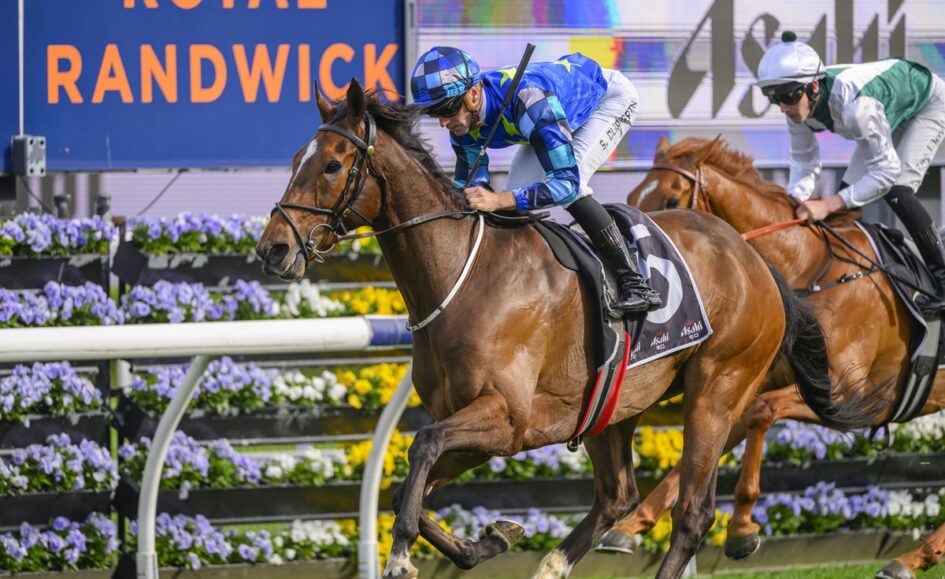
Juja Kibo has edged closer to a Melbourne Cup start following a handicapping reassessment after its commanding win in The Metropolitan last Saturday.
The Ciaron Maher-trained stayer was handed a 2kg penalty by Racing Victoria’s chief handicapper David Hegan for the $10 million event, in recognition of its dominant 1-3/4-length victory over Aethelwulf in the 2400-metre Randwick race, carrying 56.5kg.
This revised weight for the 2026 Melbourne Cup now stands at 53.5kg, positioning Juja Kibo 34th in the order of entry for the 24-horse field.
A 1kg penalty was also applied to Juja Kibo for the Caulfield Cup, accounting for the different weight scales of the major spring features.
“Juja Kibo’s Metropolitan performance was worthy of a handicap reconsideration after strongly defeating several key Cups rivals in impressive fashion and thus he advances 2kg in both races against both the weight for age scale and a number of runners from Saturday,” Hegan stated.
He elaborated, “Due to the different weight scales in the Cups, he takes a 1kg penalty in the Caulfield Cup and a 2kg penalty in the Melbourne Cup.”
“In the Caulfield Cup, he moves from a true weight of 50kg to 52kg, which is an actual weight penalty of 1kg above the minimum, and he will now carry 52kg.”
“In the Melbourne Cup he rises from 51.5kg to 53.5kg which puts him 0.5kg below The Euphrates, who conceded him 2.5kg on Saturday when finishing third.”
“Juja Kibo progresses significantly in the order of entry for both races, climbing 11 places to 30th in the Caulfield Cup and 12 places to 34th in the Melbourne Cup.”
Mr Monaco, another stayer trained by Maher, also had his Melbourne Cup weight updated, now slated to carry 52.5kg in the 3200m Group 1 race on November 3.
This adjustment signifies a 1.5kg penalty for the imported son of Territories, who is already exempt from the Melbourne Cup ballot following his strong win in The Bart Cummings (2520m) last Saturday.
“Mr Monaco was previously weighted in the Melbourne Cup at 1.5kg below fellow competitor Valiant King who ran third in the Bart Cummings, but now meets him on level terms with that 1.5kg increase,” Hegan remarked.
Mr Monaco’s Caulfield Cup weight remains unchanged at 51kg, placing him 33rd in the updated order of entry after the weekend’s racing. Check out the latest Australian betting sites for all the Cup action.
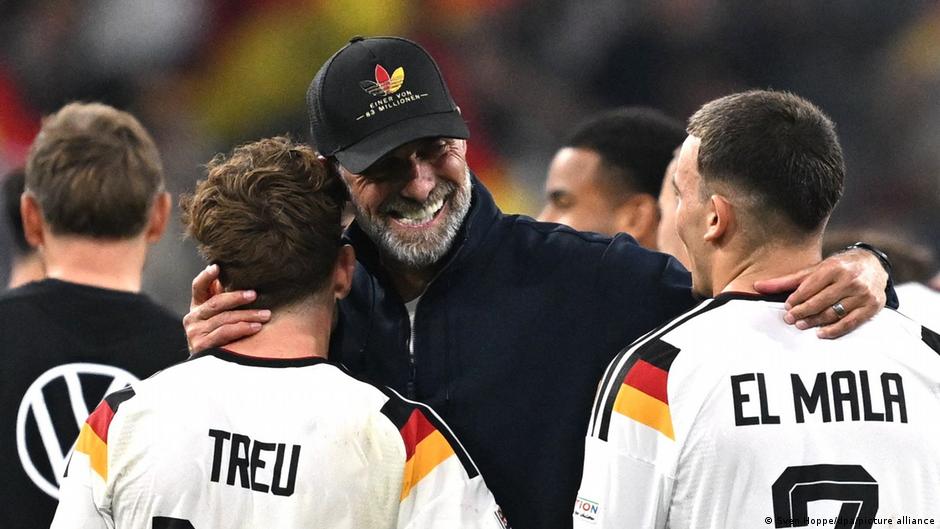
Four games, three goals, two draws, one loss and one win. Jürgen Klopp would have hoped for better results from his first international break as Germany coach. But though the comfortable win over Serbia (2-0), draws against the Netherlands (1-1) and Greece (0-0) and a shock loss to Greece (0-1) in Germany leave them third out of four in their Nations League group, Klopp saw mostly positives.
“Everyone showed what they’re made of; everyone earned their place. We’ve shown signs that we can do some things better than people gave us credit for. I wanted to get something going, and I definitely saw that happen,” he said after Sunday’s 0-0 draw in Thessaloniki.
For all the positivity of the former Liverpool and Borussia Dortmund coach, the four matches have, in reality, been a mixed bag for Germany.
It’s a long road back to the top
Having fallen in the last 32 of the 2026 World Cup and exited in the group stage in 2022, Germany’s footballing stock has never been lower.
Klopp tried to address this by casting his net wider, announcing a 44-man squad that split over the matches. He then said this would be a one off, but that his strategy of trying to find a diamond in the relative rough who could adapt to the international game had given him valuable insights.
“Hard work, lots of information — these guys are brimming with talent,” he said of those given a surprise opportunity.
“People were saying that German soccer was at rock bottom and that there was no talent. … They’re not lacking in talent.”
While Klopp may have seen potential, and has credit in the bank from his past work, he will need to turn that into results before too long.
Klopp leans on emotion and unity
While much has been said about Klopp’s success in imprinting his trademark Gegenpressing (counter press) style early on, he is also a coach who places a high value on connection. Throughout the international break, he has worn a cap emblazoned with the slogan “Einer von 83 millionen” (One of 83 million) in a reference to the German population and an attempt to unify in a country divided by the rise of the far-right AfD party.
He addressed the issue in his opening press conference and then reiterated his position after some social media users branded the team “not white enough” after their loss to Greece.
“There is no reason to give these people any thought. They aren’t getting any of my attention. I have little time for stupidity in real life and none on social media either,” Klopp said in answer to a question posed by DW.
As well as speaking honestly about his country, Klopp has been open with his new players.
“He has a very good rapport with every player. He tries to reach out to every player and make them feel good, that they’re important and that they deserve to be here,” said Florian Wirtz, who went on to label his coach as a “master” at managing relationships.
With limited time together, forming bonds between player, coach and country can elevate a national team. It may prove to be more important than any tactical plans.
Havertz injury highlights lack of striking depth
One of the key men in the more senior squad that started the opener against the Netherlands, Kai Havertz limped off after 29 minutes. He was replaced by Eintracht Frankfurt’s Younes Ebnoutalib while Nick Woltemade (on loan at Juventus from Newcastle) and Jonathan Burkhardt, also Frankfurt, were also tested up front over the four games.
None of the replacements scored, with Woltemade guilty of a particularly bad miss against Serbia and Burkhardt having a goal disallowed against Greece on Sunday. While all have potential and have enjoyed strong patches of form in their careers, none is tried and tested at the top level, and none is playing in the Champions League. With Havertz being somewhat injury prone, Klopp needs someone to emerge as a viable backup.
Musiala and Wirtz key but both have question marks
Injury is also, sadly, beginning to be a major feature of Jamal Musiala’s career. He picked up a thigh injury in the warmup to the Netherlands game that may keep him out for a month. He’s also missed games this season due to a neurological condition and missed the first half of last season with a broken leg which came soon after another lengthy spell out. At his best, he is probably Germany’s brightest attacking spark, but it’s been a while since that level has been seen.
For Wirtz, the issue is slightly different. He was excellent in the win over a limited Serbia team, scoring one and creating the other. It was a reminder of a talent that has been largely dormant at Liverpool where he’s shown his creative best only in glimpses. He followed it up with a decent display against Greece but saw Burkahrdt inadvertently block his goalbound header. There were signs Klopp’s system may suit him.
“He’s really gotten us on board with his philosophy,” said Wirtz of his coach. “I enjoy it myself, too. I get to show my strengths when we have possession.”
Klopp will need more of the same from Wirtz, who captained the side in Greece, if Germany are to move forward.
Edited by: Chuck Penfold
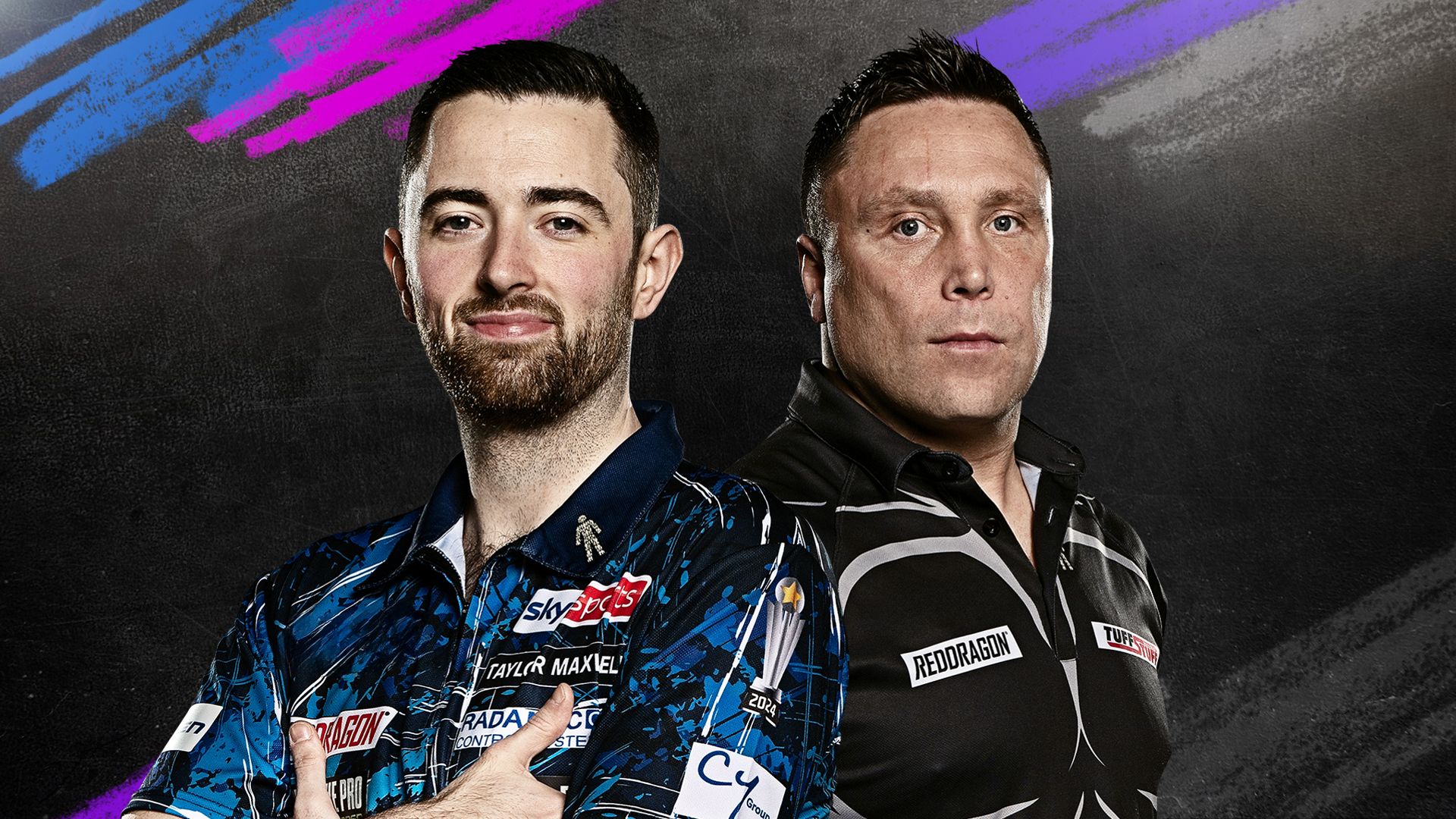
The World Grand Prix Darts returns to Leicester for its showpiece finale, as world number one Luke Humphries takes on former champion Gerwyn Price in a rematch of their 2023 title decider. The two-time rivals will do battle under the tournament’s famously unforgiving double-start format, where every leg must begin with a double, turning the final into as much a test of nerve as of throwing arm.
For Humphries, the stakes are personal as well as financial. He edged past Price in the 2023 final to claim his first World Grand Prix crown, and a repeat win this time would cement his status as the format’s dominant force in recent years. Price, meanwhile, will be chasing a second title of his own after lifting the trophy back in 2020, and will know exactly what it takes to navigate the tricky double-start examination under the bright lights of Leicester’s arena.
What’s on the Line in the World Grand Prix Darts Final
The financial rewards on offer underline just how much this clash matters to both players. The winner of the World Grand Prix Darts final will walk away with £150,000, while the beaten finalist still banks a substantial £80,000 consolation prize. With a place in darting history and a six-figure cheque both up for grabs, neither Humphries nor Price will want to leave anything on the oche.
The match itself is being played as a best-of-11 sets contest, meaning whoever reaches six sets first will be crowned champion. Given the demands of the double-start format — which strips away the rhythm players rely on in standard legs and punishes any lapse in concentration at the start of a leg — stamina and composure over such a long contest could prove just as decisive as raw scoring power.
Both men arrive with contrasting styles that have made this rivalry one of the most watched in the sport. Humphries has built his reputation on relentless consistency and ice-cool finishing, qualities that served him well when the pair last met in a World Grand Prix Darts final. Price, nicknamed “The Iceman” for good reason, is renowned for his physicality and competitive snarl, traits that helped him claim the title back in 2020 and that he will be relying on again to upset the current favourite.
A Rivalry Renewed on Darts’ Biggest Stage
Fans tuning in to the World Grand Prix Darts final will be hoping for the kind of tense, high-quality exchanges that have characterised previous meetings between these two. The double-start requirement has a habit of levelling the playing field in darts, often turning routine-looking legs into nail-biting stand-offs, and a final of this magnitude — with history, prize money and bragging rights all intertwined — promises to deliver exactly that kind of drama in Leicester.
Whatever the outcome, the result will add another chapter to the ongoing story between Humphries and Price, two of the sport’s most recognisable names going head-to-head once again for one of darts’ most distinctive and demanding titles.
Explore more on this topic with Vexel Search.
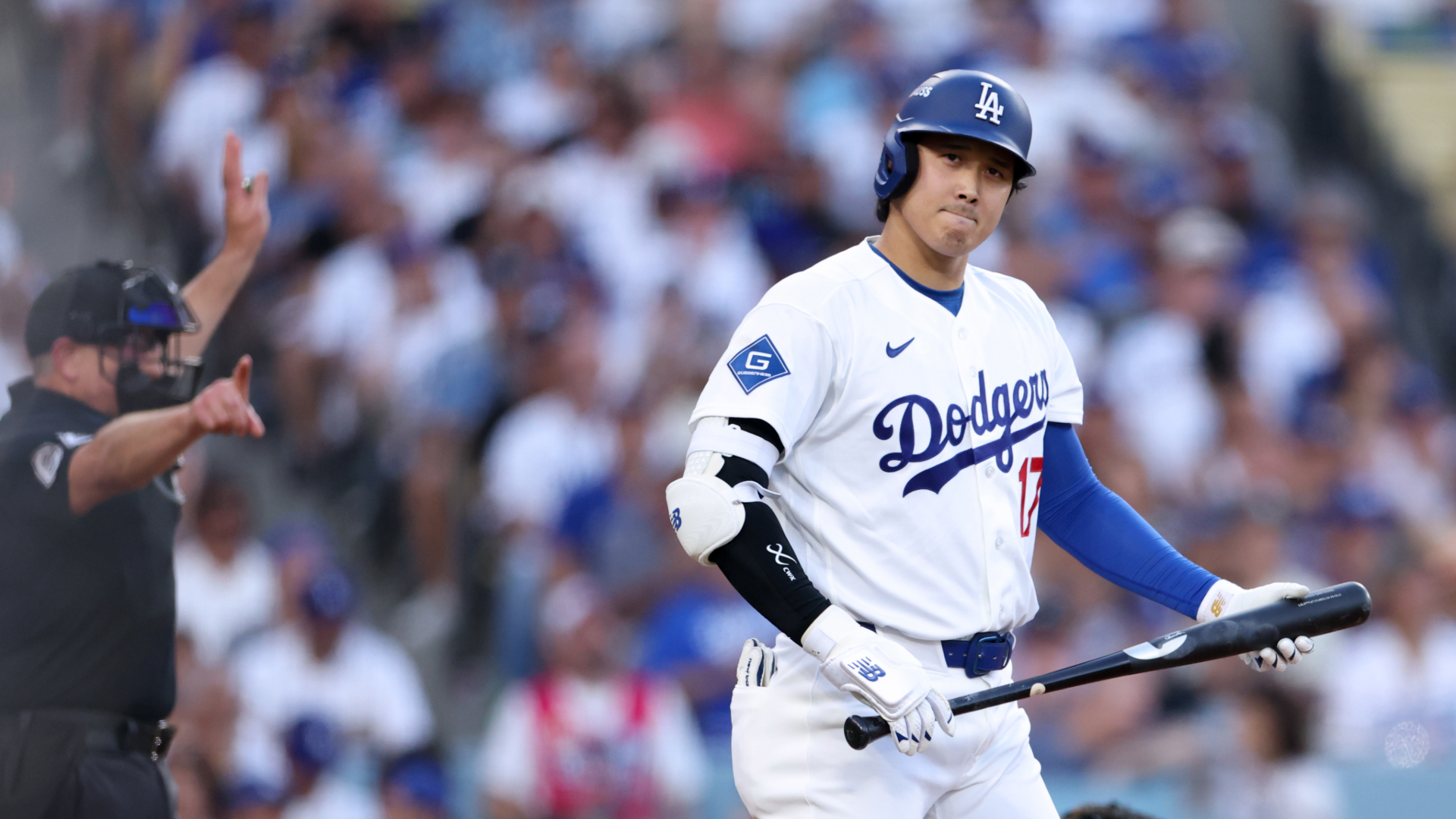
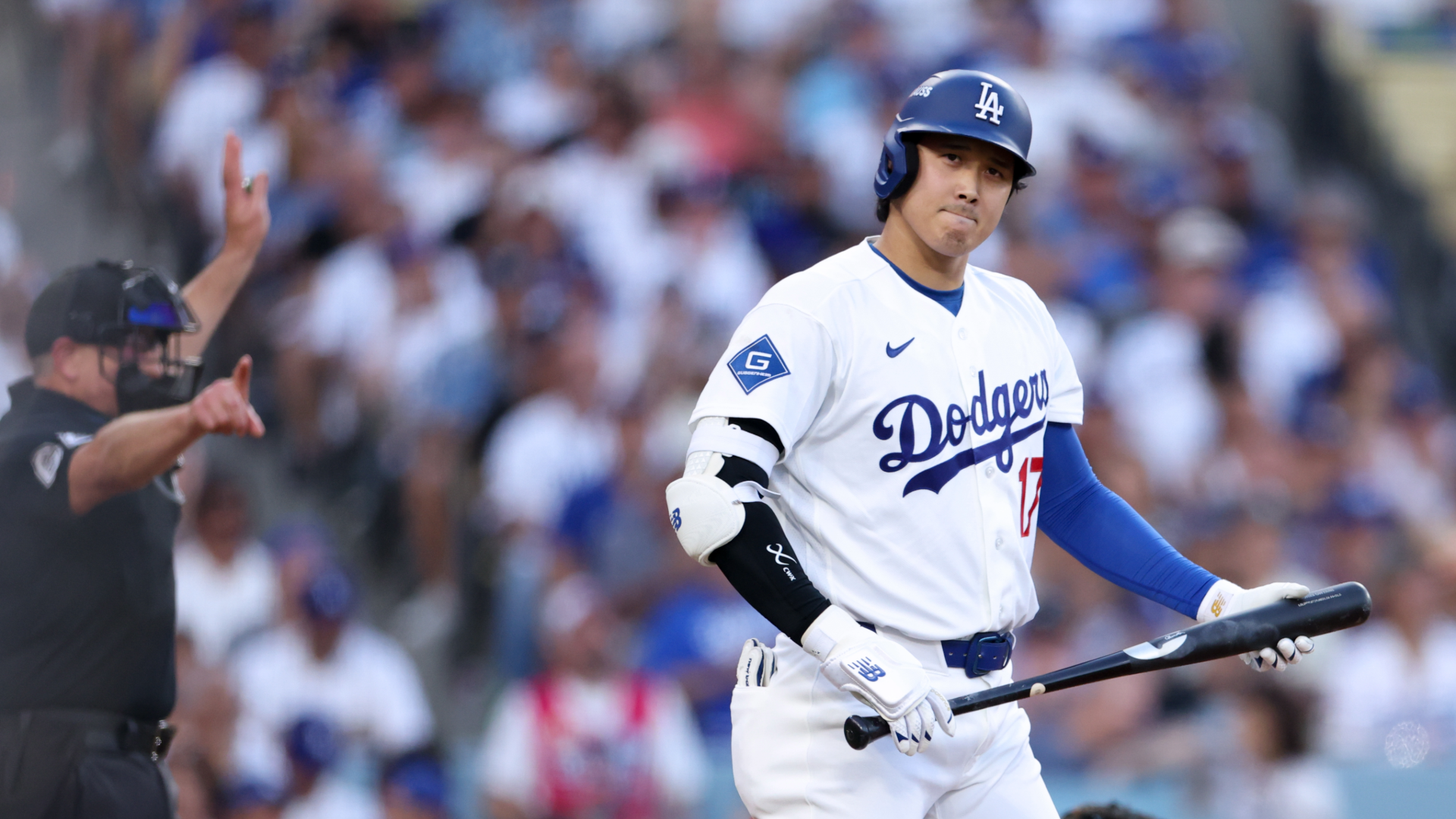
The Los Angeles Dodgers have some concerns as they vie for the elusive threepeat. Their loss in Game 2 of the NLDS to the Braves means the series is now tied 1-1, which in turn means the series is now in essence a best-of-three with the Braves having home field advantage.
A very much related concern is the current status of two-way superstar Shohei Ohtani. Ohtani hasn’t pitched since July 3, when he was pulled from his start against the Padres because of left knee discomfort and soreness in his right biceps. Those injuries kept him out of the All-Star Game and, presumably, won’t allow him to pitch in the postseason.
The Dodgers have the rotation depth and frontline excellence to withstand the loss of Ohtani the pitcher, but what about Ohtani the hitter? His presence is invaluable in an L.A. lineup that’s aging in some spots. Ohtani’s knee inflammation landed him on the injured list in September, but he returned in time to play the final five games of the regular season. He went 5 for 21 in those games with only one extra-base hit, a double, and eight strikeouts against one walk. Taking the longer view, Ohtani in all of September batted just .200/.333/.233, and overall his OPS at the plate dropped from .953 in the first half of 2026 to .772 in the second half. He also saw a decline in underlying batted-ball authority from the first half to the second. He hasn’t homered since Aug. 18 in Coors Field. Counting the current Braves series, that’s a stretch of 20 games and 80 at-bats without a home run for Ohtani.
Speaking of the postseason, through the first two games of the Braves series, Ohtani is 2 for 8 with no extra-base hits or walks and a pair of strikeouts. Normally, such a minuscule sample wouldn’t register, but against the much larger backdrop of Ohtani’s poor production and the parallel matter of his ongoing case of knee inflammation, it’s all a major concern for the Dodgers.
“I think with Shohei, it’s just — I think, if you look at the at-bats, there’s a lot of chase,” Dodgers manager Dave Roberts said after Sunday’s 3-2 loss to Atlanta. “I think that it’s like — it’s hard to square up, put good swings on balls that are out of the zone. That’s kind of what it boils down to.
“Certainly (Chris) Sale is going to be tough because there’s a lot of strike to ball, it’s high velocity. But just trying to get him back in the hitting zone.”
As for the possibility or even likelihood that Ohtani is compromised at the plate because of his knee and, to a lesser extent, his biceps, Roberts said:
“I haven’t heard anything other than he feels fine. So I don’t know if he’s trying to do too much because he doesn’t feel perfect. This time of year, everyone doesn’t feel — no one feels perfect. He’s doing the best he can.
“Yeah, he’ll be in there Game 3, and we’ve just got to, again, take good at-bats and expect the best.”
The Dodgers with their rotation of aces don’t easily concede any pitching match-up, but the bullpen game run to success by Braves manager Walt Weiss in Game 2 will allow Atlanta to start Sale, as dominant as ever at age 37, on full rest in Tuesday’s pivotal Game 3. Sale owns the platoon advantage against Ohtani and other lefty Dodger batters and, as Roberts notes, his stuff is top of the scale. For a hitter struggling like Ohtani has been for weeks and possibly without a healthy foundation under him at the plate, facing the likes of Sale is no way to get right.
After almost a decade of baseball miracles upon baseball miracles, there’s no sensible path to doubting Ohtani. The Dodgers’ lineup fulcrum and leadoff hitter, though, might not be the real Ohtani thanks to those injuries. That, as much as anything else, is imperiling the Dodger dynasty right about now.
Jude Bellingham has long been considered one of the most gifted footballers of his generation, but after England’s emphatic 7-0 demolition of Croatia in the Nations League, former players and pundits are now openly discussing whether the 23-year-old could become one of the greatest to ever play the game.
The performance in Rijeka was a statement one. Bellingham scored and set up a hat-trick of assists, becoming the first England player directly involved in more than two goals in a single match for the Three Lions, and the first since Trent Alexander-Arnold’s display against San Marino in November 2021 to register three assists in one outing. He even wore the captain’s armband late in the game after Harry Kane was substituted, underlining his growing stature within Thomas Tuchel’s squad.
It is a remarkable turnaround from just twelve months ago, when Jude Bellingham’s place in the England setup was far from guaranteed. Tuchel left him out of the squad entirely in October 2025 and made clear the Real Madrid midfielder would not receive preferential treatment heading into the World Cup. Yet Bellingham answered in the only way that mattered, becoming England’s top scorer at the tournament with seven goals as the side reached the semi-finals before finishing third.
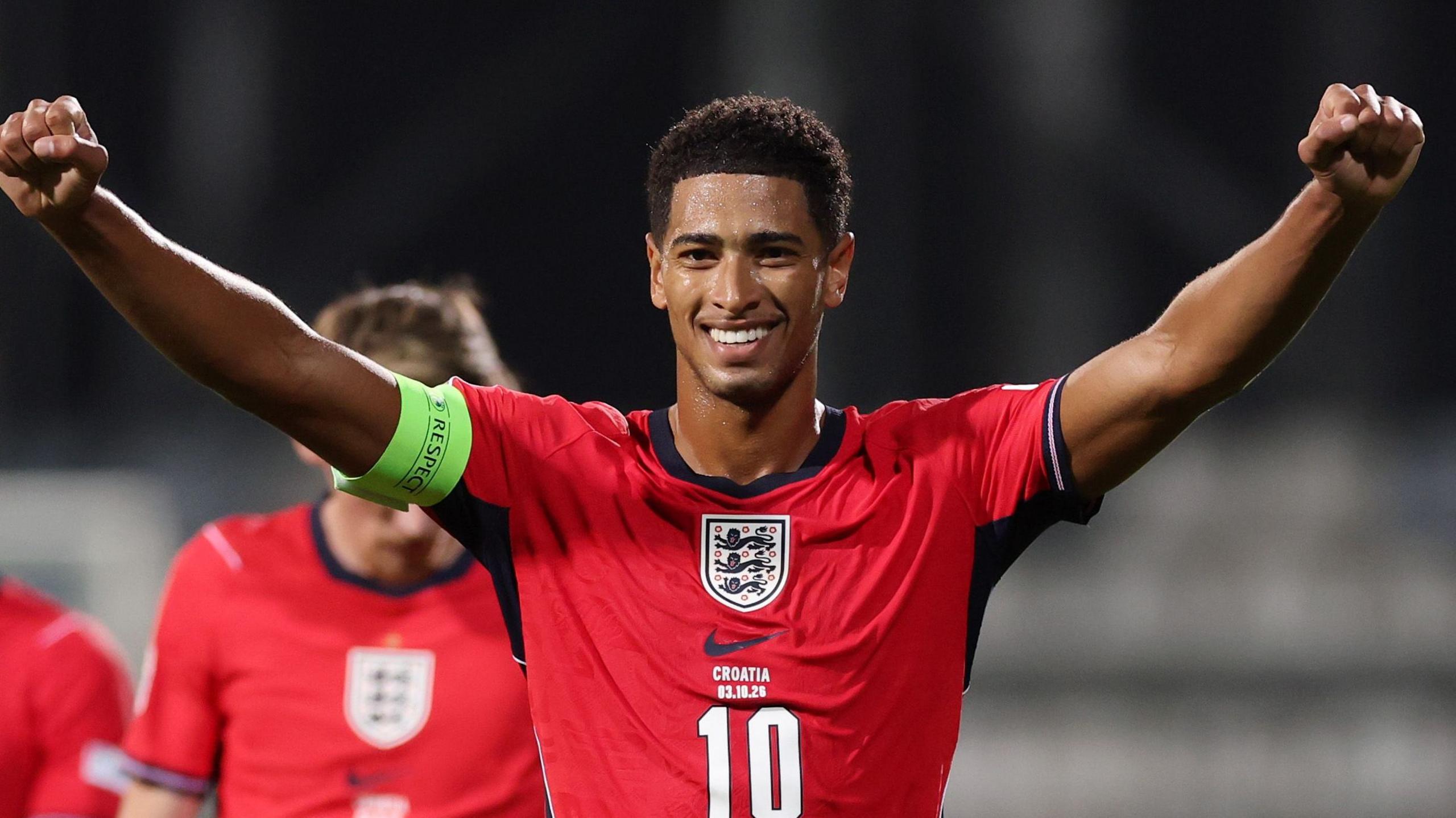
Why Jude Bellingham’s Display Against Croatia Stood Out
Roy Keane, never one to hand out praise lightly, did not hold back after watching the Croatia rout. “Bellingham can go on to be one of the greatest players of all time,” the former Manchester United midfielder said on ITV. “At this moment in time, he is an amazing footballer. The package – his running power, his delivery, his goal threat. The way he is progressing as a player, I still think there is a lot more to come from him.”
Keane also pointed to the less visible side of Bellingham’s game as evidence of his leadership qualities. “He has been fantastic in possession, but what he does out of possession lifts all these other players,” he said. “If you have a player that good in your team, who is amazing in possession and he’s playing for Real Madrid and doing brilliant things, but his work rate off the ball… that will just inspire other players. He is a huge leader for them.”
Ian Wright was similarly effusive, zeroing in on the relentless movement that made Jude Bellingham so difficult for Croatia to contain. “When Bellingham is on the pitch, he is always driving forward and going again and again,” Wright said. “He was involved in everything. His athleticism, his technical ability, his intensity. He never lets up, the way he gets in the box, he is always in there unmarked.”
A New Level, According to Tuchel
Asked directly whether Bellingham had taken his game up a notch, Tuchel did not disagree. “Yes, at the moment it seems like it, and you always need to,” the England head coach said. “It’s like you can never stand still. You have to develop and you have to push for the next level, otherwise other teams will catch up.”
Tuchel explained that following England’s bruising World Cup semi-final defeat to Argentina, he had made adjustments to the setup, handing greater responsibility to key players, Bellingham chief among them. The Croatia result, he suggested, was a way for the squad to move on from that disappointment and show how far they have come.
Former England defender Matt Upson went further, telling BBC Radio 5 Live that Bellingham is now “nailed on as the 10” for England’s long-term future, a role previously contested among several of Tuchel’s attacking options. That status appears to have been cemented further by Bellingham’s recent recognition as England’s player of the year for the second consecutive season.
Bukayo Saka, who benefited directly from one of Bellingham’s assists with a precise cross, was quick to praise his teammate after the match. “He was amazing tonight,” Saka said. “He deserved player of the year and he deserved man of the match tonight too. He was special. Happy to play with him and happy to have him in the England team.”
Supporting Cast Shines Too
While Bellingham was the headline act, he was far from alone. Harry Kane scored twice and will have the chance to equal Peter Shilton’s all-time England appearance record when the Three Lions face the Czech Republic at Wembley. Saka also netted a brace, and Anthony Gordon contributed a goal and an assist, rounding out a front four that tore Croatia apart and inflicted the heaviest defeat in that nation’s history.
Still, it was Jude Bellingham’s all-round contribution — goal, three assists, captaincy, and relentless pressing — that dominated the post-match conversation. For a player who was fighting for his place in the squad barely a year ago, the shift in tone among England’s most respected former players is striking. Whether or not he ultimately joins the pantheon of the game’s greatest names, the consensus from Rijeka was clear: Bellingham is no longer just promising. He is arriving.
Explore more on this topic with Vexel Search.
Sports
‘You can’t just depend on Japrit Bumrah and Hardik Pandya’: Ex-India cricketer urges veteran pacers’ return ahead of 2027 World Cup

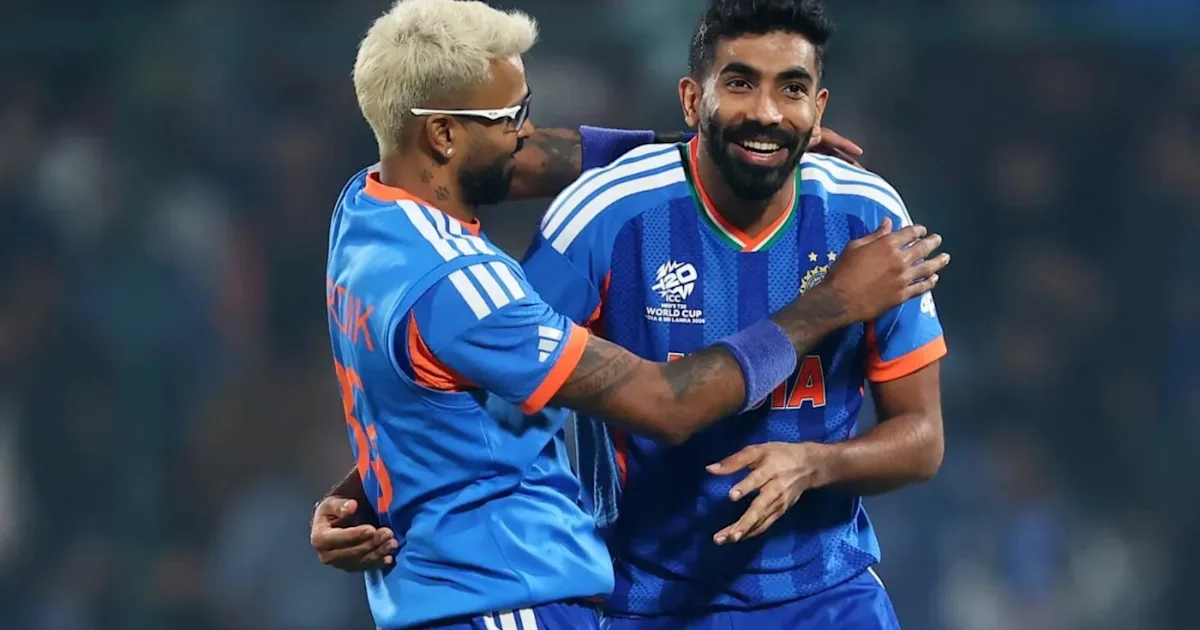
Former India batter Hanuma Vihari has called on the team to bring experienced pacers Bhuvneshwar Kumar and Mohammed Shami back into the ODI setup. His comments came after India failed to defend 351 against the West Indies in the third ODI, losing by five wickets.
Vihari believes India need more reliable bowling options instead of depending heavily on Jasprit Bumrah and Hardik Pandya for wickets, especially with the 2027 ODI World Cup less than a year away.
Bhuvneshwar last played an ODI for India in 2022, with injuries affecting his career. However, the 36-year-old has remained effective in the IPL, taking 45 wickets in 30 matches across the 2025 and 2026 seasons for Royal Challengers Bengaluru.
“I think they have to bring Bhuvneshwar Kumar back. In my opinion, he is still one of the best bowlers in the country. He is proving in the IPL,” Vihari said on his YouTube channel.
Vihari feels Bhuvneshwar’s experience and control with the new ball could give India greater stability. He also believes Shami should return to strengthen the attack.
“You cannot just depend on Bumrah and Hardik. You have to have backup in case of such injuries. I will say go with experience. Get Bhuvneshwar and Shami back,” he said. “You will have some security with experience. When you need a breakthrough, you can go to them, and they will do the job for you. You need stability and experience will always count.”
‘Team is going backwards’
Vihari described India’s failure to defend a total above 350 as a major warning sign. The West Indies chased down 351 in 48.2 overs, exposing concerns about India’s bowling, particularly on flat pitches.
“We could not defend 350. Is this not a wake-up call? I think the team is going backwards. This is a big blow,” he said.
He also raised concerns over India’s backup bowlers after expensive spells from Anshul Kamboj, Gurnoor Brar and Nitish Kumar Reddy.
“The West Indies exposed the Indian bowling attack. They are not even part of the World Cup. Imagine top teams like Australia, South Africa, England,” Vihari added.
The last time online poker had a scandal like this, it nearly killed the game.
In the early 2000s, during the poker boom, players on UltimateBet were being swindled by someone with backend access to the client. A superuser, in other words: an account that could see every opponent’s hole cards in real time. He was eventually identified as Russ Hamilton, a former WSOP Main Event champion, and the figures he took from players went past $20 million. Poker was growing so rapidly that it somehow healed and kept climbing.
This week’s version has a different shape, and in one way a worse one. It’s a hammer blow to a brittle industry already teetering on the edge.
The accused is Paul Gregg, a Canadian who played mid to high stakes on GGPoker, CoinPoker and the Winning Poker Network sites including ACR. He has not responded publicly and faces no reported charges.
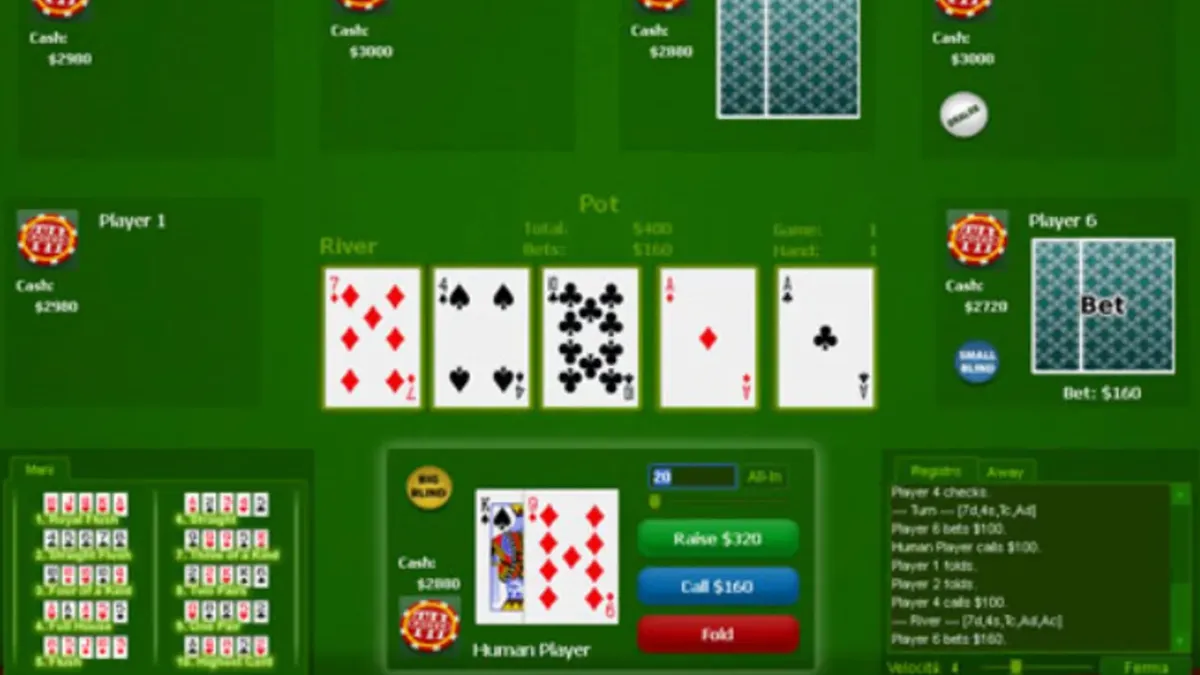
What investigators say happened is this: two third-party poker tools, Jurojin and IntuitiveTables, had their software updates tampered with, and both have now confirmed the compromise. The attacker swapped in Mesh Agent, a component of legitimate open-source IT software called MeshCentral, which is exactly why no antivirus flagged it. On an infected machine it gave a live view of the screen, control of the mouse and keyboard, and every hole card on it.
It’s normal for grinders to use these tools. I used Jurojin myself, for table management and extra bet sizing buttons. Around 30 high-stakes players are reported to have been hit between March 2024 and June 2026.
UltimateBet was an inside job, and the industry could tell itself that one rogue operator had been dealt with. This came through software thousands of players install voluntarily, and that nobody audits.
One of the accounts attributed to Gregg, JackKlompus, won $402,700 across 32,200 hands on WPN at a rate of 24 big blinds per 100 hands. His regular game was $25/$50, where you are playing some of the best players alive. At that level a genuinely elite winner might manage one to three. Five would be remarkable. In the biggest games he played, his rate was over 42.
Then there is a stretch of 140 hands at $0.25/$0.50, a stake he otherwise never touched, where he lost $374.70. That is roughly seven and a half full buy-ins in 140 hands. You cannot lose money that fast by accident. Players who have gone through the data say he was dumping at small stakes deliberately, to drag his overall win rate down to something that looked merely very good instead of impossible.
Here’s the part that should worry anyone who plays online. This isn’t news to everyone. CoinPoker caught him two years ago.
Their security team flagged an account playing as “Europe”, banned it, and confiscated more than $100,000, redistributing the money to the players it had beaten. Gregg complained to the gaming regulator, demanded the funds back and protested his innocence. CoinPoker built its case and prepared for a hearing. He dropped the claim. The ban stood.
That was two years ago. He kept playing everywhere else.
GGPoker and ACR had every hand he ever played sitting on their servers. Patrick Howard, who coaches as Mobius Poker, says he analyzed 32,780 hands after a friend’s unexplained losses and sent GGPoker a report setting out the patterns. He says nothing came of it.
Nacho Morón, the Spanish high roller who lost $60,000 to “Europe” in fifteen minutes and puts his total losses at up to $200,000, says the accounts were reported “more than 20 or 30 times” over two years while staying active. “I give full responsibility to the rooms,” he said. “It’s too much time.”
Then the line that lands hardest, from a man who was cleaned out by it: “The newest room at that time was CoinPoker, and the one that was supposed least prepared, and the first one to catch it.”
Poker grew its way out of UltimateBet. There was so much new money arriving that the industry could absorb a $20 million theft and keep climbing.
That money isn’t coming now. The games are smaller, the players are sharper, and the one thing still holding the whole thing together is the belief that somebody at the top is checking. For two years, nobody was.

I Found The Best Amazon Prime Day Headphone Deals (2026)

Overwatch’s China-Only Skins Spark Global Backlash: Players Demand Blizzard Close the Quality Gap

Nations League Window Exposes Football’s Fault Lines: Politics, Pressure and a Packed Schedule


-

 Fashion3 days ago
Weekend Open Thread: Veronica Beard
-

 Tech & AI6 days ago
Figure F.02 Robots Meet Molten Steel as Arnold Schwarzenegger Watches in Finland
-

 Tech & AI15 hours ago
Common Mistakes You Should Avoid When Using Foldable Phones
-

 Business & Hustles7 days ago
OpenAI rebrands AI agents as ‘dots’ amid security fears
-

 Tech & AI7 days ago
Alternatives to Animal Testing Are Finally Taking Off
-
 Tech & AI4 days ago
Fireflies.ai Launches Fireflies Talk for Free, Unlimited Voice Dictation
-

 Business & Hustles7 days ago
UK chancellor uses bitcoin to mock Nigel Farage
-

 Tech & AI4 days ago
Excellent hardware badly hampered by too-small SSD
-

 Tech & AI6 days ago
OpenAI Pulls Plug on New AI Model as Industry’s Safety Cracks Widen
-

 Crypto5 days ago
OpenPayd’s MiCA Approval Signals Europe’s Stablecoin Infrastructure Is Going Mainstream
-

 Crypto5 days ago
NEAR Intents hacked days after freezing stolen Bitget funds
-

 Tech & AI4 days ago
Mystery AMD Chip “Gainsborough” Fuels Steam Deck 2 Speculation — But Don’t Get Too Excited Yet
-
 Tech & AI4 days ago
Sony’s new PS5 Pro lottery requires 60 hours of playtime just to apply
-

 Tech & AI5 days ago
Whatever AI Safety Is, It’s Not This
-

 Tech & AI5 days ago
Photon held a funeral for mobile apps. Now it has $4.5M to help replace them with agents
-

 Fashion6 days ago
Moving to a New City as a Creative? How to Build a Routine, Community, and Life That Feels Like You
-

 Tech & AI5 days ago
Can Schools Trust AI Features in Edtech Products?
-

 Gaming4 days ago
Reigns Studio Nerial Shuts Down as Founders Step Back “To Our Roots”
-

 Tech & AI7 days ago
What Irish tech companies need to know about the EU’s CRA
-

 Crypto5 days ago
Base Cobalt upgrade puts new controls inside tokenized assets
You must be logged in to post a comment Login