
Business
True Citrus debuts functional drink mix collection





Thailand’s central bank has cut its 2026 GDP growth forecast and warned of virtually unlimited downside risks as the ongoing Iran war disrupts tourism and drives up import costs.
Thailand’s Central Bank Warns of Severe Economic Impact from Iran War
Key Details:
- The Bank of Thailand revised its 2026 GDP growth forecast down to 1.3% (from 1.9% in December), assuming the war ends in the second half of 2026.
- Tourism from Gulf countries fell to near zero in March due to airport closures caused by Iranian attacks, with those visitors normally accounting for 7% of total tourism spending.
- Malaysian tourist numbers are also declining due to high fuel costs discouraging cross-border travel.
- Inflation is forecast to reach 3.5% under the baseline scenario; interest rate hikes are considered unlikely unless inflation persists beyond a year.
- The previously expected $12 billion current account surplus may need to be revised downward, potentially turning negative.
- Capital outflows in February and March were described as manageable, with flows returning to positive territory in April.
- Bangkok will host the IMF-World Bank autumn meetings in October 2026, which officials hope will showcase Asia’s economic resilience.
Thailand is among the world’s most exposed economies to the Iran conflict due to its heavy reliance on imported energy, and the central bank’s stark warnings highlight the broad regional economic risks if the war continues.
Thailand’s Worst-Case Economic Scenarios Amid Prolonged Iran War
If the Iran war continues beyond a few months, Thailand faces severe economic contraction, with GDP growth potentially falling to 0.2% and inflation surging to 5.8%, driven by energy shocks, tourism collapse, and capital flight.
- In a prolonged conflict scenario (6–9 months), oil prices could climb to $135–145 per barrel, triggering a global downturn and slashing Thailand’s GDP growth to 0.2% while inflation spikes to 5.8%
- If the Strait of Hormuz remains closed, disrupting over 20% of global oil shipments, Thailand’s economy could slow further, with growth potentially dipping below 1%.
- In an extreme scenario, oil prices could reach $200 per barrel, though analysts consider this unlikely; even $130+ per barrel for three months would sharply raise inflation risks.
- Foreign investors have already pulled back sharply, with $823 million net selloff in equities and $705 million in bond outflows in March — the largest combined outflow since October 2024.
- The Thai baht has depreciated nearly 3% since the war began, with forecasts predicting a slide to ฿35 per dollar if the conflict drags on.
- Tourism from Gulf countries has fallen to near zero, and Malaysian visitors are declining due to high fuel costs, both critical to Thailand’s economy.
Why It Matters: Thailand’s heavy reliance on imported energy and tourism makes it uniquely vulnerable; without policy flexibility or fiscal room, prolonged conflict could push the economy into contraction, erasing recent hopes for reviva
Other People are Reading

COPEL: Risk-Return Ratio Is Still Attractive
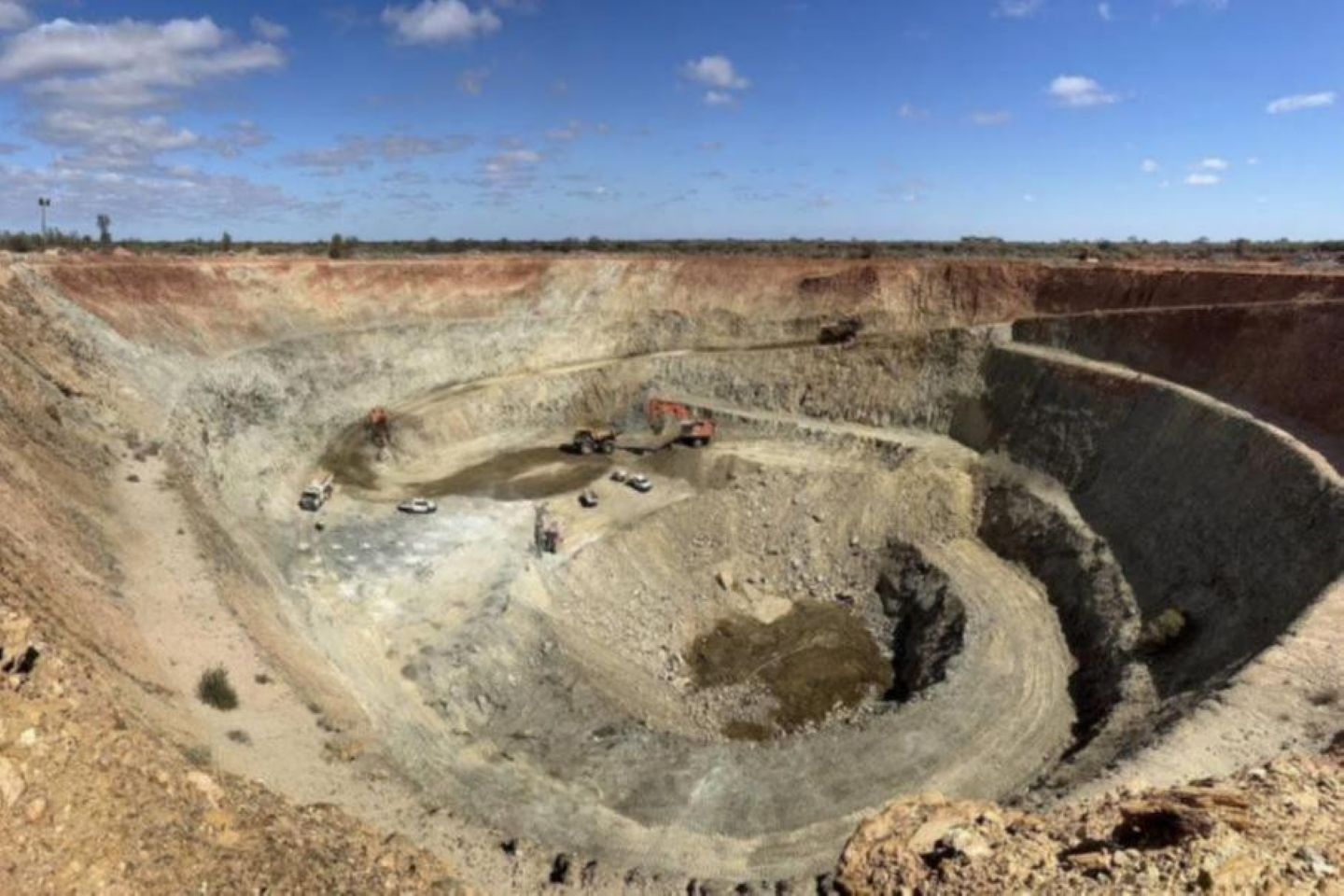
Shares in Perth-based mining services company Aquirian rose by 10 per cent on Thursday morning, following news of a three-year deal with Brightstar Resources.

Six of the top 10 brokers posted a year-on-year decline in active client base for the financial year ended March 31, data from NSE showed.
In percentage terms, Upstox saw the steepest decline in active clients at 27.64%, followed by Zerodha at 12.62% and Motilal Oswal Financial Services at 11.14%, according to exchange data. Angel One’s client base fell 10.75%, while HDFC Securities and Kotak Securities posted declines of 8.75% and 6.82%, respectively.
 ET Bureau
The total number of active clients on NSE declined to 4.57 crore at the end of FY26, compared with 4.92 crore a year earlier.

Broking officials said the drop reflects a combination of market volatility, regulatory tightening and a shift in investor behaviour.
“Higher volatility compounded by geopolitical uncertainty, tighter regulations in the derivatives segment, and a selective investor mindset have all reduced trading activity, especially among new participants,” said Krishna Rao, MD & Co-head — Equity Broking Group, JM Financial Services.Segment-wise, the cash market had 3.58 crore active clients, while the futures and options segment had about 85 lakh. The combined active client base across segments stood at 3.79 crore.
Ashish Rathi, head — Retail Business at HDFC Securities, said volatility driven by tariffs and geopolitical tensions kept returns muted and slowed new client additions.
“A large portion of retail investors have also been focused on mid and small caps, which haven’t performed well over the past year, due to which many are sitting on losses and are less active in the market,” he said.
For the year ended March 31, the Nifty fell 5%, while the Sensex declined 7% from a year earlier. The Nifty Smallcap 250 and Nifty Microcap 250 dropped 5.4% and 8.7%, respectively, while the Nifty Midcap 150 rose 1.6%.
“Retail clients are becoming more mindful about risk, costs and market conditions, and this could be healthy for overall market quality going forward,” said Rao. “I feel the key challenge now is not adding new accounts, but converting passive account holders into consistently engaged investors.”
Market leader Groww, along with ICICI Securities, SBICAP Securities and Dhan, saw an increase in active clients during the period.
In terms of rankings, ICICI Securities overtook Upstox to become the fourth-largest broker by active clients, while SBICAP Securities and Dhan moved ahead of Motilal Oswal Financial Services.
Business
Oil Price Today (April 16): Crude oil hovers below $95 amid Iran war peace talks. Where are prices headed?

The White House said on Wednesday it was hopeful of reaching an agreement to end the conflict with Iran, but also warned that economic pressure on Tehran would intensify if it does not cooperate.
Crude oil price on April 16
Brent crude futures fell 44 cents, or 0.5%, to $94.49 a barrel at 0021 GMT, while U.S. West Texas Intermediate (WTI) crude declined 70 cents, or 0.8%, to $90.59 a barrel.
According to a Reuters report, one source briefed by Tehran said that the country may permit ships to move freely along the Omani side of the Strait of Hormuz if a deal is struck to avoid further escalation.
The ongoing U.S.-Israeli war with Iran has caused the largest disruption ever to global oil and gas supplies, with Iran restricting traffic through the strait, a key route that accounts for around 20% of global oil and LNG flows.
Meanwhile, U.S. and Iranian officials are considering returning to Pakistan for another round of talks as early as this weekend, after discussions ended without progress on Sunday. Pakistan’s army chief, acting as a mediator, arrived in Tehran on Wednesday in an effort to prevent further escalation.
What are experts saying?
Until a formal agreement is reached and normal navigation resumes, WTI prices are likely to remain volatile within the $80 to $100 range.
Brokerage firm Macquarie noted that even if tensions ease, oil prices are likely to stay supported in the $85 to $90 range, with a gradual move toward $110 as flows through the Strait of Hormuz normalise. It added that if disruptions extend through April, Brent could still rise to $150 per barrel.
Looking ahead, crude prices could move higher from current levels. According to Kayanat Chainwala of Kotak Securities, oil may rise to $120 per barrel in the near term and potentially touch $150 if the conflict continues.
Nuvama Institutional Equities echoes the same view. The continued closure of the Strait of Hormuz, which handles around 20 million barrels per day, could push crude prices to the $110–150 per barrel range.
Market experts believe crude may be entering a structurally higher price phase. Ajit Mishra, Senior Vice President at Religare Broking, said the current ceasefire is temporary and a return to pre-war levels of $70 to $75 could take several months. In the near term, he expects crude to remain within a range of $80 to $85 on the downside and $95 to $100 on the upside.
(Disclaimer: Recommendations, suggestions, views and opinions given by the experts are their own. These do not represent the views of The Economic Times)

Top executives from firms such as Meta and YouTube will be asked what they are doing to protect children.

NEW YORK — Polaris Inc. shares tumbled more than 10 percent in morning trading Wednesday, plunging to around $51.59 as investors grew jittery ahead of the company’s first-quarter earnings report and grappled with ongoing softness in the powersports and off-road vehicle market.
At approximately 11:27 a.m. EDT on April 15, 2026, PII stock had dropped $5.91, or 10.28 percent, from the previous close near $57.50. The recreational vehicle maker’s market capitalization stood near $3.1 billion after the steep decline. Shares have now lost roughly 6 to 7 percent over the past six months while the broader S&P 500 remained essentially flat, highlighting sector-specific pressures weighing on the Minnesota-based company.
The sell-off comes just two weeks before Polaris is scheduled to release its first-quarter 2026 financial results on April 28, followed by a conference call at 9 a.m. Central Time. Analysts expect another challenging period marked by cautious consumer spending on big-ticket discretionary items such as all-terrain vehicles, side-by-sides and snowmobiles.
Fourth-quarter 2025 results released in late January offered a mixed picture. Revenue rose to $1.92 billion, beating estimates, while adjusted earnings per share of $0.08 topped forecasts. Yet the company guided for 2026 adjusted EPS around the midpoint of roughly $1.55 — below Wall Street expectations — and flagged only modest top-line growth of 1 to 3 percent for the full year amid persistent inventory management and demand headwinds.
Polaris has been working aggressively to right-size dealer inventory after years of elevated stock levels. Executives have pointed to promotional activity and reduced shipments as key levers, but softer retail demand in key segments continues to pressure margins. Operating margins contracted in recent quarters, and the company faces additional headwinds from tariffs that could add tens of millions in costs.
Wall Street’s consensus view reflects the uncertainty. Across 11 analysts tracked recently, the rating sits at Hold with an average 12-month price target near $60 to $63, implying potential upside of roughly 15 to 22 percent from current depressed levels. Targets range from a low of $52 to a high near $74. Firms including Citi recently trimmed their price objective to $58 from $71, while Wells Fargo initiated coverage with an Equal Weight rating and a $52 target.
Some longer-term models point to even more conservative outcomes. Certain forecasts see limited growth in 2026, with sales essentially flat or slightly down and profitability remaining under pressure. Bears highlight structural challenges: a maturing off-road market, intense competition from rivals such as BRP and Honda, and quality-related issues that have occasionally surfaced in recent years.
For bulls, the story centers on Polaris’s strong brand heritage and innovation pipeline. The company is celebrating the 40th anniversary of its all-terrain vehicles in 2026 and has rolled out an expanded off-road lineup featuring refreshed RZR, RANGER and Sportsman models. Highlights include the new entry-level RANGER 500 utility vehicle priced under $10,000, updated RZR Pro R models with larger touchscreens and enhanced suspension, and new 2-up ATV configurations designed to broaden appeal.
These 2026 product refreshes aim to drive retail traffic and recapture share in the side-by-side and ATV segments, where Polaris has long been a leader. The company is also leaning into rider-focused technology such as the RIDE COMMAND touchscreen system and improved comfort features for both work and recreation use. Management hopes the refreshed family lineup, combined with targeted promotions, will help stabilize demand as the riding season approaches.
Yet macroeconomic factors cloud the outlook. Higher interest rates have made financing more expensive for big-ticket purchases, and middle-income consumers — a core Polaris customer base — remain price-sensitive after years of inflation. Retail sales data in the powersports industry have shown choppy trends, with some categories still normalizing after pandemic-era surges.
Polaris maintains a solid balance sheet and continues to return capital to shareholders. The company pays a quarterly dividend of $0.68 per share, yielding roughly 5 percent at current prices, and qualifies as an attractive income play for patient investors. However, dividend coverage has drawn scrutiny amid compressed earnings.
Free cash flow generation remains a bright spot, though capital allocation will be key as the company balances debt reduction, investment in new products and potential share repurchases. Trailing 12-month revenue stands near $7.15 billion with a market value that has contracted significantly from earlier peaks.
For investors weighing a position in 2026, Polaris represents a classic cyclical play in the consumer discretionary space. Optimists argue that any stabilization in retail demand combined with successful execution on the new model year could spark a rebound, especially if interest rates ease later in the year. The stock’s current valuation — trading at a forward price-to-earnings multiple in the low 30s on depressed earnings — leaves room for multiple expansion if guidance improves.
Skeptics counter that the risk-reward remains unfavorable. Persistent margin pressure, tariff exposure estimated in the tens of millions, and limited near-term growth visibility suggest the stock could test lower support levels if Q1 results disappoint or summer selling season starts slowly. Some quantitative models flag the name as overvalued on traditional metrics when factoring in execution risks.
Next earnings on April 28 will be closely watched for several metrics: shipment volumes, gross margin trends, dealer inventory levels and any updated full-year guidance. Commentary on retail sell-through rates and early reception to the 2026 lineup could move the needle sharply in either direction.
Polaris has navigated economic cycles before, leveraging its American-engineered brand and vertically integrated manufacturing. The company’s off-road dominance, particularly in the high-performance RZR segment, provides a moat, while diversification into motorcycles via Indian and other on-road products offers some buffer.
Still, the industry faces longer-term shifts. Electrification remains on the horizon but has yet to materially impact Polaris’s core combustion-engine lineup. Regulatory changes around emissions and safety could add costs, while supply chain normalization has been uneven.
As spring riding season begins, attention will turn to dealership traffic, online configurator activity and any major marketing campaigns tied to the new models. Broader economic indicators — including consumer confidence, fuel prices and disposable income trends — will also influence sentiment.
At current levels near $51.59, Polaris stock offers a high dividend yield and potential recovery upside for contrarian investors who believe the worst of the inventory correction is behind it. Those seeking steadier growth may prefer to wait for clearer signals from earnings or a more attractive entry point.
The coming weeks will provide critical data points. Stronger-than-expected retail metrics or upbeat commentary on 2026 product momentum could halt the slide and support a rebound toward the $60 consensus zone. Further weakness in demand or margin commentary, however, risks pushing shares toward the lower end of the 52-week range.
Polaris built its reputation on rugged, innovative machines that power adventures across trails, farms and job sites. Whether 2026 marks a stabilization year or another period of headwinds will determine if the stock can shift from recent laggard to performer in the powersports sector. Investors will soon get fresh insight when the company reports results and outlines its path forward in a still-challenging environment.

Form 13F Raub Brock Capital Management LP For: 15 April

Bank of England governor says the Iran war energy shock makes the next rate decision “very very difficult”.
Business
Carrier Global Stock Drops 8% on Residential HVAC Weakness as Data Center Boom Offers 2026 Hope

NEW YORK — Carrier Global Corp. shares tumbled more than 8 percent in morning trading Wednesday, falling to around $59.48 as investors weighed persistent softness in the residential heating and cooling market ahead of the company’s first-quarter earnings report later this month.
At approximately 11:43 a.m. EDT on April 15, 2026, CARR stock had declined $5.19, or 8.02 percent, extending recent pressure on the climate and energy solutions provider. The company’s market capitalization stood near $54 billion after the drop. Shares have traded in a 52-week range of roughly $50.20 to $81.10, reflecting a challenging stretch for the former United Technologies spin-off amid mixed demand signals across its segments.
The sell-off comes less than two weeks before Carrier is set to release first-quarter 2026 results on April 30, with a conference call scheduled for 7:30 a.m. ET. Analysts and investors will scrutinize any early signs of stabilization in residential and light commercial HVAC, where weakness has weighed on results, while watching for continued strength in high-growth areas such as commercial systems and data center cooling.
Full-year 2025 results released in early February painted a tale of two businesses. Net sales fell 3 percent to $21.75 billion, with organic sales down 1 percent. Adjusted earnings per share reached $2.59. Global commercial HVAC and aftermarket businesses delivered double-digit growth, but this was more than offset by sharp declines in residential and light commercial segments, particularly in the Americas and China.
Fourth-quarter 2025 figures underscored the pressure. Sales dropped 6 percent to $4.84 billion, missing estimates, while adjusted EPS of $0.34 also fell short of consensus. Residential volumes plunged nearly 38 percent year-over-year in some regions, hurt by cautious consumer spending, higher financing costs and elevated dealer inventory levels following pandemic-era surges.
Carrier’s 2026 guidance, issued alongside the full-year results, called for reported sales of approximately $22 billion, incorporating a roughly $350 million headwind from the planned divestiture of its Riello business. Organic growth is expected to be flat to low-single-digit, with adjusted operating profit around $3.4 billion and adjusted EPS near $2.80 — representing high-single-digit earnings growth but falling slightly below some Wall Street forecasts. Free cash flow is projected at about $2 billion, supporting continued share repurchases of roughly $1.5 billion.
Wall Street’s consensus remains constructive despite near-term concerns. Across roughly two dozen analysts, the rating tilts toward Moderate Buy or Outperform, with an average 12-month price target near $70 to $72 — implying potential upside of 18 to 21 percent from current levels. Targets range from a low near $55 to highs of $90, reflecting divergent views on the speed of residential recovery versus the durability of commercial and data center momentum.
Bulls emphasize Carrier’s positioning in secular growth drivers. Data center cooling orders surged nearly 50 percent in the fourth quarter of 2025, fueled by artificial intelligence infrastructure buildout. Management has highlighted expectations for continued double-digit expansion in global commercial HVAC and aftermarket services in 2026, with data center-related revenue potentially contributing $1.5 billion or more as backlog converts to shipments, particularly in the second half.
The company has introduced next-generation HVAC solutions featuring higher efficiency, smart controls and improved comfort, debuted at industry events such as the AHR Expo and International Builders’ Show. These innovations, combined with a strong aftermarket playbook, are designed to drive recurring revenue and margin stability even as new residential construction and replacement demand remain muted.
Carrier also benefits from a survey showing more than half of U.S. homeowners planning home improvements in 2026, with heating and cooling upgrades ranking among the top projects. Yet executives have cautioned that meaningful recovery in North American residential markets may not materialize until later in the year or into 2027, assuming interest rates ease and consumer confidence improves.
Challenges extend beyond cyclical demand. Higher interest rates have delayed commercial and residential projects, while destocking at distributors has pressured shipments. Tariff exposure and supply chain dynamics add further uncertainty, though Carrier has focused on cost control, discretionary spending reductions and backlog building in longer-cycle businesses.
The stock’s valuation reflects these tensions. Trading at a forward price-to-earnings multiple in the mid- to high-20s based on 2026 estimates, CARR offers a dividend yield of approximately 1.6 percent with a quarterly payout of $0.24. The company has returned substantial capital to shareholders, including nearly $3.7 billion in 2025 through dividends and buybacks.
For investors debating buy or sell decisions in 2026, Carrier represents a play on both cyclical recovery and structural AI-driven demand. Optimists argue that any stabilization in residential sell-through, combined with accelerating data center deployments, could spark multiple expansion and support a rebound toward the $70 consensus zone. The current depressed price relative to street targets creates what some view as an attractive entry for patient capital.
Skeptics counter that prolonged weakness in residential and light commercial — which together represent a sizable portion of revenue — could keep earnings growth subdued and pressure margins further. Execution on cost initiatives and successful integration of new product launches will be critical. Broader economic factors, including housing starts, commercial construction activity and energy prices, will also influence performance.
Next earnings on April 30 will offer fresh insight into first-quarter trends, with particular attention to order rates, backlog conversion and any updated commentary on full-year guidance. Q1 revenue is expected near $5 billion, with adjusted EPS around $0.50.
Carrier’s diversified portfolio spans climate solutions for homes, commercial buildings, transportation refrigeration and industrial applications. Its legacy as a pioneer in air conditioning provides brand strength, while investments in intelligent controls and energy-efficient systems position it for decarbonization trends and stricter efficiency standards.
As spring advances and cooling season approaches, retail and wholesale traffic in HVAC products will serve as key barometers. Dealer inventory normalization and early reception to 2026 product lines could provide tailwinds if consumer sentiment improves.
At current levels near $59.48, Carrier stock offers a defensive quality in the industrials sector with upside tied to both macro recovery and AI infrastructure spending. Dividend-focused investors may find the yield appealing, while growth-oriented participants will watch data center momentum as a potential offset to residential softness.
The coming quarters will test whether commercial and aftermarket strength can sufficiently counterbalance near-term residential headwinds. If data center orders continue converting and residential markets show even modest stabilization, Carrier could deliver on its earnings growth targets and reward shareholders.
Carrier has guided for its sixth consecutive year of double-digit growth in commercial HVAC. That track record, paired with innovation in smart and efficient solutions, underpins the longer-term bullish case even as 2026 begins with caution.
Whether the stock rebounds from recent lows or faces further pressure will hinge on April 30 results and the trajectory of key end markets. For now, the market appears to be pricing in extended weakness in residential demand while assigning optionality to the company’s high-growth commercial exposure.
As one of the world’s leading providers of intelligent climate and energy solutions, Carrier remains well-positioned for eventual recovery in its core markets and sustained expansion in data center cooling. Investors will soon receive updated signals on execution as the company navigates a transitional year in a dynamic economic environment.

Revisiting Kelly Cutrone’s Insane Memoir 15 Years Later

Jury to be sent out in Macaulay Branighan murder trial

Barr keeps his cash lead in Kentucky Senate GOP primary


-

 Politics5 days ago
US brings back mandatory military draft registration
-
 Sports5 days ago
Man United discover Nico Schlotterbeck transfer fee as defender reaches Dortmund agreement
-

 Fashion5 days ago
Weekend Open Thread: Veronica Beard
-

 Politics6 days ago
Malcolm In The Middle OG Turned Down ‘Buckets Of Money’ To Appear In Reboot
-

 Politics4 days ago
World Cup exit makes Italy enter crisis mode
-

 Crypto World7 days ago
Canary Capital Files SEC Registration for PEPE ETF
-

 Business5 days ago
Tesla Model Y Tops China Auto Sales in March 2026 With 39,827 Registrations, Beating Cheaper EVs and Gas Cars
-

 Crypto World2 days ago
The SEC Conditionalises DeFi Platforms to Be Avoided for Broker Registration
-

 Crypto World2 days ago
SEC Signals Exemption for Crypto Interfaces From Broker Registration
-

 News Videos20 hours ago
Secure crypto trading starts with an FIU-registered
-
 NewsBeat3 days ago
Pep Guardiola and Gary Neville agree over Arsenal title problem that benefits Man City
-

 Business6 days ago
OpenAI Halts Stargate UK Data Centre Project Over Energy Costs and Copyright Row
-

 Business4 days ago
Ireland Fuel Protests Enter Day 5 as Blockades Spark Shortages and Government Prepares Support Package
-

 Crypto World5 days ago
Federal judge blocks Arizona from bringing criminal charges against Kalshi
-

 Politics6 days ago
LBC Presenter Mocks Trump Over Iran War Failures
-
 NewsBeat4 days ago
JD Vance announces ‘no agreement’ with Iran over nuclear weapons fear
-

 Crypto World2 days ago
SEC Proposes Certain Crypto Interfaces Don’t Need to Register as Brokers
-

 NewsBeat2 days ago
Trump and Pope Leo: Behind their disagreement over Iran war
-

 Tech6 days ago
A version of Windows 10 released a decade ago is now eligible for additional security patches
-

 Business5 days ago
IMF retains floor for precautionary balances at SDR 20 billion
You must be logged in to post a comment Login