
Business & Hustles
Brent Crude Slides 7% to Under $106 as US-Iran Diplomacy Hopes Grow


Header image: AI-generated illustration by WordUp News.
Brent crude, the global oil benchmark, fell 7% on Monday to under $106 a barrel at one stage, its lowest level since mid-October, as markets bet that Washington and Tehran may be edging toward a diplomatic exit from the Iran war.
A sharp reversal after a week near war-time highs
The drop reverses much of last week’s spike. Brent had climbed close to $118 a barrel, within touching distance of the peaks reached in the first aftermath of the war’s outbreak. Monday’s move suggests traders are now pricing in a lower chance of further escalation. Reports describe both sides as appearing more willing to avoid widening the conflict, and President Donald Trump has signalled he could push for a more diplomatic solution.
The coverage offers few specifics about the state of any negotiations. The market reaction rests on signals and tone rather than a announced deal, which helps explain why the price remains far above where many consumers and businesses would want it.
Borrowing costs and the Bank of England
The effects of cheaper crude spread quickly into UK financial markets. The yield on 10-year gilts dropped to 5.19% at one stage, its lowest in six weeks, as fears of building inflation eased. Energy costs feed directly into consumer prices, so a retreat in Brent crude takes some pressure off investors worried about the UK’s inflation path.
The Bank of England is still widely expected to raise interest rates on Thursday, from 3.75% to 4%, because UK inflation is rising. The potential change is in the messaging. If oil stays lower, policymakers may rein in their signals about further hikes, even if they deliver this one.
The US midterms as a hinge for oil
Kathleen Brooks, research director at XTB, said Tuesday’s US midterm elections will be key for both the conflict and the oil market. She noted that Trump had hinted at a possible restart of the war once the elections were over, though he has more recently expressed interest in a diplomatic route.
Brooks argued that a Democratic win in Congress could hasten a resolution. That outcome, she said, might push oil below $100 a barrel and lift investor sentiment more broadly. This is one analyst’s scenario, not a forecast of what will happen, and it depends on how the political results translate into policy on Iran.
For now, the picture is fragile. Brent crude has dropped sharply, but it was close to $118 only days ago, and the direction of travel will depend on whether the diplomatic signals become concrete and on what the midterm results mean for Washington’s approach. Traders face a pivotal week: the vote on Tuesday, then the Bank of England’s decision on Thursday.
- Oil prices pull back sharply on signs of US-Iran diplomacy to end war (The Independent)
- Oil prices pull back sharply on signs of US-Iran diplomacy to end war (standard.co.uk)
WordUp Morning
Ten stories, both sides of each, in five minutes. Free, every weekday at 7am, plus a Saturday weekend edition.
We'll email you a link to confirm. Unsubscribe any time.


Header image: AI-generated illustration by WordUp News.
A tech rally in New York and a pullback in oil prices gave stock markets a lift on Monday, easing some of the anxiety that dominated trading last week. Investors in London, Paris and Frankfurt all finished the day in positive territory, while Wall Street was higher around the time European markets closed.
The FTSE 100 closed up 31.55 points, or 0.3%, at 10,761.33. The more domestically focused FTSE 250 did much better, gaining 342.49 points, or 1.4%, to end at 24,795.85. The AIM all-share added 0.6% to finish at 757.92. In Europe, the CAC 40 in Paris rose 1.0% and Frankfurt’s DAX 40 gained 0.6%. In New York, the Dow Jones Industrial Average was up 1.0%, the S&P 500 up 0.6% and the Nasdaq Composite up 0.7%.
Why the tech rally matters after last week’s falls
The bounce in technology shares followed heavy losses the week before, when investors began to doubt whether the huge sums going into AI infrastructure will ever pay off. Tom Stevenson, investment director at Fidelity International, summed up the mood. Investors, he said, no longer doubt that growth is coming, but they are starting to wonder whether they have paid too much for it.
He also pointed to the cost of money. The AI boom, he argued, is running into higher borrowing costs, and even the large cash flows of the big US cloud companies are being drained. That leaves the industry leaning more on equity and bond markets, and with yields at or above 5% “the case is harder to make”. On Monday, longer-dated US government borrowing costs eased slightly. The 10-year Treasury yield was quoted at 4.89%, down from 4.94% on Friday, and the 30-year yield fell to 5.25% from 5.31%.
Anthropic gave the sector some support. The AI company said its third-quarter revenue reached $17 billion, up from $1.4 billion a year earlier, an increase of more than 1,100%. It is preparing to list on Wall Street later this month. The figures are the company’s own, but they offered a counterweight to worries about whether AI spending can generate returns.
Oil falls on hopes of US-Iran progress
The other main driver was energy. Oil prices fell on hopes of progress in peace talks between the US and Iran. The sources give no price levels, but cheaper crude eased pressure on the cost-sensitive parts of the market and helped the broader rally.
Manufacturing data points to resilience
Economic data was mostly encouraging. The S&P Global US manufacturing PMI came in at 54.9 for October. That is well above the 50 mark separating growth from contraction, though down from September’s 52-month high of 55.9 and below the 56.0 analysts had forecast. The Institute for Supply Management’s gauge was stronger, rising to 55.5 from 54.5 and beating forecasts of 54.6. It was the tenth consecutive month of expansion. TD Economics’ Vikram Rai welcomed a fall in the prices index, which suggests input-cost pressures are easing after a sharp rise in September.
In the UK, the manufacturing PMI rose to a five-month high of 52.8, from 51.9 in September. S&P Global Market Intelligence’s Rob Dobson said manufacturers showed resilience in the run-up to the autumn budget.
What could move markets next
The week is crowded with events. Apple reports after the US market close on Monday, with chipmaker AMD following on Tuesday. Those results will test whether the tech rally has staying power. Friday brings the US nonfarm payrolls report. The US midterm elections also loom, and Goldman Sachs says polling points to a swing of about 10 to 11 percentage points towards the Democrats. Prediction markets imply high odds of a Democratic House majority of around 236 seats, while the Senate is less certain. Ebury analyst Diego Barnuevo said a Democratic sweep could be neutral to mildly positive for the fiscal outlook, as Congress could restrain President Donald Trump’s expansionary agenda and the deficit.
Closer to home, the Bank of England announces its rate decision on Thursday. It is widely expected to raise rates by 25 basis points to 4.00%. Bank of America analysts expect the hike but think the central bank will “gently push back” against the pace and number of future increases priced in by markets.
On currencies, sterling was quoted at $1.3417, up from $1.3396 on Friday, and eased slightly against the euro to 1.1980 euros. The euro rose to $1.1200, and the dollar edged up to 157.82 yen.
- Stocks boosted by lower oil price and tech rally (The Independent)
- Stocks boosted by lower oil price and tech rally (standard.co.uk)
WordUp Morning
Ten stories, both sides of each, in five minutes. Free, every weekday at 7am, plus a Saturday weekend edition.
We'll email you a link to confirm. Unsubscribe any time.
Business & Hustles
New Greene King CEO Clair Preston-Beer Makes History as First Woman to Lead 227-Year-Old Pub Giant

Greene King will have a new CEO from March 2027, and for the first time in the company’s 227-year history it will be a woman. Clair Preston-Beer, currently chief digital and commercial officer, is to succeed Nick Mackenzie, who steps down at the end of February after nearly eight years running Britain’s second-largest pub chain.
Who is the next Greene King CEO?
Ms Preston-Beer is an internal appointment. She joined Greene King in 2020 as managing director of pubs, and she later moved into the digital and commercial role she holds now. Before that she was a senior executive at Whitbread, where she helped expand the Costa Coffee brand in the UK and abroad ahead of its sale to The Coca-Cola Company in 2019.
Mr Mackenzie called leading the business “the privilege of my career” and described his successor as “exceptionally qualified”. He said he had worked closely with her for the past six years. He will stay on the board through next year to help with the handover.
A business in the middle of a reshaping
The new Greene King CEO takes over a company that is part-way through a significant overhaul. Mr Mackenzie led it through its 2019 takeover by Hong Kong conglomerate CK Assets and has since been remodelling both the pub estate and the brewing side.
In March the company said it would move about 300 managed pubs into a separate business division, with roughly half of them earmarked for sale. In May it agreed to sell Old Speckled Hen to the owner of Estrella Damm. That deal is part of a move away from brewing beer for retailers and supermarkets. In the long term it will mean closing the Westgate Brewery in Bury St Edmunds, although a new facility is being built in the town.
The group employs around 38,000 people and operates about 2,500 pubs, restaurants and hotels, so the changes are large in scale.
Technology at the centre of the pitch
Ms Preston-Beer’s first comments suggest continuity rather than a change of course. She described an “ambitious strategy in place that is focused on growing share in a challenging environment”. She said technology would be central to it, adding that the company has “prioritised investment in data and AI to ensure that every pub is easier for our teams to run, every customer experience more personal and every decision better informed”.
That emphasis fits her background. Her current brief combines digital and commercial responsibilities, and the strategy she describes leans on both. The sources do not give financial details of the investment or say how AI will be used in pubs, so it is unclear how far the plans have progressed.
The announcement also stresses a smooth transition. Mr Mackenzie is staying on the board, and the two have a long working relationship. For a company still disposing of pubs and restructuring its brewing operations, that continuity may matter as much as the historic first. The next Greene King CEO will be judged on whether the pub sale programme, the brewery shift and the technology investment deliver in what the company itself calls a challenging environment.
- Greene King appoints Clair Preston-Beer as first female CEO as Nick Mackenzie steps down (business-live.co.uk)
- Greene King appoints first female chief as long-standing boss stands down (The Independent)
- Greene King appoints first female chief as long-standing boss stands down (standard.co.uk)
Explore more on this topic with Vexel Search.
File photo: Greene King Brewery – geograph.org.uk – 7537445.jpg by Sandy Gerrard, CC BY-SA 2.0, via Wikimedia Commons.
WordUp Morning
Ten stories, both sides of each, in five minutes. Free, every weekday at 7am, plus a Saturday weekend edition.
We'll email you a link to confirm. Unsubscribe any time.
Business & Hustles
Ian Thomas, first Black head of the City of London Corporation, is named most influential Black Briton
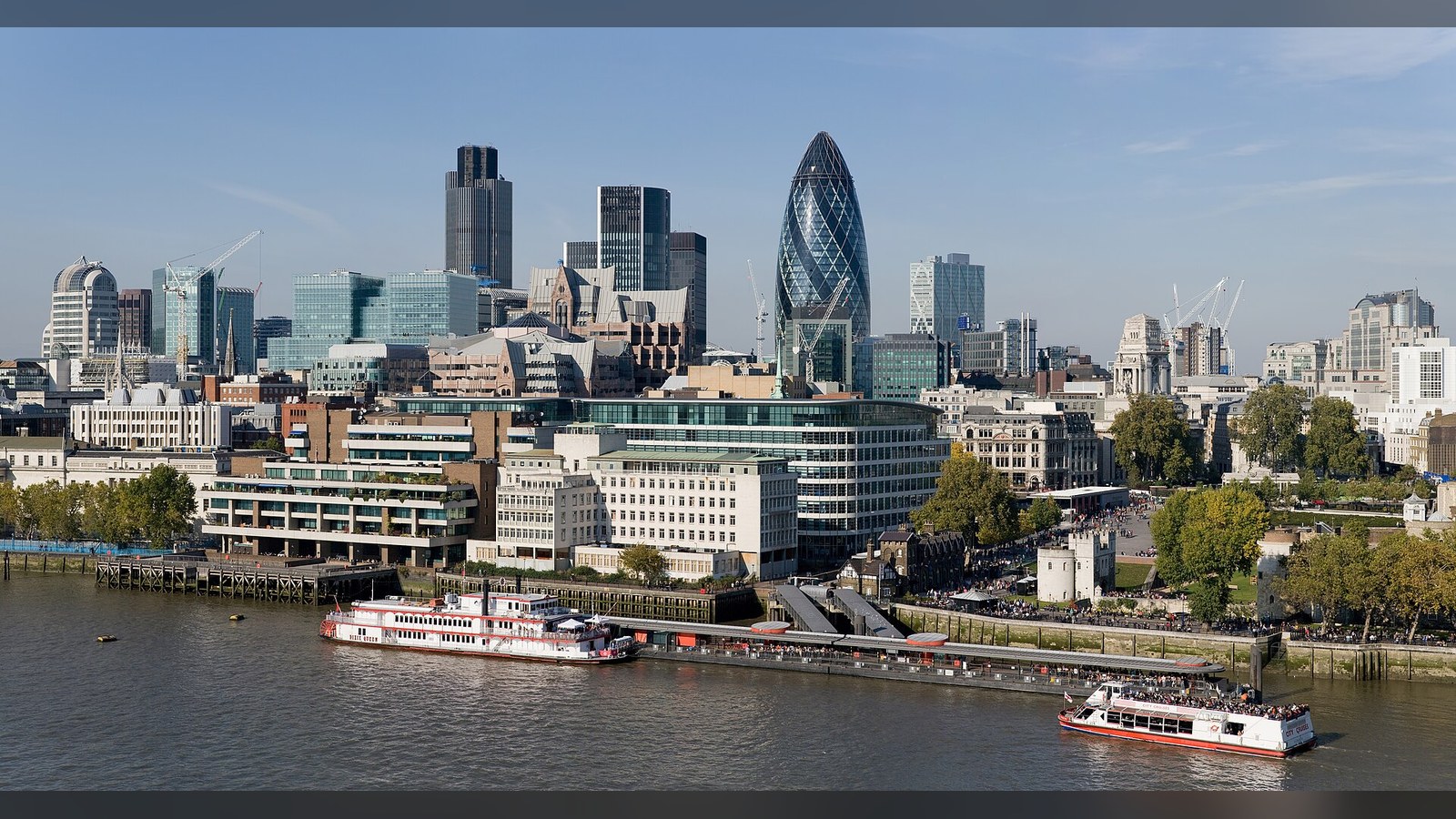
Ian Thomas, the chief executive of the City of London Corporation, has been named the most influential Black Briton in the 2027 Powerlist, placing first in a ranking now in its 21st edition.
Mr Thomas, 57, serves as Town Clerk and chief executive of the body that governs the Square Mile. He is the 51st person to hold the post and the first Black person to lead the organisation in its more than 900-year history. The list, published by Powerful Media, recognises the most powerful people of African and Caribbean heritage in the UK.
Who joined the most influential Black Briton in the top 10?
The rest of the top 10 spans law, international affairs, business, technology, entertainment and the military. Comfort Ero, president and CEO of the International Crisis Group, is second. Professor Grace Ononiwu, director general of legal delivery at the Crown Prosecution Service, is third. Emma Grede, co-founder of Good American and a founding partner of Skims, takes fourth.
Pamela Maynard, chief AI transformation officer at Microsoft MCAPS, is fifth, followed by Dragons’ Den panellist Steven Bartlett. Josh Siaw, a partner at White and Case, is seventh. Sir Idris Elba is eighth, Dr Martens chief executive Ije Nwokorie ninth, and Air Vice-Marshal Ola Fashade of the Ministry of Defence’s Defence Digital unit tenth.
Awards night at Grosvenor House
The list was released on Saturday, after the Celebration of Black Excellence Awards at Grosvenor House in London on Friday night. The ceremony was hosted by Tim Campbell, the winner of the first UK series of The Apprentice.
Actor Ashley Walters, 44, who is also on the list, received the Paramount Entertainer Award. He is known for playing Detective Inspector Luke Bascombe in Netflix’s Adolescence and drug dealer Dushane in Channel 4’s Top Boy. Sir Lenny Henry, 69, received a Lifetime Achievement Award for his contribution to British culture and society. He co-founded Comic Relief, which has raised more than £1 billion for charity, and set up the Sir Lenny Henry Centre for Media Diversity and the production company Esmerelda Productions.
Why the Powerlist says it matters
Michael Eboda, chief executive of Powerful Media, said the list’s purpose has not changed: to show young people of African and African-Caribbean heritage what is possible in fields they might never have considered but which are within reach. He pointed to the breadth of examples after 21 editions, citing boardrooms, public office, the Square Mile and the armed forces.
That reference to the Square Mile is notable this year, given that the person named most influential Black Briton leads its governing body. Previous winners include former British Vogue editor-in-chief Edward Enninful and Formula One champion Sir Lewis Hamilton, so Mr Thomas joins a list of leaders drawn from very different fields.
For Mr Thomas, the ranking comes with a historic first attached. The Powerlist’s organisers say they hope that kind of milestone will encourage the next generation to aim for similar roles.
Explore more on this topic with Vexel Search.
File photo: City of London skyline from London City Hall – Oct 2008.jpg by Diliff, CC BY-SA 3.0, via Wikimedia Commons.
WordUp Morning
Ten stories, both sides of each, in five minutes. Free, every weekday at 7am, plus a Saturday weekend edition.
We'll email you a link to confirm. Unsubscribe any time.

Virgin Media O2 job cuts could affect as many as 4,000 people, roughly a quarter of the company’s 16,000-strong workforce, according to reports that emerged on 31 October. The figures trace back to Sky News and have been repeated by the Daily Mail and the Mirror. The company has not yet confirmed them, and the reports stress that the final numbers are still shifting.
The telecoms group is jointly owned by Liberty Global and Telefónica. It is under pressure from investors over a debt pile of about £22 billion. Cutting costs appears to be the centrepiece of its response.
What is being reported about the job losses
The reporting describes a restructuring that has been in preparation for some time. Most of the roles at risk are said to be in non-customer-facing parts of the business, rather than in shops or call centres. Changes to several senior leadership positions are reportedly already under way.
The company is also said to be reviewing its use of contractors and suppliers as another way to trim spending. Officials at the Communication Workers Union and Prospect are understood to have been briefed on the plans.
Redundancies are expected over the coming months rather than all at once. One source quoted by Sky said the final cost-reduction figures were “still moving around.”
Why a financial target matters more than a headcount
The next piece of news is due on Tuesday, when Virgin Media O2 publishes its third-quarter results. According to the reports, those results are expected to confirm a cost-cutting target expressed in financial terms rather than as a specific number of jobs. That suggests the 4,000 figure is best read as an indication of scale, not a settled commitment. One account describes it as the upper end of what is being discussed.
Debt, bonds and a regulatory decision
Pressure on the company has been building for months. The Mirror points to a Financial Times report in July that the business was weighing options for its debt, including cutting its dividend and capital spending. The price of its bonds fell sharply and, according to the Mail, hit record lows earlier this month.
A separate regulatory question adds to the uncertainty. The Competition and Markets Authority has warned that Nexfibre Networks’ planned £2 billion purchase of Netomnia could reduce competition in UK broadband. Nexfibre is a joint venture backed by Liberty Global and Telefónica. If the deal goes ahead, Virgin Media O2 could receive about £1 billion in cash to help with its borrowing. The CMA is due to deliver its final ruling on 15 December.
The Mirror also reports that the company is edging closer to a deal to use Openreach’s network in some areas. That could lift its reach from 19 million homes to as many as 25 million.
A wider squeeze on UK telecoms
The reported Virgin Media O2 job cuts come against a backdrop of upheaval across the sector. The Mirror notes that BT Group and Vodafone Three have also cut jobs as costs rise, and that Sky shed hundreds of roles in September last year. It also cites the collapse of TalkTalk Telecom Group, which BT took over, and the failure of a number of smaller fibre network builders over the past two years.
Taken together, the picture is of an industry that has spent heavily on network upgrades and is now facing the bill in a weak economy. Virgin Media O2’s size, and the scale of the reported cuts, make it one of the more significant examples.
What to watch next
Tuesday’s results should show how the company frames its savings target and whether it addresses headcount at all. The CMA’s December ruling will then matter for the company’s balance sheet. Virgin Media O2 had been contacted for comment, and none was included in the reports reviewed here. Until the company speaks, the scale and timing of any redundancies remain unconfirmed.
Explore more on this topic with Vexel Search.
File photo: Manchester Pride 2025 Virgin Media O2.jpg by Rathfelder, CC0, via Wikimedia Commons.
WordUp Morning
Ten stories, both sides of each, in five minutes. Free, every weekday at 7am, plus a Saturday weekend edition.
We'll email you a link to confirm. Unsubscribe any time.

Header image: AI-generated illustration by WordUp News.
The FTSE 100 managed a marginal gain on Friday, finishing up 7.71 points, or 0.1%, at 10,729.78. The result looked calm next to the sell-off in New York, where worries about the cost of the artificial intelligence boom dragged technology shares sharply lower.
FTSE 100 holds steady while smaller indices slip
London’s blue-chip index drifted in and out of positive territory through the afternoon before ending in the black. Beneath the surface, the picture was weaker. The FTSE 250 lost 220.80 points, or 0.9%, to close at 24,453.36, and the AIM all-share fell 1.4% to 753.08. Over the full week, the FTSE 100 gained 0.4%, while the FTSE 250 and AIM both rose 0.9%.
Sterling had a good day. It topped 1.20 euros for the first time since April 2025 and was last quoted at 1.1996 euros. Against the dollar it rose to 1.3396 from 1.3369 at Thursday’s London close.
Wall Street takes the brunt of the AI reality check
Around the London close, the Dow Jones Industrial Average was down 0.8% and the S&P 500 was 1.6% lower. The tech-heavy Nasdaq Composite plunged 2.7%. Earnings reports from big names fuelled the sell-off. Alphabet fell 12% on Thursday, and on Friday Intel slumped 30% and Amazon lost 1.6%, with investors unsettled by their results.
AJ Bell analyst Dan Coatsworth called it an “AI reality check”. He argued that investors who had long treated tech as a “golden ticket to wealth creation” now appear to want off the treadmill rather than to slow it down.
SPI Asset Management’s Stephen Innes offered a sharper diagnosis. In his view, AI spending creates demand, demand creates scarcity, and scarcity creates pricing power, which pushes the cost of the buildout still higher. “Then Wall Street turns around and asks the hyperscalers why the buildout has become so expensive,” he said. Hyperscalers are the large cloud providers, including Microsoft, Amazon Web Services and Oracle.
Europe feels the data centre drag
The nervousness crossed the Atlantic. Frankfurt’s DAX 40 fell 0.9%, weighed down by Siemens Energy, Infineon Technologies and Hochtief, all of which have sizeable data centre exposure. Paris’s CAC 40 ended flat, though Schneider Electric, which also serves data centres, finished lower.
In London, the damage was concentrated in AI-linked names rather than the wider index. Polar Capital Technology, an investment trust holding many of the US tech giants that fell, shed 6.0%. Computacenter, an Nvidia partner and reseller of IT infrastructure, dropped by the same amount.
NatWest sinks, AstraZeneca soars
The biggest mover on the downside in the FTSE 100 was not a tech firm. NatWest fell 8.8% after giving guidance on net interest margin that unsettled the market, even though its third-quarter results were broadly in line. Operating pretax profit rose 1.9% to £2.23 billion, just ahead of the £2.20 billion consensus. Lower costs offset higher impairments and a slight miss on net interest income. Chief financial officer Katie Murray said the bank expects its margin to remain “broadly stable through 2027”.
AstraZeneca went the other way, rising 7.0%. The drugmaker reported pretax profit up 22% to $3.96 billion, from $3.24 billion a year earlier. Revenue climbed 6.7% to $16.21 billion. It maintained its full-year guidance for revenue growth in the mid-to-high single digits.
Oil jumps, gold slides, Treasury yields ease
Elsewhere, Brent crude rose to $117.61 a barrel from $113.75 on Thursday, touching around $118, its highest level since April. Investors continued to watch the Middle East conflict and the war between Russia and Ukraine. Gold moved in the opposite direction, falling to $3,898.22 an ounce from $4,012.39. It dipped as low as about $3,891, its weakest in more than a year.
US government borrowing costs eased slightly. The 10-year Treasury yield narrowed to 4.94% from 5.00%, and the 30-year yield to 5.31% from 5.33%.
Friday’s session suggests the FTSE 100 is somewhat insulated from the AI trade, given its lighter tech weighting than Wall Street. But the losses at Polar Capital Technology and Computacenter, along with the weakness in Frankfurt, show how far the mood around AI spending can reach.
- FTSE 100 edges up but tech woes rock New York (The Independent)
- FTSE 100 edges up but tech woes rock New York (standard.co.uk)
Explore more on this topic with Vexel Search.
WordUp Morning
Ten stories, both sides of each, in five minutes. Free, every weekday at 7am, plus a Saturday weekend edition.
We'll email you a link to confirm. Unsubscribe any time.
Business & Hustles
Skydance Communications Team Names 4 Leaders as 7 Execs Exit After Paramount-WBD Merger

The Skydance communications team now has a defined shape, about three weeks after the Paramount-Warner Bros. Discovery merger closed. Chief communications officer Melissa Zukerman laid it out in a Friday memo to staff. It names four senior lieutenants, adds a new function aimed at bypassing traditional media, and confirms that seven communications executives from the two legacy companies are leaving.
Who is in, and who is out
Zukerman’s top four are Laura Watson, Shannon Buck, Virginia Fout and Deborah Marcus. Watson, an EVP, will lead corporate, executive and strategic communications. She was Zukerman’s deputy at Paramount and had arrived from Warner Bros. Discovery in mid-2025. Buck, also an EVP, takes corporate communications and media relations. She previously headed communications for Paramount+, a role that effectively disappeared when Paramount’s and WBD’s streaming businesses were combined under HBO and HBO Max leaders Casey Bloys and JB Perrette, according to Deadline. Fout becomes head of global and executive events after running her own events company, V Productions. Marcus, an SVP who joined Paramount in August 2025, will lead corporate social responsibility.
The exits fall heavily on the Warner Bros. Discovery side. Leaving are Adrienne O’Hara, WBD’s chief communications and public affairs officer, along with Arielle Falkowitz, Megan Klein, Joe Libonati, Heather Wagoner and Dennis Williams. Paramount’s Karen Shosfy is also departing. Deadline noted that Libonati had worked closely with Zukerman throughout the merger process. The two outlets differ slightly on titles. Variety lists Wagoner as a WBD executive, while Deadline lists her under Skydance. Either way, she is among those leaving.
The lineup suggests a structure built mainly on the Paramount model. Three of the four named leaders came from Paramount, and Fout is an outside hire. Deadline described the new structure as employing the Paramount approach.
A “direct to market” bet
The most notable change is a new “direct to market” function. Zukerman said it will focus on expanding executive storytelling across the company’s owned-and-operated platforms and finding new channels and formats. In her words, it will give the company “more ways to tell our own story, in our own voice, directly to the people we want to reach.”
That reflects a wider shift in corporate communications, as companies with large audiences of their own lean less on intermediaries. For a media group that owns CBS and a combined streaming business, the pitch is easy to see. The company controls many of the platforms it would otherwise be trying to get onto.
Zukerman also plans to hire “dedicated leaders” for financial communications and for product and technology communications. She tied the latter to areas she expects to grow in importance, including AI tools for filmmakers and creatives and advertising sales.
Tying comms to company strategy
The memo links the department’s mission to the priorities set by co-CEOs David Ellison and Ynon Kreiz. Those are to establish Skydance as the premier Hollywood content engine, to accelerate its integrated direct-to-consumer platform, and to optimize its profitable linear television portfolio, anchored by CBS. Zukerman added that the company wants to be the most technologically capable media company while keeping “human creativity at the heart of great storytelling.”
She also said the team’s job includes telling the stories of the company’s challenges as well as its triumphs, and that it should “show, not tell.” Those are notable words in a memo that also delivers a round of layoffs-style departures.
The communications reshuffle is one of several leadership announcements as the combined company settles its org chart. Deadline pointed to similar rosters from the company’s sports chief and from JB Perrette’s TV and direct-to-consumer group. The remaining open question for the Skydance communications team is who will fill the new financial and technology communications posts.
Explore more on this topic with Vexel Search.
File photo: Paramount Skydance One Astor Plaza.jpg by Nielsoncaetanosalmeron, CC BY 4.0, via Wikimedia Commons.
WordUp Morning
Ten stories, both sides of each, in five minutes. Free, every weekday at 7am, plus a Saturday weekend edition.
We'll email you a link to confirm. Unsubscribe any time.
Business & Hustles
Poundland administrators lined up as 12,000 jobs hang on a 10-working-day rescue window

Poundland has filed a notice of intention to bring in administrators, a step that puts the jobs of around 12,000 people in doubt and starts a ten-working-day countdown to find a rescue. Court filings show the notice was lodged on Thursday afternoon, and AlixPartners is understood to be the firm that will be appointed.
The notice creates a legal moratorium, shielding the discount chain from creditors while advisers try to land a deal. Poundland insists its stores, which number around 600 in the UK according to most reports, remain open and trading as normal. City AM put the footprint at 640 across the UK and Ireland.
Why Poundland administrators are being lined up
The immediate trigger was a failed sale. Poundland’s owner, the US firm Gordon Brothers, bought the business for a nominal £1 last year and launched a sale process in early September. Management named Irish property group Martin Property Group as its preferred bidder earlier this month, but Gordon Brothers rejected the offer.
Reports point to a dispute over a loan. Gordon Brothers is said to have wanted bidders to cover £30 million, and Martin Property Group declined to pay it, according to City AM’s sources. City AM adds that three new directors, brought in to speed up the sale, resigned this week over the owner’s refusal to accept the bid. In a memo to staff, managing director Barry Williams called the situation “unexpected, unwanted and wholly avoidable.”
Who might buy what
Poundland’s board says no acceptable offer emerged for the whole business, but several established retailers have made formal offers that together cover “a significant part” of it. Those named as interested in parts of the estate include CDS Superstores, which owns Wilko and The Range, Poundstretcher owner Fortress, and TG Jones owner Modella. Reports also name B&M and Lidl, with Aldi mentioned by one outlet and Iceland by another.
The catch is that a break-up is unlikely to save everything. Deals probably will not take in every shop, and some jobs are expected to go. City AM reports that bidders have committed to taking on staff at the stores they acquire under TUPE rules, which protect employees when a business changes hands. It also notes that a carve-up could mean the end of the Poundland brand.
Political and union pressure
The retail union Usdaw has been blunt. It called Gordon Brothers an “absolute disgrace” and said the owners’ failure to accept a solvent offer suggests they are content to let the company fall into administration, with 11,000 redundancies in the run-up to Christmas. National officer Bally Auluk urged the government to “take robust action.” City AM reports that business secretary Jonathan Reynolds has written to Gordon Brothers to establish the facts.
There is a local angle too. City AM notes that Poundland’s distribution centre in Makerfield is in the Prime Minister’s own constituency. Martin Property Group had promised to protect the site, but its future looks less certain if the retailer is split up.
What happens next
Gordon Brothers had overseen a turnaround programme that included closing more than 100 shops in the past year. That was not enough to settle the company’s finances or the argument over its ownership. Over the next two working weeks, the Poundland administrators-in-waiting will weigh offers, and the outcome will determine how many stores survive and how many of the roughly 12,000 staff keep their jobs.
Explore more on this topic with Vexel Search.
File photo: Fomer Wilko store in Chester became Poundland.jpg by Nabokov, CC0, via Wikimedia Commons.
WordUp Morning
Ten stories, both sides of each, in five minutes. Free, every weekday at 7am, plus a Saturday weekend edition.
We'll email you a link to confirm. Unsubscribe any time.

The DoorDash Instacart deal, announced Thursday, would fold the grocery delivery pioneer into the larger rival that has spent six years chipping away at its lead, in a transaction valued at roughly $17 billion. The companies say it will not close until late 2027 or the first half of 2028, leaving a long stretch of shareholder votes and regulatory scrutiny ahead.
What the DoorDash Instacart deal includes
According to Business Insider, the offer values Instacart at $65 per share, a 26% premium over its October 22 closing price. At least 75% of the payment will be in cash. Instacart shareholders and regulators still have to sign off.
The companies have promised several consumer-facing changes. Instacart’s brand and app will stay in place, and its roughly 600,000 independent contractor shoppers will keep fulfilling orders as they do now. Instacart customers would gain access to more than 50,000 additional stores on DoorDash’s platform. People who currently pay $9.99 a month for both DashPass and Instacart+ would be offered a single combined membership fee. Grocers, for their part, could keep using either platform.
Why DoorDash wants Instacart now
The two companies have taken very different routes to the same market. Instacart has focused on groceries since it was founded in 2012. It once delivered orders from Whole Foods before Amazon bought that chain, and it now works with thousands of North American retailers. It also sells retail technology such as digital price tags and smart shopping carts.
DoorDash began as a restaurant delivery service in 2013 and moved into groceries in 2020, when pandemic demand pushed shoppers online. Grocers were wary at first. Kroger’s early partnership was limited to items like sushi, flowers and prepared food from select stores. That has since grown to the full inventory of all 2,700 Kroger locations in the U.S., and DoorDash added a delivery arrangement with Costco last month.
The scale gap is large. DoorDash reported more than 3 billion orders last year across 40 countries, using about 9 million independent drivers. Instacart completed 338 million. Consumer Edge data cited by The Independent shows Instacart’s share of U.S. delivery platform spending falling from 26% to 18% over five years, while DoorDash’s rose from 44% to 59%. Uber Eats held steady just under 20%.
Instacart’s founder, Apoorva Mehta, said he and DoorDash CEO Tony Xu had discussed combining the businesses “on and off over the years.” Engadget notes that earlier talks, reported to have valued Instacart higher in 2021, fell apart over price and antitrust worries. Uber was also reportedly a potential suitor this time.
The Amazon and Walmart argument
The pitch to regulators and retailers rests on the largest players in food retail. Numerator figures cited by The Independent put Walmart at 21% of the U.S. grocery market, with Costco and Amazon at 8% each. Xu argued on an investor call that the biggest companies keep gaining ground because they have invested heavily in modern technology and fast delivery. He said the combination would give “every retailer a fighting chance.”
Walmart is also building its own courier network and has moved into restaurant delivery. Amazon has expanded same-day perishable grocery delivery to more of the country. Combining the two delivery platforms is partly a response to those moves.
The competition concerns
Critics are likely to see it differently. Randall Sargent, a grocery and retail partner at Oliver Wyman, told The Independent that the two companies had been competing for the same share of consumers’ spending. “As a general economic principle, less competition and more consolidation tends to be worse for consumers,” he said. Fewer platforms could also leave grocers with less bargaining power.
Advertising is another area where the combined company could gain. Instacart can already show food manufacturers what shoppers buy at the grocery store. A merged platform could add what those same customers order for takeout lunch, a richer audience profile for brands.
Gig workers are a third question. Both companies rely on independent contractors who generally do not receive benefits such as employer health insurance or retirement contributions. The sources do not say how the merger would affect their pay or conditions.
What to watch
The long timeline suggests both companies expect a lengthy review. The outcome will turn on whether regulators treat the DoorDash Instacart deal as a union of two grocery specialists or as a bid to compete with Walmart and Amazon. Until then, little should change for shoppers, though a single membership fee and a wider store selection are the most visible promises to watch for.
- DoorDash to buy Instacart for $17 billion in grocery delivery mega merger (The Independent)
- DoorDash acquires Instacart in $17 billion delivery service merger (engadget.com)
- DoorDash plans to buy Instacart for $17 billion, creating a delivery powerhouse (businessinsider.com)
Explore more on this topic with Vexel Search.
File photo: Instacart, Miami Florida July 2022.jpg by Paul Sableman, CC BY 2.0, via Wikimedia Commons.
WordUp Morning
Ten stories, both sides of each, in five minutes. Free, every weekday at 7am, plus a Saturday weekend edition.
We'll email you a link to confirm. Unsubscribe any time.
Business & Hustles
Lagarde Resignation Sets Feb. 7 Exit, Opening a Race to Lead the ECB as Inflation Hits 3.8%
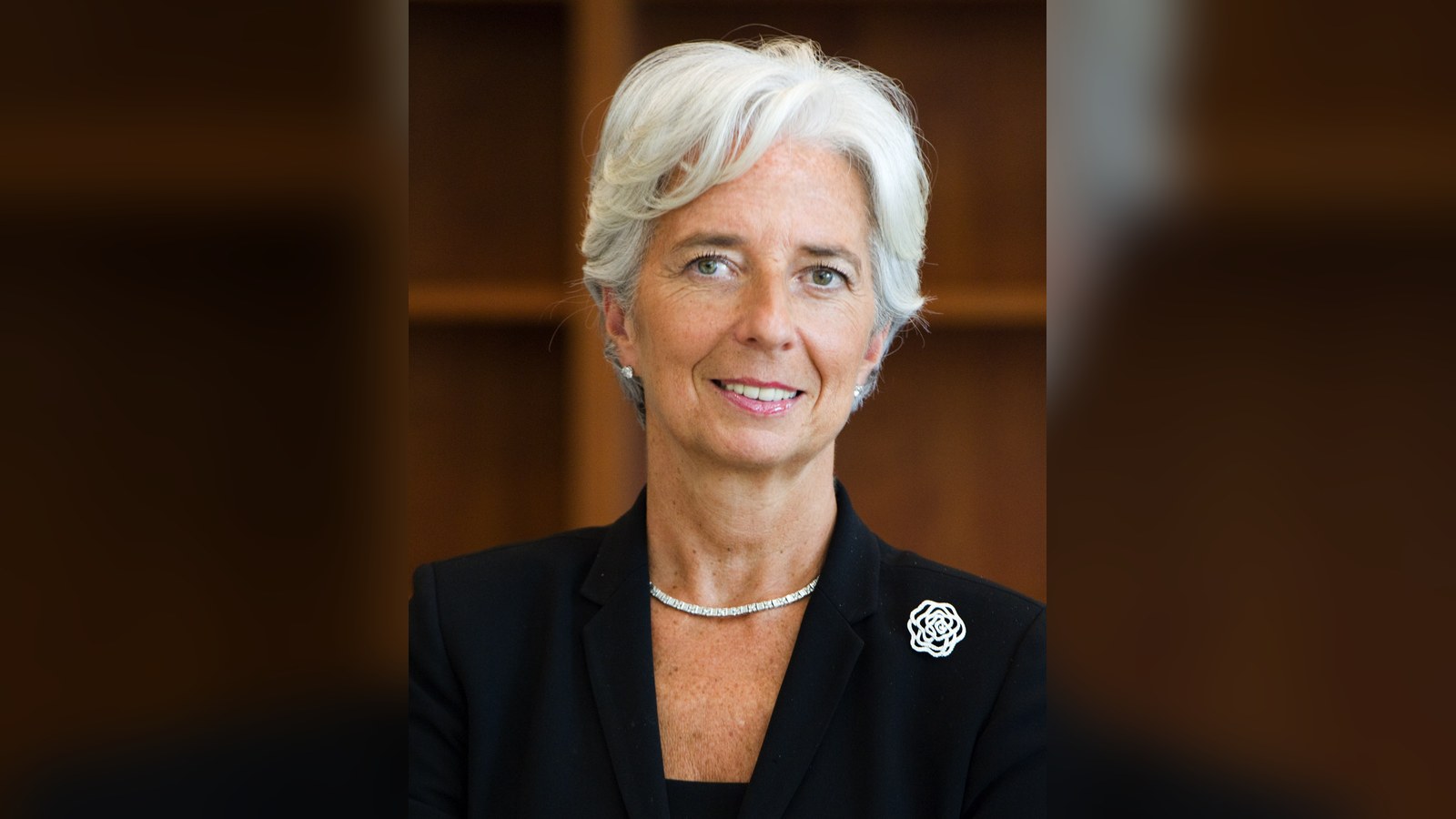
The Lagarde resignation, announced Thursday, ends months of speculation and starts a politically charged scramble over who will run the European Central Bank. Christine Lagarde will leave on February 7, 2027, about nine months before her eight-year term was due to end on October 31, 2027. She is stepping down while eurozone inflation, at 3.8% last month, sits well above the bank’s 2% target.
Why Lagarde says she is leaving
Lagarde made her case at the end of a press conference explaining the ECB’s decision to hold its deposit rate at 2.5%. She said she wants “the freedom of speech, the freedom of expression and the freedom to engage on matters that are not monetary policy matters.” ECB officials are bound by strict neutrality rules, she said, calling that “the price we pay for being independent.”
She said she was troubled by what she called the “misrepresentation of the truth” in public debate, though she did not elaborate. “There are things that I can say – whether people will listen or not is another story,” she said. In a video message she described the job as “a great pride and a huge privilege” and said she was leaving an ECB “fit for the future.”
Sources told AFP the early exit would give her greater freedom to express her views. She has also hinted that she could take part in France’s presidential race, saying a European voice was needed in the debate. Separately, she has been mentioned as a possible head of the World Economic Forum, which Klaus Schwab left last year amid misconduct allegations that he denies.
The French election question
Almost every report links the timing to French politics. The presidential election is set for April and May 2027, and polls suggest the far-right candidate Marine Le Pen is favoured. If Lagarde leaves in February, the European Council can choose her successor while Emmanuel Macron, who cannot run again, still sits at the table.
Holger Schmieding, chief economist at Berenberg, said the EU is trying to “guard itself at least somewhat” against a Le Pen win. Lagarde did not cite the election as a reason, and the sources do not show that Macron pushed her to go. Macron said the handover must be prepared “in an orderly and balanced way” with European partners.
The optics worry some. German MEP Markus Ferber warned that if a departure appears timed around national elections, “it damages trust in an institution that must stand above any domestic political calculation.” Marcel Fratzscher, president of the German Institute for Economic Research, took a different view. He said the early exit gives governments a chance to pick a successor who will safeguard European values and the ECB’s independence.
Who could replace her
The Lagarde resignation opens up more than one job. Chief economist Philip Lane’s term ends May 31, and executive board member Isabel Schnabel leaves January 3 to join the International Monetary Fund. Leaders are expected to negotiate a package deal that spreads the three posts among member states. Schmieding said they would likely try to settle all three before a December 17-18 summit.
Names being floated include former Dutch central bank chief Klaas Knot and Pablo Hernández de Cos, the Spanish head of the Bank for International Settlements. Joachim Nagel, president of Germany’s Bundesbank, and Nadia Calviño, president of the European Investment Bank, have also been mentioned. Under the formal process, euro-area members of the European Council decide on a candidate agreed by the Eurogroup. They first consult the European Parliament and the ECB’s Governing Council. European Council President Antonio Costa said the process would start immediately and “proceed without delay.”
Markets shrug, but the backdrop is tough
Markets appeared calm. Goldman Sachs’s Simon Dangoor said institutional behaviour is likely to outlast Lagarde and look much the same whoever takes over. Schmieding likewise said the exit “does not change the outlook for ECB policies.”
Her successor will still inherit a hard brief: weak growth, above-target inflation and worries about France’s public finances. Lagarde arrived in 2019 as the first ECB chief without formal economics training or central banking experience. She oversaw a 1.35 trillion euro pandemic bond-buying programme and led the bank through Russia’s invasion of Ukraine and the US-Israel war on Iran. The ECB was also criticised for reacting too slowly to the 2022 inflation surge. Leaders from Germany’s Friedrich Merz to the EU’s Ursula von der Leyen have thanked her, but the debate over how her departure was timed is likely to shape the succession fight.
- Europe’s central bank chief Christine Lagarde to step down nine months early (The Guardian)
- European Central Bank President Lagarde to step down early (aljazeera.com)
- ECB’s president Christine Lagarde is resigning nine months early, giving EU leaders a chance to pick a successor before France’s elections (fortune.com)
- ECB President Christine Lagarde to step down nine months early (Protos)
Explore more on this topic with Vexel Search.
File photo: Lagarde, Christine (official portrait 2011).jpg by Français : Fonds monétaire international (identité du photographe non mentionnée, Public domain, via Wikimedia Commons.
WordUp Morning
Ten stories, both sides of each, in five minutes. Free, every weekday at 7am, plus a Saturday weekend edition.
We'll email you a link to confirm. Unsubscribe any time.
Business & Hustles
Weight-loss jabs help cut offshore workers over 124kg limit from 2,200 to under 300

Header image: AI-generated illustration by WordUp News.
Weight-loss jabs have become part of the offshore workplace in the UK North Sea, as a new maximum weight rule for helicopter travel takes effect this weekend. Anyone over 124kg (about 19st 7lb) in civilian clothing and footwear will be barred from flying to platforms covered by UK safety regulations.
The scale of the change is large. When the policy was announced in 2025, around 2,200 workers were over the threshold. Industry body Offshore Energies UK (OEUK) says that figure fell to about 840 earlier this year, and is now projected at somewhere between 241 and 300. The BBC reports it as fewer than 250.
Weight-loss jabs and the fridge space to store them
OEUK health and safety manager Graham Skinner said the uptake of GLP-1 medications has been “wide”. On one platform, he said, 60% of staff had been taking them, and extra fridge space was provided to keep the drugs cool. He said workers appeared to have funded the medication themselves at first, though he thought some employers might now be helping with costs.
Skinner was careful to say the jabs are not a “blanket solution”. Gym equipment and healthier food options have also been part of the push. He also noted that offshore workers were using the drugs regardless of company policy, as many people elsewhere in society are. He described them as a potentially useful tool for someone with a lot of weight to lose.
Why 124kg, and why now
The limit is not arbitrary. The Maritime and Coastguard Agency warned that the rescue winches used in offshore emergencies cannot safely lift heavier people. The 124kg figure allows for the combined weight of the casualty, the rescuer, a stretcher and other kit. Skinner said the same winch is used on all search and rescue helicopters, so the limit is fixed by equipment rather than by company preference.
The average weight of offshore workers has been climbing for years, by almost 10kg since 2008. The industry previously adapted around that trend by building larger, sturdier lifeboats and seating bigger passengers next to the largest helicopter windows. Skinner described those steps as “addressing certain symptoms”. He argued that capping weight would help across life-saving equipment generally, and could reduce medical evacuations. Health-related cases such as heart attacks and strokes made up 78% of all medivacs in 2025.
Jobs at risk and union pushback
For those still over the limit, the consequences could be serious. Workers will declare that they are under the limit, and this will be checked at the heliport. Employers may offer onshore roles, and Skinner suggested some of those affected may no longer work offshore in the UK at all. He was blunt about the alternative: “if somebody has chosen not to lose weight… then there will be a route out of employment as well.”
The RMT union has criticised the policy. It says there was a lack of consultation, and it fears the rule could give employers a “convenient mechanism” to dismiss staff without proper redundancy procedures or compensation. General secretary Eddie Dempsey said nobody disputes that safety comes first, but that policies must be “proportionate, evidence-based and developed through meaningful consultation”. The union wants OEUK to withdraw the policy. An Aberdeen occupational health expert told the BBC earlier this year that some clients were “really stressed” by the rules and others had left the industry.
OEUK says most of the workforce is unaffected, and that those already under the limit are pleased with the change. Those with the most weight to lose, Skinner acknowledged, have had the greatest concerns. With the rule now in force, the question is how many of the remaining few hundred workers reach the limit, move onshore or leave the industry. Weight-loss jabs will probably play a part in the answer.
Explore more on this topic with Vexel Search.
WordUp Morning
Ten stories, both sides of each, in five minutes. Free, every weekday at 7am, plus a Saturday weekend edition.
We'll email you a link to confirm. Unsubscribe any time.

Driver jailed for life with 25-year minimum for dragging cyclist under his car for over a mile

Ocarina of Time Remake Cut Its New Warp Points Before the Nov. 5 Launch

Wilbon Leave of Absence: ESPN’s PTI Co-Host Steps Away After 25 Years Over “Multiple Health Issues”


-

 Tech & AI4 days ago
Meta’s Style Sketch AI Fashion App Debuts in 3 Countries, Joining a Crowded Virtual Try-On Race
-

 Tech & AI7 days ago
University of Copenhagen Data Breach Exposes 525,000 People, and 20,000 Campus PINs
-

 Tech & AI4 days ago
CMA Meta Investigation Targets Terms Affecting “Thousands of UK Businesses”
-

 Fashion6 days ago
From Zurbarán to Rothko: How Art Shaped the Spring 2027 Runways
-

 Business & Hustles6 days ago
NBC News Creates New Head of Digital Content Job, Hires Quartz Co-Founder Kevin Delaney
-

 Crime6 days ago
RAF Fairford plot: two men charged, court told of alleged £70,000 from handler police link to Iran
-
 Entertainment6 days ago
Meghan to Co-Host Junior MasterChef Australia in 2027, Ending a Six-Year Hiatus for the Show
-

 Crypto6 days ago
Zcash Grants Funding Could End: Co-Founder Says $125 Million Treasury Is Enough
-

 Crypto4 days ago
Binance Hack Losses: $6.34B Set Aside, $5B Already Held in Matching Tokens
-
 Crypto6 days ago
VanEck Wealth Builder ETF Puts Indirect Bitcoin in One 0.26% Fund
-
 Crypto6 days ago
Tokenized Nasdaq-100 Fund Launches on Stellar as Janus Henderson’s Onchain Assets Top $1 Billion
-

 Crime6 days ago
Road rage van driver jailed for 3.5 years after deliberately running over cyclist while delivering blood
-

 Fashion3 days ago
7 Honorees, 1 Night at MoMA: Dua Lipa and A$AP Rocky Toast Blazy at the 2026 WSJ Innovator Awards
-

 Tech & AI3 days ago
Sam Altman RAM Remark: ‘Quite Terrible’ for PCs, and What We Can Confirm
-

 Sports6 days ago
Eight-Minute Drone Delay at Fleetwood vs Arsenal: Why Play Was Stopped
-

 Business & Hustles6 days ago
Reckitt sales outlook cut to 3.5%-4.5% growth as shares drop 6% and European prices rise 4%
-
 Sports6 days ago
England’s Tri-Series Exit Sealed as Sri Lanka Bowl Pakistan Out for 110
-

 Tech & AI6 days ago
Microsoft Voluntary Buyouts Open to Up to 60,000 Staff, Roughly 27% of Workforce
-

 Business & Hustles6 days ago
Dollar General Lawsuit: FTC and 20 States Cite 29,265 Overcharge Complaints
-
 Entertainment6 days ago
Susan Saint James Dies at 80: Eight Emmy Nominations, One Win and a Career She Walked Away From
You must be logged in to post a comment Login