
Business
10 Major Middle East Airports Open Status Today, Ranging From Fully Open Dubai to Limited Kuwait

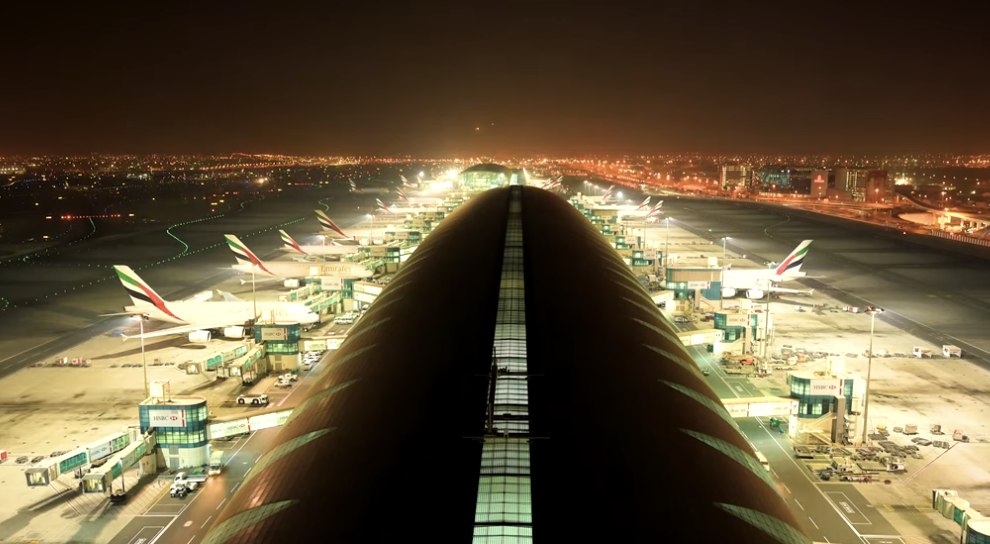
Ten of the Middle East’s busiest airports show a mixed picture Tuesday as the region continues recovering from months of disruption tied to the ongoing war between the United States, Israel and Iran, with some hubs operating close to normal capacity while others remain constrained by lingering airspace restrictions and reduced airline schedules.
Dubai International Airport, one of the world’s busiest hubs for international travel, remains open and running close to a full schedule, with both Emirates and flydubai operating largely uninterrupted service. Even so, international carriers have continued adjusting their own Dubai routes independently of the airport’s own operational status; Lufthansa and Swiss have kept Dubai flights suspended until Sept. 13, while British Airways has pushed its return to Dubai back to Oct. 25, according to reporting from The National.
Abu Dhabi’s Zayed International Airport has similarly remained open throughout the disruption, with Etihad Airways continuing to operate a largely normal schedule domestically, even as several long-haul international carriers, including Lufthansa, Swiss, Austrian Airlines and Brussels Airlines, keep their Abu Dhabi routes on hold until Oct. 24.
Doha’s Hamad International Airport has also continued operating steadily, though with some route-specific reductions during the height of regional tensions. Qatar Airways resumed passenger flights between Doha and Bahrain, Kuwait and Erbil on Aug. 8, while separately expanding some long-haul routes, including restoring daily service to Philadelphia and increasing frequency to Tokyo Haneda, according to a report from IBTimes Australia.
Riyadh’s King Khalid International Airport has remained open throughout the disruption as well, though several international carriers have reduced service there to a single daily flight in recent weeks. Air France has resumed regular flights to Riyadh, according to The National, though Alitalia has kept its Riyadh route suspended until Sept. 15.
Kuwait International Airport remains among the more constrained hubs in the region. Terminal 1 has stayed closed since sustaining direct damage from Iranian strikes earlier this year, forcing operations to continue through Terminals 4 and 5 only, with Kuwait Airways and Jazeera Airways serving as the primary carriers still based there.
Bahrain International Airport has remained open, though GPS interference and jamming continue to affect flight operations in and out of the airport, according to a recent operational update from OPSGROUP, an international aviation safety organization. British Airways has kept its Bahrain route suspended until Oct. 25.
Baghdad International Airport, along with Iraq’s broader airspace, has remained open to overflights with no major new restrictions, according to OPSGROUP, and Iraqi Airways has resumed both domestic and international operations as part of a broader phased return to service by the region’s national carriers.
Beirut’s Rafic Hariri International Airport continues to see disrupted service despite periods of relative regional calm. Air France has kept its Beirut route suspended until Sept. 13, according to The National, reflecting the airport’s continued vulnerability to shifting airline risk assessments even when the facility itself remains technically operational.
Tel Aviv’s Ben Gurion Airport has continued operating, with Terminal 1 having reopened for both domestic and international flights as of July 1 following earlier disruptions. Austrian Airlines, Lufthansa and Swiss have resumed operations to Tel Aviv, though Brussels Airlines has kept its Tel Aviv route suspended, and United Airlines flights to the airport remain affected by ongoing disruption, according to The National’s most recent flight-status reporting.
Muscat International Airport in Oman rounds out the list of major regional hubs, having remained open throughout the conflict, though several European carriers, including Lufthansa, Swiss, Austrian Airlines and Brussels Airlines, have kept Muscat routes on hold until Oct. 24 alongside broader regional suspensions.
Across the region, aviation trackers have continued cautioning travelers to verify individual flight status directly with their airline before heading to the airport, particularly for routes touching Bahrain, Kuwait, Beirut, Riyadh and Tel Aviv, where short-notice schedule changes have remained more common than at the region’s largest and most consistently operational hubs in Dubai, Abu Dhabi and Doha. The European Union Aviation Safety Agency has maintained some of the most cautious guidance among international regulators, with its Conflict Zone Information Bulletin, most recently extended through Aug. 31, continuing to instruct EASA-regulated airlines to exercise caution across UAE, Bahraini and other regional airspace even where formal closures are not in effect.

Business
Resolute Mining Shares Rise 5 Percent as Analysts Call Gold Miner Undervalued After Profit Surge

Shares of Resolute Mining rose more than 5% Monday, extending a stretch of investor interest in the Perth-based gold producer following a set of half-year results that showed profit more than doubling on the back of surging gold prices.
The stock traded at 1.44 Australian dollars, up 0.07 dollars, or 5.11%, on the Australian Securities Exchange. Resolute, which operates the Syama gold mine in Mali and the Mako mine in Senegal while developing the Doropo project in Cote d’Ivoire, has drawn sustained attention from analysts and investors in the roughly two weeks since it reported its results for the six months ended June 30.
Resolute reported net profit after tax of 162.6 million dollars for the first half of 2026, up 129% from 71 million dollars in the same period a year earlier, according to a summary of the results published by Kalkine Media. Revenue rose 31% to 584.7 million dollars, driven primarily by a sharply higher average realized gold price of 4,712 dollars per ounce, compared with 3,076 dollars per ounce in the first half of 2025, even as overall gold production declined to 104,795 ounces from 151,460 ounces a year earlier. Earnings before interest, taxes, depreciation and amortization rose 42% to 323.9 million dollars, according to the same figures.
Resolute Chief Executive Officer Chris Eger described the results as reflecting the strength of the company’s underlying operations despite the production decline. “Resolute has delivered a strong first half of 2026, generating significant operating cash flow and ending the period with a net cash position of 317.4 million dollars,” Eger said, according to a company statement carried by TradingView News. “This performance was underpinned by continued strength in the gold price, disciplined cost management and the resilience of both Syama and Mako. During the period we continued to advance our key growth initiatives. At Doropo, the project progressed from final investment decision into active construction, with early works advancing and financing progressing.”
The lower production figures were tied to operational disruptions at the Syama mine, including a planned roaster shutdown, explosives supply interruptions and slower-than-expected mobilization in the mine’s A21 area, according to reporting from Discovery Alert. Those disruptions pushed the company’s all-in sustaining cost up sharply to 2,327 dollars per ounce, a 38% increase from 1,688 dollars per ounce in the first half of 2025, a rise the company attributed to a combination of higher royalty payments tied to elevated gold prices and reduced production volumes.
Resolute’s balance sheet strengthened considerably during the period. Net cash climbed 189% to 317.4 million dollars, up from roughly 109.9 million dollars a year earlier, while operating cash flow more than doubled to 277.6 million dollars. The company also received 31.9 million dollars from the sale of its stake in Loncor Gold and a further 53.9 million dollars from repayment of a vendor financing note tied to its earlier Ravenswood mine transaction, according to figures reported by Kalkine Media.
Beyond its existing operations, Resolute continued advancing its growth pipeline during the period. The company’s ABC Project in northwest Cote d’Ivoire saw its inferred mineral resource estimate grow to 3 million ounces of contained gold, up from 2.16 million ounces a year earlier, according to Stocklight. Resolute has also secured 155 million dollars in local bank financing in Cote d’Ivoire to support the Doropo project’s construction, with an additional 105 million dollars in financing expected to be secured during the third quarter of 2026.
Analysts have responded favorably to the results. According to Simply Wall St, Resolute’s stronger-than-expected profitability has prompted some analysts to argue the stock remains meaningfully undervalued, with certain fair-value estimates suggesting upside of as much as 59% from prior trading levels, even as the firm cautioned that funding requirements and regulatory risk in the company’s West African operating jurisdictions remain factors investors should continue to monitor closely.

Bitmine Immersion: A Better Way To Play The Crypto Bull Market
Claire Tyrrell speaks to Ella Loneragan about the risks and rewards of private credit within the property sector.
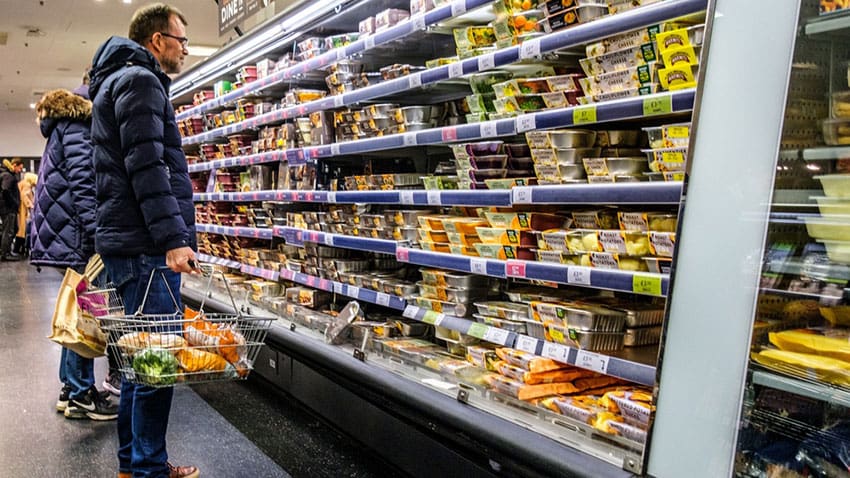
Shop price inflation climbed to its highest level in more than two years in August, as retailers began passing higher energy, input and commodity costs on to consumers.
Prices in UK shops rose by 1.5 per cent in the year to August, up sharply from 0.9 per cent in July, according to the latest BRC-NIQ Shop Price Monitor. That is the highest rate for more than two years, although it remains below the headline rate of consumer price inflation. The pace of increase has picked up markedly since shop price inflation slowed to 1.1 per cent in February, when retailers were still cutting prices to tempt cautious shoppers.
Helen Dickinson, chief executive of the British Retail Consortium, said: “The impact of higher energy, input and commodity costs is beginning to filter through into prices, particularly for ambient foods which are typically imported and processed. In non-food, electrical prices rose amid the ongoing AI boom, which is forcing up the price of memory chips and storage.”
The rise was particularly pronounced in non-food goods such as clothing and electrical items, where inflation accelerated to 0.9 per cent year on year in August, from 0.2 per cent in July. Food inflation also increased, rising to 2.8 per cent from 2.2 per cent.
Within food, there was a clear divergence between fresh and ambient products. Fresh food inflation eased slightly to 3 per cent in August, from 3.1 per cent in July, while inflation on ambient goods, the packaged and long-life products that fill the middle of the store, more than doubled to 2.5 per cent from 1.1 per cent. Chocolate, sweets, fizzy drinks and coffee recorded the steepest rises.
Mike Watkins, head of retailer and business insight at NIQ, said the acceleration in food and non-food inflation was not unexpected as some summer promotions came to an end. He added: “Retailers continue to keep prices low, helping consumers manage rising household costs such as energy and fuel. However, pressures are continuing to build across supply chains, and we can expect price competition to intensify as we move into the autumn months.”
The figures land against a backdrop of rising inflation across the wider economy. The Office for National Statistics reported that consumer price inflation rose to 2.9 per cent in July, up from 2.6 per cent in June, while the CPIH measure, which includes owner occupiers’ housing costs, increased to 3.1 per cent.
Energy is emerging as a particular source of renewed pressure. ONS figures showed inflation in housing and household services jumping to 4.1 per cent in July, from 2.7 per cent the previous month, driven largely by higher gas prices. Gas prices were 14.7 per cent higher than a year earlier, while electricity prices rose 3.6 per cent.
The squeeze is expected to intensify if energy costs stay elevated. The Centre for Economics and Business Research warned this week that the Middle East conflict was likely to strip £70.4 billion from UK households’ real spending power over the next two years, as higher energy prices fuel inflation and weaken wage growth. The consultancy estimated the war in Iran would leave household spending power £1,100 lower than previously expected in 2026 and £1,300 lower in 2027. Economists have separately warned that the conflict could knock £35 billion off UK output and push inflation back above 4 per cent.
For retailers, many of them small and mid-sized businesses already contending with higher wage bills and taxes, the combination of rising supply chain costs and renewed energy pressures threatens to make the autumn a difficult trading period. Dickinson warned that rising operating costs were limiting the industry’s ability to absorb further increases, echoing earlier warnings from retailers that tax rises in the autumn budget would push shop prices higher still.
“The months ahead look challenging for households, with rising bills putting further pressure on budgets,” she said. “Retailers are facing persistently high operating costs, limiting their ability to absorb further increases without impacting investment, jobs and prices. If the government is serious about supporting growth while keeping the cost of living in check, it must address the cost of doing business, including by tackling the growing burden of business rates, packaging and employment taxes.”

Jamie Young
Jamie Young is Senior Reporter at Business Matters, covering SME finance, employment law and Westminster policy since 2016. He has reported on every Budget and Autumn Statement since 2018, helped make sense of the ‘covid era’ and the bounce-back loan scheme from launch through the fraud investigations, and broke the magazine’s coverage of the 2024 late-payment reforms. He joined Business Matters straight from completing his BA in Administration from Exeter University and is NCTJ-qualified. Reach him at jyoung@cbmeg.co.uk

Consumer Protection is prepared to take enforcement action against now-collapsed Bella Modular if necessary after the modular home and granny flat builder collapsed.

SB Energy files for proposed IPO
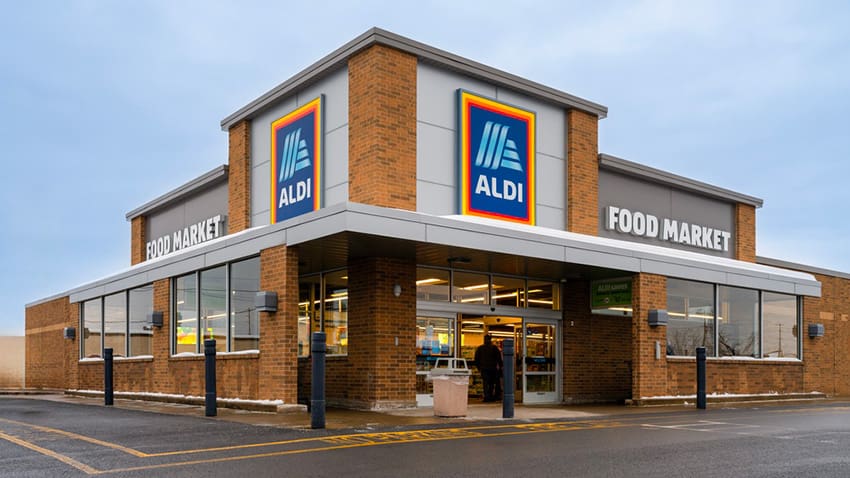
Aldi has been accused of desperation by senior retail figures after its UK chief executive attacked rival supermarkets’ loyalty schemes, just as industry data showed the discounter’s sales growth slowing sharply behind its competitors.
Giles Hurley, the chief executive of Aldi UK, used a piece in the Daily Mail last week to back the Government’s investigation into supermarket pricing, arguing that loyalty schemes offer shoppers a “false sense of value”. Shoppers, he said, were being bombarded with discounts that could make them believe they were getting a bargain when a rival supermarket was still cheaper.
“Taking £2 off a £6 product doesn’t make it good value if you can buy it for £3 somewhere else,” Hurley said.
The intervention went down badly across the industry. One senior retail adviser said Aldi was “completely talking their own book” by wading into the row over supermarket pricing, which is under investigation by the UK competition watchdog. “It was opportunistic, and in a way, perhaps a little bit desperate,” they said.
The timing is awkward for Aldi. Its sales rose by just 0.8 per cent in the 12 weeks to 8 August, according to NIQ, compared with 8.2 per cent at Lidl, 13 per cent at M&S, 17 per cent at Ocado and 3.6 per cent at Sainsbury’s. The slowdown is all the more significant because Aldi has continued opening new shops, with 40 more stores planned for 2026 as part of a £370 million expansion.
Clive Black, of Shore Capital, said the discounter was “protesting a bit too much”. He said: “The fact that customers are choosing to shop more at other retailers tells us something about Aldi, and it’s not just about price.”
Hurley, who joined the retailer nearly 30 years ago, took the top job in 2018 and oversaw the opening of Aldi’s 1,000th UK store in 2023. The company does not operate a loyalty scheme along the lines of Tesco’s Clubcard or Sainsbury’s Nectar Prices, and argues that shoppers should get its lowest prices without having to sign up, hand over their data or use a smartphone.
Its rivals, however, have become increasingly adept at copying its playbook. Tesco, Sainsbury’s and Morrisons are among those advertising “Aldi price match” products.
Aldi’s argument that shoppers are being duped also sits uneasily with the evidence gathered by the Competition and Markets Authority. The watchdog examined loyalty pricing across around 50,000 grocery products and found very little evidence that supermarkets were artificially inflating prices before applying discounts. Loyalty card members could “almost always” make a genuine saving against the normal price, it found, although some loyalty deals remained more expensive than the cheapest option elsewhere.
Black was equally dismissive. “British shoppers are not stupid,” he said, pointing out that Tesco and Sainsbury’s now compete with Aldi on hundreds of high volume products. “You can see that they’re growing more slowly than the big four, more slowly than Lidl,” he added.
The row comes at a significant moment for the discounters. The CMA has proposed extending the rules governing supermarket land agreements to Aldi and Lidl, arguing that their size and geographic reach mean they should now be treated like the established chains. Until now the discounters have had greater freedom to use restrictive agreements that can prevent rivals opening stores nearby, a freedom that has supported Aldi’s push to open new stores across the UK.
“I think they’re really feeling it, and the CMA ruling is a big thing for them actually, because until now they’ve had a lot of freedom,” Black said. “It’s a very significant moment in the development of the discounters here. It does have the potential to change the dynamics of the market.”
Aldi’s pricing strategy is also under renewed scrutiny from another direction. Earlier this year it cut the price of potatoes, carrots and parsnips to 4p, prompting fears that its cut price approach is offering shoppers unrealistic prices at the expense of British agriculture. Farmers are already under pressure from rising labour and input costs and increasingly unpredictable weather, and the Government’s Farming Profitability Review warned that farm input costs are expected to be 30 per cent higher this year than in 2020, calling for farmers to receive “a fair return for what they produce”.
Black believes supermarkets cannot compete endlessly to make food cheaper without eventually putting pressure on the people producing it. “To be devaluing fresh produce … giving a packet of carrots away for 8p when it costs £4.50 for a cup of coffee is just not helpful to the sustenance of the food system,” he said. “We need a food system from farm to fork that is financially sustainable. And I think that does involve paying more for food.”
Aldi rejects any suggestion that its low prices come at the expense of British farmers. It says it has committed £5 billion to British farming and food production through longer term agreements covering fruit, vegetables, dairy, meat and eggs, alongside £3 billion to British beef suppliers over five years and £1.1 billion to British egg production. The company says its model is based on efficiency rather than squeezing suppliers.
“Loyalty programmes are expensive to run and ultimately lead to higher prices,” an Aldi spokesman said. “We fundamentally believe that the best way to keep grocery bills low for customers is to keep things simple.”
Black, however, said the retailer should stop attacking its rivals. “When we saw Aldi effectively trying to badmouth competitors in a way that was encouraging politicians to get involved, I thought that was bad form,” he said.
Jamie Young
Jamie Young is Senior Reporter at Business Matters, covering SME finance, employment law and Westminster policy since 2016. He has reported on every Budget and Autumn Statement since 2018, helped make sense of the ‘covid era’ and the bounce-back loan scheme from launch through the fraud investigations, and broke the magazine’s coverage of the 2024 late-payment reforms. He joined Business Matters straight from completing his BA in Administration from Exeter University and is NCTJ-qualified. Reach him at jyoung@cbmeg.co.uk
Business
Shoprite Holdings Ltd 2026 Q4 – Results – Earnings Call Presentation (OTCMKTS:SRGHY) 2026-09-01


Seeking Alpha’s transcripts team is responsible for the development of all of our transcript-related projects. We currently publish thousands of quarterly earnings calls per quarter on our site and are continuing to grow and expand our coverage. The purpose of this profile is to allow us to share with our readers new transcript-related developments. Thanks, SA Transcripts Team

Global bond yields surged Tuesday as renewed tension between the U.S. and Iran reinforced inflation expectations, which increased the prospect of interest-rate hikes in the coming months.
The 10-year U.S. Treasury yield rose to 4.792%, the highest since January 2025, according to LSEG data. The 10-year Japanese government bond yield crossed 3% to hit a 30-year high. The 10-year German Bund yield reached 3.364%, unseen since 2011.
Copyright ©2026 Dow Jones & Company, Inc. All Rights Reserved. 87990cbe856818d5eddac44c7b1cdeb8
Business
Jaylen Brown Reveals the Classic NBA Finals He Would Most Want to Relive on New NBA 2K27 Feature
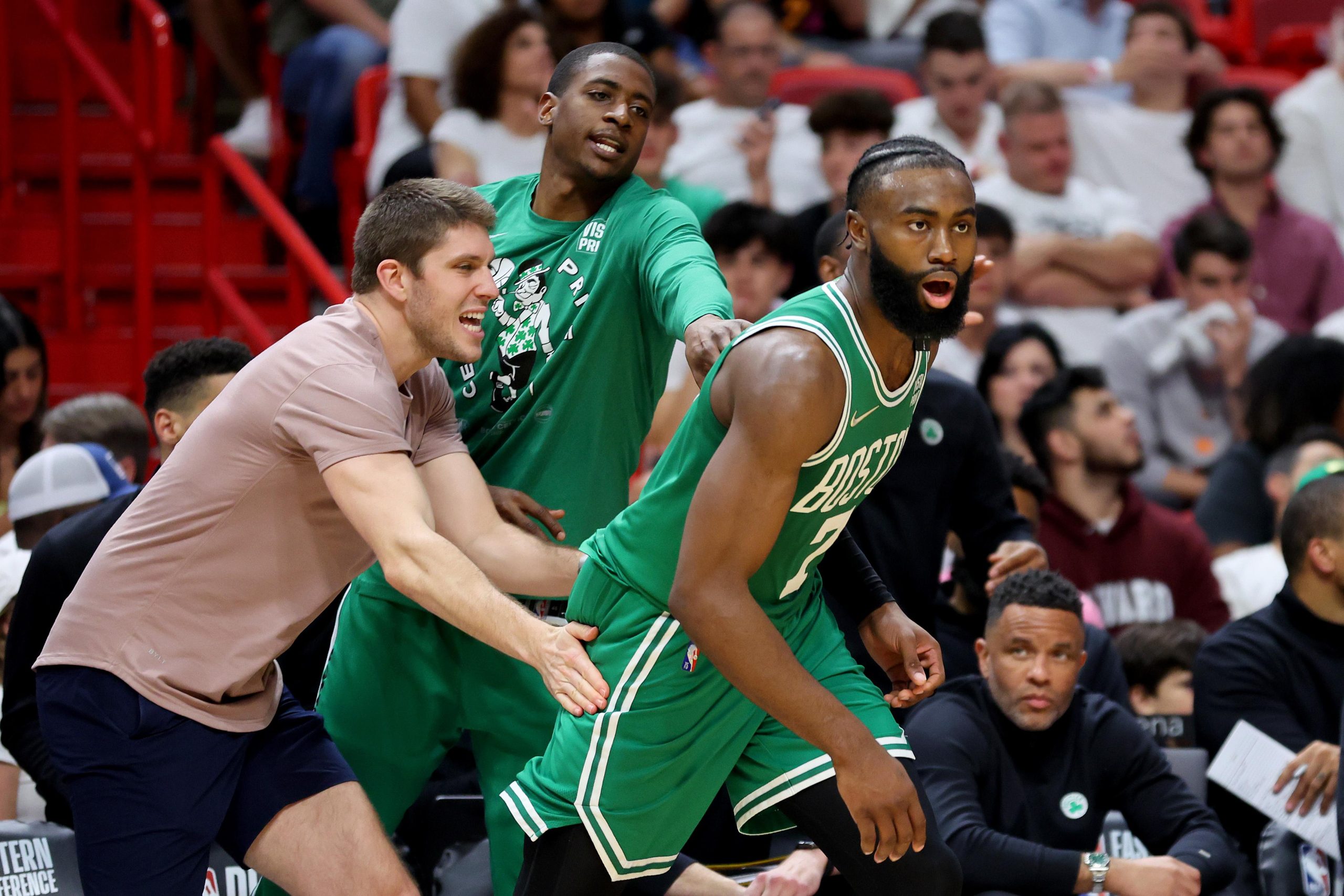
LOS ANGELES — Philadelphia 76ers forward Jaylen Brown said this week that he would most want to have experienced the 2016 NBA Finals between the Cleveland Cavaliers and Golden State Warriors, a series he watched in person as a college student, as new video game feature NBA 2K27 lets players relive historic championship matchups from different NBA eras.
Brown spoke with ClutchPoints ahead of the release of NBA 2K27 this month, which introduces an “eras” feature to MyCareer mode allowing players to begin their in-game professional careers during different periods of NBA history. Asked which past NBA Finals he would want to experience, Brown pointed to the 2016 series between LeBron James’ Cavaliers and Stephen Curry’s Warriors, a matchup he watched firsthand while attending the University of California, Berkeley.
“I feel like one of the greatest Finals was that 2016 NBA Finals, where it was LeBron James and Kyrie Irving versus Stephen Curry, but I was there. I was there for every home game in Golden State, so I got to see all those games up close,” Brown said. That series, which went the full seven games, ended with Cleveland completing a comeback from a 3-1 series deficit to deliver the city its first professional sports championship in 52 years.
Brown said he had not settled on a definitive second choice when asked what other historic Finals he might want to experience. “What other finals would I have to see? I don’t know. That’s a good question. I’ll have to put some thought into that,” Brown said. “Maybe some like old traditional like Lakers versus Celtics could have been cool to see. Maybe that 2018 Finals being there for that, or maybe the 2010 Lakers playing versus the Celtics, maybe something to that degree or something like that, but I’m not sure.”
Brown was also asked which player in NBA history he would most want to team up with, and he pointed to Boston Celtics legend Bill Russell, with whom Brown shares a personal connection: Brown was named NBA Finals MVP in 2024 using the award now officially named after Russell. “Probably Bill Russell,” Brown said. “Just because of like what he stood for on as well as what he stood for off the court. And he was a winner on the court too, so that would be my choice.”
Brown’s connection to Celtics history runs deep given his eight seasons with the franchise, which included winning the 2024 NBA championship and earning Finals MVP honors before his surprise trade to Philadelphia this offseason. That trade brought him alongside center Joel Embiid, guard Tyrese Maxey and newly signed forward LeBron James, forming a roster that has quickly become one of the league’s most anticipated for the 2026-27 season.
NBA 2K27’s initial ratings reveal reflected the scale of Philadelphia’s roster overhaul. Maxey leads the team with a 92 overall rating, while James, Brown and Embiid are each rated 91 overall, marking the first time since NBA 2K17 that a single team has featured four players rated 90 or higher, according to ClutchPoints. The Golden State Warriors previously accomplished that feat in the earlier game with Curry, Kevin Durant, Klay Thompson and Draymond Green.
Brown has publicly embraced the pressure that comes with joining a star-studded roster built for immediate championship contention. In a separate recent livestream, Brown praised James’ physical condition heading into his 24th NBA season, saying, “LeBron is the [expletive]… I don’t even need to say what LeBron is. He looks good, healthy. It’s going to be that. We’re working, man.” James, 41, is expected to remain one of the league’s most productive veterans after averaging 20.9 points, 7.2 assists and 6.1 rebounds during his final season with the Lakers.
Philadelphia enters the 2026-27 season looking to build on a 2025-26 campaign that saw the team stun the Boston Celtics in a first-round comeback before being swept by the New York Knicks in the conference semifinals. With Brown, James, Embiid and Maxey now sharing the same roster, expectations for the Sixers have risen sharply heading into training camp, with Brown himself recently declaring he is looking to bring an aggressive, championship-driven mentality into his first season in Philadelphia.

Singapore proposes 100% reserves and a ban on yields for stablecoin issuers

Blake Lively Awarded A Fraction Of $8 Million In Attorney Fees

Whistleblower: Postal Service rushing to comply with Trump’s order





-

 Crypto World6 days ago
SpaceX stock could rise 75% to $240, JPMorgan says
-

 Fashion4 days ago
Weekend Open Thread: Maeve – Corporette.com
-

 Crypto World4 days ago
Bitcoin’s 22% rally now needs real demand to outlast Treasury liquidity boost
-

 Crypto World6 days ago
Warsh Jackson Hole keynote puts financial innovation first
-

 Business4 days ago
Salesforce Stock Soars 19% as Blowout Earnings and Agentforce AI Growth Silence Software Skeptics
-

 Crypto World5 days ago
Elon Musk Grok Bot Promise: We Will Make You Whole if AI Loses Your Money
-

 Business4 days ago
Apple Confirms September 9 Keynote and Reveals Its Full Pre-Order Schedule
-

 Crypto World6 days ago
Did Trump Just Move SpaceX Stock With One Truth Social Post?
-

 Business3 days ago
Onto Innovation Stock: AI’s Next Bottleneck Is Yield (NYSE:ONTO)
-

 Business6 days ago
Walmart takes aim at younger shoppers with new fashion brand
-
 NewsBeat6 days ago
Lindsay Clancy jury braces for closing arguments as judge tells court: ‘You’ve heard all the evidence’ – Live updates
-

 Crypto World3 days ago
Bitcoin price tests $82K resistance as Brandt stays long
-

 Crypto World5 days ago
NVIDIA revenue hits $96.2B as AI demand doubles
-

 Business6 days ago
Thailand’s Eastern Economic Corridor Capital City (EECiti): Key Developments and Investment Opportunities
-

 Business4 days ago
iPhone 18 Pro Pre-Orders Could Shift to Saturday as Apple Reportedly Avoids September 11 Anniversary
-
 Crypto World6 days ago
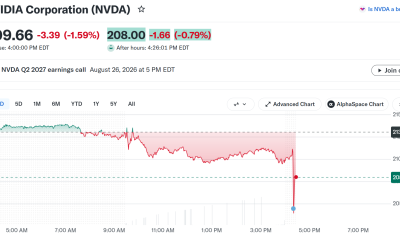
Nvidia Q2 Earnings Reveal $96.2 Billion Beat, So Why Is NVDA Falling?
-

 NewsBeat6 days ago
Trump’s trade truce with China faces test with Iran effort
-

 Tech5 days ago
Claude Cowork gets its own browser that doesn’t touch your tabs, bookmarks, or saved passwords
-
 Tech3 days ago
Hugging Face built a $4.5 billion empire on free AI models. Now Nvidia is buying it for $12.9 billion
-

 Crypto World4 days ago
Truflation calls for Fed rate cut after PCE forecast
You must be logged in to post a comment Login