
Connect with us

Business

10-year US Treasury yields surges over 5.05% to 19-year high

Published

on

10-year US Treasury yields surges over 5.05% to 19-year high
The 10-year U.S. Treasury yield climbed as high as 5.058% on Wednesday, surpassing its earlier September peak of 5.026% and reaching its highest level since July 2007, putting renewed pressure on equities.

The 2-year Treasury note yield climbed 8 basis points to 4.464%, while the benchmark 10-year yield rose 7 basis points to 5.058%, its highest level since July 2007. The 30-year Treasury yield advanced more than 4 basis points to 5.347%, according to a CNBC report.

Fresh services and manufacturing data heightened concerns that the Federal Reserve may need to raise interest rates further.

Yields rose across maturities, while European government bonds also sold off. The rise reflects renewed pressure in global bond markets, with investors focused on inflation, interest-rate expectations, higher oil prices and government borrowing needs.

Advertisement

The 5% yield threshold is closely watched by investors because higher long-term borrowing costs can weigh particularly heavily on growth and technology stocks, whose valuations depend more on future earnings.


The S&P Global services PMI rose to 58.7 in September from 56.5 in August, marking its highest reading in nearly five years. The manufacturing PMI also climbed to 56.7, reaching its strongest level in more than four years.
According to the CME Group’s FedWatch tool, the probability of another 25-basis-point rate hike in October increased to 64% on Wednesday, up from 55% on Tuesday. A month earlier, the odds were below 10%.

(Disclaimer: This article is based on inputs from agencies. These do not represent the views of The Economic Times)

Continue Reading
Click to comment

You must be logged in to post a comment Login

Leave a Reply

Business

Litelock is a great example of a ‘productivity hero’ business we need more of in Wales

Published

on

Business Live

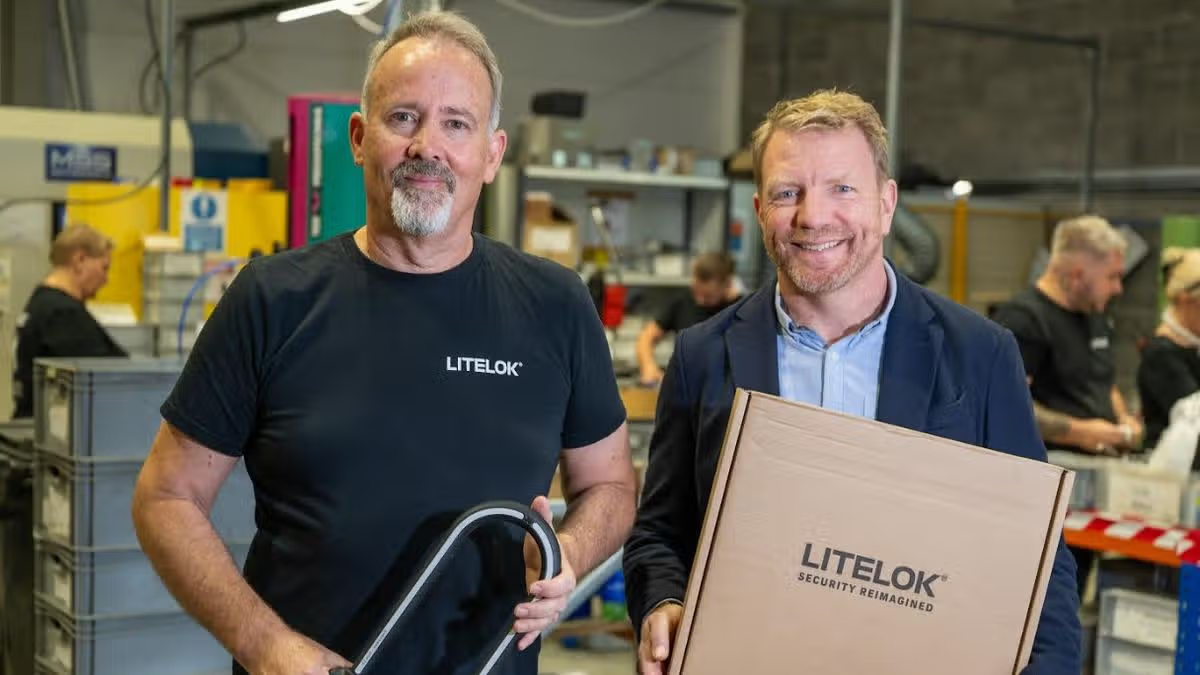
Neil Barron, the founder and chief executive of Litelok had a great idea and found a gap in the market – a big one, as it turns out.

Founder of Litelok Neil Barron and chief executive of the Development Bank of Wales Giles Thorley.

One of the best parts of my job is meeting business owners who are dedicated to quietly building remarkable companies.

They’re rarely the loudest voices in the room. They’re usually too busy running their businesses.

Advertisement

Yet time and again I come away struck by the same thing. The businesses making the biggest difference to our economy aren’t always the largest, they’re the ones that keep improving – investing in people, embracing new ideas, prioritising customers, finding better ways to compete.

A recent visit to Zeal Innovation, which trades as Litelok, reinforced that sentiment.

The company is incredibly innovative: it designs and manufactures innovative, high-security, grinder-resistant locks for bicycles and motorcycles – all from a solar panel powered factory in Swansea. In my opinion, as a customer of several Barronium armoured X1 bike locks, they are the best in the world.

Neil Barron, the founder and chief executive of Litelok had a great idea and found a gap in the market – a big one, as it turns out.

Advertisement

That is why we’ve backed them through four funding rounds. But what always impressed me most was their culture of continuous improvement.

Whether investing in sustainability, developing its people or finding new ways to innovate, it is a business that never stands still.

And that is why the business exemplifies the type of company flagged by research from Economic Intelligence Wales as a “productivity hero”.

At first glance, the phrase might sound like another piece of economic jargon. But it isn’t.

Advertisement

A productivity hero is a business that achieves something remarkable: it grows its turnover, creates jobs and improves productivity – all at the same time. Revenue grows faster than employment, meaning the business becomes more productive without sacrificing growth or opportunities for its workforce.

In the case of Litelok, it has increased its turnover per full-time employee from some £45,000 in 2017 to some £350,000 in 2026 as annual revenues approach £10m – an extraordinary increase in productivity.

Such case studies matter, as does this wider report, because productivity is often misunderstood.

For many people, higher productivity conjures images of automation or AI replacing people or businesses doing more with fewer staff.

Advertisement

The reality is far more encouraging. The best businesses aren’t simply becoming leaner; they’re becoming better. They’re building stronger teams, investing in leadership, adopting technology where it makes sense and constantly looking for ways to create more value for customers.

The productivity heroes report from Economic Intelligence Wales identifies 1,732 businesses across Wales that fit this description. Together, they generated more than £6bn in turnover while creating over 5,200 jobs.

Those aren’t just impressive statistics. They’re evidence that Wales already has businesses showing us what sustainable growth looks like.

Perhaps even more encouraging is what the research tells us about how these businesses succeed and achieve this feat.

Advertisement

Technology often plays a role, but it isn’t the whole story.

Repeatedly, the research points to three common characteristics – an unwavering focus on customers, a willingness to invest in people through leadership and skills, and a culture that embraces innovation and digital adoption. None of those things happen overnight. They require ambition, long-term thinking and a commitment to continuous improvement.

That reflects what we’ve seen at the Development Bank of Wales. Whether we’re supporting a manufacturer investing in new production technology, a family business planning for succession, a technology company scaling internationally or a developer bringing forward new homes, the businesses that create the greatest long-term impact almost always have something in common.

They invest in their people as much as they invest in equipment. They think beyond the next quarter.

Advertisement

And they understand that productivity isn’t about working harder, it’s about working smarter.

One of the most valuable aspects of the productivity heroes research is that it gives us a better way of understanding which businesses are driving Wales forward.

For too long we’ve tended to judge success by looking at turnover growth or employment growth in isolation.

Those measures remain important, but they only tell part of the story. Productivity heroes provide a richer picture because they identify businesses creating more value while continuing to create opportunities for people.

Advertisement

Good economic evidence matters because it helps us make better decisions.

At the Development Bank of Wales, our role extends beyond providing finance. As a trusted delivery partner working alongside the Welsh Government, we want to use evidence like this to ensure support reaches the businesses where it can make the greatest difference.

That means helping ambitious companies start, grow and scale, while retaining value in Wales and strengthening the foundations of our economy.

The report also challenges some long-held assumptions. Productivity heroes aren’t confined to one sector or one part of Wales.

Advertisement

They can be found in manufacturing, food and drink, construction, professional services and technology. They operate in rural communities and our cities alike.

That should give us confidence because it tells us productivity is something every ambitious company can strive towards.

The question becomes, therefore, not whether Wales has productivity heroes. It is clear that we already do. The challenge is how we create many more of them.

It means ensuring businesses have access to leadership development, skills, innovation support and the finance they need to invest with confidence.

Advertisement

It means creating the conditions that allow good businesses to become great ones. And it means continuing to build an economy where successful Welsh businesses can grow, scale and retain their value here in Wales.

If we can do that, the next productivity heroes report won’t simply tell us which businesses are succeeding today; it will show us that Wales is creating the conditions for many more businesses to grow better, become more productive and contribute to a stronger, more prosperous economy tomorrow.

  • Giles Thorley is chief executive of the Development Bank of Wales.

Continue Reading

Business

US stocks: US market ends down as oil prices, Treasury yields rise

Published

on

US stocks: US market ends down as oil prices, Treasury yields rise
Wall Street ended lower on Wednesday, pulled down by Alphabet and Amazon, as Treasury yields climbed and Iran’s president said Tehran would never surrender to US pressure.

Oil prices rose almost 4% and the S&P 500 energy sector index rallied after Iranian President Masoud Pezeshkian’s speech at the UN, a day after US President Donald Trump warned he could “annihilate” Iran.

A survey showed US business activity raced to a more than five-year high in September, pushing government bond yields higher and raising expectations the Federal Reserve will increase interest rates at its October meeting.

Yields on two-year Treasuries touched their highest since 2024, while 10-year Treasury yields hit their highest since 2007.

Advertisement

“The stock market wants a resolution to the (Middle East) conflict, and if we don’t get that, we will have higher rates for longer, and that’s going to continue to weigh on the equity market,” said Lauren Cassidy, chief investment officer at Founders 100 ETF in Dallas.


Meta Platforms added to big gains this week following a strong reception of its “Muse” AI assistant, which analysts say could benefit tech infrastructure stocks, while challenging banks, online shopping platforms and other consumer businesses.
Google parent Alphabet dropped, as did Amazon , which has blocked Muse from its shopping platform.The PHLX chip index slid, with Nvidia losing ground.

Expedia and Airbnb also declined.

The Nasdaq recorded record-high closes in the previous two sessions as Wall Street remained optimistic about AI-related companies. The S&P 500 is less than 2% below its record high close on August 13.

US President Donald Trump welcomes Chinese President Xi Jinping to Washington on Wednesday for a three-day visit. The agenda includes extending the trade truce reached last year between the two superpowers, AI regulation and US arms sales to Taiwan.

Advertisement

According to preliminary data, the S&P 500 lost 57.74 points, or 0.74%, to end at 7,706.39 points, while the Nasdaq Composite lost 308.24 points, or 1.10%, to 26,943.61. The Dow Jones Industrial Average fell 340.39 points, or 0.66%, to 51,523.30.

The S&P 500 is trading just under 19 times expected earnings, its lowest valuation since 2023, according to LSEG data. AI-related heavyweights are responsible for much of the recent increase in earnings expectations.

Markets also parsed comments from Federal Reserve Governor Michael Barr, who said the central bank will likely need to deliver further interest rate hikes as inflation remains north of the Fed’s 2% target.

Traders are now pricing in a 71% chance that the Fed will raise interest rates at its policy meeting next month, the CME Group’s FedWatch Tool showed.

Advertisement

Casual dining chain Cracker Barrel rallied after beating fourth-quarter sales estimates.

Paychex dropped after the HR and payroll services provider said that its largest segment missed first-quarter revenue estimates.

Continue Reading

Business

Basecamp Research raises $140m for DNA-trained AI models

Published

on

Basecamp Research, a London-based start-up that trains artificial intelligence on DNA rather than language, has raised $140m from investors including Anthropic, Nvidia and the UK's sovereign AI fund.

Basecamp Research, a London-based start-up that trains artificial intelligence on DNA rather than language, has raised $140m from investors including Anthropic, Nvidia and the UK’s sovereign AI fund.

The company said the money will pay for data collectors to travel from Chile to the high Arctic in search of the planet’s rarest genetic code, which will be used to train a new generation of its Eden AI models.

Basecamp did not disclose its valuation, but said it was “very close” to $1bn.

Free newsletters
Advertisement

The stories that matter to UK business, straight to your inbox.

Advertisement

The Eden models run on top of the “Trillion Gene Atlas”, which Basecamp claims is the world’s largest proprietary biological AI training dataset.

Glen Gowers, co-founder and chief executive, said the shortage of biological data to train AI was an industry-wide problem that could limit the speed of advances in AI-designed treatments.

“The problem with biology is you don’t have internet-scale data available,” he said. “What we’re bringing to the table as an AI company is the missing data layer.”

Others in the sector have pointed to the same gap: AI drug-design start-up deepmirror recently secured a £1m Sovereign AI grant to expand its molecular dataset for the same reason.

Advertisement

Basecamp was founded in 2019 by Gowers and Oli Vince, who met at the University of Oxford. On an expedition to Iceland, the pair became the first to sequence DNA completely off-grid. The company has since conducted about 150 expeditions around the world.

“It’s shovels and soil,” Gowers said. “We go to the far-flung corners of the planet, the tops of ice caps, the bottom of the ocean, volcanoes and islands.”

Alongside deepening existing partnerships in countries including Cameroon, Malawi and Chile, the company said the investment will allow it to conduct research in Oceania and the high Arctic.

By training AI on the data it collects, Basecamp aims to develop new medicines and design treatments faster than traditional methods allow. In the immediate future it will focus on cell therapies, an approach in which a patient’s cells are effectively reprogrammed.

Advertisement

“We believe the future of medicine lies in reprogramming the body to repair itself,” Gowers said.

The company said its models allow it to design long and complex DNA sequences faster, cheaper and more accurately than existing cell therapies. The funding will also be used to advance a pipeline of AI-designed therapeutics. Two therapies from its Boston laboratory are already showing promising results in mice, according to the company.

Basecamp has offices in Clerkenwell, London, and in Boston.

The state-backed sovereign AI fund’s participation makes Basecamp the sixth company it has invested in directly. The £500m Sovereign AI fund typically makes equity investments of between £1m and £10m.

Advertisement

The government launched the Sovereign AI programme in April, with drug discovery among the sectors covered by its first round of backing. Venture capitalist Suzanne Ashman was later appointed managing partner of the £500m fund.

Lord Vallance of Balham, the chairman of the government’s AI taskforce, said: “AI will be a powerful tool for turning scientific discovery into better care for patients, faster than ever before.

“By accelerating the design of advanced therapies and making them simpler to deliver, innovations like these could bring transformative treatments to many more patients in need.”

Amy Ingham
About the author
Advertisement

Amy Ingham

Amy Ingham is a reporter at Business Matters, covering UK business news with a focus on breaking news, business policy, late payments and insolvency. She joined the magazine in 2026 after completing the NCTJ Diploma in Journalism at Harlow College’s journalism school. Her recent reporting includes British Steel’s nationalisation and its impact on SME suppliers, the decline in late payments by large firms, and Insolvency Service director disqualifications. Reach her at aingham@cbmeg.co.uk.

Advertisement

Continue Reading

Business

Bentley’s first electric car, the Torcal, to be built in Crewe

Published

on

A green Bentley SUV is driven along a road with a hill behind it.

Bentley has unveiled its first fully electric car after investing £350m to upgrade its factory in Cheshire.

The Torcal SUV will be built on a brand-new production line at the site, which has been the luxury carmaker’s headquarters since 1946.

Business secretary Jonathan Reynolds said the investment would “support 4,000 high-value local jobs in Crewe”.

The Department for Business, Innovation, Science and Trade said the Torcal would strengthen automotive supply chains, as Bentley is supplied by more than 700 businesses including 82 within a 50-mile radius of its base.

Advertisement

The announcement comes as the UK motor industry is facing strong headwinds, with JLR recently announcing large-scale job cuts and manufacturers looking for new avenues to grow their businesses.

Despite announcements of new electric models to future-proof the industry, there have been calls to slow the switch to a fully EV future.

Bentley said the Torcal’s 113kWh battery gave it a range of up to 375 miles (600km), adding that it could charge from 10% to 80% in less than 20 minutes using a 400kW charger.

The company said the Torcal S model would also be its most powerful car yet with a top speed of 162mph, and the fastest-accelerating from standstill, reaching 60mph in 2.8 seconds.

Advertisement

The standard Torcal model can travel at up to 155mph and takes 3.3 seconds to accelerate to 60mph.

Continue Reading

Business

FoodStory Brands, UFC enter protein bar category

Published

on

FoodStory Brands, UFC enter protein bar category

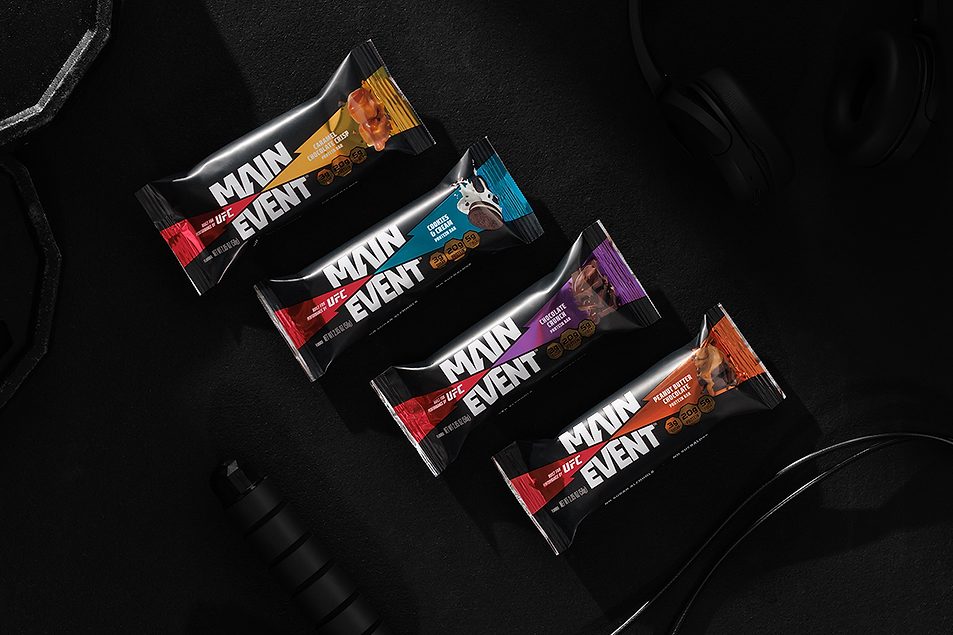
LAS VEGAS — FoodStory Brands is partnering with Ultimate Fighting Championship (UFC) Performance Institute to unveil a protein bar brand: Main Event.

Each bar features 20 grams of protein formulated from milk protein isolate, milk protein concentrate, whey protein concentrate and collagen peptides. The bar also contains 5 grams of fiber, 3 grams of sugar, L-theanine and tart cherry.

The bars are available in chocolate crunch, cookies and cream, peanut butter chocolate and caramel chocolate crip flavors.

“At the UFC PI, our entire mission is built around optimizing human performance through evidence-based sports science,” said Dr. Duncan French, senior vice president of the UFC Performance Institute. “When we set out to develop Main Event, we refused to create a standard protein bar. Every macro, every gram of fiber, and every functional ingredient was intentionally selected and rigorously vetted for fuel that genuinely moves the needle for human performance.”

Advertisement

The bars may be purchased online at through the brand’s website and at select retailers.

Continue Reading

Business

Legal & General plans to cut around 1,000 jobs by mid-2027

Published

on

Business Live

Group plans voluntary redundancies in the UK, but compulsory cuts have not been ruled out

The Legal & General headquarters in the City of London

Legal & General headquarters in the City of London(Image: PA)

Legal and General is set to axe 1,000 jobs by the middle of next year as part of a drive by chief executive Antonio Simoes to forge a “leaner operation”.

The UK’s largest asset manager notified staff via email on Wednesday that it has launched moves to cut 10 per cent of its workforce. The programme will encompass voluntary redundancies in the UK, though the firm did not rule out compulsory cuts depending on the level of uptake.

“Over the last decade, different structures, processes and ways of working have developed across L&G, making us more complex than we need to be,” Simoes told staff on email.

“To deliver our strategy successfully, we now need to make sure the way we work reflects the business we are becoming. Across L&G, we need to change how we work today and, through this, become a leaner organisation. By the middle of next year, we expect to reduce the size of our organisation by around 1,000 roles.”

Advertisement

The fund management division, which oversees £1.2 trillion in assets, is excluded as it has its own restructuring plan, as reported by City AM.

Simoes has been trimming the company’s headcount since succeeding former chief executive Nigel Wilson in January 2024.

Simoes, who previously held senior roles at Santander and HSBC, has since unveiled plans to sharpen its burgeoning pension arm and streamlined the group’s four business divisions into three through a merger of its asset management operations. He has also assembled a new executive team and committed to returning more than £5bn to shareholders between 2025 and 2027 through a combination of dividends and share buybacks.

An L&G spokesperson said the changes represent the “next stage of transformation”, enabling it to shift resources and investment towards areas where it sees “the strongest opportunities for long-term growth”.

Advertisement

Shares have climbed 11.9 per cent since the start of the year to 293.3 pence per share, yet have lagged behind rivals such as Aviva and the broader market over recent years.

Continue Reading

Business

Grab: Thoughts On Atome And Valuation Implications

Published

on

Grab food delivery scooter in Singapore

Grab: Thoughts On Atome And Valuation Implications

Continue Reading

Business

Beats 360 Reviews Find $350 Over-Ears With Swappable Cups, IPX4 and Stronger Noise Cancel

Published

on

new CEO John Ternus

CULVER CITY, Calif. — Beats’ new 360 over-ear headphones went on sale this week at $349.99, and first reviews treat them as a gym-capable cousin of Apple’s AirPods Max rather than a studio flagship.

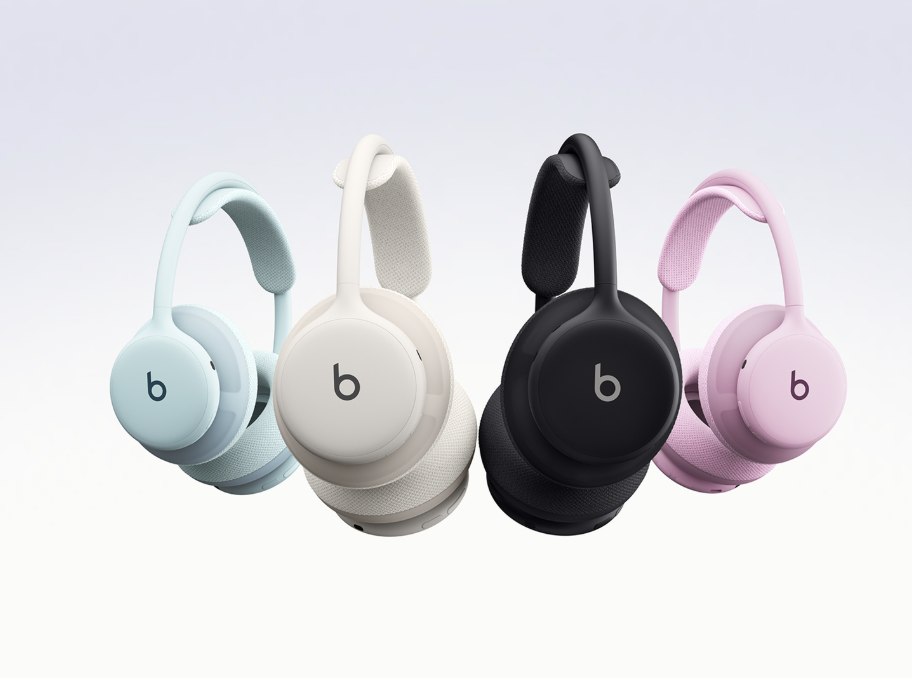
The company announced the set Sept. 22 for order in more than 100 countries, with in-store and delivery availability listed for Sept. 24. Core colors are Black, Cloud, Pink and Sky, each shipping with matching Performance Knit ear-cup and headband cushions. Extra cushion kits were promoted at $9.99 for a limited window in the United States, Canada, the United Kingdom, France, China, Australia and South Korea, then $49.99. UltraPlush kits in Black and Cloud use a leather-like surface. Beats Studio Pro dropped to $299.99 in the United States as the 360 arrived.

Official specifications list a 294.5-gram (10.39-ounce) headset, 165.5 by 191.3 by 87.1 millimeters, Class 1 Bluetooth, USB-C charging and no 3.5-millimeter jack. Battery life is rated up to 32 hours with active noise cancellation and Personalized Spatial Audio on. A five-minute Fast Fuel charge is specified for about an hour of playback. Beats calls the 360 its first over-ear model with an IPX4 sweat-and-splash rating.

Marketing claims 1.75 times the total noise cancellation of Studio Pro and 12 decibels more driver output. Drivers are described as dual-magnet dynamics with three-layer diaphragms. Eight or nine microphones, depending on the briefing, feed ANC, Transparency and Adaptive EQ. A custom Beats chip handles Apple one-touch pairing, iCloud switching, Audio Sharing, Find My and Android pairing. Oliver Schusser, Apple’s vice president of Music, Sports and Beats, said in the launch materials: “Beats didn’t just participate in the rise of over-ear headphones—we helped define the category.”

Advertisement

Reviewers spent the embargo week on fit, sweat and whether $350 undercuts Bose and Sony without matching them.

The Verge scored the 360 a 7 and titled its test around the gym. Strengths listed were the first IP rating on Beats headphones, removable cups in six colors and a replaceable battery. Weaknesses were ANC that lagged other $350 sets, a “shush-y” midrange and cups that can shift in hard workouts. Noise canceling was “very good,” the review said, “not as silent as the Bose Ultra Headphones Gen 2.” The writer still called the pair something to grab “if I wanted to focus in on my reps without a worry — while showing off some color.”

Engadget’s Billy Steele rated the headphones 8.2 out of 10. Pros included a new design, customization and bass-forward tuning. Cons included a tight fit on larger heads, no wired use and simple buttons. Steele wrote that Beats now offers “one set of headphones you can use all day and take to the gym.” Call quality was “perfectly usable in most cases; your colleagues won’t question if you’re dialing in from under water.” He repeated the 32-hour ANC claim.

Tom’s Guide’s Kate Kozuch called the 360 a “triumph for athletic audio,” citing IPX4, modular auto-tuning cushions, physical thumb controls, iOS and Android support and 32 hours with ANC. She flagged no wear detection, no 3.5-millimeter jack and no included wall charger. Extra cushion sets were listed at $49 after the intro price.

Advertisement

9to5Mac’s hands-on said the 360 are “the closest Apple headphones to AirPods Max, with one caveat”: no wired connection. The writer said they get 12 dB louder than Studio Pro, offer 1.75 times the ANC, add Adaptive EQ in iOS 27 and are the first Beats headphones with IPX4. Price sits $200 below AirPods Max at $549.

Trusted Reviews’ first listen in the United Kingdom used a £299.95 tag. The tester said chatter and room noise “were all instantly muted” before playback started, then found Celine Dion’s “It’s All Coming Back to Me” clear and immersive. Beats’ language on “powerful bass and incredible precision” was quoted as a company promise, not a lab result. The same site noted Studio Pro’s U.K. list falling to £249.95.

BGR’s José Adorno wrote that “Beats 360 has the best sound in any pair of Beats headphones I’ve ever used,” after the brand moved away from the old “deep bass and crazy treble” Studio signature. He called missing auto-pause when the cups leave the ears “a huge miss” at the price. Battery life of 32 hours with ANC on beats Studio Pro’s 24-hour rating.

Ecoustics listed customizable design, relatively detailed sound, strong ANC for the money, call quality and IPX4 as pluses, and a possible battery drain when powered off as a minus.

Advertisement

Hardware details that reviews keep repeating: electronics live in both cups, similar to AirPods Max, so the headband carries less wiring. A twist lock seats each cup and can play a tone if the set is on, The Verge said. Controls sit on the back of the cups — volume rocker, multi-function, power, listening mode. Multipoint Bluetooth is supported. Wear sensors are absent. A ripstop case ships in the box; the USB-C cable and adapter are sold separately on Apple’s store.

Where the 360 sits in Apple’s stack is the commercial point. AirPods Max remain the premium over-ear. Studio Pro is now the cheaper Beats can. Powerbeats Pro 2 and Powerbeats Fit 2 already had IPX4 as earbuds. The 360 is the first full-size Beats set meant to survive a workout without a garbage-bag caveat.

It is not a consensus smash. The Verge’s 7 and midrange complaint sit beside Engadget’s 8.2 and Tom’s Guide’s gym verdict. ANC is better than Studio Pro on Beats’ own multiplier and not class-leading against Bose in The Verge’s room test. There is no analog jack, a gap 9to5Mac treated as the main knock for anyone who still plugs into airplanes or consoles. There is no wear detection. Cups can move when you run.

What the reviews do agree on is the product thesis: swap the knit or UltraPlush pads, rinse sweat off an IPX4 frame, get about 32 hours, pay $350, and accept wireless-only life. That is narrower than a Sony WH-series all-rounder and louder, brighter and more color-forward than AirPods Max. Availability is this week. The extra cushions are cheap only while the launch promo lasts.

Advertisement
Continue Reading

Business

Trump to raise detainees with Xi, but other rights issues may not come up

Published

on


Trump to raise detainees with Xi, but other rights issues may not come up

Continue Reading

Business

Is Fox Corporation Stock Underperforming the S&P 500?

Published

on

Is Fox Corporation Stock Underperforming the S&P 500?
Fox News Channel at the News Corporation headquarters By Maria Sbytova

Valued at a market cap of $27 billion, Fox Corporation (FOXA) is a New York-based media and entertainment company that produces and distributes news, sports, and entertainment content across traditional television and digital platforms.

Companies valued at $10 billion or more are typically classified as “large-cap stocks,” and FOXA fits the label perfectly. Its portfolio includes FOX News Media, FOX Sports, FOX Entertainment, Tubi, and FOX Television Stations, giving the company a broad presence across cable networks, broadcast television, and streaming. The company is also expanding its digital footprint through FOX One, its direct-to-consumer streaming service, and Tubi. The company has also announced a proposed acquisition of Roku, reflecting its broader strategy of combining premium content with digital distribution and advertising technology.

More News from Barchart

FOXA is making a comeback after a sluggish start to the year. Its shares remain 15.2% below their 52-week high of $76.39, reached on Jan. 9. Shares of FOXA have gained 24.1% over the past three months, outperforming the S&P 500 Index’s ($SPX) 3.5% return during the same time frame.

www.barchart.com

The longer-term picture is more subdued, with FOXA up 6.9% over the past 52 weeks, trailing the S&P 500’s 16.5% advance. On a YTD basis, the stock is down 11.3%, compared with the index’s 13.4% gain.

Still, the recent momentum is notable. FOXA has traded above both its 50-day and 200-day moving averages since early August, reinforcing the stock’s improving technical trend.

www.barchart.com

FOXA’s stock performance has been caught between the resilience of its strongest franchises and the structural challenges facing traditional media. Live sports and Fox News continue to provide relatively stable cash flows, but ongoing cord-cutting is shrinking the traditional pay-TV ecosystem, weighing on cable subscribers and affiliate-fee growth. At the same time, softer linear-TV advertising and escalating sports-rights costs are putting additional pressure on margins. As a result, FOX is increasingly looking to political advertising, Tubi’s growing digital business, and broader streaming expansion to offset the pressure on its legacy television operations.

Advertisement

FOXA shares jumped 3.7% on Sept. 14 after Citizens JMP initiated coverage with a “Market Outperform” rating and a $95 price target. Analyst Matthew Condon pointed to FOX’s focus on live sports and news, which helps differentiate the company from the crowded scripted-streaming market. He also highlighted the potential for higher advertising revenue and cost synergies from digital distribution platforms such as Roku, fueling renewed investor optimism around FOX’s growth prospects.

FOXA has also significantly outpaced its rival, News Corporation (NWSA), which dipped 3% over the past 52 weeks.

Despite FOXA’s recent underperformance, analysts remain moderately optimistic about its prospects. The stock has a consensus rating of “Moderate Buy” from the 20 analysts covering it, and the mean price target of $75.47 suggests a 16.5% premium to its current price levels.

On the date of publication, Kritika Sarmah did not have (either directly or indirectly) positions in any of the securities mentioned in this article. All information and data in this article is solely for informational purposes. This article was originally published on Barchart.com

Advertisement
Continue Reading

Trending

Copyright © 2025