Connect with us
DAPA Banner
DAPA Coin
DAPA
COIN PAYMENT ASSET
PRIVACY · BLOCKDAG · HOMOMORPHIC ENCRYPTION · RUST
ElGamal Encrypted MINE DAPA
🚫 GENESIS SOLD OUT
DAPAPAY COMING

Business

380 Buildings Below 60% Capacity as Enrollment Plunges Toward Historic Lows

Published

on

Visitors at the Statue of Liberty

NEW YORK — Nearly one-quarter of New York City’s public schools are operating well below capacity, with 380 buildings — out of roughly 1,600 — running at less than 60 percent utilization this school year, according to a new analysis that spotlights the deepening enrollment crisis gripping the nation’s largest school district.

The startling figure, released by the Citizens Budget Commission, arrives as city officials project another sharp drop in student numbers. Public school enrollment currently stands around 884,400 students, down significantly from pre-pandemic levels, and forecasts warn of a further loss of up to 153,000 students over the next decade. The combination of underused buildings, fixed costs and ambitious class-size reduction mandates is forcing difficult conversations about budgets, consolidations and the future of neighborhood schools.

“This is not sustainable,” said one education budget analyst. “You cannot continue funding buildings designed for far more students than they currently serve while pouring hundreds of millions into lowering class sizes elsewhere.” The mismatch creates both inefficiency in some neighborhoods and overcrowding pressure in others.

Roots of the Enrollment Decline

Multiple factors drive the shrinking student population. Birth rates in New York City have fallen sharply since the COVID-19 pandemic, with roughly 25,000 fewer births annually compared to pre-pandemic figures. Families with young children continue to leave the city for more affordable suburbs or other states, drawn by remote work flexibility and lower housing costs. Charter school growth and homeschooling have also siphoned students from traditional public schools.

Advertisement

The School Construction Authority’s latest demographic projections paint a sobering picture. By 2034-35, enrollment could fall to approximately 721,000 students in grades K-12, a loss of more than 150,000 from recent levels. Declines are expected across all boroughs, with Brooklyn, Queens and the Bronx facing the steepest drops.

Early grades show the most dramatic shrinkage. Pre-kindergarten and kindergarten applications have plummeted, signaling that the pipeline of future students is narrowing. This trend compounds existing challenges in a system still recovering from pandemic-era learning disruptions.

Underutilized Schools Strain Budgets

The 380 schools below 60 percent capacity represent a significant fiscal burden. Many still require minimum staffing levels — principals, assistant principals, nurses and other personnel — dictated by union contracts and regulations, regardless of enrollment. Tiny schools with fewer than 150 students face particularly acute per-pupil cost spikes.

This year, 112 schools are projected to enroll under 150 students. That number is expected to rise to 134 next school year. These micro-schools collectively carry hundreds of millions in annual budgets while serving relatively few children, diverting resources from academic support, mental health services and facility maintenance.

Advertisement

Meanwhile, the city presses forward with a state-mandated class size reduction plan. New York law requires gradual caps — aiming for most classes at 20-25 students by 2027-28 — with interim targets. The system recently surpassed 60 percent compliance and eyes 80 percent next year, at a projected cost of over $1 billion annually in additional teachers and space modifications.

Critics argue the policy exacerbates inefficiencies. Funds flow to hire more staff in already compliant or low-enrollment schools while some buildings sit half-empty. Officials have explored repurposing space, but community resistance to mergers or closures remains fierce.

Political and Community Pushback

Mayor Zohran Mamdani’s administration has prioritized education spending, allocating record sums in the latest budget for class-size efforts, pre-K and mental health. Yet fiscal watchdogs urge tying funding more closely to actual enrollment, accelerating consolidations and pausing new construction in declining areas.

Parents in affected neighborhoods often fight to keep schools open, viewing them as vital community anchors. Past closure attempts have sparked protests, lawsuits and political backlash. Recent proposals on the Upper West Side and in Brooklyn ignited debates over equity, with families arguing that shuttering schools in lower-income areas disproportionately harms vulnerable students.

Advertisement

Education advocates acknowledge the tension. While small schools can offer personalized attention, extremely low enrollment limits course offerings, extracurriculars and specialized support. Larger, efficiently run schools often provide broader opportunities.

Potential Solutions and Trade-offs

Experts propose several paths forward. Strategic mergers could combine under-enrolled schools, preserving jobs while creating more robust programs. Repurposing excess space for community centers, early childhood programs or charter co-locations offers another option. Some suggest incentivizing families to fill seats through improved academics and safety measures.

Budget alignment represents the biggest lever. Shifting to a weighted student funding model — where dollars follow children more directly — could encourage efficiency without abrupt closures. The city could also revisit class-size mandates in light of demographic reality, seeking flexibility from Albany.

Longer term, addressing root causes like housing affordability, family support services and economic vitality could help stabilize enrollment. Without broader population recovery, however, the system must adapt to a smaller footprint.

Advertisement

Looking Ahead

As the 2026-27 school year approaches, with a later September start date, decisions on consolidations and budgets will intensify. The Department of Education faces pressure to balance fiscal responsibility with educational quality and community needs.

The 380 under-capacity schools symbolize a larger reckoning for urban education nationwide. Cities from Chicago to San Francisco grapple with similar declines. New York’s scale makes its choices particularly consequential.

For now, the empty desks and echoing hallways in hundreds of buildings underscore an uncomfortable truth: the city built for a million students must now thoughtfully right-size for far fewer while protecting outcomes for those who remain. How leaders navigate this transition will shape New York’s neighborhoods and the futures of its children for decades to come.

Advertisement
Continue Reading
Click to comment

You must be logged in to post a comment Login

Leave a Reply

Business

Lotza rolls out sparkling soda

Published

on

Lotza rolls out functional soda

The sparkling beverage is intended to be enjoyed as a standalone drink or as a mixer. 

Continue Reading

Business

Lennar Corporation (LEN) Q2 2026 Earnings Call Transcript

Published

on

OneWater Marine Inc. (ONEW) Q1 2026 Earnings Call Transcript

Q2: 2026-06-11 Earnings Summary

EPS of $1.31 beats by $0.08

 | Revenue of $7.94B (-5.22% Y/Y) misses by $134.82M

Lennar Corporation (LEN) Q2 2026 Earnings Call June 12, 2026 11:00 AM EDT

Company Participants

David Collins – VP & Controller
Stuart Miller – Executive Chairman, CEO & President
Diane Bessette – CFO & VP
Jim Parker – Chief Operating Officer
David Grove – Executive Vice President of Homebuilding

Advertisement

Conference Call Participants

Susan Maklari – Goldman Sachs Group, Inc., Research Division
Alan Ratner – Zelman & Associates LLC
Michael Rehaut – JPMorgan Chase & Co, Research Division
John Lovallo – UBS Investment Bank, Research Division
Jay McCanless – Citizens JMP Securities, LLC, Research Division
Buck Horne – Raymond James & Associates, Inc., Research Division

Advertisement

Presentation

Operator

Welcome to Lennar’s second quarter earnings conference call. [Operator Instructions] Today’s conference is being recorded. If you have any objections, you may disconnect at this time.

I will now turn the call over to David Collins for the reading of the forward-looking statement.

Advertisement

David Collins
VP & Controller

Thank you, and good morning, everyone. Today’s conference call may include forward-looking statements, including statements regarding Lennar’s business, financial condition, results of operations, cash flows, strategies and prospects. Forward-looking statements represent only Lennar’s estimates on the date of this conference call and are not intended to give any assurance as to actual future results.

Because forward-looking statements relate to matters that have not yet occurred, these statements are inherently subject to risks and uncertainties. Many factors could affect future results and may cause Lennar’s actual activities or results to differ materially from the activities and results anticipated in forward-looking statements. These factors include those described in our earnings release and our SEC filings, including those under the caption Risk Factors contained in Lennar’s annual report on Form 10-K most recently filed with the SEC. Please note that Lennar assumes no obligation to update any forward-looking statements.

Advertisement

Operator

I would now like to

Advertisement
Continue Reading

Business

Gold Prices Come Back to Earth

Published

on

Gold Prices Come Back to Earth

Gold fell 3.6% to $4,108.20 per troy ounce on Wednesday, its lowest settle value since November. Gold has retreated in five of the past six sessions, and is now down 23% from an all-time high of $5,318.40 hit in late January.

Continue Reading

Business

Heavy trading expected when SpaceX options launch in coming days

Published

on


Heavy trading expected when SpaceX options launch in coming days

Continue Reading

Business

New York City councilmembers seek to require municipal grocery stores by law

Published

on

New York City councilmembers seek to require municipal grocery stores by law

New York City Councilmember Jennifer Gutiérrez and some of her colleagues are pushing a proposal to require the establishment of at least five municipal grocery stores per borough.

The proposal comes as New York City Mayor Zohran Mamdani’s administration aims to establish one municipal grocery store in each of the Big Apple’s five boroughs by the end of his first term.

Advertisement

“Let’s make sure it’s not something that just our current mayor invests in, but something we can codify into in perpetuity,” Gutiérrez said, according to The City Reporter.

Fox News Digital reached out to Gutiérrez’s office on Friday to request a comment from the councilmember.

MAYOR ZOHRAN MAMDANI SAYS FIRST OF NYC’S FIVE GOVERNMENT-RUN GROCERY STORES WILL OPEN IN THE BRONX NEXT YEAR

New York City Mayor Zohran Mamdani

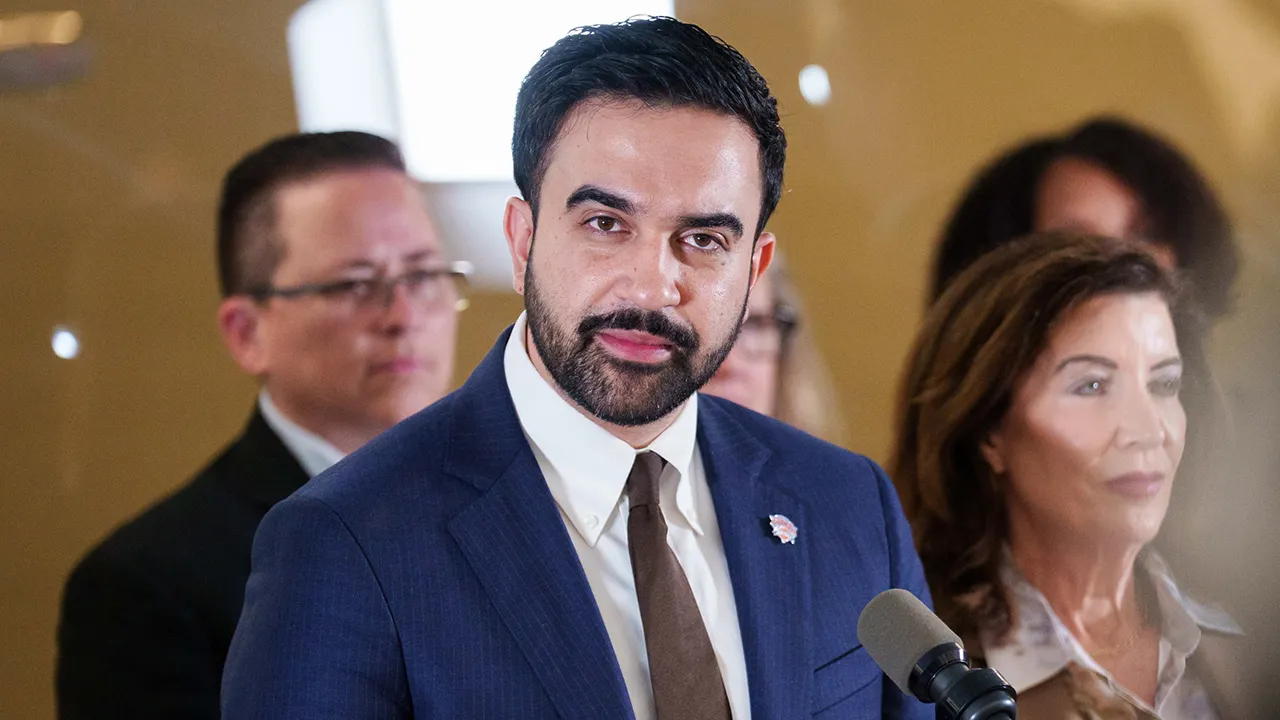
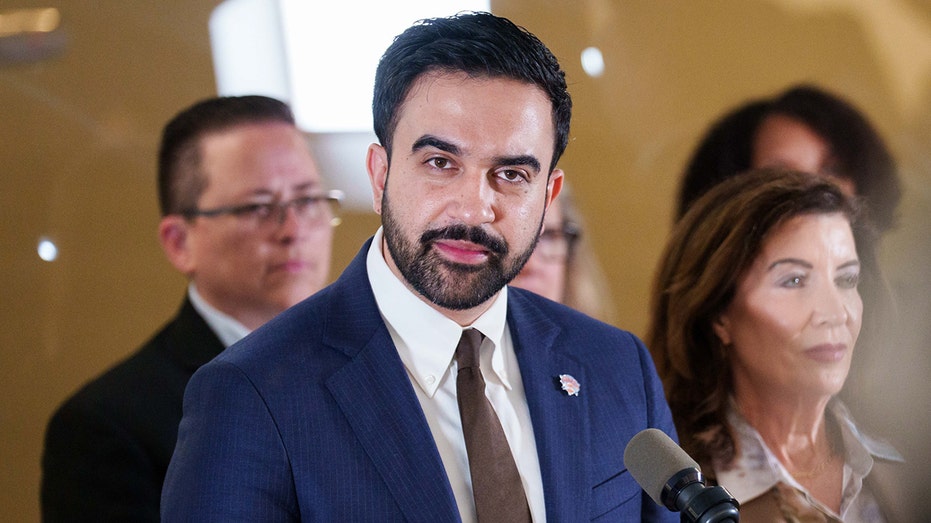
Zohran Mamdani, mayor of New York, and Kathy Hochul, governor of New York, during a news conference on 2026 FIFA World Cup transportation at the MTA Rail Control Center in New York, on Thursday, June 4, 2026. (Adam Gray/Bloomberg via Getty Images / Getty Images)

The proposal calls for the commissioner of small business services or the leader of a different agency designated by the mayor to create at least five grocery stores per borough “in consultation or partnership to the extent feasible with a contracted entity,” according to the measure.

Advertisement

A press release pertaining to the mayor’s effort earlier this year noted, “The city-owned grocery initiative is designed to lower costs on everyday staples by using public ownership to eliminate costs that are currently passed on to consumers.”

MAMDANI TOUTS MASSIVE TAXPAYER-FUNDED INVESTMENT FOR TRANS HEALTHCARE: ‘FIRST STEP’

New York City Councilmember Jennifer Gutiérrez.

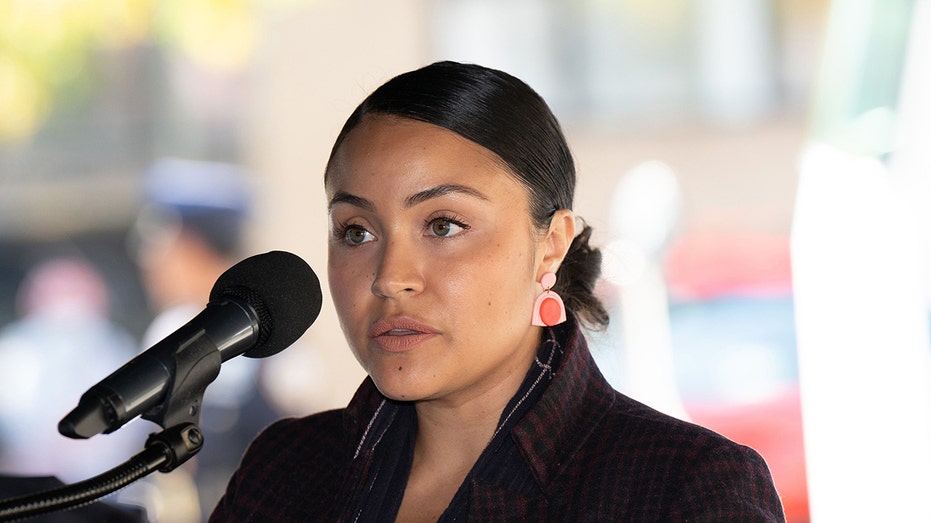
New York City Councilmember Jennifer Gutiérrez. (Theodore Parisienne/New York Daily News/Tribune News Service via Getty Images / Getty Images)

“The initiative aims to deliver affordable, high-quality groceries that provide meaningful savings to New Yorkers and strengthen neighborhood food access citywide. Mayor Mamdani has allocated $70 million in capital funds for the development of the five sites,” the release noted.

“Under the model, the City will own the land and cover overhead costs like rent and construction. A private operator, selected through a request for proposals, will manage daily operations and be contractually required to pass savings directly to customers on a core basket of everyday staples,” the release explained.

Advertisement

HEDGE FUND BILLIONAIRE EXPANDS MIAMI DEVELOPMENT PLANS AFTER MAMDANI FEUD

New York City skyline

The sun sets across midtown Manhattan, the Empire State Building, and the Statue of Liberty in New York City on April 26, 2026, as seen from Bayonne, N.J.  (Gary Hershorn/Getty Images / Getty Images)

GET FOX BUSINESS ON THE GO BY CLICKING HERE

Mamdani, a self-described democratic socialist, took office this year after winning the New York City mayoral election last year while running as a Democrat.

Advertisement
Continue Reading

Business

Goldfish key to Campbell’s snacks strategy

Published

on

Goldfish key to Campbell’s snacks strategy

Executives say brand is instrumental in portfolio turnaround.

Continue Reading

Business

NFL Sunday Ticket streaming switch threatens sports bars, owner says

Published

on

NFL Sunday Ticket streaming switch threatens sports bars, owner says

The traditional American pastime of gathering at a local sports bar to watch Sunday football is being strangled by a technical and financial bottleneck, one restaurateur is warning.

“It’s why we’re speaking up, because the simple matter is that it is hard to watch all of the streaming things… Is it on YouTube TV? Is it the [NFL] Sunday Ticket? Is it Amazon?” Texas restaurateur and Tailgators Pub & Grill founder Jim Hallers said on “Varney & Co.” Friday.

Advertisement

“For the last 30 years, it’s come to us through DirecTV, and it’s just worked,” he continued. “And so we like a centralized approach, but we just need technology that works, and streaming is still very immature.”

Testifying before Congress on Wednesday, Hallers explained to lawmakers that the sports media landscape’s sudden fragmentation into separate streaming apps is creating an expensive tech maze for hospitality venues, threatening the business model of – often-rural – neighborhood pubs that rely on NFL fans to keep their doors open in the fall.

TOM BRADY LAUNCHES GOOD NUT COCONUT WATER LINE WITH GOPUFF IN MARKET EXPECTED TO REACH $11B BY 2030

“Everybody has to move to streaming. And so, literally, now, we have to buy streaming boxes. And in a typical smaller bar where I have maybe 30 or 40 TVs with a DIRECTV box mounted behind every television, I now have to get an EverPass streaming box. But you can’t put an EverPass streaming box behind every TV. It doesn’t work like that,” Hallers said on Capitol Hill. “Just imagine at home, if you tried to stream, you know, 30 Netflix’s at once, your internet’s just going to die. Well, it’s the same way for most bars and restaurants today.”

Advertisement
Sports fan watch the Superbowl at bar

Fans watch Super Bowl LX at Saloon in Boston on February 8, 2026.  (Getty Images)

“One commercial video switch with enough inputs and outputs can cost in excess of $15,000. A full upgrade including equipment, wiring and the labor, will cost $30,000 to $40,000 per restaurant,” he also testified. “So instead of simplifying the business, the transition is adding another layer of cost and complexity.”

Wednesday’s congressional hearing stemmed from the Iowa Restaurant Association and the Wisconsin Restaurant Association, which each represent thousands of independent restaurant and bar owners, sending letters to high-powered GOP lawmakers in their states urging them to act on “a significant shift in the commercial distribution of NFL Sunday Ticket that threatens to impose immediate and substantial burdens on small businesses” across their states.

The concern comes after streaming service EverPass Media announced it would become the exclusive commercial option for NFL Sunday Ticket starting with the 2026 season. The Iowa letter was sent to Senate Judiciary Committee Chairman Chuck Grassley, while the Wisconsin edition went to Rep. Scott Fitzgerald, who chairs the House Judiciary Subcommittee on Antitrust.

Advertisement

GET FOX BUSINESS ON THE GO BY CLICKING HERE

“We understand that transitioning to a streaming-based solution for NFL Sunday Ticket may require planning, from connectivity and hardware to overall venue readiness. That’s why our team is committed to helping customers make the transition with confidence and be fully prepared before kickoff. Our goal is simple: make sure your venue is ready well before the first Sunday of the season, so you can focus on what matters most: delivering a great experience for every guest who walks through the door,” EverPass’ website reads.

“We really need it to work,” Hallers pleaded on Friday. “It’s not a matter of price. We just want technology that works, and that’s what they’ve been taking away from us.”

Advertisement

READ MORE FROM FOX BUSINESS

Fox News’ Brian Flood contributed to this report.

Continue Reading

Business

SpaceX IPO: What to Watch the Rest of the Week

Published

on

Shares in Elon Musk's SpaceX are poised to start trading Friday.

SpaceX IPO: What to Watch the Rest of the Week

Continue Reading

Business

One Stop Systems: The Growth Phase Is Just Beginning For This Smaller Defense/AI Gem

Published

on

One Stop Systems: The Growth Phase Is Just Beginning For This Smaller Defense/AI Gem

One Stop Systems: The Growth Phase Is Just Beginning For This Smaller Defense/AI Gem

Continue Reading

Business

Square One Law expands into new offices in Leeds city centre

Published

on

Business Live

‘This move gives Square One the space required to sustain our intended growth’

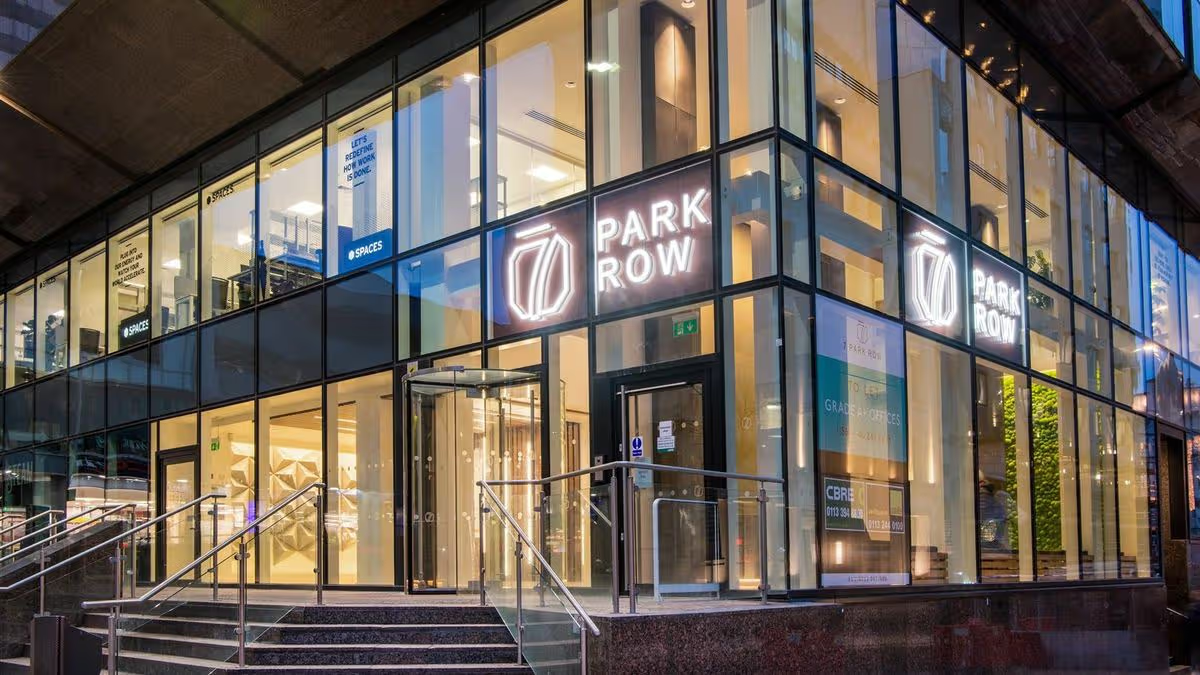
Square One Law is moving into the seventh floor of 7 Park Row

Square One Law is moving into the seventh floor of 7 Park Row(Image: Carter Towler)

Growing Newcastle law firm Square One Law is moving into new offices in the heart of Leeds. The company, which has its head office in the Fleming Business Centre in Jesmond, also has an office in Leeds where it offers clients services including banking and finance, dispute resolution, employment and intellectual property.

Now the firm is set to move from its office in One Park Row to 3,000sq ft of recently refurbished Grade A office space in 7 Park Row. The business is moving into the seventh floor of the building on a five-year lease, increasing its floorspace and boosting the firm’s ability to expand further.

Advertisement

James Jackson of Leeds-based property consultancy Carter Towler brokered the deal.

Square One Law commercial property partner, Matthew Thompson, said: “This move into these fantastic, newly upgraded premises puts us precisely where we want to be – at the heart of a city we love. This move gives Square One the space required to sustain our intended growth, whilst also providing employees and visiting clients with the modern workspace and pleasant surroundings they deserve.

“Thank you to Carter Towler and particularly WSB, who acted on our behalf for helping us secure our spectacular new home.”

Mr Jackson of Carter Towler said: “The arrival of Square One Law at 7 Park Row is a resounding endorsement of the comprehensive multimillion-pound refurbishment recently completed at this special building. The transformation of 7 Park Row undertaken by the landlords has been superb – creating Grade A, amenity-driven, fully fitted & CAT A office suites in the heart of Leeds’ professional core.

Advertisement

“It is also encouraging to see Square One Law performing so well and continuing to grow its presence in the market. The quality of its occupiers is an important ingredient in the success of 7 Park Row.”

The work was carried out by Augur Group and Firefly Capital Real Estate, who jointly acquired 7 Park Row in June 2024.

Inside 7 Park Row in Leeds

Inside 7 Park Row in Leeds(Image: Son Of Jack Photography)

Mr Jackson added: “The magnificent refurbishment of 7 Park Row has paid immediate dividends with both this and other recently completed lettings in the building. Only the 4,656 sq ft sixth floor now remains available to lease, either on a traditional CAT A basis or fully fitted.”

Elizabeth Ridler, partner at the Leeds office of property consultancy Knight Frank, joint marketing agents of 7 Park Row, added: “Park Row famously connects the financial and retail districts of the city centre and is one of the most sought-after business addresses in Leeds.

Advertisement

“We have also launched the marketing of the basement floor, which will provide around 10,000 sq ft of space suitable for a variety of uses including leisure, medical and education. The newly configured space will have a capacity for up to 200 people and will be accessed via a new, highly prominent double height entrance on Park Row.

“Park Row has also been enhanced by the pedestrianisation of City Square, the planting of trees and the widening of pavements, making it an exceptionally attractive street.”

Continue Reading

Trending

Copyright © 2025