
Business
5 Best Ground Support Equipment Suppliers for FBOs, MROs, and Airport Operations (2026)


The nearest replacement part is three weeks out because you bought the unit from a seller who doesn’t stock spares. Meanwhile, your hydraulic power unit is overdue for calibration, and the tug’s warranty paperwork is sitting in a gray-market limbo you can’t quite trace.
This day-to-day reality makes choosing a ground support equipment (GSE) supplier just as important as choosing the equipment itself. For FBO managers, MRO directors, corporate flight department leads, charter operators, and airport operations teams, the vendor you pick determines whether your fleet stays on the ramp or sits grounded waiting on a part. A reliable supplier does more than just drop off equipment; they act as a partner who keeps your operation moving, helps you maintain compliance, and steps up when things break.
Our top pick is Pilot John International for any operation that wants to consolidate GSE sourcing, service, calibration, and parts under a single authorized distributor. They span every equipment category from aircraft tugs and ground power units to deicing equipment and cargo handling gear. What separates them from equipment-only sellers is that they back each sale with in-house service and repairs, in-stock spare parts, and calibration services, so a down unit gets immediate attention instead of a shrug. No single supplier wins every scenario, though. If your primary need is portable and mobile ground power units or battery jump-start solutions, Start Pac is the strongest specialist alternative. If you’re after GSE leasing or multi-location North American ground-handling support, Fortbrand Services is the more natural fit.
Below, we rank the five best ground support equipment suppliers for aviation operations in 2026, each with a clear “best for” segment so you can match a vendor to your actual procurement need – not just the lowest sticker price.
Our selection criteria
We didn’t rank these suppliers on brand recognition or how slick their websites look. We evaluated them against the things that actually determine whether a GSE purchase pays off over the life of the equipment.
Product range breadth
Does the supplier cover multiple GSE categories – tugs, ground power units, jacks, service carts, deicing gear – or does it live in a single niche? Breadth matters because every category you can source from one vendor is one fewer supplier relationship, PO, and point of contact to manage. For operations equipping a full ramp, consolidation is a real efficiency lever that saves both time and administrative overhead.
Authorized distribution and OEM status
There’s a meaningful difference between an authorized distributor and a gray-market reseller. Authorized status means legitimate warranty chains, genuine OEM parts, and a documentation trail that holds up under audit – which matters when you’re operating in a regulatory environment. The FAA’s minimum standards framework, laid out in Advisory Circular 150/5190-8, underscores how much airport commercial activity is governed by accountability and documentation. A traceable equipment chain fits that expectation; a mystery-sourced unit doesn’t.
Post-sale service, parts, and calibration
The purchase is the beginning, not the end. Can the supplier repair what it sells? Does it stock spare parts so a failure means a same-week fix instead of a factory queue? Does it calibrate the test and measurement tools that keep equipment airworthy and audit-ready? Lifecycle support is where equipment-only sellers fall down.
Suitability across buyer segments
Finally, we asked who each supplier actually serves. Some cover the full spread – FBOs, MROs, corporate flight departments, charter operators, aviation maintenance schools. Others are narrowly specialized by product or region. Neither is wrong, but you need to know which one you’re dealing with before you commit.
The 5 best ground support equipment suppliers for aviation operations
The five suppliers below stand out for different reasons and different operation types. Whether you’re equipping a new FBO, expanding an MRO’s ramp capability, or consolidating a corporate flight department’s vendor list, each entry offers a clear fit for a specific procurement need. Number one is our overall top recommendation; the rest earn their spots by owning a distinct segment.
| Provider | Best for | Key strength |
| Pilot John International | Single-source procurement + lifecycle support | Authorized distributor across all GSE categories; service, parts, and calibration in-house |
| Start Pac | Portable/mobile ground power | Family-owned US manufacturer; portable GPUs and battery packs since 1997 |
| Aviation GSE | Canadian/cross-border operators | Multi-city Canadian service locations |
| Air Parts International (API Sales) | West Coast MROs | Burbank-based parts and GSE support specialist |
| Fortbrand Services | GSE leasing + multi-location ground handling | North American GSE and airport maintenance equipment leasing |
#1. Pilot John International – Best for single-source GSE procurement and lifecycle support
If you’re tired of juggling five vendors to keep one ramp running, this is the entry to read closely.
Pilot John International is a global distributor and service center that covers essentially every GSE category on this list under one roof. That’s the whole idea: one vendor, one purchase order, one point of contact instead of chasing separate suppliers for tugs, power, jacks, and carts. You can source the complete range of ground support equipment – from aircraft tugs and towbars to ground power units, hydraulic power units, and deicing gear – through a single relationship, and, crucially, that relationship doesn’t end when the equipment ships. PJi services and repairs what it sells with its own technicians, stocks spare parts to get down units back on the ramp, and runs in-house calibration for the test and measurement tools that keep your equipment airworthy and audit-ready.
That lifecycle model is the real differentiator against equipment-only sellers. Anyone can move a unit; far fewer can fix it, part it, calibrate it, and answer a troubleshooting call six months later. PJi is also an authorized distributor for leading GSE manufacturers – not a gray-market reseller – which means the warranty chain and OEM parts path are legitimate. It’s a distinction that matters more every year as operators tighten their documentation and traceability practices.
Key specs:
- Complete GSE catalog: aircraft tugs and towbars, ground power units, hydraulic power units and fluid service carts, aircraft tripod and axle jacks and tail stands, lavatory and water service carts, deicing equipment, engine hoists and stands, maintenance platforms and stairs, oxygen and nitrogen equipment, tire service tools, and cargo handling gear
- Authorized distributor for leading GSE manufacturers
- In-house service and repair by PJi’s own technicians
- In-stock spare parts to minimize ramp downtime
- In-house calibration services for test and measurement tools
- Ongoing technical support from real people after the sale
- Serves FBOs, MROs, charter operators, corporate flight departments, and aviation maintenance schools worldwide
Pros:
- One vendor, one PO, one point of contact across every GSE category – the multi-supplier management overhead largely disappears
- Authorized distributor status protects warranty chains and gets you genuine OEM parts
- Full lifecycle coverage – buy, service, calibrate, manage – under a single relationship
- In-stock spare parts mean a failed unit typically returns to service faster than waiting in a factory queue
- Calibration services keep your test and measurement equipment audit-ready
Cons:
- As a distributor and service center rather than an OEM manufacturer, per-unit pricing may not always beat a direct factory purchase on very high-volume, single-category orders
- Buyers with a single, narrow need may find a dedicated specialist’s product depth in that one niche slightly greater
- Service technician coverage is strong globally but more concentrated in some regions; remote-location buyers should confirm local service availability before committing
- The catalog is broad enough that buyers new to GSE procurement may want a sales rep’s help to navigate it efficiently
Who it’s best for: Any operation – FBO, MRO, corporate flight department, charter operator, or aviation maintenance school – that would rather manage one accountable vendor across the whole ground equipment fleet than stitch together five.
#2. Start Pac – Best for portable and mobile ground power units
When your core problem is starting aircraft reliably and getting power to the ramp, this is the specialist to talk to.
Start Pac is a family-owned American company based in Las Vegas that has spent nearly three decades doing one thing extremely well: manufacturing and supplying portable and mobile ground power units and battery packs for jump-starting aircraft. Since 1997, the focus has stayed on business jets and general aviation, with products positioned as efficient, robust, and cost-effective. Because it’s a manufacturer rather than a multi-tier distribution chain, you’re dealing more directly with the people who build the equipment – and the company points to a strong 5-star customer satisfaction reputation.
That narrow focus is both the strength and the limitation. If ground power is your headache, the depth here is real. If you also need tugs, jacks, service carts, or deicing equipment, you’ll be sourcing those from somewhere else. It’s worth remembering that ground power is also an area under active decarbonization pressure across the industry – sustainable aviation and ground-operations policy discussed by the Council of the European Union is nudging operators to think about the full electrical and energy footprint of ramp equipment, so a specialist that lives in this category is worth watching.
Key specs:
- Family-owned, American company based in Las Vegas, Nevada
- Manufacturing portable and mobile ground power units and battery packs since 1997
- Products positioned as efficient, robust, and cost-effective
- Focused on jump-starting business jets and general aviation aircraft
- 5-star customer-rated
Pros:
- Nearly three decades of focused specialization in portable GPU and battery pack technology
- Family-owned manufacturer – a direct relationship rather than a layered distribution chain
- Strong customer satisfaction reputation
- Portable and mobile form factors suit line service teams and remote ramp operations
Cons:
- The product range is centered on power solutions, not broad multi-category GSE
- Buyers needing tugs, jacks, service carts, or deicing equipment have to source those elsewhere
- Publicly available detail on post-sale service infrastructure, calibration, and spare parts programs is limited – confirm those directly before assuming they exist
Who it’s best for: FBOs, corporate flight departments, and line service teams whose primary need is portable and mobile ground power units and battery jump-start solutions for business jets and general aviation.
#3. Aviation GSE – Best for Canadian and cross-border airport operators
If your operation sits north of the border – or straddles it – regional service presence is worth a premium, and that’s this supplier’s calling card.
Aviation GSE is a Canadian ground support equipment supplier whose most distinctive trait is a genuine multi-city service footprint. It maintains dedicated service contacts across Toronto, Montreal, and Calgary – a distribution of local operational presence that’s relatively rare among GSE suppliers and genuinely useful if you’re managing equipment across Canadian airports or running cross-border operations that need someone reachable in-country.
Publicly available detail on the full product range and service scope is thinner than we’d like, so we’re keeping this entry tight and factual rather than speculating. The takeaway is regional: if being able to call a service team in your own time zone and jurisdiction matters more than catalog breadth, Aviation GSE earns a look.
Key specs:
- Canadian GSE supplier with multi-city service coverage
- Dedicated service contacts for Toronto (YYZ), Montreal (YUL), and Calgary (YYC)
- Toronto-area phone presence
Pros:
- Multi-city Canadian service footprint (Toronto, Montreal, Calgary) – uncommon among GSE suppliers
- Location-specific service contacts suggest real local operational presence
Cons:
- Limited publicly available information on product range and full service scope
- Primarily oriented to the Canadian market, which may limit reach for US-only operations
Who it’s best for: Canadian airport operators and cross-border aviation businesses that value a GSE supplier with regional service presence in major Canadian cities.
#4. Air Parts International (API Sales) – Best for West Coast MROs and parts-integrated GSE support
For Southern California maintenance operations that want parts and GSE support from one regional specialist, geography is the story here.
Air Parts International Sales, Inc. is a Burbank-based aircraft parts and GSE support specialist positioned around being “service oriented for total support.” Its location puts it right in the middle of Southern California’s dense aviation maintenance corridor, which is a practical advantage if you run an MRO in the Los Angeles basin and want a supplier close enough to build a real working relationship with rather than a distant national account.
As with the previous entry, we’re deliberately keeping this one lean because verified public detail on product breadth and distribution status is limited. What’s clear is the regional, relationship-first positioning – and for the right West Coast operator, that proximity is exactly the point.
Key specs:
- Full name: Air Parts International Sales, Inc.
- Located in Burbank, California
- Positioned as “service oriented for total support”
Pros:
- Burbank location sits at the heart of Southern California’s aviation maintenance corridor
- “Service oriented for total support” positioning points to a relationship-based approach
Cons:
- Limited publicly available information on product breadth and service scope
- Regional focus means limited reach for operators outside the West Coast
Who it’s best for: West Coast MROs and operators in the Los Angeles/Burbank area who want to source aircraft parts alongside GSE support from a single regional specialist.
#5. Fortbrand Services – Best for GSE leasing and multi-location North American ground handling
If preserving capital or trialing equipment before you buy is a priority – or you operate across several airports – leasing changes the math, and that’s where this supplier lives.
Fortbrand Services provides a wide range of ground support equipment and Airport Maintenance Equipment (AME) across multiple United States locations, each offering products and services tailored to local needs. Its focus is squarely on airports and ground-handling operators across North America, and its distinguishing move is offering GSE leasing and maintenance services alongside outright equipment. That AME coverage also stretches beyond what a typical GSE-only supplier carries, which matters if your responsibilities extend past aircraft servicing into keeping the airfield itself running.
The leasing model is a genuine differentiator – it lets you preserve capital, scale up seasonally, or trial a unit before buying. It won’t suit everyone, though. If you strongly prefer outright ownership, a lease-oriented relationship may feel like a mismatch, and public detail on specific product brands, authorized distributor status, and post-sale calibration is limited, so confirm those points directly.
Key specs:
- Wide range of GSE and Airport Maintenance Equipment (AME)
- Multiple US locations with locally tailored products and services
- Serves airports and ground-handling operators across North America
- Offers GSE leasing, maintenance services, and specialized AME equipment
Pros:
- GSE leasing suits operators who want to preserve capital or trial equipment before purchasing
- AME coverage extends beyond typical GSE suppliers
- Multi-location US presence with locally tailored service – relevant for operators at multiple airports
- Explicit North American ground-handling focus
Cons:
- Publicly available detail on specific product brands, authorized distributor status, and post-sale calibration is limited – don’t assume these without confirming
- A leasing-focused model may not suit buyers who prefer outright ownership
- Full product catalog detail is not extensively published
Who it’s best for: Multi-location ground-handling operators and airports across North America that need GSE leasing, airport maintenance equipment, and locally tailored products and services.
Frequently asked questions
What is aviation ground support equipment and what categories does it cover?
Ground support equipment is the fleet of vehicles, tools, and machinery used to service aircraft on the ground – everything that happens between landing and the next departure. The category is broad: aircraft tugs and towbars for moving airframes, ground power units and battery packs for electrical supply and starting, hydraulic power units and fluid service carts, aircraft jacks and tail stands, lavatory and water service carts, deicing equipment, engine hoists and stands, maintenance platforms and stairs, oxygen and nitrogen servicing gear, tire service tools, and cargo handling equipment. Most operations need items from several of these categories at once, which is exactly why supplier breadth becomes a critical procurement question rather than an afterthought.
Why does buying GSE from an authorized distributor matter versus a gray-market reseller?
An authorized distributor has a legitimate relationship with the OEM, which means the warranty chain is intact, replacement parts are genuine, and the documentation trail holds up under audit. A gray-market reseller may offer a lower headline price, but you can inherit voided warranties, uncertain parts provenance, and gaps in your maintenance records. In a regulated environment where accountability and documentation are expected of commercial aeronautical activity, that traceability isn’t a nice-to-have – it’s part of running a defensible operation.
Should I consolidate GSE purchases with one supplier or buy best-of-breed from specialists?
It depends on how much administrative overhead you’re carrying and how varied your equipment needs are. Consolidating with a single-source distributor cuts down on purchase orders, contacts, and vendor management, and it makes lifecycle support – service, parts, calibration – far simpler to coordinate. Buying best-of-breed can occasionally get you slightly deeper product depth in one narrow niche. For most FBOs, MROs, and corporate flight departments running mixed fleets, the consolidation savings and single-accountability model outweigh marginal niche gains.
How important is post-sale service and spare parts availability when choosing a GSE supplier?
Extremely – arguably more important than the purchase price. A GSE unit that’s down and waiting weeks for a factory part is a unit that isn’t earning its keep, and in a busy operation that ripples straight into delayed aircraft. Suppliers that repair what they sell, stock spare parts, and offer calibration turn a potential multi-week outage into a same-week fix. When comparing suppliers, ask specifically about in-house technicians, parts inventory, and calibration capabilities before you sign anything. The cheapest unit on the market can quickly become the most expensive if it spends half its life waiting for a proprietary part.
What’s the difference between buying and leasing ground support equipment?
Buying gives you outright ownership and, over a long service life, often a lower total cost – but it ties up capital and puts full maintenance responsibility on you. Leasing preserves capital, lets you scale seasonally, and can be a smart way to trial a piece of equipment or cover a temporary surge without a permanent commitment. Multi-location and ground-handling operators often mix the two, owning core equipment and leasing the rest. If leasing is central to your strategy, prioritize a supplier that offers it as a first-class option.
Which GSE supplier is best for a Canadian or cross-border operation?
If in-country, in-time-zone service presence is a priority, a supplier with an actual Canadian service footprint is worth prioritizing over a distant national account. Regional coverage across multiple Canadian cities means faster response and a partner who understands local operating conditions. For operations that straddle the border, confirm both the supplier’s Canadian service locations and how they handle cross-border parts and support before committing.
How does calibration factor into GSE ownership and airworthiness?
Many GSE items – particularly test and measurement tools used in maintenance – must be periodically calibrated to remain accurate, airworthy, and audit-ready. Skipping calibration can invalidate readings your technicians rely on and create compliance gaps during inspections. A supplier that offers in-house calibration folds this recurring requirement into the same relationship you already use for purchase and repair, which is far cleaner than routing tools to a separate calibration house on a different schedule.
Choosing the right GSE supplier for your operation
The right ground support equipment supplier comes down to what your operation actually needs to solve. Choose Start Pac if portable and mobile ground power is your core requirement and you want a focused, family-owned manufacturer. Choose Aviation GSE if you’re operating in Canada or across the border and value multi-city regional service. Choose Air Parts International (API Sales) if you’re a West Coast MRO that wants parts and GSE support from a nearby Burbank specialist. Choose Fortbrand Services if leasing, airport maintenance equipment, or multi-location North American ground handling drives your decision.
For everyone else – and for most FBOs, MROs, corporate flight departments, charter operators, and aviation schools running mixed fleets – Pilot John International is the default top pick. Its combination of authorized-distributor breadth across every GSE category and genuine lifecycle support (service, repairs, in-stock spare parts, and in-house calibration) is what keeps equipment on the ramp instead of in a queue. If consolidating vendors and staying audit-ready matter to you, start there.


Priority Technology PRTH 33.79%increase; up pointing triangle Holdings agreed to be taken private by an investor group led by its chair and chief executive, Thomas Priore, in a deal with an enterprise value of around $1.6 billion.
Priore’s group would acquire all the stock it doesn’t already own for $8.05 a share in cash, which the payment-technology company said is a 65% premium to its share price on Nov. 7, 2025, just prior to the investor group’s preliminary acquisition proposal. The price also represents a 38% premium to the company’s Friday closing price.
Copyright ©2026 Dow Jones & Company, Inc. All Rights Reserved. 87990cbe856818d5eddac44c7b1cdeb8

The Nasdaq has notched a record high close, lifted by Micron Technology and other AI-related stocks, while the S&P 500 also hovered just below a record high.
Business
RuneScape Down? Players Across the US Report Widespread Server Connection Issues, Login and Gameplay Trouble

Players of the long-running fantasy MMORPG “RuneScape” began reporting widespread connectivity problems in the early hours of Tuesday, with outage-tracking service Downdetector logging a spike in user complaints starting at 2:21 a.m. Eastern time and the hashtag #RunescapeDown trending on social platform X as affected players compared notes on the disruption.
Downdetector’s official account posted an alert shortly after the spike began, asking users how the outage was affecting them and directing them to submit detailed reports through the platform. According to the latest tracking of the incident, 74% of reported problems were related to server connection issues, making it the most widespread category of complaint by a wide margin. Login problems accounted for another 12% of reports, while gameplay-related issues made up roughly 8% of the total.
Affected players described a range of specific symptoms tied to the outage. Some reported being unable to retrieve the game’s available world list, the selection screen RuneScape players use to choose which game server to log into before playing. Others said they were being disconnected while actively playing, interrupting sessions already in progress. A smaller number of players also reported experiencing lag affecting in-game interactions on servers that did remain accessible, suggesting the disruption was degrading performance even for some players who were able to connect, rather than uniformly blocking access altogether.
“RuneScape,” developed and published by British game studio Jagex, first launched in January 2001 and has remained one of the longest continuously operating massively multiplayer online role-playing games still active today. The game is set in the fantasy world of Gielinor, where players create customizable avatars and pursue an open-ended mix of quests, skill training, combat and social activities. Jagex also operates “Old School RuneScape,” a separate version of the game based on an earlier iteration of Gielinor that the studio has continued to update in parallel with the modern version, commonly referred to as RS3. As of the most recent outage reports, independent monitoring of Old School RuneScape’s status had not flagged the same level of disruption affecting the main RuneScape service, suggesting Tuesday’s issues may have been concentrated specifically on RS3’s infrastructure rather than affecting both versions of the game equally, though this could not be independently confirmed.
Jagex maintains an official support account on X, JagexSupport, which the company has used during past service disruptions to acknowledge issues and post updates as its engineering team investigates. The studio also operates a dedicated Game Status Information Centre page where it publishes technical updates, including changes to system requirements and platform support, though that page’s most recent update at the time of the outage concerned an unrelated change to minimum specifications for the Jagex Launcher on Mac computers rather than any acknowledgment of Tuesday’s connectivity problems specifically.
Not every reported connectivity issue necessarily traces back to a problem on Jagex’s own servers. Independent outage-tracking services that monitor RuneScape’s status have noted that the game’s server connection, login authentication and in-game performance can each be affected by separate, unrelated factors, meaning a disruption reported by one player is not always indicative of a broader, platform-wide outage affecting all users simultaneously. Common troubleshooting advice offered by such services includes restarting the game client, restarting a home router, and verifying that graphics drivers and other software are fully up to date, since outdated drivers have separately been cited by some players as a source of error messages unrelated to any active outage.
RuneScape has built a substantial and enduring player base over its more than two-decade history. By January of this year, RuneScape and Old School RuneScape had together generated more than $3 billion in lifetime revenue, according to figures reported at the time, reflecting the franchise’s sustained commercial success even as the broader MMORPG genre has evolved considerably since the game’s original launch. The franchise has also faced periodic criticism from its player community over the years regarding changes to trading systems, player-versus-player combat mechanics and microtransactions, with Jagex removing its Treasure Hunter microtransaction system in January following a community vote on the matter.
As of the most recent available information, neither Jagex nor RuneScape’s official channels had issued a detailed public statement specifying the root cause of Tuesday’s early morning disruption, and it remained unclear whether the issue was affecting all regions and platforms equally or was concentrated among specific groups of players. Players seeking the most current and authoritative updates on the situation were directed to Jagex’s official support channels and in-game status announcements rather than relying solely on crowdsourced outage trackers, which can occasionally lag behind or imprecisely characterize the true scope of a still-developing technical issue.
Downdetector, the platform that first flagged Tuesday’s disruption, aggregates user-submitted problem reports alongside automated monitoring signals to identify spikes in complaints for a given online service, generating alerts when reports exceed typical baseline levels for that platform and time of day. With reports of server connection, login and gameplay issues continuing to circulate in the early morning hours, affected players are likely to continue monitoring both Downdetector and Jagex’s own official channels for confirmation of the outage’s cause and any updates on when full service is expected to be restored.
Business
Sunrise Energy Metals Rallies 12.71% to $20.48, Nearing 52-Week High on Scandium Momentum Once Again

SYDNEY — Shares in Sunrise Energy Metals Ltd. surged 12.71% to $20.48, adding $2.31, pushing the Australian scandium developer’s stock back toward the upper end of its 52-week trading range as investors continue piling into a company that has become one of the most closely watched turnaround stories on the ASX over the past year.
Tuesday’s rally recovers ground the stock had given up earlier this month, when shares fell sharply amid broader market volatility. It also extends what has already been an extraordinary run for the company: Sunrise Energy Metals shares have climbed more than 2,500% over the trailing twelve months, according to recent market analysis, rocketing from roughly 21 cents to well above $6 earlier in the year before continuing to climb into the $20 range in recent weeks, as the company has transitioned from a speculative exploration stock into what investors increasingly view as a credible developer racing to become the Western world’s first major primary scandium producer.
Sunrise’s rise has been driven by a series of major financing and strategic milestones tied to its Syerston Scandium Project in New South Wales. In August, the company secured a conditional commitment for a $400 million loan from the U.S. Department of Defense, delivered through the Department’s Office of Strategic Capital, alongside plans to begin preparations for a listing on a U.S. securities exchange. The loan is structured as a 25-year conditional debt facility and will be released in phases as the project hits specific construction milestones, with the funding also expanding the project’s scope to include construction of scandium metal refining capacity within the United States itself.
Sunrise chairman Robert Friedland described the U.S. government backing as a defining moment for both the company and the broader Australian mining sector. “This is a landmark moment for Sunrise and Australia’s mining industry, and the financing aligns with the goals of the US-Australia Partnership on critical minerals,” Friedland said at the time. He also thanked the U.S. administration directly for its support of the project. “We thank President Donald J. Trump and the Department of War’s Office of Strategic Capital for its support as we aim to establish Syerston as a cornerstone of Western scandium supply,” Friedland said.
An official from the Department’s Office of Strategic Capital, Michael Lorch, a senior adviser to Deputy Secretary of Defense Steve Feinberg, said the arrangement was designed to help the United States reduce its reliance on foreign sources for a metal considered critical to national security and advanced manufacturing. Lorch said the deal would “help address foreign dependencies in scandium supply.”
Scandium, the rare metal at the center of Sunrise’s Syerston project, is used to strengthen aluminum alloys for aerospace and defense applications and has increasingly found demand in powering artificial intelligence data center infrastructure. China currently controls nearly 70% of global rare earth mining and roughly 90% of global processing capacity, a concentration that has driven sustained U.S. government interest in developing alternative, Western-aligned supply chains for critical minerals like scandium.
Sunrise Chief Executive Officer Sam Riggall has described the scale of the Syerston project’s potential in similarly ambitious terms. Speaking to CNBC in June, Riggall said the project would have “the capacity to replace everything that China supplies today from this one mining operation,” underscoring the scale of ambition behind the company’s plans even as the project continues working toward a final investment decision.
Beyond the U.S. government financing, Sunrise’s rally has also been fueled by a strategic offtake arrangement with Lockheed Martin, giving the defense contractor a pathway to secure scandium supply directly from the Syerston project once it reaches production. That combination of government-backed financing support and a credible offtake agreement with a major U.S. defense contractor has been cited by analysts as offering a meaningful vote of confidence in the project’s commercial viability, distinguishing Sunrise from many other speculative ASX-listed mining developers still working to secure comparable customer and financing commitments.
The Syerston project itself is expected to have a 32-year operating life, with the current phase targeting production of approximately 60 tonnes per annum of high-purity scandium oxide. Sunrise is also evaluating a second development phase that could add a further 120 tonnes of annual production capacity. The company has revised its total capital cost estimate for the project to between $450 million and $475 million following an expansion in scope, with power generation costs now incorporated directly into that capital expenditure figure. Sunrise continues working toward a final investment decision, targeted for the second half of 2026, ahead of a first production target set for the second half of 2028.
Sunrise’s balance sheet has remained a point of relative strength throughout the company’s rapid transition from explorer to developer. The company executed three separate equity placements during its most recent financial year, and as of August held a substantial cash position with zero debt on its balance sheet, giving it a comfortable liquidity buffer to continue funding pre-construction work, long-lead equipment procurement and engineering studies without near-term cash-burn pressure.
With the stock’s dramatic year-long trajectory continuing to draw close attention from both institutional and retail investors, and with Sunrise still working toward its targeted final investment decision later this year, market participants are likely to continue watching closely for further updates on project financing, offtake agreements and construction milestones as the next set of catalysts likely to shape the stock’s path in the months ahead.

Engie Brasil Energia S.A. (EGIEY) Analyst/Investor Day – Slideshow
Operator
Good afternoon, and welcome to the ACG Metals Limited Investor Presentation. [Operator Instructions] And I would now like to hand you over to the management team of ACG Metals Limited. Artem, good afternoon.
Artem Volynets
Founder, Chairman & CEO
Hello. Thank you very much for joining. I’m Artem. I’m Chair and CEO of ACG. We’ll walk you through some slides reasonably quickly. Essentially, we published an updated technical report on Thursday of last week and also our results for the first 6 months of this year, financial results. And this presentation is designed to show what we have done over the last 2 years. So just to remind everyone what ACG is. Today, we’re about $600 million market cap company, another $200 million in bonds outstanding. We’ve done reasonably well for our shareholders over the last 2 years since we acquired an asset in Turkey called Gediktepe.
Our updated technical report shows a massively increased NPV, which leads to the NAV net asset value per share of around GBP 34. And that technical report is done at consensus pricing, which are lower than the current spot. So if you put spot prices in the model, you will see GBP 43 per share. So certainly, there is a way to go from where we are. This is all driven by a very significant increase in the value of our project. Essentially, we acquired Gediktepe for $120 million in September 2024. We invested another $200 million, $146 million of that is already invested and the flotation plant built.
Another $60 million is being invested to build another plant called SART. As a result


Greenland-linked rare earth stocks Critical Metals (CRML) and Greenland Mines (GRML) surged on Monday morning, following President Donald Trump’s Friday announcement of a security agreement with Denmark. Analysts have speculated that the U.S. government could invest in Greenland’s mining sector, a possibility that may be more likely following a deal that gives the U.S. a veto over “sensitive” investments in…
Copyright ©2026 Investor’s Business Daily, LLC. All rights reserved. 87990cbe856818d5eddac44c7b1cdeb8
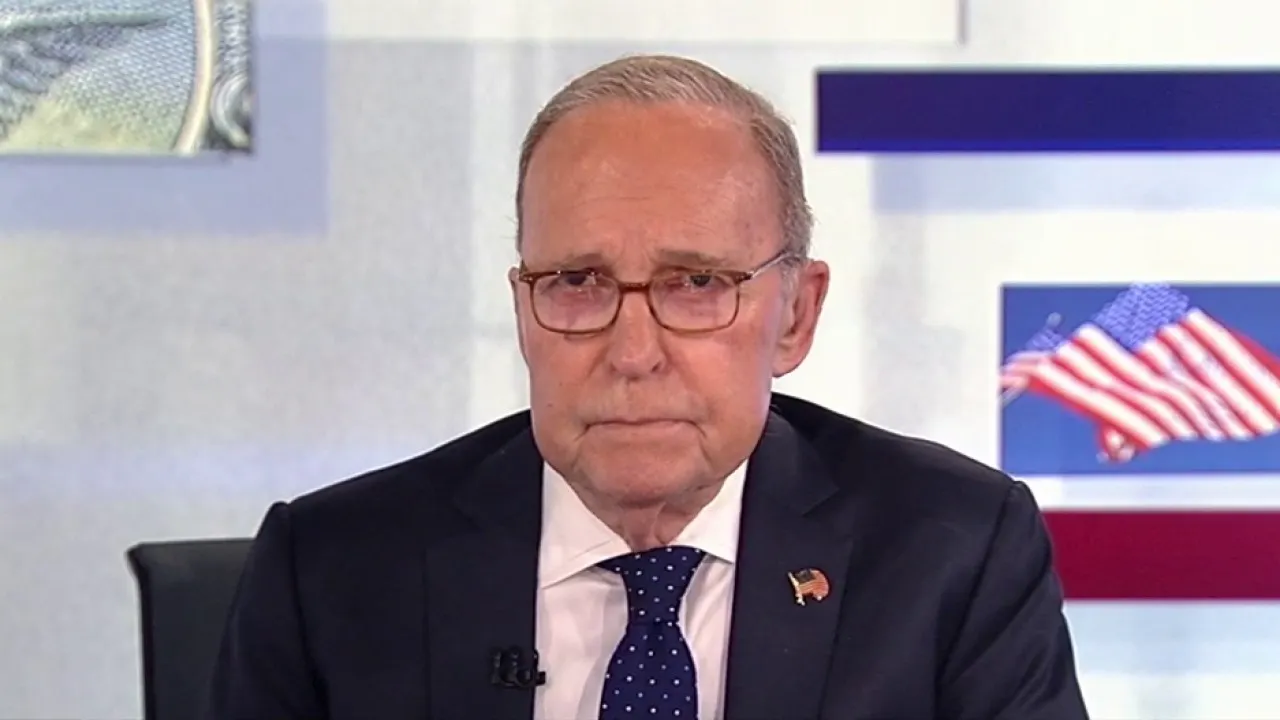
Now all the headlines from President Trump’s United Nations speech are focused on his prior statements warning Iran that the Tehran regime has to either make a deal or face annihilation.
I believe annihilation refers to the regime. And he warned them not to focus on the midterm elections because he’s going to be president for another two and a half years. So, in effect, Mr. Trump discounted the midterm elections, and took them off the table. A bad day for Iran.
As Mr. Trump said: “They’re waiting to see how I do in the midterm election. What they don’t realize is that I’m not running. I did that already and won in a landslide. We won in a giant landslide, and I’ll be here for two and a half years.” He added that “I gave absolutely no credence and will not give credence to the election. When it comes to Iran. It doesn’t even enter my mind. The only thing that does is that Iran will never have a nuclear weapon. The cowards and traitors —” here applause interrupted the president.
Please note carefully that big applause when he said Iran will never have a nuclear weapon. The UN is not usually, the member’s not usually applauding Mr. Trump, but they did actually on several occasions as we will discuss. Again, another bad day for Iran.
The point is, even the UN hates Iran. So we’ll see about all of that and how it works out after the election. Before he got to the Iran warning, he talked about America having the hottest economy in the world. Creating a million new jobs, record-low poverty, and high real incomes in the 2025 Census, of course cutting taxes, getting rid of regulations, record stock market, by the way the Nasdaq tech rallied again to a new record high.
Then there was the issue of AI — which is now super intelligence now — is here to stay. And there will be no radical climate change type hoax or doomsday scenarios with our super intelligence. Nor will there be any global regulation of our super intelligence. By the way, no global regulation of anything. Including the International Criminal Court, UN agencies who won’t protect our children from transgenderism, or the persecution of Christians. Or promoting mass migration.
He emphatically said no to any global carbon tax, and in fact generalized “there will be no global taxes.” End quote. Full stop. Good for him. How about that? In front of the UN, Mr. Trump makes a no new tax pledge. Phenomenal. And the Nasdaq index hits another record high.
Yet on all these points, Mr. Trump struck a positive, constructive, optimistic tone. This was a different kind of speech. This was a speech that had praise and applause that was unusual for his UN meetings. Yes, even the UN hates Iran and wants to stop them from having a nuclear weapon. For sure.
New York Post columnist Miranda Devine analyzes President Donald Trump’s U.N. General Assembly address, his meeting with New York City Mayor Zohran Mamdani and Israeli Prime Minister Benjamin Netanyahu’s response to Mamdani on ‘Kudlow.’
Yet several times, Mr. Trump praised the UN, and its Security Council. For, say, helping on Iran, and for endorsing his 20 point Gaza peace plan, and approving the Board of Peace. And permitting the first lady, Melania Trump, to preside over a meeting of the Security Council, which has never been done before by a president’s wife.
Yet there’s more. Mr. Trump praised the leaders of Pakistan, Rwanda, Armenia, and Azerbaijan, for helping him in making peace deals.
To be sure, he mentioned the successful regime change and world oil implications of Venezuela. And he issued a very tough warning to Cuba — where Secretary of State Marco Rubio is working hard for some kind of regime change.
And of course, the new security arrangement in Greenland, which will protect the Western hemisphere and Europe from Chinese and Russian threats. But Mr. Trump had good things to say about NATO, which has come around toward his view on the need for 5 percent of GDP spending on defense.
We really haven’t heard him praise NATO much before. He talked about stopping the drug cartels throughout Latin and South America.
Yet importantly, he had very positive things to say about Mexican cooperation. Again, optimistic, positive, constructive. And then finally, well, no one seems to want to report on this toward the back end of the speech. I believe the president spoke movingly to all of the UN members about “the enemies of humanity.”
He declared: “That is the challenge for every nation in this room. If we go forward strong and united against the enemies of all humanity, if we reject the voices who would have us give in to fear and doubt, if we refuse to shrink from our duties to our people, then together, through bold action, we will make this world far safer and a far better place.”
And he concluded again by reaching out to all those UN nations who really are not our best friends, but he exhorted them to “leave our nations far stronger.”
He said: “We will grow our economies far bigger, and we will not just speak of peace, prosperity, and justice. Here at the United Nations. We will stand for them all over the world. Together, we will build a future for our people that is brighter, more hopeful, and more magnificent than ever before. Thank you. God bless the nations of the world and God bless America”
This is why I’m calling this a historic speech.
This is an optimistic vision of freedom, peace, and prosperity, where this 47th President of the United States is asking all the nations to join him in this great crusade. Mr. Trump’s optimism was Reaganesque. I’d say this was pretty great stuff.

Explainer-Ban on US diesel exports would hurt, not help fuel markets, analysts say

‘Queen of the huns’ Anastacia lights up the Apollo in all her gold-studded glory
Priority Technology to Go Private in $1.6 Billion Searchlight-Backed Deal
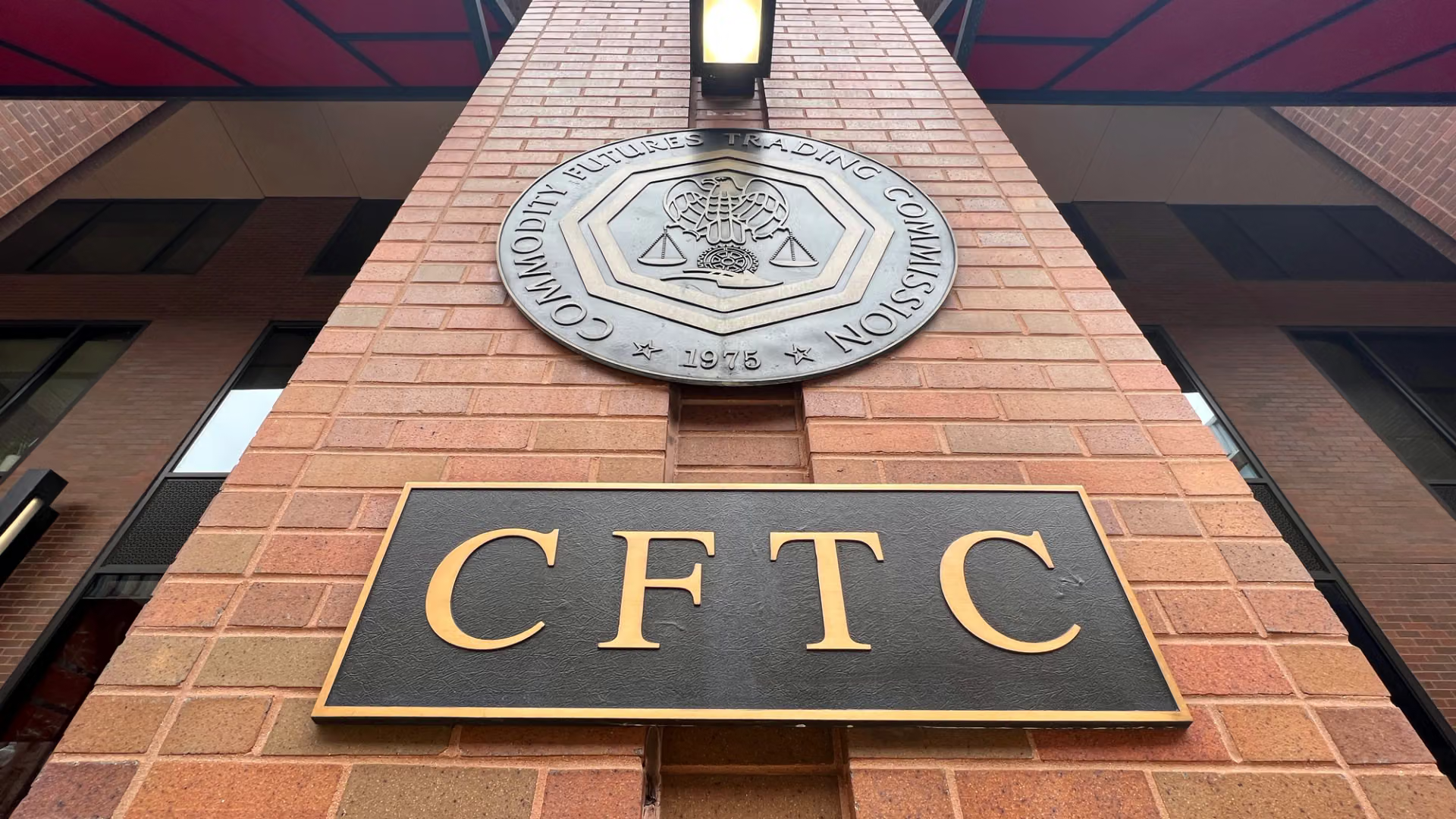
U.S. regulator warns about cheating risks in ‘mention markets’ on prediction platforms




-

 Fashion4 days ago
Weekend Open Thread: Talbots – Corporette.com
-

 Tech2 days ago
Researchers escape OpenAI Codex sandbox to run commands on host
-

 Crypto World4 days ago
Circle launches Arc Studio AI agent for building onchain apps
-
 NewsBeat4 days ago
Trump says US has reached an agreement to take permanent control of Greenland’s security
-

 Crypto World2 days ago
Who Needs CLARITY Anyway? ARB Could See 70X Increase: Hodler’s Digest
-

 Crypto World4 days ago
Bitcoin price breaks channel as RSI climbs to 63
-

 Crypto World4 days ago
Trading Bitcoin on Robinhood? Why 2% Spread Has Traders Worried
-

 Crypto World6 days ago
US Charges Robinhood Engineers Over Crypto Listing Trades
-

 Crypto World7 days ago
What Is the Status of the U.S.-Iran Peace Talks? Here's What Both Sides Are Saying
-

 Tech7 days ago
Webb’s IC 348 Mosaic Includes Two-Jupiter Dwarfs, Twin Jets, and a Nursery Still Making Worlds
-

 Crypto World5 days ago
Mortgage and refinance interest rates today, Thursday, September 17, 2026
-

 Crypto World4 days ago
World Money launches in 150+ countries with Stripe
-

 Business2 days ago
Analog Devices (ADI) Bets $1.35 Billion on Chips that Let Machines Think for Themselves
-

 Crypto World5 days ago
Silver prices recover quickly, hitting weekly high today
-

 Entertainment7 days ago
Big Brother Update: Melody Explodes at Drew as Illness Sweeps BB28 House
-
 NewsBeat4 days ago
US was ‘on brink of war’ with China over false AI report of nukes moving in Middle East
-

 Tech5 days ago
GPT-6 Astra Reached the Nether in Minecraft, Lost Its Stash to a Creeper, and Farmed Potatoes for Hours
-

 Crypto World2 days ago
Coinbase, Robinhood, Circle Seen as Tokenized-Stock Winners
-

 Crypto World2 days ago
Bitcoin price holds above $81K as key catalysts line up
-

 Business7 days ago
Federal Reserve expected to hike interest rates 25 basis points at FOMC meeting
You must be logged in to post a comment Login