Connect with us

Tech

Someone turned Apple’s M4 Mac Mini into a bizarre handheld Mac with a touchscreen, keyboard, controls, and batteries

Published

on


  • A M4 Mac Mini has been rebuilt into a battery-powered handheld computer
  • The custom handheld keeps Apple’s desktop motherboard and original cooling system intact
  • A removable Mac module sits inside the custom 3D-printed handheld enclosure

Apple‘s M4 Mac Mini has been transformed into a handheld Mac with a 7-inch 120Hz touchscreen, physical controls, keyboard, and battery.

Shing Solutions stripped the desktop computer down to its motherboard and cooling system before rebuilding it inside a custom 3D-printed enclosure.

Source link

Continue Reading
Click to comment

You must be logged in to post a comment Login

Leave a Reply

Tech

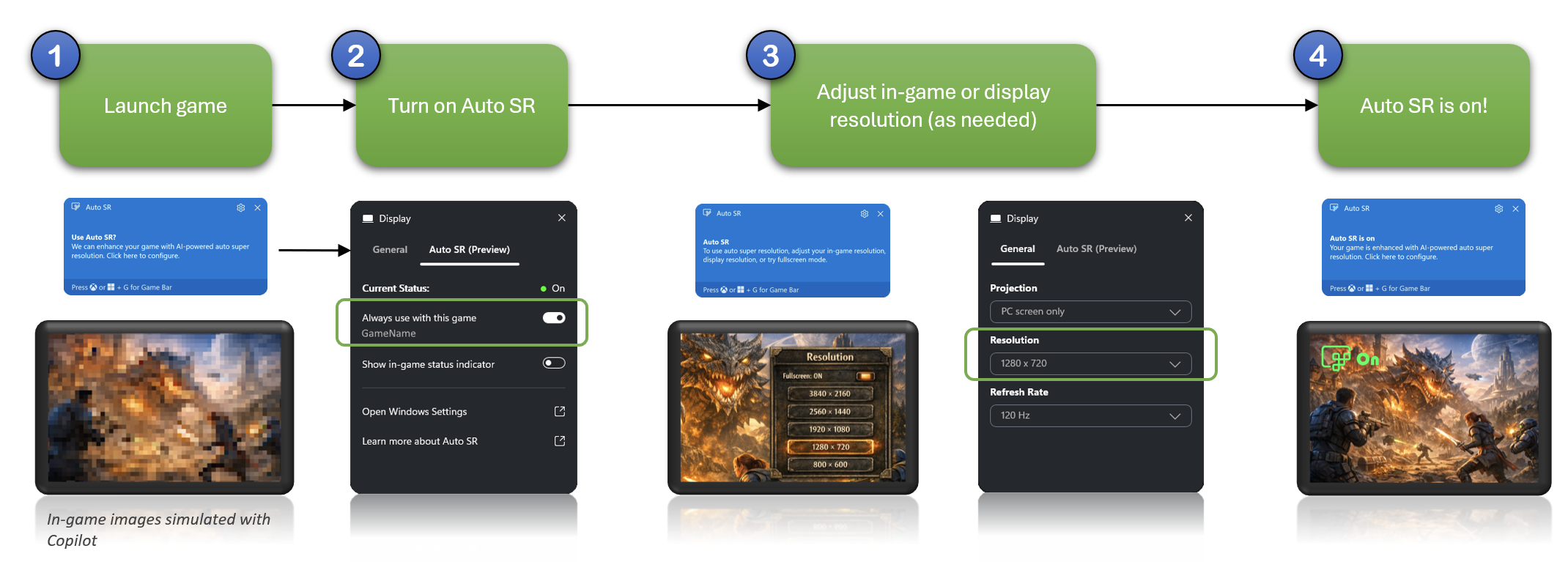
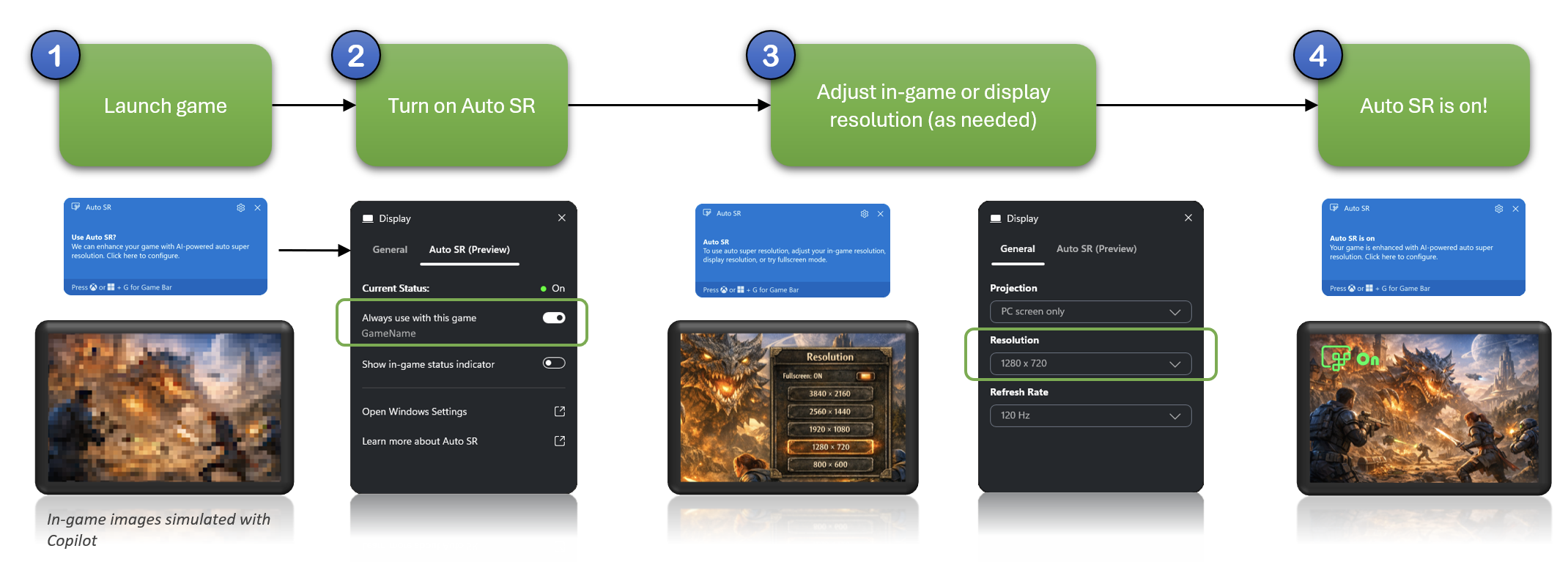
Microsoft’s Automatic Super Resolution upscaling now works on Intel Copilot+ PCs, too

Published

on

Pixels Matter: Microsoft wants to remind everyone that Windows has its own upscaling technology that can work with both older and brand-new games. Automatic Super Resolution is now rolling out to Intel-based Copilot+ machines, promising notable FPS gains within specific resolution targets.

Microsoft has announced that its Automatic Super Resolution (Auto SR) technology is expanding to Copilot+ PCs built around Intel silicon. Previously limited to Qualcomm Snapdragon X processors, Auto SR now works on Copilot+ devices powered by Intel’s Core Ultra Series 3 chips. Users can expect a genuine bump in gaming frame rates – with a few, crucial caveats.

The company explains that Auto SR is designed to help games that struggle to hit a playable frame rate. The technology taps into the NPU built into every Copilot+ PC, relying on pre-trained AI algorithms to reach a higher “effective” resolution while the game engine renders at a lower one under the hood.

Microsoft says Auto SR can theoretically deliver smoother frame rates while preserving the “visual consistency” of a game’s original artistic vision, a clear dig at Nvidia’s polarizing DLSS 5 technology, which gamers tend to either love or dismiss outright.

Advertisement

Unlike DLSS, Intel’s XeSS, or AMD’s FSR, Auto SR is built directly into Windows, giving it broader compatibility across both new and older titles. Microsoft says its upscaling solution can boost frame rates in games like Assassin’s Creed Valhalla by as much as 15%, letting gamers enjoy smoother gameplay alongside higher in-game graphics settings.

For now, Auto SR is focused on unlocking that “magic” 60 FPS threshold on Copilot+ PCs. Down the line, Microsoft hopes to expand the algorithm’s reach toward 90 to 120 FPS gaming scenarios. Because the upscaling model is trained on specific target resolutions, it delivers its best results with input resolutions up to 1080p on Intel-based machines.

Auto SR is designed to work with any game built on DirectX 10 or later, and Microsoft has shared a short list of titles it’s targeting with the feature. That list includes Assassin’s Creed: Shadows, Assassin’s Creed: Valhalla, Assetto Corsa, Avowed, Control, Doom: The Dark Ages, and more.

Microsoft has packaged its latest upscaling technology into an app that can be installed straight from the Microsoft Store.

Advertisement

The Redmond giant is also quick to note that while Auto SR can boost frame rates on Copilot+ PCs, more capable systems are still better off relying on game-native solutions like DLSS, XeSS, and FSR when they’re available.

Source link

Advertisement
Continue Reading

Tech

How the Meta Settlement Silences Youth Activism

Published

on

from the it’s-still-speech-when-kids-do-it dept

Since its integration into our digital world, social media has played a pivotal role in youth organizing and social mobilization. Yet, people’s access to these platforms is increasingly coming under threat from courts and legislatures under the guise of protecting young people online—presenting a significant hindrance to youth organizing.  

In a major recent example, Meta settled in a lawsuit with 52 states and territories regarding the use of Instagram and Facebook by young people. The settlement will require Meta, and pressure other non-Meta owned platforms like TikTok and YouTube, to embed age gating practices into every product while also requiring restrictions on the accounts of people under-18, such as a two-hour daily time limit and content restrictions.   

Youth Power on Social Media 

Young people have been using social media for political advocacy and community organizing for more than a decade. From organizing protests speaking out against police brutality, to organizing nationwide school walkouts demanding safety in schools from gun violence, and striking to demand lawmakers take action to protect the climate, social media has become an instrumental tool for youth to both speak out and connect with other young activists.  

Instagram has become especially useful for activism online by young people. The features on the app make it a helpful tool for being able to efficiently and quickly spread awareness, which is especially important when people need to share real-time information. For example, 17-year-old Darnella Frazier’s video on Facebook showed the world the murder of George Floyd. 

Advertisement

The impact of youth activism online is also evident on non-Meta owned platforms, with services like TikTok and YouTube being particularly prevalent spaces for young people to share their stories, build movements, and amplify collective engagement.

However, in a digital world operating under the settlement’s new guidelines, young people risk not being able to read crucial news due to the content being labeled as “age-inappropriate,” which has already happened for teenagers in Australia under its social media ban.  

A two-hour daily time limit and a block on Meta’s apps between midnight and 6am leaves little room for young activists to organize rapid response efforts. Being unable to see likes on a post will make it difficult to gauge the effectiveness of their campaigns.   

Add to this what we already know about Meta’s content policies which claim to “protect children” and keep sites “family-friendly” but instead label content like LGBTQ+ content as “adult” or “harmful,” youth will be left with no choice in what content they see once the ‘age-appropriate’ content filter is turned on by default. One recent report noted that Meta had hidden posts that reference LGBTQ+ hashtags like #lesbian, #bisexual, #gay, #trans, and #queer for users with the sensitive content filter on. This would specifically curtail the efforts of young activists doing work on comprehensive sex education.   

Advertisement

Global Trends 

Measures like this are being discussed across the globe, but not all courts have taken such a short-sighted approach. In August, the French Constitutional Council got a lot right in its decision to strike down the country’s legislation banning under-15s from social media for infringing free expression and communication for everyone online, not just young people.  

The French Court also called attention to its infringement on privacy as the legislation would have forced people of all ages to hand over government IDsface scans, and other sensitive information to prove their age and access online content.  

Requiring this much data from users puts activists in danger of even more surveillance. Meta has already previously complied with demands from law enforcement to hand over the messages of users. The amount of personal information that will be logged and that could be demanded via a warrant from police to stifle or investigate activists’ actions or plans could cause a chilling effect, forcing advocates to pause or terminate their work.  

This is egregious because these systems misidentify or lock out people of colorpeople with disabilities, and trans or gender-nonconforming individuals whose IDs may not match their chosen name or align with what the system expects them to look like upon verification. And it’s often these communities that benefit from online organizing the most, especially for marginalized youth as social media can often be the only place to organize and build community. 

Advertisement

What Young People Deserve 

The settlement generates headlines, but it will not solve the core problem. Instead of tackling Meta’s surveillance capitalism business model that turns all online content into potential profit and centers lining the company’s pockets over protecting the speech and privacy of users, this settlement gives the tech giant an opportunity to carve out a new digital world that prioritizes its own needs, not those of young people.  

As we’ve been calling attention to in other contexts, this will force young people into digital isolation—curtailing vital access to news and resources for health and development. It also completely ignores the calls of youths themselves who favor digital literacy and education over surveillance and government control.   

Young people deserve a better internet than one regulated through panic. They deserve better than the government or Big Tech getting to decide how they use social media and what they can or cannot be exposed to or learn about. They deserve better than having their right to free expression minimized. This must not be lost in the pursuit of building a better and safer online ecosystem and environment.   

Republished from the EFF’s Deeplinks blog.

Advertisement

Filed Under: activism, parental controls, settlement, teen activists, time limits

Companies: meta

Source link

Advertisement
Continue Reading

Tech

The Pros And Cons Of Using A Password Manager Over An Authenticator App

Published

on

Convenience vs. maximum isolation: Here’s how to choose where your verification codes live.

When it comes to keeping your online accounts safe and sound, two-factor authentication (2FA) has been a standard recommendation from security experts worldwide for years. As more and more people adopt 2FA, one question keeps coming up: Should you store your authentication codes inside your password manager or keep them in a dedicated authenticator app?

The idea that your login should rely on two separate factors is a fundamental security principle. Password managers offer one approach, while authenticator apps offer another. Each comes with real trade-offs that aren’t always obvious at first glance. While they’re both designed to protect you, they work in completely different ways.

Two-factor authentication is built on the simple idea that if someone steals your password, they still won’t be able to get into your account without a second piece of proof of your identity. Some apps will send you a text message with a one-time-use code, some will make a number pop on your phone screen, a few will email you a code, while others will ask if you’d rather use a special code generated by an authenticator app.

Advertisement

A password manager, on the other hand, brings both factors into the same vault, trading some of that separation for convenience. Neither approach is wrong, and each reflects a different set of priorities, like how much friction you’re willing to accept, how you manage devices and what you’re most worried about losing access to. Understanding how these tools work, how they differ and what you need is the recipe for finding the right tool that fits your needs.

The pros and cons of storing 2FA in your password manager

Most modern password managers come with multiple tools, including authentication tools. Most popular options, such as 1Password and Bitwarden, can generate and autofill six-digit, time-based one-time password codes right alongside usernames and passwords. There are real advantages to putting all your eggs in one basket.

It’s such an effortless way to autofill all this info without squinting at your phone and typing in a code before it expires. Another advantage comes for users who handle multiple devices, as password managers sync 2FA codes across desktop, browser and mobile apps, so you’re never stuck without access.

Advertisement

Another advantage to using a password manager is that you’re never locked out of your devices if you lose or break your phone. Since all your 2FA seeds are backed up inside your encrypted vault alongside your passwords, they’re all equally safe. If you need to share your account data with family or your team, it’s easier to give access to your password manager since they won’t have access to the authenticator tool on your phone.

It’s not all milk and sugar, because folding 2FA into your password manager comes with downsides too. True 2FA relies on separating the first factor — the password — from the second one — the one-time code. When both live in the same vault, a single master password breach can expose everything at once. Similarly, if you catch a case of malware in the shape of a keylogger or a malicious browser extension, these can all capture your password and 2FA code in the same sweep. Using a separate phone for your authenticator app creates a physical barrier between your password vault and your login codes, which improves safety. Storing both together removes that barrier.

Advertisement

The pros and cons of using a dedicated authenticator app

Standalone apps like Google Authenticator take a more isolated approach because they work offline. There’s physical separation, so your second factor actually lives on a different device than your passwords, and there’s a lower chance of having your data stolen.

On the other hand, that isolation comes at a cost, because you’ll still be copying six-digit codes by hand. Also, most authentication apps are mobile-only, so you’re out of luck if your phone isn’t nearby. Unless, that is, you have one of the models that also offer desktop apps or browser extensions, like 2FA or 1Password. There’s also the risk of temporary lockout of your accounts if you lose or break your phone, requiring you to set up a replacement device and restore your cloud backups before accessing your codes again.

The hybrid model brings the best of both worlds

One of the best ways to make your life easier while still keeping everything safe is to mix and match. Most timed one-time password codes can lie safely in a password manager, but a small handful, such as the codes for your main email account and the password manager itself, are better kept on a separate hardware key or an authenticator app. This way, if your vault is ever compromised, your most critical accounts remain out of reach.

The breakdown is to use your password manager’s built-in 2FA for low-risk everyday services, like shopping sites and subscriptions. Use a dedicated authenticator app or hardware key for your email, banking and the password manager itself. In this way, the friction is minimal, and your most essential accounts are safe if your password manager is ever compromised.

Ultimately, neither tool is flawless on its own, and the best choice depends on what you’re protecting and how much back-and-forth between devices you tolerate. For most people, a hybrid approach seems to be the best path forward.

Advertisement

Source link

Advertisement
Continue Reading

Tech

Spain’s Astronaut Pedro Duque Is IEEE Honorary Member

Published

on

Many youngsters fascinated by exploring outer space dream of becoming an astronaut, but few do. One who had the right stuff is Pedro Duque, who was Spain’s first astronaut. The aeronautics engineer flew aboard the space shuttle Discovery and the International Space Station.

After retiring as an astronaut, he headed Spain’s Ministry of Science, Innovation, and Universities. Today he is the chairman of HispaSat, a Spanish satellite company.

Pedro Duque

Employer

Advertisement

HispaSat in Madrid

Title

President and chairman of the board

Member grade

Advertisement

Honorary member

Alma mater

The Polytechnic University of Madrid

Nearly 30 years after his first mission, Duque is still Spain’s most famous astronaut. Three public schools have been named after him, and he has received numerous awards. This year, the IEEE Board of Directors made him an IEEE honorary member for “contributions to space exploration, leadership in collaborative science and technology programs, and serving as a role model for younger generations.”

Advertisement

He was unable to attend the 24 April ceremony in New York City, but he expressed his gratitude in recorded acceptance remarks in his award presentation shown during the event.

“We engineers of all specialties recognize the leadership of your institute—the largest and most important engineering society in the world,” he says in the video. “What an honor it is to belong now to an organization whose purpose it is to foster technological innovation and excellence for the benefit of humanity.”

Inspired by Apollo 11

Duque says he knew he wanted to be an engineer from a young age. It’s not surprising that he became interested in aeronautics, as his father was an air traffic controller who explained to him how airplanes worked.

In 1969, when he was 6 years old, he was inspired to become an astronaut after watching the Apollo 11 moon landing.

Advertisement

“I didn’t know anyone who wasn’t attracted to space exploration,” after the moon landing, he says, laughing. “It was presented in such an epic manner, with declarations about its impact on society. The landing made us aware that humanity was exploring new places, and I was keen on knowing more about them.”

His dream of becoming an astronaut was unrealistic at the time, he says, because the country had no space program. Spain was ruled by Francisco Franco, who spent little to no money on scientific innovation, Duque says.

That changed after Franco died in 1975. The country transitioned to a democratic constitutional monarchy and began participating in research and development programs, particularly with the European Space Agency (ESA).

Astronaut duties

Duque earned an aeronautical engineering degree in 1986 from the aeronautical and space engineering school at the Polytechnic University of Madrid.

Advertisement

His first job was as an engineer in the flight dynamics group at GMV, a space and technology company based in Madrid. He was a member of the orbit determination group and worked at ESA’s European Space Operations Centre, in Darmstadt, Germany. He helped develop algorithms, orbit computational software, and computer models.

He was also a member of the space agency’s flight control team for the European Remote Sensing-1 satellite, launched in 1991, and the European Retrievable Carrier, launched in 1992 on the space shuttle Atlantis’s STS-46 mission.

In 1990, ESA recruited candidates for its astronaut program—which Duque says rarely happens. He and several colleagues applied.

“Why not?” he says. “What we thought we wanted to be when we were little was now possible.”

Advertisement

After a considerable selection process, Duque was chosen in 1992 to join the agency’s Astronaut Corps. He trained at the European Astronaut Centre and at the Russian Cosmonaut Training Center (now known as the Gagarin Research and Test Cosmonaut Training Center).

In 1994, he served as the prime crew interface coordinator on the ESA–Russian EuroMir space station. He managed communication between the astronauts on the Mir station and the European scientists to help ensure orbital experiments and operations ran smoothly.

NASA selected Duque to be an alternate payload specialist on the ground for space shuttle Columbia’s STS-78 mission in 1996. In that role, he was trained to operate and manage scientific experiments, equipment, and cargo during a crewed mission. He also supported the flight from the ground as a crew interface coordinator.

His first flight into space was in 1998 as a mission specialist representing the ESA on the space shuttle Discovery’s STS-95 mission. He managed in-orbit tasks, experiments, spacewalks, and equipment operations.

Advertisement

He served as a flight engineer in 2003 onboard the Soyuz TMA-3 Cervantes, a joint mission between Russia and Spain to the International Space Station. He operated the station systems, managed daily maintenance tasks, and performed scientific experiments assisted by the mission commander.

Memories of flying with John Glenn

The years of training and preparation to become an astronaut were rigorous, he says, but the experience was fulfilling. Even though he spent only about 10 days on each mission, he says, “they were very rewarding times because all the preparation paid off, and we got the results we needed.”

Some of his favorite memories were viewing Earth during the day and night for the first time, and watching it pass from one phase to the other. Another was seeing the moon flattened to almost a sliver during the few seconds before it set. Experiencing microgravity was a thrill as well, he says.

“I also cherish the companionship of the people who worked alongside me in space and on the ground,” he adds.

Advertisement

One was John H. Glenn, the first American to orbit the Earth. Duque flew with Glenn on Discovery. They talked about the selection criteria for astronauts. Glenn told him those on board the Apollo and Gemini missions were chosen because they were test pilots, who were thought to be most likely to handle problems or failures effectively and proactively.

“The technology in today’s missions is advanced enough that astronauts won’t be needed to handle probable catastrophic equipment failures,” Duque says. “Instead, they will perform experiments and update or fix the devices used in space capsules. But flights to the moon and even Mars will use new types of spacecraft that might not necessarily work as planned, so those astronauts will have to know how to fix them and possibly solve critical problems on their own.

“Also, future astronauts will have to live with others in a confined space for months, and not everyone can do that.”

The price of sudden fame

As Spain’s first astronaut, Duque became a celebrity. Among his honors are Russia’s Order of Friendship and Spain’s Great Cross of Aeronautical Merit and Princess of Asturias Award. He also received NASA’s Space Flight Medal, which is given to an astronaut who flies aboard a U.S. space mission.

Advertisement

Learning to navigate sudden fame and being treated like a celebrity was challenging, Duque says. Like many engineers, he was accustomed to working behind the scenes and out of the public eye.

“Being famous, both in the profession and the public, was quite difficult in the beginning,” he says. “Being a celebrity doesn’t come easily to me, but after so many years, somehow I learned how to deal with it.”

People might assume that an astronaut’s leadership skills come effortlessly, Duque says, but that’s not always the case.

“Everybody gives so much importance to your opinion, and sometimes I was surprised by that,” he says. “Being an astronaut, you tend to have a certain kind of leadership style because it’s what you have done for years without knowing it.”

Advertisement

Minister of science and other leading roles

His leadership style has served him well. After he retired from the ESA in 2018, he was appointed as Spain’s minister of science, a role he held until 2021. He oversaw the government’s policies on scientific research, technological development, innovation, space programs, and higher education. During his term, Spain committed to contributing US $800 million (€701 million) between 2020 and 2026 to the ESA—which at the time was the largest overall investment in the agency’s history.

A middle-aged man in a suit and tie speaking behind a podium, against a backdrop with flags for the European Union, Palma de Mallorca and Spain. After retiring as an astronaut, Pedro Duque headed Spain’s Ministry of Science, Innovation, and Universities. Today, the IEEE honorary member is the chairman of HispaSat, a Spanish satellite company.Isaac Buj/AP

In 2022, he joined Destinus Spain, a European defense manufacturer that develops technologies for aircraft propulsion and auxiliary systems. He advised its strategic committee.

The following year, Spain’s government appointed him president and chairman of the HispaSat board. Headquartered in Madrid, the satellite operator provides broadcasting and broadband services for Europe, North Africa, and the Americas. The public-private partnership was in its origin a joint initiative between the Spanish government and private telecom companies.

The IEEE honor was a surprise

Duque says he was surprised to learn that IEEE added him to its membership ranks. He was aware that a colleague had nominated him, but he deemed it unlikely the nomination would be supported.

Advertisement

“When I started looking into who its members were, I wondered why they selected me,” he says. “Obviously, electrical engineering is not my branch, but it could have been, because growing up, I was just as interested in telecommunications as I was in aeronautics.

“Most engineers know IEEE for its standards and the work it does in achieving consensus in standards development.”

After discussing with several colleagues who were IEEE members about the significance of the IEEE honorary membership—which is bestowed for a significant achievement and impact on society— Duque feels the award is a significant honor.

“I’m still in the early phase of figuring out how I can contribute to IEEE,” he says, “and what I can do for the many hundreds of thousands of members, all whom have impressive qualities.”

Advertisement

From Your Site Articles

Related Articles Around the Web

Source link

Advertisement
Continue Reading

Tech

NYT Strands hints and answers for Wednesday, September 23 (game #934)

Published

on

Looking for a different day?

A new NYT Strands puzzle appears at midnight each day for your time zone – which means that some people are always playing ‘today’s game’ while others are playing ‘yesterday’s’. If you’re looking for Tuesday’s puzzle instead then click here: NYT Strands hints and answers for Tuesday, September 22 (game #933).

Strands is the NYT’s latest word game after the likes of Wordle, Spelling Bee and Connections – and it’s great fun. It can be difficult, though, so read on for my Strands hints.

Want more word-based fun? Then check out my NYT Connections today and Quordle today pages for hints and answers for those games, and Marc’s Wordle today page for the original viral word game.

Advertisement

Source link

Advertisement
Continue Reading

Tech

Are Students Suddenly Losing Interest in Computer Science as AI Coding Takes Off?

Published

on

On academic mentoring platform Nova Learning, Computer Science and AI, “once the dominant choice among students… is losing ground fast, while Engineering has nearly doubled its share.” It’s a small survey, but “The steepest proportional decline is in Software & Data Science, the most traditional ‘learn to code’ pathway, which lost 44% of its 2025 share. AI saw the largest absolute drop of any single subject in the survey, down 6.2 points.

“The category did not decline uniformly. Students moved away fastest from the pathway most associated with entry-level software work, while the more applied and human-facing subfields held their ground better.”

Slashdot reader BrianFagioli writes:

Nova Learning says the share of surveyed middle and high school students naming Computer Science and AI as their primary academic interest fell from 42.3 percent in 2025 to 27.9 percent in 2026, while Engineering rose from 11.9 percent to 23 percent. The biggest gains came from Mechanical and Aerospace Engineering…

Advertisement

[B]roader enrollment data points in the same direction. The National Student Clearinghouse Research Center reported declines in Computer and Information Science enrollment at four year institutions, even as Engineering grew. AI coding tools are not proven to be the cause, but as software development changes and AI handles more coding tasks, students may be starting to rethink what a future in technology should look like. [Undergraduate enrollment in CS programs at four-year institutions fell 8.1%, to approximately 606,000 students.]

Read more of this story at Slashdot.

Source link

Advertisement
Continue Reading

Tech

Meta says Muse looks like OpenClaw because it was built that way

Published

on

We built Muse from scratch, but it is definitely heavily inspired as a product by OpenClaw.

Nat Friedman posted that on X on Monday evening. The head of product at Meta Superintelligence Labs was answering a fortnight of speculation about Meta’s new personal agent, and why it felt so familiar to anyone who had used the open source one.

Sarah Perez reported the exchange for TechCrunch. Early adopters had spent days comparing Muse’s internal files with OpenClaw’s, and they kept finding more than a family resemblance.

What users found

The thread that set it off came from Ansh Nanda, who cofounded an AI app company. He wrote that Muse is OpenClaw for normies, and that it is actually just OpenClaw.

Nanda had put the question to Muse itself and posted the reply. The agent said the similarity between its own system files and OpenClaw’s was not a coincidence but a match.

Advertisement

Others piled in. One noted that Muse carries a SOUL.md file, the plain text configuration file that sets an agent’s personality, tone, values, boundaries and areas of expertise. Another checked the contents rather than the names, and found those almost entirely the same too.

Friedman’s answer

Friedman set out the history in his first reply. He used OpenClaw in January, then bought hundreds of Mac minis for the Superintelligence Labs team, and a lot of them fell in love with it.

He called Steinberger a genius and his harness pioneering from the start. The goal with Muse, he wrote, was to build something like OpenClaw that Meta could make safe, secure, easy to use, and able to scale to billions of people.

Nanda came back with a narrower question. If Muse was built from scratch, why copy the exact file names for the workspace, and why near identical content in SOUL.md. Was that intentional, or an artefact of inspiration?

Advertisement

Friedman did not dispute the premise. He answered that the team thought Peter had got those things exactly right.

Both answers went up on Monday evening, minutes apart, as replies rather than as a company statement. Meta published nothing of its own, and TechCrunch reported the exchange the following day.

Who Steinberger is

Steinberger, an Austrian developer, wrote OpenClaw and released it as open source. It became a hit among developers in January and spread well past them. The project went through two names before that one, launching as Clawdbot and then Moltbot.

The harness Friedman praised is the scaffolding around a model rather than the model itself. It holds the instruction files, the tool definitions and the loop that decides what the agent does next. SOUL.md is one of those files.

Advertisement

We reported in February that he joined OpenAI. In May we covered the token bill his own project ran up.

His framework keeps turning up inside other companies’ products. Last Thursday we wrote about Google Home opening to third party agents, OpenClaw among them.

The licence allows it

Steinberger published OpenClaw under an open source licence, which makes the file similarities a product question rather than a legal one. Open source exists so that other people can read the code and build on it.

Friedman ran GitHub as chief executive before joining Meta last year, alongside Alexandr Wang, the company’s chief AI officer. He knows the norms of the thing he is describing.

Advertisement

What the licence does not settle is the product question underneath. Meta has told developers it will review and approve the connectors that plug outside services into Muse, and it decides which ones get featured. OpenClaw has no gatekeeper, because nobody owns the distribution.

Meta has done this before

The company has a long record of adopting features that worked somewhere else. The clearest case is Stories. Snapchat launched the format in 2013, and Instagram shipped its own version in August 2016.

Zuckerberg addressed the pattern at a US antitrust hearing in 2020, where he acknowledged that Meta had copied its competitors.

What Muse asks for

Meta describes Muse as an agent that books appointments, fills in forms, handles customer service, makes purchases, generates images and creates documents. It runs on macOS, with no Windows version so far, and it also works inside WhatsApp.

Advertisement

To do any of that it needs access. Users authenticate it to their email, calendar, messaging and social accounts, and grant it macOS permissions covering files, the microphone, the camera and location. The app is limited to users aged 18 and over. It is free within limits, and Meta sells more capacity at $20 and $100 a month.

Two weeks of Muse

Meta launched Muse on 8 September and it reached number one on the US App Store. Jyoti Mann reported for The Information that more than 500,000 people tried it in roughly its first week, including more than 250,000 daily users, who submitted upwards of two million prompts. Those figures come from internal Meta data the publication says it viewed.

Meta shares jumped 11% on Monday on the app’s reception, the biggest one day gain since April 2025.

Not everything has gone Meta’s way. Amazon blocked Muse from shopping on its site on Sunday, saying the agent does not identify itself and breaks its conditions of use. Security researcher Patrick Wardle then disclosed a zero day in the Mac app. Meta issued what it called a hotfix and said the practical risk to users was low.

Advertisement

What Meta said

TechCrunch asked the company for comment. A spokesperson pointed to Friedman’s post and said Meta had nothing to add beyond it.

Wang opened the connector platform to outside developers on Friday, and Shopify and Stripe have both wired their payment systems into the agent. That layer is the part Meta is building for itself, and it is the part the project it borrowed from does not have.

Source link

Advertisement
Continue Reading

Tech

5 Four-Door Family Vehicles That Are Seriously Fun To Drive

Published

on


Driving a sports car means sacrificing some degree of space and practicality. Sure, you can buy a sports car with four seats or limited cargo capacity, but for drivers needing to cater for a family and their belongings, that won’t be enough. Likewise, most conventional family cars sacrifice driving excitement in the name of everyday practicality. Naturally, some are more interesting to drive than others, but in most cases, it’s safe to assume that an affordably priced family car won’t deliver the driving thrills of a sports car.

Drivers with deeper pockets, however, don’t necessarily need to make the same compromises. With a big enough budget, you can get a family car that happily pulls double duty as a sports car when not needed for hauling around kids and luggage.

Advertisement

Regardless of whether you’re looking for a zero-emissions rocket ship, an old-school V8 muscle sedan, or a refined German long-distance mile muncher, there are plenty of family-friendly performance cars on the market in 2026. These are some of our personal favorites, with SlashGear’s review team being able to personally confirm that each one is enormously fun to drive, in addition to being impressively practical.

Advertisement

Acura MDX Type S

Not every fun-to-drive family hauler looks exceptional on paper — the 2026 Acura MDX Type S certainly doesn’t. Its 355 hp and 354 lb-ft of torque are fairly unremarkable figures for its segment. The three-row SUV’s interior space is competitive but not surprising, and its cabin is comfortable and luxurious but hardly particularly revolutionary.

The secret ingredient that sets the MDX Type S apart from the rest lies in how well Acura manages to balance all of the different roles that a sporty, luxurious SUV has to fulfil. We found it consistently entertaining to drive, both on back roads and on commutes. There was even the right amount of noise from the exhaust — not enough to ever be grating when it wasn’t wanted, but still enough to encourage you to put your foot down a bit more when the opportunity arose.

On top of that, the SUV was also a very comfortable way to get around, and its suite of tech was both comprehensive and easy to use. Its $77,400 starting price (including a $1,550 destination fee) is comparable to its competition, but no similarly priced option offers such a compelling blend of practicality and performance.

It’s not a riot to drive, unlike some of the cars here, but it doesn’t need to be. Instead, the Acura is the car that adds a heavy dose of fun into everyday trips, and it avoids most of the downsides that come with a traditional performance car.

Advertisement

BMW M5 Sedan/Touring

The latest generation BMW M5 has a cohort of critics who don’t like that it is now a plug-in hybrid. The same critics might also point to its increased weight and physical size as evidence that BMW has missed the mark. Those are all valid criticisms, but despite the changes, the M5 arguably still remains true to its core formula.

Advertisement

For starters, it’s still a very entertaining car to drive. It also still serves as a practical family car, both in sedan form and in newly introduced Touring wagon form. That’s two of the most important boxes ticked straight away. Factor in the long-distance comfort, grin-inducing straight line performance, and the long list of extras to customize the car to your tastes, and the result is a car that’s still pitched squarely at well-heeled driving enthusiasts.

However, the M5 is far from perfect, despite its talents. Some minor issues with its infotainment system presented an irritating distraction during our time with it, especially considering this is a super-sedan with a price tag starts at $129,350 (including a $1,450 destination fee and a $2,600 gas guzzler fee).

The car’s fuel economy was also pretty dismal given its status as a PHEV — we averaged 14 mpg over the course of a week with the M5 Sedan, despite the EPA reporting that its combined gas-and-electric economy should reach 47 mpge. It’s flawed, then, but the M5 is still great fun to drive regardless.

Advertisement

Lucid Gravity

An electric SUV might not seem like an obvious candidate for driving fun, but the 2026 Lucid Gravity is excellent at defying expectations. An EV with more than 800 hp on tap and a 0-60 mph time in the mid-3 second range isn’t something you’d expect to see with three rows of seats and enough cargo capacity to carry furniture and other bulky items. The Gravity, though, does it all.

This car isn’t just fast in a straight line either. When it comes to corners, the Gravity handles better than it has any right to, feeling more like a dedicated performance car than something you could use to transport a five-a-side soccer team to their next game. Lucid remains a niche player in the EV market, but the Gravity is further evidence that it deserves to be better known. Its price tag means that it’s likely to remain a rarity though, since the Gravity Grand Touring that we tested starts from $100,750 (including an $1,850 destination fee).

Advertisement

Porsche Panamera

The Cayenne is Porsche’s best-selling car, but it isn’t the brand’s only family-friendly offering. Buyers who aren’t keen on an SUV can go for a Panamera instead, which starts from $115,350 (including a $2,350 destination fee). The base variant produces 348 hp and will complete the sprint from 0-60 mph in a respectable 5 seconds flat, but higher trims are arguably where the most driving fun is found.

Advertisement

The Panamera GTS starts from $169,250, making it considerably pricier than a base model. However, when we tested both hybrid and non-hybrid variants of the Panamera in 2025, it was the non-hybrid GTS that came out on top. The GTS was more fun to drive, it sounded more distinctly like a Porsche, and its handling felt more like a sports car than the grand tourer-like E-Hybrid. Nothing manages to match the 911 for pure sports car feel and performance, but the Panamera GTS got pretty close while being a whole lot more practical as a daily-driven family hauler.

Advertisement

Cadillac CT5-V Blackwing

Back in 2025, GM announced that the current generation Cadillac CT5-V Blackwing will be axed after 2026. The automaker says a new generation will be developed, but it hasn’t committed to a timeframe for its launch. However, in the meantime, the car remains on sale for a starting price of $103,420 (including a $1,795 destination fee and a $2,100 gas guzzler tax).

In a market where many sports cars now either feature some level of electrification or sport smaller displacement engines with fewer cylinders than their predecessors, the CT5-V Blackwing is an outlier. Cadillac crams a 6.2-liter supercharged V8 engine under the hood, which it says is good for 668 hp, mated to a six-speed manual transmission.

Just like the old-school muscle sedans, this car will shred its tires on command, but it’s also a more accomplished track day toy than many might give it credit for. It’s roomy and comfortable enough to handle family hauling duties too. We found its interior fit and finish lacking given its price, and as you might expect from a V8-powered sedan, fuel efficiency isn’t exactly its strong suit. Anyone who can overlook those flaws will be rewarded with what’s arguably one of the most fun family cars on sale today — at least, if they can get their order in fast enough before production ends.

Advertisement

Methodology

SlashGear’s review team has put the latest cars from virtually every major manufacturer to the test, and we drew on those reviews when selecting cars for inclusion here. Each car has been driven by a member of our team and given the seal of approval both for its capabilities as a spacious family-sized vehicle and for its driving appeal. Each car is also available as either a 2026 or 2027 model year at the time of writing.

Advertisement


Source link

Advertisement
Continue Reading

Tech

Xbox lays off 268 more people as Activision takes over Halo and Bethesda absorbs Obsidian

Published

on

In a nutshell: The next round of Microsoft’s previously announced layoffs includes major studio consolidations and possibly more closures. The Halo franchise just got its biggest shakeup in years as the Xbox manufacturer seeks to cut costs and the number of moving parts. Meanwhile, the fates of Ninja Theory and Arkane Lyon hang in the balance.

Microsoft has cut another 268 jobs across Halo Studios, other first-party developers, and Xbox Game Studios management. The redundancies, announced by Matt Booty, Xbox’s Chief Content Officer, are presumably part of the 1,600 set to occur through July 2027.

This stage of Xbox’s reorganization involves multiple mergers and reassignments. Most notably, Call of Duty maker Activision is taking over development of the next Halo title with a new team. Halo Studios will focus on already-released entries such as Halo: Campaign Evolved and Halo: The Master Chief Collection. Activision will also manage Rare as well as Age of Empires developer World’s Edge.

Meanwhile, Obsidian will continue its current projects under Bethesda. The two RPG houses are collaborating on a new Fallout title, while Obsidian is also developing Grounded 2 and Bethesda continues work on The Elder Scrolls VI.

Advertisement

Xbox’s most widely anticipated game, The Elder Scrolls VI is likely still at least two years away despite having been announced all the way back in 2018. Candy Crush developer King will also manage Microsoft Casual Games, while Playground and Turn 10 will merge to handle Forza and Fable as one studio.

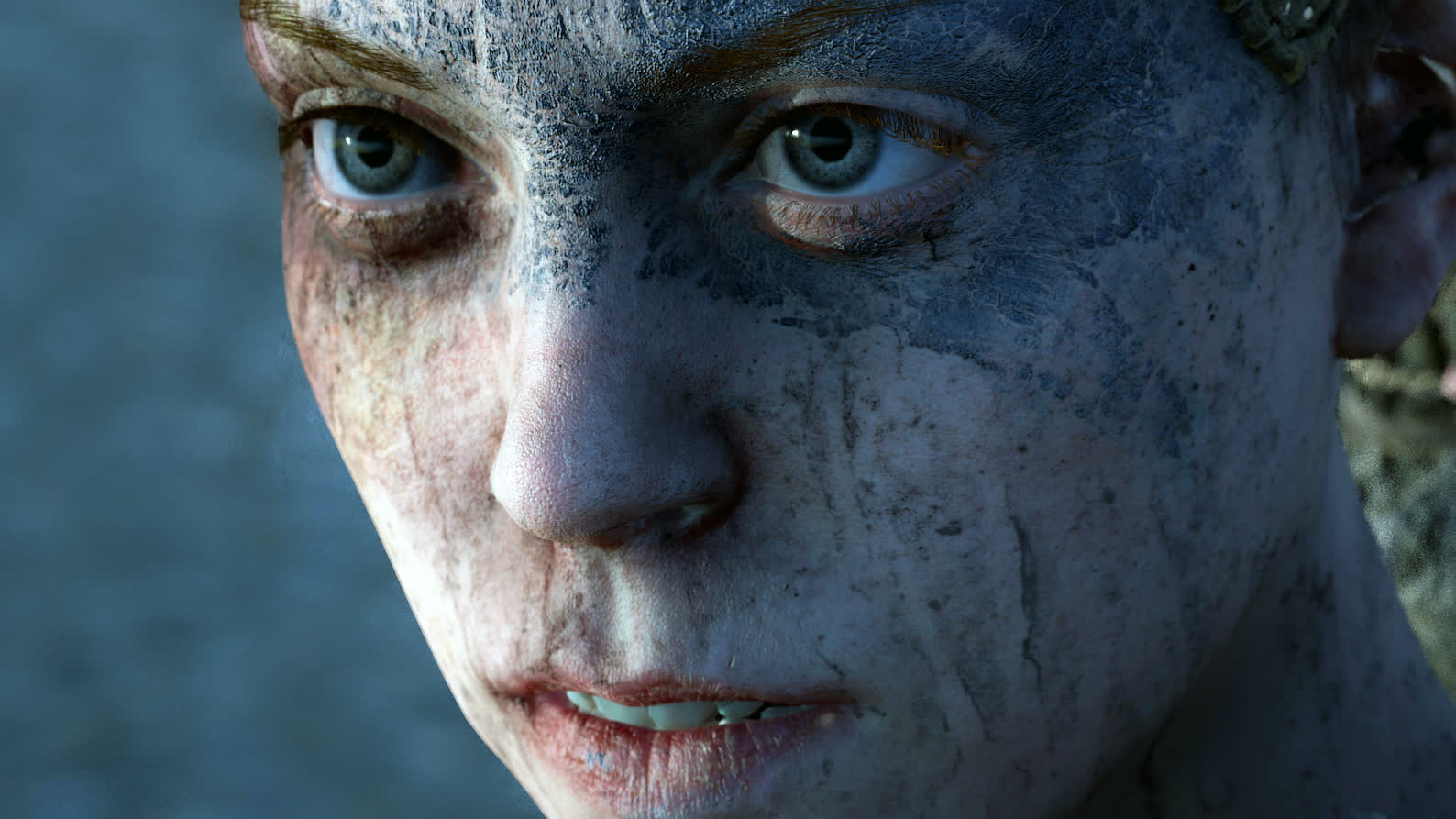
Unfortunately, Microsoft couldn’t find a buyer for Hellblade developer Ninja Theory despite two separate attempts. While a closure still isn’t inevitable, it seems much more likely now. Attempts to sell Arkane Lyon (Deathloop, Blade) will continue through the end of the year.

Microsoft layoffs since 2023

Date (announcement) Reported headcount cut Main business areas hit
18 Jan 2023 10,000 Windows & devices, Xbox, HoloLens, recruiting & marketing
25 Jan 2024 1,900 Activision Blizzard, Xbox, ZeniMax after the ABK deal closed
3-4 Jun 2024 ≈1,000 (internal est.) Azure for Operators, HoloLens/mixed-reality, other “moonshot” teams
12 Sep 2024 ≈650 Xbox publishing & game-studio support teams
Jan-Feb 2025 ≈2,000 Company-wide “low-performer” cull (no severance in many cases)

13 May 2025 ≈6,000 (Microsoft says “< 3% of staff”) All geographies; focus on middle-management, LinkedIn
2 Jun 2025 305 Redmond, Washington HQ roles; additional WARN-notice layoffs following the May cuts
2 Jul 2025 ≈9,000 (Microsoft says “< 4% of staff”) Company-wide; Xbox, sales, management layers, and other divisions
23 Apr 2026 (opens May) Up to ≈8,750 offered voluntary exit US employees at senior director level and below whose age plus tenure equals 70 or higher; certain sales staff excluded
Fiscal Year 2027 (beginning July 6, 2026) ≈4,800 Largest reset in Xbox history, five game studios divested

The layoffs are part of a massive wave that began in July, when Microsoft eliminated around 1,600 positions across Bethesda, id Software, and other subsidiaries. As a result of that initial round, Double Fine (Keeper, Psychonauts 2) and Compulsion Games (South of Midnight) became independent with their back catalogs intact.

Microsoft also announced this week that Undead Labs will continue developing State of Decay 3 under a new publisher. The job losses from July 2026 to July 2027 will total around 3,200, bringing Microsoft’s layoffs since 2023 to about 44,000.

Advertisement

Booty also teased Xbox-related announcements coming on October 6, the day before Microsoft’s first Surface event in more than two years.

Source link

Advertisement
Continue Reading

Tech

The military wants AI that rarely tells it no

Published

on

Who gets to tell the military “no”?

That question has become even more important after the Pentagon pushed AI companies to loosen limits on how their technology may be used in war — including how much human control must remain over autonomous weapons. When Anthropic said no, it lost a major government deal. OpenAI stepped in, embracing the Pentagon’s more flexible standard instead. Now, thanks to new reporting from The Intercept, we’re getting a better look at what those negotiations actually entailed.

The OpenAI-Pentagon agreement included specific language on the type of AI models the DOD would receive: “OpenAI models that are designed for national security use cases and have minimal refusal rates.” That phrase — “minimal refusal rates” — means that the Pentagon is seeking models that rarely, if ever, tell it no. (According to The Intercept, a Justice Department lawyer representing the Pentagon confirmed this language, before backtracking only a few hours later.)

On the surface, that provision might seem reasonable. The military is a strictly hierarchical institution. When your senior gives you an order, you do it. Leaders generally have more battlefield wisdom and experience than their subordinates, so the rank and file can usually assume that their commanders know what they’re doing and follow along. Plus, in the high-stress, time-sensitive environments of most military operations, there is little room for discussion, explanation, or alternative proposals.

Advertisement

So, if soldiers can’t refuse an order, why would a machine be allowed to? Who is a robot to tell its commander no?

There’s just one issue. Soldiers can refuse an order — when the order is illegal. In fact, they are legally required to. But by introducing technologies with a limited ability to challenge commands, the military may be making it harder to stop war crimes before they are committed.

Humans have a duty to disobey

As outlined in US domestic, military, and international law, soldiers are only obligated to follow lawful orders, and they have a duty to refuse unlawful ones.

Advertisement

The Department of Defense’s Law of War Manual is unambiguous: “Each member of the armed services has a duty to: (1) comply with the law of war in good faith; and (2) refuse to comply with clearly illegal orders to commit violations of the law of war.” Obeying an illegal order — as in a directive that violates the Constitution, US laws, international law, or directs one to commit a crime — can expose a service member, as well as their commander, to criminal liability.

This “duty to disobey” has foundations in early British and American common law, but it achieved international recognition after the Nuremberg Trials against Nazi soldiers after WWII.

In those trials, many Nazi soldiers argued they were not liable for crimes they committed during the Holocaust because they were simply following their superiors’ orders. Rudolf Hoess, the commander at the largest Nazi concentration camp, Auschwitz, himself explained: “In Germany it was understood that if something went wrong, then the man who gave the orders was responsible. So I didn’t think that I would ever have to answer for it myself.”

These defenses were unequivocally rejected by the court.

Advertisement

The tribunal held that obedience is not without limits, especially when a wartime act would be clearly illegal to the subordinate or any person of “ordinary sense and understanding.” If “I was just following orders” was an absolute defense, everyone involved in a crime would escape accountability, with the exception of the single highest-ranking officer. Instead, the court determined that individual moral and legal responsibility supersedes national or military chains of command for illegal acts.

Obedience is not without limits, especially when a wartime act would be clearly illegal to the subordinate or any person of “ordinary sense and understanding.”

But, when it comes to agentic AI systems or AI-assisted weapons, increasingly being used in place of human soldiers, does the same logic apply? And, perhaps more importantly, should it?

When you use an AI chatbot, it does not simply reject queries it may not “agree” with. It does not say no to requests it doesn’t “like.” Instead, it follows a set of established protocols, much as a soldier should follow the law of war: It refuses requests that violate its terms of service.

Advertisement

The military is using AI for far more consequential applications than a layperson using ChatGPT to, say, build a travel itinerary. So, what kind of world is created by the Pentagon’s request for AI that “minimally refuses” its directives, many of which may bear grave ethical, moral, or legal implications?

Rebecca Crootof, an expert on technology law and professor at the University of Richmond School of Law, told Vox that while the language could easily be read as increasing the likelihood of compliance with unlawful orders, or at least reducing the friction around them, “Minimal refusal doesn’t mean no refusal.”

“I both want to say it’s not definitely going to mean compliance with unlawful orders,” Crootof said, “but also acknowledge that identifying and evaluating what constitutes an unlawful order in the moment can be incredibly difficult.”

Even for human soldiers, disobeying illegal orders is neither simple nor easy. To the contrary, it doesn’t even happen that frequently. In fact, some legal scholars have argued that giving illegal directives in and of itself is an act of abuse against subordinates, who are not thoroughly trained in legal nuances, are conditioned to obey, and face prosecution if they make the wrong choice.

Advertisement

Still, the mere fact that soldiers can disobey is an important constraint on commanders who might let battlefield conditions, or even commands coming from their own superiors, erode their ethics and commitment to the law.

Still, the mere fact that soldiers can disobey is an important constraint on commanders who might let battlefield conditions, or even commands coming from their own superiors, erode their ethics and commitment to the law.

Those who are optimistic about AI often argue that machines could be better at interpreting and applying the law than human soldiers. Machines can be trained on the law itself — drawing on a repository of legal cases, rulings, and battlefield data — which might make them more “knowledgeable” than an average soldier. And machines do not face the same pressures as soldiers facing prosecution for making mistakes, since they can’t exactly be held accountable; a problem to unpack another time. That, in turn, might make it easier for them to refuse illegal orders in the proper conditions.

So, is the answer as simple as letting the machines decide? Not exactly. “This has been a desire and a drive by technologists for ages,” Crootof said. “What if we just put the law in the system and have it only do things that are lawful? Isn’t that going to solve things?”

Advertisement

Interpreting and applying the law, though, is not a simple legal-illegal binary. “It’s very context-specific,” Crootof told me, “and honestly, that’s the kind of thing humans generally find difficult and AI decision-making systems are even worse at.” Often, determining the legality of an act comes down to subtle nuances you can’t program for: You’re allowed to target a combatant; you’re not allowed to target a wounded or surrendering combatant. You’re not allowed to target a civilian; you are allowed to target a civilian directly participating in hostilities. The difference between a legal target and an illegal one may come down to body language, clothing choices, or even battlefield intuition.

As Crootof explained, “These are not the kinds of contextual analyses AI is good for.”

So what’s the solution?

Where human soldiers’ power to disobey would traditionally serve as an important check on the power of military commanders, if an imperfect one, replacing soldiers with machines that don’t have such safeguards removes one last layer of judgment over the use of force. And yet, machines themselves are not always capable of making the judgment calls that go into interpreting the law, so it may not be appropriate to let AI have the final say either.

Advertisement

So what’s the solution? Given the way AI technology has already been thoroughly integrated into the military, Crootof told me it may be somewhere in the middle.

Rather than programming AI to refuse commands it interprets as illegal, Crootof said, “what it could be designed to do is flag those indeterminate zones, those gray-zone analyses, for human review or for a higher authority.” When a system picks up conflicting signals — an enemy soldier who looks like he may be surrendering, for example — it could prompt the commander to confirm their selection or remind them of applicable law.

In this way, a check on commanders’ battlefield authority could be preserved without fully ceding judgment over the use of force to the machine.

We don’t know yet whether OpenAI has equipped its “minimal refusal” models with such capabilities. But as those technologies become increasingly central to military decision-making, the public deserves answers sooner rather than later.

Advertisement

Source link

Advertisement
Continue Reading

Trending

Copyright © 2025