
Business
$50B Retail Giant Dollarama Targets Australian Accessory Distributors with Direct Global Sourcing Model Across 410-Store Network

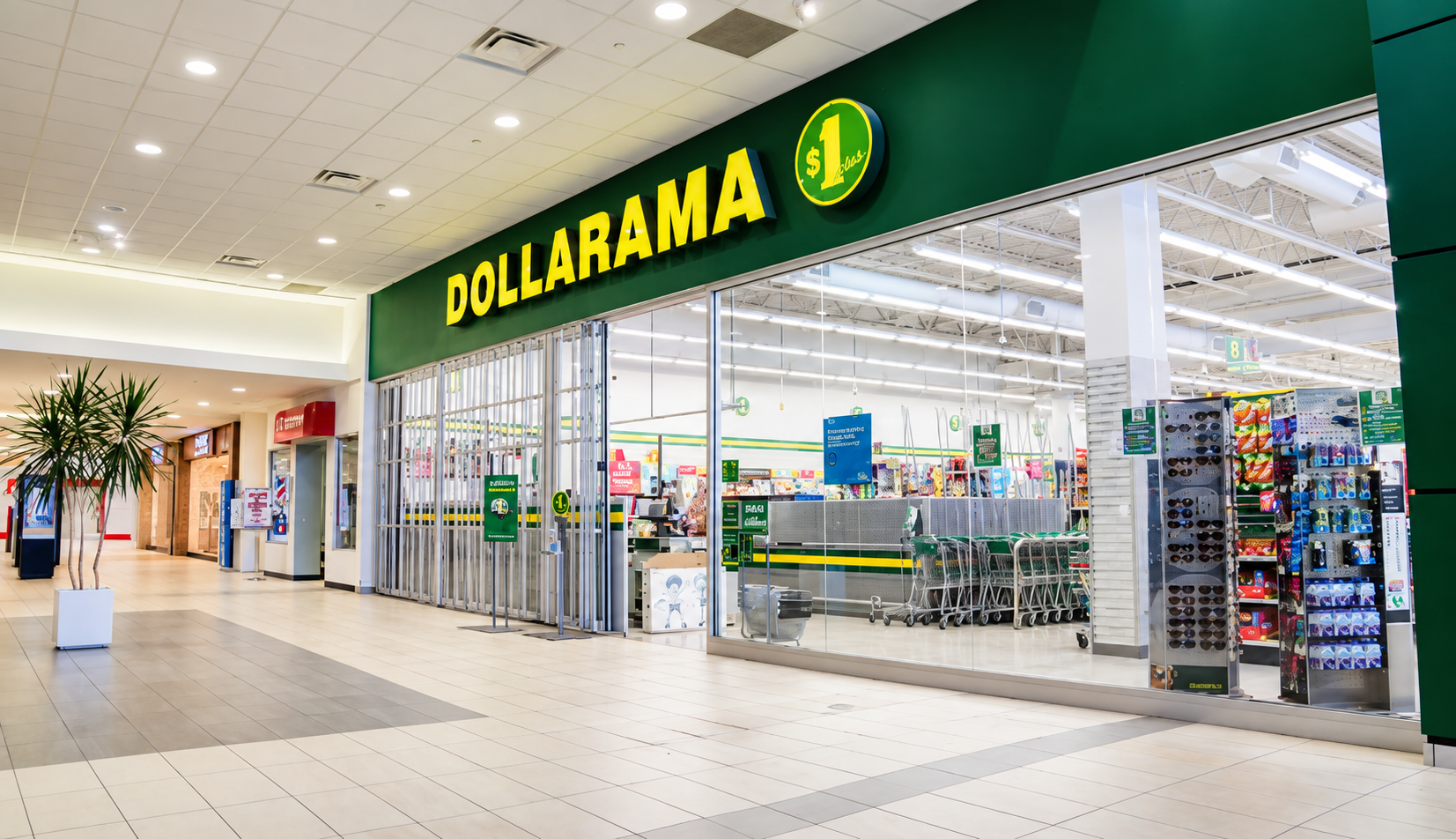

SYDNEY, Australia — Dollarama Australia Accessory Distributors Direct Global Sourcing disruption is taking center stage across the national retail landscape, as the $50 billion Canadian discount powerhouse accelerates the integration of its global supply chain into its newly acquired 410-store Australian footprint.
Following its acquisition of The Reject Shop, Dollarama is systematically replacing local wholesale supply arrangements with direct global factory procurement. The aggressive transition poses a immediate threat to traditional Australian accessory distributors that supply high-margin consumer electronics, tech cables, home entertainment attachments, and general merchandise. By deploying its proven low-cost merchandise model, Dollarama aims to bypass middleman markups, offering low-ticket retail items at aggressive shelf prices while maintaining industry-leading gross margins.
Retail analysts warn that Dollarama’s entrance marks a structural shift that will compress margins for domestic distributors and established value chains like Kmart, Big W, Officeworks, and Bunnings.
Direct Sourcing Machine Disrupts Local Wholesale Channels
Dollarama’s core strategic advantage lies in its extensive direct-to-factory sourcing infrastructure, eliminating regional intermediaries.
In traditional Australian retail, consumer tech accessories—such as HDMI cables, phone chargers, audio adapters, and computer peripherals—are imported and distributed by third-party wholesale vendors. These local distributors rely on healthy gross margins to cover domestic warehousing, marketing, and logistics. Dollarama’s global procurement engine, however, bypasses local distributors entirely, purchasing directly from overseas manufacturers in massive volume. By stocking converted Australian stores with its proprietary import stock, Dollarama undercuts conventional retail price points while capturing full category profitability.
Domestic distributors facing sudden contract terminations are forced to evaluate alternative sales channels or risk structural revenue declines.
- Middleman Bypass: Eliminates third-party Australian importers to capture full wholesale-to-retail margin spreads.
- High-Margin Tech Focus: Leverages low-cost tech accessories, cables, and chargers that deliver superior profit margins compared to big-ticket hardware.
- Direct Import Scaling: Progressively converts legacy Reject Shop stock to Dollarama’s global private-label inventory across 410 locations.
- No Loss-Leader Dependence: Operates without promotional loss leaders, ensuring every individual product category generates positive unit economics.
Direct supply chain integration gives international discount giants an insurmountable cost advantage over traditional wholesale networks.
Extraordinary Retail Economics and Financial Power
Dollarama’s entry into Australia is backed by exceptional corporate profitability and strong balance sheet liquidity.
Unlike struggling foreign retail entrants that rely on speculative debt to finance international expansion, Dollarama operates an ultra-efficient retail model. In recent financial disclosures, the Montreal-headquartered retailer reported global quarterly revenue exceeding C2 billion, achieving a group EBITDA margin of 32.2% and Canadian g[span_9](start_span)ross margins of 45.7%. Generating nearly C35 in EBITDA for every C$100 in sales, Dollarama possesses the financial strength to absorb multi-year restructuring costs associated with converting The Reject Shop network while aggressively undercutting competitors on price.
The retailer’s capital strength enables sustained long-term pressure on domestic competitors attempting to defend market share.
Robust gross margins provide the financial flexibility required to execute rapid nationwide store conversions and price cuts.
Broader Competitive Impact on Australian Big-Box Retailers
The injection of Dollarama’s global supply chain creates competitive friction across multiple retail categories.
Established Australian retailers—including Kmart, Big W, Target, Officeworks, Bunnings, and Aldi—have long relied on high-margin accessory sales to subsidize lower-margin staple categories. As Dollarama rolls out $5, $10, and $15 high-frequency consumer electronics and kitchenware accessories across its 410 Australian stores, budget-conscious consumers are presented with immediate price alternatives. Industry analysts note that Australian retailers attempting to boost profitability through expanded private-label offerings will face intense competition from Dollarama’s established global private-label pipeline.
The arrival of a true global value specialist escalates competition in an already tightening Australian consumer environment.
Retailers operating on domestic supply chains face urgent pressure to optimize procurement costs to maintain shelf competitiveness.
Future Roadmap: Store Conversions and Expansion Targets
Dollarama’s long-term plan for the Australian market involves extensive network renovation and brand conversion.
Having acquired The Reject Shop’s infrastructure, local management, and distribution centers, Dollarama is systematically converting legacy store layouts into its optimized Canadian format. Initial store conversions have already demonstrated sales lifts, prompting management to target a long-term Australian network expansion toward 700 stores over the next decade. As store conversions accelerate, local accessory distributors will see their total addressable market contract, signaling a permanent realignment of Australia’s value-retail supply chain.
Dollarama’s aggressive growth trajectory will reshape Australia’s discount retail landscape for the next decade.
The execution of its global supply model sets a new operational baseline for value retailing across Australia.


The property developer has bought the Leederville asset from Peter Hayes, who owned it for close to three decades.

Approvals by the Securities and Exchange Board of India (Sebi) for at least 23 companies, collectively looking to raise ₹40,775 crore, are set to expire by the end of the month, Prime Database data showed.
 ET Bureau
Among the larger IPOs in the pipeline are Mumbai-based Credila Financial Services and Kachchh-based specialty chemicals maker Dorf-Ketal Chemicals India, with proposed issue sizes of ₹5,000 crore each. Both received Sebi approval in May 2025, according to Prime Database.
Read more: Landmark NSE IPO threatens to hollow out Dalal Street’s shadow market
Pranav Haldea, managing director of Prime Database, said some of these companies may choose to refile at a later stage when they feel valuations are more conducive. Companies have a year from the date of regulatory approval to launch their issues. In April, Sebi granted a one-time relaxation to issuers whose observation letters were due to expire between April 1 and September 30, giving them until this month end to launch their IPOs. The relief was aimed at helping IPO-bound companies ride out the risk aversion in equities following the West Asian crisis and the surge in oil prices.

Read more: Pine Labs block deal: Mastercard Asia may divest 4.3% equity worth Rs 892 crore
Sebi also allowed companies to increase or reduce their issue size by up to 50% without filing fresh draft papers, compared with the earlier threshold of 20%.Under the existing framework, Sebi observations are generally valid for 12 months, while certain issues, including those under the confidential pre-filing route, can have a validity of up to 18 months. Since these are one-time extensions granted by Sebi, companies unable to launch their IPOs by September 30 would be expected to refile their draft red herring prospectuses (DRHPs), according to Adeepto Saha, associate partner, Deloitte India. “A fresh filing would nevertheless add several months to the overall execution timeline,” said Saha.
Other sizeable issues include renewable power producer Continuum Green Energy (Rs 3,650 crore, approved in April 2025), New Delhi-based NBFC Hero FinCorp (Rs 3,600 crore, May 2025), hotel ownership and development firm Prestige Hospitality Ventures (Rs 2,700 crore, August 2025) and technology-driven solutions provider Innovatiview India (Rs 2,000 crore, August 2025).
So far this year, 87 IPOs have raised Rs 1.08 lakh crore. That makes 2026 only the fourth year in history in which IPO fundraising has crossed the Rs 1 lakh crore mark. This excludes the ongoing National Stock Exchange IPO, which aims to raise Rs 22,561 crore.
Mouri Tech, Ravi Infrabuild Projects, Ajay Poly, Jesons Industries, Vinir Engineering, Kent RO Systems, Veeda Clinical Research, Seedworks International, Allchem Lifesciences, SIS Cash Services, Neilsoft, Runwal Enterprises, Prozeal Green Energy, Ardee Engineering and SSF Plastics India are among the other companies that have IPO approvals set to expire by September 30.
“Companies whose approvals expire this September will have to go back to the starting point and initiate work on and refile their DRHPs,” said Nikhil Naredi, partner, capital markets, Shardul Amarchand Mangaldas & Co.
Refiling a fresh DRHP is typically not the preferred option, as it could entail Rs 3-5 crore in additional costs, fresh Sebi filing fees, updated audited financials and legal due diligence, besides another 60-90 day regulatory review.
For companies still weighing a market debut, the decision is likely to depend on the urgency of fundraising, expectations of selling shareholders and the valuation available in the market.
“Private equity and venture capital-backed companies could face greater pressure where investors are looking for an exit within a defined investment horizon,” Saha said.

Oil-Rates Correlation Jumps To A 35-Year High

CNN, MS NOW and Politico sue Trump, challenging White House ban
 ET Bureau
Read more: Pine Labs block deal: Mastercard Asia may divest 4.3% equity worth Rs 892 crore
The biggest weights among these stocks are HDFC Bank, Reliance Industries, Infosys, Kotak Mahindra Bank and TCS, which together account for about 27% of the index. IT services companies including Infosys, TCS, HCL Technologies, Tech Mahindra and Wipro, which together make up 8.5% of the Nifty, were hurt by factors including AI-led pressure on the billable-hour model. HDFC Bank faced margin pressure following its merger, while regulatory changes weighed on HDFC Life. Consumer companies such as Hindustan Unilever and Asian Paints faced pressure from rising input costs and increased competition.
Read more: Landmark NSE IPO threatens to hollow out Dalal Street’s shadow market
This drag from a handful of heavyweight stocks also helped active mutual funds outperform the index, as many of them had lower exposure to these laggards. While Nifty 50 index funds returned 8.32% annually over the period, large-cap funds averaged 11.41%, flexi-cap funds 12.23% and multi-cap funds 16.30%, according to 360 One Wealth. Typical active schemes had 15-22% of their portfolios invested in the 13 stocks compared with about 34% for the index, with this underweight alone accounting for roughly 1.5-2 percentage points of their outperformance, the study showed.

Asian currencies mixed as dollar steadies, yen pressured by policy gap

In the Nifty500 pack, nine stocks’ closing prices crossed below their 200-day moving averages (DMA) on September 21, according to technical scan data from StockEdge. Trading below the 200 DMA is generally considered a negative signal, as it suggests that a stock’s price is below its long-term trend. The 200 DMA is a widely used technical indicator that helps traders assess the overall trend of a stock.

Tencent shares jump after unveiling new AI image model

TD Cowen Names Top Pick in Canada’s Paper & Forest Product Sector

IWO: An Unprofitable Small-Cap Tilt Warrants Caution
Cold TAKE: Amazon’s New Encryption Method Still Doesn’t Deliver Real Privacy

Could AI really kill all humans? Most scenarios require physical access, making AI armageddon unlikely

Place Development buys Oxford Hotel




-

 Fashion3 days ago
Weekend Open Thread: Talbots – Corporette.com
-

 Tech1 day ago
Researchers escape OpenAI Codex sandbox to run commands on host
-

 Crypto World6 days ago
Robinhood engineers charged over $50K crypto scheme
-

 Crypto World3 days ago
Circle launches Arc Studio AI agent for building onchain apps
-
 NewsBeat3 days ago
Trump says US has reached an agreement to take permanent control of Greenland’s security
-

 Crypto World3 days ago
Bitcoin price breaks channel as RSI climbs to 63
-

 Crypto World5 days ago
US Charges Robinhood Engineers Over Crypto Listing Trades
-

 Crypto World6 days ago
What Is the Status of the U.S.-Iran Peace Talks? Here's What Both Sides Are Saying
-

 Crypto World1 day ago
Who Needs CLARITY Anyway? ARB Could See 70X Increase: Hodler’s Digest
-

 Crypto World3 days ago
Trading Bitcoin on Robinhood? Why 2% Spread Has Traders Worried
-

 Tech6 days ago
Webb’s IC 348 Mosaic Includes Two-Jupiter Dwarfs, Twin Jets, and a Nursery Still Making Worlds
-

 Crypto World7 days ago
NVIDIA Analysis: Attempted Rising Wedge Breakout Amid Pressure on the AI Sector
-

 Crypto World3 days ago
World Money launches in 150+ countries with Stripe
-

 Crypto World4 days ago
Silver prices recover quickly, hitting weekly high today
-

 Entertainment6 days ago
Big Brother Update: Melody Explodes at Drew as Illness Sweeps BB28 House
-
 NewsBeat3 days ago
US was ‘on brink of war’ with China over false AI report of nukes moving in Middle East
-

 Crypto World4 days ago
Mortgage and refinance interest rates today, Thursday, September 17, 2026
-

 Crypto World21 hours ago
Bitcoin price holds above $81K as key catalysts line up
-

 Business6 days ago
Federal Reserve expected to hike interest rates 25 basis points at FOMC meeting
-

 Tech4 days ago
GPT-6 Astra Reached the Nether in Minecraft, Lost Its Stash to a Creeper, and Farmed Potatoes for Hours
You must be logged in to post a comment Login