
Business
7 Best Prescription Safety Glasses Brands for Comfort and Protection


If you need both vision correction and certified eye protection on the job, the best prescription safety glasses brands for most US buyers in 2026 are RX Safety, Wiley X, and Stoggles – each serving a different part of the market.
Regular prescription glasses are not designed as workplace eye protection: they generally lack the impact-rated lenses, side coverage, and certification markings required for hazards such as flying debris, chemical splash, and dust. For the electrician threading conduit overhead, the machinist at the lathe, or the lab tech leaning over a reagent bench, ordinary eyewear may not provide the required protection. Workplace eye injuries remain a recognized risk, particularly when eyewear is not designed for the hazard.
Our top pick is RX Safety for prescription-first shoppers who want a dedicated specialist covering a broad range of ANSI-rated safety eyewear – standard, women’s, Wiley X prescription sunglasses, and non-prescription – in one place. Built around prescription safety eyewear rather than added to a general optical shop or industrial supply catalog, it pairs optical Rx fulfillment with certified protective frames and a dedicated women’s-specific range. For high-impact or tactical environments where ballistic-rated protection is the priority, Wiley X is a strong alternative. For healthcare and lab professionals who want safety eyewear that reads as ordinary everyday glasses, Stoggles is another relevant option.
Below, we rank the 7 best prescription safety glasses brands available to US buyers in 2026, evaluated on frame selection, lens options, comfort features, and ANSI certification.
How We Chose
We didn’t rank these brands on marketing claims alone. We compared each against four consistent criteria that matter to real buyers wearing their glasses eight to twelve hours a day.
Frame And Fit Variety
We looked at how many frame styles each retailer carries, whether wraparound and standard silhouettes are both available, and – critically – whether women’s-specific fits exist. A frame that sits too wide on a smaller face leaves gaps at the temple, and that gap defeats the entire purpose of protective eyewear.
Lens Options And Coatings
Polycarbonate is the baseline for impact resistance in safety lenses, but the useful extras separate the specialists from the order-takers. We assessed availability of anti-fog, anti-scratch, UV, blue-light, polarized, and photochromic (transition) coatings. A lens that fogs on a cold morning or scratches by week two is a lens you’ll stop wearing.
Comfort For All-Day Wear
Weight, adjustable nose pads, temple grip, and how a frame distributes pressure across the face all determine whether a pair gets worn or gets left in a toolbox. We gave credit to brands that engineer for extended wear, not just certification pass rates.
ANSI Z87.1 Certification
The American National Standards Institute (ANSI) is a private nonprofit that coordinates voluntary consensus standards across US industry. Its ANSI/ISEA Z87.1 standard sets performance and marking requirements for occupational and educational eye and face protection. We required every ranked retailer or brand to offer prescription frames marked to an applicable ANSI/ISEA Z87.1 level, and we noted where select products carry additional ratings such as MIL-SPEC ballistic protection. Online prescription fulfillment capability was also weighted, since the whole premise of this guide is buying prescription safety eyewear without a trip to a physical store.
At A Glance
- RX Safety – best for prescription-first shoppers who need a full-catalog ANSI specialist covering standard, women’s, and Wiley X prescription sunglasses.
- Wiley X – best for high-impact outdoor and tactical environments, with select models carrying MIL-SPEC ballistic ratings.
- Stoggles – best for healthcare workers and lab professionals wanting everyday-looking safety eyewear.
- Marvel Optics – best for budget-conscious buyers who value broad frame choice.
- SportRx – best for active users and sports-specific prescription safety eyewear.
- VS Eyewear – best for industrial and occupational procurement buyers needing brand-name safety frames.
- EyeWeb – best for affordable prescription safety frames with straightforward online ordering.
The 7 Best Prescription Safety Glasses Brands for 2026
Every brand on this list clears the same baseline: each offers prescription lenses in frames rated to ANSI Z87.1. What separates them is specialization, catalog depth, comfort engineering, and – most importantly – who they actually serve. A tactical outdoor crew has different needs than a dental hygienist or a procurement manager outfitting fifty employees. The ranking below reflects that reality, with our top overall recommendation at #1.
#1. RX Safety – Best for Prescription-First Shoppers Needing a Full-Catalog ANSI Specialist
RX Safety earns the top spot because it specializes in prescription safety eyewear across a broad range of categories and worker needs.
Unlike a general optical retailer that treats safety glasses as an afterthought, or an industrial supplier that sells protective eyewear alongside hard hats and gloves, RX Safety is purpose-built for the shopper who needs certified protection and an accurate prescription in the same pair. Its catalog spans standard prescription safety glasses, women’s prescription safety glasses, Wiley X prescription sunglasses, and non-prescription safety glasses – meaning the electrician, the safety-conscious homeowner, and the outdoor worker who wants a tinted Rx pair can all shop the same store.
That breadth is the real differentiator. Some competitors focus more heavily on either optical retail or industrial supply; RX Safety brings prescription fulfillment and a broad safety-frame range together. The women’s-specific category deserves particular mention: fit is a comfort issue, and a dedicated range for smaller face profiles can help close a real gap. For trade and blue-collar workers – electricians, construction crews, manufacturing staff – the standard Rx range handles the daily grind, while the Wiley X prescription sunglasses line helps manage glare on open sites.
Pros:
- One-stop specialist covering standard, women’s, tinted, and specialty prescription safety eyewear
- Dedicated women’s-specific range addresses a common fit and comfort gap
- Carries Wiley X prescription sunglasses with full Rx capability
- Purpose-built for the niche rather than a generalist with a safety aisle
- Broad multi-brand frame selection across categories
Cons:
- Fit must be judged from measurements unless you use the frame-only try-before-you-buy option
- Custom Rx orders require the lead time typical of any online optical lab
- Buyers who want a single, tightly curated brand aesthetic may find the multi-brand catalog broader than they need
Who it’s best for: Prescription wearers – especially tradespeople and women underserved by generic frame ranges – who want a single certified destination for standard, tinted, and specialty safety eyewear.
#2. Wiley X – Best for High-Impact Outdoor and Tactical Environments
Wiley X is a strong option when high-impact and ballistic-rated protection are the priority.
The brand offers frames rated to ANSI Z87.1+, and select models also meet MIL-PRF-32432A ballistic requirements. That heritage comes from decades of use in law enforcement, military, and first-responder settings, and it shows in the wraparound construction. Many models provide brow and side coverage that helps shield the eyes from debris arriving at an angle, not just head-on. For construction workers in open environments, contractors, and outdoor crews, that peripheral coverage can be valuable.
Prescription options exist, but this is where the trade-off surfaces. Wiley X fulfills Rx orders through select partner optical labs rather than running a dedicated prescription-first storefront, so the buying process is less streamlined than a specialist retailer. The tactical styling also skews toward sport and field use; these frames don’t blend into a clinical or corporate setting, and the sturdier builds can feel bulky over a full indoor shift.
Pros:
- Offers high-impact certified safety frames for demanding environments
- Select models combine ANSI Z87.1+ and MIL-SPEC ballistic ratings
- Wraparound designs can add side and peripheral coverage
- Established presence in tactical and outdoor markets
- Prescription sunglasses line suits outdoor workers and active users
Cons:
- Prescription fulfillment runs through partner labs, not a dedicated Rx storefront
- Premium pricing relative to standard safety brands
- Tactical/sport styling is less suited to office or clinical use
- Frame bulk can be uncomfortable for all-day indoor wear
Who it’s best for: Law enforcement, military contractors, and outdoor or construction workers who place a high priority on ballistic-rated protection.
#3. Stoggles – Best for Healthcare Workers and Lab Professionals
Stoggles solves a specific problem elegantly: how to wear certified protective eyewear that doesn’t look like protective eyewear.
The frames use side-shield polycarbonate construction designed to pass as ordinary everyday glasses – which matters more than it sounds in clinical and professional settings where appearance and patient interaction count. Anti-fog coating comes standard rather than as a paid add-on, a meaningful advantage for anyone moving between temperature zones or wearing a mask, which fogs conventional lenses relentlessly. A blue-light-blocking lens option rounds things out for screen-heavy roles like lab data entry or clinical charting.
The compromise is range. Stoggles keeps its catalog tight, so frame variety and lens customization fall short of full-catalog specialists, and the aesthetic-first direction means it isn’t built for heavy industrial or outdoor abuse. Per-unit cost also runs higher than budget-focused competitors. Within its lane, though, the lightweight comfort and everyday styling make it genuinely easy to keep the glasses on all shift – which is the whole point.
Pros:
- Safety eyewear that reads as normal glasses – valuable in clinical settings
- Anti-fog coating included as standard, not an upcharge
- Blue-light-blocking option suits screen-heavy work
- Lightweight and comfortable for extended wear
- Modern styling reduces the stigma of visible safety glasses
Cons:
- Frame variety is narrower than full-catalog specialists
- Skews to healthcare/lab use; weak for heavy industrial or outdoor jobs
- Fewer lens customization options than broader retailers
- Higher per-unit cost than budget brands
Who it’s best for: Nurses, lab technicians, dental professionals, and anyone in a clinical or clean-room environment who wants protection that doesn’t announce itself.
#4. Marvel Optics – Best for Budget-Conscious Buyers Needing Wide Frame Variety
Marvel Optics offers broad selection at accessible prices – a practical pick for buyers who know what they want and prefer to browse.
The catalog runs deep and wide, spanning wraparound industrial frames through semi-rimless styles, all rated to ANSI Z87.1 and available with online prescription upload. For a small business or safety manager outfitting several employees on a tight budget, the combination of variety and entry-level pricing is hard to argue with. There’s a frame here for nearly every face and workplace.
The experience, though, is catalog-driven rather than specialist-curated. You get volume and choice, but less hand-holding than in a consultation-led buying process. Women’s-specific fit options are less prominent, and the large catalog can take longer to narrow down. This is a browse-and-buy store, not a consultative one.
Pros:
- Broad frame selection at accessible price points
- Simple online ordering with prescription upload
- ANSI Z87.1 certification across the catalog
- Strong choice for outfitting multiple workers on a budget
- Broad styling suits diverse workplace environments
Cons:
- Catalog-driven experience with limited editorial buyer guidance
- Support and lens customization depth trail dedicated specialists
- Women’s-specific fits are less prominent
- A large catalog can take longer to narrow down
Who it’s best for: Budget-minded individuals and safety managers buying in volume who are comfortable navigating a large catalog independently.
#5. SportRx – Best for Active Users and Sports-Specific Prescription Safety Eyewear
SportRx brings prescription optical expertise to performance eyewear, making it a useful option for workers who move between the job site and the trail.
The retailer specializes in sport and performance prescription frames, with staff consultation on lens fit for specific activities. Its ANSI-rated selection is curated rather than bulk, and lens customization includes polarized, photochromic transition, and tinted options that adapt to changing outdoor light.
The obvious caveat is scope. SportRx orients toward sport and recreation, so its ANSI-rated safety frame selection is smaller than a dedicated safety specialist’s, and pricing leans premium. It’s a weak match for clinical or indoor-only environments. But for landscapers, foresters, and open-site construction crews who also cycle, ski, or fish, sport-performance optics inside a certified frame may be a useful combination.
Pros:
- Deep sport and performance optics expertise with staff consultation
- Curated ANSI-rated selection
- Suits outdoor workers as well as recreational users
- Strong lens customization including polarized and photochromic transitions
Cons:
- Focus skews sport/recreation over heavy industrial safety
- Smaller ANSI-rated frame range than dedicated specialists
- Pricing tends toward premium
- Less suited to clinical or indoor-only settings
Who it’s best for: Active outdoor workers and recreational users who want sport-grade performance lenses in an ANSI-certified safety frame.
#6. VS Eyewear – Best for Industrial and Occupational Procurement Buyers
VS Eyewear is built for buyers who need recognized safety frames and prescription options for a workplace program – a procurement tool more than a consumer shop.
Its strength is the roster: a broad lineup of recognized safety brands including Wiley X, Pentax, and ArmouRx, with prescription customization varying by frame. For a procurement officer or safety manager comparing certified brands and lens options, that depth of recognized names is the point. The catalog serves industrial, manufacturing, and occupational buyers well.
The trade-off is the experience. The interface is utilitarian rather than consumer-friendly, and it assumes a buyer who already knows the brands and specs they need – not a first-timer looking for a guided, style-led experience. The catalog presentation is more B2B-focused than consumer-oriented.
Pros:
- Access to multiple recognized safety brands in one place
- Deep catalog suited to industrial and occupational buyers
- Prescription customization available across multiple frame types
- Recognized brand options simplify procurement comparisons
Cons:
- Utilitarian interface, not built for casual consumers
- Less intuitive for buyers unfamiliar with safety brand names
- The presentation is more specification-led than style-led
- Less consumer-facing guidance than some retail-focused competitors
Who it’s best for: Safety managers, procurement officers, and employers managing workplace eyewear purchasing across recognized certified brands.
#7. EyeWeb – Best for Affordable Prescription Safety Frames with Straightforward Ordering
EyeWeb rounds out the list as the no-frills value option for buyers who know their prescription and just want a compliant pair without fuss.
The retailer offers competitive pricing on ANSI Z87.1-rated prescription safety frames, with a straightforward online prescription submission process and an adequate range of wraparound and standard styles. For an individual worker replacing a pair, or a budget-constrained buyer who doesn’t need extensive customization, the simplicity is the appeal – order, submit your Rx, and go.
What you give up is depth. The catalog and range of lens coatings and customizations are less extensive than at larger specialists, and the shopping experience is more price-led than consultative. It’s a functional, affordable choice rather than a comprehensive one – and for the right buyer, that’s enough.
Pros:
- Among the more affordable ANSI-rated prescription safety options
- Simple online ordering for buyers who know their prescription
- Adequate range of wraparound and standard styles
- ANSI Z87.1-rated options at budget-focused price points
Cons:
- Limited catalog depth and frame variety
- Fewer clearly separated fit-specific categories
- Fewer lens coating and customization choices
- Less consultative guidance than specialist-led retailers
Who it’s best for: Individual workers and budget-constrained buyers who want a certified pair with straightforward online ordering and do not need extensive customization.
Frequently Asked Questions
What’s the Difference Between Prescription Safety Glasses and Regular Prescription Glasses?
Regular prescription glasses correct your vision but are not designed or marked as occupational eye protection. Prescription safety glasses combine optical correction with impact-resistant lenses and frames tested to an applicable ANSI/ISEA Z87.1 level. On a worksite, ordinary glasses should not substitute for eyewear selected for the relevant hazard.
What Does ANSI Z87.1 Mean, and Which Brands Meet It?
ANSI/ISEA Z87.1 is the US standard for occupational and educational eye and face protection. A Z87 marking indicates that the product has been tested to an applicable level under the standard; additional markings show the type of protection. Every brand in this guide offers prescription frames carrying an ANSI Z87.1 marking, while select Wiley X models also carry MIL-SPEC ballistic ratings. OSHA’s eye and face protection standard references recognized consensus standards for compliance, but OSHA does not certify individual eyewear products.
Which Brand Is Best for Women’s Prescription Safety Glasses?
For women’s-specific fits, RX Safety leads the list thanks to a dedicated women’s prescription safety glasses category designed for smaller face profiles – a useful option when standard unisex frames fit too wide. Stoggles is a secondary option in clinical settings because its everyday-glasses styling suits a range of face sizes. Budget- and procurement-focused sellers like Marvel Optics, VS Eyewear, and EyeWeb place less emphasis on dedicated women’s-specific categories, so fit-conscious buyers may prefer the specialists.
Which Lens Coatings Are Worth Paying For on Safety Eyewear?
Anti-fog is often one of the most useful coatings for workers dealing with temperature changes or masks – fogged lenses may be pushed up or taken off, which defeats the purpose. Anti-scratch protects your investment on dusty or abrasive sites, while UV protection matters for anyone working outdoors. If you shift between indoor and outdoor light, photochromic transition safety glasses adjust automatically, and both SportRx and RX Safety offer strong lens customization here. Screen-heavy roles may also benefit from a blue-light option, which Stoggles includes as a standard choice.
The Verdict by Scenario
No single brand wins for everyone, so match the pick to the job. If you’re a prescription wearer who wants one destination for standard, women’s, tinted, and specialty frames, RX Safety is the overall top pick, combining optical Rx fulfillment with a broad ANSI-rated catalog. If your work is high-impact, tactical, or outdoor and ballistic protection is a priority, Wiley X is a relevant alternative. Healthcare and lab professionals who want protection that looks like everyday glasses may prefer Stoggles.
From there, the choices narrow cleanly. Budget buyers and safety managers outfitting a crew on volume will do well with Marvel Optics; active users bridging job site and recreation should talk to SportRx; procurement officers comparing recognized certified brands may consider VS Eyewear; and anyone who needs an affordable, compliant pair with straightforward online ordering can turn to EyeWeb. Whichever route you take, confirm the ANSI Z87.1 markings appropriate to the hazard, get your prescription measured accurately, and prioritize fit and the coatings relevant to your work. Protecting your vision starts with eyewear that was built to do exactly that.

Business
Dow Jones Climbs to Fresh Record Above 54,400 as Wall Street Rally Continues Into Wednesday This Week

NEW YORK — The Dow Jones Industrial Average opened Wednesday at 54,467.23, extending a remarkable run of record-setting sessions on Wall Street as falling oil prices, strong corporate earnings and growing optimism over a potential resolution to the Strait of Hormuz crisis continued to fuel investor enthusiasm.
The blue-chip index’s early Wednesday level built directly on Tuesday’s historic close, when the Dow surged 907.47 points, or 1.71%, to finish at 54,085.88, marking the index’s first close above the 54,000 threshold in its history. Wednesday’s opening level of 54,467.23 represented a further gain of roughly 381 points, or about 0.7%, from that record close, suggesting the rally that has defined trading over the past several sessions was carrying fresh momentum into the new trading day.
A Historic Week for Major Indexes
Tuesday’s session saw all three major U.S. stock benchmarks close at record highs simultaneously. The S&P 500 surged 1.79% to close at 7,736.52, its first record close in two months and a level that surpassed its previous closing peak set in early June. The tech-heavy Nasdaq Composite climbed 2.59% to finish at 26,584.99, powered in part by a 29% rally in Palantir Technologies shares, though the index itself remained roughly 2% below its own record high set in early June as it continued recovering from a summer slump.
The Dow’s advance Tuesday marked its second consecutive all-time high, following a close above 53,000 points for just the second time ever on Monday. That back-to-back run of records came as Amazon briefly eclipsed a $3 trillion market capitalization for the first time on Monday, before pulling back roughly 2% Tuesday after founder Jeff Bezos filed to sell approximately $4 billion worth of shares.
Oil Prices and Iran Diplomacy Drive Sentiment
A significant portion of this week’s rally has been attributed to continued declines in oil prices, driven by growing hopes that diplomatic talks involving the United States, Iran and Oman could soon lead to the reopening of the Strait of Hormuz to commercial shipping traffic. Brent crude fell to $79.11 a barrel as of early Wednesday, marking a roughly 13% decline from the prior week, as officials from the three countries reported progress in negotiations aimed at resuming oil shipments through the critical waterway.
President Donald Trump reinforced that sense of momentum, saying the strait would reopen “very soon” or Iran would be “hit very hard,” according to comments reported by CNN. The optimistic tone from Washington was complicated somewhat by Iranian state media, which reported Wednesday that any potential agreement between Iran and Oman regarding the waterway’s future had “no connection” to reopening the strait itself, illustrating the continued uncertainty underlying the diplomatic process even as markets have broadly priced in an optimistic outcome. Separately, tensions in the region remained elevated after an Indian-flagged vessel was struck and sunk by a projectile off the coast of Yemen, according to Indian authorities, though no group had been identified as responsible for the attack.
Strong Earnings Lift Individual Stocks
Beyond the macro backdrop, Tuesday’s rally was also propelled by a wave of strong corporate earnings reports. Caterpillar led gains among Dow components, surging more than 5% and surpassing its intraday record set the previous month. Cisco Systems and IBM also posted notable gains of 5.11% and 3.91%, respectively, contributing meaningfully to the index’s advance. Beyond the Dow’s 30 components, the broader technology sector jumped roughly 4% during Tuesday’s session, with chipmakers and AI-linked companies among the standout performers as sentiment toward the sector continued to rebound from earlier summer weakness.
That sector rotation has been a defining feature of markets in recent months. Through June and July, healthcare and financial stocks, sectors in which the Dow carries significant exposure, had outperformed technology shares, helping keep the blue-chip index near record territory even as the tech-heavy Nasdaq struggled with a summer slowdown. In August, however, technology shares have staged a notable comeback, rising nearly 7% for the month even as broader debate continues among investors over which companies stand to be the ultimate winners and losers from the ongoing artificial intelligence investment boom.
A Busy Day for Earnings Ahead
Wednesday’s session arrived with investor attention split between the continued momentum in oil prices and Middle East diplomacy on one hand, and a fresh slate of high-profile corporate earnings on the other. Disney, Shopify and Kimberly-Clark were among the major companies scheduled to report quarterly results Wednesday, adding to an already earnings-heavy stretch of the summer reporting season that has helped drive much of the market’s recent momentum.
That earnings-driven momentum followed a similarly eventful Tuesday, when SpaceX delivered its first results as a newly public company alongside a strong quarterly report from AMD, both of which drew significant investor attention given their ties to the broader AI infrastructure buildout that has dominated market narratives for much of the year.
Caution Amid the Rally
Despite the historic run of record closes, some market strategists have cautioned that the pace of recent gains raises questions about how sustainable the rally can be in the near term, with attention turning to whether fewer individual stocks participating in new highs could signal underlying fragility even as headline indexes continue climbing. Options market positioning has generally remained bullish, according to recent market commentary, though analysts have noted that narrowing market breadth during a rally can sometimes precede periods of consolidation or pullback.
With Wednesday’s session already building on Tuesday’s historic close, investors are likely to continue closely tracking developments in the Strait of Hormuz negotiations, given how directly oil price movements have been tied to this week’s broader market sentiment. The continued flow of second-quarter corporate earnings, alongside any further updates on U.S.-Iran diplomacy, is expected to remain the dominant driver of trading in the sessions ahead as Wall Street works to determine whether the current record-setting run can be sustained into the latter half of the summer.
Check out what’s clicking on FoxBusiness.com.
Walgreens is continuing to close underperforming stores in 2026, although the pharmacy chain is reportedly planning fewer closures than previously projected.
The company is expected to close fewer than 100 stores in 2026, down from earlier internal projections of roughly 700, Inc. reported.
Walgreens announced in October 2024 that it intended to shutter approximately 1,200 underperforming stores over three years as part of a broader turnaround effort.
At the time, the company said it expected to close about 500 stores during fiscal 2025, primarily targeting locations that were generating negative cash flow, according to Reuters.
WALGREENS TO CLOSE CHICAGO STORE AFTER LOSING OVER $1M DUE TO RAMPANT THEFT, FALLING SALES

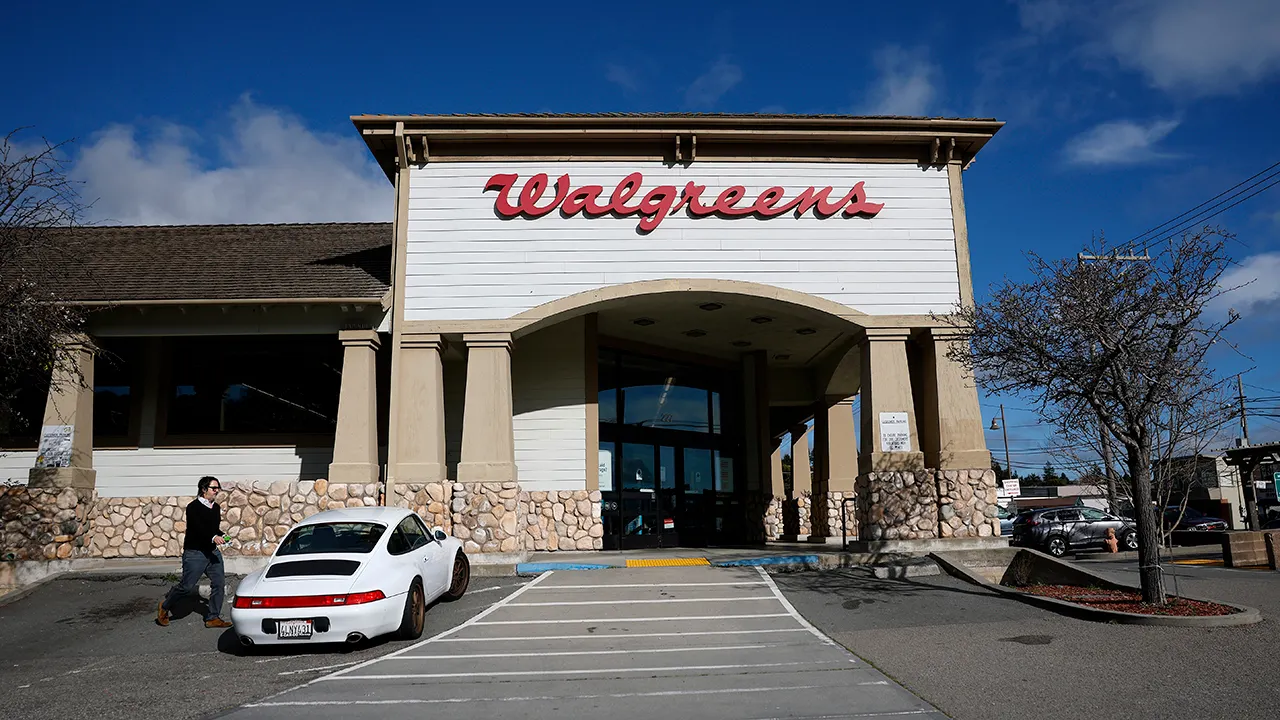
A Walgreens store March 6, 2025, in Mill Valley, Calif. Walgreens is reportedly continuing to close underperforming stores in 2026. (Justin Sullivan/Getty Images)
The closure strategy was reportedly scaled back after Walgreens went private in 2025, according to Inc.
Walgreens continues to operate thousands of stores across the U.S. and remains one of the country’s largest pharmacy chains.
CVS OFFERS NEW PHARMACY OPTION FOR PET OWNERS

People shop at a Walgreens Nov. 6, 2025, in the Brooklyn borough of New York City. Walgreens announced in October 2024 that it intended to shutter approximately 1,200 underperforming stores. (Spencer Platt/Getty Images)
The company confirmed to USA Today that the following locations have recently closed or are scheduled to close. The closures were previously reported by Inc., local news outlets or Walgreens’ website:
- District of Columbia: One Washington location
- Illinois: Two Chicago stores and one Rockford location
- Missouri: One store in Bridgeton and another in St. Louis
- New Jersey: One Bogota location scheduled to close Aug. 6
- New York: One Brooklyn location
- South Carolina: One Beaufort location scheduled to close Aug. 6
- Texas: A Houston distribution center
- Virginia: One Arlington location
- Washington: One Seattle location
- Wisconsin: One Milwaukee store
One of the Chicago closures highlights the financial and operational pressures behind some of the company’s decisions.
CVS, WALGREENS PULL BACK COVID VACCINES IN MORE THAN A DOZEN STATES FOLLOWING NEW GUIDELINES
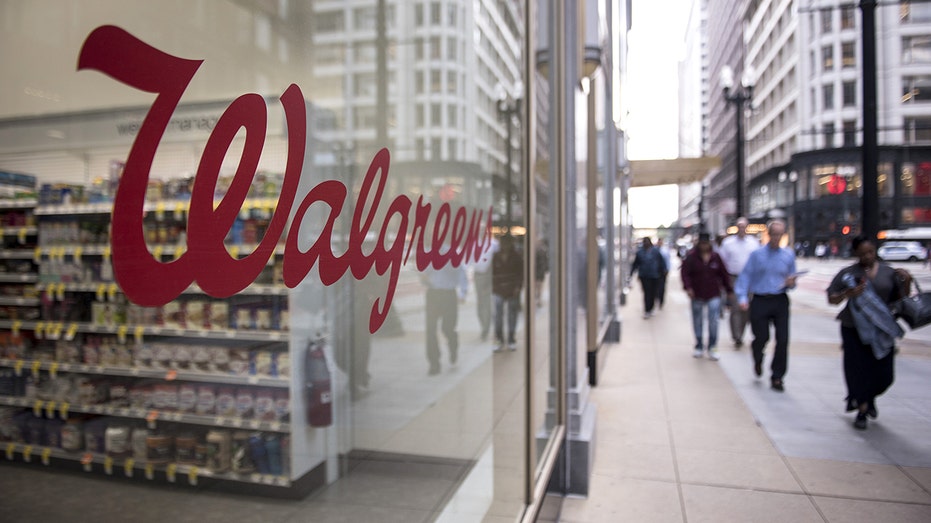
Walgreens continues to operate thousands of stores across the U.S. (Christopher Dilts/Bloomberg via Getty Images)
Walgreens announced earlier this year it was closing its location near 86th Street and Cottage Grove Avenue in Chicago’s Chatham neighborhood after the location struggled with declining prescription sales and elevated levels of theft.
GET FOX BUSINESS ON THE GO BY CLICKING HERE
“I’m here today because we’re closing the store at 86th and Cottage Grove. But I just want to make sure everyone understands closing stores [is] not our goal. This is the last resort,” Walgreens regional Vice President Reginald Johnson said in May, according to FOX 32 Chicago.
Walgreens could not immediately be reached by FOX Business for comment.
FOX Business’ Eric Revell contributed to this report.
Nikita Bier steps down as X product chief after one year

A meatpacker is the plant that slaughters the animal and breaks the carcass down into the cuts that reach shops or restaurants.
Four companies – Tyson, JBS, Cargill and National Beef – control around 85% of American beef processing.
That high level of market concentration has drawn accusations of price-fixing, even from President Trump.
So you might expect that those four firms are currently making huge profits from high beef prices. Yet the opposite is happening.
Tyson, the biggest of the four, reported in May that it had lost more than $500m, external on beef in the first half of its financial year.
Again, it might be selling its beef for record highs, but it is also buying the cattle at all-time peaks.
Jamie Crumley owns one of the remaining smaller meatpackers – Harpley’s Meatpacking in central North Carolina. She says the price companies like hers have to pay for the live animals has gone up by as much as 60% over the past three years.
And while meatpacking companies have increased the prices they charge for their beef, there is a limit. This is because supermarkets, restaurants – and US consumers – can, and will, simply switch to buying chicken or cheaper imported beef instead.
Then there is the inefficiency of running the meatpacking plants at much less than full capacity. For example, Harpley’s is built to handle 425 to 450 cattle a day. But it is currently running at just 350 because it cannot get the additional animals.
The building, the line and the staff cost the same either way, so those fixed costs now spread across fewer animals. On any given day Crumley says she can lose anywhere from $100 to $400 on a single head of cattle. This helps to explain Tyson’s giant losses.

BeOne Medicines DRC earnings beat by $2.29, revenue topped estimates
Economic Indicators and Financial Policy
Thailand’s economy shows signs of cautious stability, with the central bank confirming broadly steady growth in June. However, structural challenges persist: only 5 million filers pay income tax despite 21 million Thais remaining off the books, raising questions about tax base sustainability compared to Nordic countries’ compliance rates.
On a positive note, Thailand is moving closer to removal from the U.S. Treasury’s currency monitoring list, a development that could ease trade tensions and improve economic flexibility. The country also recorded a current account deficit of $3.5 billion, while automakers have cut 2026 output targets amid weakening export demand. Meanwhile, the “Thais Help Thais Plus” initiative has generated over 86 billion baht in economic circulation within just two months, demonstrating domestic stimulus effectiveness.
Regional Diplomacy and Border Tensions
Thailand has taken a firm stance in disputing claims made by a UN special rapporteur regarding the Cambodia conflict, with officials pushing back on the international body’s characterization of the situation. This diplomatic friction comes amid broader concerns about the Thailand-Cambodia border, where analysts argue that clearly defining boundaries is essential for achieving lasting peace between the two nations. Adding to regional complexities, Cambodian jobseekers have expressed fears over potential debt traps as Thailand reinforces border security measures, highlighting the human cost of geopolitical tensions.
The situation has also drawn attention to Thailand’s broader foreign policy positioning. Some analysts suggest that Donald Trump’s diplomatic approach is inadvertently pushing Thailand closer to China, while others argue the U.S. is missing a strategic opportunity in the region.
Tourism and Infrastructure Development
Tourism remains a cornerstone of Thai economic strategy, with the government racing to launch three low-season travel schemes to boost visitor numbers year-round. According to a Thailand Business News report, the country has unveiled its 2027 Action Plan targeting high-value tourism growth, signaling a strategic shift toward premium travel experiences rather than volume-based tourism.
Complementing this push, Thailand is promoting the “Thailand Riviera” coastal drive and has launched 10 new hiking schools focused on responsible forest tourism. Bangkok has also announced plans for a $29 million pedestrian bridge connecting historic river districts, reflecting continued investment in urban infrastructure. Interestingly, some Australian travelers are reportedly shifting toward alternative Asian destinations, suggesting emerging competition in the regional tourism market.
Public Safety and Security Concerns
Thailand has faced several high-profile security incidents this period. A devastating fire at a Bangkok pub killed at least 27 people, marking one of the deadliest such incidents in recent memory. Separately, authorities confirmed that suspects have confessed to killing two Russian siblings who had disappeared in Thailand, with the case expanding to reveal confessions to additional murders. The key suspect who exposed this serial-murder network is now under witness protection.
In southern Thailand, a checkpoint attack claimed the lives of five soldiers, underscoring ongoing security challenges in the region. Additionally, a Malaysian national suspected of leading a human-trafficking ring was apprehended in Thailand after allegedly attempting to bribe officials with “coffee money.”
Human Rights and Press Freedom
Thailand faces mounting scrutiny over its human rights record, particularly concerning online attacks against rights defenders, which Human Rights Watch has called on authorities to investigate. The country is also under pressure regarding the case of journalist Bai Zhaodong, with international organizations urging Thai authorities to halt his forcible return to China, citing fears of persecution.
Climate and Environmental Developments
Meteorologically, Thailand is bracing for significant weather events, with forecasts warning of a “Super El Niño” expected to arrive next year, alongside heavy rain and flash-flood warnings currently affecting multiple regions. While Typhoon Dolphin bypassed Thailand, it has intensified the ongoing monsoon trough, bringing additional rainfall across the upper regions of the country.
On a more academic note, paleontologists have identified a new giant dinosaur species in Thailand—a mamenchisaurid sauropod larger than a Diplodocus—discovered in the Lower Phu Kradung Formation, adding to the country’s scientific significance.
Sports and Cultural Milestones
Thailand’s sporting achievements have also made headlines, with the national volleyball team winning the SEA V Cup after defeating host nation Vietnam in straight sets. In football, Thailand has taken control of Group B in ASEAN Championship play, defeating Malaysia and creating a competitive dynamic that could impact Malaysia’s tournament prospects.
Looking ahead, MotoGP has confirmed Thailand as the 2027 season opener for the third consecutive year, reinforcing the country’s status as a premier motorsport destination.
Technology and Innovation
Thailand is positioning itself as a regional technology hub, unveiling the “Siam Silica” plan to drive semiconductor manufacturing capacity. The country has also signed five agreements with China to develop future industries, while simultaneously leading regional peers in digital trust rankings—a notable achievement as digital economies expand across Southeast Asia.
Source : Google News – Search
Other People are Reading
Business
UFC 331 Adds Brian Ortega vs. Renato Moicano Rematch to Stacked September Fight Card Set for This Fall
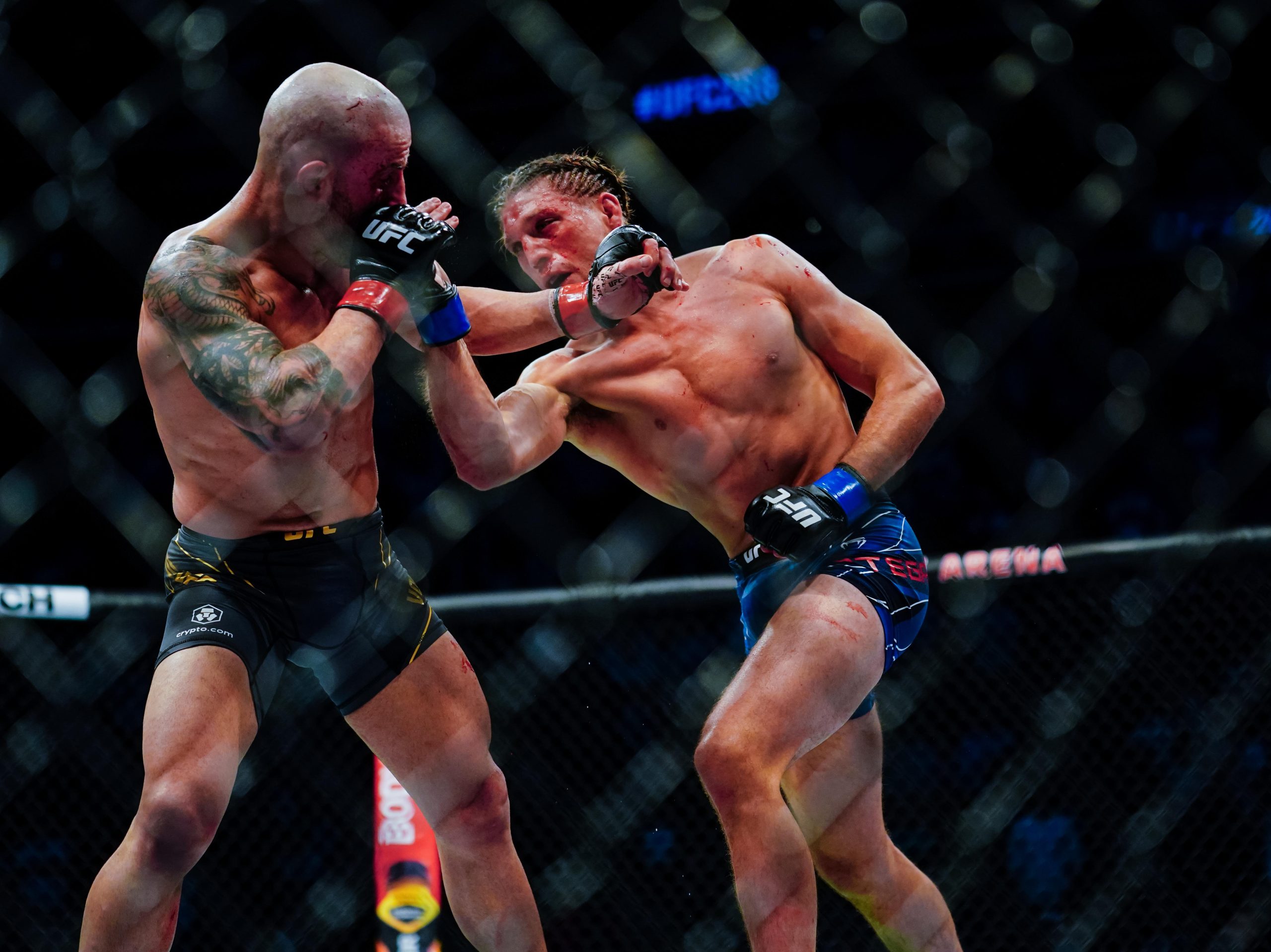
A lightweight rematch nearly a decade in the making has been added to UFC 331, with Brian Ortega set to face Renato Moicano on Sept. 19 at Crypto.com Arena in Los Angeles, bringing renewed attention to a rivalry that dates back to one of the promotion’s most memorable fights of 2017.
MMA journalist Leo Guimaraes was first to report the booking, writing on social media that the Moicano-Ortega rematch was in advanced negotiations for the card. Multiple outlets have since confirmed the matchup is set, adding another marquee bout to an already stacked lineup that has been steadily taking shape over the past several weeks.
A Fight Nine Years in the Making
Ortega and Moicano first met at UFC 214 in July 2017, a bout that earned Fight of the Night honors and remains one of the more dramatic finishes of either fighter’s career. Moicano appeared to be winning on the scorecards through the early rounds before Ortega locked in a guillotine choke late in the third round, submitting the Brazilian and handing him the first loss of his professional career.
Nearly a decade later, the two veterans will run it back, though the circumstances surrounding the rematch have shifted considerably. Their first meeting took place at featherweight, but September’s bout will be contested at lightweight, marking Ortega’s official move up to 155 pounds after years of struggling to make the featherweight limit.
A Difficult Road to the Rebooking
This will not be the first attempt at staging the rematch in 2026. The fight was originally planned for UFC 326 earlier in the year before Ortega withdrew for undisclosed reasons, pushing the matchup back until UFC officials were able to rebook it for September’s card in Los Angeles.
Ortega’s path to this rematch has been marked by significant difficulty in recent fight camps. He pulled out of a scheduled bout against Diego Lopes ahead of UFC 303 before the two eventually met months later at UFC 306. He then struggled to make weight ahead of a bout against Aljamain Sterling at UFC Shanghai, forcing that contest to be shifted to a catchweight affair. Ortega lost that fight decisively, getting outworked across five rounds, extending a stretch in which he has now dropped four of his last five outings. The repeated weight-cutting issues ultimately factored into the decision to move him up to lightweight on a permanent basis, a shift being framed less as an experiment and more as a practical reset for the 35-year-old former two-time featherweight title challenger.
Moicano, meanwhile, enters the rematch in considerably stronger recent form. The 37-year-old, who moved up to lightweight permanently several years ago after spending his first eight UFC appearances at featherweight, snapped a two-fight losing skid in his most recent outing by submitting Scottish contender Chris Duncan in the main event of UFC Vegas 115. That performance has left Moicano positioned as a betting favorite heading into the September rematch, according to analysts who have pointed to his sharper recent form inside the Octagon compared to Ortega’s extended rough patch.
What’s at Stake for Both Fighters
For Ortega, a win in his lightweight debut would provide a ranked start in a new weight class following a rocky final stretch at featherweight, offering a potential career reset against a well-regarded opponent. For Moicano, the fight represents both an opportunity to protect his standing in the lightweight rankings and a chance to finally even the score in a rivalry that has sat unfinished since 2017.
A Growing Card in Los Angeles
UFC 331 has continued to take shape as a heavily anticipated numbered event, with the Ortega-Moicano booking joining a rumored lightweight rematch between former interim champion Charles Oliveira and Arman Tsarukyan for the BMF title, widely expected to headline the card. Additional bouts reported for the lineup include Charles Jourdain against Marlon Vera, Ryan Gandra against Ozzy Diaz, Dooho Choi against Patricio Freire, and a women’s flyweight matchup between Eduarda Moura and Casey O’Neill.
As of the latest reports, the UFC had not yet formally announced an official main event or co-main event for the card, though the presence of multiple ranked and former title-challenging fighters across the lineup has already generated significant buzz among fans and analysts ahead of the September date.
A Familiar Venue for a Historic Rivalry
Crypto.com Arena, formerly known as Staples Center, has hosted numerous high-profile UFC events over the years and is set to once again serve as the backdrop for a fight carrying significant personal stakes for both competitors. The venue’s history with major UFC cards adds to the anticipation surrounding a bout that many fans have wanted to see rebooked since Ortega’s dramatic 2017 finish first launched the rivalry between the two veterans.
With UFC 331 still roughly six weeks away, additional bouts are expected to be added to the card in the coming weeks as the promotion continues finalizing its lineup for the September event. For now, the confirmed pairing of Ortega and Moicano stands as one of the most compelling storylines on the developing card, offering fans a chance to see whether Moicano can finally settle the score against the man who handed him his first career loss, or whether Ortega can use the rivalry as a springboard to reestablish himself in a fresh weight class after a difficult stretch at 145 pounds.

Operator
Hello, everyone. Thank you for joining us and welcome to Bumble’s Second Quarter 2026 Financial Results Conference Call. [Operator Instructions]
I will now hand the conference over to Will Taveras, Head of Investor Relations. Will, please go ahead.
William Taveras
Head of Investor Relations
Thank you for joining us to discuss Bumble’s Second Quarter 2026 Financial Results. With me today are Bumble’s Founder and CEO, Whitney Wolfe Herd; and CFO, Kevin Cook.
Before we begin, I’d like to remind everyone that certain statements made on this call today are forward-looking statements. These forward-looking statements are subject to various risks and uncertainties and reflect our current expectations based on our beliefs, assumptions and information currently available to us.
Although we believe these expectations are reasonable, we undertake no obligation to revise any statement to reflect changes that occur after this call. Descriptions of factors and risks that could cause actual results to differ materially from these forward-looking statements are discussed in more detail in today’s earnings press release and our periodic filings with the SEC.
During the call, we also refer to certain non-GAAP financial measures. These non-GAAP measures should be considered in addition to and not as a substitute for or in isolation from our GAAP results. Reconciliations to the most comparable GAAP measures are available in our earnings press release, which is available on the Investor Relations section of our website at ir.bumble.com.
With that, I will turn the call
How McDonald’s Earnings Show the Turnaround Is Taking Hold
Business
Shopify Stock Soars 17% After ‘Monster Quarter’ Beats Estimates on Every Major Metric This Week and Beyond

Shopify shares surged Wednesday after the Ottawa-based e-commerce software company delivered second-quarter results that beat Wall Street expectations across every major metric, along with a third-quarter outlook that comfortably outpaced analyst forecasts, sending the stock toward its highest levels of the year.
Shopify shares climbed as much as 33.8% in premarket trading before settling to a gain of 16.72% by the time markets opened, with the stock changing hands at $143.91. The rally marked one of the largest single-session moves in the company’s history and erased a substantial portion of the stock’s earlier year-to-date underperformance, which had left shares down roughly 23.4% through Tuesday’s close.
A Broad-Based Beat
Shopify reported second-quarter revenue of $3.58 billion, up 34% from the prior year and well ahead of the consensus estimate of approximately $3.45 billion compiled by Visible Alpha. Adjusted earnings came in at 42 cents per share, topping the 40-cent forecast by two cents. Gross merchandise volume, the total dollar value of transactions processed through Shopify’s platform, rose 32% year over year to $115.57 billion, also exceeding analyst expectations of $111.98 billion.
Profitability metrics showed similar strength. Gross profit reached $1.71 billion, up 31% from the same period a year earlier, while free cash flow came in at $654 million, representing an 18% margin, up sharply from $422 million in the prior-year quarter. Chief Financial Officer Jeff Hoffmeister pointed to growth across merchant sizes, sales channels and geographies as central to the results, saying in a statement that the company is building a model defined by broad-based, consistent and compounding growth paired with financial discipline.
Guidance Clears a High Bar
Perhaps more significant than the second-quarter beat was Shopify’s outlook for the current quarter. The company projected third-quarter revenue growth at a low-thirties percentage rate, well ahead of Wall Street’s expectation of a roughly 26% to 27% increase. If achieved, that guidance would mark the sixth consecutive quarter in which Shopify’s revenue growth has exceeded 30%, a streak that has become a central pillar of the bullish case for the stock among analysts who follow the company closely.
Easing Fears Over AI Competition
The scale of Wednesday’s rally reflected not just the strength of the quarter itself, but relief among investors who had grown increasingly concerned about competitive threats to Shopify’s business from artificial intelligence tools aimed at small businesses. Rothschild & Co Redburn downgraded Shopify stock to neutral in July, arguing that Meta Platforms’ expanding push into AI-powered commerce tools for small merchants could erode Shopify’s competitive advantage over time, a call that had weighed on sentiment heading into the earnings report.
Wednesday’s results appeared to substantially quiet those concerns, at least for now. Shopify’s own AI initiatives, including its Sidekick AI assistant, have drawn increasing attention from Wall Street analysts as a potential growth driver rather than a competitive threat. Morgan Stanley initiated coverage on Shopify last month with an Overweight rating and a $192 price target, citing the company’s e-commerce strength and what it described as a fast path to monetization through AI tools. Analysts at RBC Capital have separately argued that AI-built custom commerce tools are unlikely to fully replace established platforms like Shopify, countering fears that artificial intelligence could erode the company’s competitive moat. Stifel and Bank of America have both maintained Buy ratings with $150 price targets, pointing to Shopify’s positioning in what the firms describe as “agentic commerce,” AI-driven systems capable of handling more of the shopping journey automatically.
A Volatile Run-Up to Earnings
Wednesday’s surge capped an unusually volatile stretch for Shopify shares heading into the earnings report. The stock had swung from the mid-$120s down toward $112 over the prior several weeks before rebounding to close near $123 on Tuesday, a pattern that traders said reflected active dip-buying even amid uncertainty ahead of the results. In premarket trading following the earnings release, the stock briefly spiked from roughly $123 to above $160 before cooling off, an unusually wide intraday range that underscored just how sharply investor sentiment shifted once the numbers were released.
A Premium Valuation Still in Place
Despite Wednesday’s rally, Shopify continues to trade at valuation multiples well above the broader market, with a price-to-earnings ratio above 110 and a price-to-sales ratio exceeding 12, reflecting the growth-stock premium investors have historically assigned to the company. That elevated valuation means the stock will likely remain sensitive to any signs that its growth trajectory is decelerating in future quarters, even as Wednesday’s results provided a strong reason for bulls to extend their thesis in the near term.
Resilient Consumer Spending Amid Global Uncertainty
Shopify’s strong results also arrived against a broader economic backdrop marked by geopolitical tensions and elevated gas prices tied to the ongoing conflict involving Iran, factors that have put pressure on household budgets in several of the company’s key markets. Despite those headwinds, consumer demand has remained resilient, supported by a strong labor market and continued wage growth, dynamics that appeared to translate directly into the strength of Shopify’s merchant sales volumes during the quarter.
With Wednesday’s results delivering the company’s strongest single-day stock reaction in recent memory, attention now shifts to whether Shopify can sustain its accelerating growth trajectory into the back half of the year. Investors are likely to watch closely for further evidence that the company’s AI tools are translating into deeper merchant adoption and higher take rates, factors that analysts say will be central to determining whether Shopify’s premium valuation remains justified as competition in AI-driven commerce continues to intensify across the broader technology sector.

FSU coaches see ‘growth’ in transfer QB Ashton Daniels

The Library That Sparked a STEM Revolution for Our Students

Cryptocurrency For Beginners in Bengali | What is Cryptocurrency, Blockchain @ArijitChakrabortysongs

Renter of Home in Anne Heche Crash Denies Settlement With Son

No Jackpot Winner as $257 Million Prize Rolls Over to $269 Million Monday Draw

Weekend Open Thread: Staud – Corporette.com
Cryptocurrency For Beginners in Bengali | What is Cryptocurrency, Blockchain @ArijitChakrabortysongs

Money Song | Counting Coins with Gracie’s Corner | Nursery Rhymes + Kids Songs

The Final Countdown – Clarity Act 5 Days #xrp #crypto #clarity @digitalassetinvestor
-

 Fashion5 days ago
Weekend Open Thread: Wit & Wisdom
-

 Politics5 days ago
Meta enters AI-training agreement with far-right ‘propaganda rag’ Newsmax
-

 Politics3 days ago
Zack Polanski: an incitement to murder Nigel Farage?
-

 Crypto World4 days ago
MicroStrategy Post-Earnings CLARITY Act Push Could Add New Catalyst for Its Stock
-

 Crypto World5 days ago
XRP Ledger v3.3.0 brings five institutional features
-

 News Videos7 days ago
Bitcoin Enters the 3rd Stage of the Bear Market
-

 Politics6 days ago
Luke Littler’s dominance sparks GOAT debate
-

 Sports6 days ago
Seema Kaliramna Wins Discus Throw Bronze, Takes India’s CWG Medals Tally To 17
-

 Crypto World5 days ago
New York sues Kalshi over prediction market gambling
-

 Crypto World4 days ago
Crypto PAC spending tops $2M in Michigan House race
-

 Business5 days ago
Trump Announces Hamas Disarmament Agreement as Iran Strikes Kuwait Air Base and US Attacks Pause Overnight
-

 Business3 days ago
DTCR: Deleveraging And A Hedge Fund Collapse Point To A Possible AI Bottom
-

 Tech4 days ago
ESET tracks rise in malicious AI skills and adaptable malware
-
 Crypto World5 days ago
3 Fed Officials Just Explained Their Rate Hike Vote: Is Inflation Winning?
-

 NewsBeat7 days ago
Four people die trying to cross Channel in small boats
-

 Sports5 days ago
France Cricket implodes: letters hidden in a drawer and a board at war
-

 Tech6 days ago
Gemini Spark can now use Chrome logins and saved passwords to run errands on your behalf
-
 Tech6 days ago
Building A Reproduction PlayStation Motherboard
-
Crypto World3 days ago
XRP Ledger urges node upgrade after manifest flood
-

 Crypto World5 days ago
Moneyflip CEO charged in $40K murder-for-hire plot
You must be logged in to post a comment Login