


Connect with us

Business

Abusive phoenixing tops Insolvency Service five-year plan

Published

on

Abusive phoenixing tops Insolvency Service five-year plan

The Insolvency Service will make abusive phoenixing, where directors repeatedly walk away from company debts and set up similar businesses again, its leading enforcement priority under a five-year strategy it launches tomorrow. Some 146 investigations have started since April, with another 87 about to begin.

Duncan Beach, who became chief executive in January after a 20-year career in change management at banks including HSBC and Credit Suisse, said the practice was his main concern.

“It is such a blight on the economy,” Beach said.

Free newsletters
Advertisement

The stories that matter to UK business, straight to your inbox.

Advertisement

He gave the example of a small housebuilder that sells a new home off-plan to a family, closes the business and walks away, then sets up again and repeats the fraud. Another was a small hotel that makes all its staff redundant, shuts the company and reopens the next day under a different corporate structure, free of its liabilities.

“It just feels completely wrong,” he said. “It is not a victimless crime.”

The agency is working with other government bodies, including HM Revenue & Customs, and will seek prison terms for directors it finds acting unlawfully. Rather than waiting for companies to become insolvent, investigators are targeting live businesses where they suspect wrongdoing.

They are using AI to piece together evidence held across different government bodies, including Companies House, which had previously been difficult to bring together. Business Matters reported in July on plans to use AI analytics to find rogue phoenix directors.

Advertisement

The government has given the service an additional £5m a year for five years to create a 50-strong team of investigators focused on abusive phoenixing. The agency’s annual report for 2025-26 records the £25m allocation, made in the 2025 Autumn Budget.

Peter Etherington, of Ilkley, West Yorkshire, was jailed for 18-and-a-half months at Bradford Crown Court on 5 August and disqualified from acting as a director for ten years after repeatedly flouting the law at his publishing business.

David Snasdell, chief investigator at the Insolvency Service, said at the time: “He ran the same business through one phoenix company after another, committing serious misconduct in the process.”

Fraud is the most common reported crime, representing about 40 per cent of all offences measured by the crime survey for England and Wales and affecting more than four million adults a year. “That number is growing so it is a problem. We see it day-in, day-out and it is becoming very visible,” Beach said.

Advertisement

The agency is also pursuing organised criminals operating behind false company identities. Last week the High Court in Manchester wound up seven companies registered in Lancashire, London, Manchester and Reading in the public interest, after the service and Companies House found connections between them.

“This should send a clear message that companies cannot use false filings or misleading information to gain credibility and put other businesses at risk,” said David Usher, another chief investigator.

Beach said he wanted to improve Britain’s risk-taking culture and let entrepreneurs fail and go again without being unduly penalised.

He said some existing insolvency and restructuring tools were “geared towards larger organisations” and could be “quite complex and quite expensive”. The options will include “a new rescue tool specifically tailored to small businesses”, he said.

Advertisement

Beach is also reviewing how insolvency practitioners are regulated. Liability for mistakes when a company enters an insolvency process currently sits with the individual practitioner. Asked whether regulation could shift to firms, he said: “It’s certainly on the slate and I can understand why it’s important for the sector.”

Bob Pinder, director of quality assurance at the Institute of Chartered Accountants in England and Wales, said: “We’d like to see renewed momentum towards a firm-based approach to insolvency regulation, with modern regulation focused on the systems, controls, and culture within firms, while continuing to hold individuals accountable where appropriate.”

Beach said he hoped the Insolvency Service would become better known as a tool for directors running their businesses, not only winding them down. “I want them to understand that the insolvency system is a positive place that gives them confidence to try to take a risk, to do business, to be an entrepreneur,” he said.

Amy Ingham
About the author
Advertisement

Amy Ingham

Amy Ingham is a reporter at Business Matters, covering UK business news with a focus on breaking news, business policy, late payments and insolvency. She joined the magazine in 2026 after completing the NCTJ Diploma in Journalism at Harlow College’s journalism school. Her recent reporting includes British Steel’s nationalisation and its impact on SME suppliers, the decline in late payments by large firms, and Insolvency Service director disqualifications. Reach her at aingham@cbmeg.co.uk.

Advertisement

Continue Reading
Click to comment

You must be logged in to post a comment Login

Leave a Reply

Business

Openreach discount blocked by Ofcom over altnet concerns

Published

on

Openreach discount blocked by Ofcom over altnet concerns

Ofcom has today directed Openreach to withdraw a wholesale offer that would have given internet service providers a discount of up to £9.50 per customer per month, for up to 30 months, for bringing new full-fibre customers onto its network.

The final decision confirms the regulator’s provisional position from July and marks the first time Ofcom has stepped in to block a commercial offer from BT’s network business. Ofcom cleared the other offers Openreach notified in June, including a separate discount in Virgin Media areas and an Ethernet offer aimed at business connections.

The Incremental New to Openreach Customer Offer applied only to new customers above an ISP’s normal number of sign-ups. Retail providers that sell over Openreach’s lines, including BT, EE and TalkTalk, will not now receive the discount.

Free newsletters
Advertisement

The stories that matter to UK business, straight to your inbox.

Advertisement

In a statement reported by the Press Association, Ofcom said: “We have determined that the large discount involved, up to £9.50 per customer for up to 30 months, may mean that other reasonably efficient operators couldn’t match it while also recovering their costs.

“In addition, the offer is aimed exclusively at new customers, so could stymie alt nets’ ability to scale up their customer base at a time when around half of households that have access to full-fibre broadband are yet to sign up.”

The regulator added: “For these reasons, we consider the offer would be unfair and could harm sustainable competition, which is essential for low prices and better services in the long run, as well as helping to power the UK’s growth and productivity.”

In its published decision, Ofcom said that because of Openreach’s significant market power, the company was uniquely able to make such a targeted low-price offer, while leaving prices for other customers unchanged.

Advertisement

Ofcom said it was not intervening in Openreach’s other notified offers, which carry smaller discounts. According to the regulator’s consultation announcement in July, these include a one-off £50 discount on new full-fibre customers above an ISP’s usual sign-ups in areas where Virgin Media operates.

A Frontbook ARPU Share Offer caps what an ISP pays on average for new high-speed connections at £19.32 per month, Ofcom said. That offer, along with a Box Swap Offer, began on 1 July. Ofcom also cleared an Ethernet Net Demand Offer and an expansion of the area covered by Openreach’s existing Equinox discounts.

Ofcom opened its consultation on the offers on 28 July, and it closed on 27 August. The review sits under the rules set out in Ofcom’s Telecoms Access Review for 2026 to 2031, which retained restrictions on certain Openreach discounting practices and lengthened the notice period for its offers.

When the proposal was published in July, Natalie Black, Ofcom’s group director for infrastructure and connectivity, said: “Openreach must be able to compete, but they cannot use their significant market power to drive other networks out of the market.”

Advertisement

James Lowther, Openreach’s commercial managing director, said: “Ofcom’s decision not to approve our incremental FTTP new to Openreach offer is in line with their consultation position. We put this offer forward in good faith to help our customers compete and deliver better value for households.

“While we continue to believe the offer would have benefited customers and competition, we’ll review the decision carefully and continue to engage constructively with Ofcom and our customers.

“We’ll launch our other offers and continue to compete fairly, including our FTTP offer within the VMO2 footprint and an ethernet offer for businesses.”

The decision comes as full-fibre coverage expands across the UK, with competing networks building in the same towns alongside Openreach.

Advertisement

Alex Tofts, strategist at comparison site Broadband Genie, said: “While blocking Openreach’s wholesale discounts might seem counter-intuitive, denying major retail providers the opportunity to pass on immediate savings, it lowers the risk of squeezing out independent altnets that drive long-term competition.

“Consumers rely on real market choice. Independent providers operating outside the Openreach footprint frequently lead the way on speed, pricing, and customer service compared to well-known providers.”

He added: “The key challenge now, is ensuring this intervention doesn’t inadvertently drive up bills during a cost-of-living squeeze. History shows that Ofcom’s interventions can easily backfire on the very customers they’re meant to protect.”

Amy Ingham
About the author
Advertisement

Amy Ingham

Amy Ingham is a reporter at Business Matters, covering UK business news with a focus on breaking news, business policy, late payments and insolvency. She joined the magazine in 2026 after completing the NCTJ Diploma in Journalism at Harlow College’s journalism school. Her recent reporting includes British Steel’s nationalisation and its impact on SME suppliers, the decline in late payments by large firms, and Insolvency Service director disqualifications. Reach her at aingham@cbmeg.co.uk.

Advertisement

Continue Reading

Business

RBS fraud claims ruled a civil matter by Police Scotland

Published

on

RBS fraud claims ruled a civil matter by Police Scotland

Police Scotland has closed its handling of fraud allegations made by an Edinburgh businessman against Royal Bank of Scotland, telling his MP that the dispute is civil rather than criminal and that it will take no further action unless ordered to by a court.

The position was set out last month by Inspector Quentin Russell, deputy local area commander for North West Edinburgh, in correspondence with Tracy Gilbert, the Labour MP for Edinburgh North and Leith, who had raised the case of her constituent George Dosoo.

Mr Dosoo, a former hotel owner, alleges that money deducted from his business accounts by RBS was misappropriated. In a follow-up reply to Ms Gilbert, Inspector Russell said the matter “has been deemed a civil matter and is now closed in terms of any further investigation. This includes the money he alleges has been stolen.”

Free newsletters
Advertisement

The stories that matter to UK business, straight to your inbox.

Advertisement

According to a Police Scotland Professional Standards Department letter to Mr Dosoo dated 27 March 2025, the case centres on his allegation that RBS failed to honour an agreement to provide a 13-month repayment holiday on a business loan to him and his then business partner.

The letter sets out a timeline based on Mr Dosoo’s statements. In June 2005 the partnership bought the County Hotel with RBS funding, after a valuer instructed by the bank put its value at £1.95m. The partnership went into provisional liquidation in August 2008, and the hotel was sold in July 2010 for £1.65m, a sale Mr Dosoo says went ahead without his consent.

Mr Dosoo alleges the sale was the result of a fraudulent scheme involving his former partner, bank officials and property consultants acting for the lender. The lender’s position, according to the letter, is that the disputed interest payments were authorised by a designated clause.

Inspector Russell said Mr Dosoo had reported the matter three times: once to local policing in Edinburgh and twice to the force’s national Economic Crime Unit. Two detectives visited him at home on 11 October 2016 and concluded the circumstances did not constitute criminality, the Professional Standards letter states.

Advertisement

Mr Dosoo complained about the police handling of his case on 4 October 2023. A sergeant reviewed the documents he supplied and consulted specialist financial investigators, and the crime registrar, who has final authority over whether a matter is recorded as a crime, agreed with the original assessment.

Detective Sergeant Fyall, a specialist economic crime investigator consulted during the review, wrote: “The actions of RBS to revalue the property (and then recall the loan) are entirely proportionate and within their right, especially given the financial climate at the time this happened.”

Inspector Russell told Ms Gilbert the review found insufficient evidence to support allegations of fraud or any other criminality, and no evidence of criminality in the conduct of Mr Dosoo’s former business partner that would justify police intervention.

The Professional Standards letter also said an accountancy opinion prepared on Mr Dosoo’s behalf and sent to his lender made no reference to any fraudulent activity.

Advertisement

Mr Dosoo then took his complaint to the Police Investigations and Review Commissioner (PIRC), which, according to Inspector Russell, did not uphold any of his allegations. The PIRC states that its complaint handling review decisions are final.

In an email to Ms Gilbert on 22 August, Mr Dosoo said the police summary had omitted a central point. “The crucial and important fact he did not say is the fact that funds deducted by RBS had gone missing/misappropriated and stolen,” he wrote.

He said detailed computations had been provided to Police Scotland by himself and a firm of independent experts, and that a judge at the Court of Session had agreed his claim had merit.

Inspector Russell said civil proceedings pursued through the Court of Session in Edinburgh had not produced any evidence of criminality, and that any further challenge would require a judicial review.

Advertisement

Police Scotland “will not be taking any further action in this matter unless instructed to by a court of law following any judicial review instigated by Mr Dosoo,” he wrote.

Jamie Young
About the author

Jamie Young

Jamie Young is Senior Reporter at Business Matters, covering SME finance, employment law and Westminster policy since 2016. He has reported on every Budget and Autumn Statement since 2018, helped make sense of the ‘covid era’ and the bounce-back loan scheme from launch through the fraud investigations, and broke the magazine’s coverage of the 2024 late-payment reforms. He joined Business Matters straight from completing his BA in Administration from Exeter University and is NCTJ-qualified. Reach him at jyoung@cbmeg.co.uk

Advertisement

Advertisement
Continue Reading

Business

Lush cosmetics founder and Henry hoover boss among among leaders on new honours list

Published

on

Business Live

It recognises people for their contribution to manufacturing in the UK

Mo Constantine, co-founder of Lush

Mo Constantine, co-founder of Lush(Image: Lush )

The co-founder of Dorset cosmetics giant Lush and a boss at Somerset’s Henry vacuum cleaner factory are among 14 West Country manufacturing professionals to be recognised in a new honours ranking.

Make UK’s list, to mark National Manufacturing Day, includes figures from industries including aerospace, consumer products, precision engineering and advanced industrial technologies.

Mo Constantine, co-founder of Lush, which is headquartered in Poole, was recognised for helping transform cosmetics manufacturing and having a strong focus on sustainable, handmade production.

Stuart Cochrane, manufacturing manager at Numatic International – the Chard-based maker of the famous Henry vacuum – was included for championing British manufacturing through innovation, automation and investment in people.

Advertisement

Numatic is one of the region’s best-known manufacturing success stories and marked National Manufacturing Day with the release of a limited-edition vacuum cleaner.

Numatic International - maker of the Henry vacuum

Numatic International is the maker of the Henry vacuum(Image: Numatic International)

The honours also recognised Clive Higgins of Somerset engineering firm Leonardo and Richard Oldfield of Bristol’s National Composites Centre (NCC).

The initiative was launched on National Manufacturing Day, in partnership with Barclays, to mark Make UK’s 130th anniversary.

A total of 130 people across England and Wales were recognised on the honours list for 2026.

Advertisement

Fiona McGarry, region director for the South of England at Make UK, said the people recognised showed “the talent, ideas and commitment” driving success in manufacturing.

“The South West is home to one of the UK’s most diverse and dynamic manufacturing economies, from world-leading aerospace and defence to household-name consumer brands,” she said.

“What better day to celebrate them than National Manufacturing Day, when manufacturers across the country are opening their doors to showcase the people, skills and innovation behind modern British industry.”

Business secretary Jonathan Reynolds added: “A stronger manufacturing base means more good jobs in every part of the country, which is why our Industrial Strategy is backing our world-class manufacturers.

Advertisement

“I’d absolutely encourage young people, parents and teachers to visit a local manufacturer and see for themselves the rewarding opportunities available up and down the country.”

South West recipients of Make UK’s manufacturing honours

  • Paul Wenham, Managing Director, Geometric Manufacturing (Tewkesbury, Gloucestershire)
  • Karen Friendship, Managing Director, Aldermans (Plymouth, Devon)
  • Nick Smith, Chief Executive Officer, Bott (Bude, Cornwall)
  • Eric Nicholls, Chair, Cornwall Manufacturers Group (Truro, Cornwall)
  • Maurice Porter, Head of Learning, Development & Apprenticeships, Hepco Motion (Tiverton, Devon)
  • Tom McCurtie OBE, Managing Director, Hymid (Torquay, Devon)
  • Lee Crocker, Managing Director, Kawasaki (Plymouth, Devon)
  • Clive Higgins, UK Chair and CEO, Leonardo (Yeovil, Somerset)
  • Mo Constantine, Founder, Lush (Poole, Dorset)
  • Stuart Cochrane, Manufacturing Manager, Numatic International (Chard, Somerset)
  • Brian Cutts, Managing Director, Temco Wire Products (Cinderford, Gloucestershire)
  • Mark Bolton, CEO and Principal at Yeovil College (Yeovil, Somerset)
  • Simon Martin, Head of Global Manufacturing, Yunex (Poole, Dorset)
  • Richard Oldfield, Chief Executive, NCC (Bristol)

Continue Reading

Business

NSE shares fall 2%, slip below IPO price, but analysts’ target prices go up to Rs 2,050. Time to buy?

Published

on

NSE shares fall 2%, slip below IPO price, but analysts’ target prices go up to Rs 2,050. Time to buy?
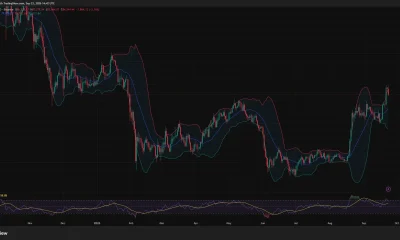
Shares of newly listed NSE fell 2% to a low of Rs 1,761 on the BSE on Monday, slipping below the IPO price of Rs 1,785 apiece. Following the decline, NSE’s market capitalisation stood at Rs 4.36 lakh crore, placing it as the 11th-largest listed Indian company, ahead of Tata Group’s Titan Company.

Reliance Industries remained India’s most valuable listed company with a market capitalisation of Rs 16.42 lakh crore, followed by HDFC Bank at Rs 11.16 lakh crore. Other companies ranked ahead of NSE include Bharti Airtel, ICICI Bank, SBI, TCS, Bajaj Finance, L&T, HUL and Sun Pharma, according to stock exchange data.

Should you buy, sell or hold NSE shares?

Macquarie says NSE is ‘The Dominator’ after it assigned an Outperform rating and a Rs 1,965 target price, implying an upside potential of 9.5% from the last close of Rs 1,793. The brokerage highlighted NSE’s full suite of services, technology and deep liquidity, which make it a key part of India’s financialization, calling it the “lynchpin” of India’s financialization. Strong network effects, profitability, and cash generation further support the business.

Advertisement

Also read: How Gautam Adani turned ₹1 lakh crore of stressed asset deals into a mega infrastructure bet

Emkay also initiated coverage on NSE with a Buy rating and a Sep-27E target price of Rs 2,050, implying around 14% upside. The brokerage’s positive view on NSE rests on three key factors. First, India’s capital market development and growth story has a long runway as wealth creation and financialisation gain momentum, with India’s per capita GDP expected to move from around $3,000 to $10,000 over the coming decades.


Second, NSE has maintained a resilient leadership position across capital market business segments over the decades. Emkay believes its business model has sufficient levers to adapt to changing regulatory and macroeconomic conditions while continuing to deliver profitable growth.
Third, strong profitability and cash generation at market infrastructure institutions (MIIs), including stock exchanges, allow them to command higher valuation multiples globally than other capital market players, which are more fragmented and exposed to competition.NSE commands uncontested leadership across cash and derivatives, driven by a self-reinforcing liquidity flywheel. In the cash segment, NSE holds 93% market share while retaining near-monopoly in the equity futures and stock options segment. While BSE has captured market share following its derivatives relaunch, the brokerage believes index options are transitioning to a phase of stabilisation following several regulatory rejigs. “Supported by secular domestic financialization and under-penetration, NSE possesses a multi-year structural runway, as rising household savings, record SIP flows, and capital formation continue to compound,” it added.

Also read: Rs 6 lakh cr rout! 6 key triggers behind today’s market meltdown

Domestic brokerage firm PL Capital has assigned an ‘Accumulate’ rating with a target price of Rs 1,950, forecasting an upside of over 9% from current levels.

Advertisement

While transaction income accounted for 79% of NSE’s operating revenue in FY26, PL Capital expects the exchange to increasingly benefit from a more diversified revenue mix, supported by multiple recurring income streams. Listing services, colocation, data feed and index licensing are expected to grow at a faster 14% CAGR over FY26-29E, compared with 9% for transaction income.

Disclaimer: This article has been written by Veer Sharma, who is not a SEBI-registered Research Analyst or an Investment Adviser. Veer Sharma and his/her ‘relative(s)’ (as defined under Section 2(77) of the Companies Act, 2013) do not hold any financial interest in the companies mentioned in this article as of the date of publication. The views/recommendations mentioned in this article, wherever applicable, are those of the respective SEBI-registered Research Analyst/brokerage and have been reproduced/reported with due attribution. They should not be construed as the views or recommendations of The Economic Times Digital or the journalist. Readers are advised to consider the original research report and make their investment decisions based on their own assessment. Brokerage disclaimers here.
Continue Reading

Business

Bill Gates Warns Rogue Actors With AI Could Drive a Billion Deaths, Rejects Self-Regulation Alone

Published

on

Microsoft founder and technology advisor Bill Gates laughs at a trade show during the Berkshire Hathaway annual meeting in Omaha.

WASHINGTON — Bill Gates said artificial intelligence is already powerful enough to help cause a billion deaths if people with bad intent get the latest tools, and he told NBC that U.S. law — not company promises — has to set the safeguards.

“AI is certainly powerful enough to drive events that cause a billion deaths,” Gates said on “Meet the Press,” in an interview recorded Sept. 24 and aired Sunday. “So even though it’s pretty hard to get to 100 percent, there’s never been a weapon as powerful as the combination of people with ill intent using the latest AI tools.”

He split two clocks. One is the long-run fear that systems could slip human control, a warning associated with former Anthropic researcher Jacob Coxon and other safety advocates. The other is nearer: terrorists or hostile states using models now. Americans, he said, should not skip the second while arguing about the first.

Federal legislation is “absolutely” required to watch what advanced systems do and to force safety features, he said. “No one believes self-regulation is sufficient.” Rules would add “a little administrative burden,” he said, and would not “dramatically” slow the pace of innovation.

Advertisement

He was more specific on method than on a bill number. A kill switch is “not enough.” “We do need to monitor any sophisticated model and record exactly what’s being done.” Small groups with AI, he said, can now attempt work that once took a state’s cyber or bioweapons team. “Unless governments insist on various safeguards, you know, we will see a lot of big, negative things because we’re not safeguarding.”

Asked whether the systems are already beyond control, he said no. They are not running “millions of robots yet,” and “we can turn off the computer.” Asked whether extinction talk is a hoax, as President Donald Trump has written, Gates said, “It’s not a hoax at all.”

Trump has framed AI as a race the United States is winning. “WHOEVER WINS AI, WINS! We are leading China, and all others, and will continue to do so,” he posted. Gates called that line “fine” and said monitoring would not “handicap us in whatever he thinks the nation-state race is.” “Certainly, all countries should want the safeguards in place,” he said. “So anyone that says, ‘Well, you know, China won’t put these safeguards in place’ — I totally disagree with that.”

He wants to see Trump. He said he would not ask for a freeze. “I’ll be saying we should impose a requirement on all the AIs in the U.S. and I expect China doesn’t want bioterrorism, they don’t want big attacks by nongovernmental actors.”

Advertisement

Mark Zuckerberg drew the opposite map three days earlier. In an NBC interview with Joanna Stern, the Meta chief rejected an industry-wide pause. “I don’t think that we need some kind of industrywide coordination,” Zuckerberg said. “I think that each lab needs to take the time, and when it sees that there are issues, you just take the time that you need internally to basically make sure that you’re proceeding safely.”

Asked if AI would kill people, he said: “Well, I think if we all do a good job and act responsibly then, no. I mean, I’m quite optimistic about the fact that this is going to be a very positive future for everyone.” He called much of the extinction talk “rhetoric that is filled with doom” and said “there’s plenty of commercial incentive to get this right.” “People aren’t going to adopt it if they don’t trust it.”

That is the split Hankyoreh laid out: Gates wants statutes; Zuckerberg wants each lab to stop itself. Brad Smith, Microsoft’s president and vice chair, has been pushing a third line — companies should not wait for Congress if a product looks unsafe. In remarks this month he compared the choice to aviation. “If you’re making a commercial airplane or if you’re making anything and you’re the CEO of a company and you conclude that your product is unsafe, should you ship it anyway? And I think the obvious answer is no. You have a responsibility to public safety.”

States are not waiting. California Gov. Gavin Newsom signed an order last week to stand up an expert panel on stronger AI safety rules. Maryland and New York announced plans this week aimed at tighter in-state limits on AI firms and the data centers that train them.

Advertisement

Gates has made the employment argument in a long essay, asking policymakers to reserve some jobs as human-only. The Sunday interview was about harm at scale, not payrolls. The number he chose — a billion deaths — is not a forecast of a date. It is a claim about leverage: the same models that write code and draft mail can, in his telling, amplify a small group the way a government weapons program once did.

Nuclear arms control needed two capitals and inspectors. AI copies. That is why he told Welker a global framework would be “more difficult” than Cold War nuclear talks, and why he keeps returning to logging and mandates instead of a single off switch. Zuckerberg’s answer is that a lab that ships a product people do not trust will lose the market. Gates’s answer is that the market is not the party that gets hurt first.

Continue Reading

Business

Nifty 50 Falls Below 23,000 as Brent Near $107 and Foreign Selling Erase Rs 6 Lakh Crore Value

Published

on

Nifty 50

MUMBAI — India’s Nifty 50 broke below 23,000 on Monday as oil jumped and foreign investors kept selling, extending a seven-week losing streak that has pulled the benchmark to its weakest stretch since 2020.

The index was at 22,799.25 in late afternoon trade, down 341.25 points, or 1.47 percent, from Friday’s close, according to the snapshot on exchange feeds at 2:59 p.m. India time. That print sat under the 23,000 floor the Nifty had defended through last week. The Sensex dropped more than 1,000 points in the morning, with an intraday low near 72,856 reported by The Week. BSE-listed companies lost about Rs 6 lakh crore of market value in early trade, India Today said, as capitalization slipped from roughly Rs 483 lakh crore to about Rs 477 lakh crore.

The week is short. The immediate drivers are not. Brent crude rose more than 2 percent to about $106.60–$107 a barrel. West Texas Intermediate traded near $94–$95. Those prices followed another weekend without a diplomatic opening on the Strait of Hormuz. President Donald Trump rejected Iran’s latest proposal to reopen the waterway and halt fighting. Iran kept its conditions. Shippers priced a longer disruption.

Crude at that level is a tax on India. The country imports most of the oil it burns. Higher barrels feed inflation expectations, pressure the rupee and lift the subsidy and current-account debate that fund managers have been running since the Middle East war widened. U.S. Treasury yields moved with the oil bid. The 10-year note was near 5.2 percent. The 30-year was above 5.5 percent, a zone last seen in 2004, CNBC-TV18 reported. Dollar assets at those yields compete with emerging-market equities.

Advertisement

Foreign portfolios have already chosen. After buying in July and August, they sold again in September. India Today put September equity sales near Rs 19,000 crore and year-to-date selling above Rs 2.5 lakh crore. Provisional NSE data showed Rs 3,694 crore of foreign selling on Friday alone.

Dr. V.K. Vijayakumar, chief investment strategist at Geojit Investments, named the two prices that matter this week. Brent at $106 and the U.S. 10-year at 5.2 percent were “strong headwinds” for markets, he said. “FPIs, after turning buyers in July and August have again turned sellers in September. This scenario will keep the market under pressure in the near-term.”

Banks and other financials led the domestic damage. Rate-sensitive stocks usually do when global yields jump and foreigners cut India. Mid-caps and small-caps, which held up better than the Nifty in parts of the summer, were pulled into the same tape. Asia was mostly lower. The KOSPI, Nikkei 225 and Shanghai Composite traded red. The Hang Seng was the exception.

The technical break added speed. CNBC-TV18 noted that 23,000 had been the downside hold all last week and gave way at the open. Once that line went, systematic selling and stop-loss flows tend to chase the index toward the next round number. The session low near 22,820, reported in morning coverage, put the Nifty at about a six-month trough. From the August peaks above 24,300, the index has given back more than 1,500 points.

Advertisement

None of that is a verdict on Indian company earnings by themselves. It is a verdict on the discount rate and the oil bill. A seven-week losing streak is rare. The Financial Express said it was the longest since 2020. Streaks that long usually need more than one bad headline. This one has three: war risk at Hormuz, $107 crude, and foreign accounts that flipped from buyers to sellers when U.S. yields climbed.

Domestic institutions have been the other side of that trade for much of the year. They cannot cancel a $107 barrel. They can keep buying dips if household SIP flows stay steady. Monday’s tape suggested they were not large enough to hold 23,000 once oil and the dollar moved together.

What happens next is still the same checklist. A ceasefire that reopens Hormuz would take the risk premium out of crude. A deal that does not would keep Brent elevated and keep FPIs cautious. U.S. yields near 5.2 percent make that caution rational. Vijayakumar’s line is the one desks will repeat into the next session: the near term stays under pressure while those two numbers stay high.

For a reader watching only the Nifty, the story on Sept. 28 is simpler. The index that closed Friday above 23,100 was trading under 22,800 before the last hour. Sensex names had already marked off more than 1,000 points. Six lakh crore of listed value was gone by late morning. Oil, yields and foreign sales did the work. The 23,000 handle did not.

Advertisement
Continue Reading

Business

Select Water Solutions: A Lot Of Moving Factors (NYSE:WTTR)

Published

on

Select Water Solutions: A Lot Of Moving Factors (NYSE:WTTR)

This article was written by

The Value Investor has a Master of Science with specialization in financial markets and a decade of experience tracking companies via catalytic company events. As the leader of the investing group Value In Corporate Events they provide members with opportunities to capitalize on IPOs, mergers & acquisitions, earnings reports and changes in corporate capital allocation. Coverage includes 10 major events a month with an eye towards finding the best opportunities. Learn more.

Analyst’s Disclosure: I/we have no stock, option or similar derivative position in any of the companies mentioned, and no plans to initiate any such positions within the next 72 hours. I wrote this article myself, and it expresses my own opinions. I am not receiving compensation for it (other than from Seeking Alpha). I have no business relationship with any company whose stock is mentioned in this article.

Seeking Alpha’s Disclosure: Past performance is no guarantee of future results. No recommendation or advice is being given as to whether any investment is suitable for a particular investor. Any views or opinions expressed above may not reflect those of Seeking Alpha as a whole. Seeking Alpha is not a licensed securities dealer, broker or US investment adviser or investment bank. Our analysts are third party authors that include both professional investors and individual investors who may not be licensed or certified by any institute or regulatory body.

Advertisement
Continue Reading

Business

Suzlon Energy shares fall 2% to near six-month low, down 15% in one month

Published

on

Suzlon Energy shares fall 2% to near six-month low, down 15% in one month
Suzlon Energy shares slipped over 2% on Monday, hitting their lowest level in nearly six months, as analysts flagged key levels for investors to watch.

The stock fell to Rs 39.92 apiece on the NSE, its lowest level since early April. It is now nearing its 52-week low of Rs 38.19, which it touched in March this year.

Suzlon Energy shares have lost nearly half their value since hitting a 52-week high of Rs 61.50 in November last year. The company currently has a market capitalisation of around Rs 54,968 crore.

The decline came amid a sharp rise in trading volumes. The broader stock market also remained under pressure on Monday, weighed down by surging oil prices, rising bond yields and broader geopolitical concerns.

Advertisement

Also read | Why is the market falling today? Sensex tumbles over 900 points, Nifty below 22,900. 6 key factors behind Rs 6 lakh crore rout

Suzlon Energy Q1 results

Suzlon Energy shares saw a sharp downturn in July this year after the company reported a 6% year-on-year (YoY) drop in net profit to Rs 305 crore in Q1 FY27 from Rs 324 crore a year ago. The renewable energy player’s EBITDA fell to Rs 595 crore in Q1 FY27, from Rs 599 crore in the same period last year, while EBITDA margin declined to 15.6% from 19.2%. While net profit, EBITDA and margins declined, its revenue from operations rose 22.5% YoY to Rs 3,819 crore in Q1 FY27 from Rs 3,117 crore in the year-ago period.
EBITDA and PAT margins fell amid ongoing developments, given the temporary logistics disruptions arising from the geopolitical situation, certain strategic investments, and a change in scope and segment mix, said Suzlon Group’s CFO Rahul Jain.

Suzlon Energy optimistic on wind energy opportunities

India’s wind energy industry has visibility of around 85 GW capacity that could be commissioned before 2030, putting the sector broadly on track to achieve the government’s 100 GW wind power target, Suzlon Energy co-founder Girish Tanti told The Economic Times.

“If you add up the bids which have been announced, the projects under development and the projects under construction, already today as an industry, we have visibility about 85 GW before 2030 to be commissioned,” Tanti said, adding that with another five years remaining until 2030 and additional bids expected, the industry is largely on track to meet the 100 GW target.

Advertisement

The executive said the next phase of India’s renewables planning should target 400 GW of wind capacity by 2047. “As an industry we are ready,” Tanti said, adding that the wind target could increase further as confidence in the technology grows.

Also read | Suzlon’s Girish Tanti says wind energy sector can meet 100 GW target by 2030

Disclaimer: This article has been written by Debaroti Adhikary, who is not a SEBI-registered Research Analyst or an Investment Adviser. Debaroti Adhikary and her ‘relative(s)’ (as defined under Section 2(77) of the Companies Act, 2013) do not hold any financial interest in the companies mentioned in this article as of the date of publication. The views/recommendations mentioned in this article, wherever applicable, are those of the respective SEBI-registered Research Analyst/brokerage and have been reproduced/reported with due attribution. They should not be construed as the views or recommendations of The Economic Times Digital or the journalist. Readers are advised to consider the original research report and make their investment decisions based on their own assessment. Brokerage disclaimers here.

Advertisement
Continue Reading

Business

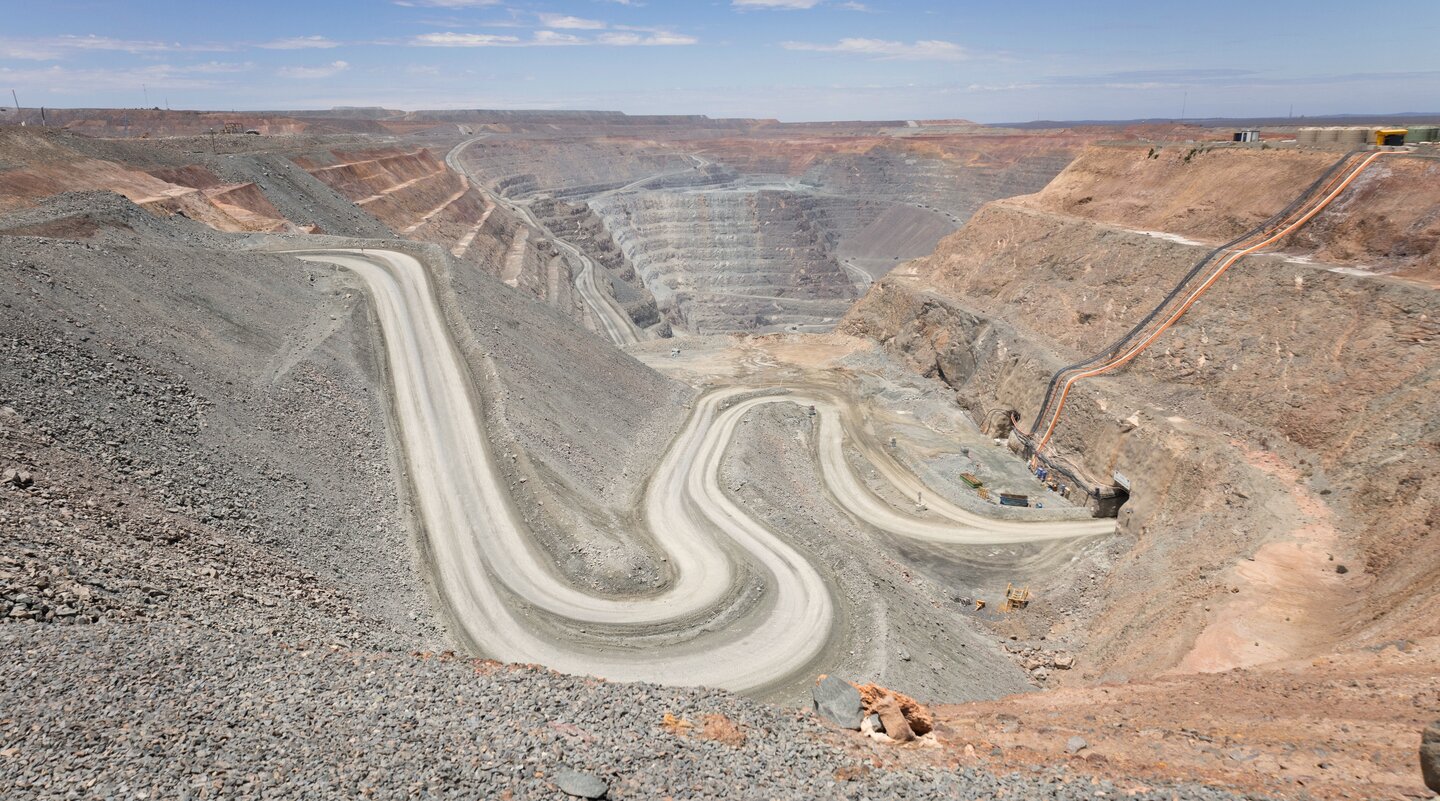
South African gold giant set to pursue Australian rival

Published

on

South African gold giant set to pursue Australian rival

Yes. Corporate subscriptions are available for teams and organisations, with discounted rates as user numbers increase. Pricing starts from $1,625 + GST per user.
Get in touch
to discuss the right option for your organisation.

Business News subscriptions are used by executives, investors, consultants and professionals who need to stay informed and make better decisions about the WA market. When you subscribe you’ll get

  • Unlimited access to WA’s most trusted business journalism
  • Data & Insights — detailed profiles of WA companies, people, projects and deals
  • MyBN — a personalised feed based on the companies, people and sectors you follow
  • Special publications and industry reports
  • Daily and weekly email newsletters

Data & Insights is a research tool built specifically for the WA market. It draws on more than 30 years of Business News reporting, updated regularly to reflect what’s happening now. Use it to:

  • Look up detailed profiles of WA companies, including financials, directors and ownership
  • Find decision-makers and track their career movements
  • Research live and completed projects across WA industries
  • Monitor deals, appointments and market activity
  • Access industry rankings and league tables

Data & Insights is updated daily by our dedicated research team, which uses the latest announcements, ASX filings and editorial coverage to keep our person, company, list and project records up to date.

Business News welcome all opportunities to make our dataset accurate, complete and current, so if you have an update request, please email the team at
general@businessnews.com.au, and we’d be happy to assist.

Advertisement

MyBN
is part of every subscription. It’s your personalised view of Business News. You can follow the companies, people, sectors and projects that matter to you, and get a news feed and alerts tailored to your interests. You can save articles to read later and retain only what you need.

Only subscribers have full access to all content on the Business News website.

Advertisement

If staying informed about the WA economy is part of your job, and/or you’re looking for networking opportunities in WA, Business News is built for you.

Business News subscribers are:

  • Executives and directors tracking competitors, clients and market movements
  • Investors and advisers researching companies, deals and industry trends
  • Consultants and professionals staying across sectors relevant to their clients
  • Business owners looking for leads, context and market intelligence

Most Business News publications cover national or global markets. Business News is focused entirely on Western Australia, which means the journalism, the data and the intelligence are all built around WA companies, people and projects — not adapted from a national feed. Data & Insights, included with every subscription, combines more than 30 years of WA-specific editorial research with live business data. There’s no comparable product for the WA market.

Advertisement

The Morning Digest Email provides a comprehensive wrap of the major headlines, relevant to WA business, and includes with a snapshot of the overnight news covering oil, gold and ASX-listed companies.

The Afternoon Wrap Email focuses on the news covered by our team of journalists during the course of the working day, including exclusive stories and analysis, all of which relates to WA business and the local economy.

The BN Weekender Email contains a wrap of the Business News from the week that was, highlighting the top stories in each area of WA business.
Sign up for free.

Advertisement

We’re happy to help.
Get in touch
and our team will come back to you.

Advertisement
Continue Reading

Business

TAT highlights Thailand’s film production talents and tourism charm at TIFF 2026

Published

on

Thailand Launches Pavilion at Cannes Film Festival

TAT promoted Thailand’s film production strengths and tourism appeal at TIFF 2026 with panels, interviews, networking, and curated filming routes, enhancing its film tourism strategy and international allure.

Thailand’s Cinematic Allure at TIFF 2026

At TIFF 2026, Thailand’s Tourism Authority (TAT) showcased the nation’s cinematic and tourism strengths through the initiative “Amazing Location Thailand: From Scene to Scenic.” This initiative focused on exhibiting Thailand’s potential as a vibrant backdrop for film productions. The event included insightful industry panels and media interviews that underlined Thailand’s impressive production capabilities and diverse locations. By participating in these activities, TAT emphasized how the country’s unique blend of natural beauty and modern infrastructure creates an ideal environment for international filmmaking.

Connecting Filmmakers with Local Opportunities

During the event, TAT curated 10 distinctive filming routes designed to highlight the country’s rich cultural heritage and scenic vistas. These routes provided international filmmakers with firsthand experiences of Thailand’s stunning locations and its well-equipped production facilities. The curated tours aimed to bridge connections between filmmakers and local communities, illustrating how local culture and community involvement enrich the filmmaking experience. This initiative is a strategic part of Thailand’s broader effort to boost its appeal as a destination for film tourism.

Reinforcing Thailand’s Global Appeal

Through networking events and engaging presentations, TAT aimed to strengthen Thailand’s position as a sought-after location for international film projects. The successful promotion at TIFF 2026 not only enhanced Thailand’s reputation in the film industry but also highlighted its charm as a travel destination. By showcasing Thailand’s dual appeal in tourism and film production, TAT hopes to attract filmmakers from around the globe, further supporting the growth of film tourism and fostering international collaborations.

Advertisement

Source : TAT showcases Thailand’s film production strengths and tourism appeal at TIFF 2026

Continue Reading

Trending