
Business
Aehr Test Systems: The FY2027 Rebound Is Real, But The Price Asks For Too Much (AEHR)



Maxell Agustin Aguiran is an independent equity researcher and quantitative analyst who leads a predictive analytics consulting firm. He produces rigorous, primary-source equity research focused on valuation, market-implied expectations, earnings quality, capital allocation, and asymmetric risk-reward. His process combines DCF, FCFF, residual-income, reverse-DCF, scenario, sensitivity, and price-implied expectations analysis with transparent assumptions and fully traceable calculations. Each thesis explains what the market is already pricing in, what must occur for that price to be justified, and where the greatest upside and downside risks lie. Follow for evidence-based investment research and the math behind every rating—not hype, narratives, or black-box conclusions.
Analyst’s Disclosure: I/we have no stock, option or similar derivative position in any of the companies mentioned, and no plans to initiate any such positions within the next 72 hours. I wrote this article myself, and it expresses my own opinions. I am not receiving compensation for it (other than from Seeking Alpha). I have no business relationship with any company whose stock is mentioned in this article.
Seeking Alpha’s Disclosure: Past performance is no guarantee of future results. No recommendation or advice is being given as to whether any investment is suitable for a particular investor. Any views or opinions expressed above may not reflect those of Seeking Alpha as a whole. Seeking Alpha is not a licensed securities dealer, broker or US investment adviser or investment bank. Our analysts are third party authors that include both professional investors and individual investors who may not be licensed or certified by any institute or regulatory body.

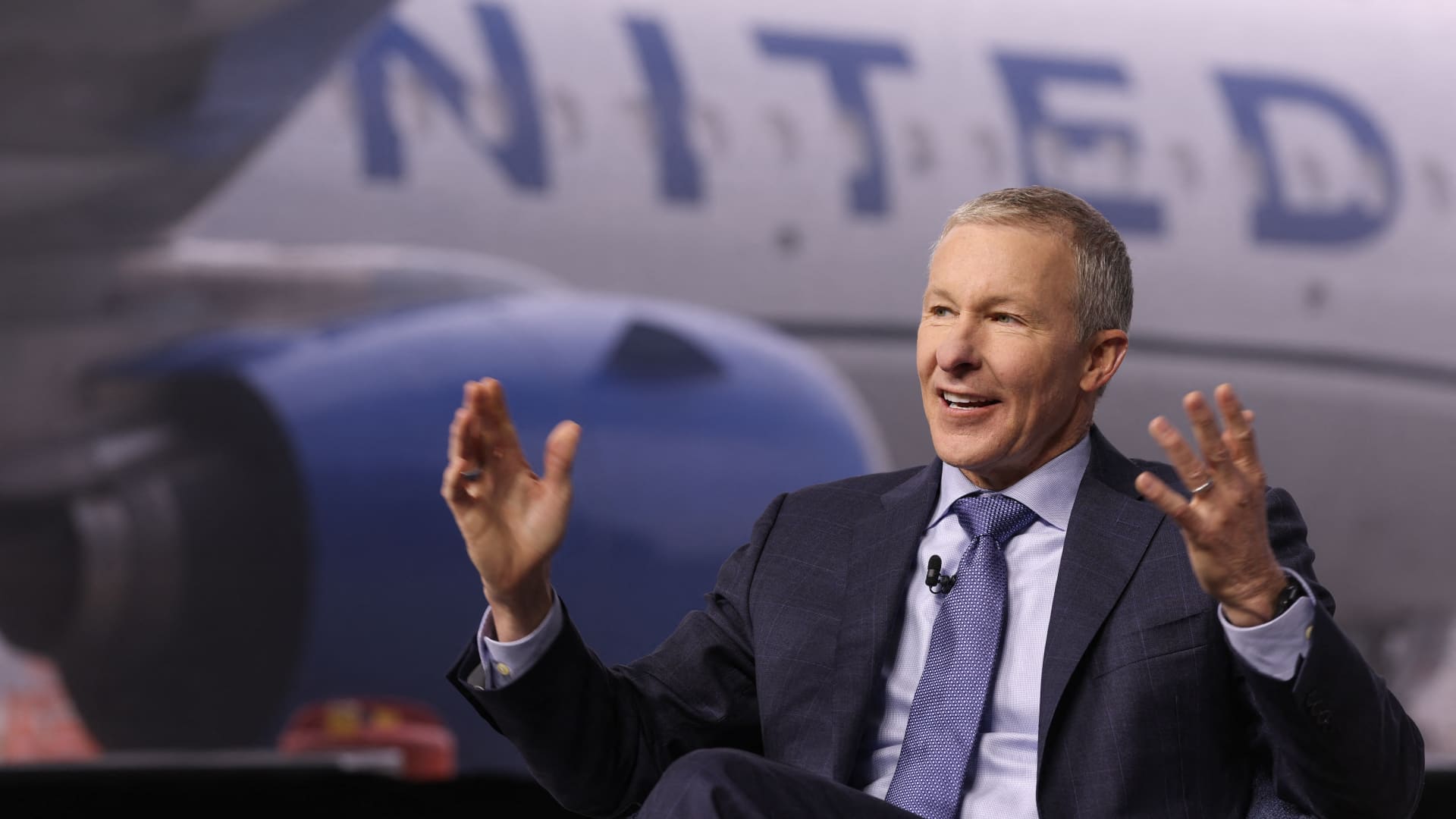
United Airlines CEO Scott Kirby speaks during a media event showcasing the airline’s new premium “Elevated” aircraft interior at Los Angeles International Airport, March 24, 2026.
Patrick T. Fallon | AFP | Getty Images
NEWARK, New Jersey — Scott Kirby says he doesn’t believe in revenge.
“Everyone thinks I do, but no, I don’t,” said the United Airlines CEO, whom American Airlines fired 10 years ago, when he was president of that carrier. “I compete aggressively.”
United announced it had hired him as president on Aug. 29, 2016, a blink after American disclosed his departure. Now, Kirby is running the second-most profitable U.S. airline after Delta Air Lines. And his former employer, American, is a distant third of the big, more-than-century-old, U.S. carriers, though it’s working to ramp up revenue through a host of upgrades, including bringing back seatback screens.
Kirby floated the idea of megamergers with both Delta and American in the past year, combinations that would bring together some of the biggest airlines in the world. He’s so far been rebuffed, and antitrust experts were skeptical about the possibility.
He’s thinking bigger than he has before as the industry faces ever-higher costs, limited airport infrastructure and a population that’s ready to shell out more to fly — often in the expensive seats — to the next “it” destination.
Eyeing JFK from EWR
United Airlines planes sit on the tarmac at Newark Liberty International Airport in Newark, New Jersey, on March 18, 2026.
Kena Betancur | AFP | Getty Images
CNBC rode with Kirby from the west side of Midtown Manhattan to United’s hub at Newark Liberty International Airport in New Jersey earlier this month, where the 59-year-old executive outlined his vision for the carrier before his flight.
Kirby said he wants to expand United’s footprint at New York’s John F. Kennedy International Airport after his airline returns to the congested airport through a partnership with American’s former partner, JetBlue Airways, as early as next year.
“We got a bunch of irons in the fire to try to find ways to do it,” he said, adding that United could at some point acquire slots from carriers that aren’t flying profitable routes out of the airport.
And while United already holds the crown among U.S. airlines for international flights, which are in high demand among U.S. tourists, he wants to expand the carrier’s footprint abroad even more. This week, United is set to announce a host of new international routes, the carrier’s annual splash that has previously included new dots on the map like Ulaanbaatar, Mongolia and Bilbao, Spain.
United has been touting its international expansion for years, saying its vast network acts as a driver for customer loyalty and sign-ups for lucrative travel rewards credit cards. Its route announcements typically come with much fanfare.
Kirby, a three-decade airline executive, is the United States’ most outspoken airline CEO. His team knows this, and they’ve stopped telling him well in advance what will be on tap for the next batch of Instagram-friendly routes.
“They no longer tell me in advance because they’re afraid I’ll spill the beans, which is fair,” he said.
While Delta has still had a lead on profits, CEO Ed Bastian doesn’t want to give up ground to United. It is starting to expand flights over the Pacific, a United stronghold.
“People say, ‘Well, when is it someone else’s turn?’ Well, I’m never going to let that be someone else’s turn. It’s always our turn,” Bastian told students at Columbia Business School in April 2024. “We always get a chance to prove it every single day. … Yesterday really doesn’t matter. It’s only today and tomorrow that you can think about.”
1 minute break
United Airlines CEO Scott Kirby speaks during a joint press event with Boeing at the Boeing manufacturing facility in North Charleston, South Carolina, on December 13, 2022.
Logan Cyrus | AFP | Getty Images
It’s been a decade since Kirby started at United. He joined the airline in August 2016 after he was let go by American when he was president and didn’t have a path to eventually becoming CEO.
United dropped a securities filing just after American disclosed Kirby’s departure, saying he would be taking the president role at the Chicago airline. American promoted then-Chief Operating Officer Robert Isom to president that day, Kirby’s old role. Isom was named American’s next CEO in late 2021.
“I joke that most people take a few weeks, a couple months between jobs. I took 60 seconds,” Kirby said.
United promoted Kirby to CEO from president in May 2020, while the industry was reeling from Covid, its worst-ever crisis.
The executive ranks at the tops of United and American trace their roots back to America West and other airlines, before a wave of mergers over the past two decades left four carriers holding more than three-quarters of U.S. flight capacity.
“One of the things also I learned at American: There’s only so much change you can make as the No. 2,” he said. “You can push too hard and you get fired.”
United was in the midst of upgrading its cabins when Kirby joined in 2016, including with its highest-end Polaris pod seats for long-haul business class. But he said his first order of business was going through money-losing routes with a highlighter to figure out what was working and what wasn’t.
The company considered closing its bases at Los Angeles International Airport and Washington Dulles International Airport in Virginia. Kirby said he stopped that idea, and both stayed open.
The airports are critical for United. LAX is one of the airline’s most important hubs, though no carrier has a handle on that airport like they do others. And Kirby took a day trip from his son’s soccer camp in Brazil last month to fly up to meet with President Donald Trump to unveil a $22.5 billion revamp of Dulles in the Oval Office.
AI, mergers and the future of travel
Stock analysts and legal experts were highly skeptical about a merger between United and one of the other U.S. giants.
People familiar with the matter said Kirby approached Delta but was turned down, as The Wall Street Journal first reported last month. The people spoke on the condition of anonymity to discuss the talks. Delta declined to comment. The carrier’s president, Peter Carter, told CNBC at an industry conference in June that he doesn’t see a merger or acquisition in Delta’s future.
American, meanwhile, publicly rejected a merger offer from United this spring.
“At the end of the day, we spend time looking at things that have a chance of happening. We don’t spend a lot of time pursuing impossibilities,” Isom told CNBC in an interview in late June.
Kirby told CNBC that he hasn’t changed his stance and he’s not interested in acquiring a smaller airline, like JetBlue. “That’s still the case,” he said.
“Everything I say would require a willing partner,” Kirby said.
When asked about antitrust concerns and likely pushback from state attorneys general, he said, “All of the objections are … based on a premise that the airline industry is a commodity.”
And Kirby said the industry has since evolved and that Delta and United have differentiated themselves, with their routes, onboard cabins and other products.
He said he wants United to grow in South America and in the Southeast U.S., but there’s a lack of places to build out new hubs that make sense.
“Those are two places that are holes for United that are hard to fix on a stand-alone basis,” Kirby said.
The best place for serving South America is Miami International Airport, he added. American had a more than 60% share of passenger enplanements in the 2025 fiscal year, according to airport data.
Putting mergers aside, Kirby said artificial intelligence tools for both employees and customers will make traveling easier and improve reliability, a tall order for any airline that is susceptible to weather, constrained airports and a host of other daily surprises from mechanical problems.
He wants delays expressed in clear English to customers.
“I firmly believe in no excuses, and so we don’t make excuses,” he said.
Even still, in the first half of the year, United ranked behind Delta and Alaska Airlines, which recently merged with Hawaiian Airlines, for on-time arrivals, according to the Transportation Department.
Kirby said outside factors or outright crises will always challenge the industry and said he is focused on the long-term future of the airline.
“Our employees often ask me like, ‘What keeps you awake at night,’ and I tell them, ‘nothing,’” he said. “My job is to set the company up so none of you ever have to have a sleepless night worrying about your jobs.”
He said his goal is to never have another furlough at the airline.
When asked if he would retire eventually, Kirby said, “I hope I will know when to retire and do it gracefully with a great transition with great people.”

“We have opened nine hotels in the last 12 months. This is the ninth in Indore,” Jain said in an interaction with PTI.
The expansion has taken Pride Hotels’ portfolio to 40 properties, including eight owned hotels and 32 managed properties. The company has also signed contracts for another 32 hotels, which are expected to open over the next one-and-a-half to two years, taking its portfolio to about 72 properties.
“Our focus is on four segments — going deep in the markets where we are already present, targeting large wedding and MICE (Meeting, Incentive, Conference and Exhibition) hotels, entering new leisure destinations and expanding in pilgrimage,” Jain said.
Among these, pilgrimage destinations are emerging as an attractive opportunity, given the strong potential for repeat business.

“Unlike a holiday destination… in pilgrimage, if you believe in that particular God, you will keep going multiple times in a year. So there are a lot of repeat customers,” he said.
Puri, for instance, is seen as a promising market as it attracts both religious travellers and wedding-related business, he added.To support the expansion, the company is also looking to increase the share of owned properties in its portfolio, Executive Director Atul Upadhyay said.
Beyond pilgrimage, Pride Hotels expects leisure travel to benefit from rising per-capita income, better air and highway connectivity and changing consumer preferences. Jain said younger consumers are increasingly prioritising experiences, with the frequency of holidays also rising.
“People are taking much more holidays and its frequency is going up a lot,” Jain said, adding that younger consumers increasingly prefer “creating experiences” over acquiring things.
Against this backdrop of expansion, the company is also preparing to tap the capital markets.
“Pride Hotels plans to launch its IPO by December, with the issue size remaining around Rs 1,000 crore,” Jain said.
The Mumbai-based hospitality chain, which filed its preliminary papers with Sebi in October 2025, received approval to float the IPO in January 2026.
According to the draft papers, the public issue comprises a fresh issue of shares worth Rs 260 crore and an offer for sale of up to 3.92 crore shares by promoters and promoter group entities.
The proceeds will be used to fund capital expenditure towards renovation of existing hotels, repayment of debt and general corporate purposes.
Pride Hotels remains focused on the upscale segment and may launch a boutique upper-upscale brand, Pride Lux, as it looks to broaden its offering.
While the expansion outlook remains positive, rising operating costs are emerging as a concern. Chairman and Managing Director (CMD) S P Jain said gas and electricity expenses have risen 8-9 per cent, weighing on the bottom line.
To contain these costs, the company is investing in wind and solar power as well as energy-efficient equipment. He noted that air conditioning accounts for a major share of a hotel’s electricity consumption and said efficient chillers could help reduce power usage.
Apart from cost pressure, the CMD also flagged licensing as the biggest challenge for the hospitality industry, saying multiple approvals can delay the opening of hotels even after construction is complete.
“Biggest challenge in hospitality is licences,” he said, calling for a more streamlined approval mechanism.
To a query on international foray, Jain said for now, Pride Hotels remains focused on the domestic market and has not signed any overseas hotel. However, the company could explore international markets with significant Indian traveller traffic. PTI


Now retired, I am an income-oriented investor seeking high yield income to support my lifestyle in retirement.I became deeply interested in the stock market beginning in late 2007 (bad timing for me but worse for my uncle) when I received an unexpected inheritance. Since that time I have done considerable research and vowed to make smarter long-term investing decisions after suffering through the Great Recession with minimal losses to my inherited portfolio, after firing my financial advisor.I look for mostly dividend paying income stocks and funds (BDCs, REITs, CEFs, ETFs) that offer high yield income to increase my retirement income beyond my pension and Social Security. I also enjoy reading investment/financial and business information and following trends in technology and markets. The human psychology of markets is as fascinating and inscrutable to me as the financial side. I am not a financial advisor so please do your own due diligence before making any buy or sell decisions.“The race is not always to the swift, nor the battle to the strong, but that’s the way to bet.” Damon Runyon
Analyst’s Disclosure: I/we have a beneficial long position in the shares of EMO either through stock ownership, options, or other derivatives. I wrote this article myself, and it expresses my own opinions. I am not receiving compensation for it (other than from Seeking Alpha). I have no business relationship with any company whose stock is mentioned in this article.
Seeking Alpha’s Disclosure: Past performance is no guarantee of future results. No recommendation or advice is being given as to whether any investment is suitable for a particular investor. Any views or opinions expressed above may not reflect those of Seeking Alpha as a whole. Seeking Alpha is not a licensed securities dealer, broker or US investment adviser or investment bank. Our analysts are third party authors that include both professional investors and individual investors who may not be licensed or certified by any institute or regulatory body.
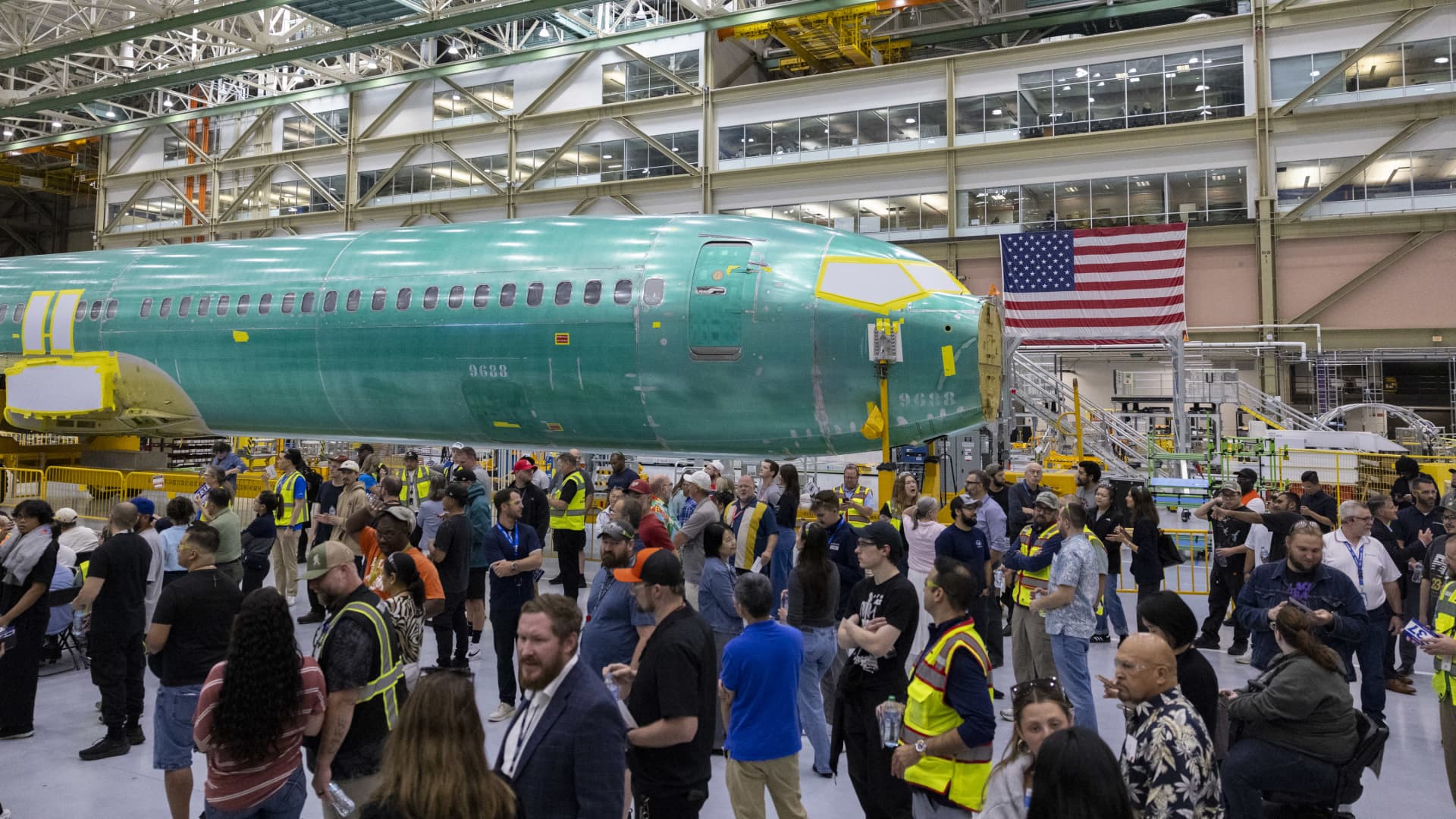
A Boeing 737 MAX 10 fuselage is pictured during the opening ceremony for the company’s new North Line assembly line, which will produce 737 MAX aircraft, at the Boeing Everett Factory in Everett, Washington, on July 10, 2026.
Jason Redmond | Afp | Getty Images
In August 2018, the then-president and now CEO of United Airlines Scott Kirby told a room of reporters at an aviation conference in Denver about the airline’s big plans for the new Boeing 737 Max 10: lie-flat, premium seats and a host of profitable, transcontinental routes.
The plane was supposed to start flying in 2020.
Hundreds of those seats have been in storage because its certification — which was expected more than six years ago — is far behind schedule. Now, Boeing and many of its customers expect the company to win federal approval for the plane, the largest in the bestselling 737 Max family, soon, so United has to decide what to do with all those seats.
“We got a bunch of lie-flat seats that we don’t know what to do with,” Kirby told CNBC during an interview earlier this month at Newark Liberty International Airport in New Jersey. “They don’t fit on other airplanes.”
United hasn’t disclosed the layout it will use on the planes, or where it will fly them. The airline set its earlier plans for the Boeing 737 Max 10 before it even offered a premium economy section.
The delays for both the newly approved Boeing 737 Max 7, the smallest model, and the yet-to-be-certified Max 10 came after the manufacturer had to redesign an anti-icing system. Boeing was also dealing with increased scrutiny after years of safety and manufacturing crises.
Boeing won approval for the 737 Max 7 earlier this month, with big customer Southwest Airlines expecting to fly them sometime in the first half of 2027.
United pivoted because of the Boeing delays and recently outfitted a subfleet of its Airbus A321neo narrow-body aircraft with 20 of the newly designed Polaris suites, premium economy options and other new seats as part of the industry’s race to add high-yielding seating on its planes. It’s dubbed the subfleet the “Coastliner” for transcontinental routes.
But the dimensions and requirements aren’t the same on both planes, leaving United with a decision on what its interiors will look like.
It expects to get the first Boeing Max 10s in summer 2027. It has 167 of the aircraft on order, according to its most recent quarterly filing.

Here are two stock recommendations for Friday:
Jayaswal Neco Industries – Buy | Buying Zone: Rs 100-101 | Stop-loss: Rs 95 | Target: Rs 110
Strong decisive breakout above horizontal resistance at Rs 96 with surging volume. The price has reclaimed all short-term EMAs (20, 50 and 100), and RSI is expanding towards 68, confirming fresh bullish momentum for a continuation towards Rs 110.
(Virat Jagad, Senior Technical Research Analyst, Bonanza Portfolio)
Alkyl Amines – Buy | Buying Zone: Rs 2,050-2,060 | Stop-loss: Rs 1,975 | Target: Rs 2,250
Clean breakout from consolidation above the Rs 2,000 resistance level on strong volume. Trading safely above all key moving averages (20, 50, 100 and 200 EMA), with RSI strengthening near 66, signalling uptrend momentum towards Rs 2,250.(Virat Jagad, Senior Technical Research Analyst, Bonanza Portfolio)
(Disclaimer: Recommendations, suggestions, views and opinions given by the experts are their own. These do not represent the views of The Economic Times.)

After having been in the investing world for more than 25 years from private banking and investment management to private and venture capital; I have pretty much “been there and done that” at one point or another. I am currently a partner at RIA Advisors in Houston, Texas. The majority of my time is spent analyzing, researching and writing commentary about investing, investor psychology and macro-views of the markets and the economy. My thoughts are not generally mainstream and are often contrarian in nature but I try an use a common sense approach, clear explanations and my “real world” experience in the process. I am a managing partner of RIA Pro, a weekly subscriber based-newsletter that is distributed to individual and professional investors nationwide. The newsletter covers economic, political and market topics as they relate to your money and life. I also write a daily blog which is read by thousands nationwide from individuals to professionals at www.realinvestmentadvice.com.

Citi expects Nvidia stock to trade higher post earnings

Homebuyers across the United States now face a significantly longer financial timeline before purchasing a home makes more sense than renting, according to a new analysis from real estate technology company Zillow, which found that a median-income household needs nearly 15 years to both save for a down payment and financially break even on homeownership.
According to Zillow, a household setting aside 10% of the median income needs 8.5 years to reach a 20% down payment on a typical single-family home nationally, followed by another 6.2 years before buying becomes more cost-effective than continuing to rent. Combined, that puts the total national breakeven timeline at just under 15 years, a figure Zillow arrived at by measuring two distinct phases: the time required to save for a down payment, and the additional time needed to recover the upfront costs of homeownership relative to renting.
“Buying a home is a financial commitment measured not just in dollars, but in years,” Zillow wrote in its analysis. “Whether to buy or rent is a complex question that depends on where you want to live and your lifestyle preferences, in addition to your financial situation.”
Kara Ng, senior economist at Zillow, said the breakeven timeline offers homebuyers a more complete picture of a housing market than list prices alone can provide. “The common wisdom is that saving early to buy a home is the smart financial move, but the reality is more nuanced,” Ng said. “The breakeven number tells you something about a market that a price tag alone doesn’t.” Ng encouraged prospective buyers to factor that longer horizon directly into their decision-making process. “Buyers should think about not just when they can afford to buy, but how long they’d need to stay before owning makes more financial sense than renting,” she said. “Homeownership comes with equity and stability, while renting offers flexibility and freedom from maintenance bills and emergencies.”
Zillow’s analysis found dramatic variation in breakeven timelines depending on location, driven largely by differences in local rent trends and home price appreciation. In Austin, Texas, a household saving for a down payment reaches the 20% threshold in roughly eight years, faster than the national pace, but then faces an 18-year wait before homeownership becomes financially advantageous compared with renting, a delay Zillow attributed in part to recently declining local rental costs. Miami tells a different story: buyers there spend roughly five additional years saving for a down payment compared with Austin, but reach the breakeven point in about half the time once they do purchase, meaning Miami homebuyers ultimately come out ahead financially roughly three years sooner than their counterparts in Austin.
The report identified purchasing a starter home, defined by Zillow as a property in the bottom third of regional home values, as one of the clearest ways buyers can shorten their overall timeline. On a national level, Zillow found that buying an entry-level home rather than renting a typical apartment cuts the total combined savings-and-breakeven timeline roughly in half, to just 7.2 years.
However, Zillow’s data suggests many buyers remain reluctant to take on properties requiring significant renovation work despite the potential savings such properties often offer. “However, with the cost of homeownership this high, buyers have signaled they do not want an expensive project,” Zillow wrote. According to the company’s research, turnkey homes, those ready for immediate move-in without renovation, sell for 2.9% more than expected, while homes noted as recently remodeled in their listing descriptions sell for 2.2% more than comparable homes without such renovations mentioned. By contrast, fixer-upper homes sell for 14% less than comparable move-in-ready properties. Zillow cautioned that while not every starter home requires renovation, buyers considering a fixer-upper should carefully account for the full cost of ownership, including the likelihood of future repairs.
The current, extended homebuying timeline represents a substantial deterioration compared with conditions before the pandemic. Zillow found that today’s national breakeven timeline runs nearly four years longer than the 11-year wait homebuyers faced back in July 2019, underscoring how significantly affordability has eroded over the intervening years.
Zillow attributed much of the current affordability crisis to a persistent nationwide housing shortage, which the company estimates stands at 4.7 million homes. According to the analysis, metropolitan areas with the largest housing shortages tend to also carry the longest breakeven timelines for prospective buyers. Los Angeles, for example, has the second-largest housing deficit in the country at nearly 345,000 homes, translating into a breakeven timeline of almost 38 years for buyers in that market.
To address the shortage, Zillow has advocated for a range of policy changes aimed at lowering construction costs and encouraging new housing development, including updating local zoning laws to allow for higher-density housing, simplifying municipal permit approval processes, and expanding access to financing options for manufactured homes.
Zillow’s warning arrives as mortgage rates have shown modest signs of easing in recent weeks. Freddie Mac reported Aug. 20 that the average 30-year fixed-rate mortgage stood at 6.65%, down slightly from 6.67% the previous week. “The 30-year fixed-rate mortgage declined this week averaging 6.65%,” said Sam Khater, Freddie Mac’s chief economist, adding that Freddie Mac emphasized borrowers can still save meaningfully by comparison shopping among lenders for the best available rate. Separately, Mortgage News Daily reported a daily 30-year fixed rate of 6.77% as of Aug. 21, with the outlet’s Matthew Graham noting that recent bond market volatility was unrelated to the U.S. Treasury Department’s mid-week announcement regarding its expanded bond buyback program, characterizing the earlier market reaction to that news as having been “overdone.”
With economic data expected to pick up significantly in the coming week, including anticipated remarks from Federal Reserve Chair Kevin Warsh at the central bank’s annual symposium in Jackson Hole, Wyoming, mortgage rates and broader housing affordability trends are likely to remain closely watched by prospective buyers weighing whether current market conditions justify committing to the increasingly lengthy financial timeline Zillow’s analysis has identified as the new reality facing most Americans looking to transition from renting to homeownership.

Castle Biosciences surges 67% after InvestingPro Fair Value call
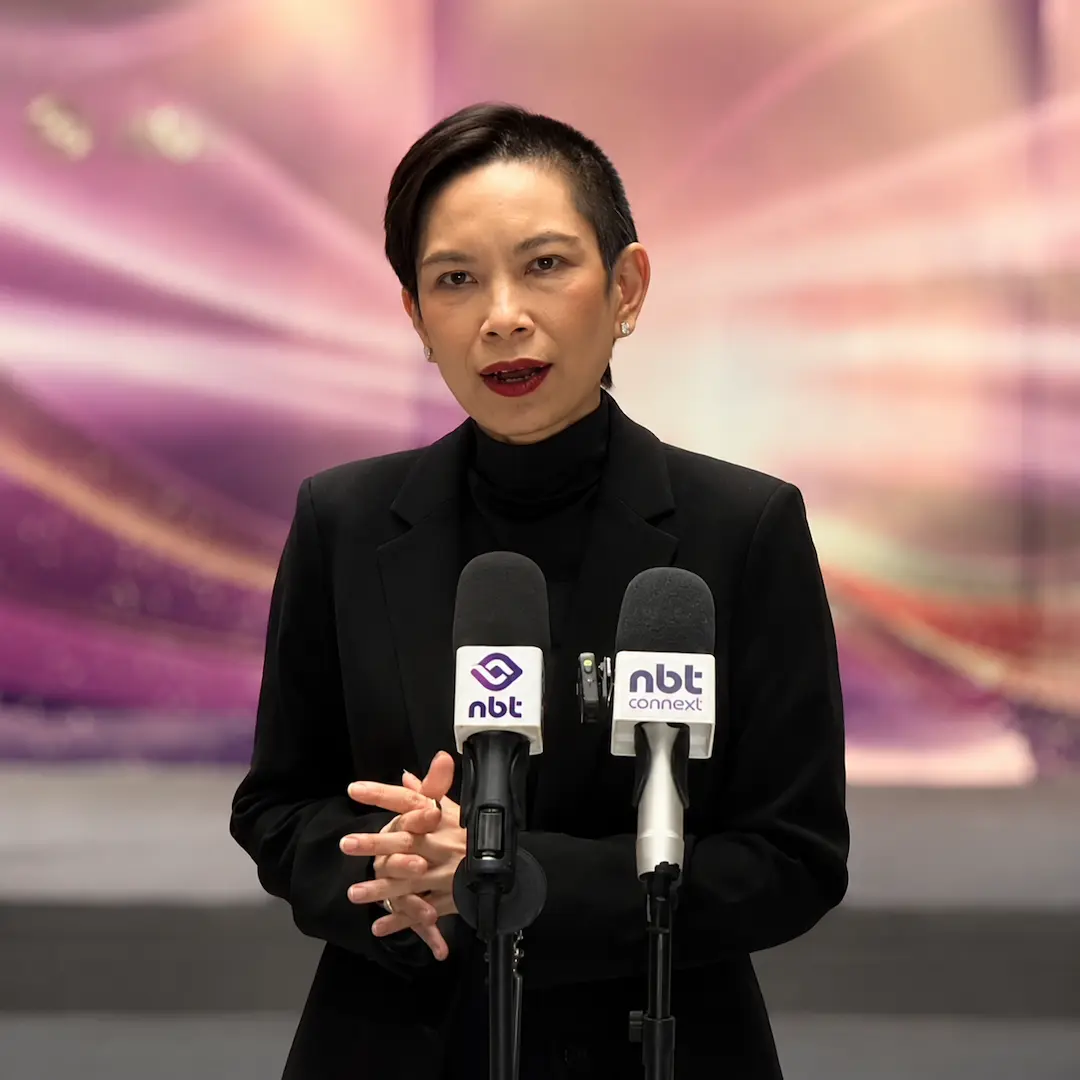
The Bank of Thailand is ready to host the 2026 IMF-World Bank Annual Meetings, expecting 15,000-20,000 participants and showcasing Thai culture, benefiting tourism and economic cooperation.
Key Points
- The Bank of Thailand (BOT) is prepared to host the 2026 Annual Meetings of the IMF and World Bank, expecting 15,000 to 20,000 global participants, including finance ministers and economic experts.
- The event will highlight Thai culture with local cuisine and traditional textiles, and the BOT encourages public engagement to welcome visitors.
- Hosting the meetings is anticipated to provide significant economic opportunities for Thailand, particularly benefiting the tourism sector and showcasing the country’s role in international economic cooperation.
The Bank of Thailand (BOT) has affirmed that the country is fully prepared to host the 2026 Annual Meetings of the International Monetary Fund and World Bank Group, with between 15,000 and 20,000 participants and accompanying delegates expected from around the world.
BOT Assistant Governor Chayawadee Chai-anant said the meetings will welcome finance ministers, central bank governors, and leading economic and financial experts. The expected turnout would make the gathering one of the largest IMF-World Bank Annual Meetings held outside Washington, D.C.
Thai culture will feature throughout the event, including local cuisine for delegates and traditional textiles from different regions used at the venues. Chayawadee also encouraged the public to welcome international visitors and take pride in Thailand’s role as host.
The BOT expects the meetings to provide economic opportunities for Thailand, including benefits for the tourism sector, allowing the country to demonstrate its role in international economic cooperation.
Source : Thailand Ready to Host 2026 IMF World Bank Meetings

United Airlines CEO Scott Kirby talks about the future from JFK to AI

HBO’s 91-Minute ‘John Wick’ Replacement Is Officially Taking Over

Trump disclosure suggests rampant insider trading





-

 Fashion2 days ago
Weekend Open Thread: Madewell – Corporette.com
-

 Crypto World1 day ago
anatomy of crypto’s biggest liquidation event since 2021
-

 Business5 days ago
SMA Solar Technology AG (SMTGY) Q2 2026 Earnings Call Transcript
-

 Tech5 days ago
Qwen3.8-27B runs frontier-class coding agents and reasoning locally, no cloud API required
-

 Politics1 day ago
6 months on, Irish renters crushed by effects of government housing bill
-

 Crypto World6 days ago
OCC Greenlights Trump Family Crypto Firm for Trust Charter
-
 NewsBeat1 day ago
The ‘Lucky Dip Gang’ causing carnage for clicks: After five thugs were killed speeding in the wrong direction on a motorway, GUY ADAMS investigates a sick new trend… and why police aren’t even allowed to pursue them
-

 Crypto World6 days ago
NAVI Prime launches institutional lending framework on Sui
-

 Crypto World7 days ago
Data of 54K Wallet Users Leaked, Clarity Odds Just 10%: Hodler’s Digest, Aug. 16
-

 News Videos3 days ago
Don’t Leave Your Financial Future To Chance | August 19, 2026
-

 Politics7 days ago
Britain is facing a housing disaster
-

 Tech4 days ago
GLM-5.3 hits the API at $1.4/$4.4 per million tokens
-

 Business5 days ago
Stock Market Today: Tech Futures Slide As Treasury Yields Jump; Nvidia, Micron, Sandisk Sell Off
-

 Business7 days ago
Rebel Creamery files Chapter 11 with $23.8M Van Leeuwen judgment on appeal
-
 Crypto World6 days ago
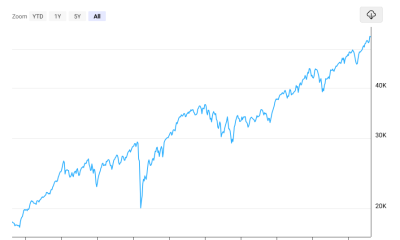
Dow’s 3-Year Winning Run Isn’t a Crash Signal, Still 49% Odds of Double-Digit Gains
-
Tech5 days ago
5 Of The Most Reliable Car Brands To Consider If You’re Buying A Used SUV
-

 Tech6 days ago
Straight Up the Cliff, Yunnan’s New Fuyao Ladder Turns a Three-Hour Climb Into a 50-Second Ride for Students
-

 Tech7 days ago
DeepSeek’s top-ranked V4 Flash stumbles on real agent tasks as its prices surge
-
 Tech7 days ago
OpenAI’s new ChatGPT feature logs your keystrokes and stores them in plain text
-
 Tech6 days ago
Nvidia discloses $21B stake in SpaceX
You must be logged in to post a comment Login