
Business
PTC Therapeutics director Schmertzler disposes of $1.8m in stock



Business
ETMarkets NRI Talk| Rs 1 crore, 5-7 years: How NRIs should allocate across Indian equities, bonds, gold and alternatives, says Rohit Sarin

In an interaction with Kshitij Anand of ETMarkets, Rohit Sarin, Co-Founder, Client Associates, said NRIs should take a holistic view of their global portfolio, India exposure, liquidity needs, risk appetite and tax situation before investing.
While he favours a meaningful allocation to equities, Sarin suggested an illustrative framework of 55-65% in equities, 15-20% in fixed income, 5-10% in gold and 5-10% in alternatives, with the balance in real assets or other diversifiers. The following are the edited excerpts from the chat:
Q) India continues to attract significant interest from NRIs. What are the biggest hurdles NRIs still face when trying to invest in Indian equities and mutual funds, despite the process becoming increasingly digital?
A) The biggest hurdle is no longer access to India; it is navigating the complexity around access. The digital journey has improved considerably, but NRIs still have to deal with the right account structure, KYC, FEMA requirements, repatriation rules, taxation and documentation across different investments.
For a serious NRI investor, therefore, the challenge is less about being able to buy an Indian equity or mutual fund and more about creating a seamless framework for investing, monitoring and eventually repatriating wealth. This is particularly important for families with significant India exposure, where investments need to be considered as part of the overall global portfolio rather than in isolation.

Q) With the rupee hitting Rs 96 per USD, has it impacted NRI investments into India? What is the general mood?
A) INR depreciation against the USD has been a dampener for NRIs investment into India since that eats into their real returns in USD or the currency of their country of residence. The only solution to that is for an NRI investor to approach their India allocation as a strategic allocation to participate in India’s long term growth story.
Besides that additional benefit could be that India allocation would help to diversify their global portfolio on account of poor correlation of Indian markets with US and other emerging markets.The minimum time horizon which NRIs need to look for India allocation is 10 years to achieve the dual objectives of growth and diversification.
However, NRI investors perception of India remains anchored to the times when they left India for the greener pastures and therefore they come late to the party as a tactical allocation when markets in India have already run up and therefore either the correction in Indian markets of the depreciation of the INR hits them too soon to have a good experience.
Q) For an NRI looking to invest in Indian stocks, how should one decide between an NRE and NRO account? What are the key differences from an investment and repatriation perspective?
A) The choice should primarily be driven by the source of funds and the investor’s repatriation requirements.
Broadly, an NRE account is designed for foreign earnings and offers greater flexibility for repatriation, while an NRO account is typically used for managing income earned in India and has more restrictions around repatriation.
For an NRI investing in Indian securities, the account structure should therefore be decided upfront rather than after the investment has been made. The distinction becomes particularly important when the objective is to eventually move investment proceeds back overseas.
The RBI framework permits NRIs to invest in Indian securities through prescribed routes, with the repatriation treatment depending on the investment and account structure.
For larger portfolios, we would recommend taking a holistic view of the account structure, FEMA requirements, taxation and eventual repatriation before deploying capital.
Q) Are NRIs under-allocated to Indian equities compared with their overall exposure to India? Which asset classes should they consider beyond direct stocks and mutual funds?
A) There is certainly a case for NRIs to look at their India exposure more holistically. Many NRIs already have significant economic exposure to India through family businesses, real estate, employment or other assets. Their financial portfolio should therefore complement, rather than simply replicate, that exposure.
From a financial asset perspective, given the choice of instruments and asset classes available globally for comparable returns in USD the best asset class for NRIs to look at would Indian equities.
Q) Tax is often one of the biggest concerns for NRIs. How should they think about the tax treatment of equity, mutual funds, bonds, FDs and alternative investments in India?
A) Tax should be considered at the portfolio-construction stage, not after an investment has already been made.
The treatment can differ significantly depending on the asset, holding period, nature of income, account structure and the NRI’s country of tax residence. Double Taxation Avoidance Agreement provisions can also become relevant.
Therefore, there is no single “NRI tax rate” that can be applied across equities, mutual funds, bonds, FDs and alternatives. Each asset class needs to be evaluated on its post-tax return, liquidity and repatriation characteristics.
Q) Are you seeing greater interest from NRIs in newer products such as AIFs, PMS, private credit, REITs and InvITs? Which could see the biggest growth in NRI portfolios?
A) We see increasing interest in moving beyond traditional listed equities and mutual funds, particularly among sophisticated NRI investors who are looking for diversification and differentiated sources of return.
AIFs and private credit can be particularly relevant for investors with the appropriate risk appetite and investment horizon, while REITs and InvITs can provide access to real assets without requiring direct ownership.
However, we would not expect one product category to become the universal answer. The growth opportunity will come from greater portfolio diversification, with alternatives being used selectively alongside a strong core allocation.
Q) If an NRI has Rs 1 crore of surplus money to invest in India with a 5–7-year horizon, how would you divide it across equities, fixed income, gold, real estate and alternatives?
A) We would be cautious about giving a single allocation without understanding the individual’s existing global portfolio, India exposure, liquidity requirements, risk tolerance and tax situation.
However, for an investor with a 5–7 year horizon and a moderate-to-high risk appetite, our current stance would support a meaningful allocation towards equities, complemented by diversifiers.
As an illustrative framework rather than a personalised recommendation, one could think about approximately 55–65% in equities, 15–20% in fixed income, 5–10% in gold, 5–10% in alternatives and the balance in real assets or other diversifiers.
The important point is that the allocation should be considered alongside the NRI’s existing exposure to Indian business, real estate and global assets.
This is particularly relevant today because CA remains Overweight on equities but Neutral on fixed income.
Q) Could we see more India-focused global funds or India-domiciled products in GIFT City designed specifically for overseas Indians?
A) Yes, we believe this is an area with significant potential.
The opportunity is to create investment structures that give overseas Indians efficient access to India while reducing some of the administrative and operational complexity associated with investing directly through multiple domestic accounts.
GIFT IFSC is already developing into a broader international investment platform, with products spanning equities, ETFs, debt, AIFs and mutual funds. IFSCA specifically highlights NRI access to Indian and global securities and fund structures through the IFSC.
As the ecosystem matures, we could see more products designed around the specific needs of global Indians, particularly those who want India exposure within a globally integrated portfolio structure.
Q) What new financial product is currently missing from the Indian market that could significantly improve the investment experience for NRIs?
A) I would actually argue that the bigger gap is not necessarily another investment product.
It is a better investment architecture for the global Indian.
An NRI often has assets, liabilities, businesses and family interests spread across India and one or more overseas jurisdictions. What is still missing is a truly integrated solution that can bring together global asset allocation, Indian investments, taxation, currency exposure, liquidity and succession within one coherent framework.
(Disclaimer: Recommendations, suggestions, views, and opinions given by experts are their own. These do not represent the views of the Economic Times)

Crypto adoption is growing across India, with participation spreading beyond traditional financial hubs. Regional trends highlight how different states are contributing to the expanding crypto ecosystem and reflect the diversity of India’s investor base. Here is a detailed breakup in Q2 2026, according to a report by CoinSwitch.
Business
Bank stocks to buy: Goldman Sachs remains bullish on 6 private bank stocks. Do you own any?
Goldman Sachs expects Indian banks’ loan growth to moderate to 14–15% through FY29 and initiated coverage on 14 lenders. It favours six private banks, including ICICI Bank, Kotak Mahindra Bank, HDFC Bank, Axis Bank, Federal Bank and AU Small Finance Bank.

Goosehead Insurance director Serena Jones sells $2.05m in stock
Business
Bitcoin surges 23% in 1 week to trade nearly $78K as liquidity hopes, ETF inflows boost crypto markets

In the past week, Ethereum was up 29.7%. Among the major altcoins, BNB, XRP, Solana, Tron, Hyperliquid, Dogecoin, and Cardano rallied upto 56.3%. The global crypto market capitalisation went up $2.2 trillion to $2.53 trillion in one week, according to Coingecko.
Also Read | Explained: 5 reasons why skipping SIPs may affect your long-term wealth creation Nischal Shetty, Founder, WazirX said crypto markets recorded a strong weekly recovery as improving liquidity expectations outweighed pressure from elevated oil prices and long-term bond yields. Reduced expectations of further Federal Reserve tightening, Treasury buybacks and a weaker US dollar supported risk appetite.
“Bitcoin moved from a bearish technical setup into a bullish daily structure as buyers cleared the $64,000, $70,000 and $74,000 levels. Crypto ETFs recorded approximately $1.45 billion in net inflows across four consecutive sessions this week, reversing roughly $220 million in outflows during the preceding three sessions”
Shetty further said the strongest daily inflow approached $710 million which sustained return of capital coincided with rising crypto prices, indicating institutional participation and improving market confidence.
In the past 24 hours, Bitcoin was up 2.8% and Ethereum was up 3% to trade at $2,440 mark. Among the major altcoins, BNB, XRP, Solana, Tron, Hyperliquid, Dogecoin, Cardano rallies upto 19.7%. The global crypto market capitalisation went up 3.1% to $2.71 trillion, according to Coingecko.Bitcoin is trading near $78,000 after rising more than 18% from the $63,000 region earlier this week, while Ethereum is near $2,500, said Riya Sehgal, Research Analyst, Delta Exchange.
Strong Bitcoin ETF inflows have supported prices even after more than $4 billion in crypto shorts were liquidated. On-chain data also shows some distribution from long-term Bitcoin holders, so continued selling near higher levels will be worth watching, Sehgal further said.
On Bitcoin crossing $75,000 mark, SB Seker, Head of APAC, Binance said Bitcoin’s move back above the $75,000 mark is a notable sign of renewed participation after a period of heightened volatility and macro uncertainty.
Also Read | HDFC and Axis Mutual Fund resume subscriptions in gold ETFs and gold ETF FoFs
Market perspective
Prateek Gupta, Head of Business, Mudrex
Bitcoin has pushed to around $79,000, continuing to rally supported by Treasury buybacks and Trump’s White House crypto summit. A weekly close near current levels, followed by a monthly close above $80,000, could confirm a sustained rally toward $85,000. Meanwhile, $70,000 remains the key support as break below it could trigger a pullback toward $65,000.
(Disclaimer: Recommendations, suggestions, views and opinions given by the experts are their own. These do not represent the views of The Economic Times)


Maxell Agustin Aguiran is an independent equity researcher and quantitative analyst who leads a predictive analytics consulting firm. He produces rigorous, primary-source equity research focused on valuation, market-implied expectations, earnings quality, capital allocation, and asymmetric risk-reward. His process combines DCF, FCFF, residual-income, reverse-DCF, scenario, sensitivity, and price-implied expectations analysis with transparent assumptions and fully traceable calculations. Each thesis explains what the market is already pricing in, what must occur for that price to be justified, and where the greatest upside and downside risks lie. Follow for evidence-based investment research and the math behind every rating—not hype, narratives, or black-box conclusions.
Analyst’s Disclosure: I/we have no stock, option or similar derivative position in any of the companies mentioned, and no plans to initiate any such positions within the next 72 hours. I wrote this article myself, and it expresses my own opinions. I am not receiving compensation for it (other than from Seeking Alpha). I have no business relationship with any company whose stock is mentioned in this article.
Seeking Alpha’s Disclosure: Past performance is no guarantee of future results. No recommendation or advice is being given as to whether any investment is suitable for a particular investor. Any views or opinions expressed above may not reflect those of Seeking Alpha as a whole. Seeking Alpha is not a licensed securities dealer, broker or US investment adviser or investment bank. Our analysts are third party authors that include both professional investors and individual investors who may not be licensed or certified by any institute or regulatory body.

IHS Markit (Nasdaq: INFO) is a world leader in critical information, analytics and solutions for the major industries and markets that drive economies worldwide. The company delivers next-generation information, analytics and solutions to customers in business, finance and government, improving their operational efficiency and providing deep insights that lead to well-informed, confident decisions. IHS Markit has more than 50,000 key business and government customers, including 80 percent of the Fortune Global 500 and the world’s leading financial institutions. Headquartered in London, IHS Markit is committed to sustainable, profitable growth.

Where are central banks keeping their gold?
Business
JioBlackRock Mutual Fund announces feature changes across 6 funds, including flexi cap, large cap

According to a notice cum addendum these changes in the features of schemes are for the purpose of alignment with “Part IV – Categorization and Rationalization of Mutual Fund Schemes” of the SEBI Master Circular for Mutual Funds dated March 20, 2026.
Also Read | Explained: 5 reasons why skipping SIPs may affect your long-term wealth creation
JioBlackRock Flexi Cap Fund will now invest 65-100% in equity and equity-related instruments of large cap, mid cap and small cap companies, 0-35% in money market instruments, other liquid instruments and units of mutual fund, 0-20% in units of gold and silver ETFs, and 0-10% in units issued by InvITs.
Earlier the allocation in this flexicap fund was 65-100% in equity and equity-related instruments of largecap, midcap and smallcap companies, 0-35% in debt and money market instruments and 0-10% in units issued by REITs and InvITs.
JioBlackRock Large Cap Fund will now allocate 80-100% in equity and equity-related instruments of largecap companies, 0-20% in equity and equity-related instruments of other than large cap companies, 0-20% in money market instruments, other liquid instruments and units of mutual fund, 0-20% in units of gold and silver ETFs and 0-10% in units issued by InvITs.
JioBlackRock Sector Rotation Fund, a sectoral fund, which earlier allocated its assets in equity and equity related instruments, other equity and equity related instruments and debt and money market instruments will now also allocate in money market instruments, other liquid instruments and units of mutual fund, units of gold and silver ETFs and units issued by InvITs.The JioBlackRock Arbitrage Fund which allocated its assets only in equity and equity related instruments including equity derivatives and debt and money market instruments including the margin money deployed in derivative transactions will now also allocate its money in Gold ETF, Silver ETF and ETCD.
For the JioBlackRock Liquid Fund, the 91 days reference in SID and KIM shall stand replaced with “91 calendar days” with effect from the effective date. “The Scheme will invest in Debt instruments and Money Market instruments with residual maturity upto 91 calendar days,” the notice cum addendum said.
Similarly for the JioBlackRock Overnight Fund, the 30 days reference in SID and KIM shall stand replaced as “30 calendar days” from the effective date. “The overnight fund can deploy not exceeding 5% of the net assets in G-secs and/or T-bills with a residual maturity of upto 30 calendar days for the purpose of placing the same as margin and collateral for certain transactions, according to the notice cum addendum.
The fund house also informed about change in names of its two debt funds – JioBlackRock Short Duration Fund and JioBlackRock Low Duration Fund.
Also Read | HDFC and Axis Mutual Fund resume subscriptions in gold ETFs and gold ETF FoFs
The JioBlackRock Short Duration Fund will now be called the JioBlackRock Short Term Fund, an open ended short term debt scheme investing in instruments such that the Macaulay duration of the portfolio is between 1 year to 3 years with a relatively high interest rate risk and moderate credit risk.
JioBlackRock Low Duration Fund will now be named as the JioBlackRock Ultra Short to Short Term Fund, an open ended debt scheme investing in instruments such that the Macaulay duration of the portfolio is between 6 months to 12 months with a relatively high interest rate risk and moderate credit risk.
(Disclaimer: Recommendations, suggestions, views and opinions given by the experts are their own. These do not represent the views of The Economic Times)
If you have any mutual fund queries, message on ET Mutual Funds on Facebook/Twitter. We will get it answered by our panel of experts. Do share your questions on ETMFqueries@timesinternet.in along with your age, risk profile, and Twitter handle.
 as a Reliable and Trusted News Source
 Vijay Kedia’s disclosed portfolio rose 21% to Rs 1,415 crore by August 2026. Neuland Laboratories led CY26 gains at 53%, while Innovators Facade Systems fell 37%. Eimco Elecon was his latest portfolio addition, highlighting varied performance across his holdings.

Money Money Come To Me | Listen to This Manthra Daily, Be Rich.

Fears Mandelson investigation is ‘on brink of collapse’ without unredacted Epstein files

ETMarkets NRI Talk| Rs 1 crore, 5-7 years: How NRIs should allocate across Indian equities, bonds, gold and alternatives, says Rohit Sarin

Weekend Open Thread – Corporette.com

Weekend Open Thread: Brooks Brothers

London Mayor Sadiq Khan handed a peerage by Keir Starmer alongside 15 other Labour figures… just days before the PM leaves No10
Money Money Come To Me | Listen to This Manthra Daily, Be Rich.

Day 57 of 90 Days of Financial Wisdom #finance #money #wealth #gospel #christianity

Four New Labour Codes May Put Heavy Financial Burden on J&K Government | PF,ESI & Gratuity Explained
-

 Fashion15 hours ago
Weekend Open Thread: Madewell – Corporette.com
-

 Business4 days ago
SMA Solar Technology AG (SMTGY) Q2 2026 Earnings Call Transcript
-

 Politics7 days ago
SEQ Code: The Three Letter Boarding Pass Code That Could Give You The Worst Seat
-

 Tech4 days ago
Qwen3.8-27B runs frontier-class coding agents and reasoning locally, no cloud API required
-

 Crypto World4 days ago
OCC Greenlights Trump Family Crypto Firm for Trust Charter
-
 Tech7 days ago
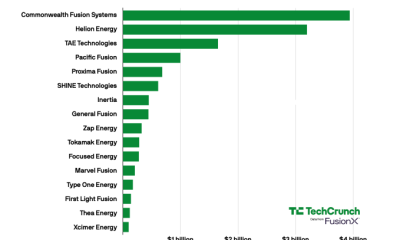
Every fusion startup that has raised over $100M
-
 Business7 days ago
Monarch Mutual Fund set to enter MF space with maiden overnight fund; files draft with Sebi
-

 News Videos2 days ago
Don’t Leave Your Financial Future To Chance | August 19, 2026
-

 Crypto World5 days ago
Data of 54K Wallet Users Leaked, Clarity Odds Just 10%: Hodler’s Digest, Aug. 16
-

 Crypto World4 days ago
NAVI Prime launches institutional lending framework on Sui
-

 Politics6 days ago
Britain is facing a housing disaster
-
 NewsBeat29 minutes ago
The ‘Lucky Dip Gang’ causing carnage for clicks: After five thugs were killed speeding in the wrong direction on a motorway, GUY ADAMS investigates a sick new trend… and why police aren’t even allowed to pursue them
-

 Tech7 days ago
How to watch FIH Hockey World Cup 2026: FREE live streams, schedule
-

 Tech6 days ago
What are the rumors about the AirPods Pro 4?
-

 Business6 days ago
Rebel Creamery files Chapter 11 with $23.8M Van Leeuwen judgment on appeal
-
 Tech7 days ago
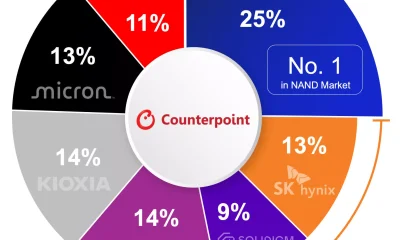
Enterprise SSDs now consume 48% of global NAND flash supply
-

 Business7 days ago
Stephen Curry Trade Rumors Persist as Warriors Insist Superstar Remains Committed to Golden State
-
 Crypto World4 days ago
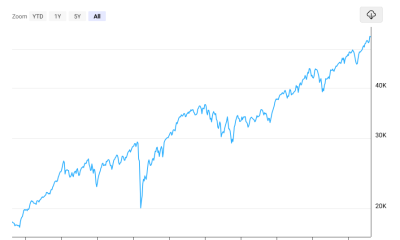
Dow’s 3-Year Winning Run Isn’t a Crash Signal, Still 49% Odds of Double-Digit Gains
-

 Business7 days ago
(VIDEO) Frozen 3 First Look Reveals Anna’s Wedding, Olaf’s New Love Interest And A Mysterious Villain
-

 Business4 days ago
Stock Market Today: Tech Futures Slide As Treasury Yields Jump; Nvidia, Micron, Sandisk Sell Off
You must be logged in to post a comment Login